
by Grow Up Conference | Jul 12, 2024 | Media Partners, The New Agora
Saved from Drowning:
From a Virtual Existence to a Real Life
Julian Rose
Please note: I have written this in an unusual form – as a story told by a young person suffering, and finally overcoming, addiction to an increasingly pervasive IT world. It is an urgent humanitarian alert. A whole generation can be lost if we cannot help them grasp the tragic dehumanising trajectory of their ‘deep state’ induced life style choices. Please ask as many as possible to share this story, especially on social media.
A personal story – as told by Mo
Someone put it to me, around a year ago, that maybe I should change my life style and try to get my feet on the ground. She said, “you know, if you really want it, there is a way to get from purgatory to paradise in this life.”
My reaction was: Surely not. No way! Purgatory is great – so much going on. I’d be bored stiff in paradise.
Get a new message on my tablet every few minutes. Got six social media accounts. So many conversations to check into and add my bit too. Just got an earbud so I don’t miss any communications. Wow – how things have moved on.
AP’s are great. Life without AP’s seems unthinkable now. Receptions great too these days. Remember poor signals when travelling? Thing of the past, with a few exceptions. And now Elon is putting all those satellites up, so even in the Sahara desert it will be possible to tune in. Sat Nav our way to the moon…
I text a lot. Love the personal thing – cool to have this sort of privacy. Can’t imagine life without texting. OK, I’m a bit of an info junkie. Like to stay online with what’s going on. Even when it’s scary. Get a kind of thrill knowing I’m alright; you know, comfortable, out of danger.
It’s the convenience of the tech that really does it for me. I must spend three to four hours on my smart phone every day and probably another two on the lap top. You see, it’s my reality. It’s my world – and for lots of my mates too. It’s cool. You can add on Netflicks and some favourite TV shows in the evening as well.
Wi-Fi is brilliant. Never bother with land lines any more. OK – maybe it’s zapping me more than is good, but who cares? Life’s too short. Like the stuff you get ready prepared and just stick in the microwave. Who needs to bother with cooking? Cooking’s a pain, isn’t it?
Eat a lot raw these days – like vegan ‘saving the planet’ stuff.
Global warming is scary, don’t you think? Hope it doesn’t happen in my life time. No thanks!
Decided I’m going to get tattooed. There’s a dark side of me that wants to be expressed – my mates have this too. Going for a skull and cross bones on the back of my neck – all black. That says it about pretty much all of life, doesn’t it. I mean life sucks. No point in pretending otherwise.
I’ve found a way of isolating myself from most of it. I mean, my virtual world saves my life.
I must confess to being a bit jealous of trans people. Not sure I have the guts to go for it. But wow – that really is a statement; a cool expression of personal freedom. If you don’t feel like male or female fits your personality, then get something that does!
OK, it’s a ‘me, me’ world, but that’s all there is in the end.
Can’t get into this god stuff. If there was a god the world wouldn’t be so fucked-up, would it?
Some of my mates tried the spiritual thing. But the teacher said if you want to do it properly you have to be disciplined. Not so much meat, coffee, sugar, booze, TV and junk foods.
Can’t manage that – and anyway why try to get closer to something that doesn’t exist – some abstract power?
If there is such a thing, good luck, I’m not going to try and stop anyone doing what they want – no way.
Somebody told me god is ‘trans’, so having the operation is the best way of getting closer to him..err..it.
Ugh, so much confusion. Really, we don’t know what we’re doing, where we’re going, who we are or what life’s about. But we’ve got to navigate this mess somehow.
To stay sane got to smile a bit– and selfies are great for this. I’ve got thousands of selfies with me and my mates in crazy situations against great backdrops.
Yea, well, that’s about it really. I didn’t tell you that I’ve been getting pretty bad headaches lately. Not good. I’m popping pain relievers, but they only do a temporary job.
Scared shitless by Covid – took all the jabs – my mates did too. Had to do it, of course. Those political geeks put the clampers on us – didn’t they.
My gran says I should go to the doctor to get checked-out if the headache continues. But then she also says I should walk in nature. Get out of the ‘concrete jungle’ as she calls it. Gran says that’s the way to find out about god. Maybe she’s right..who knows.
But really, I get all I need from my Smart Phone. That’s real. It’s better than god, as far as I can see. And actually I can’t see so well these days; kind of fuzzy thing blurring my sight. Particularly when I get stressed – and I do. We all do. So we try to chill-out in the bars and cafes.
Okay, so it’s not all so great. Sometimes I wake up in the morning and don’t want to get out of bed. I’ve never told anybody this – but I even feel a bit suicidal. Wanting a way of getting all this shit out of the way – once and for all.
It’s tempting, but I don’t have the guts to go for it.
One Year Later
It’s difficult to believe that a year ago I was so far gone. How the light had faded to the point where I was ready to take my life. How I couldn’t see my life as anything other than the norm. Taking what turned out to be a death wish as some sort of cool life style choice.
Well, eventually I did hit the bottom. I tried to take my life.
A botched job I guess, fortunately. But the blood was seeping away nevertheless, my wrists both slashed and my consciousness fading fast.
That’s all I remember – bar the searing pain, the internal agony and seeing the blood trickling across the living room floor.
“Mo, Mo!” someone was shouting. My head was propped up in a hospital bed, my wrists covered in bandages. I was weak as sin and my eyes, open for a few seconds, just wanted to close again and remain that way.
“Mo, Mo!” shouted this voice – while some medicine was being administered to me intravenously.
That’s where my new life began.
I was hospitalised for around three weeks. My brother, sister and gran visited regularly. My estranged mother, once or twice. But it was someone else who really changed things for me.
The hospital had me transferred to a special care centre for people needing psychological and psychiatric support.
It was here that I started my new life. My second life.
There were two exceptional careers, John and Anna, who made me understand what I never understood before. That life is precious and that I was responsible for everything that happened to me.
That the fact that I was saved was close to being a miracle – and that having ‘one more chance’ was not just due to the intervention of my rescuers (my sister and her husband) but also some universal influence. ‘Grace’ as Anna called it.
Once I was a little stronger I asked what had happened to my phone and Tablet.
“We have them” said John “but you won’t need them any more, not while you’re here.”
I was a bit credulous, almost angry.
John said, “Mo, you can’t know this yet, but that piece of technology and the information it carried played a big role in your downfall. You were addicted, a full-on IT consumer. What you thought was a benign conveyor of information, was/is a weapon of indoctrination into a virtual world of empty promises and material titillation. You had allowed yourself to become trapped by its instant, seductive and superficial convenience attraction.”
I wanted to reject this view, but something kept me curious enough to continue to listen.
John went on “if we suppress that which is the signpost for our true life; if we bury it under a toxic mix of health destroying habits, anxiety and EMF radiation, we are voluntarily entering a road to suicide. Primarily a soul suicide.”
Listening to this scary summary of my daily life made me realise, for the first time, that I had never stopped long enough to actually ‘think’. To allow myself to reflect on what I was doing. John was right, I was under some kind of spell, addicted.
I started to discover a calm inner peace. I had never felt this before in my whole life. It was an experience of such richness that I wondered whether John had dropped some hallucinogenic pill in my water!
Anna offered extraordinary love. Yes, I can say that now, but I had no idea what love was until I met Anna. She seemed to see into my very being and describe to me what that being actually is.
She said that it is a reflection of God. ‘The Supreme Being’ in her words. “the father of us all” she said.
And you know what – I started laughing!.
Me, Mo, didn’t believe in god – thought my smart phone was it.
But now, as I looked into Anna’s deep smiling eyes, I started to laugh and laugh. And then the tears welled-up and filled my eyes. And, dear friends, I say that this is when I discovered my soul – because, well, it was!
I was out of there two weeks later. It was a wobbly moment. I was standing on my own two feet for the first time. Yes, the me who now had a soul and a sense of purpose.
The world outside had not changed: still running abstractedly towards nowhere. Confusion as the norm. Fear always close to the surface. Narcissistic ambition driving the machine on and on in an endless process of consumption and competition.
But I held on. John and Anna’s words had gone deep. Gran had reminded me about nature when visiting me at the care centre.
I had this sick feeling when contemplating going back to the urban way of life I was raised on.
So through a first cousin who lived in the countryside I managed to get my foot onto a small green space with a rudimentary cabin and a nearby wood.
Still young and reasonably strong, I found a job as an assistant gardener and started learning how to grow plants – edible and inedible. This gave me the confidence to cultivate a bit of land at my cabin and start growing and eating my own food. Real food!
Dear reader, my life has gone from strength to strength. I have learned some spiritual practice and even meditation. I’ve fallen in love with nature, particularly the wood.
And if you can tolerate one last song of praise for my transformation – I’ve found a true soul mate. An activist and campaigner for a better world.
I am determined to fight for, well, what can one call it – Life! And a future based on all the qualities I have discovered since my new life began.
Really, it’s hard to put in words, but I feel I’ve crossed a bridge. Gone from purgatory to paradise.
I know you can cross over too. Just drop-off the toxic baggage, listen out for the voice of your soul – and turn to face the rising sun with a courageous heart. Everyone can do it, everyone.
Whatever you do, be sure not to be as reckless and irresponsible as I was, trying to destroy the greatest gift any of us will ever be granted. Life, however difficult it may be at times, is of immeasurable value and has no substitute.
Love,
Mo xx
P.S. You want to know what happened to my phone? I dispensed with it. Didn’t need it any more. Just the old land line connection in my cabin. Don’t buy into that smart fakery any more. No going back.
Julian Rose is an organic farmer, writer, broadcaster and international activist. He is author of four books of which the latest ‘Overcoming the Robotic Mind’ is a clarion call to resist the despotic New World Order takeover of our lives. Do visit his website for further information www.julianrose.info

by Grow Up Conference | Jul 12, 2024 | Cannabis News Wire, Media Partners
Maryland saw a windfall of more than $14 million from cannabis sales taxes in just the first quarter of this year. As the state celebrates the first anniversary of legal recreational cannabis, sales continue to climb.
Connor Whelton, ReLeaf CEO and cofounder, says business is thriving in this environment. He and his team have introduced creative ways to serve their customers. From home-delivery services to a walk-up window and an inviting in-store menu, the Maryland-based company made accessibility a priority. Whelton says he notices a shift in his clientele as the negative perceptions of marijuana diminish.
With recreational cannabis now legal in 24 states, the U.S. Drug Enforcement Administration is working on reclassifying the substance to a less hazardous category under the Controlled Substance Act (CSA).
According to a Carnegie Mellon University survey, the number of daily cannabis users has surpassed that of regular alcohol drinkers for the first time, with younger persons being the main drivers of this development. Further, a 2022 New Frontier Data survey found that 69% of adults between the ages of 18 and 24 would rather use cannabis than alcohol.
Maryland legalized adult-use marijuana in July 2023. The excitement was palpable, with many eagerly lining up to make their purchases. Since then, recreational sales have surpassed medical sales.
Recreational sales have generated $462 million in sales so far this year, with sales of $63 million in April alone, compared to $30 million in medical sales. The comptroller’s office reported that from January to March, the state collected $14.6 million in sales taxes. With $6.7 million, the D.C. region made the largest contribution, followed by the Baltimore region with $3.7 million. Additionally, more than $4 million will be reinvested in lower-class communities affected by the drug wars.
Ben Burstein of Leaf Link, a wholesale marketplace, praised Maryland’s market launch as one of the most successful in the decade-long history of legal marijuana sales. He noted that the state’s sales have more than doubled since the introduction of the recreational market.
However, marijuana retail prices in the state remain relatively high, with the median price per gram being $9.64. “Maryland had the highest pricing per unit in the country last summer. Although prices have begun to decline, they are still expensive in comparison to other states,” noted Burstein.
The state recently gained national attention when Governor Wes Moore pardoned more than 175,000 individuals convicted of minor cannabis-possession charges. The state has also launched a program to help those formerly convicted secure jobs in the marijuana industry.
Equity has been a focal point in Maryland’s licensing process. The state made history by becoming the first to offer a licensing round limited to eligible social-equity candidates for all license types.
The booming market for adult-use marijuana in Maryland is likely to spawn many success stories by licensed companies in the state following the trajectory of more successful entities elsewhere that are operating in other legal markets within the country, such as Software Effective Solutions Corp. (d/b/a MedCana) (OTC: SFWJ).
NOTE TO INVESTORS: The latest news and updates relating to Software Effective Solutions Corp. (d/b/a MedCana) (OTC: SFWJ) are available in the company’s newsroom at https://cnw.fm/SFWJ
About CNW420
CNW420 spotlights the latest developments in the rapidly evolving cannabis industry through the release of an article each business day at 4:20 p.m. Eastern – a tribute to the time synonymous with cannabis culture. The concise, informative content serves as a gateway for investors interested in the legalized cannabis sector and provides updates on how regulatory developments may impact financial markets. If marijuana and the burgeoning industry surrounding it are on your radar, CNW420 is for you! Check back daily to stay up-to-date on the latest milestones in the fast -changing world of cannabis.
To receive SMS alerts from CNW, text CANNABIS to 888-902-4192 (U.S. Mobile Phones Only)
For more information, please visit https://www.CannabisNewsWire.com
Please see full terms of use and disclaimers on the CannabisNewsWire website applicable to all content provided by CNW, wherever published or re-published: https://www.CannabisNewsWire.com/Disclaimer
CannabisNewsWire
Denver, CO
www.CannabisNewsWire.com
303.498.7722 Office
Editor@CannabisNewsWire.com
CannabisNewsWire is powered by IBN
by Grow Up Conference | Jul 12, 2024 | Cannabis News Wire, Media Partners
In June 2022, Thailand made the decision to decriminalize marijuana, making it the first country in southeast Asia to do so. The campaign to decriminalize the drug was spearheaded by Anutin Charnvirakul of the Bhumjaithai Party.
Anutin, who headed the Ministry of Health in 2022, called for an amendment to be made to the Narcotics Law. This subsequently led to marijuana being eliminated from Thailand’s list of controlled substances.
While the drug was intended solely for medicinal use with the law also allowing private recreational use, the market remained unregulated. This allowed recreational use to flourish but increased public concerns over crime and misuse. Legalizing marijuana has positively influenced the country’s farming and tourism sectors while also allowing thousands of marijuana retail operations, ranging from market stalls and trucks to brick-and-mortar shops, to pop up in different parts of the country.
Recently, cannabis entrepreneurs and activists marched to the office of the prime minister after a committee approved a proposal to ban general use of the drug last week. This proposal comes after Prime Minister Srettha Thavisin announced in May that he wanted to ban marijuana again. This announcement was followed by several protests, with advocates claiming that this decision would negatively affect the economy.
If the proposal is approved, it will take effect on Jan. 1, 2025, with only research and medical use of marijuana being permitted. The proposal in question is to be forwarded to the Office of the Narcotics Control Board later this week.
During the latest protest, Prasitchai Nunuan, a representative of a procannabis network of individuals, discussed how cannabis needed to be regulated separately by the Ministry of Health instead of criminalizing it. Nunuan accused the government of banning the drug so that only a few could benefit from its medicinal use.
Another activist and owner of a marijuana shop in Bangkok, Chokwan ‘Kitty’ Chopaka, urged officials to draw up policies that benefitted the majority of the people.
The protesters were prevented from marching ahead to the Government House by police officers, who barricaded the road. Following this move, the protesters established camp in the area and announced that they would not move until the government responded to their demands.
The group’s written petition was later received by an official.
In June, Health Minister Somsak Thepsuthin revealed results from an online survey conducted by the ministry. The survey determined that at least 80% of the 111,201 individuals who took part in the poll were in favor of outlawing the drug. This claim couldn’t be verified given that the poll results weren’t shared publicly.
Companies that have an interest in extending their footprint on the international marijuana market, such as Canopy Growth Corp. (NASDAQ: CGC) (TSX: WEED), will be following events in Thailand to see any impacts regulations there may have on other countries that are considering their own drug-reform policies.
About CannabisNewsWire
CannabisNewsWire (“CNW”) is a specialized communications platform with a focus on cannabis news and the cannabis sector. It is one of 60+ brands within the Dynamic Brand Portfolio @ IBN that delivers: (1) access to a vast network of wire solutions via InvestorWire to efficiently and effectively reach a myriad of target markets, demographics and diverse industries; (2) article and editorial syndication to 5,000+ outlets; (3) enhanced press release enhancement to ensure maximum impact; (4) social media distribution via IBN to millions of social media followers; and (5) a full array of tailored corporate communications solutions. With broad reach and a seasoned team of contributing journalists and writers, CNW is uniquely positioned to best serve private and public companies that want to reach a wide audience of investors, influencers, consumers, journalists and the general public. By cutting through the overload of information in today’s market, CNW brings its clients unparalleled recognition and brand awareness. CNW is where breaking news, insightful content and actionable information converge.
To receive SMS alerts from CNW, text CANNABIS to 888-902-4192 (U.S. Mobile Phones Only)
For more information, please visit https://www.CannabisNewsWire.com
Please see full terms of use and disclaimers on the CannabisNewsWire website applicable to all content provided by CNW, wherever published or re-published: https://www.CannabisNewsWire.com/Disclaimer
CannabisNewsWire
Denver, CO
www.CannabisNewsWire.com
303.498.7722 Office
Editor@CannabisNewsWire.com
CannabisNewsWire is powered by IBN

by Grow Up Conference | Jul 12, 2024 | Garden Culture Magazine, Media Partners
A pollinator garden is timeless and is never dictated by trends that come and go. However, every year, Communities in Bloom, a non-profit organization inspiring the quality of life for communities and people through plants, chooses a color as its annual gardening theme. Gardeners are encouraged to stand in solidarity and honor what the chosen color represents. In 2024, orange is blooming in gardens everywhere!
Why Plant Orange?
Last year, Communities in Bloom selected purple as a color of renewal as we emerged from the pandemic. It was Canadian red the year before, representing the national Year of the Garden. This year, orange has been chosen in honor of Indigenous culture in communities across Canada.
Orange is the official color of reconciliation in Canada because of Phyllis Webstad, whose brand-new orange shirt was taken away from her on her first day of residential school.
Orange flower pollinator gardens are popping up everywhere! Butterflies, bees, and birds love this bright color, boosting biodiversity throughout a garden space and beyond.
Five Orange Annuals That Attract Pollinators
Marigold
Ranging in colors from red to orange, this annual blooms continuously from late spring to the first frost, attracting moths and butterflies. Marigolds enjoy full sun and are a great annual to plant alongside vegetables such as tomatoes and cabbage as they repel slugs and other insects looking for a bite of lettuce.
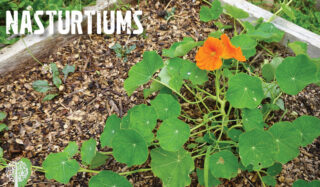
Nasturtiums
Vibrant orange blooms provide nectar and pollen for hummingbirds, bees, moths, and butterflies. Nasturtiums prefer full sun and heat and will start blooming early summer into mid-fall. They are also trap plants because aphids flock to them instead of more valuable garden crops.
Calendula
These short, bushy plants full of orange/yellow, daisy-like flowers provide pollen and nectar for pollinators. Technically, calendula is an herb that grows best in full sun.

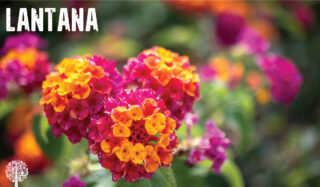
Lantana
Lantana is drought-tolerant and loves full sun and heat! The plant’s clusters of tricolor pink, orange, and yellow blooms are a beacon for hummingbirds.
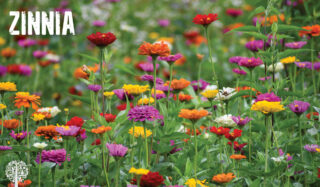
Zinnia
Zinnias, which range from pink to bright orange, bloom from early summer through the first frost. Their colorful blooms make them easy to spot in the garden and provide a continual food source for pollinators looking for a quick snack.
Five Perennials Pollinators Love
Rudbeckia hirta
Also known as black-eyed Susan, this plant enjoys full sun to part shade. Its daisy-like petals and black centers almost glow on a summer evening. Native to the central United States, the plant’s ability to self-seed makes it an excellent choice for any wildflower garden. Hardy to climate zone 4 (-30°C), it will start flowering in June and continue until the end of September. The best part is that bees and butterflies love it.

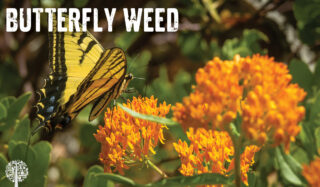
Butterfly Weed
Part of the milkweed plant family, butterfly weed will flower from summer to autumn if in full sun. One of the reasons for the decline in monarch butterfly populations is the lack of milkweed, a food source. Butterfly weed is a host plant for the caterpillars that become butterflies.
Orange California Poppy
A self-seeding perennial that grows in sun or part shade, this beauty provides pollen (but not nectar) for pollinators such as beetles, butterflies, and native bees.

Orange Globeflower
Globeflowers are hardy to – 35°C, grow in full sun to part shade, and bloom from June to September. Perfect for an alpine garden, wildflower garden, or rockery, they attract butterflies en masse all summer.

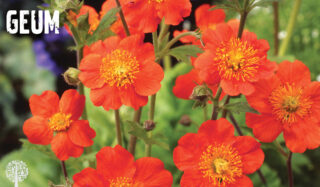
Geum
In climate zone 3 (-35°C) and warmer, the clump-forming Geum can grow over one meter tall and produce bright orange buttercup blossoms on branched stems. It is a perfect pit stop for bees and butterflies looking for lunch.
by Grow Up Conference | Jul 12, 2024 | Cannabis News Wire, Media Partners
- MedCana offers a long list of proprietary essential services to its clients
- The company’s team of pharmaceutical scientists includes some of the world’s most respected chemists
- From initial grow to final product, MedCana helps partners produce pharmaceutical CBD and other extracts that have no equal
As the cannabis industry prepares to enter a new era with a pending schedule change in the Controlled Substances Act (“CSA”), Software Effective Solutions (d/b/a MedCana) (OTC: SFWJ) is committed to being a worldwide force for high-quality cannabis products. To achieve this lofty goal, the company is focused on building the technology, laboratories, growing facilities, and scientific teams needed to provide premium pharmaceutical-grade cannabis extracts to the world (https://cnw.fm/858iB).
Leading the way forward in the cannabis space, the company offers a long list of essential resources and services for its clients. That list includes proprietary blockchain technology to track every product from seed to the growing facility to the final product; a team of expert scientists, engineers and chemists from the United States and Colombia; state-of-the-art laboratory equipment; partners with growing facilities in Colombia; and an impressive international management team from the U.S. and Colombia.
MedCana’s team of pharmaceutical scientists includes some of the most respected chemists in the world. This extraordinary group is committed to ensuring that MedCana customers and partners can create premium pharmaceutical-grade cannabis extracts that satisfy the growing worldwide demand while also meeting the highest industry standards.
Unlike any other software in the market, the company’s proprietary software ensures traceability and quality from seed to products. In addition, one of MedCana’s partners will be a globally certified lab that will provide certification for distribution through the Pharmaceutical Inspection Co-operation Scheme (PIC/S). PIC/S presently comprises 54 participating authorities worldwide, including Europe, Africa, America, Asia and Australia.
As MedCana works to achieve its objective of becoming a worldwide cannabis-market force, the company’s initial emphasis is on partnering with and developing companies in Latin America with a focus in Colombia and partnerships with laboratories, research facilities, and hospitals throughout the world. “MedCana’s advantage is our global view and reach,” the company states. “From initial grow to final product, we’ll be helping partners produce pharmaceutical CBD and other extracts that will have no equal.”
Software Effective Solutions is a global infrastructure and holding company in the cannabis industry. MedCana currently has five companies focused on pharmaceutical cannabis production, as well a software company focused on managing processes for plant-to-patient operations. The recent acquisition of an irrigation and greenhouse technology company rounds out MedCana’s portfolio of holdings.
For more information, visit the company’s website at www.MedCana.net.
NOTE TO INVESTORS: The latest news and updates relating to SFWJ are available in the company’s newsroom at https://cnw.fm/SFWJ
About CannabisNewsWire
CannabisNewsWire (“CNW”) is a specialized communications platform with a focus on cannabis news and the cannabis sector. It is one of 60+ brands within the Dynamic Brand Portfolio @ IBN that delivers: (1) access to a vast network of wire solutions via InvestorWire to efficiently and effectively reach a myriad of target markets, demographics and diverse industries; (2) article and editorial syndication to 5,000+ outlets; (3) enhanced press release enhancement to ensure maximum impact; (4) social media distribution via IBN to millions of social media followers; and (5) a full array of tailored corporate communications solutions. With broad reach and a seasoned team of contributing journalists and writers, CNW is uniquely positioned to best serve private and public companies that want to reach a wide audience of investors, influencers, consumers, journalists and the general public. By cutting through the overload of information in today’s market, CNW brings its clients unparalleled recognition and brand awareness. CNW is where breaking news, insightful content and actionable information converge.
To receive SMS alerts from CNW, text CANNABIS to 888-902-4192 (U.S. Mobile Phones Only)
For more information, please visit https://www.CannabisNewsWire.com
Please see full terms of use and disclaimers on the CannabisNewsWire website applicable to all content provided by CNW, wherever published or re-published: https://www.CannabisNewsWire.com/Disclaimer
CannabisNewsWire
Denver, CO
www.CannabisNewsWire.com
303.498.7722 Office
Editor@CannabisNewsWire.com
CannabisNewsWire is powered by IBN

by Grow Up Conference | Jul 12, 2024 | Media Partners, Stratcann
A new quarterly report from the New Zealand Ministry of Health shows a significant uptick in the volume of cannabis products supplied for medical purposes in the past year.
The report notes, however, that the number of packs of products reported cannot be used to determine the number of prescriptions, patients, or doses.
The most significant increase was for products containing both THC and CBD, followed by CBD-only products. THC-only products are a distant third.
Medical cannabis is considered an “unapproved medicine” in New Zealand, which means it has not been given official permission for sale but can be prescribed by a medical practitioner. The cannabis must be prescribed for a specific brand and then shipped to the registered doctor or pharmacist who wrote the prescription.
A licence to import a controlled drug is required for each shipment unless it is a CBD-only product.
The New Zealand Ministry of Health maintains a registry of medicinal cannabis products that meet the country’s minimum quality standard, both approved and unapproved.
Currently listed are five oral cannabis liquids, four sublingual solutions, 11 oral liquids, 12 dried flower products for inhalation, 11 dried flower products for tea or oral consumption, and two products with consent (Sativex and Epidyolex). Some of these products are connected to Canadian producers or their affiliates, like MedReleaf and Tilray.
New Zealand’s medicinal cannabis framework came into effect on April 1, 2020, following the creation of the Misuse of Drugs (Medicinal Cannabis) Regulations 2019. Prior to that, the only product available was Sativex, for very limited use.
In July, New Zealand announced changes to its medical cannabis framework, which began on July 5 and include changes to export rules and licensing.
A handful of Canadian companies, like Tilray and MedReleaf, have shipped cannabis products to New Zealand and have had a footprint in the country’s domestic operations through local partnerships. Aurora recently announced its first shipment of cannabis to New Zealand earlier this year.
A legalization bill was put to a referendum in New Zealand on October 17, 2020, exactly two years after Canada formally legalized the plant. The referendum, however, failed to gain enough support.
Featured image via Reddit
by Grow Up Conference | Jul 11, 2024 | Media Partners, Stratcann
An investigation team seized 123 kg of cannabis, along with 11.5 kg of cocaine, ready for export at the Port of Montreal in May.
These seizures began with an investigation in February of this year by the US Border Enforcement Security Task Force (BEST)—which works in coordination with Canadian officials—along with the Ontario Provincial Police (OPP), Canada Border Services Agency (CBSA), Peel Regional Police (PRP), Toronto Police Service (TPS) and the Royal Canadian Mounted Police (RCMP).
Then, on June 27, 2024, members from BEST executed seven search warrants in Niagara Falls, Oakville, Brampton and Kitchener with the assistance of the OPP Provincial Asset Forfeiture Unit (PAFU), OPP-led Provincial Guns and Gangs Enforcement Team (PGNG), OPP-led Provincial Weapons Enforcement Unit (PWEU), OPP Urban Search and Rescue, Chemical, Biological, Radiological, Nuclear and Explosive Response Team (UCRT), OPP Digital Forensics and uniform members from the Cambridge, Niagara and Mississauga OPP Detachments as well as CBSA, PRP, TPS and the RCMP.
Two men, Darko Tambur, age 37, of Niagara Falls, and Damir Dedic, age 53, of Kitchener, have been charged with Trafficking Schedule I Substance, Exporting Schedule I Substance, and Importing and exporting cannabis
Tambur was arrested and released and is scheduled for a first appearance on August 12, 2024, in Milton. An arrest warrant has been issued for Dedic. The investigation is ongoing.
“This investigation shows the true value of collaboration with our provincial and national policing partners,” said OPP Detective Superintendent Lee Fulford, Organized Crime Enforcement Bureau. “Criminal networks continue to exploit our borders, and with partnerships such as the Border Enforcement Security Task Force, we can curb their importation and exportation attempts. We will continue to investigate any person or group involved in criminal activity with a connection to our borders, and beyond.”
Reports of cannabis experts into the US and other markets are not uncommon. In February, police in Québec said they arrested three people in connection with the illicit export of cannabis to the United States.
Canadian cannabis also often finds its way into illicit markets overseas.
In June, while examining outbound luggage at the Halifax Stanfield airport, CBSA seized 32 kg of cannabis. On June 18, CBSA officers at the Montreal Maritime and Rail Services intercepted 309.52 kg of Hashish hidden in cans of tomato paste.
In May,border officials intercepted a package at the Montréal-Trudeau Airport that contained 120 kg of dried cannabis.
In April, Montreal Maritime and Rail ServicesCBSA officers seized 275 kg of dried cannabis hidden in bags of wood pellets.In February, CBSA officials at Vancouver International seized over 180 kg of cannabis. In January, the CBSA intercepted 310 kg of cannabis in a container exported from Canada to the UK at Montréal Marine and Rail Services.
Officials in Hong Kong have reported seizing large amounts of cannabis, often from Canada, as have officials in Italy, where more than 100 kilograms were discovered earlier this year by police.
Despite stiff penalties, Hong Kongers, especially young people, are illegally importing hundreds of kilograms of cannabis from Canada and the US, local officials noted in 2020.
Most recently, Hong Kong customs seized 120 kilograms of cannabis from Canada in August 2023 in a shipment listed as chickpeas, and another 100 kilograms on July 25, declared as leisure patio chairs.
A relatively recent article in the Dutch newspaper BN DeStem noted a large seizure of cannabis en route from Canada to Germany, asking if North America was replacing the Netherlands as a source of cannabis in the region.
The US saw a similar spike in large seizures of cannabis while the border was closed to non-essential traffic. Canadian cannabis making its way to the US is not new, but with more US states legalizing, distributors of cannabis looking for markets can still utilize US channels to send cannabis to foreign shores.
Similarly, as more US states legalize, the allure of higher prices abroad can be difficult to resist for Canadian producers in a saturated market.
Featured image shows cannabis from a seizure of 310 kg of cannabis in a container exported from Canada to the UK at Montréal Marine and Rail Services. Via Twitter.
Related Articles
by Grow Up Conference | Jul 11, 2024 | Cannabis News Wire, Media Partners
The recreational cannabis legalization campaign in Florida is up against a significant new challenge: heavily funded opposition. Florida Governor Ron DeSantis (R) recently created the Florida Freedom Fund, allowing him to receive unlimited donations aimed at achieving the fund’s specific goals.
A primary objective of the fund is to thwart Amendment 3, which proposes to legalize recreational marijuana and permit sales at already-existing medical cannabis dispensaries. In the unlikely event that DeSantis is successful in garnering national attention and support for this cause, the legalization of recreational marijuana may not be supported by a larger financial advantage throughout its campaign.
Smart and Safe Florida spokesperson Morgan Hill noted that a recent survey indicated 66% of probable voters support the ballot measure. In Florida, a constitutional amendment must receive the support of at least 60% of voters to pass, a rather high percentage.
In contrast, Ohio’s recreational cannabis was approved by more than 57% of voters last year. The opposition there managed to collect contributions totaling only $927,900, while the pro-legalization campaign raised more than $6.7 million.
Florida represents a crucial market for marijuana businesses, being the largest domestic medical cannabis market, with strict state laws limiting the number of participants. The stakes in Florida are high, especially because it’s a presidential battleground state, and the legalization measure will appear on the same ballot as President Joseph Biden and Florida resident and presumed GOP contender Donald Trump.
Biden is anticipated to focus some of his campaign on marijuana reform to win over young people following his executive order from 2022, which prompted the U.S. DOJ to propose cannabis rescheduling. Trump has not yet taken a stance on Florida’s recreational cannabis legalization, but DeSantis, a former presidential contender, has expressed strong opposition.
The DeSantis fund is also targeting a measure that seeks to overturn a law he signed earlier prohibiting abortion procedures beyond the six-week pregnancy mark. The governor has labeled both measures as quite excessive.
Political analysts speculate that the confluence of these concerns may boost female and younger voter turnout, which might help Democratic candidates such as Biden.
There’s been significant fundraising done to support the two measures. The Tampa Bay Times reported that the abortion protection proposal has received $12 million in contributions since April. In the meantime, supporters of cannabis legalization have invested more than $40 million in Florida. The leading contributor remains Trulieve, which added another $5 million in April.
Marijuana companies such as Innovative Industrial Properties Inc. (NYSE: IIPR) will be hoping that, at the end of the day, the true will of the people of Florida carries the day on polling day regardless of which way the ballot swings.
About CNW420
CNW420 spotlights the latest developments in the rapidly evolving cannabis industry through the release of an article each business day at 4:20 p.m. Eastern – a tribute to the time synonymous with cannabis culture. The concise, informative content serves as a gateway for investors interested in the legalized cannabis sector and provides updates on how regulatory developments may impact financial markets. If marijuana and the burgeoning industry surrounding it are on your radar, CNW420 is for you! Check back daily to stay up-to-date on the latest milestones in the fast -changing world of cannabis.
To receive SMS alerts from CNW, text CANNABIS to 888-902-4192 (U.S. Mobile Phones Only)
For more information, please visit https://www.CannabisNewsWire.com
Please see full terms of use and disclaimers on the CannabisNewsWire website applicable to all content provided by CNW, wherever published or re-published: https://www.CannabisNewsWire.com/Disclaimer
CannabisNewsWire
Denver, CO
www.CannabisNewsWire.com
303.498.7722 Office
Editor@CannabisNewsWire.com
CannabisNewsWire is powered by IBN
by Grow Up Conference | Jul 11, 2024 | Media Partners, Stratcann
RCMP in Red Deer, Alberta, say they recovered some $19,000 worth of stolen cannabis, along with firearms, ammunition, and other stolen property, while executing a search warrant on July 3.
Police say they believe the cannabis was connected to a series of break-ins at a retail location in Wetaskiwin.
“As a business, when you lose $19,000 worth of product in a break-and-enter that has a significant impact on your ability as a business owner to run your business. Recovering some of the product will hopefully help to mitigate that,” Sgt. Robert Daisley of Red Deer RCMP’s Crime Reduction Team (CRT) said.
Two individuals known to police, Matthew Stewart, 38, and Tia Cobbe, also 38, both of Red Deer, were arrested. Both face numerous charges.
In addition to the stolen cannabis and weapons, police say they seized methamphetamine and a collection of hockey cards that includes a Wayne Gretzky rookie card.
“People who engage in property crime often work together in networks; mostly informal, not like gangs, but people who are involved in this kind of stuff know each other,” added Daisley. “I think, although it’s not organized crime, it will have an impact on that social network of people who are involved in these.”
The cannabis products are believed to be connected to a series of break-ins at a retail location in Wetaskiwin.
Stewart is scheduled to appear in court on July 30, 2024, and Cobbe on July 12, 2024. Both remain in custody and are scheduled to appear at the Alberta Court of Justice in Red Deer.
Wetaskiwin RCMP were looking for two suspects connected to an alleged break-in at a cannabis store near Wetaskiwin in May. The two suspects made up with products from the store.
In January, Wetaskiwin RCMP responded to an armed robbery at Budzz and Roses cannabis store in Millet, Alberta. A police report notes the suspects took cash and cell phones but not products.
Cannabis stores in Canada continue to be targets for robbers and burglars. In March, a man in Toronto was arrested following several cannabis store robberies. In December 2023, police in Calgary identified suspects in a string of cannabis store robberies.
Police in Edmonton were searching for two suspects in a cannabis store robbery on June 17 by a pair local police say were involved in other armed robberies and carjackings.
In late 2023, Calgary Police were investigating a string of cannabis store robberies.
Robberies and burglaries are not exclusive to cannabis stores. Two cannabis producers in BC were robbed in early-morning heists in 2023, as well.
Related Articles

by Grow Up Conference | Jul 11, 2024 | Grow Opportunity, Media Partners
The global cannabis industry continues to evolve, with significant developments in various European countries shaping the future of cannabis policy and business. This update covers recent progress in Germany, Switzerland, Italy and Malta, highlighting their unique approaches and the implications for the broader market. Additionally, updates are included on the expansion of Canadian exports.
Germany: Legalization & medical market growth
Germany is making strides towards becoming a major player in the European cannabis market. In April 2023, the German government approved a plan to legalize recreational cannabis use, making it the largest European nation to do so. The proposed legislation allows adults to possess up to 25 grams of cannabis and grow a limited number of plants for personal use. The government aims to implement a controlled distribution system to ensure product safety and reduce black market activities.
Since April 1, 2023, the German medical cannabis market has seen significant growth. Changes in regulations have streamlined access for patients, leading to a notable increase in prescriptions and dispensations. The introduction of more efficient pathways for doctors to prescribe cannabis and the availability of a wider range of products have contributed to this expansion. Analysts predict that the German medical cannabis market could reach up to €1.5 billion annually by 2025.
Switzerland: Pilot programs and decriminalization
Switzerland is taking a cautious but progressive approach to cannabis. In January 2022, the Swiss government launched pilot projects to test the effects of legalizing cannabis for recreational use. These studies aim to gather data on consumption patterns, public health impacts, and the effectiveness of regulatory measures.
Additionally, Switzerland has decriminalized the possession of small amounts of cannabis, allowing adults to possess up to 10 grams without facing criminal charges. This shift towards a more lenient stance on cannabis reflects changing public attitudes and a desire to explore harm reduction strategies.
The pilot projects are expected to inform future policy decisions, potentially leading to broader legalization and a regulated market. Switzerland’s methodical approach could provide valuable insights for other countries considering similar reforms.
Malta: Pioneering legalization in Europe
Malta made headlines in December 2021 by becoming the first European Union country to legalize the possession and cultivation of cannabis for personal use. The legislation allows adults to possess up to seven grams of cannabis and grow up to four plants at home. Additionally, non-profit cannabis clubs can distribute cannabis to their members.
Malta’s progressive approach aims to balance personal freedoms with public health considerations. The government has emphasized education and harm reduction, alongside strict regulations to prevent misuse. Malta’s pioneering stance could serve as a catalyst for other EU countries considering similar reforms. The success of Malta’s model will likely be closely watched, offering insights into the practicalities and societal impacts of legalized cannabis.
Canadian Exports: Leading the global market
Canada continues to lead in the international cannabis market, particularly in exports. Canadian cannabis companies are leveraging their experience and regulatory advantages to supply medical cannabis to emerging markets worldwide. Canadian exports have been growing, with shipments to countries like Germany, Australia and Israel. This trend underscores Canada’s role as a global cannabis hub and highlights the importance of international trade in the cannabis sector’s growth.
In conclusion, the international cannabis landscape is rapidly evolving, with significant developments in Germany, Switzerland, Italy and Malta. Each country is navigating its unique path towards reform, influenced by cultural, legal and political factors. As these nations experiment with different models of legalization and regulation, they contribute valuable lessons that will shape the future of global cannabis policy.
The progress in these countries demonstrates the growing acceptance and normalization of cannabis, paving the way for a more integrated and regulated international market. The expansion of the medical cannabis markets in Germany and Australia, coupled with Canada’s increasing medical cannabis exports, underscores the dynamic and interconnected nature of the global cannabis industry.
Deepak Anand is the principal at ASDA Consultancy Services. He is a wealth of knowledge and experience in the global pharmaceutical and cannabis industries, and serves on the boards of pharmaceutical associations across North America and Europe.






Recent Comments