
by Grow Up Conference | Jun 25, 2024 | Cannabis News Wire, Media Partners
Florida’s initiative to legalize recreational marijuana is causing a significant divide within the state’s medical cannabis sector. Florida’s largest medical cannabis company, Trulieve Cannabis Corp. (CSE: TRUL) (OTCQX: TCNNF), is supporting Amendment 3, which seeks to legalize recreational cannabis for adults over age 21.
However, approximately 2,000 doctors certified to prescribe medical marijuana are expressing concerns. They warn that this amendment could disrupt access for the state’s 882,000 medical-cannabis patients.
The influx of recreational users could deplete the marijuana products and specific strains that patients rely on for conditions such as severe pain. The passage of Amendment 3 may also result in a reorganization of regulations, giving the Republican-led legislature, which has always favored stricter rules, more authority.
Dr. Michelle Beasley, a Pensacola-based cannabis doctor, finds herself in a difficult position. Although she supports legalization, she is wary of the “poison pill” language in the medical cannabis legislation. This provision states that the law will expire if voters pass another marijuana-related amendment.
The 2017 medical cannabis law, approved by the legislature following the 2016 voter-approved amendment for medical use, contains a sunset clause that mandates the law’s expiration six months after any new marijuana-related constitutional amendment is adopted. The intention was to create a single regulatory framework. However, it also grants the Republican-controlled legislature greater freedom to regulate the industry, potentially reverting to the restrictive low-THC law of 2014 if no new regulations are passed.
Amendment 3 is up for vote in November and requires 60% of the vote to pass. If enacted, it would enable Florida’s authorized medical-cannabis dispensaries to sell to the general public; the legislature would decide on future recreational licenses.
There’s nothing to worry about, according to the campaign supporting Amendment 3. Medical cannabis providers and patients, they claim, are protected by the amendment. Smart and Safe Florida, the committee that supports the legislation, argues that any sunset would be in violation of the 2016 medical cannabis amendment and that the wording referring to “poison pill” is meaningless. They do admit, however, that the sunset provision is not guaranteed.
One of the main proponents of the 2017 law, Senator Jason Brodeur, said that new regulations would be required. He referred to the financial impact statement for 2023, implying that a straightforward interpretation of the wording would necessitate a fresh start.
Over the years, there have been unsuccessful attempts to remove the sunset clause. The most recent attempt failed last year when a bill to limit the amount of THC in recreational cannabis failed to pass.
Doctors are increasingly concerned as polling shows that Amendment 3 could surpass the 60% voting threshold. A Fox News poll released recently indicates that 66% of voters support legalization.
Not all physicians think the sunset clause will be implemented. DocMJ CEO Aaron Bloom doubts the sunset clause is a threat but worries that dispensaries will shift focus from patients to recreational users. Bloom notes that some clinics have already begun stocking items intended for recreational use. He worries that if the focus changes, dispensary employees might not be properly trained to help patients and might even suggest inappropriate goods.
Beasley and others anticipate a decline in business from patients needing follow-up appointments, which are required by the state to continue using medical cannabis. Further, she notes that some patients might find it cheaper to purchase recreational cannabis, avoiding the approximately $500 in doctor visits and annual state fees associated with the medical program. Ultimately, the decision rests with the legislature and voters.
About CNW420
CNW420 spotlights the latest developments in the rapidly evolving cannabis industry through the release of an article each business day at 4:20 p.m. Eastern – a tribute to the time synonymous with cannabis culture. The concise, informative content serves as a gateway for investors interested in the legalized cannabis sector and provides updates on how regulatory developments may impact financial markets. If marijuana and the burgeoning industry surrounding it are on your radar, CNW420 is for you! Check back daily to stay up-to-date on the latest milestones in the fast -changing world of cannabis.
To receive SMS alerts from CNW, text CANNABIS to 888-902-4192 (U.S. Mobile Phones Only)
For more information, please visit https://www.CannabisNewsWire.com
Please see full terms of use and disclaimers on the CannabisNewsWire website applicable to all content provided by CNW, wherever published or re-published: https://www.CannabisNewsWire.com/Disclaimer
CannabisNewsWire
Denver, CO
www.CannabisNewsWire.com
303.498.7722 Office
Editor@CannabisNewsWire.com
CannabisNewsWire is powered by IBN

by Grow Up Conference | Jun 25, 2024 | Media Partners, Stratcann
Organigram Holdings Inc. has taken a minority stake in German cannabis company Sanity Group GmbH, giving them a foothold in the German market.
In an announcement on June 24, the New Brunswick-based producer says the $21 million investment comes from the proceeds of its Jupiter strategic investment pool from British American Tobacco.
Organigram could also invest approximately $4.5 million as part of a second tranche of the unsecured convertible note for future opportunities to be pursued by Sanity, subject to the satisfaction of certain conditions.
Sanity controls about 10% of the current German medical cannabis market with its brand “avaay” and a network of 2,000 pharmacies and 5,000 physicians. Sanity is also participating in a recreational cannabis pilot program in Switzerland, with one store currently operational, a plan for more, and an expected investment in distribution channels in the market.
Organigram’s investment into Sanity Group builds on its previous supply agreement with the German company in 2023 to distribute its cannabis into the German market, with Sanity committing to buy even more from the New Brunswick producer. The new commercial agreement also considers allowing Ogranigram to sell its own branded cannabis to the German market.
Once Organigram receives EU-GMP certification at its Moncton facility, a requirement to sell into the German market, Sanity Group will move its annual purchase commitment to a percentage of Organigram’s dried flower offerings for the European market. Organigram says it expects to complete its final EU-GMP audit before the end of 2024.
“A meaningful presence in Germany and Europe are essential to achieving our ambitions to be a global cannabis leader, sasaysid Paolo De Luca, Chief Strategy Officer of Organigram. “We believe that after Canada, Germany will emerge as one of the more promising markets under a nationally legal model.
“With its evolving program for medical cannabis and recent limited legalization for recreational consumption, Germany may eventually adopt a full adult-use cannabis framework. This growth opportunity is magnified by positive regulatory developments in several neighbouring European jurisdictions where Sanity Group is expanding its presence,” he concluded.
Finn Hansel, co-founder and CEO of Sanity Group, said:
“We are extremely pleased to close this strategic financing with Organigram, which has consistently demonstrated itself to be a leader in the highly competitive and regulated Canadian cannabis market. With its commitment to responsible R&D, innovation and product development, including through its relationship with BAT (British American Tobacco), we feel that we have chosen a partner that will support us in becoming a leader in the rapidly expanding legal European markets.
Germany launched its new cannabis rules on April 1, 2024. According to Cannabis Data Company BDSA Germany is estimated to bring in more than $2 billion in 2024 and more than $5 billion by 2027.
Related Articles
by Grow Up Conference | Jun 25, 2024 | Media Partners, Stratcann
A chain of Indigenous-branded retail stores that sold cannabis in Ontario which police have targeted in two rounds of raids for operating without a licence has re-opened—but this time without cannabis, at least for the time being.
On June 5, Ontario Provincial Police (OPP) executed nine search warrants in an attempt to shut down six “Indige Smoke” cannabis stores operating in various locations in the province. The chain is now advertising on social media that several of these locations have reopened in some capacity as of Sunday, June 23.
Until the owners of the chain can successfully challenge the raids in court through a constitutional challenge, the company says it will be only selling tobacco products, not any cannabis, as they were before the raids. The store’s website still advertises cannabis for sale.
The company’s Instagram account first posted on June 22 that its landlords were not allowing them to re-enter these properties, but a subsequent post later the same day said they had regained control of the stores and would be reopening the following day. A follow-up post on June 23 then instructed customers to visit sea cans behind or next to some of the stores’ previous locations.
Police estimate they seized around $1 million worth of cannabis in the raids in early June, along with weapons and other equipment. Eleven people were arrested and charged with 34 offences. They were released from custody and will appear before the Ontario Court of Justice in St. Catharines on July 18, 2024.
These raids were at least the second time police have targeted the Indige Smoke stores. In March, three were shut down, seizing products and arresting three people. Those stores were quickly opened again following the raids, according to posts on their Instagram account, although at least one location had a notice of Closing Orders posted as well.
While some Indigenous and First Nations activists have argued that they can operate cannabis businesses without provincial or federal oversight, the provincial and federal governments have disagreed. In a recent court case in Nova Scotia, a judge rejected an attempt by several Indigenous cannabis store owners in the province to argue they can operate without provincial approval but said he would welcome a “stronger” argument along the same lines.
Enforcement of provincial cannabis laws is a jurisdictional and political challenge for provinces, often taking different enforcement approaches. For example, the British Columbia government has said that its cannabis laws apply even within First Nations communities but that they choose not to enforce them in most cases. However, law enforcement agencies have recently conducted raids on several of these stores.
New Brunswick, on the other hand, has said it cannot or will not take enforcement action against unlicensed cannabis stores operating within First Nations reserve lands. Police in both provinces, though, have taken enforcement action against unlicensed cannabis stores operating outside of First Nations reserve lands, even if owned and operated by Indigenous peoples.
Such jurisdictional and legal complexities have played out in Ontario, as well. In 2022, crown prosecutors dropped all charges against the owner of an unlicensed Indigenous-owned store operating on traditional First Nations territory in southwestern Ontario that OPP had raided several years prior.
That store subsequently opened a new location in late 2022 in London, Ontario, which is still in operation today.
Featured image from Instagram, showing the new tobacco-only store next to an Indige-Smoke location.

by Grow Up Conference | Jun 25, 2024 | Garden Culture Magazine, Media Partners
Do you plant marigolds with your tomatoes and radishes with your leafy greens?
Using sacrificial or companion plants is a natural pest control method that avoids pesticides and other toxins in the garden. These plants act as a decoy for slugs, snails, white flies, and other pests looking for a snack in the veggie patch. Although their veracious appetites are frustrating for gardeners, these pests also benefit the soil and the garden through pollination. The sacrificial plant provides a food source while keeping the rest of the garden out of danger.
Sow or plant sacrificial plants early in a perimeter around what you hope to protect. Each decoy attracts different pests, but a good rule of thumb is to plant one decoy plant for every six you want to save.
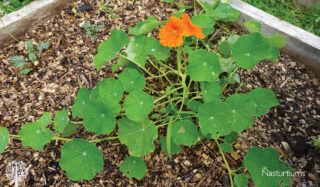
Nasturtiums
Aphids, blackflies, and whiteflies love nasturtiums. Plant around roses and the perimeter of the vegetable garden. Before long, the stems will be covered with munching insects. Plant nasturtiums in succession throughout the growing season. As each crop becomes saturated with pests, dispose of it in the compost. Not only do nasturtiums attract the unwanted, but they also add bright color and interest to your space.
Primroses
To prevent vine weevils from feasting on rhododendrons or the tender shoots of clematis, pot up primroses and place them around the main plant. When the primrose leaves fall off, it’s a sign that the nasty weevil larvae are in the primrose pots and must be disposed of immediately.
Stinging Nettle
Aphids flock to nettles, so they are good choices for rose beds where aphids tend to feast willingly on new growth or close to eggplant and tomato crops. Plant early in the season. Nettles tend to spread, so consider planting them in pots that you can place discretely in the garden bed. Doing so will keep the garden looking tidy and also prevent you from being stung by them when watering or pruning.

Marigolds
Plant marigolds in succession throughout the growing season. These pretty annuals are perfect companions for most vegetable crops and help keep the slugs and snails at bay.

Radish
Plant radishes liberally throughout the vegetable patch, and the flea beetle and root fly will not pay attention to the cabbage.
Lavender
The strong lavender scent we love is famous for deterring many biting bugs away from other plants. As a bonus, lavender attracts beneficial insects such as bees and butterflies to the garden.
Sunflowers
Once fully matured, sunflowers are like a magnet for unwanted insects such as stink bugs, keeping your sweetcorn and okra crops safe.
Mint
This powerfully scented herb deters carrot flies, flea beetles, onion flies, aphids, and black flies. Use it as a sacrificial ground cover and in the kitchen!
Onion
The scent of onions deters aphids. Growing them alongside strawberries can also help prevent moldy fruit.
Sage
Many gardeners have problems with rats. They don’t like the smell of green and white sage and will keep away if they pick up the scent. Plant it throughout the veggie patch or hosta garden to keep the rodents away.
Lemongrass
The strong citrus scent of lemongrass is also disgusting to mice and rats!
Daffodils
Plant daffodils to keep the squirrels away. They despise the smell of the flowers and bulbs. After the spring favorite finishes for the season, leave the bulb in the ground, and the garden will remain squirrel-free.
These decoy plants will add color and interest to the garden and keep the beneficial insects happy and those with big appetites so the plants you love the most remain free of pests.


by Grow Up Conference | Jun 25, 2024 | Cannabis Prospect Magazine, Media Partners
Weedmaps, a leading technology and software infrastructure provider to the cannabis industry, and BLAZE® Solutions, Inc. (“BLAZE”), an award-winning cannabis retail technology provider, today announced their strategic partnership that integrates Weedmaps’ product database with BLAZE, creating a Global Product Catalog for BLAZE’s point-of-sale and e-commerce menus. By connecting BLAZE with Weedmaps’ catalog of more than 340,000 unique products, retailers have a reduced need for the manual entry of product data, resulting in greater operational efficiency, accurate and consistent information, and a better consumer shopping experience.
“This global catalogue builds on our mission to provide enterprise features that increase operational efficiencies and normalize data across multiple retail locations,” said Chris Violas, CEO of BLAZE. “During development, our product team took a new approach to utilize product data directly from the brands that made them, making Weedmaps the obvious choice for this partnership given their scale.”
“As our industry continues to grow, data standardization ensures retailers have the right products, at the right location, all at the right time, providing them with the ability to standardize and visualize product data so they can appropriately act on it,” said Duncan Grazier, Chief Technology Officer at Weedmaps. “This integration with BLAZE is a significant step forward in our continued collaboration with cannabis technology providers to develop a universal product catalog for operators and cannabis consumers that delivers on breadth, depth, accuracy, and quality.”
Recognizing the cannabis industry’s struggles with the fragmentation of retail data, the Weedmaps and BLAZE catalog integration simplifies the inventory creation process by auto-populating product information including images, descriptions and more. This new feature not only saves time, but also reduces errors from manual data entry, while providing flexibility to modify information like pricing, product tags, potency, and weight variances.
Retailers interested in learning more about the newly launched global catalog powered by Weedmaps can watch this demo video, or request more information at BLAZE.me.
About WM Technology
Founded in 2008, WM Technology operates Weedmaps, a leading cannabis marketplace for consumers, as well as a broad set of eCommerce and compliance software solutions for cannabis businesses and brands in U.S. state-legal markets. WM Technology holds a strong belief in the power of cannabis and the importance of enabling safe, legal access to consumers worldwide. The Company is committed to advocating for full U.S. legalization, industry-wide social equity, and continued education about the plant through key partnerships and cannabis subject matter experts. Headquartered in Irvine, California, WM Technology supports remote and hybrid work for eligible employees. Visit us at www.weedmaps.com.
About BLAZE®
Founded in 2015 by technology and cannabis entrepreneurs, BLAZE powers cannabis retail operations with intuitive technology solutions. The award-winning BLAZE software suite provides point-of-sale, delivery, e-commerce, and integrated payments to cannabis retailers across North America. Built for enterprise-level retailers, BLAZE continues to set the gold standard for customer service and innovation. BLAZE recently received their SOC 1 and 2 type II certifications strengthening their position as a trusted leader in the cannabis technology industry. In 2023, BLAZE ranked 916 in the Inc. 5000 Fastest Growing Private Companies. BLAZE.me.

by Grow Up Conference | Jun 25, 2024 | Media Partners, Psychedelic News Wire
About a week ago, an advisory committee to the U.S. Food and Drug Administration (FDA) rejected evidence supporting the approval of MDMA as an alternative treatment for post-traumatic stress disorder (PTSD). This is a deflating moment for many in psychedelic research who have, for years, conducted trials on the drug in an effort to gain approval for commercial distribution.
The application reviewed by the advisory committee was presented by Lykos Therapeutics, which concluded phase 2 and 3 trials investigating the effectiveness of MDMA-assisted therapy in managing post-traumatic stress disorder. In their report, the advisors revealed that they went through the research and cited various missteps and shortcomings on the trials conducted.
This comes as former participants of the trial claimed that adverse events weren’t reported by the company, including suicidality experienced after the treatment. Additionally, there was bias during the trials that may have skewed the findings.
Other issues with the study included the fact that roughly 40% of trial participants had tried MDMA before the study. Additionally, researchers didn’t conduct lab work on MDMA’s safety profile or collect data on each participant’s experience with the drug. In addition, it doesn’t help that a report released after the trials also questioned the data’s validity, which only increased concerns.
The advisory committee also raised concerns about the future of other psychedelics currently being studied for their therapeutic potential. This comes as scientists globally conduct hundreds of trials on these drugs and investors inject billions into research on psychedelics such as LSD, ketamine and psilocybin.
Despite this setback, some are still hopeful that the Food and Drug Administration will approve the treatment in the future. Dr. Srinivas Rao believes that the probability of complete rejection is low. Rao, CEO of atai Life Sciences N.V. (NASDAQ: ATAI), notes that there is a lot of pressure for the drug to get approved. In the event that the drug is approved, Rao posits that the FDA may provide strict requirements and safeguards to conduct additional research once MDMA is on the market.
Matthew Johnson, a senior researcher for the Center of Excellence for Psilocybin Research and Treatment at mental-health provider Sheppard Pratt, believes that even if the drug isn’t approved by the August deadline, MDMA will get approved eventually.
Alan Davis, Ohio State University’s director of the Center for Psychedelic Drug Research and Education, believes that while the rejection is a setback for Lykos Therapeutics, it isn’t for the field as a whole. Davis notes that the main message to gain from the committee’s report is that research will need to be done more thoughtfully now.
About PsychedelicNewsWire
PsychedelicNewsWire (“PNW”) is a specialized communications platform with a focus on all aspects of psychedelics and the latest developments and advances in the psychedelics sector. It is one of 60+ brands within the Dynamic Brand Portfolio @ IBN that delivers: (1) access to a vast network of wire solutions via InvestorWire to efficiently and effectively reach a myriad of target markets, demographics and diverse industries; (2) article and editorial syndication to 5,000+ outlets; (3) enhanced press release enhancement to ensure maximum impact; (4) social media distribution via IBN to millions of social media followers; and (5) a full array of tailored corporate communications solutions. With broad reach and a seasoned team of contributing journalists and writers, PNW is uniquely positioned to best serve private and public companies that want to reach a wide audience of investors, influencers, consumers, journalists and the general public. By cutting through the overload of information in today’s market, PNW brings its clients unparalleled recognition and brand awareness. PNW is where breaking news, insightful content and actionable information converge.
To receive SMS alerts from PsychedelicNewsWire, text “Groovy” to 888-902-4192 (U.S. Mobile Phones Only)
For more information, please visit https://www.PsychedelicNewsWire.com
Please see full terms of use and disclaimers on the PsychedelicNewsWire website applicable to all content provided by PNW, wherever published or re-published: https://www.PsychedelicNewsWire.com/Disclaimer
PsychedelicNewsWire
San Francisco, CA
www.PsychedelicNewsWire.com
415.949.5050 Office
Editor@PsychedelicNewsWire.com
PsychedelicNewsWire is powered by IBN

by Grow Up Conference | Jun 25, 2024 | Cannabis Prospect Magazine, Media Partners
ROSE LifeScience Inc. (“ROSE”), a major Québec cannabis producer, distributor, and marketer, today announced a significant upgrade to its top-selling 28g dried-flower product Big Pleasures by Pure Laine. ROSE is adding Oxygen Absorbers to each package to improve product quality.
Oxygen Absorbers, new to the cannabis industry, are designed to optimize packaging environments by significantly reducing oxygen levels. Used in the food industry for decades, oxygen absorbers are small, sealed packets containing iron powder which absorb oxygen from inside, preventing defects like browning and aroma loss while shelf life and freshness are extended.
“Big Pleasures is addressing common quality improvements requested by consumers with the addition of Oxygen Absorbers” said Davide Zaffino, President and CEO, ROSE. “We are thrilled to introduce this proven technology in our top-selling Big Pleasures by Pure Laine 28g dried-flower product, a package size where maintaining aroma and freshness is meaningful.”
Big Pleasures by Pure Laine is a 28g rotating dried-flower product available in select retail stores across Canada, and was the top selling SKU in Canada in May1. Updated packaging with Oxygen Absorbers is expected to roll out in early July.
About Pure Laine
ROSE LifeScience Inc. created Pure Laine to make quality cannabis more accessible for consumers. By putting classic, simple, reliability behind its wide selection of product size, format, aromas, and flavours, Pure Laine makes consumer choices simple in a rapidly evolving marketplace.
About ROSE LifeScience Inc.
ROSE LifeScience is committed to ensuring that consumers benefit from the responsible production, sale, and consumption of cannabis in Québec and across Canada. From cannabis cultivation to marketing, commercialization, and logistics, the Huntingdon, QC company plays a key role in the Québec market. In addition to its own products and expertise, ROSE provides specialized industry services to selected producers to encourage a diversified offering in the Québec and Canadian markets. Rose LifeScience is majority owned by Village Farms International (Nasdaq: VFF) with the balance owned and operated by its Québec-based founders. For more information, visit roselifescience.ca.
by Grow Up Conference | Jun 25, 2024 | Cannabis Prospect Magazine, Media Partners
In their comprehensive new book, “>100g/sqft:The New Cultivation Standard,” experienced growers Chris O’Ferrell and Luca Boldrini explore the intricacies of commercial cannabis cultivation, with a focus on best practices that aim to achieve yields greater than 100 grams per square foot. The days of $3,000 wholesale pounds are now a distant memory. As legalization continues to spread across the United States, competition has greatly increased and costs have skyrocketed. The industry’s margins are razor thin – and ongoing regulatory costs, taxation and other factors continue to eat away at profits. The book is available now at Greaterthan100g.com.
“As growers working in large facilities, both Luca and I have seen a lot of change over the past 10 years,” said Chris O’Ferrell, who currently leads cultivation at Nevada’s Deep Roots Harvest. “The rapid pace of technology has created amazing opportunities to develop innovative cultivation processes that vastly improve quality, yield and overall costs. We wanted to update the conventional wisdom with a book that shares the latest insights on how to achieve these outcomes, which have never been more critical for success.”
Featuring hand-drawn illustrations and beautiful, high-resolution photography, “>100g/sqft:The New Cultivation Standard” makes complex concepts accessible while providing insights on maintaining profitability, prioritizing quality and genetics, and adapting to market fluctuations – crucial elements for anyone working in the field. Established growers or aspiring cultivators looking to refine their techniques will find that “>100g/sqft:The New Cultivation Standard” offers the knowledge and tools needed to excel in the competitive arena of commercial cannabis. In addition, the book’s stunning visuals and wonky attention to detail will provide inspiration for experienced cultivators and home hobbyists alike. Highlights from the book include:
- Detailed breakdowns of the indoor cultivation process, including the latest technology and techniques.
- A blend of stunning hand-drawn illustrations and high-resolution photography detailing every aspect of the cultivation process and outcomes.
- Exhaustive resource glossaries on critical nutrients, common pests and pathogens, cannabis terpenes and cultivation tools.
- Invaluable insights into the science of successful cultivation, focusing on quality, genetics, and profitability in a fluctuating market.
“If a cultivation site isn’t currently profitable at $1,000 per pound of indoor flower, and is not producing a gram of cannabis for less than $1 per gram, it will most likely be navigating major profitability concerns within the next five years,” said Luca Boldrini, who has led cultivation at Curaleaf, Standard Wellness and other companies. “The need to produce greater yields of high-quality cannabis at a lower cost has never been more critical, and those goals are attainable using the cultivation strategies we outline in the book.”
As the compliant industry has matured and expanded, economic stressors have put increasing pressure on cannabis cultivation. “>100g/sqft:The New Cultivation Standard” provides an indispensable resource, meticulously detailing the intricate balance between quality, yield and cost in today’s volatile market. For more information or to purchase “>100g/sqft:The New Cultivation Standard,” visit Greaterthan100g.com.
About >100g/sqft: The New Cultivation Standard
Step into the realm of high-yield cultivation with “>100g/sqft:The New Cultivation Standard.” This unparalleled guide, authored by industry veterans Chris O’Ferrell and Luca Boldrini, is a comprehensive gateway to mastering commercial cannabis cultivation. With more than two decades of combined experience, the authors peel back the curtain on the science of growth, offering precise insights and methodologies to cultivate cannabis like a professional. Enhanced with vivid hand-drawn illustrations and high-resolution photography, the guide dives deep into the nuances of successful cultivation and emerges as an indispensable and informative resource for commercial cultivators and home hobbyists alike. For more information, visit Greaterthan100g.com.
by Grow Up Conference | Jun 25, 2024 | Cannabis Prospect Magazine, Media Partners
Hara Supply, the world’s largest manufacturer of cones and combustibles, has announced the expansion of their product offerings to include custom tubes for pre-roll joints and blunts. Among the most popular methods for cannabis consumption, pre-rolled products require proper storage, which is essential for traveling and maintaining freshness. The customizable tubes are manufactured by Hara, and come in a variety of sizes and materials, such as food-grade plastic, shatter-resistant glass, metal, and more.
The pre-roll category’s growth and resilience has become one of the most consistent trends in the cannabis industry. They are securing a significantly larger portion of dispensary sales, accounting for 15.3% of total sales in 2023, up from 11.6% in January 2022—a 32% increase. This makes pre-rolls the third largest category in the U.S. and the second largest in Canada. Consumers are increasingly drawn to pre-rolls for their convenience in purchasing, consumption, and storage. As brands and retailers place greater emphasis on this category, the demand for associated packaging is anticipated to grow.
The tubes are manufactured across Hara’s network of factories in India, a distinct advantage for the company, as the country continues to invest in production infrastructure as part of Prime Minister Modi’s $1.2 trillion “Make-In-India” plan. Currently, companies are actively looking to countries other than China for their manufacturing needs, and India represents a strong alternative in this shift. The lower risk of producing supplies in India means that customers never have to worry about inventory shortages, and increased logistical infrastructure allows for quick and direct shipping and processing. India’s growing manufacturing sector provides a solid foundation for the Hara’s owned production, which will continue to grow in the coming years.
“Hara Supply produces 100 million cones monthly for the industry’s leading MSOs, dispensaries, and CPG brands, and we are excited to leverage our expansive global supply chain network to offer tube packaging for the entire sector,” said Bryan Gerber, Co-founder and CEO of Hara Supply. “Delivering faster lead times, higher quality products, and extensive customization options, we are proud to be the largest and most trusted partner in the industry. Hara will continue to innovate and drive growth for brands as we enter this new phase of cannabis consumer packaged goods.”
Beyond tubes, Hara Supply provides a variety of custom child-resistant packaging for pre-rolled cones, including branded towers, boxes, tins, and other retail packaging solutions. With industry-leading production capacity and a top-tier customer success team, the company ensures all materials are lab-tested to meet the highest health compliance standards, supported by a rigorous AQL-spot check process.
About Hara Supply
Hara Supply is the largest cones and combustibles manufacturer in the world. The company operates 250,000 square feet of the highest-quality production across 15 facilities, producing 100 million cones monthly, and is the first in the industry to be ISO, GMP and Health Canada certified. Hara Supply is driven by a host of business solutions for the market’s top multistate operators, dispensaries and CPG brands, offering custom pre-roll cones and packaging, child safe packaging, product sourcing/manufacturing, and ODM & OEM solutions. For more information, visit harasupply.com.

by Grow Up Conference | Jun 24, 2024 | Media Partners, Stratcann
Retail chain Cannabis Xpress says it plans to open its third store in New Brunswick soon, the first cannabis store in the small town of St. Andrews, located in the back of the historic Kennedy House Hotel.
The St. Andrews store will be the 17th Cannabis Xpress location in Canada, with the rest located in Ontario. It will also be the ninth private retail store in New Brunswick since the province began accepting applications in 2022.
The provincial government’s goal in adding private stores was to bring cannabis to smaller, under-served communities like St Andrews. Tenders were accepted for Blackville, Bouctouche, Caraquet, Chipman, Dalhousie, Grand Bay, Hampton, St. Andrews, Saint-Quentin, and Salisbury. The closest licensed cannabis store to St. Andrews is currently a thirty-minute drive.
The province currently operates 27 public Cannabis NB stores, up from 25 in March, plus its eight private stores and six farmgate stores, for a total of 41.
The province has also said bringing private retailers to these smaller communities will help compete with unlicensed stores that continue to operate there. The New Brunswick government also recently created new powers for inspection officers to handle such stores. However, it maintains that it cannot enforce its cannabis regulations and laws on First Nations lands.
The owner of Cannabis Xpress, Chris Jones, says his company will continue to apply for new licences as they become available and is interested in acquiring other private retailers in the province.
“We are very excited to finally be opening in the town of St. Andrews, which has a strong local population and an even stronger amount of tourists visiting. Our plan is to continue expansion in New Brunswick and be the only private retailer, so we are looking at mergers and acquisition opportunities in New Brunswick.”
Jones also says that operating cannabis stores in New Brunswick is easier than in Ontario, and the two current locations in the Maritime province are the company’s best-performing stores, with the average consumer purchases (baskets) being higher in New Brunswick than in Ontario.
Cannabis Xpress received a $200,000 fine earlier this year from the Alcohol and Gaming Commission of Ontario (AGCO) for alleged violations of the province’s rules that disallow cannabis stores from asking for or accepting inducements from cannabis producers as a condition of selling or giving preferential treatment to products in their stores, also known as paying for shelf space.
Cannabis NB’s most recent quarterly report shows product sales for the three months ending March 31 were $22.8 million, an increase of 11% compared to the same period in 2023.
Early Birds of dried flower increased 9.7% from the same period last year, extract sales (oils and capsules) decreased 9.9%, sales of edibles increased 12.3%, sales of infused beverages increased 4.7%, topicals sales increased 44%, and concentrates sales increased 17%.
New Brunswick has taken some relatively unique approaches to cannabis retail since opening its public-only model in 2018. In addition to being one of only two provinces with a mixed public and private retail mode (BC is the other), it is one of only three provinces (along with Ontario and BC) to have a formal farmgate retail licensing system in place.
There are currently six cannabis producers in New Brunswick now licensed to allow on-site sales direct to consumers, including a cannabis nursery.
In its 2024-2025 Strategic Plan, the provincial cannabis agency also says they are exploring “on-site consumption opportunities” that can increase legal access and “meet the needs of current and potential customers.”





Recent Comments