(Globe Newswire) Toronto — Entourage Health Corp., a Canadian producer and distributor of award-winning cannabis products, announced today its financial results for the fiscal year that ended December 31, 2023. The company reported a total revenue of $54.1 million, mirroring the previous year’s performance, demonstrating resilience in a competitive market.
“In 2023, Entourage made significant strides, advancing production and diversifying our market presence with innovative products,” notes George Scorsis, CEO and executive chair. “Dime Bag’s success is a prime example—quickly rising to become one of Ontario’s fastest-growing pre-roll brands and maintaining its market leadership for two consecutive quarters. Driven by surging demand for our products and the effectiveness of our enhanced business model, we’re achieving growth while improving cost efficiency, firmly establishing ourselves in a favourable financial position.”
Summary of results
For the Year-Ended
Dec. 31, 2023
Dec. 31, 2022
($000’s)
($000’s)
Total revenue
54,115
54,535
Net revenue (less Excise Tax)
40,713
40,892
Gross (loss) before changes in fair value
2,390
(9,189)
Gross margin % before changes in fair value
5.9%
(22.5%)
Loss and comprehensive loss
(46,168)
(123,146)
EBITDA*
(21,320)
(99,717)
As at
Dec. 31, 2023
Dec. 31, 2022
($000’s)
($000’s)
Cash and cash equivalents
11,154
9,075
Inventory
10,010
14,089
Biological assets
(–)
696
Working Capital
(146,909)
(101,794)
“In the past year, we have achieved positive results that are a solid reflection of the discipline we have put into our business and the committed work of our team members,” shared Vaani Maharaj, CFO. “We’ve fine-tuned our production methodologies, identified efficiencies, and significantly reduced expenditures, collectively forging a robust cost-saving framework. We have also adopted a data-centric strategy, giving insights into our consumer’s evolving preferences and behaviours. The impact is twofold: we are strengthening customer satisfaction and driving loyalty while achieving a more agile business.”
Advertisement
Full year 2023 financial highlights
For the twelve months ended December 31, 2023, Entourage recorded total revenue of $54.1 million, compared to $54.5 million for the fiscal year ended December 31, 2022. This shows stability despite significant reductions in operating expenses.
Cost of Goods Sold (COGS) was ($38.3 million) representing a decrease of 23% compared to the previous year. Improved inventory management practices, strategic sourcing, and process optimization contributed to the reduction in COGS.
For the twelve months ended December 31, 2023, gross profit before changes in fair value increased 126% to $2.4 million from ($9.2 million) in the previous year. The reduction is attributed to the integration of automation, premium product offerings, and decreased production costs. Moreover, the Company has strategically aligned its market strategies to better adapt to consumer demands, instilling confidence in its ability to navigate changing market conditions.
Selling, General, and Administrative (SG&A) expenses for 2023 totalled $26.1 million, compared to $30.3 million in 2022. This significant decrease was primarily due to the successful implementation of an organization-wide restructuring plan. This plan, aimed at enhancing efficiency and streamlining operations, not only contributed to a decrease in selling expenses, but led to a substantial cut in overhead costs.
For the twelve-month period ended December 31, 2023, the Company’s EBITDA improved by 79% to ($21.3 million) largely due to the discontinuation of cultivation activities.
Corporate highlights year end Dec. 31, 2023
2023 financial restructuring
In January 2023, the company secured the second tranche of its Credit Facility, valued at $15 million, with an affiliate of the LiUNA Pension Fund of Central and Eastern Canada (“LPF”), as previously disclosed on October 31, 2022.
Subsequently, in May 2023, the company completed the divestiture of its Strathroy facility. The transaction’s net proceeds were allocated towards reducing the balance of the company’s existing senior secured credit facility with Bank of Montreal (“BMO”). Following this transaction, the outstanding debt, amounting to approximately $14.6 million, was assumed by LPF, allowing for the full repayment of BMO.
The company was in breach of certain financial covenants and other obligations under each of its Senior Credit Agreement and Subordinated Credit Agreement with LPF as of December 31, 2023. The company began working collaboratively with LPF to reach an agreement on refined debt terms. To this end, the company received a forbearance letter on November 17, 2023, waiving the company’s breaches until December 8, 2023, subject to the satisfaction or waiver of certain conditions. Subsequent to 2023, the company continued to work with its secured lender on debt terms and the forbearance letter was renewed on January 15, 2024, March 8, 2024, and April 5, 2024, and the extant forbearance letter expires on May 3, 2024.
Strengthened Operations
The company’s streamlined operations have resulted in annualized savings of $14.8 million, fuelled by a focused effort to boost operational performance and continuous improvement.
The company’s investment in pre-roll automation has significantly increased production capacity to nearly two million pre-rolls per month.
Entourage’s move to a third-party supplier was a strategic decision to enhance financial stability and invest additional capital in operations, brand awareness, and innovation.
The company broadened its international reach, successfully distributing medicinal cannabis to Australia in partnership with Lyphe Australia Pty Ltd., part of Lyphe Group Ltd.
Product Innovation and Strategic Expansion
In 2023, the company expanded its portfolio by launching over 18 innovative SKUs across the three adult-use brands, including infused pre-rolls and new cultivars, to meet consumer demand and provide the marketplace with various product offerings.
In June 2023, the company launched the dynamic brand Dime Bag®, which swiftly rose to become Ontario’s third fastest-growing pre-roll brand for the last two consecutive quarters.i The Company plans to roll out nationwide throughout 2024.
In 2023, Color Cannabis strengthened its market presence by ranking among the top ten pre-roll brands in Canada, achieving the 6th position. Additionally, it established itself as the second-leading brand in the pre-roll category in British Columbia, capturing an 8.5% market share.
In 2023, the company demonstrated its strong market presence, securing the top 8 position in national pre-roll sales, and has emerged as the 16th largest Licensed Producer by retail sales.
Leadership in medical
Committed to advancing patient well-being with quality medical cannabis innovations via Starseed, the company launched an exclusive soft gel line in partnership with Irwin Naturals Cannabis and introduced a controlled delivery inhaler in collaboration with Remidose, offering medical patients innovative consumption methods.
In 2023, Union Benefits expanded the company’s reach, integrating a new union group into the proprietary medical cannabis program. This expansion solidified Starseed’s commitment to accessible healthcare, bringing the company’s partnerships to 10 union groups, five insurance providers, and 24 clinics that endorse the company’s medical cannabis program.
Company outlook 2024
The key to Entourage’s success in 2024 lies in the strategic alignment of its brands, the diverse range of its products, and the dedication of its teams. Navigating the dynamic cannabis landscape is central to the company’s aim of achieving year-over-year growth. A key factor in this growth is Entourage’s strategic partnerships with external suppliers. These partners are meticulously chosen for their commitment to excellence, efficiency, and their alignment with the company’s core values.
The transformative changes implemented in 2023 positively impacted Entourage’s business fundamentals as it improved cost savings, invested in manufacturing, and developed a data-driven approach, solidifying the company for sustainable growth. Entourage carefully analyzes profitability metrics to guide financial success, ensuring every decision enhances overall financial health and operational effectiveness.
Despite the challenges of the Canadian cannabis industry and regulatory complexities, Entourage’s resolve remains optimistic. Through proactive engagement and strategic foresight, the company is poised to overcome these hurdles and capitalize on emerging opportunities, unlocking new avenues for growth and expansion in the years ahead.
Budtenders are frontline educators who hold the key to consumer preferences, product knowledge and ultimately, sales. In an industry with restricted marketing avenues, engaging with Budtenders and retail decision-makers is a strategic imperative. By understanding and leveraging insights from Budtenders, Canadian licensed producers can position themselves for success and bridge the gap between consumers and cannabis products.
Tether, a Canadian Budtender community of close to 5,000, recognizes the vital role that Budtenders play in driving the success of cannabis operations. This is why every year Tether surveys 200+ Canadian Budtenders as critical research for the industry’s development.
Invest in Budtender education
Educating Budtenders about your products is essential. 34 per cent of Budtenders surveyed identified terpenes as the area of cannabis they want to learn more about, with genetics coming in second at 18 per cent. Equipping Budtenders with training materials that include detailed product information, recommended usage guidelines and potential effects, empowers them to offer informed recommendations to consumers. In Tether’s 2023 survey, the most common customer questions were dosage/potency, strain selection, product type, and total/dominant terpenes.
In-store visits, virtual sessions and pop-ups can keep Budtenders informed by enhancing customer satisfaction and strengthening the credibility and reputation of brands. Engaging with Budtenders provides opportunities for feedback and also demonstrates commitment to supporting their success. Beyond sampling, Budtenders can learn about products through brand ambassadors and LP reps (up 31% from 2022) and by attending brand pop-ups and events (up 15% from 2022).
Advertisement
From Budtenders to brand advocates
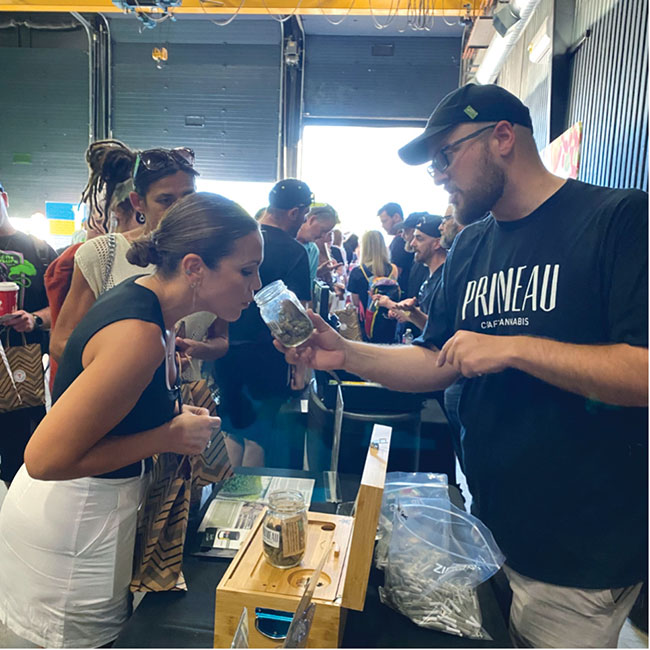
Sampling has emerged as a powerful tool for Budtender education, with 95 per cent of those surveyed requesting products first-hand. Sampling empowers Budtenders to become authentic advocates, capable of conveying unique product qualities to consumers. Plus, tastings and sampling events allow growers, reps and ambassadors an opportunity to discuss product education in a relaxed environment and showcase the team behind the brand. This is the perfect mix of community-building and education – an environment in which Budtenders thrive.
Encourage Budtenders to share their experiences and insights through product reviews, feedback surveys and social media. Facilitate knowledge sharing sessions or forums where Budtenders can provide feedback directly to your team.
Budtender preferences and consumer behaviour
The preferences of Budtenders reflect broader shifts in consumer behaviour with traditional consumption methods like pre-rolls and bongs still favoured by 80 per cent of surveyed individuals. However, dabs and extracts are gaining popularity year after year. Capturing and understanding Budtender and consumer insights through sales trends, B2B surveys and demographics helps drive product development, branding and marketing efforts.
The green revolution
Budtenders’ insights shed light on the pressing need for sustainability in the Canadian cannabis industry, with 64 per cent of Budtenders surveyed saying it’s an area the industry can improve on and 84 per cent mentioning packaging.
Sustainability measures could include eco-friendly packaging, waste reduction, responsible cultivation methods and sustainable sourcing – investments into the future of the industry and our planet.
Join the movement
Budtenders are more than sales associates, they are brand ambassadors with the potential to shape consumer perceptions and drive market trends. Invest in them and empower them to drive mutual success.
Katie Pringle is the CEO and co-founder of Marigold PR, an award-winning public relations agency serving North American cannabis brands. In 2021, Katie co-founded Tether, a Canadian Budtender community that provides brands with a cost-effective way to connect, promote, and educate. Since 2017, Katie has been a leading force in organizing events for women in cannabis, driving positive change and paving the way for a more inclusive future.
The U.S. Drug Enforcement Administration (DEA) is claiming that a federal law that affords severely ill individuals the right to try investigational medications doesn’t apply to drugs classified under the Controlled Substances Act. This is in response to a lawsuit filed by a doctor in Washington state who sought permission to legally administer psilocybin as treatment for patients in end-of-life care with cancer.
The agency argues that because drugs classified under Schedule I are said to have no accepted medical use, the law prevents them from being dispensed, even by professionals.
The doctor in question, Dr. Sunil Aggarwal, has been pursuing a range of regulatory and legal pathways to permit his clinic to administer psilocybin in palliative care. The clinic, in collaboration with the Advanced Integrative Medical Science Institute, asserts that the Controlled Substances Act has to accommodate a path to allow the legal access to psychedelics such as psilocybin under federal and state right to try laws.
Right to try laws afford patients with terminal illnesses the chance to try investigational drugs that aren’t yet approved for use by the general public. The state of Washington adopted this law in 2017, with then President Donald Trump signing the federal act governing this law in 2018.
In the years that followed, the Advanced Integrative Medical Science Institute has presented the DEA with different proposals to legally grow or acquire psilocybin to treat patients under right to try laws. Despite being legal, the agency has shot down every proposal presented.
In its opening brief, the institute explained that the DEA had denied every request filed while failing to address the arguments Aggarwal had tabled supporting them. The brief further noted that the agency needed to provide reasons explaining why it was against granting the good doctor access to psilocybin under the Controlled Substances Act and right to try laws.
Thus far, Washington D.C. and eight other states have filed friend-of-the-court briefs supporting the institute’s efforts to use psilocybin under the aforementioned laws.
In its statement, the DEA argued that if Aggarwal wants to administer psilocybin to his patients, he will need to register as a scientist carrying out an approved project. The statement explained that this shall be handled by different federal agencies, noting that the secretary of health and human services via the U.S Food and Drug Administration (FDA) is tasked with determining if the research protocol for a certain project is worthy and whether applicants are competent and qualified to conduct them.
Psychedelics startups such as Seelos Therapeutics Inc. (NASDAQ: SEEL) will be following this case to see if court decisions can influence the future decisions of regulators, including the DEA, on matters of psychedelic policy implementation.
About PsychedelicNewsWire
PsychedelicNewsWire (“PNW”) is a specialized communications platform with a focus on all aspects of psychedelics and the latest developments and advances in the psychedelics sector. It is one of 60+ brands within the Dynamic Brand Portfolio @ IBN that delivers: (1) access to a vast network of wire solutions via InvestorWire to efficiently and effectively reach a myriad of target markets, demographics and diverse industries; (2) article and editorial syndication to 5,000+ outlets; (3) enhanced press release enhancement to ensure maximum impact; (4) social media distribution via IBN to millions of social media followers; and (5) a full array of tailored corporate communications solutions. With broad reach and a seasoned team of contributing journalists and writers, PNW is uniquely positioned to best serve private and public companies that want to reach a wide audience of investors, influencers, consumers, journalists and the general public. By cutting through the overload of information in today’s market, PNW brings its clients unparalleled recognition and brand awareness. PNW is where breaking news, insightful content and actionable information converge.
To receive SMS alerts from PsychedelicNewsWire, text “Groovy” to 888-902-4192 (U.S. Mobile Phones Only)
Please see full terms of use and disclaimers on the PsychedelicNewsWire website applicable to all content provided by PNW, wherever published or re-published: https://www.PsychedelicNewsWire.com/Disclaimer
With the global population increasing, seeking alternative food sources has become an urgent issue to face the spread of hunger, which doesn’t decrease despite technological progress.
On the other hand, the demand for functional food has gained popularity on the market. This term defines food that is characterized by another function, that can be disease-preventing and/or health-promoting, in addition to its nutritive value.
Because of the rising concerns about the risks of food additives on human health, customers are looking for more natural and sustainable alternatives.
In this scenario, phycocyanins market value has significantly increased in the last years because of their several beneficial effects and the wide range of applicability. [1]
Phycocyanins are peptide-pigment compounds belonging to the phycobiliproteins (PBP) family that can be found in phycobilisomes (PBS). These systems are found in red algae, cryptomonads, cyanelles, and, most of all cyanobacteria.
In these organisms, PBS can represent up to 50 % of the total cellular protein. [2]
What is Phycocyanin and Where Can You Find It?
PBS are light-harvesting complexes located in the outer part of the lipidic thylakoid membrane, which explains the high water solubility of PBPs, that differentiates them from other proteins. [3]
PBSs’ function is to capture light and transfer it with an electron chain mechanism to photosystems I and II (PSI and PSII), where the proper photosynthetic reaction occurs and that is located inside the thylakoid membrane.
Because of their key role in capturing light, it’s no surprise that all phycobiliproteins have bright and intense colors.
Furthermore, their role is to increase the absorption range in organisms that are often exposed to low-light conditions, by covering the regions of the spectrum where usual pigments – such as chlorophylls and carotenoids- don’t show any absorption peak. [2]
PBPs are divided into three groups, according to their absorption spectrum:
Phycoerythrins (λ max = 540 to 570 nm);
Phycocyanins (λ max = 610 to 620 nm);
Allophycocyanins (λ max = 650 to 655 nm). [1]
The first component of PBPs is peptidic and is divided into two subunits, α and β, that can assume different conformations.
In the case of phycocyanin, which is the most common phycobiliprotein in cyanobacteria, a ring-shaped trimeric form (αβ)3 and a hexameric form [(αβ)3]2 exist. [3]
Each subunit is linked to a chromophore belonging to the phycobilin class. These molecules are noncyclic tetrapyrroles linked by α,β, and γ single-carbon bridges. [2]
Until now, we have used the plural “phycocyanins” because three forms of phycocyanin exist, C- and R-II- and R-III- phycocyanin. Chromophores are precisely what differentiate these compounds from one another.
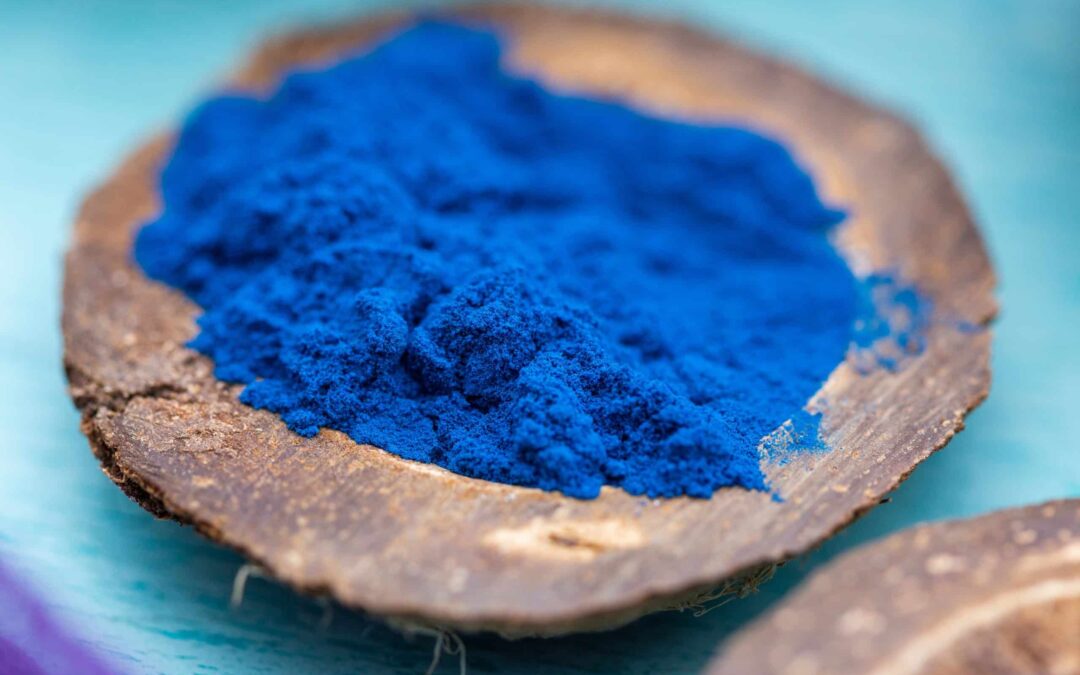
R-phycocyanins are only found in a few cyanobacteria species, whilst C-phycocyanin (C-PC) is present almost in all the species and its chromophore is phycocyanobilin, linked through a thioether bond to the peptide structure and responsible for the blue color of the protein.[1]
Because of its abundance compared to the other phycocyanins, articles always use the general term phycocyanin (PC) to speak of C-PC and from now on, this terminology will be adopted here too.
All the Benefits for Human Health
Phycocyanin has been proven to be safe and non-toxic for human health. Besides, the majority (35%) of articles on phycocyanin report an antioxidantactivity, hence preventing the production and/or scavenging of reactive oxygen species (ROS). [1]
The imbalance between antioxidant systems and ROS is related to several diseases such as cancer, neurodegenerative and inflammatory diseases, and aging processes.
It has been proven that both the peptidic structure and the chromophores are responsible for antioxidant activity, resulting in the scavenging of the majority of radicals. [3]
PCB scavenging methods are easier to determine and usually involve the oxidation of tetrapyrrole double bonds.
On the other hand, the apoprotein (α and β subunits) has been proven to scavenge OH radicals – increasing the pH from 7 to 11 resulted in better scavenging due to the change of the protein charge- and HOCl radical by reacting with cysteine and methionine residues.
Other amino acids such as tyrosine, tryptophan, and histidine were able to scavenge ROO. [3]
Many assays can be used to measure the antioxidant activity of phycocyanin, but the main one is with 1-diphenyl-2-picrylhydrazyl (DPPH). [1]
Furthermore, once the antioxidant activity was demonstrated, its biological efficacy was also tested in vivo and in vitro towards pathological disorders of the heart, brain, liver, lungs, eyes, kidneys, and pancreas. [3]
Interestingly, the antioxidant activity has also been tested in real food, through the in vitro digestion of milk-based ice-creams. Antioxidant activity of PC-containing icecreams was 2- or 13-fold higher than control, depending on the method used. [1]
Extraction and Purification
The majority of articles on phycocyanin deal with its extraction and purification methods. Depending on its purity index (PI), indeed, PC is considered to be food, cosmetic, reactive, and analytical grade. Many chemical and physical parameters influence PC extraction.
Temperature: it has been reported that extraction yield increases by switching the temperature from 30 to 50 °C. However, above 50 °C protein denaturation occurs, which leads to the unfolding of the hexameric structure. Since the peptidic structure has a protective effect on the chromophore, with the reduction of the H bonds network due to denaturation, the tetrapyrrole structure tends to close with a consequent loss of color and antioxidant power;
pH and : phycocyanin isoelectric point (IP) can vary between 4.1 and 6.3 depending on the cyanobacteria. Extractions at pH > 7 have reported higher yields due to the increased protein’s global charge and protein-solvent interactions;
Biomass/solvent ratio: a higher biomass/solvent ratio is generally characterized by a higher extraction yield, along with a loss of extract’s purity. [4]
Several methods have been used to obtain PC, using both conventional (solvent, maceration, percolation…) and novel extraction techniques (ultrasound or microwave-assisted extraction, high-pressure processing, high electric fields).
A key step in PC extraction and purification is cell disruption which can be improved by coupling two techniques.
Freezing and thawing is one of the privileged techniques in the laboratory since it allows to reach highly pure extracts. It has been reported that the best yield value has been obtained with 4 cycles of freezing and thawing. However, it is a long procedure which makes it difficult to scale up. New technologies have been set up to respond to industrial applications.
Some of the most suitable methods for such an application are:
Ultrasound-assisted extraction (UAE);
Pulsed electric field (PEF);
Aqueous two-phase system (ATPS) extraction.
Furthermore, to purify phycocyanin chromatographic methods (ion exchange, membrane, gel filtration, and hydrophobic interaction chromatography) are often coupled to extraction methods.
However, PC stability remains a challenge and several efforts are being made to find stabilizing agents such as small sugars that could act as co-solute, preserving protein structure and chromophore stability. [4], [5]
Other Possible Uses
Phycocyanin properties can be used for other important applications. First of all its blue color makes this compound very attractive on the market as a possible alternative natural blue colorant.
Indeed, the United States have approved only two artificial blue colorants as food additives: triarylmethane dye Brilliant Blue FCF and Indigo Carmine, while the European Union has authorized another triarylmethane dye Patent Blue V in addition to the previous ones.
Compared to other pigments, blue and purple colors are relatively less common in nature and can be found in fruits and vegetables with anthocyanins or in cyanobacteria. [1] This explains why phycocyanin is so attractive to the global market.
More on Fluorescence
Another important property of phycocyanin is its fluorescence. Indeed, during extraction procedures, phycobilisomes are disrupted. The energy that is usually harvested by phycobiliproteins that can’t be transferred to an electron acceptor, is then released through an intense fluorescent emission.
PC’s fluorescence is characterized by a higher quantum yield and molar extinction coefficient than other natural fluorochromes, making these molecules interesting as fluorescent markers for several applications.
Final Word
In the end, phycocyanin is being studied in cancer therapies, where the compound is incorporated into several kinds of nanoparticles. [1]
Phycocyanin is a promising molecule in many different fields that has raised a particular interest among researchers in the last decade.
However, its low stability represents a challenge both for extraction and purification methods and for applications.
Many efforts are being made to find solutions since the amount and the properties of this compound make it very attractive from a sustainable development perspective.
References:
Ashaolu, T. J.; Samborska, K.; Lee, C. C.; Tomas, M.; Capanoglu, E.; Tarhan, Ö.; Taze, B.; Jafari, S. M. Phycocyanin, a Super Functional Ingredient from Algae; Properties, Purification Characterization, and Applications. International Journal of Biological Macromolecules. Elsevier B.V. December 15, 2021, pp 2320–2331. https://doi.org/10.1016/j.ijbiomac.2021.11.064;
Pagels, F.; Guedes, A. C.; Amaro, H. M.; Kijjoa, A.; Vasconcelos, V. Phycobiliproteins from Cyanobacteria: Chemistry and Biotechnological Applications. Biotechnology Advances. Elsevier Inc. May 1, 2019, pp 422–443. https://doi.org/10.1016/j.biotechadv.2019.02.010;
Fernández-Rojas, B.; Hernández-Juárez, J.; Pedraza-Chaverri, J. Nutraceutical Properties of Phycocyanin. Journal of Functional Foods. Elsevier Ltd 2014, pp 375–392. https://doi.org/10.1016/j.jff.2014.10.011;
Pez Jaeschke, D.; Rocha Teixeira, I.; Damasceno Ferreira Marczak, L.; Domeneghini Mercali, G. Phycocyanin from Spirulina: A Review of Extraction Methods and Stability. Food Research International. Elsevier Ltd May 1, 2021. https://doi.org/10.1016/j.foodres.2021.110314;
Fratelli, C.; Burck, M.; Amarante, M. C. A.; Braga, A. R. C. Antioxidant Potential of Nature’s “Something Blue”: Something New in the Marriage of Biological Activity and Extraction Methods Applied to C-Phycocyanin. Trends in Food Science and Technology. Elsevier Ltd January 1, 2021, pp 309–323. https://doi.org/10.1016/j.tifs.2020.10.043.
Trichome Consulting Services has been providing sound advice for the cannabis sector since 2008, when BC’s John Karroll began assisting friends seeking to navigate Canada’s medical cannabis program.
Sixteen years later, Karroll and Trichome Consulting (TCSI) have seen the regulations evolve, beginning with the MMAR, MMPR, ACMPR, and now, the Cannabis Act. With a focus on securing Health Canada licenses and facilitating successful applications, TCSI has established itself as a trusted leader in the industry.
Not limited to Canada, TCSI is a premier leader in cannabis industry compliance consulting, serving North American and international clients. With a comprehensive range of services, including licensing, regulatory compliance, and operational support, TCSI has successfully secured over 1,000 cannabis licenses in Canada since 2008.
“Our advice in this area is to approach the licensing process with meticulous attention to detail and thorough preparation. We recommend conducting a comprehensive assessment of your facility and operations to ensure compliance with Health Canada’s requirements.”
With the ongoing evolution of the global cannabis Industry, TCSI also provides expanded services to include domestic and international business development with export relationships, marketing, and sales strategies. They assist in brokering agreements for domestic and international sales and setting up affiliate partnerships with top LPs in Canada and leading international companies in the Cannabis Industry.
“Our extensive experience and commitment to excellence have propelled us to become a preferred choice for clients seeking guidance in the burgeoning cannabis sector,” says Karroll.
“Our experienced team excels in liaising with Health Canada and guiding clients through the application process. From professional consulting to patient services, TCSI is dedicated to exceeding client expectations and setting new industry standards globally.”
Some of the current challenges facing the industry, continues Karroll, are the regulatory complexities, market competition, and barriers hindering small-scale players’ entry into the market.
“Our advice in this area is to approach the licensing process with meticulous attention to detail and thorough preparation. We recommend conducting a comprehensive assessment of your facility and operations to ensure compliance with Health Canada’s requirements. This includes implementing robust security measures, designing facilities to meet regulatory standards, and developing detailed standard operating procedures (SOPs) for all aspects of your operations.
“Additionally, we advise clients to seek guidance from experienced consultants who have a deep understanding of the licensing process and can provide expert advice and support every step of the way. By partnering with a knowledgeable consultant like Trichome Consulting Services (TCSI), applicants benefit from our extensive experience navigating the licensing process and increase their chances of success.”
Trichome is also positioning itself to address these challenges by advocating for reduced regulatory barriers and fees imposed by the Canada Revenue Agency (CRA) on cannabis businesses, advocating for their clients and the industry at large.
“We recognize that these fees can be prohibitive for small-scale players and hinder their ability to compete with larger corporations. Additionally, we are advocating for further streamlining of licensing processes and regulations to make entry into the industry more accessible for small businesses and individuals. By addressing these issues, we aim to foster a more inclusive and equitable cannabis industry that benefits both entrepreneurs and consumers alike.”
Some of the challenges applicants and licence holders face and that an experienced consulting agency like Trichome can help with include inadequate preparation, a lack of understanding of the current regulatory requirements, poor documentation practices, and a failure to address deficiencies actively.
Karroll explains that many applicants underestimate the complexity of the licensing process and fail to prepare their applications thoroughly, which can lead to incomplete or inaccurate submissions, resulting in delays or rejections.
Applicants may also overlook or misunderstand key regulatory requirements set forth by Health Canada, which can result in non-compliance with security, facility design, or quality assurance protocols, leading to application denials.
To avoid these common pitfalls, applicants should thoroughly educate themselves on the licensing process, seek guidance from experienced consultants, and ensure that their applications are comprehensive, accurate, and compliant with regulatory requirements.
“At Trichome Consulting Services (TCSI), we take pride in being the top choice for cannabis consulting,” says Karroll. “With a wide array of services and unparalleled experience, we’re dedicated to helping you thrive in the dynamic cannabis industry. Whether you need assistance with licensing, compliance, or operational support, rely on us to steer you towards success.”
Quebec-based Cannara Biotech Inc. saw gross cannabis revenues before excise taxes increased to $26.3 million in Q2 2024, up from $15.9 million in Q2 2023.
The cannabis producer owns and operates two cannabis facilities in Quebec located in Farnham and Valleyfield. Both facilities have the combined potential to produce approximately 33,500 kg of cannabis per year, a 50% increase in production capacity over the prior year.
The company sold under the brands Orchid CBD, Nugz, and Tribal in Quebec, Ontario, Saskatchewan, Alberta, and British Columbia in Q2 2024. In March 2024, Cannara received permission to list products in Manitoba, which it expects to launch in Q3 2024. In April, it launched products in Nova Scotia.
In Q2 2024, Cannara generated $19.7 million of net revenue, a gross profit before fair value adjustments of $7.1 million or 36% of net revenues, an adjusted EBITDA of $3.5 million or 18% of net revenues, a net loss of $3.4 million, free cash flow of $1.2 million and a loss per share of $0.04. The company trades on the TSX Venture Exchange under the symbol “LOVE,” the OTCQB under the symbol “LOVFF”, and the Frankfurt Stock Exchange under the symbol “8CB0.”
Cannara reported $7.5 million in excise taxes on its $26.3 million in gross revenue from its cannabis operations for the three months ending February 29, 2024, and net revenue of $18.7 million. Net loss was $3.4 million in Q2 2024 compared to $618,055 in Q2 2023.
Adjusted EBITDA increased by 8.7%, from $3.2 million in Q2 2023 to $3.5 million in Q2 2024. Free cash flow for Q2 2024 increased to $1.2 million from $(1.3) million in Q2 2023.
“This past quarter, despite a challenging market environment, Cannara continued to demonstrate continued positive execution towards becoming one of the leading cannabis companies in Canada,” said Zohar Krivorot, President & CEO. “With our tenth grow zone now operational, our annual production capability has increased to 33,500 kg, underlining our dedication to increasing capacity to meet the growing market demand for our product.
“Our footprint is expanding robustly across Alberta and BC, bolstered by the introduction of new SKUs and the approval from the Manitoba Liquor & Lotteries Corporation, paving the way for a stronger market presence in Q3 2024. The outpouring of positive feedback from our diverse clientele across Canada reaffirms our success in delivering unparalleled premium quality at affordable pricing. My gratitude goes to our dedicated team, whose relentless pursuit of operational excellence positions Cannara on our strategic objective of becoming Canada’s premier cannabis producer.”





Recent Comments