How can we overcome the psychic predators that have overtaken humanity’s mind – the Archons, Djinn, Demons, Kundabuffer, Mud Shadows or Flyers? Learn the strengths and weaknesses of these parasitic entities so that you may rise above them.
BC’s Liquor and Cannabis Regulation Branch (LCRB) has conducted 20 inspections of its BC Cannabis Stores to ensure they check IDs since the beginning of legalization, compared to 277 in privately run cannabis stores in the province.
The LCRB regularly inspects privately and publicly run cannabis and liquor stores in the province to ensure compliance with provincial rules, including administrative, public safety, and MAPs (checking IDs) inspections.
LRCB has conducted 910 such inspections of private cannabis stores in the past 12 months (as of April 19, 2024). Of those, 277 were inspections undertaken as part of the provincial government’s Minors as Agents Program (MAP) to ensure cannabis stores are checking customer IDs, with the majority (263) taking place in the last year. Inspectors work with agents who are minors who then visit the store and attempt to purchase a product.
If the employee at the store sells any cannabis to the minor, a second inspector enters the store to inform them of the violation and the possible repercussions, which can be a fine of several thousand dollars or temporary store closure.
The Minors as Agents Program inspections of all cannabis retail stores in the province, both BC Cannabis Stores and private Cannabis Retail Stores (CRS), began in March 2023. Since then, the LRCB has issued at least eight penalties to stores following failed MAP inspections, with two enforcement actions related to MAP inspections at provincially-run BC Cannabis Stores.
Some stores have opted to pay a fine when found out of compliance, while others have opted to temporarily close their doors. A few stores that faced penalties successfully have argued their case in court, with no fines or other penalties applied. Most recently, Evergreen Cannabis in Vancouver successfully argued that the failure to check ID was an employee oversight, avoiding any formal penalty.
The 263 MAP inspections of private stores represented 54% of all such stores in the province (currently around 470). There are 34 government-run BC Cannabis stores. The LRCB has taken enforcement action against two public stores that failed inspection.
While the results of enforcement action for a MAP visit to a private cannabis store are shared online, such information is not posted for the BC Cannabis Stores that faced similar penalties for failing to check for IDs.
Cory Waldron, the owner of Mood Cannabis, a retail store in Nanaimo and the President of the Licensed Retail Cannabis Council of BC (LRCCBC), told StratCann he doesn’t understand the double standard. While he supports such inspections, he would like to see government-run stores be treated the same as their privately-run counterparts.
“With regard to the MAPS Program, and cannabis stores getting caught selling to minors, all retailers need to be accountable, whether it’s a BCCS Government store, or an independent retailer. If there were two government stores that were caught selling to minors, why are those two stores not on the publicized list of liquor and cannabis stores that were issued infractions? And what were the results of the hearings? Were they fined $7000, did they shut down their stores for one week, or did they even have a hearing?”
“These are important questions because, as a retailer where the government store is a competitor and also our supplier (through the BCLDB),” he adds, “transparency and a level playing field is important. If government stores are getting special treatment with regards to following regulations and disciplinary processes, this certainly does not reinforce trust between retailers and the BCLDB.”
Jaclynn Pehota, the Executive Director at LRCCBC, adds that such a high level of compliance for private stores is a positive sign and something retailers should be proud of while echoing Waldron’s calls for a level playing field when it comes to enforcement.
Jeff Guignard, the Executive Director at ABLE BC, which represents cannabis and alcohol retailers in the province, says that the rates of inspections of BC Cannabis stores, while lower than private stores, is still a fair approach given there are also fewer BC Cannabis Stores in the province.
“BC’s cannabis industry works very hard to have the right policies, procedures, and training in place to keep cannabis out of the hands of minors,” says Guignard in an email to StratCan.
“It may seem that government cannabis stores are inspected less often than private stores, but it’s fairly equal as a percentage of overall licenses. For example, there are over 10 times more private than government cannabis stores, so you’d expect to see about ten times as many inspections.”
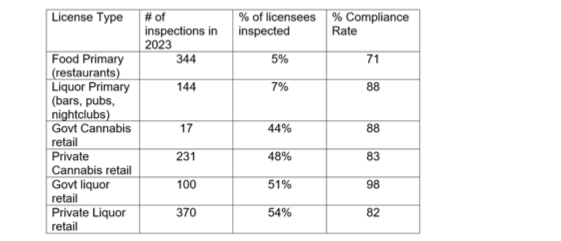
Guignard says ABLE tracks such inspections across several sectors in BC, which is shown below:
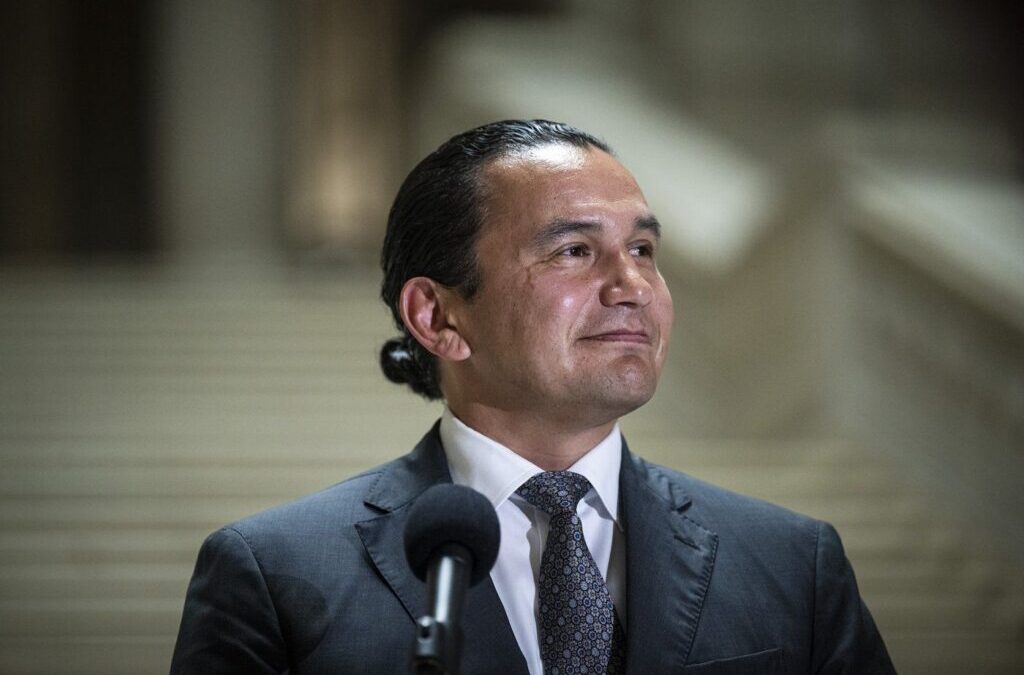
Manitoba premier-elect Wab Kinew holds a press conference in Winnipeg, Wednesday, Oct. 4, 2023. The Manitoba government is planning to end its ban on homegrown recreational cannabis — a move that would leave Quebec as the only province with such a restriction. THE CANADIAN PRESS/Aaron Vincent Elkaim
The Manitoba government is planning to end its ban on homegrown recreational cannabis — a move that would leave Quebec as the only province with such a restriction.
Premier Wab Kinew says the change would bring Manitoba in line with the majority of provinces and recognize the federal limit of four plants per household.
The news is being welcomed by Jesse Lavoie, an activist who took the province to court in an unsuccessful bid to overturn the ban.
Lavoie is appealing the ruling and says he will suspend his appeal if the ban is lifted.
Advertisement
A bill to enact the change is expected in the coming days, but it’s not clear whether it will be passed into law in the near future.
The NDP government has several bills that have yet to be introduced and has yet to begin detailed budget hearings, which can last weeks.
The head of a B.C. cannabis growers group says the City of Vancouver’s choice to discourage instead of sanction a marijuana celebration over the weekend was a costly “missed opportunity.”
The BC Craft Farmers Co-Op says the city should rethink its approach to 4-20 celebrations and sanction what could be an “international cannabis tourism event.”
Co-op president Tara Kirkpatrick says the city erected barriers around Sunset Beach and had police target vendors at the unsanctioned celebration over the weekend, instead of authorizing a “professionally run special event,” similar to the annual Pride Parade.
Previous celebrations in Vancouver on April 20 — considered the day to celebrate smoking cannabis — have drawn tens of thousands of people, caused traffic gridlock and expensive damage to city parks.
Advertisement
However, Kirkpatrick says such an event could generate millions in tourism revenues for the province, which could cash in on B.C.’s “rich cannabis culture” and reputation as a place with “legendary craft cannabis farmers.”
Vancouver’s Parks Board had temporary fences put up, and closed washrooms and parking lots on Saturday as a way to “mitigate” what it said was a “non-sanctioned cannabis protest event.”
The group says Vancouver could have followed in the footsteps of the City of Prince George, which held a permitted “cannabissummit” over the weekend attended by thousands, including the city’s mayor.
California authorities recently conducted a comprehensive operation aimed at dismantling illegal marijuana operations across the state, seizing more than $53 million worth of illicit cannabis between Jan. 1, 2024, and March 31, 2024. The crackdown spearheaded by the state’s governor’s office targeted search warrants in various counties, including eight in Orange, one in San Joaquin, two in Riverside, one in Los Angeles, two in Alameda, five in Kern and one in Fresno.
During the operation, law enforcement confiscated $53,620,600 worth of illegal marijuana along with 31,866 pounds of unlicensed product and 11 firearms. Additionally, approximately 54,137 unlicensed marijuana plants were eradicated during the multicounty effort.
Governor Gavin Newsom stressed the significance of combating illegal marijuana activities, noting that it not only undermined the regulated market but also posed risks to public health and the environment. He highlighted the state’s commitment to fostering a legal market while aggressively tackling illicit operations associated with human trafficking as well as organized crime.
Established in 2022 by Governor Newsom, the Unified Cannabis Enforcement Taskforce (UCETF) plays a pivotal role in coordinating enforcement efforts among federal, state and local agencies. Led by the state’s Fish & Wildlife Department (CDFW) and the Cannabis Control Department (DCC), with support from the Homeland Security Division of the Governor’s Office of Emergency Services (Cal OES), the task force comprises more than two dozen partners working collaboratively to disrupt illegal marijuana activities.
The Alcoholic Beverage Control, Cannabis Control, Employment Development, Fish & Wildlife, and Tax & Fee Administration departments, the California National Guard Counter Drug Task Force, the California Division of Occupational Safety & Health, and the California State Parks were among the state agencies and departments that took part in this year’s Q1 UCETF operations.
Since the task force’s establishment, 236 search warrants have been carried out, yielding the confiscation of illicit marijuana valued at $371,199,431. In addition, during enforcement actions, 139 guns and more than 401,458 illegal cannabis plants have been seized so far.
Nathaniel Arnold, CDFW’s acting chief, highlighted UCETF’s dedication to prioritizing high-impact targets and leveraging resources from partner agencies to enhance public safety, protect the environment and support the regulated marijuana market. In parallel efforts, California recently allocated $12 million in cannabis grants to 10 cities and counties statewide, aimed at supporting equity programs for communities disproportionately affected by past drug policies. The funds support programs that help applicants secure startup financing, comply with regulations and receive technical support.
The broader cannabis industry, including leading companies such as Tilray Brands Inc. (NASDAQ: TLRY) (TSX: TLRY), will be hoping that all jurisdictions where marijuana is legal take firm action against the marijuana black market because it not only threatens the viability of the regulated market but also poses serious public health risks.
About CNW420
CNW420 spotlights the latest developments in the rapidly evolving cannabis industry through the release of an article each business day at 4:20 p.m. Eastern – a tribute to the time synonymous with cannabis culture. The concise, informative content serves as a gateway for investors interested in the legalized cannabis sector and provides updates on how regulatory developments may impact financial markets. If marijuana and the burgeoning industry surrounding it are on your radar, CNW420 is for you! Check back daily to stay up-to-date on the latest milestones in the fast -changing world of cannabis.
To receive SMS alerts from CNW, text CANNABIS to 888-902-4192 (U.S. Mobile Phones Only)
Please see full terms of use and disclaimers on the CannabisNewsWire website applicable to all content provided by CNW, wherever published or re-published: https://www.CannabisNewsWire.com/Disclaimer
Ontario Provincial Police’s Joint Forces Cannabis Enforcement Team seized 15,000 cannabis plants and charged six following a search warrant execution in Niagara Falls on April 17.
OPP say they began their investigation after a strong smell of cannabis was noted outside a warehouse on Don Murie Street in Niagara Falls.
Police seized more than 2,500 clone cannabis plants, and more than 13,000 vegetative and mature budding cannabis plants.
The six charged were Chamrong Ladadas, 49, of no fixed address; Arthit Seesai, 31, of no fixed address; Xueqi Gao, 59, of no fixed address; Li Cheng, 58, of no fixed address; Jeffrey Lian, 41, of no fixed address, and Wen Guang Zheng, 66, of Markham.
They were released from custody and are scheduled to appear in court in St. Catharines, ON., on May 30.
The ongoing investigation involved the OPP’s West Region Emergency Response Team, Urban Search and Rescue, Chemical, Biological, Radioactive, Nuclear and Explosive Response Team, Provincial Asset Forfeiture Unit, and Niagara Regional Police.
Over 15,000 illegal cannabis plants seized valued at approx. $8,000,000. Six people charged with the production/cultivation of cannabis without authorization. A search warrant was executed in Niagara Falls by the OPP led Provincial Joint Forces Cannabis Enforcement Team ^ks pic.twitter.com/yeQt06mi1O
New research has looked into the influence of psychedelic substances on sexual functioning and satisfaction. This comes as scientists learn more about the promising potential of psychedelics in treating mental-health conditions.
Various studies have looked into the effectiveness of psilocybin in alleviating symptoms of anxiety. Psilocybin, the primary psychedelic compound found in different species of hallucinogenic mushrooms, has also shown comparable effectiveness to escitalopram in reducing symptoms of depression in patients with major depressive disorder. Escitalopram is a selective serotonin reuptake inhibitor (SSRI) antidepressant. SSRIs have different side effects, a common one being sexual dysfunction. Sexual dysfunction may lower an individual’s libido, make it hard for them to get aroused, and delay or prevent them from achieving orgasm during sex.
This was the basis of the recent study, which examined the effect of psychedelics on sexual function.
For their study, the investigators assessed psychedelic use in naturalistic ceremonies and settings to better understand the effect it had on different aspects of sexual functioning. Here, they collected data from persons who had attended a ceremony involving the consumption of psychedelics such as psilocybin, LSD and ayahuasca. Once this was done, they conducted a six-week clinical trial that compared the effectiveness of psilocybin therapy in treating major depressive disorder, with that of escitalopram.
During this period, the investigators examined the domains of sexual satisfaction, arousal, pleasure, sexual desires and body image, as well as sexual functioning. They were focused on understanding whether psychedelics influenced sexual desires and openness to sexual exploration using self-constructed questions. They also assessed the differences in this association among female and male patients with major depressive disorder.
From their naturalistic study, the investigators determined that psychedelic use caused improvements in some domains of sexual functioning and satisfaction, including partner satisfaction and body image. They also observed improvements in pleasure and communication during sex. Results from their trial supported these findings, with the investigators noting that the effects of psilocybin therapy with regard to sexual functioning were positive. When compared with psilocybin therapy, escitalopram therapy was found to have a negative effect on sexual functioning.
In their report, the investigators explained that the difference in the impacts of psilocybin and escitalopram therapy on sexual functioning could be linked to the mechanisms by which they relieve depression. SSRIs work by inhibiting reintake of serotonin, increasing concentration of serotonin and promoting the chemical’s activity in the postsynaptic phase.
Overall, the study’s findings showed that psilocybin therapy as a treatment for major depressive disorder could positively affect an individual’s sexual functioning. The study’s findings were reported in the “Scientific Reports” journal.
This study widens the possibilities for the therapeutic use of psilocybin, adding to the medical conditions that entities such as atai Life Sciences N.V. (NASDAQ: ATAI) are focusing on conducting psychedelic clinical studies for.
About PsychedelicNewsWire
PsychedelicNewsWire (“PNW”) is a specialized communications platform with a focus on all aspects of psychedelics and the latest developments and advances in the psychedelics sector. It is one of 60+ brands within the Dynamic Brand Portfolio @ IBN that delivers: (1) access to a vast network of wire solutions via InvestorWire to efficiently and effectively reach a myriad of target markets, demographics and diverse industries; (2) article and editorial syndication to 5,000+ outlets; (3) enhanced press release enhancement to ensure maximum impact; (4) social media distribution via IBN to millions of social media followers; and (5) a full array of tailored corporate communications solutions. With broad reach and a seasoned team of contributing journalists and writers, PNW is uniquely positioned to best serve private and public companies that want to reach a wide audience of investors, influencers, consumers, journalists and the general public. By cutting through the overload of information in today’s market, PNW brings its clients unparalleled recognition and brand awareness. PNW is where breaking news, insightful content and actionable information converge.
To receive SMS alerts from PsychedelicNewsWire, text “Groovy” to 888-902-4192 (U.S. Mobile Phones Only)
Please see full terms of use and disclaimers on the PsychedelicNewsWire website applicable to all content provided by PNW, wherever published or re-published: https://www.PsychedelicNewsWire.com/Disclaimer
US-based cannabis company Curaleaf Holdings Inc., has closed on its acquisition of Northern Green Canada. This Canadian licensed cannabis producer focuses primarily on EU-GMP product certification for the international market.
First Licensed in April 2018, North Green Canada (NGC) is based in Brampton, Ontario and operates a medical cannabis platform, and has sold into recreational markets. The majority of the company’s sales in recent years have been through the export market.
NGC has supplied high THC, non-irradiated cannabis flower to the German, Australian, Israeli, and New Zealand markets. The acquisition gives Curaleaf more opportunities to advance on the international stage. NGC has supplied Curaleaf’s German Brand Four20 Pharma.
“We are thrilled to welcome NGC formally to the Curaleaf family of global brands,” said Boris Jordan, Founder and Executive Chairman of Curaleaf. “This is an incredibly important deal for our international expansion strategy, as we’ll be able to bolster our supply of high quality EU-GMP certified flower immediately to key European markets as well as enter the fast-growing markets of Australia and New Zealand.”
In its most recent quarterly filing, Curaleaf reported net revenue of $345.3 million and a net loss attributable to Curaleaf Holdings, Inc., excluding discontinued operations, of $57.7 million.
In 2020, NGC put out a press release saying they were the first privately-owned Canadian licensed producer of cannabis to have EU GMP certification and referred to sales in Germany and Israel, as well as pending agreements in the final stages of completion in the U.K., Poland, Denmark, Portugal, Australia and New Zealand.
Curaleaf is listed on the Canadian Securities Exchange under the symbol CURA and trades on the OTCQX market under CURLF.
The judge overseeing the proceedings between BZAM and Final Bell has postponed the date for a trial between the two companies following last-minute information presented to the court.
On Friday, April 19, Final Bell requested an adjournment of the trial following the disclosure of additional documents from BZAM late in the day on April 18. The trial had initially been scheduled for April 22 and 23.
Final Bell argued that the additional documents “fundamentally changed” the case, requiring more time and information through discovery and leave to file an amended opening statement.
Although BZAM argued the additional information in the documents was not significant, the judge reluctantly agreed to adjourn the trial of this issue, which had been previously rushed to address the timely nature of BZAM’s CCAA filing in February.
The new information provided by BZAM challenged claims made by Final Bell regarding how much excise tax BZAM owed at the time of their arrangement to acquire Final Bell Canada.
“I noted above that I granted the adjournment reluctantly, and I say this for a number of reasons, including the fact that the disruption to the Commercial List schedule is significant and the potential ramifications of an adjournment on the parties to this issue, and on other parties and stakeholders in this CCAA proceeding, could be significant,” wrote Justice Osborne in their ruling.
“I have reminded all parties that there could well be material cost consequences resulting from this claim and the adjournment. I have also made it very clear to the parties that there was significant disruption to the schedule of the Commercial List to free up the two days next week, on an emergency basis, and I was not at all certain that two consecutive days could be accommodated again, at least before the summer.”
The judge also agreed that once all additional production is made and examinations have been completed, the court-appointed monitor in the case may request a brief conference when the judge can reschedule the case.
A service list posted on April 20, lists creditors such as Health Canada, the CRA, the Alberta Gaming, Liquor, and Cannabis Commission (AGLC), The government of British Columbia, The government of Quebec, The Saskatchewan Liquor and Gaming Authority, Revenue Quebec, Alberta Ministry of Justice, Alberta Ministry of Treasury Board of finance, Saskatchewan Ministry of Finance, the Bank of Montreal, Auxly Cannabis Group, Organigram Holdings, Pax Labs, the Ontario Securities Commission, and others.















Recent Comments