
by Grow Up Conference | Apr 9, 2024 | Media Partners, Oaksterdam University
“American Pot Story: Oaksterdam” kicks off a series of film premieres across the country with an appearance at the New Bedford Film Festival at 11 a.m. Friday, April 19, 2024 in New Bedford, Massachusetts.
The award-winning documentary by New Love Films centers on Oaksterdam University (OU), the world’s first cannabis college, and tells the unknown origin story of the people who took monumental risks to make cannabis legalization possible. The film celebrates the courageous heritage of the legacy industry and the movement that started in Oakland, Calif. and has gone on to impact the world.
Directors Dan Katzir and Ravit Markus spent 10 years shadowing OU Founder Richard Lee and Executive Chancellor Dale Sky Jones, capturing their struggles and triumphs as they fought to bring cannabis to the mainstream.
American Pot Story: Oaksterdam at NBFF
Location: 1213 Purchase St, New Bedford, MA 02740
Date: Friday, April 19th, 2024
Time: 11:00 AM – 1:00 PM
Ticket Link: https://www.eventbrite.com/e/new-bedford-film-festival-tickets-862647039517?aff=oddtdtcreator
Screening Details:
GROUNDWORK | SCREENING ROOM I
- BURNING THE MISHOON | Documentary Short
- AMERICAN POT STORY: OAKSTERDAM | Documentary Feature
About NBFF
The New Bedford Film Festival celebrates authentic cinematic stories, cultivates bold storytellers, and champions the city’s growing creative economy.
About American Pot Story: Oaksterdam:
Website
Digital Press Kit
Teaser
Awards
- Audience Award – Slamdance Film Festival
- Mayor’s Award – Oakland International Film Festival
- Best Documentary Feature Award – Weyauwega International Film Festival
- Stony Award for Best Documentary – Celeb Stoner Magazine
- Coveted Coyote Award – Luna Spirit – Topanga Film Institute and Festival
- Spirit of Independents Award – Fort Lauderdale International Film Festival
- Grand Prix Award – Tokyo International Cannabis Film Festival vol. 2
- Best Feature Film – Tokyo International Cannabis Film Festival Vol. 2
- Nominated, Documentary Award – Kevin Smith’s Smodcastle Film Festival
About Oaksterdam:
Oaksterdam University, the world’s first cannabis college, has been the forerunner in providing the highest quality training to people involved in the industry. OU’s faculty is composed of professionals, academics, and subject matter experts who have taught more than 100,000 OU alumni from 110+ countries. With roots growing 27 years deep, OU is a dynamic, diverse, responsive academic institute dedicated to educating the global cannabis workforce, entrepreneurs, regulators, and government.

by Grow Up Conference | Apr 9, 2024 | Cannabis Prospect Magazine, Media Partners

by Grow Up Conference | Apr 9, 2024 | Media Partners, Psychedelic News Wire
Legislators in the House of Representatives in the state of Missouri have awarded preliminary approval to a budget measure that would allocate $10 million from opioid settlement funds to study grants focused on researching psilocybin’s use in treating opioid-use disorder.
The initiative, HB 2010, was amended in the House. One amendment made in a committee last week would have allocated the $10 million toward conducting research on ibogaine as an opioid-use disorder treatment. This provision was modified to fund studies on psilocybin instead. Ibogaine’s addition to HB 2010 was facilitated by Representative Chad Perkins, a long-time law enforcement officer.
The sponsor of the underlying budget measure, Representative Cody Smith, stated that the amendment arose from a conversation he had with a representative from the state’s mental-health department. Smith explained that the department had concerns about research on ibogaine, particularly the danger involved in the drug’s study.
It is expected that in the next 10 or more years, Missouri will receive hundreds of millions of dollars in settlement funds linked to opioids.
If the measure is approved in the next floor vote, it will be forwarded to the senate for consideration. Advocates expect that further amendments to the language on psychedelic research in the measure could be made in the senate.
For some time now, psychedelic drug proponents have worked to motivate states to allocate funds to finance deeper research into entheogens such as ibogaine and psilocybin.
Earlier in the year, Stanford University published research findings showing that military combat veterans who had suffered traumatic brain injuries recorded life-changing improvements in their cognitive functioning and symptoms immediately after they receive ibogaine treatment.
To help meet demand for research on ibogaine, the U.S. Drug Enforcement Administration (DEA) recently proposed a significant increase in the drug’s production quota. A house committee in Missouri also approved an initiative that would legalize psilocybin’s medical use by military veterans and fund research on the drug’s therapeutic potential.
Additionally, the House Veterans Committee approved a bill that would permit military veterans aged 21 years and older who were diagnosed with qualifying conditions such as substance-use disorder or post-traumatic stress disorder to legally access lab-grade psilocybin. It should be noted that participants would need to be enrolled in a research involving the psychedelic in order to receive legal protections under the measure.
Missouri isn’t the only state considering psychedelic measures during this session either. In Vermont, the state’s senate recently approved an initiative that would create a working group to conduct research on how and whether to permit therapeutic access to psychedelics in the state. In Arizona, a house panel passed a senate-approved resolution to legalize psilocybin centers where individuals could obtain the drug administered in a supervised setting.
This growing advocacy for psychedelic policy reform is largely benefiting from the scientific literature that start-ups such as atai Life Sciences N.V. (NASDAQ: ATAI) are making public as they conduct their psychedelic drug-development programs.
About PsychedelicNewsWire
PsychedelicNewsWire (“PNW”) is a specialized communications platform with a focus on all aspects of psychedelics and the latest developments and advances in the psychedelics sector. It is one of 60+ brands within the Dynamic Brand Portfolio @ IBN that delivers: (1) access to a vast network of wire solutions via InvestorWire to efficiently and effectively reach a myriad of target markets, demographics and diverse industries; (2) article and editorial syndication to 5,000+ outlets; (3) enhanced press release enhancement to ensure maximum impact; (4) social media distribution via IBN to millions of social media followers; and (5) a full array of tailored corporate communications solutions. With broad reach and a seasoned team of contributing journalists and writers, PNW is uniquely positioned to best serve private and public companies that want to reach a wide audience of investors, influencers, consumers, journalists and the general public. By cutting through the overload of information in today’s market, PNW brings its clients unparalleled recognition and brand awareness. PNW is where breaking news, insightful content and actionable information converge.
To receive SMS alerts from PsychedelicNewsWire, text “Groovy” to 888-902-4192 (U.S. Mobile Phones Only)
For more information, please visit https://www.PsychedelicNewsWire.com
Please see full terms of use and disclaimers on the PsychedelicNewsWire website applicable to all content provided by PNW, wherever published or re-published: https://www.PsychedelicNewsWire.com/Disclaimer
PsychedelicNewsWire
San Francisco, CA
www.PsychedelicNewsWire.com
415.949.5050 Office
Editor@PsychedelicNewsWire.com
PsychedelicNewsWire is powered by IBN
by Grow Up Conference | Apr 9, 2024 | Extraction Magazine, Media Partners
From neurological disorders to digestive issues, cannabis can potentially provide an organic alternative to an industry dominated by synthetic pharmaceuticals. [1][2] As the medical community discovers more , the potential therapeutic effects of this plant grow as well. The biggest problem with using cannabis as a medicine is that the law tends to get in the way.
Depending on the location, cannabis may be banned outright, allowed for a limited number of medical conditions, or fully legal for all to consume. This regulatory barrier stops research from developing and prevents patients from determining the best possible treatment for themselves. But if the issue is the plant itself, then maybe the easiest solution is to get the cannabinoids from a different source.The woolly umbrella also known as Helichrysum umbraculigerum, is a fully legal plant that has the potential to produce its own cannabinoids.
What is the Woolly Umbrella?
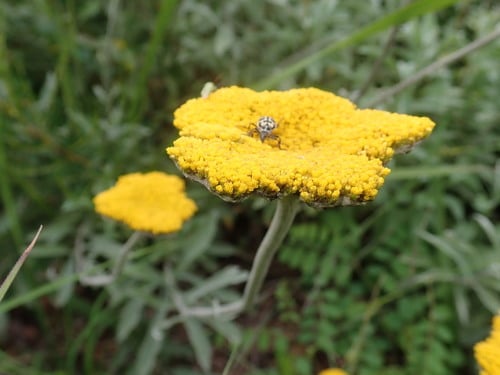
The woolly (or wooly) umbrella is a yellow flower native to South Africa that has a velvety touch and a curry-like aroma. In the wild, this perennial is found primarily in the mountainous regions between Zimbabwe and South Africa on the Eastern Cape, and it gets its name from the fluffy, parasol shape of its flowers.
Traditionally, this plant was used as an intoxicant by burning the plant and inhaling the smoke. This may sound a lot like cannabis, but the two plants are actually completely unrelated to each other. [3] In fact, the earliest evidence of cannabis cultivation stems from Central Asia, thousands of miles away from the woolly umbrella’s natural environment. [4] Considering this geographic distance, it’s pretty unlikely that they share a common ancestry or were crossbred with each other at some point.
As a point of reference, the woolly umbrella is more closely related to sunflowers, daisies, and lettuce than it is to cannabis. [5] So, if there is some unknown commonality between the two plants, it would have to go back pretty far along the evolutionary timeline. Besides the fact that these two unrelated plants have unique smells there is something special that they have in common. Cutting edge technology recently mapped the woolly umbrella’s entire genome, and the process identified more than 40 cannabinoids in the plant itself. [6]
This brand-new discovery means that there are now two identified plants in the world that are known to produce cannabinoids naturally, putting them in a unique category compared to other flora. The cannabinoids may also explain why they both have an intoxicating effect, but this is not the only reason this plant is special. Because the two species are not related to each other, this could be considered a marvel of the natural world. Up until this point, it was believed cannabis was in this exclusive club, and that is no longer the case. The potential is massive, not only for the medical world, but it could also mean there are other, undiscovered plants producing cannabinoids naturally.
What Cannabinoids Does the Woolly Umbrella Produce?
When compared to the more than 100 cannabinoids found in cannabis, the woolly umbrella’s 40 cannabinoids seems to represent a downgrade in variety. This may be true of the number of cannabinoids, but it is not the case for the concentration of them. For starters, it is worth noting that the woolly umbrella does not produce tetrahydrocannabinol (THC) or cannabidiol (CBD), the two most famous and most abundant cannabinoids found in cannabis. This may help to address any possible legal concerns, as many governments around the world are moving to ban THC and not hemp derived cannabinoids.
Instead, the wooly umbrella contains large amounts of cannabigerol (CBG), which holds a lot of promise in cannabinoid research. Initial studies found that CBG has antioxidant, anti-inflammatory, and antitumoral activities in addition to neuroprotective dermatological, and appetite stimulating effects. [7] Basically, this cannabinoid may protect your brain, your skin, and your digestive tract all while fighting cancer and providing pain relief. That’s not the only thing these two plants have in common.
Of the 40 cannabinoids found in the woolly umbrella, six of them also exist in various strains of cannabis. [6] Additionally, the enzymes that produce the cannabinoids within each plant are nearly identical to each other. Scientists haven’t identified what this means, but considering the plants’ separate species, the current theory is that cannabinoids must serve some ecological purpose. This also gives credence to the idea that there may be plants out there with undiscovered cannabinoids.
Once that ecological purpose is identified, it may help scientists find other cannabinoid producing plants in the future. One primary difference, aside from the numerous new cannabinoids in woolly umbrellas, has to do with where the cannabinoids are found in each plant. In cannabis, the buds hold most of the plant’s cannabinoids, with only about 1-2% existing in the leaves. [8]
In the woolly umbrella’s case, the opposite is true, with most of their cannabinoids residing in the leaves themselves. Considering this is one of the most common parts of the plants, it represents a good chance at improving or developing cannabinoid extraction procedures. If scientists need to work with this plant in a new way, it could help them work more efficiently with cannabis as well.
Advantages and Disadvantages of the Woolly Umbrella
Considering the fact that the woolly umbrella has 36 cannabinoids that are not found in cannabis, the discovery of their existence means a whole new area of cannabinoid research can begin. This includes identifying the cannabinoids as well as documenting any kind of therapeutic benefits they may provide. Even more exciting, because these plants developed completely independently of each other, it may lead to a better understanding of cannabinoids in general. Not only could this provide a better understanding of the cannabinoids in cannabis, but it could also help identify more natural sources of cannabinoids.
A better understanding of cannabinoids due to the radically different sources providing them may also lead to synthetic cannabinoid production that may not otherwise occur in nature. It is too early to come up with practical uses for this kind of research, but it could mean better medicinal products that can help treat more patients. While the potential for the woolly umbrella remains high, there are a few downsides worth noting.
The first is that up until recently, it was very difficult to cultivate these plants outside their natural environment. This is changing though, and new techniques are being developed to allow them to be grown in pots in more controlled environments outside of South Africa. [9] Beyond that, the extraction of woolly umbrella’s cannabinoids is expensive, but that may change too. [10]
If the medical benefits and profit potential means large returns on investments, it could lead to more research and cultivation of this plant. If the woolly umbrella can provide a legal, alternative source for cannabinoids, as compared to cannabis, it may lead to big changes in the medical industry that justify the cost and difficulty of mass production.
References:
- Russo, Ethan B. “Cannabis and epilepsy: An ancient treatment returns to the fore.” Epilepsy & Behavior 70 (2017): 292-297.
- Kafil, Tahir S., et al. “Cannabis for the treatment of ulcerative colitis.” Cochrane Database of Systematic Reviews 11 (2018).
- Lourens, A. C. U., Alvaro M. Viljoen, and F. R. Van Heerden. “South African Helichrysum species: a review of the traditional uses, biological activity and phytochemistry.” Journal of Ethnopharmacology 119.3 (2008): 630-652.
- Chouvy, Pierre-Arnaud. “Cannabis cultivation in the world: heritages, trends and challenges.” EchoGéo 48 (2019).
- Galbany-Casals, Mercè, et al. “Phylogenetic relationships in Helichrysum (Compositae: Gnaphalieae) and related genera: Incongruence between nuclear and plastid phylogenies, biogeographic and morphological patterns, and implications for generic delimitation.” Taxon 63.3 (2014): 608-624.
- Berman, Paula, et al. “Parallel evolution of cannabinoid biosynthesis.” Nature plants (2023): 1-15.
- Nachnani, Rahul, Wesley M. Raup-Konsavage, and Kent E. Vrana. “The pharmacological case for cannabigerol.” Journal of Pharmacology and Experimental Therapeutics 376.2 (2021): 204-212.
- Jin, Dan, et al. “Secondary metabolites profiled in cannabis inflorescences, leaves, stem barks, and roots for medicinal purposes.” Scientific Reports 10.1 (2020): 3309.
- Najar, Basma, et al. “Volatolomics of three south African Helichrysum species grown in pot under protected environment.” Molecules 26.23 (2021): 7283.
- Nahar, Lutfun, et al. “Extraction of naturally occurring cannabinoids: an update.” Phytochemical analysis 32.3 (2021): 228-241.

by Grow Up Conference | Apr 9, 2024 | Media Partners, Stratcann
Mississauga-based cannabis company Diteba Laboratories Inc. filed a notice of intent (NOI) on March 2 under the Bankruptcy and Insolvency Act, listing more than $15 million in liabilities, including nearly $8.2 owed to the CRA.
The company blames its financial hardship on the resistance of provinces and consumers to new and innovative cannabis products and the “stubborn resilience” of the flower, prerolls, and vapes markets, as well as the illicit market.
All creditors are barred from commencing or continuing any actions against Diteba until the creditors handle the proposal.
Diteba Laboratories Inc. has thirty days from the date of filing the NOI to make a proposal.
The company already underwent a court-approved sale and investment solicitation process (SISP) in 2023, which resulted in the sale of its scientific contract research business. The same was approved in October. Diteba also operates a white-label cannabis processing and distribution business.
The company processes and packages cannabis vape products, milled cannabis flower, pre-rolls (traditional and infused), and whole cannabis flower and sells cannabis under the Common Ground brand.

by Grow Up Conference | Apr 8, 2024 | Cannabis News Wire, Media Partners
A recent survey conducted by the Pew Research Center reveals that an overwhelming majority of Americans, nine out of ten, support the legalization of cannabis for either medical or recreational purposes. Further, most respondents believe that legalizing cannabis enhances local economic growth and promotes fairness within the justice system.
Released on March 26, 2024, the report indicates that 88% of Americans endorse some form of legalization, with 57% advocating for both medical and recreational use accessibility. Only a small fraction, 11%, opposes marijuana legalization entirely. The survey identified consistent patterns among various demographics. Democrats showed higher support for complete legalization (72%) compared to Republicans (42%). However, the vast majority of both parties, 94% and 82% of Democrats and Republicans, respectively, support legalization for medical use at least.
The poll highlighted ideological differences within parties, noting that liberal and moderate-leaning Republicans are more likely to support full legalization (57%) compared to conservative Republicans (34%). Respondents were also asked about their opinions on the societal effects of legalizing cannabis for recreational use. A majority, 52%, believe that legalization benefits local economies, while 42% think it leads to a fairer justice system.
Divergent opinions emerged on how legalization would affect drug use and public safety. While 27% believe cannabis legalization decreases the use of other drugs, including fentanyl and heroin, 29% think it increases their use. Similarly, 34% believe that legalization makes communities less safe, while 21% argue it improves safety.
The poll highlights partisan and age differences, noting that older adults are less likely to support legalization compared to younger adults. For instance, only 31% of adults aged 75 and older support legalization for both recreational and medical use, compared to 50% of adults aged 65 to 74.
This survey is part of a series showing growing support for ending cannabis prohibition. A Gallup poll conducted last year found record-high national support for legalization, with seven out of ten Americans backing it. Moreover, a recent survey revealed strong bipartisan support for congressional legislation protecting states’ rights to set their own cannabis laws.
According to a different Pew study published last month, eight out of ten Americans live in counties with one or more cannabis dispensaries. The data also showed a large number of cross-border purchases from jurisdictions where cannabis was still illegal, with outlets frequently clustered along the borders of states with stronger marijuana regulations.
Paul Armentano, NORML deputy director, commented on the recent findings, stating that public support for legalization has surged as more states adopt it. Armentano noted that voters prefer regulation and legalization over the failed prohibition policy.
For cannabis companies such as Software Effective Solutions Corp. (d/b/a MedCana) (OTC: SFWJ), federal policy reforms that recognize the marijuana industry as a legitimate form of business at the federal level would address many of the hurdles that these entities face in their bid to serve the growing consumer base across the country.
NOTE TO INVESTORS: The latest news and updates relating to Software Effective Solutions Corp. (d/b/a MedCana) (OTC: SFWJ) are available in the company’s newsroom at https://cnw.fm/SFWJ
About CNW420
CNW420 spotlights the latest developments in the rapidly evolving cannabis industry through the release of an article each business day at 4:20 p.m. Eastern – a tribute to the time synonymous with cannabis culture. The concise, informative content serves as a gateway for investors interested in the legalized cannabis sector and provides updates on how regulatory developments may impact financial markets. If marijuana and the burgeoning industry surrounding it are on your radar, CNW420 is for you! Check back daily to stay up-to-date on the latest milestones in the fast -changing world of cannabis.
To receive SMS alerts from CNW, text CANNABIS to 888-902-4192 (U.S. Mobile Phones Only)
For more information, please visit https://www.CannabisNewsWire.com
Please see full terms of use and disclaimers on the CannabisNewsWire website applicable to all content provided by CNW, wherever published or re-published: https://www.CannabisNewsWire.com/Disclaimer
CannabisNewsWire
Denver, CO
www.CannabisNewsWire.com
303.498.7722 Office
Editor@CannabisNewsWire.com
CannabisNewsWire is powered by IBN

by Grow Up Conference | Apr 8, 2024 | Media Partners, Stratcann
The Alcohol and Gaming Commission of Ontario (AGCO) has issued an administrative penalty to a cannabis retailer for alleged violations of the province’s regulatory standards related to provincial anti-inducement laws.
In a press release issued on April 8, the AGCO issued an Order of Monetary Penalty totalling $200,000 to 2776112 Ontario Inc., the licensed operator of the Cannabis Xpress chain of cannabis retail stores.
This fine was for alleged violations of the province’s rules that disallow cannabis stores from asking for or accepting inducements from cannabis producers as a condition of selling or giving preferential treatment to products in their stores, also known as paying for shelf space.
The provincial regulatory agency says it began its investigation after receiving information about possible “inducement activity”. The AGCO investigated Cannabis Xpress, including a review of over 82,000 relevant documents. The agency found that Cannabis Xpress’ “Data Services Program” and/or other agreements with licensed cannabis producers are actually an inducement program.
Cannabis Xpress has 14 locations in Ontario and two in New Brunswick. Chris Jones, the owner of Cannabis Xpress declined to provide comment at this time.
So-called “data deals” have been a controversial subject in the industry for some time now, with some Ontario retailers calling out the practice last year. Provincial rules do allow retailers to sell data to producers.
“Provincial law and AGCO standards include anti-inducement regulations to protect consumer choice and maintain a level playing field for small businesses in the cannabis retail industry,” Dr. Karin Schnarr, Registrar and CEO of AGCO, said in a press release. “The AGCO monitors the sector’s compliance with these requirements and will take strong action against any licensee found to be engaging in illegal behaviour.”
A media representative for the AGCO declined to say if they are investigating any other companies for such activities, but says it “continuously monitors all licensed cannabis retail operators for compliance with the CLA and Standards.”
The AGCO alleges that it found that Cannabis Xpress was repeatedly seeking to secure agreements with more than a dozen cannabis producers over the course of more than two years. These agreements allegedly offer preferential treatment in exchange for a percentage of product sales.
The AGCO says the retailer refused to stock one cannabis producer’s product unless the producer agreed to enter into one of these prohibited inducement agreements while promoting the sale of cannabis products from producers who entered such inducement deals.
A licensed retailer served with an Order of Monetary Penalty by the AGCO has the right to appeal the Registrar’s action to the Licence Appeal Tribunal (LAT), an adjudicative tribunal independent of the AGCO and part of Tribunals Ontario.
Some publicly traded cannabis companies report sales of their own data programs. Ontario rules do allow retailers to sell data to producers, allowing them to better understand product sales trends.
Nova Cannabis, a company behind one of Canada’s largest chain of cannabis stores, Value Buds, recently reported revenue from its own “proprietary data licensing arrangements” of $12.4 million for 2023, an increase of 125% from $5.5 million in 2022.
High Tide, another sizeable retail cannabis business in Canada with more than 150 Canna Cabana locations across the country, reported sales from its own “Cabanalytics business data and insights platform” increased to $6.5 million in the third fiscal quarter of 2023 from $5.5 million during the same period in 2022.
Related Articles

by Grow Up Conference | Apr 8, 2024 | Garden Culture Magazine, Media Partners
Becoming an organic-regenerative gardener is worth every effort, helping you produce healthier crops and connect to Nature. The good news is that implementing sustainable practices in your garden can be as simple or complicated as you’d like; many different projects and efforts contribute meaningfully to the health of your plants and surrounding ecosystems. Looking for ideas? Try these 5 Cool Ways to Create an Eco-Friendly & Sustainable Garden Space.
Start with Soil
One of the most powerful things you can do as a gardener is to treat your dirt like gold. Living soil will help you grow productive gardens while protecting a precious resource. Forget chemical products; compost is your best friend. You can create a composting system that works for you, regardless of your space. Adding organic matter to your garden instantly boosts soil nutrient content, creates air pockets, and helps the earth better retain moisture. Leave no patch of soil uncovered; always mulch your garden space. Covering the earth with a layer of wood chips or leaf mold will prevent water evaporation and add nutrients to the soil as it decomposes. Consider sheet mulching (lasagna gardening) and hugelkultur beds to build nutrient-rich earth while saving water. And avoid digging if you can. Leaving life below the garden surface intact while nourishing it is a top priority. Stepanie Rose’s The Regenerative Garden: 80 Practical Projects for Creating a Self-Sustaining Garden Ecosystem is an excellent resource for gardeners leading the change.

Support Wildlife
We do so much to keep certain critters out of our gardens; don’t forget to put the welcome sign on the gate for many others. Supporting wildlife and making safe spaces for them is essential to thriving ecosystems, and it can be a lot of fun, too. Build some insect hotels or leave stumps or pieces of driftwood in the garden for beneficial bugs to move into so they can help you with pest control. Strategically place birdhouses, baths, or feeders and plant berry bushes to encourage our feathered friends to pop by. Design pollinator islands that include a wide variety of mostly native and only chemical-free plants. Between bee balm and liatris for the bees, coneflowers and milkweed for the butterflies, and foxglove and honeysuckle for the hummingbirds, you’ll end up with a downright gorgeous flower buffet to please the essential pollinators that help your garden grow.

Stop Weeding
We often hear that we need to go back to our roots, and the saying is true for many different reasons. In The Climate Change Garden: Down to Earth Advice for Growing a Resilient Garden, Sally Morgan and Kim Stoddart write about how gardens of the past were rarely decorative and served the functional purpose of growing food for the family. Weeds were encouraged to grow alongside crops for their medicinal properties and ability to attract pollinators and beneficial insects to the garden. Plus, keeping every inch of ground covered was essential for retaining moisture in the summer, nutrients in the winter, and preventing soil erosion. Take a page from the past; let plants like chickweed, lamb’s quarters, and ox-tongue self-seed and grow alongside other plants. They’re beautiful in their own right and create the cottage garden look everyone longs for these days. Fighting Mother Nature is too much work; let her do her thing and reap all the benefits.

Build a Wicking Bed
Wicking beds are an exciting option for water-conscious gardeners. These large, DIY container-like gardens capture water runoff and store it in a reservoir under the bed’s soil so it’s readily available for the plant roots whenever needed. Kiss the garden hose goodbye and say hello to healthy crops with strong roots! You can build wicking beds in the ground or as a raised garden, preferably with recycled materials or cedar posts. You’ll need an impermeable barrier at the bottom to act as the reservoir, drainage pipes for water flow, and gravel to store the water. Place garden fabric on the gravel and fill the bed with soil and plants. You can water the wicking bed manually (about once a week in thesummer) or connect downspouts to the garden and let the rain do the job for you. The Regenerative Garden (Rose) offers excellent step-by-step guides to building wicking beds, keyhole gardens, herb spirals, and more.

Reuse and Recycle
Finding creative ways to use things you already have in the garden is budget-friendly and reduces the amount of waste in landfills (or sitting in your shed). In their book, The Urban Garden: 101 Ways to Grow Food and Beauty in the City, Kathy Jentz and Teri Speight encourage gardeners to find new purposes for items rather than buying new ones. Doing so adds layers of history and depth to the garden because it connects you to previous gardeners and owners or past experiences. Anything that holds soil can be a planter if you create drainage holes. Old bathtubs, sinks, rain boots, and metal trucks can all be used as containers. An old brass bed frame makes a garden trellis and metal chairs can be placed anywhere to create a cozy relaxation and garden observation spot. Grow vertically in repurposed rain gutters and edge garden beds with rocks from your travels, old cinder blocks, or terracotta roof tiles. Finally, Jentz and Speight warn never to throw out broken garden tools. Have a bucket handy to collect broken parts; you can eventually put something together with the pieces. Besides, old rake heads make great hanging racks for garden gloves and small tools!


by Grow Up Conference | Apr 8, 2024 | Garden Culture Magazine, Media Partners
For many years, gardeners have known the rules: start seeds indoors and nurture them until they’re ready to be planted outside. Don’t forget to harden them off! And for the love of God, space them properly in tidy rows or forget any harvests. Now, imagine not doing any of that, grabbing a packet of seeds and casting them haphazardly throughout the garden space. Relinquish all control and see what sprouts. Is your chest feeling tight? Welcome to Chaos Gardening.
“Chaos is meant to be disruptive. It’s meant to make you uncomfortable, and that’s how we learn best,” says award-winning author and gardener Stephanie Rose. “I don’t feel that gardening needs to be so planned and so maintained.”
Rose should know. She’s an herbalist, permaculturist, and the author of several books, including two of my personal favorites, Garden Alchemy and The Regenerative Garden. Both books guide gardeners through working with nature and restoring the planet while growing productive, sustainable home garden spaces that don’t require much work. Rose’s love for regenerative gardening jumps off her pages, and after our recent video chat, I can confirm her passion is contagious. Rose has a way of making you want to do better, and it helps that she offers concrete and easy ways to achieve that goal in her books. During our talk, she tells me about her recent lawn adventures at her new home in Vancouver, BC, where she’s defying all of the traditional rules of growing grass. Rose didn’t prepare the land or buy truckloads of new soil. Instead, she pulled up the existing pieces of grass, planted 1,500 bulbs, covered them back up, and tossed a wildflower turf alternative over some compost mixed with sand.
Credit: Eduardo Cristo
“It is complete chaos,” she admits. “And I did it two months before the seed packets said I could do this.”
She’s at nature’s mercy and is perfectly fine with that. Rose is expecting some losses. Whatever grows is meant to be there; anything that doesn’t would never have survived, anyway. She’s open to learning from the plants and creating her space based on what they tell her.
“If we have too much ego going into chaos gardening, then that’s where we will not succeed,” she says. “If we go in with humility and an open mind to learn, then we will be able to grow as gardeners as our gardens grow with us.”
Garden Trends
Chaos gardening is all the rage, trending on TikTok and Instagram. Videos of ‘chaos carrots’ popping up in random garden spots are getting over a million views. The new generation of gardeners is keen on ditching the traditional growing rules and the constant work typically associated with tending plants. Rose believes today’s gardeners understand they must correct many mistakes from the past, and that’s why the topic is trending. They want to toss carrot seeds and wildflower seed bombs into bare garden spaces and see what happens. They don’t want structured gardens with tall plants in the back, shorter ones in the front, and dyed mulch between them. They’re ready to move away from the perfectly manicured lawns that are weed-free yet dying of thirst.

Credit: Stephanie Rose
“The generation coming up sees this as lawful evil because it’s not supportive of our environment,” Rose says. “It is so much labor, and they’re thinking about a whole generation of people who didn’t garden because they could see how much work it was.”
The Trade-Off
Chaos gardening is the definition of low-maintenance. Rose recommends researching the plants that do well in your region and buying seeds that speak to you. Cast the seeds widely and often, forgetting about spacing completely. Water and see what grows.
“You’re going to have far lower germination rates than you would if you followed [directions] and had done it in a greenhouse and set all the plants out,” she says. “However, seeds are inexpensive. Your time is valuable. Your energy is valuable, so you’re doing a bit of a trade-off here.”
As the plants grow, you will notice some varieties thriving more than others. When they establish, Rose recommends digging up anything that doesn’t fit the space properly and placing it elsewhere in the garden. It’s as simple as that, and that is regenerative gardening. Or, should we say, chaos gardening?
“Well, it’s just a different name for the same thing, right?” Rose explains. “But I love where this is coming from because this is a whole new generation embracing the idea of chaos as something positive.”
Sowing Chaos
Russell Taylor, vice president of Live Earth Products and international Certified Crop Advisor, turned to chaos gardening as an act of desperation.

“I had an area in front of my house and planted some boxwoods, but they died. And then I planted a small pink Japonise willow, and that died,” he recalls. “I just couldn’t get anything to grow. I had to have something green. I cleaned out the seed bin, threw it out in front of the house, and what grew is what grew.”
Today, he has a beautiful self-propagating area of zinnias and salvia growing outside his front door. That’s what nature intended for his space, and Taylor has learned to listen and embrace the chaos. He also experiments with vegetable crops and fresh herbs, randomly sprinkling radish, spinach, arugula, kale, and cabbage seeds throughout his raised beds. Strawberries roam around the base of his asparagus plants. He planted dill ten years ago and hasn’t replanted it since; the herb just won’t quit! Taylor suggests watching these more invasive crops to give others a fighting chance, thinning as needed.

Russell’s volunteer dill plants hard at work
“Carrots, for example, whether it’s chaos-seeded or planned, if they’re too crowded, they don’t get the proper nutrients,” he says. “So, you thin them. One of the keys is to say, ‘We sowed some chaos. Now let’s get some organization, so these things aren’t competing too much.’”
Taylor is a soil guy, so he stresses the importance of building living earth to allow the plants to reach their full potential. He also recommends understanding seed habits, especially if you live in a small space where porch and patio varieties are better than anything indeterminate.
Small and Indoor Spaces
Rose sees no reason why people living in small spaces shouldn’t scatter seeds in a pot and watch them grow. She also encourages indoor gardeners to get in on the chaos on their windowsills or wall planters. Culinary herbs are an excellent start, but we can take things further by regrowing food from kitchen scraps in water. These crops may not be as productive as the ones growing outdoors, but something is always better than nothing.
“Great mistakes are how we learn,” she says. “The biggest thing to watch out for [with chaos gardening] is not being open to what the lessons are.”

Credit: Stephanie Rose, Garden Therapy
Nature’s Lead
Luckily, nature’s lessons are everywhere in our gardens, meadows, and forests. Crowded plants die back in natural settings, allowing others to intermingle and thrive. Dense woodland plantings provide living mulch, preventing soil erosion and water evaporation. They also offer habitat to beneficial insects and other wildlife. It’s chaotic, regenerative, and wonderful.
So, don’t be afraid. Gather seeds you love and scatter them throughout the garden like nobody’s watching. Don’t worry about spacing, density, losses, or any other great mistakes you might make. See what grows, be excited about nature’s surprises, and learn from them. Most of all, let loose and embrace the chaos.

by Grow Up Conference | Apr 8, 2024 | Grow Opportunity, Media Partners
(Globe Newswire) Toronto — The Alcohol and Gaming Commission of Ontario (AGCO) has issued an Order of Monetary Penalty totaling $200,000 to 2776112 Ontario Inc., the licensed operator of the Cannabis Xpress chain of cannabis retail stores, for alleged violations of Ontario’s regulatory standards related to provincial anti-inducement laws.
The provincial Cannabis Licence Act, 2018 and the AGCO’s Registrar’s Standards for Cannabis Retail Stores prohibit Ontario cannabis retailers from asking for or accepting inducements from cannabis producers as a condition of selling or giving preferential treatment to products in their stores.
After receiving information regarding inducement activity, the AGCO undertook compliance inspections of Cannabis Xpress, including a review of over 82,000 relevant documents, and found that Cannabis Xpress’s so-called “Data Services Program” and/or other agreements, which it entered into with licensed cannabis producers (LPs) are, in fact, an inducement program.
Notably, over a period of at least 30 months, the licensee repeatedly sought the participation of over a dozen LPs in so-called “data service” or other such agreements. These agreements were actually an indirect means of requesting and accepting prohibited inducements where, for a fee or a percentage of product sales, Cannabis Xpress gave preferential treatment to products from LPs that had executed such unlawful agreements to the disadvantage of those that had not.
For example, the licensee refused to stock an LPs product unless they agreed to enter into prohibited inducement agreements and promoted the sale of cannabis products from producers who entered such inducement deals. It was found that the licensee attempted to disguise these illegal payments as agreements for the sale of data for business intelligence purposes, which are permissible under the Standards.
The AGCO is committed to ensuring that the cannabis retail sector operates with honesty, integrity and in the public interest.
A licensed retailer served with an Order of Monetary Penalty by the AGCO has the right to appeal the Registrar’s action to the Licence Appeal Tribunal (LAT), an adjudicative tribunal independent of the AGCO and part of Tribunals Ontario.
“Provincial law and AGCO standards include anti-inducement regulations to protect consumer choice and maintain a level playing field for small businesses in the cannabis retail industry. The AGCO monitors the sector’s compliance with these requirements and will take strong action against any licensee found to be engaging in illegal behaviour.” — Dr. Karin Schnarr, Registrar and CEO, AGCO



Recent Comments