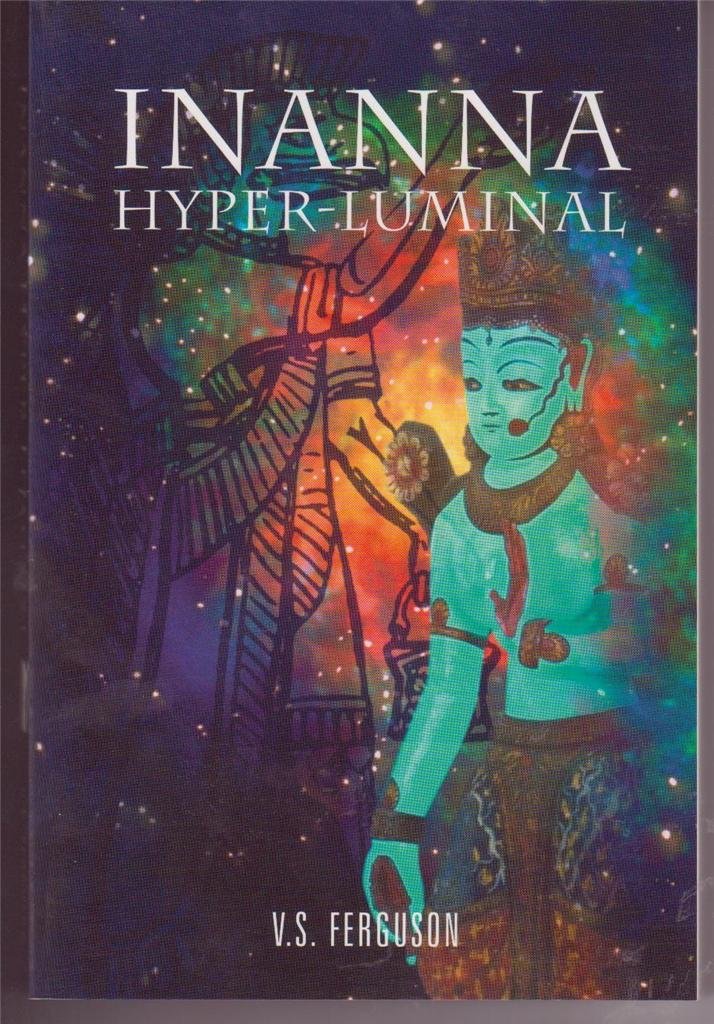
Heavens and hells are nothing more than temporal ILLUSIONS in the astral planes, created by the mind of man throughout the Four Cycles of Time. Just as the worlds (LOKAS) of the gods (DEVAS) and extra-terrestrials are locked in their own durations of time, and have a Beginning and an End, these heaven and hell holographic matrices are temporal and not eternal.
The wise must understand that the rewards of heaven
…are as transient as pleasures on earth.
The Uddhava Gita, Dialogue 14.18
The gods, or cosmic deities, also belong to the phenomenal world… the attainment of oneness with them… cannot destroy the miseries of SAMSARA [the illusory holographic matrix].
… the aspirant, seeking liberation from phenomenal suffering, should realize the Supreme Brahman [IS-ness] as his own self and the self of all beings.
Swami Nikhilananda
The Upanishads Vol. 3, AITAREYA UPANISHAD, Chapter II
There is an intriguing prayer that the genius Indian composer and Sufi AR Rahman has set to music:
“O God, if I worship Thee for fear of hell, then burn me in hell.
And if I worship Thee in hope of paradise, exclude me from paradise.
But if I worship Thee for Thy own sake, grudge me not Thy everlasting Beauty.”
The prayer reflects the Razors Edge quality of the individual seeker who prays for the single-minded focus back into the God-within, that piece of IS-ness that you are, your own Soul – the ATMA, your Divine SELF.
The most important task you now face is to form a solid-gold relationship with your own Soul, a relationship you can count on to carry you through whatever may come.
Establishing this relationship with the God-within you is far more important than any comprehension of the endless schemes & conspiracies of the Darkside, which are in effect designed to hold the hologram together until the close of this cycle.
When you leave your body, unless you have already achieved UNION with IS-ness, you will encounter a realm that precisely reflects your own consciousness. Your conscious and unconscious thoughts do generate and manifest your holographic reality.
There may be many entities – and there are millions of them – who will be inviting you to go with them, to join them, to play, to hang out with them, to come under their ‘influence’. These entities may even be your loved-ones or may in fact be ‘hungry ghosts’ only masquerading as your loved-ones. In effect, they will be aggressively ADVERTISING their particular realm within the Phantasmal Hierarchies as seductively as any late-night car dealer! Buyer, beware!
When you leave your body IGNORE ANY and EVERYONE! Even those you love.
First and foremost from your Heart chakra, call forth your OWN Soul, the God-within, as distinct from your current small identity-ego-self, which is generated by the GUNAS. Do not become distracted by these Myriad Worlds – however splendid, alluring, and comfortable.
Only your own Soul, the God-within you, knows ANYTHING relevant to your recent disembodiment and your posthumous state.
Imagine that at the end of the Kali Yuga, many beings who have been incarnating through the Four Cycles of Time will prefer to not be in vulnerable corporeal bodies. They will be perhaps rather bored and sitting it out on the ‘sidelines’ waiting for the close of the Kali Yuga and the Dissolution of the World, this current illusory holographic matrix.
Once your subtle body has made the conscious ‘re-connection’ with your Soul, you will KNOW your Path.
The United States anticipates surpassing $31 billion in regulated cannabis sales this year, according to recent projections from Whitney Economics, a hemp and cannabis consulting company based in Portland, Oregon. The estimate suggests that recreational and medical cannabis legal sales will reach approximately $31.4 billion this year, marking a $2.6 billion rise from the previous year, equating to a 9.14% yearly growth rate.
The forecast highlights challenges faced by the industry, including alterations in consumer spending ability, elevated interest rates and postponed enactment of regulations in new state markets post-COVID-19 pandemic. Despite these hurdles, the overall growth of the marijuana industry remains positive, albeit with a decline in marijuana sales witnessed in 10 states, signaling the necessity for new markets to sustain growth.
Whitney Economics’ head economist, Beau Whitney, noted that the most recent estimate is based on a previous market analysis the company carried out. The prediction of a steady increase in legalized marijuana sales has been well received by executives in the sector. However, the projections highlight how important it is that legal changes be made so that marijuana entities can operate similarly to those in traditional industries, including participating in interstate trade and having access to banking facilities.
Missouri-based Illicit Gardens’ head of marketing, David Craig, noted that the presence of cannabis in the economy is undeniable. Further, he stressed the urgency for states to lead the way in removing regulatory barriers for operators, particularly those operating across multiple states.
Sarah Carter, the head of Symple Seeds’ communications, praised the continued growth of the legal marijuana industry. She highlighted the significant $2.6 billion increase from the preceding year, underscoring the market’s momentum and potential. However, she emphasized the importance of tackling enduring problems, such as restricted financial access for marijuana enterprises, which not only hinder operational effectiveness but also present hazards to safety and discretion.
The U.S. House of Representatives has passed legislation on multiple occasions in recent years intending to provide standard banking services to cannabis companies that are subject to regulation. Currently, the Senate is debating an amended version of the banking measure: the Secure and Fair Enforcement Regulation (SAFER) Act. Chuck Schumer, the Senate majority leader, expressed his intention to expedite the passage of the measure last fall.
Carter reiterated the critical importance of resolving the banking issue to unlock the full potential of the industry. Access to banking services, she noted, would streamline operations, enhance financial transparency, instill investor confidence and promote regulatory compliance and responsible business conduct.
As the cannabis industry, including established companies such as Cresco Labs Inc. (CSE: CL) (OTCQX: CRLBF), awaits federal action on easing access to banking services, it will have to make do with transacting in cash or patronizing the few state-based institutions willing to take them on as clients.
About CNW420
CNW420 spotlights the latest developments in the rapidly evolving cannabis industry through the release of an article each business day at 4:20 p.m. Eastern – a tribute to the time synonymous with cannabis culture. The concise, informative content serves as a gateway for investors interested in the legalized cannabis sector and provides updates on how regulatory developments may impact financial markets. If marijuana and the burgeoning industry surrounding it are on your radar, CNW420 is for you! Check back daily to stay up-to-date on the latest milestones in the fast -changing world of cannabis.
To receive SMS alerts from CNW, text CANNABIS to 888-902-4192 (U.S. Mobile Phones Only)
Please see full terms of use and disclaimers on the CannabisNewsWire website applicable to all content provided by CNW, wherever published or re-published: https://www.CannabisNewsWire.com/Disclaimer
Prime Minister Justin Trudeau spoke of the easy transition Canada took into a legal market in an interview with the host of a French show on cannabis and cannabis laws around the world.
The Prime Minister’s comments spoke of the rather un-exciting nature of legalization in Canada, a reflection of the lack of any significant societal changes caused by taking the historic step to be the first G7 nation in the world to legalize cannabis.
This was not surprising, Trudeau tells the interviewer, as Canadians were already consuming cannabis, a drug he says is significantly safer than another legal, regulated product: alcohol.
“People watched with interest what we were doing. The other ‘downside’ is that there is still work to be done, but there is nothing that would be negative enough to even say that we should not have done it.”
Prime Minister Justin Trudeau
The only major changes, he says, are that there is now less pressure on the justice system since people, especially minorities, are not being targeted for cannabis possession anymore, and that Canadian adults now have a safer, regulated source for cannabis rather than relying on the illicit market.
One issue Trudeau says he did have concerns about was if legalizing would put Canada at odds with international treaties, something many Conservatives raised as a serious concern in their opposition to legalization as the bill was being debated in 2017 and 2018.
But those fears were also unfounded, Trudeau says, and instead, the international community has been watching and learning from Canada’s trail-blazing approach.
“The only downside that worried us a lot was that it was going to put us outside of certain international treaties on the fight against drugs,” said Trudeau (translated). “We said to ourselves: ‘Are people going to punish Canada because we are not aligned with the treaties?’ Nobody talked to us about that. People watched with interest what we were doing. The other ‘downside’ is that there is still work to be done, but there is nothing that would be negative enough to even say that we should not have done it.”
The Conservatives in the House were beating the drum around home growing specifically, with some incredibly outrageous comments and stunts over the last few months of debate, including the reading of a poem, the comparison of home-grow with ‘fentanyl on the shelf,’ the claim that four cannabis plants can produce 4,800 grams of cannabis, the claim that kids will use toasters to heat cannabis leaves, and the constant and ever-present concern of kids being around cannabis plants.
Marylyn Gladu, then the Conservative health critic, said it was ridiculous and irresponsible for the government to put Canada in breach of these international treaties in 2017.
“I think it’s completely unacceptable that the Liberal government, by choosing an arbitrary implementation date, would put us in a position where Canada would breach three treaties that may jeopardize trade deals that are dependent on us complying to them. I think that’s ridiculous. It’s naive to think that we could have any kind of integrity on the world stage by violating the treaties. I think “principled non-compliance” was the term used. This is ridiculous. We are always calling out other countries that don’t abide by the treaties they’ve signed with the UN. We will lose that ability if we don’t address this situation. I think this is completely irresponsible.”
“I think it’s absolutely unacceptable that we are violating UN treaties to pursue the legalization of marijuana in this country,” said Webber. “I don’t know what the Liberal government is going to do, whether they’re going to either withdraw from the treaties or just violate the treaties. I would like to know from that government what they plan on doing.”
In the same meeting, however, Steven Rolls, a senior policy analyst at Transform Drug Policy Foundation in the UK who was called an expert witness on the subject, said the issue was being exaggerated.
“I think there’s a little bit of over-dramatization here, that somehow the whole system would cave in if you move into a technical non-compliance for a period, especially if you’re making a clear moral case on UN grounds based on higher UN principles, and you are clearly showing an effort to resolve the tensions that have emerged. I would caution in regard to some of this rather over-dramatizing situation. It needn’t be this terrible cataclysmic situation. You can progress things without the whole system collapsing. I just wouldn’t worry quite as much as some of the committee members seem to be doing.”
Justin Trudeau on UN treaties during an interview released yesterday: A French journalist asked if he saw a downside risk to cannabis legalization.
“The only downside we were extremely worried about was that it would place us in non-compliance with certain international treaties… pic.twitter.com/UrYhdt6Z3Q
Earlier this week, cannabis campaigners in Germany celebrated as the country legalized the recreational use of the drug and its possession in small amounts. The decision, which comes amid objections from law enforcement officers and doctors, makes Germany the third nation in the European Union to legalize marijuana for personal use after Luxembourg and Malta.
The law was approved by the current coalition of the probusiness Free Democrats, the Greens, and Chancellor Olaf Scholz’ Social Democrats. This is despite opposition from the Christian Democrats and some federal states in the country.
Friedrich Merz, leader of the center-right Christian Democrats, vowed that the party will reverse this decision if it won the national elections next year.
The German Cannabis Association, which championed for the new law, orchestrated a smoke-in at the Brandenburg Gate when the legislation took effect at midnight. Other similar events were scheduled in different parts of Germany, including Dortmund, Regensburg and Hamburg.
In its decision, the government theorized that the drug’s legalization would guard consumers against harmful compounds, weaken the criminal trade of marijuana, and free law enforcement officers so they could pursue more severe crimes. This is all while offering protections against the drug’s use by underaged individuals.
The new law permits adults to cultivate no more than three plants on their own as well as possess almost one ounce of cannabis for recreational purposes. It also forbids the use of the drug within 109 yards (100 meters) of the entrance to a school or playground. Under the new legislation, residents 18 years of age and older will be permitted to join not-for-profit marijuana clubs. Each club will have no more than 500 members, and multiple memberships are forbidden. With regard to costs, membership fees shall be staggered according to the amount of cannabis a member uses.
In addition, adults will be allowed to purchase no more than 50 grams of marijuana a month and a maximum of 25 grams daily. It should be noted that the amount individuals 21 years old and younger can purchase in a month is capped at 30 grams.
Furthermore, the law requests for amnesty under which sentences for offenses related to marijuana will no longer be considered illegal and are to be reviewed and, in some cases, even reversed. This has raised concerns among regional authorities, who are worried that the judicial system will be overloaded by too many cases.
As more countries in the EU bloc consider easing their prohibition of marijuana, established entities such as SNDL Inc. (NASDAQ: SNDL) could find themselves expanding into those newly opened international markets.
About CannabisNewsWire
CannabisNewsWire (“CNW”) is a specialized communications platform with a focus on cannabis news and the cannabis sector. It is one of 60+ brands within the Dynamic Brand Portfolio @ IBN that delivers: (1) access to a vast network of wire solutions via InvestorWire to efficiently and effectively reach a myriad of target markets, demographics and diverse industries; (2) article and editorial syndication to 5,000+ outlets; (3) enhanced press release enhancement to ensure maximum impact; (4) social media distribution via IBN to millions of social media followers; and (5) a full array of tailored corporate communications solutions. With broad reach and a seasoned team of contributing journalists and writers, CNW is uniquely positioned to best serve private and public companies that want to reach a wide audience of investors, influencers, consumers, journalists and the general public. By cutting through the overload of information in today’s market, CNW brings its clients unparalleled recognition and brand awareness. CNW is where breaking news, insightful content and actionable information converge.
To receive SMS alerts from CNW, text CANNABIS to 888-902-4192 (U.S. Mobile Phones Only)
Please see full terms of use and disclaimers on the CannabisNewsWire website applicable to all content provided by CNW, wherever published or re-published: https://www.CannabisNewsWire.com/Disclaimer
A cannabis store in Ontario is temporarily closed today after a car crashed through the front of their store.
RC Bud Shop in downtown Harrow had a vehicle ram through the front of their store around 11:15 am on April 4.
Store manager Jenn Kane described the crash a “Kool-Aid man style” to the CBC, who were first to report on the story. A photographer on the app still known as Twitter, Tony Smyth, captured images and video of the crash shortly after it occurred. A video shows the vehicle almost completely inside the store, nearly taking out the front counter.
CBC is also reporting that while there were people inside the store at the time, there were apparently no injuries. Harrow is located in the southwestern tip of Ontario, about 45 minutes from Detroit.
There were no signs of impairment, no criminal charges are pending, and no injuries were reported, according to OPP.
A similar event occurred on January 4 when a drunk driver crashed into a cannabis store in Cardinal, ON, about an hour’s drive south of Ottawa. The 67-year-old driver received a three-day licence suspension after a roadside breath test found them to have a quantity of alcohol in his system.
One of the great spiritual teacher Sri Aurobindo’s main messages is that humanity is a transitional being. Our current state of being is not final, we are in the process of transitioning into a new state of being. We are collectively living in a bardo—a Tibetan word meaning a gap, an in-between state—where in this case we are not only between worlds, but our consciousness is between two fundamentally different states of being.
One of Jung’s favorite ways of explaining the notion of an archetype is the formation of a butterfly. If we cut open a butterfly pupa at a certain stage, all will we find is a milky liquid, a biotic goo, but the whole gestalt of the butterfly is already functionally contained within the liquid – it possesses a qualitas occulta (a hidden quality) encoded within it. Just like the potentiality of an oak tree is invisibly hidden within the acorn, the wholeness of the Self—what Jung calls the God within—is encoded in a state of potentiality within our current state of being. The literal process of what happens when a caterpillar becomes a butterfly symbolically expresses the transformation our species is undergoing as it morphs from one kind of being into another.
A caterpillar exists to eat. Its aim is to consume as much as possible. A certain percentage of humanity—many of them in positions of power—have become pathologically stuck in and identified with being a caterpillar-like species, having fallen into and become fixated on a state of endless and insatiable consumption. At a certain point, however, evolutionary forces compel the caterpillar to cease its obsessive consumption and cocoon itself into isolation, during which it forms a protective chrysalis around itself which shelters it from its environment—this is the caterpillar’s version of “the inner journey.” This chrysalis can be conceived of as the caterpillar’s hermetic vessel, which in alchemy is considered to be an absolutely essential component of the alchemical opus, as it is the very container in which the alchemical transformation takes place. Within the safe confines of the chrysalis, the caterpillar literally digests itself as its heretofore known form—and identity—disintegrates and dissolves into a soupy goo.
This is the state in the creature’s evolution where it is in an “in-between” state, as it is no longer a caterpillar, and yet, it is not quite yet a butterfly. This state of being in a bardo between two connected but radically different states of existence is not unique to caterpillars and butterflies, but is found throughout nature. To use another example, when an egg is turning into a chicken, there is a moment when it is both egg and chicken and neither egg nor chicken. Interestingly, in quantum physics, one of the areas of the most exciting research is the boundary between the microscopic quantum world of unmanifest potentiality and the seemingly mundane macroscopic manifest world of everyday reality. The world of the quantum and ordinary reality could not appear to be more different and yet, at the same time, are mysteriously deeply interconnected and not separate from each other at all.
I can easily imagine that at this point in its transformation, the caterpillar, who is no longer who it was but is not yet who it is destined to be, is suffering from an identity crisis par excellence, literally not knowing who it is. To bring this into the human realm, this can be the stage where certain people, being overwhelmed by confusion and not knowing who they are, could tragically commit suicide. Not just individually, but collectively, as a mostly larval species, we—in true quantum style, potentially—are in the process of destroying ourselves, as we unconsciously enact collective suicide on the world stage. Hidden within this suicidal urge, however, is a profound and deep-seated longing for transformation. I find myself imagining that every cell in the caterpillar’s being is yearning for transformation.
Humanity, just like the caterpillar, is in a liminal, in-between state—at a threshold—not only between two worlds, but between two entirely different modes of existence. Speaking about modern-day humanity, Jung writes, “We are in the soup that is going to be cooked for us, whether we claim to have invented it or not…. We are threatened with universal genocide if we cannot work out the way of salvation by a symbolic death.”
As the caterpillar approaches death, a small number of what are known as “imaginal cells” wake up and become enlivened within its soupy goo. The role of these imaginal cells is to catalyze the caterpillar’s metamorphosis so that it will fulfill its butterfly destiny. These imaginal cells contain within themselves the evolutionary program which can literally recreate the dying caterpillar into its new, but-as-yet-unrealized identity. Initially seen as a viral invader or alien threat attacked by the dying caterpillar’s immune system, this attack only makes the imaginal cells stronger, more resilient and catalyzes their replication, ultimately serving the caterpillar’s evolution.
Without this inner conflict between different parts of the caterpillar—all inseparable aspects of one seamlessly interconnected quantum system—there would be no butterfly. Interestingly, Jung points out that in human beings inner conflict is indispensable for individuation, as a higher and more expanded consciousness develops out of conflict. Jung felt that the (higher) Self is, ultimately speaking, the sponsor of our internal conflicts.
The archetypal image, the primordial form, of the fully realized butterfly—which (arche)typically symbolizes the soul—exists in latent, potential form in the caterpillar’s unconscious. It is as if the archetypal image of the butterfly, though existing in a seemingly abstract dimension outside of time, is guiding the evolution of the caterpillar in order to actualize itself within third-dimensional time and space. Once the butterfly emerges, from its point of view as butterfly, the caterpillar seems like a past life, as if the butterfly’s previous identity as a caterpillar was a past dream that the butterfly has now awakened from. We could say that the image of the soon-to-be butterfly—which exists in the caterpillar’s unconscious—is dreaming about fulfilling its potential and becoming a fully incarnate butterfly. We can also say that the caterpillar is unconsciously dreaming of its butterfly destiny. Once the metamorphosis is complete, the butterfly, unlike its caterpillar predecessor (who was an endless consumer) becomes a pollinator who fertilizes life.
Like Jung says, we are threatened with universal genocide unless we—like the caterpillar— can experience a symbolic death. Just like there is no way around the caterpillar going through a symbolic death experience in order to re-emerge in its transfigured form—dying as caterpillar but being reborn as butterfly—we, who are all being cooked in the soup together, are similarly going through an archetypal death-rebirth experience. To the extent that any one of us are identified with existing as a separate self—which is the primordial illusion—in which we conceive of and identify ourselves as existing in a way that we do not, we will be fated to go through a symbolic death experience of our own. If enough of us avoid going through this symbolic death and insist on remaining unconscious, however, we will be fated to go through a literal death instead, possibly even collectively, as a species. There is an evolutionary imperative for us to go through this death-rebirth process within ourselves with as much consciousness as we can muster—the continuing existence of our species depends on it.
Seeing that we don’t exist in the way that we have been conceiving of ourselves as existing is only half of the process—for it is not solely a death experience, but a rebirth as well. This process needs to come full circle by us consciously realizing who we are. Stepping out of thinking of ourselves as being a separate self—a larval state of consciousness—we can realize that we are interconnected not only with other people, but with the whole sentient web of life itself. Just like the archetypal image of the butterfly, imprinted within the caterpillar’s unconscious, is guiding the caterpillar to actualize its deeper butterfly nature, the archetypal image of the Self that is imprinted within our unconscious—if we get into conscious relationship with it—can guide us to actualize the deeper nature of the Self. Once we consciously realize the Self—who we actually are—it is as if we become a categorically different species than who we were before this realization.
Ordinary human beings typically make use of a very small portion of their possible consciousness and of their soul’s abundant resources. To quote the great psychologist William James, our situation is “much like a man who, out of his whole bodily organism, should get into a habit of using and moving only his little finger…. We all have reservoirs of life to draw upon, of which we do not dream.” When we start to consciously realize the Self, it is like discovering that there is a vast multi-dimensional body attached to the little finger that we thought we were.
Realizing this can’t help but become a spiritual epiphany in which our conscious identity expands, our hearts open, and like a butterfly, we fly on the wings of our creative imagination, fueled by the love and compassion that is our nature. It is the most awake, the most visionary and the most courageous among us who are being called to play the role of the imaginal cells for humanity. May the nonlocal force be with us.
About the Author
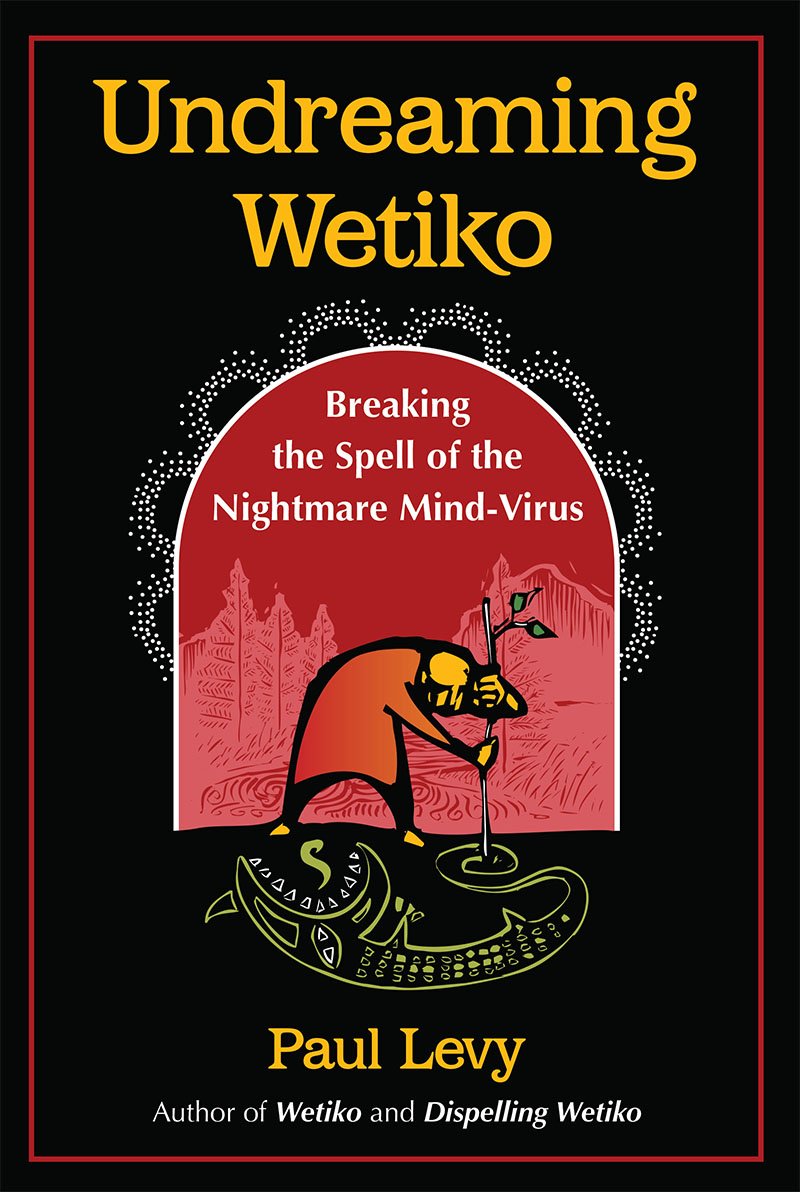
A pioneer in the field of spiritual emergence, Paul Levy is a wounded healer in private practice, assisting others who are also awakening to the dreamlike nature of reality. He has authored three books on the wetiko mind-virus, the most recent being Undreaming Wetiko: Breaking the Spell of the Nightmare Mind-Virus (Inner Traditions, 2023). He is the founder of the “Awaken in the Dream Community” in Portland, Oregon. An artist, he is deeply steeped in the work of C. G. Jung, and has been a Tibetan Buddhist practitioner for almost 40 years.











Recent Comments