A recently conducted survey has determined that the number of Canadians purchasing marijuana legally has increased. Data published by Statistics Canada earlier this month shows that more than two-thirds of marijuana consumers are buying the drug legally. The survey received responses from 5,185 adults 25 to 44 years of age and 2,251 individuals aged 18 to 24.
It determined that within the last 12 months, almost 72% of those surveyed exclusively purchased marijuana from legal markets.
When queried why they bought from legal sources, 38% of respondents stated that they did so because of product safety, nearly 13% wanted to follow the law, and almost 17% did so because it was convenient. The willingness to purchase legal products was confirmed by a separate report published earlier this month, which highlighted that recreational marijuana sales by provincial authorities rose by 15.8% annually, totaling about $4.7 billion in spending.
The latest survey also observed an increase in the number of individuals who admitted to using legal marijuana in the past 12 months, with the figure moving from 53% two years prior to 61% in 2023.
These findings demonstrate the ongoing success of the country’s marijuana policy and the legal market’s consolidation since recreational marijuana was legalized in 2018. They also indicate that most consumers buy primarily from legal shops whose products are tracked and are safer, which displaces the illegal market.
The survey also examined marijuana consumption, determining that roughly 34% of individuals aged 25 to 44 and 38.4% of those aged 18 to 24 years admitted to using the drug in the past year. This is in comparison to more than 15% of individuals aged 45 and above. Additionally, about 10% of individuals aged 25 to 44 and 8.7% of individuals aged 18 to 24 years reported that they used marijuana almost daily or daily in the same period. This is in comparison to almost 5% of individuals aged 45 and above. This suggests that daily or almost-daily use of marijuana is more common in younger populations.
Interestingly, the survey also determined that while there were no gender differences among those below 45 years of age, men aged 45 and above were more likely than women to admit to daily marijuana use. The findings also demonstrated different purchasing habits based on gender, with 62.7% of women buying edibles, compared to nearly 52% of men.
With regard to popular product groups, the survey found that cannabis flowers and edibles were the most popular across age groups surveyed in the last 12 months. Additionally, nearly 71% of men preferred purchasing cannabis flowers. This is in comparison to about 48% of women.
As more people in Canada shift from buying black-market products, the cannabis industry is set to grow even more in a way that U.S.-based companies such as Green Thumb Industries Inc. (CSE: GTII) (OTCQX: GTBIF) can hope to enjoy once legal reforms become instituted at the federal level.
About CannabisNewsWire
CannabisNewsWire (“CNW”) is a specialized communications platform with a focus on cannabis news and the cannabis sector. It is one of 60+ brands within the Dynamic Brand Portfolio @ IBN that delivers: (1) access to a vast network of wire solutions via InvestorWire to efficiently and effectively reach a myriad of target markets, demographics and diverse industries; (2) article and editorial syndication to 5,000+ outlets; (3) enhanced press release enhancement to ensure maximum impact; (4) social media distribution via IBN to millions of social media followers; and (5) a full array of tailored corporate communications solutions. With broad reach and a seasoned team of contributing journalists and writers, CNW is uniquely positioned to best serve private and public companies that want to reach a wide audience of investors, influencers, consumers, journalists and the general public. By cutting through the overload of information in today’s market, CNW brings its clients unparalleled recognition and brand awareness. CNW is where breaking news, insightful content and actionable information converge.
To receive SMS alerts from CNW, text CANNABIS to 888-902-4192 (U.S. Mobile Phones Only)
Please see full terms of use and disclaimers on the CannabisNewsWire website applicable to all content provided by CNW, wherever published or re-published: https://www.CannabisNewsWire.com/Disclaimer
As a way to improve access to cannabis for medical purposes, the federal government’s expert review panel is suggesting allowing sales through pharmacies.
The recommendation, part of a recent report based on a review of the federal cannabis legislation, was one of about a half dozen relating to Canada’s medical cannabis regime, which also included calls for more research and education campaigns.
Currently, those who are authorized to access cannabis for medical purposes in Canada can only purchase it online through specific medical providers. While there have been a few pharmacies, including Shoppers Drug Mart, that received federal licences allowing them to store cannabis on-site by acting as one of these licensed producers, the examples were few and far between. Shoppers exited the medical cannabis market in 2023.
“We have a massive doctor shortage. When patients have questions, who do they turn to? Us, pharmacists. This is no different with cannabis.”
The expert panel’s report recommends keeping the existing model of online sales but proposes expanding that model to also obtain cannabis in-person at pharmacies.
From that report, in part:
“Pharmacies are equipped to manage many types of products. We believe pharmacy systems and infrastructure can be adapted to handle cannabis, given they already manage controlled substances, such as narcotics. Enabling this form of access would address patient concerns about the delays with mail delivery and product shortages they encounter today. It would also provide patients with an opportunity to consult with pharmacists and be counselled on effects on mental health (such as psychosis) and issues of medication management (for example, getting advice about contraindications and interactions with other substances).” Rahim Dhalla, a pharmacist, medical cannabis consultant, and CEO at Hybrid Pharm, a pharmacy and cannabis and wellness centre near downtown Ottawa, thinks the proposals are a good step in the right direction.
Hybrid Pharm currently has a cannabis processing licence that allows them to sell cannabis directly to registered patients. Allowing pharmacies to bypass such federal licensing and dispense cannabis as they would any other controlled product would significantly improve access, he says.
“As I have been doing this for five-plus years now, I have learned many things. We have a massive doctor shortage. When patients have questions, who do they turn to? Us, pharmacists. This is no different with cannabis.
“I get phone calls daily about dosing, adjustments, side effects, etc. We have patients that prefer coming to see a person vs online ordering. Some patients do not even know how to order online. Improving access to patients through pharmacy distribution will have a net positive on the industry as well as acceptance by the healthcare communities.”
The issue of pharmacy access for medical cannabis has been a contentious one for many years. The Neighbourhood Pharmacy Association of Canada has in the past said that pharmacies are the best place to offer cannabis due to their experience with controlled substances, as has the Canadian Pharmacy Association.
However, other pharmacy organizations in the past have previously opposed such a distribution model, including the Ontario College of Pharmacists. After initially opposing pharmacy distribution of medical cannabis when it was first included in rules back in 2013, the Canadian Pharmacy Association (CPhA) announced in 2016 that they believe pharmacies are the safest way to dispense medical cannabis in Canada.
Deepak Anand, a board member of Medical Cannabis Canada, a medical cannabis advocacy group, and Principal, ASDA Consultancy Services, agrees that the call for pharmacies to carry medical cannabis is a positive one.
“The panel’s recommendation to establish an in-person pharmacy access channel is a significant improvement to the medical access regime. It would benefit patients by addressing concerns about delays with mail delivery and product shortages, and allow them to consult with pharmacists regarding drug interactions or side effects.
“Additionally, it is encouraging to see the panel suggest that Health Canada prioritize efforts to integrate cannabis into standard drug approval pathways and conventional medical care, rather than a separate medical access program. This would provide critical and increased avenues for patients to access medical cannabis, reduce stigma, and improve overall patient care.”
Anand says the expert panels’ recommendation that Finance Canada should review whether the excise tax should be applied to cannabis for medical purposes products is also something that Medical Cannabis Canada has long been advocating for.
Any such changes to federal regulations to allow more direct pharmacy distribution models would not happen overnight, and would still require consultation with various federal and provincial pharmacy associations and provincial agencies.
Have you ever seen a news story about something you yourself have gone through? Or read a magazine article about a subject you happen to be familiar with? If so, then you’ve likely experienced what most people have felt in that situation: anger and bemusement.
“How could that idiot reporter bungle the story so badly?! This isn’t accurate at all!”
As it turns out, journalists often get the most basic facts of the story wrong and freelancers on a deadline tend to falter when they have to summarize in a few paragraphs what others have spent decades researching.
This isn’t surprising. In fact, it’s to be expected. After all, overworked “reporters” and freelance writers usually aren’t experts in whatever arcane subject their editor has assigned them this week. They’re just being paid to churn out some copy on a given subject before moving on to the next piece.
Now, here’s what is surprising: directly after reading this inaccurate, error-riddled report that we know to be seriously flawed, we flip the page, proceed to the next story, forget that these reporters are idiots, and go on more or less taking what we’re reading at face value.
Did you know that this strange amnesia that we all experience—this act of forgetting that allows us to believe what we’re reading so long as it’s not in our wheelhouse—has a name? Well, it does!
And have you ever considered how this phenomenon has been weaponized by the powers-that-shouldn’t-be to get us to believe in nonsense and absurdity? Well, you should!
And have you ever pondered how we can escape this trap? Well, I have!
So, today let’s explore the Gell-Mann Amnesia Effect!
Hey guys, James here. As always, please enjoy the rest of this editorial for free below. However, if you would like to access the full Corbett Report Subscriber newsletter—with a Subscriber Exclusive video chat with video editor extraordinaire Broc West AND a special Christmas discount code for Corbett Report members to buy media at the NewWorldNextWeek.com store for 50%(!) off—then please consider becoming a Corbett Report member today.
The Gell-Mann Amnesia Effect
In a 2002 speech at the International Leadership Forum in La Jolla, California, Michael Crichton—acclaimed bestselling author and noted critic of global warming hysteria—coined a new term: the Gell-Mann Amnesia Effect.
The effect is named for American theoretical physicist Murray Gell-Mann, and this is how Crichton described it:
Briefly stated, the Gell-Mann Amnesia Effect works as follows. You open the newspaper to an article on some subject you know well. In Murray’s case, physics. In mine, show business. You read the article and see the journalist has absolutely no understanding of either the facts or the issues. Often, the article is so wrong it actually presents the story backward—reversing cause and effect. I call these the “wet streets cause rain” stories. Paper’s full of them.
In any case, you read with exasperation or amusement the multiple errors in a story—and then turn the page to national or international affairs, and read with renewed interest as if the rest of the newspaper was somehow more accurate about far-off Palestine than it was about the story you just read. You turn the page, and forget what you know.
In short: when we actually possess expertise in the subject under examination, we almost invariably find media representations of that subject are lacking at best and outright lies at worst. But, for some reason, once we turn the page or flip the channel, we go right back to believing that the other journalists and authors out there actually know what they’re talking about.
So why does Crichton name the phenomenon after Murray Gell-Mann? Well, you’ll have to read his whole speech for the answer to that query. But, while the term “Gell-Mann Amnesia Effect” is original to Crichton, it should be noted that the concept itself has been described before.
Take “Knoll’s law of media accuracy,” for example—attributed to American journalist Edwin Knoll—which states that “everything you read in the newspapers is absolutely true, except for the rare story of which you happen to have firsthand knowledge.”
Or we could go even further back, all the way to Thomas Jefferson, who wrote in a letter to John Norvell in 1807:
Nothing can now be believed which is seen in a newspaper. Truth itself becomes suspicious by being put into that polluted vehicle. The real extent of this state of misinformation is known only to those who are in situations to confront facts within their knowledge with the lies of the day.
But wherever the insight originated, we all know it from experience to be true. And, if we’re being honest, we are all guilty of this amnesia from time to time. Yes, even me.
You see, in an effort to keep informed of NPC talking points and perspectives, I do from time to time listen to normie podcasts, read normie publications and even watch normie programs. Recently, having followed the thread from Tom Holland’s informative book, Dominion: The Making of the Western Mind, I began listening to Holland’s decidedly less informative podcast, The Rest is History. Along with co-host Dominic Sandbrook, Holland attempts in each episode to summarize some major event in (mainstream) history, from the fall of ancient Rome to the rise of modern China (and seemingly everything in between).
As is to be expected in a podcast hosted by two mainstream historians, any hint of conspiracy reality or anything that would fundamentally challenge orthodox historical claims is immediately dismissed, often in mocking terms. And, inevitably, those podcasts that specifically deal with conspiratorial subjects (like the series on the mystery of the Cathars) quickly devolve into an exercise in regurgitating textbook-approved history and denouncing conspiratorial fantasy.
Having recently plunged myself back into the endless, bewildering maze of information about the JFK assassination for my recent JFK Lancer presentation on JFK: From Mongoose to Gladio, I find that I have to listen to editions of Holland and Sandbrook’s latest podcasts on the JFK assassination with eyeballs securely fastened so they won’t roll out of their sockets.
For a pair of “professional” historians, it is truly staggering how glib, misleading and often downright inaccurate their summarization of the assassination is. They gloss over points that would require entire book-length manuscripts to properly flesh out, dismiss entire avenues of exploration with arguments from incredulity and other fallacious reasoning, ignore fields of study that actual assassination researchers have in some cases spent their entire careers examining, and present self-evident lies as indisputable truths. (Did you know, for instance, that Jack Ruby shot Oswald because he was so torn up about the thought of Jackie having to testify at Oswald’s trial?)
Of course, a moment’s contemplation helps me to realize that I am only picking up on the sheer absurdity of this particular podcast series because I happen to be particularly knowledgeable about the topic being examined. In editions of their podcast dealing with subjects in which I am not as well versed—like the one about the construction of the Taj Mahal, for example, or the one dealing with Viking sorcery—I am more likely to accept Holland and Sandbrook’s dates, claims and citations as fact, even if I am wary of their interpretations of those facts.
Yes, we are all privy to this same amnesia effect. Our credulity when consuming media is, at least to some degree, in inverse correlation to our knowledge of the subject at hand.
In fact, anyone who thinks they are immune to this effect has obviously not taken my Mass Media: A History online course and thus is likely ignorant of the research of Herbert Krugman and Tony Schwarz and others, who have demonstrated that the mass media (and especially electronic media) are able to bypass our conscious reasoning processes and effect us on a subconscious level before we even know what we are perceiving. Our subconscious brain takes what we are seeing (or reading) more or less at face value unless and until our conscious brain actively questions that material.
“So what?” you might be saying. “Why does any of this matter?”
Well . . .
Why It Matters
OK, so people are gullible idiots. What else is new?
Well, one problem with the media is that even if you are aware of the idiocy of the average reporter, your friends aren’t. And we only have to look at the disintegration of so many friendships and family relationships over the course of the scamdemic to realize how corrosive it can be when our friends, coworkers, neighbours and loved ones fall for media manipulations.
But even for those of us who are aware of the media’s incompetence and mendacity, it’s still all too easy to take what we’re seeing or reading at face value.
The evidence is now in, and it is startling. The school closures that took 50 million children out of classrooms at the start of the pandemic may prove to be the most damaging disruption in the history of American education. It also set student progress in math and reading back by two decades and widened the achievement gap that separates poor and wealthy children.
Wow! Is The New York Times really admitting that the very policies they were advocating for the last few years are an unmitigated disaster? What a victory!
Of course, the media-savvy conspiracy realists in the crowd will point out that the op-ed writers predictably take the exact wrong lesson from this story. Specifically, the NY Times gang predictably opines that, in order to right the wrongs of the scamdemic, governments need to dump even more money into their indoctrination systems and make sure children receive even more government schooling. The manipulation here is obvious, isn’t it?
But wait, it gets worse! After all, who stops to even question the framing of the story: that no one could have known that closing down schools, masking up kids, forcing children into “Zoom” classes (and even Zoom lunches) and otherwise abusing the youngest and most vulnerable members of our society was going to be detrimental to the social and mental development of an entire generation.
Who could have seen this coming? Well, how about those parents who tried their damndest to protect their children from this insanity? Those guardians who strove to carve out a space of normality for children during the insanity of the scamdemic? Those heroes who fought to guard the children’s bodily autonomy from the forced medical interventions of the biosecurity state? You know, the people who, while all of this child abuse was unfolding, were mocked, ridiculed and persecuted—by the very same NY Times op-ed writers and their credulous readers.
Strangely, though, that whole saga gets memory-holed by the NYT crew. Instead, they get to pretend that they’re “Shocked! Shocked!” to discover that there are adverse consequences to locking down society for years at a time. And, sadly, most people reading this “Startling Evidence” op-ed won’t even think to question it.
This is how the media can weaponize the Gell-Mann Amnesia Effect. They can frame an issue however they want, completely disregard reality and even directly contradict positions they previously advocated. Most people—forgetting that the lying liars of the dinosaur media are wrong about everything all of the time—won’t even bat an eyelid.
Once we have understood and internalized this lesson, then there’s only one more question left to answer: how can we counteract this effect?
The Radical Act of Remembering
So, how do we counteract the Gell-Mann amnesia that turns us into unwitting media zombies? By remembering, of course. Easier said than done, obviously, but that’s the gist of it.
Every time we open the newspaper, every time we turn on the TV, every time we flip on the radio, we must retain at the forefront of our conscious awareness that what we are reading/seeing/hearing is an enemy propaganda transmission. It is, at best, inaccurate drivel written by incompetent boobs and, at worst, malicious lies designed to mislead us on issues that matter. We cannot accept anything they say at face value, and we have to enter into every mediated experience fully prepared to disbelieve the known, proven liars of the mockingbird dinosaur media—even if they tell us that the sky is blue and water is wet.
Whenever we hear from Walter Cronkite or one of his spiritual successors in the modern corporate media, we should bear in mind that that spirit once inhabited the owl of Bohemian Grove and bragged about sitting at the right hand of Satan in his quest for world government.
Whenever we hear from the Wolf Blitzers of the world about the latest war atrocity committed by this or that enemy of the US State Department, we should have the footage of his interview about the Gaddafi viagra rape story overlaid with the circus clown song playing in the back of our head.
But, if we do seriously engage in this exercise and we take this radical remembering to its logical conclusion, we end up with an even more radical conclusion: namely, that the proper way to acknowledge the ignorance, incompetence and dissembling of the dinosaur media is to stop consuming it altogether.
As Crichton explained in his 2002 speech:
That is the Gell-Mann Amnesia Effect. I’d point out it does not operate in other arenas of life. In ordinary life, if somebody consistently exaggerates or lies to you, you soon discount everything they say. In court, there is the legal doctrine of falsus in uno, falsus in omnibus, which means untruthful in one part, untruthful in all.
But when it comes to the media, we believe against evidence that it is probably worth our time to read other parts of the paper. When, in fact, it almost certainly isn’t. The only possible explanation for our behavior is amnesia.
[. . .]
Personally, I think we need to start turning away from media, and the data shows that we are doing just that, at least from television news. I find that whenever I lack exposure to media I am much happier, and my life feels fresher.
Amnesia, indeed.
Me? I’m off to not watch the so-called “news” by the known liars of the MSM. How about you?
Following an incident in Halifax where several students under the age of twelve were taken to hospital after eating cannabis edibles, a new media report confirms the edibles were not legal.
While the initial media reports did not note if the products were legal or illegal, the article referred to them as “labelled.”
A follow-up article from the Canadian Press shows a picture of what is clearly an edible from the illicit market, but the article itself predictably fails to clearly note the distinction between legal and illegal edibles and how they are packaged and sold, or the THC content of those products.
This is an ongoing issue, with researchers, academics, and the media still seemingly unaware of how widespread these illicit, unregulated edibles are, packaged to mimic traditional candy and snack foods like Nerds, Doritos, Oreos, Skittles and many more.
In this most recent incident in Halifax, at least five kids consumed the product after one child brought them to school. Four of those kids went to the hospital for their symptoms.
One mother, a healthcare worker, said in an interview that her son threw up multiple times and had to be rushed to the emergency department. Another mother, who spoke to the Canadian Press on the condition of anonymity, said her child was taken to intensive care for treatment before stabilizing.
Despite the image shown in the article showing a package of “Nerd Bites” advertising at least 1,000mg THC, with each “bite” containing 200mg THC, the article itself does very little to clearly communicate that these are not products from Canada’s legal cannabis industry.
A modicum of research would clearly show the author of the article that legal cannabis edible products cannot be packaged in such a way, do not resemble regular candies like Nerds, and can only come with 10mg THC per package, not 1,000.
Only halfway down the article does the author cite a comment from the NSLC that notes this discrepancy. But even then, the article doesn’t make the distinction clear or even attempt to do so.
“A spokeswoman for the Nova Scotia Liquor Corp., the only licensed distributor of cannabis products in the province, says it only buys from licensed producers who are regulated by Health Canada and the federal Cannabis Act. The law generally prohibits the promotion of cannabis, and packaging is to adhere to strict requirements including labelling, child-resistant containers, and plain packaging that must not appeal to youth,” reports the Canadian press, attributing the comment to a media representative for NSLC.
Such distinctions are obvious for those who actually understand the law in Canada. Legal cannabis edibles cannot mimic trademarked snack product brands, cannot contain more than 10mg THC per package, and are sold only through authorized sources.
As long as the media, academics, and other researchers continue to misunderstand such an obvious distinction, people will continue to be encouraged to blame the legal market for what is evidently an issue with the illegal, unregulated market.
This also continues to impact the legal market, as concerns with issues like young people presenting at hospitals after consuming edibles are used to maintain the current 10mg THC limit for legal edibles, while ignoring that these hospitalizations are more than likely due to much higher potency products that are far more appealing and accessible to young people.
Passively waiting for centralized powers to “save us” from their own excesses is not a solution.
It’s no exaggeration to say that our way of life depends on somebody somewhere saving us from the excesses that are the bedrock of our way of life. What excesses, you ask? There are none. This is true in one sense: all the excesses have been normalized by previous “saves”: whenever the bedrock excesses threaten to collapse under their own weight, the Federal Reserve or the Federal government rush in to save us from the excesses they’ve created.
Stripped of artifice, the bedrock excess that has been completely normalized is to goose consumption by borrowing from future earnings and resources. As long as growth is eternal, this works great: we can always pay more interest on ever-expanding debt with future earnings because those will be inevitably be even larger than the interest due.
Creating money out of thin air is another mechanism that achieves the same goal: goosing consumption via boosting the value of assets to generate a “wealth effect” that lifts all boats. This is also predicated on the eternal expansion of earnings, so wage earners can afford to consume as new money ceaselessly devalues the purchasing power of existing money (what we call inflation).
The problem is these “saves” only work if the interest rate is eternally near-zero and the costs of production are eternally declining: as long as it costs almost nothing to borrow more money into existence and production costs continue to drop, enabling consumers to afford more goodies even as the purchasing power of their wages declines, then all is well.
But capital eventually demands yields above zero as risk rises and risk rises along with debt and production costs, both of which depreciate the value of future earnings: as debt service costs rise, more earnings must be devoted to paying interest, reducing the sums available to spend on consumption. As production costs rise, the earnings left to spend buy less.
In other words, the “saves” increase risk, and eventually yields rise in response. The debt dragon begins eating its own tail. Risk cannot be dissipated into the ether, it can only be hedged or offloaded onto some other entity. There are no hedges against systemic debt saturation, and the risks are being offloaded onto the entire system. When risk can no longer be suppressed with more “free money,” the entire system collapses under its own weight.
The consequence of these dynamics is there won’t be anyone left to “save us” with free money next time around. As capital demands a return above zero and the devaluation of existing money pushes production costs higher, the system can no longer sustain its excesses.
So what happens when there’s nobody left to save us? The mind rejects this possibility. Surely the Fed or the federal government will find some way to flood the economy with whatever sums of “free money” are needed to keep borrowing from the future. But the excesses of money creation and debt are self-defeating: they become the Monster Id dissolving the system rather than the “save us” solution.
All ideologies have a fatal flaw: they limit potential solutions to a single limited tool box. All ideologies are simple formulas at heart, and they all define the “problem” in a way that their proposed solution can remedy.
But the problems we’ve generated are interconnected in ways that can’t be remedied with only one fix. The global socio-economic system we’ve created is an open system that isn’t entirely predictable–it is an ecosystem, not a clock. It generates feedback loops that funnel risk back into the system itself with every “save.”
We need to be able to select solutions from a wide assortment of tools, yet the mechanisms that have “saved us” in the past–central banks and governments–are wired to see the expansion of their own power as the only effective solution to any problem. This innate drive to expand their reach and power is the ontological imperative of centralized hierarchies, dynamics I untangle in my book Resistance, Revolution, Liberation.
This expansion of centralized power inevitably limits our choices of solutions and freedom to choose for ourselves. Call this whatever you wish, but this limiting of choice is a limiting of solutions, and the limiting of solutions is fatal to all open systems, regardless of size or apparent power.
The “saves” have loaded the entire system with excesses that cannot be resolved with even greater excesses. Risk is rising, and the “saves” have only increased systemic risk. Those doing the “saving”–central banks and governments–are squeezing out whatever choices and solutions are not within their control, increasing our dependence on their “saves” of ever greater waves of “free money.”
So what happens when there’s nobody left to save us? We have to save ourselves, that’s what. It’s called Self-Reliance, which means preserving our freedom to choose options and solutions that work for us and our communities. Gordon Long and I discuss this in our recent video podcast Self Reliance & The Importance of Choice (24 min), the second segment in a three-part exploration of self-reliance.
Passively waiting for centralized powers to “save us” from their own excesses is not a solution–it is magical thinking at its most dangerously delusional. Better to grab a tool box and start filling it with tools that you own and control.
Today we talk about pearl powder, the benefits of pearl powder, whole food meat mysteries, genetics, shilajit, ending the fear, and eyesight solutions.
The big news this week was, of course, that the long-awaited final report from the federal government’s expert panel reviewing the Cannabis Act finally came out a little after 4:20 pm ET on Thursday. StratCann delivered an overview of the report and some insight into some of the recommended changes for micro and other small-scale producers.
CBC ran a story examining ways the cannabis industry is urging provinces to loosen rules that ban producers and retailers from collaborating on promotions. The author spoke with Shakir Tayabali of the Independent Retail Cannabis Collective (IRCC), Brad Poulos, a lecturer in the Ted Rogers School of Management at Toronto Metropolitan University, Omar Khan of High Tide Inc., and Keenan Pascal of Token Naturals.
Aurora Cannabis Inc. received a Good Manufacturing Practice (GMP) certification from Australia’s Therapeutic Goods Administration (TGA) for its production facilities, River and Ridge, both located in Ontario.
Curaleaf Holdings Inc. signed a deal to acquireNorthern Green Canada, a Canadian licensed cannabis producer focused primarily on the international market through its EU-GMP certification. NGC also partners with Canadian GACP cultivators to produce and distribute finished cannabis products to both domestic and global markets.
Cannabis producer Decibel Cannabis is selling its interest in cannabis retailerPrairie Records to the Fire and Flower retail chain for $3 million. Prairie Records has three locations in Alberta and three in Saskatchewan. Decibel is the owner of several cannabis brands like Qwest, BlendCraft, General Admission, and VOX.
Five Halifax elementary students under the age of 12 were taken to hospital after eating cannabis edibles that one of the students brought to the school. Police say the packages were “labelled,” but media reports do not note whether the products were from legal or illegal supply chains.
International Cannabis News
Cannabis possession and home cultivation will be decriminalized in Germany starting April 1 after a new law passed the final hurdle on Friday. Adults over the age of 18 will be allowed to possess 25 grams of cannabis and grow up to three plants at home. From July 1, non-commercial “cannabis clubs” can supply up to 500 members with a maximum monthly quantity of 50 grams per member.
The decriminalization legislation is the “first pillar” in a two-step plan to legalize cannabis in the country. The “second pillar” will set up five-year pilot programs for state-controlled cannabis to be sold in licensed shops.
Organigram says it has received a final ruling from Health Canada, again concluding that its Edison Jolts lozenges are an edible, not an extract.
The New Brunswick cannabis producer made the announcement near the end of the day on Friday, March 22.
Organigram launched Edison Jolts in 2021 as the first of a wave of similar products to hit shelves in the following year. The products offered consumers more than the 10mg THC limit per package allowed under Health Canada’s rules for edibles, arguing that they were classified as extracts, and therefore not subject to the same THC limits.
Organigram filed for a judicial review of that decision in March 2023, and in August, a judge approved Organigram’s application. The review was related to the process Health Canada took to arrive at their decision. The case was then sent back to the regulator for their opportunity to respond.
Organigram temporarily ceased selling Jolts for several months in 2023, but began selling them again in October following the approval of the application for review by a judge.
Following that announcement from Organigram in November, Health Canada said it was in the “redetermination process” regarding its initial ruling on Edison Jolts.
The agency sent out a memo to licence holders in December 2023 again reiterating this point, noting that the “classification of a cannabis product does not mean that the product is compliant with all regulations pertaining to that class of cannabis. Licence holders are responsible for making sure their cannabis products meet all the applicable requirements of the Cannabis Act and Cannabis Regulations.”
This new announcement from Organigram is the most recent evolution of the ongoing issue. The company says it has stopped the production of Jolts in their current format and is currently working with Health Canada on timing to sell through remaining inventory to the provincial distributors.
“We are disappointed with the outcome of Health Canada’s further review of our Jolts product,” said Beena Goldenberg, CEO of Organigram. “Our patented Jolts lozenge was launched over two years ago following significant research and development and was specifically designed to appeal to consumers looking to access regulated and tested ingestible products from the legal market that met their needs for potency and price.
“We are currently assessing our options to continue to meet the needs of consumers while retaining them within the legal market.”
A Mere Writer of Horror or a Humanist Master of the Mind
“The Sleep of Reason Produces Monsters” by Francisco Goya (1799)
What say of it? what say CONSCIENCE grim, That spectre in my path?
-Chamberlayne’s Pharonnida
The purpose of this paper is to debunk the myth surrounding Poe; that he was just a mere writer of horror and that he had an unhealthy obsession with the mad and the morbid…since isn’t that all he ever wrote about? Not only is Poe associated with the mad but many think he must have been mad himself, since in order to portray madness with such depth of understanding, it is commonly thought that one must partake in that very thing. Further claims conclude that Poe was an alcoholic and gambler, thus sharing in the qualities of many of the characters he chose to write about.
Therefore, the narrative has been that while Poe was a gifted and intelligent writer, he was also deeply disturbed, and that his stories reflected the inner turmoil and conflict he suffered within himself against the demons that he was so evidently battling. Thus, reading his stories of horror are entertaining displays and insights into madness, but at best, are an interesting study of psychology into the criminally insane. Otherwise, there is no other worth or value to be found in them, and for the majority of his readership, Poe’s short stories are rather likened to a dark dessert that is to be voraciously devoured.
Well, I disagree. In this paper I will present a rebuttal to these popular opinions about Poe, that what seems to be Poe’s unhealthy obsession with the criminally insane is in fact an intervention into the mind of his readership. What many of us have been guilty of when attempting to describe Poe, is the failure to ask ourselves the questions: “Well, why do we find his stories fascinating and entertaining? What draws us to the supposed horror?” Many of the characters developed in his stories, despite having done terrible acts, have often a degree of relatability when their inner thoughts are shared with us. Is he trying to humanise the diabolic and make us feel sympathy for its crimes? Or is he revealing a part of ourselves that we were not fully conscious of beforehand, and that we MUST be conscious of in order to avoid our own self destruction?
Through A Glass Darkly
On matters of geopolitics, counterintelligence, revisionist history and cultural warfare.
By Cynthia Chung
Before I go into an investigation of one of Poe’s most famous short “horror” stories, I wanted to quickly discuss with you the last essay Poe wrote at the end of his life titled Eureka, of which Mellonta Tauta was published as a stand-alone segment in 1849. In this short story the narrator is speaking from the future (April 1, 2848 to be exact). The narrator goes on in a letter he is writing to a friend how history (basically the time of Poe) compares with that of the future (or present time of the narrator). In his letter, he compares various things from the past and future and what he thinks of them. Sometimes he expresses a conclusion we can agree with and others times not, the reader must decide for themselves what to do with this.
In one of the sections which I want to go over with you in detail, the narrator brings up two methods of investigation; a priori (deductive) and a posteriori (inductive) thinking.
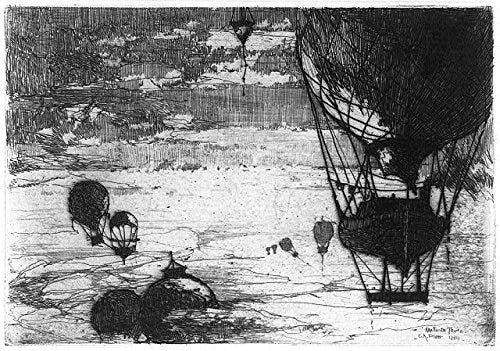
“…the first aeronaut, maintained the practicability of traversing the atmosphere in all directions…he was scarcely hearkened to at all by his contemporaries, who looked upon him as merely an ingenious sort of madman, because the philosophers(!) of the day declared the thing impossible.
Really now it does seem to me quite unaccountable how any thing so obviously feasible could have escaped the sagacity of the ancient savans. But in all ages the great obstacles to advancement in Art have been opposed by the so-called men of science. To be sure, our men of science are not quite so bigoted as those of old:—oh, I have something so queer to tell you on this topic.
Do you know that it is not more than a thousand years ago since the metaphysicians consented to relieve the people of the singular fancy that there existed but two possible roads for the attainment of Truth! Believe it if you can! It appears that long, long ago, in the night of Time, there lived a Turkish philosopher (or Hindoo possibly) called Aries Tottle [Aristotle]. This person introduced, or at all events propagated what was termed the deductive or a priori mode of investigation. He started with what he maintained to be axioms or “self-evident truths,” and thence proceeded “logically” to results. His greatest disciples were one Neuclid [Euclid], and one Cant [Kant].
Well, Aries Tottle flourished supreme until advent of one Hog [Francis Bacon], surnamed the “Ettrick Shepherd,” who preached an entirely different system, which he called the a posteriori or inductive. His plan referred altogether to Sensation. He proceeded by observing, analyzing, and classifying facts-instantiae naturae, as they were affectedly called—into general laws.
Aries Tottle’s mode, in a word, was based on noumena; Hog’s on phenomena. Well, so great was the admiration excited by this latter system that, at its first introduction, Aries Tottle fell into disrepute; but finally he recovered ground and was permitted to divide the realm of Truth with his more modern rival. The savans now maintained the Aristotelian and Baconian roads were the sole possible avenues to knowledge.”
– Edgar Poe’s Mellonta Tauta
Before we go any further, let’s review the definitions of a priori (meaning “from the earlier”) and a posteriori (meaning “from the latter”) as per what Poe describes in Mellonta Tauta:
A Priori (Deductive thought); is what he (Aristotle) maintained to be axioms or ‘self-evident truths’, and thence proceeded ‘logically’ to results.
A Posteriori (Inductive thought); his (Francis Bacon) plan referred altogether to Sensation. He proceeded by observing, analyzing, and classifying facts – into general laws.
This may appear as mere detail or at least a rather innocent way of organising thinking, but these two methods of thought have been dominant for centuries and still dominate today. For instance, the present day university system continues to trumpet a priori and a posteriori as the only two methods of investigation accessible to the mind. It is thus believed that it is only through deductive or inductive thinking that we are able to formulate an unbiased, ‘objective’ series of facts. If this is the dominant thought today, we had better make sure that we are able to know that it is a good thing and not take it for granted due to centuries of tradition.
In Mellonta Tauta, Edgar Poe goes on to describe how a priori thought is akin to a form of creeping, whereas a posteriori thought is akin to crawling, but what we actually desire is to soar. Is ‘to soar’ possible for us in attaining knowledge? Why do you think Poe was putting so much focus and criticism on these two forms of investigation? What did Poe mean when he wrote “But in all ages the great obstacles to advancement in Art have been opposed by the so-called men of science.”? If you are not certain of the answers to these questions, keep them in mind as we go further and I will address them at the end of this paper.
For those who are not already aware, as we get to know Poe better we will find that this is the focal point for every short story he has ever written. The theme of comparing deductive and inductive thought with another form of thought, which will remain unnamed for now. Thus, what may at first seem like an odd insight into the mad by Poe, may in fact be the predictable outcome of someone who adheres to an extreme form of deductive or inductive thinking. In fact, I will make a point of it.
In The Imp of the Perverse, the short story of horror we will be later investigating, Poe brings up the ‘science’ of phrenology, and thus it is worth saying something on what this subject was and how it influences our present day.
Phrenology was considered a form of science and hit its peak in popularity during 1810-1840, basically most of Poe’s adulthood. The brain was divided into 27-43 ‘organs’ and these individual ‘organs’ represented personality/psychological attributes. By measuring the size of the skull, areas of the skull that protruded were considered dominant attributes and indented regions were considered weak attributes. This ‘science’ was used in psychology, especially to identify the insane and the criminal.
Figure 1 is an image taken from a phrenology textbook, depicting what is supposed to be the hallmark of a criminal head shape, with 5 specific regions protruding from the skull. It was thought that the more it protruded the greater the degree of criminal impulse.
Figure 1 image to the left: map of the organs of the brain (which vary from 27 to 43 depending on the textbook). image to the right: depiction of the criminal head model.
In Franz Joseph Gall’s (the founder of phrenology) book “Naturalist of the Mind, Visionary of the Brain” Gall made the claim that moral and intellectual faculties that governed impulses were innate. In other words, people were born with their moral character and intelligence. For example, if youwere a thief, it was because you wereborn with a predisposition to an impulse of deceitfulness.
Phrenology was used not only in court cases to determine whether someone was guilty but how long their prison sentence should be and whether there was a possibility of rehabilitation. It was thus quite influential and prominent and was used up until the 20th century in court cases, both by the Nazis and American eugenicists alike.
The thought behind phrenology was that you could not ultimately change a person’s psychological attributes and thus their impulses. One could, if anything, redirect the ‘faulty’ behaviour so that it could be used as something useful in society. Examples from phrenology texts asserted that if one had a homicidal impulse, this person would always have this impulse, however, if they were to find a station in society that could fulfill or satiate this impulse (such as a butcher or an executioner), such a person could possibly avoid committing the murder of a human being.
It is important to note that the subjects which phrenologists selected to measure the undesirable or dysfunctional traits were from poor areas that were known for high levels of crime. Inversely, when investigating the more desirable and functional traits they would measure the heads of people who were deemed high-achievers that had a respected station in life. This approach therefore carried much bias. There was no aspect of a ‘double-blind study’ and it was all too easy for phrenologists to look for confirmation of biases rather than to openly investigate actual causality of personality and morality.
So, are we much more advanced in our thinking today as to what governs human impulsivity? Well, sadly the answer is that not much has changed in the philosophy of modern neuroscience. In fact, many neuroscientists credit Dr. Gall as the founder for today’s work on the human mind and brain.
For example, Proceedings of the 2013 National Academy of Sciences suggests that forecasting future criminal behaviour could become a reality in the near future. According to their study, they have found the first evidence that brain scans might be used to both predict who will be likely to commit a crime and also how long it will be before that person commits a crime. This prediction is based on the activity in a region of the brain called the anterior cingulate cortex.
During the scan, subjects were asked to press a button in response to a stimulus on a screen, except when a certain symbol also appeared, in which case they were to refrain from pressing the button. It was found that criminals couldn’t help but press the button either way, and that they were more impulsive than the average person. From these results, it was concluded that the part of their brain responsible for stopping an action may be deficient, that is, once an impulsive person gets started on a criminal action, even if they realise potential negative consequences, they cannot stop themselves.
Cannot stop themselves! Really think about the consequences of such a statement. If this is true, then there is no “salvation for the damned” so to speak. There is no possibility of redemption and no avoidance of one’s own tragedy. Fate has been selected upon you at birth, and there is nothing you can do to avoid it or change that course. Free will, remorse and forgiveness are almost non-entities in this line of thought.
Let us look very briefly at another recent example. During the 1960s and 1970s, there was a popular thought that the abnormal XYY karyotype (where a male carries an extra Y chromosome) was believed to be the genetic cause for sociopaths and serial killers.
The Y chromosome is the male-determining chromosome; all men have XY chromosomes and all women have XX chromosomes. It was therefore thought that males who carried an extra Y (male) chromosome were more aggressive and had an increased impulsivity for extreme violence. However, it was discovered by the late 1970s that there was actually no basis for this association and that much of the “evidence” for this argument was from biased reports by scientists imposing links between actual physical traits and criminal behaviour they claimed was rooted in their XYY karyotype.
In addition, the only males used in these studies with the XYY karyotype were already incarcerated. There were no investigations into males with the same karyotype who had not been incarcerated! After decades of ‘analysis’, the only trait that was conclusively found consistent in the XYY karyotype were that these men tended to be taller than the average male.
Despite there, to this date, never being any presentation of evidence confirming this theory of innately pre-determined impulsivity and morality, the idea that we can make predictions on someone’s intelligence, personality and morality from biological material, is still believed in popular as well as academic science today.
We continue to feel secure in our so-called non-bias approach to scientific investigation using these two modes of thought, apriori and a posteriori, and yet, we are not free of biased error even in recent history. There seems to be an almost over-ridding desire to have faith in the concretised conclusions that are formed from these two modes of investigation, despite the magnitude of error that has resulted. The same dilapidated hypothesis, is used in a never ending quest to search for results that will confirm a desired conclusion, despite its findings repeatedly indicating something contrary. It is as if the thought of choice in the matter were something too terrifying to seriously consider, and that it is much more comforting to believe that criminal traits must be something we can detect and categorise materially so that everyone else can feel at ease that they are indeed ‘normal’ and need not worry that they could ever commit actions of deviance or destruction.
Thus, the question still stands: “Does an individual have a choice in whether they commit a crime?“ This is where Poe’s The Imp of the Perverse comes in.
At the very beginning of Poe’s short story “The Imp of the Perverse,” we are confronted with the subject of the root of impulsivity, “the prima mobilia of the human soul”. The narrator goes on to state that not only the moralists have failed in determining its cause, but so have the phrenologists:
“In the pure arrogance of the reason, we have all overlooked it. We have suffered its existence to escape our senses, solely through want of belief –of faith…
It cannot be denied that phrenology and, in great measure, all metaphysicianism have been concocted a priori. The intellectual or logical man, rather than the understanding or observant man, set himself to imagine designs –to dictate purposes to God. Having thus fathomed, to his satisfaction, the intentions of Jehovah, out of these intentions he built his innumerable systems of mind.
…It would have been wiser, it would have been safer, to classify (if classify we must) upon the basis of what man usually or occasionally did, and was always occasionally doing, rather than upon the basis of what we took it for granted the Deity intended him to do. If we cannot comprehend God in his visible works, how then in his inconceivable thoughts, that call the works into being? If we cannot understand him in his objective creatures, how then in his substantive moods and phases of creation?
Induction, a posteriori, would have brought phrenology to admit, as an innate and primitive principle of human action, a paradoxical something, which we may call perverseness, for want of a more characteristic term. In the sense I intend, it is, in fact, a mobile without motive, a motive not motivirt. Through its promptings we act without comprehensible object; or, if this shall be understood as a contradiction in terms, we may so far modify the proposition as to say, that through its promptings we act, for the reason that we should not.”
The narrator is introducing an explanation for impulsivity that he thinks has been overlooked by all scientists and philosophers up to this point, who depended on an a priori method, that is the assumption that there needed to be an explanation based on their pre-conceived ‘order of things’. He labels the root of impulsivity perverseness. It is something, he stresses, that could only have been recognised or identified using the a posteriori method, since this impulse of perverseness has no reason or purpose for its existence in our behaviour, but rather, it compels us to do what we know we should not do. This is in fact what he claims to be the problem with a priori thinkers, who are so consumed with what they guess to be God’s intention that they completely miss out on reality all together. He goes on to say:
“In theory, no reason can be more unreasonable; but, in fact, there is none more strong. With certain minds, under certain conditions, it becomes absolutely irresistible. I am not more certain that I breathe, than that the assurance of the wrong or error of any action is often the one unconquerable force which impels us, and alone impels us to its prosecution.
Nor will this overwhelming tendency to do wrong for the wrong’s sake, admit of analysis, or resolution into ulterior elements. It is a radical, a primitive impulse – elementary.
…It follows, that the desire to be well must be excited simultaneously with any principle…but in the case of that something which I term perverseness, the desire to be well is not only not aroused, but a strongly antagonistical sentiment exists.“
At this point we should be asking ourselves who is this speaker? Do you think he is making a good point? Is there such a nature as perverseness as he is describing? An imp of the perverse so to speak that causes you to do something almost against your will which will cause you some degree of detriment and even your ruin? That there is no reason we can use to justify such an impulse? And that rather we are lured to act specifically for the reason that we should not?
For those who have not read The Imp of the Perverse or need to refresh their memory, I highly suggest that they read the rest of the text cited below. This way the ending is not ruined for you, and you will also be better able to follow the discussion afterward on what Poe intended with this short story.
“Examine these and similar actions as we will, we shall find them resulting solely from the spirit of the Perverse. We perpetrate them merely because we feel that we should not. Beyond or behind this, there is no intelligible principle: and we might, indeed, deem this perverseness a direct instigation of the arch-fiend, were it not occasionally known to operate in furtherance of good.
I have said thus much, that in some measure I may answer your question — that I may explain to you why I am here — that I may assign to you something that shall have at least the faint aspect of a cause for my wearing these fetters, and for my tenanting this cell of the condemned. Had I not been thus prolix, you might either have misunderstood me altogether, or, with the rabble, have fancied me mad. As it is, you will easily perceive that I am one of the many uncounted victims of the Imp of the Perverse.
It is impossible that any deed could have been wrought with a more thorough deliberation. For weeks, for months, I pondered upon the means of the murder. I rejected a thousand schemes, because their accomplishment involved a chance of detection. At length, in reading some French memoirs, I found an account of a nearly fatal illness that occurred to Madame Pilau, through the agency of a candle accidentally poisoned. The idea struck my fancy at once. I knew my victim’s habit of reading in bed. I knew, too, that his apartment was narrow and ill-ventilated. But I need not vex you with impertinent details. I need not describe the easy artifices by which I substituted, in his bed-room candle-stand, a wax-light of my own making, for the one which I there found. The next morning he was discovered dead in his bed, and the Coroner’s verdict was, — “Death by the visitation of God.”
Having inherited his estate, all went well with me for years. The idea of detection never once entered my brain. Of the remains of the fatal taper, I had myself carefully disposed. I had left no shadow of a clue by which it would be possible to convict, or even to suspect me of the crime. It is inconceivable how rich a sentiment of satisfaction arose in my bosom as I reflected upon my absolute security. For a very long period of time, I was accustomed to revel in this sentiment. It afforded me more real delight than all the mere worldly advantages accruing from my sin. But there arrived at length an epoch, from which the pleasurable feeling grew, by scarcely perceptible gradations, into a haunting and harassing thought. It harassed because it haunted. I could scarcely get rid of it for an instant. It is quite a common thing to be thus annoyed with the ringing in our ears, or rather in our memories, of the burthen of some ordinary song, or some unimpressive snatches from an opera. Nor will we be the less tormented if the song in itself be good, or the opera air meritorious. In this manner, at last, I would perpetually catch myself pondering upon my security, and repeating, in a low, under-tone, the phrase, “I am safe.”
One day, whilst sauntering along the streets, I arrested myself in the act of murmuring, half aloud, these customary syllables. In a fit of petulance, I re-modelled them thus: — “I am safe — I am safe — yes — if I be not fool enough to make open confession!”
No sooner had I spoken these words, than I felt an icy chill creep to my heart. I had had some experience in these fits of perversity, (whose nature I have been at some trouble to explain,) and I remembered well, that in no instance, I had successfully resisted their attacks. And now my own casual self-suggestion, that I might possibly be fool enough to confess the murder of which I had been guilty, confronted me, as if the very ghost of him whom I had murdered — and beckoned me on to death.
At first, I made an effort to shake off this nightmare of the soul. I walked vigorously — faster — still faster — at length I ran. I felt a maddening desire to shriek aloud. Every succeeding wave of thought overwhelmed me with new terror, for, alas! I well, too well understood that, to think, in my situation, was to be lost. I still quickened my pace. I bounded like a madman through the crowded thoroughfares. At length, the populace took the alarm, and pursued me. I felt then the consummation of my fate. Could I have torn out my tongue, I would have done it — but a rough voice resounded in my ears — a rougher grasp seized me by the shoulder. I turned — I gasped for breath. For a moment I experienced all the pangs of suffocation; I became blind, and deaf, and giddy; and then some invisible fiend, I thought, struck me with his broad palm upon the back. The long-imprisoned secret burst forth from my soul.
They say that I spoke with a distinct enunciation, but with marked emphasis and passionate hurry, as if in dread of interruption before concluding the brief but pregnant sentences that consigned me to the hangman and to hell.
Having related all that was necessary for the fullest judicial conviction, I fell prostrate in a swoon.
But why shall I say more? To-day I wear these chains, and am here! To-morrow I shall be fetterless! — but where?
So what was that all about? Well, keep in mind that it is no coincidence that Poe starts off this short story by discussing both a priori and a posteriori thinking, and that in EVERY short story he has ever written he is always addressing what is the proper mode of investigation to determine what is the truth. Thus, I think it is fitting that we here embody the character of Inspector Dupin, which is really the only Poe character to have shown us an effective mode of investigation, in reviewing this piece that Poe has just concocted. As with any Poe story, there are clues given as to what the outcome of the story will be. That in this case, we are given indications that the narrator we have been listening to is not of sound mind. Let us start our investigation.
At the very beginning of the short story the narrator states:
“In the pure arrogance of the reason, we have overlooked it. We have suffered its existence to escape our senses, solely through want of belief –of faith
If we cannot understand God in his visible works, how then in his inconceivable thoughts? If we cannot understand him in his objective creatures, how then in his substantive moods and phases of creation?”
Remember, this narrator has stated that he has found the cause for this impulsive behaviour perverseness, which has no purpose. The narrator states that, until now, the cause of impulsive behaviour could not be determined because it had been assumed that it had a purpose. Thus the nature of perverseness was overlooked since there was a desire, by both these scientists and philosophers, to believe– to have faith that everything must have a purpose. In addition, the narrator goes on, if we cannot understand God, then the understanding of purpose is outside of us. And if we cannot know the mind of God, we ultimately cannot have a relationship to God.
The narrator goes on to describe three examples of perverse impulse: circumlocution, procrastination and being drawn towards the edge of an abyss. He makes the point, that in every one of these examples there is no purpose for why we have such an impulse, in fact, it is never to our advantage and yet we are urged to do it anyway. Of the third example, at the edge of the abyss, he states:
“There is no passion in nature so demoniacally impatient, as that of him who, shuddering upon the edge of a precipice, thus meditates a plunge. To indulge, for a moment, in any attempt at thought, is to be inevitably lost; for reflection but urges us to forbear, and therefore it is, I say, that we cannot.“
Interestingly, the narrator seems to think that the use of thought would inevitably cause one to be lost to this impulse of perverseness. That the act of thought itself, causes us to be utterly helpless against acts of perversity. This seems to be a rather contrary statement! Let us read on to get a better idea from the narrator:
“No sooner had I spoken these words, than I felt an icy chill creep to my heart. I had had some experience in these fits of perversity…and I remembered that in no instance I had successfully resisted their attacks.
…
I felt a maddening desire to shriek aloud. Every succeeding wave of thought overwhelmed me with a new terror, for, alas! I well, too well, understood that to think, in my situation, was to be lost.“
Recall, that this is now after the narrator has committed the murder and inherited the victim’s estate. He claims that he felt perfectly well for years after the act of murder, but gradually an unsettling desire was creeping into him and growing stronger… the mad urge for confession! He goes on to describe these urges as fits of perversity and like an icy chill creeping into his heart. He adds that he had never fully resisted any of these attacks, but knew that he had to at all cost avoid the act of thinking, or be completely lost to these fits of perversity.
Interestingly the narrator has described his urge for confession as the perverse impulse and not the act of murder itself! What is this icy chill in his heart? Could it be a sense of terrible wrong that he has committed?
“For a moment I experienced all the pangs of suffocation; I became blind, and deaf, and giddy; and then some invisible fiend, I thought, struck me with his broad palm upon the back. The long imprisoned secret burst forth from my soul.
But why shall I say more? Today I wear these chains, and am here! Tomorrow I shall be fetterless! –but where?”
When the narrator finally does confess in public, he describes it as the feeling that some fiend (the imp) had struck him on the back and the words of confession just fell out of him. It was an impulse that he could not resist. The whole story has been the narrator talking from a prison cell, waiting for the “hangman’s justice” the next morning.
So what are we to make of all of this? Well, interestingly Poe has described that the only impulse we really cannot deny and that we have no control over is aligned with morality and takes the form of conscience within our minds. What many readers misunderstand about The Imp of the Perverse, is that it is not about a ghoulish crime that the character cannot refrain from committing, but rather it is about the act of confession that its character is powerless in resisting. The entire time that the narrator is desperately avoiding the acts of thought and reflection, he is actually avoiding his own conscience.
Poe has actually flipped the whole discussion of what governs and motivates criminal behaviour; that the desire to commit a crime is not due to an external force or a pre-destined biological nature but rather due to a disconnect from one’s conscience! This is very much from the same thread as when St. Augustine states that darkness can only exist in the absence of light, but light is independent of darkness and exists on its own. Thus, anyone is capable of committing heinous acts, if they break from this within themselves. It is a decision, it is your decision, as to what your relationship to your conscience is.
If this seems to be a far stretch for you, look no further than A Tell Tale Heart, William Wilson, and The Black Cat which are three other short stories by Poe that are about the exact same theme, all three of the characters are undone at the end by their conscience, which they perceive as an outer body phenomenon, just as in The Imp of the Perverse. They have all become so detached from their own conscience that one perceives their conscience in the form of an imp, the other as the beating heart of the old man they murdered, another as a black cat that cannot be killed, and in William Wilson he sees it in the form of an imaginary twin.
So if the answer to these questions of the human mind could never be found with the sole use of either a priori or a posteriori lines of investigation, whose adherents Poe refers to as these so-called men of science who stand in opposition to the advancement of Art, than what is the right method? Well, it is not that a priori or a posteriori methods have no use, but rather that they were never meant to govern reason and certainly not our conscience. Whether we chose to operate entirely by faith on “self-evident truths” as in the case of a priori thought or depend on our “senses” to dictate to us a reality as in the case of a posteriori thought, we will never be able to discover a governing truth, which can only be known through the act of moral reason… otherwise it is like trying to hit a target in the dark. This act of moral reason is best described by Plato’s discussion of the hypothesis of the higher hypothesis, and in Schiller’s philosophical writings which I will go through in detail in an upcoming paper.

























Recent Comments