The document notes several well-documented issues, such as challenges with provincial distributors, high taxes, and a growing number of CCAA listings. The report also noted that as of last summer, 83 businesses owed less than $1 million, 40 owed between $1 and $5 million, 9 owed between $5 and $10 million, and 16 owed more than $10 million.
The Mississauga Newsspoke with cannabis retailers in the city. Mississauga has gained 34 legal cannabis stores since council lifted the prohibition on April 19, 2023. Another 20 are in the process of getting a licence. Pop’s Cannabis and The Woods Cannabis are both featured.
In BC, a Cariboo Regional District (CRD) director and some of his constituents are raising concerns about a residential property growing cannabis under a personal or designated medical licence that the director says is against its zoning restrictions. The article contains the usual conflation of commercial and medical licences and passing of the buck from local police, as well as a misunderstanding/misrepresentation of court rulings behind why personal and designated medical licences are issued.
Adastra Holdings Ltd. announced a “surge” in PO’s throughout January and February 2024, predominantly from Alberta, Ontario, and British Columbia, that resulted in a record total for the period.
Jones Soda says its recent launch of cannabis beverages in Canada with partner Tilray is doing well, and it has had to accelerate the production of its next load of inventory, with plans to expand beyond the initial launch in Ontario. Jones was originally founded in Vancouver but is now based in the US.
Cannaray Limited, a European medical cannabis company headquartered in London, announced it had signed a definitive agreement to merge with Aqualitas Inc., a Nova Scotia-based aquaponics grower. Aqualitas is joining forces with Cannaray’s medical cannabis divisions, Therismos GmbH (Germany) and Therismos Limited (UK).
CannaPharmaRx, Inc. announced that it has received its first purchase order covering the output of its first four harvests. This product was shipped on March 11 to another producer for distribution within Canada. CannaPharmaRx, Inc. was licensed in December 2022 and operates out of a facility in Cremona, Alberta, that was previously Aurora’s first licensed production space. The company has also announced plans to sell into Israel through Y.S.A. Holdings Ltd.
Cannabis NB says they are opening three new stores to add to the 25 stores they currently operate in the province, in addition to seven private retailers and six farmgate stores. The stores, expected to open in April, will be in Saint John, Fredericton, and Moncton. The provincial cannabis operator is also looking for a District Manager.
Cannabis NB’s Cannabis Expo is Saturday, March 16, in Fredericton.
The CannExpo is happening March 22-24, 2024, at the Enercare Centre in Toronto.
A new academic review says there was no consistent positive association between greater cannabis retail and increased frequent cannabis use in adolescents, healthcare service use potentially related to cannabis, or increased adverse neonatal birth outcomes. However, the study shows there may be a positive association between greater cannabis store access and increases in “cannabis-related harm.”
Police in Longueuil, Quebec, seized 1,337 cannabis plants, 20 kilograms of bagged cannabis, and eight kilograms of hashish from a building in a busy commercial district. They also seized hashish presses and other equipment.
And finally, Hong Kong customs officers arrested two men arriving from Vancouver, Canada, aged 48 and 67, on suspicion of smuggling 87 kg of cannabis. It was reportedly the largest passenger cannabis trafficking case at the airport in a decade.
It’s becoming increasingly clear that we are at the center of a deliberate campaign designed to instill fear, not by chance, but through careful manipulation, with the aim of not only alarming us but rendering us powerless through various artificial means.
At the core of this deliberate disorder is the elite’s chosen tool: psychological warfare. This tactic goes beyond physical conflict, aiming to penetrate the psyche and systematically degrade the human spirit.
If you appreciate my articles, please consider giving them a like. It’s a simple gesture that doesn’t cost you anything, but it goes a long way in promoting this post, combating censorship, and fighting the issues that you are apparently not a big fan of.
The battle is not over land or resources, but over the essence of what makes us human: our ability to think, feel, and act freely. The elite’s goal is disturbingly straightforward: to hollow out the individual, leaving an empty shell while stripping away the soul.
They employ an array of techniques to influence our thoughts and choices, making us unknowingly conform to their dark agenda.
Conventional warfare serves merely as a diversion, a secondary concern compared to the widespread psychological onslaught designed to make us submissive, not by force, but by surrendering our inner strength.
The proliferation of new technologies and smart devices, including games, movies, and various gadgets, leads to an addiction to these products. This addiction replaces or diminishes the users’ mental faculties such as memory, attention, concentration, and creativity.
Children, for instance, are opting for videos over reading, often consuming content that may not be appropriate or educational.
Over time, this does not only dumb down the population, making them more ignorant and dependent on the system they are unwittingly a part of, but it also turns them into addicts of this very system.
While free content and knowledge is undoubtedly something amazing, creating and maintaining it requires a significant investment of time, money, and effort. I don’t have the support of a massive media conglomerate; it’s just me here. Regrettably, Klaus is still not providing me with free insects to eat. So, if you have the means and are willing to support my work by upgrading to a paid subscription, I would greatly appreciate it.
Social media platforms are designed with a primary goal: to control and influence what people say and think, especially those with dissenting opinions.
Alternative media channels, like Telegram, become hotbeds for controlling and confusing those seeking to escape this manipulation. Moreover, young people are increasingly influenced by “influencers,” many of whom promote superficial or harmful behaviors, further shaping the actions and thoughts of impressionable audiences.
Lastly, a key strategy in this manipulation is to instill fear and anxiety in the population through the invention or exaggeration of threats, such as diseases. These threats may be completely fabricated or significantly overstated, creating confusion and fear.
This fear-mongering is often used to justify new medical interventions, vaccines, or the rationale for conflicts, further entrenching the population in a cycle of dependency and manipulation by those in power.
The terminology employed by the so-called deep state reflects a profound understanding of the psychological and mental dimensions of human control and influence. They recognize the immense power that the mind and spirit wield, a power that is central to their use of occultism.
These traditions underscore the belief in the mind’s ability to manifest reality and deceive individuals into accepting illusions as truths. Here are some key terms that encapsulate their methods and objectives:
Persuade: Convincing individuals to adopt certain viewpoints or actions that align with their agenda.
Influence: Shaping the thoughts, behaviors, and decisions of people subtly yet effectively.
Change: Altering perceptions and attitudes to ensure they correspond with their desired narratives.
Entertain: Capturing the attention of the masses through distractions, keeping them preoccupied and away from critical thinking.
Comply: Encouraging obedience and submission to their directives without question.
Distract: Diverting attention from significant issues or truths through various means of entertainment or misinformation.
Accept: Fostering a sense of resignation or acceptance towards certain ideologies, norms, or conditions.
Scare: Utilizing fear as a tool to manipulate emotions and reactions, often to justify control measures.
Engage: Keeping individuals actively involved or occupied with content or narratives that serve their purposes.
Embrace: Encouraging the wholehearted acceptance of certain beliefs, technologies, or changes that further their control.
Hate: Stirring emotions of animosity and division to weaken societal bonds and foster conflict.
Divide: Fragmenting communities and societies into opposing factions to weaken collective resistance and understanding.
The narrative around the deep state and their use of various platforms and influencers to manipulate the public hinges on the idea that a broad array of negative emotions and states of mind are deliberately fostered within society.
This manipulation extends through entertainment, social media, and cultural trends, aiming to influence particularly vulnerable groups such as young people.
Influencers, as seen on platforms like YouTube, play a significant role in this by promoting content that can be detrimental to the development of children and young adults. This content often glorifies behaviors and ideologies that are antisocial, harmful, or morally questionable.
The argument suggests that such influencers are not merely sharing their lives or interests but are actively participating in a larger agenda to degrade societal values and norms.
Video games are cited as examples of media that reward negative behavior, such as theft and violence, further contributing to the alleged overarching strategy of moral and ethical degradation.
By engaging with these games, individuals, especially the youth, might be more susceptible to adopting the behaviors and attitudes portrayed, thus fulfilling the purported objective of leading society away from constructive pursuits and into chaos and discord.
Various forms of media and influence are not an isolated phenomena but interconnected tools used by those in power to shape public consciousness in ways that undermine individual autonomy, morality, and critical thinking.
The concern about the impact of modern technology and social media on young people is widespread, touching on issues from addiction and mental health to privacy and safety.
The use of social media, especially platforms like TikTok, has led to the proliferation of trends and challenges, some of which have had dangerous or even fatal outcomes. These platforms, while offering unprecedented ways to connect and share, also present risks, especially to younger, more impressionable users.
The phenomenon of “gang-stalking” or coordinated harassment campaigns online is a serious issue. Individuals may find themselves targeted by groups, receiving threatening or demeaning messages that can significantly impact their mental well-being.
These actions are often anonymous, exploiting the internet’s veil of anonymity to avoid repercussions. The psychological effect of such harassment can be profound, affecting individuals’ mood, motivation, and overall mental health.
Many intelligence agencies operate hacker farms, employing individuals globally to undertake various tasks. They suddenly enter individuals’ lives, influencing them to behave in the desired manner.
Additionally, the digital landscape is heavily influenced by artificial intelligence and algorithms, which determine the visibility and popularity of content and influencers. These digital gatekeepers, or “forest-guardians,” often promote content that is trivial or harmful, contributing to a culture of distraction and superficiality.
The proliferation of the internet, smart devices, and various modern interventions, including social and political events, is a manifestation of a larger strategy to manipulate public consciousness.
Without the widespread distraction and compliance referred to by figures like Lord Jacob Rothschild, none of these developments would have been possible. The ultimate goal of such manipulation is to shape perceptions and beliefs, steering society in directions that serve specific interests and agendas.
For readers who find this kind of in-depth, insightful reporting more engaging than mainstream journalism, consider becoming a paid subscriber. Your support enables the continuation of such detailed analysis and coverage of crucial societal developments, a task that demands significant time and resources. By subscribing, you can help ensure that these vital insights continue to be shared and understood.
Former intelligence operative analyzing the “Great Reset,” the “Fourth Industrial Revolution,” propaganda, totalitarianism, current narratives, psychology, and history. What matters now isn’t storytelling; what matters is telling a true story well.
In the interest of answering questions generated by the article,”Pretending to be Alternative,” I am expanding on nano delivery systems. Buckle your seatbelts!
There are many formulations of Ivermectin on the market. If Ivermectin is used ‘off-label’ then it can be prescribed for unapproved uses. Ivermectin was intended as an anti-parasitic medication, for repeated use, since it only kills adult parasites, not the eggs.
Several pharmaceutical companies manufacture and supply Ivermectin on a global scale. Unless you, as a patient, request the package insert of the drug, you will not necessarily know the specific lot# or ingredients to ask questions of the medical doctors who dispense them.
Today, as an ‘off-label’ drug, Ivermectin is sold for many different symptoms. In Australia, since June 2023, the prescribing of oral ivermectin for ‘off-label’ uses will no longer be limited to specialists such as dermatologists, gastroenterologists and infectious diseases specialists. In the U.S., Ivermectin is still not FDA-approved to treat COVID.
Most people who choose to take Ivermectin, do so because it is marketed as “alternative” and is “not FDA-approved.” These phrases seem to hold special powers to some people, even though Ivermectin is still a pharmaceutical drug.
At the same time, pharmaceuticals have been upgraded to keep up with “advances” in technology.
Do All Ivermectin drugs contain Nano Lipid Particles (NLPs)?
Little is known about when lipid nanocarriers first appeared on the Ivermectin scene, but lipid and nano-drug delivery systems have been used in pharma-drugs since at least 1995. A 2017 study used nano lipid carriers as an Ivermectin delivery system for head lice.
Ivermectin was not well publicized before doctors began prescribing it ‘off-label,’ as an “alternative” treatment for COVID-19.
To assess the efficacy and safety of Ivermectin for COVID, a 2021 study reported: “Of the 41 study results contributed by included studies, about one third were at overall high risk of bias.” The study concluded:
Overall, the reliable evidence available does not support the use ivermectin for treatment or prevention of COVID-19 outside of well-designed randomized trials.
Generally, if scientists are writing about a protocol in their research, it implies it is used in practice as an industry standard. How else are these drugs delivered to the right part of the body? A 1995 study described the Nano Lipid Carrier delivery method:
Nano lipid carriers are a delivery system composed of a solid matrix that contains liquid nano-fatty particles. These nanoparticles are approved by the Food and Drug Administration (FDA) and European Medicines Agency (EMA) and possess a controlled and continuous release capability, have a cellular dimension and are compatible with tissues and cells
Did Ivermectin, in 2021, contain NanoLipid Carrier (NPC) Delivery Systems?
It is confusing to know for sure whether Ivermectin, or other “alternative” pharmaceutical drugs, of 2021 or earlier, used lipid nanoparticles as a drug delivery system. From the the 2019 study featured in my earlier article on Ivermectin, this statement is noted under “Methods:”
To overcome the limitations observed in some drug formulations and resistance, we used nano lipid carriers (NLCs) as a targeted and sustained drug delivery system for IVM.
This statement does not make known whether NLCs are standard practice in the market, or typical for this drug. However, we can assume this methodology is standard practice at least in the last few decades. According to this 2023 study:
Over the past several decades, liposomes have been extensively developed and used for various clinical applications such as in pharmaceutical, cosmetic, and dietetic fields, due to its versatility, biocompatibility, and biodegradability, as well as the ability to enhance the therapeutic index of free drugs.
To be clear, my article on Pretender Alternatives focused on nanotechnology in general not only on NLCs. Whether products are lipid-based-nano or Beeswax-based-nano, it is still “nano.”
The doctors who prescribe nano-drugs are not trained in nanomedicine or their delivery systems. By plausible deniability, doctors can deny any knowledge of nanotech in their drugs. Thus, they are not responsible for disclosing known health effects of nanobots to patients.
Nano-electric Delivery Systems
Nano-medicine implies electronics.
In the 1990s, research conducted in the microelectronics industry was applied to the design of immunoassays, and since then the applications for immunoassays have expanded using nanotechnology.
This movement has been dubbed as microfluidic and lab-on-a-chip technology. Research in LOC systems is expected to extend towards downscaling of fluid handling structures as well, by using nanotechnology.
In 2024, the National Nanotechnology Initiative (NNI), celebrates 25 years of nanotechnology. That suggests 25 years in products, medicines, and food. It is also floats in the air as Smart Dust and microplastic rain. Cloudy with a chance of plastics? The purpose of Smart Dust Smart rain, and Smart Healthcare is for wireless monitoring and surveillance.
Smart dust is a system of tiny electromechanical sensors that detect and wirelessly transmit real-time data from their environment. Measured at one cubic millimeter or less, these devices are dispersed in large quantities as a networked cluster suspended in mid-air.
There is no reason to look for chip technology as RFID chips, or implantable chips. In a digital-nano world chips are invisible. Biosensors are now wireless and non-invasive, used in Point of Care applications to monitor people in biomedical healthcare settings such as Telehealth and Biotelemetry.
What about binders, such as zeolites?
Zeolites are advertised to remove toxic metals by binding to them for removal from the body. Would zeolite be of assistance when it comes to nanotech?
High Tide Inc. is now the second-largest cannabis retailer in North America by store count, according to the company’s newest quarterly report.
The cannabis company, which owns and operates the largest number of stores in Canada via its Canna Cabana retail chain, among other related assets, reported an 8% year-over-year increase in revenue in the first fiscal quarter of 2024, ended January 31, 2024, at $128.1 Million. The company has an adjusted EBITDA of $10.4 Million and $3.6 Million of free cash flow.
High Tide’s gross profit increased to $36 million in the first fiscal quarter of 2024 compared to $32.2 million during the same period in 2023. Gross profit margin was 28%, representing an increase from 26% in the fourth fiscal quarter of 2023 and 27% during the entirety of 2023.
The company reported a net loss of just $5,000, down from more than $3.8 million in the same quarter in the previous year.
Cash on hand as of January 31, 2024, totalled $28.7 million compared to $23.7 million as of January 31, 2023, and $30.1 as of October 31, 2023. This includes the impact of a $2.8 million one-time cash payment to pay down a convertible debenture in the first fiscal quarter of 2024
Revenue from High Tide’s Cabanalytics Business Data and Insights platform, including ad revenue, was a record $7.3 million for the first fiscal quarter of 2024, up from $6.6 million year-over-year, and $6.8 million sequentially, representing increases of 11% and 8% respectively.
The Company also continued the rollout of its ELITE loyalty program, with membership reaching approximately 32,000, an increase of 237% year-over-year and 14% since January 29, 2024.
“I am very proud to announce that High Tide has reached break-even net income this quarter, which is a critical milestone in our ongoing corporate trajectory and is a rarity in the global cannabis space,” said Raj Grover, Founder and Chief Executive Officer of High Tide.
“While there has been industry-wide softening of Canadian cannabis sales in the post-holiday months and having made essentially no acquisitions in over a year, I am proud to report that our Company continues to grow organically and has never had a sequential decline in revenue since going public in 2018.”
High Tide opened seven new stores from November 1, 2023-January 31, 2024. One was in BC, two in Alberta, one in Saskatchewan, one in Manitoba and two in Ontario, for a total of 165 current locations across Canada.
The Missouri Department of Health and Senior Services (DHSS) is set to begin receiving the next wave of applications for microbusiness licenses electronically, using its online registry platform. The application window is slated to open from April 15 to April 29, 2024, with licensing expected to be finalized by July.
Last year, the department granted 48 licenses for microbusiness establishments, marking the conclusion of the initial phase in a series of three rounds for the allocation of such licenses.
Microbusinesses refer to licenses for cannabis facilities exclusively available to qualifying individuals and entities and are aimed at facilitating the involvement of underrepresented and marginalized persons in the legal cannabis industry. Unlike dispensaries, microbusinesses are subject to a growth ceiling of 250 flowering plants and are authorized for the transportation, manufacturing and packaging of cannabis products.
Before the application period opens, DHSS has provided potential applicants with several guidelines, including the following:
Applicants may apply for only one microbusiness facility license, which could be either for a dispensary or a wholesale facility.
Applicants are ineligible if any of their owners possess an ownership stake in an existing comprehensive, medical or any other microbusiness cannabis facility certification or license. This condition is to ensure a level playing field for all applicants.
The selection of microbusiness license recipients will be conducted through a random lottery draw, devoid of any consideration of the applicants’ identities. The Missouri Lottery will oversee this process to uphold its integrity.
Following the closure of the application window, qualifying candidates will be categorized by license type (dispensary or wholesale) and congressional. Subsequently, each group will be assigned a unique sequential identifier for the lottery draw, resulting in a total of 16 lottery sets.
All applications submitted on time and with the requisite fee will be taken into account for the lottery. On the other hand, late entries or applications without the required payment will be disqualified.
The lottery drawing, scheduled for June 2024, will determine the order of applicants within each congressional district. All applicants will receive notification via email of their applicant identifier before the lottery drawing.
The results of the lottery drawing will be made public on the department’s website once they become available.
The department is expected to issue a minimum of 144 licenses by the third round, comprising 96 for wholesale vendors and 48 for dispensaries. According to state legislation, the licenses must be distributed evenly across Missouri’s eight districts.
The measures to expand the cannabis industry in Missouri are likely to be a welcome development for established companies such as Cronos Group Inc. (NASDAQ: CRON) (TSX: CRON), which would be happy to see prohibition rolled back across the country.
About CNW420
CNW420 spotlights the latest developments in the rapidly evolving cannabis industry through the release of an article each business day at 4:20 p.m. Eastern – a tribute to the time synonymous with cannabis culture. The concise, informative content serves as a gateway for investors interested in the legalized cannabis sector and provides updates on how regulatory developments may impact financial markets. If marijuana and the burgeoning industry surrounding it are on your radar, CNW420 is for you! Check back daily to stay up-to-date on the latest milestones in the fast -changing world of cannabis.
To receive SMS alerts from CNW, text CANNABIS to 888-902-4192 (U.S. Mobile Phones Only)
Please see full terms of use and disclaimers on the CannabisNewsWire website applicable to all content provided by CNW, wherever published or re-published: https://www.CannabisNewsWire.com/Disclaimer
Ontario Provincial Police raided three unlicensed cannabis stores on March 7 in Thorold, Welland, and Fort Erie.
OPP say they seized illicit cannabis and contraband tobacco products with a potential street value of more than $230,000, resulting in the closure of three storefronts. Three were arrested.
Police say they seized:
91.5 kilograms of dried cannabis
695 pre-rolled cannabis cigarettes
720 grams of cannabis extract
2,065 packages of cannabis edibles
915 tetrahydrocannabinol (THC) vape pens
two kilograms of hashish
173,800 tobacco cigarettes
420 tobacco cigars
$4,700 in cash and cellphones, computers and other electronics.
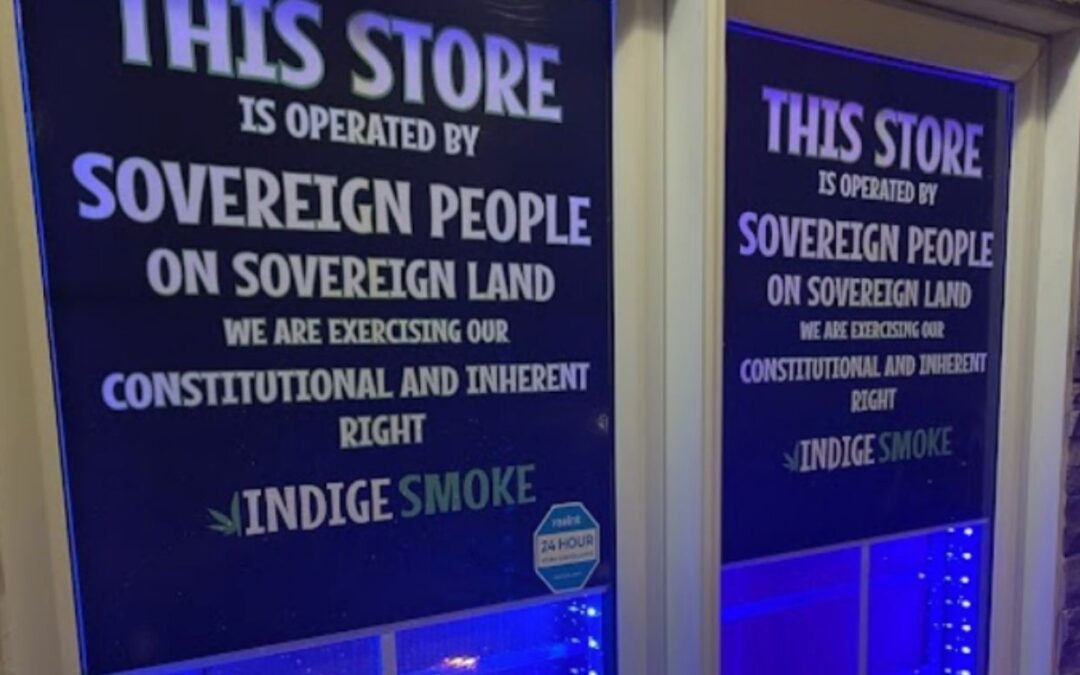
The three stores were reportedly all branded as “Indige Smoke”, and a representative for one Indige Smoke location who answered the phone at one of their locations confirmed that three of their stores had been raided on March 7. The representative declined to provide their name but said the company is speaking with the legal counsel and plans to fight the raids.
A post on Indigie Smoke’s Instagram page says: “In light of recent events that everyone is aware of by now, we will continue to exercise our rights. We appreciate all the kind messages and we appreciate you all!”
The company also notes the Fort Erie Store had just opened on March 1.
While some Indigenous and First Nations activists have argued that they can operate cannabis businesses without provincial or federal oversight, the provincial and federal governments have disagreed.
According to a recently published article, some Drug Enforcement Administration officials may be resisting calls to move cannabis to a lower schedule. This has created tension with the White House, especially as the president continues to laud his role in spearheading the marijuana review.
Certain officials appear to be contesting scientific findings from the U.S. Health and Human Services, which were the basis of the department’s recommendation that cannabis be resclassified under the Controlled Substances Act. The article highlights that the officials are concerned about issues linked to THC potency and are still not convinced by the conclusion made by the health department on marijuana having medical value.
Article sources also reveal that the department’s officials had requested data from the Office of Legal Counsel on the legal implications of cannabis rescheduling. Some believe this could be associated with global policy implications on marijuana reclassification, as rescheduling would violate a global treaty that America is party to.
Legal experts reject this argument, however, maintaining that marijuana’s rescheduling would better uphold America’s wider obligations under international law to regulate the drug in a way that protected public safety and health.
Regardless, the DEA holds all the cards at the moment, because it is the final authority in the decision to reschedule the drug. Despite this, the Congressional Research Service stated that it’s possible the DEA may accept the rescheduling request, based on its precedents.
However, this isn’t the opinion held by the majority. NORML’s deputy director, Paul Armentano, stated that the administration had historically been opposed to any efforts to amend cannabis’ federal state. Armentano gave an example of the time the DEA went as far as to revoke its own administrative law judge in an effort to prevent marijuana from being removed from its current schedule.
The administration also operates as an independent agency, regardless of whether a Republican or Democrat administration is in power, which prevents any swaying.
It is important to note that the rescheduling of cannabis would not legalize the drug at the federal level. It would, however, allow marijuana businesses in legal states to claim federal tax deductions. Currently, state-legal businesses are barred from doing so under Section 280E of the IRS. This regulation bars businesses from deducting business expenses from income linked to the trafficking of substances under the first two schedules of the Controlled Substances Act.
Additionally, rescheduling would eliminate certain barriers that prevent research on marijuana from advancing. Industry players such as Software Effective Solutions Corp. (d/b/a MedCana) (OTC: SFWJ) will be waiting to hear the final scheduling decision that the DEA makes at the end of its review process.
NOTE TO INVESTORS: The latest news and updates relating to Software Effective Solutions Corp. (d/b/a MedCana) (OTC: SFWJ) are available in the company’s newsroom at https://cnw.fm/SFWJ
About CannabisNewsWire
CannabisNewsWire (“CNW”) is a specialized communications platform with a focus on cannabis news and the cannabis sector. It is one of 60+ brands within the Dynamic Brand Portfolio @ IBN that delivers: (1) access to a vast network of wire solutions via InvestorWire to efficiently and effectively reach a myriad of target markets, demographics and diverse industries; (2) article and editorial syndication to 5,000+ outlets; (3) enhanced press release enhancement to ensure maximum impact; (4) social media distribution via IBN to millions of social media followers; and (5) a full array of tailored corporate communications solutions. With broad reach and a seasoned team of contributing journalists and writers, CNW is uniquely positioned to best serve private and public companies that want to reach a wide audience of investors, influencers, consumers, journalists and the general public. By cutting through the overload of information in today’s market, CNW brings its clients unparalleled recognition and brand awareness. CNW is where breaking news, insightful content and actionable information converge.
To receive SMS alerts from CNW, text CANNABIS to 888-902-4192 (U.S. Mobile Phones Only)
Please see full terms of use and disclaimers on the CannabisNewsWire website applicable to all content provided by CNW, wherever published or re-published: https://www.CannabisNewsWire.com/Disclaimer


















Recent Comments