


Manitoba’s LGCA plans to review Province’s cannabis consumption ban
Manitoba’s Liquor, Gaming and Cannabis Authority (LGCA) was planning a review of the province’s ban on consuming cannabis in public this year but paused the process as it awaits direction from the new NDP government.
A 14-page briefing, first reported by the CBC, said that the provincial cannabis regulator had planned to begin a review of the possibility of cannabis consumption sites in Manitoba, including looking at the current rules that do not allow cannabis to be consumed in public in Manitoba in any form.
“LGCA has committed to a full, in-depth review of cannabis consumption sites, including industry demand, legal permissibility, and potential regulatory implications,” the briefing stated, according to the CBC.
“LGCA plans to revisit its analysis in early 2024, beginning with a review of the legislative and regulatory framework and then moving to stakeholder consultations.”
That plan was reportedly paused as the agency waits for direction from the newly formed government. The Manitoba NDP formed government in October 2023. The province’s cannabis rules were put in place by the previous Progressive Conservative government.
The LGCA also reportedly noted in its briefing that public consultations in 2021 and 2022 “did not indicate either strong support or opposition” for cannabis consumption sites in Manitoba.
Manitoba is one of several provinces that have banned the public use of cannabis. Cannabis consumption is legal in public in BC, Ontario, and some parts of Alberta. Other provinces and territories have also banned it outright.
BC recently announced changes to its rules, allowing cannabis consumption in certain patio spaces.
This restriction means that the only place to consume cannabis is on private property or in someone’s private residence. As some landlords do not allow cannabis consumption, this ban can mean some residents have little to no ability to actually consume cannabis.

The ban on cannabis consumption is just one of the province’s rules put in place by the previous conservative government that has been challenged by activists and advocates in the province.
Manitoba is one of just two provinces that banned residents from growing cannabis at home, along with Quebec. The Manitoba NDP and their leader, now-Premier Wab Kinew, said that they did not support the ban previous to forming the government in last fall’s election.
A court rejected an attempt to appeal the ban in 2023, but a group challenging that ban filed an appeal on March 1 against that decision. Several requests for comment on the party’s stance on home-grow bans were unanswered, but sources close to the file tell StratCann that an announcement may come from the province on the matter of home-grown cannabis in the coming weeks.
More on this story as it unfolds.
Featured Image via Exploring Winnipeg
Related Articles
High Tide to acquire Queen of Bud
High Tide Inc. announced today they are entering into an agreement to acquire the Queen of Bud brand.
The deal will bring all related IP and trademarks associated with Queen of Bud under High Tide’s umbrella. Queen of Bud’s founder, Ashley Newman, will take on the role of global brand ambassador.
Newman started Queen of Bud as a retail store in Calgary but sold the store in 2022 and pivoted the brand to a highly curated line of cannabis and accessories sold across Canada. High Tide, through their Canna Cabana brand, operates the largest chain of cannabis stores in Canada, with 165 current locations in British Columbia, Alberta, Saskatchewan, Manitoba, and Ontario.
“I am thrilled to welcome Queen of Bud into our High Tide family. With well-established brand equity and an extensive customer base across Canada, especially among women, this is an exciting new addition with tremendous future opportunities.”
Raj Grover, Founder and CEO of High Tide
High Tide also owns the brands NuLeaf Naturals, FAB CBD, Blessed CBD, Cabana Cannabis Co, Famous Brandz, Vodka Glass, Puff Puff Pass, Dopezilla, Atomik, Silipipe, Evolution, and others. High Tide also operates a handful of online accessory platforms like Grasscity.com, Smokecartel.com, Dailyhighclub.com, and Dankstop.com.
Raj Grover, Founder and Chief Executive Officer of High Tide, calls it a strategic investment for the company.
“I am thrilled to welcome Queen of Bud into our High Tide family. With well-established brand equity and an extensive customer base across Canada, especially among women, this is an exciting new addition with tremendous future opportunities.”
“Queen of Bud is elegant, unique, and spiritually focused. Ashley and I connected on the brand vision, and she has brought this innovative brand to life by staying true to those qualities, resulting in deep and widespread brand loyalty in Canada. Because of her leadership and vision, we are delighted that she will continue providing creative influence as the Global Brand Ambassador to further the reach and appeal of Queen of Bud products. As we look to build out our in-house cannabis brand portfolio, Ashley will also be instrumental in the innovation and development of Queen of Bud ancillary product categories like CBD, consumption accessories, as well as home decor and lifestyle. I could not be more excited about the possibilities,” added Grover.

Newman says she sees the partnership as a way to bring her brand into many new locations and expand Queen of Bud’s product line.
“As one of the first female founders in the Canadian cannabis industry, it’s been an incredible journey building this brand to where it is today,” she said.
“This is a pivotal moment for the Queen of Bud. Given High Tide’s expertise, extensive store network and capital resources, I feel confident that this arrangement will elevate the brand to even greater heights. Together, Raj and I envision not only elevating cannabis to new heights of sophistication but also expanding our horizons beyond borders into international markets, delving into accessories, candles, fragrances, and beyond. Our heartfelt commitment to customers and passion for excellence fuel this journey, inspiring positive change and innovation in the cannabis world.”
The deal is still subject to approval and will include a $1 million stock and cash deal, with $100,000 paid in cash and the rest paid in common shares of High Tide.
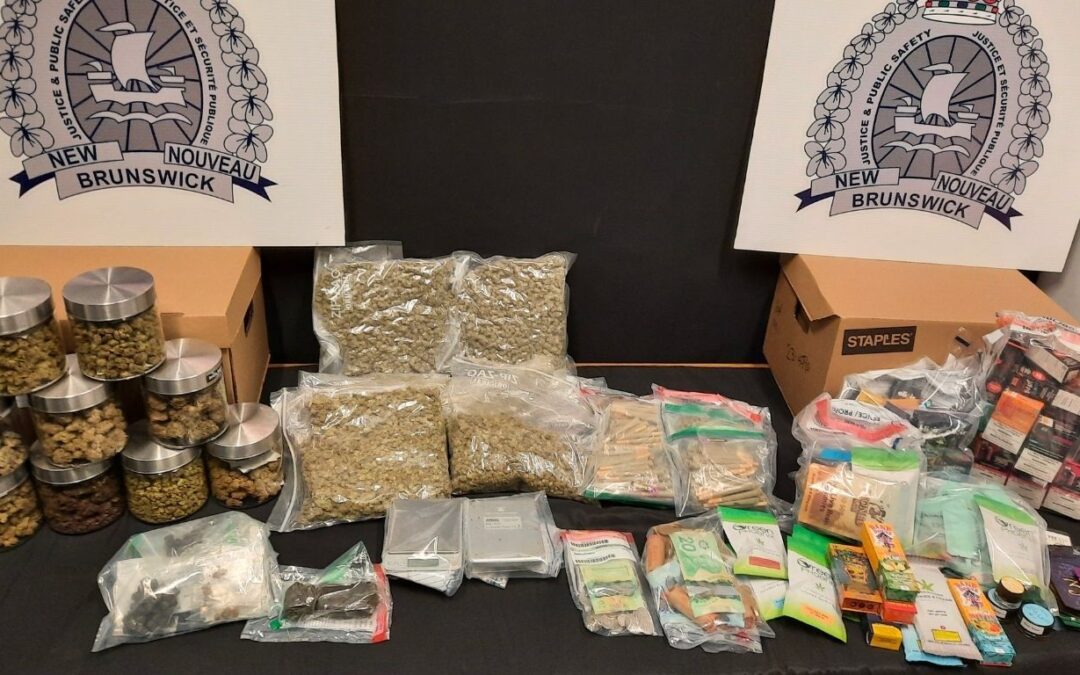
Two arrested in two dispensary raids in New Brunswick
Peace officers with the New Brunswick Department of Justice and Public Safety say they have arrested two people and seized contraband cannabis and other illegal products from two unlicensed cannabis stores.
Authorities seized about 3 kg of dried cannabis, several hundred grams of hash, cannabis edibles, cannabis extracts, and vape pens, as well as cash, an ATM, and more. Both of those arrested were released with a future court date.
Officers executed a search warrant on March 6 at Cloud Nine Vape (formerly Isla’s Emporium) at 10 Germain St. in Saint John.
A 37-year-old man was arrested and faces two charges under the federal Cannabis Act. He has been released and will appear in court at a later date. In that raid, officers seized:
- 1.5 kilograms of dried cannabis
- 211 grams of hashish
- 21 vape pens containing THC
- 66 flavoured nicotine pens
- 42 cannabis edibles
- 17 distillate cartridges
- 13 jars and 24 packs of cannabis shatter
- two cell phones
- two scales
- $345 in cash
Then, two days later, on March 8, peace officers executed a search warrant at the Hydrostop at 361 Baig Blvd. in Moncton.
A 41-year-old woman from Moncton was arrested and faces one charge under the Cannabis Act. She has also been released and will appear in court at a later date. Officers seized:

- 2.4 kilograms of dried cannabis
- 52.6 grams of hashish
- 206 cannabis edibles
- 50 packs of cannabis resin/shatter
- 39 THC/CBD bath salts and soaps
- 37 cannabis vapes
- 13 THC/CBD oils
- three packs of cannabis seeds
- 131 cannabis joints
- four packs of contraband cigarettes
- one ATM
- $1,119 in cash
This fiscal year, peace officers in New Brunswick say they have investigated and shut down 23 illegal cannabis dispensaries across the province.
Recently, two people were arrested and product was seized from an unlicensed dispensary in Saint John in January, as well.
Cannabis NB and provincially licensed private retail stores are permitted to sell cannabis in the province. Only these approved retailers offer regulated cannabis products that are approved by Health Canada and sourced by Cannabis NB.
There are 25 Cannabis NB stores in the province, plus a handful of privately-run cannabis stores.

Why Solitude Promotes Greatness
academyofideas.com
Why Solitude Promotes Greatness –
The Benefits of Being Alone
[embedded content]
The following is a transcript of this video.
“To live alone one must be either a beast or a god, says Aristotle. Leaving out the third case: one must be both…”
Nietzsche, Twilight of the Idols
According to a 2010 study published in the journal PLOS Medicine, the health risks of chronic loneliness are equivalent to smoking 15 cigarettes a day. To mitigate the harms of loneliness, we can increase our social connectedness, but we can also improve our capacity to be alone. For not all who are alone are lonely. Regarding his extended time spent alone at Walden Pond, the philosopher Henry David Thoreau proclaimed:
“I am never lonely here…I never found the companion that was so companionable as solitude.”
Henry David Thoreau, Walden
In this video, we explore the virtues of solitude and examine why, far from being damaging to health as is loneliness, solitude promotes self-development, creates conditions of unparalleled freedom, cures many mental health problems, and is necessary for the cultivation of a great character.
“Loneliness is one thing, solitude another: you have learned that – now!”
Nietzsche, Thus Spoke Zarathustra
In his book Solitude: A Philosophical Encounter, the philosopher Philip Koch defines solitude as “a stretch of experience disengaged from other people in perception, thought, emotion, and action…Solitude is…simply an experiential world in which other people are absent: that is enough for solitude, that is constant through all solitudes.”
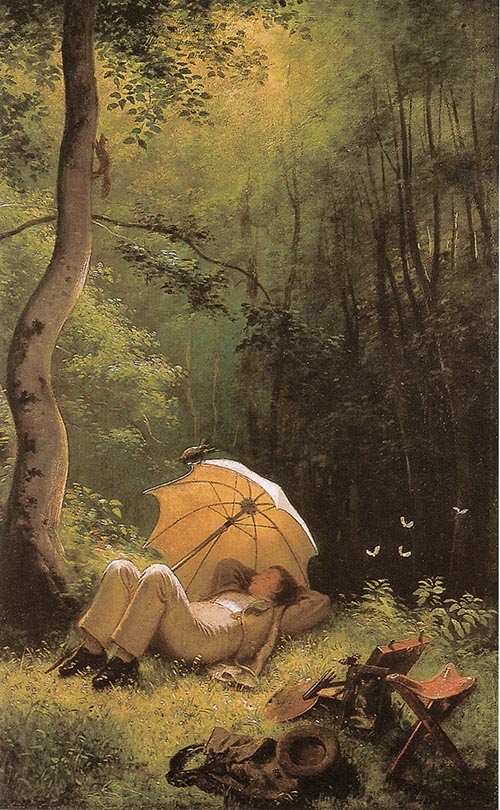
Many of the towering figures of history ascended to their legendary status by harnessing the benefits found in long stretches of solitude. The 40 days and nights Jesus spent wrestling with the devil in the desert spurred him to his spiritual heights. Lao Tzu, Buddha, and Moses found in solitude the great moral visions which defined their lives. Marcus Aurelius, Friedrich Nietzsche, Ralph Waldo Emerson, Albert Camus, Henry David Thoreau, and many other philosophers, sought in solitude a sanctuary to cultivate their character and develop their philosophical insights away from the corrupting influence of society. Nietzsche, for example, wrote that:
“When I am among the many I live as the many do, and I do not think as I really think; after a time it always seems as though they want to banish me from myself and rob me of my soul…I then require the desert, so as to grow good again.”
Nietzsche, Daybreak
Admiral Richard Byrd spent a winter alone in the Antarctic where he endured brutal cold, long black nights, and in his words, “an isolation which no power on earth could lift for at least six months.” But rather than being lonely this intense period of solitude was the most transformative of his life, for as he wrote in his book Alone:
“Yes, solitude is greater than I anticipated. My sense of values is changing, and many things which before were in solution in my mind now seem to be crystallizing.”
Richard Byrd, Alone
Why do some individuals thrive in solitude, while others suffer under the weight of loneliness? Simply put, the lonely are ignorant of the great virtues of solitude or do not know how to harness them. And foremost among the virtues of solitude is the freedom to discover who we are and to become that person. Or as the philosopher Arthur Schopenhauer observed:
“A man can be himself only so long as he is alone; and if he does not love solitude, he will not love freedom; for it is only when he is alone that he is really free. Constraint is always present in society, like a companion of whom there is no riddance; and in proportion to the greatness of a man’s individuality, it will be hard for him to bear the sacrifices which all intercourse with others demands.”
Arthur Schopenhauer, Essays and Aphorisms
To grasp the freedom which solitude offers, we can dwell on the constraints present in social engagements. Friends, family, and romantic partners are important ingredients in a good life, but they also represent what Philip Koch called “structures of demands”: “demands to be listened to with an interest commensurate with their expectations, cared for according to their requirements, followed or led along the trail at their own pace.” Moreover, the emotional state of others constrains our experience. When others are cheerful it lifts us up, but a bad mood often brings us down. In either case, our emotional state is not autonomous but dependent on the people around us. Or as R.D. Laing writes:
“They are not having fun. I can’t have fun if they don’t. If I can get them to have fun, then I can have fun with them. Getting them to have fun, is not fun. It is hard work.”
R.D. Laing, Knots
Even strangers constrain our experience. The philosopher Jean-Paul Sartre tells us to imagine ourselves alone in a park. We are enjoying our experience of the trees, the sun, and the birds – they exist for us alone. But then another individual sits on the bench across from us. We become aware that we are now an object in someone else’s consciousness, and this disrupts our idyllic communion with the environment. In an analogous manner, the psychologist William James pointed out the disappointing feeling that comes upon a solitary hiker when he sees another hiker approach in the distance. He immediately feels more self-conscious and less free, less able to simply be. This is what Sartre meant by the phrase “Hell is other people.” Or as Sartre wrote:
“By the mere appearance of the Other, I am put in the position of passing judgement on myself as an object, for it is as an object that I appear to the Other.”
Jean-Paul Sartre, Being and Nothingness
All these constraints are absent in solitude. For solitude is characterized by unrestraint and a freedom that is inaccessible in social engagement. In solitude we are free to enjoy our surroundings without the disrupting awareness that we are an object in someone else’s perceptual field. We are free to do what we want when we want. We can think or feel anything and follow our passions with no concern for what others will think of us or whether we are meeting their expectations or demands. “Free! It feels strange at first, no one bounding you on any side.” (Philip Koch, Solitude: A Philosophical Encounter) The English philosopher William Hazlitt made a habit of going on long walks alone, simply to enjoy the freedom of solitude, and as he noted:
“The soul of a [solitary] journey is liberty, perfect liberty, to think, feel, do, just as one pleases. . . For once, I like to have it all my own way; and this is impossible unless you are alone.”
William Hazlitt, Table Talk
Or as Philip Koch observed:
“Thoreau remarked, “I go and come with a strange liberty in nature.” So true, but why? An obvious point is the escape from the social controls which govern all interpersonal life: in solitude you can cry “Fire!” anytime you like, and you can do it stark naked…Certainly freedom of movement is a universal metaphor for the spiritual freedom of solitude, where our spirits wander or ramble or leap or soar.”
Philip Koch, Solitude: A Philosophical Encounter
The freedom of solitude is valuable for its own sake; but also as a means to self-discovery and personal growth. For when alone and absent the social constraints that bound our experience, we can engage in what Philip Koch called “attunement to self”. Or as he explained:
“…attunement to self is best characterized by the image of free flow, the flowing into [awareness] of thoughts, desires, and emotions with no sense of censorship or management, together with a free-flowing access backwards towards their origins.”
Philip Koch, Solitude: A Philosophical Encounter
Opening ourselves up to the full range of our emotions, thoughts, desires, and inner images, puts us in touch with aspects of our selfhood that we bury beneath the social masks we wear when around others. But in solitude we are free to take off these masks, as there is no one to listen to or answer to but the voice of our conscience. After a long and difficult relationship, the novelist May Sarton spent extended time in total solitude, and as she wrote in Journal of a Solitude:
“I begin to have intimations, now, of a return to some deep self that has been too absorbed and too battered to function for a long time.”
May Sarton, Journal of a Solitude
Or as the American philosopher Thomas Merton echoed in The Silent Life:
“Not all men are called to be hermits, but all men need enough silence and solitude in their lives to enable the deep inner voice of their own true self to be heard at least occasionally. When that inner voice is not heard…life is always miserable and exhausting… If man is constantly exiled from his own home, locked out of his own spiritual solitude, he ceases to be a true person. He no longer lives as a man.”
Thomas Merton, The Silent Life
The voices we hear in solitude, however, are not always pleasant. Sometimes an attunement to self involves the re-living of past traumas, and the emergence of painful emotions, fears, and anxieties we have been avoiding by immersing ourselves in the distractions of society.
“This state of inner attunement is not always joyful or serene…Sometimes it involves feeling with devastating intensity the conflicts, the rages, the intimations of mortality we have been trying to deny… Yearnings, rages, jealousies, dependencies, and estrangements can be safely lived through when the persons upon whom we might wrongly (or dangerously, or foolishly) unleash them are absent.”
Philip Koch, Solitude: A Philosophical Encounter
While the conflicts and emotions that emerge in solitude can cause suffering, their surfacing gives us the chance to consciously confront them. And if we use this opportunity to sit in silence and allow our anxieties and distressing emotions to wash over us, we can process, resolve, release them, and heal the chronic mental health problems they were generating. And as Albert Camus observed:
“When a man has learned – and not on paper – how to remain alone with his suffering, how to overcome his longing to flee, then he has little left to learn.”
Albert Camus, Notebooks 1935-1951
This healing power of solitude is not hyperbole. The Japanese physician Shoma Morita developed a form of psychotherapy, based on the principles of Zen Buddhism, which forgoes therapeutic and pharmaceutical intervention in favor of providing the patient an environment of solitude where he is forced to confront the suffering he has been avoiding. Or as Ilsa Veith explains:
“Upon his arrival at the hospital, the neurotic patient…must have complete bed rest for up to a week. During this time he is not permitted to associate with anyone else. He must not read or write, smoke, telephone, listen to the radio, or watch television. The patient is left alone with his illness until he and his illness become one—he has to accept his illness in complete solitude.”
Ilsa Veith, Hermits and Recluses
Most cultures of the past were aware of the great virtues of solitude, and in some solitude was valued even more than sociality. Among the Tarahumara Indians of the Sierra Madre in Mexico, the Professor J. Ralph Audy noted “almost a cult of solitude”. And as he continues:
“A little boy of six may take his ration of pinole [corn ground into a powder] and disappear with the sheep for one or two weeks without seeing a single other person before he returns…these Indians are so accustomed to leading solitary lives that they feel embarrassed and at a loss when called on to converse with others.”
J. Ralph Audy, Man the Lonely Animal
Even in cultures where the living was more communal, individuals went into extended periods of solitude to facilitate major life transitions. For example, solitary quests were an integral part of the rites of passage through which an adolescent boy transitioned to manhood. In a rite of passage, a boy was taken to a secluded camp in the wilderness. There he remained alone, sometimes for months. Anything he needed to survive he made or found himself. He hunted, foraged, protected himself from predators, and faced his fear of the unknown and of the darkness. He underwent an attunement to self and confronted and surmounted his loneliness, anxieties, dependencies, and transformed his mind from an unruly enemy into a trusted friend. Only those who succeeded in this solitary quest were considered by the community to be “real men”. And as James Hollis writes:
“Ritual isolation is an introduction to a central truth, that no matter how tribal our social life, we are on the journey alone and must learn to draw strength and solace from within….[The boy] learned to depend on his wits, his courage and his weapons, or he perished.”
James Hollis, Under Saturn’s Shadow
Culturally sanctioned solitary quests have been common in every known culture throughout history, except ours. This reflects our society’s deep aversion to solitude. Instead of being seen as a precious gift, many see solitude as something to be endured in between social engagements or relationships. Or worse, solitude is seen as something to be evaded. When other people are not present, most of us stare at screens to distract ourselves from our aloneness and the voices we might hear in the silence. Perhaps this collective flight from solitude is the reason why mental illness and weakness are the new norm. For as the 17th century philosopher Blaise Pascal observed:
“All of humanity’s problems stem from man’s inability to sit quietly in a room alone.”
Blaise Pascal, Pensées
Art Used in this Video




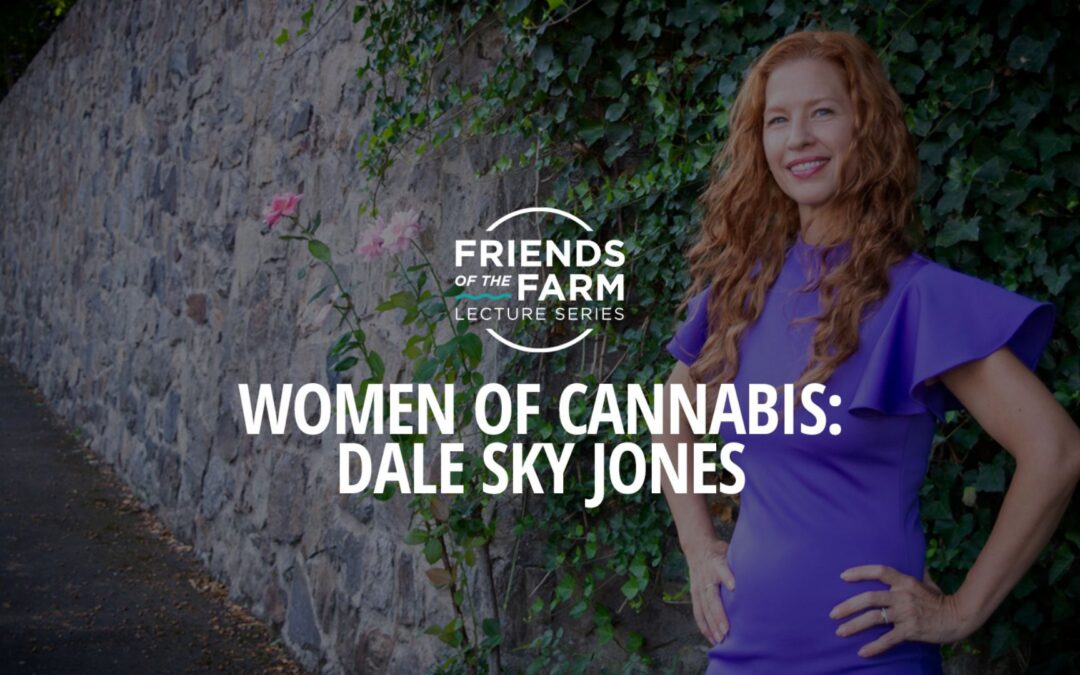
Dale Sky Jones on Friends of the Farm Lecture Series
Chancellor Dale Sky Jones will be the featured guest on the Friends of the Farm Lecture series 6 p.m. March 20.
Dale stands as a pioneering figure in the cannabis sector. Since launching her journey in 2007, she has been at the forefront of the movement toward legalization, adeptly juggling her family responsibilities while spearheading a renowned establishment that educates budding entrepreneurs in the cannabis industry.
As a prominent advocate for cannabis reform, Dale played instrumental roles, including acting as the spokesperson and legislative representative for California’s Proposition 19 in 2010, and leading the Coalition for Cannabis Policy Reform as its Chairwoman. She is deeply invested in ensuring fairness and social equity within the burgeoning cannabis market, overseeing various initiatives throughout the United States. Dale is also a recognized authority in the field, frequently invited to speak at events, and her insights have enriched numerous articles and documentaries.
The Friends of the Farm Lecture Series aims to provide concise yet comprehensive cannabis education through intimate sessions. Each meeting welcomes a distinguished guest speaker to share expert knowledge and perspectives, enriching attendees’ understanding and enhancing their experiences as cannabis consumers.

420 with CNW — Research Finds 7 in 10 Americans Live in States with Legal Cannabis

Despite federal prohibition, cannabis has gained legal status across many of the states in the United States, whether for recreational or medical use. According to recent research from the Pew Research Center, a majority of Americans, approximately 74%, now reside in states where cannabis is permissible in some form. Among these, about 54% live in states where recreational use is allowed.
Currently, a significant portion of states — 24, along with the District of Columbia — have given the green light to recreational cannabis. Furthermore, 14 states have legalized cannabis solely for medical applications, while the rest, totaling 12 states, have instituted laws allowing access to cannabis products containing minimal or no psychoactive compounds.
The study’s results, which are consistent with the state-by-state strategy, highlight the growing acceptance of cannabis legalization throughout the nation. This trajectory aligns with recent Gallup polling, which indicates that 70% of U.S. citizens favor legalization.
Examining the distribution of cannabis dispensaries, the analysis noted that a substantial majority, approximately 76%, are situated in states permitting recreational use. Another 23% cater to medical cannabis markets. The 1% serve areas where laws support CBD-only or low-THC products. Interestingly, half of the residents in these states (the 1%) have access to a dispensary.
This trend finds its roots in the Farm Bill 2018, which made hemp containing less than 0.3% THC legal, consequently spurring the development of noneuphoric derivatives such as CBD products. However, it also led to the emergence of substances such as delta-8 THC, which occupy a legal gray area. As they become more and more popular, some states,especially those that haven’t legalized cannabis, have started to regulate or outright ban these goods.
When it comes to states that have legalized cannabis, California leads the pack with an astounding 3,659 dispensaries — one-fourth of all stores in the country. However, Oklahoma leads as the state with the highest density of cannabis outlets per capita — 36 for every 100,000 citizens. All told, 79% of U.S. citizens live in counties with at least one of the approximately 15,000 operating cannabis dispensaries.
A closer look at the socioeconomic ramifications of the findings reveals that densely populated locations in states such as Virginia, Maryland, Colorado and Connecticut typically have median household incomes that are at least $20,000 less than those in areas with fewer dispensaries. On the other hand, New York and New Hampshire present a different picture, with areas hosting numerous dispensaries boasting median incomes around $20,000 higher than their counterparts.
As more Americans get an opportunity to legally access marijuana products from state-licensed companies, pressure for regulatory change at the federal level could mount and result in reforms that allow companies such as Canopy Growth Corp. (NASDAQ: CGC) (TSX: WEED) to operate freely across the country.
About CNW420
CNW420 spotlights the latest developments in the rapidly evolving cannabis industry through the release of an article each business day at 4:20 p.m. Eastern – a tribute to the time synonymous with cannabis culture. The concise, informative content serves as a gateway for investors interested in the legalized cannabis sector and provides updates on how regulatory developments may impact financial markets. If marijuana and the burgeoning industry surrounding it are on your radar, CNW420 is for you! Check back daily to stay up-to-date on the latest milestones in the fast -changing world of cannabis.
To receive SMS alerts from CNW, text CANNABIS to 888-902-4192 (U.S. Mobile Phones Only)
For more information, please visit https://www.CannabisNewsWire.com
Please see full terms of use and disclaimers on the CannabisNewsWire website applicable to all content provided by CNW, wherever published or re-published: https://www.CannabisNewsWire.com/Disclaimer
CannabisNewsWire
Denver, CO
www.CannabisNewsWire.com
303.498.7722 Office
Editor@CannabisNewsWire.com
CannabisNewsWire is powered by IBN

High Tide opens new Canna Cabana location in Toronto
(CNW) Calgary — High Tide Inc., the high-impact, retail-forward enterprise built to deliver real-world value across every component of cannabis, announced today that its Canna Cabana retail cannabis store located at 8 Wellesley Street East, Toronto, Ont. will begin selling recreational cannabis products and consumption accessories for adult use Sunday, March 17.
This opening will mark High Tide’s 165th Canna Cabana branded retail cannabis location in Canada, the 55th in the province of Ontario and the 11th in Toronto.
This Canna Cabana is located at the corner of Toronto’s iconic Yonge Street and Wellesley Avenue and is minutes away from Toronto’s gay village, positioning it well to take advantage of the huge crowds of locals and tourists that flock to the area throughout the summer, especially during Toronto’s Pride week. With a population density of over 200,000 residents within a 3-kilometre radius, this brand-new Canna Cabana will welcome the surrounding foot traffic from the working professionals and tourists who frequent this vibrant neighbourhood.
“Toronto is the fourth most populous city in North America and is widely regarded as Canada’s financial capital. This brand new Canna Cabana is surrounded by a multitude of high-density multi-family condominiums largely occupied by working professionals and is steps away from the busy Wellesley subway station, ensuring easy access to the store for consumers across downtown Toronto and beyond,” said Raj Grover, founder and CEO of High Tide.
Advertisement
CannExpo, the Cannabis Lifestyle Show, is gearing up to captivate Toronto from March 22 to 24, 2024
Headlining CannExpo’s main stage are the Disciplined Stoners, led by Ellevan and Winny Clarke. The lineup includes the CanSell Top Bud and Influencer Award Ceremonies, Joint Rolling Competitions, and engaging sessions on cannabis and wellness. Panels include growing cannabis, benefits of cannabis topicals, cannabis and sex, and more.

How Psychedelics Could Enable Soldiers Beat Trauma
Data from Veterans Affairs estimates that more than 120,000 veterans in the United States have died by suicide. Many more in America and other parts of the globe struggle with post-traumatic stress disorder as conflicts rear their heads globally.
In Ukraine, the ministry of health estimates that close to four million individuals are living with post-traumatic stress disorder. To help manage this, many have turned to psychedelics, and for good reason. Last month, the country’s special parliamentary commission voted to set up a working group that would investigate the effectiveness of MDMA-assisted therapy on post-traumatic stress disorder.
In a statement, Viktor Liashko of the health ministry said that it was important to deal with mental-health issues and assess how new techniques could help qualitatively as well as quickly. This comes after the American Congress voted to conduct research on the effects of psychedelic therapy on soldiers who suffered from traumatic brain injury and post-traumatic stress disorder.
Treatments currently used for post-traumatic stress disorder include approved antidepressants, such as Paxil and Zoloft, as well as cognitive behavioral therapy. In some cases, patients may be prescribed benzodiazepines and antipsychotic drugs. For most veterans, however, the above options aren’t effective and can have serious side effects.
Adopting psychedelic-assisted therapy would have a huge impact on psychiatry globally. Studies suggest that MDMA can produce changes in the brain that induce neuroplasticity and help individuals form new neural connections. MDMA may soon be approved by the FDA for use in managing post-traumatic disorder.
This isn’t the only psychedelic with medicinal benefits either. Substances such as psilocybin and ibogaine have also shown promise. Some soldiers in Ukraine have also tried using ketamine, a dissociative drug that has hallucinogenic effects,
The country has allowed Dr. Vlasdislav Matrenitsky to carry out research on ketamine therapy as psychedelics become more mainstream. Additionally, Ukraine is also focused on remedying its shortage of therapists trained to offer support after as well as before psychedelic treatment.
Late last year, some Ukrainians took part in a psychedelic therapist-training program organized by MAPS in Sarajevo. MAPS is involved in psychedelic research, including its U.S. trials on MDMA-assisted therapy in the treatment of post-traumatic stress disorder.
The research comes after some troops received psychedelic treatment and went back to the frontlines. The use of psychedelics here is despite concerns that active duty soldiers using hallucinogens shouldn’t be a decision made lightly as its full implications aren’t known yet.
This isn’t the first-time soldiers have used stimulants during war. In World War 2, soldiers with shell shock were treated with sodium amytal, a potent sedative with severe side effects.
As entities such as Compass Pathways PLC (NASDAQ: CMPS) press ahead with their research and development activities, the specific roles that psychedelics can play in helping soldiers and other groups of people to deal with the serious mental-health issues could become better documented.
About PsychedelicNewsWire
PsychedelicNewsWire (“PNW”) is a specialized communications platform with a focus on all aspects of psychedelics and the latest developments and advances in the psychedelics sector. It is one of 60+ brands within the Dynamic Brand Portfolio @ IBN that delivers: (1) access to a vast network of wire solutions via InvestorWire to efficiently and effectively reach a myriad of target markets, demographics and diverse industries; (2) article and editorial syndication to 5,000+ outlets; (3) enhanced press release enhancement to ensure maximum impact; (4) social media distribution via IBN to millions of social media followers; and (5) a full array of tailored corporate communications solutions. With broad reach and a seasoned team of contributing journalists and writers, PNW is uniquely positioned to best serve private and public companies that want to reach a wide audience of investors, influencers, consumers, journalists and the general public. By cutting through the overload of information in today’s market, PNW brings its clients unparalleled recognition and brand awareness. PNW is where breaking news, insightful content and actionable information converge.
To receive SMS alerts from PsychedelicNewsWire, text “Groovy” to 888-902-4192 (U.S. Mobile Phones Only)
For more information, please visit https://www.PsychedelicNewsWire.com
Please see full terms of use and disclaimers on the PsychedelicNewsWire website applicable to all content provided by PNW, wherever published or re-published: https://www.PsychedelicNewsWire.com/Disclaimer
PsychedelicNewsWire
San Francisco, CA
www.PsychedelicNewsWire.com
415.949.5050 Office
Editor@PsychedelicNewsWire.com
PsychedelicNewsWire is powered by IBN
Recent Comments