With a strong focus on health over the past few years, many people are looking for ways to be more self-reliant. Many have struggled to access health services in a timely fashion. So, it’s not surprising there is a resurgence of interest in using plants for medicinal purposes. Creating a themed Pharmacy Garden is one way to be more self-sufficient in treating everyday ailments.
For example, pain and healing from cuts, stings, and bruises can be managed by growing and using the right plants. The other day, an angry hornet stung me on the face and arm while watering the garden. The swelling and pain were immediate. I returned to the house and cut an aloe vera leaf from the mother plant. I applied the cooling, soothing gel inside the leaf to the swollen stings and dabbed some plantain salve on the area. The pain diminished within minutes, and the healing began. No need for pain medication, a first aid kit, or a trip to the chemist or doctor! My garden is a ‘medicine cabinet’ waiting to be used when needed. It’s incredibly empowering to know which plants to use and when.
So, how do you create a medicinal garden?
Step 1: List the most common ailments in your household. If you have children or are out in the garden frequently, stings, bites, sunburn, scratches, wounds and bruises are likely! If you suffer from regular headaches, stress or anxiety, insomnia, sore throats, coughs, and colds, there are plants you can grow and use to relieve many symptoms and jumpstart healing. A list will help you focus on choosing plants that best meet your unique needs. Most medicinal herb books are an excellent place to start.
Step 2: Match the ailments on your list to plants useful for prevention, treatment or healing. Many herbs and food plants perform double duty with culinary and medicinal uses. You can benefit your health from the nutrients they contain and use many for their therapeutic effects for specific conditions. Look for plants that perform multiple roles and are suited to your climate; this allows you to grow fewer plants of higher value.
Step 3: Start with the most common, easy-to-grow plants that will give you confidence in using them for healing. Learn how to make herbal teas, salves and poultices. These are some of the easiest ways to use plant material without much time, money or effort. We generally want a quick solution when we feel sick or have a minor ailment. However, not all plants give up their healing benefits in the same way. We can eat some herbs, but others are best made into herbal tea or pulverized and applied to the skin as a poultice. Some plants perform best when added to other ingredients to make a salve, oil or tincture.
You can either grow medicinal plants in containers or set aside an area of your garden specifically for this purpose. Start small and add more plants as you need. I have a home pharmacy garden close to the kitchen, so I can dash out and pick fresh ingredients for meals and herb teas or other remedies. I interplant them with edible flowers like calendula, dianthus and violets. Aim to group plants according to their sun and water needs.
6 Best Medicinal Plants And Their Benefits
Sage, rosemary, and thyme are perennial herbs well-known for their flavor and hardy nature, even in the harshest conditions. This trio of herbs are a great starting point for a mini medicinal garden that can be expanded plant by plant. I highly recommend three others in a basic pharmacy garden: aloe vera, nasturtiums, and comfrey. Their properties cover a wide range of uses for common ailments.
1. Sage (Salvia officinalis). A perennial clumping herb that does best in full sun. It prefers well-drained soil with low to moderate water needs. Make sage tea with fresh or dried leaves by steeping for 3-5 minutes in boiling water. This remedy is widely used as a tea or mouthwash for sore throats, laryngitis, indigestion, depression, anxiety, and grief. The leaves contain antibacterial properties and can be smeared over wounds after cooking them in vinegar.
2. Rosemary (Rosmarinus officinalis). A perennial clumping and bushy herb that thrives in full sun, well-drained soil and minimal water. It is the ‘herb of remembrance’ for aiding memory and mental clarity. Rubbing and crushing the leaves releases essential oil compounds. Inhaling this aroma has an almost immediate effect on stimulating the brain and improving concentration. The leaves can also be rubbed over the temples to relieve a headache. The essential oils in the leaves and flowers have antiseptic, anti-fungal, anti-inflammatory, and antibacterial properties. In addition, regularly eating rosemary provides a rich source of phytonutrients that can help build the immune system.
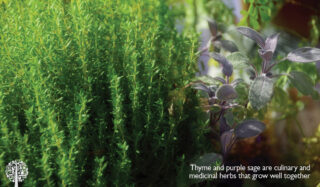
3. Thyme (Thymus species). This perennial low-growing and spreading herb prefers full sun to partial shade in well-drained soil with low to moderate water needs. It partners well with rosemary and sage in a garden as they all share the same requirements. Thyme contains antiseptic, antimicrobial, anesthetic, and antibacterial compounds that help keep infections at bay and are beneficial for healing. Combine the three herbs in tea!
Add fresh or dried leaves to boiling water to make thyme tea. The essential oil in the leaves contains thymol, a pain-relieving compound helpful as a simple remedy for many common ailments. Hot thyme tea may be sipped to ease a sore throat or poured into a bowl and inhaled to relieve a blocked nose, cough or cold. The warm tea can be used as a throat or mouthwash gargle for inflamed gums and laryngitis (combined with sage) and to destroy germs. Cooled thyme tea may be applied topically to the skin to alleviate and soothe rashes and sores.
4. Aloe vera (Aloe barbadensis). Often referred to as the Medicinal Plant or Living First Aid Plant, it lives up to its name! Aloe vera is a perennial drought-hardy succulent that thrives in full sun or a well-lit bathroom where it will be used regularly. It has to be one of the planet’s lowest maintenance, highest value medicinal plants. Aloe vera has anti-aging, moisturizing, healing, and soothing properties, making it an incredibly useful healer for all skin complaints. The gel inside the leaves is used to heal burns, as a daily moisturizer or aftershave balm, and to heal cuts, bites, stings, blisters, infections, sunburn, and many other ailments. We have many plants that we use daily. Aloe vera has anti-inflammatory, antiseptic, and antimicrobial properties, making it a ‘go-to’ remedy quickly absorbed into the skin.
5. Nasturtium (Tropaeolum majus). This attractive annual herb flowers abundantly in full sun and grows more leaves in the shade. It’s tolerant of many soils and has moderate water needs. All plant parts are edible – flowers, leaves, buds, and seeds. Research studies(1, 2) show the leaves have antimicrobial, antibiotic, and general tonic properties. Tromalyt is the fast-acting antibiotic compound present in nasturtiums. One of the key reasons to have this natural remedy on hand is that nasturtiums don’t negatively impact the gut microbiome as pharmaceutical antibiotics do.
Nasturtiums also have anti-fungal and antiseptic properties. Whenever I feel a cold or flu coming on, I eat three leaves or seeds several times during the day. They are rich in Vitamin C and consistently ward off illness.
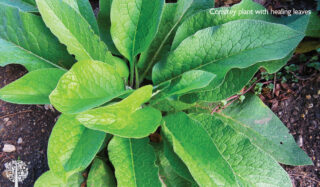
6. Comfrey (Symphytum officinale). Also known as Knitbone and All Heal. This clumping perennial and flowering herb tolerates full sun to partial shade and has moderate water needs. When I was a young girl, I spent a lot of time playing outdoors and falling out of trees, ending up with regular bruises (internal bleeding). So my mum grew comfrey and applied a fresh leaf poultice (a paste from the crushed leaves spread over a warm, moist cloth). This helped relieve inflammation, draw out bruising, reduce swelling, and encourage faster healing. Over the years, I’ve used it to help heal sprains, bruising, broken bones and joint injuries. Of course, it has many other uses, but these alone earn it a place in a pharmacy garden.
General Precautions
Paracelsus wisely said, “All things are poison, and nothing is without poison. The dosage makes it either a poison or a remedy.” Consult your healthcare provider to determine if any medications you are taking could interact with the herbs you intend to use and research their contraindications.
Following these simple steps, you can grow a healing home pharmacy garden supporting your health and well-being for many years.
References:
(1) ‘Antimicrobial and anti-inflammatory activities of the volatile oil compounds from Tropaeolum majus L. (Nasturtium)’, African Journal of Biotechnology Vol. 10(31), pp. 5900-5909, 29 June, 2011
(2) ‘Traditional uses, botany, phytochemistry, pharmacology, separation and analysis technologies of Euonymus alatus (Thunb.) Siebold: A comprehensive review.’ J Ethnopharmacol. Fan L, Zhang C, Ai L, Wang L, Li L, Fan W, Li R, He L, Wu C, Huang Y. 15 Sep 2020; 259:112942.
Harvard University and the University of California, Berkeley have announced a collaborative venture. Titled “Psychedelics in Society and Culture,” the collaboration aims to understand the social history and societal implications of psychedelics. In a notable departure from the nascent psychedelic industry’s focus on clinical outcomes, the collaborative initiative will focus on societal sciences, humanities and arts.
Psychedelic-focused initiatives mostly focus on how psychedelic use affects the human body and typically study the clinical outcomes of using psychedelics such as psilocybin (magic mushrooms), LSD and MDMA against a myriad of mental disorders. A growing body of scientific literature has found that psychedelics have the potential to alleviate hard-to-treat mental disorders such as post-traumatic stress disorder (PTSD), eating disorders and treatment-resistant depression.
Unlike traditional mental-health medications, psychedelics can deliver long-term benefits after only a couple of doses and have minimal negative side effects. With a large portion of mental-health patients failing to respond to conventional mental-health treatments or experiencing negative side effects, researchers are searching for substances that can treat poor mental health safely and more effectively.
Consequently, most psychedelic-related initiatives, especially at institutions of higher learning, typically focus on the potential clinical outcomes of the ongoing psychedelic revolution. However, “Psychedelics in Society and Culture” pioneers a new age of psychedelic research that will incorporate cultural expression and the human experience.
The joint venture will be accessible to faculty, undergraduate and graduate students from the University of California, Berkeley and Harvard University to encourage interdisciplinary projects of great diversity.
On top of helping researchers gain new insights into how psychedelics shaped and will continue to shape human thought and culture, the joint venture will also explore the history of psychedelics in literature and the arts as well as the effect hallucinogenics have had on societal transformation and human consciousness. The program will also commit to maintaining diversity and inclusivity to alleviate past criticisms of marginalization and lack of diversity in the young psychedelic research field.
The program will be supported by significant funding from private donors, including the Flourish Trust, and rely on a committee of members selected from Harvard and UC Berkeley to handle the grant rewards. The initiative is calling for interdisciplinary proposals from faculty and students from both universities in a bold attempt to explore how psychedelics affect human consciousness and our relationship with the natural world and death.
If it is successful, the program will increase the scope of psychedelic-related research and may even contribute to a significant shift in how we perceive and engage with psychedelics.
As Harvard and Berkeley delve into the societal impacts of psychedelics in the short- and long- term, for-profit entities such as Seelos Therapeutics Inc. (NASDAQ: SEEL) are also doing their part in advancing the psychedelics renaissance by conducting clinical-development programs aimed at yielding regulator-approved psychedelic treatments.
About PsychedelicNewsWire
PsychedelicNewsWire (“PNW”) is a specialized communications platform with a focus on all aspects of psychedelics and the latest developments and advances in the psychedelics sector. It is one of 60+ brands within the Dynamic Brand Portfolio @ IBN that delivers: (1) access to a vast network of wire solutions via InvestorWire to efficiently and effectively reach a myriad of target markets, demographics and diverse industries; (2) article and editorial syndication to 5,000+ outlets; (3) enhanced press release enhancement to ensure maximum impact; (4) social media distribution via IBN to millions of social media followers; and (5) a full array of tailored corporate communications solutions. With broad reach and a seasoned team of contributing journalists and writers, PNW is uniquely positioned to best serve private and public companies that want to reach a wide audience of investors, influencers, consumers, journalists and the general public. By cutting through the overload of information in today’s market, PNW brings its clients unparalleled recognition and brand awareness. PNW is where breaking news, insightful content and actionable information converge.
To receive SMS alerts from PsychedelicNewsWire, text “Groovy” to 888-902-4192 (U.S. Mobile Phones Only)
Please see full terms of use and disclaimers on the PsychedelicNewsWire website applicable to all content provided by PNW, wherever published or re-published: https://www.PsychedelicNewsWire.com/Disclaimer
Police in Victoria, BC say they arrested a man in January with known gang associations who was selling vape products to students outside a local school.
The arrest was first announced as part of an ongoing covert operation called Project Halo. Officers say they observed the suspect selling vape products and interacting with students on and near school property in and around the Greater Victoria area during the day.
The suspect was seen selling to youth across from local schools including Esquimalt High School and Reynolds Secondary School, and was also observed on the property of North Saanich Middle School after school hours, according to a police press release.
Items seized from the suspect include:
859 nicotine vapes
495 THC vapes
290 THC gummies
1.6 kilograms of dried cannabis
Four imitation firearms
Three knives
Two masks
Composite brass knuckles
“I am proud of the work Strike Force has done in gathering intelligence and building evidence in order to make an arrest,” says Chief Del Manak. “This is not an easy task when we are on the outside looking in at schools, but our team is dedicated to taking action on gang activity. This is just one person of many who have been observed, and our message to those who are targeting our youth is ‘You are not welcome in our communities, you are not welcome in our schools. We see you, we are watching you, and we are coming for you.’”
Mia Golden, a counselor and one-half of Victoria’s two-person Mobile Youth Services Team says gangs are targeting young people more aggressively in recent years.
“We have seen an aggressive shift in recruitment over the last year,” says Golden. “Now, gang members are targeting students in school as young as middle school, who are being groomed and recruited through selling products like vapes, designer clothing, or drugs.” Once the connection has been made, the youth are often tasked with selling the products and threatened if they do not comply.”
This investigation is ongoing and further details are not available at this time.
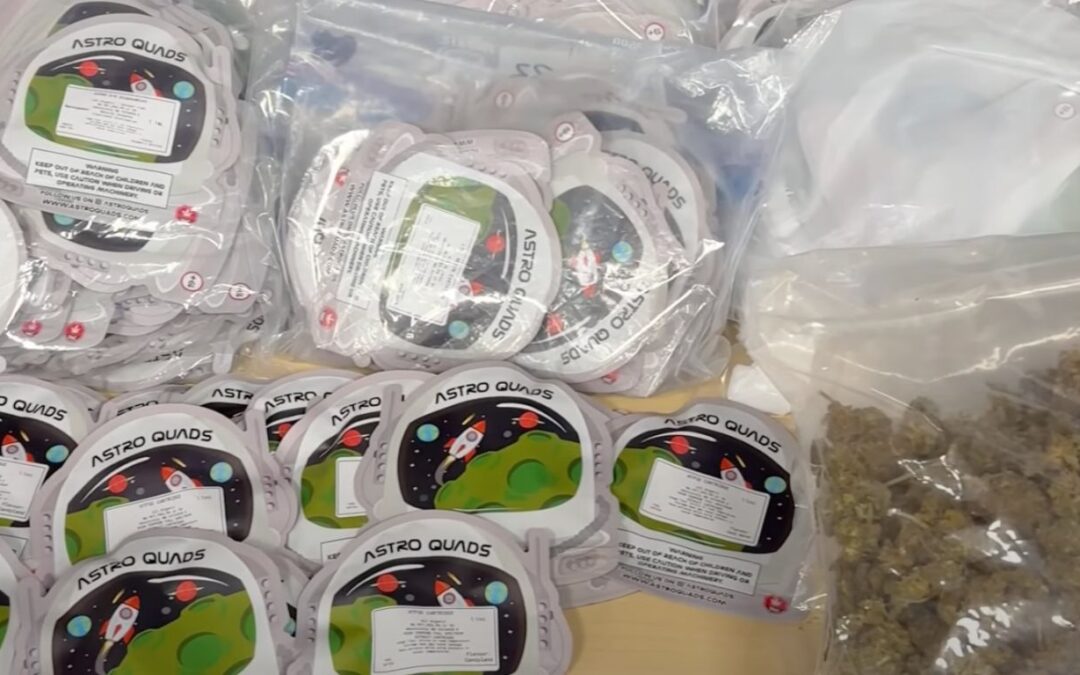
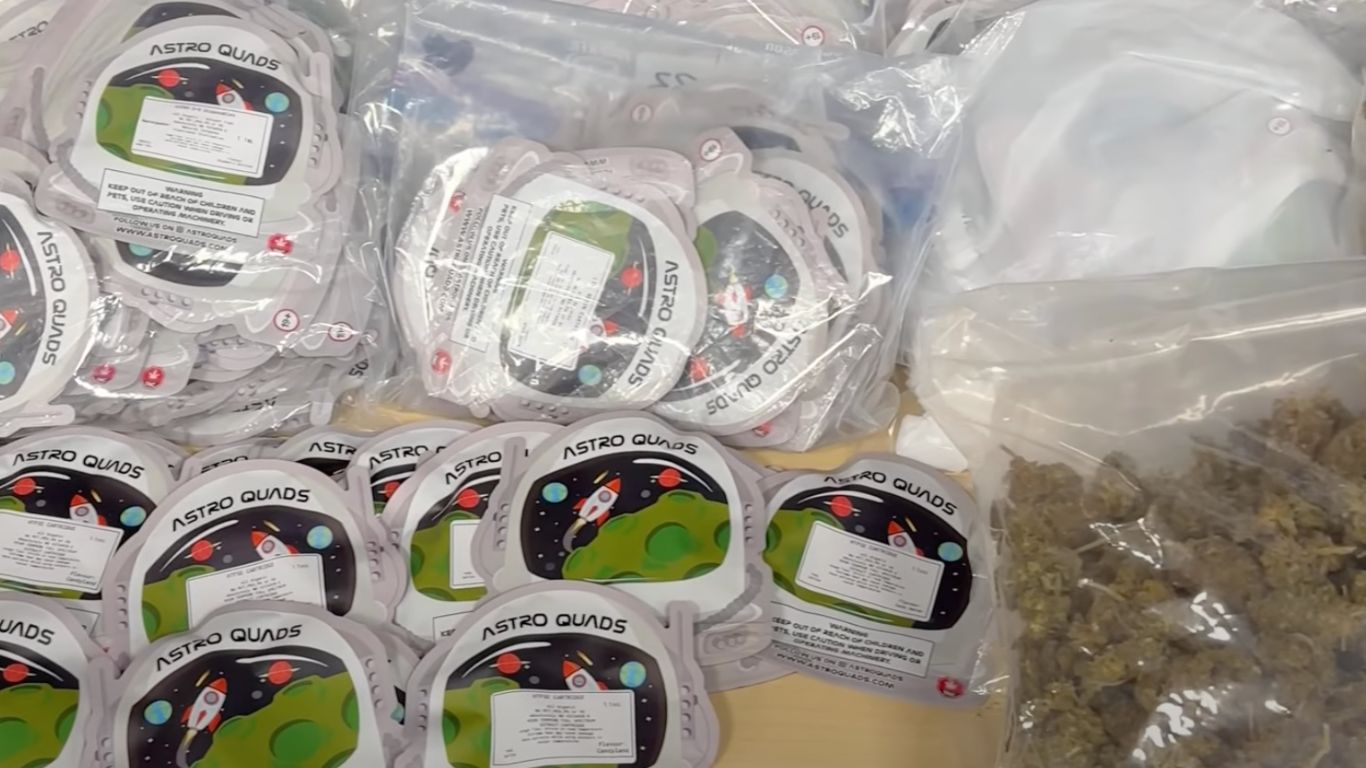
Images of seized products released by Victoria PD that showed weapons, nicotene and cannabis products, including the brand “Astro Quads.”
During a press conference, Victoria Police Chief Manak said this is an ongoing investigation and actions were taken due to concerns with this specific individual’s actions, including reference to waving a (replica) gun. The person is no longer in custody.
“Anyone who doubts that this nation building and police activity has not become real and very effective right here in the United States need only visit the area around Fort Bragg to find one of these early paramilitary CIA-oriented specialist, General Tolson, sending his American soldiers out into the countryside with nation-building programs for the citizens of the United States. If such tactics continue, it is possible that an enlargement of such a program could lead to a pacification program of areas of the United States, such as the CIA and the US Army have carried out in Indochina.”
– Col. Fletcher Prouty “The Secret Team” (1972). Prouty served as a liaison officer between the Pentagon and the CIA between 1955 and 1963.
[This is Part II of the series “How Panama Became the SKYNET for Orwellian Totalitarianism in the Americas”. For Part I refer here.]
Today there is much well-placed concern over an increasing number of migrants who are entering the United States from Central and South America. According to the latest Customs and Border Protection (CBP) statistics there have been more than 2.7 million migrants who entered the United States in 2022 and more than 2.8 million in 2023. According to The New York Times, the United States, since 2021, has been experiencing the highest number of illegal crossings since at least 1960.
The question is who is responsible for this situation, and why is it happening, what is its agenda? This is the purpose of this three-part series, which will attempt to address and answer these questions.
One very important factor in all of this that must be kept in mind, is that from the point of view of the vast majority of these migrants, they are not voluntarily leaving their homes and their country, but rather feel there is no other option open to them. Traveling in this manner is full of terror and many are robbed, molested, beaten and killed. Therefore we should ask ourselves first and foremost, what has occurred that has created a situation where so many want to desperately leave their homes, traveling with the vulnerable and the very young, and risk everything?
In Part I of this series, Operation Condor was introduced. During the 1970s, something that had already been implemented in western Europe under Operation Gladio, and Vietnam under the Phoenix Program, began to expand upon these models of Orwellian parallel states and clandestine warfare and implemented them in South America organised under a centralised computer network that had been set up by the Americans in Panama, known as CONDORTEL (which was specifically relating to Operation Condor) and COPECOMI (as a more broad American purview), which oversaw and connected all of these parallel states in the Americas in coordination with each other, implementing hunter-killer squads modeled off of the Green Berets (Special Forces) of the Phoenix Program.
Operation Condor began in the 1970s and tapered off in its level of intensity by the late 1980s but contrary to what we have been told, this was not due to the emergence of the new “democratic” states that finally allowed for the bloodshed and mayhem to end, but rather it was because at that point the parallel states had been so solidly implemented within these nations, that they operated seamlessly and could thus be kept well hidden.
Thus, Operation Condor is what allowed for the formation of parallel states in South America, which relied upon the implementation of parastatal structures, as already explained in Part I of this series: “…parastatal structures as the forces and infrastructure of ‘black world’ special operations. This hidden part of the state…the parallel state – includes parapolice and paramilitary forces, harbored and directed by the state, with access to a vast shadow infrastructure including secret prisons, fleets of unmarked cars and unregistered aircraft, unofficial cemeteries, secure communications systems, and other parallel structures funded by ‘black budgets’.
In Latin America, the parallel state augmented the lethal capabilities of the military dictatorships while allowing them to retain the appearance of legality and a certain legitimacy. Parastatal structures permitted the militaries to avoid international law and human rights guarantees, prevent public scrutiny, expand the powers of the state over society, and give up the militaries free rein to utilize extreme and lawless methods against ‘subversion.’ The parastatal forces created by the counterinsurgents included the clandestine groups, secret intelligence organizations, ‘task forces,’ and civilian informant networks acting covertly on behalf of the state.”[1]
This entire network of parallel states in the Americas was organised and received its direction from a central node in Panama using the computerised systems of CONDORTEL/COPECOMI and served as the training grounds for the death squads modelled off of the Green Berets in the infamous Vietnam Phoenix Program. All of this activity in Panama and the broader Americas was being conducted under the direction of the CIA and US Army and certain members of the US Government [Kissinger’s central role in Operation Condor will be discussed in Part III of this series].
Thus, the situation today should clearly be regarded with this in mind.
Operation Condor and CONDORTEL/COPECOMI had set up a sophisticated and highly precise structure of control throughout the entire Americas that is still in operation today. This includes border control under a centralised computer system under the management of the CIA and US Army. Thus, contrary to what we are being told, the migrant crisis is anything but natural, and it is anything but out of the US military’s “control.”
Since Operation Condor was modelled off of the Green Beret Phoenix Program, which was based off of a new form of warfare called counterinsurgency and was to revolutionise and forever change how all warfare would be fought in this new era of combat, it is important we understand what this in fact was and how it managed to take-over and entirely replace the traditional operations, service and philosophy of the US military that had existed up until this revolutionary point in time.
This is especially relevant, since Vietnam would be the first American laboratory to create an artificial migrant crisis that stoked the fires of the Vietnam War and justified the entry of the US military…
Through A Glass Darkly On matters of geopolitics, counterintelligence, revisionist history and cultural warfare.
By Cynthia Chung Secret Armies, Forgotten Betrayals and Global Tyranny
Contrary to what we are led to believe today, the Green Berets were not a Kennedy Administration creation but in fact were a creation of WWII meant to mirror the British Special Forces, Special Air Service (SAS) founded in 1941 and reconstituted as a corps in 1950. The unit, which is still active today, specialises in a number of roles including counter-terrorism, hostage rescue, direct action and special reconnaissance. Much of the information about the SAS is highly classified, and the unit is not commented on by either the British government or the Ministry of Defence due to the secrecy and sensitivity of its operations.
Special Air Service (SAS) insignia
The Emblem for Operation Gladio. Notice how both the SAS and Gladio hold the sword (gladio means sword) as its shared emblem and appears to be a reference to the Crusaders. To learn more about Gladio’s idolising of the Crusades see my paper “A Modern Day Crusade for the Holy Land.” and “Operation Gladio: How NATO Conducted a Secret War Against European Citizens and Their Democratically Elected Governments.”
The SAS were an offshoot of the British Special Operations Executive (SOE). During the Second World War, preparations were made in the case of a possible German victory and ‘stay-behind’ guerilla warfare units were stationed throughout Europe. The model was the British Special Operations Executive, or SOE, a top-secret guerilla-commando force established in 1940. It was the brainchild of Winston Churchill and was called ‘Churchill’s secret army.’ This program would eventually be adopted into NATO. After the Allied victory, these ‘stay-behind’ units were not disbanded but rather were strengthened and expanded in almost every European country, with direct aid and encouragement from the United States.
These secret armies, also called “stay-behind” units, later became part of NATO’s secret armies and ran Operation Gladio. These secret armies were used against the European people, staging false-flag events and acts of terrorism and blaming it on the communists in order to influence support for far-right wing government. The relevance of this in South America will be discussed in Part III, but for an overview of its operation in Europe the reader can refer here.
This is what the Green Berets, US Special Forces was created as an American mirror of.
In fact, Frank Wisner, Director of the CIA covert action department Office of Policy Coordination (OPC), was setting up stay-behind secret armies across Western Europe and in his operations collaborated closely with the Special Operations branch of MI6 of Colonel Gubbins. The SAS and the American Green Berets, trained to carry out special missions clandestinely in enemy-held territory, were at numerous instances during the Cold War brothers-in-arms and among other operations also trained the secret stay-behind armies.
The SAS were disbanded at the end of the war in October 1945, but were quickly reborn in 1947 and used to fight behind enemy lines in Malaysia. In their biggest deployment since the Second World War, SAS units served in the Gulf in 1991 and together with the U.S. Green Berets secretly trained and equipped the Kosovo Liberation Army (KLA) forces before and during the 1999 NATO bombardments of the Serbian province of what was Yugoslavia at the time.[2]
Daniele Ganser writes in his “NATO’s Secret Armies”:
“Both paramilitary units cooperated closely. As a sign of intimate cooperation the members of the American Special Forces unit wore the distinctive Green Beret unofficially ever since 1953 in order to imitate their SAS idols who had long used that insignia…Returning the respect the British too cultivated the Special Forces alliance and in 1962 made the commander of the U.S. Green Berets, Army officer Major General William Yarborough, an honorary member of the SAS.”
The reputation of the SAS would be shrouded in infamy with their sensitive deployments throughout the world including the training of Pol Pot’s forces in the Khmer Rouge. SAS units were stationed in Northern Ireland where Irish republicans considered the SAS as nothing less than terrorists. “A very strong case can be made that even from a British point of view, the SAS were part of the problem in Northern Ireland rather than part of the solution.”[3]
Thus, the Green Berets existed well before Kennedy ever stepped into office, rather what occurred was a rejuvenation of the program that had greatly atrophied during the Eisenhower Administration since just like the SAS, the Green Berets, US Special Forces, were originally thought of as something that served no purpose during “peacetime.”
That was about to change forever, but this was not a decision that had been made by Kennedy but had been made in the halls of the CIA during the crucial interim period between presidential administrations. For the CIA, under the directorship of Allen Dulles, saw what an awesome weapon the US Special Forces could serve for whoever wielded its power.
The CIA was originally meant to evaluate intelligence from already existing departments and agencies within government and form its analysis of raw intelligence in order to inform the President and his cabinet, as well as the US military who would then decide accordingly how to act upon such information. The CIA, thus, was originally meant to deal with paperwork and was never intended to play a role in shaping, directing or participating in any military operations or secret expeditions, or anything else “out in the field.” The CIA was meant to be a desk job.
Allen Dulles, the first civilian director of the CIA, changed all that.
It should be understood by the reader that Allen Dulles had spent a total of eleven years in the service of the CIA, and at least ten years prior to that in endeavours directly related to intelligence working with the OSS.
Allen Dulles was, effectively, the godfather of the CIA.
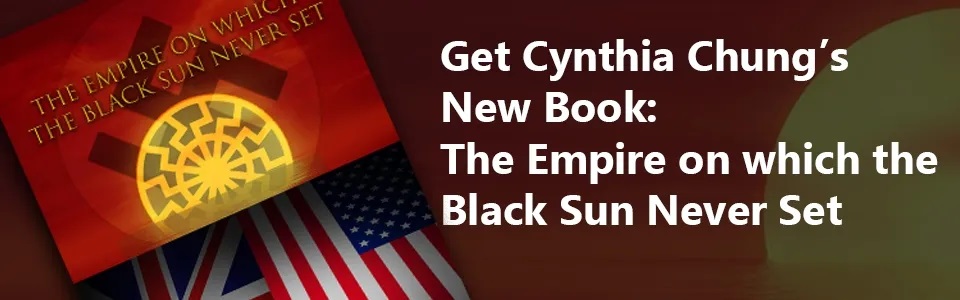
[It is beyond the scope of this paper to discuss how Dulles managed to do this in greater detail, however, I have already written about this extensively elsewhere and the reader can refer to my book “The Empire on Which the Black Sun Never Set” for more on this subject.]
Under the directorship of Allen Dulles, the CIA would increasingly play the central role in what was newly forming as “clandestine operations.” This was an entirely new concept, that had been justified not coincidentally by Churchill’s Iron Curtain speech, which had clearly intended to be used as a justification for that very thing – Churchill’s Secret Armies. Clandestine warfare had never existed before within the United States during “peacetime,” at least not in this scope and level of activity, as well as under the direction of the agency of the CIA. Increasingly clandestine operations, under Frank Wisner’s Office of Policy Coordination (OPC), who only answered to Allen Dulles, began to operate completely under its own direction and without the knowledge of the President nor the US military. There was a general idea that something was afoul in all of this, but was ultimately pushed through and justified by Churchill’s heavy presence in American foreign policy.
However, Allen Dulles did not wish to stop there.
Despite having control over clandestine operations, that would function in service to the Churchill philosophy, there was a limit to what the CIA could accomplish without the knowledge of those who could get in their way in the matter of resources and scale of operations. Hence the reawakening of the sleeping American gladiators, the US Special Forces, that had been allowed to become dormant during Eisenhower’s administration. These were already made secret army units that had been modeled off of Churchill’s Secret Armies, the issue was how to revive such a program without the US government or US military getting in the way.
Though Eisenhower clearly allowed for a great deal to fester during his administration as he made abundantly clear in his Farewell Address on January 17th, 1961, informing a dumbfounded American public for the first time of a Frankenstein military-industrial complex during his last days as president that he failed to address and was leaving for the next president to deal with – despite this – Eisenhower was regarded by the Pentagon as a military man and thus “their man” when he was president. What this meant was that Eisenhower and the Pentagon for the most part spoke the same language and despite the meanderings of both Dulles brothers, Allen as director of the CIA and John Foster as Secretary of State, the fact was that the US military was still solidly in allegiance with the president.
That unfortunately changed with the entry of President Kennedy.
Kennedy had made the mistake of thinking that his inner circle, known as the “Kennedy family” would be enough for him to exact the change he wanted to see take place. He had made a rather foreseeable mistake – that no leader of any nation or empire in history had ever succeeded in their endeavours without the support of a strong military. Kennedy had entered his presidential office making it clear that he was gunning for rapid massive reform in all departments including the Pentagon.
In all fairness, Kennedy, if he had succeeded would have likely done a lot of good with his calls for reform in addressing the “military-industrial complex” that had been allowed to grow under Eisenhower’s administration. Kennedy was not just an idealist, he was right to want this change and had the intelligence and know-how to bring it about. However, the young president wanted to see too much change too quickly, without having first built essential relations to at least the Pentagon that could facilitate trust in his leadership.
To many in the Pentagon, Kennedy was an absolute disaster. The youngest American president in history, with his even younger brother Bobby, with no real knowledge or recent experience in military affairs were going to tell these WWII veterans how to think of national security and the US military during an intensifying Cold War.
Clearly, this was not going to go over well.
As Col. Fletcher Prouty, who served as a liaison officer between the Pentagon and the CIA between 1955 and 1963, makes the point in his books “The Secret Team” (1972) and “JFK: The CIA, Vietnam, and the Plot to Assassinate John F. Kennedy” (1992), Kennedy’s election over Nixon was not seen as a bad thing to Allen Dulles. Allen had been a close family friend of the Kennedy family and had seen John grow up as a child, whereas Nixon served as the vice-president under Eisenhower. It was clear for Allen that John F. Kennedy was the better pick in his eyes since he thought he would be more easy to control.
Starting your term as not only a new president, but new to cabinet functions within the US government, is a steep learning curve for anyone. However, Dulles knew that this was an immense opportunity, for he too wished to see drastic reform take shape – in service to the CIA and what Prouty would term the “Secret Team” (ST). And this reform would be much more easy to implement behind the back of a new president who was busy not only learning the ropes but getting blind sided by the Bay of Pigs fiasco only a few months into office.
In fact, that was entirely the point. The Bay of Pigs operation had been set up to be a failure from the very beginning. For a detailed discussion on this subject from myself refer here “A Damned Murder Inc: Kennedy’s Battle Against the Leviathan.”
Kennedy had no idea that Allen Dulles had already begun to revive the program of the sleeping American gladiators, the US Special Forces before Kennedy had stepped foot in office. Just as in the case with the unsanctioned murder of Patrice Lumumba by the CIA, just three days before Kennedy’s inauguration, much was sinisterly organised, including the expansion of the Bay of Pigs planning, by Allen Dulles during that fog of the transition period between presidents, when the CIA is most free to tie its loose ends, confident that they will not be reprimanded by a new administration that wants to avoid scandal during its first days in office.
In the case of the Green Berets, Kennedy would be assassinated before ever discovering what Allen Dulles had planning in the shadows of his administration.
As already mentioned, Dulles needed a sword for the CIA’s growing clandestine operations and the Green Berets, US Special Forces, had been chosen, in fact were created, to serve such a function.
Prouty writes in “JFK”:
“The first step in this move for military support was for the CIA to join with the Office of Special Operations in the Office of the Secretary of Defense, where Lansdale and other CIA agents were assigned, to completely rebuild and enlarge the army’s Special Forces units…The army’s Special Forces units had been allowed to decline, and morale had deteriorated at Fort Bragg.
Then a sudden change occurred. Lansdale, who had returned from Vietnam after completing his job as chief of the Saigon Military Mission and confidant of President Ngo Dinh Diem, found a way to bypass the conventional US Army channels to reinvigorate the army’s Special Forces with the help of the CIA and friends in the Defense and State departments. He won approval to activate a new Special Forces school and to increase the size of the Special Forces center at Fort Bragg for US troops and selected personnel from foreign armies [namely the British and the French from Gladio secret armies].
He could not be sure of top-level US Army approval and support for his bold plan, so he went around them. While everyone else had become occupied with the final days of the presidential campaign, Lansdale, his longtime associate Col. Sam Wilson, and this writer [Prouty referring to himself] flew to the US Army Civil Affairs and Military Government School at Fort Gordon, Georgia, in October 1960, for a meeting with its commanding officer. During this meeting, Lansdale arrange to get a copy of the curriculum of that school, which – in the space of one week – we converted into a ‘Cold War’ curriculum for use at the Special Forces center.
Lansdale, the CIA, and their Special Forces associates rushed this curriculum into print. The then deputy secretary of defense, James Douglas, cut the ribbon for the center, which became known as the Army Special Forces John F. Kennedy Center. The President-elect, ironically, had nothing to do with it.”[4]
[For more on Lansdale see my paper “The US Pivot to Asia: Cold War Lessons from Vietnam for Today.”]
Prouty continues: “Just prior to Kennedy’s election, the US Army Special Warfare Center at Fort Bragg, North Carolina, was rejuvenated. A new curriculum was written that combined counterinsurgency with pacification tactics that were already being employed by the French forces in Algeria and with Civic Action programs borrowed from the US Army’s Civil Affairs and Military Government school at Fort Gordon, Georgia.
This new Special Forces Green Beret school at Fort Bragg received substantial aid from the CIA, as well as from the Office of Special Operations in the Office of the Secretary of Defense. The strength of the forces was increased, and the Special Warfare Center opened a new counterinsurgency school for US and foreign military students in November 1960.”[5]
Note that it is rather ironic that the curriculum for the Green Berets was to especially draw from the counterinsurgency manual of the French forces in Algeria. This is ironic since, overlapping this period of the Bay of Pigs fiasco was the Algiers putsch or Generals’ putsch intended to overthrow French President de Gaulle from April 21-26, 1961. De Gaulle had wanted to extricate France from its colonial war with Algeria and sections of the French intelligence and army had in response attempted to overthrow him which were still in allegiance to the “Gladio secret army” philosophy of eternal warfare in service of a fascist empire.
These units do not see themselves as serving the President nor the people of their country, but instead see themselves as gladio soldiers, crusaders, who follow a completely differently ideology and purpose, towards imperialism, far-right wing government and even elements of fascism as will be made clear in Part III of this series.
This was to serve as the model for the training manuals for the American Gladios…an elite army that would not be beholden to the president nor the American people…
Prouty writes: “It should be noted that both the Green Berets of the Army Special Forces and the Air Commandos of the Air Force had been developed and trained in close cooperation with the CIA, and upon their arrival in South Vietnam they operated under the control of CIA agents.”[6] And have ever since.
The Take-Over of the US Military by an Enemy Within
It was of all people Bobby Kennedy who had popularised the term the ‘enemy within,’ the phrase having only been used previously in a 1918 Australian silent film by the same name. Since the death of JFK, its meaning has come to encompass a great deal more as to what acts as the “enemy within” the United States.
As already mentioned in Part I of this series, the ideology and form of this “enemy within” will be discussed in greater detail in Part III of this series. In this paper, the focus will be on how the US military in particular was taken-over by this “enemy within” to which Prouty called the “secret team.”
Prouty writes in his “The Secret Team”:
“It is essential that the term ‘military’ be clarified for use throughout this book. Many military men are regularly assigned to the CIA, in their primary roles as intelligence experts, for their own experience and training and to flesh out areas where the Agency can use them. These are legitimate military assignments, and such men are openly identified with the CIA. There is another group of military men who are fully assigned to the Agency, meaning their pay and allowances are reimbursed to the parent service by the CIA, but they appear to be with regular military units or other normal assignments so that their assignment to the CIA will not be revealed to those unwitting of their real task.”[7]
This latter situation had become more and more prevalent during Kennedy’s administration, unbeknownst to him as well as to the military – that an increasing number of military men and units were acting under the assignment of the CIA and were receiving their instructions from the CIA without any other department’s knowledge.
By the time Kennedy entered office, many positions within the government itself were being held by CIA agents under the guise of a government title. Thus, silently and swiftly, Dulles was organising a take-over of US government and military under the service of the CIA and the “Secret Team.”
The Bay of Pigs fiasco again plays a central role in all of this. The Bay of Pigs was meant to go one way, and it was thought Kennedy would have allowed himself, in order to save face from the Bay of Pigs embarrassment, to be strong-armed by CIA Deputy Director of Plans Richard Bissell, Joint Chiefs Chairman Lyman Lemnitzer, and Navy Admiral Burke and approve a direct military attack on Cuba. The removal of Fidel Castro was a top priority of the Secret Team. However, the young Kennedy surprisingly did not buckle under this immense pressure, only a few months into his presidency and held his ground.
However, Allen Dulles would see another opportunity in Kennedy’s Cuban Study Group, organised to investigate what led to the failure and oversight of the Bay of Pigs fiasco. Bobby Kennedy was the only member of this inquiry that JFK could trust fully. Since it was clear that Dulles himself, along with Bissell and Lemnitzer (who would later also audaciously propose Operation Northwoods to Kennedy a false-flag operation against the American people and even military personnel in order to blame it on Castro and give reason for a direct invasion of Cuba) had lost all trust from Kennedy – Dulles would use the Cuban Study Group to attempt to place a good deal of the blame on the US military and portray Maxwell Taylor as a solution to that problem, according to Prouty.
Maxwell Taylor was also selected to participate in this Cuban Study Group, seen by Kennedy as likely a military man who, having resigned during the Eisenhower administration, would be a pair of unbiased eyes to the Bay of Pigs incident. Prouty makes the convincing case that Taylor had been brought back into the White House, unbeknownst to Kennedy through CIA corridors.
Taylor also wanted to see massive reform take place within the US military, however, he was no longer beholden to the US military but rather shared the same vision as Allen Dulles.
Prouty writes: “Allen Dulles was able to get Maxwell Taylor into the White House as personal military adviser to President Kennedy. There was much public discussion about the propriety of placing a general in such a capacity in the White House, ostensibly overseeing and perhaps second-guessing the lawful chairman of the Joint Chiefs of Staff.”[8]
Kennedy put his faith so much in the belief that Maxwell Taylor was in fact on the same page as him in keeping the US military under control that he placed him as chairman of the Joint Chiefs of Staff (JCS). Taylor had replaced Lemnitzer which did not change anything since both men ultimately approved of Gladio operations except that Taylor might have been even more radical than Lemnitzer in his vision. Lemnitzer went on to be almost immediately appointed by NATO as Supreme Allied Commander Europe (SACEUR) of NATO in November 1962 in charge of NATO’s secret armies in Europe. And McGeorge Bundy, another CIA asset, was to replace Taylor’s position in the White House.
No matter how Kennedy tried to replace the pieces on the chessboard, he found he was only replacing one piece for another that served the same master.
Prouty writes: “…General Taylor…was by that time the chief proponent of counterinsurgency, the Army’s Green Berets, and the CIA. In a most fortuitous assignment for the CIA and the ST [Secret Team], he became the chairman of the JCS, and all of the pieces fell into place. With McGeorge Bundy in Taylor’s old job in the White House, responsible for all clandestine activity; with Bill Bundy as the principle conduit from the CIA to McNamara (later in State), and with Taylor on top of the military establishment, the ST had emerged from its nadir on the beaches of Cuba and was ready for whatever develop in Vietnam.
…One further factor played into this situation. It is quite apparent that Kennedy did not fully realize the situation he had unintentionally created. To him and his brother [Bobby], Maxwell Taylor was the model of the down-to-earth soldier…He was their man. They did not realize that even in his recent book, The Uncertain Trumpet, he had turned his back on the conventional military doctrine and had become a leader of the new military force of response, of reaction and of undercover activity – all summed up in the newly coined word ‘counterinsurgency.’
Kennedy was not getting an old soldier in the Pentagon. He was getting one of the new breed. Taylor’s tenure would mark the end of the day of the old soldier and the beginning of the Special Forces, the peacetime operator, the response-motivated counterinsurgency warrior who has been so abundantly uncovered in the conflict of the past ten years in Vietnam.”[9]
The Training of America’s Gladios
One very important concept that needs to be understood in terms of how the CIA increasingly accommodated the US military to service its own purposes was the notion of clandestine operations. This parasitical growth had spawned so seemingly innocently as an outgrowth of WWII tactics and Churchill’s justified “Secret Armies” against the new evil-doers, that is, the “communists” who apparently were worse than the Nazis themselves. This new concept for the need of “clandestine operations” and the fact that this had successfully been implemented under the purview of an ever-transforming CIA, meant that increasingly foreign warfare would come under the jurisdiction of the CIA if it were deemed clandestine. One example of this was when the CIA managed to declare in 1962 that the training of the border patrol police on the India-China border was a clandestine activity, and thus because it was ‘clandestine,’ the whole job was assigned to the CIA rather than the US military.
Increasingly anything that had to do with policing activity would also fall under the purview of the CIA. It was not long before the Army, Navy, and Air Force all had developed many units of Special Forces which specialised in clandestine operations – Special Air Warfare squadrons and SEAL (Sea, Air, Land) teams, and these were sent into any country that would accept them. These teams were heavily sprinkled with CIA agents, and most of their direction in the field was the operational responsibility of the CIA.
In what was termed “Indochina” at the time, the CIA carried this line to an absurd degree when it continued to argue that operations within Laos, Cambodia and Vietnam were “clandestine” despite everyone in those countries knowing very well that the United States was conducting warfare in these zones, quite openly. Thus, clandestine increasingly meant not secret from the countries where such activity was being conducted, not even clandestine in the sense that leaders in the Soviet Union or China were unaware, they were very aware of what was happening in Indochina – rather the term “clandestine” increasingly was used in reference to the American people and its public institutions. It would be with the American people where such things were kept as a secret, even though the rest of the entire world knew exactly what was going on because they were on the receiving end of it.
Is this thus a directive that services the welfare of the American people and the security of their country? Not at all. As already mentioned, these soldiers do not serve the American people.
Prouty writes in “The Secret Team”:
“This is why so many messages that have been made public in the Pentagon Papers appear to be part of Pentagon, or more specifically, JCS activity, when in reality this traffic was between Saigon and the Agency [CIA], with the information copy being delivered to the Special Assistant for Counterinsurgency and Special Activities (SACSA). This section in the office of the Joint Chiefs of Staff was manned, for the most part, by military personnel. They did have some normal military functions but most of their work was involved with the support of the CIA.
In this capacity they would control communications coming to the Joint Staff and in turn coordinate them with counterpart CIA-support offices in the office of the Secretary of Defense, or to a Focal Point office in each of the military services. During the period described, the OSD [Office of Secretary of Defense] offices were those of Bill Bundy, General Lansdale [CIA men]… in such places as the Directorate of Research and Engineering.
To anyone not knowing this process, it would then appear that the Saigon message in question would have been properly staffed to the OSD, JCS, and all services, when in reality it had simply been to all of the CIA control points in those offices.
The real military would not have seen it.
…Emboldened by knowledge of the fact that they had properly touched base with all parties and offices concerned, the ST [Secret Team] would then go ahead with the project, on the assumption that no one had said not to go ahead with it after having been advised.”
The Military Assistance Program (MAP) along with the Military Assistance Advisory Group (MAAG) would play a prominent role in facilitating counterinsurgency globally under the pretext of “aid” and played a prominent role in facilitating Operation Condor.
Such US army programs were started under the pretext to help “aid Asia” in resisting internal subversion.
Prouty writes:
“…The important thing about the Military Assistance Program is that it brought with it some new definitions of the role and responsibility of the armed forces of the nation…these earlier doctrines became part of the ‘military language’ for both countries involved – the United States and the host country – they began to produce subtle changes in the role of the US military. This led to a very sophisticated form for direct intervention in the internal affairs of the forty host countries, and in some cases, it resulted directly in the separation of that nation’s armed forces from its political control…
In this sense the elaborate statements of mission of the mutual security programs are a refined cover story. The military assistance program becomes the means by which the ST [Secret Team] army, whenever it finds or suspects ‘communist-inspired subversive insurgency,’ increase its role in the armed forces and political organizations of the host country until the trouble becomes an outbreak of open hostility. Thus the ‘fireman’ becomes the man who sets fires rather than the one who puts them out. [author’s note: Prouty’s reference to “fireman” is from Ray Bradbury’s dystopic novel “Fahrenheit 451” an Orwellian fictional future where the “firemen” burn books]
One source of this doctrine was the Civil Affairs School at Fort Gordon, Georgia. This Army school dates back to World War II, when it was the training ground for the Civil Affairs and Military Government (CAMG) program. It was the function of those specially trained men to go into countries like Italy and France, which had been under German military domination for several years, and to assist with the rebuilding of the local government in the war-torn areas. As a result, these men had been trained in political functions more than in the military tactical profession. Their record in World War II was outstanding, and after the war the school, although cut back as was most of the military, continued, prospered, and found a new life in working up a curriculum based upon the post-strike phase of a nuclear war.
It was in this phase of work that the CAMG school and its doctrine played so prominently into the hands of the CIA by underscoring the potential of the Agency during peacetime for establishing contacts with the agent, underground networks that would be established. This led the CIA into the war planning function of all major military headquarters, and from its success with this, into its logistics buildup.
It was not unusual, then, to find the CIA returning to the Civil Affairs School during another trying period in an effort to breathe new life into Agency [CIA] operations, which had been seriously curtailed after the Indonesian fiasco of 1958. MAP was an ideal place for the Agency to operate. As we have said, the CIA had by 1959 become well entrenched in all parts of the US Government. Through MAP, the Agency [CIA] now was able to establish itself quietly in up to forty foreign countries in ways that its usual civilian and diplomatic cover would not permit. All assistance programs needed recruiting and the CIA volunteered to take over the task of helping the services with recruiting in the host country.
…The Civil Affairs School curriculum, which was to provide background information on the Military Assistance Program, began with an elaborate summary of a course called ‘Communist Techniques of Aggression.’ It laid the ground work for reflexive anti-Communism by telling all students that ‘local Communists gradually took over [these countries] under the threat of the military domination of the Red Army at their border,’ and went on to tell them ‘how important a tool military power is for shaping men’s minds in conditions of conflict short of open warfare’.”[10]
Thus, this curriculum was not only servicing as an indoctrination of American military and civilian personnel but was spreading this indoctrination with a focus on their forty-host countries. It was effectively establishing an empire of this Gladio ideology and was taking hold of all levels of control and influence within these forty host countries under the term “nation building.” And as we will see, increasingly all matters of statehood: education, healthcare, politics, economics and so forth were seen as under the purview of the US Army in these host countries, who in turn was under the purview of the CIA and the Secret Team.
Note, these forty host countries are supposed to be “allies” to the United States and were the first to be overthrown from within.
Prouty writes:
“One area with which American servicemen had been…[relatively] unfamiliar [with up until this point] was what is called the paramilitary organization. A course in such organization has become very formative in the indoctrination of a new generation of military and their civilian counterparts, along with the tens of thousands of foreign military and civilians trained in MAP projects.
The following is an official US Army definition of paramilitary forces as extracted from a standard lesson guide.
‘ …In the beginning these lessons were used to train forces to go out and work with the native forces of other countries, and in many of these other countries the US Army role was submerged and covered in the CIA mechanism. The CIA, rather than train the legitimate army of a host country, would train the paramilitary force to create a structure within the country that could balance the army or even overthrow it.
In many cases the CIA would work with the national police rather than with the paramilitary forces. The results were the same. The thinking as stated by the US Army in this doctrine was that with US guidance and help, the politico-military actions of the [host] armed forces can be decisive in building strong, free nations, with governments responsive to, and representative of, the people.’
…Even as far back as the mid-fifties the US Army doctrine, had a strong overtone of CIA assistance and was preaching ‘pacification.’ Pacification, as it is carried on in South Vietnam, can be shown to date back to the Fort Gordon course, where it was taught that ‘the operational doctrine for the take-over of zones evacuated by [rebels] was known as Pacification.’
…This was the US Army lesson guide of 1959-1960 about minor operations in 1955, which by now has been proved to have been so terribly wrong.
Remember, this was the doctrine the school was teaching key people who eventually become the MAAG officials in forty foreign countries. This was also the basic doctrine used to rejuvenate the long dormant US Army Special Forces program.
As it continued, it wandered far from its original theme of Communist cold war techniques to talk more about American activity and specifically the type of activity that was most unconventional for the American Army, the use of civilians, foreign nationals, and foreign military in US sponsored, third-country projects that were essentially clandestine, as extracted from US Army lesson guides.
[from US Army’s New Doctrine with very striking Orwellian overtones:] ‘During the pacification campaigns, the Vietnamese army learned to work closely with two notable civilian organizations, which are worth mentioning here as an indication of teamwork employed to bring stability to a free nation. The organizations were “Operation Brotherhood,” involving the International Jaycees, and the Vietnamese Government’s “Civic Action” teams. These two organizations of volunteers brought high morals and ideal, unselfish spirit to the campaigns… “Operation Brotherhood” was originally staffed by Filipino volunteers.’
Looking at this with the hindsight of ten to fifteen years of bitter experience in Vietnam, one wonders at the real meaning and intent of such subject matter. As the lesson continues it states that the same Filipino’s Operation Brotherhood was operating in Laos, then it discusses similar projects in Burma. Before leaving the subject of pacification, this Army lesson guide quotes a French officer in Algiers:
‘The pacification authority cannot be the old one, for the mayors and civilian councillors and some French Moslems, preoccupied with their own interests, are regarded with suspicion by the vast majority of Moslems.’
[note: pacification is a military term that is very misleading since it is made to sound peaceful when in fact it is referring to the removal of all resistance and opposition to whatever be the mission, this includes the eradication of whole villages and was implemented in South Vietnam liberally.]
The conclusion was that the army must throw out the old regime, the old ways, the old customs, and come up with new villages, new pioneer spirit…In other words, the local army was the new order, and the US Army was being indoctrinated and trained by CIA instructors to do the same thing.
…Before this indoctrination concluded, it made the key point that MAP ‘straddles the areas of responsibility of the Department of State and of the DOD [Department of Defense]…The development of the MAP involves many agencies.’
This…doctrinal lesson guide was the work of key men dedicated to the reconstruction of the US Army along lines being visualized by General Maxwell Taylor in his book, The Uncertain Trumpet…outlining his thoughts in terms of what he called ‘A New National Military Program of Flexible Response,’ a team of strong-willed and opportunistic men was plowing up new ground for the US Army.
This was to nurture the seeds planted by the army and the CIA along with powerful assistance from the other services and such other places as the Executive Office Building at the White House and from the Department of State.
This Civil Affairs curriculum was taken from Fort Gordon without knowledge of the intervening next higher command at the Continental Army Command headquarters at Fort Monroe, Virginia, and was brought into the Pentagon where a select team of CIA-experienced officers and civilians worked it over into the new curriculum for the US Army Special Forces school at Fort Bragg, North Carolina.
At the same time, action directly related to the above-mentioned projects was taking place at the highest levels of government. A Special Presidential committee had been formed early in 1959 to study ‘Training Under the Mutual Security Program’ and to ‘provide instruction [to recipient countries] in concepts or doctrine governing the employment of the military instrument, in peace and in war.’…Early on, the committee reported, “The International Cooperation Administration has yet to recognize the potential of the MAP training base for the furtherance of technical assistance objectives.’
In other words, this committee was laying it right on the line that the Government should be stepping into the Mutual Security program with ‘military’ training, including the development of paramilitary capability in the recipient nations. The only way this could be carried out would be to mount clandestine operations in every country where this was to apply [including friendly host nations during peacetime]. By this period the CIA knew that it was ready, equipped, and in a position to do this in any ‘counterinsurgency-list’ country…
The Agency did not take any chances with this vital, to the CIA interests, report…Both primary authors of this report, although recognized throughout this period only as an Army general and an Air Force general, had served for many years with the CIA and then for many more years in service assignments directly supporting the CIA. After they wrote these formative and most influential documents, both of these generals saw considerable service in Southeast Asia, all in conjunction with the CIA.
By 1959 and 1960 the CIA was so well entrenched in the Government – and for that matter in the governments of the some forty recipient nations – that it could pull the strings even as far up as in Presidential committees.”[11]
Prouty continues in his “The Secret Team” (1972):
“More important, tens of thousands of Americans served in the MAP programs, which openly taught and practiced this doctrine. To them, this was the only military they knew, and this was the teaching they received
…Recall that more than three million Americans have been rotated through Indochina during the operations there since 1954 most of these men know only the Army of this doctrine.
The impact of this dogma and doctrine, and of these changes in traditional military philosophy, has been tremendous. It is beyond estimate and comprehension at this time [Prouty wrote this in 1972]. It certainly relates to a considerable degree to the problems that exist in the generation of returned veterans that had not existed before, especially with so many Special Forces Green Beret veterans in our municipal and state police forces.
…’MAP can assist in the identification of officers who should be trained for key responsibilities in the civil sector.’ Since the CIA was well placed in the MAP, it frequently became the function of the Agency to select these officers ‘for duty in the civil sector.’
…’The maintenance of internal security constitute a major responsibility of these armed forces, whether assigned directly or not.’ In other words, if this role were not given to the army, it was suggested that the army would take it over. This is in conflict with the fact that most of the nations under consideration have nationwide national police forces whose traditional role is the maintenance of internal security.
Naturally, this philosophy led to many outbreaks in these recipient countries. The MAP-trained army began to take over the internal security role and got into trouble with the national police and with those national leaders responsible for the national police. This situation brought about friction, which frequently broke out as civil war, and of course there was nothing to do but to declare that the national police were the forces of subversive insurgency; thus the head of Communism was reared. Once these labels had been affixed, the United States would join the army’s side with the banner of anti-Communism flying.
The writers of this document saw this in offing, since they noted, ‘There must be comprehension of the complex nature of the subversive forces at play and of the variegated methods of Communist attack.’ It is almost as though the training of firemen should dwell more on the setting of fires rather than on extinguishing them.
The report goes on to say:
‘Here is the ultimate test of armed forces. Their role, in the countries under discussion, is unique. They are at once the guardians of the government and the guarantors that the government keeps faith with the aspirations of the nation. It is in their power to insure that the conduct of government is responsive to the people and that the people are responsive to the obligations of citizenship. In the discharge of these responsibilities, they must be prepared to assume the reins of government themselves. In either capacity – pillar or ruling faction – the officer crops, at least, must possess knowledge and aptitudes far beyond the military sphere’.”[12]
The day-old South Vietnam government of Ngo Dinh Diem was a primary example of such tactics discussed above. Ngo Dinh Diem was a selection and creation of the CIA and his ‘father of his country’ image was created by the CIA – more specifically, Edward G. Lansdale.
It was the CIA that created Diem’s first elite bodyguard to keep him alive in those early and precarious days. It was the CIA that created the Special Forces of Vietnamese troops, which were under the tight control of Ngo Dinh Nhu, and it was the CIA that created and directed the tens of thousands of paramilitary forces of all kinds in South Vietnam during those difficult years of the Diem regime. And all of this was under the operational control of the CIA.
Prouty concludes:
“Under the cover of the Bay of Pigs operation, much bigger moves were being made. All over the world the MAP training program was picking up volume and momentum. Thousands of foreigners from all forty countries converged upon the United States for training and indoctrination. The new curriculum was either the one at Fort Bragg or like it.
The Army interest in political-social-economic programs, under the general concept of ‘nation-building,’ was gaining momentum. For every class of foreigners who were trained and indoctrinated with these ideas, there were American instructors and American soldiers who were being brainwashed by the very fact that they were being trained to teach this new doctrine.
These instructors did not know otherwise. To them this new nonmilitary political, social, and economic theme was the true doctrine of the US Army.
A whole generation of the American Army has grown up with this and now believes that an army mixes some medical and educational ingredients into this nation building. They believe the army is the chosen instrument in nation building, whether the subject be political – social, economic or military.
In many cases, due to the great emphasis the CIA placed on training the police forces of certain foreign countries, a large number of American servicemen who were used for such training became active in what was really police work and not the scope of regular military work.
It was the CIA, with the help from a few other agencies, that put together the Inter-American Police Academy during the early Kennedy years, which played such an important part in emphathising national police power in the nations of Latin America.
The CIA brought in police instructors from all over the United States and from the military for this school. The success of this school, operating covertly from an Army base in the Canal of Panama, led to other schools in the United States that have carried on this type of work for police forces in this country.
Part of the impetus behind the great buildup in the strength of police force all over the country dates back to this CIA police academy work and to the other schools it spawned. This police work not only involved training but it integrated new weapons, new procedures, and new techniques into American police work, some of which has been good and much of which has been quite ominous.
Anyone who doubts that this nation building and police activity has not become real and very effective right here in the United States need only visit the area around Fort Bragg to find one of these early paramilitary CIA-oriented specialist, General Tolson, sending his American soldiers out into the countryside with nation-building programs for the citizens of the United States. If such tactics continue, it is possible that an enlargement of such a program could lead to a pacification program of areas of the United States, such as the CIA and the US Army have carried out in Indochina.
At the same time this training program was under way, larger and larger civic action teams and other benevolently named organizations spread throughout the world. MAAG units were no longer small logistics and training organizations. They had grown to large size…
All of this is a game…The only people these devices fool are American. American reporters, American Congressmen, American government specialists, and of course the American public.”[13]
And thus an elite global army was created, made up of Gladio soldiers, created to enforce their master’s vision of what should be governing all regions of the world. These soldiers would defend and prop-up the right figureheads of these regions and train special forces militaries as the guardians of these selected figureheads. And thus began a new age that for those who shared such a vision offered a great deal of promise, it was the new era of warfare, made up of an elite guard that would operate and coordinate globally from a few nerve centers, beholden to no people, beholden to no elected officials, but who their masters have decided should be the selected World-Controllers of this New Dawn.
[There will be a second installment to Part II, that will share an Orwellian story of a village in Vietnam that underwent an experiment in the laboratory of the Phoenix Program, as well as how an artificial migrant crisis was created in order to fuel the Vietnam War. Part III will follow in a few weeks time.]
Cynthia Chung is the President of the Rising Tide Foundation and a writer at Strategic Culture Foundation, consider supporting her work by making a donation and subscribing to her substack page Through A Glass Darkly.
Also watch for free our RTF Docu-Series “Escaping Calypso’s Island: A Journey Out of Our Green Delusion” and our CP Docu-Series “The Hidden Hand Behind UFOs”.
In 2023, Canada’s recreational marijuana market boasted a value of approximately C%5.07 billion ($3.8 billion), a recent government report on retail sales stated. This reflects a 12.2% increase from the previous year, showcasing a trend of growth, albeit at a slower pace compared to earlier years, marking more than five years since the legalization of recreational marijuana in 2018.
Brad Poulos, an entrepreneurship professor at Toronto Metropolitan University, explains this slowdown as a normal evolution of the market. He points out that a big part of the increase in sales of legal marijuana comes from customers moving away from illegal sources. This trend is expected to continue in 2024, with 40% of cannabis transactions still taking place in the illegal market.
One aspect where the illicit market maintains an edge, according to Poulos, is in marijuana edible potency, a product capped by Canadian regulations at 10 mg of THC per package for public health purposes.
Headset Data analyst Mitchell Laferla draws attention to how customer preferences changed last year in Canada’s marijuana market, with pre-rolled joints showing a remarkable rise in sales, accounting for 31.4% of sales, which is a significant increase over the previous year. This surge brings pre-rolls nearly on par with flower products (35.2%), traditionally the most popular category.
Moreover, Laferla’s analysis notes that, in 2023, marijuana prices in Canada decreased generally for the majority of product categories. But compared to the double-digit compression seen the year before, this decrease was less severe, with pre-roll pricing notably remaining stable, probably helped by continued demand in the category.
The recent retail sales data from Statistics Canada for December revealed a year-over-year increase of 3.6% in legal recreational marijuana sales, amounting to C$441.2 million. This represents an 8.2% month-on-month increase over November 2023, reversing the downward trend that had been seen since August, when monthly sales reached a height of C$467 million.
Despite these positive indicators, challenges persist within the regulated market. High taxes remain a significant grievance among industry stakeholders, compounded by the enduring presence of the illicit market. In addition, the industry is looking forward to the parliamentary study of legalization that is scheduled for release in the spring, though it is unclear if the outcome will allay the worries of cannabis retailers and producers.
The marijuana retail industry in Canada is still recouping after several locations were either closed or acquired last year.
Looking ahead, Poulos estimates a potential 10% growth in Canadian marijuana sales for 2024 over the previous year, fueled by continued migration of users from the illicit market and further expansion of legal dispensaries, particularly in regions with limited accessibility such as Quebec and certain municipalities in Ontario.
Individual companies, such as Aurora Cannabis Inc. (NASDAQ: ACB) (TSX: ACB), are likely to fare differently in the new year depending on how well they position themselves to appeal to different consumer segments, including medical marijuana users.
About CNW420
CNW420 spotlights the latest developments in the rapidly evolving cannabis industry through the release of an article each business day at 4:20 p.m. Eastern – a tribute to the time synonymous with cannabis culture. The concise, informative content serves as a gateway for investors interested in the legalized cannabis sector and provides updates on how regulatory developments may impact financial markets. If marijuana and the burgeoning industry surrounding it are on your radar, CNW420 is for you! Check back daily to stay up-to-date on the latest milestones in the fast -changing world of cannabis.
To receive SMS alerts from CNW, text CANNABIS to 888-902-4192 (U.S. Mobile Phones Only)
Please see full terms of use and disclaimers on the CannabisNewsWire website applicable to all content provided by CNW, wherever published or re-published: https://www.CannabisNewsWire.com/Disclaimer
(Globe Newswire) Vancouver — HYTN Innovations Inc., a company at the forefront of developing, formulating, and manufacturing products with psychoactive and psychotropic compounds, including those from cannabis and psilocybin, announces the successful completion of a Good Manufacturing Practices audit by Australia’s Therapeutic Goods Administration at their Kelowna facility. The positive outcome of the audit has set the stage for the subsequent issuance of formal GMP certification allowing the company to access international medical markets.
The successful GMP audit, in coordination with Australia’s Promethean Biopharma, confirms HYTN as one of the few companies in Canada qualified to package and label finished cannabis goods in accordance with GMP regulations for international medical markets; facilitating the supply of high-quality medical cannabis products to international clients and enabling collaboration with global firms.
The GMP audit conducted by the TGA was performed in accordance with the standards of the Pharmaceutical Inspection Convention and Pharmaceutical Inspection Co-operation Scheme (PIC/S). The successful audit is a key achievement for HYTN, demonstrating the robustness of the company’s infrastructure and the effectiveness of its processes. Once issued, GMP certification under the PIC/S framework allows HYTN to engage with international medical markets that recognize the PIC/S standard, through established reciprocal agreements. This milestone aligns with the growth of robust international cannabis markets which require GMP certification to effectively commercialize.
“We’re pleased to announce this important milestone,” said Elliot McKerr, CEO of HYTN. “Our capability in Canada to convert cannabis biomass into GMP-compliant finished products, combined with our strategic location near top cultivators, positions us well to capitalize on the growing global cannabis market and drive revenue growth. We look forward to serving the global demand for GMP cannabis goods and exploring new partnership possibilities through HYTN’s enhanced capabilities.”
Advertisement
While HYTN continues to prioritize domestic recreational products, such as its popular 10mg THC Sparkling Beverages and 100mg Nano Shot Citrus, obtaining a GMP license will expand the company’s commercial opportunities. Jason Broome, COO of HYTN, emphasized the significance of this achievement, stating, “Moving towards GMP approval presented significant organizational challenges; however, having overcome them, we are now poised to enter the global cannabismarket in new and exciting ways. This step also allows us to elevate our existing systems, bringing our current and future product offerings into compliance with GMP standards.”











Recent Comments