A new study has found that marijuana products dominant in CBD can ease anxiety more effectively in comparison to products that contain THC. THC and CBD are the two primary compounds found in marijuana. However, unlike CBD, THC induces a high when ingested.
The study was carried out by researchers at CU Boulder. It is the first randomized trial to investigate how commercially available marijuana influences symptoms of anxiety.
Currently, one in five adults in America have an anxiety disorder, which makes it a common mental health condition in the United States. The researchers’ primary objective was to better understand the short- and long-term effects of THC and CBD on anxiety symptoms. The researchers recruited 300 individuals who suffered from anxiety. More than 250 of the participants had previously tried marijuana while the rest hadn’t.
Those who had tried the drug before were required to use a product that was CBD dominant, one that was THC dominant or a product that had equal parts CBD and THC. During a four-week period, the participants were allowed to use the products as much as they desired. During this same period, the researchers tested every participant before and immediately after they had smoked marijuana.
The researchers determined that while all participants reported reductions in their anxiety, those who used the marijuana products reported a greater decrease in perceived anxiety in comparison to those who hadn’t used marijuana before.
Additionally, the participants who used the products that had more CBD recorded the biggest improvements in their anxiety symptoms. Participants in this group were also less likely to experience paranoia after using the drug in comparison to the other two groups. This is in addition to feeling less tense after they had indulged.
Associate professor L. Cinnamon Bidwell, the study’s senior author, stated that CBD was linked to anxiety and tension relief with limited harm in the short-term. She explained that CBD had more anti-inflammatory properties than THC, which could mean that CBD-heavy products could decrease anxiety by soothing inflammation in nerves and in the brain. Bidwell noted that despite these findings, more data was needed to definitively state that there were long-term beneficial effects of CBD for anxiety.
It is important to note that federal law prohibits the distribution or possession of commercially available marijuana on college campuses, including for research purposes. Participants involved in this study were directed to buy their designated product from a chosen dispensary and use it off campus, on their own time.
Such studies are likely to encourage more patients to try medical marijuana products from licensed companies such as Green Thumb Industries Inc. (CSE: GTII) (OTCQX: GTBIF) for conditions, such as anxiety, which they struggle with and seek for alternatives to conventional medications.
About CannabisNewsWire
CannabisNewsWire (“CNW”) is a specialized communications platform with a focus on cannabis news and the cannabis sector. It is one of 60+ brands within the Dynamic Brand Portfolio @ IBN that delivers: (1) access to a vast network of wire solutions via InvestorWire to efficiently and effectively reach a myriad of target markets, demographics and diverse industries; (2) article and editorial syndication to 5,000+ outlets; (3) enhanced press release enhancement to ensure maximum impact; (4) social media distribution via IBN to millions of social media followers; and (5) a full array of tailored corporate communications solutions. With broad reach and a seasoned team of contributing journalists and writers, CNW is uniquely positioned to best serve private and public companies that want to reach a wide audience of investors, influencers, consumers, journalists and the general public. By cutting through the overload of information in today’s market, CNW brings its clients unparalleled recognition and brand awareness. CNW is where breaking news, insightful content and actionable information converge.
To receive SMS alerts from CNW, text CANNABIS to 888-902-4192 (U.S. Mobile Phones Only)
Please see full terms of use and disclaimers on the CannabisNewsWire website applicable to all content provided by CNW, wherever published or re-published: https://www.CannabisNewsWire.com/Disclaimer
Zoned Properties in January 2024 acquired an investment property in Chicago and signed a long-term lease agreement for Justice Cannabis Co. to operate a retail dispensary there
The company reported revenues of $720,450 for the quarter ended September 30, 2023, compared to $614,988 for the same quarter in 2022, an increase of 17.2%
Zoned Properties reported net income of $114,523 for the September 2023 quarter, compared to a net loss of $77,328 for the same quarter a year earlier
The company continues to build out its proprietary cannabis technology platform, REZONE, in preparation for commercial launch
Zoned Properties in August 2022 closed a debt financing deal on its Tempe, Arizona, property by securing an initial debt facility of up to $4.5 million at a 7.65% interest rate through a commercial real estate lender
Since 2021, Zoned Properties Brokerage has closed over $80 million of commercial real estate deals nationally for clients
Zoned Properties (OTCQB: ZDPY) is a technology-driven property investment company focused on acquiring value-add real estate within the regulated cannabis industry in the United States. The company aspires to innovate within the real estate development sector, focusing on direct-to-consumer real estate that is leased to best-in-class cannabis retailers.
The company is redefining the approach to commercial real estate investment through its standardized investment process backed by its proprietary property technology. Zoned Properties has developed a national ecosystem of real estate services to support its real estate development process, including a commercial real estate brokerage and a real estate advisory practice.
With a decade of national experience and a team of experts devoted to the emerging cannabis industry, Zoned Properties is addressing the specific needs of a modern market in highly regulated industries. The company targets commercial properties that face unique zoning or development challenges, identifies solutions that can potentially have a major impact on their commercial value and then works to acquire the properties while securing long-term, absolute-net leases.
Zoned Properties targets commercial properties that can be acquired and rezoned for specific purposes, including the regulated and legalized cannabis industry. It does not grow, harvest, sell or distribute cannabis or any substances regulated under United States law.
The company is headquartered in Scottsdale, Arizona.
Portfolio
The company’s investment properties are located in Arizona, Michigan and Illinois, with 100% occupancy and a weighted average lease term over 10 years. Each of the company’s leased properties is occupied by a commercial cannabis tenant. The company is expecting rental revenue from its property investment portfolio of greater than $2.5 million in calendar-year 2024.
Zoned Properties maintains a portfolio of properties that it owns, develops and leases. As of February 2024, the company leases land and/or building space at the six properties in its portfolio to licensed and regulated cannabis tenants in areas with established cannabis regulations and zoning procedures. Four of the leased properties are zoned and permitted as regulated cannabis retail dispensaries, and two of the leased properties are zoned and permitted as regulated cannabis cultivation and processing facilities.
The company considers the two cultivation sites in its portfolio as legacy properties and may consider selling or leveraging those properties to unlock equity and create capital availability in the future. The Zoned Properties investment thesis has evolved over the years as the cannabis industry has emerged, and the company is currently focused on investing capital into direct-to-consumer properties, located in state-markets with robust cannabis consumer demand in the industry.
Zoned Properties is in pursuit of property acquisitions that can be characterized as consumer-facing, retail dispensary properties that are positioned to be leased to retail dispensary cannabis tenants under net leasing structures. As of September 2023, the company has agreements in place to acquire new investment properties with new cannabis tenants located in Arizona, Missouri and Illinois. The company plans to initiate and target its investment process in Ohio and Maryland.
With a strategic shift in focus to direct-to-consumer real estate that is leased to best-in-class cannabis retailers in the industry, the company will continue to utilize its competitive edge when identifying excellent investment properties. Zoned Properties has a full pipeline of acquisition prospects and continues to utilize an extremely disciplined capital allocation approach.
Market Opportunity
According to MJBizDaily, a publication that has covered the North American cannabis business since 2011, combined U.S. medical and recreational cannabis sales were estimated at approximately $33.6 billion at the end of 2023, largely driven by the opening of new adult-use markets.
The publication projects that combined U.S. retail cannabis sales will reach upwards of $53.5 billion by 2027, according to an analysis published in its volume of cannabis market research, the MJBiz Factbook.
As of February 2024, 38 U.S. states had legalized medical, recreational or other limited use of cannabis. The Pew Research Center reports that, in January 2023, there were more than 11,000 licensed cannabis dispensaries in the U.S. In addition, global research firm IBISWorld reports that more than 40,000 U.S. localities have adopted regulations governing cannabis usage, production, processing and/or dispensing.
Management Team
Bryan McLaren is the Chairman and CEO of Zoned Properties. Previously, he worked as a Sustainability Consultant for Waste Management Inc., where he led the strategic development and operational implementation of zero-waste programs for clients. He was also appointed as a city Sustainability Commissioner. He holds a bachelor’s degree in business administration from the University of San Diego, a master’s degree in sustainable development from Northern Arizona University, an executive master’s degree in business leadership from Arizona State and an MBA with a specialty in sustainable development.
Berekk Blackwell is the President and COO of Zoned Properties. He previously spent time in developing domestic and international markets for Kahala Brands, a conglomerate of over 15 QSR franchises, including Cold Stone Creamery and Blimpie Subs. He later worked on developing QSR concepts for Revamp Corp. in Tokyo. After returning to the U.S., he served as president of Daily Jam, a limited-service breakfast and brunch chain. He holds a bachelor’s degree in business administration in finance from Fort Lewis College.
Patrick Moroney is the Director of Real Estate Acquisitions for Zoned Properties. Previously, he was one of the most successful Associate Brokers at Kidder-Mathews, focusing primarily on the regulated cannabis industry. He also worked as a commercial real estate broker rep at Cushman & Wakefield and Colliers International. He graduated from Arizona State University, after which he spent four years as a local sports broadcaster in Georgia and Iowa.
Kyle Gere is the Director of Advisory Services at Zoned Properties. He has years of licensing experience across multiple U.S. states in the medical and recreational cannabis markets. Since 2015, he has been involved in cannabis real estate transactions in Arizona and Michigan, managing a portfolio of medical marijuana properties. He attended Northern Arizona University, graduating with a bachelor’s degree in business administration in both management and marketing.
NOTE TO INVESTORS: The latest news and updates relating to ZDPY are available in the company’s newsroom at https://cnw.fm/ZDPY
About CannabisNewsWire
CannabisNewsWire (“CNW”) is a specialized communications platform with a focus on cannabis news and the cannabis sector. It is one of 60+ brands within the Dynamic Brand Portfolio @ IBN that delivers: (1) access to a vast network of wire solutions via InvestorWire to efficiently and effectively reach a myriad of target markets, demographics and diverse industries; (2) article and editorial syndication to 5,000+ outlets; (3) enhanced press release enhancement to ensure maximum impact; (4) social media distribution via IBN to millions of social media followers; and (5) a full array of tailored corporate communications solutions. With broad reach and a seasoned team of contributing journalists and writers, CNW is uniquely positioned to best serve private and public companies that want to reach a wide audience of investors, influencers, consumers, journalists and the general public. By cutting through the overload of information in today’s market, CNW brings its clients unparalleled recognition and brand awareness. CNW is where breaking news, insightful content and actionable information converge.
To receive SMS alerts from CNW, text CANNABIS to 888-902-4192 (U.S. Mobile Phones Only)
Please see full terms of use and disclaimers on the CannabisNewsWire website applicable to all content provided by CNW, wherever published or re-published: https://www.CannabisNewsWire.com/Disclaimer
Diversity is no longer just a buzzword. It’s something that consumers actively seek in the brands and stores they support. In fact, according to a recent study by Meta, 59% of consumers polled said they prefer buying from brands that stand for diversity and inclusion and according to Top Design Firms, 67% of consumers are likely to make a second purchase from a brand they believe is committed to diversity and inclusion.
In our competitive landscape, showcasing diverse brands with authentic origin stories will make your store stand out and attract loyal customers. And we all know the 80/20 rule: 80% of sales come from your 20% most loyal customers.
Despite this clear opportunity, we continue to face an astronomical gender gap in brand representation. Zyre is one of less than 3% of women-owned cannabis supply-side brands in Canada. Although there’s been progress, especially with women-owned retail stores and accessory brands, the numbers are bad even there.
This is where we, the cannabis community, can come together and help empower and grow women-owned brands and women in the cannabis space while capturing the loyalty of our customers. You can do this by carrying distinct products that attract a loyal customer base which are not carried by your surrounding stores.
In Ontario, Zyre is only in 100 out of the 1,600 stores—just 6.6% store penetration. And we’re only just entering other provinces like Saskatchewan, Manitoba, Yukon and Newfoundland. And with that comes an opportunity to draw in a loyal customer base who frequently express that our origin story and commitment to uplift women in cannabis resonates with them. After all, we didn’t become the top-selling full-spectrum vape brand in BC without this support from our customers.
As a retailer, you are the primary touchpoint to engage customers. Your participation is integral in building this customer loyalty to diverse brands and your store, and here are 5 ways you can grow your sales and contribute to growing our industry.
1. Intentional Product Assortment
Retailers can actively choose to support women-owned cannabis brands through their purchasing decisions. By intentionally including products from female-led businesses, you are contributing to a diverse selection for your customers and building loyalty. Of course, you want to find brands that are also good quality, guaranteeing returning customers and customer loyalty.
Look for products like Zyre, our full-spectrum all-ceramic vapes will give your customers these distinct benefits while appealing to their keen interest in supporting diverse & inclusive brands:
All-ceramic vape for cough-free and smoother draws;
Full-spectrum hydrocarbon extracted resin for longer lasting and well-rounded highs; and
Botanical terpene blended distillate for a fruit-flavoured experience with higher THC levels and better shelf stability than other full-spectrum vapes.
2. Featuring Products
Incorporating “staff picks” can be a powerful tool, as items chosen by staff members are more likely to be purchased. Retailers can use the “staff picks” section to showcase and promote products from women-owned cannabis brands, thereby increasing their market visibility and encouraging consumers to explore a diverse range of offerings.
This year, Zyre’s Women’s Day campaign focuses on supporting women-owned cannabis brands every day, and not just once a year. A great way of doing this is for stores to have a “woman-owned brand of the month” that features different women-owned brands like Zyre, allowing these brands to increase their exposure while showcasing your store’s support of diversity and gender equality. Get those loyal return customers!
3. Drive Consumer Purchases
Retailers play a pivotal role in influencing customer choices. According to AdCann, 86% of brick-and-mortar sales come from in-person purchases where a large number of consumers coming into your store will interact with your budtenders. Training budtenders to be aware of and consciously promote good products that are women-owned is a significant step towards creating a more inclusive industry.
Plus, diversifying your product offerings helps grow opportunity. For example, with Zyre, you now have the easiest way to trade up your distillate customers through the same fruit flavours but with smoother, longer-lasting effects.
4. Store Displays, Education, and Awareness
Promoting awareness about gender disparities in the cannabis industry is important to foster change. Retailers can use in-store displays to share educational content highlighting woman-owned products. Educating about and bringing awareness to the gender gap in the industry encourages consumers to support and buy more women-owned brands that you carry. This is your opportunity to remind customers that you’re carrying something distinct and diverse.
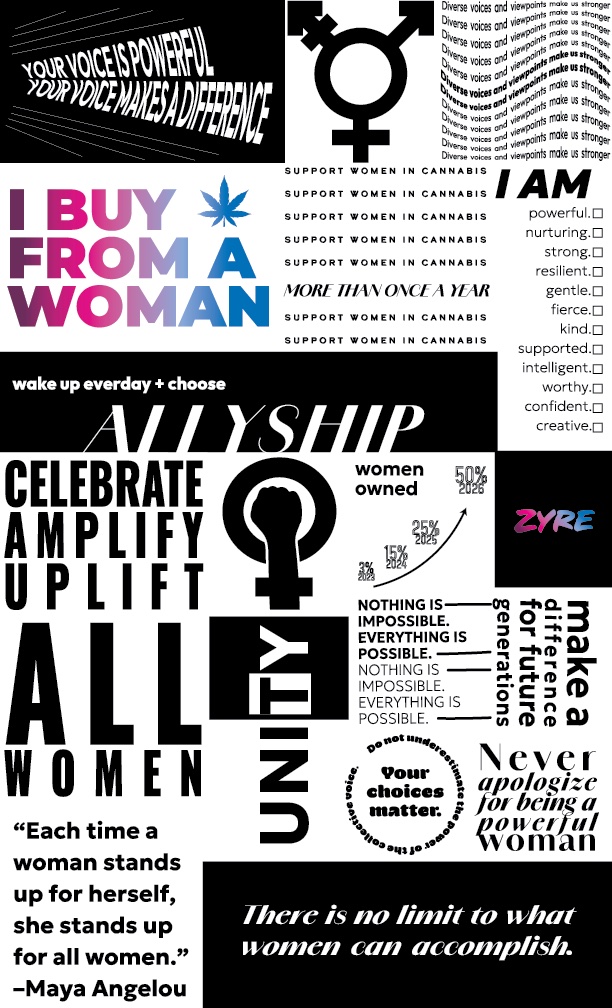
As a way to remind customers of our unique product, we’ve created our Women’s Manifesto that encourages consumers and retailers to buy cannabis from women more than once a year. As a brand, we feel it is important to voice our experience in the industry and work to bring awareness and change. While retailers also play a key role in doing this, as a brand it is helpful to have your key messaging and any store displays well explained to the retailers to help get the message across effectively.
5. Store Culture
The support for women in cannabis should extend beyond Women’s Day or Diversity and Inclusion Day. Let’s promote women-owned brands regularly in-store, online, and through educational content and store displays. Bringing this diversity of products into your store can help increase your sales by opening up to a wider customer base, but it also helps foster a more inclusive work environment.
Diversity is something that today’s consumers are actively looking for when they purchase from brands. In the cannabis industry specifically, it is a much-needed growth which can be done only by you, the retailers. It’s a win-win situation—your support of women-owned brands brings you a broader customer base with high chances of returning customers and an increase in sales, while it helps us put our proudly woman-owned cannabis business on the map and grow.
So, join us, Zyre, in supporting women-owned brands every day of the year, inspiring upcoming women to embrace cannabis as an industry where they can thrive, and we can all grow together.
36 kg of cannabis from Toronto intercepted at Dublin Airport | StratCann
Thanks to our sponsors for supporting StratCann’s work!
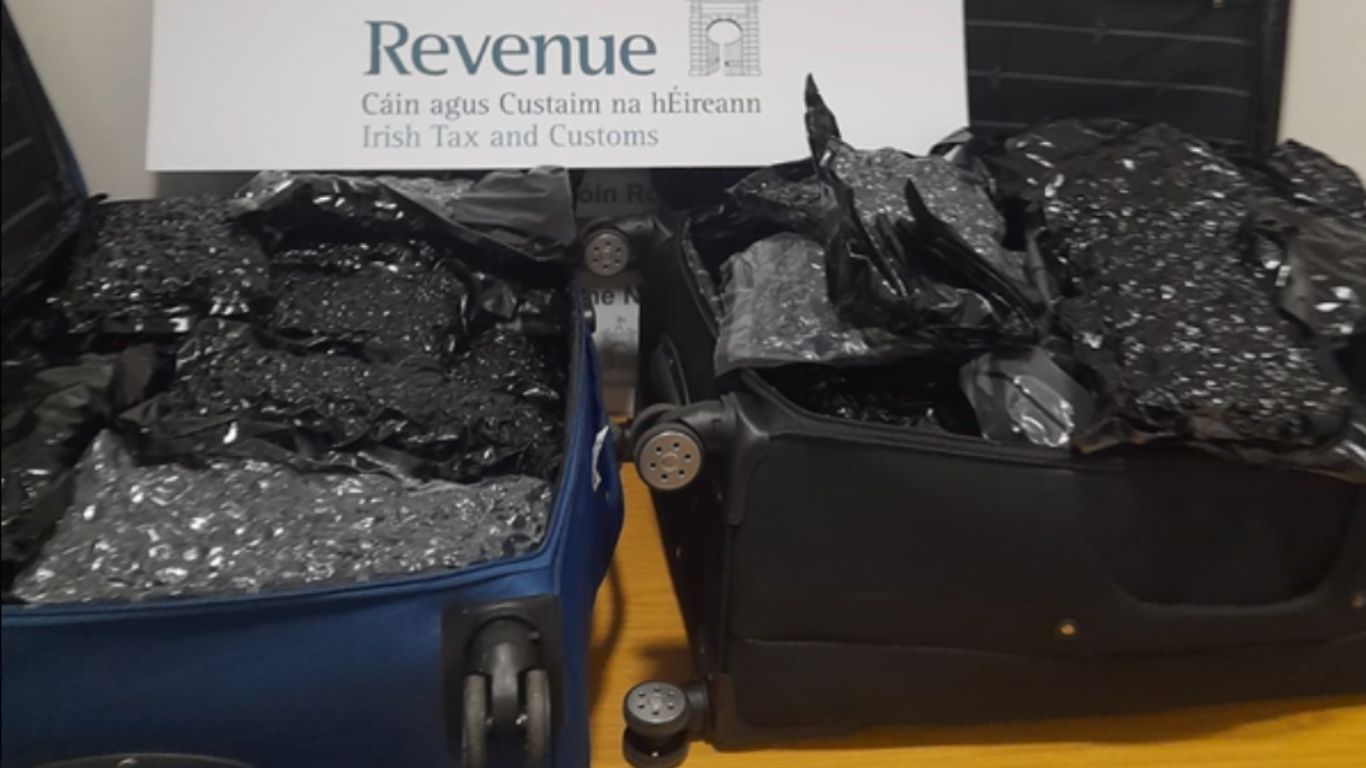
Officers from Irish Revenue and Customs seized 36 kg of cannabis on March 2, arresting a man in his 20s who arrived on a flight to Dublin Airport from Toronto.
Irish authorities say the cannabis is worth €720,000, or over $1 million Canadian, which would be about $29 a gram Canadian.
Such seizures are not uncommon. The same airport has shared several other similar interceptions of cannabis in recent days and weeks from Spain, Thailand, and the US.
Thanks to our sponsors supporting StratCann’s work!
Recent Articles
Are you of legal age in your jurisdiction? By clicking “Enter” you are verifying you are of legal age to view the content of this website, or click “Exit” to leave.
It’s unquestionable how lucky Canadians are to participate in one of the first federally legal recreational cannabis markets. As recreational cannabis pioneers, we are paving the way for the future of the globalization of this wonderful plant we all are so passionate about.
While going first allows us to be at the forefront of innovation and success, it also puts us in a high-risk position. There is no playbook to follow and no early examples to learn from. The reality is that participating this early means that you become the example. Mistakes are part of every journey and can be even costlier in a new market, but our ability to adapt and persist is what determines our success or failure.
Navigating a new and untested regulatory framework is a significant part of the risk involved. Whether it is the impact of excise tax on our ability to compete with the illicit market, fighting back the stigma that comes with window coverings, or the THC limit on edibles, we are discovering flaws in the initial framework and banding together as pioneers to push for change.
There is one regulatory challenge that has not been talked about enough, which I have personally been impacted by. It’s a challenge I once felt alone navigating, but as I’ve spoken to more brand owners, I have learned it is a rampant problem in our industry.
As a regulated industry, you have to work in partnership with a licensed producer to participate as a brand if you are not a licensed producer. This creates two industry-specific unique challenges. First, as cannabis products can only move through a licensed chain of custody, you never actually have direct control of your inventory as a brand. Second, the flow of money follows a similar chain of custody. This means, unlike traditional consumer packaged goods, we, as brands, never have possession of our inventory, and all of our inbound cash flow from successful sales must be paid out to our licensed producer partner first.
With many struggling to survive, it is becoming increasingly common for licensed producers to use what should be their brand partners’ share of the cash flow. In our case, as with many other brands we’ve spoken with that have similar agreements, this has resulted in a Catch-22. Brands are experiencing incredible front-end market success while having to internalize potential business-ending behind-the-scenes struggles. An unreliable licensed producer can directly impact a brand’s ability to stay on shelves with reputable retailers despite high consumer demand.
It’s a perplexing conundrum as entrepreneurs when you nail the execution but realize nothing from it. Recently, a retail store owner with whom I’ve become close friends asked me to try to relate the problem in their shoes. To that, I said: Imagine having one of your best sales weeks, and then your bank calls you and says sorry, but they don’t have the money to pay you for any of those transactions.
What can brands do to lower their risk with LP partnerships?
Although there are still no protections currently in the regulations for brand partnerships, there are still steps that can and should be taken to lower your risk as a brand when entering into these relationships. With the goal of helping future cannabis brands avoid these pitfalls, I spoke with Rob Laurie of Ad Lucem Law Corporation, an experienced cannabis lawyer, to gather his legal insights on what steps brands can take to lower their risk exposure in these manufacturing agreements with licensed producers. Below is a quick overview of what he shared:
Conduct Reference Checks
Ask their other brand partners, retailers and vendors what it is like working with them. Chatting with the people they work with could provide some key insights into what working with your potential partners could look like.
Establish a Due Diligence Protocol
Although there is no standard way to do this, you can create your own standard when comparing potential partners. Here are a few resources you can use to do your full due diligence:
Corporate Financials: Take a peek under the hood of their financial statements to understand how they manage their capital, how profitable they are, and what makes up their expenses. If they are a public company, these should be easy to access yourself. If they are private, you will have to put in the request directly.
Provincial Score Cards: Certain key provinces grade or have a standing for each licensed producer they work with. Request to view these to understand their relationship with each province and see how efficiently they fulfill their current product listings. For example, if your business strategy is to focus on a particular market, it is imperative that licensed producer has good standing in that region.
Corporate Registry: A review of the corporate registry provides essential information about the legal status of an LP and its directors and confirms details of the corporate structure. You can use this information to conduct further due diligence. Who are the directors? What did they do before this business? Were they successful? How is the business funded?
Civil Court Registry: This can reveal if the LP or its directors are involved in ongoing or past litigation. The strongest indicator of future performance is past performance.
Bankruptcy Registry: Check if the LP or its directors have ever filed for bankruptcy.
Land Title Office: Check with the land title office on the status of the LP facility’s address. Verify if they own the building and check for any encumbrances, liens, or mortgages on the property.
Work with a Cannabis Specialized Lawyer
Leaning on an experienced cannabis lawyer can help with drafting a contract that works to your advantage and helps manage your risk. Lawyers with cannabis experience can help craft contracts that protect your cash flow and provide added tools (e.g., security) to protect your best interest in the worst-case scenario. Furthermore, with an industry as small as cannabis, there’s a good chance that using a specialized lawyer, they may already have some insights on your potential partners.
How can we pave a path forward where we all thrive?
As the early pioneers, we continue to adapt and persist through every risky situation because of our passion for this industry. Our community of licensed producers, brands, retailers, and agencies are all working towards the goal of a better future for our industry where we can all thrive collectively. For that reason, it is equally important that we share not only our successes but also our struggles, in order to achieve the future we hope for Canadian cannabis.
We have a responsibility to pave a better path for future entrepreneurs who follow in our footsteps. We know today’s industry is far from perfect. Still, our collective ability to adapt and persist through these challenges will determine to what extent Canada can play a key role in the globalization of cannabis.
Sameer Padamsey is the co-founder of ufeelu, an owner-operated and self-funded cannabis wellness startup which focuses on crafting experiences utilizing non-intoxicating cannabinoids and custom terpene blends.
“Until they become conscious, they will never rebel; and until after they have rebelled, they cannot become conscious.” ~George Orwell
We would all like to become more aware, more perceptive, more conscious. Nobody wants to feel like they are behind the curve. Or that life is passing them by with a “whoosh.”
But, alas, we are faced with a perception paradox, an awareness enigma, a consciousness conundrum: We cannot become conscious if we don’t rebel, and we cannot rebel until we’ve become conscious.
Why is this? Mostly because we are creatures of comfort. But also because we are social creatures kept inline by outflanking cultural conditions. We suffer from what Nietzsche called, “the herd instinct.” We tend to be more like lemmings than rebels; more like sheep than lions.
But there are ways to stay ahead of the curve. There are ways to keep our rebel flag flying even while our lemming instincts keep us in line. There are ways to be lionhearted despite our sheepishness.
We focus on the process rather than the outcome. We finetune the journey being the thing. As James Clear said, “We don’t rise to the level of our goals; we fall to the level of our systems.”
In the spirit of becoming more conscious, here are four ways (systems) to trick yourself into rebelling so that you may become more aware.
1.) Don’t believe in anything, think through everything:
“The majority of men… are not capable of thinking, but only of believing, and… are not accessible to reason, but only to authority.” ~Arthur Schopenhauer
The bridge from Man to Overman is too narrow for narrowmindedness. Don’t be narrow-minded. Strive for the peak despite the trenches. Climb toward the summit despite the abyss. Think forward despite your backward beliefs.
All too often belief is a hook that the fish mouth of your brain cannot help but take the bait. Hook, line, and sinker, and suddenly you are caught. You’re trapped. You’re stuck. You’re confined to a particular way of thinking, disregarding Aristotle’s wise words: “Entertain a thought without excepting it.”
Instead, you except it. You flounder on the line. You forsake the Truth Quest for the so-called “truth.” You fail before the bridge toward the Overman even has the chance to appear before you.
Here’s the thing: the universe shrinks or expands in proportion to your awareness. Zoom in or zoom out. When you expand your scope, you not only gain more material to work with but more life to live in. Zoom in and recognize the infinite masks of yourself. Zoom out and recognize the infinite delusions you are caught up in.
Move up and down the “chain of command” of yourself, but then break rank. Drop thought bombs into the fortified ramparts of yourself. Plant minefields in your mind field. This is the beauty of thought: it usurps all thrones of belief. Remember: it is thought and not belief that shines the light toward faith.
As Ram Dass said, “Faith is not belief. Faith is what is left when your beliefs have all been blown to hell.”
2.) Don’t settle on answers, ask unsettling questions:
“It is not his possession of knowledge, of irrefutable truth, that makes the man of science, but his persistent and recklessly critical quest for truth.” ~Karl Popper
Question your maps and models of the universe, both inner and outer, and continually test them against the raw input of reality.
When you settle on a map or a model, you inadvertently reject the raw input of reality. Don’t settle, unsettle. Don’t close down, open up. Don’t resign, align. The universe is too massive to be passive; it changes too much to remain the same. Align or be left behind. Let it guide you into uncertainty lest certainty keep you forever in your own way.
The best way to get out of your own way is to upset your settled mind. As Ralph Waldo Emerson said, “People wish to be settled; but only as far as they are unsettled is there any hope for them.”
Indeed. The only “hope” is found in the unsettled state. A state of openness, suppleness, and teachability. A state of transformation. The cocoon is the perfect symbol of an unsettled state. The caterpillar can never become a butterfly without it. Similarly, the human can never become an Overman without the cocoon of the unsettled state.
Create an unsettled state, a sacred space for continual rebirth. A philosopher’s fire, where not only moths but gods are cooked. A space where the Phoenix of your imagination can rebirth itself, again and again.
Unsettle your settled mind. Ask forbidden questions. Test the untested. Put God’s feet to the fire. Humble yourself. Destroy your illusions and murder your delusions. Count coup on outdatedness. Reorder ancient order. Transform boundaries into horizons.
If, as F. Paul Pacult said, “Life is at its best when it is shaken and stirred” then it stands to reason that life is at its worst when it is rigid and settled. Don’t be rigid and settled. Self-overcome.
3.) Don’t be certain, be curious:
“Poetry is what happens when nothing else can.” ~Bukowski
Beliefs and answers are hangups. They are always false gods. The opposite of belief is not disbelief. Likewise, the opposite of an answer is not a question. The opposite of both is curiosity.
Use curiosity like a hammer. Pound the nail of thought through the flimsy cardboard of certainty. Nothing is ever foolproof. Everything falls on a spectrum of absurdity. Your curiosity acts like a scale of justice. It weighs imagination against thought, and belief against faith. It is the crucible of all conundrums. And it is the most powerful tool you will ever wield. It’s the only tool shared by all the common Jungian archetypes.
Certainty is like standing water. It becomes murky, poisonous, and undrinkable if not treated. And it can only be treated (cleared, cleaned, refreshed) through curiosity and persistent inquiry.
Certainty creates mealymouthed conmen, snake oil salesmen, and charlatans who have settled on “answers” and “truths” and who have inadvertently created stagnation, rotten fruit, and flies in the ointment. Curiosity reveals the rottenness behind the stink. It unveils the bullshit artist behind the curtain. It uncovers the multilayered anti-reason of wishful thinking.
Rather than placate your death anxiety with false salve, you should take responsibility for it. You should stare into the face of death and smile. You should stand toe-to-toe with misery and force it to reveal its deep mystery. Rather than bend the knee to the hand-me-down reasoning of fallible and imperfect men just as afraid if their mortality as you are, you should transform that suffering into vitality and strength. Into primal hunger. Into curiosity and wonder.
This is the power of curiosity. It is transcendent. It is a vehicle of nonattachment. It is a bird’s-eye-view in a world of blind men. It launches you past cultural conditioning, indoctrination, and brainwashing. It keeps you ahead of the curve by helping you realize that everything is on the curve. No exceptions. Nothing is set. Nothing is figured out. It’s all procrastinating truth, a delicious hang fire.
Because life is never complete. You must learn; unlearn; relearn. Rinse and repeat. Never settle. Life is only ever a process. The journey is always the thing, whether you like it or not.
Cultivate the “skyhook” of curiosity lest the “anchor” of certainty hold you down. Sell your certainty and buy curiosity. It will always be worth it.
4.) Don’t be comfortable, be courageous:
“You are free, and that is why you are lost.” ~Franz Kafka
We all talk a big game about stretching our comfort zone. But the irony is that most of us never get around to actually doing it. Instead, we remain huddled in the corner of our comfort zone sucking our thumbs. We placate ourselves. We mollycoddle each other. We sabotage our curious imaginations with nefarious beliefs. We guard against death anxiety at the expense of existential freedom. And we’re so busy giving each other religious reach-arounds that we can’t even see how much more amazing the real thing—spirituality—really is (see Spirituality vs. Religiosity: The War Between Curiosity and Certainty).
If, as Thucydides said, “The secret to happiness is freedom. And the secret to freedom is courage” then the secret to courage is curiosity. And the secret to curiosity is the suspension of belief.
Suspend belief. Engage curiosity. Ignite courage. And the freedom found in stretching your comfort zone will not elude you.
It’s all yours for the taking. But you must get past your comfort. You must wrestle the demons disguised as angels known as Safety, Security, and Comfort. They are the threshold guardians of your comfort zone. And the only thing that defeats them is heroism. Your own inner hero to be exact.
Therefore, it’s time for a Hero’s Journey. A great escape! An imperfect self-overcoming. A leap of courage out of belief and into faith. It’s time to come alive. It’s time to take responsibility for being the only extension of the universe that knows you as “me.” It’s time to stop pretending you’re not God and finally connect everything with everything else. Escape your narrowing comfort zone and go on a harrowing adventure.
As the great Anais Nin said, “Life shrinks or expands in proportion to one’s courage.”
Image source:Transciende by Julian Majin
About the Author:
Gary Z McGee, a former Navy Intelligence Specialist turned philosopher, is the author of Birthday Suit of God and The Looking Glass Man. His works are inspired by the great philosophers of the ages and his wide-awake view of the modern world.
This article (4 Ways to Become More Conscious) was originally created and published by Self-inflicted Philosophy and is printed here under a Creative Commons license with attribution to Gary Z McGee and self-inflictedphilosophy.com. It may be re-posted freely with proper attribution, author bio, and this statement of copyright.
”I believe very strongly many of us have been preparing for this time in history our whole lives.”
My late elder Wolverine used to always say, “You have to be ready there is something coming” and my late elder Light Shining on the Water would also say – do you know why we fast it’s to strengthen our mind and our spirit to prepare us?
In 2011 I was invited down south to the “Gathering of the Eagles” in Nambe Falls NM with the Hopi and I recall a sister came into the arbor carrying a horse’s mane and said she was there to speak on behalf of the Horse Nation who said, “in the future there is a hard time coming and we will be here to help the human beings”
Interestingly many of us who are activists saw the writing on the wall and knew the government was up to no good. But sadly many innocent people were unprepared and blindsided.
Months before the “virus” an Anishnabe grandmother told my friend that many are going to go home (pass away) in the near future but they will help us from the other side and the strong ones will survive.
I had already been blocked from accessing my political FaceBook page the year before where I had been speaking to mostly men from around the world including Palestinians.
Then my friend Joel Lorde an outspoken man on vaccines had his website taken down with over 50,000 followers. Then another fellow activist Arthur Topham had his site take down by our past PM Harper that was educating people about Zionism. He also had a gag order placed upon him for 5 years until 2023 from writing or publishing anything on social media.
Then two weeks before the “virus” I was banned off of the “Idle No More” Facebook page that I had been posting positive, uplifting and educational information the previous six years.
What was the government so afraid of to go to the lengths of trying to silence the out spoken ones?
I realized this agenda was starting on March 17th 2020 when it was announced there was a “deadly virus” and we would have to be locked down for two weeks until we flattened the curve.
I recall the first day saying to myself – “I am done trying to wake people up and empower them”. Second day I said to myself now I must find good people and solutions.
I began by speaking publically in Vancouver in April of 2020 and I said, “I am not afraid to die as death is not the enemy” and that’s what being fearless is and that makes the enemy scared as they are NOT untouchable!
A couple months later in front of our BC provincial health minister Adrian Dix’s office I made another speech saying, “We are at WAR and these sick people (politicians) do not care about any of us” My words must have pushed some buttons as I was locked out of my Facebook page for a quite a long time after that speech.
I set out to find these good people and solutions it was a calling a pushing by the ancestors. I and a women friend left Surrey BC on July 5th 2020 one year after my husband Running Elk – Burnt Sage Man passed away. The ancestors told me I had eighteen days to go east and meanwhile Manitoba and Ontario were on lock down but amazingly they opened days before we got there.
I had many people praying for us and without the gracious donations of friends and strangers we would not have been able to make that trip.
We stopped in Manitoba and here I was gifted a “Women Pipe” loading song from a Dakota elder.
It was a phenomenal trip we stayed at stranger’s homes that graciously welcomed us and went to a few reserves. My message was the same – I am not here to scare you but you must be prepared – emotionally, mentally, physically and spiritually.
We saw no dead animal’s only two timber wolves and a bear. We laid tobacco all across the country and gifted medicines to those who needed it. I believe the Buffalo Nation guided and protected us a Buffalo had been gifted to me in 2019 another helper.
We travelled as far as Six Nations, Ontario where the “The Tree of Peace” a white pine was planted by the Peacemaker and where the true roots of democracy began called the Great Law of Peace. Here I laid my husband’s ashes as his grandmother was Seneca.
After that we travelled straight to Cold Lake Alberta and met with a wise grandmother from the Dene nation who also gifted me a song and then we headed home.
In the spring of 2021 I had a dream of a bird I had never seen in my house and I let it out the window.
Then my father came in my dreamtime saying, “it’s time” He would always say to me when doing my activism work – Time & Patience. But I heeded his message in my dream now saying, its time!
A few days later while sitting at my desk I looked out my window and in the tree was the same bird from my dream I was shocked. Later that day I called a Chilcotin grandmother a medicine woman I had recently met to tell her about my dream and she said, “that’s interesting as I had the same bird come to me today too and it spoke saying” it’s time now”
Her son was living on the downtown east side and she wanted him back home so I agreed to go get him and bring him home. Once at my home he had no drugs and I was not sure how to keep him there. I decided best thing to do is pray and I prayed the ancestors would doctor him. He fell asleep at 6:30pm and awoke twelve hours later and excitedly told me how he awoke and wanted to leave but looked out the window and saw the “bone doctors” and then he fell back asleep and awoke a second time to find “War Chiefs” at the window telling him to get back home to his people. I did successfully bring him back home a week later.
And wouldn’t you know not long after I found myself back living with this Chilcotin Grandmother on the Anaham reserve and one day while sitting on her porch with wild horses all around us she told me, “the horses have spoken and they told me it’s time we stand in our power as human beings”
Again the ancestors told me it was time to leave and so on my way back south I drove through Lytton BC and two days later the “man-made fire” happened.
Again on July 5th one year later I set out this time by myself with everything I owned plus my buffalo skull, bear hide and bundle in my Jeep whose name is Bella Red Horse. The night before I left I looked up in the clouds and saw a horse’s head. Interesting to note I am a Horse in the Chinese Zodiac.
Well much to my surprise four days later I found myself in the middle of a “Horse Dance” arbor on the Frog Lake reserve in Alberta. After this ceremony I was gifted with many ribbons from the horses that were placed up on my rear view mirror for protection for the journey which lay ahead that was a mystery waiting to unfold.
Written by Candace Hill (brown bear woman) a bi cultural Metis, healer, knowledge keeper, storyteller, writer and activist. candacebrownbearhill@gmail.com
Last week at the Scotiabank Auditorium in Halifax, the Scotian Cannabis Alliance hosted a presentation on the endocannabinoid system and the cannabis neurotype, delivered by two U.S.-based cannabis scientists
March 3, 2024 By Adam Clarke
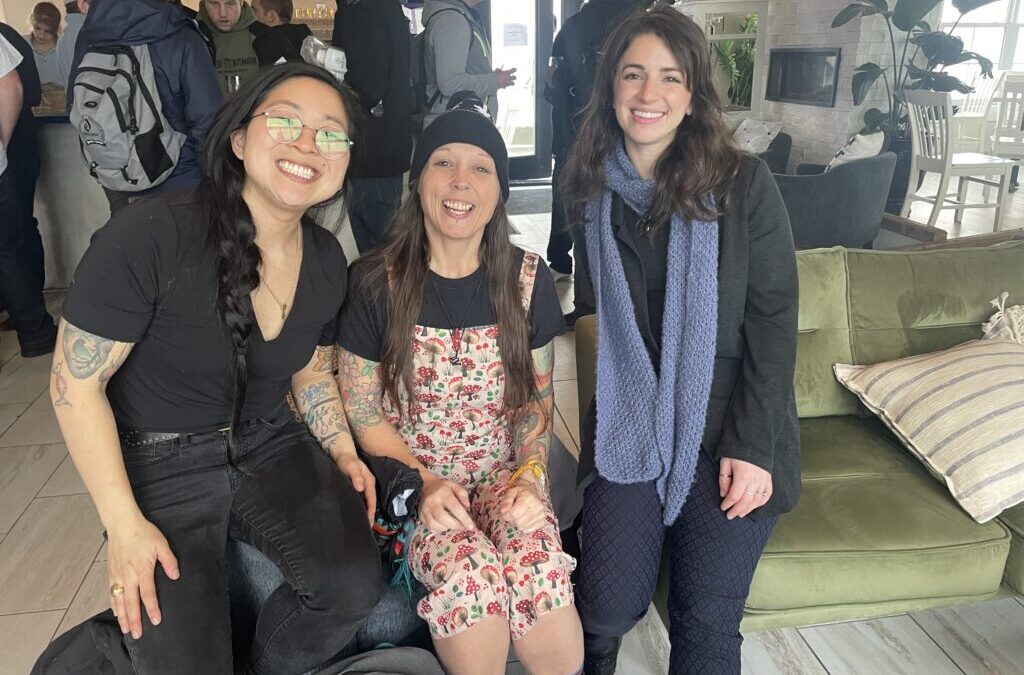
Left to right, Miyabe Shields, Genevieve Newton, Riley Kirk. Photo: Av Singh
I was fortunate enough to be invited by Dr. Av Singh and the Nova Scotian Cannabis Alliance to their social event featuring pharmaceutical scientists and researchers Dr. Riley Kirk and Dr. Miyabe Shields. Without question, this was one of the most memorable events I have attended in my entire cannabis career.
These two cannabis scientists provided an insight into cannabis from a perspective and research level I just hadn’t been exposed to in the past. Not only are they doing new research in support of medical cannabis use they also have a unique ability to deliver their knowledge in a way which is more easily understood by anyone not just people who understand cannabis.
Their unique ability to make you feel normal, despite the overwhelming stigma of cannabis, was simple and elegant.
Equipped with real life data from their currently unpublished study on cannabis consumption, I was nothing short of impressed with the depth and quality of their knowledge. I left their talk not only feeling educated, but also much more confident in my cannabis use being normal and well within the realm of normal consumption for neurodivergent individuals. We should all be seriously looking forward to the future work of these two and all of the wonderful gifts they are giving to the cannabis industry through their non-profit – The Network of Applied Pharmacognosy.
Advertisement
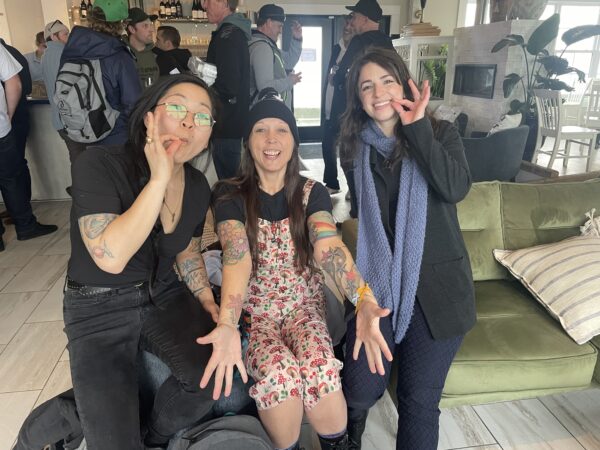
Left to right, Miyabe Shields, Genevieve Newton, Riley Kirk. Photo: Av Singh
Following the wonderful presentation, industry seemed to smile and laugh and blend together like one. There must have been 30 different growers from 30 facilities in one place all sharing, laughing and having a great time. As well as growers, there were another 30-plus people like myself – vendors of equipment, software or “picks/shovels.”
The Maritimes are new to me in the last five years, but it is clear to me that community still runs strong in the east. What a wonderful group of people to spend my Tuesday evening with. We are so fortunate to be able to meet in one place and share stories and help each other out.
This was, without any hesitation, a five-star event. Av, Riley and Miyabe, you are all legends, and I can’t wait to hear and see more of what comes next!
Simply put, manipulation is the act of getting you to do something you wouldn’t ordinarily do, if you had sufficient information. If you’re the manipulator, the object is to get your mark to do something to your benefit, but not necessarily to the benefit of your mark. We’ve all been manipulated before, and we’ve probably all manipulated. If you ever pretended to cry as a small child in order to elicit a favorable response from a parent or authority figure—or evade an unfavorable one—you were a little manipulator. And if you’ve ever lied in order to result in a more favorable outcome for yourself, same thing.
Successful manipulation requires at least a basic understanding of human nature. You must be aware of the buttons to push in order to elicit the favored response. The vast majority of people have this basic understanding, and the manipulations they engage in reflect this basic understanding. In other words, they’re pretty minor in the grand scheme of things. Maybe you won’t get hired if you include a certain fact on your resume, so you fib a little. Or maybe your spouse will be temporarily annoyed with you if you admit you just remembered her birthday is today, so you do your best to hide this fact. Lies are manipulations because they are intended to control the information available to the hearer and elicit a response different from that which would obtain if the truth were told. Again, this is relatively minor stuff for the most part.
But psychopaths take it to the next level. As outsiders looking in at human nature, from a young age they have a window into a strange and foreign world governed by seemingly arbitrary rules. They become experts at human nature, seeing all our strange foibles and weaknesses. But the odd thing about this phenomenon is that while they are experts of a sort, they’re experts who lack understanding. They’re like a large language model that knows what word should follow the previous one, but have no comprehension of the meaning behind the words themselves. They know people cry and make ugly faces when they lose a loved one, but they don’t know why. It’s just one of those things that those other people from that strange world do.
Because the psychopath lacks an emotional nature, he has no capacity for grasping the meaning behind our actions, which is invariably colored by our emotional nature. He sees us as simple stimulus-response machines, with buttons just waiting to be pressed. I find it interesting that as the scientific-materialistic worldview has developed over the past centuries, it has become increasingly psychopathic in content and outlook. Scientific training is a progressive initiation into seeing the world as a psychopath does: a world of mindless machines, with opinions to be shaped, “emotions” to be stimulated, and responses to be steered in directions deemed “useful” to those doing the steering. This is what Lobaczewski was talking about when he warned of a culture’s psychological worldview becoming primitive and shallow.
But while professional researchers work away at discovering the mostly obvious, there are those who already know enough to be effective at what they do—and what they do is anything but “useful,” from a sane perspective. If we want to stop them from taking advantage of our psychologically weakened outlook, we have to get wise to what they’re doing, and how they’re doing it.
It’s time to get a better understanding of psychopathic manipulation. The above description is fine as far as it goes, but it helps to know what’s really going on when it comes to manipulators who aren’t like us. Lobaczewki introduces some novel language to impart this new understanding. When it comes down to it, a response to manipulation of the sort that concerns us is a “para-appropriate” (or maladaptive) response.
Our nature—the emotions and instincts that create the psychological and spiritual texture of humanity in all our interactions and pursuits—is such that when it works, it works. At the most basic level, it works towards our continued survival. The interactions between man and woman, the drive to create a family, the parent-child bond, respect for wisdom, the levels of trust we afford others balanced with distrust of those who have yet to earn it (or who have lost it), the bonds of friendship and camaraderie that facilitate cooperation to achieve tasks impossible for a individual alone. All of these human universals and countless more form the background to our survival as groups and as a species. They also form the backdrop for all of humanity’s achievements and potentials, the limits of which no one can grasp.
Reality is fractal and evolutionary in nature (and not in a “scientistic” way). It is formed of levels within levels, nested worlds and languages, each dependent upon but transcending the ones below and within. Any future, or present, which denies or rejects those levels below it is doomed to fail, like a biological creature that disowns the basic matter of which it is composed, or a human which seeks to reject its own biology or emotional-instinctive nature. Whatever potentials humanity may have, they are predicated on reality as it is. So if we want to have some idea of untapped potentials, we need to understand the realities on which those potentials depend. We need to understand reality in order to navigate it.
Psychopaths have some understanding of human reality, drained of color as it may be. But we need to understand this if we want to successfully navigate a reality with psychopaths in it. In short, we need an understanding both of ourselves and of those others who are experts at manipulating us. Until then, we will be pawns, marionettes thinking we are real men. We may even convince ourselves we are fighting a noble fight, only to realize after the fact, and too late, that even that was factored into the manipulation. No one likes being that wrong. Better to learn how to avoid it altogether. Better to avoid the “para-appropriate” response.
Such responses have a special quality. If you manage to convince your partner that you didn’t in fact forget her birthday (and good luck with that!), her congenial response doesn’t fall very much outside the range of the status quo. The survival and integrity of her physical, social, and mental identity aren’t seriously threatened. But they can be. Say you happen to be a con man with multiple partners. Your faulty memory is not merely a momentary lapse, but simply the result of the fact that you’ve got a lot of birthdays to remember, and you really don’t care that much. The birthday lapse is just one tile in a mosaic of lies constructed that will result in her financial or physical ruin. In this context, her response is maladaptive.
The psychopath is the wild card, the foreign element that falls outside the normal parameters of our habitual patterns of behavior shaped by our emotions and instincts, which have developed over tens and hundreds of thousands of years. Lobaczewski likens it to a stimulus in the insect world that can result in the extinction of an entire hive, for example when ants’ pheromone signals gets disrupted, causing them to circle each other to exhaustion and death. Or when wasps seal themselves in their hive in response to an artificial frequency triggering their threat response, killing them all because it never shuts off. These are examples of instincts which ordinarily serve a vital function. But when they’re “hacked” by an anomalous triggering agent, they can turn against their owners.
A colony of insects, no matter how well-organized socially, is doomed to extinction whenever its collective instinct continues to operate according to the psychogenetic code, although the biological meaning has disappeared. If, for instance, a queen bee does not effect her nuptial flight in time because the weather has been particularly bad, she begins laying unfertilized eggs which will hatch nothing but drones. The bees continue to defend their queen, as required by their instinct; of course, when the worker bees die out the hive becomes extinct. (p. 52)
When it comes to the human world, this is the realm of predatory mimicry. It’s when an interpersonal nudge becomes a psychological nuke. When the white lie becomes the big lie. This is how Lobaczewski put it:
situations that trigger such para-appropriate emotional responses occur because some pathological factor difficult to understand has entered the picture. Thus, the practical value of our natural worldview generally ends where psychopathology begins. (p. 133)
A predatory mimic elicits “normal” responses to abnormal stimuli. The normal response, benign or even beneficial when dealing with normal people, becomes distinctly self-destructive when it is elicited by a predator mimicking normal human behavior. In other words, our normal human reactions become a weakness when we enter the world of personality disorders.
Many who have been on the receiving end of predatory mimicry become cynical, concluding that because their responses turned out to be harmful, they must always be that way. They come to think that love is a fairytale, trust is for suckers, and religion a haven for the weak-minded and the opportunistic liars. In short, they become anti-“freiers”:
A freier, in Israeli eyes, is a shopper who waits in line to pay retail. It is a driver who searches for legal parking rather than pulling onto the sidewalk with the other cars. And if he does this in a rush to file a tax return, he is the consummate freier.
In short, a freier is anyone who cedes ground, plays completely by the rules or allows someone to get the better of him. The ideal Israeli is clever and tough, and a freier is the opposite. A pushover—in the way that Israelis often perceive Americans to be.
In other words, they adopt the psychopathic worldview:
Our natural world of concepts strikes such people as a nearly incomprehensible convention with no justification in their own psychological experience. They think our customs and principles of decency are a foreign system invented and imposed by someone else (“probably by priests”), foolish, onerous, sometimes even ridiculous. (p. 111)
[Psychopaths] are virtually unfamiliar with the enduring emotions of love for another person, particularly the marriage partner; it constitutes a fairytale from that “other” human world. For them, love is an ephemeral phenomenon aimed at sexual adventure. However, many psychopathic Don Juans are able to play the lover’s role well enough for their partners to accept it in good faith. After the wedding, feelings which really never existed are replaced by egoism, egotism, and hedonism. Religion, which teaches love for one’s neighbor, also strikes them as a similar fairytale good only for children and those different “others.” (p. 115)
A psychopath may even inspire “love of one’s neighbor” in you if it’s to his benefit, and detrimental to yours. He doesn’t need to believe it. He just needs you to believe it in this moment for this specific purpose. It may be true and healthy in a normal situation, but this situation is artificial. In another situation, he may inspire just the opposite sentiment. He may manipulate you into hating someone he perceives as an obstacle. Or loving someone whose success will benefit him. As in the example above, he may project the image of the perfect man, only to turn into Bluebeard after the wedding.
Here’s another para-appropriate response. In normal situations, social bonds and patriotism inspire men to war. As ugly as war can be, the psychopathic situation is uglier:
Thus, the biological, psychological, moral, and economic destruction of this ever-threatening majority becomes a “biological” necessity for the pathocrats. Many means serve this end, starting with the maintenance of extreme poverty and including concentration camps as well as warfare with an obstinate, well-armed foe who will devastate and debilitate the human power thrown at him—namely the very power jeopardizing pathocrats’ rule. Many people will die, many others will lose their strength and health. Once safely dead, the soldiers will then be decreed heroes to be revered in paeans (by poets ordered to do so), useful for raising a new generation faithful to the pathocracy. (p. 212)
They send you to war because they need you dead.
It is therefore necessary to employ … any and all methods of coercion, terror, and exterminatory policies against individuals known for their patriotic feelings and military training (p. 197)
[When imposing a pathocracy on another nation,] People possessing military or leadership skills must be exterminated, imprisoned, or forced into silence. Anyone appealing to moral values and legal principles like the natural rights of man and nation must also be silenced. (p. 219)
When on the receiving end of psychopathic manipulation, you can’t trust any of your normal reactions. Whatever reaction you have is probably the one the psychopath wants you to have. This is why ordinary people became so distrustful under communism (the negative effects of which still resonate today). It was an adaptive reaction to a system of psychopathic lies—a practical skill that developed over decades of experience. But this kind of knee-jerk paranoia is a deformation of human nature—a bug, not a feature. It’s a sign that something went wrong. An attempt to course-correct.
In the meantime, however, as we find ourselves entering into a new phase of ponerization, we could probably all use a healthy but measured dose of paranoid distrust. Whenever it becomes obvious that large forces and generated public opinion want you to take a certain position and move in a certain direction, chances are, to do so is to fall into a para-appropriate response. The meme-makers know this:
If you want confirmation that not supporting the current thing is probably the right choice, just look at the reaction you get when you do this. If you end up on the receiving end of paramoral indignation, paramoralistic epithets, and pathological arrogance, you have successfully side-stepped a para-appropriate response. Wear it like a badge of honor.
Political Ponerology is a reader-supported publication. To receive new posts and support my work, consider becoming a free or paid subscriber.
New data from Stats Canada showed household spending on cannabis is down, driven by declines in the medical market and the illicit market, despite increases in the legal non-medical market.
Finally, an unlicensed cannabis store in New Brunswick was fined $20,000 by a judge.
In other cannabis news last week
MJBiz had a scoop this week, reporting that the CRA will be calling on provincial wholesalers to garnish payments intended for producers that owe money to the tax authority. Three provincial wholesalers confirmed that the CRA told them to garnish payments originally intended for licensed producers over unpaid taxes. The CRA is owed more than $200 million.
CBC broke a story about a Manitoba foster home where former and current employees say staff had been providing underage youth with cannabis as a harm reduction tool. The Manitoba government says it is cutting ties with the organization. The owner is criticizing the province for the move.
Following news of his passing, Post Media ran a story on former Prime Minister Brian Mulroney’s involvement with Acreage Holdings, a cannabis company located in BC but operating in the US.
A resident of Enniskillen, Ontario, raised concerns over the local council’s decision-making process on new zoning rules for cannabis operations, highlighting what they say is a significant oversight. A letter from Cannim Canada, indicating its intention to apply for a license to grow cannabis in a local greenhouse, was not shared with the council before it made changes to zoning rules aimed at mitigating odour and light pollution.
The Union of BC Municipalities’ (UBCM) Community Safety Committee received a report on cannabis policy as part of its February executive meeting.
Quebec cannabis producer Jubilee is introducing new edibles infused with minor cannabinoids CBG and CBN, along with two new flavours. Additionally, the brand announced new infused topicals coming in spring, as well as body butters and bath salts. Jubilee products are available in Ontario and Alberta.
Heritage Cannabis released its Q4 2023 and year-end financial results, with $11,409,434 in gross revenue for the three months ending October 31, 2023, and a comprehensive loss of $14,123,548. Its loss for 2023 was $19,906,411, down from a loss of $23,937,773 in 2022.
And lastly, MTL Cannabis announced its financial and operational results for the three and six months ended December 31, 2023, with nearly $9 million in gross profit, $248,286 in losses, and an estimated selling price of $1.84 per gram for dried flower.


















Recent Comments