(An excerpt from Paul’s upcoming book, The Quantum Revelation: A Radical Synthesis of Science and Spirituality)
The appearance of a rainbow is made up of the interaction of raindrops, sunlight and our consciousness. By itself—from its own side—a rainbow has no existence in our universe prior to being observed. This is to say that there is no intrinsic, independent, objective rainbow that exists separate from the observing consciousness. Being a function of our observation, if no one were there observing it, there would be no rainbow. There is no physical rainbow existing somewhere out there in space; the rainbow is only to be found within—and not separate from—the very mind that is observing it. The highest Buddhist teachings—and now quantum physics—says that our physical universe is similar in this regard to a rainbow.
Just like a rainbow can’t be said to exist until the moment that it is observed, quantum entities can’t be said to exist until the moment of observation; the act of observation is truly creative. The quantum entities that make up what seems to be solid matter (let’s use, for example, a tree) are no more like the thing we call a tree than the raindrops are like the thing we call a rainbow. Just as a rainbow is the outcome between the raindrops and our consciousness, the tree is the result of the interaction between the quantum entities that compose it and ourselves. This is to say that in the case of the seemingly solid, three-dimensional world, there is one necessary ingredient: an observing consciousness. This isn’t some New Agey gobbledygook, but simply the logical outcome of following the insights of what quantum physics is revealing to us about the nature of the universe we live in.
If more than one person is seeing a rainbow, there is an unexamined assumption that this means that the rainbow is “really there,” i.e., that there is an objectively existing rainbow that they are all seeing. If a number of observers are seeing what seems to be one and the same rainbow, however, it is not accurate to say they are seeing the same rainbow. A rainbow appears in a different place for each observer—in fact, when any one of us sees a rainbow, each of our eyes sees a slightly different rainbow. Its position is context-dependent, rather than being innate; if we move, it moves. In a very real sense, there are as many rainbows as there are observers; each observer is seeing their own private rainbow. It is as if there is an infinite superposition of rainbows existing in a state of potentiality, each one inhabiting a virtual world until the moment it is observed.
Similar to how there is not one “objective” rainbow that exists as an “object-per-se,” quantum physics has discovered that there is no invariant way the universe “really is.” To quote Philip K. Dick, “for every person there is a different universe which is the result of a mutual participation between him and the macrocosm, a field that is a syzygy between them.”[1] There is no single reality that all observers share. Wheeler writes in his notebook, “Idea, surely not new, that there is not ‘one world’ but as many worlds as observers.”
Dick continues, “If reality differs from person to person, can we speak of reality singular, or shouldn’t we really be talking about plural realities? And if there are plural realities, are some more true (more real) than others? What about the world of a schizophrenic?”[2] Are some of us more “in touch” with reality than others? It is easy to presume that the differences between people’s worlds is caused entirely by the subjectivity of the various human viewpoints, i.e., that people are just interpreting the one, objectively existing world differently. Quantum physics suggests that our situation might, however, be one of plural realities superimposed onto one another—akin to the potentiality of the wavefunction—like so many film transparencies. At any given moment, based on our observation, one of these transparencies takes on substantial form and appears, to our mind, to be the real and therefore only existing reality, while the other potential universes disappear as if they never existed.
The idea that there is an objectively existing world that we all share is a flawed assumption that creates the seemingly unsolvable paradoxes that riddle the quantum physics world. This state of affairs makes me think of how many conflicts in the world—both big and small—are the result of people arguing over the idea that their version of reality is the correct one, when in actual fact, there is no “true” reality (other than the fact that there is no single, true reality). To quote Bob Livingston, one of the founders of the discipline of neuroscience, “Our individual experiences are so different from one another that the world consists of a couple of billion people and a couple of billion worlds.”[3] If there are indeed plural realities, problems arise due to breakdowns of communication between the different realities; this puts the various conflicts in our world in a new context. Maybe instead of fighting among ourselves to determine who is in possession of the true reality, we can learn to build bridges to connect the multitude of realities. Quantum physics is such a bridge.
~~
Born in 1956 and originally from New York, Paul Levy is a healer/teacher/writer in private practice in Portland, Oregon. Though not a physicist himself, Paul has been seriously studying and going down the quantum physics rabbit hole for decades. A pioneer in the field of spiritual emergence, he has a deep interest in both spirituality and all things having to do with the psyche. He is most known for writing the book Dispelling Wetiko: Breaking the Curse of Evil (North Atlantic Books 2013; also available as an audio book). His most recent book is Awakened by Darkness: When Evil Becomes Your Father. Founder of the “Awakening in the Dream Community” in Portland, he is a longtime Tibetan Buddhist practitioner and the coordinator of a local Tibetan Buddhist center. His website is www.awakeninthedream.com; his email is paul@awakeninthedream.com.
[1] Jackson, P. and Lethem, J., eds., The Exegesis of Philip K Dick, p. 588.
[2] Sutin, L., ed., The Shifting Realities of Philip K. Dick, p. 261.
[3] Quoted in The New Physics and Cosmology: Dialogues with the Dalai Lama, Zajonc, A. ed., p. 145.
“Fool me once, shame on you. Fool me twice; shame on me.” If I continue to be fooled, the blame lies with me.
In the early stages of my awakening to the world and the true nature of reality, I found myself engaged in intriguing conversations with friends. We would discuss unconventional perspectives, such as the possibility of a flat Earth or the potential deceptions of NASA. The recurring question that always echoed back to me was, “But Franklin, why are they lying?”
Initially, I would attempt to rationalize these deceptions. I would argue, “They’re lying because they’re trying to suppress us,” or, “They’re lying because they don’t want us to uncover the hidden nature of reality.” While these explanations seemed plausible, the stark truth is I don’t know why they lie.
I don’t know why they deceive us about the nature of reality, the model of the world, or the origins of viruses. These are mysteries that remain unsolved. However, I’ve found solace in accepting that I don’t know why they lie. The crucial point here is not the reason behind the lie, but the existence of the lie itself.
In today’s society, we often find ourselves aware of the lies yet uncertain of the reasons behind them. It becomes easier to accept the lie as truth rather than confront the deception. In this article, we will delve deeper into this phenomenon of recognizing lies without understanding their purpose.
The key takeaway here is this: if there’s a lie being told to us, we don’t need to know the truth right away. We might not even need to know why they’re lying. But the fact of the matter is, if someone’s lying to us, we should be aware and stop believing the lie.
“Fool me once, shame on you. Fool me twice; shame on me.” If I continue to be fooled, the blame lies with me.
It’s time we stop justifying the lies and start seeking the truth.
The phrase, “I don’t know why liars lie,” began to resonate with me profoundly after watching an interview with comedian Katt Williams on YouTube1. The interview, conducted by former football player Shannon Sharp, had been recommended to me by numerous people, and for a good reason. It went viral, amassing around 40 million views in just nine days.
For those unfamiliar with Katt Williams, he could be likened to a modern-day George Carlin – a comedian who speaks the truth, albeit a shorter, blacker version. After watching the interview, I was impressed by how Williams exposed the inner workings of the entertainment industry to many who were oblivious to its true nature. The key takeaway from his podcast was simple yet profound: “Liars lie. We don’t know why they lie, but we have to know that it’s a lie.”
In the past, other celebrities, such as Cedric the Entertainer and Steve Harvey, have appeared on Club Shay Shay. As Williams watched these entertainers on the show, he noticed them spewing lies, particularly against those who couldn’t defend themselves, like the late Bernie Mac and lesser-known comedians like Mark Curry, whose show Steve Harvey copied. This prompted Williams to defend the truth because one cannot let liars continue to push false narratives.
Upon reflecting on Williams’ words, I realized the importance of recognizing a lie. I don’t need to know why they’re lying, but as long as I know they’re lying, I can stop focusing on their words and start discerning the actual situation.
Today, I want to focus on two examples that illustrate this point: the Super Bowl and NASA. These case studies will demonstrate how liars are lying, why we need to be aware of this, and why we must ensure we’re not falling for the lies being told to us. The journey to uncover the truth continues, and the first step is to stop believing the lie.
The inspiration for this article came from a piece I read on
Substack, titled “Superb Owl, a ‘Roasted Baby’ and ’22 Shot’ in Kansas City.2” I had written a Substack on the Super Bowl, focusing on the spiritual and occult significance of the event. However, ET’s World Occult Substack delved deeper, revealing other events surrounding the Super Bowl that had gone unnoticed.
One story that particularly struck me involved a mother and a baby. It reminded me that there are countless ways to perceive the world. To really comprehend this conversation, we first need an accurate understanding of how the world operates. The saying, “truth is stranger than fiction,” is particularly relevant here. Often, we find truth embedded in fiction.
Parables, for instance, are vehicles of truth. Stories, too, convey truths, suggesting that fiction is rich with truth. This concept was reinforced for me when I watched the show “Mad Men” about eight years ago. The show, set in the 60s, follows the rise of early marketers. One memorable scene involved marketers paying two individuals to fight over some chicken in a supermarket. This staged fight became a news story, leading to an increase in chicken sales.
While “Mad Men” is a work of fiction, it provides insights into our reality. In my articles about corporations, I’ve mentioned Edward Bernays, a PR genius who shaped our world. Bernays is the reason why women started smoking; he staged performances that portrayed smoking in a positive light. He staged protests that started wars and ended wars. He moved masses of the population with the flick of a finger due to propaganda. Public relations and propaganda are real, and they shape our world. Fun fact: Bernays nephew is the founder of Netflix. Let that sink in for a second.
To note, propaganda is also legal. The government can lie to you under the guise of propaganda, which is protected. If the government wants to use fake noises, like wolf sounds3, as they did in Canada, it’s possible. We need to comprehend this facet of reality.
Link in the References
Many people believe that the government would never lie, that the news would never deceive, that false flags would never occur and that conspiracy theories could never be real. This naive approach to viewing the world and reality is flawed.
I discuss this in my articles titled “They Would Never” and in another where I reach out to
on conspiracy theories. When we truly understand the world and have a glimpse of how propaganda moves the world, we realize that this is a fundamental facet of life. This understanding gives us a better grasp of the reality of the world.
Without any insight into how propaganda works, we will never be able to see the lie that’s right in front of us.
As we begin to understand how the world works, as we start to comprehend the propaganda aspect of reality, and as we start to see the illusions for what they are, we can start to discern specific elements. For instance, there’s a ritualistic element to stories and an occultic aspect to this.
To be fair, the general population does not delve into these topics because we have been deterred from them. I discuss this in my article “Esoteric Philosophy.” We avoid these subjects because we have been told they are dark and negative. However, if you muster the courage to explore these matters, you will start to see the world in a brand-new light.
In my book, I guide readers through the process of identifying the illusions set before us and how we can start to dismantle them. I also discuss this in my Substack, especially in my paid content, known as “Esoteric Wisdom.” Not only do I do this, but other individuals do as well. This article is being written because of what ET mentioned in their article. Knowing how propaganda works and reading ET’s article, you can start to see the hidden message.
With that background, we have arrived at what I wanted to discuss in this article. Kansas City won the Super Bowl. However, what was also happening in Kansas City was a story about a mother who accidentally put her baby in the oven. Any parent knows that this is unrealistic. But because the news reported it, are we just supposed to believe that?
I’ve discussed this in my article on why we shouldn’t watch the news. The news propagates false information, gives us a false understanding of reality, and puts us in a heightened state of anxiety. We should not watch the news unless we want to receive false information and the negative energies being broadcasted.
Staying on topic, the news reported that a baby was burned dead. If you look at the symbology of a baby being burned, as ET did, there’s an image that’s being invoked with this story, and there’s a reaction within the individuals who are receiving that story.
Again, we don’t know why liars lie. But when something’s odd, we need to act on the principle that it’s odd and acknowledge that it’s odd. If we don’t, we will continue to believe the story. As I stated in my article, do I Believe in God, “believe” is the state of being lied to. If we simply believe these narratives because we’re told them, we are consistently turning off our intuition, our instinct, that silent, peaceful voice in our heads. And that is a problem.
Again, we don’t know why liars lie. But if we’re able to see there’s a lie, if we’re able to see there’s an occultic aspect of things, then we need to start waking up. We may not exactly know the occult meanings. Again, we’re not in these institutions. However, there is something going on here.
By paying attention to that still, small voice, this is how we develop the skill of Gnosis. The skill of Gnosis applies in many different ways. From the Christian perspective, it’s the Holy Spirit, where you just know, intuition, you just know something’s off here. So if we know something’s off — again, we’re not in these occult ceremonies at the Bohemian Grove — and if we can recognize the signs and the games being played, we’re already better because we can guard ourselves against this.
If you don’t think this is real, you may be living in fairyland.
A prime example of recognizing the signs of propaganda and occult rituals was the pandemic. With my background in the health industry and the ability to scrutinize studies, I could see how things could be propagandized. In the 2000s, Marcia Angell, the editor of the highly recognized medical journal NEJM, stated that she could not validate the vast majority of published studies because many were not clinically or statistically sound. This fact exemplifies how science and medicine can be propagandized. From her, we read the following4:
“It is simply no longer possible to believe much of the clinical research that is published, or to rely on the judgment of trusted physicians or authoritative medical guidelines. I take no pleasure in this conclusion, which I reached slowly and reluctantly over my two decades as an editor of The New England Journal of Medicine.”
“No one knows the total amount provided by drug companies to physicians, but I estimate from the annual reports of the top 9 U.S.-based drug companies that it comes to tens of billions of dollars a year in North America alone. By such means, the pharmaceutical industry has gained enormous control over how doctors evaluate and use its own products. Its extensive ties to physicians, particularly senior faculty at prestigious medical schools, affect the results of research, the way medicine is practiced, and even the definition of what constitutes a disease.”
Before I was removed from Medium, I was an ardent supporter of Dr. John Ioannidis from Stanford. When the pandemic hit, he was one of the loudest voices, surprisingly absent now, who spoke out against the pandemic measures because they did not make any scientific sense.
When you see and hear things like this during the beginning of the pandemic, you realize, “Okay, there is propaganda at play here, so whatever lies I am being told, whatever narratives I’m being told, I must be mindful of the propaganda.” One of the biggest indicators of propaganda and rituals during the pandemic was the masks, as I’ve written about in my article “Why I Don’t Wear Masks.”
Current Events
Why I don’t wear a mask
I originally wrote and posted this article on June 20th, 2020, during the midst of the pandemic. This and other articles eventually got me kicked off Medium for “counterperspectives and unpopular opinions.” I’m reposting it here on Substack (especially as we’re hearing “waves” on the topic recirculating). Enjoy!
Read full story
Prior to the pandemic, all the clinical studies and literature on mask-wearing were that masks should be worn by individuals who were sick. No one wore a mask to protect themselves. Individuals who were severely ill (i.e., in a hospital setting) were wearing masks. In fact, there were studies on the efficacy and the fear that wearing a mask symbolizes. There were scientific studies on this, and I talk about this in that article. However, once the pandemic happened, masks had to be worn. When you realize the occult symbology of this, you realize, okay, there’s an initiation here at play.
Within the pandemic, you had the visible sign of mask-wearing and the practice of isolation. These were occultic rituals and occultic practices, and whether you knew them or not, you were partaking in them.
The pandemic is an excellent example of propaganda and occult and esoteric rituals being influenced on the population. And even though the population unknowingly knows this, they partake in these rituals instead of questioning why. And this brings us to the point of this article.
We don’t know why liars lie. However, we can either accept the narrative that’s being told to us, which is blatantly a lie, or realize that it’s a lie and pay attention to that inner voice that’s saying, “Huh, I don’t know what the fudge is going on, but I do know that something’s off.”
Knowledge, intuition, wisdom, and discernment are the tools and skills we will need in this brave new world we find ourselves in. Even look at the books, “Brave New World” and “1984.” Aldous Huxley talks about the occult being used to influence the masses, and we find ourselves there today.
And so we must begin to understand this is the nature of the world we live in. If we are going to survive and thrive, we must develop our skills of intuition, knowledge, and discernment to be able to survive in this reality of illusions.
This article was primarily inspired by the events in Kansas City, the Chiefs, the energy of the event, the news story, the propaganda, and the ritual. However, I was recently informed that NASA landed on the moon.
If you’re familiar with my work, you’ll realize that the narrative of space, as we’ve been told, is nothing but a propagandized narrative to tell the public, “Hey, listen, we’re going to the moon, we’re going to space, we’re launching satellites.” However, the reality is that we’re funding military budgets, black budget operations, and probably running propaganda on the entire nation as we speak.
From SpaceX to many more, I equate this concept of traveling outside of Earth to evolution.
For those who don’t know, evolution is the number one case study of how you should not believe in something. I discuss this in my article “Lies That the Truth Community Does Not Discuss.” Within evolution, Nobel nominee George Wald states, “Listen, evolution is not real. The truth is there is an intelligent being who created everything. However, I don’t want to believe that, so I will believe in this false narrative that I propagate,” which is evolution.
We must realize that a New World Order has been pushed for the last 800 years, starting in the 1400s or 1500s, with the man John Dee. When you understand this philosophy, you start to realize that “Oh my goodness, there is something here. They are going to propagate something that they know is not true.” It’s up to us to make the decision: are we going to fall for the propagation or not? Again, we don’t know why they lie, but it is a lie.
And by understanding it is a lie, that is all we need to know. Once we realize it is a lie, we can stop giving our attention to it.
This attention is key, as I discussed in my podcast, “The Cost of Paying Attention.” Attention is a currency, or rather, the currency of consciousness. In this world, only two things exist: consciousness and energy. If we direct our attention, the currency of consciousness, towards lies and fallacies, that’s an improper use of our attention.
We need to start directing our attention towards ideas, thoughts, and themes that benefit our world and our fellow humans. Meditating, hanging out with a friend, or better yet, reading Unorthodoxy is a better use than being zoned out and giving your consciousness to something else.
Author’s Note: I just realized this NASA landing was on 2-22. Again, as I’ve stated in the other article on the Super Bowl and how wars happen, there’s a numerology, astrologically occultic thing to these dates. And once we’re aware, we can see this for ourselves.
To conclude, I don’t know why these individuals do these things, but I know they’re doing it. So, I’m going to make sure I don’t fall for the distractions, and instead, I’ll focus my time, my efforts, and my actions on what I want to do. I won’t give them my reaction because that’s what they want. They want my action. They want the energy in my reaction.
As the Netflix propagandized show states, “Stranger Things” are going on here, and there’s a whole spiritual reality out here that is slowly interfering with our physical and material reality. I would recommend everyone to listen to my podcast titled “Why Gnosticism is the Christianity That’s Needed Today” because we’re slowly being warned of an alien invasion. But I’m realizing that as we throw terms around like aliens, we’re also referring to terms such as demons, archons, and spiritual entities, so something is bound to happen.
Esoteric Wisdom
Why Gnosticism is The Christianity That’s Needed Today
In this episode of Spiritual Sundays, we’ll touch on a topic I’ve wanted to discuss for some time now. The discussion is going to be on the spirituality known as Gnosticism. The conversation will cover these main points: My previous Christian walk and how, as Christians, we need to come to terms with some of the ugly truths of the religion, such as:
Read full story
Hey, this is the Age of the Kali Yuga. Our current era is the great book of revelations per se. And guess what? The more we’re aware, the more we can guard ourselves and protect ourselves. The more we can elevate our families, friends, and reality.
Thank you for the time and the attention, the consciousness toward this article. Please let me know your thoughts in the comments. If this moves you, I strongly recommend and propose that you become a paying member of Unorthodoxy. If this really moved you, I suggest you become a founding member to give that currency of value and support work you deem important.
PS: I’m working on an offer for founding members. Something along the line of 30mins monthly 1-1 sessions to talk about whatever topics from a spiritual perspective. Definitely open to ideas and suggestions.
ISED’s “Cannabis Industry Forum” was finally formally announced this week. While some outlets reported this was the “launch” of the forum, this is simply the first formal announcement of a list of names that have been floating around for about a year now.
Canadian cannabis company Mendo Medical is bringing the California-based Beard Bros Pharms brand to the Canadian market. Beard Bros products will be available in early March.
First launched in Ontario, HYTN Innovations Inc. announced the expansion of its 100 mg THC Nano Shot Citrus to the British Columbia and Alberta markets. Each Nano Shot bottle delivers 100 mg of nano-emulsified THC in accurate 0.05 mL increments.
Canopy Growth Corporation announced the introduction of five new pre-roll products across the Company’s adult-use cannabis portfolio from brands 7ACRES and Hiway.
Researchers and health experts are expressing concern at the potential for high-potency THC products to have harmful health effects, particularly among young men, reports CBC. The Schizophrenia Society of Canada recently launched the Cannabis and Psychosis Project, an online resource to help address some of these concerns. Hospital visits for cannabis-induced psychosis increased by 220% in Ontario between 2014 and 2021.
BC teens are trying cannabis, alcohol, or tobacco at the lowest rate in 30 years, according to a new survey from the McCreary Centre Society, a Vancouver-based non-profit that does research on youth health. The Society will publish an in-depth look at youth cannabis use in early 2025.
From the report: “In 2023, 22% of youth had ever used cannabis, which was a decrease from previous survey years (e.g., 25% in 2018, 30% in 2008, and 41% in 1998). Youth who had used cannabis had most commonly first tried it at age 14 or 15. Compared to 5 years earlier, there was a slight increase in youth who used cannabis for the first time at age 12 or younger (15% vs. 14% in 2018), and a decrease in the percentage who waited until they were 15 or older to try it (44% vs. 47% in 2018).”
Cannabis industry event Token Tuesday came back to Winnipeg this past week, with its largest show yet, according to many who attended.
Cannabis NB will bring its Cannabis Expo to the Fredericton Capital Exhibition Centre on March 16. The Cannabis Expo is a cannabis education tradeshow that’s expertly crafted for 19+ New Brunswickers who consume cannabis, as well as those who are just curious about the industry and these products.
International cannabis
One of the biggest cannabis news stories this week was when Germany passed a law allowing individuals and voluntary associations to grow and hold limited quantities of cannabis. Later this year, the law will allow for cannabis cultivation clubs, similar to Uruguay, as well as personal cultivation of up to three plants for private consumption, and the possession of up to 25 grams of cannabis.
New Brunswick recently announced the eighth private retail cannabis store in the province, it’s located in Hampton, about a 30-minute drive from Saint John.
The provincial government first announced its plans for around a dozen new stores in 2021. It began vetting for ten new private cannabis stores following a tender process that ended in October 2022.
Local MLA Gary Crossman with Cannabis Xpress owner Chris Jones
“We are excited to finally open our newest store in Hampton,” says Cannabis Express owner Chris Jones. “The town has been very welcoming, as well as the residents who are excited that we are open so that they have a more reliable, convenient place to buy their legal cannabis products.
Jones tells StratCann that the new location’s grand opening was the biggest store opening in the franchise’s history, with the highest number of sales and customers. He also says Cannabis Xpress is the largest private retailer in New Brunswick by revenue, and he expects to open a third location in St. Andrews this spring.
“The private model is very successful and we hope they allow us to continue expanding since it is easier for CNB to work with a group that has scale and can continue to grow versus new operators. The model and working with Cannabis NB is much easier than Ontario, they are very supportive of the growth and success of our business—great people.”
In the agency’s most recent quarterly report in January, total sales were $21.6 million, an increase of 5 percent compared to the same period last year. Net income for the quarter was $4.8 million, 21.5 percent above the previous year’s third-quarter net income of $3.9 million.
New Brunswick has taken some relatively unique approaches to cannabis retail since opening its public-only model in 2018. In addition to being one of only two provinces with a mixed public and private retail mode (BC is the other), it is one of only three provinces (along with Ontario and BC) to have a formal farmgate retail licensing system in place.
There are currently six cannabis producers in New Brunswick now licenced to allow on-site sales direct to consumers, including the recent addition of a cannabis nursery. Cannabis NB will bring its Cannabis Expo to the Fredericton Capital Exhibition Centre on March 16. The Cannabis Expo is a cannabis education trade show that’s expertly crafted for 19+ New Brunswickers who consume cannabis, as well as those who are just curious about the industry and these products.
Following a nearly three-year wait, Burb Cannabis was finally able to open its new location near the University of British Columbia on Friday, February 23.
The application for the location had received pushback from some in the community who argued such a store didn’t fit the neighbourhood and would put students at risk. However, a Metro Vancouver committee voted to approve the application earlier this month, sending it to the MVRD Board for the final decision.
BC Premier David Eby, when he was still the BC Attorney General, was among those who spoke out against the location at the time.
However, the UBC student union was supportive, with Alma Mater Society president Eshana Bhangu noting that there are multiple liquor stores close to campus that face no such community concerns.
A small handful of local media organizations attended the grand opening, with the Vancouver Sun reporting that John Kaye, co-founder and CEO of Burb, welcomed a gathered crowd, saying, “Let’s cut the ribbon, let’s get high.”
This is the final store Burb can currently open in BC. The province has a cap of eight stores per owner, although it is currently considering raising that to some degree.
Kaye tells StratCann he’s supportive of raising the cap, especially since the BC government’s own BC Cannabis Stores are not capped in the same way.
“We’re very supportive of raising the current eight store cap in BC, and feel the new cap should be 16. There are 36 BC Cannabis Stores. How is that fair?”
The new store will operate Monday through Saturday from 9am to 11pm, and Sunday from 10am to 10pm.
“Our focus is on offering the best menu possible, with exclusive products you’ll only find at Burb, such the Jellee hand-rolled hash-holes, Book Club Exclusives, and limited run merchandise and accessories,” stated Peter Pittson, general manager at Burb UBC and Co-Founder of the infamous Book Club, a cannabis community and products company.
As the subtitle implies, this essay was submitted by a friend of the blog, Dr. Monika Gabriela Bartoszewicz, so all credit should go to her. Aside from the choice of art, for which you can blame me. Mostly. Actually that was only true in an early draft – once I started using Polish surrealism, Monika decided to educate me on the subject, and uh, wow. Anyhow, her essay is too spicy for the bland palates of academic journal editors, but Monika knows as well as I do that you, my dear readers, have a more robust constitution, so she asked me if I’d be willing to publish it here. I think you’ll find it both insightful and interesting. – JC
If there is one universally known quote from Thomas Hobbes, it would be his assertion that without security “there is no place for industry… no arts, no letters, no society; and which is worst of all, continual fear, and danger of violent death; and the life of man, solitary, poor, nasty, brutish, and short.” Indeed, in the West, we tend to understand security as freedom from harm and/or threat of it, and a prerequisite to a thriving and prosperous society. Furthermore, in accordance with Leviathan’s logic, security is commonly understood as something warranted by the state, which in essence becomes the primary security provider.
It is no wonder then that at least since the Peace of Westphalia in 1648, security debates have been dominated by the idea of national security, and often focused on militarised interpretations that traditionally saw security both as (the highest) end and as (the ultimate) means. Broadly speaking, security denoted how well any particular state or allied group of states was doing in the struggle for power, or how stable the balance of power overall appeared to be. Simultaneously, national security became well-entrenched as a political tool of immense convenience for a large variety of factional interests, and a justification for actions and policies. This situation persisted roughly until the end of Cold War, when two interesting developments happened: widening and riskification.
The traditional approach to security restricted it to one dimension, i.e. the military context, and was quite ‘vertical’ in the sense that it spanned from the human up through the state into the international level, as exemplified by the canonical book by Kenneth Waltz (1959) Man, the State and War. The new approach was born out of dissatisfaction with the intense narrowing of security in the post-Cold War world. In 1991, mimicking Waltz, Barry Buzan wrote People, States, and Fearand eventually the “wide” versus “narrow” debate paved the way for the group of scholars referred to as the Copenhagen School to formulate a more ‘horizontal’ approach to security. In addition to the military, they identified four other sectors of security, including political, economic, environmental and – last but not least – societal.
Tomasz Sętowski
Simultaneously, in 1992 a prominent German academic, Ulrich Beck, caused quite an uproar with his seminal work entitled Risk Society. For Beck, risk, which is intrinsic to modernity, would contribute towards the formation of a global risk society. Its inherent characteristic is that the hazards of risk do not remain restricted to one country only. In the age of globalisation, these risks affect all countries and all social classes, and are very dynamic. They have global, not merely personal consequences. Furthermore, people (but also states) are constantly required to respond and adjust to these changes. While Beck is a sociologist, his thesis had significant implications for security studies: a risk society means that it is not only the actual security threat that needs to be dealt with, but increasingly, any potential chance that a high-risk event might transpire, regardless of how remote such a chance is. Think about the scale and scope of measures aimed at countering the potential terrorist threat, for instance the huge concrete barriers installed even in places with no prior history of terrorism. It shows how progressively not only the actually existing peril, but the mere risk of potential danger can be seen as a driver for policymaking.
This might seem like an unimportant nuance, but consider one thing: traditionally, a security-related situation implies the presence of an existential threat. On this basis, the state representative declares an emergency condition, thus claiming the right to use whatever means are necessary to block, minimise, or eliminate the danger. Emergency measures, on the other hand, denote a suspension of the normal rules of the game (laws), and allow actions outside the normal bounds of political procedure, thus removing the existing system of checks, balances, and limitations imposed on the powers that be. However, what do the concepts of existential threat and emergency measures mean in the wider agenda? As if it is not enough that each sector has a whole set of distinct and diverse threats, they do not even have to be actual to become a basis for security action; a mere risk of them suffices after all. Widening and riskification, when taken together, amount to what
calls the sacralisation of security.
In his 2018 book,How Fear Works: Culture of Fear in the 21st Century, Furedi argues that the meaning of safety, as a side effect of security, has expanded to the point that it guides virtually every dimension of life. It has become the dominant value of society. Through this, security has acquired a sacred status, and its moral authority is frequently used to justify the introduction of a variety of measures for regulating life. Think about Western citizens’ willingness to give up their freedoms and accept the implementation of lockdowns. Demonstrating virtually no opposition to the capricious imposition of these arbitrarily mandated rules, millions of people were willing to give up their way of life, abandon their work, and give away fundamental rights such as the freedom of movement and of assembly. Consider school and university lockdowns. In previous times, schools were never closed, not even during wartime. In my native Poland, despite the ongoing atrocities of brutal German occupation, a whole underground system of schooling existed during WW2, and people risked their lives to attend those illegal classes.
Greek school in the time of slavery, Nikolaos Gyzis, 1885
Not only is the situation radically different now, but also any criticism of security measures is frequently condemned as a threat to public security. Consequently, debate on “security matters” is regarded as a luxury that society cannot afford. What Ole Wæver called securitisation became the prevalent characteristic of public life. Everything is either dangerous or has the potential to be so. Since security has both a subjective and an all-encompassing quality, to the point of encouraging a survivalist mode of behaviour, staying safe and surviving appears to have become the pivotal issue around which everything else revolves.
Survivalism means that no goals are projected into the future. It also requires a set of wider structural settings that enable a situation where we become obsessed with a particular form of security such that we have lost sight of all other dimensions of life. Last but not least, survivalism deprives important moral values of their meaning. This is important because security is always connected to the way society fears. Fear is both mediated and regulated through moral norms. At the moment, there is a fundamental difference and a discrepancy between what we practice as our principal value, i.e. safety and security, and our professed moral values, such as freedom, justice, or courage.
As if the world was not obsessed enough with all the real and potential material threats to security across the many sectors of human life, the “narrative turn” in the social sciences, and with it the advent of ‘ontological security’, brought the normative threats to the fore. Ontological Security Theory (OST) was proposed as a framework for understanding societal behaviour in the sphere of security perception, threat identification and community-building. Anthony Giddens defined ontological security as a “sense of continuity and order in events.” To be ontologically secure, explained Giddens, is to have “answers to fundamental existential questions.” The concept of ontological security gained recognition because it explains how the motives for certain behaviours can be found in the need to maintain or recreate positive identities anchored in consistent, auto-reflexive narratives about the self and the communities we identify with, such as the nation.
Poland, which I have known and lived in since birth, is a Poland of broken continuity. It was created from scratch, built consciously in opposition to everything it had been for centuries. Its modernity did not emerge gradually in the process of complex multi-dimensional historical changes that would transform social structures, customs, institutions, and human minds. The very essence of modern Poland is new as if it was created from a new embryo, unknown to previous generations and in previous centuries.
For Legutko, the point of rupture is the outbreak of the Second World War, while the lack of continuity was further perpetuated during the half-century of enforced Communist rule. Not only did it affect national self-identity, but also the consciously rejected past annihilated the collective memories necessary for ontological security maintenance. He explains further:
For seventy years, Poles have been almost exclusively an object, and only to a negligible extent, a subject of history. For seventy years, they have been referring not to what they are but what they are to become, accepting without reflection that achieving this future goal cannot succeed without shedding the burden of the past.
Zdzislaw Beksinski, 1978
This example from Poland is not unique. When Mona Sahlin, leader of the Swedish Social Democratic Party from 2007 to 2011, announced that indigenous Swedes must be integrated into the new multicultural Sweden, because the old Sweden will not return, she went straight for the jugular of ontological security.
Ontological security is all about our sense of self, both as individuals and as members of a larger group. When this sense of self is unclear or unstable, it can create a feeling of insecurity. This type of insecurity is not about the kind of physical danger stipulated by the traditional definition of an existential threat; instead, it is about feeling unsure of who we are and where we belong. Threats arising from feeling that our identities may not survive are not material; they are normative. Thanks to ontological security all the heated debates on what it means to be French or British (in fact, insert your preferred Western European nationality here) or why “promoting our European way of life” is one of the European Commission’s strategic priorities suddenly start making sense. Both history and culture become security policies.
This is why societies aim to establish and preserve a shared collective identity through institutionalized historical narratives and self-images, from the Iliad and the Odyssey to “Our ancestors, the Gauls” to America’s Founding Fathers. These narratives shape routine interactions with others on the societal level and create space for the state’s influence on the political one. The relevance of a managed historical memory to security is quite straightforward. Already in his prophetic 1984 George Orwell showed that he who shapes memories of the past holds real power over both present and future. Indeed, memory has become one of the most feasible means of exercising political power in a modern world. Marek Cichocki argues that control over memories enables proper control over public opinion, not only within one community but also in the international stage. Consequently, from a security perspective, what people collectively remember and how they remember it holds great significance. At the same time, historical narratives penetrate discussions in policy areas, not merely in commemorative or symbolical politics, but actively shaping political processes. As such, historical narratives serve as fundamental building blocks for discursively constructed political reality and ontologically anchored security.
Consider the implications of the shift from the actual material to the possible ideational threat. The classic Weberian definition of the state says that it has a monopoly on violence. This means that the people within a state grant the government the exclusive right to use violence in exchange for protection of their lives and property. Ontological security extends this idea to include a monopoly on controlling the narrative of history and culture. This evolution aligns with the broader expansion of state functions seen in modern states. It signifies a constant quest to expand the state’s control into new areas, with security being the primary currency in achieving this.
On the transformative journey from the warfare to the welfare state, the system of managerial technocracy morphed into what
and
identified as a social-imperial state, where the state’s relationship with its territory is likened to colonization. This form of inward imperialism accepts territorial boundaries but not social ones, according to Dale and Warby.
Wojciech Siudmak
To understand this shift, we can turn to
’s concept of the epistemic institutions: media – both the legacy print and broadcast media, and increasingly online and social media – museums, and entertainment. These industries play a significant role in shaping our beliefs and opinions, often relying on emotional reinforcement. The result can be described as “epistemic tyranny,” where emotionally validated knowledge dominates the discourse. Here is where ontology starts giving way to epistemology in the world of security.
To comprehend this “epistemic turn” more clearly, let us consider the educational system with two interconnected causal variables at play: oligarchisation and homogenisation. Against the backdrop of a strong choir of the professional cry-wolfers bemoaning “democratic backsliding” and other sins against the rules-based order, oligarchisation is a dominant trend. Worldwide. Societally. In the political world. Business. Entertainment. Culture. And so on. For instance, 40 years ago, there were 14,469 commercial banks in the United States. By the end of last year, that number was down to 4,135, according to the Federal Deposit Insurance Corporation.
A similar trend can be observed in the mediascape. The process of media ownership concentration, also known as media consolidation or convergence, refers to a situation where a progressively smaller number of individuals or entities exert control over expanding portions of the mass media. Recent studies (for details see Vargas, 2012: 206-208) illustrate a growing trend in consolidation, with numerous media sectors already highly concentrated, dominated by a minimal number of entities. This amalgamation of power is further exemplified by conglomerates, and their impact on media content and structure. Helen Johnson notes that in the United States, there were 50 prominent media corporations in 1983, a number that has now been reduced to five. These conglomerates possess approximately 90 percent of the US media landscape, encompassing newspapers, magazines, book publishers, film studios, and radio and television stations.
As another example, consider education. There were 3,982 degree-granting postsecondary institutions in the US as of the 2019-2020 school year, according to the National Center for Education Statistics. Now think about demographics and consider whether in the ongoing depopulocalypse, we will need that many.
Combine this trend with the acute crisis of meritocracy brought about by the Critical Theory adherents and the Follow the Science cult activated during the recent pandemic, and evidenced in the plummeting trust in the institutions of higher education1. COVID-19 lockdowns elevated remote teaching to the epitome of modern education. Given the exorbitant and ever-growing tuition fees, more and more people will wonder if it is worth indebting yourself for life for taking an online program in gender studies. Moreover, why take this program at your local college if you can get the same from leading institutions in the country for the same price? This is the reason why I see the future of US education as an oligopoly of ca. 50 educational outlets providing a homogeneous set of standardized degrees via online programs. There will possibly be divergences between America and Europe, but I do not think they will be substantial enough to alter the direction of the ongoing transformation.
Oligarchisation of education is of paramount importance as a vehicle of epistemic security. An oligopoly of a select few universities means homogenisation and uniformity. Inevitably, it implies a future where fewer institutions offer increasingly homogenous educational programs. Uniform curricula delivered by a handful of credentialed caste members will provide fragmentary applied knowledge – a form of technocracy-driven education prioritized for immediate labour market relevance. Such systems, founded on partial knowledge, can be wielded to construct social ideologies. This unwittingly2 serves as a means of indoctrination and manipulation, ultimately incapacitating societies and facilitating more controlled governance. In such an epistemic universe, “unity in diversity” takes on a hollow meaning, allowing room for superficial distinctions like pronouns and hair colour while stifling genuine diversity of thought.
The repercussions of this educational homogenization reach far and wide. A generation educated in this manner is susceptible to manipulation, lacking the ability to critically assess the mechanisms governing social, economic, and political life. Their education provides a shallow set of dogmas veiled in newspeak, blurring once-clear concepts and contexts. Such an educational paradigm serves only to limit individual autonomy and prepare young minds for uncritical obedience. It fosters the emergence of docile social groups, reducing the independence of the individual.
This phenomenon was explored at length by Anna Pawełczyńska, a Polish sociologist who experienced totalitarianism personally, first as a German concentration camp prisoner, and later subjected to decades of Kafkaesque Communism. In our reflections on the evolution of security, the pressing question we must confront is the true purpose of modern university education, beyond the mere utilitarian pursuit of getting a “degree.” As Pawełczyńska wrote in her book The Hydra Heads: On the Perversity of Modern Evil:
It must be said clearly: science cannot be treated as an arbitrator in all matters important to humans. Its possibilities are limited… science can [also] be effectively engaged in the service of violence.
Western universities are rapidly shifting towards becoming glorified vocational schools or, worse, factories churning out obedient apparatchiks, so what is their value for the state? Pawełczyńska again:
Newspeaks emerge on the verge of propaganda, blurring previously clear concepts and their contexts. Manipulation is used against a generation incapable of independently assessing the mechanisms of social life. Language begins to serve the purpose of manipulating meanings. The process of degradation of linguistic resources and the need to distinguish meanings is one of the most serious symptoms of the regression of contemporary culture.
The value of the modern university to the state is control, purchased with the customary coin of security. In the Information Age, the ever growing state reaches out to obtain a monopoly on knowledge. Consider how French MPs from all political streams, except the Rassemblement National, are preparing a bill banning “climate scepticism” in the entire “audiovisual and digital landscape,” i.e., in the media and on the Internet. This is only the latest example in the pageant of misinformation and disinformation campaigns. Add to this the hate speech laws that only thinly hide their censorship aspirations, such as Ireland’s Criminal Justice (Incitement to Violence or Hatred and Hate Offences) Bill 2022, an authoritarian response to civic discontent about migration policy, which culminated in the Dublin riots. And do not forget fact-checking, frequently delegated to people who believe that it is a fact that men can get pregnant.
The assumption we all make, and I argue we are wrong, is that the state aspires to offer the best education possible. That the state wants to have well-informed, critical, reflective citizens. It does not. Many argue that governments are interested in and uniquely capable of securing quality education, and that especially conservative governments can and should “do something about it”. This is a wrong premise. We should start with the fact that the modern state does not want to have well-educated citizens. Such citizens are troublemakers. They ask difficult questions. They have expectations. They have ideas. They may oppose policies such as Build Back Better or Net Zero or whatever the ideology du jour has to offer. Stupid citizens are easy to govern. Ignorant citizens are easy to manage. A cartel of universities that are not universities but factories producing a more or less3 competent labour force of compliant ants that acquired only carefully curated knowledge is not some sort of systemic malfunction, it is the state’s wet dream. And they will try to sell this dream to their populaces promising them “epistemic security,” something that we can call the freedom from doubt.
Traditionally, the concepts of “freedom from fear” and “freedom from want” are closely associated with President Franklin D. Roosevelt, particularly in the context of his famous 1941 State of the Union Address. The idea that everyone should have access to the basic necessities of life, such as food, clothing, and shelter, was combined with the absence of fear caused by aggression, conflict, or repression, both at the national and international levels. Consequently, “freedom from want” and “freedom from fear” became fundamental components of the global human rights framework and the broader discourse on human security. But as these freedoms were attained in the liberal West, prompting Francis Fukuyama to announce the End of History, the security goalposts were moved along the path presented in this essay: from material to immaterial, from real to potential, from ontological to epistemic.
Since epistemic security can only be achieved via a monopoly on knowledge, the epistemic institutions, with universities in the vanguard, will have to assault two modern dogmas: the notion of progress and the concept of relativism. Our current paradigm places great emphasis on progress, denoting the continual advancement beyond existing theoretical foundations to unearth novel forms of knowledge. This development of cumulative knowledge within a self-correcting framework hinges on the perpetual juxtaposition of dominant perspectives with alternative viewpoints. It is through this dialectical process that knowledge evolves, existing theories are scrutinized, expanded upon, or supplanted, and new paradigms capable of elucidating hitherto uncharted facts are forged. The transition into new paradigms necessitates the proposition of theories that challenge the prevailing orthodoxy, often deemed false within the established paradigm’s assumptions. In essence, genuine progress, especially in matters of great import, thrives on the corrective influence of a pluralistic and multifaceted array of sometimes contradictory perspectives. In contemporary parlance, this rich tapestry of diverse perspectives is often labelled as “disinformation,” especially if they happen to challenge the scientific consensus (as was the case during the recent pandemic, suffice to mention the shoddy peer review practices of legacy journals, and the influence of politics in the editorial practices of those journals).
Disruptive and radical paradigm shifts, the driving force behind progress, necessitate a divergence from established consensus. Achieving qualitative progress, entailing radical shifts that unlock new realms of facts and foundations for theory and practice, hinges on the proposition of theories and factual assertions that challenge prevailing viewpoints and worldviews. These are positions that would be deemed false when viewed through the lens of established paradigms, not in the epistemic sense but in the context of the conventional wisdom favoured by the “fact-checkers.” In this pursuit, even incremental progress requires the participation of “wrong-thinking” outsiders who dare to question the implicit assumptions woven into dominant perspectives, narratives, and modes of interpretation. The act of challenging these conventions has historically been integral to the advancement of knowledge. Increasingly, this is not possible under the new monopoly-on-knowledge epistemic security paradigm, which is hostile to conventionally understood progress.
The pursuit of epistemic security demands a structured framework that provides us with definitive, authoritative responses, leaving no room for diversity or the existence of relative truths. As
articulated, the obvious consequence of embracing an epistemic security model is that: “If there is Official Disinformation there must necessarily exist Official Truths, and agencies charged with producing, promoting, and policing them.” This monopoly on knowledge perpetuates established paradigms in lieu of genuine exploration, research, and discovery.
What we call “cancel culture” and “deplatforming” are merely means to this end. Centralised and digitalised epistemic industries offer effective tools for an enforced consensus throughout every sphere of human activity. In the age of centralized and digitized epistemic industries, a conspiracy of government, large corporations, universities, and the media, powerful tools facilitate the imposition of consensus across all facets of human endeavour. From Google to Wikipedia to ChatGPT, these tools often replicate prevailing viewpoints in every conceivable field and on all matters. The monopoly on knowledge acts as an amplifier for the most influential perspectives, theories, and narratives. Consequently, it permits a select set of ideologies, knowledge traditions, or theoretical frameworks to potentially achieve a form of comprehensive dominance over the production of knowledge. Compounding this epistemic totalitarianism is the automated suppression of politically incorrect ideas and curtailment of “undesirable” content, which operates alongside extensive surveillance and social credit analogues. Collectively, these developments transport us into a dystopian terrain so surreal that no conspiracy theory (another distinct threat in the era of epistemic security) could adequately capture its reality.
Dr. Monika Gabriela Bartoszewicz finds bios to be pompous things listing credentials and placements, but if you absolutely must know, she describes herself as a homo viator, currently based in the Norwegian Arctic where she researches societal security & political violence. You can find her on Xitter @bartoszewicz_mg.
As for your host, as always, in between writing on Substack you can find me xitpoasting on Xitter @martianwyrdlord, and I’m also pretty active and moderately spicier at Telegrams From Barsoom.
Spain is making strides toward legalizing marijuana for medical use, with the Health Ministry initiating the introduction of new legislation to sanction its therapeutic application across various conditions. Reports from the Spanish media indicate that the proposed law is currently undergoing a phase of consultation and discussion. Residents, professionals and experts are asked to contact the ministry via email during this period to express their views on the subject.
Recently, Spain health secretary Javier Padilla had talks with scientific societies and professional associations after holding conversations with the EU Observatory of Marijuana Consumption and Cultivation. Further consultations are planned with the Spanish OECM.
The ministry noted that the upcoming bill is a well-thought-out policy based on recent scientific findings. Additionally, it said that the effectiveness of marijuana as a therapy alternative will be regularly assessed, with an emphasis on patient safety and product quality.
The regulatory framework aims to remain adaptable, rapidly integrating new evidence on marijuana’s medical benefits as it emerges.
However, there are dissenting voices, particularly regarding the exclusion of cannabis buds and home cultivation, which many patients advocate for. Initial provisions suggest that authorized medical cannabis products will primarily comprise oils, prescribed solely by SNS-approved doctors rather than private entities. Furthermore, only hospital pharmacists will be able to dispense the medications, which will restrict accessibility in comparison to the widely available corner dispensaries.
Currently, eligible patients include those undergoing chemotherapy for managing symptoms such as refractory pain, seizures, vomiting and nausea. The list of qualifying conditions is expected to expand in the future, according to sources.
Spain’s move toward medical marijuana legalization aligns with similar efforts in other European nations, including Portugal and Norway. The decision also reflects the growing demand for medical marijuana, with Spain projecting a significant increase in production to meet patient needs.
The Health Ministry anticipates producing 36 tons of medical marijuana this year, which is a 12.5-ton increase from last year. The increase is in line with a significant upward trend in medical marijuana output in the nation that began in 2022.
Approximately 400 kilograms were produced in 2018, according to the AEMPS, with an estimated 600 kilograms produced in 2021. This amount, however, increased dramatically to six tons in 2022 and then further quadrupled to 24 tons in 2023. More than 80% of this amount was exported for use as medical marijuana, with less than 20% reserved for research.
The numbers indicate that Spain has surpassed Portugal, which is frequently regarded as the center of Europe’s medical marijuana export industry and is predicted to generate 32 tons this year.
The growing wave of cannabis law reform around the world could open many international markets for established cannabis companies such as Curaleaf Holdings Inc. (CSE: CURA) (OTCQX: CURLF) that have gained immense experience in the North American market where they currently operate.
About CNW420
CNW420 spotlights the latest developments in the rapidly evolving cannabis industry through the release of an article each business day at 4:20 p.m. Eastern – a tribute to the time synonymous with cannabis culture. The concise, informative content serves as a gateway for investors interested in the legalized cannabis sector and provides updates on how regulatory developments may impact financial markets. If marijuana and the burgeoning industry surrounding it are on your radar, CNW420 is for you! Check back daily to stay up-to-date on the latest milestones in the fast -changing world of cannabis.
To receive SMS alerts from CNW, text CANNABIS to 888-902-4192 (U.S. Mobile Phones Only)
Please see full terms of use and disclaimers on the CannabisNewsWire website applicable to all content provided by CNW, wherever published or re-published: https://www.CannabisNewsWire.com/Disclaimer
Kootenay Cultivar is nestled in eastern BC, about 45 minutes south of Nelson, in the heart of BC’s Kootenay region.
The Kootenays have long been known as a hotbed of BC cannabis culture. Kootenay Cultivar aims to leverage its decades of cannabis experience into long-term success as the industry continues to evolve.
Licensed in 2022, the micro cultivator and processor has been making a name for itself through hard work, attention to detail, and a unique array of cultivars. A focus on keeping things at a small, manageable, craft scale has also been key, particularly as a self-funded small business, says Travis Heppner, the company’s CEO.
While some advisors in the early days were encouraging companies to scale up and virtually integrate, he says that direction is often not sustainable.
If (provinces) sped up payment terms, it’s going to trickle down whether you’re selling to another processor or doing it yourself; having that cash flow available is key to survival.
Tyeson Carmody, Kootenay Cultivar
“It’s like any other business you’re going to build,” says Heppner. “Start small and scale up. I think the biggest misstep of the cannabis industry was everyone was told to go huge, and in reality growing small is the way to go. It’s more manageable financially. You have easier sell-through as a small company and if you want to stay private, you won’t have the funds behind you to pay for huge teams that are needed to get your products to market.”
The limited allowable growing under a micro does have its challenges, notes Tyeson Carmody, Kootenay Cultivar’s head grower, although it’s helped them keep costs down.
“I think the micro model is a great model,” says Carmody, who brings almost three decades of experience growing cannabis to the team. “I think that, to us, it’s the best one out there financially. But it would be nice to have a bit more leniency on canopy space so we can pheno-hunt more and play with genetics. That keeps us from doing much of the R&D we want.”
He adds that another benefit of their small growing space is that it’s easier to manage and ensures they aren’t building up too much product.
Rather than scaling up large rooms, he says Kootenay Cultivar focuses on running small batches through their three grow rooms, focusing on new, unique genetics not found in the market.
“More variety, especially for the domestic market, is important. If you’re producing 50 kgs a month, it’s going to be pretty hard to move that. The quickest way to go broke in this industry is to grow a lot of weed you can’t sell.
“Every gram comes with a price tag that the farmer pays up front and you have to float that until you are able to sell it through. That’s a lesson that we learned. To make sure we diversify where our revenue is coming from.”
It’s these kinds of hard lessons that Heppner and Carmody say have forced them to refine their approach while still keeping the lights on.
“We’re forever pivoting left and right to find the right move,” says Heppner. “All in all, once you figure out sell-through and diversify your genetics and a good rotation, even with the high taxation you’re going to make a healthy living doing this. But it’s not an easy task to figure out all those aspects.”
Currently, Kootenay Cultivar sells its cannabis into the BC and Ontario markets through a few partner processors. He explains that another challenge for small growers and producers is how long it can take for provincial boards to offer payment. While large companies can better manage these issues, that payment can be necessary for small growers to keep moving forward.
“I think the biggest issue micros are facing is cash flow,” explains Carmody. “If (provinces) sped up payment terms, it’s going to trickle down whether you’re selling to another processor or doing it yourself; having that cash flow available is key to survival.”
Despite these challenges, Carmody says he’s very excited by the direction the industry is going, especially with so many unique micro growers who have transitioned from the legacy space.
“It can be frustrating at times to see where it could be improved and see it not being improved. But the government moves slowly, that’s the reality of it. I’m still proud to be a part of this. I’m not going anywhere. I’m looking at this for the next 10 or 20 years of my life, and I’m excited to see what it looks like ten years from now. We’re planning on being there in ten years and finding a way to provide value for the consumer, because ultimately that’s what we’re trying to do. Sell a great experience to people.”
(Globe Newswire) Beamsville, Ont. — The Canadian Vaping Association (CVA) is dedicated to promoting tobacco harm reduction (THR) strategies for adults while endorsing policies that safeguard youth from nicotine addiction and exposure. Global experts, including some who have testified in court, argue that certain measures proposed by health organizations, like flavour bans and high taxes, actually hinder harm reduction efforts and fail to reduce vaping experimentation among young people.
Contrary to many claims, a blanket ban on flavoured vaping products is a harmful approach to public health. Research finds that flavours play a crucial role in the adoption of vaping by adult smokers and that using a flavoured product to quit smoking significantly increases the likelihood of a successful quit attempt. Moreover, mounting evidence suggests that banning flavours leads to an increase in smoking among both adults and youth. Rather than imposing flavour bans, the CVA supports, based on the strongest evidence, the enforcement of regulations that protect young people while also promoting harm reduction for adults. This includes strict age-verification processes, extensive youth prevention initiatives, and rigorous enforcement of existing laws that already ban the sale and marketing of vaping products to minors.
Canadian Tobacco and Nicotine Survey (CTNS) data is clear that while in hypothetical surveys may appear to reduce youth usage, restrictive policies like flavour bans and taxation have yet to be effective in real world applications. On average, provinces that have implemented flavour bans exhibit the highest rates of youth usage. Conversely, provinces like Ontario and Alberta with balanced regulation have the lowest rates of youth vaping in Canada.
This is likely because flavours have not been found to be a primary driver for youth experimentation. Though young people may prefer flavours, as do adults, according to the 2021 CTNS, the leading reason reported for why those aged 15-19 vape was to reduce stress. Youth also reported vaping because they enjoy it, curiosity, and ‘other reasons’.
Advertisement
The prevalence of stress relief through vaping among youth, is a recurring theme in various youth usage surveys. Most commonly, young people cite depression, anxiety, or mental health as the primary reasons for experimenting with vaping. Acknowledging this is crucial because proponents of flavour bans and other restrictive measures frequently overlook this data, opting instead for simplistic and ineffective regulations that fail to address the root cause of the issue.
Additionally, health organizations have come together to propose nicotine pouches be restricted to prescription-only access, overlooking the tangible benefits of these products in harm reduction strategies. Rather than restricting access, the CVA supports measures that ensure responsible marketing and appropriate age restrictions, in line with established tobacco control principles. These policies have been found to achieve the lowest rates of youth experimentation while supporting adults who smoke in their transition to a far less harmful product.
“Before adopting any further NGO policy recommendations, it’s essential to review the outcomes of such policies. The results from provinces that have enacted flavour bans clearly show a discrepancy between the intended policy goals and the actual outcomes.
“If Canada is to achieve its goal of being smoke-free by 2035, adults who smoke need to be aware of all quit options. Flavour bans weaken the efficacy of these products and slow our progress in achieving a smoke-free society. The CVA calls on Minister Holland to convene a roundtable of leading experts, akin to the Cannabis review, to ensure future regulations are grounded in scientific evidence,” said Darryl Tempest, Government Relations Counsel to the CVA Board.
The CVA urges policymakers to consider evidence-based approaches that prioritize both youth protection and adult harm reduction, rather than resorting to reactionary measures that hinder Canada’s goal of becoming smoke-free by 2035.
About the CVA: The Canadian Vaping Association (CVA) is a registered national, not-for-profit organization, established as the voice for the Canadian vaping industry. The CVA represents over 200 vaping businesses in Canada, and receives no funding from tobacco companies or affiliates. The primary goal of CVA is to ensure that government regulation is reasonable and practical, through the strategy of proactive communication.
Darryl Tempest Government Relations Counsel to the CVA Board dtempest@thecva.org 647-274-1867
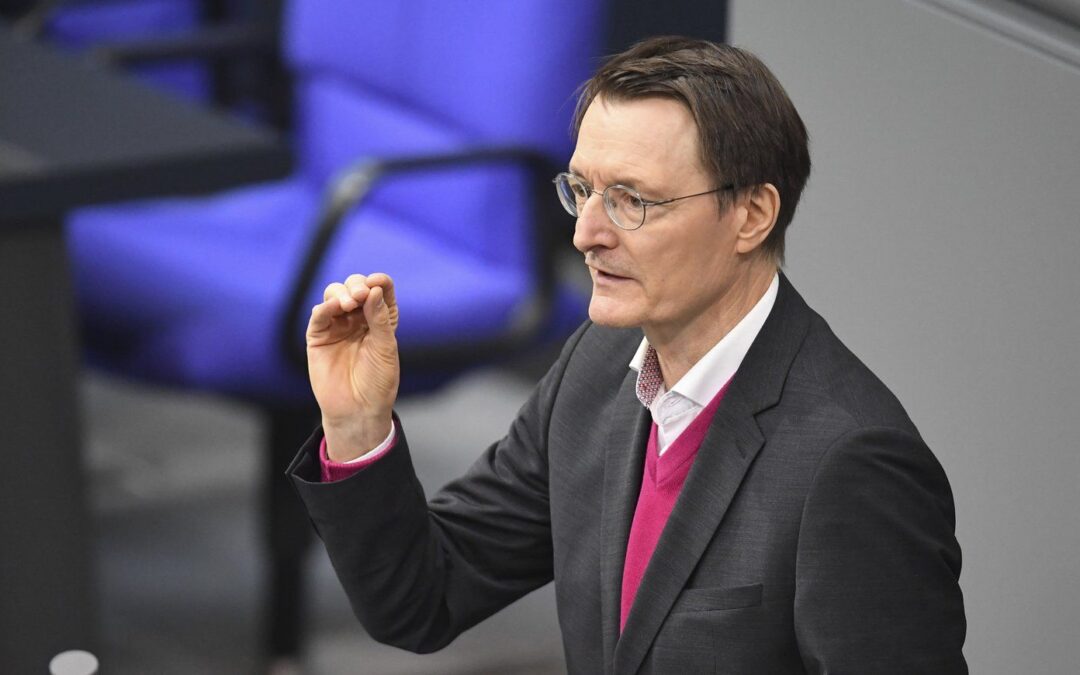
(AP) Berlin — German lawmakers on Friday approved a government plan to liberalize rules on cannabis, paving the way for the country to decriminalize limited amounts of marijuana and allow members of “cannabis clubs” to buy it for recreational purposes.
Health Minister Karl Lauterbach said the government’s aim is to “fight the black market” and better protect young people. He said current laws in the European Union’s most populous nation have failed, with consumption rising and increasing problems with contaminated or overly concentrated cannabis.
Advertisement
“Whatever we do, we can’t carry on like this,” he told lawmakers. “You can stick your head in the sand … but we won’t solve a single problem that way.”
Lauterbach, who noted that he himself long opposed legalizing cannabis, argued that addiction researchers say removing the taboo around marijuana and giving information on its risks is the right approach.
The bill foresees legalizing possession by adults of up to 25 grams (nearly 1 ounce) of marijuana for recreational purposes and allowing individuals to grow up to three plants on their own. That part of the legislation is supposed to take effect on April 1.
German residents who are 18 and older would be allowed to join nonprofit “cannabis clubs” with a maximum 500 members each, starting July 1. The clubs would be allowed to grow cannabis for members’ personal consumption.
Individuals would be allowed to buy up to 25 grams per day, or a maximum 50 grams per month — a figure limited to 30 grams for under-21s. Membership in multiple clubs would not be allowed. The clubs’ costs would be covered by membership fees, which would be staggered according to how much marijuana members use.
The government plans a ban on advertising or sponsoring cannabis, and the clubs and consumption won’t be allowed in the immediate vicinity of schools, playgrounds and sports facilities. An evaluation of the legislation’s effect on protection of children and youths is to be carried out within 18 months of the legislation taking effect.
The main center-right opposition bloc vehemently opposes the change.
“You’re asserting here in all seriousness as health minister … that we will curb consumption among children and young people with the legalization of further drugs,” conservative lawmaker Tino Sorge said to Lauterbach. “That’s the biggest nonsense I’ve ever heard.”
Lauterbach told reporters after the vote that “dealers have no reason at all to celebrate.” He noted that, under the new legislation, dealers who are caught selling to children or youths can expect to face a sentence of at least two years.
Parliament’s upper house, which represents Germany’s 16 state governments, could in principle delay the legislation, though it doesn’t formally require the chamber’s approval. Bavaria’s conservative state government has said it would examine whether legal action against the liberalization plan is possible.
It has eased rules on gaining citizenship and ended restrictions on holding dual citizenship. Among other policies, it also plans to make it easier for transgender, intersex and nonbinary people to change their gender and name in official registers.

























Recent Comments