Deloitte’s study titled “Clearing the Smoke: Insights into Canada’s illicit cannabis market,” pulls together statistics to help detect key findings that the regulated market might employ to leverage tactics and decision-making.
Together with Neobi, Deloitte’s cannabis data partner, the study highlights challenges arising from unregulated vendors. By analyzing gaps in pricing, product diversity and operational practices between the two markets, the study identifies opportunities for potential improvement and strategic intervention.
GO: What motivated Deloitte to undertake a study on this aspect of the cannabis industry?
CM: The primary motivation was a real lack of hard data about the illicit cannabis market in Canada. Additionally, it coincided with the Health Canada Cannabis Act Review and we thought it would be a pertinent issue for both regulators and legal cannabis companies.
GO: Describe the process of collaborating with Neobi.
CM: Neobi was our data partner for this study – they built a special-purpose data collection tool based on their current data analytics platform, which tracks inventory at legal cannabis stores. They were able to re-purpose this tool to track for illicit online stores for the purposes of the study. Additionally, they provided insights and qualitative data points we included in the study.
Advertisement
GO: Why didn’t you approach government-owned recreational cannabis stores for this study?
CM: In many jurisdictions, government-operated cannabis stores may be subject to regulatory pricing controls. This means the government sets prices to achieve specific policy objectives, such as discouraging excessive consumption or minimizing the illicit market. Comparing prices in government stores to those in private retailers might not reflect true market dynamics, as private retailers may have more flexibility in setting their prices. Government stores may adopt a uniform pricing strategy for cannabis products, regardless of variations in local demand or production costs. Private retailers, on the other hand, may respond to local market conditions, leading to more diverse pricing structures. Excluding government stores allows for a more accurate assessment of how market forces influence product costs.
GO: How would you define key characteristics of the illicit market in Canada?
CM: The primary characteristic of the illicit market is its opaqueness. It’s very difficult to gain insights into the market given its illegality. [Other characteristics include] lack of regulations and quality standards, which means illicit producers can operate with a much lower cost structure when compared to legal players.
From the perspective of illicit cannabis users, accessibility and convenience is a key characteristic with distribution channels ranging from online stores, physical stores, and individual dealer networks – which is much more robust when compared to the legal market which is limited to licensed retail stores and select online retailers (largely provincial-run). [Finally,] the illicit user base also tends to be predominantly older legacy users with a strong preference for flower and extract products.
GO: What were the most surprising findings or trends?
CM: The relative convergence of pricing for dry flower between the legal and illicit market was most surprising. Prior to conducting this study, I had assumed the illicit market significantly undercut the legal market in terms of pricing – which is really not the case. The pricing competition in the legal market has brought prices down significantly.
The SKU count and wide distribution of available cannabis products in illicit online stores (1.7x that of legal stores) was also quite surprising. These illicit online retailers seem to have access to a robust illicit production and distribution network providing access to a wide variety of products. And the shipping methods utilized by the illicit online stores was also surprising – most noted explicitly on their website that they use Canada Post and ship with standard mailers. None of the illicit online stores reviewed seemed to go through any efforts to conceal the nature of the products they were shipping, which often also included illicit narcotics such as psilocybin mushrooms, DMT and LSD.
GO: List the levers that licensed producers and regulators have at their disposal to combat the illicit market.
The most significant lever for both would be education – educating cannabis users about the potential dangers of illicit cannabis products (e.g. use of pesticides, no quality control requirements, no testing requirements). The government at multiple levels and through multiple government agencies can pursue enforcement against illicit retailers and producers – via illegal retail, illegal online stores, mailing, banking, etc.
Legal cannabis companies can also seek insights into the illicit market in order to identify weaknesses or gaps in offerings that can be exploited. Part of the reason for selecting this topic for study and partnering with Neobi was to develop a starting point where actionable illicit market insights could be provided to legal players.
GO: Would you agree another potential method to help extinguish the legacy market might be to reduce gatekeeping and fees into the legal market and encourage illicit players to join?
CM: I would temper that point by noting existing excess capacity within the legal market. While we don’t view it as feasible for illicit operations / capacity to be brought into the legal market, the human capital of the illicit market would be invaluable given that the legal market has struggled on the technical side in terms of cultivation, genetics, strain variety, etc. and insights could be provided on how to appeal to / attract illicit market users.
GO: What are some ways consumer behaviour can be swayed to increase purchasing habits from the regulated market?
CM: As noted previously, education regarding the illicit market is key. Highlighting to cannabis users the potential dangers of illicit cannabis products, lack of any QA or testing on cannabis products, criminal penalties and presence of a criminal element in the illicit market should all give consumers pause and make them re-assess purchasing from the illicit market.
GO: What are main consumer patterns or preferences within the illicit market?
CM: Our study didn’t cover consumer patterns or preferences within the illicit market. However, our data did reveal some ancillary consumer patterns, including:
Prevalence of flower and extract inventory in the illicit market seems to indicate a strong preference for these products.
The category preference seems to indicate illicit cannabis users are more sophisticated and educated than the average legal cannabis consumer.
5g seems to have emerged as the preferred size variety for consumers in the legal market, indicating less preference for smaller package sizes. We observed a similar trend in the illicit market where 3.5g and above sizes were more common.
GO: How do you see the dynamic between legal and illicit cannabis markets evolving in the coming years?
CM: In the short-term, I believe we’ll see the status quo with no major developments aside from a continuation of current trends such as price compression, financial viability leading to more consolidation / exiting of legal players, and a relatively stable illicit market.
However, we see the conclusion of the Health Canada Cannabis Act Review to be a real catalyst for potential changes to the illicit market.
GO: How confident are you in the accuracy/reliability of the data presented in the report?
CM: We are confident in the accuracy and reliability of the report. The scope of the report was reduced to dry flower and general inventory data to ensure we could properly QA and vet the data.
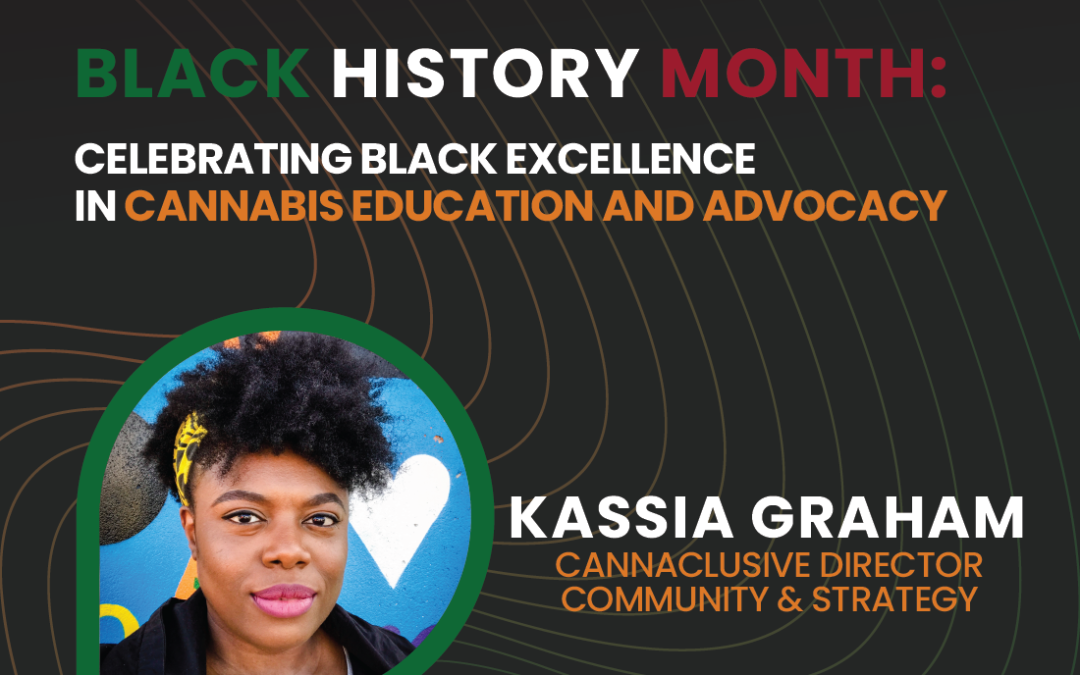
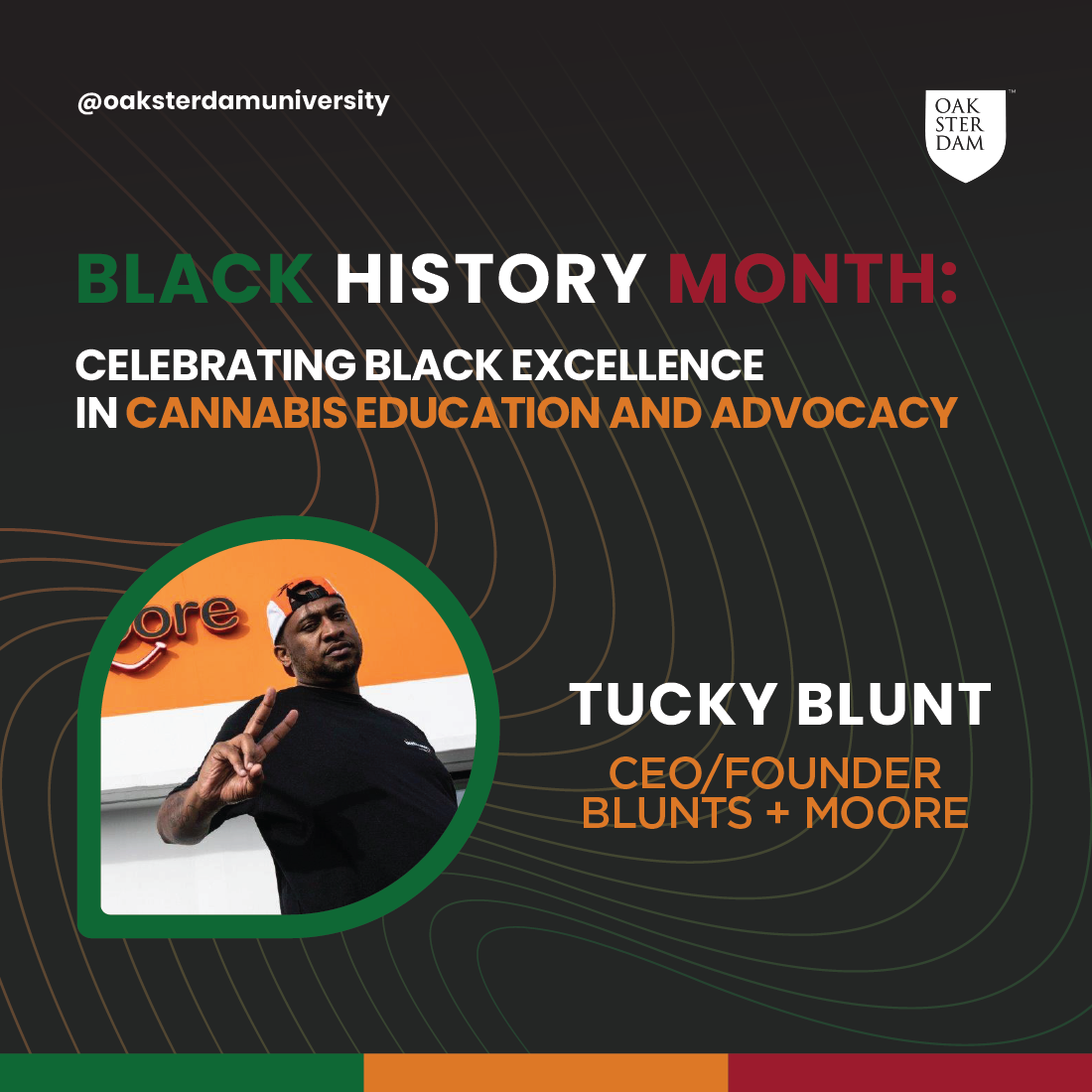
This February, Oaksterdam University proudly celebrates Black History Month by recognizing excellence within the Black community in the areas of Cannabis Education and Advocacy.
Kassia Graham
Meet Kassia Graham, Director of Community and Strategy at Cannaclusive.
Kassia Graham has more than two decades of experience working with diverse organizations including Fortune 500 companies, boutique agencies, non-profits, and more. As director of Community & Strategy, she leads a variety of initiatives including community building, content creation, special/experiential events, marketing, branding, social media, and advocacy. Kassia directs the day-to-day at Cannabis for Black Lives (CfBL). CfBL is a charitable collective born out of Cannaclusive that galvanizes the greater hemp and cannabis industries to support cannabis equity––and adjacent––organizations that serve communities most impacted by the war on drugs. She was awarded the 2023 Green Market Report Women’s Leadership Award for Social Impact.
Alphonso Tucky Blunt, Jr.
Tucky is the CEO & Founder of Blunts And Moore, the 1st retail shop under Oakland’s Cannabis Social Equity Program. Prior to opening his business, he worked at and was a vendor for multiple Bay Area dispensaries from 1999-2004. In 2003 he attempted to become an owner of a dispensary, and was told blacks would never own in this business. In 2005 he was arrested for possession with the intent to sell, and given 10 years of felony probation with a 4-way search clause. Still determined to learn more on the legal side, he attended and graduated from Oaksterdam University in 2008. Tucky took every course that OU had to offer, and to this day, still stays in touch with his Oaksterdam family.
Tucky is the truest example of persistence and determination. He has blazed the path for many more dispensary owners to come from the Oakland Social Equity program and continues to educate just about anyone on the ins and outs of the cannabis industry!
Congresswoman Barbara Lee
Throughout her illustrious career, Congresswoman Lee has been a relentless advocate for justice and equity. Her unwavering commitment to dismantling outdated cannabis laws has paved the way for progress and social change. Congresswoman Lee has been a force for cannabis legalization. She has lent her voice to American Pot Story, an award-winning documentary reflecting Oakland, California’s rich history of civil resistance which led to the opening of the first-ever cannabis college, Oaksterdam University.
We applaud Congresswoman Lee for championing the cause of cannabis decriminalization, breaking down barriers, and promoting inclusivity within the industry. She is fearless in speaking out against terrible ideas and not afraid to upset the status quo, as the original sole voice in opposition to the Iraq War and the War on Drugs. Her leadership has been instrumental in fostering a more equitable and compassionate approach to drug policy.
As we commemorate Black History Month, let us reflect on the tireless efforts of trailblazers like Congresswoman Barbara Lee, who continues to shape a future where justice, equality, and access to cannabis education prevail.
Last month, Israel’s Ministry of Health implemented rules that would make it easier for physicians to administer medical marijuana to their patients. In a statement, the ministry explained that these changes would improve availability of marijuana, decrease bureaucracy for patients who needed the drug and increase medical autonomy of the physicians.
The ministry also noted that emphasis was being placed on affording physicians more discretion to administer medical marijuana in their areas of expertise for a range of indications.
Bazelet Group’s Head of business development, Itai Rogel, stated in an email that prior to this change in policy, marijuana was given to patients as a last resort. This, of course, excluded patients in palliative care and those undergoing oncology treatment. He added that these changes mean that marijuana treatment is here to stay and is becoming more accepted as an additional, alternative mode of therapy. Bazelet Group is involved in the production of a large quantity and wide variety of medical marijuana products.
It is expected that more changes will be announced next month, including the following:
permitting marijuana to be prescribed by specialist physicians working at public hospitals or a healthcare provider in the public sector
the alignment of labeling and packaging with current pharma rules
the transition to a prescription system
Experts revealed that January’s changes also eliminated the provision that allowed medical marijuana to be administered only as a last resort. This, they believe, could increase access to the drug.
For instance, individuals suffering from PTSD may now have quicker access to the drug. Prior to the change, some patients with moderate to severe post-traumatic stress disorder had to be diagnosed for no less than three years to become eligible for medical marijuana. This period has been reduced to 12 months.
Experts also believe that the changes announced in January, which went into effect immediately, will help drive growth in this industry. This can be seen in the recent data released by the Ministry of Health, which shows that in December 2023, about 2,800 new patients received medical cannabis licenses. The previous month, a total of 3,254 new patient licenses were also awarded.
A report by Prohibition Partners set the value of Israel’s medical marijuana market at about $340 million. This makes it one of the biggest nationally regulated medical cannabis markets globally. Prohibition Partners, a data and market intelligence company based in London, is focused on connecting the industry and offering data analytics, specialist information and digital commerce solutions.
The easing of restrictions in Israel is likely to be welcomed by cannabis companies such as TerrAscend Corp. (TSX: TSND) (OTCQX: TSNDF) as the changes enable accessibility to needed medical cannabis treatments.
About CannabisNewsWire
CannabisNewsWire (“CNW”) is a specialized communications platform with a focus on cannabis news and the cannabis sector. It is one of 60+ brands within the Dynamic Brand Portfolio @ IBN that delivers: (1) access to a vast network of wire solutions via InvestorWire to efficiently and effectively reach a myriad of target markets, demographics and diverse industries; (2) article and editorial syndication to 5,000+ outlets; (3) enhanced press release enhancement to ensure maximum impact; (4) social media distribution via IBN to millions of social media followers; and (5) a full array of tailored corporate communications solutions. With broad reach and a seasoned team of contributing journalists and writers, CNW is uniquely positioned to best serve private and public companies that want to reach a wide audience of investors, influencers, consumers, journalists and the general public. By cutting through the overload of information in today’s market, CNW brings its clients unparalleled recognition and brand awareness. CNW is where breaking news, insightful content and actionable information converge.
To receive SMS alerts from CNW, text CANNABIS to 888-902-4192 (U.S. Mobile Phones Only)
Please see full terms of use and disclaimers on the CannabisNewsWire website applicable to all content provided by CNW, wherever published or re-published: https://www.CannabisNewsWire.com/Disclaimer
Lexaria, a global innovator in drug delivery platforms, just announced ambitious plans for the 2024 calendar year
The letter confirms that the 2024 plans have been made possible by significant strides that were made by the company in 2023
Lexaria looks to build on the momentum gained from the previous year, ultimately asserting market dominance and making 2024 its best year yet
Lexaria Bioscience (NASDAQ: LEXX), a global innovator in drug delivery platforms, just announced its ambitious plans for the 2024 calendar year. In his annual letter, Chris Bunka, Lexaria’s CEO, noted that this would mark the year that will prove all of the company’s work of producing hard, factual scientific information worth it, accomplishments that were critical given 2023’s challenges in the capital markets (https://cnw.fm/CqwMq).
Bunka lauded his team for the strides the company made in 2023. Of note was its high success rate in its research and development (“R&D”), all necessary for the coming year. The company experimented with its patented DehydraTECH(TM) technology using an entirely new class of molecules, opening more possibilities for Lexaria. Most notably, its GLP-1 study yielded positive interim and final human pilot study results, showing that the technology delivered a statistically significant proportion of semaglutide and did so more quickly.
“Frankly, the results surprised us with their level of positivity,” noted Mr. Bunka. “It was found that DehydraTECH processing: delivered a statistically-significant higher proportion of the semaglutide, and did so more quickly; reduced the quantity and severity of unwanted side effects; and had a statistically-significant impact on blood sugar in general and much more effectively after eating a meal, than did Rybelsus,” he added.
Such positive results cut across all of Lexaria’s studies, from hypertension to cholesterol, triglyceride and weight loss management, human hormones, blood glucose, and diabetes, as well as oral nicotine. Bunka noted the challenge of convincing companies active in Consumer Packaged Goods (“CPG”) sectors to pay for technology to improve their product offerings, given thin margins.
Bunka acknowledged Invenomic Capital Management LP, who have been shareholders at Lexaria for a long time and who have accumulated more stock throughout the year.
While dealing with anticipated challenges, Lexaria had many wins for 2023, among which were ten newly granted patents. This brought the total patents granted to 38 and made 2023 the year Lexaria was granted the most patents since its inception. This, in addition to the roughly $800,000 recently received from the exercise of warrants, showed the company’s commitment to growing its position as a leader in its segment. The company looks to build on this momentum for 2024, ultimately asserting market dominance and making it the best year yet.
NOTE TO INVESTORS: The latest news and updates relating to LEXX are available in the company’s newsroom at https://cnw.fm/LEXX
About CannabisNewsWire
CannabisNewsWire (“CNW”) is a specialized communications platform with a focus on cannabis news and the cannabis sector. It is one of 60+ brands within the Dynamic Brand Portfolio @ IBN that delivers: (1) access to a vast network of wire solutions via InvestorWire to efficiently and effectively reach a myriad of target markets, demographics and diverse industries; (2) article and editorial syndication to 5,000+ outlets; (3) enhanced press release enhancement to ensure maximum impact; (4) social media distribution via IBN to millions of social media followers; and (5) a full array of tailored corporate communications solutions. With broad reach and a seasoned team of contributing journalists and writers, CNW is uniquely positioned to best serve private and public companies that want to reach a wide audience of investors, influencers, consumers, journalists and the general public. By cutting through the overload of information in today’s market, CNW brings its clients unparalleled recognition and brand awareness. CNW is where breaking news, insightful content and actionable information converge.
To receive SMS alerts from CNW, text CANNABIS to 888-902-4192 (U.S. Mobile Phones Only)
Please see full terms of use and disclaimers on the CannabisNewsWire website applicable to all content provided by CNW, wherever published or re-published: https://www.CannabisNewsWire.com/Disclaimer
Despite some concerns posted online recently, Heath Canada has confirmed that cannabis producers can provide samples to provincially licensed cannabis retailers and their employees.
In an email to StratCann, a representative of Health Canada affirms that federally licensed cannabis producers are “not prohibited from providing a sample of cannabis to a provincially or territorially authorized retailer (or their employees).”
The email also notes that such samples must comply with all applicable packaging and labelling rules and Good Production Practices—no different than any cannabis products they sell.
This, of course, can only be done with the further approval of the provincial regulatory authorities, continues the email to StratCann.
“Employees of a provincially or territorially authorized retailer are not prohibited from possessing, distributing, or selling cannabis, provided they do so as part of their employment duties and functions, and in a manner that is consistent with the conditions that apply to their employers’ authorizations. In other words, it’s up to PTs [Provinces and Territories] to regulate whether and how employees of retail stores can possess, distribute (and potentially consume) free samples in the context of their employment duties and functions. Each province or territory could have additional legislation that relates to this type of activity.”
StratCann also emailed four provinces that have created rules to allow product sampling: British Columbia, Alberta, Saskatchewan, and Ontario. All except Saskatchewan have also confirmed with StratCann that such sampling is compliant with their own rules. Saskatchewan has yet to reply as of press time.
Product sampling has proven to be an effective educational and marketing tool for producers that respects the policy objective of not inducing consumers.
Trina Fraser, Lawyer
Sampling has been allowed for some time—with Ontario and Saskatchewan allowing it since legalization began, and Alberta and British Columbia allowing it beginning in 2023. Health Canada even issued their own guidance on cannabis product sampling. However, after one lawyer who specializes in serving the cannabis industry posted an email exchange with the federal health agency, there were some concerns that Health Canada was stating that such practices were not allowed under federal law.
Harrison Jordan from Substance Law says he initially reached out to Health Canada to inquire about cannabis producers providing samples to their employees, an activity that is not allowed. In the email exchange he posted online, though, some, including Jordan, were concerned that Health Canada was also saying that cannabis producers could only provide product samples to store owners, not their employees and that these samples could not be consumed.
As the practice of cannabis producers providing samples to retail employees, or Budtenders, is a common one, with some events built specifically around this practice, the ramifications of such an interpretation could have been significant.
“It seems like in the email they sent to me, it was unclear that there was one expectation for provincially authorized retailers and another expectation for licence holders.”
“I’m glad that they have provided that clarification. It could have been clearer when they reached out to me, but I’m very happy that they have put a correction to this.”
Trina Fraser, another lawyer who specializes in the cannabis space in Canada, also says she’s glad the issue has been clarified in favour of such activities.
“I’m happy to see Health Canada provide this clarification. Product sampling has proven to be an effective educational and marketing tool for producers that respects the policy objective of not inducing consumers.”
Ontario’s rules allow retailers to accept items, benefits, or services related to education or training, including “cannabis product samples.”
AGCO has confirmed with StratCann that such sampling is allowed under their own provincial rules:
“…licensed retailers are able to accept items, benefits, or services exclusively for the provision of training or education related to cannabis.
“The expectation is that sample sizes would be a small quantity of a particular strain of cannabis or product available in Ontario, and that the samples should be received infrequently. Consumption of samples by licensees or their employees must be done in a manner that is compliant with all applicable legislation, regulation, and standards.”
Saskatchewan’s rules allow the distribution of cannabis to a cannabis retail store permittee.
Alberta’s rules allow “cannabis representatives” the ability to provide samples of cannabis products for marketing purposes for licensee use only.
A representative with the AGLC, which oversees cannabis in Alberta, told StratCann in part via email:
“The intent of the policy is that all samples provided are organized and approved through the retail licensee who can then choose to provide to staff.”
British Columbia’s rules allow federally licensed cannabis producers to “promote their cannabis by providing cannabis store licensees product samples for a nominal fee.” BC is the only province to require a “nominal fee” to be attached to such activities.
A representative with BC’s Ministry of Public Safety and Solicitor General, which oversees cannabis in the province, confirmed with StratCann via email:
“CRS and PRS (Cannabis Retail Store and Producer Retail Store) licensees and their employees can accept samples from a federal licence holder but are not allowed to supply cannabis samples to other cannabis retail store licensees.”
Looking to work in the cannabis industry? An array of cannabis jobs are available across Canada. We’ve compiled just a handful below in our February round-up.
Production:
Noya Cannabis Inc., in Hamilton, ON, is looking for a Cultivation Technician to participate in production-related activities.
Sugar Cane Cannabis, a micro-cultivator, processor, and retailer in Williams Lake, BC, is looking to hire a Cannabis Trimmer.
Auxly Cannabis Group in Charlottetown, PEI, is seeking a Product Development Scientist specializing in formulation and Data Analysis. Auxly has several job openings posted in several locations.
Black Rock Cannabis Company is currently posting for a Farm Supervisor in Leduc, AB, to supervise farm workers and harvesting labourers, maintain quality control and production records, and ensure farm safety and bio-security procedures are followed.
There’s a full-time opening for a Sales Business Development professional at CannDelta Inc., located in Toronto, ON, to help grow the client base and meet sales targets.
“Big Brother is Watching You.”―George Orwell, 1984
2024 is the new 1984.
Forty years past the time that George Orwell envisioned the stomping boot of Big Brother, the police state is about to pass off the baton to the surveillance state.
Fueled by a melding of government and corporate power—the rise of the security industrial complex—this watershed moment sounds a death knell for our privacy rights.
An unofficial fourth branch of government, the Surveillance State came into being without any electoral mandate or constitutional referendum, and yet it possesses superpowers, above and beyond those of any other government agency save the military.
It operates beyond the reach of the president, Congress and the courts, and it marches in lockstep with the corporate elite who really call the shots in Washington, DC.
This is the new face of tyranny in America: all-knowing, all-seeing and all-powerful.
Tread cautiously.
Empowered by advances in surveillance technology and emboldened by rapidly expanding public-private partnerships between law enforcement, the Intelligence Community, and the private sector, the Surveillance State is making the fictional world of 1984, Orwell’s dystopian nightmare, our looming reality.
1984 portrays a global society of total control in which people are not allowed to have thoughts that in any way disagree with the corporate state. There is no personal freedom, and advanced technology has become the driving force behind a surveillance-driven society. Snitches and cameras are everywhere. People are subject to the Thought Police, who deal with anyone guilty of thought crimes. The government, or “Party,” is headed by Big Brother who appears on posters everywhere with the words: “Big Brother is watching you.”
Indeed, in our present age of ubiquitous surveillance, there are no private lives.
Everything is increasingly public.
What we are witnessing, in the so-called name of security and efficiency, is the creation of a new class system comprised of the watched (average Americans such as you and me) and the watchers (government bureaucrats, technicians and private corporations).
We now find ourselves in the unenviable position of being monitored, managed and controlled by our technology, which answers not to us but to our government and corporate rulers.
This is the fact-is-stranger-than-fiction lesson that is being pounded into us on a daily basis.
In this way, 1984, which depicted the ominous rise of ubiquitous technology, fascism and totalitarianism, has become an operation manual for the omnipresent, modern-day surveillance state.
There are roughly one billion surveillance cameras worldwide and that number continues to grow, thanks to their wholehearted adoption by governments (especially law enforcement and military agencies), businesses, and individual consumers.
Surveillance cameras mounted on utility poles, traffic lights, businesses, and homes. Ring doorbells. GPS devices. Dash cameras. Drones. Store security cameras. Geofencing and geotracking. FitBits. Alexa. Internet-connected devices.
Stingray devices, facial recognition technology, body cameras, automated license plate readers, gunshot detection, predictive policing software, AI-enhanced video analytics, real-time crime centers, fusion centers: all of these technologies and surveillance programs rely on public-private partnerships that together create a sticky spiderweb from which there is no escape.
With every new surveillance device we welcome into our lives, the government gains yet another toehold into our private worlds.
As the cost of these technologies becomes more affordable for the average consumer, an effort underwritten by the tech industry and encouraged by law enforcement agencies and local governing boards, which in turn benefit from access to surveillance they don’t need to include in their budgets, big cities, small towns, urban, suburban and rural communities alike are adding themselves to the surveillance state’s interconnected grid.
What this adds up to for government agencies (that is, FBI, NSA, DHS agents, etc., as well as local police) is a surveillance map that allows them to track someone’s movements over time and space, hopscotching from doorbell camera feeds and business security cameras to public cameras on utility poles, license plate readers, traffic cameras, drones, etc.
It has all but eliminated the notion of privacy enshrined in the Fourth Amendment and radically re-drawn the line of demarcation between our public and private selves.
The police state has become particularly adept at sidestepping the Fourth Amendment, empowered by advances in surveillance technology and emboldened by rapidly expanding public-private partnerships between law enforcement, the Intelligence Community, and the private sector.
Over the past 50-plus years, surveillance has brought about a series of revolutions in how governments govern and populations are policed to the detriment of us all. Cybersecurity expert Adam Scott Wandt has identified three such revolutions.
The first surveillance revolution came about as a result of government video cameras being installed in public areas. There were a reported 51 million surveillance cameras blanketing the United States in 2022. It’s estimated that Americans are caught on camera an average of 238 times every week (160 times per week while driving; 40 times per week at work; 24 times per week while out running errands and shopping; and 14 times per week through various other channels and activities). That doesn’t even touch on the coverage by surveillance drones, which remain a relatively covert part of police spying operations.
The second revolution occurred when law enforcement agencies started forging public-private partnerships with commercial establishments like banks and drug stores and parking lots in order to gain access to their live surveillance feeds. The use of automatic license plate readers (manufactured and distributed by the likes of Flock Safety), once deployed exclusively by police and now spreading to home owners associations and gated communities, extends the reach of the surveillance state that much further afield. It’s a win-win for police budgets and local legislatures when they can persuade businesses and residential communities to shoulder the costs of the equipment and share the footage, and they can conscript the citizenry to spy on each other through crowdsourced surveillance.
The third revolution was ushered in with the growing popularity of doorbell cameras such as Ring, Amazon’s video surveillance doorbell, and Google’s Nest Cam.
Amazon has been particularly aggressive in its pursuit of a relationship with police, enlisting them in its marketing efforts, and going so far as to hosting parties for police, providing free Ring doorbells and deep discounts, sharing “active camera” maps of Ring owners, allowing access to the Law Enforcement Neighborhood Portal, which enables police to directly contact owners for access to their footage, and coaching police on how to obtain footage without a warrant.
Ring currently partners with upwards of 2,161 law enforcement agencies and 455 fire departments, and that number grows exponentially every year. As Vice reports, “Ring has also heavily pursued city discount programs and private alliances with neighborhood watch groups. When cities provide free or discounted Ring cameras, they sometimes create camera registries, and police sometimes order people to aim Ring cameras at their neighbors, or only give cameras to people surveilled by neighborhood watches.”
In November 2022, San Francisco police gained access to the live footage of privately owned internet cameras as opposed to merely being able to access recorded footage. No longer do police even have to request permission of homeowners for such access: increasingly, corporations have given police access to footage as part of their so-called criminal investigations with or without court orders.
The fourth revolutionary shift may well be the use of facial recognition software and artificial intelligence-powered programs that can track people by their biometrics, clothing, behavior and car, thereby synthesizing the many strands of surveillance video footage into one cohesive narrative, which privacy advocates refer to as 360 degree surveillance.
While the guarantee of safety afforded by these surveillance nerve centers remains dubious, at best, there is no disguising their contribution in effecting a sea change towards outright authoritarianism.
For instance, as an in-depth investigative report by the Associated Press concludes, the very same mass surveillance technologies that were supposedly so necessary to fight the spread of COVID-19 are now being used to stifle dissent, persecute activists, harass marginalized communities, and link people’s health information to other surveillance and law enforcement tools.
As the AP reports, federal officials have also been looking into how to add “‘identifiable patient data,’ such as mental health, substance use and behavioral health information from group homes, shelters, jails, detox facilities and schools,” to its surveillance toolkit.
These cameras—and the public-private eyes peering at us through them—are re-engineering a society structured around the aesthetic of fear and, in the process, empowering “people to not just watch their neighborhood, but to organize as watchers,” creating not just digital neighborhood watches but digital gated communities.
Finally, there is a repressive, suppressive effect to surveillance that not only acts as a potentially small deterrent on crime but serves to monitor and chill lawful First Amendment activity.
As Matthew Feeney warns in the New York Times, “In the past, Communists, civil rights leaders, feminists, Quakers, folk singers, war protesters and others have been on the receiving end of law enforcement surveillance. No one knows who the next target will be.”
No one knows, but it’s a pretty good bet that the surveillance state will be keeping a close watch on anyone seen as a threat to the government’s chokehold on power.
After all, as I make clear in my book Battlefield America: The War on the American People and in its fictional counterpart The Erik Blair Diaries, the Surveillance State never sleeps.
WC: 1551 ABOUT JOHN W. WHITEHEAD
Constitutional attorney and author John W. Whitehead is founder and president of The Rutherford Institute. His most recent books are the best-selling Battlefield America: The War on the American People, the award-winning A Government of Wolves: The Emerging American Police State, and a debut dystopian fiction novel, The Erik Blair Diaries. Whitehead can be contacted at staff@rutherford.org. Nisha Whitehead is the Executive Director of The Rutherford Institute. Information about The Rutherford Institute is available at www.rutherford.org. Publication Guidelines / Reprint Permission
John W. Whitehead’s weekly commentaries are available for publication to newspapers and web publications at no charge. Please contact staff@rutherford.org to obtain reprint permission











Recent Comments