A police captain in northern Quebec says the provincial government’s limits on payment options for online cannabis orders are pushing people to the illicit market.
Patrice Abel, a captain with the Service de Police du Nunavik, a region that makes up the northern third of Quebec, tells Nunatsiaq News that he estimates that more than 80% of the residents in the region still purchase their cannabis from the illicit market.
One of the reasons so many in Nunavik are still buying cannabis from the illicit market, says Abel, is a lack of legal retail stores and the requirement to use a credit card when purchasing from the SDQC.ca, Quebec’s legal online cannabis portal.
Illicit online stores, meanwhile, offer other payment options such as electronic money transfer services like PayPal.
Société québécoise du cannabis (SQDC) is the only retail store in Quebec allowed to sell cannabis, with 98 locations across the lower third of the province.
The Kativik Regional Government is the representative regional authority for most of the Nunavik region of Quebec and has expressed concern about cannabis legalization and its potential impacts on the community in the past.
About 60 percent of the region’s 14,000 inhabitants, 90% of whom are Inuit, are under the age of 25. According to a report in 2017, Nunavik has the highest rate of use of cannabis in Québec.
Nunavik has 14 communities that are only connected by air, and several of them are “dry” communities.
A new three-year study to determine how cannabis is used in Canada’s territories has been launched by a group of university researchers and health experts, with funding from Health Canada.
Five years into a legal non-medical cannabis market in Canada, the industry is beginning to mature in many ways, including the unfortunate demise of many hopeful companies.
Bankruptcies, insolvencies, and restructuring are becoming more common, even as new licences continue to come in every month.
“…the company should be getting key creditors on board before the filing. You don’t want to surprise people.”
Dina Kovacevic, Insolvency Insider
A relative handful of cannabis companies filed for creditor protection in 2023, according to listings by Insolvency Insider Canada, which focuses on the Canadian insolvency market.
One of the most common filings is for the Companies’ Creditors Arrangement Act (CCAA), which allows insolvent companies to restructure their businesses and finances. With proper planning, a company can take this step to avoid declaring bankruptcy, says Dina Kovacevic, Editor at Insolvency Insider.
Typically, she explains, if a cannabis company is in trouble, it can either file for CCAA protection, or a notice of intent to make a proposal, or an “NOI” under the Banking and Insolvency Act. This is, ideally, a step taken to avoid being put into bankruptcy or receivership by a creditor or a company declaring bankruptcy themselves.
One of the most significant points Kovacevic stresses is for distressed companies to ensure they take steps in advance if they see themselves running into long-term financial issues.
“If a company is facing financial issues and it wants to restructure, it doesn’t just want to go out of business, and perhaps it fears that its secured lender is going to put it into receivership. I’d say that it has several options.
“The first option is to try to work with its creditors and suppliers on an out-of-court restructuring plan. The second would be to file for CCAA protection, and even in that type of situation, I would say that the company should be getting key creditors on board before the filing. You don’t want to surprise people.”
“You have to critically self-assess where you are. Doing nothing isn’t an option. It’s being very critical of yourself as a business owner. How are you competing?
Clark Lonergan, BDO Canada
Clark Lonergan, a Financial Recovery Services partner in BDO Canada’s Toronto office, reiterates that any company facing financial challenges needs to make tough choices early on in the process to ensure they can either bring in new investment or creditors, or have a chance to wind down their operations and liquidate assets on a timeline they control.
“You have to critically self-assess where you are,” he says. “Doing nothing isn’t an option. It’s being very critical of yourself as a business owner. How are you competing?
“What’s your balance sheet look like? Do you have sufficient capital to weather the ups or downs? And who are your stakeholders? Do you have bank debt? Is it all equity? How are you competitive in this market?”
Assessing these issues well beforehand can make a huge difference. Bringing in others who can assist in the process can also be important.
“When you get into a level of distress, it becomes more crisis management,” adds Lonergan. “So you’re dealing with stakeholders, focussing on liquidity, on meeting payroll and dealing with creditors who need to be paid. So the additional perspective of an advisor can mean the business can still run, while ensuring you have someone able to steer you through that process, with all the available options and resources you as a business owner might not know about.”
The cannabis industry had an initial burst of interest due to the excitement of legalization, he argues, but that excitement and “wild west” mentality was quickly tempered by the realities of a complex, highly regulated industry.
These realities will continue to settle in in the coming years, says Kovacevic at Insolvency Insider.
“At the end of the day, we’re still expecting more,” she says. “It’s still early in the industry cycle, people are still dealing with oversupply. There’s a lot of growing pains, a ton of consolidation that’s happening. So I think we’re still in the pretty early stages of this.”
A new poll has found that the majority of voters in America are in favor of cannabis being legalized in all states. The poll conducted by the Tarrance Group involved interviews with about one thousand voters. The interviews were carried out Jan. 3–4, 2024.
The poll determined that 57% of those who responded support nationwide legalization of marijuana. Of this number, 35% admitted to strongly supporting the change in policy. It also found that roughly 55% of GOP voters aged 55 and below supported the legalization of marijuana. In addition, 74% of Democrats aged 55 and below also admitted to supporting the drug’s legalization in all states. Among independent voters, 56% stated that they were in favor of countrywide legalization of marijuana.
It should be noted that various measures have been introduced in Congress that would allow states to make their own decisions concerning marijuana while putting an end to the federal criminalization of the drug.
In an interview, U.S. Cannabis Council’s Josh Glasstetter stated that the survey’s results demonstrated that bipartisan support for the federal legalization of marijuana was growing and a generational shift on marijuana was underway. He then noted that during this year’s election, younger voters who strongly supported legalization would be sought after.
Overall, 67% of voters 18 to 44 years of age say they support a countrywide model to legalize marijuana. This is significantly higher than 57% of those aged 45 to 64 and 47% of those aged 65 and older.
Poll results noted that 68% of President Joseph Biden supporters also favor the reform with 48% of GOP members who support Donald Trump sharing these sentiments. With regard to undecided voters, 50% also support the change in policy.
This poll’s results are similar to those from a separate 2023 survey, which determined that support for ending the federal prohibition of cannabis had hit a new high nationally, with 7 in every 10 Americans supporting the reform. A different survey by Lake Research Partners also found that President Biden stood to make great political gains if cannabis was rescheduled under his administrative directive.
The survey was commissioned by the Coalition for Cannabis Scheduling Reform. The survey comes after the U.S. Department of Health and Human Services completed its scientific review in 2023 and gave its recommendation that marijuana be rescheduled. Despite this recommendation, the matter can only be decided by the DEA.
The drug’s rescheduling may not completely phase out the illicit market, however, Another poll found that nearly one-third of cannabis consumers would return to the illicit market if the drug was rescheduled and then made available solely as an approved prescription drug under the FDA.
The evolving regulatory landscape in the United States is being closely watched by companies such as TerrAscend Corp. (TSX: TSND) (OTCQX: TSNDF) so that these companies can quickly ascertain how any changes made could impact their operations.
About CNW420
CNW420 spotlights the latest developments in the rapidly evolving cannabis industry through the release of two informative articles each business day. Our concise, informative content serves as a gateway for investors interested in the legalized cannabis sector and provides updates on how regulatory developments may impact financial markets. Articles are released each business day at 4:20 a.m. and 4:20 p.m. Eastern – our tribute to the time synonymous with cannabis culture. If marijuana and the burgeoning industry surrounding it are on your radar, CNW420 is for you! Check back daily to stay up-to-date on the latest milestones in the fast -changing world of cannabis.
To receive SMS alerts from CNW, text CANNABIS to 888-902-4192 (U.S. Mobile Phones Only)
Please see full terms of use and disclaimers on the CannabisNewsWire website applicable to all content provided by CNW, wherever published or re-published: https://www.CannabisNewsWire.com/Disclaimer
A Canadian company will be one of a handful of companies producing cannabis for Dutch coffee shops as part of a new program in the Netherlands.
Village Farms International Inc., the parent company of BC cannabis producer Pure Sunfarms, recently announced that it had begun building its first indoor cannabis production facility in Drachten, Netherlands. Village Farms acquired Village Farms’ majority-owned (85%) subsidiary, Leli Holland in September 2021.
Village Farms intends to start production for the fourth quarter of 2024 and says Leli Holland plans to sell flower and hash products across consumer-preferred formats, including pre-rolls.
“As a limited license market with a long-established consumer base and a cannabis-friendly regulatory environment, the Netherlands represents a very attractive near-term opportunity in our international cannabis strategy,” said Michael DeGiglio, President and Chief Executive Officer, Village Farms.
“We are thrilled to build on our rich history in the Netherlands to leverage our experience as a leading, profitable cannabis business in Canada for this first major European recreational market. Our two-phased approach to ramping up production enables us to enter the market in a timely and capital efficient manner in line with the roll out of the Dutch Program. We look forward to contributing.”
The Dutch government announced its plans for the project in 2022, which include exploring the possibility of a “closed cannabis chain” for cannabis coffee shops in several cities across the country.
In December 2023, the first cannabis under this program made its way to the first approved coffee shop.
The goal of the closed-loop experiment is to explore the possibility of a quality-controlled cannabis production and distribution system in the country as an alternative to the current “tolerance policy” that has not-legal-but-tolerated “coffee shop” style points of sale and unregulated, illicit growers who supply them.
“By regulating the sale of cannabis, we have a better insight into the origin of the products and the quality,” Dutch Health Minister Ernst Kuipers said recently. “In addition, we can better inform consumers about the effects and health risks of cannabis use.”
from Leli Holland’s Facebook page
The Dutch cities of Breda and Tilburg are home to the first two shops to sell this cannabis. The Leli Holland nursery is reported to be located an existing building in an industrial district in the city of Drachten.
The municipality of Smallingerland recently granted the company a permit to begin retrofitting the location. Drachten is a village within Smallingerland.
The policy that provides for these shops to exist was first introduced in the Netherlands in 1967, allowing adults to buy small amounts of cannabis in designated “coffee shops.” However, the issue of how to properly regulate the supply of these coffee shops has long-simmered in the country over concerns with public safety and law enforcement, especially with many of the commercial growers located in residential areas.
In 2009, an advisory committee looking into the issue recommended a small-scale experiment to explore how to regulate coffee shops’ supply. In 2015, the Association of Dutch Municipalities added to the pressure on the government to regulate these supply chains.
This led to the creation of the Coffee Shop Chain Act, which was successfully passed through parliament in 2020. Since then, the Dutch government has been preparing for the study based on the input of its expert committee.
The committee—which consisted of experts in public health, addiction, law enforcement, local government, criminology, and law—held round table discussions with stakeholders like mayors, coffee shop owners, cannabis producers, regulators, scientists, cannabis users, and addiction experts.
The committee recommends including numerous small and medium-sized cities across the country. Seventeen out of 23 municipalities who applied were eligible to participate.
In addition to better monitoring of both the safety of the cannabis and its supply chains, the program will also seek to evaluate consumer purchasing habits. This includes data such as how many purchases occur within the currently “tolerated” system vs the entirely unregulated illicit market.
Like Canada, the committee’s report also discusses the challenges of such an experiment and any possible future legalization, which contradicts existing international laws. This is one reason why the government is not seeking to import any cannabis for this trial.
Growers selected for the program must pass various microbial and pesticide testing standards and potentially adhere to Good Agricultural Practice (GAP) and Good Manufacturing Practices (GMP). The committee also recommends a “soft” approach to any recommendations for irradiation or remediation, given stakeholder feedback citing consumer distaste for such a designation.
Product labels will be required to include warnings, related information, and a THC logo, and products must be sealed in a resealable, child-safe container. Selected growers will be required to be registered with the Chamber of Commerce.
Featured image of the location where the Leli Holland facility will be built. Image via Google Maps
From an understanding of Rene Guenon’s ‘The Reign of Quantity’
In modern times we have all accepted a reality based solely on and limited to the five senses. During the past 6,000 years, the period known as the Kali Yuga, our innate abilities to perceive the Invisible Realms have atrophied to the point that most humans are incapable of even a remote awareness of, much less the Joy of interacting with, that which we cannot see, hear, touch, etc.
It is therefore understandable why most simply deny the very existence of such realities. They are not capable of perceiving them. The result of this disastrous defect of our comprehension has produced the ludicrous concept of ordinary life or real life, which in its absolute denial of anything beyond the five senses engulfs us all in total delusion.
Tragically, anything that is perceived beyond the accepted norm is regarded as weird, strange & bizarre, and is consequently relegated to a sort of carnival-freak-show, yellow-journalism state of mind, which derides believers for indulging in childish entertainment and titillation.
Such a deluded error is not only adolescent in its comprehension, but is also the densest of illusion because it ignores the underlying metaphysics that are the actual source of the external holographic matrix which we, in our limited state of consciousness, mistake for reality.
This confused and confining insistence on ordinary life has become more severe as time has drawn us down into the final stages of this cycle of time. As the Veils of Illusion have solidified around us, human consciousness on this planet has successfully degenerated into the aggressively empty, heartless, consumer society we currently inhabit barely half-alive.
The term ‘get real’ is symptomatic of the toxic soup our brains are submerged in. We are mired in an integrated perceptual structure, a gestalt, an invisible sea of delusion that so completely permeates our thinking and our consciousness that we do not even begin to realize how cut off we are from our true nature and the multitude of Myriad Worlds. Rene Guenon uses the term multiple states of being.
We have become engulfed in ‘quantity’, in enumeration. We are devoted to measuring the endless surfaces of what we imagine to be solid matter. We have lost all connection to any truth beyond what we have come to accept as the human state. Frightened by what we consider non-human, or above human, supra-human, we term these experiences unreal and, to our great detriment, allow only what we judge to be real and sensible into our hologram.
Thus we have fallen into density and allowed our consciousness to be programmed and brainwashed. Human consciousness has become limited to the point of extinction.
The progressive degeneration of science and philosophy has brought us down to a common, as in mediocre, level of understanding of this world. In thus reducing everything to human terms, we have moved from rationalism to materialism. We are not merely human.
We are the precious fragments of Isness projected into Time and Space through the data-collecting vehicle that can be described as human, but is not limited to that. This gestalt of ignorance of our true being has, as Guenon brilliantly says, penetrated and impregnated the whole nature of the individual. We are completely submerged in our ignorance.
We have locked our consciousness in a very small, moldy, dark basement – a frequency prison created by us. This acceptance of quantifying surfaces as the be-all and end-all of knowledge has brought us to mechanism and materialism, and has given the priesthood of this absurdly limited so-called science an inordinate and totally undeserved control over our lives.
We believe almost anything our blinded-by-science hierarchal PhD priesthood imposes upon us. Despite the fact that these factual scientific oh-so-holy proclamations change almost daily in a never-ending mega-ego battle for warlike intellectual dominance and desperation for funding, we hang on to every soap-opera word of the latest ivory tower edicts.
Rene Guenon tells us that truth in modern times has been lost and replaced by utility and convenience. Science is no longer the pure search for truth, but the slave of commerce and industry. Science has become the servant of our consumer cravings and is dependent on producing profitable results for its survival.
Rather that holding these minions of corporate industry in high esteem and allowing them to dictate the atmosphere of our very being, these unfortunates who have been blinded-by-science should be regarded as what they are – beings whose God-given ability to perceive what lies beyond the five senses has atrophied, become functionally extinguished, and is now dead & gone!
Like stubborn children competing with each other for parental attention, these priests of science have become so blind that they are incapable of considering any idea outside of their own ego driven turf. They seem to have lost the ability to think in any other way.
The measurement of that which can be registered by the five senses, in the guise of modern science, may indeed go on ad nauseum forever; but in doing so, leaves us all skating on the thin ice of a miasma of amnesia – and in no way reflects the totality of existence.
The quantification of the material world without an understanding of the
Invisible Realms that support it, which in fact are the actual Source of such apparent solidity, is the degenerative path to the catastrophic conclusion of this cycle of time, the Kali Yuga, our current Age of Conflict and Confusion.
Dispersed power is hidden power, hidden power is unaccountable power, unaccountable power is illegitimate power, and illegitimate power does not deserve your compliance
Who, if anyone, or what, if anything, is in charge?
In many ways this is the question of the age, inspiring passionate debates across the ideological spectrum, with divergent answers springing not just from left and right but from every boutique micro-ideology howling within humanity’s splintered mind. Dissident rightists talk about elite theory and the Cathedral, an emergent managerial structure sprawling across the institutions that coordinates itself with power-seeking talking points the way ant colonies use pheromones to swarm towards food supplies. Libertarians ascribe malign incompetence to the state and its lumbering bureaucracies, and to the central banks and their fraudulent fiat currencies. Accelerationists point to the blind idiot god of technocapital. Wignats talk about The Jews. Conspiracy analysts finger the World Economic Forum, the bankers, the intelligence agencies, the reptoids. Christians speak of the Devil, gnostics of archons. The Woke rant about the invisible witchcraft of systemic racism, white privilege, cisheteronormativity, misogyny, and every once in a while, recall their origins with Marx and remember to blame capitalism.
What all of these have in common is that they remove the source of agency in public affairs from the visible to the invisible. It is not the politicians that we can see who coordinate the world and provide impetus to policy changes, but hidden puppet masters – human or systemic – who manipulate them from off-stage. If there is a single, unifying theme around which most of the current year’s human species can coalesce across all ideological divides, it is this: the true power is hidden.
This state of ignorance encourages an uneasy sense of paranoia. We’re like travellers in a dark forest, unable to see more than a few feet into the shadows beyond a path we aren’t even sure we didn’t wander off some time ago. Every cracking branch in the undergrowth, every rustle in the leaves, every animal cry causes us to startle. It could be nothing. It’s probably nothing. But it could be a wolf. Or a bear. Or some eyeless monster from our childhood nightmares. It probably isn’t. It’s probably just a racoon. But you can’t see what it is, and your imagination fills in the details.
None of which is to say there aren’t monsters out there.
Secrecy in public affairs puts people on edge. You cannot trust what you cannot verify, and you cannot verify what you cannot see. There’s a reason that the archetype of the oily vizier whispering honeyed manipulations in a credulous king’s ear is universally reviled. Whether the king is a good king or a bad king, if he’s really the king, at least you know who’s in charge; you know the rules he follows; you know the customs that bind him, the ambitions that drive him, the personality that animates him. There’s a certain trustworthiness to that. The power that hides itself behind the throne is power that cannot be trusted.
Maybe the vizier is in truth a good vizier, giving the king sage advice, motivated only by his love of the kingdom and his desire for the general happiness and prosperity. But maybe he isn’t. Maybe he’s a serpentine traitor with a gnawing, insatiable hunger for power and wealth at the sadistic core of the sucking black singularity he has in place of a heart. The point is that, so long as he lurks in the shadows, you can’t really know, and your imagination will fill that null space of unknowing with your fears.
In the managerial state, power is deliberately opaque. We face not a single untrustworthy vizier, but armies of them, faceless bureaucrats and nondescript functionaries who camouflage themselves within the dense undergrowth of corporate org charts. Corner one of them over a decision you dislike, and they throw their hands up and say, it wasn’t me, I’m just following policy, or best practices, or mandates, or The Science, or whatever. Try to trace the origin of the policy, and you find yourself in a bewildering web of think tanks, policy institutes, committees, and so forth, none of which is willing to take direct responsibility for the policy. Every once in a while you might manage to find a unique origin point, and almost invariably you find that it started as a simple suggestion, from some nobody with no particular power or influence, who simply put an idea out there which then took on a life of its own.
The lockdowns are a case in point. The idea seems to have originated with a middle school science fair project in which a tween ran a toy model on her computer that showed that if people were locked in their homes viral outbreaks could be prevented, an idea which is obviously true and equally obviously impossible in practice, and ruinous in direct proportion to whatever degree it is put into practice. Early in 2020 it was popularized by some blogger whose name I can’t recall, who wrote something on Medium about dancing hammers which struck panicked midwits as very clever. Then it got picked up by the managerial network organism, turned into policy, and the world was broken.
The lockdowns are an extreme example, but really our entire system works like this. Take building codes. Wherever you live, there is a building code. It specifies in exact detail the best practices for every aspect of construction, and unless you follow it to the letter you will not be permitted to proceed with whatever project you have in mind, whether it’s erecting an apartment block or putting an extension on your deck. Where did the building code come from? It wasn’t the building inspector: he’s just enforcing it. It wasn’t the mayor or the members of the town council: they wouldn’t know where to start. No, the building code emerged from some local bureaucracy, staffed by experts, who put together its elements on the basis of things that other experts said were good things to do. You don’t know their faces or their names. You will almost never track down the specific person who put a specific requirement into the building code. It was probably decided upon in a closed committee meeting, and no one on the committee will admit direct responsibility. Indeed, the committee itself will not take direct responsibility: they were just following the best practices of other committees, modifying other building codes, in other municipalities. If you happen to disagree with some element of the building code – finding it overly restrictive, too cautious, too expensive for whatever marginal improvement in structural stability or energy efficiency it is intended to enforce – you have no way of changing it. The people on the committee weren’t voted into their positions. They don’t have to listen to the public, and therefore they don’t. Meanwhile, within their sphere of responsibility they have absolute power to enforce their diktats. Maybe you can reason with them when exceptions to the building code arise, and maybe you can’t; that’s up to them, and not to you.
That’s a fairly trivial example, albeit one with implications for the housing crisis currently afflicting much of the Anglosphere. It’s illustrative of how our entire system works. We are governed by a sentient miasma of unaccountable regulatory authorities whose arbitrary powers extend into ever more intimate aspects of our lives like the pseudopodia of some vast smothering organism. Their power is seemingly absolute, yet there is never anyone responsible.
Who decided on the health code? Workplace safety regulations? Environmental protections? The rules governing public parks and beaches? The speed limit? Where you’re allowed to park? Where you’re allowed to fish? How many categories you have to divide your garbage into? The stupid rules you have to follow when you go through an airport? More consequentially, who decided that our countries would cease to be nation-states, and would become the multicultural destinations of mass migration from the third world? Who made the call to break our economies with green energy policies? Was there a public debate? A referendum?
In principle, all of these things are meant to be voted on by legislative bodies, or decided by elected executives. In practice, it almost never works this way. Town councillors, mayors, state legislators, members of parliament, governors, prime ministers, presidents and the like are mostly just implementing whatever they’re told by expert advisory bodies. Legislative packages for new regulatory powers are dumped on their desks, they skim it, say, eh, looks good to me, vote yay if that’s the party line of the day, and it’s off to the strip clubs and golf courses. That’s assuming it even comes to a vote. In many cases, regulatory power is simply delegated directly to certain bodies, who make things up on the fly and set about enforcing them under colour of law.
Politicians in our representative democracy don’t really decide anything. They serve as a distraction. They’re leader-shaped appendages of the managerial state, dangled in front of the public in order to draw attention away from the shapeless cloud within which actual power resides. They provide brief little bursts of hope – this guy will really change things! – and when the shine inevitably comes off, they act as lightning rods for popular discontent. The relationship of elected politicians to the permanent bureaucracy is essentially that of an anglerfish’s bioluminescent lure to its giant, toothy mouth1.
The entire system seems to be designed around maximization of the system’s ability to wield power, whilst diffusing responsibility such that identifying the actual source of power is nigh impossible, thereby shielding those wielding power on behalf of the system from any negative consequences of their decisions.
This obscurantist imperative shows up in the way the system’s functionaries use language. The technocratic prose deployed by the expert class is carefully scrubbed of any authorial voice. Identifying the person behind a given policy paper, scientific paper, white paper, or what have you, based on style alone, is essentially impossible. Third person passive predominates: they never say, “We have decided”, and certainly never say “I have decided”, but always “It has been decided,” as though policies are simply natural phenomena as inevitable as hurricanes, in which human agency plays no role. This reinforces the illusion that things are written, not by all-too-human scientists, but by Science; not by human journalists, but by Journalism; not by human agents, but by the Agency. It is the uninflected, lifeless, unified voice of the Borg.
The dead words with which they issue their pronouncements serve the purpose of occultation in ways beyond anonymization. It is deliberately boring, intended to cause the reader’s eyes to glaze over with disinterest. This narcotic effect stupefies the reader, makes him stop paying attention to what’s being said, and thereby defuses any opposition that might arise. It is also deliberately impenetrable: laced with euphemisms, larded with jargon, tying itself in circumlocutory knots to avoid directly saying what is being said. A poet muddies his waters to sound deep, and a squid squirts ink in the water to avoid being seen. Rather than a clear statement of intent, the reader is presented with a bewildering and lightless labyrinth hiding the hungry beast at the centre, and lulled to sleep as he tries to navigate it.
The system’s operators do everything they can to avoid direct exposure to the public, protecting themselves behind layers of automation and minor functionaries. Towards the end of the lockdowns, as patience was wearing thin and tempers were fraying, it became common for chain restaurants that still insisted on masking or other nonsense to have signs at the front admonishing customers to please treat the staff respectfully, because they were not the ones who set the policy, simply the ones who must enforce it or lose their jobs. This is intended to set up a no-win situation: the people you interact with physically did not make the decisions that outrage you, and the people making those decisions are hundreds of miles away and therefore quite beyond the reach of your outrage. It seems perverse to unload on some poor seventeen-year-old hostess who’s insisting that you must wear a mask to go to the table, but the only alternative to being a jerk (aside from just walking out) is to swallow your indignation and meekly comply. This is a core strategy of managerialism: withdraw as much decision-making power as possible from the organizational periphery, and concentrate it in a location (or, increasingly these days, a dispersed work-from-home network) that never actually has to answer to the people affected by those decisions.
The Internet has enabled this insulation from the public to be crystallized in silicon form. Terms of service on social media and e-commerce platforms are altered on the fly; accounts are suspended, censored, deplatformed, shadowbanned, and so on, at the touch of a moderator’s button, with essentially no recourse. Complain to customer service, and assuming you even get a response, it is not from an identifiable person, but simply from ‘Trust and Safety’ or something. The respondent is protected both by distance and by anonymity, and therefore has no accountability to the user. In the era of Large Language Models, it isn’t even certain that you’re dealing with a human being at all.
A similar problem affects job searches: you can’t just show up at the place of work, present the owner with your resume, impress him with your moxie, shake his hand, and start the next day. Instead, your resume disappears into the black hole of online HR portals, to be reviewed (or not) by people (or not) who will never see you, and who in fact, even if you are hired, you will likely never actually meet and (unless you’re applying to work in HR) will certainly not actually work alongside.
Machine learning also promises to supercharge the cryptocracy’s responsibility-dodging imperative. Rather than passing the buck to other human beings, managerialists will simply be able to say that they are only following the suggestions emerging from the AI’s inscrutable layers of digital neurons; clearly, the AI cannot itself be responsible in any meaningful sense; and responsibility for its programming (and whatever goes wrong with it) is spread so thin between the teams of data scientists who curated its training data and supervised its training that none of them can be held responsible, either. A machine that programs itself, and whose inner workings are utterly illegible, is the ultimate in eliminating responsibility.
So far I’ve been concentrating on those elements of the cryptocracy that are most visible: the politicians, the regulatory state, and their counterparts in the administrative bodies of the private sector. These are, after all, the parts of the system that most of us interact with on a daily basis, and which are responsible for the everyday frustration of living under a thousand different petty tyrants. No discussion of the cryptocracy is complete without examining the intelligence agencies, however. The bureaucracies rely on complexity to bewilder and obfuscate; the secret police are able to enforce their secrecy as a matter of law. If the bureaucracies are a kind of dense fog that wraps itself around the world, the intelligence agencies are the malign predators that move within that obscuring mist.
Spies have a certain glamour about them, but I very strongly doubt that spooks are anything like James Bond in practice. I suspect most of them are the same kind of blandly uninteresting nebbishes you find populating the more mundane elements of the system. Those that aren’t are mostly just organized criminals.
Thanks to the thicket of security clearances, need-to-know information, and compartmentalization, we don’t really have a clear idea of what they’re up to. Every once in a while something comes out, and when it does it’s usually bad: heroin trafficking out of Afghanistan; arms dealing to Iran; spying on citizens using the Five Eyes network; backdoor censorship of social media; Mockingbird infiltration of legacy media; MKULTRA abductions and mind programming; overthrowing popular governments via colour revolutions and other psyops. What we know of their activities is almost certainly the tip of a very large and very dirty iceberg, one made of frozen sewage and toxic waste. Since we don’t know, the imagination runs wild: blackmail operations? Presidential assassinations? UFO coverups? Satanic rituals? Child sex trafficking? Honestly none of those would surprise me, nor I suspect would they surprise you.
Cloaking power behind layers of anonymity and secrecy provides fertile soil for rampant and thoroughly justifiable paranoia, but the seeming futility of trying to reason with or in any way influence power also engenders learned helplessness. You can complain, you can meme, you can shitpost, you can write long analytic essays grappling with the nature of the managerial state, you can do deep investigations into this or that conspiracy, you can demonstrate at length the misguided nature, lack of empirical footing, and obvious deleterious consequences of this or that policy, but none of it seems to have any effect. It’s like fighting with mist. No matter how much you struggle, it just swirls around you. After a while, you stop struggling. Thus, the peculiar mood of our age: on the one hand, trust in institutions is at an all-time low, while suspicion as to the motivations behind institutional actions is at an all-time high … but on the other hand, there is a pervasive apathy, a sense that there is nothing that can really be done about any of it.
We have decision-makers who seek to absolve themselves of all responsibility for their decisions by spreading responsibility so thin that there is never anyone to blame, whilst simultaneously arrogating to themselves all decision-making power. They seek to deny their own agency by occluding it, whilst simultaneously stripping agency from everyone who isn’t part of the game.
And that, really, is where the answer to all of this is.
We can analyze the system as much as we want, without ever coming to any really clear answers. It is deliberately opaque, designed at every level to be as inscrutable as possible. But at the end of the day, as much as its operatives seek to conceal their humanity, all they are is human. They are as flawed and fragile as anyone else. Indeed, in many cases, when you actually see the misshapen goblins inhabiting the hidden recesses of the managerial system, it is striking what low quality humans they really are: visibly unhealthy, of middling intellect, riven by neuroses, with weak characters, deeply insecure and unhappy.
Their system of control relies largely upon a game of make-believe. They pretend that they have power, they pretend that it is justified because they are highly competent, and they pretend that they use their power in order to keep us safe, to save the planet from climate change, to fight racism, to stop a virus, or whatever. The rest of us pretend that these things are genuine concerns, pretend that those threats are adequate justification for arbitrary rule, and pretend that the people making the decisions know what they’re doing. They are powerful, and so issue mandates, and we comply; and because we comply, their mandates work, and so they are powerful.
But what if we just … stopped complying?
Sure, people would risk fines, maybe even jail time in some cases.
But we’re already living in an open-air prison in which you need seek permission before doing anything consequential, while the administrative overburden of the managerial state has long since become a crushing financial weight. Taxes are outrageously high, but even beyond that, there’s the increase in costs due to all of the useless eaters working their bullshit jobs, sending emails back and forth, filing reports, attending meetings, and whatever other makework it is that they occupy their time with in order to ensure that as little actual work gets done as possible. How much of the workforce is currently employed by the government, or in administrative positions in the private sector? How much does it all cost? Who’s paying for it?
So long as this system stays in place we’re all serving a permanent jail sentence, and paying a permanent and onerous fine.
The system is maintained, fundamentally, by our collective agreement that it’s a good system, or at any rate better than the alternatives. Sure, building codes might be annoying, but it’s better than having buildings collapse, as buildings surely would without building codes. Workplace safety regulations might be a hassle but we don’t want people dying on the job. And so on.
Personally, I don’t think any of that is really true. We’ve been building structures for much longer than we’ve had building inspectors, and the desire of people to not have their buildings collapse on their heads, and of tradesmen and architects to not be known as the builders and designers of unstable structures, goes a long way towards ensuring structural stability. The endless impositions of the regulatory state justify themselves on the basis of their indispensability to avoiding bad outcomes, but we avoided bad outcomes without them for most of our species’ history. Indeed they’re a recent innovation – mostly introduced within the twentieth century, and much of the apparatus is less than a generation old. I suspect we could do away with almost all of it and barely notice. Well, that’s not true. We would notice the difference very quickly, and for the better.
That’s the first shift in mindset that we need: from the idea that the cryptocracy is a necessary evil, to the idea that it is evil, and not necessary at all.
Following that, it’s simple: ignore them.
If no one is really responsible for anything, then no one’s really in charge. In that case no one really has any legitimate authority. So why listen to them when they tell you to do something? When they say ‘this is policy, now’ or ‘it’s written here that you have to do this’, maybe think about just, you know, disobeying.
As an example, take Ian Smith, co-owner of the Atilis Gym in New Jersey. During the 2020 lockdowns he told the governor to go fuck himself, and kept the gym open. When the cops came and locked the doors, he kicked the doors down. When he racked up $1.2 million in fines, he refused to pay; so far he’s been able to get the fines reduced by an order of magnitude in the appeals court.
There were a few other heroes like Ian Smith during the lockdowns, but if we’d had a few hundred thousand like him, there wouldn’t have been any lockdowns. There would have been no social distancing, no essential workers, no mask mandates, absolutely none of it, if people had simply refused to comply. On his own, Smith couldn’t stop it, and could be made an example of. No one wants to pay a hundred and twenty thousand dollar fine, obviously. But if he’d been party of an army?
Take the stupid rituals at airport security – removing your shoes, giving up your liquids, opening your laptop, and all the rest of the pointless theatre that hasn’t stopped a single terrorist attack. Refuse to go along with it yourself, of course, and you’ll get tazed, detained, prevented from boarding your flight, and probably put on a no-fly list. But what if absolutely no one in the airport agreed to do it, and simply zerg rushed the security gate? Not just at one airport, but at all of them? The TSA would be a dead letter the next day.
This basic principle of not automatically doing what you’re told, and sometimes deliberately not doing what you’re told for no other reason than that you were told to do it, would go a very long way towards reestablishing some semblance of freedom in the Western world. Use disobedience to claw back whatever personal agency and responsibility you can in your own life, train yourself not to take these people seriously, encourage others to do the same, and if enough people do this, eventually it will become so prohibitively expensive to manage the population that the strangling vines of this parasitic organism we call the managerial state can be hacked back to something manageable.
Thank you for reading. As always, an especially big thank you to my paid supporters, who make it possible for me to continue doing this instead of getting a real job.
If you enjoyed this, you can find numerous other essays on a wide variety of topics in my archives, with some of my greatest hits collected here. And so that you don’t miss the next essay, don’t forget to
If you want to hear more on this topic, you should subscribe to the Tonic Discussions YouTube channel. We’ll be discussing the broad themes that were touched on here next Sunday. Almost every week, I get together with the little band of Substack writers that have gathered together on Deimos Station to talk about something fascinating, like preserving human agency in the age of AI, or drugs and social control, or aliens. You should check those podcasts out, they don’t get nearly enough love, which is probably because we do such a terrible job of promoting them.
For several years Father André Drouin had been tending to the spiritual needs of persons living with AIDS when he decided to write It All Begins With Tenderness, an account of that ministry. At the time, Father Drouin was a parish priest at St. Anne Church and at Church of the Nativity in Ottawa.
For his work with sufferers from AIDS, Father Drouin takes his inspiration from the parable of the Prodigal Son. More than once he reminds the reader of the gesture of the father in that tale: “When he was yet a great way off, his father saw him, and had compassion, and ran, and fell upon his neck, and kissed him.”
Father Drouin introduces us to a varied cast of characters: the highly cultivated François, from whom the priest learns the infinite value of a handclasp; Jean-Guy, who recovered his spiritual vision even as his eyes were losing their sight; Étienne, a seven-year-old child with a profound knowledge of the meaning of gift-giving; Daniel, a drug-user from the streets, the last of three friends to die of AIDS, who learned to speak his needs in prayer, and who adopted Father Drouin as his “Pops.”
Not all of Father Drouin’s journeys are spiritual success stories. After weeks of tending to the most elemental physical needs of Jim, who had opted to end his days in desolate solitude away from his home city, all the priest was left with is a mystery. And some sufferers, like Emmanuel, simply reject any offers of help.
Caregivers of many kinds, in many different situations, no matter what their religious beliefs, will find Father Drouin’s example not only inspiring but also instructive. His message is simple, very human, and tremendously demanding and empowering: be there for the patient; make contact, literally and figuratively; listen; do not judge; and love.
It All Begins With Tenderness
André Drouin
ISBN 1-894131-03-7
Softcover, 5.5 x 8.5 inches, 72 pages
$9.95
Published by Penumbra Press
penumbrapress.com
FROM: “I Don’t Disgust You Anymore — You Touched Me”
The first meeting with François was mostly a long monologue, but I did want to include John, his lover, in this delicate spiritual journey.
François let it all pour out. The message was very clear indeed. What an introduction to the daily visits that would follow over the next four months! So much for the monologue. What about John? How would he fit into the picture?
“John, you have shared many great projects with François. Here is the last one for you to live through together: prepare François for his meeting with God.” These were the only words I was capable of uttering. We experienced a moment of great peace during the prayer that followed. Moreover, instead of excluding John we succeeded in making him part of the tragic journey. John could not have guessed that this was a prelude to his own adventure. He would die six months after François.
The first meeting had served its purpose: it had allowed us to find our respective places. For a long time after that our visits always ended with a prayer. Nevertheless, we did not feel that we were progressing. Instead, we felt some sort of inexplicable blockage. I was even thinking of asking another priest to step in.
On Holy Saturday of that year, thinking that I would not be able to visit the next day, I held out my hand to François and wished him the best Easter of his life. He seized my hand firmly and looked me in the eye, and then, weeping abundantly, he said, “I don’t disgust you anymore! You touched me! People always treat me like garbage, you know. Every time they have to touch me, they put on rubber gloves.”
Admittedly, it hit me pretty hard. It was true. I had never before touched François. I was ready to walk along beside him, but not at the price of my life. The handshake broke the barrier. On that Easter morning François received his God with a renewed heart.
Since 1979, Penumbra Press books have been garnering praise for both their content and their elegance. We are confident that you will find much that is similarly rewarding in the handful of new titles I will introduce you to in the coming weeks as we celebrate our 45th anniversary.
As a small press publisher with a niche in northern and aboriginal subjects, we are offering a slight deviation from the norm with this season’s titles, looking both to the past and to the future for an understanding of who we were and who we are as global citizens in a troubled world.
The first 45 individuals who order books from our website will each receive a gratis copy of Volume 1, Then & Now, in the Bookmark Readerity Series, Readers & Writers on Books & Reading, which I wrote for Dan and Marlene MacDonald, proprietors of Bookmark in Charlottetown, Prince Edward Island. Please visit our website, penumbrapress.com, or email me at john@penumbrapress.com for assistance in finding the right Penumbra Press book for you.
— John Flood, Publisher & Producer john@penumbrapress.com
Gaslighting: The Psychology of Shaping Another’s Reality
or How Mass Perception is Manufactured
by Cynthia Chung
[This is the transcript to a presentation given to the Corona Investigative Committee (Stiftung Corona Ausschuss) delivered December 2nd, 2022.]
The term “gaslighting” which means to manipulate (someone) by psychological means into questioning their own sanity originated from the 1944 film “Gaslight” which was directed by George Cukor. However, this technique is not just the stuff movies are made out of but is a real and effective means that can be used to shape another’s perception of reality. In fact, as we will see later on in this presentation, the director of this film himself is implicated in Hollywood circles and with members of the Frankfurt School who were looking into that very thing, the shaping and manipulation of mass psychology.
The 1944 psychological thriller ‘Gaslight.’
The technique of gaslighting is of course of high relevance for today, since this is being utilized on a global scale that is unprecedented in history. We are living in a world where the degree of disinformation and outright lying has reached such a state of affairs that, possibly for the first time ever, we see the majority of the western world starting to question their own and surrounding level of sanity.
Before I go through a summary overview of the George Cukor movie “Gaslight” and its relevance for today, I wanted to share with you an essential backdrop which is necessary in order to understand how the entertainment industry including the music industry, social media and most importantly our modern culture have all become reinforcers in the shaping of mass psychology to form as Aldous Huxley put it “a concentration camp without tears.”
This scientific dictatorship would be waged on several fronts. One of these key fronts was by the British psychiatrist William Sargant who is one of the Founding Father’s of modern “mind control” techniques in the West, with connections to British Intelligence and the Tavistock Institute, which would influence the CIA and American military via the program MK Ultra. Sargant was also in close communication with Aldous Huxley, and references Aldous numerous times in his books, one of these references we will look at shortly.
Sargant was also an advisor for Ewen Cameron’s infamous LSD “blank slate” work at McGill University, funded by the CIA.
Sargant accounts for his reason in studying and using forms of “mind control” on his patients, which were primarily British soldiers that were sent back from the battlefield during the Second World War with various forms of “psychosis”, as the only way to rehabilitate extreme forms of PTSD (post traumatic stress disorder).
The other reason, was because the Soviets had apparently become “experts” in the field, and out of a need for national security, the British would thus in turn have to become experts as well…as a matter of self-defence of course.
The work of Ivan Pavlov, a Russian physiologist, had succeeded in producing some disturbingly interesting insights into four primary forms of nervous systems in dogs, that were combinations of inhibitory and excitatory temperaments; “strong excitatory”, “balanced”, “passive” and “calm imperturbable”. Pavlov found that depending on the category of nervous system temperament the dog had, this in turn would dictate the form of “conditioning” that would work best to “reprogram behaviour”.
The relevance to “human conditioning” was not lost on anyone.
Left image scene from the movie ‘The Manchurian Candidate’ (1962).
It was feared in the West, that such techniques would not only be used against their soldiers to invoke free-flowing uninhibited confessions to the enemy but that these soldiers could be sent back to their home countries, as zombified assassins and spies that could be set off with a simple code word. At least, these were the thriller stories and movies that were pumped into the western population. How horrific indeed! That the enemy could apparently enter what was thought the only sacred ground to be our own…our very “minds”!
However, for those who were actually leading the field in mind control research, such as William Sargant, it was understood that these Hollywood depictions were not exactly how mind control worked. The Manchurian Candidate was ultimately geared towards making the Western public panic-stricken believing that the communists were capable of sophisticated levels of precision “brainwashing” such that this Western public would be induced to support their own government’s work into the very thing, using the justification that this was being done in self-defense, and would only be used on the communist enemy. If only the people knew that such programs coming out of the Tavistock Institute and MK Ultra would be used on their very own people, including within their own military, in varying degrees, and going so far as to institutionalize people against their will using downright acts of torture and calling them forms of “psychiatric treatment.”
However, such work in wiping the mind clean and inserting a new identity and purpose was ultimately a massive failure.
For one thing, as William Sargant acknowledges in his book ‘The Battle for the Mind’ the issue of the individual’s “free will” was getting in the way.
It was found that no matter the length or degree of inducing electro-shock, insulin “therapy”, tranquilizer cocktails, induced comas, sleep deprivation, starvation etc, it was discovered that if the subject had a “strong conviction” and “strong belief” in something, this could not be simply erased, it could not be written over with any arbitrary thing. Rather, the subject would have to have the illusion that their “conditioning” was in fact a “choice”. This was an extremely challenging task, and long term conversions (months to years) were rare.
However, Sargant saw an opening. It was understood that one could not create a new individual from scratch, however, with the right conditioning that was meant to lead to a physical breakdown using abnormal stress (effectively a reboot of the nervous system), one could increase the “suggestibility” markedly in their subjects.
In addition, Sargant found that a falsely implanted memory could help induce abnormal stress leading to emotional exhaustion and physical breakdown to invoke “suggestibility”. That is, one didn’t even need to have a “real stress” but an “imagined stress” would work just as effectively.
The Blitz was a German bombing campaign against the United Kingdom over an eight month period from 1940 to 1941, during the Second World War. The term was first used by the British press and originated from the term Blitzkrieg, the German word meaning ‘lightning war’.
Sargant goes over the London Blitz in his book The Battle for the Mind. During this period, in order to cope and stay “sane”, the British people rapidly became accustomed to the idea that their neighbours could be and were buried alive in bombed houses around them. The thought was “If I can’t do anything about it what use is it that I trouble myself over it?” The best “coping” was thus found to be those who accepted the new “environment” and just focused on “surviving”, and did not try to resist it.
Sargant remarks that it is this “adaptability” to a changing environment which is part of the “survival” instinct and is very strong in the “healthy” and “normal” individual who can learn to cope and thus continues to be “functional” despite an increasingly unstable environment.
It was thus our deeply programmed “survival instinct” that was found to be the key to the suggestibility of our minds. That the best “survivors” made for the best “brain-washing” in a sense. Since the focus was purely on adaptation to the environment in order to survive and not in questioning nor challenging our surrounding circumstance.
This observed phenomenon during the London Blitz has been one of the core tools used in mass conditioning. The entertainment industry has pushed this idea that the best we can do as we are told we are heading towards an apocalyptic future is to merely survive. However, there is a new twist in this idea of survival and that is survival at all cost even if it means we must become monsters in order to do so.
We can see the continuation of William Sargant’s work in today’s entertainment industry…
We have been conditioned to actually find a sort of morbid comfort in this idea of a survival at all cost, that is, “survival of the fittest,” within a “post-apocalyptic world.” We have learned to view this as our “liberation,” this false and delusional idea that as long as one can survive, such a life is worth living. We have been conditioned to not question our circumstances or how we got here, we have been conditioned to think that there is no solution and the only thing we can do is just accept the increasingly bleak future we are told is necessary and inevitable. Our life becomes a life similar to that of a lab rat, who has no choice but to abide by the parameters of the game they were put in and figure out any means for survival. And in such a life, we have been conditioned to view that freedom and liberation can be attained if you earn the gold medal in such apocalyptic Olympic games. Freedom is no longer about questioning , resisting and challenging the oppression and enslavement of a society, but rather to become its best subject so to speak, its best survivor who can best wield the sort of behaviour its controllers want to see.
However, contrary to what we are being told, this sort of life is not inevitable. We do not have to accept such a bleak vision for humanity. We should remind ourselves that the key thus far shown, to which William Sargant even lamented over in his book The Battle for the Mind, the way out of this nightmare is on the issue of “free will.” This is in fact also the key to the salvation of the character ‘Paula’ in George Cukor’s movie “Gaslight.”
For those who have not seen the 1944 psychological thriller “Gaslight” directed by George Cukor, I would highly recommend you do so since there is an invaluable lesson contained within, that is especially applicable to what I suspect many of us are experiencing nowadays.
The story starts with a 14 year old Paula (played by Ingrid Bergman) who is being taken to Italy after her Aunt Alice Alquist, a famous opera singer and caretaker of Paula, is found murdered in her home in London. Paula is the one who found the body, and horror stricken is never her old self again. Her Aunt was the only family Paula had left in her life. The decision is made to send her away from London to Italy to continue her studies to become a world-renowned opera singer like her Aunt Alice.
Years go by, Paula lives a very sheltered life and a heavy somberness is always present within her, she can never seem to feel any kind of happiness. During her singing studies she meets a mysterious man (her piano accompanist during her lessons) and falls deeply in love with him. However, she knows hardly anything about the man named Gregory.
Paula agrees to marry Gregory after a two week romance and is quickly convinced to move back into her Aunt’s house in London that was left abandoned all these years. As soon as she enters the house, the haunting of the night of the murder revisits her and she is consumed with panic and fear. Gregory tries to calm her and talks about the house needing just a little bit of air and sun, and then Paula comes across a letter written to her Aunt from a Sergis Bauer which confirms that he was in contact with Alice just a few days before her murder. At this finding, Gregory becomes bizarrely agitated and grabs the letter from Paula. He quickly tries to justify his anger blaming the letter for upsetting her. Gregory then decides to lock all of her Aunt’s belongings in the attic, to apparently spare Paula any further anguish.
It is at this point that Gregory starts to change his behaviour dramatically. Always under the pretext for “Paula’s sake”, everything that is considered “upsetting” to Paula must be removed from her presence. And thus quickly the house is turned into a form of prison. Paula is told it is for her best not to leave the house unaccompanied, not to have visitors and that self-isolation is the best remedy for her “anxieties” which are getting worse. Paula is never strictly forbidden at the beginning but rather is told that she should obey these restrictions for her own good.
Before a walk, he gives as a gift a beautiful heirloom brooch that belonged to his mother. Because the pin needs replacing, he instructs Paula to keep it in her handbag, and then says rather out of context, “Don’t forget where you put it now Paula, I don’t want you losing it.” Paula remarks thinking the warning absurd, “Of course I won’t forget!” When they return from their walk, Gregory asks for the brooch, Paula searches in her handbag but it is not there.
It continues on like this, with Gregory giving warnings and reminders, seemingly to help Paula with her “forgetfulness” and “anxieties”. Paula starts to question her own judgement and sanity as these events become more and more frequent. She has no one else to talk to but Gregory, who is the only witness to these apparent mishaps. It gets to a point where completely nonsensical behaviour is being attributed to Paula by Gregory. A painting is found missing on the wall one night. Gregory talks to Paula like she is a 5 year child and asks her to put it back. Paula insists she does not know who took it down. After her passionate insistence that it was not her, she walks up the stairs almost like she were in a dream state and pulls the painting from behind a statue. Gregory asks why she lied, but Paula insists that she only thought to look there because that is where it was found the last two times this occurred.
For weeks now, Paula thinks she has been seeing things, the gas lights of the house dimming for no reason, she also hears footsteps above her bedroom. No one else seems to take notice. Paula is also told by Gregory that he found out that her mother, who passed away when she was very young, had actually gone insane and died in an asylum.
Paula has by now completely succumbed to the thought that she is indeed completely insane. Gregory says that it would be best if they go away somewhere for an indefinite period of time. We later find out that Gregory is intending on committing her to an asylum. Paula agrees to leave London with Gregory and leaves her fate entirely in his hands.
In the case of Paula it is clear. She has been suspecting that Gregory has something to do with her “situation” but he has very artfully created an environment where Paula herself doubts whether this is a matter of unfathomable villainy or whether she is indeed going mad.
It is rather because she is not mad that she doubts herself, because there is seemingly no reason for why Gregory would put so much time and energy into making it look like she were mad, or at least so it first appears. But what if the purpose to her believing in her madness was simply a matter of who is in control?
We find ourselves today in a very similar situation to Paula. And the voice of Gregory is represented by the narrative of false news and the apocalyptic social behaviourist programming in our forms of entertainment. The things most people voluntarily subject themselves to on a daily, if not hourly, basis.
Socially conditioning them, like a pack of salivating Pavlovian dogs, to think it is just a matter of time before the world ends and with a ring of their master’s bell…be at each other’s throats.
We see this theme of awaiting for a hero to bring us to our salvation overplayed and to excessive dramatic effect in many blockbuster movies. The hero formula is dangerous since it encourages its worshipper to sit back and remain passive to their situation since “help is on its way.” This formula is also used in the political arena and is incredibly effective, a hero arises often propped up by the very media owned by the corporate state and makes tremendous promises that “help is on its way.”
As we see with such track records the greater majority of such cosmic rises turn out to have been products of manufactured perception from the very start. A fictional opiate for the masses. Just another form of sedation and discouragement to take back control of our lives and our destiny.
In the case of George Cukor, he is no different from the typical film producer in Hollywood who at the end of the day is not fully in control of the ideas and perceptions behind the movies they make.
Salka Viertel’s Sunday salon in Los Angeles which was from the 1930s-50s a central place for networking, consisting of Hollywood intelligentsia and the émigré community of European intellectuals- many of whom formed the basis of the new Frankfurt School. Among its regular Sunday attendees were Arnold Schoenberg, Aldous Huxley, Christopher Isherwood, Theodor W. Adorno, Bertold Brecht, Thomas Mann, Greta Garbo, and George Cukor.
This is not to say that all members of Salka’s Hollywood salon held villainous intentions, however, what it does say is that artists who were regulars in such circles where either knowingly or unknowingly participating in the propagation of the psychological techniques studied by the Tavistock Institute and later MK Ultra, their directive was to increase malleability, suggestibility and the manipulation of perception as methods of control and sedation of the masses.
One individual in particular who was very aware of what he was a part of was Theodor Adorno (another is Aldous Huxley who we will discuss shortly). In the case of Adorno, it was the utilization of music that was the ultimate tool in mass social behaviourism.
Theodor Adorno, in his youth was a promising future concert pianist, who later studied in Vienna under the atonal composer Arnold Schoenberg. In 1946, while in the United States working on the Frankfurt School’s “Cultural Pessimism” agenda, he wrote the book “The Philosophy of Modern Music,” a diatribe against Classical culture, writing:
This was to be one of the major undercurrents that shaped the philosophy of the COUNTER-Culture movement. The name said it all. And the so-called freedom from the “shackles” of classical culture was to take the form of invoking schizophrenic traits through the domain of the aesthetic consciousness (aesthetic means the set of principles that underlie how we define and appreciate a standard for “beauty”).
Thus schizophrenic traits were purposefully induced in the listener of modern music as per the Frankfurt School prescription. This was achieved by encouraging a sort of looping of fragmentation. It is for this reason that today’s popular music is so repetitive, it is not only meant to induce a trance like sedated state, but it is also meant to encourage the fragmentation of thought.
Music was the most effective in producing this sort of effect because even within a movie or a tv series, there needs to be some sort of coherent storyline no matter how banal. With modern music such as atonalism to which Schoenberg worked with Adorno in producing, the storyline which was present in classical music was stripped away. It is like watching a movie that changes its story, setting and characters every few minutes, there is no coherent direction or purpose. The advent of social media has accomplished in the domain of information exchange, what modern music accomplished in its promotion of atonalism. Social media, especially such platforms such as twitter, instagram and tik tok encourage an attention span that focuses on a subject for only a few seconds. This is another form of encouraging the fragmentation of thought. If content that is increasingly stressful or disturbing is added to the information feed, it will function to increase suggestibility and decrease our awareness of what is entering our subconscious and creating the backdrop to what later forms our perceptions of reality, including on matters of morality.
Thus, the more fragmented the mind the more suggestible.
“To write poetry after Auschwitz is barbaric.”
– Theodor Adorno’s ‘Cultural Criticism and Society’ (1949)
Adorno insisted that all forms of beauty had to be purged from our culture. He wanted to encourage a mental breakdown of society on a mass scale to effectively reboot the system. This was to use the very same methods being studied by William Sargant, that to effect the greatest control of mass thought and perception, one would have to induce maximum stress to increase suggestibility. Only then could the subject accept that it was their own choice to accept whatever behavioural conditions were being suggested.
In order to achieve maximum suggestibility Adorno itemized them as the following:
It was the application of the Frankfurt School’s “Critical Theory” where we were told that everything that came before us within any field of established learning now had to be thrown into the garbage and we had to face the task of reprogramming how we viewed our world, our reality. This could only occur by invoking extreme states of fragmentation, that is, schizophrenic traits, in order to build back the pieces in a so-called more truthful way without the cultural blinders from the past, or so we were told.
Part of this freeing oneself from classical culture, according to the Frankfurt School, was to free ourselves from the classical understanding of aesthetics, and thus a central tenet of the counterculture movement was to now regard the ugly as beautiful, the beautiful as ugly, and insanity as the new sanity.
It should also be noted that much of the work of the Frankfurt School would also be promoted by the Congress for Cultural Freedom, now widely recognized today as funded and in service to the CIA.
In fact, the work of the Frankfurt School and their interest in creating “shock” like effects within the arts to increase schizophrenic like states fits in perfectly with what the CIA was working on with MK Ultra.
Aldous Huxley who worked with MK Ultra, quotes Dr. Erich Fromm, in his “Brave New World Revisited” (1958). Dr. Erich Fromm was a “philosopher-psychiatrist” from the Frankfurt School of Critical Theory.
Interestingly, Tavistock-linked psychiatrist William Sargant, with whom Huxley had also come into close correspondence, had discussed in his Battle for the Mind (1957) his intrigue in the “dancing mania” phenomenon that arose during the Black Death which caused a heightened suggestibility capable of causing a person to “embrace with equal force, reason and folly, good and evil, diminish the praise of virtue as well as the criminality of vice.”
Sargant quotes Aldous Huxley’s The Devils of Loudun in his book Battle for the Mind.
The movie ‘The Devils’ (1971) was based off of Aldous Huxley’s novel ‘The Devils of Loudun’ (1952).
Aldous had a very clear interest in how one could bring about a schizophrenic state chemically, also allowing for heightened suggestibility. Six years before writing “Brave New World Revisited,” in 1952, Huxley would arrange to meet a Dr. Humphrey Osmond who had just published a psychiatric study titled “A New Approach to Schizophrenia.”
Osmond, the man who would coin the term “psychedelic” meaning “mind-revealing,” had been working with mescaline and had asserted in his study that psychedelics produced a psychological state identical to schizophrenia.
Osmond was studying mescaline for its chemical similarity to adenochrome, a substance produced in the body through the oxidation of adrenaline and linked to inducing schizophrenic traits.
It was Huxley’s experience taking mescaline in the presence of Dr. Humphrey Osmond in 1953 that would inspire his writing “The Doors of Perception,” considered the bible of the counterculture movement.
Both Aldous and Gerald Heard played central roles in developing the Human Potential Movement (HPM) to which the Esalen Institute is recognised as officially launching.
The founders of the Esalen Institute, Richard Price and Michael Murphy, got the idea for Esalen’s core raisons d’être largely from Aldous’ lecture on “Human Potentialities” in 1960, at the University of California, San Francisco Medical Center. In this lecture, Huxley had challenged the budding students to figure out ways to tap into the full potential of humankind that had become latent over the centuries. In his lecture, Aldous discusses how it would be a good idea if an institution could launch a program to research methods for actualizing “human potentialities”, along the lines of his Brave New World, to be studied, evaluated, and put to use by society. Murphy and Price were enthralled.
The Esalen Institute, founded in 1962, held their first series of seminars, which they called “The Human Potentialities”. It included a seminar entitled “Drug Induced Mysticism”. The institute was staffed with LSD 25 researchers, and drugs circulated through-out the seminars. It launched what became known as “The Human Potential Movement”.
The Human Be-In was organised as an LSD-25 event. It had a turnout of anywhere between 25,000 to 50,000 people. Free sandwiches were distributed laced with LSD and the “Summer of Love,” otherwise known as the first manifestation of the Brave New World, was born.
In 1956, psychiatrist R.D. Laing trained on a grant at the Tavistock Clinic in London, where he remained until 1964.
Thus, the inducing of schizophrenic breaks was considered a “function-heightening experience,” or so the poor sops were told. The key to reaching maximum human potential was through the induction of madness, the fragmentation of the mind through schizophrenic breaks, with the promise that one would have a higher IQ at the end of the whole affair.
Thus, whether you like it or not, the relevance of the Esalen Institute’s “revisioning of madness,” and Laing as the Crusader for the promotion of the clinically insane, needs to be acknowledged as having been entirely spear-headed by the Tavistock Institute, and clearly, not for our benefit.
The reality is that the revolutionary alternative to the practice of mainstream psychology, that was sold to the masses by cult figures like R.D. Laing, was entirely controlled and shaped by the Tavistock Institute, to which MK ULTRA is a branch.
B.F. Skinner, one of the scientist who worked with the Esalen Research Center, discovered a phenomenon in his work with rats which is now called, “the Skinner box,” or by its somewhat less creepy title the “operant conditioning chamber.”
What Skinner found was that rats that were tortured within this box in the specific manner he does with conflicting messaging of reward and punishment, these rats would form a sort of dependence on this created “reality” as a coping mechanism to future stresses. It was found that when the rat was allowed to leave the box and was subjected to a stimulus that caused pain or fear that its immediate reaction was to run back into the box for its own perceived security and comfort out of its own volition!
Skinner’s work on rats was not lost as to its applications on humans.
We have hit a point where we need to ask ourselves, “Have we become addicted to our own misery? Are we at a point where we can only find solace in our releasing control of our situation?” Is it just a matter of finding whatever triggers a “euphoric high” or a “numbing low” while coasting along our voyage to oblivion?
Let us remind ourselves of the lesson we took from the movie ‘Gaslight’ although Paula did not enact her free will, we can see clearly from her situation that if she had done so, she could have escaped the nightmare that had been constructed for her with great ease. We also learned that the seemingly omnipotent Gregory, who appeared to execute his control over Paula with such precision in his construction of her reality, is in fact quite powerless as soon as Paula decides to take back control of her own destiny. We learn that Gregory himself is so easily thrown into a panic with Paula’s one night of defiance where she decides to leave her captor’s fold and step into the outside world of her prison. That is Paula merely had to decide to walk out of her prison, and it was her choice to return to that prison that very evening.
In the end, we realise Gregory who has been working rather successively in convincing Paula she is insane, is in fact the one who has been utterly mad all along.
We find ourselves in a similar situation to a Paula today. We assume either that to question our prescribed reality is an act of insanity or we recognise it as a construct but accept the view that we are entirely powerless to affect any change on this artificial reality.
As long as we remain within this box we will never know what lies outside of it. Once we know what lies outside of our mental prison, we can look back with ease as to how trivial and inconsequential our former imprisonment was. The difficulty is making that first step to exit such a mental prison.
We are told that we live in a complicated world. A world that is divided, a world that is full of hate and war and greed. And it is most certainly the case that the west in particular has descended into its own self-created hell. But that is the key right there.
As John Milton would say in his Paradise Lost, “The mind is its own place and, in itself can make a heaven of hell or a hell of heaven.”
Ironically, what many do not know is that Milton wrote a follow-up titled “Paradise Regained.” How interesting that we only focus on Paradise being Lost and seemingly have no care for Paradise Regained? Or that everyone has heard of Dante’s Inferno and perhaps Purgatorio but few have heard of Dante’s Paradiso which was meant to be read as a whole. Why do you think that is?
If we choose to walk in this life blind to what is the good, if we reject the possibility and potential for a positive change, we will certainly condemn ourselves to living in a hell, but that is not reality, that is our self-affirmed creation.
The choice is ours to make and the solution is rather simple, it is through our own self-will that we can walk out of this mental prison.
And it is our own self who will have to become our hero in the process.
[For more on this story of the Frankfurt School, the Tavistock Institute, MK Ultra and Aldous Huxley see my four-part series “Who Will be Brave in Huxley’s New World.”]
Huxley’s Ultimate Revolution: The Battle for Your Mind and the Relativity of Madness
[For the audio version of this article refer here.] “America is the prophetic image of the rest of the urban-industrial world as it will be a few years from now – recent public opinion polls have revealed that an actual majority of young people in their teens, the voters of tomorrow, have no faith in democratic institutions,
Read full story
Also check out the series “The Shaping of a World Religion: Carl Jung and the Land of the Dead.”
The Shaping of a World Religion: Carl Jung and The Land of the Dead PART V
“It is well said, in every sense, that a man’s religion is the chief fact with regard to him. A man’s, or a nation of men’s. By religion I do not mean here the church-creed which he professes, the articles of faith which he will sign and, in words or otherwise, assert; not this wholly, in many cases not this at all. We see men of all kinds of professed creeds attain to almost all degrees of worth or worthlessness under each or any of them. This is not what I call religion, this profession and assertion; which is often only a profession and an assertion from the outworks of the man, from the mere argumentative region of him, if even so deep as that.
Alberta announced several changes to their cannabis rules, including cannabis sampling rules, event sales, and more. The BCLDB’s newest quarterly report shows the market continues to mature, with a greater variety of products eating into dried flower dominant market share, while also showing some of the first significant declines in overall sales.
We also shared the newest evolution in the retail chain behind Trees Corporation seeking investors or buyers in an effort to hold on to its stores in BC and Ontario. Nextleaf Solutions announced that they are debt-free and cash flow positive.
Last but not least, our friends at Marigold PR announced their upcoming Radical Femmes networking event in Toronto on March 8, Canada’s largest networking event celebrating women in cannabis.
In other cannabis news
Cannabis consumers in Nunavik, located in the northernmost region of Quebec, are much less likely to purchase cannabis from the legal market compared to the rest of Canada, say the Nunavik Police Service. The region has no legal storefronts, and online purchases from SQDC.ca require a credit card, something many residents don’t have, says an insightful article at Nunatsiaq.com. A Nunavik police captain argues the province should allow more payment options to better compete with the illicit market.
BC’s Village Farms International announced it has begun the build-out of its first indoor cannabis production facility in Drachten, Netherlands. Through its subsidiary, Leli Holland, Village Farms holds one of 10 licences permitting legal production and distribution of recreational cannabis in the Netherlands under the new Dutch Program. The Company is targeting the start of production in the fourth quarter of 2024. Leli Holland plans to sell flower and hash products, including pre-rolls. Village Farms owns Pure Sunfarms in BC and Balanced Health Botanicals in the US.
High Tide released their audited 2023 financial results, with fourth-quarter revenue of $127.1 Million, adjusted EBITDA of $8.4 Million, and free cash flow of $5.7 Million—all records for the company. Among the results, revenue from High Tide’s Cabanalytics platform, including ad revenue, was $26.3 million for fiscal 2023, compared to $21.7 million for fiscal 2022, representing an increase of 21% year-over-year. Cabanalytics revenue grew to $6.8 million in the fourth fiscal quarter of 2023, representing an increase of 3% sequentially.
Another person in Ontario who was caught up in a large-scale raid against illegal cannabis operators in 2020, called Project Woolwich,received a 12-month conditional sentence recently. The man was among 17 people from Niagara, the GTA, and British Columbia arrested in August 2020 following the joint police investigation.
Montreal Police were assisted by the Sûreté du Québec, Laval police, and OPP in 11 raids on residences and commercial buildings in Montreal, Laval, Blainville, Saint-Lin-Laurentides, Mirabel, and Sainte-Anne-de-la-Pérade, with more than one tonne of cannabis and 4,930 cannabis plants seized. Three arrests were made.
A large drug bust in Brantford, Ontario, resulted in the seizure of large amounts of cannabis, cannabis oil, and hash, as well as psilocybin, MDMA, cocaine, cash, and weapons.
“There is nothing more difficult to execute than to introduce a new order of things; for he who introduces it has all those who profit from the old system as his enemies.” ~Machiavelli
“Democracy is two wolves and a lamb deciding on what to eat for lunch. Liberty is a well-armed lamb contesting the vote.” ~Unknown
In the face of outdated politics, what is an updated and liberated citizen to do? That is, when a liberated citizen discovers that democracy is two wolves and a lamb deciding on what to eat for lunch, how does he not use his liberty to become a well-armed lamb who contests the vote?
“Well-armed” doesn’t necessarily need to mean militantly locked and loaded. It can just as easily be a higher consciousness metaphor for knowledge. Indeed, a well-armed lamb is a knowledgeable lion. As Doctor Who said, “You want weapons. Go to a library. Books are the best weapons in the world.”
When you’re outflanked by people who can’t think outside the box of their political beliefs, you must be capable of being the bigger person and detach yourself from the box of your own political beliefs. Otherwise, you’re just another run-of-the-mill, close-minded, politically sycophantic sheep that doesn’t understand that democracy is two wolves and a lamb deciding on what to eat for lunch.
The person capable of detaching themselves from the box of their own political beliefs is a well-armed lamb contesting the vote.
There is perhaps nothing more vital to our world right now than someone with this ability. It takes a leap of courage. It takes audacity and moxie. It takes the suspension of belief. When you suspend your beliefs, you suspend your political sycophancy long enough to see the big picture. You get power over the power that your political beliefs have over you.
In short: you get out of your own way long enough to realize that the partisan propaganda machine and the political claptrap clapping back and forth is nothing more than a culturally conditioned song and dance. You see the two-headed hydra of partisan politics playing itself out. You see how each side’s attempt to cut off the other’s head just leads to twice as many heads. You see how it just leads to further sycophancy and deeper political blindness. You see the bigger picture.
What is the bigger picture? It’s the fact that the two-party system of voting is an outdated farce; a cultural conditioning that must be reconditioned or liberty itself is doomed. The bigger picture is that we do not live in a democratic republic, but a plutocratic corporatocracy.
Because of this, we’re unable to maintain a healthy, direct, horizontal democracy. Instead, we’re forced into an unhealthy, indirect, vertical democracy which has the diabolical snakehead of two-party plutocracy with a corporate agenda.
It becomes all too easy to lose ourselves in the delusion that outdated politics led by power hungry plutocrats will somehow save us (or bail us out). But this just leads to political laziness, one-dimensional partisanship, sycophantic puppetry, and a weak reliance on uninformed voting through electoral systems grown corrupt because power can be bought and paid for.
Indeed, it leads to sheep incapable of contesting the vote. And in a world where elections have become auctions, contesting the vote is a superpower.
How have elections become auctions? For the same reason that they have become fraudulent. Money in politics.
So, what is the solution? How do we contest the vote? How do we act like well-armed lambs become lions? The only way to get money out of politics, and to flatten the two-party system, is to implement a direct democracy through political assemblies.
Money wouldn’t corrupt elections in a direct democracy where everyone checked and balanced everyone else. In a healthy horizontal democracy, everyone votes with their feet. There is a vital, face-to-face dialectic that keeps the citizenry healthy and politically robust. When everyone is a chief, there is no chance for a power-hungry plutocrat to arise because chief-checks-chief for the overall health of the “tribe.” This was Socrates’ vision.
One might ask how such a direct democracy could work today in our vastly populated society. The solution is local-to-global horizontal assemblies. Political assemblies could take the place of the electoral system altogether. Especially if these assemblies used a Socratic dialectic where your thesis and my antithesis could lead to a progressive synthesis.
These assemblies could begin locally and then branch out globally. Beginning with town assemblies, then county assemblies, then state assembles, then national assemblies (which would absorb the Senate, the House, and the Judges, and without the entrenchment), and finally the presidential assembly.
Each assembly would have built-in social leveling mechanisms. Vast assemblies where everyone’s voice can be heard, and where every chief has the chance to become a political leader through a simple and random lottery (otherwise known as sortition). No voting necessary. All voting would be assembly powers to vote out bad leaders. That’s it. Lottery-in, vote-out. It’s so simple. And it would rid us of the money in politics problem and the plutocrats who feed on it.
Of course, this would mean a complete overhaul of the current system. It would mean raising our children to be politically proactive adults who understand how power tends to corrupt. It would mean teaching our children the importance of community, face to face Socratic discussion, and fierce individualism that’s more cooperative than competitive. It would mean teaching them the detriments of the prior two-party system and how voting doesn’t work because money and power corrupts it and creates the illusion of a choice.
More importantly, it would mean teaching our children that the presidency itself is a red herring that distracts us from the real issues that plague our society.
Only a presidential assembly randomly created through a lottery of existing leaders can solve both the electoral corruption problem and the red herring problem that we all face in our country’s leadership.
We don’t need a president with power, we need a presidential assembly that understands the nature of power, and then outflanks it.
A presidential assembly, made up of three or five individuals, would be more likely to check and balance each other’s power and would dissolve the symbolism of the “crowned” figurehead, replacing it with a balanced team, more like the Judges who tend to check and balance each other.
Some might argue that the House and the Senate are already a fair enough checks and balancing system on presidential power, but this still doesn’t solve the red herring problem that hijacks our reasoning. Nor does it solve the partisan bias problem. Neither does it solve the electoral problem.
Only a presidential assembly randomly created through a lottery of existing leaders can solve both the electoral corruption problem, the partisan bias problem, and the red herring problem that we all face in our country’s leadership.
So, when it comes to being a well-armed lamb turned lion contesting the vote, all we have to remember is that there is more than one way to elect our leaders.
To elect means “to choose or make a decision.” The problem is that our choices are limited due to the bi-partisan monopoly on power, and our decision seems to be between a “greater or lesser evil.” This is perpetuated by state manipulation, cultural conditioning, and entrenched political propaganda with corrupt lobbying that creates divisiveness.
But there is a third option. We can “elect” to think outside the ballot box. We can “elect” to take money out of politics. We can “elect” to have a complete system reboot, to include, especially, the electoral system itself. We can “elect” to implement a sortition system that lotteries-in leaders from an assembly of authentic leaders and prestigious elders and votes-out bad leaders. We can “elect” to devise a system that uses impeachment more often than it uses aggrandizement.
Indeed. We can “elect” to not elect a president at all, because we don’t need a scapegoat who is hamstrung by lobbyists, corporations, and bankers for a “leader.” We don’t need a plutocrat propped up by money and monopoly. We don’t need a career politician puppet controlled by the deep state. We just need authentic leaders and prestigious elders—plural; chosen randomly from a meritocratic competitive assembly of other authentic leaders and prestigious elders. That will get the job done just fine, while also preventing scapegoating, power mongering, and the rise of psychopaths.
Image source:The Only Good President is No President by Waking Times
About the Author:
Gary Z McGee, a former Navy Intelligence Specialist turned philosopher, is the author of Birthday Suit of God and The Looking Glass Man. His works are inspired by the great philosophers of the ages and his wide-awake view of the modern world.
This article (Nobody for President In 2024: A Well-armed Lamb Contesting the Vote) was originally created and published by Self-inflicted Philosophy and is printed here under a Creative Commons license with attribution to Gary Z McGee and self-inflictedphilosophy.com. It may be re-posted freely with proper attribution, author bio, and this statement of copyright.











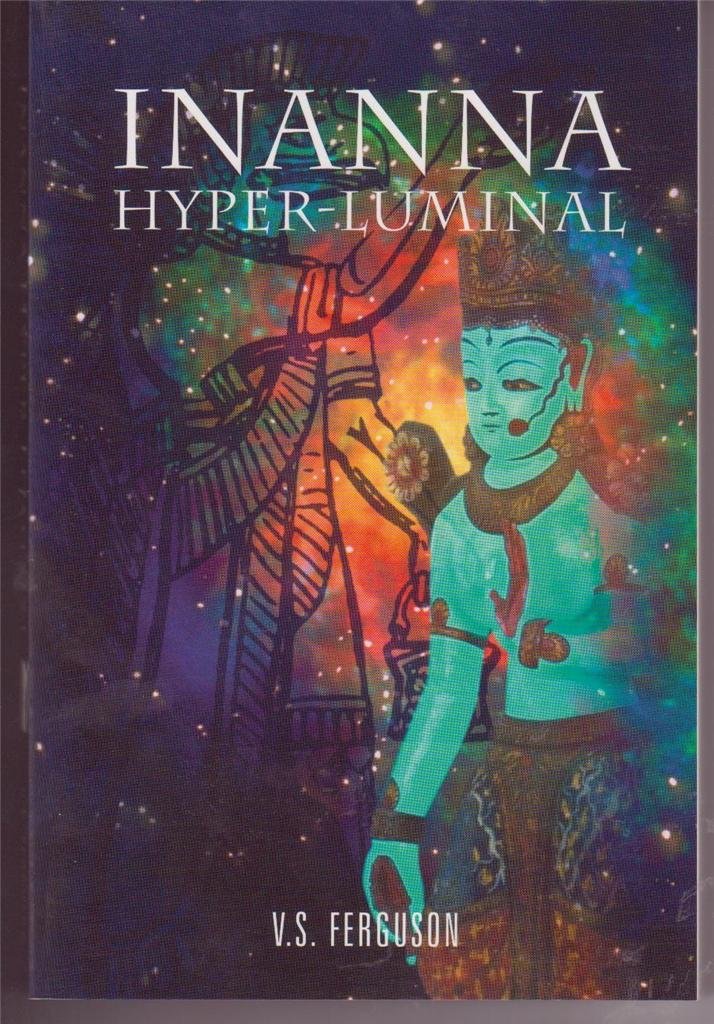







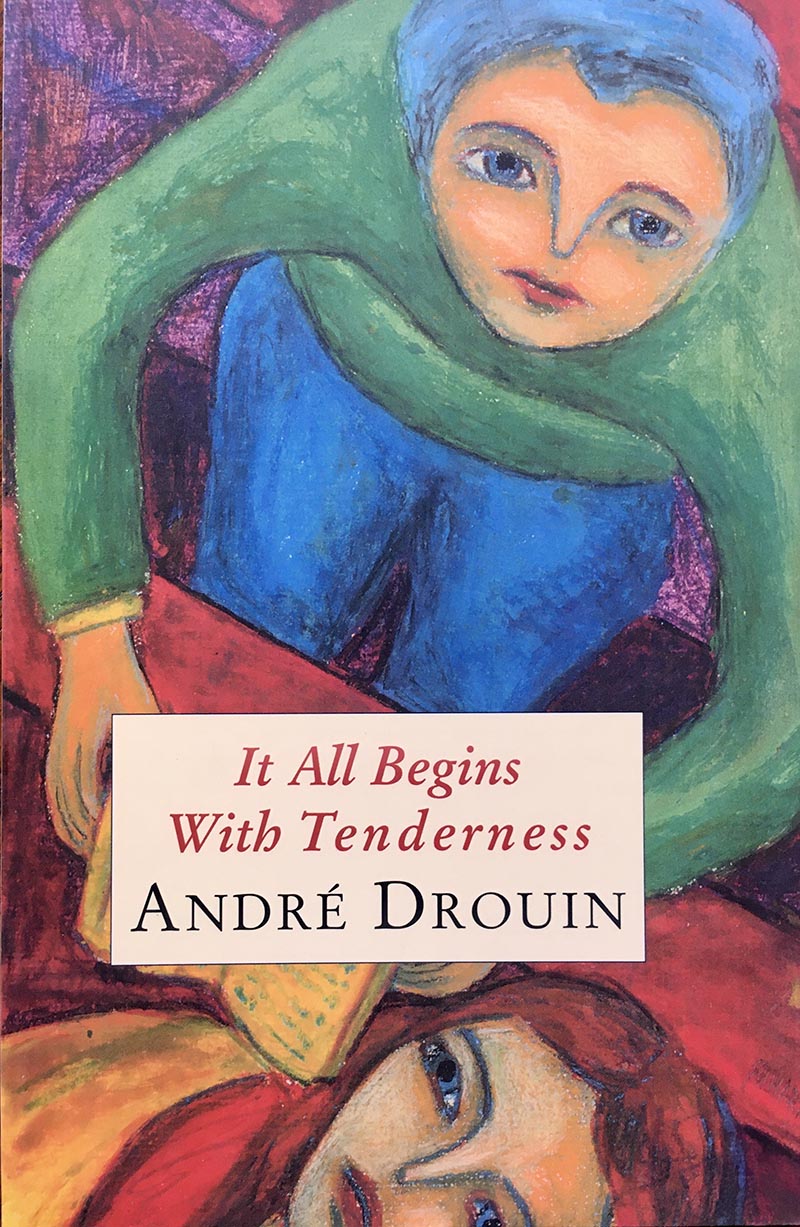
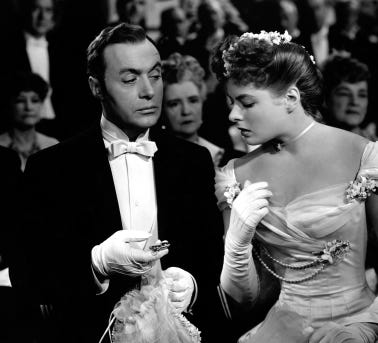


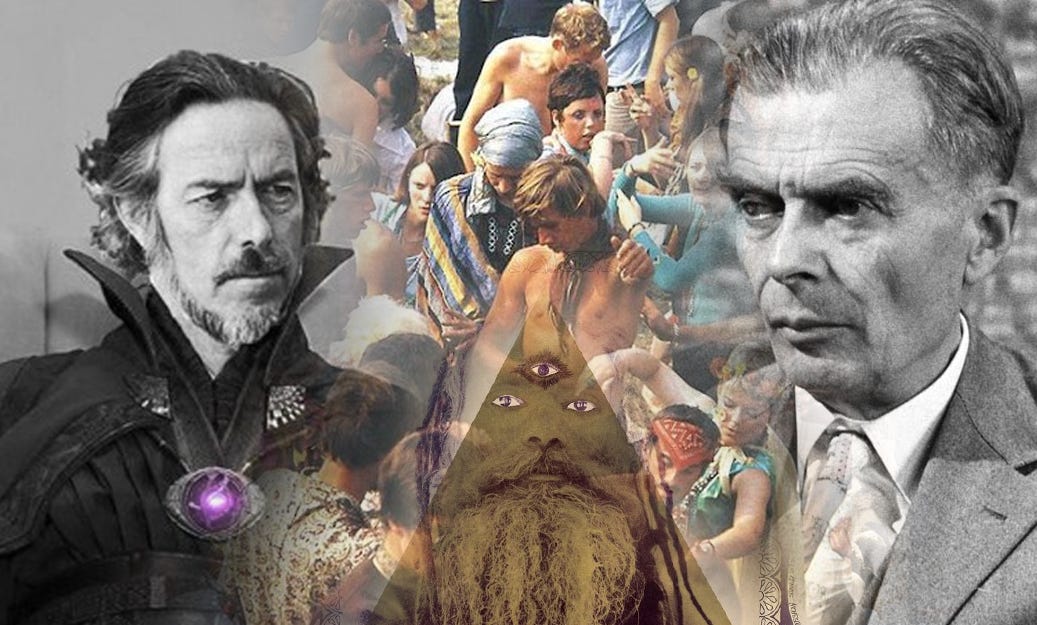
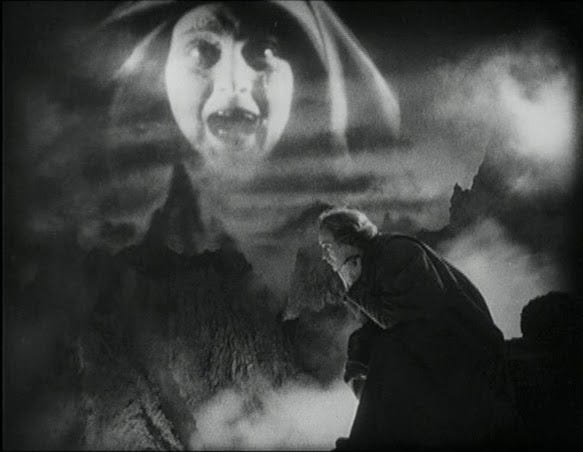

Recent Comments