Saskatchewan Polytechnic has partnered with Saskatchewan-based cannabis nursery Mother Labs on a breeding program focussing on screening for mildew resistance.
The applied research project was first proposed by Mother Labs, who brought the idea to Saskatchewan Polytechnic’s BioScience Applied Research Centre (BARC). The Centre gives experts from private industry access to the polytechnic’s applied research expertise.
“Our partnership with Sask Polytech symbolizes a significant stride towards addressing a spectrum of challenges in the cannabis industry,” says Jordan Hannah, Director of Operations at Mother Labs.
Researchers use PCR-based molecular markers as a way to look for agronomic traits in cannabis plants.
Students from the BioScience Technology program extract DNA from tissue samples and use PCR-based markers (Polymerase chain reaction) to screen breeding lines for the presence or absence of specific genes.
“PCR tests, similar to the COVID PCR tests previously used for out-of-country travel, were employed by our students in the investigation of cannabis plants,” says research chair Blaine Chartrand. “Specifically, our students used PCR testing to detect plants that contained genes for resistance to powdery mildew and to determine their sex for breeding applications.”
“Collaborating with Mother Labs allowed students to gain insights into the cannabis sector through facility tours and firsthand learning experiences,” he adds.
The team accurately determined the sex of 40 different cannabis plants using PCR tests.
“As the cannabis industry continues to mature, it will be vital to develop excellent breeding programs and energy-efficient methods of propagation. Sask Polytech’s applied research will draw on techniques that are well established in the traditional agricultural space and adapt them for use in the cannabis industry to improve plant quality and performance,” said Dr. Susan Blum, Associate Vice-President, Applied Research and Innovation at Sask Polytech at the time.
This is not the only instance of such a project in Canada. Powdery Mildew is one of the most common diseases that cannabis growers often struggle with, especially in humid climates. Because of this, the industry in Canada and abroad is looking to identify and even patent genetics with resistance to the disease.
In 2020, more than $4.2 million in federal, provincial, and industry funding was announced to aid with research at the University of British Columbia (UBC) into enhanced cannabis cultivars, focusing on disease resistance for issues like powdery mildew.
Breeding is, of course, not limited to looking to address powdery mildew. In 2023, UBC’s Dr. Todesco also announced they were teaming up with a geneticist at Aurora to adapt cannabis for outdoor production.
“An intelligent hell would be better than a stupid paradise.” ~Victor Hugo
In the same way that courage is needed to stretch comfort zones, chaotic freedom is needed to outflank the tyranny of order, and for the same reasons.
The courage found in chaotic freedom checks and balances the tyranny of order. It’s Dionysian in nature, having no qualms about crushing outdated grapes into updated wines.
The Dionysian force of chaotic freedom dances through the mannequin culture. It thunders past the status quo junkies. It flips scripts, turns tables, pushes envelopes, shocks chakras, and flattens the box that everyone claims to be thinking outside of. It flies high and above the steel walls of the Apollonian labyrinth. It sees how Goliath has become an idol, a golden cow, and a parasitic icon that has blinded the people of the world from the knowledge of their own imagination.
Chaotic freedom is a courageous David with a slingshot that’s true. No Goliath is safe. No ivory tower is secure. No wall is unassailable. No God is unquestionable. Everything is put on blast.
Indeed. Chaotic freedom is a lion waking up from a nap surrounded by a herd of sheep pretending to be asleep.
Chaotic freedom is medicine for a sick world floundering in the tyranny of its own order. Likewise, and ironically, the tyranny of order is the remedy for chaotic freedom, which comes in the form of discipline. It’s important to understand that it’s a balancing act. But it’s a balancing act in which chaotic freedom must be primary to the tyranny of order lest we lose sight of the reason to maintain balance in the first place.
As F. Paul Pacult said, “Life is at its best when it is shaken and stirred.” Indeed. Just as life is at its worst when it is rigid and settled.
Use chaotic freedom to unsettle settled mindsets. Use it to count coup on outdatedness. Use it to outflank rigidness, assumption, certainty, expectation, attachment, dogmatism, and closemindedness. Use it to reorder ancient order. For it is always the case that order needs to be reordered.
This way boundaries are constantly being transformed into horizons, and change is subsumed by the ability to adapt and overcome. The world widens and we become the tip of the spear of needed change. For as Heraclitus said, “The only constant in life is change.”
Without the vibrancy of chaotic freedom, we are left with the changelessness of ordered tyranny. Likewise, without audacious courage, we are left with stagnant comfort zones.
Ordered tyranny, like a comfort zone, is comfortable, secure, and safe, sure. But there is no room for adventure, insecurity, and danger there. And without these, we are without whetstones. We are without the pressure that can transform the coal of our demons into the sheen of a diamond. We are without the rub of adversity that can transform our grit into a pearl. We are without the stropping that can transform our dullness into sharpness.
Chaotic freedom is a form of candor, a kind of fidelity to reality. It’s a way of responding to change genuinely rather than artificially. It’s a way of transforming the worst that life can dish out into the best that our creativity can turn out.
Beyond this, the main reason why chaotic freedom is preferrable to ordered tyranny is because we are a fallible species. We are imperfect and prone to mistakes. We are gullible. And this will always be the case. Especially within a preferred comfort zone or ordered tyranny where we are more likely to stick to our guns, where we are more likely to batten down the hatches and cling to what we know, and where we are more likely to default to comfort as an overreaction to our cognitive dissonance.
But, as Lev Shestov challenged, “Ask yourself which is better: the painful convulsions of a doubtful awakening, or the grey, yawning torpidity of certain sleep.”
The tyranny of order is certain sleep. But therein lies torpidity and sloth. Therein lies inflexibility and rigid thinking. Comfortable, sure, but there’s no oomph, no propellant, no forward motion. There is only the ugliness of being stuck in a rut and not even being aware of it.
Chaotic freedom is our doubtful awakening. But therein lies adventure and awe. Therein lies adaptability and flexible thinking. Uncomfortable, sure, but there is mettle, urgency, and forward motion. There is the sacred beauty of discovering something new and being aware that the path to discovery is never-ending.
We must keep chaotic freedom ahead of the tyranny of order for the same reasons we keep the Truth Quest ahead of the “truth,” or curiosity ahead of certainty, or humor ahead of hubris—and that is to stay ahead of the curve of the human condition.
Image source:
About the Author:
Gary Z McGee, a former Navy Intelligence Specialist turned philosopher, is the author of Birthday Suit of God and The Looking Glass Man. His works are inspired by the great philosophers of the ages and his wide-awake view of the modern world.
This article (Why Chaotic Freedom is Preferable to the Tyranny of Order) was originally created and published by Self-inflicted Philosophy and is printed here under a Creative Commons license with attribution to Gary Z McGee and self-inflictedphilosophy.com. It may be re-posted freely with proper attribution, author bio, and this statement of copyright.
The potential legalization of cannabis in Indiana is expected to be a prominent issue in the upcoming legislative session. In previous years, legislators have pointed to the proximity of neighboring states with legalized cannabis as a driving force behind Indiana’s consideration of the matter. The allure of increased tax revenue, witnessed in nearby states such as Michigan and Illinois, serves as a persuasive incentive for lawmakers to contemplate legalization.
Currently, nine measures in both the Indiana senate and house have been proposed, with each incorporating “marijuana” in their titles.
SB 99, sponsored by Senators Rodney Pol and Fady Qaddoura, proposes allowing marijuana use for individuals aged 21 years and older or those with serious medical conditions. Additionally, it introduces an excise tax on cannabis.
SB107, proposed by Senators Qaddoura and David Niezgodski, proposes the establishment of a legal framework for the growth and distribution of marijuana in the state.
SB 126, put forth by Senator Greg Taylor, seeks to create a medical cannabis program, enabling doctors to prescribe the substance for specific medical conditions. The bill also proposes the formation of a regulatory committee and the repeal of certain taxes related to cannabis.
SB 294, authored by Senator Eric Bassler, proposes removing cannabis from Schedule I of the controlled substance list. It suggests permitting medical cannabis use for individuals with serious medical conditions, prescribed by a healthcare professional. Similar to Senate Bill 126, SB 294 proposes the establishment of a state marijuana commission to oversee the program.
HB 1146, introduced by Representative Jim Lucas, aims to establish a program allowing medical cannabis growth, testing, processing and distribution by licensed operators. Additionally, the measure makes it illegal to discriminate against people who use medicinal cannabis and also provides legal assistance to anyone found operating a car while under the influence of cannabis.
Representative Blake Johnson’s HB1282 aims to provide guidelines for Indiana’s legal marijuana cultivation and sales. House Bills 1349 and 1350, both authored by Representatives Heath VanNatter, Steve Bartles and Jake Teshka, propose decriminalizing the possession of up to two ounces of cannabis and lays out guidelines for Indiana’s legal marijuana production and distribution, respectively.
Lastly, House Bill 1410 put forth by Representative Zach Payne, would allow the sale and consumption of marijuana to anyone who is at least 18 years of age. It also requires the state’s health department to set up a system for citizens to receive medical cannabis cards, permitting anyone under the age of 18 to use the drug for medical purposes with a prescription. Furthermore, the measure also suggests exempting medical marijuana from the sales tax.
The debate over cannabis legalization in Indiana is expected to change as these proposals move through the legislative process, influenced by factors including taxation, regulations and public health.
Indiana is one of the remaining states that haven’t legalized cannabis in some form, and the progress of the these bills could attract the interest of several cannabis companies, such as SNDL Inc. (NASDAQ: SNDL), as the spread of the reform movement reaches these holdout states.
About CNW420
CNW420 spotlights the latest developments in the rapidly evolving cannabis industry through the release of two informative articles each business day. Our concise, informative content serves as a gateway for investors interested in the legalized cannabis sector and provides updates on how regulatory developments may impact financial markets. Articles are released each business day at 4:20 a.m. and 4:20 p.m. Eastern – our tribute to the time synonymous with cannabis culture. If marijuana and the burgeoning industry surrounding it are on your radar, CNW420 is for you! Check back daily to stay up-to-date on the latest milestones in the fast -changing world of cannabis.
To receive SMS alerts from CNW, text CANNABIS to 888-902-4192 (U.S. Mobile Phones Only)
Please see full terms of use and disclaimers on the CannabisNewsWire website applicable to all content provided by CNW, wherever published or re-published: https://www.CannabisNewsWire.com/Disclaimer
“…The Ruler of Shambhala will then assume command of the assembled forces of the twelve great gods – of the skyships flying faster than sound, fire- and steam-powered vehicles, armoured chariots, as well as the different types of atomic weapons…Tomas notes that these words were written down many centuries before the discovery of steam, aviation, nuclear physics or astronautics. He ends with these words:“Thus the evil forces will be destroyed by the might of the twelve gods. After that the precious Dharma will come under the direct protection of the Buddha. The King of Shambhala will change his residence and then the Perfect Age will dawn anew”
The Intriguing Life of Andrew Tomas: The Mystic Who Chased UFOs
‘Ancient Aliens’ is the title of a popular show running on the History Channel, now in its 12th season, but the same title was used on a book published in 1973 by Andrew Tomas. It followed his 1971 bestseller – We Are Not the First – just a couple of years after the English version of Eric Von Däniken’s Chariots of the Gods attained worldwide success. In fact, Tomas had published a book titled The Planetary Doctrine as far back as 1935. While the modern TV namesake ‘Ancient Aliens’ takes pains to promote the idea that extra-terrestrials are made of flesh and blood, probably in deference to scientifically minded viewers, Tomas had no qualms about presenting his aliens as being otherworldly supra-humans, consisting of what was described as ‘mind-born’ bodies.
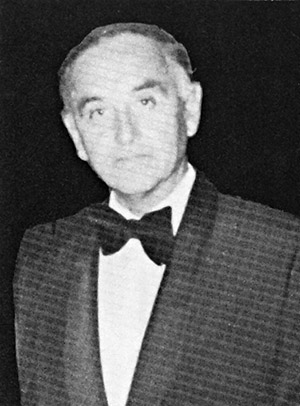
Andrew Tomas (1906–2001)
Some readers may hold the view that, just like science and religion, Ufology and spirituality are mutually exclusive. Not so if Andrew Tomas is any guide. He entwined both belief systems into a single coherent strand that yielded his impassioned advocacy for world peace.
Born in Russia in 1906 and moving around as a result of his father’s work, Andrew left his homeland after the Bolshevik revolution and settled in China, where he completed his schooling and forged a career as an accountant. In 1948 he again fled social upheaval, this time when Mao Tse Tung forced the nationalists out of China. Tomas headed for Australia where he spent the best part of twenty years and dwelled successively in each of the mainland capitals. In the mid-1950s, at a time when he was involved in organising the NSW branch of the Australian Flying Saucer Research Society (AFSRS), he was viewed with suspicion by some other members and tarnished with the label ‘white Russian’.
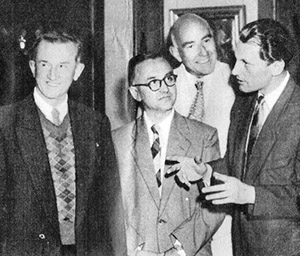
Andrew Tomas (second from left) with fellow ufologists of the NSW UFO Investigation Centre, 1957.
Well known ufologist and author Bill Chalker has recorded his recollections of that era: “I am well aware of the paranoia that existed during those years, but I do believe that any suspicion of the Victorian and Sydney groups by any individual, or body, could not have been further from the reality. While it is true that Andrew Tomas was indeed Russian, along with George Tararin (who I believe was from the region now known as Belarus), Dr Lindtner (Slovenia) and Joseph Gjerki (Croatia) and for all I know, maybe a few others also from Iron Curtain countries, the fact is that these people had all gone to Australia to get away from that sort of thing. George used to tell me he was ‘stateless’, having come more or less the same route as Andrew, which is to say, by way or Harbin or Shanghai. The latter two men had been educated by Americans – they had rather quaint accents with strong American overtones!”1
The 1950s was the high point of McCarthyism in Australia, particularly with the Petrov affair. Unfortunately, even if you were not a communist sympathiser, the mentality of the era meant a ‘white Russian’ such as Andrew Tomas was probably under observation by intelligence agencies. This prompted him to request a name change from his Russian one, A. Boncza-Tomaszewski, under the ironically titled “Aliens Act 1947.” It was a further irony that Andrew Tomas should have drawn criticism because of his ethnic origins as he was a committed pacifist. Perhaps it was, in fact, his lobbying of politicians and other public figures with his peace agenda that drew attention. He had clung dearly to his Shambhala-inspired ‘peace doctrine’ ever since writing Planetary Doctrine two decades earlier.
In 1954 Andrew Tomas met mystery writer Edgar Jarrold, the director of Australia’s first public flying saucer group. Tomas showed Jarrold his 1935 book The Planetary Doctrine, which had been published in Shanghai, China. He focused Jarrold’s attention on the passage: “Travellers and explorers often notice in the heights of the Himalayas strange shiny objects or creatures soaring high above the mountain crests, which are an eternal puzzle to Europeans. Whether these mysterious objects are vehicles belonging to supermen we dare not assert, though such an explanation is quite plausible. Cannot the reader believe that by such means, utilising unknown energies, communication is maintained from planet to planet?”2
Books by Andrew Tomas
The book Shambhala: Oasis of Light, written in 1977, was arguably Tomas’ most insightful and enduring legacy. In it, he describes how he ascended the snowy Himalayan slopes to a Tibetan monastery where he received spoken wisdom from a learned Lama, along with non-verbal illumination during a privileged initiation in a secret cave below the temple. Not only does Tomas assert the reality of the Bodhisattvas and Arhats, or Mahatmas, in this work he also draws together timeless mysteries from the East and West, Buddha and Jesus, Essenes and Templars, Hindu and ancient Greek; he connects Rosicrucianism, Masonry and Theosophy; the teachings of ancient philosophers flows through to unseen Guardians who continue to guide the planet today.
He first met Nicholas Roerich in Shanghai during 1935 (the same year Tomas published The Planetary Doctrine). Roerich had just completed an expedition to Central Asia and talked about beings he called ‘Guardians’ who dwelt in the Gobi Desert. From that time onwards, Tomas would refer to Roerich reverently as his Master. For those unfamiliar with Roerich (1874–1947), he was a Russian painter, writer, archaeologist and theosophist, perceived as an ‘enlightener’, philosopher, and public figure, who in his youth was influenced by a spiritual movement in Russian society.
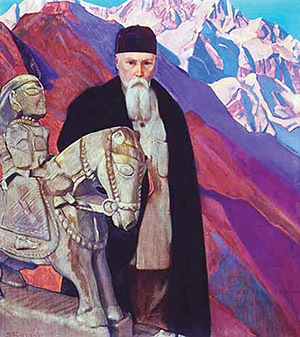
Painting depicting the artist and mystic Nicholas Roerich. Tomas referred to Roerich as his ‘Master’.
Trained as an artist and a lawyer, Nicholas Roerich was a dedicated activist for the cause of preserving art and architecture during times of war, earning several nominations for the Nobel Peace Prize. Among his most notable achievements was the Roerich Pact,3 which was signed into law by the United States and most nations of the Pan-American Union in April 1935. Andrew Tomas went on to devise a pact of his own. In March 1958, as secretary and organiser of the International Organising Committee of the Planetary Pact, he sent a draft of the pact to the world’s leading news agencies.
Two years prior he published a 48-page booklet in Sydney titled Signs, Stars and Seers – An Experiment in Historical Prediction. In this book he stated he had already issued unheeded warnings to Hitler, Mussolini and Hirohito, through their embassies in China in 1935, regarding the folly of war. He also claimed to have approached a “responsible Soviet diplomat” four months after the defeat of Japan – well before the Cold War – with a project aimed at establishing friendly cultural relations between the USSR and the USA & UK. Although the project was not adopted, Tomas felt that his mission on behalf of world peace had been fulfilled. The booklet contained the ominous admonition: “If the national governments ignore this last warning, motivated by a desire to save this planet from destruction and mankind from self-annihilation, they will have to bear all responsibility for opposing the Cosmic Law of Unity.”4
Not much was known in the West about the legendary Shambhala until revelations were made by Madame H.P. Blavatsky in the late nineteenth century. Andrew Tomas presented impressive evidence from Tibetan sources that this hidden kingdom really does exist and is the home base of higher beings who continue to guide us into the coming new age of Homo Noeticus. In that regard he issued warnings of coming calamities, while at the same time holding optimism for our long-term future. We will conclude with two of his predictions, one coming from his ‘Cosmic ET friends’, and the other from his Tibetan guides.
At the end of an article in the last issue of Jarrold’s Australian Flying Saucer Magazine, “Are you ready for a planetary crash?”, (page 7, February 1955), he wrote: “In the circles of the duly initiated Brethren of Space, fantastic stories are told of saucers, messages from space and cosmic decrees.… Anyway, my cosmic friends tell me not to worry about what other people say, but just place this information before the public. ‘It won’t be long now’, they say. Jokes aside, let us think more of the stars. Let us all become the children of Heaven. Let us dream of a Utopia where there is no hatred and no wars. But before we see that Utopia a red sign will flash in the skies, ‘Tighten your belts’. As Ripley says, ‘believe it or not’, but we are heading for a planetary crash.”5
And finally, at the close of his book Shambhala: Oasis of Light, Andrew left us with predictions from the Tibetan Kalachakra tradition:
“The twenty-first Ruler of the Land of Shambhala, Ma-gag-pa, is now enthroned on his lion-supported golden throne. He has ruled for forty-nine years before the present Fire Dragon year (1976). After another fifty-one years (2027), the twenty-second Holder of castes, Mi-yi Seng-ge, will ascend the throne and rule for one hundred years…
“The twenty-fifth Holder of castes, Drag-po K’or-lo-chan, will ascend Shambhala’s golden lion-supported throne in the Fire Sheep year of the twenty-second cycle (twenty-fifth century) and propagate the Dharma teachings…
“The La-lo king… will gather his legions west of India in a place called Tri-li… then the ministers will conduct an air surveillance. When they see numerous signs of wealth and happiness in the Land of Shambhala in the north, their jealousy will have no bounds and they will attack Shambhala. This will be in the Water Sheep year of the twenty-second cycle (2425)…
“The Ruler of Shambhala will then assume command of the assembled forces of the twelve great gods – of the skyships flying faster than sound, fire- and steam-powered vehicles, armoured chariots, as well as the different types of atomic weapons…
Tomas notes that these words were written down many centuries before the discovery of steam, aviation, nuclear physics or astronautics. He ends with these words:
“Thus the evil forces will be destroyed by the might of the twelve gods. After that the precious Dharma will come under the direct protection of the Buddha. The King of Shambhala will change his residence and then the Perfect Age will dawn anew.”6
6. Andrew Tomas, Shambhala: Oasis of Light, Sphere, 1977
References & Further Reading
Andrew Tomas, Beyond the Time Barrier, Sphere Books, 1974
Andrew Tomas, Chun’gang Wang, Xiangyang Xin, Xiaohong Zhang, Kua Yue shi kong di Qi ji, 1992
Raymond De Becker, Las maquinaciones de la noche, 1973
Andrew Tomas, Mirage of the Ages: A Critique of Christianity, Exposition Pr of Florida, 1983
Andrew Tomas, On the Shores of Endless Worlds – The Search for Cosmic Life, Bantam Books, 1974
Andrew Tomas, Shambhala: Oasis of Light, Sphere, 1977
Andrew Tomas, The Home of the Gods: Atlantis from Legend to Discovery, Robert Hale & Co., 1972
Andrew Tomas, We are Not the First: Riddles of Ancient Science, GP Putnam’s, 1971
Paul V. Young is a freelance writer, published author and occasional contributor to awareness-raising magazines such as New Dawn. He is a certified practitioner of Reiki, NLP and LOA and considers himself a student of mysticism. After spending several years travelling and teaching English in South East Asia, Paul has settled on the Gold Coast, from where he writes weekly blogs on http://www.SolarAncestor.com and publishes the monthly online magazine http://www.AustralianEsoteric.com.
(CNW) Calgary — High Tide Inc., the high-impact, retail-forward enterprise built to deliver real-world value across every component of cannabis, announced today that its Canna Cabana retail cannabis store located at 118 Millennium Drive, Fort McMurray will begin selling recreational cannabis products and consumption accessories for adult use tomorrow, January 27, 2024.
This opening will mark High Tide’s 163rd Canna Cabana-branded retail cannabis location in Canada, the 79th in the province of Alberta, and the first in the Regional Municipality of Wood Buffalo.
Fort McMurray is considered to be the heart of Alberta’s oil and gas production and is the major population centre for the Regional Municipality of Wood Buffalo. It is home to thousands of Canadians from across the country who travel to Fort McMurray to work in Alberta’s lucrative oil sands industry. With a population of approximately 100,000, Wood Buffalo is the 6th most populous municipality in the province. This brand-new Canna Cabana is the first location in Fort McMurray.
It is located in the Timberlea shopping plaza, a major retail power center on the north side of the Municipality. Situated off two of the main local roadways, this Canna Cabana is surrounded by a mix of high-density, multi-family and single-family residences.
Advertisement
“I am thrilled to announce the opening of our first store in Fort McMurray, which is the beating heart of Alberta’s oil and gas industry. We believe that this strategically located, first Canna Cabana store in Fort Mac is poised for great success and should perform above our provincial average, especially given the fact that its population is made up of a large percentage of highly paid oil sands workers,” — Raj Grover, founder and CEO, High Tide
Chronic pain affects millions of individuals globally, prompting search for effective relief. A new study by researchers out of Finland, published in the Journal of Cannabis Research, explores the mechanisms behind cannabis’ therapeutic use for pain management, and whether medical cannabis goes beyond merely reducing pain intensity, but impacts the broader pain experience.
The research, conducted through a retrospective internet survey, focused on a group of Finnish chronic pain patients, with 40 using medical cannabis and 161 relying on opioids. The study aimed to understand the nuanced effects of both treatments by evaluating patients’ responses to statements describing positive and negative phenomenological effects of the medicine.
The results revealed three distinct experience factors: negative side effects, positive holistic effects, and positive emotional effects.
Notably, the medical cannabis group consistently reported higher scores in positive emotional effects and holistic positive effects compared to the opioid group.
Advertisement
This suggests that while opioids and medical cannabis were perceived as equally effective in reducing pain intensity, medical cannabis had additional positive impacts on factors such as emotion, functionality, and overall well-being.
Chronic pain is a prevalent issue, affecting 35 per cent of adults in Finland alone. Opioids have long been a standard treatment for pain relief but come with severe side effects. Medical cannabis, on the other hand, is known for its milder side effects, yet its efficacy and mechanisms of action have been debated.
Previous research has predominantly focused on the analgesic effects of medical cannabis. This study delves into the multifaceted nature of the pain experience, exploring whether the psychoactive effects of cannabis contribute to its therapeutic benefits. The research aligns with earlier qualitative studies, indicating that medical cannabis may positively impact overall well-being and functionality in chronic pain patients.
The findings emphasize the potential of medical cannabis not only in alleviating pain intensity but also in enhancing emotional well-being and overall quality of life for chronic pain sufferers.
Further research may shed more light on the specific mechanisms by which medical cannabis influences the pain experience, paving the way for more tailored and effective pain management strategies in the future.
Researchers from the University of Split’s Medical School’s Department of Medical Humanities recently used computerized linguistic tools to gain insight into online reports of mystical psychedelic experiences. The scientists found that intense psychedelic experiences tend to be accompanied by an increase in negative emotions and mystical language in users.
While prior psychedelic-related research typically occurs in clinical settings and leverages structured questionnaires to collect information on mystical psychedelic experiences, the experiences are often limited in depth and nuance. Instead of using questionnaires, the research team analyzed self-reported experiences from actual psychedelic users to obtain new insight into the users’ experiences and learn how people describe their psychedelic experiences in their own words.
The researchers particularly focused on the presence of mystical language in these self-reported descriptions and the emotional sentiment attached to the accounts.
Study author Marija Franka Žuljević says the idea started out of curiosity due to the increasing number of self-reported accounts of psychedelic use online. Žuljević and her colleagues analyzed a massive number of psychedelic trip reports from an online forum called Shroomery.org. While the researchers settled on 7,317 reports mostly associated with psilocybin, the main psychoactive element in magic mushrooms, some of the posts involved alternative psychedelics such as DMT and LSD.
They focused on posts with a self-reported intensity level of mild to extremely intense and used a “mystical language dictionary” to initially analyze the chosen accounts. The researchers then used Linguistic Inquiry & Word Count (LIWC) software to quantify the mystical words in the accounts before deploying the VADER sentiment analysis tool to explore the negative and positive sentiments attached to the self-reported accounts.
Žuljević says the research team chose mystical experiences because they are a “very interesting concept: in the discussion about the potential health benefits of psychedelics.
The team found that 36.7% of the reports had words from the mystical language dictionary. There was also a significant correlation between psychedelic experience intensity and the use of mystical language. However, this relationship between the two wasn’t linear. Rather, it exhibited a U-shaped curve, which suggested that both profound and mild psychedelic experiences can result in the increased use of mystical language. Žuljević posited that this may be because new users are likely to interpret mild experiences as mystical simply due to their novelty.
The research team also discovered that negative sentiment and mystical language had a negative correlation with increased mystical language use, resulting in a slight decrease in negative sentiment in the overall psychedelic experience.
Entities such as atai Life Sciences N.V. (NASDAQ: ATAI) are also studying different psychedelics with a view to developing psychedelic-based treatments for mental-health ailments. More is likely to be learned about the different ways in which hallucinogens trigger the medicinal effects that they have once consumed.
About PsychedelicNewsWire
PsychedelicNewsWire (“PNW”) is a specialized communications platform with a focus on all aspects of psychedelics and the latest developments and advances in the psychedelics sector. It is one of 60+ brands within the Dynamic Brand Portfolio @ IBN that delivers: (1) access to a vast network of wire solutions via InvestorWire to efficiently and effectively reach a myriad of target markets, demographics and diverse industries; (2) article and editorial syndication to 5,000+ outlets; (3) enhanced press release enhancement to ensure maximum impact; (4) social media distribution via IBN to millions of social media followers; and (5) a full array of tailored corporate communications solutions. With broad reach and a seasoned team of contributing journalists and writers, PNW is uniquely positioned to best serve private and public companies that want to reach a wide audience of investors, influencers, consumers, journalists and the general public. By cutting through the overload of information in today’s market, PNW brings its clients unparalleled recognition and brand awareness. PNW is where breaking news, insightful content and actionable information converge.
To receive SMS alerts from PsychedelicNewsWire, text “Groovy” to 888-902-4192 (U.S. Mobile Phones Only)
Please see full terms of use and disclaimers on the PsychedelicNewsWire website applicable to all content provided by PNW, wherever published or re-published: https://www.PsychedelicNewsWire.com/Disclaimer
With several decades of experience growing cannabis, the two-person team at Kootenay Aeroponic has roots that go deep into the cannabis community in southeastern BC.
Started by Loree LaBoucane and Charles Morrison and licensed in early 2021, Kootenay Aeroponic is a micro cultivator and processor located in Creston, BC, just a few miles north of the US border.
The two partners first met when Morrison was a designated grower under the ACMPR (MMAR?), and LaBoucane was working in a medical dispensary in nearby Kimberley. They ended up opening a medical dispensary, serving the community of Creston for a short time before transitioning into the fully regulated non-medical market in 2018, following legalization.
It’s the craft, legacy growers who made the transition that need help if they’re going to succeed. Definitely our industry could use some government assistance. The BCLDB could stop charging the 15% fee on Direct Delivery, and the federal government could reign in the excise tax which could help producers become profitable.
A renovated former tractor repair and supply shop provided the backdrop for Kootenay Aeroponic’s custom-built growing system. The micro cultivation team first sold products into the BC market through a third-party processor, but after receiving their processing licence in 2023, they pivoted to processing, packaging and shipping their own products through BC’s direct delivery system.
Loree and Chuck in the office
BC’s Direct Delivery program, launched in 2022, allows small BC producers to sell directly to BC retailers rather than passing through the government’s distribution warehouse in the Lower Mainland.
“We’re excited about Direct Delivery,” says LaBoucane, and we’re doing everything we can to let retailers know about our unique, small batch products.” As they now have their micro processing licence, Kootenay Aeroponic will also offer in-house extracts, pending receipt of their concentrates sales licence, something the two-person team is eager to share with consumers.
Located on a major route into Creston, Kootenay Aeroponic is positioned on prime real estate for a farmgate store, LaBoucane says. Although they have big plans for the location, the realities of the market and the cost to apply for a PRS licence have those plans on the back burner for the time being.
It’s not an easy path, she explains, but it’s about their love of the plant and of their community. The micro licence means their operation is small enough that the two of them can handle the majority of the work, but it also has them burning the midnight oil to make it all work. It’s a path she hopes the government, at all levels, can do more to support.
“We’ve been in the community a long time, and do this because it’s what we love. You have to. Chuck and I do everything ourselves. It’s the craft, legacy growers who made the transition that need help if they’re going to succeed. Definitely our industry could use some government assistance. The BCLDB could stop charging the 15% fee on Direct Delivery, and the federal government could reign in the excise tax which could help producers become profitable.”
“For a long time before legalization, cannabis was a major part of the economy in places all around the Kootenays,” she continues. “If those of us who have made this transition can’t make it work, it hurts the whole region. I hope they really understand that the Kootenays has a lot to lose. The region is famous all over the cannabis world! Simply put, it only makes good economic sense.”
Still, they remain very positive, making calls and driving to local stores to highlight the products they have available through direct delivery. “It’s been very hard, we all need to work together to create an accountable AND viable industry. We need to make sure we’re supporting local, BC-grown products. We need to make sure we can preserve the legacy of BC Bud.”
















Recent Comments