Some of the most nutrient-dense and potent organic fertilizers and biostimulants come from oceanic sources. Let’s look at some popular ones, what they offer the garden, and how to use them effectively to supercharge our plants.
Kelp Meal And Kelp Extract
Sometimes referred to as seaweed meal, this ingredient isn’t super high in NPK levels. Still, it makes up for that by offering a wide range of trace minerals, some unique carbohydrates, and perhaps even more importantly, some beneficial growth-stimulating compounds.
Different types of kelp possess individual micronutrient profiles but also vary in the hormone-like compounds they supply. While one may benefit shoot growth, another may be better for root elongation.
Kelp extracts amplify beneficial effects, using various processes to concentrate the biostimulant portion by removing much of the bulk that makes up the kelp meal. The water-soluble end product can be watered in or applied to leaves for a much more powerful result.
Kelp extracts promote root and shoot growth, help with frost resistance, and improve stress response, producing robust plants in even adverse conditions like drought.
Fish Meal, Hydrolysates And Amino Acids
Fish meal is another widespread marine-derived ingredient. When taken from whole fish (including the bones and scales), it is an exceptionally complete nutrition source for the garden.
Fish meal supplies generous portions of nitrogen and a good helping of phosphorous and potassium, trace minerals, and calcium. Applying a little fish meal product provides many benefits in just one ingredient. It also contains many food sources that microbes love to dine on, especially the natural fats for which fungi have shown voracious appetites.
Whole fish hydrolysates are another excellent option. This process takes fish and breaks them down enzymatically to produce an amino-rich liquid concentrate, easily applied through irrigation. Hydrolysates are ideal for providing a complete, microbe-friendly food source.
Raw amino acids are easily absorbed through roots and tissues and have a marked ability to naturally chelate minerals, making them vastly easier for plants to uptake. In addition, because the natural language of plants is carbohydrates and amino acids, this fertilizer requires no conversion for the plant to enjoy all it has to offer. Fish amino acids supply the benefits of hydrolysates but in an even purer form and can be applied as root drenches or by foliar feeding for speedy and notable effects.
Crustacean Meal And Extracts
Crustacean shells provide a considerable amount of beneficial components. The shells are often taken from the prawns, shrimp, crabs, and lobster shells left over from food processing.
Crustacean meal is made by drying and grinding the shells to a fine consistency to be broken down by microflora, providing reasonable amounts of NPK. The shells are composed predominantly of calcium carbonate, so they buffer soil against acidity and provide calcium and other trace minerals to the plant.
Crustacean shells are unique because the bulk of the shell is calcium carbonate, but it is held in a matrix with chitin, similar to how insect shells are constructed. Chitin is an incredible compound, and crustacean extracts take advantage of this by purifying the chitin portion into chitosan.
When plants encounter this substance, they accumulate defense-related compounds, improving the naturally induced resistance to pathogens and pests. In trichome-producing plants, chitosan increases specific biomarkers that boost resin production, resulting in a detectable increase in harvest quality.
Hydrolysis on chitosan extracts yields an amino-rich fertilizer complementary in its nutrient profile to fish amino acids but with different peripheral compounds. As a result, crustacean amino acids can be an excellent addition to the flowering cycle, promoting quality and disease resistance for big, healthy blooms.
Oyster Shells And Seashells
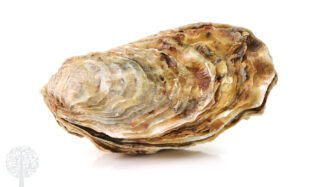
Rich sources of calcium are derived from different hard seashells. Composed of primarily carbonate calcium, finely grinding these and adding them to the soil offers calcium and many trace minerals, especially in the case of oyster shells. Like crustacean shells, oysters and seashells also contain chitin, helping with pH correction and buffering.
Israel’s Ministry of Economy has sent notice to cannabis producers in Canada that it is initiating an anti-dumping investigation concerning the importation of medical cannabis from Canada to Israel.
A notice on the Israeli Government’s website dated January 18, 2024, is addressed to 10 different Canadian cannabis producers: Village Farms International, Organigram Holdings, Tilray Canada, Hexo Corp (owned by Tilray), The Green Organic Dutchman, Canopy Growth Corporation, SNDL, Cronos Group, Auxly Cannabis Group, Decibel Cannabis, and “all the medical cannabis manufacturers in Canada who export their goods to Israel.”
“The Commissioner for Trade Levies at the Ministry of Economy and Industry, announced by virtue of his authority according to Section 24(d) of the Law on Trade Levies and Defence Measures, 5591 – 1991, of his decision to open an investigation on his own initiative into the export import of cannabis from Canada, after he found that special circumstances of actual damage exist or the probability of actual damage to the local manufacturing industry and a causal link between the imported imports and said damage.” reads the document, translated.
It also contains a questionnaire for importers and exporters, which includes questions about financial statements of the company over the last three years, descriptions of the company’s ownership structure, as well as questions about the products and prices, THC and CBD levels, shipping terms, payments, and much more.
The document notes the action is being taken due to “special circumstances” and concerns over Canadian companies flooding the Israeli market with cannabis products.
The notice also includes a letter sent to Michael Mancini, the Chief Commercial Counselor with the Embassy of Canada, informing them of the investigation, dated January 15, 2024.
Canadian cannabis companies have been increasingly sending cannabis products to markets like Israel, Australia, and Germany, followed by Argentina, the UK, and the US.
Data presented last year by Health Canada indicated that cannabis exports may continue to increase significantly, with more than a thousand applications already submitted as of September 12, 2023. Canada has exported 140,958.40 kg of dried cannabis and 37,230.01 litres of cannabis oil since October 2020, with almost half of that dried cannabis (62,535.65 kg) exported in the last 12 months of data from Health Canada (July 2022-June 2023).
The federal regulator has received 1,211 applications from Canadian companies seeking to export cannabis since the beginning of the fiscal year on April 1, 2023, and has approved 1,147. In a presentation made online on Tuesday, October 24, a representative with Health Canada said they expect these numbers to continue to increase.
The number of applications and permits issued has been increasing on an annual basis, with 1,805 permits issued in 2022-2023, 1,421 in the previous year, 1,267 in 2020-21, 1,213 in 2019-20, and 272 in 2018-19.
Canada only allows the export of cannabis for medical or scientific purposes, or for hemp products.
Some Canadian cannabis brands listed by an Israeli cannabis company, Bol Phrama
Israel had more than 132,000 patients registered to receive cannabis for medical purposes as of November 2023. It began allowing imports of cannabis in 2019. A report in the Jerusalem Post in January 2023 referred to the decision to allow medical cannabis to be imported into Israel as one that has “pushed local growers and producers to desperation.” The country’s demand of cannabis at the time of the article was 52 tons per year while Israel’s own growing and production capacity is around 100 tons, continued the article.
According to Israel’s Cannabis Magazine, the investigation was triggered when five Israeli cannabis companies contacted the ministry with concerns that cannabis imports were causing prices to drop too low for them to compete.
Ohio Governor Mike DeWine has urged state lawmakers to enable recreational marijuana sales before the end of the year. During a recent interview with newspaper editors, Gov. DeWine said that although Ohio voters approved a measure to legalize recreational cannabis in late 2023, recreational sales won’t begin until the end of 2024.
The governor noted that Ohio is in a sort of “goofy situation” where recreational cannabis consumption and cultivation are legal, but the state still hasn’t approved retail locations to sell adult-use marijuana. As a result, black-market sellers are stepping in and taking advantage of the market gap to sell unregulated cannabis to often unsuspecting consumers.
The Republican governor called the situation a “real mess” and called on the Republican-controlled legislature to take action and remedy the issue by granting the authority to start selling legal adult-use cannabis in the state. He suggested that the state could start by allowing adult-use cannabis sales through medical marijuana dispensaries with the possibility of launching sales around 60 days after a legislature-passed initiative.
DeWine has already expressed support for a recreational cannabis regulation bill that was passed by the Senate in December and is still waiting for action by House legislators.
According to DeWine, gaining the support of both the Senate and House will be critical to starting a conversation about legal adult-use cannabis sales and working on a bill to facilitate legal sales.
Ohio became the 24th state in the U.S. to legalize recreational cannabis after voters approved Issue 2 in the November 2023 ballot. Issue 2 allowed adults aged 21 years and older to possess up to 2.5 ounces of cannabis flower and 15 grams of marijuana extract. Eligible adults can also grow up to six cannabis plants in households with one adult and up to twelve plants in homes with more than one eligible adult.
DeWine is adamant that Ohio lawmakers advance legislation as soon as possible and ban the purchase of intoxicating hemp products as the legislature comes back into session this year.
The cannabis black market is a problem that affects most states with legal markets, including California, which is currently the largest cannabis market on the globe. DeWine is keen on avoiding the issue before Ohio’s adult-use industry launches.
Such a bill would allow regulated retailers to begin selling recreational cannabis “on a controlled basis,” DeWine says, and would allow the state to launch adult-use sales quickly through medical marijuana centers.
Operators in more mature cannabis markets, such as TerrAscend Corp. (TSX: TSND) (OTCQX: TSNDF), will be watching to see how Ohio navigates its entry into the fast-growing recreational marijuana industry.
About CNW420
CNW420 spotlights the latest developments in the rapidly evolving cannabis industry through the release of two informative articles each business day. Our concise, informative content serves as a gateway for investors interested in the legalized cannabis sector and provides updates on how regulatory developments may impact financial markets. Articles are released each business day at 4:20 a.m. and 4:20 p.m. Eastern – our tribute to the time synonymous with cannabis culture. If marijuana and the burgeoning industry surrounding it are on your radar, CNW420 is for you! Check back daily to stay up-to-date on the latest milestones in the fast -changing world of cannabis.
To receive SMS alerts from CNW, text CANNABIS to 888-902-4192 (U.S. Mobile Phones Only)
Please see full terms of use and disclaimers on the CannabisNewsWire website applicable to all content provided by CNW, wherever published or re-published: https://www.CannabisNewsWire.com/Disclaimer
The Fraser Valley Regional District (FVRD) in British Columbia will hold a public hearing on February 6 to discuss new regulations for cannabis producers.
This is the second phase of a process the FVRD board first started in 2019. Phase 1 was completed in March 2020 when the board drafted bylaws for cannabis production in specific electoral areas within the FVRD, a matter the board called “urgent.”
At the time, the FVRD was home to several cannabis production facilities, including large greenhouses, that often led to complaints from homeowners about odour and light. Based on significant community support, phase 1 prohibited cannabis land uses in Electoral Areas D, E, F and H, shown in the map below.
Staff recommendations take into account the differences between small-scale micro cannabis facilities and standard facilities, which tend to be larger.
Micro facilities would be permitted in all zones and electoral areas where a Cannabis Production Facility is currently permitted. They would be allowed in agricultural and rural zones on parcels with a minimum size of four hectares (10 acres), a maximum building gross floor area of 600 square metres, as well as screening requirements and setbacks.
Standard facilities would be allowed only in Industrial Zones (General Industrial, Heavy Industrial, Resource Industrial 1) and would also require setbacks and screening.
South Dakota’s Assembly has passed two bills highlighting that those who use medical cannabis may be prevented from legally possessing firearms under federal law. The legislation includes adding policy notices in cannabis dispensaries and on patient applications. Failure to comply with these standards may result in daily fines for dispensaries.
The first measure, relating to marijuana patients’ applications, received resounding support with a 68 to 1 vote, while the second one, concerning dispensaries, faced a more divided vote, passing 42 to 27.
According to the legislation, medical marijuana dispensaries in South Dakota must display a warning sign stating that federal law forbids firearm possession for persons addicted to or using cannabis. The measure allows suspension if the attorney general certifies that federal law no longer prohibits firearm possession for such individuals.
Representative Kevin Jensen sponsored both bills, noting his vast background as a gun trainer and dealer. He stated that many people are unaware that this specific federal statute even exists.
Some industry players argue that the law requiring dispensaries to display notices of the statute at entrances and every point of sale brings an unwarranted burden on the operators. In response to these worries, Jensen stated that dispensaries wouldn’t have to pay more as a result of the regulation. He also noted that the $250 daily fine for noncompliance is only one-half of the cost that federal authorities impose on retailers that neglect to post notices on tobacco products.
Additionally, Jensen stated that the state’s health department would be in charge of implementing the rule and gathering fines as part of their regular inspections.
The U.S. Department of Justice (DOJ) has continuously argued in federal courts that the ban on firearms for marijuana users is necessary because possession presents a special risk, similar to the situation where people with severe mental illnesses aren’t permitted to possess firearms. The DOJ justified the prohibition by citing historical precedence and claiming that cannabis users pose a threat to society since they would likely store their weapons improperly.
Despite the federal government’s view, certain federal courts have ruled that the marijuana-related firearm restriction is unlawful, prompting the DOJ to file an ongoing appeal.
A 2019 FBI memo came to light, suggesting that the federal authorities do not usually view the possession of firearms by medicinal cannabis producers and caregivers as a legal crime.
In the broader context of gun and marijuana policy, GOP congressional legislators have introduced two bills this session aiming to address the intersection of gun ownership and cannabis use.
The proposed reforms in South Dakota are still a developing story, and major cannabis companies such as Green Thumb Industries Inc. (CSE: GTII) (OTCQX: GTBIF) operating in more established markets are unlikely to give the legislation much thought until the final law takes shape and its ramifications on the broader industry are assessed.
About CNW420
CNW420 spotlights the latest developments in the rapidly evolving cannabis industry through the release of two informative articles each business day. Our concise, informative content serves as a gateway for investors interested in the legalized cannabis sector and provides updates on how regulatory developments may impact financial markets. Articles are released each business day at 4:20 a.m. and 4:20 p.m. Eastern – our tribute to the time synonymous with cannabis culture. If marijuana and the burgeoning industry surrounding it are on your radar, CNW420 is for you! Check back daily to stay up-to-date on the latest milestones in the fast -changing world of cannabis.
To receive SMS alerts from CNW, text CANNABIS to 888-902-4192 (U.S. Mobile Phones Only)
Please see full terms of use and disclaimers on the CannabisNewsWire website applicable to all content provided by CNW, wherever published or re-published: https://www.CannabisNewsWire.com/Disclaimer
These poems have been styled “zen mercies” and “small satoris” to honour the particular tradition of mindfulness that characterizes tanka aesthetics. But they are, more simply put, just little epiphanies — particular moments of heightened awareness. As Ishikawa Takuboku (1886-1912), a great master of the form, said in defence of his own passionate preoccupation with tanka, “Although a sensation may last only a moment, it is a moment that will never return,”
The tanka (or waka as it has been traditionally called) dates back more than 1200 years to Japan, where it remains to this day a vital tradition. There are always five lines with conventions for syllabic counts (5,7,5,7,7); but the essence of the form is the briefest of lyrics, intensely focused and rooted in the immediate circumstances of the body in this world.
In the past decade or so, I have come to adore the discipline and power of tanka, which often seem to work by some mysterious mechanism to test one’s authentic being. By virtue of their brevity, tanka may seem modest and all too human. But if the experience and the articulation of that experience are somehow pure, it may be evident that, for a moment at least, some aspect of the world lies before one, full of glory, and forever fresh.
Marianne Bluger (1945-2005) was born in Ottawa and spent her childhood in various small Ontario towns where her father, a Shoah survivor, found work teaching school. She graduated with distinction from McGill University, where she studied pre-medical subjects and philosophy as well as taking poetry courses with Louis Dudek. She later dropped out of medical school to marry a Zen Master who was, at the time, a refugee. With him she had two children whom she raised as a single parent. She co-founded Christians Against Apartheid and also co-founded the Tabitha Foundation, a charity working effectively to bring healing and help to the people of Cambodia. She is the author of eleven volumes of poetry, five of them with Penumbra Press.
From luminous moments of deep awareness, Marianne Bluger gives us more of her sharp yet gently memorable tanka. Bluger’s Gusts, the first collection of tanka to appear in Canada, has become a sort of classic. Of the tanka in Gusts (1999), Christopher Wiseman wrote: “I have really enjoyed this book. It’s the images and depth and modesty and dignity and insight and sheer humanity that distinguish Bluger.”
A Christian of mystical bent, Bluger retains the earthy directness of her Jewish heritage as well as the disciplined sensibility of one trained in Zen meditation. She has won many awards and prizes for her poetry. At the time Zen Mercies / Small Satoris was published, Bluger (1945-2005) was living in Ottawa and married to the well-known birder, Larry Neily.
Numerous medical professionals and first responders have urged Nevada lawmakers to reform psychedelic laws and allow the use of psychedelics in mental-health treatment. The professionals spoke to a panel of state legislators from the state’s Joint Interim Standing Committee on the Judiciary.
Psychedelics have exhibited significant potential as alternative mental-health treatments in recent years, especially against mental disorders such as post-traumatic stress disorder (PTSD) and depression, which often do not respond to conventional treatments.
Due to the sometimes traumatic nature of their careers, veterans and first responders often develop conditions such as PTSD and depression after several years on the job. Benjamin Strahan spent more than 20 years working as a professional wildland firefighter. He was one of the many first responders and veterans who spoke to the government officials.
Strahan said that, as with many wildland firefighters, he had seen “almost every catastrophic wildfire” and the total annihilation of communities, land resources and forests. A brutal wildfire in fall 2020 left Strahan grappling with severe suicidal thoughts. According to the professional wildland firefighter, post-traumatic stress disorder, depression and suicide are just as dangerous to him and his colleagues as the fires they fight.
Strahan told the panel that once he accepted the current health system wasn’t helping him, he traveled to a psilocybin retreat in Mexico and finally gained a reprieve from his depression and suicidal thoughts.
Nevada legislators have expressed interest in legalizing psychedelics, but they are taking their time. Last year, they passed a measure that created a working group to study the potential medical use of psychedelic compounds such as psilocybin (magic mushrooms). The group has until the end of 2024 to publish its recommendations, conclusions and findings, which will likely inform psychedelic-based bills in 2025.
Carson Tahoe Hospital neurologist Burton Tabaac also addressed the panel, explaining that based on existing psychedelic research, hallucinogens seem to address mental-health issues by dealing with the underlying issues that caused the illness in the first place. Tabaac observed that, at minimal doses and with few if any side effects, psychedelics can repair engrained neural pathways and allow for the creation of new connections, making it possible for people to break free from mental disorders that have plagued them for years.
Diane Goldstein, a retired police lieutenant and current executive director of the Law Enforcement Action Partnership, noted that psychedelic-based research was being conducted more than half a century ago before the war on drugs wrongly classified psychedelics as Schedule I substances.
The discussions going on in the Nevada legislature are likely to be welcomed by psychedelics industry entities such as Mind Medicine Inc. (NASDAQ: MNMD) (NEO: MMED) (DE: MMQ) since such discussions point to the growing appreciation of the therapeutic potential of hallucinogens.
About PsychedelicNewsWire
PsychedelicNewsWire (“PNW”) is a specialized communications platform with a focus on all aspects of psychedelics and the latest developments and advances in the psychedelics sector. It is one of 60+ brands within the Dynamic Brand Portfolio @ IBN that delivers: (1) access to a vast network of wire solutions via InvestorWire to efficiently and effectively reach a myriad of target markets, demographics and diverse industries; (2) article and editorial syndication to 5,000+ outlets; (3) enhanced press release enhancement to ensure maximum impact; (4) social media distribution via IBN to millions of social media followers; and (5) a full array of tailored corporate communications solutions. With broad reach and a seasoned team of contributing journalists and writers, PNW is uniquely positioned to best serve private and public companies that want to reach a wide audience of investors, influencers, consumers, journalists and the general public. By cutting through the overload of information in today’s market, PNW brings its clients unparalleled recognition and brand awareness. PNW is where breaking news, insightful content and actionable information converge.
To receive SMS alerts from PsychedelicNewsWire, text “Groovy” to 888-902-4192 (U.S. Mobile Phones Only)
Please see full terms of use and disclaimers on the PsychedelicNewsWire website applicable to all content provided by PNW, wherever published or re-published: https://www.PsychedelicNewsWire.com/Disclaimer





















Recent Comments