


”Leading cannabis event company celebrates national leaders and launches an exclusive gathering for decision-makers in the global arena”
Toronto, ON, Jan. 23, 2024 (GLOBE NEWSWIRE) — Grow Up Conference & Expo (“Grow Up”), a trailblazer in cannabis industry events, proudly unveils the inaugural Top 50 Cannabis Leaders in Canada, a landmark initiative recognizing the most influential figures in the Canadian cannabis sector. In conjunction with honouring and fostering industry excellence, Grow Up is launching the much-anticipated CannaVision ’24 Executive Summit, a two-day exclusive event held in Toronto, ON from May 27 to 28, 2024, that will serve as a pivotal platform for addressing the latest trends, regulations, market developments, and investment opportunities in the global cannabis market.
Carefully curated by Grow Up, the Top 50 Cannabis Leaders in Canada is the first of its kind in the country and highlights individuals who have displayed exemplary leadership, innovation, and commitment to advancing the market. “Grow Up’s Top 50 list set out to answer the question: If someone wants to start a new cannabis business in Canada and speak to an industry expert, who would we recommend?” explains Randy Rowe, President of Grow Up. From entrepreneurs trailblazing new paths to industry veterans shaping the future, these leaders serve as a beacon of inspiration for the next generation of cannabis professionals. The full list is available at Grow Up Top 50.
“As we celebrate our Top 50 leaders, we’re also setting the stage for CannaVision ’24, an exclusive event for decision-makers that will explore the future of ‘Field to Yield’, focusing on every aspect of the cannabis industry from cultivation to consumer,” adds Randy Rowe.
The CannaVision ’24 Executive Summit will feature insightful keynotes from industry pioneers, panel discussions covering critical topics like regulatory challenges and sustainability, and networking sessions for exploring business opportunities. Tony Chapman, known for his captivating presence and insightful perspectives, will host and moderate the two-day event. Other distinguished speakers include Rob McPherson, former President of Bacardi Canada, who will bring extensive experience in Consumer Packaged Goods and a keen understanding of brand marketing, as well as Steve Lobel, a visionary from both the entertainment and cannabis industries and Alison Demelis, Head of Enterprise Solutions Group at LinkedIn, who will guide delegates on how to elevate their LinkedIn profiles and become thought leaders in the space.
The CannaVision ’24 Executive Summit invites delegates to be part of the conversation that defines tomorrow. Tickets are available now with super-early bird pricing at $599 until January 31. For further details and to purchase tickets, visit CannaVision ‘24.
Grow Up’s Industry Conference and Expo offers an affordable alternative to the CannaVision ’24 Executive Summit and will be held in Toronto, ON from May 28 to 29, 2024. This industry event is aimed at a broader audience including growers, retailers, and budtenders, ensuring inclusivity in accessing industry insights. For more information, visit https://growupconference.com/toronto/.
About Grow Up Conference & Expo
Established in 2017, Grow Up Conference & Expo has become a benchmark event in the Canadian cannabis industry, known for its high-profile speakers, diverse programming, and commitment to uniting forward-thinkers and industry experts. For more information, visit Grow Up Conference & Expo.



Despite a year of major highs and lows in 2023, cannabis investors are hopeful that this year will be better thanks to several major issues that are likely to boost the cannabis industry. Let’s take a look at five themes likely to shape the industry:
Rescheduling prospects
Last year, U.S. marijuana businesses witnessed substantial gains after the U.S. Department of Health and Human Services (HHS) recommended the rescheduling of cannabis from Schedule I to III of the Controlled Substances Act (CSA). If rescheduling materializes, it could alleviate the burdens imposed by Section 280E of the IRS, allowing marijuana companies to obtain tax credits and standard business tax deductions similar to mainstream businesses.
Despite the potential benefits, the timeline for rescheduling remains uncertain as experts anticipate a proposed rule by the U.S. Drug Enforcement Administration (DEA), followed by potential legal challenges.
Advancements in cannabis banking legislation
In 2023, the Senate banking committee endorsed the SAFER banking measure with a bipartisan vote of 14 to 9. This act seeks to enable financial institutions to offer crucial banking services to state-regulated cannabis entities without the fear of federal repercussions.
The bill also introduces updates directing financial institutions to cultivate local banking relationships and expand Federal Deposit Insurance Corp. surveys to smaller businesses. The bill has passed the House seven times but has failed in the Senate.
The focus is currently on section 10 of the act, which aims to prevent regulators from displaying favoritism towards specific industries. Strengthening section 10 language could enhance the bill’s chances of gaining approval from conservative House leadership.
Equities sensitization
The marijuana industry’s stock market performance is likely to remain sensitive to regulatory changes, potentially leading to either positive or negative market swings. With uncertainties surrounding rescheduling and the banking legislation, industry players should brace for ongoing equity sensitivity.
Regulatory shifts could profoundly impact business strategies and investment decisions, and thus stakeholders ought to stay agile in response to these changes.
Additionally, despite potential equity dilution from balance-sheet recapitalization, investors stand to benefit from better financial status among marijuana businesses.
Further stabilization with limited capital formation
The industry is expected to witness continued price stability, fostering a more predictable pricing ecosystem for consumers and businesses. However, states facing diminishing capacity may see pricing power return to marijuana operators.
This year, the influx of new capital into the sector is anticipated to be limited. Even if the DEA agrees to reschedule cannabis, institutional investors are likely to wait for a finalized rule before injecting new capital into the space. This sets the stage for potential investments in companies with proven operational capabilities and scale advantages.
Unlikely mergers and acquisitions
The year 2023 saw subdued activity in marijuana mergers and acquisitions, and this trend is expected to persist in 2024. Last year, companies dedicated their efforts to enhancing cash flow and extending debt, making them less inclined to assume additional debt or divert attention to M&A integration this year.
If the DEA approves rescheduling, most companies will leverage section 280E relief to strengthen their balance sheets rather than engage in a spree of mergers and acquisitions. However, there may be opportunities for smaller-scale mergers and acquisitions, where businesses capitalize on improved financial conditions and potentially high equity valuations for modest, strategic acquisitions.
Existing players such as Canopy Growth Corp. (NASDAQ: CGC) (TSX: WEED) are likely to keep a close eye on regulatory developments at the federal level in the United States as these could shape their future plans and operations.
About CNW420
CNW420 spotlights the latest developments in the rapidly evolving cannabis industry through the release of two informative articles each business day. Our concise, informative content serves as a gateway for investors interested in the legalized cannabis sector and provides updates on how regulatory developments may impact financial markets. Articles are released each business day at 4:20 a.m. and 4:20 p.m. Eastern – our tribute to the time synonymous with cannabis culture. If marijuana and the burgeoning industry surrounding it are on your radar, CNW420 is for you! Check back daily to stay up-to-date on the latest milestones in the fast -changing world of cannabis.
To receive SMS alerts from CNW, text CANNABIS to 888-902-4192 (U.S. Mobile Phones Only)
For more information, please visit https://www.CannabisNewsWire.com
Please see full terms of use and disclaimers on the CannabisNewsWire website applicable to all content provided by CNW, wherever published or re-published: https://www.CannabisNewsWire.com/Disclaimer
CannabisNewsWire
Denver, CO
www.CannabisNewsWire.com
303.498.7722 Office
Editor@CannabisNewsWire.com
CannabisNewsWire is powered by IBN

Julian Rose
When one hears and sees Israel’s Prime Minister Netanyahu, declaring the absolute supremacy of his Zionist tribe and its goals of ‘taking back’ the State of Israel – via the slaughter of any and all Palestinian ‘animals’ whose home land is the Gaza Strip – one is confronting face to face, a clinically insane individual whose medical condition, if it were to be officially assessed, would be described as ‘psychopath’.
In a properly functioning society such a person would be hospitalised and made to undergo special psychological and medical treatment, or would be sent to an asylum where he would not be a threat to the outside world.
However, we are not living in a properly functioning society. We are living in a time where those in charge of all the main arteries of global decision making are either sub human, clinically insane, or both.
This is not a situation anyone would choose as their preferred form of governance. But on the other hand, it has been permitted to come about due to a widespread abdication of the responsibility we all share, to deal with lies, deceptions and basic thuggery taking place much closer to home. And which, due to our failure to deal with them – now form an integral part of the globalist agenda shaping every aspect of our lives.
Failing to confront injustice in one’s own backyard is the same as failing to treat the early signs of a sickness in one’s body. The end result, in both cases, is to suffer far worse consequences down the road.
But now, like it or not, we are further down that very road and staring us in the face is a monster we have no way of hiding from.
A monster, I contend, that is at least 50% our own making. The outward expression of a fear of confronting inner demons – and an unwillingness to stand courageously in defence of fundamental moral values which constitute the implacable foundation stones of a sane society.
The other 50% of that which stands behind the existence of this monster, comes from something extra terrestrial hatched by outside forces beyond our immediate control. And outside the capacity of the majority of mankind to recognise or identify – and therefore fail to recognise as a real threat to their futures.
But two events of unparalleled significance have started to change this: Covid and Gaza.
Suddenly, right in the foreground, we witness figureheads holding high levels of office, mercilessly condemning hundreds of thousands of human beings to a life of highly visible depravation, agony and death. And this, with utter impunity and not a trace of guilt; but with an air of someone quite alien and possessed.
This is a state of deep psychosis. Someone suffering it can justly be described as ‘clinically insane’.
When the World Economic Summit and the Bilderberg club convene each year, the venue is filled with insane megalomaniacs discussing how to impose their rampant megalomania on the rest of us.
Their insanity comes dressed up in various guises of which the current favourites are
* Artificial Intelligence replacing human intelligence by 2035
* Artificial lab food replacing real food grown in soil by circa 2030
* ‘Net Zero’ carbon replacing oxygen by 2050
* The confiscation of our personal assets – so as to make us ‘happy’ – by 2030
* The removal of any degree of privacy, freedom of speech and human rights, also by around 2030
* A Central Bank Digital Currency to replace physical bank notes, by circa 2026
* War machines programmed to self select ‘enemy collateral’ at the push of a button, 2025?
After which time the ‘Transhuman’ AI computer cyborg entity is supposed to become ascendant – and real men and women pretty much obsolete. Except those useful as slaves and play things for the psychos.
This is only an abbreviated summary of some key points that, as most of us know already, the monster has in store for us unless knocked off course. I have outlined them in order to illustrate how the psychopath agenda has no basis in rational thinking, human empathy or any form of justice.
It is cold, metallic and schematic. It thrives on chaos, the blood of innocents and sacrificial offerings to Masonic and Luciferian extra terrestrial overlords.
Now, having digested this essentially indigestible Hieronymus Bosh portrait of the dire state of our planet, we need to consider what options we warm hearted humans have to get through this global ‘Dark Night of the Soul’ and emerge victorious.
Facing us very directly in the Spring of 2024, is a major plank in the deep state totalitarian agenda – but also a unique opportunity for ‘we the resistance’: The WHO ‘Pandemic Preparedness Plan.’ We need to specifically put our best energies into ensuring the defeat of this planned fascist take over of human health.
Success here will constitute a huge set back for the architects of human suffering – and give us new momentum for further victories to come.
The WHO plan is ready to roll out should there be majority acceptance of its proposal to enshrine itself as the central controlling agent of all planetary health decisions.
However, in ‘we the people’s’ favour is the fact that we got a huge eye opening ‘initiation kick’ via the great 2021/22 Covid deception; all be it a tragic and ongoing one.
The rate of uptake of booster shots has declined dramatically in the last six months in almost all countries. There is a marked level of distrust and cynicism concerning official proclamations about what one ‘must do to be safe’. Cynicism is an essential part of breaking ranks with a captured status quo. We must now build on it – bravely and fast.
In store for us in plans being hatched by the combined pharmaceutical and military industrial industrial project – to be enforced by the WHO – is a threefold more drastic ‘lock down’ program than we suffered in 2021/22.
According to courageous activist Dr Bret Weinstein, closing the gate on 2021/22 errors of judgement by big pharma, will involve the redefinition of ‘a public health emergency’ and the re-mandating of the mRNA vaccine as the most effective weapon for dealing with the next human culling operation.
Additional remedies, reports Weinstein, will require citizens to endure ‘gene therapy technology’; a ban on the use of other medicines; highly restricted travel – and much more. All within the context of a general overriding of the constitution of individual nation states.
The psychos and their corporate henchmen are going all out to cut off a growing level of bottom-up suspicion concerning the motives of those in high office.
If the momentum of growing awareness can move up a notch and be turned into a significant scale rejection, our chances of an enhanced level of people’s resistance will be greatly increased and significantly strengthened.
The greatest danger to the realisation of such positive progress is what Weinstein identifies as “People’s willingness to expect to loose their rights when a health emergency is called.”
‘People’s willingness to expect to loose their rights’.
For the psychos, maintaining such a level of mass indoctrination is the key to moving their sick agenda forward and locking into place a global totalitarian regime which places mankind under permanent house arrest.
This year, 2024, could prove decisive in the battle ‘humans-v-psychos’.
Our task is clear: rip away the already decaying veil behind which hide our sickly tormentors, laying bare those who only know to deceive mankind into slavish submission to their demented prison camp.
Be bold, good people, we know we are gifted with the powers necessary to fight for that day when the light finally penetrates the darkness and we who honour and treasure our unique inheritance – burst through, declaring a glorious victory for freedom, truth, love and justice!
Julian Rose is an organic farmer, writer, broadcaster and international activist. He is author of four books of which the latest ‘Overcoming the Robotic Mind’ is a clarion call to resist the despotic New World Order takeover of our lives. Do visit his website for further information www.julianrose.info


”Mastering the art of being in the world,
even when we know it’s filled with heavy challenges and chaos.”
Over the last few decades, many have written about our time as a space where humanity is between worlds. On one hand, we have our current way of life which is incredibly demanding on our minds and bodies, is rather toxic, and filled with conflict and destruction. On the other hand is a vision for a world that’s slower, more connected, more natural, and more loving.
As we navigate what appears to be the dying stages of the old paradigm, the intensity of what it is seems to increase. The qualities of the old system become louder, acting as an evolutionary pressure to push things along.
Many become inspired to explore ways to bring the ‘new world’ to the here and now via their actions.
How do I live without money?
How do I exit the toxicity of our current system?
How do I not participate anymore?
If we aren’t careful, these questions can create a framing of our current world that can make it very hard to live within.
If we deeply judge the need to work, to make money, to pay taxes etc, all of it can become a heavy thing to carry. We end up waking up every day dreading going to work, and having endless conversations, thoughts and emotions about how the bad guys are ruining life for us and we’re the victims in it all.
While there may be truth to some of the observations about our society, the framing of it in our minds is disempowering many of us, and it’s making our current moment dreadful. Further, it holds us back from living and being able to solve the problem.
So how do we work with this? How do we live in the space between worlds?
Indeed, our current societal design is not supportive of human beings thriving. In that sense, it has been poorly designed. We have such an easy time as a species doing this because our higher-order thinking allows us to override what is good for our biology. Simply put: it’s easy to ignore our needs using our thinking, especially when we become so identified with life cognitively.
I have 7 alpacas. The moment they need to poop, they just do it, no thinking, no “I’ll just finish this paragraph,” they just do it. They listen to their biology. Humans on the other hand don’t always listen. In some cases we don’t because we have social structures, social norms, and brains to hold this all together. But we also don’t because we’ve learned to ignore our body, feelings, and emotions in many ways.

While our higher-order thinking is beautiful in one sense, how do we know when it begins to work against us?
I often use an example with friends and clients of a bear. The bear (a mammal like us) was likely raised by an attached parent. It learned how to ‘bear’ and how to be in its environment from that parent in its natural environment. If that bear’s ecosystem was cut down or destroyed by humans, it wouldn’t stay for too long. It would know that concrete, a lack of forest, and a lack of fresh water aren’t good for it, and it would leave to find a suitable home. The bear is simply following its connection to its biology.
We as humans know we are doing this to animals and call it ‘displacing nature/animals.’ Interestingly, we tend to see ourselves ‘outside’ of nature, conveniently ignoring how we’re ‘displacing’ ourselves.
As mentioned, humans are resilient in that we can survive in different environments. We find ways to adjust, cope, and problem solve within environments that are not natural to us. Here I’m not just talking about physical environments but also emotional ones. We find ways to survive in abusive situations for example. We know we should leave, but sometimes we feel we can’t or don’t have the capacity to.
Further, there are difficult elements to our environments like not having access to clean food, clean water, and shelter without having to work very hard to get them.
Because of our amazing thinking brains, humans can do and create incredible things, but we can also become so cognitively and mentally identified that we override our basic biology so much so that we build systems that aren’t attuned to our own well-being.
Thus, humans are currently surviving, but we are in no way thriving. And we did this to ourselves via a disconnection from ourselves.

To be clear, it’s not that we shouldn’t have roads, technology, and societal systems, it’s that they should be designed with human and natural thrivability in mind. Instead, our world is designed with economic thrivability and elite power structures in mind. All at the expense of human wellness.
The tricky part is, that the more people see and experience this truth, the more we can become angered and upset by it. This is fair. A boundary feels crossed because we living now aren’t necessarily the ones who built it or are choosing it. “Why am I subjected to a system I don’t like nor support, yet feel like I can’t escape it?”
As I stated in my essay If No One Wants This, Why Are We Doing It? our way of life doesn’t feel natural to us deep down and it’s overwhelming the challenge is we can’t change it overnight. So what do we do to live within it without driving ourselves mad?
Over the last 15 years exploring alternative thinking and spiritual spaces, I have discovered that it’s common for people to want to fully “exit” the system. They don’t want to integrate, use money, or do anything within the system as they feel it’s “toxic.”
As mentioned, these feelings are somewhat valid, but how we choose to navigate them is everything. Here are a few key observations.
1. Having unprocessed anger, resentment, victimhood and judgment for the system is a recipe for disaster.
If we go to work each day, pay taxes, or drive on highways with the mindset and emotional drive that we are victims and stuck, we will certainly make our lives feel more challenging. Our mental, emotional, physical, and spiritual framing at that point is that of contraction and stuckness. And it’s often built on a nervous system foundation of survival.
Everything will feel much more difficult in this state. Now, this doesn’t mean we can’t observe the state of the world, understand it, and explore how to change it, all of that can be done without getting stuck in mental and emotional traps. But we have to be careful about the general state of mind and being we are taking into our daily lives. Without being aware of this, we give all of our power away to the system and allow it to dictate how we feel.
I’ve watched people panic and freak out about not eating organic apples, yet their mindset and relationship with themselves and the world is creating more toxicity in themselves than a non-organic apple.
When this mindset goes unchecked, our locus of control for our own well-being is outside of us, not inside. (Key note, I’m not suggesting that the system doesn’t have toxic effects on us, I’m saying that there is a space where we can exist within the system with greater wellness.)
Can we begin to see work, life, and what we currently have going as an opportunity? Can we change the lens through which we see it so it doesn’t add to greater dis-ease? Can we support ourselves, our nervous system, and our emotional well-being through practice that helps us build capacity and resilience?
2. Trying to exit completely is incredibly hard, and most end up just as unhappy.
I have found a lot of people trying everything in their power to avoid working and making money. Here I’m not referring to people who are not well or injured and can’t work, I’m talking about folks who can yet have such a degree of judgment toward the system that they avoid being within it.
Often this path leaves people stuck, uninspired, unable to experience much of the world, and unable to even afford fun projects at home. Life begins to become small, and these people rarely seem truly happy.
That said, intentional communities are an interesting path for some. Although they work and exist within the system in more ways than people think. Sure, a few places are fully off grid, but for the most part money, utilities, land purchases, property tax etc, are all part of the mix.
If you don’t have a lot of money, this path is very tough. People can of course move to countries where things are very cheap and start over, but even that is tough for most people as it’s still expensive and work still needs to be found to live well into the future.
1. Exploring capacity and resilience building to exist in our current world and help solve problems within it seems a fruitful path. This includes doing small things within the system to make life more natural.
To me, this is a path that is accessible to most people and provides a meaningful balance of making a difference and enjoying life. I may also be biased toward this as this is the path I’ve chosen and have taught throughout my work since 2009.
For example, I chose to start a company and embrace the world as it was in 2009. I built my business on a foundation of creating an amazing work environment for employees to work, rest, grow, and contribute to a ‘collective evolution.’ Over time, I was able to give back by hiring 14 people to come into this environment of serving something greater than our personal ambitions, yet those were taken care of too.
We did some amazing projects around the world with excess funds, and we helped establish an internet culture of wellness, consciousness and conscious media. If I had kept the system at a distance, those benefits would not have been shared.
Humans have lived for such a long time in unnatural ways, disconnected from ourselves, and not processing our emotions and traumas, our nervous systems hold that history. It is further being re-inforced by the reality that yes, there is toxicity still in our world. It is badly designed.
But still, regulation and capacity at a deep cellular level need to be restored for most of us. We need to clear out the messy stuff. Otherwise, we will take our pains into any revolutionary systems that pops up outside the system anyway. We see this a lot with intentional communities that collapse.
This means focusing on deeply restoring physiological safety, wellbeing, emotional fluidity and regulation is foundational to living well, and it can be done even in the existing system. Even though our system is tough, this path gives us much more energy, resilience and capacity to exist within the system and make as big a difference as possible while enjoying life.
This path is work. It acknowledged that it isn’t easy to feel great in our world due to the poor design, but that it’s still within our capacity if we focus on it.
This doesn’t mean we ignore the need to change or adjust our system. But this path gives us the greatest ability to do so as we will have built the capacity and deep empowerment to actually do it, vs. being feeling stuck, tired and victimized resisting the system so heavily.
Existing in a space between worlds means building individual and collective wellbeing, and creating change along the way. The more resilient we are, the more we can make money and use it as a tool to find ways to make our lives better, less reliant on the system, and healthier.
In that space of wellness, we can have meaningful conversations and learn to hold visions of a future world that isn’t built on hating and resenting the old. If I’m honest, almost all of the successful changes and projects I’ve seen out there have come from this space of being.
In summary, taking stock of whether our observations of the world have become deep disempowering judgements is a worthwhile reflection. Being ‘awake to corruption’ doesn’t have to come with lifelong resentment toward the system, where we comment online about ‘the bad guys’ ruining things for everyone. Or that somehow Biden, Trump, Trudeau etc. are the root of the problems. I hate to say it but, this gets us nowhere.
Questioning whether we are truly living our lives in a way that promotes emotional, physical, and spiritual well-being and expansiveness is important. Without this, our foundation is weak.
The path forward I’m suggesting is one of building enough strength, well-being, and energy to live with wellness in our current system, so we have energy left over to see clearly and act upon changing what is not natural to us. Good sensemaking of our current events goes alongside this, but as you’ll note from my previous work, good sensemaking is built on a healthy nervous system.

Researchers recently used an artificial intelligence (AI) tool developed by London-based artificial intelligence research laboratory Deepmind Technologies Limited to identify thousands of potential psychedelic proteins. Called AlphaFold, the artificial intelligence protein-structure prediction tool found hundreds of thousands of new potential psychedelic molecules that could be instrumental in the development of novel antidepressants.
The research is a testament to AlphaFold’s ability to easily provide predictions that have applications in everything from experimentally derived protein structure to drug discovery in a fraction of the time such endeavors would have previously taken. AlphaFold’s public database currently has structure predictions for almost every known protein and has the potential to significantly expedite efforts to discover and improve novel therapies using the protein structure of molecules.
The discovery of so many new potential psychedelics could help researchers develop more effective psychedelic-based mental-health treatments. A growing body of research has already found that numerous psychedelics can offer long-term relief against a myriad of mental disorders, especially when that treatment is paired with traditional talk therapy.
University of Uppsala computational chemist Jens Carlsson says the protein-structure prediction tool is an “absolute revolution” and notes that it should be useful in new drug design if it has a good structure. However, some scientists doubt whether AlphaFold’s psychedelic molecule predictions could act as gold-standard experimental models in the race to discover new psychedelic drugs.
Brian Shoichet, a University of California pharmaceutical chemist, says efforts to apply the AI tool in new drug discoveries have faced “considerable skepticism.” He notes that while there is plenty of hype surrounding the AI tool, claiming that any tool will “revolutionize drug discovery” is sure to attract some skepticism.
Schoichet outlined more than 10 studies that have found the AI tool’s predictions aren’t more useful than protein structures collected using experimental methods such as X-ray crystallography when using protein-ligand docking to model potential new drugs. Protein-ligand docking is typically applied in the initial stages of drug discovery and involves modeling the interactions of hundreds of millions to even billions of chemicals with critical regions of the target protein to find compounds that alter its activity.
Past studies have found that when models use predicted structures from AlphaFold, their ability to single out drugs that are already known to impact the protein’s activity is poor. A research team under the lead of Schoichet and University of North Carolina structural biologist Bryan Roth ran a similar study and came to the same conclusions.
Despite acknowledging that the AI tool’s predictions weren’t universally useful, Schoichet noted that around one-third of cases using an AlphaFold structure could result in accelerating a project and advance research by several years.
It remains to be seen whether major psychedelics drug-development companies such as Compass Pathways PLC (NASDAQ: CMPS) will find a way to add AlphaFold’s models into their workflows in order to assess how doing so will impact their processes and costs.
About PsychedelicNewsWire
PsychedelicNewsWire (“PNW”) is a specialized communications platform with a focus on all aspects of psychedelics and the latest developments and advances in the psychedelics sector. It is one of 60+ brands within the Dynamic Brand Portfolio @ IBN that delivers: (1) access to a vast network of wire solutions via InvestorWire to efficiently and effectively reach a myriad of target markets, demographics and diverse industries; (2) article and editorial syndication to 5,000+ outlets; (3) enhanced press release enhancement to ensure maximum impact; (4) social media distribution via IBN to millions of social media followers; and (5) a full array of tailored corporate communications solutions. With broad reach and a seasoned team of contributing journalists and writers, PNW is uniquely positioned to best serve private and public companies that want to reach a wide audience of investors, influencers, consumers, journalists and the general public. By cutting through the overload of information in today’s market, PNW brings its clients unparalleled recognition and brand awareness. PNW is where breaking news, insightful content and actionable information converge.
To receive SMS alerts from PsychedelicNewsWire, text “Groovy” to 888-902-4192 (U.S. Mobile Phones Only)
For more information, please visit https://www.PsychedelicNewsWire.com
Please see full terms of use and disclaimers on the PsychedelicNewsWire website applicable to all content provided by PNW, wherever published or re-published: https://www.PsychedelicNewsWire.com/Disclaimer
PsychedelicNewsWire
San Francisco, CA
www.PsychedelicNewsWire.com
415.949.5050 Office
Editor@PsychedelicNewsWire.com
PsychedelicNewsWire is powered by IBN

The annual Buyers Guide will be a feature in the Spring 2024 (March) issue of Grow Opportunity magazine, and available online all year.
Renew your listing from last year or enlist for the first time and showcase your company to keep customers up to date on current products and services.
A Buyers Guide listing enables an active approach, providing potential buyers with the right information about your business through multi-channel exposure.
Each magazine is delivered to over 4,800 subscribers, with over 10,000 monthly page views to the website.
Advertisement
Don’t miss out on the exposure your company could have by securing a listing in Grow Opportunity’s Buyers Guide.
The deadline to reply to the 2024 Buyers Guide is February 23, 2024.
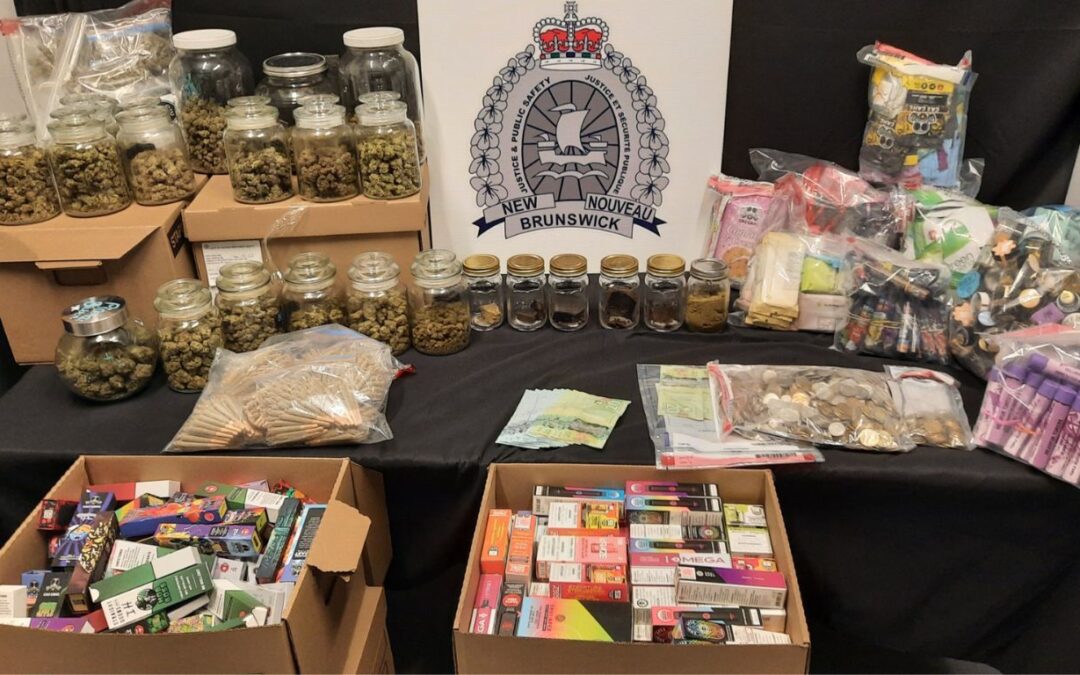
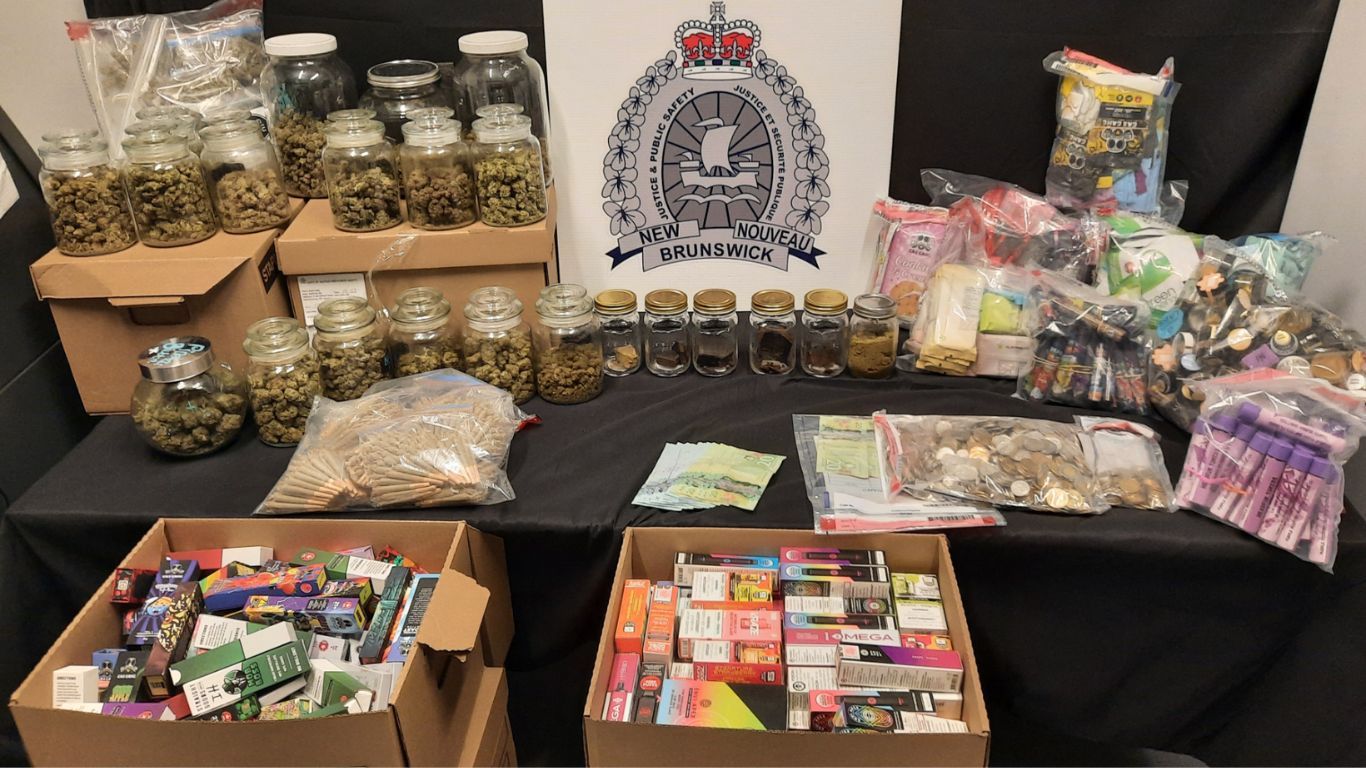
Peace officers with the New Brunswick Department of Justice and Public Safety say they arrested a man and woman and seized contraband cannabis and other illegal products from a store in Saint John on January 9.
On that day, provincial officers executed a search warrant at Milford Smoke, located at 548 Milford Rd. in Saint John, where a 63-year-old male delivery driver and 37-year-old female clerk were arrested for violations under the federal Cannabis Act.
Both were later released from custody and are due in court on April 4. The investigation is ongoing.
A post on the company’s Facebook page says the Milford Rd. location opened in November 2023, after moving from a previous location at 76 King Street in Saint John. An employee who answered the phone at the store today said they are currently only open for delivery as the storefront is now closed.

Peace officers seized:
Cannabis NB and provincially licensed private retail stores are permitted to sell cannabis in the province. Only these approved retailers offer regulated cannabis products that are approved by Health Canada and sourced by Cannabis NB.
There are 25 Cannabis NB stores in the province, plus a handful of privately-run cannabis stores.

After five years of recreational cannabis legalization, many industry observers believe that Canada’s regulatory environment is lagging behind both industry requirements and societal expectations.
The independent expert panel that conducted the legislative review of the Cannabis Act last year is set to present its findings in March and may recommend some changes. However, a recommendation isn’t legislation and material change is unlikely any time soon.
This is frustrating for many industry participants who often present a consistent view of common-sense adjustments that could make a real difference. By far, the greatest concern is the excise tax on dried cannabis, which is currently set at 10% of a gram’s value, or $1—whichever is greater.
“The change I would make would be to move to a 10% flat tax across the board for recreational,” says Tanner Stewart, Co-Founder and CEO of Stewart Farms in Milltown, New Brunswick. “Give a set percentage-based tax, and we’ll be dancing in the streets.”
This proposal addresses one of the more dire effects of price compression, where the $1 minimum results in producers paying a higher percentage of a gram’s value as prices decline under $10. Given that the price per gram has been trending down, this has resulted in a higher percentage of revenue going to excise.
“Now we have, depending on size and category, tax rates as high as over 50% in some concentrates and vape categories,” says George Smitherman, President & CEO of the Cannabis Council of Canada (C3), which has also argued for a 10% flat tax.
This would suggest a need to consult with industry and assess taxation on a product format basis to avoid distortions in excise duty. To simplify things and reduce bureaucracy, one answer might be to have a flat 10% tax on the landed cost of consumer packaged goods.
But is the tax itself even fair or necessary?
“I would say take a step further back and ask ourselves, why do we have excise duty on cannabis?” says Trina Fraser, a partner at Brazeau Seller Law in Ottawa. “As consumers, excise duty is not something we pay on every product. Usually, it’s on something that the government is actively discouraging, because it poses a higher cost on society in terms of things like healthcare and policing.”
However, Fraser argues that legalization has not resulted in any notable increase in costs in these areas, with no significant added burden to government.
“At this point,” she says, “it is just an easy revenue source, primarily for the provincial governments.”
In many cases, the provinces already have a monopoly on wholesaling cannabis while also receiving provincial sales tax on retail sales. Specific to excise duty, the provinces receive 75% of the revenue, and the federal government 25%. As a result, there is a strong disincentive for a consensus decision to remedy the situation.

Federal regulatory fees could also undergo reform. Minimum fees are $2,500 for micros and $23,000 for standard cultivation. On top of that, micros with revenue up to $1 million pay 1%, and those above $1 million pay 2.3%. Standard cultivators and processors, as well as medical purposes licences, pay 2.3%.
“Regulatory fees must be eliminated immediately,” says Kyp Rowe, president of Victoria Cannabis Company in Victoria, BC. “The 2.3% of revenue for standard processors is criminal. How and why was this number created? Where’s the math behind this?”
One suggestion that came out of the Cannabis Act and Industry Review meeting was a tax based on THC percentages.
“This is an interesting one for me,” says Rowe. “It would knock out the ridiculously high numbers game being played out in the retail market, which has made liars out of labs, and has decreased the number of unique and flavorful cannabis options in the market due to perceived lack of quality from lower THC numbers.”
One of the more compelling arguments is to address the medical cannabis market, which has not matured as some would like.
“Pharmacare for medicinal cannabinoids warrants more focus so that it can emerge as a paid-for option on a variety of public plans and programs,” says Smitherman. “For example, there is still no talk of universal coverage for nausea for chemotherapy.”
The excise tax on medical cannabis is also onerous and somewhat nonsensical. Why would the government have a “sin tax” on medicine?
“Before recreational legalization in 2018 we had a medical framework for years, in which private companies were licensed to sell medical cannabis, and there was no excise duty,” says Fraser.
Here, the argument for complete abolition of the excise tax could open the door for wider acceptance within the medical culture and society at large.
“Eliminate tax on medical cannabis altogether,” says Stewart, “and legislate insurance coverage for medical patients.”
Another area where regulations could mature is within advertising, particularly given that cannabis is only sold in age-gated environments.

“A child cannot go into a cannabis retail store,” says Fraser. “Then what does it matter if there are portrayals within a cannabis retail store of an animal or a character, or a testimonial? We don’t want cannabis to be accessible to children, but that doesn’t mean we have to be patronizing to adults.”
Fraser is speaking to the specific wording of the general prohibitions on the promotion of cannabis, which state that it is prohibited to use “the depiction of a person, character or animal, whether real or fictional,” as well as a “testimonial or endorsement, however displayed or communicated.”
Fraser’s argument is for common-sense restrictions that require companies to tell the truth, but that allow them more freedom to create and display brands, with adult consumers able to make up their own minds.
Similarly, there has been a strong push to increase the 10 mg limit in edibles to 100 mg. This is intended to provide more consumer choice and to compete with the illicit market, where large volumes can be purchased via Interac, and delivered by Canada Post.
“I think when the review is out, there will be a lot of recommendations, and even some suggestions to reduce the overall tax/duty burden on cannabis producers,” says Fraser. “However, as far as loosening promotional restrictions, or raising the limits on edibles, I’m not as optimistic.”

Recent Comments