How do you know when you know….hmmm…I would say you don’t until you do….and this way you can figure it all out for you, as only you can discover for yourself…..so be Autodidactic and Stay Awesome!
The state of New Jersey may soon legalize the recreational and therapeutic use of psilocybin mushrooms, following the reintroduction of a measure that was withdrawn in 2023 for revision. The measure, called the Psilocybin Behavioral Health Access and Services Act, concentrates on mental health.
Psilocybin is a naturally occurring psychedelic compound found in hallucinogenic mushrooms. According to research, this compound is metabolized in the body to psilocyn and can penetrate the central nervous system.
The measure was tabled at the state Senate again last week and has strong support, particularly from Senate President Nick Scutari, who originally sponsored the recreational measure that legalized marijuana in New Jersey. If passed, it would establish a legal framework for the sale and manufacture of products that contain psilocybin.
It would also expunge pending and past offenses involving psilocybin while also decriminalizing the drug’s recreational use for individuals aged 21 years and above. If approved, individuals could use, inhale, ingest, store, possess, process and transport no more than four grams of psilocybin. Additionally, residents in the state would be permitted to cultivate magic shrooms for personal use.
The measure’s retabling comes as Hackensack Meridian, a major healthcare provider in the state, plans to administer hallucinogens as a medication for several disorders, among them depression. The company recently announced that it had partnered with Compass Pathways to study the company’s COMP360 psilocybin formulation.
Hackensack CEO Robert Garrett stated that this partnership may lead to trials and, in due time, create tangible change for individuals suffering from a range of mental-health ailments. The company’s senior VP for behavioral health, Kenneth Esser, also highlighted that Hackensack’s research wasn’t impacted by whether the aforementioned measure was approved, as clinical trials were overseen by the U.S. Food and Drug Administration (FDA). The FDA allows clinical trials to be conducted in accordance with its guidance.
The psychiatrist leading the company’s involvement in alternative forms of therapy for mental conditions, Dr. Eric Alcera, noted that while more research was needed, the results thus far had shown promise.
The psychedelic legalization movement has gained traction across the country in the last few years, as more cities have approved laws to decriminalize the compounds. When it comes to states, however, only two have approved similar laws.
The first to do so was Oregon, which decriminalized psilocybin and legalized it for nonsupervised medical use in 2020. The state of Colorado followed suit in 2022, decriminalizing psilocybin and other psychedelics for personal use. Other states are also pursuing similar measures, among them California, Massachusetts and Pennsylvania.
With other startups such as Mind Medicine Inc. (NASDAQ: MNMD) (NEO: MMED) (DE: MMQ) also conducting their own drug-development programs, it is only a matter of time before many approved psychedelic treatments are available to the patients who are in dire need of effective alternatives to existing mental-health treatments. Regulatory reform at state and national level appears certain to follow.
About PsychedelicNewsWire
PsychedelicNewsWire (“PNW”) is a specialized communications platform with a focus on all aspects of psychedelics and the latest developments and advances in the psychedelics sector. It is one of 60+ brands within the Dynamic Brand Portfolio @ IBN that delivers: (1) access to a vast network of wire solutions via InvestorWire to efficiently and effectively reach a myriad of target markets, demographics and diverse industries; (2) article and editorial syndication to 5,000+ outlets; (3) enhanced press release enhancement to ensure maximum impact; (4) social media distribution via IBN to millions of social media followers; and (5) a full array of tailored corporate communications solutions. With broad reach and a seasoned team of contributing journalists and writers, PNW is uniquely positioned to best serve private and public companies that want to reach a wide audience of investors, influencers, consumers, journalists and the general public. By cutting through the overload of information in today’s market, PNW brings its clients unparalleled recognition and brand awareness. PNW is where breaking news, insightful content and actionable information converge.
To receive SMS alerts from PsychedelicNewsWire, text “Groovy” to 888-902-4192 (U.S. Mobile Phones Only)
Please see full terms of use and disclaimers on the PsychedelicNewsWire website applicable to all content provided by PNW, wherever published or re-published: https://www.PsychedelicNewsWire.com/Disclaimer
Quebec’s Gaspesie region is renowned worldwide for its dramatic coastal landscapes, stunning national parks, and salty seaside air. It’s a place rich in history, beginning with the First Nations people who witnessed the arrival of the Vikings, Italian explorers, and the Basque and Breton fishermen crossing the St-Lawrence (1). You don’t have to book an expensive cruise to see whales or seals in the Gaspé; they’re as much a part of the landscape as the cliffs. With breathtaking hiking trails for all fitness levels and natural wonders like the Percé Rock, it’s the perfect destination for nature lovers looking for peace, quiet, and outdoor therapy.
Road Trip!
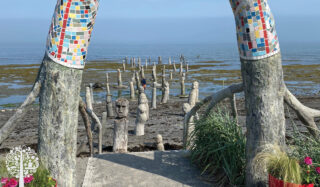
With that in mind and a desire to explore our province, my family and I headed to the Gaspesie in early July. Nearly an 11-hour drive from our home in the Laurentians, we broke the journey in half to keep our three kids from going stir-crazy in the back seat. Sleeping under the stars seemed natural for the first night of our eco-tour, so we booked a bubble tent with a transparent roof (that’s right, parents, your dreams of putting your accident-prone middle child in a bubble can come true in Sainte-Flavie, QC!). The next day, we stopped at the Centre d’Art Marcel Gagnon, a unique seaside art gallery featuring wooden sculptures you can only see at low tide, before heading to the Reford Gardens, a place I didn’t know was on my bucket list until I saw it.
Elsie Reford and Les Jardins de Métis
Also known as Les Jardins de Métis, the Reford Gardens are located in the northern part of the Gaspé Peninsula, about 300 kilometers northeast of Quebec City. They are the northernmost gardens in eastern North America (2), making the abundance of plant life growing there all the more impressive.
Elsie Reford (1872-1967) was the mastermind behind this gorgeous space, although she never set out to be a horticulturist. Instead, she was an outdoor enthusiast and used her camp in Grand-Métis for hunting, fishing, canoeing, and horseback riding. But in 1926, at 54, she was sidelined by appendicitis and needed surgery. Afterward, her doctor recommended she find less physically demanding activities to occupy her time, so she decided to convert her 20-acre property into gardens.
Work In Progress
When she first developed the concept, Reford’s camp was barren except for a spruce-lined entrance and a simple cedar hedge. She dug, built stone walls, and moved trees to create a beautiful forested oasis. Despite the challenging weather conditions, Reford selected rare plant varieties for her gardens, including azaleas and blue poppies from Tibet. She created and fostered relationships with local farmers and fishing guides, trading leaves with the farmers in exchange for refined compost to help her exotic and native plant collection grow. Even with the community’s help, transforming the property took three decades of hard work. I’m unsure how this venture complied with the doctor’s orders for less strenuous activity, but the results were well worth the effort.
Good for the Soul
The word magnificent doesn’t do the Reford Gardens justice, and it’s no wonder they’ve been declared a National Historic Site of Canada. The property features 15 garden spaces and 3,000 plant species and varieties. The Entrance Garden welcomes visitors with winding pathways shaded by mature white spruce trees. Groundcovers and plants of various heights and sizes intermingle along the trail, including Lady’s mantle, sedum, lilies, and cicerbeta. The Entrance Garden also features wooden bridges that cross the rushing stream that meanders throughout the property. You can’t help but instantly feel at peace, the gardens doing exactly what they’re meant to do for the soul.
Eventually, the gravel paths giveaway to the spectacular Stream Garden, which looks like a well-kept secret nobody else knows about. The hills on either side of the stream are a wild and lush paradise featuring rock gardens, trees and shrubs, stone pathways, and benches for sitting and taking it all in. Irises, mosses, lichens, and unique bonsai shrubs grow in this space, creating a visually exciting and complex ecosystem.
Exotic Blue Poppies
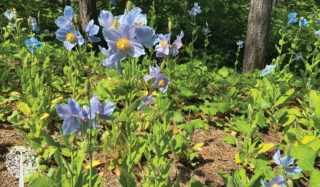
The Reford Gardens are most famous for the blue poppies, which bloom from the end of June through July and are featured in abundance in the Blue Poppy Glade. The blue flowers with delicate petals are tough to grow, yet Elsie Reford succeeded. Native to the alpine valleys of the Himalayas, Reford got the seeds from the Royal Botanic Garden in Edinburgh and brought them back to Grand-Métis around 1935 (3). She found the blue poppies loved the moist and mild climate in the region and were protected by the early and heavy snow cover. She shaded them from the harsh sun by growing them under a crab apple and birch tree canopy. The periwinkle blue flowers pop against a backdrop of ostrich ferns, white martagon, and Turk’s Cap lilies that round out the space. Anyone open to the horticultural challenge of growing blue poppies in their home gardens can purchase seeds at the gift shop (among many other seed varieties).
Endless Beauty and Inspiration
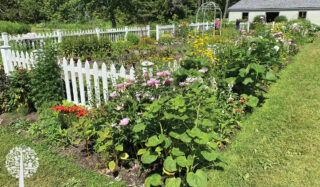
The Vegetable Garden is what dreams are made of and features crops like Egyptian garlic, kale and cabbages, lettuce greens, and so much more. Surrounded by a white picket fence and pollinator-friendly flowers, it leaves you feeling inspired and hungry for more. The Long Walk is a breathtaking stroll through an English cottage-style garden featuring trees, shrubs, and blooms of all colors. There’s a serene meadow with lupins galore, and the House Gardens make you want to pack your bags and move in for good, if not for the plants, then the gorgeous wrap-around porch overlooking them. The Primula Glade and Alpin Garden are must-sees on your way to the Bird Garden, a paradise for bird watchers and gardeners who appreciate everything this species offers. Gorgeous arbors and gazebos covered with honeysuckle are natural nesting spots, as are the many birdhouses scattered throughout the walkways and meadows. The pond in this part of the garden includes a migration ramp for the American eel, which helps the at-risk species access its natural habitat.
La La Land
Our two-year-old fell asleep in his stroller mid-way through our tour, a small miracle if you understand how much energy this kid has. But my entire family could have drifted off after our visit; we felt calm, relaxed, and uplifted. As we headed to the car for the final leg of our journey to Forillion National Park in the Gaspé, I felt justified in some of the plant choices I have made in my garden. If Elsie Reford liked them, they must be wonderful. I also felt inspired to do more and do better. While my garden will never span 20 acres, I can create a space on a much smaller scale that attracts wildlife, improves the soil, and feeds us and our pollinator friends while offering some much-needed garden therapy. I took notes of various plant species I haven’t tried growing and want to incorporate into my property; it’s all part of my 30-year plan.
(Globe Newswire) Calgary — Ogen, a distinguished player in the cannabis industry, announced an initiation of a strategic sales opportunity that will be overseen by the receiver. This sale includes Ogen’s prominent brand, innovative intellectual property (IP), extensive product line (SKUs) and unique genetics.
The comprehensive sale, facilitated exclusively through the Canadian Cannabis Exchange (CCX) platform, ensures the negotiation and transfer of these key assets with the goal of maximizing value for all parties.
Sale package information:
The sale includes Ogen’s fully trademarked brand, including IP assets and social media accounts totalling approximately 13,000 followers across all platforms. The brand sale includes Ogen marketing plans, campaigns, and assets across all SKUs, genetic strains and provinces. The marketing assets have been instrumental in establishing the company as an industry trailblazer.
Advertisement
Alongside the sale of Ogen’s brand is a diverse range of product stock-keeping units (SKUs) that make up Ogen’s comprehensive product portfolio. The SKU sale is made up of 77 SKUs spanning across eight provinces demonstrating Ogen’s market presence across Canada. The SKUs encompass multiple formats including pre-rolls, dried flower, and milled flower, each consisting of a range of packaging configurations.
Ogen’s unique portfolio of genetics is also for sale, which includes 13 cannabis strains for sale developed through a rigorous five-year pheno-hunting process, providing genetic consistency and viability. The Ogen genetics portfolio is supported by a collection of historical potency results, rooted clones, and seeds.
The exclusive nature of this sale through the CCX establishes a focused platform for potential buyers to explore and engage in discussions regarding the acquisition of these coveted assets. The Ogen comprehensive sale is an attractive investment within the Canadian cannabis market.
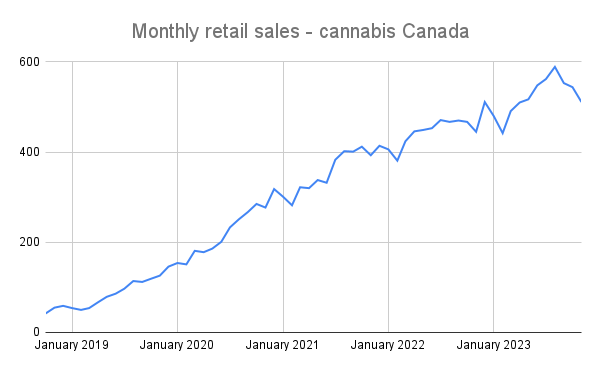
Cannabis sales reached a record high of $589 million in the summer of 2023 before experiencing three straight months of declines, ending with sales of $511 million in November of the same year.
Sales in November 2023 were still higher than November 2022 at $445 million, and the same as the previous year’s peak of sales in December, which was also $511 million. (All numbers are using retail sales at 2017 constant prices).
Cannabis sales have declined every November since 2020 before experiencing a boost in sales in December and another decline in January and February, a trend seen in many retail sectors. In November 2022, sales dropped to $411 million from a peak of $471 million that August, before peaking at $511 million for the year. Sales fell to $442 million in February 2023.
While sales still show increases on an annual basis, the three-month decline in retail cannabis sales in 2023 was the steepest overall decline since legalization. The decline comes at a time when not only the cannabis industry but also the broader Canadian economy is facing challenges, with consumer spending in many sectors declining, including food and beverages and beer and wine.
The number of new cannabis retailers continues to grow, although at a slower rate than in the first few years of legalization.
The number of retail stores across Canada also continues to grow, although the pace has slowed considerably compared to the first four years of legalization. As of October 2023, there were 4,194 (up from 3,654 in October) cannabis stores in Canada, excluding provincial online stores.
British Columbia: 511 public and private stores, either open or “coming soon”, a decline from 513 in October.
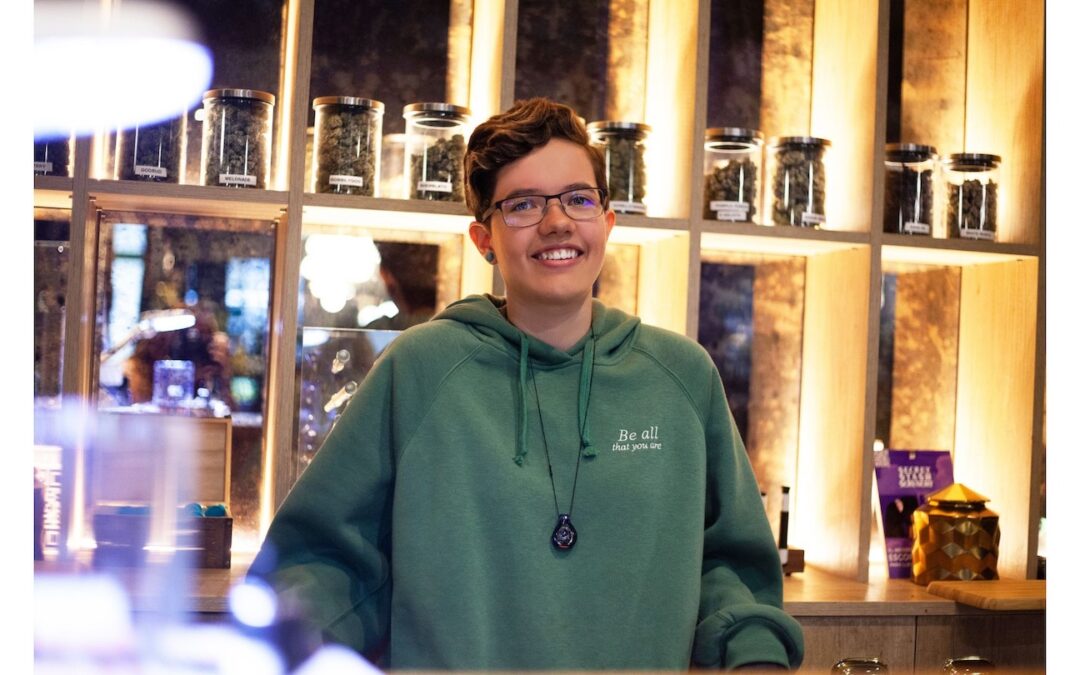
Helga Bucher works at High Class Social Club in Barcelona, one of the hundreds of private consumption lounges that have cropped up in the city despite cannabis being illegal in Spain.
“It is not like a dispensary United States,” Bucher says. “One of the most important rules is we cannot say the word ‘buy’ or ‘sell.’ Everything is ‘interchange.’”
Helga greets guests in the reception area, takes information from their photo identification (passports for tourists), and snaps their photos. Most importantly, she explains the rules.
“Nobody can be outside the club waiting for you. They have to come in with you or go to another place completely,” she says.
Customers must also purchase credits that they use within the club.
According to Helga, products are limited to what is available in the gray market, but High Class often collaborates with cannabis brands to offer wider options.
Helga shows people around the large facility, which can be overwhelming for first-time visitors and tourists who flock from surrounding countries like Germany and Morocco.
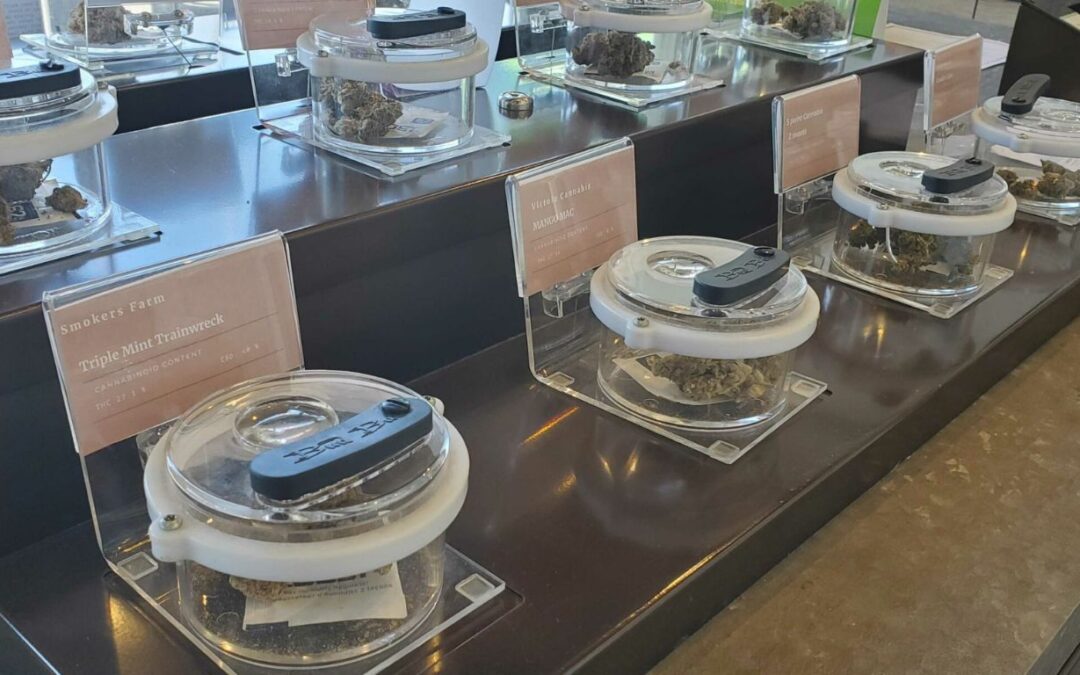
“High Class is big, beautiful, and really modern, with fancy sellers. They are a little bit lost, so we make the tour, show where the soda is, where the coffee is, where we do movie nights, and have a station with papers and grinders,” she explains. “Then we explain all the edibles or hash we have, and then we show the menu.”
There is comfortable furniture and tables where people chill, socialize and work. All guests must remain on the premises for at least 20 minutes, but many stay all day. When they leave, it is not legal to take cannabis out with them.
“If you take your weed with you, it is your responsibility,” she says.
Helga is among many budtenders featured in Oaksterdam’s Budtender’s Guide: A Reference Manual for Cannabis Consumers and Dispensary Professionals. Learn morehere.














Recent Comments