Drunk driver crashes into cannabis store in Ontario | StratCann
Thanks to our sponsors for supporting StratCann’s work!
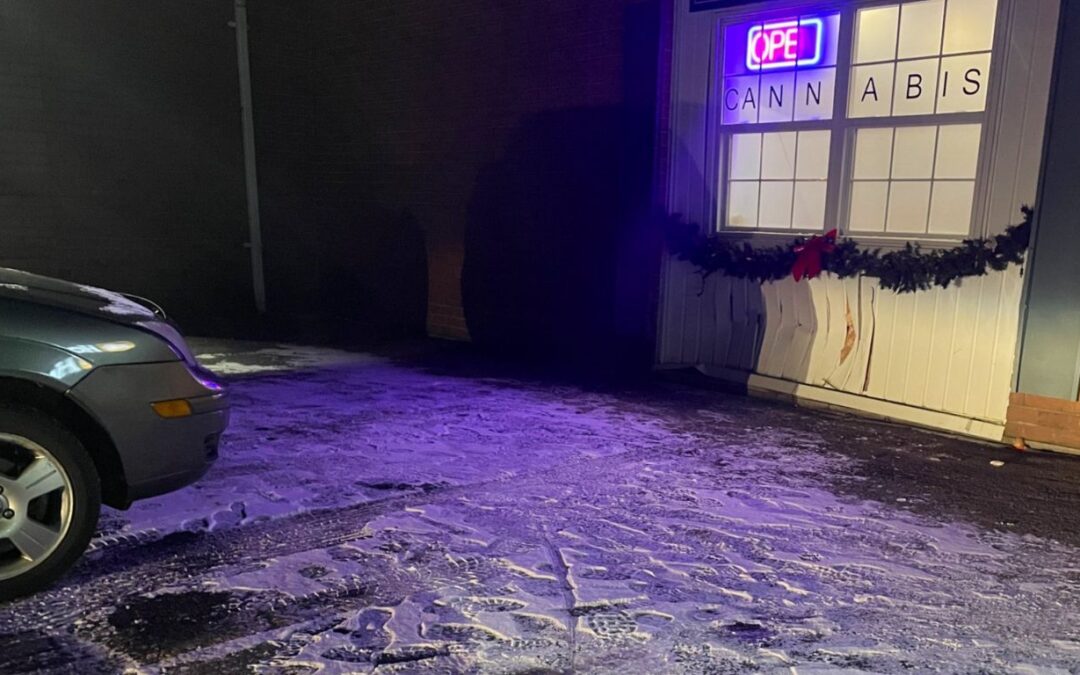
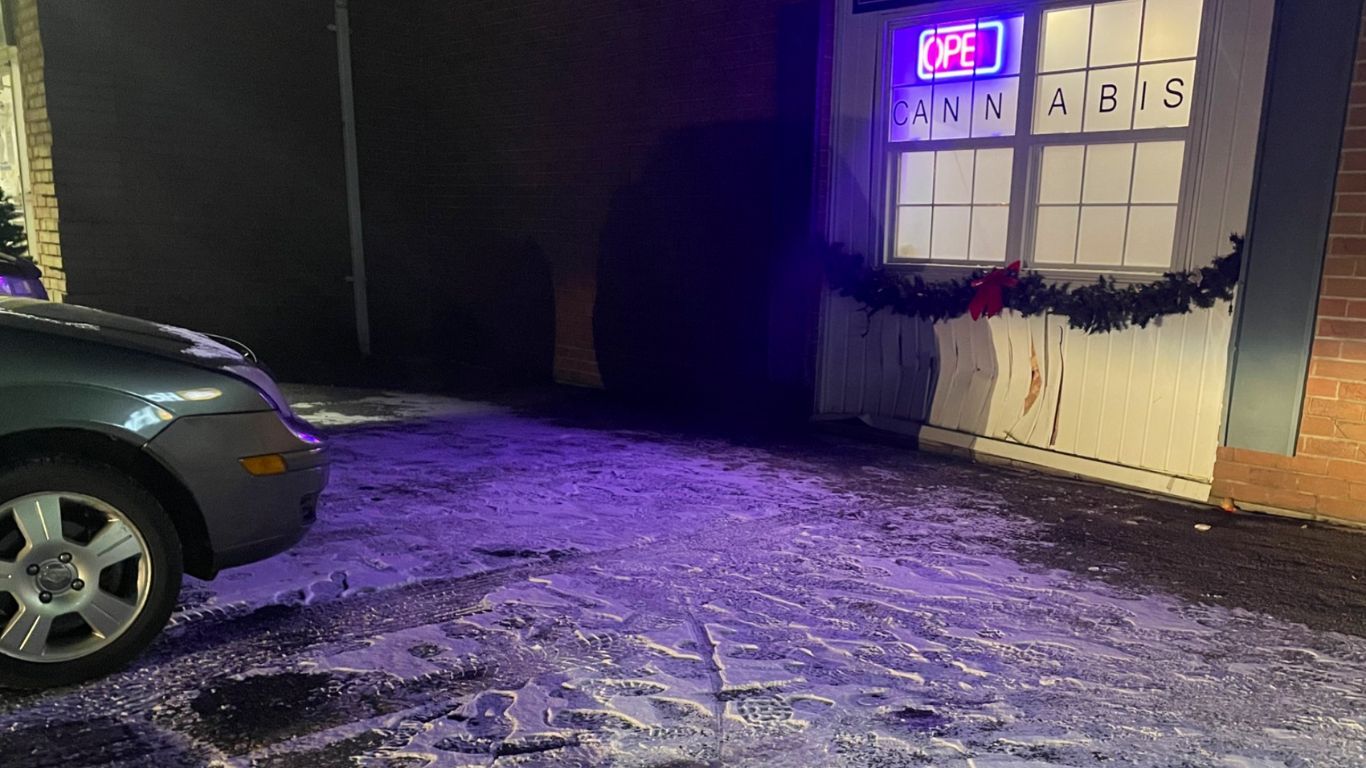
A drunk driver crashed into a cannabis store in Ontario on January 4 in the town of Cardinal, about an hour drive south of Ottawa.
In a post to Twitter, the OPP said its Greenville detatchment attended the collision, noting only minor damage and no injuries. The 67-year-old driver received a three-day licence suspension after a roadside breath test found them to have a quantity of alcohol in his system.
“The driver’s breath result was in the warning range, which is a 3-day suspension penalty. Registering a “Fail” on the test would result in criminal charges.” noted a follow-up Tweet.
An employee at the store, a Shiny Buds located off County Road 2, told StratCann that two employees were in the store at the time, but no one was hurt. The store is still open and expects repairs to be completed soon.
Insight & News
Browse Categories
Thanks to our sponsors supporting StratCann’s work!
Recent Articles
Are you of legal age in your jurisdiction? By clicking “Enter” you are verifying you are of legal age to view the content of this website, or click “Exit” to leave.
The year 2023 witnessed a range of notable federal developments on the cannabis landscape. Among these were significant milestones such as the Biden administration’s proposal to reschedule cannabis, an expansion of pardons for federal cannabis possession offenses and setbacks in the congressional journey toward marijuana banking reform.
As Congress takes a recess for the holiday season, stakeholders and advocates are reflecting on the highs and lows of the past year, intending to advance their efforts in 2024.
A pivotal moment in 2023 was the U.S. Department of Health & Human Sciences recommending the reclassification of cannabis from Schedule I to Schedule III under the Controlled Substances Act (CSA). This recommendation, arising from President Biden’s directive, is undergoing the administrative process led by the U. S. Drug Enforcement Agency (DEA). If implemented, this move would symbolically acknowledge that marijuana is not a dangerous drug lacking medical value; it would also potentially ease research barriers and allow state-licensed businesses to claim federal tax deductions.
Biden also made headlines by extending and broadening pardons for individuals with federal cannabis possession offenses, aligning with his renewed focus on marijuana reform. However, these actions fall short of his initial campaign promises, which included federal legalization of medical marijuana, marijuana decriminalization, and preventing incarceration for nonviolent marijuana-related offenses.
Marijuana banking reform faced challenges in the Senate, with the Secure and Fair Enforcement Regulation (SAFER) Banking Bill stalling despite passing through the Banking Committee. Senate Majority Leader Chuck Schumer remains committed to advancing the bill in 2024, emphasizing the need for bipartisanship in a divided Congress.
Public support for cannabis legalization reached an all-time high of 70%, according to a Gallup poll released in November. This bipartisan support extended across states with varying marijuana legalization statuses, reflecting a growing consensus on the need for reform. In congressional legislation, various bipartisan bills were introduced in 2023, addressing different aspects of federal cannabis policy. Notable bills included the STATES 2.0 Act, the MORE Act and the HOPE Act, each proposing reforms ranging from ending federal prohibition in legal states to expunging prior marijuana convictions.
While multiple drug-policy reform amendments were blocked by the GOP-controlled Rules Committee, some amendments, such as allowing VA doctors to recommend medical marijuana to veterans, did find success in the House. In addition, several federal agencies engaged with marijuana-related issues in 2023. The DEA announced plans to increase domestic production of cannabinoids for research purposes while also proposing a federal ban on two psychedelic compounds. The U.S. Food & Drug Administration stirred controversy by refraining from regulating hemp-derived CBD in the food supply, and the VA reaffirmed its prohibition on doctors recommending medical cannabis to veterans.
The Justice Department faced legal challenges defending the federal ban preventing cannabis consumers from buying or possessing firearms. Despite court rulings deeming the ban unconstitutional, the government continues to appeal.
Looking ahead to 2024, the marijuana landscape remains uncertain. The DEA’s decision on cannabis scheduling and the fate of the banking bill in the Senate will be key focal points. With a presidential election year on the horizon, Biden may continue to emphasize his marijuana pardon actions, though the extent of his commitment to broader legalization remains to be seen. Despite the challenges, the momentum for marijuana reform persists, providing stakeholders and advocates with a compelling force for the future.
CNW420 spotlights the latest developments in the rapidly evolving cannabis industry through the release of two informative articles each business day. Our concise, informative content serves as a gateway for investors interested in the legalized cannabis sector and provides updates on how regulatory developments may impact financial markets. Articles are released each business day at 4:20 a.m. and 4:20 p.m. Eastern – our tribute to the time synonymous with cannabis culture. If marijuana and the burgeoning industry surrounding it are on your radar, CNW420 is for you! Check back daily to stay up-to-date on the latest milestones in the fast -changing world of cannabis.
To receive SMS alerts from CNW, text CANNABIS to 888-902-4192 (U.S. Mobile Phones Only)
Please see full terms of use and disclaimers on the CannabisNewsWire website applicable to all content provided by CNW, wherever published or re-published: https://www.CannabisNewsWire.com/Disclaimer
The Government’s Use of Controlled Chaos to Maintain Power
Figure One: Just stop a few of their machines and radios and telephones and lawn mowers…throw them into darkness for a few hours and then you just sit back and watch the pattern.
Figure Two: And this pattern is always the same?
Figure One: With few variations. They pick the most dangerous enemy they can find…and it’s themselves. And all we need do is sit back…and watch…and let them destroy themselves. — “The Monsters Are Due on Maple Street,” Twilight Zone
Will 2024 be the year the Deep State’s exercise in controlled chaos finally gives way to an apocalyptic dismantling of our constitutional republic, or what’s left of it?
All the signs seem to point in this direction.
For years now, the government has been pushing us to the brink of a national nervous breakdown.
This breakdown—triggered by polarizing circus politics, media-fed mass hysteria, militarization and militainment (the selling of war and violence as entertainment), a sense of hopelessness and powerlessness in the face of growing corruption, the government’s alienation from its populace, and an economy that has much of the population struggling to get by—has manifested itself in the polarized, manipulated mayhem, madness and tyranny that is life in the American police state today.
Why is the Deep State engineering this societal madness? What’s in it for the government?
What is playing out before us is a chilling lesson in social engineering that keeps the populace fixated on circus politics and conveniently timed spectacles, distracted from focusing too closely on the government’s power grabs, and incapable of standing united in defense of our freedoms.
It’s not conspiratorial.
It’s a power play.
Rod Serling, the creator of the Twilight Zone, understood the dynamics behind this power play.
In the Twilight Zone episode, “The Monsters Are Due on Maple Street,” Serling imagined a world in which the powers-that-be carry out a social experiment to see how long it would take before the members of a small American neighborhood, frightened by a sudden loss of electric power and caught up in fears of the unknown, will transform into an irrational mob and turn on each other.
It doesn’t take long at all.
Likewise, in Netflix’s apocalyptic thriller Leave the World Behind (produced by Barack and Michelle Obama’s studio), unexplained crises lead to a technological blackout that leaves the populace disconnected, disoriented, isolated, suspicious, and under attack from mysterious ailments and each other.
As one of Leave the World’s characters speculates, the culprit behind the escalating catastrophes, which range from WiFi outages and mysterious health ailments to cities under siege from rogue forces, may be the result of a military campaign intended to destabilize a nation by forcing people to turn against each other.
It’s really not so far-flung a scenario when you consider some of the many ways the government already has the ability to manufacture crises in order to sow fear, fuel hysteria, destabilize the nation and institute martial law.
The government has the tools and the know-how to manufacture health crises. Long before COVID-19 locked down the nation, the U.S. government was creating lethal viruses and unleashing them on an unsuspecting public.
The government has the tools and the know-how to manufacture civil unrest and political upheaval. Since the days of J. Edgar Hoover, the FBI has been using agent provocateurs to infiltrate activist groups in order to “expose, disrupt, misdirect, discredit and otherwise neutralize” them.
The government has the tools and the know-how to manufacture economic instability. As the national debt continues to rise upwards of $34 trillion, with little attempt by federal agencies to curtail spending, it stands as the single-most pressing threat to the economy.
The government has the tools and the know-how to manufacture environmental disasters. Deployed in 1947, Project Cirrus, an early precursor to HAARP, the government’s weather-altering agency, attempted to disable a hurricane as it was moving out to sea. Instead of weakening the storm, however, the government steered it straight into Georgia, resulting in millions of dollars in damaged properties.
The government has the tools and the know-how to manufacture communications blackouts. Internet and cell phone kill switches enable the government to shut down communications at a moment’s notice. It’s a practice that has been used before in the U.S. In 2005, cell service was disabled in four major New York tunnels (reportedly to avert potential bomb detonations via cell phone). In 2009, those attending President Obama’s inauguration had their cell signals blocked (again, same rationale). And in 2011, San Francisco commuters had their cell phone signals shut down (this time, to thwart any possible protests over a police shooting of a homeless man).
The government has the tools and the know-how to manufacture terrorist attacks. Indeed, the FBI has a pattern and practice of entrapment that involves targeting vulnerable individuals, feeding them with the propaganda, know-how and weapons intended to turn them into terrorists, and then arresting them as part of an elaborately orchestrated counterterrorism sting.
We must never forget that the government no longer exists to serve its people, protect their liberties and ensure their happiness.
Rather, “we the people” are the unfortunate victims of the diabolical machinations of a make-works program carried out on an epic scale whose only purpose is to keep the powers-that-be permanently (and profitably) employed.
This is how tyranny rises and freedom falls.
Almost every tyranny being perpetrated by the U.S. government against the citizenry—purportedly to keep us safe and the nation secure—has come about as a result of some threat manufactured in one way or another by our own government.
Think about it: Cyberwarfare. Terrorism. Bio-chemical attacks. The nuclear arms race. Surveillance. The drug wars. Domestic extremism. The COVID-19 pandemic.
In almost every instance, the U.S. government has in its typical Machiavellian fashion sown the seeds of terror domestically and internationally in order to expand its own totalitarian powers.
Consider that this very same government has taken every bit of technology sold to us as being in our best interests—GPS devices, surveillance, nonlethal weapons, etc.—and used it against us, to track, trap and control us.
Are you getting the picture yet?
The U.S. government isn’t protecting us from threats to our freedoms.The U.S. government is creating the threats to our freedoms.
We’re in a similar escapist bubble, suffering from a “crisis of the now,” which keeps us distracted, deluded, amused, and insulated from reality.
Professor Jacques Ellul studied this phenomenon of overwhelming news, short memories and the use of propaganda to advance hidden agendas. “One thought drives away another; old facts are chased by new ones,” wrote Ellul.
“Under these conditions there can be no thought. And, in fact, modern man does not think about current problems; he feels them. He reacts, but he does not understand them any more than he takes responsibility for them. He is even less capable of spotting any inconsistency between successive facts; man’s capacity to forget is unlimited. This is one of the most important and useful points for the propagandists, who can always be sure that a particular propaganda theme, statement, or event will be forgotten within a few weeks.”
Yet in addition to being distracted by our electronic devices and diverted by bread-and-circus entertainment spectacles, we are also being polarized by political theater, which aims to keep us divided and at war with each other.
This is the underlying cautionary tale of Leave the World Behind and “The Monsters Are Due on Maple Street”: we are being manipulated by forces beyond our control.
A popular meme circulating a while back described it this way:
“If you catch 100 red fire ants as well as 100 large black ants, and put them in a jar, at first, nothing will happen. However, if you violently shake the jar and dump them back on the ground the ants will fight until they eventually kill each other. The thing is, the red ants think the black ants are the enemy and vice versa, when in reality, the real enemy is the person who shook the jar. This is exactly what’s happening in society today. Liberal vs. Conservative. Black vs. White. Pro Mask vs. Anti Mask. The real question we need to be asking ourselves is who’s shaking the jar … and why?”
The U.S. Food and Drug Administration (FDA) issued two warnings regarding compounded ketamine use on Feb. 16, 2022, and a year and a half later on Oct. 10, 2023. Ketamine is a dissociative anesthetic that is typically used to induce loss of consciousness and treat pain in both humans and animals. It has some hallucinogenic properties and is often called a dissociative anesthetic hallucinogen because it can make patients and recreational users feel detached from physical pain and the environment.
Ketamine can also induce amnesia, a sense of sedation and immobility, making it the drug of choice for bad actors looking to perpetuate sexual assault.
The FDA’s February 2022 warning was titled “FDA Alerts Health Care Professionals of Potential Risks Associated with Compounded Ketamine Nasal Spray,” while the 2023 warning was titles “FDA Warns Patients and Health Care Providers About Potential Risks Associated with Compounded Ketamine Products, Including Oral Formulations, for the Treatment of Psychiatric Disorders.”
While both warnings seem to cover a lot of the same ground, it seems the 2022 warning did not have the intended effect, necessitating the release of a second warning more than a year later. The federal agency noted that although it has approved a ketamine-containing nasal spray called esketamine (Spravato) for certain conditions, it warned that ketamine is not approved for psychiatric use.
Esketamine is currently part of the agency’s Risk Evaluation and Mitigation Strategy (REMS) program, which requires that the medication is “dispensed and administered in health care settings.” According to the FDA, esketamine cannot be provided outside of certified medical settings, and patients must remain under observation in a healthcare setting for at least two hours after they take the medication to ensure they are safe to leave.
This program is designed to house approved medications, such as Spravato, that can have severe side effects when taken outside of strict medical settings. As such, the FDA said, ketamine and compounded ketamine, which is ketamine with different dosage levels, “are not approved for the treatment of any psychiatric disorder.”
The FDA issued its first warning after it combed through April 2011 to January 2022 data from the FDA Adverse Event Reporting System and found five cases where compounded ketamine use was associated with dissociation, visual hallucinations, delusions, misuse and abuse.
Following this warning, the FDA issued another warning last October with some of the same information contained in the February 2022 warning. This warning noted that there was increased public interest in compounded ketamine as a treatment for behavioral health disorders, especially with the proliferation of telehealth providers that provide in-home ketamine services.
It stressed that “ketamine is not safe and effective” as a psychiatric disorder treatment and that the FDA wasn’t aware of any evidence suggesting that the dissociative psychedelic is safer, more effective or more fast acting than FDA-approved psychiatric treatments.
The concerns of the FDA support the position of startups such as Seelos Therapeutics Inc. (NASDAQ: SEEL) to the effect that psychedelic treatments should be used in only clinical settings where patients can be assessed prior to and after a treatment session to minimize the likelihood of adverse events.
About PsychedelicNewsWire
PsychedelicNewsWire (“PNW”) is a specialized communications platform with a focus on all aspects of psychedelics and the latest developments and advances in the psychedelics sector. It is one of 60+ brands within the Dynamic Brand Portfolio @ IBN that delivers: (1) access to a vast network of wire solutions via InvestorWire to efficiently and effectively reach a myriad of target markets, demographics and diverse industries; (2) article and editorial syndication to 5,000+ outlets; (3) enhanced press release enhancement to ensure maximum impact; (4) social media distribution via IBN to millions of social media followers; and (5) a full array of tailored corporate communications solutions. With broad reach and a seasoned team of contributing journalists and writers, PNW is uniquely positioned to best serve private and public companies that want to reach a wide audience of investors, influencers, consumers, journalists and the general public. By cutting through the overload of information in today’s market, PNW brings its clients unparalleled recognition and brand awareness. PNW is where breaking news, insightful content and actionable information converge.
To receive SMS alerts from PsychedelicNewsWire, text “Groovy” to 888-902-4192 (U.S. Mobile Phones Only)
Please see full terms of use and disclaimers on the PsychedelicNewsWire website applicable to all content provided by PNW, wherever published or re-published: https://www.PsychedelicNewsWire.com/Disclaimer
A new research article argues sales of cannabis, especially edibles, are likely to capture an increasing share of the market as consumer interest increases and stigmas decrease.
The study, published recently in the Journal of Cannabis Research, compares and contrasts opinions on cannabis, cannabis use, and legalization in the US and Canada.
Unsurprisingly, both countries showed high levels of support for legalization, with three-quarters of Canadians and Americans (78% and 75%) reporting that they agree/strongly agree with legalization for recreational (adult-use) purposes.
The report also says that usage rates among adults in both countries were similar as well, with 45% of Canadians and 42% of Americans confirming they consume cannabis. This number is higher than a recent report from Statistics Canada in 2022, which showed that 27% of people 16 years of age and older reported having used cannabis in the past 12 months, an increase from 25% in the previous reporting cycle.
This study was built around online surveys of those aged 19 and over, living in the USA or Canada for at least 12 months. In addition to their opinions on legalization, respondents were asked how they feel about being known for consuming cannabis, how often they consume cannabis, and for what purpose.
They were also asked questions specifically about cannabis edibles. While Americans were slightly more likely to report consuming cannabis edibles and beverages (24.5% and 28.5%), Canadians were more likely to report using cannabis oils or tinctures (22% and 8.7%).
Cannabis oils, capsules and tinctures, the active ingredient in most edibles, have been allowed for sale in Canada’s legal, regulated cannabis market since 2016 (medical only until 2018), while edibles and beverages were not allowed until 2019 and not widely available until 2020 or later. Cannabis edibles and beverages in Canada are also subject to a limit of 10mg THC per serving and per package, while many US markets allow a greater amount of THC per package.
Respondents were also asked if they intend to increase their purchases of edibles in the future and about their perceptions and concerns with edibles. Around 21% of American buyers reported they would increase purchases, compared to 13% of consumers in Canada.
Respondents were also asked about how the COVID-19 pandemic impacted their cannabis use, a subject covered by other recent surveys and studies, with 14% of Canadian and 16% of US cannabis users reporting they consumed more often between April 2020 and April 2021. Canadians were more likely (63%) to express concern about the perceived risks cannabis edibles can present to children compared to Americans (51%).
The researchers conclude that the market for dried flower will “stagnate and transition toward the edible market, as most health experts continue to discourage consumers from inhaling cannabis,” but argue there is a need for more education for the “canna curious” who may want to try these products but have various concerns.
The refusal of Canada’s major banks to work with the legal cannabis industry represents a troubling lack of accountability while bolstering the black market, say industry advocates.
The problem is so bad that even the Cannabis Council of Canada, the Ottawa-based organization that lobbies on behalf of licensed cannabis businesses, can’t open an account at any of Canada’s five big banks.
“We don’t touch cannabis, we work with regulated players,” said George Smitherman, president and CEO of the Cannabis Council of Canada. “Still, the only (bank) we can get an account from is Alterna Savings.”
Advertisement
And even that doesn’t come cheap, he said.
“Because we’re in the cannabis space, they charge us $4,000 per year and $100 a month for basic banking services, and I’m talking about an organization with less than $1 million in annual activity,” Smitherman said.
Accessing banking is a well-worn problem across Canada’s licensed cannabis space.
As the country enters its sixth year of legal weed, Canada’s banks still have no interest in doing business with those who legally deal pot, or even organizations merely related to cannabis.
Upon opening his successful chain of MaryJane’s Cannabis shops in Toronto, Sam Gerges couldn’t even find a bank willing to let him open a business bank account, much less provide access to loans.
“We have zero dollars in debt, yet we can’t get a single loan,” Gerges told the National Post.
Since opening his flagship Etobicoke store in 2020 — ironically in a former TD Canada Trust bank branch — Gerges’ business steadily grew, eventually expanding to new stores in North York and Oshawa.
“You have to go with private (lenders) in this industry,” he said. “Institutional lenders do not exist.”
One bank initially offered services to cannabis businesses, Gerges said, but with hefty onboarding fees in the thousands, it was a prohibitively expensive option.
“We’re now doing over $10 million in revenue, and we still can’t get a single loan from anybody,” Gerges said.
Nick Baksh, owner of Toronto cannabis retailer Montrose, said a lack of banking is yet another obstacle in Canada’s punishing retail cannabis framework.
“This issue is something (all cannabis retailers) can agree on,” said Baksh. “Excise is a tough one, parcel shipping in Ontario is a tough one, but I feel that just being able to have a normal bank account with the branch I’ve been banking with since I was 15, we should be able to do that.”
And without a bank account, Baksh lost out on accessing small business loans that would have made his formative years much less of a struggle.
This, Smitherman said, discourages entrepreneurship during a crucial period in Canada’s cannabis legalization.
“We talk about (entrepreneurs) frequently as a kind of cherished role they play in our society, but sadly in the cannabis space, we’ve got large Canadian banks that are more interested in how they look to treasury officials in the United States than how they look to Canadian business,” Smitherman said.
As Canada’s five big banks have significant presences in the United States, Smitherman and others suspect their hesitancy is rooted in the fact that, despite nearly half of states now allowing its recreational use, cannabis is still outlawed federally in the US.
The National Post sent invitations for comment to TD Canada Trust, BMO, Scotiabank, CIBC and RBC Royal Bank.
RBC, the only bank to respond to the Post’s inquires, said the legal landscape for cannabis around the world continues to evolve.
“RBC evaluates business relationships on a case-by-case basis, taking into consideration a number of factors to ensure compliance with laws and our internal risk parameters,” the statement read.
Canadian banks’ cannabis hesitancy spreads beyond business accounts.
Gerges said RBC — the bank where he maintains his personal accounts — rescinded a mortgage pre-approval once they discovered he owned a licensed cannabis business.
“I don’t own a house, I’m still renting,” said Gerges. “I go shopping, I get my pre-approval … and then they’re like ‘by the way, we did some due diligence and we see your income is from cannabis, so we can’t do the deal,’ so I had to kill the deal.’”
“The prospect of being involved in the cannabis space is highly limited — people go through a tremendous array of security tests,” said Smitherman. “This is an area where the federal government, department of finance, banking regulators, etcetera, could definitely do more to create better conditions for the regulated cannabis space.”
And when legal operators see illicit websites with free access to staples like bank accounts, e-transfer payment options and Canada Post shipping, Smitherman says it makes the benefits of going legit make even less sense.
“If you’re in the regulated space and you put up your hand and say ‘okay, I’m prepared to be regulated,’ the government’s got every rule and every tax for you, but if you choose to operate just on the other side of the line in the illicit space, there’s a lot more access to things,” Smitherman said.
“When legalization occurs but access to financial services doesn’t follow and evolve, and then you see the illicit market frequently accessing things that you cannot even do as a regulated player, that’s really disheartening.”
The study, published in the International Journal of Drug Policy, delved into regional changes in health services use and incidences of psychotic disorders in the immediate aftermath of Canada’s cannabis legalization in October 2018, advocacy group NORML report.
Contrary to concerns, the researchers said: “We did not find evidence of increases in health service use or incident cases of psychotic disorders over the short-term (17 month) period following cannabis legalization.”
This finding aligns with a 2022 study published in the Canadian Journal of Psychiatry, which concluded that the implementation of Canada’s cannabis legalization framework did not correlate with significant changes in cannabis-induced psychosis or schizophrenia emergency department presentations.
The study’s scope covered a 17-month period post-legalization, and while it provides valuable insights, the researchers underscore the need for a more extended post-legalization observation period to fully comprehend the population-level impacts of non-medical cannabis legalization.
Advertisement
The Canadian findings are also in line with the situation in the United States, where state-level cannabis legalization laws haven’t demonstrated a statistically significant increase in psychosis-related health outcomes. A 2022 paper in the Journal of the American Medical Association (JAMA) Network Open found no association between the adoption of cannabis legalization and overall rates of psychosis-related diagnoses or prescribed antipsychotics.
When I tell people that I research cannabis, I sometimes receive a furtive gesture that implies and presumes: “We’re both stoners!”, as if two members of a secret society have met.
Other times, I receive looks of concern. “You don’t want to be known as the guy who studies marijuana,” a professional colleague once counselled. Lastly, some respond with blank stares: “Why do academics spend time on such frivolous topics?”
I’ve learned that all these attitudes reflect ignorance about the plant, which few people have learned about except through popular media or their own experiences with it.
Advertisement
I study cannabis, but I’m more broadly interested in how people and plants interact. I’ve studied plants from perspectives ranging between ecology and cultural history, including obscure plants and more widely known ones, such as the African baobab.
Cannabis is in another category, being one of the world’s most famous and widespread plants. Yet it’s the one for which people most commonly question my research motivations.
Cannabis has a truly global history associated with a wide range of uses and meanings. The plant evolved in central Asia millions of years ago. Across Eurasia, humans began using cannabis seeds and fibre more than 12,000 years ago, and by 5,000 years ago, people in south Asia had learned to use cannabis as an edible drug. It arrived in east Africa over 1,000 years ago.
Cannabis has been under global prohibition for most of the last century, which has stunted understanding of the people-plant relationship. Africa, Africans and people of the African diaspora have had crucial roles in the plant’s history that are mostly forgotten.
I want people to learn about cannabis history for four reasons. First, understanding its historical uses can help identify potential new uses. Second, understanding why people have valued cannabis can improve how current societies manage it. Third, understanding how people have used cannabis illuminates African influences on global culture. Finally, understanding how people are profiting from cannabis exposes inequities within the global economy.
Advocates of medical cannabis often justify their interest by telling tales of the plant’s past. Yet the tales they tell – notably in medical journals – have been problematic. They are only about social elites and are mostly untrue.
The African past is absent from this medical literature, even though historical observers reported how Africans used cannabis in contexts that justify current interest in its medicinal potential.
For instance, in the 1840s, a British physician reported that central African people liberated from slave ships considered the plant drug a great promoter of exhilaration of spirits, and a sovereign remedy against all complaints.
These were emaciated, traumatised survivors. Their experience justifies exploring cannabis as a potential treatment for post-traumatic stress disorder, anxiety and other conditions.
Africans have valued cannabis for centuries, though it’s difficult to know all the uses it had, because most weren’t documented. Despite its limits, the historical record clearly shows that people used cannabis as a stimulant and painkiller in association with hard labour.
Many European travellers observed their porters smoking cannabis before setting off each day. A Portuguese in Angola stated that the porters: affirm that it wakes them up and warms their bodies, so that they are ready to start up with alacrity.
Because labourers valued cannabis, many overseers did too.
Cannabis drug use remains associated with social marginalisation in contexts from Morocco to Nigeria.
The pan-African experience suggests using it is not a moral failing of users but is – at least in part – symptomatic of exploitation and inequity.
Oral histories from Brazil, Jamaica, Liberia and Sierra Leone tell that enslaved central Africans carried cannabis. In 1840s Gabon, a French-American traveller observed a man carefully preserving (seeds), intending to plant them in the country to which he should be sold.
The people who transported seeds shaped our modern language. Around the Atlantic, many terms for cannabis trace to central Africa, including the global word marijuana, derived from Kimbundu mariamba.
Further, the most common modern use of cannabis – as a smoked drug – was an African innovation. Prehistoric people in eastern Africa invented smoking pipes. After the plant arrived from south Asia, eastern Africans discovered that smoking was a more efficient way to consume cannabis compared with edible forms of the drug. Notably, all water pipes – hookahs, bongs, shishas and so on – trace ultimately to African precedents.
Drug policy reforms
Finally, understanding the plant’s African past illuminates inequities within the global economy.
Drug policy reforms worldwide have opened lucrative, legal markets for cannabis. Businesses are feverishly competing for wealth, and governments are eagerly seeking new revenue sources. The rush to profit has enabled businesses from wealthy countries to gain power in poorer countries.
Most African countries that have enacted drug-policy reforms – notable exceptions being South Africa and Morocco – did so only after foreign businesses paid for cannabis farming licences. These had always been possible under existing laws, though the governments had never made them available.
These drug-policy reforms don’t meaningfully extend to citizens of African countries. Licensing fees are either unknown or unaffordable for most citizens of the countries that have allowed commercial farming, including Zimbabwe, Uganda, Lesotho, Malawi, Eswatini and the Democratic Republic of Congo.
The countries that have allowed licensed production still prohibit traditional cannabis uses. Even as export markets grow, African citizens face criminal consequences for domestic production.
Cannabis-policy reforms in Africa have mostly benefited investors and consumers in wealthy countries, not Africans, a textbook example of neocolonialism. Further, profitable industries in Europe and North America rely on seed taken from Africa, where cannabis genetic diversity is high thanks to farmers’ plant-breeding skills.
Cannabis is the centre of industries that generate billions of dollars annually. Increasingly, this income is legal. History shows that African countries have competitive advantages for cannabis farming. Reforms should enable Africans to enjoy these advantages.
In any case, the plant’s African past provides insight into both long-term and emerging issues in humanity’s interactions with cannabis. This is why I study African cannabis.
Author: Chris S. Duvall, Professor of Geography, University of New Mexico
Disclosure statement: Chris S. Duvall does not work for, consult, own shares in or receive funding from any company or organisation that would benefit from this article, and has disclosed no relevant affiliations beyond their academic appointment.
A Canadian study involving high schoolers has found that cannabis legalization made it harder for minors to access the controversial plant. According to the newly published study, the portion of students who said they had easy access to marijuana has fallen recently.
This period of reduced minor access to cannabis also coincides with the Canadian government legalizing marijuana consumption for eligible adults and authorizing cannabis retail outlets across Canada. The study contradicts cannabis legalization opponents who claimed that removing criminal penalties for possessing and consuming cannabis would make it significantly easier for youth and young children to access cannabis.
Researchers used data from a multitopic student survey called the COMPASS Study to determine whether or not students have had increased access to cannabis post-legalization. The survey polled students from grades 9 to 12 in secondary schools in Alberta, Quebec, British Columbia and Ontario. The research team considered cannabis-related questions posted to the students during three separate time periods: 2018–19, 2019–20 and 2020–21.
The research team looked at the responses to the following two questions: “In the last 12 months, how often did you use marijuana or cannabis?” and “Do you think it would be difficult or easy for you to get marijuana if you wanted some?”
Team members discovered that the frequency among students who reported having easy access to cannabis dropped by 26.7% from 51.0% to 37.4% while rates of past-month cannabis use fell from 12.7% in the 2018–19 period to 7.5% in 2020–21, despite the country legalizing cannabis and launching legal sales.
Study participants were more likely to report gaining easier access to marijuana as they grew older, especially the participants who used cannabis as minors. Furthermore, the research team noted that students with a history of marijuana use had a higher likelihood of reporting having easy access to the drug post-legalization.
The initial coronavirus pandemic period “slightly impeded” ease of access to cannabis, but the issue went away as the pandemic continued.
Researchers say that while self-reported access to marijuana among minors has decreased since Canada legalized the drug and during the pandemic period, the chances of underage students reporting increased ease of access to cannabis rise as they grow older and advance through high school, especially among the third wave of participants in the most recent COMPASS survey data. Consequently, the researchers say, there is still a lot of room for improving cannabis control efforts and maximizing their impact to limit minor access to marijuana.
This research provides yet more evidence that legalizing marijuana and licensing companies such as Curaleaf Holdings Inc. (CSE: CURA) (OTCQX: CURLF) goes a long way in preventing minors from accessing the substance.
About CNW420
CNW420 spotlights the latest developments in the rapidly evolving cannabis industry through the release of two informative articles each business day. Our concise, informative content serves as a gateway for investors interested in the legalized cannabis sector and provides updates on how regulatory developments may impact financial markets. Articles are released each business day at 4:20 a.m. and 4:20 p.m. Eastern – our tribute to the time synonymous with cannabis culture. If marijuana and the burgeoning industry surrounding it are on your radar, CNW420 is for you! Check back daily to stay up-to-date on the latest milestones in the fast -changing world of cannabis.
To receive SMS alerts from CNW, text CANNABIS to 888-902-4192 (U.S. Mobile Phones Only)
Please see full terms of use and disclaimers on the CannabisNewsWire website applicable to all content provided by CNW, wherever published or re-published: https://www.CannabisNewsWire.com/Disclaimer
The windy season has blown in with the dance of the trees.
How substantial are the things in your life? Will your house blow away? Will your roses fall over? Will your relationships last? One needs to be well rooted, surrounded by a wall of love. Here, all the elements have their moment of power; the earth can slide or quake, water can flood, fires can ravage and consume, and now the air we breathe and normally take for granted, displays its hidden power, it can blow you away. It is a time to value stability and to be humbled by the forces of nature. The monumental mountains looming above us, reminds us daily how small and vulnerable we actually are, how much we really depend on one another, our interdependance.
We seek stability in our whirling world, our rollercoaster emotions, our mountains and valleys, our ups and downs. Before coming to Vilcabamba in March, 2010 I lived on the border of Holland and Germany for 5 years in an intentional community. Everything was flat there, all of Holland. They called a hill a mountain, since they were so rare, there were the usual 4 seasons. It had a different feeling, it seemed less dramatic and one felt less vulnerable and it has a different kind of beauty. The rivers were more placid and calm, though they could have their moments and flood.
The physical world with all of its beauty, power, and scope can remind us how small we really are in relation to it and how insubstantial are all the concepts that bind us and keep us separated, like boundaries, nations, and laws. And how foolish and sad it is that we allow ourselves or feel forced to submit to what is in essence is so arbitrary and what really has no substance whatsoever. It really seems insane and insanity unchecked leads to destruction and annihilation.
In nature, one encounters spiderwebs everywhere, where life forms are trapped and their essence is sucked out by the cunning spider. Is not the webs of conceit and false concepts not similar in our lives? Trapped in a life where one must go to work every day doing something that one doesn´t really wish to do, until one’s life is sucked dry and we die, an empty shell. How many even know we are caught in these webs of deceit until it is too late? What a strange and sad fate for such majestic creatures as ourselves, our human family, it is an abomination, like keeping a condor in a small cage for all of its life. It makes no sense.
This is what humanity is waking up to: that the current paradigm is inherently false and tragically cruel and sucks like a vampire. Once an insect is caught in a spider´s web, it can´t escape, what about us, is there a way out? How many spider webs can withstand the wind? It might take a hurricane to blow one away, they are constructed so cleverly. We may have to be as strong as a hurricane and as clever as a climatologist to ever be free.
The winds carry the seeds of change and fresh ideas that are needed to clean away the webs of deceit.


















Recent Comments