A First Nation in British Columbia has filed a lawsuit against individuals it says are, among other activities, using the Nation’s land for growing and selling cannabis without a license.
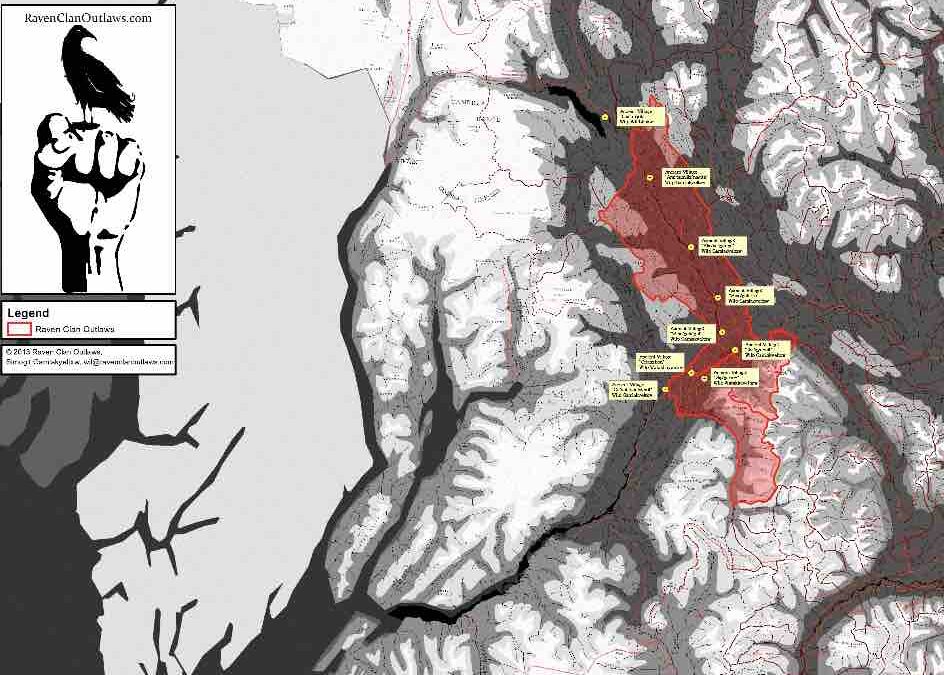
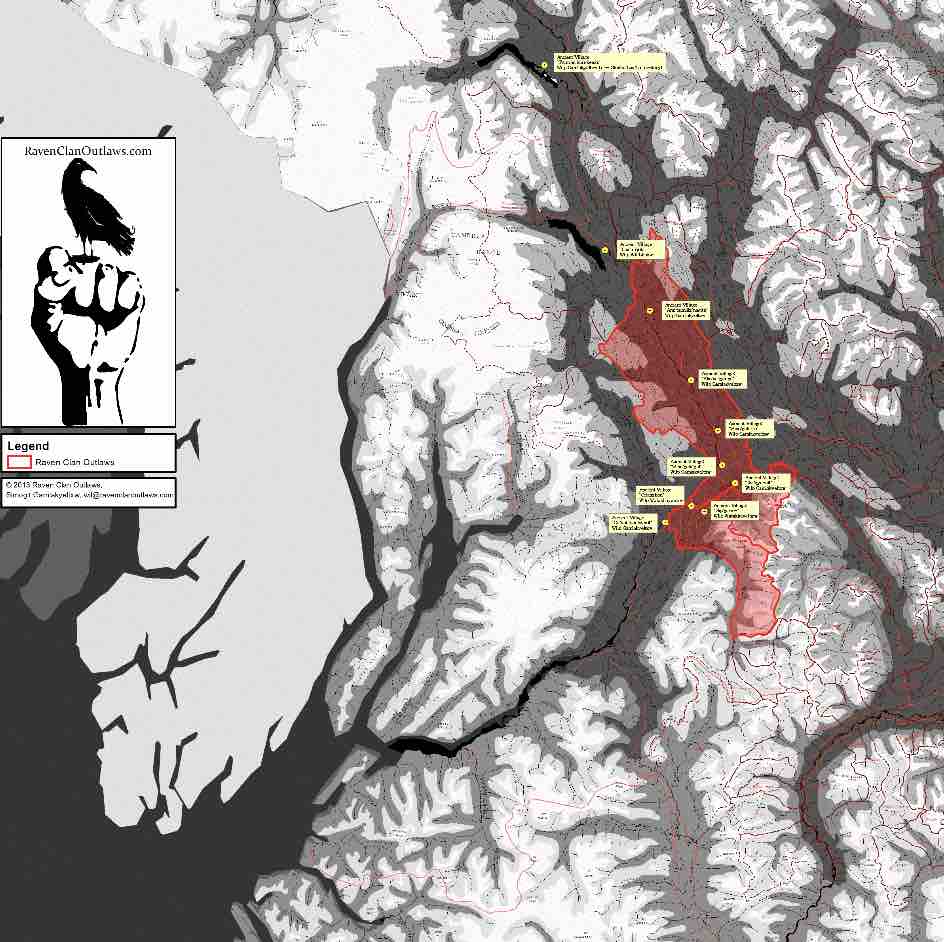
The Nisg̱a’a Nation, located northeast of Prince Rupert, filed a lawsuit in the Supreme Court of British Columbia on December 14, 2023, accusing a group referring to themselves as the “Raven Clan Outlaws” of illegally occupying and undertaking harmful activities at a site within Nisg̱a’a traditional territory and the Nass Wildlife Area.
“The occupants’ activities at the site include: damaging forest resources by clear-cutting trees; erecting permanent cabins and structures; marketing accommodations; operating a farm; raising and selling livestock near waterways (now at risk of contamination),” reads a press release from the Nation. “They also appear to be growing and selling cannabis without a license. They have stated they do not recognize provincial or federal laws, and we understand that they have not applied for or received approval from any government to use this land.”
Nisg̱a’a Lisims Government (NLG) launched the lawsuit in order to stop what they say is an unsanctioned occupation of their land, arguing that under the Nisg̱a’a Treaty, Nisg̱a’a citizens have constitutionally protected harvesting rights within the Nass Wildlife Area and they have a responsibility to Nisg̱a’a citizens and to protect Nisg̱a’a treaty rights as well as the environment.
The actions of the Raven Clan Outlaws, the suit continues, prevent Nisg̱a’a citizens from exercising their treaty rights to safely harvest wildlife in the area, noting that hunting near an occupied site would be dangerous and against Nisg̱a’a laws. The occupants, it says, are clear-cutting forests, not complying with environmental and cannabis legislation, polluting the grounds with farm waste, and potentially contaminating nearby waterways.
“Nisg̱a’a Lisims Government is taking this action to protect our citizens’ rights, our traditional lands, and the larger Nass Wildlife Area,” said NLG President Eva Clayton. “The occupiers are causing real harm to the environment and cannot be allowed to continue to undertake their unlawful activities at the site. The Nisg̱a’a Treaty provides our citizens with the right to hunt and harvest wildlife to provide for their families, as they always have. We will do everything we can to protect these hard-won rights.”
A statement on their website says the Nisg̱a’a Nation is represented by NLG, which has the authority to pass laws on a broad range of matters. It also states the Nisg̱a’a lawmaking authority is concurrent with federal and provincial authority.
The Raven Claw Outlaws are described on their website as reoccupying stolen lands, saying they do not apply for permits to harvest resources on traditional lands, do not recognize provincial legislation on traditional lands, and do not recognize federal legislation on traditional lands.
A phone number on the Outlaw’s website is no longer in service. A link on their website directs to a “Mail Order and Local Delivery Cannabis Dispensary” with the Outlaw’s fist and raven logo, saying the crops are grown on traditional land and under traditional law.
The website also mentions plans for a store at the Ravens Nest Ranch located at 11km on Cranberry Connector on Gamlakyeltxw Lax Yip.
The Gitanyow Hereditary Chiefs October newsletter refers to both the Ravens Nest Ranch, established in 2023, as well as community members working to build capacity “on the farming of pigs, chickens, rabbits, cannabis, and hemp.”
Research in the psychedelic field has flourished in 2023, with the latest studies showing that psilocybin may be legalized in a couple of years. Below, we look at key clinical studies that suggest optimal psilocybin dosing for mental health conditions such as depression.
COMP360 Psilocybin therapy trial
COMP360 is a synthetic psilocybin formulation developed by Compass Pathways PLC (NASDAQ: CMPS). The company, in partnership with Sunstone Therapies, recently carried out a phase 2 trial involving the use of their COMP360 psilocybin therapy on cancer patients who suffered from major depressive disorder.
The researchers determined that with a single 25mg dose of psilocybin, more than 50% of the patients remained in remission from their depression for more than a year after the dose’s administration. The researchers reported their findings in “JAMA Oncology” earlier this year.
Compass Pathways selective serotonin reuptake inhibitor exploratory study
Compass also carried out a phase 2 study that looked into the use of psilocybin in conjunction with selective serotonin reuptake inhibitors (SSRIs) to help manage depression. The company determined that administering a 25mg psilocybin dose as well as SSRIs while also offering psychological support showed improvements in patients with treatment-resistant depression.
In its report, the researchers noted that SSRIs may not interfere with COMP360’s therapeutic effect.
Nature Medicine’s trial on managing eating disorders
“Nature Medicine” recently carried out an open-label study that investigated the effects of administering a single 25mg COMP360 psilocybin dose on female patients who suffered from anorexia.
The researchers, led by Dr. Stephanie Knatz Peck and Dr. Walter Kaye from University of California San Diego School of Medicine, observed significant reductions in anorexia psychopathology following three months of treatment. They also observed substantial reductions in weight and shape concerns, with the participants themselves revealing that they had observed positive shifts in their quality of life as well as personal identity.
Cybin’s double dose of psilocybin for managing depression
The biopharmaceutical company recently announced interim results from a phase 2 trial that evaluated the use of its synthetic psilocybin formulation (CYB003) in treating major depressive disorder.
For the trial, one dose of 12mg was administered to patients, with researchers observing significant reductions in symptoms. In their report, the researchers noted that their findings suggested that CYB003 was effective in treating depression, adding that it outpaced conventional treatments within three weeks.
Earlier this year, Dr. Scott Aaronson at the aforementioned facility led a trial on the use of psilocybin in managing bipolar II depression.
During this trial period, bipolar patients were required to discontinue the use of their standard medications, after which they each received a single 25mg dose of psilocybin. The researchers observed a notable decline in depression severity, noting that after three months, more than 70% of the patients remained in remission with no increase in mania/hypomania or suicidality.
These studies, along with several others, are bringing various psychedelics closer to FDA approval, and patients could soon benefit from these novel treatments.
About PsychedelicNewsWire
PsychedelicNewsWire (“PNW”) is a specialized communications platform with a focus on all aspects of psychedelics and the latest developments and advances in the psychedelics sector. It is one of 60+ brands within the Dynamic Brand Portfolio @ IBN that delivers: (1) access to a vast network of wire solutions via InvestorWire to efficiently and effectively reach a myriad of target markets, demographics and diverse industries; (2) article and editorial syndication to 5,000+ outlets; (3) enhanced press release enhancement to ensure maximum impact; (4) social media distribution via IBN to millions of social media followers; and (5) a full array of tailored corporate communications solutions. With broad reach and a seasoned team of contributing journalists and writers, PNW is uniquely positioned to best serve private and public companies that want to reach a wide audience of investors, influencers, consumers, journalists and the general public. By cutting through the overload of information in today’s market, PNW brings its clients unparalleled recognition and brand awareness. PNW is where breaking news, insightful content and actionable information converge.
To receive SMS alerts from PsychedelicNewsWire, text “Groovy” to 888-902-4192 (U.S. Mobile Phones Only)
Please see full terms of use and disclaimers on the PsychedelicNewsWire website applicable to all content provided by PNW, wherever published or re-published: https://www.PsychedelicNewsWire.com/Disclaimer
For years, Dutch coffee shops have functioned in a system where cannabis sale was permitted, but its growth remained illegal. This led to a lack of transparency for consumers, leaving them unaware of the origins, growers and conditions under which the products they purchased were cultivated. However, that will soon change as the government initiates a marijuana legalization pilot project.
The initial phase of a closed-chain experiment, designed to deliver marijuana from legally sanctioned cultivation to coffee shops commenced on Dec. 15, 2023. The current timeline indicates that two authorized producers will be prepared to supply coffee shops in the final quarter of 2023. This development is substantial enough to initiate the preparatory phase of the pilot program, initially focused on Tilburg and Breda.
Participating coffee shops in Tilburg and Breda will have the opportunity to offer both legally produced marijuana and tolerated products sourced from the illicit market. Two additional producers are anticipated to commence their supply to coffee shops in these cities by February 2024. Tilburg and Breda’s mayors proposed the preliminary phase idea, which was approved by Justice and Security Minister Yeşilgöz-Zegerius and Health, Welfare, and Sports Minister Ernst Kuipers. The aim is to kick-start a modest-scale “experiment with legalized production and sales chain.”
According to reports from rijksoverheid.nl., the progress made during the preparatory phase will undergo continuous monitoring. In the event of a significant threat to security or public order, the preparatory phase may be prematurely terminated. The insights gained will be shared with all participating cities, contributing to the refinement of systems and processes for a seamless transition to the subsequent phase.
Expected to last a maximum of six months, the preliminary phase will give way to the transition phase. The earliest commencement for participating cities is projected to be by the end of the Q1 2024. During this stage, coffee shops in these cities will be authorized to offer both black-market and legally cultivated cannabis products. Subsequently, participating coffee shop proprietors will exclusively vend marijuana sourced from regulated crops. Legally produced marijuana will be packaged with a QR code, enabling consumers to access comprehensive information, including details about the product’s origin, cultivation time and the responsible company.
The entire experiment is earmarked for a four-year duration, culminating in a decision on whether to extend its implementation.
For companies such as Tilray Brands Inc. (NASDAQ: TLRY) (TSX: TLRY) with operations in several countries on different continents, the experiment being undertaken in the Netherlands is of great interest because it could eventually open extra market opportunities to tap.
About CNW420
CNW420 spotlights the latest developments in the rapidly evolving cannabis industry through the release of two informative articles each business day. Our concise, informative content serves as a gateway for investors interested in the legalized cannabis sector and provides updates on how regulatory developments may impact financial markets. Articles are released each business day at 4:20 a.m. and 4:20 p.m. Eastern – our tribute to the time synonymous with cannabis culture. If marijuana and the burgeoning industry surrounding it are on your radar, CNW420 is for you! Check back daily to stay up-to-date on the latest milestones in the fast -changing world of cannabis.
To receive SMS alerts from CNW, text CANNABIS to 888-902-4192 (U.S. Mobile Phones Only)
Please see full terms of use and disclaimers on the CannabisNewsWire website applicable to all content provided by CNW, wherever published or re-published: https://www.CannabisNewsWire.com/Disclaimer
By Marc Lalonde, Local Journalism Initiative Reporter
IORI:WASE
The Kahnawake Cannabis Control Board announced last week the call for applications for the three licenses for retail sale of cannabis will open just after the new year.
The Kahnawake CCB announced it would begin accepting pre-eligibility applications for the three retail licenses that will be given out to community members January 8, with the process coming to a close February 9 at 4 p.m., CCB Chair Tara Jacobs said Tuesday.
Advertisement
She added she expects more than three people to apply for those licenses. Jacobs expects the call for submissions to enter a lottery process, if the scuttlebutt she’s hearing is accurate.
“I have heard that there will be more than three people vying for those licenses, so that yes, that would engender a lottery process,” she said.
The CCB is responsible for regulation, enforcement and administration of the Kahnawake Cannabis Control Law.
The CCB recently rounded out its three-person team last week when Darlene Alfred was appointed to the board.
Alfred was confirmed for the position on December 11. The seat she will occupy became vacant when Jacobs replaced Brandon Montour as chair of the CCB recently.
Jacobs said Alfred’s appointment will mean the CCB can begin its work of processing applications for the three licenses for retail sale of cannabis in coming weeks
“It’s great that we fulfilled quorum, because now we have our work cut out for us,” said Jacobs. “Obviously, with council having lifted the moratorium on retail sales and possession of cannabis for sale, and having enacted the Kahnawake cannabis laws, there’s going to be a lot for us to do.”
Jacobs added that Alfred’s long history of community engagement and ability to have her finger on the community’s pulse will be of benefit to the CCB.
“I worked with Darlene on another board in the community in the past and she is a person who knows what’s going on in the community. She’s involved and she listens to what people have to say. She’s up to date on what’s happening. I know she’ll be of a great benefit to us with her extensive knowledge of the community,” Jacobs said.
The third member of the CCB is David Diabo, whose term began in December 2022.
Members of the CCB are responsible for understanding local, federal, and provincial laws and in accordance with the highest principles of health, safety, security, honesty, and integrity.
KYIV, Ukraine (AP) — Ukraine’s parliament voted Tuesday to legalize medical marijuana, after the war with Russia left thousands of people with post-traumatic stress disorder that many believe could be eased by the drug.
The new law, which will come into effect in six months’ time and which also allows cannabis to be used for scientific and industrial ends, passed by 248 votes in the 401-seat parliament in Kyiv. A full breakdown of the vote wasn’t immediately available. The law was proposed by Prime Minister Denys Smyhal.
The possible legalization of medical marijuana has long been debated in Ukraine. Many people argued in favor of the benefits the treatment can bring, while others feared legalizing medical marijuana would lead to an influx of drugs on the streets of Ukrainian cities.
The debate gained new momentum after Russia’s full-scale invasion of Ukraine on Feb. 24, 2022. The Kremlin’s forces have repeatedly used powerful missiles to blast civilian targets across the country, with devastating consequences.
Advertisement
Many people are believed to be suffering from stress and anxiety.
The legislation imposes strict controls on cannabis production and distribution. A doctor’s prescription will be required to obtain any medicine containing cannabis. Recreational use of cannabis remains a criminal offense.
Lexaria, a global innovator in drug delivery platforms, expects to submit its IND application for its planned U.S. Phase 1b Hypertension Clinical Trial with the FDA within the next 45 days
The HYPER-H23-1 clinical study will build on five successful human clinical trials conducted so far, studying the company’s patented DehydraTECH(TM)-processed CBD in an aggregate total of 134 individuals
Lexaria’s patented DehydraTECH(TM) “drug delivery platform technology” increases bioavailability, improving the way active pharmaceutical ingredients (“APIs”) enter the bloodstream
Lexaria Bioscience (NASDAQ: LEXX), a global innovator in drug delivery platforms, just announced that it anticipates submitting its Investigational New Drug (“IND”) application with the U.S. Food and Drug Administration within the next 45 days. The submission will be for its U.S. Phase 1b Hypertension Clinical Trial, whose primary objective will be to evaluate safety and tolerability in hypertensive patients, with secondary objectives including efficacy evaluation in reducing blood pressure together with detailed pharmacokinetic testing (https://cnw.fm/8E4Rg).
The HYPER-H23-1 clinical study, titled “A Phase 1b Randomized, Double-Blind, Placebo-Controlled Study of the Safety, Pharmacokinetics, and Pharmacodynamics of DehydraTECH-CBD in Subjects with Stage 1 or Stage 2 Hypertension” will explore Lexaria’s patented DehydraTECH(TM) technology, specifically its DehydraTECH-processed CBD for the potential treatment of hypertension. It will be a successful build-up from five human clinical trials conducted so far, studying DehydraTECH-CBD in an aggregate total of 134 individuals. Its management is optimistic that these previous studies will contribute to the success of the current one while allowing for the IND review process to run smoothly.
Only a handful of other published research studies have investigated whether a sustained decrease in resting blood pressure is possible following multiple weeks of oral CBD dosing; none of which have been successful in achieving this.. All of the company’s clinical studies showed that DehydraTECH-CBD achieved a sustained decrease in resting blood pressure following multiple weeks of oral dosing. In addition, DehydraTECH-CBD has evidenced superior power to reduce blood pressure, especially compared to other oral CBD formulations. DehydraTECH-CBD has also shown the potential to offer additive blood pressure reduction benefits in addition to any degree of improvement that standard-of-care medications achieved for patients prior to DehydraTECH-CBD dosing, ultimately showing the product’s superiority, overall efficiency, and potential.
Despite having encountered delays before, mainly owing to awaited documentation from one of its key raw material suppliers, Lexaria’s management is excited to submit its IND. Should it be approved, Lexaria will enjoy increased market opportunity for its DehydraTECH technology, specifically its DehydraTECH-CBD. In addition, it will get the company closer to tapping into the cardiovascular drugs market, valued at $138.33 billion in 2022 and expected to hit $200.9 billion by 2032 (https://cnw.fm/D3Ipo).
NOTE TO INVESTORS: The latest news and updates relating to LEXX are available in the company’s newsroom at https://cnw.fm/LEXX
About CannabisNewsWire
CannabisNewsWire (“CNW”) is a specialized communications platform with a focus on cannabis news and the cannabis sector. It is one of 60+ brands within the Dynamic Brand Portfolio @ IBN that delivers: (1) access to a vast network of wire solutions via InvestorWire to efficiently and effectively reach a myriad of target markets, demographics and diverse industries; (2) article and editorial syndication to 5,000+ outlets; (3) enhanced press release enhancement to ensure maximum impact; (4) social media distribution via IBN to millions of social media followers; and (5) a full array of tailored corporate communications solutions. With broad reach and a seasoned team of contributing journalists and writers, CNW is uniquely positioned to best serve private and public companies that want to reach a wide audience of investors, influencers, consumers, journalists and the general public. By cutting through the overload of information in today’s market, CNW brings its clients unparalleled recognition and brand awareness. CNW is where breaking news, insightful content and actionable information converge.
To receive SMS alerts from CNW, text CANNABIS to 888-902-4192 (U.S. Mobile Phones Only)
Please see full terms of use and disclaimers on the CannabisNewsWire website applicable to all content provided by CNW, wherever published or re-published: https://www.CannabisNewsWire.com/Disclaimer
WEED Inc. subsidiary will begin buildout of its cGMP certified kitchen to begin manufacturing of consumer-packaged goods
TUCSON, Ariz., Dec. 21, 2023 (GLOBE NEWSWIRE) — via IBN – WEED Inc. (OTCQB: BUDZ), (“WEED,” “HEMP” or the “Company”), a global cannabis and hemp bioresearch company based in the U.S. focused on the development and application of cannabis–derived compounds for the treatment of human and animal diseases, announces today that it intends to expand into consumer packaged goods utilizing the Company’s rare Landrace strains including Original Panama Red, Acapulco Gold, Red Bud Colombian and Santa Marta Gold.
WEED Inc aims to shape the future of the cannabis industry.
WEED Inc. subsidiaries are operating in the U.S., Australia and Israel
Nicole Marie Breen, COO of HEMP BioSciences Inc., said: “HEMP has been issued all required licenses for Industrial HEMP; Growing, Nursery, Harvester, Transporter and Processor licenses under Title 3-Chapter 2-Article 4.1 of The Arizona Department of Agriculture. With the renewal of our hemp licenses, we are now in the process of acquiring a cGMP certification to ensure the highest quality products, while protecting the public in this highly regulated industry. We believe HEMP’s CBD gummies, oils, cremes, tinctures, balms, both broad and full spectrum, will maximize the entourage effects under the strictest manufacturing processes globally.”
Jeffery Miller, CEO of HEMP BioSciences, adds: “Hemp is a botanical class of cannabis sativa cultivars belonging to the same plant species Cannabis Sativa L. Our hemp is carefully processed under supercritical CO2 extraction of hemp flowers. Our cGMP kitchen will provide a pure, clean complete extraction process that yields the maximum levels of hemp’s natural phenotypes with natural terpenes added for the perfect flavor and textures. This provides increased absorption, higher bioavailability and greater effectiveness for the consumer or patient.
“HEMP’s proprietary strains vary in phytochemical properties that contain no more than 0.3% THC in dried condition for sale under our current licensing,” Miller continued. “Our products are high in active phytonutrients and are grown, cultivated, harvested and processed in the USA. Cannabis is a genus of flowering plants in the family Cannabaceae…. Happy New Year!”
About WEED Inc:
WEED Inc is a leading cannabis company dedicated to delivering exceptional products and experiences to the cannabis consumer market. With operations spanning Israel, Australia and the USA, the company focuses on innovation, quality and sustainability. Through strategic acquisitions and partnerships, WEED Inc aims to shape the future of the cannabis industry.
WEED, Inc.’s Subsidiaries past comments:
WEED Israel (Cannabis) Ltd. “After over 4 years of putting human clinical trials and product development on hold due to COVID and now the war, WEED Israel is still poised and anxious to build out our global brands in both pharmaceutical and non-pharmaceutical categories, starting with women’s health and veterans’ ailments (PTSD) to healthy green alternative medicines,” stated Elliot Kwestel, managing director of WEED Israel (Cannabis) Ltd. based outside Jerusalem.
Kwestel further commented, “WEED Israel looks to enrich and expand our clinical trials with both THC and cannabinoid studies to promote healthy living for generations to come.”
WEED Australia Ltd. and The Cannabis Institute of Australia (C.I.A.), our Australian non-profit arm, based in Queensland on the Gold Coast.
Corporate Director Patrick Brodnik stated, “With the new rules out governing cannabis and hemp in Australia and the announcement in February 2021 to allow over-the-counter CBD medicines in pharmacies, now after Covid, timing is perfect to begin our clinical trials in Israel and Australia to bring new curative products to market as we close out COVID mandates this year.”
Managing Director Amanda Brunskill-Scott commented, “Next year, in 2024, the future of USA & Australia decriminalizing cannabis and hemp globally will prove to be a giant leap forward for worldwide cannabis legalization.”
WEED Hong Kong Ltd. Director Nicole Breen agrees, “The pandemic has affected all of us on a worldwide basis. Healing our planet with natural therapies, treatments and eventual “cures” utilizing nature’s own Cannabaceae plant with its many properties, both with high tetrahydrocannabinol (THC) and cannabidiol (CBD) compounds, I believe will change the force of medicine forever in the years to come. We look forward to an exciting year-end and a Prosperous 2024”
Caution Regarding Cannabis Operations in the United States:
Any investors should note that there are significant legal restrictions and regulations that govern the cannabis industry in the United States. While legal in certain states, cannabis remains a Schedule I drug under the U.S. Controlled Substances Act, making it illegal under federal law in the United States to, among other things, cultivate, distribute or possess cannabis.
That all financial transactions involving proceeds generated by, or intended to promote, cannabis-related business activities in the United States may form the basis for prosecution under applicable U.S. federal money laundering legislation. Investors should carefully read the risk factors and disclosures contained in our filings with the Securities and Exchange Commission before making any decision to invest in our Company.
Forward-Looking Information:
This news release contains “forward-looking information” within the meaning of applicable securities laws. Forward-looking information contained in this press release may be identified by the use of words such as, “may,” “potential,” “would,” “could,” “will,” “likely,” “expect,” “anticipate,” “believe,” “intend,” “plan,” “forecast,” “project,” “estimate,” “outlook” and other similar expressions, and include statements with respect to any future revenue and profits. Forward-looking information is not a guarantee of future performance and is based upon a number of estimates and assumptions of management in light of management’s experience and perception of trends, current conditions and expected developments, as well as other factors relevant in the circumstances, including assumptions in respect of current and future market conditions, the current and future regulatory environment; and the availability of licenses, approvals and permits. Although the Company believes that the expectations and assumptions on which such forward-looking information is based are reasonable, undue reliance should not be placed on the forward-looking information because the Company can give no assurance that they will prove to be correct. Actual results and developments may differ materially from those contemplated by these statements. Forward-looking information is subject to a variety of risks and uncertainties that could cause actual events or results to differ materially from those projected in the forward-looking information. The statements in this press release are made as of the date of this release. The Company disclaims any intent or obligation to update any forward-looking information, whether as a result of new information, future events or results or otherwise, other than as required by applicable securities laws for the relevant country.
Legal Notice:
That the information is provided for convenience only, it is not investment advice and may not be relied upon in considering an investment in WEED, Inc. No representation or warranty, express or implied, is made as to the accuracy or completeness of any information contained herein, and any investment decision should be based solely on the information contained in the offering circular and related materials, and the investors independent research. We advise that no representations or warranty, express or implied, is made as to the future performance of any investment in WEED, Inc. or that investors will or are likely to achieve favorable results, will make any profit at all or will be able to avoid incurring a loss on their investment. In addition, all prospective investors are encouraged to consult with their financial, tax, accounting, or other advisors to determine whether an investment in WEED, Inc. is suitable for them.
After the post-pandemic downturn caused many businesses in the cannabis industry to struggle, many marijuana professionals are now predicting a more lucrative 2024. The post-COVID period saw the addition of several more states to America’s nascent marijuana industry, and the country made significant strides in its efforts to legalize marijuana at the federal level. In addition, President Joe Biden issued a mass pardon for marijuana offenders, and his administration has indicated that it is seriously considering rescheduling the controversial plant at the federal level.
Industry professionals are now looking at 2024 with renewed optimism even though the state-legal cannabis industry is likely in for a lot of turbulence. Ed Schmults, CEO of California-based company StateHouse Holdings Inc., says the U.S. Health and Human Services recommendation to the Drug Enforcement Agency (DEA) to move cannabis from Schedule I of the Controlled Substances Act to Schedule III is welcome news, even though it came 10 years late.
Although rescheduling would call for significant levels of legislative effort and time, Schmults is optimistic that the federal government will take the steps needed to move cannabis to Schedule III. He says an implementation timetable of around 12–18 months would be more reasonable than the six-month timeline discussed by some industry players. While descheduling cannabis outright would offer a much better path for the nation’s cannabis industry, Schmultz noted, transferring the drug to Schedule III is a “big step in the right direction.”
David Goubert, president and CEO of multistate marijuana operator AYR Wellness, says that multistate operators will be more focused on their companies’ financial health and will likely prioritize cash-flow generation coupled with lean and efficient operations. He added that if cannabis rescheduling and 280E changes happen as many industry players anticipate, cannabis businesses would start paying fewer annual taxes and would be better equipped to pay down their debt.
The legalization of recreational cannabis in Ohio, Florida and Pennsylvania could also lead to “significant deleveraging” by mid-decade, Goubert says.
Poseidon Asset Management cofounder Morgan Paxhia predicts that next year will be the most exciting and eventful year in the legal cannabis industry’s history. He predicts that while policymakers will reclassify cannabis as a Schedule III substance, “Congressional hijacks” following such a historic legislative development as lawmakers try to take credit could stifle the cannabis industry’s progress and levy a high 14% excise tax on businesses.
However, he notes that the SAFER Banking Act likely won’t make any progress in 2024. Instead, Paxhia expects lawmakers to introduce a ‘=”Garland memo-like protection” alongside rescheduling.
As 2023 draws to a close, many in the cannabis industry, such as Verano Holdings Corp. (CSE: VRNO) (OTCQX: VRNOF), may be fine-tuning their plans to capitalize on any regulatory changes that could be made at the federal level in the coming year or years.
About CNW420
CNW420 spotlights the latest developments in the rapidly evolving cannabis industry through the release of two informative articles each business day. Our concise, informative content serves as a gateway for investors interested in the legalized cannabis sector and provides updates on how regulatory developments may impact financial markets. Articles are released each business day at 4:20 a.m. and 4:20 p.m. Eastern – our tribute to the time synonymous with cannabis culture. If marijuana and the burgeoning industry surrounding it are on your radar, CNW420 is for you! Check back daily to stay up-to-date on the latest milestones in the fast -changing world of cannabis.
To receive SMS alerts from CNW, text CANNABIS to 888-902-4192 (U.S. Mobile Phones Only)
Please see full terms of use and disclaimers on the CannabisNewsWire website applicable to all content provided by CNW, wherever published or re-published: https://www.CannabisNewsWire.com/Disclaimer
Recent data shows that officials in the state of Missouri have thus far expunged more than 100,000 cannabis cases from court records. Under the law, misdemeanors had to be automatically expunged by June 8, 2023, and felonies had to be cleared by Dec. 8, 2023. The deadline for felony expungements, which lapsed last week, wasn’t met by all courts, however, with clerks still reviewing decades of old cases.
In an interview, Dan Viets, a lawyer and coordinator of Missouri NORML, stated that courts would need additional time to finish the task and noted that it could be years before all cases from the last 100 years were expunged. Viets, who also coauthored the state’s constitutional amendment legalizing cannabis, added that the state had prohibited cannabis for more than a century and, given that most older cases hadn’t been updated on a database, a lot of physical work was needed to find and go through hard-copy records.
In a press release of the state’s NORML chapter, Viets noted that the provision on automatic expungement was a significant part of Missouri’s marijuana law that was approved by voters in 2022. Missouri NORML also highlighted that the ballot proposal, now codified as Article XIV in the state’s constitution, provided funds for the expungement via the 6% sales tax imposed on recreational cannabis.
The organization explained that the tax had generated more revenue than was needed to pay overtime to existing staff or fund the hiring of more staff in the offices of circuit clerks across Missouri. In November, total cannabis sales in the state exceeded the $1 billion mark, with legislators announcing recently that of the total taxes generated, $17 million would fund drug treatment, veterans’ health and legal aid.
Viets also noted that counties that missed the December deadline were in violation of Missouri’s constitution and legal action could be taken. He then revealed that about six of the counties in the state hadn’t expunged any cases on misdemeanor violations, asserting that these were smaller counties where Amendment 3’s support wasn’t as high.
On a broader scale, the state’s cannabis system has experienced significant hitches this year, with thousands of products being recalled over the illegal use of cannabinoids derived from hemp. In November, officials revoked Delta Extraction’s business license, as the company was at the center of the aforementioned dispute.
Another company, Retailer Point Management, also had to settle a dispute with a union over more than 10 charges of unfair labor practices. All this is part of a wider push by workers at marijuana businesses to organize the industry.
These ongoing expungements are likely being watched closely by the entire cannabis industry, including companies such as SNDL Inc. (NASDAQ: SNDL), given that times have changed and there is a growing consensus that no one should suffer lifelong consequences for being convicted after using a substance that is now legal in a significant portion of the United States as well as several countries around the world.
About CNW420
CNW420 spotlights the latest developments in the rapidly evolving cannabis industry through the release of two informative articles each business day. Our concise, informative content serves as a gateway for investors interested in the legalized cannabis sector and provides updates on how regulatory developments may impact financial markets. Articles are released each business day at 4:20 a.m. and 4:20 p.m. Eastern – our tribute to the time synonymous with cannabis culture. If marijuana and the burgeoning industry surrounding it are on your radar, CNW420 is for you! Check back daily to stay up-to-date on the latest milestones in the fast -changing world of cannabis.
To receive SMS alerts from CNW, text CANNABIS to 888-902-4192 (U.S. Mobile Phones Only)
Please see full terms of use and disclaimers on the CannabisNewsWire website applicable to all content provided by CNW, wherever published or re-published: https://www.CannabisNewsWire.com/Disclaimer
I was born in 1962. Which means that by 1966 or 1967 or so…I was aware that something magical happened to the world, at least to our world in America, in the middle of Winter.
By the time I was in kindergarten, I had some names for what was happening all around me at these wonderful times, and I grasped the basic story outline.
All at once, it seemed, drab interiors — the grocery store, with its beige linoleum flooring and its sad walls; the institutional-green halls of my elementary school; the butcher’s shop window, which previously had only sausages and veal chops on bland display; the window of the hardware store, which has til then showcased just unremarkable containers of grout, and drill bits, and cans of paint — indeed, the intersections themselves, which before then could not have been less interesting — suddenly all erupted in a three-dimensional froth of sparkle and shine, joyous images, and radiant color.
Does anyone else remember the Christmas displays of the 1960s? Made of colored cardboard, and perhaps aluminum of some kind, or tin, and adorned with tinsel of all variations; these wall decorations, as I recall, unfolded; and could be taped or draped or hung.
And thus in a heartbeat, you had a giant smiling Santa — not scary, not ironic, not drunk; just Santa, with the red cheeks and the big grin and the fluffy white beard. You had waving fronds of yellow-golden tinsel, and of bright green tinsel, and you had red tinsel that was always the color of a candy apple or a fire truck. You had gigantic sleigh bells — two of them always, friendly and collegial, tied with a plaid bow; you had cutouts of red sleighs piled with gifts. The shop windows reveled in sparkly spray-paint that proclaimed “Merry Christmas!” Or the mottos spelled out: “PEACE ON EARTH.” The intersections themselves revealed white tinsel decor of cross-like four-pointed stars….on street after street after street, hung star after star after star.
And there were creches. I loved them. Loved them. These were also called, once upon a time, “Nativity Scenes.”
Creches abounded at Christmastime in the 1960s. Yes, even in California.
There were tiny creches, as I recall, in candy store windows, next to piles of gilded packages of chocolates. There were creches outside of churches; these stood about four feet tall. What a transformation of the everyday world they represented — a workaday world that even at five and six, I could see was stressful and sometimes boring and sometimes hurtful, especially to adults.
How extraordinary for a child to see a whole world about as high as that child, and as broad as a small car, like a Barbie playhouse but larger and serious and open; and to see that inside that world was a beautiful mom, and a gentle older dad with a staff, and camels and cows and sheep; and shepherds. In the center of it all was a baby, of whom it was said all around me that he was also king of the world; and that we were celebrating his birthday.
There were angels, and three mortal kings in regal, heavy, embroidered robes, bearing gifts. Gold. Frankincense. Myrrh. I wondered at this list, and remember asking my mother, “What is ‘frankincense’?” And when she explained, I was enchanted that a story that was being told all around me, had a precious fragrance at its heart — a fragrance that was, not-usefully, a gift for a small baby.
It was all crazy and sort of nonsensical, but also, on the level of both the logic and the practice where angels live, it all made the most perfect sense.
The Christmas world of the 1960s was also made transcendental by the sudden presence of Christmas carols everywhere. These were mostly religious, though I did not think of them as “religious Christmas carols,” but rather as “Christmas carols”, because the holiday itself was obviously religious.
“Come, All Ye Faithful.” “Angels We Have Heard on High.” “Joy to the World” “We Three Kings of Orient Are.” The music was played everywhere, with all kinds of instrumentation; but you heard it in drug stores, in department stores, in the homes of your friends. This elevated the mood, the vibration, if you will, of everywhere all at once; because all at once sacred thoughts were being thought by thousands of people going about their otherwise ordinary days.
There was everywhere that warm glow you still feel sometimes in crowds on Valentine’s Day or Mothers’ Day, as groups of humans together all think of someone whom they love.
But that glow then was more, and higher, somehow, than are these examples.
Also transformational was that the modern world, that usually listened to 1960s music, was listening to and even, when caroling, singing, melodies and words from the seventeenth and eighteenth and nineteenth centuries. This gave a sense of otherness and continuity and excitement to all that was around us, since our history was rich, and extended long into the past, and since we were experiencing openings into the sounds of other times, whose worship and joys extended to that very day.
But eventually— the Nativity scenes and plays, and the carols even, became “controversial.”
In the 1960s through to the 1970s and into the early 1980s, Christmas movies still had messages of hope, family togetherness, redemption and love.
I noticed in the 1980s, when I was a young college and graduate student, that Christmas still carried that high, that sacred quality. But over time I felt the “Christmas Spirit” eroding and dying.
I noticed that pop culture was adding a whole new cast of personalities to Christmas, exalting them, but dialing down others. “Peanuts,” the cartoon series, had been openly spiritually-oriented in its treatment of the season; “A Charlie Brown Christmas” debuted in 1965.
But “Peanuts” became less culturally central as the 1980s unfolded and the 1990s began. I loved Dr Seuss’ “How the Grinch Stole Christmas” (Film, 1966), but that was a fairly new character popularized by the culture. The message was of love in general, but not specifically about that baby in the manger at all. The Whos down in Who-ville did not sing recognizable Christmas songs – -they sang a made-up Latin-sounding carol, “Dahoo Dores”:
“Fahoo fores, dahoo dores Welcome all who’s far and near Welcome Christmas, fahoo ramus Welcome Christmas, dahoo damus”
Sweet, but with no discernible meaning. Rudolph the Red-Nosed Reindeer? This had been a minor character launched in 1939 in a song, but he now became central — super important. The reindeer, who had not even had widely-known names in my childhood, unless you hunted out the 1823 poem “The Night Before Christmas” — all were now familiarly named. Elves? Critical! Santa’s factory and the manufacturing process of toys? SO central! A Christmas Story, 1983, became the hallmark of that decade — it is nostalgic but is in no way religious.
All of these characters and side narratives are fun, but they are not actually about — Christmas; about the birth of the Christ child.
They are about other things. Inclusion, not discriminating on the basis of someone’s unusual snout, the making and distributing consumer goods.
Then — in 1989, an important lawsuit deconstructed Christmas — and Hanukah, for that matter —in America. In the lawsuit “County of Allegheny vs ACLU,” according to that organization’s website Oyez.com,
“Two public-sponsored holiday displays in Pittsburgh, Pennsylvania, were challenged by the American Civil Liberties Union. The first display involved a Christian nativity scene inside the Allegheny County Courthouse. The second display was a large Chanukah menorah, erected each year by the Chabad Jewish organization, outside the City-County building. The ACLU claimed the displays constituted state endorsement of religion. This case was decided together with Chabad v. ACLU and City of Pittsburgh v. ACLU of Greater Pittsburgh.”
I was surprised to read this, because in the yawning, ever-hungry abyss, where national memories that don’t fit “the narrative” go to die, the fact that the ACLU took aim in this famous case against the display of a public Menorah — as well as against a public Christian creche, which in contrast is widely known — has been utterly lost to history. Those who want to share their Nativity scenes openly in public with their neighbors, are depicted in “the narrative” as thug-like Christian white supremacists. It’s been entirely erased from American history that the people of Allegheny got in trouble with the ACLU for inviting their Jewish neighbors to share with the larger community the joy, pride and symbolism of their minority-religion Hanukkiah.
Indeed, this case, that changed America, is an odd one. It’s as weirdly decided as was Roe v. Wade.
According to the ACLU, the central question of the case was whether or not the two displays — remember: one Christian, one Jewish — violated the Establishment Clause of the First Amendment. This clause forbids the State from establishing a government-endorsed religion. The Court said that one symbol did, and one did not:
“In a 5-to-4 decision, the Court held that the creche inside the courthouse unmistakably endorsed Christianity in violation of the Establishment Clause.By prominently displaying the words “Glory to God for the birth of Jesus Christ,” the county sent a clear message that it supported and promoted Christian orthodoxy. The Court also held, however, that not all religious celebrations on government property violated the Establishment Clause. Six of the justices concluded that the display involving the menorah was constitutionally legitimate given its “particular physical setting”, reports the ACLU.
As a Jew, I find the reasoning in Allegheny vs ACLU to be odd. How is a Menorah outside the courthouse not establishing a religion, but a creche inside the courthouse, is doing so? I can see that a creche inside a courthouse would violate the Establishment clause; but the reasoning in this case was so heavy-handed and literal — why not move BOTH the creche and the Menorah outside the courthouse, and invite other religious displays? Or move them to a park or to ourside the library? — that it crushed Christmas as a public occasion of collective joy, as well as Hanukkah, for the next 34 years.
Let’s look more closely at gthe Establishment Clause. What is it? According to the Legal Information Institute, a site funded by Cornell University:
“The First Amendment’s Establishment Clause prohibits the government from making any law “respecting an establishment of religion.” This clause not only forbids the government from establishing an official religion, but also prohibits government actions that unduly favor one religion over another. It also prohibits the government from unduly preferring religion over non-religion, or non-religion over religion.”
But — is that interpretation actually correct? Or is it an example of the migration of definitions that are proliferating everywhere these days, especially in relation to our history, our Constitution, and other key concepts of our national life?
Hm. Is China at war with our religious freedom — our freedom to worship — just as it is with our statues, our holidays, our patriotic symbols and our core iconography?
In one click, we see that in 2019 Cornell University was investigated for accepting millions of dollars in gifts from China (and Qatar), and unlawfully not disclosing them to Federal officials. In addition to $65 million from Qatar — undisclosed to government agencies concerned about national security issues – – China made huge investments in the university, that also bypassed national security checks. “Cornell has also received $12.5 million worth of contracts and gifts based in China. Over $5 million of that money was from contracts with Huawei, a technology company listed by the federal government as one that is denied sensitive technology because it is a danger to national security. The $5.3 million payment, spread over two research contracts […], was the largest payout to an American university in the last six years, the Cornell Sun reported.” China’s influence only grew in the next four years, and was deeply institutionalized. In December 2022, the Cornell Faculty Senate called for the “disentanglement” of Cornell University from its Chinese partners, from whom it wads generating millions in revenue; the school had launched a joint offerings in its famous hospitality program, and had launched a “global hub” with China as a partner.
This is just one Ivy League university, but the money flow to just this university. shows that actual Marxists may have a powerful hand in the twisting of legal definitions related to our Constitution, that that university is producing for the world.
So, ignoring the diffused, tendentious, anti-religious expression definition in the (Marxist-funded)-Cornell University-funded website, let us go to the primary text. What is the text of the Establishment Clause, while we can srtill access it?
“Congress shall make no law respecting an establishment of religion, or prohibiting the free exercise thereof; or abridging the freedom of speech, or of the press; or the right of the people peaceably to assemble, and to petition the Government for a redress of grievances.”
But — is displaying a creche outside a public building, along with other religious symbols and images as the community chooses, the same as Congress “mak[ing a] law respecting an establishment of religion? Does it prevent people from freely exercising their religions? Or is it actually an example of people freely exercising their religion, which is what the actual wording of the Establishment Clause, seeks to protect?
I would say that the people of Allegheny actually had it mostly right, per the Constitution, and should have moved the local Nativity scene outdoors proudly to join the local Menorah, rather than having had to spend taxpayer dollars defending themselves from the ravening ACLU, and the too-broad sweep of the ruling of the Court.
Paradoxically, the people of Allegheny’s openness to Americans’ multiple, free, open expressions of worship, is exactly what the Establishment Clause is meant to protect. Our Constitution does not say anywhere, and certainly not in the Establishment Clause, that we must hide symbols of our various religious expressions. It says the opposite.
Though different courts would decide in different ways on how or if religion should feature in public life, the chill this decision cast on any sharing of Christmas as a joyful religious occasion, or Hanukkah for that matter, was absolute.
Who wants to cross the line and get sued by the ACLU? Or by a neighbor?
I remember the media coverage of this case. Newsweeklies reported it as if: thank God, the ACLU had saved America from being ravished by screaming Bible-thumpers. There was little questioning of what this decision would do to us, or even if it was a correct interpretation by the court.
So overnight, it seemed to me, people reacted, understandably enough, by scrubbing the religious expressions of the holidays.
The playlist in stores at Christmastime, changed. All the religious carols? They vanished like melted snow. In came pop-y, bouncy tunes that have “become classics”, but that are also not — actually about Christmas. Some of them are slightly louche.
Older popular songs were also resurrected as religious carols were retired. “Baby, It’s Cold Outside”, a 1944 melody about snowfall and seduction, got re-popularized (then in 2004 by a “controversy” claiming that it is “an ode to statutory rape” took down that one in turn). The 1952 “I Saw Mama Kissing Santa Clause” was re-covered by contemporary artists — and it’s about, well, hints of adultery with the guy who had been so genial and family-friendly:
“Then I saw Mommy tickle Santa Claus (tickle, tickle, Santa Claus) Underneath his beard so snowy white Oh, what a laugh it would have been If daddy had only seen Mommy kissing Santa Claus last night”
What child is not going to be made anxious by this scenario? It’s not a little creepy.
Then we had “Last Christmas, I Gave You My Heart” — a 1984 song by “Wham!” about romantic loss. The 1957 “Jingle Bell Rock” also had a revival. It’s about dancing.
Finally a new character took center stage — not baby Jesus, or even the Maccabees, for that matter, but — winter: the dreaming of a “White Christmas” — Jack Frost nipping at your nose — the dashing through the snow. As all of those mid-century ballads were revived, and all the religious carols were sent into that yawning abyss of cultural memory, the season itself became the central story of Christmas — and the baby was, well, faint, hard to discern, almost gone.
In the 2000s, a new wave of cultural change is targeting what little is left of the warm memory of the season, and erasing entirely the story of that baby’s birth, from Western culture. The Daily Mail reported in 2020 that half of Britain’s schools had cancelled Nativity plays — surely the breaking of the chain of memory among generations of British schoolchildren. This breaking of the chain between generations of children, was one goal of the “lockdowns”, a point I made generally in my book The Bodies of Others. The Daily Mail reports now that Nativity plays in schools are being “repackaged” to refer to pop TV shows, such as The Great British Bake-Off, and to celebrities, instead of following the traditional Nativity scripts handed down for decades.
Alarmingly, when I searched “Daily Mail” and “Nativity Plays No More”, I saw that stories about schools banning Nativity plays, or barring parents from attending their own children’s Nativity plays, go back to 2012, with a drumbeat of escalation in recent years. This is the drip, drip, drip of water intentional set slowly to boil — of deliberate cultural change.
Of course, you know where this is going, because Marxists do not like families, just as they don’t like religion. Schools in England now banned parents from attending their own children’s Nativity plays. Due to? Colds, flus and COVID. The State has finally taken your child, and your Christmas, away.
What else debuted by the 20-teens? A range of new Christmas movies that depicted cherished Christmas symbolism as tawdry, drunk or sexually licentious. There was the 2014 film “Bad Santa”, with Billy Bob Thornton.
There is 2022’s “It’s a Wonderful Binge”, a send-up of Christmas classics such as “It’s a Wonderful Life”; but in this Holiday movie, “St Nick” is “inebriated” and the setting is a world in which all alcohol is banned, so Christmas represents the one time to binge on intoxicants.
“In this first trailer for It’s A Wonderful Binge — the forthcoming sequel to 2020’s The Binge — its revealed that the recklessly wild event has inexplicably been moved by the government to Christmas Eve, and the drugs and booze are flowing freely.”
And finally there is SantaCon – which seems like a cute idea, at least superficially. It launched in 2011, the decade in which all the public Santas first went bad. It is a mass gathering of people dressed like Santa (or like elves; and now pandas have debuted — echoes of China’s cultural intervention in our world, anyone?). The Santas — and now elves, and pandas — storm cities drinking steadily in various bars. By the end of Santacon, thus, little children (this happened to our family) get to witness Santas vomiting at scale in the street, or engaging in corny super-drunk public sex jokes.
I could go on, but there you are. It’s a slow war.
I remember the purity, the clarity of the energies around us all at Christmases before this war.
How people would grow more gentle; how their faces would soften as they counted out change for a customer at a grocery store. “Merry Christmas!” we would call to one another. Who cares what religion we were? It was Christmas for all of us. No one owned Christmas.
How could the energies around us not have purified, softened and uplifted us all? I’ve shared how aware I was of “energies” as a child, and even, I am sometimes sorry to admit, to this day. I realized when I was five, that the Christmas Spirit was called forth by the thoughts of the people.
How could all of those people thinking all day, consciously or not, of a baby who had been born to save the world from itself — of a holy star sent to guide us even in the middle of the darkest part of our winter — of animals and strangers and kings recognizing that someone so small and vulnerable had been sent in fact to rescue us — not have made for the Christmas miracle?
How could all of those thoughts, not have made us all kinder, sweeter, more hopeful?
I remember in January, when the trees were thrown out onto the streets, naked now, and the decorations were taken down, that the sour mood of adults in ordinary life returned to the world. Christmas was over.
And I would wonder at this, because I understood what I had lived through in December. “Didn’t they realize?” I asked myself as I watched. Christmas never had to be over.
It was up to them.
Didn’t they understand that the magic was not just something that came and went…it was not caused by the decorations or the gifts; didn’t they understand that they had created the magic? Did they not realize that they had accomplished this feat by thinking those sweet thoughts —- by singing those uplifting songs — by elevating their attention — together?
No; — year after year, the adults took down the decorations, and it was over; and they did not realize that Christmas never needed to end.
####
Lastly, I want to speak to this dangerous notion — emblematized by the metastasis of “Merry Christmas!” to the fearful, euphemistic “Happy Holidays!” — that your Christmas, your proud, happy, eager, delighted, full-blown public Christmas, somehow offends or erases me, a non-Christian.
This notion — that one’s sense of self is so fragile that others’ cultural or religious expression alone can damage it — is the neo-Marxist theoretical basis for the wholesale targeting of Western culture, as I have said before.
When I was a child, I never felt that the overt, uncensored, exuberant celebration of Christmas, by the Christians around me, diminished Jewish little me, one bit.
I felt enriched by it.
I knew I was a Jewish child, and that this was not our holiday. So what?
I got to have the happiness and wonder of watching it all, and of sharing in the warmth of it; we did not need to be Christian — we did not need to to have a tree at home or to open Christmas presents — to get joy from the religious expression of others.
I got to learn about a story of hope and redemption; about a society that was changed when mortal kings bowed down to a baby; kings who had visited a poor woman who herself could find no room in an inn.
Those were not just Christian values. They were Western values. They thus included me, and I knew it. That story was part of my story, as a Western child, and I got to inherit pride in those values too.
If anything, experiencing and reveling in these differences among my friends and classmates, strengthened my identity as a Jewish child. I learned what I was not, and I also learned what I was. How does others’ culture or religious expression “erase” an identity? Identities are not like drops of water, so fragile that they lose all shape when anything touches them.
We had our own thing, and it was awesome too. Christian friends who learned about Hanukkah got the chance to learn about other wonderful values from another extraordinary story that had influenced the West; about courage, about facing the greatest empire of the time and bringing it to heel against all odds, about miracles.
How would learning about the Hannukah story make any Christian child less Christian, or offend anyone? We were sharing our values too. All of that sharing of religious difference, as our Founders knew in their wisdom, simply adds to America’s blessedness and richness.
This illogical, childish notion — that asserting a cultural or religious identity somehow by definition offends or diminishes or erases anyone else’s — has to be consigned to the garbage heap of history’s most pernicious ideas.
This premise will leave our culture a parking lot with a quarantine camp attached, as I have said before. And that is exactly its intention.
This premise is China’s and the WEF’s way of making us all ashamed of ourselves, so that we never have transcendence again — and so our kids have no idea what Western — or American — values, really are.
The WEF and China know what they are doing. Bring on the barfing Santas, and bring on the Christmas Pandas. Close the Nativity plays in British schools. Bring on the Great British Bake-Off characters and the moment’s celebrities, instead.
And for heaven’s sake, don’t mention that little child who began it all
How will children of any religion or background, raised on “bingeing Christmas” and vomiting Santas, almost ignorant of the story of a baby in a manger, really feel what Christmas really brings: this elevation in consciousness?
Eventually the Western religious celebrations of this season — that energy that redeems and saves us from the deepest, scariest winter — will be the faintest and most marginalized of memories, for the generations to come.
But no one will notice what is really happening, or understand — or care.
So let us fight these plans too that the demons of our era, have for us. ACLU vs Allegheny was decided wrongly.
We need to honor and remember the terms of our Constitution, and strengthen ourselves in our current life-and-death fight against the “globalist neo-Marxists”, by refusing to let our free expression of religion, be silenced.
Bring on the not-drunk Santas. Bring on the cookies. Release the carolers. Put the golden stars of the past, over the crosswalks. Raise up your giant menorahs.
Bring out your creches. Put them on your lawns. I won’t sue you.
Turn up “Hark the Herald Angels Sing.”
I am not offended at all. You make me richer, and I make you richer.
Whoever you are, however you worship, please honor our Founders by expressing your religion freely out in the open without fear in exactly the way you choose.
Friend — American — whoever you are,
Merry Christmas.
Subscribe to Outspoken with Dr Naomi Wolf
Thousands of paid subscribers
Essays, updates and arguments from an eyewitness to a new dark age, with thoughts on how to keep liberty, justice and human rights alive.
How to Order Yours Today! Offer Expires Dec 31/2023
Use your affiliate link for either Healing Support promo or for Heartmend promo.
add 3 Healing Support (combination essence) and 3 Blue Eyed Grass to the shopping cart, then go to checkout and enter the coupon code for this promo which is: HSHOLIDAYS (not case sensitive).
You will only pay for the Healing Support. The Blue Eyed Grass will be free.
Or (One Coupon Per Order, But You May Order Twice if you Wish)
Add 6 Heartmend to shopping cart,. You only pay for 4, 2 will be free with when the coupon code HMHOLIDAYS is used.
For any other order you may still used our coupon code TheNewNow to receive 11% off.
Recent Testimonials from some big ‘healers’
”Just to let you know the two bottles have arrived safely. Already I recognize ‘distance attunement’ to my deeper healing needs.”
J.R.
”I did get the FlorAlive order and started the healing support essence. So far I’ve noticed I am more sensitive to things, as if my Cancer Crab shell has softened. I am also remembering more of my dreams a little more vividly. I do like it. ”
R.L.
”I’ve used up my bottles of Blue Eyed Grass and Healing Support with effective results.”
C.P.
As for me, I was lucky enough to have Dr. Davis do a personal session and create a unique blend which has worked wonders in opening my abundant path. Lorenzo












Recent Comments