On the 1st of November, 2023, I travelled to a small spa town in south-western Germany, at the north-western border of the Black Forest mountain range on the small river Oos, to be present at a large 5-day medical conference. Some colleagues of mine from a German medical unit (‘Evolutionary Medicine’) had invited me to join their symposia to give a talk during the conference. They wanted me to speak about my theme of the ‘wounded mind’ and how this may relate to the psychosis of the modern world as well as our potential for collective evolution/development within a socio-cultural context. The title of my talk was: The Wounded Mind: The Psychosis of the Modern World. Upon returning home, I made a home recording of my presentation which was recently posted online. You can view the presentation by clicking here.
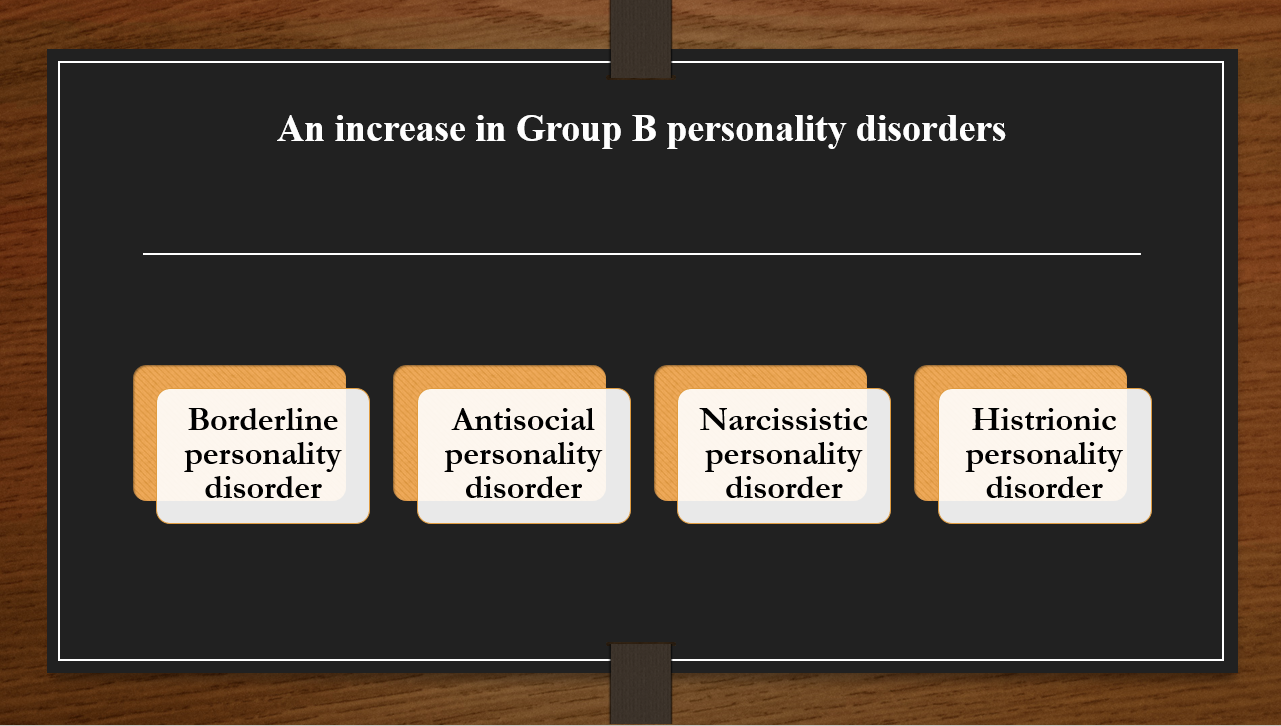
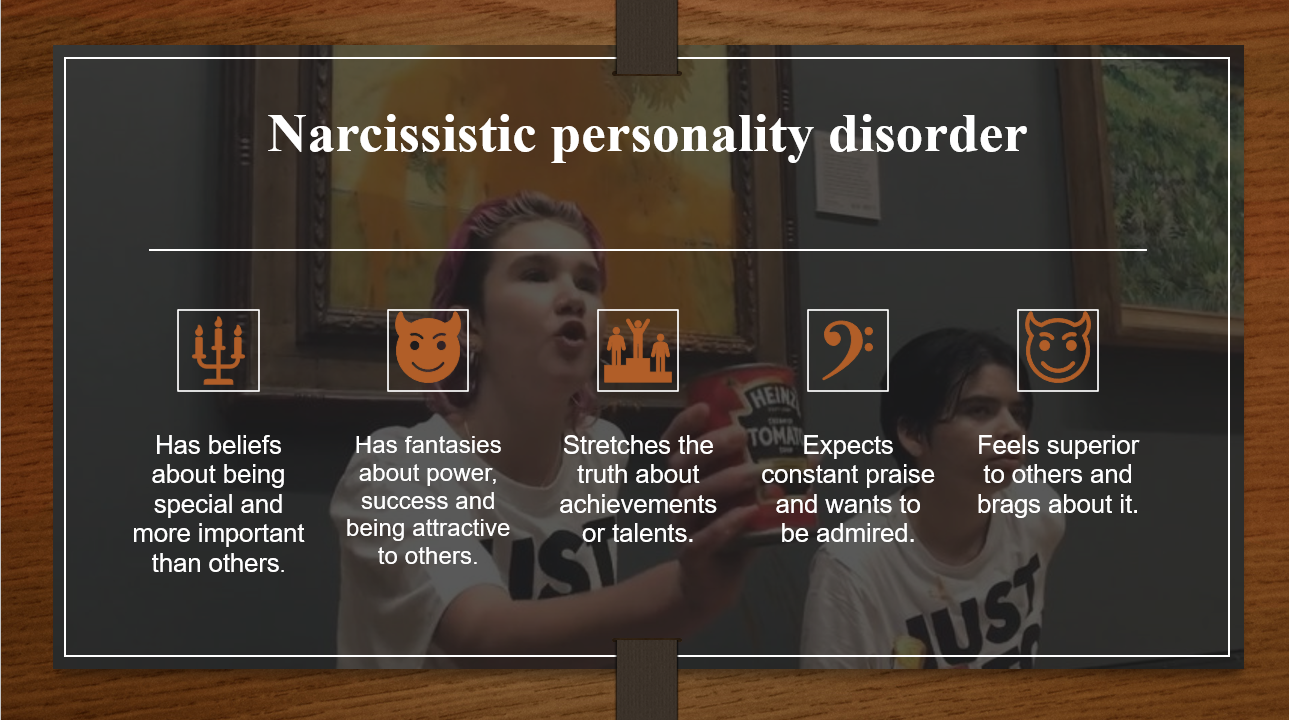
I began my talk by saying that many people today are exteriorizing their trauma; that is, projecting it outwards and upon objects, events, and activities, etc, as a form of compensation. It is as if people are projecting their inner shadows and then living through them in an increasingly disembodied manner (I then showed a short clip from the online animation IN-SHADOW by Lubomir Arsov). I proposed that much of both offline/online behaviour that we see today has shown a marked increase in what are known as ‘Group B’ behavioural traits (see Fig.1)
(Fig.1)
I then proceeded to give some examples of what forms of behaviour can be seen within the various sub-categories of these four major groups of: borderline, antisocial, narcissistic, and histrionic. One of these slides is shown below (Fig.2)
(Fig.2)
I continued from this to discuss how certain forms of anomalous behaviour (what may loosely be termed as ‘madness’) has been normalized into our everyday societies, through our social and cultural institutions and forms of social conditioning. Here, I brought in the work and research of French theorist Michel Foucault by looking at how structures of knowledge and power become embedded into our social institutions and cultural apparatus. In other words, the madness of the world appears to be a ‘normal feature’ of human civilization. As the Scottish psychiatrist R. D. Laing once famously said: ‘Insanity is a perfectly rational adjustment to an insane world.’ The ‘old mind,’ which now forms part of the ‘wounded mind,’ is increasingly impoverished and does not have the capacities for aligning with either our current situation or where we are needed to be, ideally, heading.
Following on from this, I took a quick look at the work of Polish psychiatrist Andrzej Łobaczewski and his book ‘Political Ponerology’ (the study of evil in politics). What was inferred here is that if abnormal ways of human behaviour become engrained at the highest levels of our political institutions, then these abnormal modes of behaviour and perspectives are more likely to trickle down and become ‘normalized’ within human cultures. As I quoted from Łobaczewski: ‘If an individual in a position of political power is a psychopath, he or she can create an epidemic of psychopathology in people who are not, essentially, psychopathic.’ And unfortunately, yet perhaps not surprisingly, Łobaczewski’s research had found high percentage levels of psychopathic behaviour within the very top tiers of the political establishment across varied societies.
My next area of focus was upon the manifestation of collective thought forms leading to mass and/or mob psychosis. I put forward the notion of mental intoxication through the propagation of certain thought forms. I stated that thought forms are just as contagious as any biological virus. In fact, they can spread quicker – almost simultaneously. One person can post an idea online, or express an opinion or ideology, and this can be read by other people almost instantaneously at the other end of the globe. That is, people across the world can become ‘infected’ by an idea/opinion/ideology (a.k.a., thought form) instantaneously. This led me to discuss the work of Mattias Desmet, Professor in Clinical Psychology at Ghent University in Belgium. Desmet’s notion of Mass Formation (mass psychosis) is predicated on the following four factors:
i) a lack of social bonds
ii) people experiencing life as meaningless or senseless
iii) free-floating anxiety (transfer of anxiety)
iv) free-floating frustration and aggression
In recent years, and even going back decades, these conditions have been building up within our modern societies. As I had written about previously, social anxiety and psychological suffering were already growing exponentially even before the pandemic outbreak of 2020. The foundations for establishing a mass psychology were existent in many, if not most, of our industrialized societies and cultures before the traumatic experience of the current pandemic. At such junctures of psychological vulnerability, a shift of attachment – that is, a transference of identification – can be achieved rapidly. What has likely occurred within the last few years has been a widescale process of reprogrammed social solidarity (or lack thereof).
The next part of my presentation was to take a brief examination of four traditions that have spoken of the presence and activity of a ‘mind virus’ within the human species. These four traditions were Native American Indigenous; Central American Shamanism; European Theosophy; and Eastern Orthodoxy. Without going into details here (I suggest interested readers see the video presentation), I looked at the subjects of Wetiko (Native American Indigenous); the predator’s mind (Central American Shamanism); Rudolf Steiner (European Theosophy/Anthroposophy); and Logismos (Eastern Orthodoxy).
The Bullfighter Effect
What I term the ‘Bullfighter Effect’ is when a person(s) is distracted to focus all their attention onto a specific thing – such as when the bull is blinded by focusing all its energies onto the matador’s red cape. The same form of strategy and response is being seen across our societies, and is heralded and promoted by the biased, and heavily controlled, legacy media corporations. Thus, the syndrome of the ‘Wounded Mind’ is, fundamentally, a perception of living separate lives within a materialistic world that is considered unconnected. From this, a sense of alienation arises, whereby life is seen as random and not part of a larger, integrated tapestry of existence. In this respect, I referred to the work of Dr Iain McGilchrist, who in his groundbreaking work The Master and His Emissary: The Divided Brain and the Making of the Western World (followed by The Matter with Things), speaks about how we are living within an increasingly deluded world. We are over-analysing the minutiae at the expense of the grander picture. As the famous 20th century philosopher Alfred North Whitehead once said: ‘Civilization flourishes until it starts to analyze itself.’ What we are missing is the essential. In my talk I then told the following story:
The Essential
A lion was captured and imprisoned in a reserve where, to his surprise, he found other lions that had been there for many years, some even their whole life having been born in captivity. The newcomer soon became familiar with the activities of the other lions and observed how they were arranged in different groups.
One group was dedicated to socializing, another to show business, whilst yet another group was focused on preserving the customs, culture and history from the time the lions were free. There were church groups and others that had attracted the literary or artistic talent. There were also revolutionaries who devoted themselves to plot against their captors and against other revolutionary groups. Occasionally, a riot broke out and one group was removed or killed all the camp guards and so that they had to be replaced by another set of guards. However, the newcomer also noticed the presence of a lion that always seemed to be asleep. He did not belong to any group and was oblivious to them all. This lion appeared to arouse both admiration and hostility from the others. One day the newcomer approached this solitary lion and asked him which group he belonged to.
‘Do not join any group,’ said the lion. ‘Those poor ones deal with everything but the essential.’
‘And what is essential?’ asked the newcomer.
‘It is essential to study the nature of the fence’
It is ‘essential’ to study the nature of our encampment, for if we are unable to perceive this, then we shall never need (or feel the need) to seek our liberation. And part of this encroaching perimeter fence of the encampment is being provided by the machinic architecture of our environment, which is fed by data. Hence, what is now known as ‘Dataism’ is fast becoming the illusive camp guards of the enclosure. According to the well-known technology journal Wired:
Dataism is an emerging market that worships data rather than gods or humans. According to Dataism, human experiences are not sacred, and humans are merely tools for creating the Internet-of-All-Things … According to Dataism, the entire human species is a single data-processing system, with individual humans serving as its chips.’
This viewpoint ties in directly with the perspectives being propagated by celebrity historian Yuval Noah Harari who has declared that a new underclass of ‘irrelevant’ and ‘useless’ people will become the future. In previous centuries, says Harari, people revolted against exploitation, oppression, tyranny, etc; now, they fear becoming irrelevant. He has stated that: ‘If we are not careful, we will end up with downgraded humans misusing upgraded computers to wreak havoc on themselves and on the world.’[i] What this will inevitably lead to is humans behaving in an increasingly automated manner and exhibiting what I refer to as a ‘machinic consciousness.’ Yet this is, in my perspective, a non-evolutionary, or non-developmental pathway for humankind. That is, it represents an evolutionary cul-de-sac for the human species, for it gives way (or hands over responsibility) for its future to technology, and suggests that the human being, as a biological entity, has no further capacity for growth or development other than merging with its mechanical devices. However, this current predicament may not constitute the long-term future but instead be indicative of the demise of its present stage.
Evolving World, Evolving Mind
The Russian-American sociologist Pitirim Sorokin (who founded the Dept. of Sociology at Harvard University) made a broad-ranging study of the rise and fall of human societies. His conclusion was that societies could be recognized according to their ‘cultural mentality.’ Sorokin categorised these stages of cultural mentality as principally swinging between two polarised states: that of the Ideational and the Sensate. And as the pendulum swung from one to the other, it would pass through a ‘third state’ that was the Idealistic. And their characteristics are:
Ideational: where reality is primarily considered as spiritual and immaterial
Sensate: where truth is seen as material and to be gained through materiality
Idealistic: a synthesis of the two.
I wondered whether the Ideational stage represented a form of sacred order that perhaps was abstract and symbolic, yet nevertheless gave people a sense of faith and of the world and/or reality as belonging to an integrated cosmic order. The Sensate stage, on the other hand, was embedded deep into an empirical order – deep materialism – that was highly rational and segregated in its vision. And at the same time, it was highly attracted to the senses and of sensual desires. In other words, it displayed, and promoted, hedonistic behaviour as part of its faithless belief in the sole reality of material existence. And this third ‘swing state’ of the Idealistic would be a synthesis of the other two. That is, a time of conscious and deeply material development and advancement yet within a grander sacred, cosmological order. Sorokin believed that western culture, at least, was breaking down from its current Sensate stage and transitioning into the Idealistic. This would thus display a heightened form of materialism as this stage had passed its peak, alongside a breakdown within the social order – as we may very well be seeing at the present time. This brings me to consider that what may currently be underway is a phase change in our cultural mentality, and thus also within our socio-cultural order. And what is required at such times of a phase change is metanoia.
The term ‘metanoia’ comes from the Greek word meta-noein, which literally means ‘beyond nous,’ or to think beyond (the religious term ‘repentance’ is also derived from the form of metanoia although its interpretation is somewhat different). To ‘think beyond’ implies a shift in consciousness (our thinking patterns) by embracing thoughts beyond present limitations or current thought patterns. In other words, what we now need is a radical change of our worldview – both physical and metaphysical. Furthermore, we are required now, more than ever, to have reasons to have meaning in the world as well as beyond.
To summarise my talk, I discussed that in order to heal the ‘Wounded Mind’ it was paramount that individually and collectively we embraced (or at least sought) for a sense of meaning, purpose, and connection within our physical reality as well as beyond it. That is, to bring together a physical and metaphysical worldview and perspective into an integrated whole rather than living as if separated from the greater cosmological totality. The evolving mind behaves as within a collective ecology and not in a binary relationship. As such, an evolving mind is a relational mind, for which relationships and relationality are primary. This is contrary to the burgeoning transhumanist view which sees the mind (human consciousness) as purely a by-product of the brain’s functioning and, as such, may one day be uploaded into cloud computing governed by artificial intelligences (AI). This, for me, is an anti-human trajectory and completely ignores the future developmental capacities of the human being, as well as ignoring the incredible potential of the biological human body. This transhumanist anti-human perspective is indicative of the collapsing epoch of the Sensate age with its emphasis upon materiality and hedonistic pursuits. And in this, it is aligning with the path of the dinosaurs. In comparison, the continually evolving human being, which is also a human becoming, shall further develop its latent capacities and reach for transcendental connection with its cosmological foundations. The future is yet to be realized. And for me, it shall be a human-centric future, or it shall not be.
1. Please Use our affiliate link for either Healing Support promo or for Heartmend promo.
A. add 3 Healing Support (combination essence) and 3 Blue Eyed Grass to the shopping cart and enter the coupon code for this promo which is: HSHOLIDAYS
Only charged for the Healing Support. The Blue Eyed Grass free
Or
B. Add 6 Heartmend to shopping cart and two will be free when the coupon code HMHOLIDAYS is used.
On November 28, US Customs and Border Protection (CBP) officers at the Lewiston Bridge border crossing connecting Canada and the United States discovered 11 pounds of cannabis in a commercial shipment.
The cargo shipment, listed as being puzzles, was sent for additional examination to ensure trade compliance.
Upon further inspection of the shipment, CBP officers discovered ten vacuum-sealed packages that contained 11 pounds of a “green-leafy-substance” that was later determined to be cannabis. Law enforcement says the “estimated street value” is more than $30,000, or around $2,700 a pound ($6 a gram).
The Lewiston Bridge connects the Niagara region of Ontario with upstate New York, just north of Buffalo. Cannabis seizures of this kind along the shared US and Canadian border are not uncommon and have increased significantly in the past few years of pandemic-related border closures to non-essential traffic.
The Lewiston Bridge has been the source of cannabis seizures in the past few years, with 48 kilograms seized in a commercial shipment in April 2022. Canadian cannabis often finds its way to foreign shores in more ways than one.
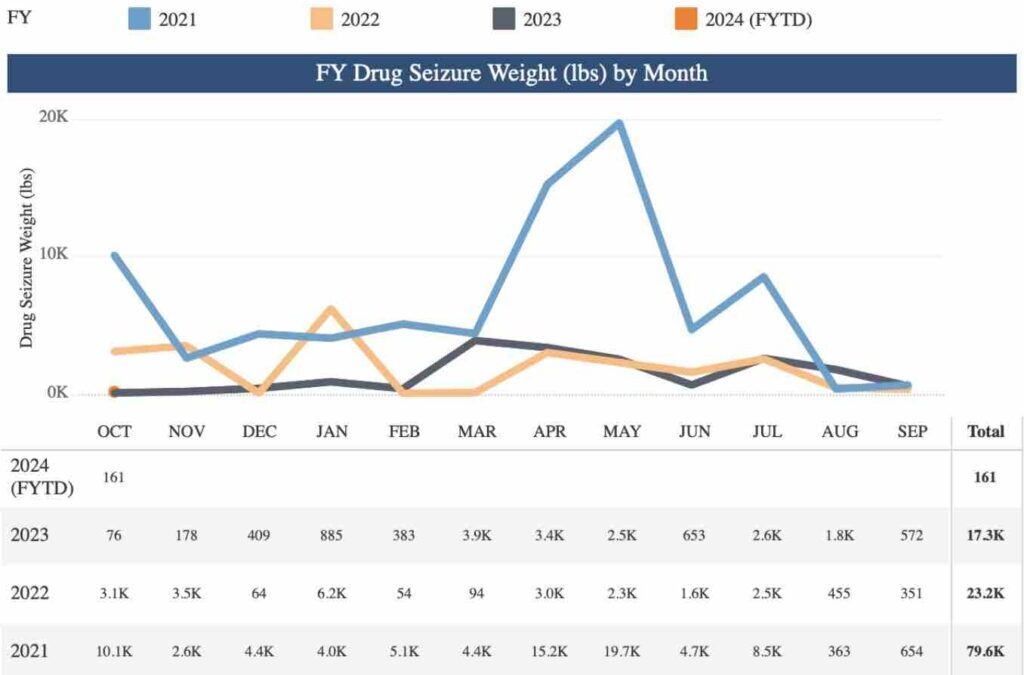
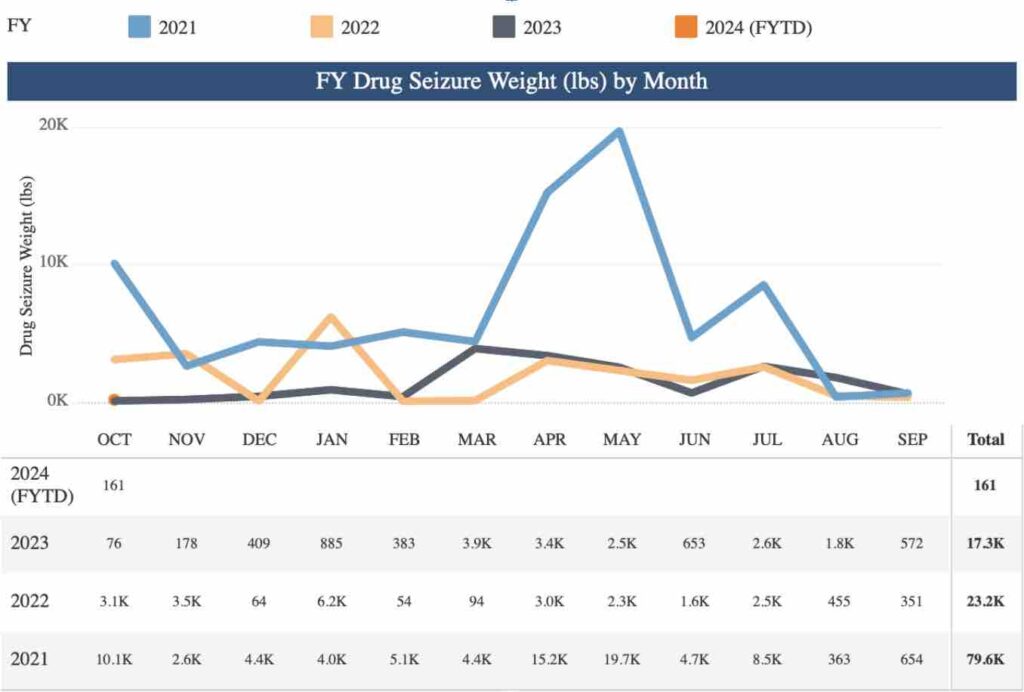
US Border officials seized 17.3 thousand pounds of cannabis entering the country from Canada in fiscal year 2023 (October 2022-September 2023) and have seized 161 pounds so far in Q1 2024.
This is down significantly from nearly 80 thousand pounds of cannabis seized at the US-Canada border by US border officials in 2021 and more than 23 thousand in 2022.
A recent study, featured in the “Journal of Neuroscience Research,” has shed light on the enhanced emotional understanding observed in regular cannabis users. The study, conducted by a team of neurobiologists at the National Autonomous University of Mexico, underscores the potential positive impact of cannabis on interpersonal relationships and its plausible therapeutic applications.
The research involved a comparison of empathy measurements between two distinct groups: 85 regular marijuana users and 51 individuals who abstained from cannabis use. The researchers utilized a 33-item written test and MRI images to gauge the participants’ empathic responses.
The written test, designed to evaluate both cognitive and affective empathy, delved into specific areas, or subscales, including the ability to empathize by placing oneself in another’s shoes and recognizing others’ impressions and emotions. Additionally, it gauged the capacity to resonate with positive and negative emotions.
The authors found that marijuana users exhibited higher scores on emotional comprehension scales, emphasizing their proficiency in recognizing and understanding others’ emotions. However, distinctions in empathy subscales beyond emotional comprehension did not reach statistical significance.
Researchers posited a potential link between cannabis use and heightened empathy, though they urged caution, emphasizing the necessity for further research to unravel the complexities involved. In their attempt to elucidate the findings, the authors highlighted the anterior cingulate cortex (ACC) as a susceptible region to cannabis effects and a key player in the complex process of empathy. The study proposed that the differences in emotional comprehension scores and brain functional connectivity observed in regular marijuana users might be linked to the impact of marijuana on the ACC, an area rich in CB1 receptors crucial for representing others’ affective states.
Despite these insights, the authors acknowledged certain limitations. Notably, they couldn’t rule out preexisting differences before marijuana-use initiation, emphasizing the study’s inability to establish causation. Moreover, empathy assessments relied on self-reported responses, lacking biochemical markers alongside subjective reports.
Additionally, the study recognized a potential disparity in THC potency between Mexican and U.S. cannabis, with the former containing lower THC levels. They noted that Mexican marijuana contained approximately 2% to 20% THC on the illegal market, potentially influencing brain outcomes differently than in studies reporting emotional dysfunctions in cannabis users.
Despite these caveats, the authors asserted that the results pave the way for further investigation into the clinical applications of cannabis in affecting mood and social interactions. The findings of such studies could end up giving major industry players such as Canopy Growth Corp. (NASDAQ: CGC) (TSX: WEED) ideas on how they can tweak their products and appeal to consumers with specific needs.
About CNW420
CNW420 spotlights the latest developments in the rapidly evolving cannabis industry through the release of two informative articles each business day. Our concise, informative content serves as a gateway for investors interested in the legalized cannabis sector and provides updates on how regulatory developments may impact financial markets. Articles are released each business day at 4:20 a.m. and 4:20 p.m. Eastern – our tribute to the time synonymous with cannabis culture. If marijuana and the burgeoning industry surrounding it are on your radar, CNW420 is for you! Check back daily to stay up-to-date on the latest milestones in the fast -changing world of cannabis.
To receive SMS alerts from CNW, text CANNABIS to 888-902-4192 (U.S. Mobile Phones Only)
Please see full terms of use and disclaimers on the CannabisNewsWire website applicable to all content provided by CNW, wherever published or re-published: https://www.CannabisNewsWire.com/Disclaimer
It is estimated that at least 57 million individuals in America have a mental-health condition. Of this number, roughly 14 million suffer from serious mental issues. Despite these huge numbers, conventional treatments aren’t effective for a significant number of patients, which has prompted many to seek alternative treatments.
Psychedelic therapy is one of the popular alternatives as numerous studies have shown that psychedelics could relieve mental health conditions like such as depression, anxiety, substance use disorder and post-traumatic stress disorder. For instance, trials conducted by MAPS have demonstrated effectiveness in the use of MDMA in managing post-traumatic stress disorder. The trials determined that patients who received the treatment demonstrated considerable improvement over therapy with placebo.
Studies have shown that another entheogenic substance, ibogaine, could also be used to successfully address opioid addiction. The study found that ibogaine treatment drastically reduced withdrawal symptoms in most patients.
Despite all these positive findings, however, access to this effective alternative treatment remains low. So, how can the scientific community quash the preconceived notions society has about these drugs while ensuring patients can maximize their experiences with these effective treatments?
The following are a few suggestions:
Providing training and education
Educating the general public as well as the healthcare industry on the potential benefits of psychedelics is key. This will allow more acceptance to be cultivated as psychedelic therapy becomes more mainstream.
Choose optimal treatment sites
For patients to fully benefit from psychedelic therapy, an optimal environment is needed. Treatment sites should have a serene and inviting environment that helps put patients at ease. These environments should also eliminate potential distractions or sources of anxiety that may hinder the patient from fully immersing themselves in treatment.
Set safety standards
Establishing safety regulations for psychedelic studies and therapy will help protect patients as well as further research. A promising starting point is the FDA’s guidance on psychedelic research, as its addresses crucial aspects of safety in psychedelic trials, such as the importance of having trained psychotherapists present during psychedelic treatment. Having psychotherapists on site offers patients the support needed for integration after they undergo therapy. They also help safeguard positive patient experiences.
In addition to this, safety regulations make psychedelic therapy more credible, which in turn eases the process of acquiring funding to further studies on the effectiveness of these substances.
Make accessibility a priority
Making psychedelic therapy readily available to any and all who might be in need may encourage those who haven’t benefitted from conventional treatments to try an alternative.
However, for psychedelic therapy to become widely accessible, the drugs would first need to be rescheduled federally. At the moment, most psychedelics remain classified under Schedule I of the Controlled Substances Act. Drugs under this classification are said to have a high potential for abuse and no accepted medical use.
Startups such as atai Life Sciences N.V. (NASDAQ: ATAI) are focused on undertaking R&D programs aimed at bringing to market FDA-approved psychedelic treatments. These efforts are being complemented by academia and other entities working on filling the policy and information gaps within this fast-growing industry.
About PsychedelicNewsWire
PsychedelicNewsWire (“PNW”) is a specialized communications platform with a focus on all aspects of psychedelics and the latest developments and advances in the psychedelics sector. It is one of 60+ brands within the Dynamic Brand Portfolio @ IBN that delivers: (1) access to a vast network of wire solutions via InvestorWire to efficiently and effectively reach a myriad of target markets, demographics and diverse industries; (2) article and editorial syndication to 5,000+ outlets; (3) enhanced press release enhancement to ensure maximum impact; (4) social media distribution via IBN to millions of social media followers; and (5) a full array of tailored corporate communications solutions. With broad reach and a seasoned team of contributing journalists and writers, PNW is uniquely positioned to best serve private and public companies that want to reach a wide audience of investors, influencers, consumers, journalists and the general public. By cutting through the overload of information in today’s market, PNW brings its clients unparalleled recognition and brand awareness. PNW is where breaking news, insightful content and actionable information converge.
To receive SMS alerts from PsychedelicNewsWire, text “Groovy” to 888-902-4192 (U.S. Mobile Phones Only)
Please see full terms of use and disclaimers on the PsychedelicNewsWire website applicable to all content provided by PNW, wherever published or re-published: https://www.PsychedelicNewsWire.com/Disclaimer
(CNW) Calgary — High Tide Inc., the high-impact, retail-forward enterprise built to deliver real-world value across every component of cannabis, announced that its Canna Cabana retail cannabis store located at 481 River Avenue, Winnipeg, Manitoba will begin selling recreational cannabis products and consumption accessories for adult use on Friday, December 1, 2023. This opening will mark High Tide’s 159th Canna Cabana branded retail cannabis location in Canada, the 11th in Manitoba, and the 6th store in Winnipeg, the capital city of the province.
Located in one of the most desirable communities in Winnipeg, Osborne Village, this new Canna Cabana location is anchored by a national grocery store chain, a provincially run liquor store, and a major Canadian pharmacy retailer. The Village is across the Assiniboine River from the Manitoba Legislature and is one of the highest-density neighbourhoods in the city. Besides these strong national and provincial anchors, this new location will enjoy additional customer traffic visiting the various restaurants as well as numerous other retail businesses in the area.
“I am pleased to announce this brand new Canna Cabana location in Osborne Village, one of the highest-density neighbourhoods in Winnipeg. Becoming meaningfully cash flow positive prior to the end of this calendar year has opened up space for us to hit the gas pedal again on new organic store openings across the country. Staying the course with our premier site selection strategy, I am very excited about the launch of this excellent Canna Cabana location.” — Raj Grover, founder & CEO, High Tide
“The province of Manitoba has become even more attractive to do business in as it moved in the right direction to support the cannabis industry by repealing the 6 per cent SRF. With several exciting stores in the announcement pipeline, we are on track to end 2023 with a number of solid additions to our retail portfolio.”
(Globe Newswire) Chicago and Vancouver — RISE Dispensaries, a rapidly growing cannabis retail chain owned by Green Thumb Industries Inc., announced that it will open two RISE Dispensaries in Florida, with one located in Tampa and the other located in Crystal River, on December 1.
These store openings bring the company’s retail footprint to 13 in Florida and 89 nationwide. RISE Dispensary Tampa will host a grand opening celebration on December 16, where profits from the day will be donated to Tu Canna Foundation. RISE Dispensary Crystal River will host a grand opening celebration on December 15, with profits benefitting The Bridge 4 Veterans.
“We are extremely excited to deepen our presence on the west coast of Florida with two new RISE Dispensaries in Tampa and Crystal River. As with previous store openings, we continue our tradition of giving back to the community, and we look forward to supporting two incredible local non-profit partners, Tu Canna Foundation and The Bridge 4 Veterans.” — Anthony Georgiadis, president, Green Thumb
Tampa-based Tu Canna Foundation promotes wellness advocacy and holistic education in their community, with a strong focus on mental health. Through veteran retreats, expungement clinics, non-profit partnerships, local outreach opportunities, food banks, legal services and more, Tu Canna Foundation improves the lives of others both mentally and physically.
Advertisement
“At Tu Canna Foundation, we believe that even a single action can make all the difference. We work to make a positive change in the Tampa community through collective action centered on hope and compassion. In our shared commitment to health and well-being, our partnership with RISE Tampa will allow us to expand our 2024 efforts to include more veterans retreats and expungement clinics.” – Sol Minardi, founder, Tu Canna
The Bridge 4 Veterans provides transitional housing for veterans as they work towards securing permanent housing. The organization welcomes veterans and offers resources, such as VA HUD-VASH programs, that help them find and maintain affordable housing in their community. The Bridge 4 Veterans is a free-of-charge organization that runs entirely on private donations, for both financial support and food.
“We thank the team at RISE Crystal River for reaching out and supporting The Bridge 4 Veterans on their opening day. Donations like these keep our shelter running, allowing us to be a pathway to veterans in securing safe, affordable places to live. With the help of RISE, we will be able to continue our mission and further our reach.” — Greg Pelletier, president, The Bridge 4 Veterans
Green Thumb joined the Florida community in 2018 and operates two production facilities in Ocala and Homestead where the company produces its branded products. Green Thumb’s cultivation and manufacturing practices reflect the highest quality standards to ensure all its products offer a true-to-plant, consistent experience. The company’s retail brand, RISE Dispensaries, is committed to expanding access to well-being through cannabis and making a positive impact on the communities it serves.
In addition to RISE Tampa and Crystal River, there are 11 other RISE Dispensaries in Florida, including locations in Bonita Springs, Brandon, Clearwater, Deerfield Beach, Fruitland Park, Hallandale Beach, Kendall, Oviedo, Pinellas Park, Sun City Center and West Palm Beach, with delivery services available at each location. All RISE Dispensaries in Florida offer products from Green Thumb’s award-winning family of brands, including RYTHM premium flower and full spectrum vapes, Dogwalkers pre-rolls, Good Green flower, and Shine flower, pre-rolls, vapes and chews.
NPK Technology is an innovative grow shop on the edge of Liverpool’s city centre. It offers a wide variety of growing products and advice at no extra cost!
Whether you like to grow plants indoors or outdoors, there’s something for everyone at NPK Technology. Located on the edge of Liverpool’s city centre, this innovative hydro shop offers a wide range of horticulture products. But what sets them apart from other stores is their expert advice that comes at no extra cost! We found NPK’s Stephen Brookes in the confession booth for this edition’s hydro shop spotlight.
How did you end up at NPK?
In 2012, I was doing a Masters in Public Health Nutrition and setting up my own supplement business. Thomas and I knew each other from university, where we studied outdoor education and PE. Thomas is an ex-Para, great at practical work, and helped me a lot; I helped him on the academic side. We became good friends, and when Thomas finished school, he set up the shop and invited me to help him build the business with multiple shops, podcasts and YouTube channels.
What do you like the most about your job?
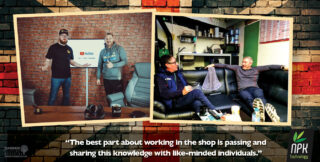
Science and botany have always intrigued me. Having a background in public health, I was fascinated by how the vast majority of our modern-day medications are derived from plants. Manipulating growing methods, styles, and techniques to achieve better yields, quality and aromas has always been the most interesting part of growing indoors for me. The best part about working in the shop is passing and sharing this knowledge with like-minded individuals.
The past year has been slow. What has NPK done to keep customers coming back?
The same thing we have done since day one. We don’t compete exclusively on price; we provide the best customer service and can help anyone at any experience level become a better grower. Sometimes, we send people out without products because we can solve their problems with advice, and a product isn’t needed. That breeds loyalty, and they’ll always come back to us regardless of price or promotions other people are running.
What is your preferred growing style?
DWC, without a doubt. The ability to manipulate plant growth and flowering appeals to me. Whether oxygen levels, water temps, or root pruning, it’s all achievable with DWC.
How do you handle a customer who tries to negotiate unreasonably low prices?
“There’s another shop on Google Maps; don’t let the door hit you on the way out.” When the shocked face looks back at me, I explain we don’t just sell products for as cheap as possible; we offer a service and a knowledge base that will allow them to get the absolute best from that product, and we don’t sell cheap advice. They usually pay the price 😉
Do you have a favourite product?
Optic Foliar Overgrow is a favourite because it’s one of the first products you could spray with the lights on. Unbelievable! Azos and Dynomyco for potting up are brilliant. SANlight LEDs have always been my favourite because of the product and the team of lovely people! Enviro Controller, because it’s just bomb-proof and controls your room to such precise levels. These are just a few fantastic products off the top of my head.
What is the most common misconception amongst your customers?
Yellow leaves are a nutrient deficiency and not because they are overwatered.
If you could change one thing in the industry, what would it be?
The social media bravado. Many nasty comments can be left on social media, and there’s no need for it. We’re all trying to do what we love, earn money, and get on. I see people trying to bring others down when we should all try and do our best. Build the biggest building in town; don’t destroy everyone else’s to make yours seem the biggest!
What are the top three bands that play in the shop?
Fleetwood Mac
Ben Howard (I know it’s not a band)
Electric Light Orchestra
What top advice would you give someone thinking about starting a small indoor grow room?
Trial and error. Read, listen and implement advice, but most importantly, enjoy taking a seed the size of your fingernail and cultivating it into an absolute monster that can feed you.












Recent Comments