(Globe Newswire) Napanee, Ont. — Lophos Holdings Inc. is delighted to share additional information on its wholly-owned subsidiary, Lophos Pharmaceuticals Corp., which has achieved an important milestone by obtaining a significant amendment to its controlled substance dealer’s license by Health Canada for its facility located in Napanee, Ontario.
“This approval marks a significant milestone for Lophos Pharmaceuticals Corp., demonstrating the company’s dedication to responsible and ethical pharmaceutical exploration,” said Giselle Barona, QPIC.
This achievement seeks to expand the company’s capabilities, allowing it to engage in the possession, storage, sale, and transportation of additional controlled substances at its licensed facility. With Health Canada’s recent amendment approval, Lophos Pharmaceuticals is poised to handle a broader range of controlled substances, including but not limited to:
The Lophos Pharmaceuticals facility had previously obtained approval for the production of psilocin, psilocybin and mescaline and maintains this authorization.
Advertisement
Updated facility highlights:
— Authorized to produce mescaline, psilocin, and psilocybin.
— Authorized for the sale, transportation, and distribution of controlled substances including mescaline, psilocin, and psilocybin, DMT, LSD, MDMA, and ketamine.
— Advanced laboratory equipped with cutting-edge technology.
— Robust security measures ensuring safe storage of controlled substances.
— Occupancy inspection with the city is underway.
This strategic expansion not only enhances Lophos Pharmaceuticals’ testing capabilities but also positions the company to offer its expertise to other entities in the pharmaceutical and research industries seeking services related to these controlled substances.
It is important to note that Lophos Pharmaceuticals Corp. is presently in the process of awaiting city approval for the occupancy of its facility. The company plans to initiate operations promptly upon the approval of occupancy.
Alongside its activities related to controlled substance testing, storage, and distribution, Lophos Pharmaceuticals will also manage a peyote cultivation facility on the same premises, adhering strictly to all applicable regulations.
The approval of this amendment marks a noteworthy achievement for Lophos Pharmaceuticals Corp., underscoring the company’s commitment to conscientious and ethical exploration in the field of pharmaceuticals.
(Globe Newswire) Toronto — Cronos Group Inc. today announced that its wholly owned subsidiary entered into an agreement with Future Farmco Canada Inc., a vertical farming company, for the sale and leaseback of its property located at 4491 Concession 12 Sunnidale Road, Stayner, Ontario, Canada, L0M 1S0.
Pursuant to the terms of the sale agreement, the buyer has agreed to acquire the Peace Naturals Campus for C$23 million cash, subject to the terms and conditions set forth therein. The parties also plan to enter into a lease agreement upon closing for portions of the Peace Naturals Campus, ensuring continued operations.
“The sale-leaseback of the Peace Naturals Campus supports Cronos’ goal to reduce costs across the company,” said Mike Gorenstein, chairman, president and CEO of Cronos. “More specifically, this sale will aid in improving the gross margin profile of our business, while lowering costs and increasing our agility. This sale only strengthens our industry-leading balance sheet and allows us to continue to pursue organic growth and future transactions that bolster Cronos’ existing value. We do not expect any interruption to our current operations and plan to carry out existing growth plans within our leased space at the facility.”
Closing of the transaction is subject to certain conditions outlined in Cronos’ Form 8-K. Within 180 days of the sale agreement date, the buyer must confirm in writing that it is satisfied with various aspects of the property and has secured financing for the transaction. Cronos must receive approval from Health Canada for site perimeter changes by the later of: (i) 180 calendar days after the date of the sale agreement; or (ii) 75 calendar days after the satisfaction or waiver of the buyer’s condition described above. Additionally, both parties must agree on the terms of a lease within 75 days of the sale agreement date. The transaction is expected to close 30 calendar days after all conditions are satisfied or waived.
Advertisement
At closing, the parties expect to enter into a lease agreement for portions of the Peace Naturals Campus, which will include a five-year term and one five-year renewal option that may be exercised by Cronos. Cronos will also have an option to lease certain additional space during the term of the lease. Cronos can choose to terminate the lease without penalty anytime after the second year by giving written notice at least 12 months prior to termination. The leased premises will be identified and agreed between both parties prior to closing.
During the past five years at Aqualitas Inc. in Nova Scotia, my odyssey in the cannabis industry has been confronted by a multitude of challenges on the domestic front.
While navigating the day-to-day intricacies of cultivating organic cannabis using our aquaponic technology has been a formidable task, our resolute management group and dedicated production team have risen to the occasion with unwavering commitment to success.
The industry’s landscape however becomes even more intricate when tackling challenges closer to home; issues such as price compression, heightened competition from emerging producers and innovative products, and the burden of excessive taxation and retail mark-ups, to name a few. Yet, within this evolving complexity lies the essence of our corporate narrative, namely our ability to focus on strategic planning and on meticulous execution, which are both rooted in the bedrock of our vision and core values.
At the outset, I must confess that participating in this inaugural launch of the “International Column” for Grow Opportunity magazine is an honour, which I hold in very high regard and that is truly inspiring.
Advertisement
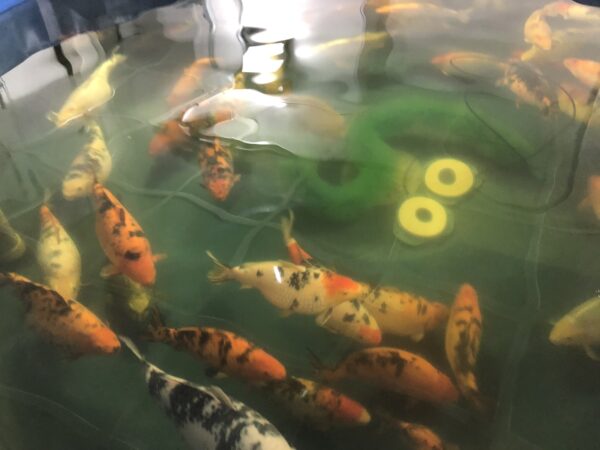
Aquaculture koi tank. Photo: Aqualitas
Since its inception, Aqualitas has remained steadfast in its commitment to realizing strategic goals that extend beyond the immediate horizon. Our pledge is to craft the highest quality, organically produced cannabis for both retail consumers and medical patients alike. Our long-term vision aims to seamlessly integrate cannabis as a standalone and embraced medicine, in its flower and alternative forms, for the medicinal and pharmaceutical industry.
It is this unwavering commitment to our long-term goals that has propelled us down the path of advanced international certifications in quality management systems, ensuring that every step we take aligns with our mission for excellence. To pave the way for our long-term aspirations, we recognized that adhering to Good Manufacturing Practices (GMP), particularly the rigorous standards required for EU-GMP certification, was imperative for success. Our commitment was not just a procedural necessity; it marked a strategic move to unlock doors for the innovative products we aspire to bring to market.
Often misunderstood as merely process-focused and documentation-rich, GMP is in fact deeply rooted in people and their training.
It demands a collective effort from every facet of our production, transcending beyond the usual realms of quality control for international recognition and product distribution. The Drug Establishment License (DEL) will also allow us expand our offerings to include active pharmaceutical ingredients.
The attainment of our DEL license in July 2023 and EU-GMP certification in August 2023 was the culmination of years of relentless effort at Aqualitas. This achievement has not only validated our commitment to excellence but has also steered in a new era of opportunities for our company. Numerous export regions, including Germany, Australia, and the UK, have established EU-GMP as a prerequisite for the import of medical cannabis, a standard we now proudly meet.
While this certification seamlessly aligns with our future objectives, it concurrently allows us to offer our array of award-winning dried flower products to a broader market, positioning Aqualitas as a global leader in delivering premium cannabis products.
Given the economic pressures for licensed producers in Canada, the successful entry into international markets was not only important to us for short-term profitability, it is also crucial to our long-term growth as an organization. Our neighbours to the south are considering federal reclassification, and 38 states have legal medical marijuana programs.
Germany is also considering rescheduling cannabis to further liberalize its use beyond medical purposes, and I expect other EU countries will follow their example. Australia has been a success for Aqualitas in terms of consumer acceptance and brand recognition; we expect to grow our export business there significantly thanks to both our EU-GMP certification and in relation to GMP offerings for our vapes, and oils.
As the song goes, our future is so bright, I gotta wear shades!
Aqualitas, the small Nova Scotia company who brings water and light (and love) to its people and products, is set to sail into international waters and the horizon is limitless. My personal odyssey continues with more resolve and excitement than ever – new markets, new products, new customers and new experiences.
Price compression in Canada’s cannabis industry has been relentless, with no relief expected any time soon. This is placing pressure on producers of all sizes: big LPs have an abundance of mid-grade flower in their vaults, and smaller growers are fighting to differentiate their products in a saturated market.
The price pressure is also giving a boost to some product categories.
“Every large producer is looking for a product that costs less to make or where they can regain the value they’re losing on a mid-quality flower,” says Tanner Stewart, Co-Founder and CEO of Stewart Farms in Milltown, New Brunswick. “The massive flower surpluses have driven innovation in the milled, pre-roll, and extracts categories significantly, with low input costs on flower allowing for a lot of innovation in the infused category.”
“All these big producers are selling their products at steep losses, and the only one who’s benefiting is the consumer – for now.”
This market dynamic has provided an opportunity for smaller operators to add value.
“Infused Cannabis has been a welcome category for outdoor growers and has provided a major base of volume sales for outdoor LPs – I see nothing but positives to this category,” says Colin Davis, president of McIntyre Creek Cannabis, an outdoor grow operation in the Okanagan. “This has been a huge success for us.”
Nonetheless, the pricing distortion created by the over-production of cannabis by large, well-financed LPs continues to create challenges for smaller producers. No product categories are immune from the effects of price depreciation.
“We’ve stopped making infused pre-rolls because the market has crashed,” says Gord Nichol, president and co-owner of North 40 Cannabis in Nipawin, Saskatchewan. “A distributor asked us to replace a product they were happy with. We reversed-engineered it and realized we couldn’t compete. All these big producers are selling their products at steep losses, and the only one who’s benefiting is the consumer – for now.”
“If you look at all the high-level lobbying from large corporate companies lately, their whole raison d’etre is to increase THC limits in edibles,” says Kyp Rowe, president of Victoria Cannabis Company in Victoria, BC. “Companies like Organigram and Indiva are lobbying hard to have this increase in order to capitalize on all of the excess biomass that they can turn into distillate for edibles.”
Consumer beware
An excess of lower-priced flower can contribute to product diversity. However, the intense strain that price compression places on the overall market may also present challenges for the consumer.
“This isn’t good for the consumer in the long run,” says Nichol. “Every day, someone is going out of business, and the pool of suppliers gets weaker. A lot of people are producing really great flower, but they’re all competing for the ten percent of the market that buys that. At this rate, pretty soon, all you’ll be able to buy is mid-grade flower.”
The market shakeout continues to make news. Recently, Calgary-based OGEN Cannabis closed its facility and laid off 87 workers. There are still processors and LPs whose long-term feasibility remains doubtful given that they’re operating with unsustainable business models, with the cost of inputs outpacing revenue.
“If all these public companies had to sell it for at least a break-even point, it would be a game changer,” says Nichol from North 40 Cannabis. “But they continue to sell at losses, which gives them a big advantage over smaller companies like mine. Frankly, every time a big pubco goes under, there’s a cheer over here. It can’t happen fast enough.”
As the market rationalizes, pricing stability is a near certainty – though it’s hard to predict where the bottom is, and when it will arrive. One thing seems clear: there doesn’t appear to be much further for flower prices to fall. With such intense compression, however, companies have less room to maneuver.
“I think flower prices have hit bottom, but I also think that the concentrate market will still come down,” says Rowe from Victoria Cannabis Company. “Lower prices for consumers will equal less diversity. Large corporate growers take months to pivot to the trends of the market, with new flavours and new SKUs easier to change up for smaller producers.”
Rowe’s comments suggest that nimble, smaller producers may have some competitive advantage. Assuming these smaller companies have great genetics and reliable partners, with consistent sales and realistic pricing strategies, maintaining positive cash flow should keep a business afloat.
But surviving isn’t the same as thriving, and short-term consumer gain has a price.
“In an ever-worsening economy, where disposable income is evaporating, lower prices on anything is good for consumers,” says Stewart. “What’s not good for consumers is the mid to high-end craft options disappearing because they’re not selling their crops at the right price.”
The waiting game
Many growers are playing a waiting game, hoping that price compression is near bottom. A well-run business with a laser focus on the bottom line might be able to hold on with margins as low as 10%. They can stand firm on prices, or even push back against the large provincial wholesale purchasing boards.
“Changes to prices must come from industry,” says Davis from McIntyre Creek Cannabis. “Only when LPs tell the boards ‘we can’t sell you this product at that rate and be profitable’ will prices adjust. Like in every other industry, it’s the seller’s role to say, ‘this the best deal I can give you and still make money’.”
This standoff only works if the product is of a high quality. As it stands, cannabis in the vault is essentially worthless, and selling at basement prices is hardly a growth strategy.
“If you need to generate $30,000 per month just to keep the lights turned on, selling a $0.50 gram is better than not paying your power bill,” says David. “This isn’t sustainable long term, of course, and we will see a lot more operations drop off over the next 12 months.”
Davis says that some of that capacity may come back online. Nonetheless, if there’s no unique value proposition, the new owner will be in the same boat, competing for negative margins – just like the previous operation.
“Fighting over the bottom of value doesn’t have room for very many winners.”
MedCana announced in May 2023 full-scale production of non-THC cannabis for export to Europe
The company earlier in 2023 commenced construction of crop production infrastructure at sites in Central and South America
MedCana has engaged in talks with the government of Argentina about starting production in that country
The company in 2023 acquired the assets of Tokan Corp., including an ERP software platform for the cannabis industry
Software Effective Solutions (d/b/a MedCana) (OTC: SFWJ) is a global infrastructure and holding company in the cannabis industry. MedCana currently has five companies focused on pharmaceutical cannabis production, as well a software company focused on managing processes for plant-to-patient operations. The recent acquisition of an irrigation and greenhouse technology company has rounded out MedCana’s portfolio of holdings.
MedCana’s focus is on developing clients and companies in Latin America, initially in Colombia, and partnerships with laboratories, research facilities and hospitals throughout the world. MedCana is building the technology, laboratories, growing facilities and scientific teams to provide premium pharmaceutical-grade cannabis extracts to the world.
MedCana’s goal is to be the world’s premier resource for pharmaceutical cannabis products. The company believes its advantage is its global view and reach. From initial cultivation to final product, MedCana aims to help partners produce pharmaceutical CBD and other extracts that will have no equal.
The company’s mission is to utilize its technology to partner with and develop companies that provide premium pharmaceutical-grade cannabis extracts with absolute integrity, sustainability and social responsibility. MedCana’s team of pharmaceutical scientists includes some of the most respected chemists in the world. They aim to ensure that the company’s customers and partners create premium cannabis extracts that meet the growing worldwide demand. MedCana’s software is designed to ensure traceability and quality from seed to finished product.
MedCana is headquartered in Austin, Texas, with offices in Colombia.
Production
MedCana announced in May 2023 the beginning of full-scale production of non-THC cannabis for export to Europe in response to high demand in that market. This expansion comes after the successful completion of full crop cycle testing and infrastructure development at production sites in Columbia.
The recent acquisition of the assets of Tokan Corp., a software company focused on creating an enterprise resource planning (“ERP”) platform for the cannabis industry, and Eko2O S.A.S., a greenhouse and irrigation engineering company, has positioned MedCana for explosive growth in the region.
As a MedCana subsidiary, Eko2O SA will increase the company’s revenue potential in Central and South America. The subsidiary specializes in the construction and distribution of greenhouses and sophisticated irrigation platforms. A positive outlook has resulted from the company’s expansion as it investigates new opportunities for greenhouse and irrigation system installations in Panama and Uruguay. These opportunities are expected to accelerate Eko2O’s development and strengthen its position as a top supplier of innovative agricultural solutions in cannabis and other sectors that are quickly moving to high technology agricultural production.
In addition, MedCana has started talks with the government in Argentina about possible incentives for beginning operations in that country as part of its ongoing worldwide development strategy. Support from the Argentinean government and the start of new operations there would greatly increase MedCana’s market share in Latin America and solidify the company’s position as the market leader in the cannabis industry.
Market Opportunity
According to a report by Grand View Research, a San Francisco-based market research and consulting company, the global cannabis extract market was valued at $3.5 billion in 2022 and is expected to expand at a CAGR of 20% from 2023 to 2030 to be worth more than $15 billion.
Growing demand for cannabis extracts, including oils and tinctures, and the increased legalization of marijuana for the treatment of different chronic ailments like arthritis, Alzheimer’s, anxiety and cancer are driving the expansion of the industry. The marijuana derivative industry is flourishing due to a greater understanding of its various medical benefits.
Management Team
Jose Gabriel Diaz is CEO of MedCana. He has successfully built, grown and sold multiple telecom companies. He was senior vice president of sales at IP Communications, a national high-speed data provider. He also founded Reallinx, a national data carrier later sold to GTT Communications. Additionally, he is currently president of the A.E.M. Business and Entrepreneurship Association in Austin, Texas.
Claudio Jiménez Cartagena, QF, Ph.D. is Chief Scientific Officer at MedCana. He joined MedCana after working with Sosteli Pharma as Technical Director and serving as a director consultant for the Corporation for Agricultural Industrial Development at the University of Antioquia in Colombia. Before that, he worked as the scientific director at the Institute of Food Science & Technology. He holds a bachelor’s degree in pharmaceutical chemistry, a master’s degree in basic biomedical sciences and a doctoral degree in Environmental Engineering from the University of Antioquia.
Julián Alberto Londoño Londoño, Ph.D., is Senior Vice President of Operations at MedCana. He previously served as general manager for the Corporation for Agricultural Industrial Development, and as Chief Scientific Officer at Sosteli Pharma in the Resource Management Department. He has developed multiple U.S. patents, and recently served as senior advisor to the Secretariat of Agriculture Development for the Government of Antioquia. He holds a doctorate in Chemical Sciences from the University of Antioquia.
For more information, visit the company’s website at www.MedCana.net.
NOTE TO INVESTORS: The latest news and updates relating to SFWJ are available in the company’s newsroom at https://cnw.fm/SFWJ
About CannabisNewsWire
CannabisNewsWire (“CNW”) is a specialized communications platform with a focus on cannabis news and the cannabis sector. It is one of 60+ brands within the Dynamic Brand Portfolio @ IBN that delivers: (1) access to a vast network of wire solutions via InvestorWire to efficiently and effectively reach a myriad of target markets, demographics and diverse industries; (2) article and editorial syndication to 5,000+ outlets; (3) enhanced press release enhancement to ensure maximum impact; (4) social media distribution via IBN to millions of social media followers; and (5) a full array of tailored corporate communications solutions. With broad reach and a seasoned team of contributing journalists and writers, CNW is uniquely positioned to best serve private and public companies that want to reach a wide audience of investors, influencers, consumers, journalists and the general public. By cutting through the overload of information in today’s market, CNW brings its clients unparalleled recognition and brand awareness. CNW is where breaking news, insightful content and actionable information converge.
To receive SMS alerts from CNW, text CANNABIS to 888-902-4192 (U.S. Mobile Phones Only)
Please see full terms of use and disclaimers on the CannabisNewsWire website applicable to all content provided by CNW, wherever published or re-published: https://www.CannabisNewsWire.com/Disclaimer
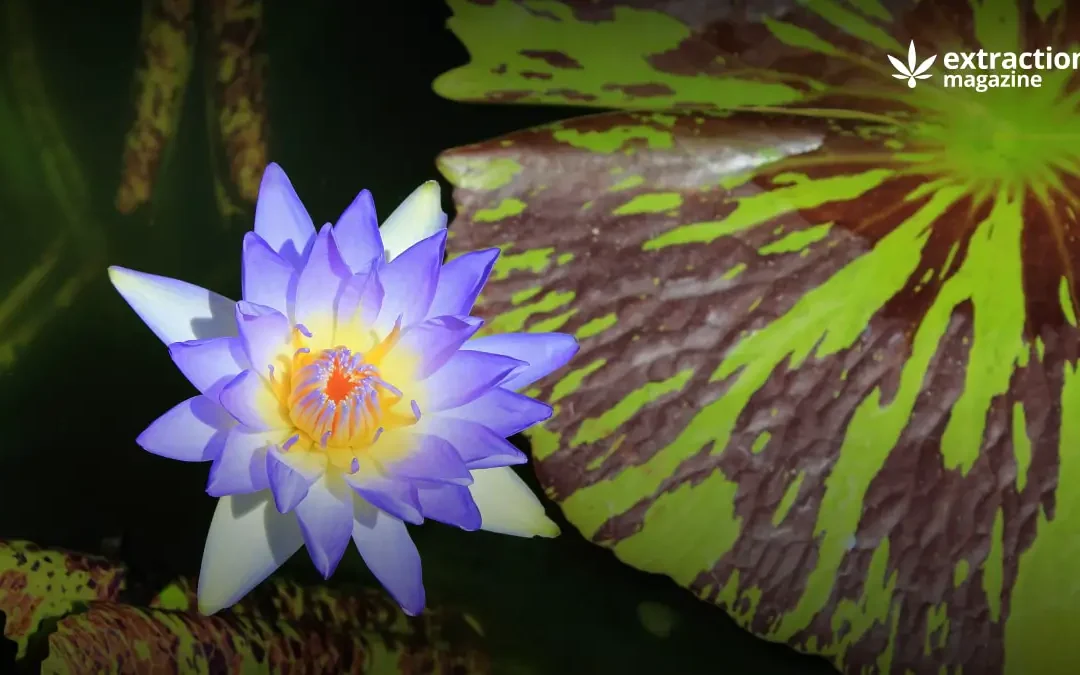
Nymphaea caerulea, also known as blue lotus flower, is a water lily that was grown by the ancient Egyptians. They used to infuse the flowers in wine and to share the beverage during rituals, ceremonies and spiritual celebration.
In fact, the extracts of the flower are capable of inducing altered states of consciousness thus it was used as a connection with the divine. The blue lotus was a central symbol for them and it was believed to represent the creation, death, the sun and the goddess of love. Blue lotus is mentioned in “the Egyptian book of the dead” as a vehicle to ascension and rebirth and it is called “the lily that shines in the earth”. [1]
In addition to Egyptian civilization, this plant has been revered by many other ancient cultures including Tibetans and Greeks among others.
Talking about Greek mythology, in Homer’s epic poem the Odyssey, Odysseus and his fellows, after days of navigation in the storm, landed on the island inhabited by the lotus-eaters. This race of people welcomed well Odysseus and his friends, offering them the sweet sprout of lotus.
The characteristic of this primary food of the island was to have narcotic effects: all the lotus-eaters were in a kind of perpetual apathy and the friends of Odysseus who ate the lotus felt in the same mental state. The crew of Odysseus’ ship was forced to go on board by their captain Odysseus, otherwise they would have completely forgotten the longed-for homeland. [2]
Even if there is some ambiguity in the botanical classification of the plant mentioned in the Odyssey, based on Herodotus assertions it is possible to identify various species of water lily, including the Nymphaea caerulea. In fact this plant was already known by the Greeks under the name of blue lotus and it was known to be soporific and in some formulations also psychotropic.
The reason why this plant is so important and famous resides in its chemical composition.
In fact, the two alkaloids contained in the blue lotus flower, apomorphine and nuciferine, are responsible for the psychoactive effects that the plant can induce. [1]
Chemical composition of Nymphaea caerulea
This plant is known for its multifaceted therapeutic action and it is also used in Ayurvedic medicine as treatment for liver disorders. The extraction of the full phytochemical composition of the blue lotus can be performed using solvents with different polarities including water, methanol, ethanol and chloroform. [3]
The phytochemical screening of various parts of the blue lotus plant including roots, rhizomes, leaves and flowers shows a variegate composition including:
Anthocyanins;
Leucoanthocyanins;
Coumarins;
Anthraquinones;
Phenols;
Flavonoids;
Saponins;
Glycosides;
Steroids;
Tannins;
Lignin.
It should be noticed that leaves and flowers of blue lotus have a higher variety and concentration of secondary metabolites compared to rhizomes and roots. In fact flowers and leaves contains also:
Alkaloids;
Terpenoids.
The anti- inflammatory, antispasmodic, anti-cancer, anti-microbial, analgesic, anti-oxidants and diuretic activities can be attributed due to the presence of higher levels of steroids, tannins, terpenoids, flavonoids, phenols, emodins and saponins. [3]
Regarding the psychotropic activity of the blue lotus extract and the potential intoxicating effects at high doses we will describe the two alkaloids contained in high concentration mainly in blue lotus flowers and leaves: apomorphine and nuciferine.
Apomorphine
This non selective dopamine receptor agonist is capable of activating serotonin and adrenergic receptors. This compound, contrary to its name, doesn’t bind to opioid receptors and is not structurally related to morphine. [1]
Apomorphine was used since ancient times as a sedative-hypnotic agent and more recently to relieve the anxiety of alcoholics or heroin addicts.
Moreover apomorphine can exert emetic action and it can treat erectile dysfunction. Nowadays it is used in the treatment of Parkinson’s disease and Alzheimer’s disease.
The main contraindications of apomorphine are:
Nausea;
Vomiting;
Fainting;
Sleepiness;
Sweating;
Confusion;
Fluid retention;
Persistent erections.
Hallucinations.
Nuciferine
This alkaloid is an antagonist at 5-HT2A, 5-HT2C, and 5-HT2B, an inverse agonist at 5-HT7, a partial agonist at D2, D5 and 5-HT6, an agonist at 5-HT1A and D4 receptors, and inhibits the dopamine transporter. [1] This compound was investigated for its potential health benefits as antipsychotic medication and as treatment for vascular diseases. [1]
Nuciferine has enhanced permeability in the blood brain barrier and an interesting poly-pharmacological profile. [4] Moreover, it is capable of counteracting the morphine induced analgesia due to enhancing effects of pain perception. Nuciferine can elicit a variety of therapeutic effects including: [5]
Anti-obesity;
Anti-dyslipidemia;
Anti-hyperglycemic;
Anti-inflammatory;
Anti-tumor effects;
Affinity to neural receptors;
Antidiabetic;
Antiviral effects;
Antioxidative effects.
Toxicity of Nymphaea caerulea
Blue lotus is sold in various forms including dried flowers, dried plant materials, extracts, incense, teas, oils and powders. A growing number of intoxication cases have been reported about this plant derived extract consumed in electronic cigarettes or infused in beverages.
The improved modifiability of modern vaping devices by the end user has allowed experimentation with non-traditional products, for which there is limited literature to provide guidance to healthcare providers.
The intoxication cases treated in the first aid centers presented signs of altered mental status, hallucinations, drowsiness, tachycardia, anxiety, chest pain among other intoxication symptoms. [6]
Moreover electronic cigarettes successfully improve the bioavailability of the main alkaloids found in blue lotus extracts such as apomorphine and nuciferine, permitting a good absorption through inhalation. Insights about the right dosages to experience the benefits instead of the hallucinating effects are still anecdotal and more studies should be done in order to reveal the potential long term adverse effects of blue lotus extracts.
Wrap-up on Blue lotus extracts and legal considerations
As mentioned before, blue lotus is capable of inducing hallucinations and euphoria at high dosages. The recreational use of blue lotus extracts is increasing and for this reason some countries are starting to include the plant among the illicit substances class I.
The states that for now consider illegal the possession and distribution of blue lotus material are Latvia, Poland and Russia.
In the USA blue lotus is not currently included in the controlled substances, so it can be legally sold in most states. Nevertheless it is not meant for human consumption and it is not approved and regulated by the Food and Drug Administration (FDA).
References:
Poklis JL, Mulder HA, Halquist MS, Wolf CE, Poklis A, Peace MR. The Blue Lotus Flower (Nymphea caerulea) Resin Used in a New Type of Electronic Cigarette, the Re-Buildable Dripping Atomizer. J Psychoactive Drugs. 2017 Jul-Aug;49(3):175-181. doi: 10.1080/02791072.2017.1290304. Epub 2017 Mar 7. PMID: 28266899; PMCID: PMC5638439;
Mackenzie Schimpf, Thomas Ulmer, Hugh Hiller, Alexander F Barbuto, Toxicity From Blue Lotus (Nymphaea caerulea) After Ingestion or Inhalation: A Case Series, Military Medicine, Volume 188, Issue 7-8, July/August 2023, Pages e2689–e2692, https://doi.org/10.1093/milmed/usab328.








Recent Comments