Paul Armentano, who works as deputy director at NORML, a nonprofit aimed at advocating for the reform of marijuana laws, recently penned a post for The Hill in which he expressed concerns about a growing trend in which GOP lawmakers in different states have actively taken steps to subvert the wishes of voters with regard to marijuana legalization. Recently, Ohioans made a decisive choice in favor of Issue 2 — a citizen-driven ballot initiative marking a significant step toward legalizing the cultivation, possession and sale of recreational cannabis.
The vote was in line with a broader national trend where, across the United States, a substantial two-thirds majority, spanning Republicans, Democrats and Independents, supports the legalization of marijuana. Notably, of the 24 states that have embraced legalization, more than one-half have done so through direct public votes.
Ahead of the Ohio election, polls conducted by Baldwin Wallace University left little room for uncertainty regarding public sentiment. Issue 2 found strong backing from diverse demographic groups, transcending educational backgrounds, religion, race, age, political affiliations and gender. The widespread support indicated a clear mandate from the people for a change in marijuana policy.
Given this expansive public backing, one might expect elected officials to mirror the enthusiasm for cannabis legalization. However, this is not the case, particularly among GOP politicians. In the lead-up to Ohio’s election, prominent figures such as GOP Governor Mike DeWine and other Republican leaders actively campaigned against the initiative. Moreover, the GOP-led Senate went a step further, passing a resolution condemning the legislation, with the Senate leader expressing intentions to amend certain provisions of the newly approved law that he found objectionable. The flexibility offered by the statutory nature of Issue 2 allows state lawmakers to make legislative changes.
This resistance from GOP officials post-election mirrors patterns observed in other states. In 2020, despite 54% of South Dakotans voting in favor of a constitutional amendment supporting recreational marijuana, GOP Governor Kristi Noem initiated litigation challenging the vote, eventually nullifying the election results. Similarly, in Mississippi, a GOP mayor’s litigation successfully overturned the votes of 74% of state residents who had approved a ballot legislation in 2020 for legal cannabis access.
The trend extends to Florida, where the GOP attorney general seeks to preemptively thwart a proposed marijuana legalization initiative slated for the 2024 ballot. Despite gathering more than a million signatures and enjoying majority support among Florida voters, the fate of the proposal now rests with the state’s Supreme Court.
Regardless of personal views on marijuana legalization, the undemocratic maneuvers employed by some GOP lawmakers should raise concerns. In a well-functioning democracy, elected officials are expected to represent the views of their constituents. However, on the matter of marijuana law reform, GOP lawmakers frequently sidestep or actively undermine the expressed will of the voters. This poses a potential risk, given the increasing bipartisan backing for legalization.
Marijuana industry players such as Tilray Brands Inc. (NASDAQ: TLRY) (TSX: TLRY) are likely to keep an eye on how this form of pushback to cannabis policy reform will pan out over the coming years.
About CNW420
CNW420 spotlights the latest developments in the rapidly evolving cannabis industry through the release of two informative articles each business day. Our concise, informative content serves as a gateway for investors interested in the legalized cannabis sector and provides updates on how regulatory developments may impact financial markets. Articles are released each business day at 4:20 a.m. and 4:20 p.m. Eastern – our tribute to the time synonymous with cannabis culture. If marijuana and the burgeoning industry surrounding it are on your radar, CNW420 is for you! Check back daily to stay up-to-date on the latest milestones in the fast -changing world of cannabis.
To receive SMS alerts from CNW, text CANNABIS to 888-902-4192 (U.S. Mobile Phones Only)
Please see full terms of use and disclaimers on the CannabisNewsWire website applicable to all content provided by CNW, wherever published or re-published: https://www.CannabisNewsWire.com/Disclaimer
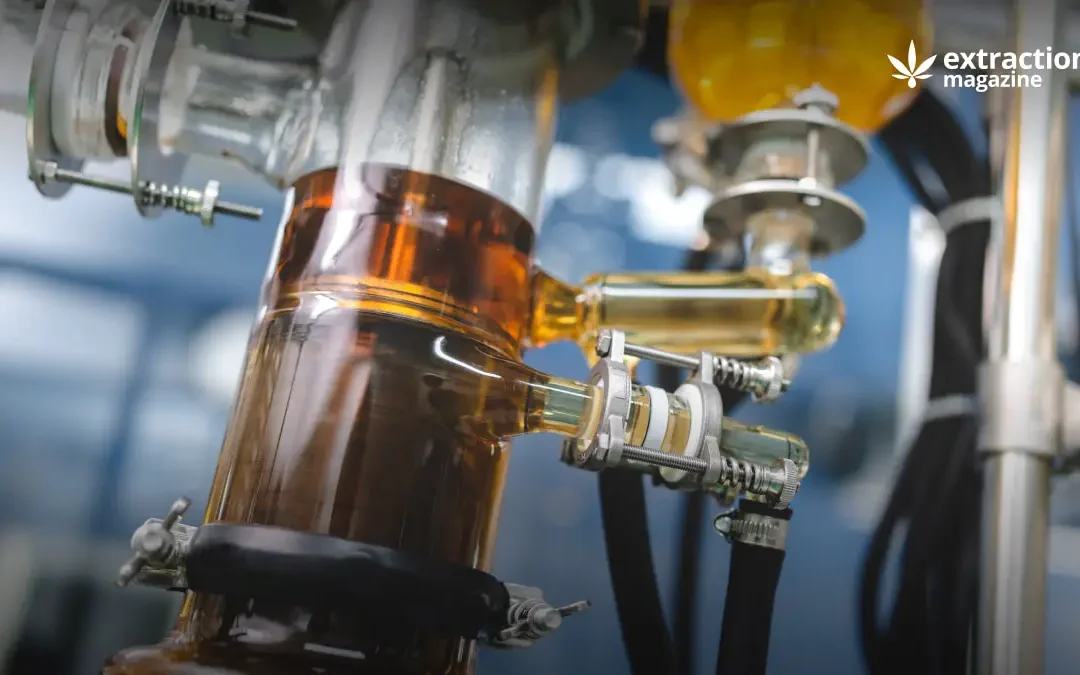
According to the Pharmacopoeia, an essential oil is an odorous product, usually of complex phytochemical composition, obtained from a botanically defined raw vegetable material. Extraction methods for these interesting products include traditional ones like hydrodistillation, steam distillation and cold or hot pressing, and modern ones such as microwave-assisted extraction (MAE), ultrasound assisted extraction (UAE), or supercritical fluid extraction (SFE) among others. By combining some of these methods with an enzymatic pre-treatment, the yield encouragingly increases, and the cost can decrease.
Enzyme-assisted extraction (EAE) is the new frontier for the food and pharmaceutical industry in the production of EOs using the cold-pressing method.
Chemical nature of essential oils
Essential oils (EO) are volatile secondary metabolites produced by plants and soluble in organic solvents and in lipids, some of them are colorless and others range from a light yellow to a reddish orange, such as lemongrass oil, cinnamon oil, and sandal oil. Mainly, EOs are less dense than water, such as citronella oil, lime oil or orange oil, but there are some heavier than water, such as allspice oil, cinnamon oil, clove oil or garlic oil. It is estimated that of the 3000 EOs known, only 10% are used commercially. [1]
EOs are very complex natural fragrant mixtures that can contain more than 20 components at different concentrations. Terpenes, terpenoids, and aromatic and aliphatic components are the main constituents (20-70% of the total concentration), while the rest comprises the minority components.
EO are recognized for several biological activities (bactericidal, antiviral, and fungicidal) and medicinal and aromatic properties. Among their multiple uses, they are natural additives for food preservation as antioxidants with radical scavenging activity. [2] They also serve as an antimicrobial, analgesic, sedative, and anti-inflammatory drugs, spasmolytic agents, and local anesthetics. [3]
Common extraction methods for essential oils
EO can be extracted by aqueous extraction, steam distillation, with organic solvents, or by mechanical extraction (pressing).
Aqueous extraction consists of an infusion with hot boiling water, which allows the production of extracts with a moderate yield. This is due to the hydrophilic nature of the solvent and the lipophilic nature of the extract. The excess water in EOs can be removed using anhydrous salt.
Steam distillation is widely used directly in the field of industrial production of the food and pharmaceutical supply chain but is also used in scientific assays.
Steam distillation is a separation process that consists in distilling water together with other volatile and non-volatile components. The steam from the boiling water carries the vapor of the volatiles to a condenser; both are cooled and return to the liquid or solid state, while the non-volatile residues remain behind in the boiling container. If, as is usually the case, the volatiles are not miscible with water, they will spontaneously form a distinct phase after condensation, allowing them to be separated by decantation or with a separatory funnel. [4]
Solvent extraction is the most efficient method, but organic solvents are a potential hazard to the life and health for workers as well as to the environment. [5] It is the process in which a compound transfers from one solvent to another owing to the difference in solubility or distribution coefficient between these two immiscible (or slightly soluble) solvents. [6]
Mechanical pressing is safer, environmentally friendly, and it preserves valuable natural components in the resulting oils (especially cold pressing). On the other hand, this technique requires high energy consumption and a lower yield of oil extraction, because the applied mechanical force does not completely destroy cell components storing the oil. [5]
“These glands are protected by cell walls and membranes; it is necessary to degrade these structural components. The use of hydrolytic enzymes, which are fast and specific catalysts, is promising to achieve a high essential oil yield by partial hydrolysis of various cell structures. [7]
The plant cell walls and related hydrolytic enzymes
“It was the thick cell walls of cork, visible in a primitive microscope, that in 1663 enabled Robert Hooke to distinguish and name cells for the first time. [8]
The walls of neighboring plant cells, cemented together to form the intact plant, are generally thicker, stronger, and, most important of all, more rigid than the extracellular matrix produced by animal cells. In evolving relatively rigid walls, which can be up to many micrometers thick, early plant cells forfeited the ability to crawl about and adopted a sedentary lifestyle that has persisted in all present-day plants. [8]
The structure of the plant cell wall is formed by linear cellulose chains and branched hemicellulose chains immersed in a lignin matrix and features cross-linking of lignin-carbohydrate bridges, ether, and carbon-carbon bonds. [9] Cell walls consist mainly of polysaccharides such as cellulose, hemicelluloses, lignin, and pectins, but also contain a low number of glycoproteins. [10]
Cellulose is a linear chain of glucose units that can be cleaved by various cellulases. [9] Hemicelluloses consist of a large number of different mono- and oligosaccharides. Due to their specificity and regiospecificity the destruction of hemicelluloses is best performed by a mixture of enzymes. [11]
Several enzymes are known to attack and degrade lignin, such as laccase, lignin peroxidase, and manganese peroxidase. [9]
Enzymatic degradation as extraction pretreatment
In nature, white-rot fungal enzymes can destroy not only lignin, but also all the main components of lignocellulose, including cellulose and hemicellulose. The enzymes expressed by brown-rot fungi are able to cause lignin oxidation, depolymerization, demethylation of lignin methoxy groups, and the removal of cellulose and hemicelluloses from plant cell walls. [9]
Enzyme-assisted extraction is a method employing enzyme(s) to treat the sample before being extracted. [12]
Partially purified enzymes can be obtained from a previously isolated and identified pectinase producer Aspergillus terreus, amylase producer Aspergillus niger, lignocellulase producer Aspergillus fumigatus, and cellulase producer Bacillus massiliensis, respectively, and were used for the enzyme pre-treatment. [13]
Mechanical expression and enzyme-assisted extraction
Cold pressing is used for extracting EOs from plants of the genus Citrus: the whole fruits or their peals move in a system covered with thousands of sharp and tiny spikes; glands break, open, and release their content. To isolate essential oil from this mixture, it is filtered and centrifuged to allow obtaining pure essential oil. Mechanical expression provides high quality products with characteristic fragrances nearly identical to the starting fruit because there are no structural changes in the fingerprint of the product. [14]
The yield is due to the pressing forces and the surface contact, much of the product can remain inside the glands and be lost with the filtration.
Enzyme pretreatment gave more than 50% higher yield than control in terms of weight of extracted essential oil. [13]
The results of many investigations showed that the weight in gram percentage and volume percentage per gram obtained by partially purified enzyme‐assisted extraction were indeed higher than those obtained in the control (sample treated with denatured enzymes, or without enzyme pretreatment). The increase in specific gravity in all pretreated samples indicates the possible extraction of some extra components during the enzyme pretreatment.
The relative increase in the percentage purity of components and the increase in the number of chromatographic peaks using gas-chromatography paired with mass-spectrometry (GC_MS) in the samples pretreated with single or mixed enzymes, show the help of the enzymes in jointly extracting some additional components to the main components and improve the overall extraction yield. [13]
References:
[1] Haro-González JN, Castillo-Herrera GA, Martínez-Velázquez M, Espinosa-Andrews H. Clove Essential Oil (Syzygium aromaticum L. Myrtaceae): Extraction, Chemical Composition, Food Applications, and Essential Bioactivity for Human Health. Molecules. 2021.
[2] Ramadan, M.M.; Ali, M.M.; Ghanem, K.Z.; El-Ghorabe, A.H. Essential oils from Egyptian aromatic plants as antioxidant and novel anticancer agents in human cancer cell lines.2015.
[3] Bakkali, F.; Averbeck, S.; Averbeck, D.; Idaomar, M. Biological effects of essential oils—A review. Food Chem. Toxicol. 2008.
[5] Kumar SPJ, Prasad SR, Banerjee R, Agarwal DK, Kulkarni KS, Ramesh KV. Green solvents and technologies for oil extraction from oilseeds. Chem Cent J. 2017.
[6] Hongzhang Chen, Lan Wang, Posttreatment Strategies for Biomass Conversion. Technologies for Biochemical Conversion of Biomass, 2017
[7] Vovk H, Karnpakdee K, Ludwig R, Nosenko T. Enzymatic Pretreatment of Plant Cells for Oil Extraction. Food Technol Biotechnol. 2023.
[8] Alberts B, Johnson A, Lewis J, et al. Molecular Biology of the Cell. 4th edition. New York: Garland Science; 2002.
[9] Martínez AT, Ruiz-Duenas FJ, Martinez MJ, del Rio JC, Gutierrez A. Enzymatic delignification of plant cell wall: From nature to mill. Curr Opin Biotechnol. 2009.
[10] Kalia VC. Rashmi, La lS, Gupta MN. Using enzymes for oil recovery from edible seeds. J Sci Ind Res (India). 2001.
[11] Ricochon G, Muniglia L. Influence of enzymes on the oil extraction processes in aqueous media. Oilseeds and fats, crops and lipids. 2010.
[12] Sowbhagya HB, Purnima KT, Florence SP, Appu Rao AG, Srinivas P. Evaluation of enzyme-assisted extraction on quality of garlic volatile oil. Food Chem. 2011.
[13] Amudan, Rajalakshmi & Kamat D, & Kamat S. Enzyme‐assisted extraction of essential oils from Syzygium aromaticum. South Asian Journal of Experimental biology. 2011.
[14] Başer, K.H.C., Buchbauer, G. Handbook of Essential Oils: Science, Technology, and Applications, Second ed. CRC Press, Boca Raton, FL. 2015.
Evergreen boughs, candy canes, light-up reindeer, and strings of twinkling lights transform my sleepy winter garden into a holiday light fiesta. It’s a space that I hope Santa will want to stay in awhile; follow these tips and tricks to make your garden as merry and bright as mine!
Follow Nature
When stringing up lights, follow the garden’s flow. Outlining garden beds rather than randomly plopping lights in the middle creates a better definition of the space. Use the garden trellis as guideposts to string lights around. If stringing lights up a tree, follow the natural branch lines and trunk rather than wrapping them haphazardly. Attach the lights with garden clips or twist ties.
Tread Carefully
Remember where things are planted. Crocus and snowdrops may emerge for a late January bloom, depending on where you live. Don’t step on these early harbingers of spring! All those vines may look bare and leafless, but they’re busy setting buds, so be careful not to break the stalks at the base of the plant if you string lights through them.
Early spring bloomers, such as azaleas, magnolia, and camellias, have also been working hard all summer to set their buds, and they’re waiting for warm weather to return to bloom. Be gentle!
Dimension Matters
Add different shapes and elements to the display. For example, adding candy canes or light up reindeer begins to tell the story that you’re at the North Pole. Create hanging baskets full of evergreen boughs, then add some battery-operated lights on timers to create texture in the display.
Waterproof
I live on the south coast of British Columbia, and it often rains during the holidays. The last thing I want is to have all those lights short out if moisture gets into the connections. I use socket protectors on the joints and double-wrap them with duct or electrician tape to keep things watertight.
It’s tedious and time-consuming, but just like stakes and tomato cages are my secret weapon in summer, this is my secret weapon in keeping the lights functioning throughout the season (and not having to replace strands in the middle of a West Coast rainstorm). Knowing everything is watertight means I can relax and enjoy the show.
Safety First
Always have a buddy handy to spot you if you use a ladder to string up lights in a tree or under eaves.
Be Creative
There are no rules on how to make the garden shine during the holidays. One year, I used all white lights; the next, it was a candy cane ally. One Christmas, I turned tomato cages into holiday trees and added some reindeer to make it look like the North Pole.
Having a theme each year has helped me decorate and has made the garden cohesive instead of looking as if I randomly plopped things in the middle of a raised bed.
As gardeners, we carefully think of how and where to plant in the spring and summer to create a nice-looking space. I think of holiday lights like I do plants, vines and perennials. I find spots that will help the decor work with the nature around it.
Plans announced by SNDL to close its cannabis production facility in Olds, AB, will not affect the cannabis training courses offered by Olds College of Agriculture and Technology, a college spokesperson says.
Indiva posted its Q3 2023 report with a record $9.8 million net revenue, representing a 30.4% sequential increase from Q2 2023 and a 21% increase year-over-year from Q3 2022. The cannabis producer attributes this increase largely to the continued growth of its edibles sales, such as the Pearls by Grön gummies, Wana products, and the introduction of No Future gummies and vapes. Net revenue in Q3 from edible products alone was $9 million.
The company also posted inventory impairment charges in Q3 2023, totalled $0.6 million and $2.1 million cumulatively year-to-date, related primarily to bulk lozenges and packaging, which can’t be sold due to Health Canada’s order to halt production and sale of these products, as well as the write off of aged and out of spec bulk and finished goods, and certain marketing, packaging and raw materials. Indiva says it will continue to “work to monetize any impaired inventory which remains saleable.”
Indiva also entered into a supply agreement with SNDL whereby SNDL will supply the company with certain distillate products on an exclusive basis.
The McGill Daily ran a five-year retrospective on legalization in Canada, noting industry struggles and public health concerns.
CTV reported that three men broke into Dank Cannabis in Calgary. The group stole money from the cash register and took an employee’s vehicle. Police say a witness reported seeing a gun. No one was injured.
CannaPharmaRXharvested its first crops on August 10 and September 11 in a former Aurora Cannabis facility northwest of Cremona in Mountain View County, Alberta. CannaPharmaRX hopes to sell cannabis to a company in Israel, Y.S.A. Holdings.
Australian cannabis producer Cannim now has a licence to cultivate cannabis in Canada as of October 27. The facility, a large greenhouse, is in Petrolia, Ontario. The Petrolia Lambton Independent reports that local zoning regulations prevent cannabis from being grown at the site. The news site also reports that Cannim announced a merger with Chatham-Kent based Medisun in a $12 million deal in 2021.
Herbal Dispatch’sthird quarter results for 2023 show a gross revenue of $1.5 million, a 45% increase from Q2 2023. HD has over 200 customers on its direct delivery retailer platform and over 2,000 active customers on its medical sales platforms.
Jazz Pharmaceuticals Canada Inc. announced that Health Canada has approved Epidiolex® (cannabidiol oral solution) for use as adjunctive therapy for the treatment of seizures associated with Lennox-Gastaut syndrome (LGS), Dravet syndrome, or tuberous sclerosis complex (TSC) in patients two years of age and older. The Health Canada approval was based on results from five double-blind, randomized, placebo-controlled Phase 3 clinical trials, with a total of 939 LGS, Dravet syndrome, or TSC patients enrolled, making it one of the largest global clinical trial programs to date in rare refractory epilepsy syndromes.
The company also completed its second export sale of cannabis to Australia in November 2023, consisting of 130 kilograms of dried cannabis, generating revenue of $0.5 million. This export sale will be reported in revenue in Q4.
The Six Nations Elected Council and the Six Nations Cannabis Commission (SNCC)condemned what they say was the handing out of cannabis at the recent Six Nations Santa Claus parade. The commission also said it was “disheartening” that the float won first place. Six Nations is demographically the largest First Nations reserve in Canada. The SNCC has established their own cannabis regulations; however, some cannabis businesses in the community oppose these regulations and operate outside of them.
Foothills County council in Alberta has given first reading to a bylaw allowing for a cannabis store at the Heritage Pointe Mall on Dunbow Road.
A new study published in Nature reveals key genetic factors behind cannabis use disorder, linking it to psychiatric disorders and potential lung cancer risks.
A new study shows that about one in nine people in Germany uses CBD-containing products. When the study was conducted at the end of 2020 and the beginning of 2021, 40.2% of the German participants had already heard of products containing CBD, and 11.4% had actually used them; 42.1% of the users consumed such products regularly, at least once a week, primarily orally via oils or tinctures, and purchased them mainly online. More than half of the study participants perceived the health benefits of CBD use as high or very high.
“Often I tried the frightening way of “reality.” Where things that count are profession, law, fashion, finance. But disillusioned and freed, I flee away, alone. To the other side, the place of dreams and blessed folly.” ~Hermann Hesse
We are set adrift on a cosmic sea of pointlessness. There is no reason for anything to exist. And yet it does. But rather than balk, rather than nihilism and ennui, rather than whiney woe-is-me self-pity, we should laugh. We should jeer. We should mock the nature of things, even as we honor it.
We should take responsibility for it. We should stare into the face of death and smile. We should stand toe-to-toe with misery and force it to reveal its deep mystery. Rather than bend the knee to our suffering, we should transform that suffering into vitality and strength. Into primal hunger. Into curiosity and wonder. Into transcendence and awe.
We should rejoice. Exult in the impossibility of existing at all. Delight in the improbability of life. Embrace amor fati. Take pleasure in the utter miracle that is our unfathomable universe.
1.) Know that you don’t know:
“He who thinks he knows doesn’t know. He who knows that he doesn’t know, knows.” ~Joseph Campbell
We are outflanked by the unknown. It beseeches us at every turn. It binds us like an existential straitjacket. It is impenetrable, unsolvable, unconquerable. Our knowledge is a molecule on top of a snowflake on top of an ice cube on the tip of an unfathomably massive iceberg.
So how do we extract ourselves from the web? How do we escape the quagmire? How do we climb out of the abyss of not knowing? The hard and fast truth is, we don’t.
If the journey is truly the thing, then that’s okay. It’s okay that we don’t know. It’s okay that we don’t have the answers. It’s okay that we will never find our way out of the maze. It’s okay that Plato’s Cave has us chasing shadows. It’s okay that our finite perspective cannot grasp the infinite reality.
It’s okay that inside our enlightened butterfly souls there will always be an ugly ignorant caterpillar.
It’s like that old Zen Proverb about the empty cup. The experience of knowing that we don’t know empties our cup. It allows us to “not know” so that we can become “empty” enough to receive new knowledge. “I don’t know” frees us to thrive in a state of prepared learning. Education by perpetual astonishment becomes the thing. We use the philosophical tool of “I don’t know” in order that we may be astonished by knowing something new.
Indeed. We are questions, not answers. We are stumbling fumbling question marks going through the motions of not knowing that we don’t know.
How do we climb out of the abyss of not knowing that we don’t know? We climb up onto the summit, into a state of knowing that we don’t know.
We keep questioning all the way. We keep recycling ourselves. We keep reinventing ourselves. There is joy in persistent inquiry and consistently not accepting “answers.” As Scott Adams said, “Awareness is about unlearning. It is the recognition that you don’t know as much as you thought you knew.”
2.) Crucify your past:
“The challenge to modern man is to reconcile the antithetical aspects in his personality. On the body level he is an animal, on the ego level a would-be god. The fate of the animal is death, which the ego in its godlike aspirations is trying to avoid. But in trying to avoid this fate man creates an even worse one, namely, to live in fear of life.” ~Dr. Alexander Lowen
There’s a terrible joy in letting go of the past that those stuck within its unforgiving clutches will never know.
The past is what it is. The future is not fixed. The present is where we alter our destiny and sacrifice our past despite the future. Crucifying our past is a creative act. It’s high art. It’s wrestling the past into a pressure point that has the power to transform a lump of coal into a diamond, a piece of grit into a pearl, or a dull blade into a sword sharp enough to cut God.
As Osho stated, “The man of understanding dies every moment to the past and is reborn again to the future. His present is always a transformation, a rebirth, a resurrection.”
We crucify yesterday so that the rebirth of today can become the wisdom of tomorrow. We reconcile the unhealthy aspects of our personality and merge them with the healthy. We become whole despite imperfection, fallibility, and wrongness.
Clinging to the past is clinging to our delusions. In order to heal and become whole, we must let go of the past. We must stop clinging to our delusions and become fully present and aware of our delusional nature. When we do this, reality reveals itself. Truth manifests. The raw, barebones moment swallows us up.
In this sacred space we become free to create from the future. We are free to imagine a healthier version of ourselves. We are free to explore new ways of being human in the world.
Rather than bemoan the past, we become the future. We liberate ourselves. Through surrender, we sunder our chains. We pull the future toward ourselves and transform the chains of the past into the challenge of the present.
3.) Climb the highest mountain and punch the face of God:
“We have convictions only if we have studied nothing thoroughly.” ~Emil Cioran
Audacity. Insouciance. Brashness. These are enduring habits to cultivate in the face of folly. When you’re outflanked by stupidity and parochial reasoning the only sane reaction is mockery.
Just because everybody else is chasing shadows in Plato’s Cave doesn’t mean that we must. We can choose to rise up with a Question Mark Sword in our hands. We can use it to split the smoke and mirrors. We can use it to cut through nonsense, chicanery, and bullshit. We can use it to slit the throat of the devil. We can use it as a spearhead that pierces straight through the heart of God.
As Terence McKenna said, “We are caged by our cultural programming. Culture is a mass hallucination, and when you step outside the hallucination, you see it for what it’s worth.”
We should dare ourselves to climb the highest mountain. Mock the gods. Wrestle with God. Question the lot. Push our beliefs over a cliff. Watch as all our shiny golden idols shatter into a million pieces on the hard rocks of Truth.
As Arthur Schopenhauer said, “Great men are like eagles and build their nest on some lofty solitude.”
Nothing cultivates high courage more than a question mark tossed into a sea of period points. It’s like a candle lit in a once impenetrable darkness. It’s a mighty beacon of hope. Not hope for some pie-in-the-sky afterlife but hope for a fiercely grounded life in the here-and-now.
The kind of hope that breaks the spell that the outdated and unhealthy culture has over us. The kind of hope that rids us of wish and whimsy. The kind of hope that reveals the emperor has always been naked. Stripped of religion, dogma, jealousy, and judgment, the piercing light of infinity and the daunting darkness of mortality shine through.
We are doomed, but there is joy to be found in the parentheses.
As Aristotle said, “We must accept finite disappointment, but never lose infinite hope.”
4.) Rage, rage against the dying of the light:
“I want to be thoroughly used up when I die.” ~George Bernard Shaw
Mortal dread is all too real. Death is ever-looming. Existential angst outflanks us all. What is a mortal to do with such fleetingness, such overwhelming impermanence? How do we react to the crippling transience of it all? We meet it with humor and courage. We meet it with audacity and tenacity. We meet it with honesty and honor.
Forced to gaze into Infinity, a few things become clear: Absurdity rules. Certainty is folly. Security is an illusion. Rescue isn’t coming. No God is coming to save us from our sins. No so-called authority is coming to bail us out. No hero is coming to liberate us from taking responsibility for our own freedom. Unless…
Unless that hero is us, living courage-based lifestyles despite a fear-based culture. Unless that authority is us, questioning all authority. Unless that God is us, hellbent on destroying the hell that surrounds us with a will to humor that trumps the will to power.
There’s only one thing to do with such terrible freedom. Revolt! Rebel against despair and nihilism. Rebel against the absurdity of it all. Become a dissident to dissonance. Become the paradox flashing across the stage, “full of sound and fury, signifying nothing,” but becoming something through the blood-and-bone knowledge of our own existential fury, our own unblinking ability to “rage, rage against the dying of the light.”
Such rebellion unburies God. It reignites the Phoenix. It lights up the dark. It shines a blacklight into the blinding light of culture. It reveals the primordial truth: energy cannot be destroyed only transformed.
Thus, we are transformed. We transform pain into providence, shadow work into soul craft, wounds into wisdom, death into rebirth. We get above it all by becoming it all. We get ahead of the curve by realizing everything is on the curve.
Our spirituality becomes a firebrand so red-hot that the outflanking universe has no choice but to take it right on the flank—seared and sealed, and put on notice that we’re not just a speck in the universe, we are the entire universe in a speck. We are God awake, and we will no longer pretend to be asleep.
Image source:Linear Progress by Beeple
About the Author:
Gary Z McGee, a former Navy Intelligence Specialist turned philosopher, is the author of Birthday Suit of God and The Looking Glass Man. His works are inspired by the great philosophers of the ages and his wide-awake view of the modern world.
1. Use your affiliate link for either Healing Support promo or for Heartmend promo.
2. When the customer enters the floralive site (thru your link) they must add EITHER
A. add 3 Healing Support (combination essence) and 3 Blue Eyed Grass to the shopping cart, then go to checkout and enter the coupon code for this promo which is: HSHOLIDAYS (not case sensitive).
This will charge them for the Healing Support and they will get the Blue Eyed Grass free
Or
B. Add 6 Heartmend to shopping cart, go to checkout, there will be a charge for 4 Heartmend and two free when the coupon code HMHOLIDAYS is used.
By J.P. Antonacci, Local Journalism Initiative Reporter
Some people left the Santa Claus Parade in Six Nations with more than candy canes in their goody bags.
A cannabis business on the reserve that had a float in the parade on Nov. 18 allegedly distributed unspecified “cannabis products” to members of the crowd.
Giving out drugs at all-ages public events “puts the safety of community members at risk — especially our youth,” said Chief Sherri-Lyn Hill, of Six Nations elected council, in a statement.
Advertisement
At a council meeting on Monday, Coun. Greg Frazer said the unauthorized giveaway sparked several complaints from the public.
“No one knew that they were going to do that. It is a concern,” Frazer said.
Coun. Audrey Powless-Bomberry called the cannabis giveaway “really inappropriate,” noting it is against Haudenosaunee values to consume mind-altering substances.
“It should never have happened,” she said”
Several councillors were upset to have drugs handed out in a community where many members struggle with substance abuse, and where kids could have inadvertently consumed the products.
In a press release, the Six Nations Cannabis Commission called the incident “disheartening,” noting the business alleged to have distributed cannabis was not licensed by the commission.
“The optics of having children associated with a cannabis float in a Santa Claus parade generates a misconception of the relationship between children and cannabis, which is completely sending the wrong message,” the commission said.
Commission members strive to deliver “safe and tested products, while ensuring these products are safely kept away from children,” the release said.
Coun. Alaina VanEvery told councillors she had a “really productive conversation” with the owner of the business in question.
VanEvery said she was told the products were given away in nondescript containers, and only to people known to be of age.
Responding to concerns from the community, the business owner agreed not to do similar giveaways in future, VanEvery said.
Elected council decided to declare future public events free of drugs and alcohol.
Canada Border Services Agents in Nova Scotia have again seized a large quantity of suspected cannabis on its way to the Caribbean in October.
Upon inspection, border services officers at the Port of Halifax, with assistance from Canada Border Services Agency (CBSA) intelligence officers, discovered two large boxes with 377 kg of “suspected” cannabis and 1 kg of suspected hashish.
The two boxes, part of a marine container of personal and household goods, contained 765 packages of suspected cannabis and one package of suspected hashish.
The alleged cannabis products were then turned over to the Nova Scotia Royal Canadian Mounted Police (RCMP).
The seizure is similar to a previous incident in August at the same port in which 165 kilograms of suspected cannabis was found by border service officers who were inspecting a marine container. The shipment was also destined for the Caribbean.
The CBSA reports seizing more than 6,150 kilograms of cannabis and 96 kilograms of hash coming into Canada so far in the first and second quarter of the 2023-2024 fiscal year. The agency reported more than 10 thousand kilograms of cannabis seized in the previous fiscal year, along with more than 12 kilograms of hash.
Related Articles
Insight & News
Browse Categories
Thanks to our sponsors supporting StratCann’s work!
Recent Articles
Are you of legal age in your jurisdiction? By clicking “Enter” you are verifying you are of legal age to view the content of this website, or click “Exit” to leave.





















Recent Comments