by Grow Up Conference | Sep 26, 2023 | Grow Opportunity, Media Partners
(Globe Newswire) Denver — Simplifya, the leading regulatory and operational compliance software platform serving the cannabis industry, Ceylon Solutions, a software development company serving the cannabis industry, and Shield Compliance, which offers a comprehensive BSA/AML compliance management platform for cannabis banking, announced the launch of Cannabis OneClick, a marketplace for licensed cannabis and hemp operators to quickly and easily find the top-rated and most experienced service providers in the industry.
The services available on the Cannabis OneClick platform include banking, insurance, legal, compliance, payroll, delivery, cash logistics, point-of-sale, software development, and search engine optimization.
All service providers listed in the marketplace have been brought on via invitation or through a highly vetted application process. This guarantees a trusted network for operators, and peace of mind knowing they are sourcing the most proven and reputable vendors. In addition, OneClick is designed to save licensees both time and money.
Each OneClick vendor is required to provide rates and discounts not available anywhere else. Additionally, operators can easily store their information within the platform to leverage when searching for numerous services.
“New markets are often saturated with unproven service providers, and it can be difficult to know who you can trust,” said Marion Mariathasan, chairman and founder of Ceylon Solutions, co-founder and CEO of Simplifya. “OneClick was launched to cut through the uncertainty of finding the right vendor. We’ve been working across the cannabis industry for eight years, and in that time, we’ve been able to narrow down the best services the sector has to offer. Licensees can find that network in one easy place, giving them a clearer pathway to success.”
“The cannabis industry has enough hurdles and complexity to navigate; connecting licensees with reputable vendors should not be one of them,” said Tony Repanich, president and CEO of Shield Compliance. “Cannabis OneClick improves access and elevates the quality of professional services available to licensed cannabis and hemp businesses, enabling them to operate with greater ease and confidence.”
OneClick’s lineup of vendors at launch includes seasoned service providers such as Sound Community Bank, Hub Insurance, Dart Bank, CannGen, Vicente, IMA Financial Group, Comploy, and many more.
Trent Woloveck, Chief Strategy Director at Jushi: “By leveraging the network of highly-vetted vendor relationships that Cannabis OneClick provides, this partnership is relieving a significant burden for operators. Whether launching in a new market when efficiency and experience are most crucial, or in existing markets where you need a vendor who you know is going to be around to help well into the future — we are looking forward to making use of the platform.”
Kris Puleo, commercial accounts manager at Sound Community Bank: “Being on the OneClick marketplace is a seal of approval from some of the most experienced cannabis industry leaders. Not only does this help service providers connect with strong clients, it highlights their commitment to quality. With all of the difficulties the cannabis community faces, it is important to look out for one another, and this platform is a great step in that direction.”
by Grow Up Conference | Sep 26, 2023 | Grow Opportunity, Media Partners
(Globe Newswire) Vancouver — EnWave Corporation has engaged SagePoint Capital Partners Inc. to provide strategic capital markets and corporate development advisory services for the company. SagePoint will provide EnWave with a comprehensive capital markets plan to expand its profile with high-net worth and institutional investors.
EnWave is to remunerate SagePoint at the rate of CAD$13,333 per month and the service agreement is subject to termination upon thirty days-notice by either party after the first three months of service.
Additionally, the company has granted SagePoint an aggregate of 250,000 incentive stock options. The grant of options is subject to the terms of the company’s stock option plan, exercisable at a price of $0.31. The options are exercisable for a term of five years and will vest quarterly over the next twelve months in accordance with the provisions set out in the plan, or as otherwise required by the TSX Venture Index. The grant of the options is subject to approval by the TSXV.

by Grow Up Conference | Sep 26, 2023 | Grow Opportunity, Media Partners
In the fall 2022, Canada’s Competition Bureau began to assess competition in the cannabis industry to address Health Canada’s mandated review of the Cannabis Act. Its recommendations were released in late May this year, and while sensible, do not go far enough to address what ails the industry, or most importantly, point the way forward.
The advice to streamline and reduce the cost of licensing processes, “consider adjusting” THC limits on edibles, and to ease restrictions on packaging, labelling and product promotion are fine as far as these suggestions go. Industry players have raised similar concerns.
I’d expected more from the Bureau, given its objectives of gaining a deeper understanding of industry’s competitive dynamics, gauging how the Act may be “impeding competition, innovation and choice,” and recommending measures to strengthen competition and industry innovation while reducing illicit sales.
The Bureau notes that the scope of its review is limited to matters directly regulated by Health Canada, which excludes fiscal policy and transportation safety, as well as the provinces’ role in retailing, and municipal responsibilities for policing and planning. It also rules out industry shortcomings.
To its credit, the Bureau does address the federal excise tax on recreational and medical cannabis. As others have previously noted, the excise tax rate is a massive problem which heavily bonuses the illegal market. It’s a key factor reducing LPs’ profitability due to its hit on topline revenues. And the tax clearly inhibits the government’s goal of reducing illegal sales, particularly to young persons.
While federal agencies typically refrain from commenting on federal tax policy and its administration, the Bureau does discuss the excise tax’s dysfunction, noting unpaid excise duties have climbed over 2,000 per cent since 2020 as the average price per gram of dried flower dove from $12 in 2019 to $5 this year.
The report cites a lack of industry standardization as another barrier, although I think it’s referencing the incompatible requirements across provinces and levels of government. Again, not something that Health Canada can fix on its own but certainly an initiative the federal government could lead were it so inclined. Interestingly, there is no mention of the sparse uptake on Agriculture and Agri-Food Canada’s multi-billion-dollar Canadian Agricultural Partnership, despite cannabis’ eligibility for many of its programs.
This last example points up the main problem with the discourse about competitiveness of our cannabis industry: its focus is mainly short-term. That’s understandable to some extent. When the ship is on fire, you’re reaching for the firehose not course correcting.
You’d expect the federal government who established and oversee the industry’s regulatory framework, to take responsibility and change policies and practices based on outdated or faulty assumptions. They’ve had almost five years to observe the consequences of early decisions. Comments contributed to the Cannabis Act review could certainly help if the federal government took these to heart. Some under-realized opportunities include tapping available funds to improve crop and product quality; further developing wellness markets; and reducing cannabis’s heavy carbon footprint while addressing climate change.
We also have much to learn from other business sectors. Craft cannabis deserves a more careful look, whether that involves research on genetics to drive quality and refine classifications, or to detect tainted and fraudulent products as with wine, honey and olive oil. The premium wine model offers a way to step out from the ‘race to the bottom’ as well as the slavish celebration of high THC content to sell products.
We should be studying the Emerald Triangle’s appellation system which is based on delineating terroir, regional branding, and product quality. B.C.’s Kootenays and Vancouver Island might pursue a similar approach, but so could Ontario’s Niagara peninsula and other Canadian regions.
If Canada hopes to eventually export cannabis – to tourists, medical markets and as a premium recreational product – we’ll need to establish appellations, as well as stronger supply chain certification and product standards.
Defensively, we need to pay heed to the health front. I see mainstream media devoting more attention to cannabis smoke toxicity and respiratory effects. Unlike tobacco, there’s a medicinal side to our business but also a lack of medical research. Tobacco research eventually sparked public disapproval, but cannabis has had to establish itself while dealing with pre-existing social stigma.
In truth, the federal government did not consider competitiveness as a key issue when it legalized recreational cannabis and is still limited by its single focus on health issues. This situation goes way beyond Health Canada’s mandate, and therein lies the problem: it’s not the agency’s job to nurture a new industry. But if the feds are serious about refocusing their agenda on economic matters, here’s a sector of great opportunity! There’s still time for governments and businesses to raise their sights.
Denis Gertler is a regulatory consultant, board member, and former government regulator.

by Grow Up Conference | Sep 26, 2023 | Cannabis News Wire, Media Partners
New data from the Financial Crimes Enforcement Network (FinCEN) has revealed that a growing number of financial and credit institutions are working with businesses in the cannabis sector. America’s state-legal cannabis industry has had limited access to banking and financial services for most of its existence because marijuana is still classified as a Schedule I product at the federal level.
Unable to access bank accounts or use cashless payment services, cannabis businesses across the country had no choice but to operate on a cash-only basis, which significantly increased their risk of violent robberies. However, after industry players and lawmakers spent years calling for cannabis banking legislation, U.S. senators are now poised to advance a marijuana banking bill that would finally grant the industry access to banking services.
However, even though cannabis banking legislation still hasn’t advanced yet and the plant is still illegal at the federal level, FinCEN’s quarterly report shows a significant increase in the number of financial institutions choosing to serve businesses in the cannabis sector. FinCEN reports that 812 credit unions and banks were actively serving cannabis businesses in Q2 2023, the highest number ever recorded since FinCEN started reporting in 2014.
One reason for the uptick in banking institutions and credit unions choosing to serve cannabis businesses may be due to the fact that several more states legalized recreational cannabis since FinCEN’s last report on the matter. Recent bipartisan discussions regarding cannabis banking reform may also have made financial institutions more comfortable with the idea of serving cannabis businesses as clients.
The Senate Banking Committee is set to vote on the Secure and Fair Enforcement (SAFE) Banking Act next week, and committee chair Sherrod Brown included the marijuana banking bill in a group of priority bills he is looking to advance within the next six weeks.
If signed into law, the SAFE Banking Act would protect banks, depository institutions, and credit unions that work with licensed cannabis businesses from federal penalties. The measure currently has 42 cosponsors, including eight Republicans and three Independents, but has been held back by intense debate over specific sections of the bill.
FinCEN based its report on data collected from Suspicious Activity Reports (SARS) filed by financial institutions working with businesses in the state-legal cannabis sector. The report found that financial institutions in California filed 3,757 SARS in Q2 2022 followed by Oklahoma with 2,531 SAR filings, Colorado with 951 filings and Oregon with 436.
It is likely that major cannabis industry players such as Verano Holdings Corp. (CSE: VRNO) (OTCQX: VRNOF) are looking forward to a time when federal banking rules will be changed to permit marijuana companies to be regarded as any other licensed business whose activities don’t have to be reported in SARS reports.
About CNW420
CNW420 spotlights the latest developments in the rapidly evolving cannabis industry through the release of two informative articles each business day. Our concise, informative content serves as a gateway for investors interested in the legalized cannabis sector and provides updates on how regulatory developments may impact financial markets. Articles are released each business day at 4:20 a.m. and 4:20 p.m. Eastern – our tribute to the time synonymous with cannabis culture. If marijuana and the burgeoning industry surrounding it are on your radar, CNW420 is for you! Check back daily to stay up-to-date on the latest milestones in the fast -changing world of cannabis.
To receive SMS alerts from CNW, text CANNABIS to 844-397-5787 (U.S. Mobile Phones Only)
For more information, please visit https://www.CannabisNewsWire.com
Please see full terms of use and disclaimers on the CannabisNewsWire website applicable to all content provided by CNW, wherever published or re-published: https://www.CannabisNewsWire.com/Disclaimer
CannabisNewsWire
Denver, CO
www.CannabisNewsWire.com
303.498.7722 Office
Editor@CannabisNewsWire.com
CannabisNewsWire is powered by IBN
by Grow Up Conference | Sep 25, 2023 | Cannabis News Wire, Media Partners
The issuance of formal certificates by the Justice Department to individuals who were pardoned by President Joseph Biden in October 2022 seems to have commenced. While neither the Office of the Pardon Attorney nor the Department of Justice have formally announced the issuance of these certificates, some applicants have received digital copies.
Last week, Kevin B. Gilnack shared an image of his pardon certificate on social media.
These pardon certificates will allow those whose marijuana possession convictions were overturned by the executive order to show that they received clemency. This will help prevent hurdles they may face in obtaining housing, education, employment and custody of children as a result of a federal criminal conviction.
Gilnack, who was arrested in 2006 by federal park police in Washington, D.C., for being in possession of roughly an eighth of an ounce of marijuana, is now a public affairs consultant. Following his arrest, he underwent six months of probation.
On his post, Gilnack revealed that applying for the pardon certificate was a straightforward and seamless process, adding that it was received one week after he’d applied for it. He encouraged eligible individuals who hadn’t applied yet to find out their case docket number as well as the date they were convicted.
Cumulatively, the president’s mass pardon affects about 6,500 individuals who were federally convicted of being in possession of marijuana.
This certificate program was launched by the Department of Justice earlier this year, with the Office of the Pardon Attorney estimating that it would take no more than 2.5 hours per person to present all the information requested on the application.
While this move by the Biden administration was a step in the right direction, some of the individuals affected and advocates have criticized the sluggish rollout of the certificate application. The program was launched almost six months after the mass clemency announcement by the president.
Despite this, some officials seem to be following suit at the state level. As of December 2022, almost two million cannabis convictions had been expunged or pardoned countrywide. In Oregon, for example, the governor granted a mass pardon for state-level cannabis possession offenses to offer relief to roughly 45,000 individuals.
In 2019, Gov. J.B. Pritzker of Illinois also announced that his office was pardoning more than 11,000 individuals who had previously been convicted of simple marijuana possession prior to the launch of legal cannabis sales. In Nevada, Gov. Steve Sisolak pardoned some 15,000 individuals who had been convicted for low-level possession of marijuana.
These marijuana pardons further address the harms that marijuana prohibition has wreaked upon different families and communities. As conditions improve, the cannabis industry, major players such as TerrAscend Corp. (TSX: TSND) (OTCQX: TSNDF) inclusive, will stand a chance to thrive even more as a bigger section of the population becomes less apprehensive about consuming the substance.
About CNW420
CNW420 spotlights the latest developments in the rapidly evolving cannabis industry through the release of two informative articles each business day. Our concise, informative content serves as a gateway for investors interested in the legalized cannabis sector and provides updates on how regulatory developments may impact financial markets. Articles are released each business day at 4:20 a.m. and 4:20 p.m. Eastern – our tribute to the time synonymous with cannabis culture. If marijuana and the burgeoning industry surrounding it are on your radar, CNW420 is for you! Check back daily to stay up-to-date on the latest milestones in the fast -changing world of cannabis.
To receive SMS alerts from CNW, text CANNABIS to 844-397-5787 (U.S. Mobile Phones Only)
For more information, please visit https://www.CannabisNewsWire.com
Please see full terms of use and disclaimers on the CannabisNewsWire website applicable to all content provided by CNW, wherever published or re-published: https://www.CannabisNewsWire.com/Disclaimer
CannabisNewsWire
Denver, CO
www.CannabisNewsWire.com
303.498.7722 Office
Editor@CannabisNewsWire.com
CannabisNewsWire is powered by IBN
by Grow Up Conference | Sep 25, 2023 | Media Partners, Psychedelic News Wire
After decades of criminalization in most countries across the world, psychedelics are finally having their moment in the light. Early research in the 1950s and 1960s indicated that psychedelics had some therapeutic potential, but new drug-safety policies from the FDA halted further research efforts and relegated psychedelic use to a select few. However, recent successes in drug-reform campaigns in the United States has given psychedelics another chance without the mostly political barriers that prevented its research in decades past.
A growing body of scientific literature now shows that psychedelics such as LSD, psilocybin, ayahuasca and DMT may have the ability to treat several mental disorders safely and effectively. With most of this research still in its infancy, researchers are constantly striving to understand how psychedelics interact with the human body to deliver mental-health benefits.
One aspect that has been somewhat neglected in the increasingly heated conversation about psychedelics is the element of play and how psychedelics can essentially snap the brain back into a child-like state of flexibility and learning. Play can be defined as our ability to see malleability and possibility in the most mundane of things. For instance, while a simple stick is nothing but a stick to an adult, a child’s imagination can allow them to use the stick as jumping-off points for all kinds of fun games.
When applied to psychiatry and mental health, the creativity, open-mindedness and flexibility granted by “play” can help us recontextualize past narratives about ourselves and the world.
Compared to adult brains, children’s brains are extremely plastic, meaning they are primed to observe the environment and quickly learn and adapt. This is why children learn new things relatively quickly while they are young but seem to lose this ability as they grow older. While all human brains experience neuroplasticity and can change their connections, structures and functions in response to intrinsic and extrinsic stimuli, children’s minds exhibit a high but temporary level of plasticity.
Researchers posit that psychedelics deliver many of their mental-health benefits by inducing neuroplasticity and helping the brain slowly wean itself off of maladaptive psychological habits. These habits include ruminations and obsessiveness that are associated with conditions such as addiction, anxiety and depression.
Psychedelics have proven to be especially effective at changing people’s perceptions of themselves, the people around them and the environment at large, often in a positive and life-changing way. This feature of psychedelics can enhance the element of play by allowing our brains to revert to that child-like state where the world was in the palm of our hands and possibilities were only limited by our imaginations.
Companies that are operating within the psychedelics space, such as Compass Pathways PLC (NASDAQ: CMPS), are doing the best they can to deliver novel treatments to tame the tide of the mental-health crisis. If the treatments they develop restore adults to the child-like state of high levels of brain plasticity, so much the better for the patients.
About PsychedelicNewsWire
PsychedelicNewsWire (“PNW”) is a specialized communications platform with a focus on all aspects of psychedelics and the latest developments and advances in the psychedelics sector. It is one of 60+ brands within the Dynamic Brand Portfolio @ IBN that delivers: (1) access to a vast network of wire solutions via InvestorWire to efficiently and effectively reach a myriad of target markets, demographics and diverse industries; (2) article and editorial syndication to 5,000+ outlets; (3) enhanced press release enhancement to ensure maximum impact; (4) social media distribution via IBN to millions of social media followers; and (5) a full array of tailored corporate communications solutions. With broad reach and a seasoned team of contributing journalists and writers, PNW is uniquely positioned to best serve private and public companies that want to reach a wide audience of investors, influencers, consumers, journalists and the general public. By cutting through the overload of information in today’s market, PNW brings its clients unparalleled recognition and brand awareness. PNW is where breaking news, insightful content and actionable information converge.
To receive SMS alerts from PsychedelicNewsWire, text “Groovy” to 21000 (U.S. Mobile Phones Only)
For more information, please visit https://www.PsychedelicNewsWire.com
Please see full terms of use and disclaimers on the PsychedelicNewsWire website applicable to all content provided by PNW, wherever published or re-published: https://www.PsychedelicNewsWire.com/Disclaimer
PsychedelicNewsWire
San Francisco, CA
www.PsychedelicNewsWire.com
415.949.5050 Office
Editor@PsychedelicNewsWire.com
PsychedelicNewsWire is powered by IBN
by Grow Up Conference | Sep 25, 2023 | Media Partners, Stratcann
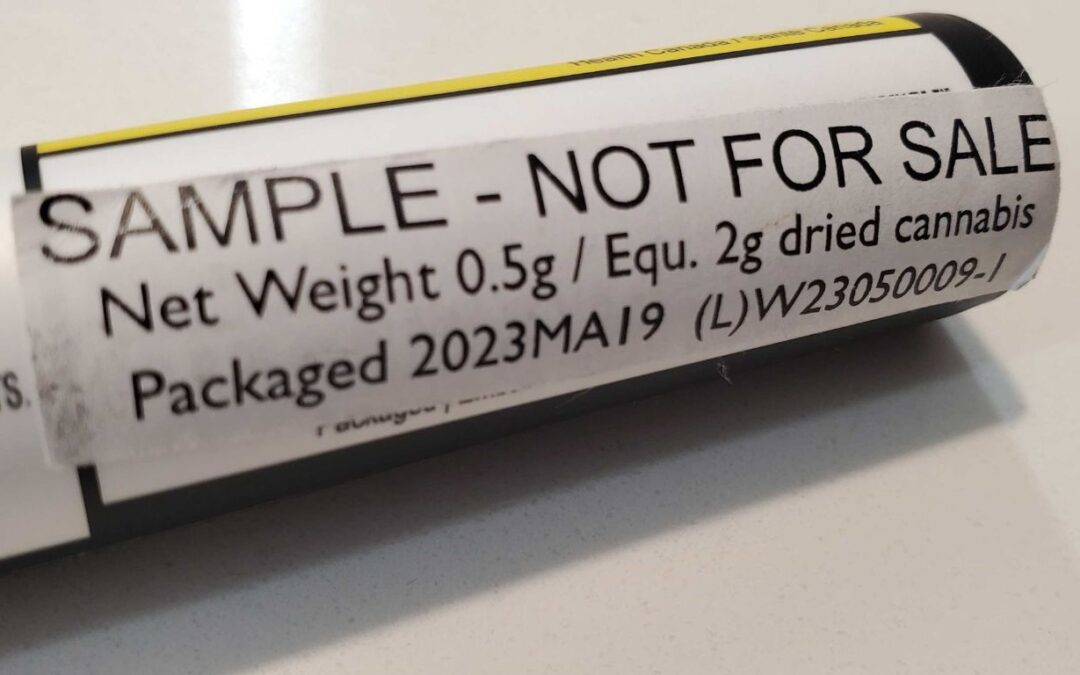
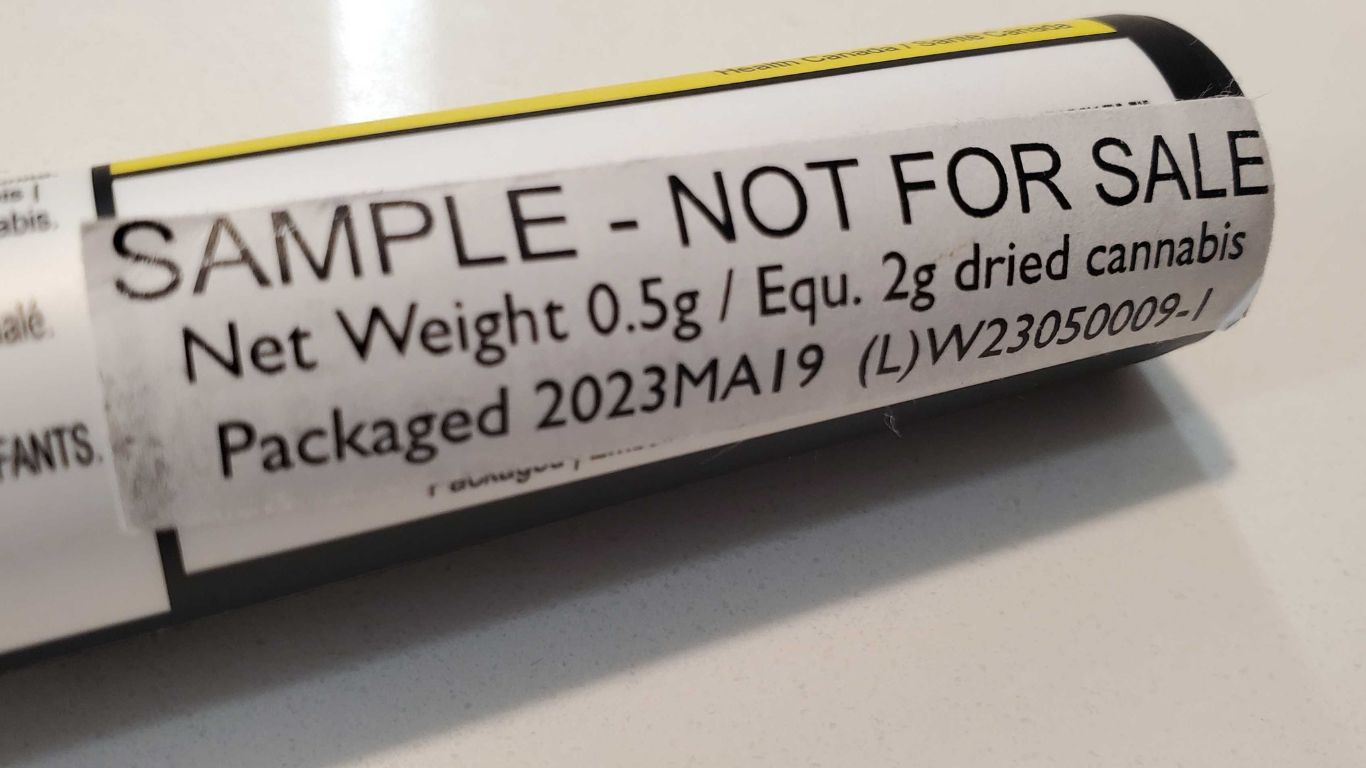
The BC Liquor and Cannabis Regulation Branch (LCRB) has updated its regulations to allow cannabis retail store licensees and their employees to accept samples from a federal licence holder.
These changes will apply to Cannabis Retail Stores (CRS) and Producer Retail Stores (PRS ie farmgate)
A sample can not be used for any type of inducement. The LCRB has no limit on the size of a cannabis sample, but notes that samples are expected to be “of reasonable size and quantity and should have little retail value”.
Although retailers are not allowed to supply cannabis samples to other cannabis licensees, the LCRB says they are exploring this possibility in the future, along with allowing all marketing licensees to accept and provide samples to other licensees.
The change is based on industry feedback. Earlier this year, BC confirmed they were engaging industry on the issue.
Randy Rowe, the owner of the Grow Up industry conference, taking place October 1-3 in Victoria BC, says he was one who worked closely with the BC government to push for these changes. Grow Up’s Victoria event has been structured to allow for samples, which will be carefully tracked.
“This is a game changer for brands in BC,” says Rowe. “Being able to get in front of retailers gives producers a stronger opportunity to educate retailers on their product. For cannabis events like ours, this gives us the opportunity to bring a large number of retailers and brands together to be able to provide samples.”

by Grow Up Conference | Sep 25, 2023 | Media Partners, Stratcann
Last spring, a Canadian laboratory conducted potency testing on 46 different cannabis flower products and found that the THC level of every sample was anywhere from 9% to 48% lower than what was indicated on the labels.
In the United States, meanwhile, a study revealed that ~70% of samples tested were more than 15% lower than the THC potency numbers reported on the label.
Reports like these fuel allegations about potency inflation. Are a few unscrupulous growers and labs using underhanded tactics to inflate potency and command a higher price for their products?
Or, might potency inflation be symptomatic of a deeper problem – namely, a lack of universal standards in an industry that is only 5 years old?
To add to the conversation, we’d like to suggest the latter. And, we’ve identified 4 areas where the industry needs to align to help combat potency inflation:
- Defining an acceptable potency range for products
- Defining a “representative sample”
- Establishing a standard potency testing method
- Agreeing on the definition of key terms
What is an acceptable potency range?
Let’s start by explaining how potency is measured and reported.
“First of all, ‘potency’ is a misleading term,” said Rana Tayyarah, Senior Director of Commercial Product Development at Labstat. “What a lab is really measuring is cannabinoids’ concentrations, and concentration is never a single number.”
Due to measurement uncertainty and the challenges of measuring the concentration of any compound, potency results are given from the lab as a range. For example, THCA might be reported on a Certificate of Analysis from different labs as…
- Lab A: 23% +/- 5%
- Lab B: 25% +/- 3%
So, which is correct? They may both be correct!
The actual THCA concentration of that particular sample might be 22%, which falls within the range given by both labs. If you’re the grower, you surely prefer the results from Lab B, and that’s what you want on your label. However, if another lab tests the same sample, they may report a lower potency number… and still be correct!
You can see how reporting potency as a single number rather than a range creates misunderstandings. Agreeing to report potency within, for example, a 6-point range, 8-point range, or something else entirely would add clarity, helping solve the perception of potency inflation and boosting industry credibility.
How do we define a “representative sample”?
Starting with a representative sample of a cannabis batch is another vital part of getting accurate potency results. However, it’s extremely difficult to generate a sample that represents the composition of an entire product batch.
To illustrate, imagine that you want to measure how many walnuts are in a pan of brownies. To take a sample, you cut a small piece from the middle of the pan.
You might think you have a good idea of how many walnuts are in the entire pan based on that sample, but here’s the problem: the walnuts don’t evenly distribute themselves throughout the pan. A piece near the corner may have fewer nuts than a piece in the middle. The only way to know the number of walnuts in the entire pan would be to count them all – and ruin the brownies in the process.
Measuring THC in an entire product batch is similar. Cannabinoid concentration can vary depending on several factors, such as the plant’s location in the grow room, light sources, how crowded the room is, and more. It can even vary within a single flower.
Currently, there are no regulations or industry standard procedures for taking a representative sample. This opens the door for all sorts of variability from one sampler to another, leading to differing potency results between labs, samples from a single batch, and even results from the same sample.
We need a standardized potency testing method
One of the biggest contributors to ambiguity in the cannabis potency discussion is the lack of standardized methods for cannabis potency testing.
Consumers are often surprised to learn that, while Health Canada requires a lab to validate its methods, it does not regulate which method to use, nor does the Agency recommend one method over another.
That said, there are three primary methods for potency testing:
- High-performance liquid chromatography (HPLC)
- Gas chromatography (GC)
- Liquid chromatography mass spectrometry (LC-MS)
“HPLC is the typical method that labs use, including Labstat, due to its sensitivity and precision,” said Tayyarah. “It can quantify the ‘Big 4’ cannabinoids that Health Canada requires – THC, CBD, THCA, CBDA – without heating the sample, which increases precision.”
However, not all labs use HPLC, and the lack of a regulatory standard introduces variability in cannabis testing, which produces different results and contributes to potency inflation.
Even using the same method, standardization should include ensuring regular checks and balances are put in place. Using certified reference products and participating in lab-to-lab studies are important to maintain a level of high-quality testing results.
We need to work from the same script
The industry’s lack of standardized language also contributes to the problem. “I attended an industry conference not long ago where one presenter started his presentation just by defining some of the terms he would be using,” said Tayyarah. “We need to get to a point where we all understand and accept common terms to remove ambiguity.”
Take, for example, the term “dab”. It can mean many things depending on context, but in the cannabis industry, it refers to the method used to consume marijuana-based oil and extract concentrates. Interpreting the term without this context can lead to miscommunication, making it crucial for the industry’s growth that we all agree on definitions of key terms.
Four signposts on a roadmap for success
Canada has a great opportunity to lead the global cannabis industry, but potency inflation continues to erode credibility. To solve the problem, LPs, regulators, scientists, and consumers must work together. A great starting point is to…
- Establish an industry standard potency range when reporting test results to replace the single number printed on labels.
- Introduce a regulatory standard for potency testing to help reduce variability and increase accuracy.
- Define a procedure for taking a “representative sample” for testing.
- Define industry terminology to help reduce miscommunication and promote uniformity throughout the industry.
Change often takes time, but we must move forward with these solutions to solidify the legal cannabis industry and promote safety and quality.
Content sponsored by: Labstat
by Grow Up Conference | Sep 25, 2023 | Cannabis Prospect Magazine, Media Partners
by Grow Up Conference | Sep 25, 2023 | Cannabis Prospect Magazine, Media Partners





Recent Comments