
Truth and Reconciliation Scholarship Application

Sorry. This form is no longer available.

Sorry. This form is no longer available.


Research funded by the National Institutes of Health has revealed historic high levels of cannabis, hallucinogens and alcohol use among adults aged 35 to 50 years old. The NIH-funded study stated that the use of hallucinogens and marijuana by middle-aged adults, which has been on an upward trajectory for several years, peaked in 2022.
Furthermore, younger adults who also took part in the annual Monitoring the Future (MTF) panel study reported record high levels of hallucinogen, cannabis, and vape use. The report showed a significant increase in past-year hallucinogen and cannabis use as well as nicotine vaping in the past five years among adults aged 19 to 30 years old. This age group recorded its highest-ever level of cannabis use and vaping in 2022, the MTF study found.
The study was conducted by researchers from the Institute for Social Research at the University of Michigan and funded by the National Institute on Drug Abuse (NIDA).
Cannabis reform has swept across America in the past two decades and left dozens of state medical and recreational cannabis programs in its wake. Tens of millions of Americans now have access to cannabis, and as lawmakers in several states work on legalizing psychedelics, access to hallucinogenics is steadily increasing.
The report indicated that many adults are turning to cannabis for its therapeutic properties while others have made the plant their social drug in place of alcohol and tobacco. Younger adults continued the trend of moving away from alcohol and exhibited reduced rates of binge drinking over the past decade. On the other hand, middle-aged adults aged 35 to 50 reported the highest binge drinking rates amid major past-year, five-year and 10-year increases in the prevalence of binge drinking.
Specifically, the report noted that 28% of middle-aged adults used cannabis in the past 12 months up from 25% in 2021, an all-time high and more than double the 13% who reported past-year cannabis use in 2012. Past-year psychedelic use in middle-aged adults was also at a record high at 4%, double the 2% in 2021, and substantially more than less than 1% in 2012 and 2017.
Middle-aged adults also reported record high rates of alcohol use. Past-year drinking was up to 85% in 2022 from 83% in 2012 and binge drinking increased to record levels at 29% in 2022 from 26% in 2021, 25% in 2017, and 24% in 2012.
NIDA director Nora Volkow noted that older adults take part in substance use just as much as teens and younger adults. The data collected in this year’s MTF panel study will help the agency better understand drug use trends across people’s lives, the director said, a crucial first step to understanding how substance use and its effects on health evolve over time. Volkow added that the agency wanted to equip younger to older adults with up-to-date information to help them make better-informed substance use-related decisions.
Psychedelics and marijuana are used by some people for medicinal reasons, and companies are looking to standardize therapeutic formulations from cannabis so that these medically oriented users of marijuana can safely address their symptoms while reducing the risks they face from the use of these substances.
About CNW420
CNW420 spotlights the latest developments in the rapidly evolving cannabis industry through the release of two informative articles each business day. Our concise, informative content serves as a gateway for investors interested in the legalized cannabis sector and provides updates on how regulatory developments may impact financial markets. Articles are released each business day at 4:20 a.m. and 4:20 p.m. Eastern – our tribute to the time synonymous with cannabis culture. If marijuana and the burgeoning industry surrounding it are on your radar, CNW420 is for you! Check back daily to stay up-to-date on the latest milestones in the fast -changing world of cannabis.
To receive instant SMS alerts, text CANNABIS to 21000 (U.S. Mobile Phones Only)
For more information please visit https://www.CNW420.com
Please see full terms of use and disclaimers on the CannabisNewsWire website applicable to all content provided by CNW420, wherever published or re-published: http://CNW.fm/Disclaimer
Do you have questions or are you interested in working with CNW420? Ask our Editor
CannabisNewsWire420
Denver, Colorado
http://www.CNW420.com
303.498.7722 Office
Editor@CannabisNewsWire.com
CNW420 is part of the InvestorBrandNetwork.
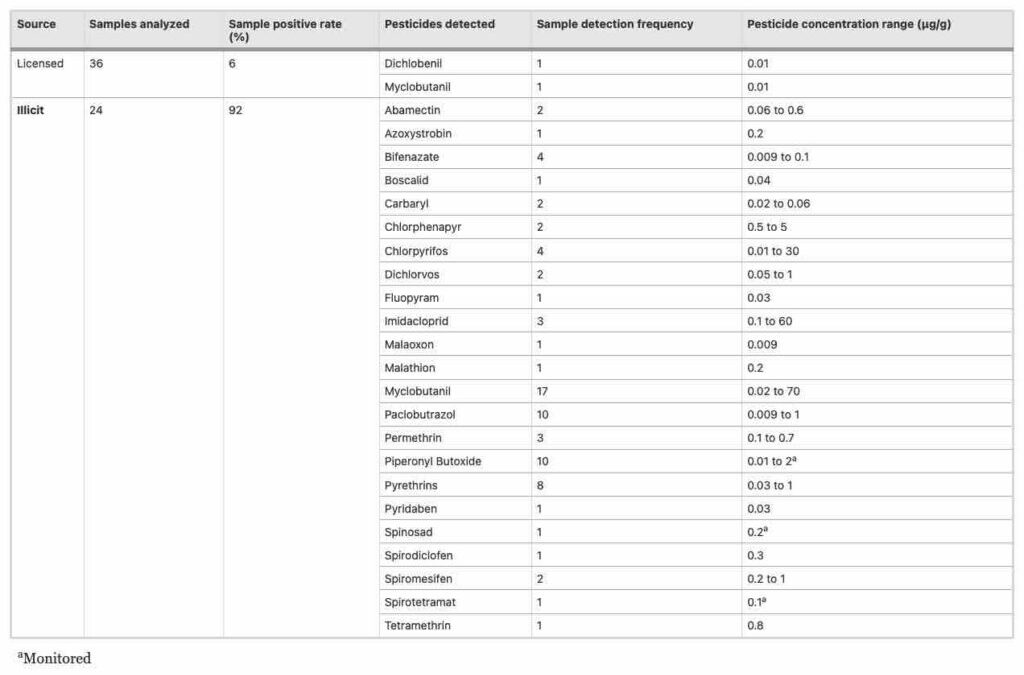
Illicit cannabis in Canada is far more likely to contain high levels of pesticides compared to its legal counterparts, found a newly released study.
Researchers at Health Canada’s pesticide lab with the Regulatory Operations and Enforcement Branch conducted a study that took samples of dried cannabis flower from the legal and illegal markets, analyzing them for pesticide residue.
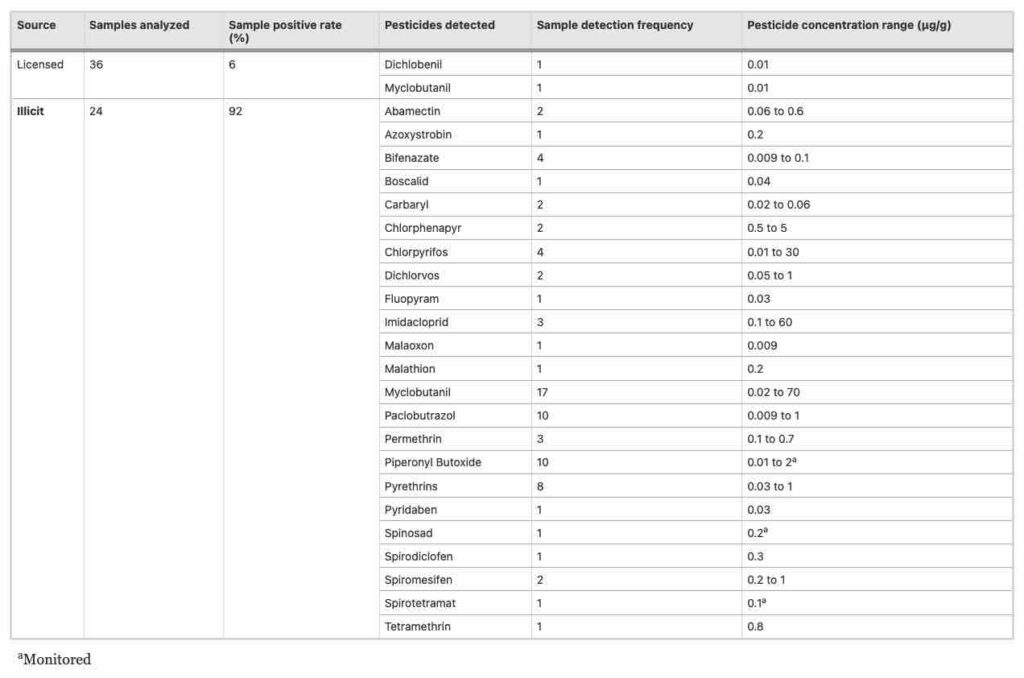
The results found only a six percent positivity rate for very low levels of two unauthorized pesticides, myclobutanil and dichlobenil (a fungicide and herbicide, respectively) out of 36 samples, compared to a 30 percent positivity rate prior to 2019.
Over 18 percent of licensed cannabis products containing unregistered pesticides prior to the 2019 mandatory cannabis, with a sample positivity rate of 30 percent, testing of 96 pesticide active ingredients, with myclobutanil, bifenazate, boscalid, and fludioxonil pesticides most commonly present
Researchers also tested 24 samples of illicit cannabis which had a 92 percent positivity rate for pesticides with 23 unique pesticide active ingredients found at a high sample frequency rate 8 to 17 times.
The illicit cannabis contained, on average 3.7 different pesticides per sample, and 87 percent of positive samples contained more than one pesticide. One sample of illicit cannabis contained nine different pesticide active ingredients.
The pesticide concentrations quantified varied greatly, with chlorpyrifos, imidacloprid, and myclobutanil measured at 30, 60, and 70 μg/g, over three orders of magnitude higher that the the method’s lowest calibrated level (LCL) of 0.01 μg/g. The two pesticides found on legal cannabis were only found at the lowest possible detection limit of 0.01 μg/g.
While the results show high levels of pesticides on illicit cannabis products, the goal of the study was to better understand the presence of unauthorized pesticides on legal cannabis products, and to streamline and expand the existing cannabis inflorescence method. This was following Health Canada implementing mandatory cannabis testing for pesticides in 2019. This was implemented after some licensed producers were found to be using products like myclobutanil and pyrethrins beginning in 2016.

While these pesticides were not authorized for use on cannabis in Canada, Health Canada had not required testing for these products until 2019.
Health Canada also maintains a list of authorized pesticides for use on cannabis. There are currently 57 authorized pest control products for use on cannabis in Canada. All products designed to manage, destroy, attract or repel pests that are used, sold or imported into Canada are regulated by the Pest Management Regulatory Agency (PMRA), the branch of Health Canada responsible for administering the PCPA on behalf of the Minister of Health.
To better understand how widespread pesticide use currently is in cannabis production, researchers at Health Canada validated a single method using a combination of gas chromatography—triple quadrupole mass spectrometry (GC–MS/MS) and liquid chromatography—triple quadrupole mass spectrometry (LC–MS/MS) for the simultaneous quantification of 327 pesticide active ingredients in cannabis inflorescence.
This approach, says the research paper, goes beyond the 96 pesticide active ingredients mandatory testing.
The 36 samples of licensed cannabis product were purchased in 2021 from the Ontario Cannabis Store (OCS) from licence holders located in all five Canadian regions (British Columbia, Prairies, Ontario, Quebec, and Atlantic).
The 24 samples of illicit cannabis were acquired from seizures by law enforcement officers across the country and submitted to Health Canada for laboratory testing in 2021.
BC, Ontario, and New Brunswick have also released reports in the last few years showing contaminant testing on dried cannabis and cannabis vapes seized from illicit retailers.
A recent Canadian survey has revealed that an increasing number of people are taking psychedelics for therapeutic purposes but aren’t discussing their psychedelic use with their doctors. The poll discovered that Canadians are specifically using hallucinogens to address mental health challenges but aren’t informing their physicians about the psychedelic use.
Published in the “Journal of Psychoactive Drugs,” the survey found that the use of naturalistic psychedelics in Canada is common. However, there is little data about whether patients report their interactions with psychedelics to their clinicians. Psychedelics are the most recent beneficiaries of the multinational wave of drug reform that has seen several territories legalize drugs or recontextualize how they look at specific drugs and address their use in society.
More permissive psychedelic policies have led to an influx of psychedelic-related research in several countries and uncovered psychedelics’ potential as alternative mental health treatments. Mental disorders such as anxiety, depression, eating disorders and post-traumatic stress disorder (PTSD) that don’t always respond to conventional treatments seem to be quite responsive to psychedelic-assisted therapy in initial studies. Furthermore, consecutive studies have found that psychedelics can deliver relatively long-term benefits with just one or a couple of doses and without causing any adverse side effects.
Even though most psychedelic research is in its preliminary stages, the public has grown increasingly accepting of psychedelics and their potential mental health benefits, especially since traditional mental health treatments such as antidepressants aren’t always effective and come with a myriad of side effects.
According to Canadian researchers, a little over 80% of the survey participants said they never discussed their use of psychedelics with their doctors even though around 33.7% used hallucinogens to self-treat medical conditions. Only 4.4% of the 2,300 survey participants reported using psychedelics in the presence of a therapist while just 4.4% used hallucinogens in a clinical setting. The survey found that more than 60% of participants weren’t even aware of available substance-testing options and that 42.4% of the 44.8% who were aware of testing services never used them.
Based on the data, researchers theorized that Canadians often use psychedelics for therapeutic goals, but there is little connection between substance testing, traditional healthcare and therapeutic psychedelic use. They called for proper education on training for physicians to equip them with the skills needed to deal with therapeutic psychedelic use among their patients as well as more visible substance-testing options.
These psychedelics usage patterns make it even more urgent for startups such as Seelos Therapeutics Inc. (NASDAQ: SEEL) to speed up their clinical-development programs so that the public can access psychedelic formulations that have been tested and found to not only be efficacious but also safe for patient use.
About PsychedelicNewsWire
PsychedelicNewsWire (PNW) is a specialized content distribution company that (1) aggregates and distributes news and information on the latest developments in all aspects and advances of psychedelics and their use, (2) creates PsychedelicNewsBreaks designed to quickly update investors on important industry news, (3) leverages a team of expert editors to enhance press releases for maximum impact, (4) assists companies with the management and optimization of social media across a range of platforms, and (5) delivers unparalleled corporate communication solutions. PNW stays abreast of the latest information and has established a reputation as the go to source for coverage of psychedelics, therapeutics and emerging market opportunities. Our team of seasoned journalists has a proven track record of helping both public and private companies gain traction with a wide audience of investors, consumers, media outlets and the general public by leveraging our expansive dissemination network of more than 5,000 key syndication outlets. PNW is committed to delivering improved visibility and brand recognition to companies operating in the emerging markets of psychedelics.
To receive instant SMS alerts, text “Groovy” to 844-397-5787 (U.S. Mobile Phones Only)
For more information please visit https://www.psychedelicnewswire.com
Please see full terms of use and disclaimers on the PsychedelicNewsWire website applicable to all content provided by PNW, wherever published or re-published: https://www.psychedelicnewswire.com/Disclaimer
Do you have questions or are you interested in working with PNW? Ask our Editor
PsychedelicNewsWire (PNW)
San Francisco, California
www.psychedelicnewswire.com
415.949.5050 Office
Editor@PsychedelicWire.com
PsychedelicNewsWire is part of the InvestorBrandNetwork.
(CNW) Long Beach, Calif. and Toronto — Glass House Brands Inc., one of the fastest-growing, vertically-integrated cannabis companies in the U.S., today announces the closing of the first tranche of its non-brokered private placement of shares of Series D Preferred Stock, with a face value of $1,000 per share of GH Group, Inc., a subsidiary of the company. The company raised $10.9 million of new capital in connection with the first tranche and expects to raise an additional $4.1 million in one or more subsequent closings of tranches under the offering.
Kyle Kazan, Glass House co-founder, chairman and CEO stated: “We are very pleased with the strong investor interest in our Series D preferred equity offering. The deal is capped at $15 million and we have commitments for the entire amount. The capital from the Series D Preferred Stock has allowed us to begin the retrofit of Greenhouse 5 at the SoCal Farm, and we expect to have plants in the greenhouse during Q1 2024 and our first sale from Greenhouse 5 by Q2 2024. This additional scale is expected to lower our COGS in both Greenhouse 5 and 6.”
Kazan further related, “With very conservative underwriting, the return on this new invested capital should far exceed its cost, both in terms of dividend expense and dilution. And since we used internal resources to complete the raise, we were able to conserve funds which would have otherwise been paid to external brokers, thereby maximizing the capital for use within the company.”
Holders of the Series D Preferred Stock will be entitled to an annual cash dividend at a rate of 15 per cent for the first five years after the date of initial issuance of Series D Preferred Stock, and 20 per cent annually thereafter.
Advertisement
The issuance of each share of Series D Preferred Stock with a face value of $1,000 per share was accompanied by the delivery of 200 warrants of the company. Each warrant entitles the holder to purchase one new equity share in the capital of the company for a period of five years from the initial issuance at a price of $6.00 per warrant share, subject to customary anti-dilution adjustments. The company has the option to accelerate the expiration of any unexercised warrants if the underlying equity shares of the company trade at a price of at least $12.00 per share for a period of 10 trading days out of a period of any 15 consecutive trading days, subject to customary anti-dilution provisions.
The warrants and the warrant shares issuable upon exercise of the warrants are subject to a four-month statutory hold period from the date of issuance of the warrants under applicable Canadian securities laws.
As part of the offering, certain directors and officers of the company and holders of securities carrying more than 10 per cent of the company’s voting rights subscribed for an aggregate of 3,140 shares of Series D Preferred Stock and will receive 628,000 warrants therewith. Each subscription by a director, officer or 10 per cent shareholder of the company is considered to be a “related party transaction” for purposes of multilateral instrument 61-101 – Protection of Minority Security Holders in Special Transactions (MI 61-101).
The company did not announce the transaction more than 21 days before the expected closing date of the first tranche as the details of the first tranche and the participation therein by related parties was not settled until shortly prior to the closing of the first tranche, and the company wished to close the first tranche on an expedited basis for sound business reasons.
The company is relying on exemptions from the formal valuation and minority shareholder approval requirements available under MI 61-101. The company is exempt from the formal valuation requirement in section 5.4 of MI 61-101 and the minority shareholder approval requirement in section 5.6 of MI 61-101 in reliance on section 5.5(a) and section 5.7(1)(a), respectively, of MI 61-101, as the fair market value of the transaction, insofar as it involves related parties, is not more than the 25 per cent of the company’s market capitalization.
The company intends to use the net proceeds from the offering of approximately $15 million to retrofit Greenhouse 5 for cannabis cultivation and to expand the nursery in Greenhouse 1, as well as for working capital and general corporate purposes.
All dollar amounts in this news release refer to U.S. dollars.

The German government approved a preliminary statute, marking a significant step toward legalizing recreational cannabis. Under the upcoming legislation, adults would be permitted to own a maximum of 25 grams (approximately 0.9 ounces) of marijuana and cultivate up to three plants for personal use. Moreover, they could participate in not-for-profit “marijuana clubs,” comprising up to 500 members, where the legal growth and purchase of the substance would be permissible.
The bill’s journey to becoming law is not yet complete. The legislation must be approved by German parliamentarians who are slated to reconvene on Sept. 4, 2023, after their summer recess.
Karl Lauterbach, the country’s health minister, hailed the draft legislation as a pivotal moment in Germany’s stance on marijuana. According to him, the more lenient approach holds the potential to combat the illicit market and drug-linked offenses. Moreover, it could alleviate the pressure on law-enforcement agencies and encourage safer cannabis consumption.
While this shift appears to endorse a more permissive attitude, minors would still be barred from cannabis use, with a planned government campaign alerting young people to the associated health hazards.
The new legislation, a centerpiece of Chancellor Olaf Scholz’s coalition, marks a departure from one of Europe’s most liberal marijuana policies. Nevertheless, the current draft has undergone modifications from its original, more ambitious, form. Notably, plans to permit the widespread commercial sale of cannabis through licensed outlets were jettisoned in April due to reservations raised by the European Commission.
Despite these changes, the draft law has faced formidable opposition from conservative politicians, medical professionals and law-enforcement representatives. A notable detractor is Klaus Holetschek, Bavaria’s regional health minister from the CDU party, who has branded the proposals as reckless. He argues that past examples from other nations reveal that liberalization does little to suppress the illegal market.
The German Professional Association of Pediatricians, in conjunction with other youth healthcare groups, has also criticized the plans for potentially encouraging cannabis use among young individuals. In addition, the law-enforcement community, including judges and police unions, has voiced concerns, characterizing the legislation as overly bureaucratic. They fear that the law could exacerbate the situation rather than alleviate burdens on the judicial system.
However, Lauterbach welcomes the controversial discourse initiated by the proposals, although he contends that critics fail to offer viable alternatives. Lauterbach staunchly advocates for a decriminalization approach, coupled with stringent restrictions and comprehensive education on the perils of cannabis consumption. To further regulate the use of cannabis, the legislation designates a 200-meter exclusion zone around cannabis clubs, sports facilities, playgrounds, youth organizations and schools.
If the bill garners approval, the government plans to assess its societal impact after a span of four years.
This initiative aligns with a global trend, as multiple countries have taken steps to relax regulations surrounding cannabis use. In 2013, Uruguay led the charge by legalizing the cultivation, sale and consumption of cannabis, setting a precedent for the world. In the United States, numerous states, including California, have progressively revised their laws over the last decade to accommodate recreational marijuana use.
Malta achieved a landmark feat in 2021 as the first European Union member to legalize recreational marijuana. Meanwhile, the Netherlands has long tolerated the sale and consumption of marijuana in designated “coffee shops” since the 1970s.
Drawing inspiration from these international examples, Lauterbach expresses confidence that the current form of the German plan constitutes the most comprehensive endeavor in marijuana legislation to date.
When this marijuana market finally opens, many companies that operate along the lines of U.S-based Advanced Container Technologies Inc. (OTC: ACTX) are likely to mushroom and strive as they serve those interested in growing their own marijuana at home.
NOTE TO INVESTORS: The latest news and updates relating to Advanced Container Technologies Inc. (OTC: ACTX) are available in the company’s newsroom at https://cnw.fm/ACTX
About CNW420
CNW420 spotlights the latest developments in the rapidly evolving cannabis industry through the release of two informative articles each business day. Our concise, informative content serves as a gateway for investors interested in the legalized cannabis sector and provides updates on how regulatory developments may impact financial markets. Articles are released each business day at 4:20 a.m. and 4:20 p.m. Eastern – our tribute to the time synonymous with cannabis culture. If marijuana and the burgeoning industry surrounding it are on your radar, CNW420 is for you! Check back daily to stay up-to-date on the latest milestones in the fast -changing world of cannabis.
To receive instant SMS alerts, text CANNABIS to 21000 (U.S. Mobile Phones Only)
For more information please visit https://www.CNW420.com
Please see full terms of use and disclaimers on the CannabisNewsWire website applicable to all content provided by CNW420, wherever published or re-published: http://CNW.fm/Disclaimer
Do you have questions or are you interested in working with CNW420? Ask our Editor
CannabisNewsWire420
Denver, Colorado
http://www.CNW420.com
303.498.7722 Office
Editor@CannabisNewsWire.com
CNW420 is part of the InvestorBrandNetwork.


STORY AT-A-GLANCE
The preemptive extraction of wisdom teeth before they become problematic has been a routine practice for decades. Surgical tooth removal began after the introduction of the local anesthetic Novocaine in 1902.
Before that, these third molars were rarely, if ever, removed as a preventive measure due to the pain involved.1 The removal of wisdom teeth started becoming more common after the 1950s with the advent of antibiotics to treat related infections.2
Oral health experts typically recommend extracting wisdom teeth if they’re growing in at an odd angle, causing pain, are affected by tooth decay, or if they’re impacting other teeth or causing inflammation.
Many parents, however, opt to have their teenagers’ wisdom teeth removed even when there’s no sign of trouble. Estimates suggest 5 million people have their wisdom teeth removed each year, and more than half may be completely unnecessary.3
According to a 2005 Cochrane Review,4 “Prudent decision-making, with adherence to specified indicators for removal, may reduce the number of surgical procedures by 60% or more.” The authors also note that “watchful monitoring of asymptomatic wisdom teeth may be an appropriate strategy.”
Controversy Continues: To Pull or Not to Pull?
That said, the controversy over what to do with asymptomatic wisdom teeth continues. The most recent Cochrane Review5 published in 2020 concluded that “The available evidence is insufficient to tell us whether or not asymptomatic disease-free impacted wisdom teeth should be removed.” As reported by The Washington Post:6
“Those who favor early extraction say it is generally easier, safer and results in quicker recovery when patients are young, between 15 and 25, although, as with all surgery … there can be risks. When patients are young, the roots of the teeth are small and simpler to remove, they say …
Opponents — including the American Public Health Association — regard such prophylactic extractions as unnecessary surgery. At least one paper7 says there are no scientifically proven health benefits to removing wisdom teeth that don’t cause problems.
A National Institutes of Health consensus conference urged against the practice as far back as 1980,8 and several recent studies9,10 suggest there is no compelling reason to do so …
The ADA agreed in a 2014 paper11 that asymptomatic wisdom teeth weren’t necessarily disease- or problem-free, but added there was insufficient evidence to conclude that prophylactic removal was better than continued monitoring.”
Wisdom Tooth Extraction Is a Money-Maker
Absent clear evidence of benefit, why are so many oral surgeons recommending this procedure? In a word: Money. A significant portion of oral surgeons’ paychecks come from the removal of wisdom teeth, so they have a financial incentive to maintain this new status quo.
It’s important to realize that this procedure is not risk-free, even if you’re young. Risks associated with the surgery include poor wound healing, infection, dry socket, pain, uncontrolled bleeding and nerve injury resulting in numbness around the mouth and face.
The prudent approach, I think, would be to have the state of your wisdom teeth evaluated on a regular basis, and if one or more is found to be damaged or causing a problem, to have the problematic wisdom teeth removed. If they’re not causing a problem, you may be better off leaving well enough alone.
Avoid Post-Surgical Opioids
If your teen does need to have one or more wisdom teeth pulled, please do not allow them to take opioids for pain relief. Opioid overdoses are now the leading cause of death for Americans under the age of 50,12 and wisdom tooth extraction is one of the most common reasons for receiving an opioid prescription in the first place.
Dentists wrote a staggering 18.1 million prescriptions for opioids in 2017,13 and dentists and oral surgeons are by far the major prescribers of opioids to children and teens.14
According to a JAMA report15 published August 2018, opioids are “routinely” prescribed for wisdom tooth extractions, and a 2004 survey found 85% of oral surgeons prescribed opioids after the removal of wisdom teeth.16
This is extremely risky, as even short-term use is associated with future opioid misuse and addiction among teens and young adults. In fact, children who receive an opioid have a 1 in 3 chance of “lifetime illicit use.”
Research17 has shown that of the people who received a mere 12-day supply of an opioid, 1 in 4 were still taking the drug one year later, and that includes all age groups. Children and teens are at higher risk for continued use once they’re exposed.18
In a 2018 article19 in The Philadelphia Inquirer, Dr. Rima Himelstein, an adolescent medicine specialist, urged parents whose children are undergoing oral surgery to:
“Be the gatekeeper for medications, including those prescribed after wisdom teeth extraction. Don’t just hand your teen the bottle of pills after surgery. And be sure to properly dispose of leftover prescription drugs …”
Wisdom tooth extraction can indeed leave you sore and in pain for a few days, but there are far safer ways to address that discomfort. Research20,21 has shown a combination of ibuprofen and acetaminophen actually works better than opioids for the treatment of pain following wisdom tooth extractions. So, skip the opioid prescription, and just use over-the-counter pain killers as needed instead.
Root Canals — Another Overused and Risky Dental Procedure
Root canals, also known as a pulpotomy, is another risky dental procedure that is largely driven by profit motives. Root canal-treated teeth often end up harboring harmful microbes, the toxic metabolic waste products of which can have systemic health impacts and contribute to a variety of chronic diseases, from chronic fatigue and chronic pain syndromes to heart disease and cancer.
In fact, most biological and holistic dentists agree that many chronic health problems can be traced back to these hidden dental infections. The key problem when you have a root canal performed is that the tooth has died but remains in the body. It’s well-known you cannot leave a dead organ in your body, or it will cause severe infection.
Even if the root of the tooth is thoroughly cleaned out, it’s physically impossible to get all the pathogens out of the microtubules, and the waste material from these bacteria is extremely toxic. As with wisdom tooth extraction, a primary driver of the root canal industry is the cash incentive.
All Root Canaled Teeth Are a Source of Infection
According to experts on this topic, all root canals are a source of infection. It’s only a matter of degree. The reason why not everyone with a root canal suffers in noticeable ways has to do with the fact that the response to toxins varies from person to person.
Some are constitutionally “hardier” than others to begin with. Your overall toxic load from other environmental exposures also comes into play. The bacteria produced are known to affect cardiovascular health. Cancer may also be triggered by infected teeth.
According to Dr. Dawn Ewing, a naturopathic practitioner and executive director of the International Academy of Biological Dentistry and Medicine, 98% of the breast cancer patients have a root canaled tooth on the same side as their affected breast.22
Similarly, Dr. Jerry Tennant once claimed 96% of the last 60 cancer patients seen in his practice were found to have an infected tooth. Ewing and Tennant were both featured in the Netflix documentary “Root Cause,” in which these statements were made.
The pulp of your tooth is also closely interconnected with your lymph system and autonomic system — more so than any other organ. Your teeth are also energetically connected to and will affect your meridians, used in Traditional Chinese Medicine.
Carefully Consider and Weigh Your Options
Now, should you happen to have one or more root canaled teeth, this does not mean you have to rush to extract them. It does mean, however, that it would be wise to remember this fact should you start to experience a chronic health problem, and to take it into consideration when deciding on a treatment plan for a chronic health issue.
Also, if your dentist is recommending you get a root canal, evaluate the data and your personal situation, such as your health risks, before making your decision. I would also suggest trying ozone therapy before getting a root canal or tooth extraction done.
Ozone therapy is typically administered through a syringe, right into or around the base of the tooth. Multiple visits are usually needed to address the infection.
Ozone is directly toxic to infectious material, and it also stimulates your immune system. I was able to prevent a root canal by using ozone therapy. It took about five treatments. It’s safe, nontoxic, and relatively inexpensive, so it may be worth considering before taking more drastic measures.
That said, if the pulp tissue has completely died due to infection, nothing, including ozone, will bring the tooth back to life, at which point a root canal or extraction are your only options.
Removing a Root-Canaled Tooth Must Be Done Properly
If you decide to have a root-canaled tooth removed, you need to make sure your dentist understands the implications and is familiar with holistic dental procedures. The following resources can help you locate a biological (holistic) dentist in your area:
Extracting the tooth is just the first step. Next, the area must be drained and cleaned of bacteria. Ozone gas is by many holistic dentists considered indispensable during this step, as the gas is able to permeate the bone and gum tissue, killing the infection.
The periodontal ligament also needs to be removed in order to allow for the jawbone to properly regrow and completely seal the hole where the tooth was.
If the extraction site is not meticulously cleaned and disinfected (and this goes for any tooth extraction, not just root canaled teeth), a cavitation — a pocket in the jawbone filled with bacteria — may form. Failure to remove the periodontal ligament also contributes to cavitations by preventing the bone from properly regrowing.
After the root canaled tooth has been extracted, you’ll want to allow your jawbone to heal completely. In most cases, this will take at least three months. Once your dentist has confirmed that there’s no cavitation, you can proceed with dental replacement.
Dental Replacement Options
There are several options for how to replace the missing tooth at this point, including the following:
| Not replacing the tooth. |
| Inserting a removable bridge. |
| Inserting a traditional bridge, which requires creating crowns for the teeth on each side of the missing tooth. A significant drawback to this is that you’re sacrificing two (in many cases) healthy teeth, and increasing the risk of those teeth needing a root canal later on. What’s more, the average bridge lasts only eight years, with a range of five to 15 years. |
| Using a resin-bonded bridge, also known as a Maryland bridge, which holds the pontic (false tooth) in place by bonding a frame to the backside of the adjoining teeth.
This is the preferred option by many holistic dentists as it does not involve damaging the adjacent teeth. A drawback is that the bridge is only as strong as the adhesive, so it may detach and need to be rebonded from time to time. It’s also not suitable for missing molars due to the forces placed on the bridge during chewing. |
| Putting in an implant-supported bridge, which can be a good option in cases where two or more adjacent teeth are missing. |
| A ceramic implant — Traditional implants have used titanium, but today there are also zirconia (a type of ceramic) implants. Titanium can in some cases trigger autoimmune problems. There is a blood test23 to help determine this sensitivity.
Being a metal, titanium can also contribute to galvanic currents in your mouth, and will distort the energy flow in the meridian flowing through that tooth. While most people do not notice galvanic currents, others experience unexplained nerve shocks, ulcerations, a salty or metallic taste or a burning sensation in their mouth. Galvanic currents may also contribute to insomnia, brain fog, ear-ringing, epilepsy and dizziness. What’s more, if you drink fluoridated water or use fluoridated toothpaste, it is important to know that fluoride severely accelerates the corrosion of titanium. Low pH in your mouth due to acidity or dry mouth further accelerates this effect.24 Your best option for an implant is to use a zirconia implant. Zirconia is considered far more biocompatible and is typically recommended by holistic dentists. |
Help Bring Mercury-Free Dentistry to the US and Worldwide
Consumers for Dental Choice takes the holistic approach to advocacy. You wouldn’t go to a traditional dentist who uses mercury amalgam fillings. So, why would you go to a traditional activist to fight for mercury-free dentistry?
That’s why so many people, including me, support Consumers for Dental Choice’s holistic approach to advocacy. I so believe in this cause that I put $150,000 on the table in matching funds. I will donate $1 for every dollar you and other supporters donate, up to $150,000, with a deadline of midnight August 19, 2023.
Nowhere is the progress more evident than the work of Consumers for Dental Choice and its Campaign for Mercury-Free Dentistry. So, be part of the change and help bring mercury-free dentistry to the U.S. and worldwide by donating your funds where you know they will get results.



Elevate Cannabis Industry Expo is the first cannabis conference brought to you by Canadian retailers, delivering four full days of immersive training and education, a trade show floor, and plenty of networking mixers to build and strengthen the community.
The event takes place September 12-15 at the Mirage Banquet Hotel in Toronto.
Acknowledging the challenges that retailers, budtenders, and licensed producers are currently navigating, “the intent of this event is to bring transparency and collaboration to the forefront of our industry,” says Jazz Samra, Owner and Founder of VIP Media Group and Sativa Bliss Cannabis Boutique.
“We are providing a safe space to be vulnerable, ask questions and gain insight into some best practices from successful members of our industry, while surrounded by like-minded people – this is an invaluable opportunity to connect, elevate and grow, together.”
Samra says he decided to launch his own industry conference after feeling like other events weren’t quite meeting the industry’s needs from his perspective as a retailer.
“Some of the events I’ve attended have been so disappointing. They are totally disconnected from the needs of the industry. Conferences like this are the best way to bring the industry together and create opportunities. We need more education; we need more training. So I wanted to make a conference that is heavily focussed on education, with three days for education and training, and one day for the trade show.”

The conference’s theme is “We rise by lifting others,” and Samra says his mission is to empower retailers, budtenders, and LPs to elevate their businesses and thrive in the current and future climate. The event is designed to foster a collaborative environment, focusing on education, training, and inclusion to build a robust, cohesive, thriving industry here in Canada.
“We called it Elevate because we want to elevate the industry and create our own ecosystem where we’re supporting each other and keeping our money within the industry,” Samra adds. We’re from this industry and contributing to this industry, and this is how we all succeed, by elevating others.”
With a variety of registration options to choose from, the Elevate Expo includes:
For more information and registration, please visit elevatecannabisexpo.com.
Recent Comments