Marijuana producers Columbia Care Inc. and Cresco Labs have announced the termination of a $2 billion merger between the two companies. First announced in March 2022, the merger would have seen Cresco Labs buy Columbia Care for $2 billion in an historic deal that would have resulted in the largest marijuana producer in the country. Executives from Cresco noted at the time that the resulting company had the potential to be as large as Johnnie Walker or Coca-Cola and dominate the increasingly lucrative cannabis industry.
The merger was a major bet on the growth and future of the cannabis industry. However, it appears that executives from both companies don’t see the merit of making any big bets in the sector. Cresco Labs CEO Charles Bachtell said that due to recent developments in America’s state-legal marijuana industry, company leaders terminated the merger to protect the company’s and shareholders’ long-term interests.
Cannabis may be generating billions of dollars in revenue per year, but players in the sector regularly deal with a myriad of issues that threaten their profitability and make it incredibly hard to operate in the cannabis market. For instance, due to federal prohibition, the sector has barely any access to financial institutions and cannot rely on banks to facilitate contactless payments. This has led to many cannabis operators relying on a cash-only basis and increased the risk of violent robberies in retail cannabis establishments.
Limited efforts by lawmakers to pass cannabis banking legislation coupled with a recent announcement from MasterCard banning the use of its cards for cannabis-based transactions means that cannabis operators won’t be facing a reprieve from their banking-related issues any time soon.
Investing in a major merger at a time when the industry has limited access to a critical resource such as banking and is still waiting for congressional reform (which could take years), doesn’t seem like a good idea in the near-term.
Cresco Labs and Columbia Care have also discontinued a deal with entertainment mogul Sean Combs to invest an estimated $185 million in the acquisition of divested operations in Illinois, Massachusetts and New York. The two companies said that they will face no termination-related fees or penalties as the decision to terminate the merger was mutual.
According to Bachtell, the industry is currently going through a “tough economic time” and Cresco would be better served focusing on its core business. These tough economic conditions could also be impacting the operations of numerous ancillary entities, such as Advanced Container Technologies Inc. (OTC: ACTX), which do significant business with marijuana operators.
NOTE TO INVESTORS: The latest news and updates relating to Advanced Container Technologies Inc. (OTC: ACTX) are available in the company’s newsroom at https://cnw.fm/ACTX
About CNW420
CNW420 spotlights the latest developments in the rapidly evolving cannabis industry through the release of two informative articles each business day. Our concise, informative content serves as a gateway for investors interested in the legalized cannabis sector and provides updates on how regulatory developments may impact financial markets. Articles are released each business day at 4:20 a.m. and 4:20 p.m. Eastern – our tribute to the time synonymous with cannabis culture. If marijuana and the burgeoning industry surrounding it are on your radar, CNW420 is for you! Check back daily to stay up-to-date on the latest milestones in the fast -changing world of cannabis.
To receive instant SMS alerts, text CANNABIS to 21000 (U.S. Mobile Phones Only)
Please see full terms of use and disclaimers on the CannabisNewsWire website applicable to all content provided by CNW420, wherever published or re-published: http://CNW.fm/Disclaimer
Do you have questions or are you interested in working with CNW420? Ask our Editor
So you want to be a professional cannabis cultivator?
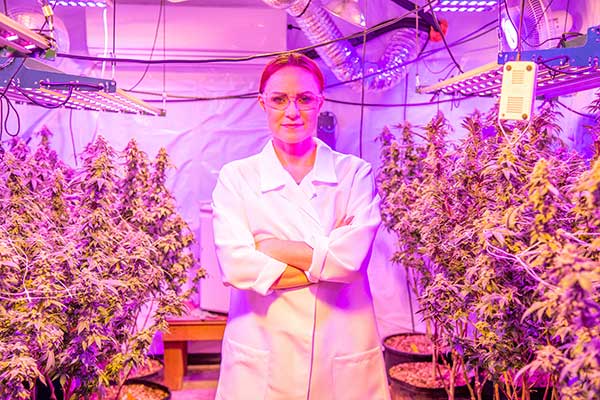
Working in cannabis cultivation can be an exciting way to bring your passion for the plant to life. For Oaksterdam University horticulture students, it’s a chance to apply knowledge gained through OU’s horticulture classes in the real world.
Whether you desire to grow at home or make a career out of cannabis cultivation, getting a job in a commercial indoor facility, greenhouse or outdoor farm can give you invaluable experience in plant care.
If your goal is to become an entrepreneur and open your own licensed cannabis grow facility, working in an existing operation will give you a behind-the-scenes look at the processes, equipment, staffing, and management involved in running a professional grow so you can decide whether taking the plunge is right for you.
What kind of jobs are available in cannabis cultivation?
There are a wide variety of job opportunities in cannabis cultivation. Entry-level jobs include cannabis cultivation technicians and trimmers. From there, you can rise through the ranks to manage a facility.
There are also positions for those who have specialized knowledge in the hands-on botany of the plant, such as breeders, tissue culture technicians, and integrated pest managers.
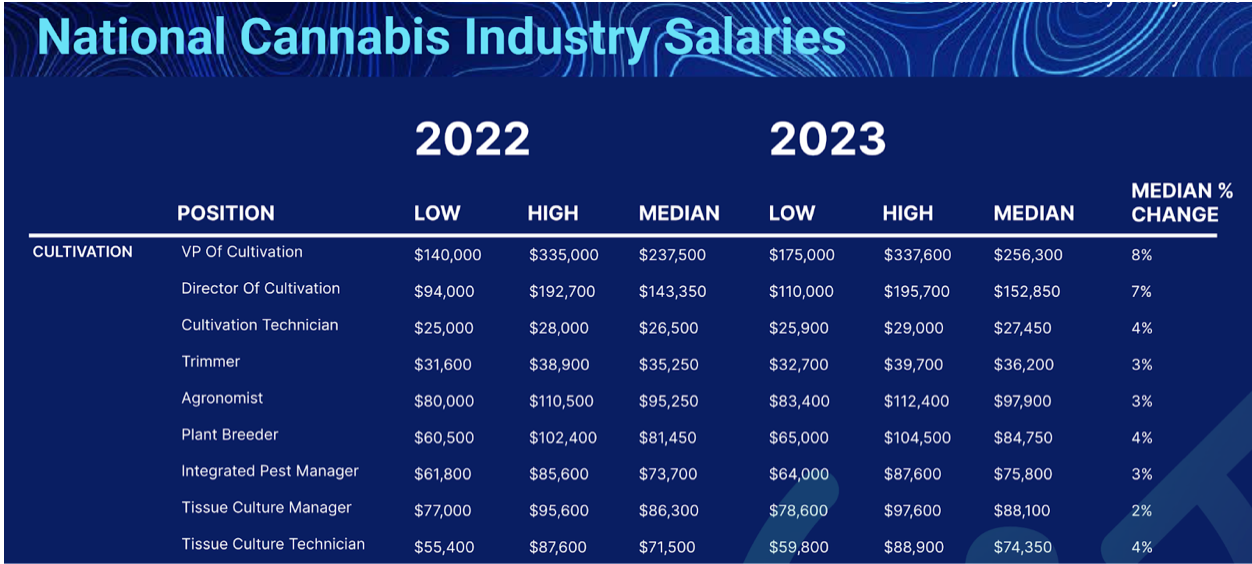
Here’s a look at each type of position available in the cannabis cultivation industry as well as average salaries.
Cannabis Cultivation Technician
A cannabis cultivation technician is a skilled professional within the cannabis industry who focuses on the practical aspects of cannabis cultivation. Working under the guidance of a cannabis agronomist or master grower, the cannabis technician is responsible for hands-on tasks involved in the cultivation process. Their duties may include planting and germinating seeds, cloning plants, transplanting seedlings, maintaining and adjusting environmental conditions like temperature and humidity, watering and feeding plants, monitoring for pests and diseases, and performing general maintenance on the cultivation facility. Cannabis technicians play a vital role in ensuring the day-to-day health and well-being of cannabis plants, thereby contributing to the overall success and productivity of the cannabis cultivation operation. Their expertise and attention to detail are crucial in producing high-quality cannabis products for the market.
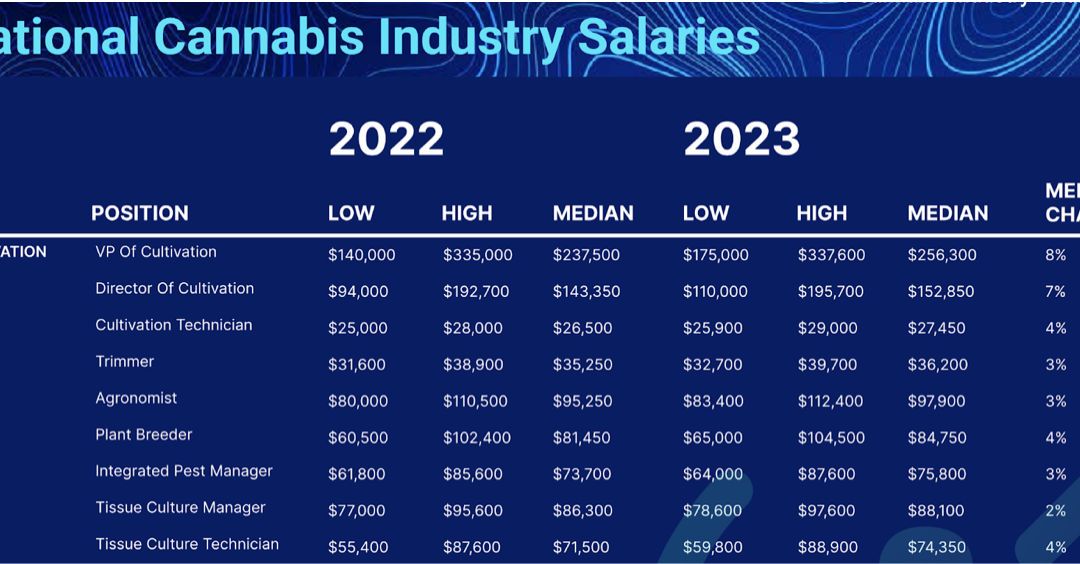
The median salary for a cannabis cultivation technician is $27,450, up 4% from last year.
Trimmers
A cannabis trimmer, also known as a bud trimmer or trim technician, is a specialized worker in the cannabis industry responsible for meticulously manicuring cannabis buds after harvest. The trimming process involves carefully removing excess leaves, stems, and other unwanted plant material from the buds to enhance their appearance and potency. Using precise hand trimming techniques or automated trimming machines, the cannabis trimmer ensures that the final product is visually appealing and free from unwanted elements while preserving the valuable trichomes that contain cannabinoids and terpenes. Attention to detail is essential in this role to maintain the product’s quality and market appeal. Cannabis trimmers play a crucial part in the post-harvest process, contributing to the overall value and consumer experience of the final cannabis product.
A job as a trimmer pays an average of $36,200 a year, according to CannaBiz Team’s 2023 Cannabis Industry Salary Guide. That’s up three percent from last year.
Agronomists
A cannabis agronomist is a specialized professional in the field of agriculture who focuses on the cultivation and management of cannabis plants. With a deep understanding of botany, horticulture, and agricultural practices, the cannabis agronomist plays a crucial role in optimizing the growth and quality of cannabis crops. They are responsible for selecting suitable cannabis varieties, ensuring proper soil nutrition and irrigation, implementing pest and disease management strategies, and monitoring environmental conditions to create an ideal growing environment. Furthermore, cannabis agronomists stay abreast of the latest research and advancements in cannabis cultivation techniques, applying their expertise to promote sustainable and efficient practices while adhering to local regulations and quality standards. Ultimately, their expertise contributes to the production of high-quality cannabis products for both medicinal and recreational purposes.
The median salary for a cannabis agronomist is $97,900, with the high end of the pay scale at $112,400, up 3 percent from last year.
Plant Breeder
A cannabis plant breeder is a skilled and knowledgeable professional within the cannabis industry who focuses on the controlled and intentional crossbreeding of cannabis plants to develop new and improved genetic varieties. With a deep understanding of plant genetics, botany, and horticulture, the cannabis plant breeder aims to create cannabis strains with specific desirable traits, such as higher potency, unique flavors, enhanced medicinal properties, or increased resistance to pests and diseases. They meticulously select and cross-pollinate parent plants, carefully tracking and analyzing the offspring’s characteristics to identify the most promising traits for further breeding. Through rigorous and iterative selection processes, cannabis breeders contribute significantly to the diversity and advancement of the cannabis market, providing consumers with an ever-expanding array of tailored and specialized cannabis strains. Their work serves as the foundation for the continuous evolution and innovation in the cannabis industry.
The average salary for a plant breeder in 2023 is $84,750, up 4% from 2022.
Integrated Pest Manager
A cannabis integrated pest manager is a skilled professional in the cannabis industry who specializes in identifying, preventing, and managing pest-related issues in cannabis cultivation facilities. With a comprehensive understanding of plant health, entomology, and integrated pest management (IPM) principles, their primary objective is to maintain a pest-free environment while minimizing the use of pesticides and promoting ecological balance. The integrated pest manager conducts regular monitoring to detect early signs of pest infestations, identifies the specific pests affecting the cannabis crops, and implements a multifaceted approach to control their populations. This approach may include introducing beneficial insects, using organic pesticides, implementing cultural practices, and optimizing environmental conditions to deter pests. By employing sustainable and environmentally friendly methods, the cannabis integrated pest manager ensures the health and vitality of the cannabis plants while safeguarding the overall ecosystem and contributing to the production of high-quality, pest-free cannabis products.
Integrated pest managers made an average of $75,800 in 2023, up 3% from the prior year.
Tissue Culture Technicians & Managers
A cannabis tissue culture technician is a specialized professional in the cannabis industry who focuses on the propagation and maintenance of cannabis plants through tissue culture techniques. With expertise in plant biology, sterile laboratory procedures, and tissue culture methodologies, the tissue culture technician is responsible for initiating cultures from plant tissues, such as meristems or callus cells, in aseptic conditions. They meticulously monitor and care for the cultures, ensuring proper nutrient and hormone supplementation to encourage the growth of healthy and disease-free plantlets. Additionally, tissue culture technicians play a vital role in cloning elite cannabis strains, preserving genetic purity, and mass-producing uniform plantlets for cultivation.
On the other hand, a tissue culture manager in the cannabis industry is a higher-level professional who oversees and coordinates the entire tissue culture laboratory. With advanced knowledge in plant genetics, laboratory management, and tissue culture protocols, the tissue culture manager designs and implements strategies to optimize the efficiency and productivity of tissue culture operations. They lead a team of technicians, providing guidance, training, and quality control measures to ensure the successful production of disease-free and genetically stable cannabis plantlets. The tissue culture manager collaborates with other departments, such as research and development or cultivation, to identify specific genetic traits needed for the cannabis cultivation program. Additionally, they stay updated on advancements in tissue culture technologies, exploring innovative approaches to improve the overall tissue culture process and contribute to the continuous growth and success of the cannabis industry.
A typical salary for a tissue culture technician ranges between $59,800 and $88,900, up 4 percent from last year, and a tissue culture manager makes typically makes $78,600 to $97,600 annually, up 2 percent.
Management Positions
A Director of Cannabis Cultivation is a high-level managerial role within the cannabis industry, responsible for overseeing all aspects of the cultivation process. With extensive experience in horticulture, agronomy, and cannabis cultivation techniques, the Director ensures the efficient and successful growth of cannabis plants from seed to harvest. They develop and implement cultivation strategies, manage cultivation teams, and maintain compliance with local regulations and quality standards. The Director of Cannabis Cultivation is also involved in selecting and sourcing genetics, optimizing cultivation environments, and coordinating with other departments to streamline operations and maximize productivity.
The average salary for a director of cultivation ranges from $110,000 on the low end to a high of $195,700, up 7 percent from last year.
Vice President of Cannabis Cultivation
A VP of Cannabis Cultivation holds an even higher executive position within a cannabis company, typically overseeing multiple cultivation facilities or a vast cannabis cultivation operation. With a strong background in cannabis cultivation, business management, and strategic planning, the VP of Cannabis Cultivation plays a key role in developing the overall cultivation strategy and direction of the company. They collaborate closely with executive leadership to align cultivation goals with the company’s broader objectives, make critical decisions regarding expansion and resource allocation, and implement best practices to ensure consistent and high-quality cannabis production across all facilities. The VP of Cannabis Cultivation also represents the company in industry events and engages with stakeholders to foster partnerships and drive innovation in the cultivation sector.
Pay at this level varies widely from a low of $175,000 to a high of $337,600 on average, with the median salary at $256,300, according to CannaBiz Team’s report. Pay is up 8 percent from last year, the highest jump of any position in the cannabis cultivation industry.
Your Journey in Cannabis
Oaksterdam University prepares students for a wide range of jobs in cannabis cultivation. Our Horiticulture Certification Course offers a broad foundation for employment in a professional cannabis cultivation facility. OU also offers a Home Grow course, for those who want to learn the tricks of the trade for successful amateur harvests.
Researchers from the University of Zurich Psychiatric Hospital are comparing what happens to the human brain during meditation and hypnosis, as well as while under the effects of psychedelics.
Brain changes while under the influence of drugs or during states such as hypnosis and meditation have been an object of interest for researchers for quite a while now. Now that psychedelics have emerged as potential mental health treatments with much higher success rates and fewer side effects, researchers are even more interested in how drugs like psychedelics cause changes in the brain.
University of Zurich researchers were particularly interested in this as part of broader efforts by the institution to study the potential benefits of using psychedelics such as LSD and psilocybin (magic mushrooms) to treat mental disorders. A growing body of research has revealed that several psychedelics can deliver long-term benefits against numerous mental health conditions, but scientists still don’t understand exactly how psychedelics deliver their benefits. By comparing brain scans taken when people were either hypnotized, meditating, or under the influence of psychedelics, the researchers hoped to gain a deeper insight into how psychedelics affect the brain.
Researcher Nathalie Rieser said that her team has researched altered states such as meditation and hypnosis several times in the past and was drawn to psychedelics because they seem to deliver their mental health benefits by inducing altered states in users. She adds that prior anecdotal reports had suggested similarities in the symptoms experienced while under the influence of psychedelics and during meditation and hypnosis.
Rieser and her team gathered and analyzed data that was collected during four different clinical trials on the effects of LSD, psilocybin, meditation and hypnosis on the brain. According to Rieser, this data was collected using a single MRI scanner at the University of Zuric’s Psychiatric Hospital.
The research team recorded brain activity data of people during the three altered states of consciousness and looked for differences in brain activity compared to baseline scans taken while the participants were in a normal state of consciousness.
The researchers found that although LSD, psilocybin, meditation and hypnosis “induce overlapping subjective effects,” the underlying changes they caused in the brain were “distinct.” Interestingly, while individuals may report feeling similar effects after taking psychedelics or during meditation or hypnosis, psychedelics and the two other states of consciousness cause “very different” changes in the brain. This indicates that meditation, hypnosis, and psychedelics may have different underlying mechanisms of delivering distinct effects to the brain.
The researchers will now advance to studying the mechanisms of action that allow hallucinogens to deliver their effects and how to incorporate these mechanisms into novel treatments for major depressive disorder and alcohol use disorder.
As the body of information about how psychedelics work grows, many companies such as atai Life Sciences N.V. (NASDAQ: ATAI) are likely to bring onto the market many effective psychedelic treatments in the years to come.
About PsychedelicNewsWire
PsychedelicNewsWire (PNW) is a specialized content distribution company that (1) aggregates and distributes news and information on the latest developments in all aspects and advances of psychedelics and their use, (2) creates PsychedelicNewsBreaks designed to quickly update investors on important industry news, (3) leverages a team of expert editors to enhance press releases for maximum impact, (4) assists companies with the management and optimization of social media across a range of platforms, and (5) delivers unparalleled corporate communication solutions. PNW stays abreast of the latest information and has established a reputation as the go to source for coverage of psychedelics, therapeutics and emerging market opportunities. Our team of seasoned journalists has a proven track record of helping both public and private companies gain traction with a wide audience of investors, consumers, media outlets and the general public by leveraging our expansive dissemination network of more than 5,000 key syndication outlets. PNW is committed to delivering improved visibility and brand recognition to companies operating in the emerging markets of psychedelics.
To receive instant SMS alerts, text “Groovy” to 844-397-5787 (U.S. Mobile Phones Only)
Please see full terms of use and disclaimers on the PsychedelicNewsWire website applicable to all content provided by PNW, wherever published or re-published: https://www.psychedelicnewswire.com/Disclaimer
Do you have questions or are you interested in working with PNW? Ask our Editor
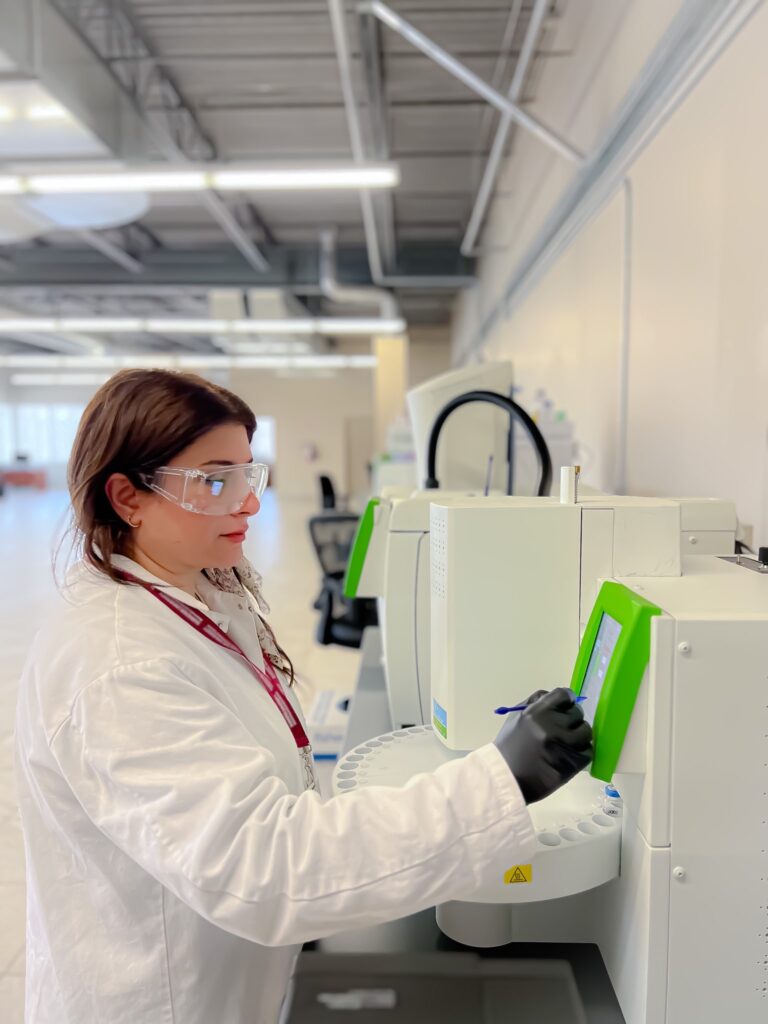
Unlocking Insights for a Thriving Cannabis Industry – Actlabs Leading the Way
Actlabs, founded in 1987 by Dr. Eric Hoffman, a pioneering Canadian geochemist, has emerged as a global leader in analytical testing services. Expanding its footprint to include 15 state-of-the-art laboratories across Canada and worldwide, Actlabs offers comprehensive solutions for diverse markets and industries.
From geochemical exploration to life sciences, pharmaceuticals, agriculture, environmental, materials testing, and since mid-2019, cannabis, Actlabs is at the forefront of innovation and reliability.
One of the significant challenges in the cannabis industry is the lack of a cohesive testing standard in Canada, leading to ambiguity in methodologies and key performance metrics.
With a visionary approach, Cassidy Weisbord, Actlabs’ dedicated National Account Specialist, in partnership with an industry-leading Team of committed professionals, is driving the company toward new heights in the evolving cannabis industry. Actlabs recognized the burgeoning potential of cannabis testing and leveraged its well-established divisions in agriculture and life sciences to quickly engage in this market.
Today, the Actlabs cannabis division supports domestic and export-focused producers, processors, extractors, and manufacturers commercializing a wide array of medical and recreational products and services.
Unlocking Excellence through Knowledge and Experience
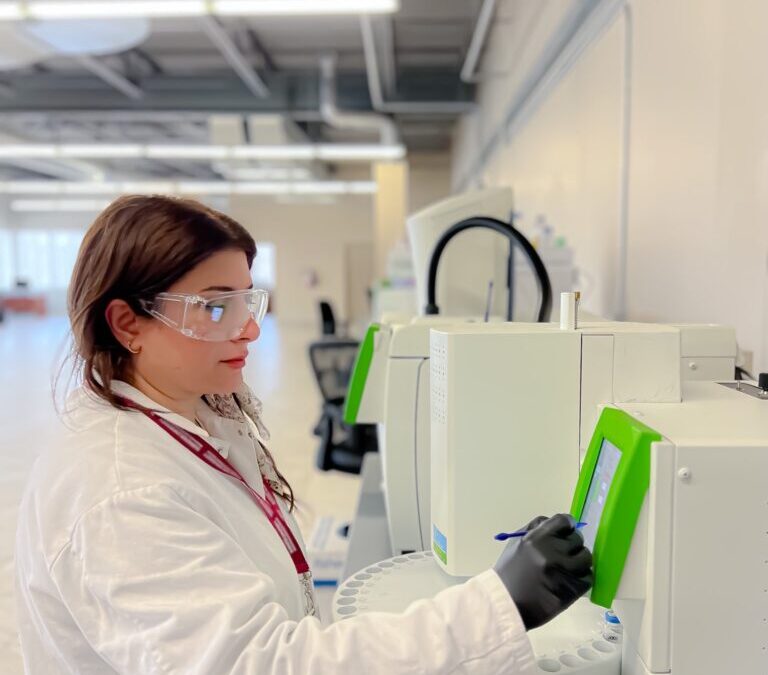
One of the significant challenges in the cannabis industry is the lack of a cohesive testing standard in Canada, leading to ambiguity in methodologies and key performance metrics. At Actlabs, we thrive on over a decade of experience, not only in cannabis testing but also in related industries such as pesticides, heavy metals, and microbial contaminants. Our rigorous and validated testing methods, coupled with easily understandable reporting formats, provide our clients with the highest level of confidence in their products.
Empowering Cannabis Growers of All Sizes
Cassidy believes in driving key factors that matter most to our cannabis testing clients: Compliant and knowledgeable testing, competitive pricing, and rapid turnaround when required. Actlabs stands as a trusted partner for cannabis growers, from large LPs to start-up micros & processors and individual growers. We take pride in offering equitable pricing for all services, ensuring that affordability does not compromise quality.
Rapid Turnaround with Unmatched Precision
Understanding the dynamic nature of the cannabis industry, Actlabs commits to a 7-10 business day delivery for comprehensive testing to facilitate Certificate of Analysis (C of A) release. Additionally, we offer expedited 1-2 business day turnaround for specific requests like potency, terpene profiles or pesticide screening, crucial for making time-sensitive decisions during harvest, phenotyping, or product labelling.
Equipped for Tomorrow’s Cannabis Landscape
At Actlabs, we recognize that the cannabis industry’s future lies in new product formulations and complex research. As the industry moves beyond its current stage, the need for advanced testing regimes will become apparent. Our extensive and well-equipped privately-owned Contract Labs in Canada are poised to cater to regulated development, research, and investigations tied to product formulations, customer complaints analyses, contaminant identification, and more.
Join Us in Pioneering the Future of Cannabis Testing
With a commitment to excellence, Cassidy Weisbord and the entire Actlabs Team are determined to lead the way in shaping the cannabis industry’s future. Explore our cutting-edge services and technologies at Actlabs.com or contact us at [email protected] to discover how we can unlock insights and provide solutions for your success.
GO: What is your background in the industry and how was the legacy Eggs Canna brand founded?
OC: My husband, Andrew Cappellano, has been cultivating cannabis for over two decades, and his passion quickly turned into his life’s vocation.
One day in 2013, he approached me and said: “you need to quit your job because we are opening a cannabis dispensary and I need you to run it.” Of course I said yes, and jumped head first into an industry I really had no experience with.
Much of my time was spent learning all that I could about the industry as a whole and the cannabis plant and its many applications and derivatives.
So, in 2014, we opened our first cannabis retail store; in 2016, we were amongst the first retailers to get licensed under the old medical marijuana-related use (MMRU) license class in the City of Vancouver; and finally, in 2019, we again were amongst the first retailers to obtain our provincial cannabis retail license in the City of Vancouver.
Advertisement
As I have grown with the cannabis industry, my focus has been on strategic management, business development and growth, fundraising and everything and anything regulatory – including being a stakeholder for municipalities when they were drafting their bylaws.
GO: How has your company evolved over the years, spreading into the cultivation space?
OC: Andrew was very strategic in his approach. Having been part of the grassroots eco-system that was already established pre-legalization, he felt it would be best to start with retail and grow into cultivation!
Once our retail brand was established and well on its way, we purchased a 17,000 sq ft facility with the intent of turning it into EC Farms. This facility is to serve an underserviced market in the legal framework, and Andrew will be focusing on organic craft cultivation and bringing sought-after legacy strains to the legal market.
In 2021, we began to retrofit construction and although we experienced many challenges and delays due to the pandemic and other extenuating financial obstacles, we are very happy to announce that as of May 2023, construction is complete and we are eagerly awaiting our Health Canada license.
GO: As a unique position in the industry, describe the vertical integration of cultivation and retail.
OC: It is very important that we are vertically integrated and have that direct access to customer data in real-time so that we can cultivate products that are in demand. Likewise, it is equally as important for us as retailers to understand what is important for our wholesale customers.
We have a motto in our cultivation division – we are ‘by retailers, for retailers,’ and with that concept in mind, we only wish to supply our private retailers with our products and utilize direct delivery; we want to start to create competitive advantages for our family of retailers.
GO: How has the retail landscape changed over the last five years?
OC: The last five years have been very tough on many in the industry. There were significant retail licensing bottlenecks causing financial hardship for both retail and cultivation.
The framework was very onerous and much too restrictive, contributing to the continuation of the black-market long after legalization. Over the last year, however, I have seen positive changes to that framework, which I hope will continue and translate into profitability for the retail industry as a whole.
I would summarize that the first year of legalization was an absolute nightmare from a regulatory and profitability perspective, then years two-to-three were not much better, but at least stores were receiving licenses. But in year four, there were too many licenses being issued in clusters in several municipalities. Now in year five, we are all starting to understand the retail landscape and looking forward to some of the changes coming down the pipeline.
GO: What do you suspect the next five years will bring?
OC: I expect that the next five years will be the golden age for retailers.
Anyone who has weathered the storm thus far will establish their brand and customer base. With the continued relaxing of the framework and the implementation of the direct-to-retail program in B.C., retailers will be able to better compete with the legacy market and differentiate themselves through product offerings.
Although it has been a tough first five years, and I do believe that economic circumstances will dwindle growth over the next one-to-two years, I truly believe the end of the next five years will be exciting and prosperous for those who successfully navigated the first legalized decade.
Oana Cappellanois the president and co-founder of the Eggs Canna Group.
Lexaria recently celebrated the receipt of its 35th overall granted patent worldwide when the USPTO recently awarded US patent #11,700,875, titled “Compositions and Methods For Sublingual Delivery of Nicotine”
The company described the new patent as “strategically important”
The patent positions the company to tap into the growing oral nicotine market and offers protection in one of the world’s leading oral nicotine markets
This patent could also lead to additional subsequent patents from within this family
Lexaria’s DehydraTECH-nicotine formulation is patent granted for oral nicotine delivery in the US, Canada, and Australia
When Lexaria Bioscience (NASDAQ: LEXX), a global innovator in drug delivery platforms, announced receipt of an Australian patent on March 8, 2022 (https://cnw.fm/41v9c), its resolve to continue expanding its intellectual property (“IP”), particularly within the oral nicotine sector, received a significant boost. The then-new Australian patent had expanded upon the company’s IP rights to apply its DehydraTECH(TM) technology platform to most oral forms of nicotine. Still, the company intended to continue growing its existing portfolio, expanding IP protection to multiple other jurisdictions.
Motivated, Lexaria filed a new patent application with the United States Patent and Trademark Office (“USPTO”) shortly thereafter on March 22. And, more than a year later, the application has proven successful, with the company recently celebrating the receipt of the patent granted, US patent #11,700,875, titled “Compositions and Methods For Sublingual Delivery of Nicotine” (https://cnw.fm/YXHoS).
The new US patent covers various forms and sources of nicotine, including nicotine benzoate, nicotine polacrilex, nicotine citrate, nicotine detartrate, and many others, for use in sublingual delivery formats like oral pouches. And while the title alludes to sublingual delivery, the patent document published by the USPTO discloses that “the terms ‘sublingual’ and ‘buccal’ are used interchangeably… Therefore, the disclose compositions can be absorbed in any manner chosen by the user” (https://cnw.fm/8tkwr).
The new US patent is remarkable and “strategically important” in many ways. First, it is the company’s 35th overall granted patent worldwide and the 13th granted in the United States. Second, a total of 30 claims were awarded within this patent, the highest number of claims accepted by the USPTO in the company’s existing portfolio. And with researchers agreeing that patents with a higher number of claims are better protected and can be an important measure of a patent’s value (https://cnw.fm/aL8L9), the claims increase the value of the new patent and perhaps even the company’s entire IP portfolio.
Third, and as the company wrote in its March 2022 press release, “At times in Lexaria’s history, the granting of a first patent in a new patent family has led to additional subsequent patents from within that same family,” the new US patent could lead to the award of patents within this family in other countries. In fact, this statement was confirmed recently, albeit with a different patent family. In June, Lexaria announced it had been granted a new Canadian patent under Patent Family #8: “Compositions Infused with Nicotine Compounds and Methods of Use Thereof,” the second within this family after the Australian patent granted last year (https://cnw.fm/Brwvw).
Moreover, the new patent grants IP protection within the United States, one of the world’s leading oral nicotine markets, according to an analysis by the Foundation for a Smoke-Free World (https://cnw.fm/SgsJR). The US nicotine pouches market is projected to grow at a 33% CAGR between 2023 and 2030 (https://cnw.fm/Rgh6F).
But beyond the United States, and given that the company’s DehydraTECH-nicotine formulation is also patent granted for oral nicotine delivery in Canada and Australia, with numerous applications pending in other jurisdictions, Lexaria is ideally positioned to tap into the growing global oral nicotine market. Analysts at Market Research project the global nicotine pouches market to grow at a 13.4% CAGR between 2023 and 2029, reaching a value of $11.91 billion at the end of the forecast period, up from $4.69 billion in 2022 (https://cnw.fm/aRnDl).
NOTE TO INVESTORS: The latest news and updates relating to LEXX are available in the company’s newsroom at https://cnw.fm/LEXX
About CannabisNewsWire
CannabisNewsWire (CNW) is an information service that provides (1) access to our news aggregation and syndication servers, (2) CannabisNewsBreaks that summarize corporate news and information, (3) enhanced press release services, (4) social media distribution and optimization services, and (5) a full array of corporate communication solutions. As a multifaceted financial news and content distribution company with an extensive team of contributing journalists and writers, CNW is uniquely positioned to best serve private and public companies that desire to reach a wide audience of investors, consumers, journalists and the general public. CNW has an ever-growing distribution network of more than 5,000 key syndication outlets across the country. By cutting through the overload of information in today’s market, CNW brings its clients unparalleled visibility, recognition and brand awareness. CNW is where news, content and information converge.
To receive instant SMS alerts, text CANNABIS to 21000 (U.S. Mobile Phones Only)
Please see full terms of use and disclaimers on the CannabisNewsWire website applicable to all content provided by CNW, wherever published or re-published: http://CNW.fm/Disclaimer
Do you have questions or are you interested in working with CNW? Ask our Editor







Recent Comments