The U.S. Departments of Defense and Veterans Affairs both hold firm opposition to the use of cannabis in treating PTSD. However, when it comes to psychedelics such as LSD and psilocybin, their stance is more neutral, asserting the need for further research.
In a recent update to joint clinical practice guidelines, the departments offered recommendations on various therapies to address acute stress disorder and PTSD commonly affecting military veterans. Despite many veterans turning to cannabis for symptom relief, the DOD/VA Management of Post-Traumatic Stress Disorder and Acute Stress Disorder Work Group is wholly against this alternative treatment. While the work group strongly opposed medical cannabis, they admitted their confidence in existing evidence was “very low.” This was due to the lack of reliable clinical trials, small sample sizes and selection bias in the available data.
However, the departments actively sought new data on psychedelics, which had not been mentioned in their prior review six years ago. Their investigation into the therapeutic potential of ayahuasca, psilocybin, LSD, DMT and ibogaine yielded no studies that met the search criteria for PTSD effects, as reported by Psychedelic Alpha. Notably, the DOD and VA addressed MDMA separately. The FDA granted “breakthrough therapy” designation to MDMA based on preclinical evidence suggesting its potential for treating PTSD.
However, the departments are cautious, stating there is “insufficient evidence to recommend for or against” the effectiveness of MDMA-assisted therapy for PTSD. The varying control conditions in the relevant studies could have biased outcomes.
While the DOD and VA remain hesitant to endorse psychedelics and strongly reject cannabis for treating mental-health conditions, bipartisan lawmakers urge federal agencies to explore the therapeutic efficacy of these substances. They also aim to protect veterans in legal states from facing penalties for medical marijuana use.
Recent amendments filed for a VA spending bill in the House propose safeguards for veterans using medical marijuana and for VA doctors recommending such programs. However, the House Rules Committee’s approval is needed for these measures to advance to the floor for consideration. The committee previously blocked numerous cannabis and psychedelics amendments to the National Defense Authorization Act (NDAA).
Nonetheless, the House Armed Services Committee had previously inserted two marijuana and psychedelics-related proposals into the NDAA’s core text. One proposal mandates that the defense secretary carry out clinical investigations on the therapeutic advantages of psychedelics for active-duty military members suffering from PTSD, traumatic brain injury or chronic traumatic encephalopathy, using psilocybin, MDMA, ibogaine or DMT. The Rules Committee did, however, reject some of the NDAA’s suggested changes.
While the DOD and VA are firm in their rejection of the medicinal potential of cannabis, many companies such as IGC Pharma Inc. (NYSE: IGC) are so strong in their belief in the potential of these substances that they are investing millions of dollars in commercializing FDA-approved THC formulations against chronic pain and other conditions.
NOTE TO INVESTORS: The latest news and updates relating to IGC Pharma Inc. (NYSE American: IGC) are available in the company’s newsroom at https://cnw.fm/IGC
About CNW420
CNW420 spotlights the latest developments in the rapidly evolving cannabis industry through the release of two informative articles each business day. Our concise, informative content serves as a gateway for investors interested in the legalized cannabis sector and provides updates on how regulatory developments may impact financial markets. Articles are released each business day at 4:20 a.m. and 4:20 p.m. Eastern – our tribute to the time synonymous with cannabis culture. If marijuana and the burgeoning industry surrounding it are on your radar, CNW420 is for you! Check back daily to stay up-to-date on the latest milestones in the fast -changing world of cannabis.
To receive instant SMS alerts, text CANNABIS to 21000 (U.S. Mobile Phones Only)
Please see full terms of use and disclaimers on the CannabisNewsWire website applicable to all content provided by CNW420, wherever published or re-published: http://CNW.fm/Disclaimer
Do you have questions or are you interested in working with CNW420? Ask our Editor
Metro Vancouver’s Regional Board (MVRD) of Directors says they want to collaborate with other provincial agencies on any potential regulation of cannabis farm emissions rather than continuing to develop its own regulations.
Several MVRD board members said they felt the staff proposal to regulate Volatile Organic Compounds (VOCs) from cannabis production facilities and farms was a backdoor route to trying to regulate the odour of cannabis itself.
Several mayors—who serve as board members—also questioned the need to spend the board’s time and resources on regulating something that amounts to less than one percent of all regional VOCs and concerns that this will lead to regulatory creep into other types of farms.
Metro Vancouver—encompassing 21 cities in BC’s Lower Mainland, one electoral area, and one treaty First Nation—first announced its plans to regulate volatile organic compounds (VOCs) from cannabis production in 2019, holding stakeholder meetings in late 2020 and early 2021.
“We have a very diverse agricultural community, and we want to ensure they are not over-regulated”
Nicole Macdonald, Mayor of Pitt Meadows
It estimates that indoor cannabis accounts for about 146 tonnes of VOCs per year, compared to 715 for crops and pasture land, 9,500 from plants and vegetation (non-commercial crops), and over 37,000 from other non-agricultural, human sources such as fuel, vehicles, and paints and chemical products.
In a board meeting on Friday, July 28, Patrick Johnstone, the mayor of New Westminster, echoed these concerns, saying he would like to see the board working with the Ministry of Agriculture, and added that VOCs from cannabis production represent less than 1% of total VOC’s for the region.
Nicole MacDonald, the mayor of Pitt Meadows, home to several cannabis growers and processors, says she was concerned about city staff’s proposed approach and how it would further “isolate” cannabis farmers from other types of farms.
“We have a very diverse agricultural community, and we want to ensure they are not overregulated,” said MacDonald.
Bill McNulty, a city councillor in Richmond, BC, spoke of “legislative creep” and over-regulation, saying that he felt the real goal of the proposal was to find a way to deal with the odour of cannabis.
“Agriculture is smelly, it’s noisy, it’s dirty, it’s messy,” said McNulty, adding, “We’re talking about limiting the use of some of the most productive land in the country, let alone the province.”
“All we’re going to do is find a way to legislate away the smell from a greenhouse that’s growing cannabis, then tomorrow it’s a dairy farm, then the day after it’s a chicken farm, and then it’s oh my god, the blueberry farms….”
Last, Dan Ruimy, the newly-elected mayor of Maple Ridge, pointed out that Health Canada already has strict rules in place to control odour for indoor facilities, and said that such regulations could “destroy a fledgling industry.”
Staff proposed two suggestions. One was to send a letter to the Ministers of Agriculture and Food, Environment and Climate Change Strategy, and Public Safety and the Solicitor General, requesting collaboration with Metro Vancouver on developing a concerted approach for managing emissions from cannabis production and processing in the Metro Vancouver region in a manner that protects public health and regional economic prosperity.
“All we’re going to do is find a way to legislate away the smell from a greenhouse that’s growing cannabis, then tomorrow it’s a dairy farm, then the day after it’s a chicken farm, and then…the blueberry farms….”
Bill McNulty, a city councillor in Richmond, BC
The second was to direct staff to continue developing options to manage emissions from cannabis production and processing as described in the June 23, 2023 report titled “Phase 2 Engagement Summary and Next Steps for Managing Emissions from Cannabis Production and Processing.”
The MVRD board approved the first proposal but rejected the second. The next step will be for staff to send the letter and report back to the board when they have more information at a future date.
How often do those annoying moments of doubt stop you in your tracks? I feel like I run into those nasty little road blocks all the time! Whenever anyone else vents about their moments of doubt to me I am super supportive and positive and say things like “You got this!”. Why don’t I speak to myself that way? Why do I feel this way in the first place? Why do I still feel this way after all the work I’ve been trying to do? I feel like a hypocrite!
The other day, I was getting dressed and had to change my clothes like 6 times. Nothing looked good. My clothes seem to be either too big which is unflattering or too tight which is also unflattering or my arms looked too big or I looked bloated. I was feeling so frustrated with myself that I started to cry. I am so sick of feeling this way! I work-out 6 days a week, eat a healthy diet (though I like to have snacks here and there) and do my affirmations but somehow I still feel frustrated, like I’m letting myself down somehow.
I don’t want to complain or vent to my husband. I know how unattractive insecurity is and even though I know he loves me and supports me I still don’t like to show that type of vulnerability to him. Plus he is a super busy man working hard to support his family. He has enough things on his plate, I don’t want to add my insecurities to it.
So back to the moment of self-loathing and crying about my frustrations. I was fed up! I started looking online for ways to tweak my diet. I want, no, I NEED to take control of myself! Pull myself together! My husband walked in on my moment of “grace” and just gave me a big hug and sat down. He asked how he could help. To be perfectly honest that made me cry even harder. I explained my frustrations to him and my need to take control. He said “Look at you. What are you doing right now? You’re taking control.” He reminded me that everyone hits plateaus here and there and if what you’re doing isn’t working for you or you aren’t getting the results you want then it’s time to shake things up. Doing the same thing over and over isn’t going to give you different results. Just more of the same.
He sat down and crunched some numbers and helped me understand the science of molding the perfect body for me. He even offered to participate in the changes to our diet and exercise. He said “No more suffering alone! I am here to support you! We will do this together!” Most importantly he reminded me to make the changes out of self-love and not frustration or punishment. He reminded me that if I only focus on the end result then life will flash by and I will still feel frustrated. I need to remember to enjoy the journey, the process. Be present and celebrate the small wins. Every time he sees me workout he gives me a high-five and says good work! Every time I say no to a tasty snack he commends my act of self-control. What a man! What would I do without him?! I am incredibly lucky to have that type of support! Why didn’t I reach out and ask for it sooner? Because when you’re in a state of self-loathing you can’t think abstractly or creatively. He reminded me that I’m not alone and it’s ok to feel frustrated sometimes. He says that I go above and beyond to help others and support them, now it’s time to turn the table. Show myself support and speak to myself kindly and sportively and most of all, speak to myself in a loving way.
Ah ha! Of course I feel like I let myself down because I only give myself shit! Like an innocent child, my self has no idea why it’s being punished and picked on. A huge feeling of sympathy for my Self washed over me. I had to take a moment and apologize to my Self for being so hateful. I promised my Self that I was going to do better, that I was going to be better. I reminded my Self that there is no end point and that I am not alone. I thanked my Self for putting up with my shit and being patient, waiting for me to learn my lessons. Things that I will forever be working on.
I am sharing my struggles because they are real and I think more common than admitted. So many people out there have the same struggles. Everyone is afraid of showing vulnerabilities not only to other people but also to themselves. I am lucky as I have a loving and supporting family but not everyone has such a luxury. I want others to learn from my experiences and mistakes. To error is human. I want you to know that you are not alone! That somewhere out there, there are real people with the same struggles. What works for me may not work for you but that’s ok because you are not alone. Together we have a wealth of knowledge and experience! Together we can accomplish anything!
My name is Robyn Matte and I am the consultant behind the scenes here at Lucid Living. I have completed the Taroscopes School of Mystery (though I don’t think the study of such work can ever be completed) as well as a decade plus of intense education and experience. I have studied many alternative psychological programs as well as self-improvement programs from exceptional teachers such as Mel Robinson, Evette Rose, Micheal Tsarion, Tony Robins, T. Harv Eker, Clarissa Pinkola Estes and more. I have experience with Psychopathology, NLP (Neuro-Linguistic Programming), Meta-psychology, Psycho-Analysis, Metaphysical Anatomy Analysis and more.
I have always been curious about how the mind works and why people behave the way they do. I have built up a vast knowledge base and want to share my experiences and knowledge with you. Helping others help themselves is a calling that I feel a need to answer and have made a positive impact on many lives, including my own.
We’ve all made mistakes, the question is what are we going to do to fix them and move forward with clarity and confidence.
The ability to understand ‘how’ and ‘why’ your mind works the way it does gives a new sense of control and confidence that empowers you to make the actions necessary to improve your situations and bring balance to your life.
Want to know more?
Do you want to know more about Robyn? Visit her blog to see her life experiences and challenges and how she overcame them using the same methods that she uses to help others like you.
Want to learn more about how you can achieve balance in your life? Visit the Speaking Lucidly Podcast page and enjoy exploring your inner world so that not only can you can take the right steps to manifest your desired reality but bring balance to both the inner and outer worlds. As within so without. robyn@lucidliving.ca
A group of state cannabis associations is asking Senate leaders to advance bipartisan cannabis banking legislation as soon as possible. The American Trade Association for Cannabis and Hemp (ATACH) alongside marijuana trade associations from 16 other states sent a letter to Senate Banking Committee chair Sherrod Brown and committee member Tim Scott emphasizing the need for immediate cannabis banking reform.
ATACH was joined by trade associations representing cannabis businesses from Hawaii, Arizona, Alaska, Alabama, Nevada, New York, New Jersey, Maryland, Illinois, California, Washington State, Ohio, Pennsylvania, Montana, Mississippi, District of Columbia and Missouri. These entities joined together to urge the committee to pass the SAFE Banking Act “without further delay.”
The SAFE Banking Act would protect financial institutions that serve state-legal cannabis businesses from legal reprisals by the federal government.
Although cannabis is now legal in dozens of states, federal law still classifies it as a Schedule I drug under the Controlled Substances Act. As a result, this makes it almost impossible for cannabis businesses to access financial or banking services because federal law forbids these institutions from serving businesses that are involved with federally controlled substances.
This has forced many cannabis businesses to operate on a cash-only basis, significantly increasing the risk of robberies and making it difficult for them to honor their tax obligations.
Industry stakeholders have been asking for cannabis banking legislation to finally allow them access to services such as bank accounts, cashless payments and financial aid.
The coalition of marijuana trade associations argued in their letter that the current status quo, which has denied cannabis businesses access to traditional financial services. is “untenable,” with dire safety and public health consequences. Operating on a cash-only basis makes cannabis businesses a prime target for violent robberies, the letter noted, adding that cannabis businesses in Oklahoma, Oregon, Michigan and Washington are already dealing with violent robberies.
Speaking in a recent press release, ATACH President Michael Bronstein said with every moment that Congress fails to act on cannabis banking, state legal businesses and their workers continue to suffer from armed robberies, break-ins and violent encounters that have even taken innocent lives.
Unfortunately, the recent letter came only a day after Committee chair Jerrod Brown reportedly said that his panel wouldn’t be holding any votes this week. This means that cannabis banking legislation likely will not pass during the summer session because once July draws to a close, senators will not reconvene until September.
When cannabis banking becomes a reality, a new spurt of growth in the marijuana industry could come, and that growth is also likely to lift ancillary enterprises such as Advanced Container Technologies Inc. (OTC: ACTX), whose niche is in supplying what cannabis companies need for their operations.
NOTE TO INVESTORS: The latest news and updates relating to Advanced Container Technologies Inc. (OTC: ACTX) are available in the company’s newsroom at https://cnw.fm/ACTX
About CNW420
CNW420 spotlights the latest developments in the rapidly evolving cannabis industry through the release of two informative articles each business day. Our concise, informative content serves as a gateway for investors interested in the legalized cannabis sector and provides updates on how regulatory developments may impact financial markets. Articles are released each business day at 4:20 a.m. and 4:20 p.m. Eastern – our tribute to the time synonymous with cannabis culture. If marijuana and the burgeoning industry surrounding it are on your radar, CNW420 is for you! Check back daily to stay up-to-date on the latest milestones in the fast -changing world of cannabis.
To receive instant SMS alerts, text CANNABIS to 21000 (U.S. Mobile Phones Only)
Please see full terms of use and disclaimers on the CannabisNewsWire website applicable to all content provided by CNW420, wherever published or re-published: http://CNW.fm/Disclaimer
Do you have questions or are you interested in working with CNW420? Ask our Editor
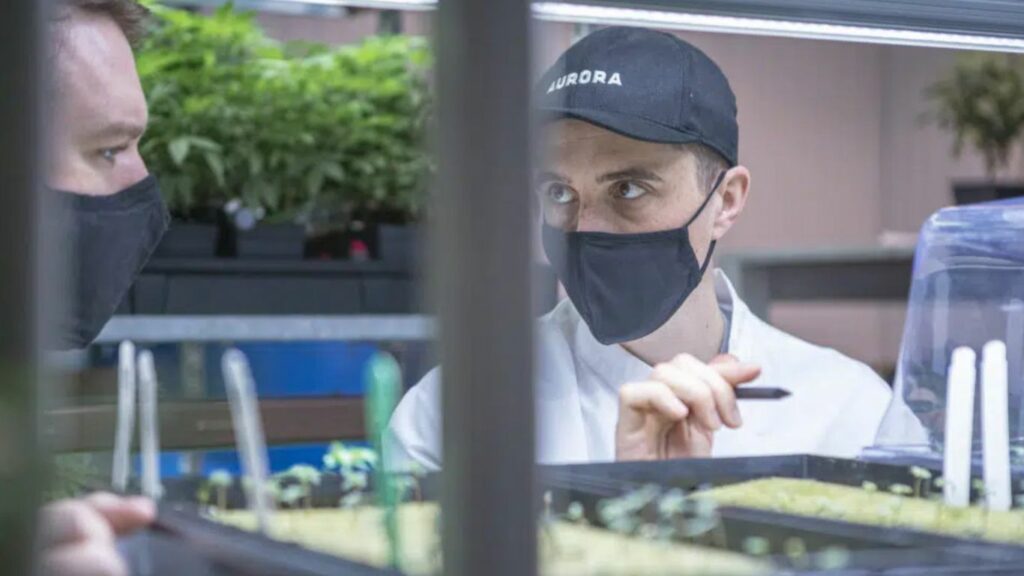
A researcher at the UBC Biodiversity Research Centre is teaming up with a geneticist at Aurora Cannabis to adapt cannabis for outdoor production.
The work is one of eight new projects that have received a combined $1.84 million in funding from the Genomic Innovation for Regenerative Agriculture, Food and Fisheries (GIRAFF) program—a collaboration between Genome BC and the Investment Agriculture Foundation of BC (IAF) with support from the BC Ministry of Agriculture and Food.
Dr. Marco Todesco from the University of British Columbia and Jose Celedon, director of genetics at Aurora Cannabis, are working to develop cannabis cultivators better suited to Canadian climates and environment to address the carbon footprint of indoor cannabis production. By some estimates, about four percent of the total greenhouse gasses from Canadian agriculture come from cannabis production, primarily indoor production.
Our project uses leading-edge genomics technologies to help develop more sustainable cannabis varieties that can be grown outdoor at Canadian latitudes, reducing greenhouse gas emission from cannabis cultivation in BC and beyond.
Dr. Marco Todesco, UBC Biodiversity Research Centre
The team is working on developing more suitable commercial cultivars for use in outdoor settings by cross-breeding so-called autoflower characteristics into “elite” cannabis genetics.
Dr. Todesco, assistant professor at the Biodiversity Research Centre, University of British Columbia, says the goal is to develop cultivars better suited to not just BC but all of Canada.
“The cannabis industry plays an important role in the BC economy, but unfortunately, cannabis cultivation in indoor facilities also has an enormous carbon footprint,” says Todesco. “Our project uses leading-edge genomics technologies to help develop more sustainable cannabis varieties that can be grown outdoor at Canadian latitudes, reducing greenhouse gas emission from cannabis cultivation in BC and beyond.”
The program has a budget of $250,000 for its research and began the work in 2022.
Dr. Caledon, the director of breeding and genetics at Aurora Cannabis, applauds the work of UBC in collaboration with the cannabis producer.
“As a global cannabis company enabled by science, we are proud to invest in the continued advancement of cannabis cultivation that will positively impact the longevity of the industry in Canada. Our long-standing relationship with UBC has allowed for valuable, collaborative work in genomics. Our shared findings from the GIRAFF project will be applied to Aurora’s leading growing practices today and in the future, supporting a more sustainable industry.”
This is not the first cannabis breeding program involving UBC and Aurora, which operates its cannabis breeding facility on Vancouver Island, Aurora Coast, which hosts the Occo research centre. In 2020, more than $4.2 million in federal, provincial, and industry funding was announced to aid with UBC research into enhanced cannabis cultivars, focusing on disease resistance.
“There is a misconception amongst growers and LPs, both domestically and internationally, that you cannot protect or own the genetics around a particular cultivar, ” Aurora CEO Miguel Martin said earlier this year. “That’s completely untrue. We are licensing unique genetic markers of these cultivars that we develop, and we are able to identify those that are infringing upon that; the law is very clear on this issue. We’ll have a very strong case. You’ll start to see litigation around that, as well as those that we believe have infringed on some of our bio-synthetic assets, and that’s also an additional revenue stream for the company.”
The project was part of a larger $56.4 million in funding from the federal and provincial government, as well as private industry and is part of 10 new genomics research projects funded through Genome Canada in conjunction with Genome BC. Genome Canada is a non-profit organization funded by the Government of Canada that seeks to use genomics-based technologies to improve the lives of Canadians. Genome BC is a not-for-profit organization undertaking similar research in BC.
Aurora also says their Coast facility has produced ten new cultivars launched during fiscal 2023, including two high-THC cultivars—Sourdough and Farm Gas— that have also launched in Europe and Australia.
Charles Pick (left), senior vice-president of science and innovation for Aurora Cannabis, and Greg Baute at Aurora’s cannabis facility in Comox, B.C.
(CNW) Kingsville, Ont. — Greenway Greenhouse Cannabis Corporation, a cultivator of high-quality greenhouse cannabis for the Canadian market, today reported its audited annual financial statements for the year ended March 31, 2023.
A copy of the audited annual financial statements for the year ended March 31, 2023 are prepared in accordance with international financial reporting standards (IFRS) and the related management’s discussion and analysis are available under the company’s profile on www.sedarplus.ca. All amounts expressed in this press release refer to Canadian dollars.
The company is pleased to report the following results for the year ended March 31, 2023:
Highlights:
Over the fiscal year, Greenway reported a Positive Adjusted EBITDA of $603,188 on $5,621,933 of revenue, a 183 per cent increase in revenue over the prior fiscal year
Cost of sales comprised of $3,154,061 of cash expenses and $853,333 of amortization expense resulting in a total gross margin before inventory impairment and fair value adjustments of 29 per cent
An average cash cost per gram expensed for the year of $0.76, comprised of all crop inputs and wages, bulk packaging, shipping and facility repairs and maintenance
Inventory impairment of $354,256, comprised of $278,616 of cash costs and $75,640 of amortization costs, due to low market prices for wholesale cannabis as at March 31, 2023
A weighted average cash cost per gram of $0.58 of finished goods inventory on hand as at March 31, 2023
Expanded into new markets, with over 96 per cent of Canadian cannabis users now having access to Greenway cannabis
Increased licensed cultivation area, and received a Standard Processing License
In December, 2022, Greenway listed its common shares on the OTCQB® Venture Market (OTCQB), under the ticker symbol GWAYF
Recognized a gain on the sale of the surplus asset of $193,484
“Our team is proud of what we have been able to accomplish this year, from the large increase in revenue and ensuring our product is available to as many Canadians as possible. We have another full year under our belts of growing great products, delivering value to our customers, and creating memorable experiences for consumers.” — Carl Mastronardi, president, Greenway
Advertisement
Debt Settlement Share Transfer to Hybrid Financial
As well, the company, has issued 964,285 common shares to Hybrid Financial Ltd., a marketing services provider, in partial settlement of outstanding debt in accordance with the debt settlement agreement previously announced by the company on July 14, 2023. The settlement shares have a deemed issuance price of $0.28 per share.
The settlement shares were issued in reliance on a prospectus exemption pursuant to securities legislation and are subject to a four-month plus one day statutory hold period ending on November 25, 2023. The issuance of the settlement shares in partial settlement of the debt remains subject to all necessary regulatory approvals including final acceptance by the Canadian Securities Exchange.
Non-IFRS Measures
Management uses a non-IFRS measure to assess the company’s performance. Non-IFRS measures do not have any standardized meaning under IFRS and are not a measure of financial performance under IFRS, and therefore, may not be comparable to similar measures presented by other companies. Please refer to page 1 of the company’s management’s discussion and analysis for an explanation of the composition of adjusted EBITDA, an explanation of how it provides useful information to an investor and a quantitative reconciliation to the most directly comparable financial measure under IFRS, all of which is hereby incorporated by reference in this press release.
Reconciliations of Non-IFRS Measures
The following table reconciles the non-IFRS measure to the most comparable IFRS measure for the twelve months ended March 31, 2023. This measure does not have any standardized meaning under IFRS and is not a measure of financial performance under IFRS, and therefore, may not be comparable to similar measures presented by other companies.
For the year ended March 31, 2023
Net Income (Loss)
(2,605,705)
Amortization – cost of sales
853,333
Inventory impairment
354,256
Fair value adjustment on sale of inventory
1,778,591
Fair value adjustment on growth of biological assets
Eating disorders such as anorexia, binge eating and bulimia nervosa are some of the most dangerous mental disorders in the United States, taking one life every 52 minutes and costing the country $64.7 billion yearly in medical costs. They are second only to opioids in terms of deadliness and are extremely hard to treat due to the way they warp the minds and mentalities of those they afflict.
Just 46% of people diagnosed with anorexia will make a full recovery, and another 40% will not recover regardless of whether they receive the right medical attention. Conventional treatments for eating disorders such as psychotherapy and cognitive therapy may be effective for some patients, but a large portion of people with eating disorders do not respond to traditional treatments.
The recent surge in psychedelic research has shown that hallucinogenics such as psilocybin may be able to treat severe mental disorders much more effectively than traditional treatments. Major depressive syndrome, treatment-resistant depression, post-traumatic stress disorder (PTSD) and eating disorders are some of the mental conditions that have responded to psychedelic-assisted therapy in research.
The recent study was the first-ever American clinical research trial to report on the use of psilocybin to treat anorexia. The 10 female participants all received a single dose of psilocybin and asked to report their symptoms. Four of the participants said that their symptoms had reduced to such a degree that they qualified to be in remission by the third month of taking psilocybin. Most of the patients who did not see a significant reduction in anorexia symptoms reported that the treatment was still “meaningful and positive.”
The psilocybin dose was safe to consume and did not cause any serious side effects in the study participants.
While the study is small, it shows that psychedelics present an attractive option for the treatment of eating disorders, especially for people who don’t respond to traditional therapies. The research team behind the study acknowledged the small scale of their study but noted that its findings were promising enough to spur further and more extensive research into the potential of treating anorexia with psychedelics.
As many more startups such as atai Life Sciences N.V. (NASDAQ: ATAI) engage in psychedelic research, more reliable information about the medical potential of hallucinogens could yield treatments that are accessible to the public.
About PsychedelicNewsWire
PsychedelicNewsWire (PNW) is a specialized content distribution company that (1) aggregates and distributes news and information on the latest developments in all aspects and advances of psychedelics and their use, (2) creates PsychedelicNewsBreaks designed to quickly update investors on important industry news, (3) leverages a team of expert editors to enhance press releases for maximum impact, (4) assists companies with the management and optimization of social media across a range of platforms, and (5) delivers unparalleled corporate communication solutions. PNW stays abreast of the latest information and has established a reputation as the go to source for coverage of psychedelics, therapeutics and emerging market opportunities. Our team of seasoned journalists has a proven track record of helping both public and private companies gain traction with a wide audience of investors, consumers, media outlets and the general public by leveraging our expansive dissemination network of more than 5,000 key syndication outlets. PNW is committed to delivering improved visibility and brand recognition to companies operating in the emerging markets of psychedelics.
To receive instant SMS alerts, text “Groovy” to 844-397-5787 (U.S. Mobile Phones Only)
Please see full terms of use and disclaimers on the PsychedelicNewsWire website applicable to all content provided by PNW, wherever published or re-published: https://www.psychedelicnewswire.com/Disclaimer
Do you have questions or are you interested in working with PNW? Ask our Editor
(CNW) Vancouver — From kelp to hops, bees to berries, B.C. researchers are harnessing the power of genomics to solve challenges facing the province’s agriculture and aquaculture sectors that stem from climate change.
Eight new projects have received a combined $1.84 million in funding from the Genomic Innovation for Regenerative Agriculture, Food and Fisheries (GIRAFF) program – a collaboration between Genome BC and the Investment Agriculture Foundation of BC (IAF) with support from the BC Ministry of Agriculture and Food.
To combat the impacts of climate change on the agricultural and natural resources of BC, a comprehensive range of solutions is required. “These projects are developing new genomic tools and approaches, that will help producers mitigate and adapt to the impacts of climate change,” said Federica Di Palma, chief scientific officer and vice president, research and innovation at Genome BC.
Among the eight projects are initiatives that will:
Advertisement
Breed disease and drought-resistant traits into hop varieties to enhance their resilience to climate change, with the long-term goal of revitalizing B.C.’s hops industry
Contribute to an early-warning system for Canadian farmers by monitoring pathogens that affect wheat crops
Create tools that can evaluate how well Chinook Salmon populations can handle climate events, like heatwaves, with the goal of identifying salmon stocks that are more resilient to temperature changes.
THE EIGHT FUNDED PROJECTS:
Developing Disease Resistant and Climate Change Resilient Hop Varieties by Mathias Schuetz and Paul Adams, Kwantlen Polytechnic University’s Applied Genomics Centre. This project will develop genomic tools to build a selection system that will screen thousands of hops seedlings for genetic markers and determine which are linked to positive traits such as disease and drought resistance. This data will inform future efforts to breed hop varieties that have the ideal mix of traits to be climate change resistant. The genomic innovations from this project will help identify new hop varieties faster and at a scale not previously possible.
KelpGen: Genomic Tools for Preserving and Restoring Canada’s Kelp Forests by Gregory Owens from the University of Victoria with participation from the University of British Columbia (UBC). Kelp forests are under threat by multiple stressors including climate change that has resulted in the loss of more than half of BC kelp forests in the last eight years. The KelpGen project will develop high-quality genomic resources for two keystone kelp forest species. By quantifying how kelp populations are related, the team will guide conservation efforts to protect genetic diversity and adaptive potential. This work will also identify the genes involved in adaptation to warmer water.
Optimize soil-plant interactions to maximize root exudation that increases carbon sequestration and agroecosystem resiliency by Jean-Thomas Cornelis of UBC. This project is investigating how plants grown under slight nutrient limitations can stimulate root activity and the release of organic molecules that have an important role in plant-induced process that promote nutrient mobilization and carbon sequestration. These natural processes are thought to contribute to climate change mitigation and adaptation. The proposed research will potentially identify new strategies for designing crop systems with better nutrient-use efficiency and carbon storage capabilities.
Adapting cannabis for outdoor production to reduce greenhouse gas emissions by Marco Todesco of UBC and José Celedon of Aurora Cannabis. Indoor cannabis production has an extreme carbon footprint. One possible solution is to switch to outdoor production. However, current elite varieties are sensitive to day-length and will not flower until late summer, making the crop vulnerable to cold/wet weather conditions. The project aims to develop varieties more suited to outdoor cultivation for the Canadian climate.
“As a global cannabis company enabled by science, we are proud to invest in the continued advancement of cannabis cultivation that will positively impact the longevity of the industry in Canada. Our long-standing relationship with UBC has allowed for valuable, collaborative work in genomics. Our shared findings from the GIRAFF project will be applied to Aurora’s leading growing practices today and in the future and support a more sustainable industry.”
– Dr. Jose Caledon, director, breeding and genetics, Aurora Cannabis
Leveraging genomic data from cereal pathogens to develop a biovigilance strategy by Gurcharn Singh Brar of UBC and Guus Bakkeren of Agriculture and Agri-Food Canada. The project is investigating patterns in how cereal pathogens move into Canada with the goal of developing fast, DNA-based diagnostic tests. This will contribute to an early-warning system to allow producers to make more informed management decisions based on pathogen presence and risk forecasting.
Identifying climatic determinants of pollinator health by Leonard Foster of UBC and Lan Tran of Agriculture and Agri-Food Canada. The project is using models to study how landscape differences, weather patterns and food availability, in combination with pest and pathogen prevalence, will impact overall bee health. The models developed in this project will provide a better understanding of how climate change will affect bee health and help BC beekeepers, crop growers and policymakers to prepare and take preventative steps to mitigate future challenges.
Biocontrol of bacterial blight in berries using bacteriophages by Siyun Wang of UBC and Karen Fong of Agriculture and Agri-Food Canada. The bacterium Pseudomonas syringae has caused significant damage and economic loss to BC’s blueberry sector. Bacteriophages are naturally occurring viruses that can infect and specifically kill bacteria. This project seeks to design, validate, and commercialize a new bacteriophage to treat the P. syringae-induced bacterial blight of blueberries. In doing so this innovative solution will provide a green technology alternative and reduce the impact of conventional treatment approaches.
Genomic tools for predicting climate change resilience in chinook salmon by Patricia Schulte of UBC. This project will create a genomic tool to determine the current climate resilience of chinook salmon stocks and their capacity to evolve increased tolerance for events, such as heatwaves. This will help guide efforts to enhance chinook salmon hatchery production as well as conservation and climate change mitigation approaches.











Recent Comments