(CNW) Tuttlingen, Germany — STORZ & BICKEL GmbH, the world-leading manufacturer of high-end and medically certified cannabis vaporizers and subsidiary of Canopy Growth Corporation, today announced the certification of its premium VOLCANO MEDIC 2 and the MIGHTY+ MEDIC, in accordance with the new EU Medical Device Regulations (MDR).
The new MDR regulations outline stricter quality requirements for medical devices manufactured in or imported to the EU than its predecessor, the MDD (Medical Devices Directive).
The comprehensive certification process was conducted by TÜV SÜD, a renowned provider of certification, auditing, and testing services. The audit assessed several rigorous criteria of the (DIN) EN ISO 13485:2016 standard, requiring defined processes and documentation of the auditee’s quality management system, the European Directive 93/42/EEC (MDD), and the European Medical Device Regulation (EU) 2017/745 – Annex IX Chapters I and III. Additionally, the audit encompassed MDSAP with country-specific requirements for Australia (TGA), Canada (HC), and the United States (FDA). STORZ & BICKEL passed the audit with outstanding results and zero findings.
“As the leading worldwide manufacturer of medically certified cannabis vaporizers, we understand the profound responsibility we have to our patients, and we take great pride in this achievement. We continue to build on our strong foundation of leading device design and rigorous quality assurance and control standards to ensure availability of our premium medical vaporizers to patients worldwide.” — Jürgen Bickel, founder and managing director, STORZ & BICKEL
Advertisement
STORZ & BICKEL expects to introduce the VOLCANO MEDIC 2 and MIGHTY+ MEDIC to the market under MDR certification in August – once again setting a new industry standard and reaffirming the company’s commitment to exceptional quality.
Lexaria is a global innovator in drug delivery platforms with an expanding portfolio of patents that currently stands at 34 granted patents and many patents pending worldwide
These patents pertain to the company’s method of improving bioavailability and taste as well as the use of DehydraTECH(TM) as a delivery platform for a wide variety of active pharmaceutical ingredients (“APIs”)
The company has, since June 2015, simultaneously filed the US utility patent application and an international patent application under the Patent Cooperation Treaty (“PCT”) procedure, both through the USPTO
The PCT procedure has made the process of initiating international patent applications a bit easier by eliminating the need to file multiple applications directly to each target country
Lexaria is looking to leverage the protection its portfolio confers to pursue commercial out-licensing opportunities
“Patenting is one way for a company to differentiate itself. Patents can protect innovation, create licensing value, advance a brand, and reward innovators – all of which contributes to a larger corporate identity,” Alan Fisch of Fisch Sigler, a patent litigation firm in Washington, DC., told WIRED (https://cnw.fm/VvgFi). According to WIRED, patenting can be a process that takes years, ending in success for only about half of patents submitted. So it’s a significant accomplishment and, according to Fisch, “patenting is one way for a company to differentiate itself. Patents can protect innovation, create licensing value, advance a brand, and reward innovators—all of which contributes to a larger corporate identity.”
Lexaria Bioscience (NASDAQ: LEXX), a global innovator in drug delivery platforms, recently hit a milestone, announcing it had received notification of four newly granted patents that grew its intellectual property (“IP”) portfolio to 34 granted patents worldwide as of July 13, 2023 (https://cnw.fm/J8Bmu), with many more pending worldwide. Lexaria now has patents issued in the United States, Canada, Mexico, Australia, Europe, India, the European Union and Japan, pertaining to its method of improving bioavailability and taste, as well as the use of DehydraTECH(TM) as a delivery platform for a range of active pharmaceutical ingredients (“APIs”).
Formative Years
“Lexaria began filing for DehydraTECH in [June] 2014 with two initial US provisional patent application filings by the original inventors Poppy’s Teas LLC. (“PoViva”), which Lexaria acquired by way of exclusive, worldwide license rights and controlling interest in the founding company,” the company explains in its annual report for FY 2021 (https://cnw.fm/fTIHK). But the provisional applications, which have a 12-month pendency period that cannot be extended, would be pointless if the company did not act within the specified timeline. So, to enjoy the benefit from the earlier filing of the provisional application, the company, on June 2015, filed a nonprovisional utility patent, following which the USPTO issued a patent granted in October 2016. The company’s first in the US, this patent was titled Cannabinoid Infused Food and Beverage Compositions and Methods of Use Thereof (https://cnw.fm/ma13B) under its Patent Family #1.
The company’s decision to first file a provisional application followed by a nonprovisional application has benefits, according to the USPTO. “A provisional application provides the means to establish an early effective filing date in a later-filed nonprovisional patent application filed under 35 USC §111(a). It also allows the term ‘Patent Pending’ to be applied in connection with the description of the invention,” explains USPTO’s website (https://cnw.fm/LM44l). And for a company that was still growing, it provided an effective and fast avenue to gain protection for 12 months before filing the nonprovisional patent.
US Patent Application Process
In its subsequent patent applications, at least in the United States, Lexaria has largely prepared and submitted nonprovisional patent applications, a process that has several steps. Before submitting an application, the applicant must decide on whether to file the application on their own or with the assistance of a registered patent attorney or agent, pay for and conduct a search to establish if the invention has already been publicly disclosed by another party, and create and validate a USPTO.gov account, just to mention a few crucial initial steps.
They then submit the application, whereupon they obtain a filing date. This application should contain the following elements: Utility Patent Application Transmittal Form or Transmittal Letter; appropriate fees (captured in a Fee Transmittal Form); bibliographic data (captured in an Application Data Sheet); specifications, including the description of the patent, at least one claim, and an abstract; drawings (when necessary); executed oath or declaration; nucleotide and amino acid sequence listing (when necessary); and large tables or computer listings (when necessary).
The USPTO then examines the patent application and sends a Notice of Allowance if it meets all legal patent requirements. The applicant must then pay the issue fee within three months from the date of mailing of the Notice of Allowance, at which point the patent becomes granted (https://cnw.fm/EDzDQ). Patent maintenance fees may apply thereafter.
International Patent Application Under PCT Procedure
A patent granted in the US does not, of course, guarantee international protection for companies like Lexaria targeting the international market. For them, the international patent application is the only recourse. And while it may sound daunting, the Patent Cooperation Treaty (“PCT”), administered by the World Intellectual Property Organizations (“WIPO”) (https://cnw.fm/Mu9vU), has made the process a tad easier.
Under the PCT, applicants can file a single international patent application that they then use as the foundation to file national filings. (National filings are necessary because legal patent requirements vary from country to country, but the steps are largely more or less the same.) Because applicants do not need to file multiple applications directly to each target country, the PCT can save time and money.
It is this route that Lexaria has continually used, starting June 2015 when the company first initiated the simultaneous filing of the US utility patent application and an international patent application under the PCT procedure, both through the USPTO. Lexaria has used the PCT procedure to seek the protection of its IP for multiple patent families, with some applications successful and many more pending worldwide. These granted patents include:
Benefits of Lexaria’s Growing Patent Portfolio
Patent Family #1: Food and Beverage Compositions Infused with Lipophilic Active Agents and Methods of Use Thereof, granted in the United States, Australia, Japan, Canada, and Europe
Patent Family #2: Methods for Formulating Orally Ingestible Compositions Comprising Lipophilic Active Agents, granted in Australia, Japan, and Mexico
Patent Family #3: Stable Ready-to-Drink Beverage Compositions Comprising Lipophilic Active Agents, granted in Australia, India, Japan, and Mexico
Patent Family #6: Transdermal and/or Dermal Delivery of Lipophilic Active Agents, granted in Canada
Patent Family #7: Lipophilic Active Agent Infused Compositions with Reduced Food Effect, granted in Japan
Patent Family #8: Compositions Infused with Nicotine Compounds and Methods of Use Thereof, granted in Canada and Australia
Patent Family #18: Compositions and Methods for Enhanced Delivery of Antiviral Agents, granted in the United States and Australia
Patent Family #21: Compositions and Methods for Treating Hypertension, granted in the United States
Lexaria’s approach to seeking protection for its IP has been nothing short of strategic. The company not only pursues international patent protection through filings under the PCT, to which 157 countries are current signatories, but it also follows that up with national filings in jurisdictions with the highest commercial potential. The company also understands the commercial opportunities that a robust patent portfolio confers.
In his latest annual letter to shareholders (https://cnw.fm/IYgr8), CEO Chris Bunka emphasized that “Lexaria’s business model is to out-license our technology in exchange for royalties” and that “any out-licensing transactions Lexaria achieves with pharmaceutical companies may also be accompanied by significant, potentially multi-million dollar staged development milestone fees payable to Lexaria.”
Last summer, the company signed commercial licensing agreements with Japan’s Premier Wellness Science Co. Ltd. (https://cnw.fm/7kKHg), Atlanta-based BevNology (https://cnw.fm/1l4Ao), Denmark’s Valcon Medical A/S (https://cnw.fm/tumiX) and Ireland’s AnodGen Bioceuticals (https://cnw.fm/1P5we). Lexaria is also in discussions with a number of larger companies in Europe and North America regarding the licensed use of DehydraTECH technology for the consumer sectors and within the pharmaceutical industry, according to Bunka. In addition, if and when the company’s remaining patent applications become granted patents, its ability to generate additional license revenues from its IP may increase from multiple other jurisdictions.
NOTE TO INVESTORS: The latest news and updates relating to LEXX are available in the company’s newsroom at https://cnw.fm/LEXX
About CannabisNewsWire
CannabisNewsWire (CNW) is an information service that provides (1) access to our news aggregation and syndication servers, (2) CannabisNewsBreaks that summarize corporate news and information, (3) enhanced press release services, (4) social media distribution and optimization services, and (5) a full array of corporate communication solutions. As a multifaceted financial news and content distribution company with an extensive team of contributing journalists and writers, CNW is uniquely positioned to best serve private and public companies that desire to reach a wide audience of investors, consumers, journalists and the general public. CNW has an ever-growing distribution network of more than 5,000 key syndication outlets across the country. By cutting through the overload of information in today’s market, CNW brings its clients unparalleled visibility, recognition and brand awareness. CNW is where news, content and information converge.
To receive instant SMS alerts, text CANNABIS to 21000 (U.S. Mobile Phones Only)
Please see full terms of use and disclaimers on the CannabisNewsWire website applicable to all content provided by CNW, wherever published or re-published: http://CNW.fm/Disclaimer
Do you have questions or are you interested in working with CNW? Ask our Editor
In his 27 years with the RCMP, Steve Gloade never imagined that his retirement would involve utilizing marijuana to heal. Gloade is one of the veteran ambassadors for CannaConnect, a business that promotes the use of cannabis to treat PTSD in frontline workers and veterans, as well as diseases including depression and arthritis.
“As a law enforcement officer, we can tell you how much marijuana is worth on the street and the potential sentence and fine you’ll get,” Gloade said. “But I would never have remotely imagined the health advantages it could offer me.”
Gloade stated that he wasn’t at ease going into a store selling recreational marijuana and asking for assistance, but he did so when he thought he had no other choice. Veterans in Canada are increasingly looking for medicinal marijuana after a 2008 court ruling ordered the government to grant reasonable access to the substance when prescribed by a doctor.
Gloade states that clientele has grown into a community, but they occasionally receive veterans who aren’t clients but are simply looking for a secure environment. Veterans received a record amount of reimbursement from the federal government for medical cannabis last year. New requests for greater research into cannabis’ medical advantages have been made in response to the growing demand, which some experts and supporters claim is still lacking.
The College of Family Physicians of Canada and Health Canada have both issued warnings regarding the possible harm that cannabis usage may cause for those who have mental-health disorders, notably post-traumatic stress disorder. Additionally, it has sparked debate around the use of marijuana by veterans as a coping mechanism for psychological trauma and the need for increased funding for peer and counseling assistance.
Zachary Walsh, one of the leading experts on cannabis’ potential as a PTSD treatment, claimed to have heard numerous accounts of veterans and RCMP utilizing the drug to alleviate their symptoms. A professor in the Department of Psychology at the University of British Columbia and a member of the B.C. Center on Substance Use, Walsh said that while research hasn’t progressed as far as researchers might have anticipated, it is generally agreed that cannabis helps to ease symptoms but does not cure them.
This medical use of marijuana may be what is propelling enterprises such as IGC Pharma Inc. (NYSE American: IGC) to take matters a step further and develop formulations that meet regulatory approval so that patients can access these safe treatments through the conventional hospital system.
NOTE TO INVESTORS: The latest news and updates relating to IGC Pharma Inc. (NYSE American: IGC) are available in the company’s newsroom at https://cnw.fm/IGC
About CNW420
CNW420 spotlights the latest developments in the rapidly evolving cannabis industry through the release of two informative articles each business day. Our concise, informative content serves as a gateway for investors interested in the legalized cannabis sector and provides updates on how regulatory developments may impact financial markets. Articles are released each business day at 4:20 a.m. and 4:20 p.m. Eastern – our tribute to the time synonymous with cannabis culture. If marijuana and the burgeoning industry surrounding it are on your radar, CNW420 is for you! Check back daily to stay up-to-date on the latest milestones in the fast -changing world of cannabis.
To receive instant SMS alerts, text CANNABIS to 21000 (U.S. Mobile Phones Only)
Please see full terms of use and disclaimers on the CannabisNewsWire website applicable to all content provided by CNW420, wherever published or re-published: http://CNW.fm/Disclaimer
Do you have questions or are you interested in working with CNW420? Ask our Editor
One First Nations community in Saskatchewan has recently opened a retail store under their own local regulations.
Miyo Askiy Cannabis Co is located within the Piapot First Nations, which is a Cree First Nation in southern Saskatchewan near Regina. They had their grand opening on Wednesday, July 19. The Piapot First Nations own the building itself, which operates under Piapot cannabis regulations.
Saskatchewan recently passed legislation that said First Nations in the province would no longer need to get a permit from the Saskatchewan Liquor and Gaming Authority (SLGA) in order to operate on-reserve cannabis stores. The SLGA is the provincial agency regulating the liquor and cannabis industries.
The provincial rule change also gives more enforcement authority to local First Nations, something some community leaders have called for.
First Nations assert their jurisdiction and maintain community safety by creating laws under the Indian Act, land codes, and other federal legislation, but there have been difficulties in enforcing these laws in the courts.
Darcy Bear, Chief of the Whitecap Dakota First Nation
However, the province says First Nations cannabis rules must essentially mirror provincial rules and will still require products to be purchased through federally-regulated producers. Not all First Nations leaders agree—Piapot First Nations leadership among them.
In a press release shared in June, the Nation said the business is licensed to operate under the Piapot First Nation Cannabis Act and will comply with the Piapot First Nation Cannabis Regulations, which it says will “meet or exceed the provincial and federal regulations with respect to cannabis.”
“The Piapot Nation is committed to exercising its sovereign right to pursue economic opportunities that benefit the Nation and its membership.” Miyo Askiy says it will give back 15 percent of its proceeds to the community.
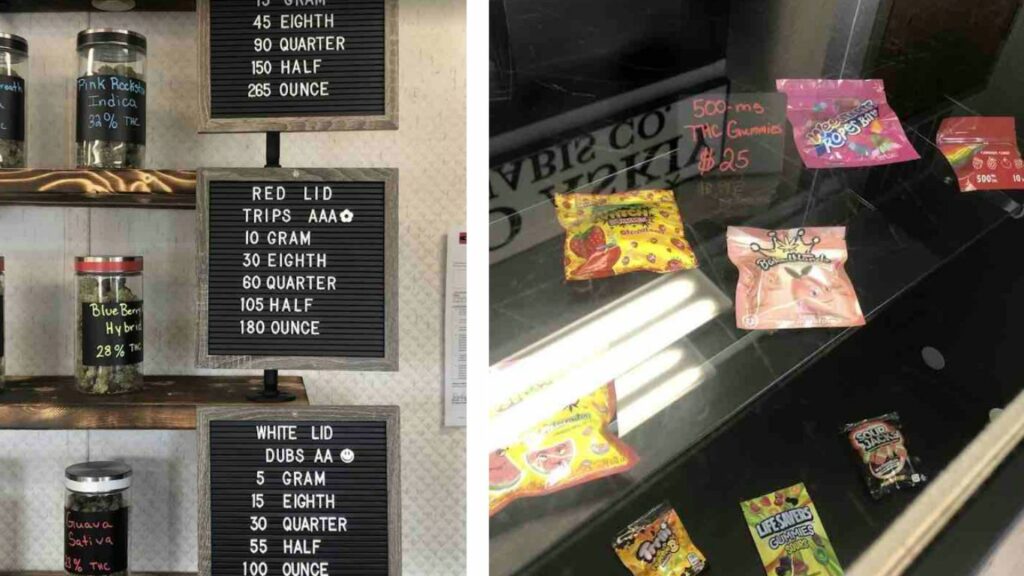
Images shared by the store online display an assortment of cannabis flower, extracts and edibles, with prices ranging from $5-15 a gram for dried flower, shatter around $17-20 a gram, and commercially-packaged edibles commonly found in the illicit market.
Images of products for sale at Miyo Askiy Cannabis Co.
Peter Flaman, a business adviser with Piapot First Nation, told local media the store would be able to distinguish itself from numerous other retailers in the Regina area by “running a lot cheaper store.”
A representative with Piapot First Nations was not immediately available for comment.
A handful of other First Nations communities in the province have opened their own stores under similar circumstances. Another Cree First Nation in Saskatchewan located near Regina, the Peepeekisis Cree Nation, created its own cannabis regulations in 2019 and opened its first cannabis store in 2020.
The Pheasant Rump Nakota First Nation has published its own cannabis regulations as well, opening a retail store in 2019 about 2 hours southeast of Regina. At that time, Pheasant Rump Chief Ira McArthur told the Regina Leader Post that they purchase products “from a supplier that grows it in quality control conditions, and the product is tested by one of the same laboratories that Health Canada uses.” The store advertises flower, CBD and THC tinctures, capsules, concentrates, edibles, and topicals.
The Muscowpetung First Nation took a similar approach, opening its own store in 2018 based on its own cannabis regulations. The provincial government asked the First Nation to close the store, with the Nation, in turn, filing a statement of claim in the Court of Queen’s Bench in 2019. The claim sought a declaration that the Nation has an inherent right to self-government and that it has the power to sell and regulate cannabis under the constitutional rights of Indigenous people in Canada.
That store, the Mino-Maskihki, is currently listed online as being closed.
While some First Nations in the province (and across Canada) have taken a more sovereign approach to their cannabis regulations, some have made efforts to align their own laws with provincial and/or federal regulations.
Darcy Bear, the Chief of the Whitecap Dakota First Nation near Saskatoon, praised Saskatcehwan’s changes to First Nations cannabis rules, saying they will give them the ability to better enforce the law in their communities.
“First Nations assert their jurisdiction and maintain community safety by creating laws under the Indian Act, land codes, and other federal legislation, but there have been difficulties in enforcing these laws in the courts,” says Bear. “Through our work with the provincial government, the amendments to SOPA will give us access to prosecution and enforcement tools that will give force to our laws in areas such as environmental protection and community safety, and strengthen the place of our laws alongside federal and provincial law.”
Not everyone is happy with the possible changes, though. Chief Derek Sunshine of the Fishing Lake First Nation told CBC last year that he had no intention of pursuing an agreement with the province or SLGA.
“They have no say in my nation,” he said, noting that the band created its own licensing system, and its store operates under that authority. “They have no right to say to my nation that we need a licence.” Numerous First Nation communities in the province and across Canada have opened their own cannabis stores, operating outside provincial and federal regulations, with at least eight communities creating their own bylaws.
We build birdhouses for the chickadees, swallows, and robins that call our gardens home. We set up mason bee houses for the busy pollinators that preserve biodiversity. But what about other kinds of bugs? Some, like aphids, are pests that destroy flowers and vegetables, but others are beneficial. An insect hotel is a great way to pamper them after a hard day. Here are some tips on creating a simple, cozy insect habitat to offer the best accommodation for ladybugs, lacewings, and more.
Insect Hotels
An insect hotel is a natural space or man-made structure providing shelter for hibernating or nesting insects. If you build it big enough, the hotel can also welcome frogs and newts!
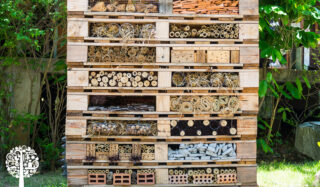
It can be as simple as moving a few rotting logs into a secluded garden corner and laying down decaying leaves, twigs, and branches. Or, it can be a three-tiered structure built out of natural or recycled materials, such as old pallets, pots, or clay tiles, and divided into separate zones for different insects. It can be a stand-alone structure or small enough to attach to a fence post.
A homemade insect hotel’s size, shape, and aesthetics are limitless. Ensure it has a solid back and a roof to keep the inside dry. The hotel’s front must be open but covered with chicken wire or mesh to allow guests in and keep hungry birds and rodents away.
It can be a disc shape, triangle, cylindrical, square, or just some recycled pots and wood stacked together.
Location, Location, Location
Where you put your insect hotel will make a difference to what bugs it attracts and how cozy it is.
A sheltered area away from the wind is optimal. Most insects prefer damp and dark conditions, so a sun-part shade spot makes sense.
Putting the hotel close to an active insect area, such as a hedge, a bank of nectar-rich flowers such as bee balm, or a pond will help it fill up quickly.
Attracting Guests
Decorating the rooms of your insect hotel is the creative part. Different insects will prefer different furnishings.
Wood-Boring Beetles & Centipedes
Rotting logs are perfect for wood-boring beetles whose larvae feast on decaying wood. Mixed with other decaying plant matter, such as leaves, the logs will also attract centipedes who eat slugs, millipedes, and woodlice.
Ground Beetles & Ladybugs
Various stick sizes and twigs attract ground beetles who chase aphids and carrot root fly larvae. Ladybugs will also check into this space, and that’s great, as they also snack on aphids and mites.
Hoverflies
Hoverflies will take up residence in the pile of twigs and sticks. They are pollinators and members of the pest patrol. The larvae feed on aphids, while adults pollinate flowers as they snack on nectar.
Bees
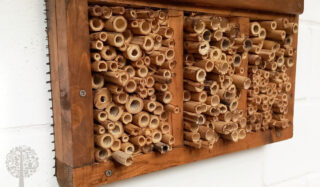
Hollow stems such as bamboo canes provide holes for bees who lay their eggs and then seal the hole using mud or leaf litter.
Lacewings
Straw, dried grass, or rolled-up cardboard are the best room furnishing for lacewings, often referred to as a gardener’s best friend. They devour aphids and pests such as scale insects, caterpillars, and mites. The trick with this space is to keep the straw or cardboard dry. Placing it inside an old open-ended plastic bottle will help prevent it from becoming soggy.
A must-have for every garden, insect hotels provide five-star accommodation for the tiny members of the garden’s thriving ecosystem.
It’s religion fundamentally that has gone astray; you can put the world’s catastrophe down to many things, but in the final analysis, the fault lies with religion, not politics or any other organisational structure.
The reason I say this is because I believe or I have retrieved through my manipulation of perception – that the world is lost primarily due to the body of religion having been separated from the head; the priesthood has been decapitated.
What I am talking about is the Old Religion – the one of SPIRIT and of TRUTH
These shamans of this old religion, have been abused. They are all locked up within themselves or locked up in mental hospitals – medicated, lobotomised, silenced and governed. So still we remain leaderless and without direction…
It takes a great deal of effort to break free from the programming enforced upon you from childhood. To be free of all this construct is to almost build an entirely new person. A reconstruction of yourself, from the broken pieces of your total SELF; a jigsaw to put back together; the ashes of the burnt phoenix…
However – it is not impossible!
There is a path directed before you – the path to conquering the self; silencing the mind, and closing the distraction of the internal dialogue. It is all these things. It is RECAPITULATION of past experience – and yet it can be none of them…
But, it is still, silently holding on to the faith that exists within yourself – the faith you have in yourself – in your own energy – your own experience your own birth and your own death!
Ever since its inception, America’s state-level cannabis industry has been a major revenue earner for both business owners and states. According to data from the Cannabis Control Commission (CCC), cannabis retailers in Massachusetts sold almost $152 million worth of recreational cannabis last month, making June the most lucrative month in terms of sales since the state launched its recreational cannabis industry in late 2018.
Cannabis is one of the fastest growing industries in the world and recent data shows that the sector hasn’t slowed down its pace despite deteriorating economic conditions globally. The industry regularly generates billions of dollars per year in cannabis sales, creating jobs for hundreds of thousands of Americans and providing states with billions of dollars in tax revenue.
CCC data shows that consumers in Massachusetts bought $132.8 million worth of recreational cannabis and $19 million worth of medical marijuana. Unsurprisingly, cannabis flower is still the most popular form of cannabis for most recreational consumers, with vapes, pre-rolls, concentrates and edibles following. And with cannabis flower prices dropping to a historic low of only $5.82 per gram in June, adult-use consumers are much more likely to purchase flower compared to costlier options like concentrates.
Several other states surrounding Massachusetts have also launched their own cannabis markets in recent years, increasing the likelihood of lower sales due to reduced levels of cannabis tourism.
Just six months after launching its own adult-use market, cannabis retailers in Connecticut sold $24 million worth of medical and recreational cannabis combined in June. Cannabis flower accounted for more than 50% of sales while vape products and edibles made up 25% and 10% of sales.
Maryland is also enjoying high cannabis sales after recently allowing recreational cannabis commerce, with consumers spending more than $10 million on cannabis products over the first weekend of sales.
Despite the increasing competition from recently launched markets, Massachusetts is still going strong. On top of selling increasing amounts of recreational cannabis, marijuana retailers in the state are also providing the state with more tax revenue than the alcohol industry.
Massachusetts received $74.2 million in tax revenue from the marijuana industry compared to $51.3 million from alcohol in the first half of 2021. Retailers in the state of Massachusetts have cumulatively sold $4.74 billion worth of recreational cannabis since November 2018.
Meanwhile. the national cannabis market is expected to grow by 34% annually to reach a valuation of $444.34 billion by the end of the decade.
As this growth materializes, plenty of ancillary enterprises such as Advanced Container Technologies Inc. (OTC: ACTX) are likely to benefit because they sell supplies that marijuana companies use in their cultivation activities.
NOTE TO INVESTORS: The latest news and updates relating to Advanced Container Technologies Inc. (OTC: ACTX) are available in the company’s newsroom at https://cnw.fm/ACTX
About CNW420
CNW420 spotlights the latest developments in the rapidly evolving cannabis industry through the release of two informative articles each business day. Our concise, informative content serves as a gateway for investors interested in the legalized cannabis sector and provides updates on how regulatory developments may impact financial markets. Articles are released each business day at 4:20 a.m. and 4:20 p.m. Eastern – our tribute to the time synonymous with cannabis culture. If marijuana and the burgeoning industry surrounding it are on your radar, CNW420 is for you! Check back daily to stay up-to-date on the latest milestones in the fast -changing world of cannabis.
To receive instant SMS alerts, text CANNABIS to 21000 (U.S. Mobile Phones Only)
Please see full terms of use and disclaimers on the CannabisNewsWire website applicable to all content provided by CNW420, wherever published or re-published: http://CNW.fm/Disclaimer
Do you have questions or are you interested in working with CNW420? Ask our Editor










Recent Comments