The number one practice that will add power to your Integrated Pest Management (IPM) is scouting. I often see professional cultivators fall into a pattern of reactivity instead of proactivity, and it’s a bummer because there are steep consequences from the delayed detection of problems. Usually, you could have avoided the whole thing if you had found the issue earlier. Scouting will stop that vicious cycle!
Record Data
Take notes, keep the notes, and refer to the notes. This could be as simple as a journal or as complex as a database, but you need notes so you can remember exactly what kind of conditions were present when you encountered an issue. Jot down the weather and environment, plant health observations, and pest counts.
Define Your Space
The technical term for this is making a “transect,” but you will need a naming system to define your garden spaces. Divide your garden into sections or give distinct areas silly, unique names. It can be simple, complex, serious, or fun; it should be whatever makes sense for your space. That way, when you take notes, you can communicate where you find the issues.
Macro to Micro
A general rule for crop health observation is to go from big to small. Observe the transect area as a whole, and then observe on a plant level. Scan areas for differences; our brains are very good at doing this comparative work. Look for color, size, and shape differences. Scan across the entire crop, the transect area, or the entire plant from the top to the crown and roots. Magnification is another powerful tool for scouting. A hand lens and/or dissecting microscope are crucial to getting your eyes onto an even smaller level of plant observation.
Randomize Plant Selection
Randomly select the plants to scout individually. Most of us don’t have the luxury of looking at every plant in our garden, so you will have to choose a representative set of plants to look at more closely. Want to get fancy and eliminate bias from your plant selection? Have a standard numbering system for your plants (ex., the southeast most plant is always 1, and you always count from east to west), then use a random number generator to select a specific plant. You can find many free ones online. Then examine randomly selected plants to put through a more thorough plant-level scouting protocol.
Monitor Pest Populations
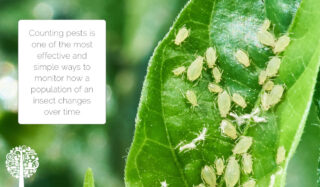
Counting pests is one of the most effective and simple ways to monitor how a population of an insect changes over time. There are several methods for insect counting. You could use a beat cloth, paintbrush, and tray to shake/brush loose insects and collect them for identification. Leaf samples can be taken, and insects counted under a dissecting microscope. You can use a hand lens to identify insects in the field. Sticky traps are another tool to help you identify and measure flying insect populations. After you decide which pest counting methods you want to use, conduct pest counts on your randomly selected plants, and record your numbers so you can use them for future comparison.
Pest & Disease Identification
Know Your Enemy. An organism’s life cycle will always provide clues for prevention, detection, and identification. Knowing an organism’s parameters to thrive and unique identifiers of its life cycle will take your scouting to the next level.
For instance, with the dreaded powdery mildew, the temperature range for infection is between 68 to 77°F, and relative humidity between 40 to 100% is sufficient for the spores to germinate. Diffused or low light will also favor powdery mildew development. These life cycle parameters are why air movement in the lower canopy and good pruning practices are necessary to protect susceptible crop types. If you can’t keep it hot and dry, you must watch for those little infection spots to pop up.
Unique life cycle observations can provide conclusive details for identifying a pest. The broad mite, for example, has unique eggs. They are oblong and covered in polyps. Also, the males will carry around the dormant females on their back, which is a dispersal mechanism for this pest, but also a BRILLIANT clue that you are looking at the infamous broad mite.
The Observation Lens
Develop an observation habit when caring for your garden. Always be scouting. Always be vigilant. Watering, moisture monitoring, pruning, and trellising are all touchpoints with your plants and moments you can use to examine plant health. If you work with a team and everyone is in this mindset, you have several eyeballs in the garden instead of just one person and their weekly scouting protocol. Give the freedom to team members to capture pictures or videos of symptoms or flag out areas that need further inspection.
Scouting is an art; not all the tools or methods will be needed for every situation. Scouting practices are vast and many, specific to pressures, crop types, climate, and how a farm/garden operates. These guidelines inform the mindset needed to create an effective scouting practice. So, don’t be intimidated, and don’t think of scouting as a rigid, uber-technical thing. Instead, think of scouting as learning the story of your garden ecosystem and be comforted that you will navigate the challenges with a solid foundation of facts.
State data has revealed that Arizona’s recreational cannabis market passed the $100 million sales threshold in March. The state legalized recreational cannabis in 2020 via the Safe and Smart Arizona Act, allowing the purchase, possession and use of recreational cannabis by adults aged 21 years of age and older.
It took Arizona a little more than a year after legalization to reach $100 million in adult-use cannabis sales, with recreational marijuana sales tripling medical cannabis sales over the last three months. According to the Arizona Department of Revenue, the state’s medical marijuana market has averaged $30 million in sales every month. Recreational cannabis sales in March were close to $101 million, increasing by more than $10 million from the $86.5 worth of recreational cannabis sold in April.
Cumulative sales for both recreational and medical cannabis reached $100 million in March 2021 with $59 million in recreational cannabis sales and more than $473 million in medical cannabis sales. Although overall cannabis sales in Arizona have surpassed $100 million every month since, March 2023 was the first time recreational cannabis sales alone breached the $100 million mark.
While recreational cannabis sales have seen an upward trajectory since March 2021, medical cannabis sales have been on a steady decline since peaking at $73.3 million in April 2021. Medical cannabis sales in July 2021 were under $40 million, and they have ranged from $33 million to $28.6 million from September 2022 to February 2023 when Arizona saw its lowest month of medical marijuana sales since it started reporting sales figures.
On the other hand, Arizona residents bought $93.4 million worth of recreational cannabis in December 2022, $91.3 million in January 2023 and $84.5 million in February 2023 before breaching the $100 million mark in March.
Arizona is already earning millions of dollars in tax revenue from cannabis sales, with the recreational market providing $15.4 million in revenue and the medical market providing $10.4 million. The state levies a 16% excise tax on adult-use cannabis sales and a 6% sales tax on medical cannabis while local governments charge an extra 2% on all cannabis sales.
According to the report, 30% of the total taxes collected from cannabis go to community college and provisional community college districts, 31% goes to public safety programs, 25% to the Arizona Highway User Revenue Fund and 10% to the justice reinvestment fund.
The sales numbers represent the enduring consumer demand for recreational cannabis around the country. States such as California, which have had legal recreational cannabis markets for much longer, are now home to behemoth markets that sell billions of dollars’ worth of adult-use cannabis each year.
These thriving markets for cannabis have created additional opportunities for entities such as Advanced Container Technologies Inc. (OTC: ACTX), which see a gap in the availability of the supplies that actors in the marijuana industry need.
NOTE TO INVESTORS: The latest news and updates relating to Advanced Container Technologies Inc. (OTC: ACTX) are available in the company’s newsroom at https://cnw.fm/ACTX
About CNW420
CNW420 spotlights the latest developments in the rapidly evolving cannabis industry through the release of two informative articles each business day. Our concise, informative content serves as a gateway for investors interested in the legalized cannabis sector and provides updates on how regulatory developments may impact financial markets. Articles are released each business day at 4:20 a.m. and 4:20 p.m. Eastern – our tribute to the time synonymous with cannabis culture. If marijuana and the burgeoning industry surrounding it are on your radar, CNW420 is for you! Check back daily to stay up-to-date on the latest milestones in the fast -changing world of cannabis.
To receive instant SMS alerts, text CANNABIS to 21000 (U.S. Mobile Phones Only)
Please see full terms of use and disclaimers on the CannabisNewsWire website applicable to all content provided by CNW420, wherever published or re-published: http://CNW.fm/Disclaimer
Do you have questions or are you interested in working with CNW420? Ask our Editor
At the beginning of the 20th century, the field of biotechnology has seen the emergence of in vitro plant tissue culture. It has become a powerful and significant technique with numerous applications across multiple industries. [1] In vitro plant tissue culture is an advanced scientific process that involves cultivating plant tissues and cells in a controlled environment other than their natural habitat.
According to research, one of the considerable advantages of in vitro plant is its capability to enhance the production of various biologically active compounds used in cosmetics, pharmaceuticals, and agriculture.
The cannabis industry has also used in vitro plant tissue culture. [2] We will explore what exactly in vitro plant tissue culture is. Also, we will talk about the factors influencing the production, its challenges, and why it’s important.
What Is In Vitro Plant Tissue Culture
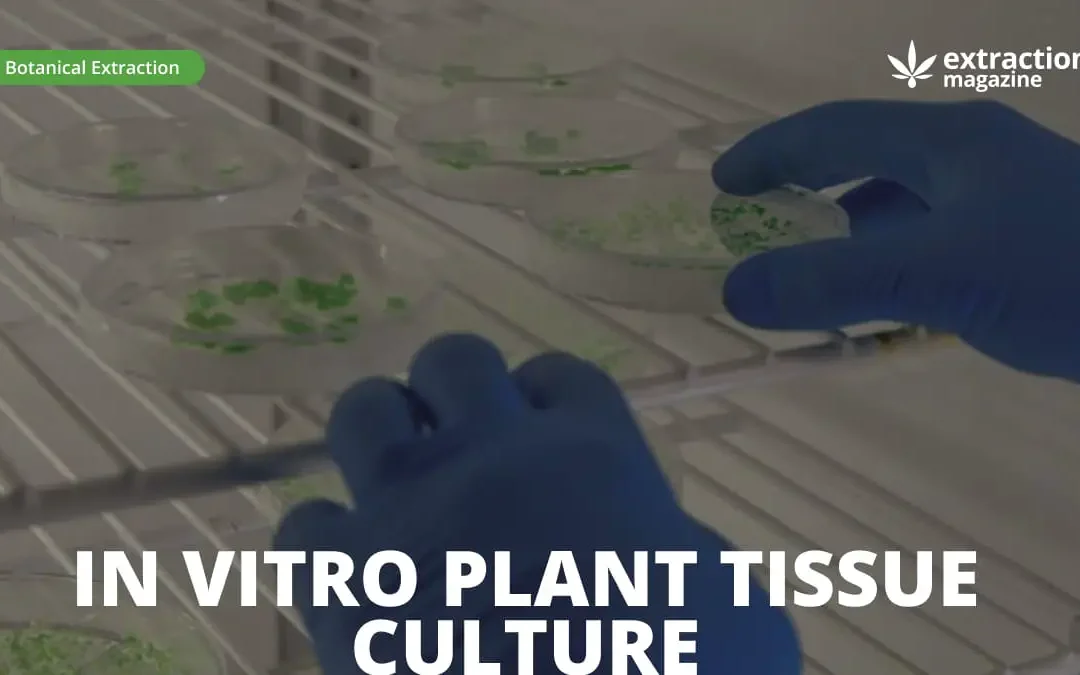
In vitro plant tissue culture is a specific technique scientists and researchers use to propagate and grow plants in a laboratory environment.
This process involves using a small piece of a plant, like a root, leaf, or stem. This piece of plant is put into a nutrient medium specially prepared to provide hormones and nutrients the plant needs to grow and develop into an entire plant.
The nutrient-rich medium sterilizes the piece of plant tissue to eliminate any lingering contaminants. Once sterilization has occurred, this tissue is put into a petri dish or test tube.
Eventually, with the perfect light, humidity, and temperature conditions, this tissue will begin to divide and differentiate. It will then form new cells, roots, and shoots, essential for the plant’s successful growth process.
Yet, why do individuals use this technique? The answer is complex but simple. The in vitro plant tissue culture technique is for multiple purposes. For example, for preserving endangered plant species and mass propagating plants with customized desirable traits.
In addition, in vitro plant can also be used by plant breeders to create identical copies of a plant quickly bypassing seed germination. This is one of the reasons this technique is being explored by cannabis growers who want to increase the growth rates and quality of their crops.
Most of the pharmaceuticals utilized in current times are based on plant-derived metabolites.
In vitro plant tissue culture is a modern and reliable way to produce important plant active compounds. This is because it guarantees independence from geographical and external conditions.
In addition, using in vitro plant tissue culture to transform plants allows to boost plants characteristics producing enhanced amount of biologically active compounds for using in pharmaceutical formulations.
Besides being a great technique for the pharmaceutical industry, in vitro plant tissue culture has other significant applications. For example, agriculture can use this technique to produce plant growth regulators and biopesticides. Moreover, the cosmetic industry employ this technique to produce enhanced amount of plant compounds. They use it in skincare products like creams, oils, and salves.
Challenges Surrounding In Vitro Plant Tissue Culture
Although in vitro plant tissue culture is helpful in plant biotechnology and agriculture for plant propagation, conservation, and genetic manipulation. That can be applied to numerous industries, it does face unique challenges. [3] Some of these challenges are listed below:
Genotype dependency: Not all plants respond equally well to tissue culture. Finding suitable cultural conditions for specific plants can be time-consuming and challenging. Not every company will have the means to do this. It can also lead to undesirable plant mutations;
Cost and scalability:In vitro requires dedicated infrastructure and can be expensive. Scaling up the process is challenging due to cost constraints and specialized facilities. Making it harder for smaller companies and individuals to access this advancing technology;
Acclimatization and ex vitro transfer: Transitioning plants from a controlled environment to the outside world requires careful protocols to ensure survival and successful establishment. Plants grown using in vitro plant tissue culture can face problems acclimating to their new environments and could die instead of flourish;
Somatic embryogenesis and organogenesis: In vitro plant efficiency can vary depending on the plant’s genotype. Optimizing culture conditions is necessary to enhance their success rate. Still, it doesn’t mean it will be successful for every plant type.
Fortunately, there are ways to address these challenges. For example, addressing these challenges requires continuous research, optimization of protocols, a collaboration between academia and industry, and technological advancements to improve the success rates, efficiency, and scalability of in vitro plant.
Conclusion
Ultimately, in vitro plant tissue technique has multiple uses and can benefit numerous industries. Although it has its challenges, its benefits seem to outweigh its negatives at this time.
It’s evident that in vitro plant tissue culture has the capability to transform the production of natural products in cosmetics, pharmaceutical products, and agriculture.
Psychedelics have enjoyed significant public interest in recent years due to their purported medical benefits. As more regions in the United States and across the world loosened psychedelic restrictions, initial research on psychedelics found that these substances could treat various mental disorders with fewer side effects.
This initial research opened the flood and led to the investment of millions of dollars into psychedelic research worldwide. Continued research has revealed that several psychedelics can be effective against a multitude of mental disorders, offering sustained and long-term relief at relatively minimal doses.
Scientists have been especially interested in how psychedelics affect brain chemistry and allow people to leave depressive states. Although most psychedelic research is still in its infancy, it has been found that psychedelic-assisted therapy, or the combination of psychedelics and talk therapy, is the most effective at treating mental conditions.
New research has found that LSD triggers changes in the brain by changing the effects of brain stimulation, allowing the psychedelic to produce various effects on an even larger scale. The research suggests that hallucinogenics could be used to develop various novel ways of treating a laundry list of health conditions.
One way that psychedelics deliver their benefits is by inducing neuroplasticity. This refers to the brain’s ability to reorganize and create new neural connections in response to stimuli. Psychedelics also induce changes by interacting with the serotonin 2A receptor to influence perception, cognition and mood.
The combination of enhancing neuroplasticity and interacting with receptors in the brain may be the reason why psychedelics provide long-term relief against conditions such as anxiety, depression and PTSD.
Lucas Dwiel, a study author and postdoctoral fellow at the Doucette Lab at the Geisel School of Medicine at Dartmouth, explained that while conventional treatments such as transcranial magnetic stimulation (TMS) may be effective against a wide range of psychiatric conditions, they rarely provide long-term relief. Dwiel said that using psychedelics such as LSD to make the brain easily susceptible to change would prolong the relief period and make psychiatric treatment more effective for plenty of patients.
His research team used rat models to measure changes in brain activity after administering LSD and analyzed the effects of combining LSD with brain stimulation. The team found that stimulating the brain 24 hours after administering a dose of LSD resulted in a state where the brain was susceptible to external interventions. Their results indicate that LSD may play a role in causing brain changes that come to the fore when the brain is stimulated.
Further studies are also being conducted by various psychedelic industry players such as Delic Holdings Corp. (CSE: DELC) (OTCQB: DELCF) to establish other ways through which these substances can be leveraged to treat a variety of conditions, including major depressive disorder.
NOTE TO INVESTORS: The latest news and updates relating to Delic Holdings Corp. (CSE: DELC) (OTCQB: DELCF) are available in the company’s newsroom at https://ibn.fm/DELCF
About PsychedelicNewsWire
PsychedelicNewsWire (PNW) is a specialized content distribution company that (1) aggregates and distributes news and information on the latest developments in all aspects and advances of psychedelics and their use, (2) creates PsychedelicNewsBreaks designed to quickly update investors on important industry news, (3) leverages a team of expert editors to enhance press releases for maximum impact, (4) assists companies with the management and optimization of social media across a range of platforms, and (5) delivers unparalleled corporate communication solutions. PNW stays abreast of the latest information and has established a reputation as the go to source for coverage of psychedelics, therapeutics and emerging market opportunities. Our team of seasoned journalists has a proven track record of helping both public and private companies gain traction with a wide audience of investors, consumers, media outlets and the general public by leveraging our expansive dissemination network of more than 5,000 key syndication outlets. PNW is committed to delivering improved visibility and brand recognition to companies operating in the emerging markets of psychedelics.
To receive instant SMS alerts, text “Groovy” to 844-397-5787 (U.S. Mobile Phones Only)
Please see full terms of use and disclaimers on the PsychedelicNewsWire website applicable to all content provided by PNW, wherever published or re-published: https://www.psychedelicnewswire.com/Disclaimer
Do you have questions or are you interested in working with PNW? Ask our Editor
(CNW) Toronto — Shiny Health is closing Q2 in a positive direction as it has reduced corporate overhead during the quarter by nearly 60 per cent and maintains its gross margin position as one of the market-leading chains in Ontario.
Shiny Bud Inc. a subsidiary of Shiny Health, announces an asset purchase agreement with One Plant (Retail) Corp. (OP) that provides for the sale of two of their retail locations, Stoney Creek (a mīhī-branded cannabis retail store) and Rockland; with a proposed closing date of July 31, 2023, and only following OP’s receipt of their Alcohol Gaming Commission of Ontario (AGCO) approvals. The estimated total purchase price is CAD $1,200,000 subject to customary adjustments.
Corporate Update
Meris Kott has been appointed as a director to the board of Shiny Heath & Wellness Corp.; the company now has two women board Directors. Kott’s background for over 30 years has been in investment banking and financial consultancy and she has always been one of the very few women in the c-suite of each project.
Advertisement
Kott is currently the CEO of Global Wellness Strategies Inc. (CSE: GWS) a wellness prospect generator with its’ focus on global wellness, psychedelics, mycology, hemp and CBD, healthcare-related target companies. She is a speaker at conferences focused in the wellness, cannabis and psychedelic sectors. She supports women in business and mentors young women to strive for executive and board positions whenever possible. Kott has a degree in Economics from McGill University in Montreal.
“I am humbled to join the board with such esteemed directors. In my experiences, women approach fast-growing startup situations with a broad skillset. From my vantage point, Shiny Health has a diversified retail platform strategy with dispensaries and pharmacies, a formidable team with a proven QSR track record, a strong licensee program, plus new funding partners; Shiny Health & Wellness can be considered a dark horse in the cannabis sector.” — Meris Kott
Today, the Ontario Cannabis Store (OCS) launched a multi-channel awareness campaign aimed at expanding cannabis literacy among Ontarians through the Cannabis Made Clear online education hub. Cannabis Made Clear provides easy access to unbiased, fact-based and current resources to support cannabis consumers and canna-curious Ontarians in making informed, responsible choices about cannabis.
Throughout the summer and again towards the end of 2023, Ontarians can expect to encounter Cannabis Made Clear campaign motion graphics, broadcast spots, digital out of home placements and audio segments in some of their most frequented online and public spaces – including Yonge and Dundas Square in Toronto.
Cannabis Made Clear officially launched in October 2022 as a key pillar of the OCS’s mandate to champion a socially responsible cannabis industry through advancing knowledge and promoting responsible consumption. The online education hub features a wide variety of expert-reviewed resources related to four core areas:
Responsible use, harm reduction and tips for minimizing risk.
Legal use, travelling with cannabis and understanding the differences between regulated and unregulated products.
Health effects and what the latest evidence says about the relationship between cannabis, the body and the mind.
Cannabis and youth, and how to approach the subject of responsible consumption early on.
Coinciding with the Cannabis Made Clear public education campaign is the launch of the OCS’s Summer Guide to Legal Cannabis, a related resource that pulls together “everything you need to know” about consuming, purchasing and travelling with legal cannabis in Ontario this summer. The Summer Guide is available in print at participating authorized retail stores across the province.
Advertisement
As research into cannabis and its effects evolves, the resources available through the Cannabis Made Clear education hub will continue to be updated to reflect the latest evidence. Cannabis consumers and non-consumers alike are invited to explore the Cannabis Made Clear education hub in full by visiting www.CannabisMadeClear.ca.
Quotes:
“Five years into legalization in Canada, combatting misinformation and presenting the facts about cannabis remains critically important to enabling a vibrant cannabis marketplace. Thank you in advance to industry partners, cannabis consumers and the people of Ontario for engaging with the Cannabis Made Clear online education hub and helping to clear up confusion by sharing these evidence-backed resources.”
— David Lobo, President & CEO, Ontario Cannabis Store
“As a key pillar of the OCS’s social responsibility mandate, we’re committed to advancing cannabis knowledge and promoting responsible consumption, while also ensuring Ontarians have access to the information they need through Cannabis Made Clear. The more you know, the better positioned you are to make the most informed decisions about cannabis – and this campaign helps to share that information.”
— Dr. Jenna Valleriani, Senior Manager, Social Responsibility, Ontario Cannabis Store
Australian Greens Senator David Shoebridge has been leading the charge for legalization Down Under, and hopes to table new legislation in August in federal parliament.
The goal of the Australia Greens is to establish a federal framework for the legalization and regulation of cannabis rather than taking a state-by-state “patchwork” approach. (The Australian Capital Territory (ACT) became the first jurisdiction in Australia to legalize cannabis for adult use in 2019, and legislation has been introduced in South Australia).
The bill’s proposed age of access is 18 years old, and adults would be allowed to grow up to six plants at home, with no upper possession limit. Retail sales are envisioned in “cannabis cafes” that can also facilitate outdoor consumption spaces.
What we have created with this bill is a core set of principles for an ethical cannabis market that is controlled by individuals and small businesses rather than big pharma, big tobacco, or big alcohol.
Senator David Shoebridge, Australian Greens
The Greens’ research shows that the market in Australia is worth around AUD$15 billion and says the government could bring in nearly $30 million in the first decade of legalization, but also focuses on issues of justice reform, especially for the country’s First Nations population, and desire for a more locally-run market.
“This bill could legalize cannabis in one go across the country with a simple and coherent national scheme for growing, distribution, sales and taxation,” he told Crikey in April. “What we have created with this bill is a core set of principles for an ethical cannabis market that is controlled by individuals and small businesses rather than big pharma, big tobacco, or big alcohol.”
Shoebridge has also said the bill was inspired by trying to find a middle ground between a tightly controlled market like Canada and a very wild west approach of the US.
“We have learnt from the experience in other jurisdictions and tried to draw a middle path between the let-it-rip corporate markets in the US and more tightly controlled government supply.”
“We don’t want the market to be dominated by a handful of large corporations, but we certainly don’t want to be the fun police either.”
Senator Shoebridge’s office provided a few answers to StratCann on their plans for legalization now that they have concluded an extensive public feedback process. You can read those replies below.
When is this legislation expected to be tabled?
(Sen D. Shoebridge): We are on track to put the bill to the Senate at the start of August.
Can you share some of the ways Canada’s experience informs this legislation with legalizing cannabis?
The Bill takes lessons from the Canadian model, with Cannabis able to be purchased by adults from licensed dealers and cannabis cafes [retail and consumption spaces]. We also have tried to learn lessons from Canada’s experience of legalization, and our draft legislation looks to have a market that is more democratic, more decentralized and less corporate.
What should Canadians know about the political appetite in Australia for cannabis legalization?
The good news is—we received almost 9,000 responses to our public survey (more on this below), and 98% of those responses support legalizing cannabis! Our office is receiving tremendous support from people who just want to see cannabis finally legalized and who are struggling to understand why the Labor government keeps opposing it.
Is this the same legislation you originally gave notice to have introduced in November 2022? If so, can you explain the timeline from then until the pending introduction of this bill?
Yes, it is. Since giving notice of the bill, we developed a first draft with the Parliamentary drafting team. We also obtained independent research on the public revenue that comes with legalization. This research was strongly informed by the Canadian experience. We also determined the size of the potential cannabis market in the country based on questioning in parliament of law enforcement officials.
We then designed and ran a public survey and stakeholder consultation based on our draft bill. We had a series of questions about the proposed legislation that people were invited to comment on to help us shape our final bill. We closed that consultation process [in April] and have been undertaking a comprehensive review of the responses since then.
We are now amending the Bill in response to the survey responses to ensure the Bill we table in parliament has the broadest possible support. We expect this to be completed in time to table the Bill in early August.
We appreciate that many people are keen for us to just get it done already—but the best possible Bill, with the broadest possible support, gives us the best chance of getting this done!
Conversations about the legalization of cannabis often focus on revenue generation. Can you speak to some of the other societal benefits your legislation will focus on, such as the uneven enforcement of prohibition against young people, First Nations, and other marginalized communities?
First Nations Justice is always at the forefront of our work in the Justice portfolio, and has formed a significant part of our approach to drug law reform, policing reform, and our federal cannabis campaign.
First Nations communities bear the brunt of aggressive policing of cannabis laws. Across the country, more than 80,000 people a year are caught up in the criminal justice system for cannabis offences, overwhelmingly for possession and far too often First Nations people.
When we talk about harm reduction in the drug reform space, the greatest and most immediate harm reduction that comes from legalizing cannabis is ending this war on people because they choose cannabis over alcohol or tobacco.
Legalizing cannabis and drug law reform is part of a broader project of addressing systemic racism in the police force, the courts and the criminal justice system as a whole.
The National Basketball Association, as well as its players’ association, has officially come to terms on an agreement that brings significant changes to the league’s approach toward cannabis. In a comprehensive document spanning 676 pages, various provisions related to cannabis have been outlined, with the major change being the deletion of marijuana from the organization’s list of banned drugs for players.
One key aspect of the new agreement is that players are now allowed to invest in and promote cannabis brands, but with specific conditions. Players can hold an ownership interest, either directly or indirectly, in entities involved in producing or selling CBD products, provided that the THC content in the cannabis does not exceed 0.3% dry weight. Additionally, players are permitted to invest in cannabis firms, as long as their ownership is passive while also being below 50%.
Promotional activities by players are also addressed in the agreement. Players can endorse CBD products from entities that don’t fall under the category of cannabis companies. However, if a player wishes to endorse cannabidiol (CBD) products from a marijuana entity, they must seek permission from both the NBA as well as the association bringing together all the players.
Permission may be withheld if the cannabidiol products are marketed through a brand which also includes cannabis products. If the endorsement could cause confusion with cannabis-related items, permission could also be denied.
The collective bargaining agreement establishes sanctions for players found guilty of driving while intoxicated by alcohol or any controlled substance, as well as for those involved in felonies related to cannabis distribution. The use of cannabis or its products by players is treated similarly to alcohol, and teams are allowed to refer players to the medical director for mandatory evaluations if they have reasonable cause to suspect substance use or dependency issues.
The agreement also acknowledges the potential dangers of synthetic cannabinoids such as delta-8 THC and provides a voluntary treatment option for players seeking help in such cases. While voluntary entry into the program incurs no penalties, noncompliance after enrolling could lead to fines and possible suspensions.
This move was praised by well-known personalities, such as Snoop Dogg, an iconic figure in the cannabis community and a commentator for the NBA. Snoop Dogg commended the league’s decision, recognizing the benefits of cannabis for medical purposes and as an alternative to opioids.
Michele Roberts, a former head of the NBPA and a board member of Cresco Labs, a major cannabis company, had previously anticipated that the league would eventually adopt a formal policy change to support cannabis use, which has now become a reality with the signing of the new collective bargaining agreement.
It isn’t surprising that the NBA is making these adjustments to its rules. It has been known that numerous enterprises such as IGC Pharma Inc. (NYSE American: IGC) are making headway in commercializing FDA-approved treatments based on cannabis constituents including THC, so the NBA can no longer deny the therapeutic potential of cannabis.
NOTE TO INVESTORS: The latest news and updates relating to IGC Pharma Inc. (NYSE American: IGC) are available in the company’s newsroom at https://cnw.fm/IGC
About CNW420
CNW420 spotlights the latest developments in the rapidly evolving cannabis industry through the release of two informative articles each business day. Our concise, informative content serves as a gateway for investors interested in the legalized cannabis sector and provides updates on how regulatory developments may impact financial markets. Articles are released each business day at 4:20 a.m. and 4:20 p.m. Eastern – our tribute to the time synonymous with cannabis culture. If marijuana and the burgeoning industry surrounding it are on your radar, CNW420 is for you! Check back daily to stay up-to-date on the latest milestones in the fast -changing world of cannabis.
To receive instant SMS alerts, text CANNABIS to 21000 (U.S. Mobile Phones Only)
Please see full terms of use and disclaimers on the CannabisNewsWire website applicable to all content provided by CNW420, wherever published or re-published: http://CNW.fm/Disclaimer
Do you have questions or are you interested in working with CNW420? Ask our Editor











Recent Comments