Study finds room for improvement in Canadian QA/QC standards

Study finds room for improvement in Canadian QA/QC standards

In a study published in The International Journal of Drug Policy in January 2021, researchers from the University of Ottawa examined the role that quality assurance (QA) and quality control (QC) play in both ensuring the safety of cannabis products in a thoroughly regulated market and providing consumers with the information they need to make educated purchasing decisions.

The authors opened by noting that “Canada’s recent legalization can be held as an evolution from past prohibitionist cannabis policies in favour of a strict regulatory framework that enables the legal manufacturing, sale, and consumption of cannabis,” emphasizing that in the prohibitionist model, individuals still consumed cannabis en masse where there was often no way for them to know anything about its safety. 

QC is defined as “a set of activities for ensuring quality in products” while “QA is a set of activities for ensuring quality in the processes by which products are developed. Illicit cannabis, prior to legalization, had limited (if any) standardized quality controls for the cannabis distributed and consumed in Canada—this is in contrast to the QC/QA of medical cannabis, which was first implemented with the Marihuana Medical Access Regulations in 2001.” The lack of QA and QC in the unregulated market meant that consumers were at risk of using products contaminated with harmful microbes and chemicals. 

“Theoretically,” the study notes, “as a result of standardization through governmental oversight, Canadian consumers can expect safety, consistency, and reliability when purchasing legal cannabis products. With ongoing calls for the safe supply of other drugs, the legalization of cannabis can be viewed as a mechanism for providing safe supply through a quality-controlled system, as well as a potential example of safe supply in action.”

Assessing Canada’s QA/QC requirements

Assessing the strengths of Canada’s QA/QC requirements, the article states that they “enable a climate of knowledgeable purchasing for cannabis products, whereby consumers are assured that the cannabis has passed contaminant testing and relevant information is disseminated on the levels of THC and CBD.”

QA/QC requirements also put “limits on variability,” ensuring “that the amount of THC reported on the label and the actual amount of THC in the product are within an acceptable range of error,” as well as ensuring that products are not contaminated with harmful pathogens or toxins. 

While these strengths are an undoubted boon to Canadian cannabis consumers, the study also notes that “there are still knowledge gaps to fill, and weaknesses to strengthen, in order to further reduce risk of consumer harm.”

Establishing cultivars

One of these gaps is around flower typology. “In the cannabis industry, the term ‘strain’ is often used to refer to a type of cannabis, yet there is no objective and widely accepted definition of a cannabis strain, and what differentiates one strain from another.” A solution to this problem can be found in established agricultural crops where rather than strains, cultivars have been developed, patented, and marketed. However, “producing and registering cultivars takes time and resources” but “has been successfully and widely accomplished with hemp (56 cultivars approved for cultivation in Canada for the 2020 growing season). The same will likely be achieved for recreational and medical cannabis in the coming years and will greatly improve the reproducibility and characterization of commercial cannabis.”

Speaking with StratCann, study co-author Ryan Pusiak noted that for established commercial cultivars “there are these criteria that have to be met every single time that a plant is harvested, so that would hypothetically reduce the amount of variability of cannabinoids within the flower.” 

Another challenge is that new product formats can pose unforeseen risks, such as the problematic (and thankfully discontinued) inclusion of vitamin E acetate in several vaping products, which caused negative health consequences for many consumers.

Testing standards

The final opportunity for improvement listed by the study is one that has been covered extensively by StratCann: inconsistencies in lab testing, especially with regard to active ingredients, with authors noting that “the lack of nationally validated and implemented methods for testing cannabinoids is a major weakness of the current QC/QA standards in Canada and abroad.”

Co-author Chelsea Cox tells StratCann that she thinks “the labelling and allowances that are underneath the cannabis act and regulations structure the information to be centred towards THC amounts, and to a lesser extent, terpene content or even the best before date or harvest date,” which are the “type of informational components that I think consumers would be interested in.” She says this discrepancy is “stratifying the market towards higher THC products because that’s the main category that you have on the label.” 

Pusiak added that “with communicating THC, it seems like there’s no advertising that’s allowed. It seems like people are just going to the dispensary seeing what’s the highest that they can get, which is what’s led to this market spiralling out of control, in the dried flower category in particular.”

He also feels that the way THC contents are labelled the same across different product types might be confusing for some consumers, for example how a 10mg edible might not seem like much when dried flower often contains in excess of 200mg/g. 

Regarding the issue of testing standards, Pusiak recalls how “the testing has really gone out of control: one day I wake up and I see that there’s 30%, then I go to bed and I wake up and it goes up to 42% dried flower.

“This is very rare to have a plant produce secondary metabolites that are in this concentration because the plant needs to survive, still needs to photosynthesize, still needs to have all those structures that make a plant a plant.

“To have a consistent testing protocol, I thought, was actually the best way moving forward: if everyone had the same method that they test their products on.” Although he goes on to say that after attending some discussions held by the C-45 Quality Association, he feels it’s likely just as important that standards are produced for how samples are handled prior to being tested.  

QC/QC frameworks provide a starting point

The study concludes that, despite there being room for improvement, “with Canada as the only G7 country to legalize cannabis for recreational use on a federal level, the Cannabis Act not only serves as an example, but positions Canada as a leader in cannabis quality standards.” In addition, “the current QC/QA frameworks also provide a starting point for evidence-based consumer education and knowledgeable purchasing, where increased safety measures can be built upon and tweaked as the markets mature and knowledge of cannabis cultivation and manufacturing proceeds.”


Heat Waves Are The New Normal, So How Do We Adapt?

Heat Waves Are The New Normal, So How Do We Adapt?

With another growing season underway, I am reflecting on our changing climate. I remember the long and cold spring of 2021, followed by a short summer and a wet winter. The 2022 season, on the other hand, was mellow from the start, with warm spring days and no late, unexpected frosts. As the summer solstice approached, it gradually became drier and hotter, with hose pipe bans starting in the south of England, Wales, and eventually in my county, one of the wettest in England. Ironically, I wrote an article about gardening in extreme wetness last year. Now, we face the possibility of not having rain for months.

An Emotional Rollercoaster

I found the first heat wave of mid-July last year to be rather splendid. I was on top of the moorland by a cold Yorkshire dam, interlacing refreshing swims with a chilled lie down under a shady tree with 36°C hot air stroking my face like I was in the Mediterranean. I felt happy, but in the back of my mind, I knew that if I were stuck on a London tube or any city flat with no airflow, or frankly, anywhere but where I was at the time, I would not be so smug. With worry, I observed local water dams getting lower, most breaking records and often uncovering long-forgotten rubbish or infrastructure like bridges from when they were still vibrant valleys and not water supply reservoirs. One of the local dams dropped 11 meters below the standard water line, with a cracking bottom resembling a desert. Plants and weeds began to grow, and sheep came down from nearby fields to graze. Dystopian, yet still beautiful.

I was initially excited about how many apples I would have thanks to the heat, but within weeks, I started noticing the smaller ones dropping and the larger ones being eaten by birds. The same thing happened to the plums; the late-developing ones were dense, bitter, and damaged from hungry beaks. It made me think of the animals and their food sources.

The worms and organic matter traveled deeper as the soil dried out. Reports of juvenile birds, hedgehogs, and badgers dying of hunger and thirst were heartbreaking.

It wasn’t long before my sweet, enormous grapes in the polytunnel started to drop like flies, with whole clusters at the end of the vine shriveling. I was inadvertently growing bitter raisins. With the hose ban in place and relying on water from a nearby spring, I realized I should not have taken it for granted. Meanwhile, we regularly witnessed stupidity, such as individuals watering their lawns or fiddling with spring water pipes to snitch more water for themselves with zero consideration for their neighbors or the environment.

Soil Science

I wondered what must be done to my allotment and many others nationwide. We need to be more prepared for these events that will likely roll in year after year. So, I began digging deeper into the world of soil science, familiarising myself with the attributes of Soil Organic Matter (SOM) and its properties; improved soil aggregation, water filtration, reduced compaction, and, most important, the capacity to hold water in the soil.

With numerous research studies and papers available, it is clear that increasing SOM benefits plant nutrition, but this statistic got me hooked: a 1% increase in SOM results in about 20,000 to 25,000 more gallons of available soil water per acre or acre-inch. Considering that most soils have only 1-2% SOM, there’s a lot of room for improvement. Having looked at the evidence provided mainly by regenerative cattle ranchers in the United States, there are reports of 10-15% SOM increases in the land. That’s a lot of water that is held in the ground. Similar examples of reversed desertification can be found when looking at Soil4Climate and their impressive work with the Massai tribe in Kenya (look them up!).

Following this trail, I figured out an action plan to implement this year so that my crops, the animals in my environment, and my sanity remain intact:

Increasing SOM In All Growing Areas

In acidic clay soil, this requires heavy mulching, adding compost, sand, coco coir, and biochar to break the clay structure. Activated Aerobic Compost Teas will also be on the cards.

Hugelkultur For The Win!

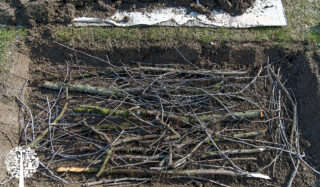
This is my favorite method of building raised beds these days. So much has been said about the Hugelkultur in previous articles, but seeing the benefits of Hugel beds two or three years down the road is mind-blowing. Water retention is spectacular, and plant growth is vigorous and pest-free. Last year, one of my beds fruited with Wood Blewit mushrooms, which have a bergamot fragrance and purple appearance, and come at a premium cost at a posh London market stall.

More Plants, Less Work!

No dig method (which, coincidentally, I came across in my first year of growing and can not recommend enough to any beginner gardeners), keeping the plants in the soil year-round, and integrating livestock into crop rotations. It may not be easy for many to do the latter, but befriending a local chicken group may get you some good chicken manure, which can do the job until you get your own herd of native cows.

Shading In The Greenhouse And The Garden

This may not seem like a solution initially, but shading is practical and can provide a difference of around 10°C, which can be a life or death matter for many plants and insects.

Keeping The Little Ones In Mind

The last but most important thing we can do is to support the animals mindfully. Water bowl availability is paramount in several corners of the garden, both on the ground and higher up for different clientele. In bird nesting season, avoid feeding dry seed, as it discourages young parents from looking for bugs and spiders, essential food for their fledglings. Environment and shelter are the most important; a little messy corner in the garden hasn’t caused any harm to humans, but for a hedgehog needing respite from the scorching sun, this may be the thing to save its day or life.

The heat and its consequences are inevitable. It will change how we grow, build houses, and function as a society. The humanism in us must shine, and the drive to protect what we have left should spur us all into action, no matter how grand or small. The solutions for change are there; we must keep finding and perfecting them.

Three in Five Americans Support Psychedelic Therapy Legalization, Poll Finds

A recent poll by UC Berkeley’s Center for the Science of Psychedelics (BCSP) has revealed that a majority of Americans are in favor of legalizing psychedelic therapy. The first-ever poll of its kind, the UC Berkeley survey found that almost one-half of Americans believe that regulators should also decriminalize the recreational use of psychedelics.

The Center for the Science of Psychedelics presented the survey’s findings at the Psychedelic Science 2023 conference in Denver, Colorado. Psychedelics are predicted to play a significant role in the psychiatric industry over the next couple of decades. An increasing number of studies have found that psychedelic drugs such as psilocybin, MDMA and ayahuasca can offer long-term relief against various mental disorders with minimal negative side effects.

As there is a general consensus that conventional mental health treatments simply aren’t working for the majority of the population, there has been significant interest in psychedelic-assisted therapies. Several lawmakers across the country are moving to either legalize or decriminalize psychedelics, with cities such as Denver setting the stage by decriminalizing certain psychedelics.

BCSP’s new poll now shows that a large portion of the public also supports decriminalizing psychedelics and allowing both therapeutic and recreational use. According to the survey, 61% of Americans support the creation of a “regulated legal framework” for medical psychedelic use, with 35% being strongly in favor of such a framework. The survey showed that 34% of the survey participants opposed legalizing therapeutic psychedelics while 5% were unsure.

Another 49% were in favor of completely getting rid of criminal penalties for the possession and use of entheogenic fungi and plants. Furthermore, 56% said they supported a legalization model where therapeutic psychedelics were approved by the FDA and prescribed by doctors, 38% opposed such a model, and 6% were unsure. The survey also revealed that 78%, or four in five, of Americans supported policies that would make it easier for scientists to study psychedelics.

According to BCSP executive director Imran Khan, the poll represents the first clear look into American thoughts and feelings on psychedelic substances. He said that the study highlighted psychedelic interest and support in a majority of the American population. The public wants a regulated market that eliminates barriers to psychedelic research and grants access to therapeutic psychedelics.

Khan also noted that it is important that policymakers, physicians and researchers alike know and react to public opinions on psychedelics, especially with all the stigma and hype surrounding them. BCSP will release the Berkely Psychedelics Survey results in full over the following weeks.

This growing interest in psychedelics in the general population is undoubtedly connected to the headway that numerous enterprises such as Seelos Therapeutics Inc. (NASDAQ: SEEL) have made in their quest to commercialize psychedelics treatments.

About PsychedelicNewsWire

PsychedelicNewsWire (PNW) is a specialized content distribution company that (1) aggregates and distributes news and information on the latest developments in all aspects and advances of psychedelics and their use, (2) creates PsychedelicNewsBreaks designed to quickly update investors on important industry news, (3) leverages a team of expert editors to enhance press releases for maximum impact, (4) assists companies with the management and optimization of social media across a range of platforms, and (5) delivers unparalleled corporate communication solutions. PNW stays abreast of the latest information and has established a reputation as the go to source for coverage of psychedelics, therapeutics and emerging market opportunities. Our team of seasoned journalists has a proven track record of helping both public and private companies gain traction with a wide audience of investors, consumers, media outlets and the general public by leveraging our expansive dissemination network of more than 5,000 key syndication outlets. PNW is committed to delivering improved visibility and brand recognition to companies operating in the emerging markets of psychedelics.

To receive instant SMS alerts, text “Groovy” to 844-397-5787 (U.S. Mobile Phones Only)

For more information please visit https://www.psychedelicnewswire.com

Please see full terms of use and disclaimers on the PsychedelicNewsWire website applicable to all content provided by PNW, wherever published or re-published: https://www.psychedelicnewswire.com/Disclaimer

Do you have questions or are you interested in working with PNW? Ask our Editor

PsychedelicNewsWire (PNW)
San Francisco, California
www.psychedelicnewswire.com
415.949.5050 Office
Editor@PsychedelicWire.com

PsychedelicNewsWire is part of the InvestorBrandNetwork.

420 with CNW — NFL to Inject More Dollars into Studying Cannabis as Concussion Treatment

420 with CNW — NFL to Inject More Dollars into Studying Cannabis as Concussion Treatment

image

The joint efforts of the National Football League (NFL) and its players’ union have resulted in the announcement of a new round of funding for independent research on the therapeutic advantages of CBD as an alternative treatment for pain in concussed players instead of relying on opioids. The amount of $526,525 has been allocated to support two studies, with one led by the American Society of Pain and Neuroscience (ASPN) investigating cannabidiol and noninvasive vagal nerve stimulation (nVNS) as potential remedies for post-concussion headaches.

The study, which will be randomized and is the first of its kind, aims to compare the effects of CBD and nVNS on athletes involved in contact sports who are experiencing post-traumatic headaches. This data will serve as a foundation for future investigations into post-traumatic headache treatment.

The NFL and the NFL Players Association have been actively promoting research on the benefits and risks of cannabinoids, including CBD, for the past few years. In a previous initiative, the league provided $1 million in grants for two studies that explored the efficacy of cannabis and its components in managing pain and offering neuroprotection to football players with concussions.

NFL-NFLPA Pain Management Committee cochair Kevin Hill expressed hope that these studies would contribute to improved pain management for professional football players.

The funding plan was initially outlined by an NFL commissioner in June 2022, highlighting the widespread interest among players and stakeholders in exploring the therapeutic potential of cannabinoids as an alternative to opioid pain relievers.

The NFL-NFLPA committee organized two informational forums on CBD in 2020. In addition, the NFL’s drug-testing policy underwent significant changes in 2020 as part of a collective bargaining agreement. The revised policy stipulates that players will no longer face suspensions for positive drug tests — not just for cannabis but for any drug.

Similar revisions to drug policies have been adopted by other sports leagues as the movement for cannabis legalization gains momentum at the state level. The NCAA, for example, has a committee dedicated to promoting the health and well-being of student-athletes, which has proposed removing cannabis from its list of banned substances.

The NBA has also eliminated THC from its drug-testing requirements while also allowing players to make passive investments in the cannabis industry. However, under the latest collective bargaining agreement, NBA players are prohibited from endorsing cannabis companies.

Nevada sports regulators recently voted to propose a regulatory amendment that would protect athletes from penalties for possessing or using cannabis per state law.

In 2021, the UFC announced that fighters would no longer face punishment for positive cannabis tests.

Meanwhile, the Kansas City Royals, following the example of the Chicago Cubs, have formed a partnership with a marijuana brand to raise awareness about the potential therapeutic benefits of CBD.

It isn’t surprising that the NFL is injecting research dollars into exploring the therapeutic potential of cannabis. Many companies, such as IGC Pharma Inc. (NYSE American: IGC), have already registered significant progress in their attempts to develop medicinal formulations from THC and other cannabinoids. The NFL is therefore not misguided in exploring this aspect of marijuana.

NOTE TO INVESTORS: The latest news and updates relating to IGC Pharma Inc. (NYSE American: IGC) are available in the company’s newsroom at https://cnw.fm/IGC

About CNW420

CNW420 spotlights the latest developments in the rapidly evolving cannabis industry through the release of two informative articles each business day. Our concise, informative content serves as a gateway for investors interested in the legalized cannabis sector and provides updates on how regulatory developments may impact financial markets. Articles are released each business day at 4:20 a.m. and 4:20 p.m. Eastern – our tribute to the time synonymous with cannabis culture. If marijuana and the burgeoning industry surrounding it are on your radar, CNW420 is for you! Check back daily to stay up-to-date on the latest milestones in the fast -changing world of cannabis.

To receive instant SMS alerts, text CANNABIS to 21000 (U.S. Mobile Phones Only)

For more information please visit https://www.CNW420.com

Please see full terms of use and disclaimers on the CannabisNewsWire website applicable to all content provided by CNW420, wherever published or re-published: http://CNW.fm/Disclaimer

Do you have questions or are you interested in working with CNW420? Ask our Editor

CannabisNewsWire420
Denver, Colorado
http://www.CNW420.com
303.498.7722 Office
Editor@CannabisNewsWire.com

CNW420 is part of the InvestorBrandNetwork.

These July Garden Tips Will Help Your Garden Thrive Throughout The Summer

These July Garden Tips Will Help Your Garden Thrive Throughout The Summer

The garden is reaching its peak blooming period; a few plants need summer love to keep it in tip-top shape.

Pruning

After flowering, it’s time to prune the wisteria. Remove the side shoots to five leaves from the main stem; it will return fuller and healthier next season. If you haven’t already, shape rhododendrons, azaleas, and deciduous magnolias before new growth appears.

A branch being pruned in the summer sun.

A branch being pruned in the summer sun.

Deadhead, Pinch, and Cut Back

Early summer stalwarts such as perennial geraniums and delphiniums will bloom again in late August and September if they’re cut back to half their size. Deadheading summer annuals like geraniums, impatiens, cosmos, and petunias will encourage new flowers throughout the season. Do the same for dahlias and roses; the garden will stay alive with color all season long.

Fruits and Vegetables

Make sure to nip off the tips of squash and courgettes to encourage branching, and continue to pinch the tomatoes for fruit until September. Thin out fruit-laden apple, pear, and plum trees by removing damaged fruit, which helps prevent rot and opens the tree up to airflow, keeping it cool during summer heat waves. Add the discarded fruit to the compost.

Continue to weed, especially in the veggie garden and perennial garden beds. Intruders such as dandelion, chickweed, fireweed, or buttercup will spread, competing for the valuable water resources and nutrients the other plants need this time of year.

Harvest peas, beans, carrots, and leafy greens. Mulch under any leftover foliage to add nutrients back to the soil.

Plant, Harvest, Divide

As the bearded iris finishes blooming, divide the clumps so they’ll establish before winter. Bleeding hearts, astilbe, and other late spring bloomers such as bell flowers, Solomon’s seal, lily of the valley, forget me nots, and peonies can also be divided or transplanted. Remember, peonies prefer exposed and shallow roots, so don’t bury them too deep.

If you have a particular garden area where you’d like to see poppies, foxgloves, or columbine grow, collect the dried seed pods and scatter them for next year. Remember that foxglove takes two years from the time of sowing to bloom.

After harvesting the peas, radishes, and beans in the veggie garden, re-seed for an autumn harvest. Do the same for potatoes before mid-July.

Autumn bulbs like cyclamen, fall crocus, and nerines (lily-like late fall bloomers) can all be found at local garden centers, and now is the time to plant them.

Water

A woman watering her flowers with a hose in the summer sun.

A woman watering her flowers with a hose in the summer sun.

By now, you have the watering regime well in hand, but have you noticed how little moisture parts of the garden need? All the mulch and compost you’ve been applying act like a blanket to hold in moisture deep underground for the roots to lap up. And even better, if you’ve created hügelkultur pots or gardens, the underlying compost is doing its job and keeping everything wet when it matters the most.

Keep the bird bath full of clean water or lay out saucers for all the insects and garden friends, like bees and chickadees, who will appreciate a cool drink on a hot summer day.

In the southern hemisphere, it’s the middle of winter, and where the winter frosts have been light, broccoli, cabbage, and other cold hardy vegetables are being planted for spring harvest, just as in the northern hemisphere, the same crops are being planted for mid-fall enjoyment.

Stay tuned as we garden and grow together next month!

Week in weed – July 1, 2023

Week in weed – July 1, 2023

In cannabis news that StratCann covered this week, we looked at Lit Research in Toronto, new monthly stats and trends on cannabis sales, how provinces help—or ignore—their local cannabis industry, the news of Tantalus Labs announcing layoffs as it looks at restructuring, and a Yukon man who was found guilty following 2020 recall of cannabis-infused jerky.

In other news, CBC News looked at the AGCO’s consideration of an amendment to remove the requirement for window coverings on cannabis stores, and spoke with Elisa Keay, of K’s Pot Shop on Queen Street East in Toronto, and Omar Khan, chief communications and public affairs officer with High Tide Inc. Khan highlighted the safety concerns retailers have resulting from passers-by being unable to see inside the store, in cases of robberies. 

Meanwhile, Toronto Police arrested a man this week for a violent cannabis store robbery on Wednesday, June 21 in the Dundas Street West and Burnhamthorpe Road area. Police allege that the armed man attacked an employee to get access to cash and cannabis. 

The Canada Border Services Agency reminded travellers coming to Canada, along with several other pieces of advice, not to bring cannabis into the country. They also reminded travellers not to bring sand to the beach.

Following Canopy’s reported $648-million Q4 loss last week, one BC investor launched a class action lawsuit, saying his shares dropped in value when the company admitted to errors in its financial reporting.

Radio Canada also had a story on a recent study conducted by researchers at Laval University that looks at crash reports relating to cannabis and alcohol consumption

In other research news, a paper out of Australia looked at the implementation and public health impacts of cannabis legalization in Canada. The authors argue that legalization was successful in reducing arrests and providing a safe, legal supply, but argued for more research. 

An arbitrator has upheld the suspension and dismissal of an Ontario gold mine worker who tested positive for cannabis use following a serious workplace incident and a return-to-work test.

The town of The Blue Mountains in Ontario is updating its cannabis policies with a Cannabis Facilities Policies Background Paper.

The organizer of an annual cannabis protest on Canada Day in Vancouver said he’s not holding the event this year due to a lack of interest. VIA reports that the event organizer had been selling vendors non-refundable spaces.

BC retail chain Trees released its annual financial results for the fifteen-month period ended March 31, 2023. The Company currently has 14 Trees branded storefronts in Canada: nine in Ontario and five in BC.

SNDL Inc. and Nova Cannabis Inc. extended the outside date for closing of their strategic partnership, citing an ongoing review by regulators.

Eric Costen was appointed Associate Deputy Minister of Health on June 26, 2023. Costen has worked on the cannabis file in Ottawa almost constantly since 2013.

The Cannabis Regulators Association (CANNRA), a non-partisan, nonprofit association of government officials involved in cannabis regulation from more than 45 US states, opened an international, non-voting membership category this year, and has welcomed Health Canada as its first international member.

In other international news,  Kyle Jaeger reported that the president of Ukraine is calling for the legalization of medical cannabis to help Ukrainians cope with trauma amid the ongoing war with Russia.


Week in weed – July 24, 2023

Week in weed – July 24, 2023

In cannabis news that StratCann covered this week, we looked at Lit Research in Toronto, new monthly stats and trends on cannabis sales, how provinces help—or ignore—their local cannabis industry, the news of Tantalus Labs announcing layoffs as it looks at restructuring, and a Yukon man who was found guilty following 2020 recall of cannabis-infused jerky.

In other news, CBC News looked at the AGCO’s consideration of an amendment to remove the requirement for window coverings on cannabis stores, and spoke with Elisa Keay, of K’s Pot Shop on Queen Street East in Toronto, and Omar Khan, chief communications and public affairs officer with High Tide Inc. Khan highlighted the safety concerns retailers have resulting from passers-by being unable to see inside the store, in cases of robberies. 

Meanwhile, Toronto Police arrested a man this week for a violent cannabis store robbery on Wednesday, June 21 in the Dundas Street West and Burnhamthorpe Road area. Police allege that the armed man attacked an employee to get access to cash and cannabis. 

The Canada Border Services Agency reminded travellers coming to Canada, along with several other pieces of advice, not to bring cannabis into the country. They also reminded travellers not to bring sand to the beach.

Following Canopy’s reported $648-million Q4 loss last week, one BC investor launched a class action lawsuit, saying his shares dropped in value when the company admitted to errors in its financial reporting.

Radio Canada also had a story on a recent study conducted by researchers at Laval University that looks at crash reports relating to cannabis and alcohol consumption

In other research news, a paper out of Australia looked at the implementation and public health impacts of cannabis legalization in Canada. The authors argue that legalization was successful in reducing arrests and providing a safe, legal supply, but argued for more research. 

An arbitrator has upheld the suspension and dismissal of an Ontario gold mine worker who tested positive for cannabis use following a serious workplace incident and a return-to-work test.

The town of The Blue Mountains in Ontario is updating its cannabis policies with a Cannabis Facilities Policies Background Paper.

The organizer of an annual cannabis protest on Canada Day in Vancouver said he’s not holding the event this year due to a lack of interest. VIA reports that the event organizer had been selling vendors non-refundable spaces.

BC retail chain Trees released its annual financial results for the fifteen-month period ended March 31, 2023. The Company currently has 14 Trees branded storefronts in Canada: nine in Ontario and five in BC.

SNDL Inc. and Nova Cannabis Inc. extended the outside date for closing of their strategic partnership, citing an ongoing review by regulators.

Eric Costen was appointed Associate Deputy Minister of Health on June 26, 2023. Costen has worked on the cannabis file in Ottawa almost constantly since 2013.

The Cannabis Regulators Association (CANNRA), a non-partisan, nonprofit association of government officials involved in cannabis regulation from more than 45 US states, opened an international, non-voting membership category this year, and has welcomed Health Canada as its first international member.

In other international news,  Kyle Jaeger reported that the president of Ukraine is calling for the legalization of medical cannabis to help Ukrainians cope with trauma amid the ongoing war with Russia.


There Was No Pandemic: Denis Rancourt Testimony at National Citizens Inquiry Canada

There Was No Pandemic: Denis Rancourt Testimony at National Citizens Inquiry Canada

Truth Comes to Light

There Was No Pandemic:

Denis Rancourt Testimony at National Citizens Inquiry Canada

by Denis G. Rancourt, PhD

This is radical.

The essay is based on my May 17, 2023 testimony for the National Citizens Inquiry (NCI) in Ottawa, Canada, my 894-page book of exhibits in support of that testimony, and our continued research.

I am an accomplished interdisciplinary scientist and physicist, and a former tenured Full Professor of physics and lead scientist, originally at the University of Ottawa.

I have written over 30 scientific reports relevant to COVID, starting April 18, 2020 for the Ontario Civil Liberties Association (ocla.ca/covid), and recently for a new non-profit corporation (correlation‑canada.org/research). Presently, all my work and interviews about COVID are documented on my website created to circumvent the barrage of censorship (denisrancourt.ca).

In addition to critical reviews of published science, the main data that my collaborators and I analyse is all‑cause mortality.

All-cause mortality by time (day, week, month, year, period), by jurisdiction (country, state, province, county), and by individual characteristics of the deceased (age, sex, race, living accomodations) is the most reliable data for detecting and epidemiologically characterizing events causing death, and for gauging the population-level impact of any surge or collapse in deaths from any cause.

Such data is not susceptible to reporting bias or to any bias in attributing causes of death. We have used it to detect and characterize seasonality, heat waves, earthquakes, economic collapses, wars, population aging, long-term societal development, and societal assaults such as those occurring in the COVID period, in many countries around the world, and over recent history, 1900-present.

Interestingly, none of the post-second-world-war Centers-for-Disease-Control-and-Prevention-promoted (CDC‑promoted) viral respiratory disease pandemics (1957-58, “H2N2”; 1968, “H3N2”; 2009, “H1N1 again”) can be detected in the all‑cause mortality of any country. Unlike all the other causes of death that are known to affect mortality, these so‑called pandemics did not cause any detectable increase in mortality, anywhere.

The large 1918 mortality event, which was recruited to be a textbook viral respiratory disease pandemic (“H1N1”), occurred prior to the inventions of antibiotics and the electron microscope, under horrific post-war public-sanitation and economic-stress conditions. The 1918 deaths have been proven by histopathology of preserved lung tissue to have been caused by bacterial pneumonia. This is shown in several independent and non-contested published studies.

My first report analysing all-cause mortality was published on June 2, 2020, at censorship-prone Research Gate, and was entitled “All-cause mortality during COVID-19 – No plague and a likely signature of mass homicide by government response”. It showed that hot spots of sudden surges in all‑cause mortality occurred only in specific locations in the Northern-hemisphere Western World, which were synchronous with the March 11, 2020 declaration of a pandemic. Such synchronicity is impossible within the presumed framework of a spreading viral respiratory disease, with or without airplanes, because the calculated time from seeding to mortality surge is highly dependent on local societal circumstances, by several months to years. I attributed the excess deaths to aggressive measures and hospital treatment protocols known to have been applied suddenly at that time in those localities.

The work was pursued in greater depth with collaborators for several years and continues. We have shown repeatedly that excess mortality most often refused to cross national borders and inter-state lines. The invisible virus targets the poor and disabled and carries a passport. It also never kills until governments impose socio-economic and care-structure transformations on vulnerable groups within the domestic population.

Here are my conclusions, from our detailed studies of all-cause mortality in the COVID period, in combination with socio-economic and vaccine-rollout data:

  1. If there had been no pandemic propaganda or coercion, and governments and the medical establishment had simply gone on with business as usual, then there would not have been any excess mortality
  2. There was no pandemic causing excess mortality
  3. Measures caused excess mortality
  4. COVID-19 vaccination caused excess mortality

Regarding the vaccines, we quantified many instances in which a rapid rollout of a dose in the imposed vaccine schedule was synchronous with an otherwise unexpected peak in all-cause mortality, at times in the seasonal cycle and of magnitudes that have not previously been seen in the historic record of mortality.

In this way, we showed that the vaccination campaign in India caused the deaths of 3.7 million fragile residents. In Western countries, we quantified the average all-ages rate of death to be 1 death for every 2000 injections, to increase exponentially with age (doubling every additional 5 years of age), and to be as large as 1 death for every 100 injections for those 80 years and older. We estimated that the vaccines had killed 13 million worldwide.

If one accepts my above-numbered conclusions, and the analyses that we have performed, then there are several implications about how one perceives reality regarding what actually did and did not occur.

First, whereas epidemics of fatal infections are very real in care homes, in hospitals, and with degenerate living conditions, the viral respiratory pandemic risk promoted by the USA‑led “pandemic response” industry is not a thing. It is most likely fabricated and maintained for ulterior motives, other than saving humanity.

Second, in addition to natural events (heat waves, earthquakes, extended large-scale droughts), significant events that negatively affect mortality are large assaults against domestic populations, affecting vulnerable residents, such as:

  • sudden devastating economic deterioration (the Great Depression, the dust bowl, the dissolution of the Soviet Union),
  • war (including social-class restructuring),
  • imperial or economic occupation and exploitation (including large-scale exploitative land use), and
  • the well-documented measures and destruction applied during the COVID period.

Otherwise, in a stable society, mortality is extremely robust and is not subject to large rapid changes. There is no empirical evidence that large changes in mortality can be induced by sudden appearances of new pathogens. In the contemporary era of the dominant human species, humanity is its worst enemy, not nature.

Third, coercive measures imposed to reduce the risk of transmission (such as distancing, direction arrows, lockdown, isolation, quarantine, Plexiglas barriers, face shields and face masks, elbow bumps, etc.) are palpably unscientific; and the underlying concern itself regarding “spread” was not ever warranted and is irrational, since there is no evidence in reliable mortality data that there ever was a particularly virulent pathogen.

In fact, the very notion of “spread” during the COVID period is rigorously disproved by the temporal and spatial variations of excess all-cause mortality, everywhere that it is sufficiently quantified, worldwide. For example, the presumed virus that killed 1.3 million poor and disabled residents of the USA did not cross the more-than-thousand-kilometer land border with Canada, despite continuous and intense economic exchanges. Likewise, the presumed virus that caused synchronous mortality hotspots in March-April-May 2020 (such as in New York, Madrid region, London, Stockholm, and northern Italy) did not spread beyond those hotspots.

Interestingly, in this regard, the historical seasonal variations (12 month period) in all-cause mortality, known for more than 100 years, are inverted in the northern and southern global hemispheres, and show no evidence of “spread” whatsoever. Instead, these patterns, in a given hemisphere, show synchronous increases and decreases of mortality across the entire hemisphere. Would the “spreading” causal agent(s) always take exactly 6 months to cross into the other hemisphere, where it again causes mortality changes that are synchronous across the hemisphere? Many epidemiologists have long-ago concluded that person-to-person “contact” spreading of respiratory diseases cannot explain and is disproved by the seasonal patterns of all-cause mortality. Why the CDC et al. are not systematically ridiculed in this regard is beyond this scientist’s comprehension.

Instead, outside of extremely poor living conditions, we should look to the body of work produced by Professor Sheldon Cohen and co‑authors (USA) who established that two dominant factors control whether intentionally challenged college students become infected and the severity of the respiratory illness when they are infected:

  • degree of experienced psychological stress
  • degree of social isolation

The negative impact of experienced psychological stress on the immune system is a large current and established area of scientific study, dutifully ignored by vaccine interests, and we now know that the said impact is dramatically larger in elderly individuals, where nutrition (gut biome ecology) is an important co-factor.

Of course, I do not mean that causal agents do not exist, such as bacteria, which can cause pneumonia; nor that there are not dangerous environmental concentrations of such causal agents in proximity to fragile individuals, such as in hospitals and on clinicians’ hands, notoriously.

Fourth, since our conclusion is that there is no evidence that there was any particularly virulent pathogen causing excess mortality, the debate about gain-of-function research and an escaped bioweapon is irrelevant.

I do not mean that the Department of Defence (DoD) does not fund gain-of-function and bioweapon research (abroad, in particular), I do not mean that there are not many US patents for genetically modified microbial organisms having potential military applications, and I do not mean that there have not previously been impactful escapes or releases of bioweapon vectors and pathogens. For example, the Lyme disease controversy in the USA may be an example of a bioweapon leak (see Kris Newby’s 2019 book “Bitten: The Secret History of Lyme Disease and Biological Weapons”).

Generally, for obvious reasons, any pathogen that is extremely virulent will not also be extremely contagious. There are billions of years of cumulative evolutionary pressures against the existence of any such pathogen, and that result will be deeply encoded into all lifeforms.

Furthermore, it would be suicidal for any regime to vehemently seek to create such a pathogen. Bioweapons are intended to be delivered to specific target areas, except in the science fiction wherein immunity from a bioweapon that is both extremely virulent and extremely contagious can be reliably delivered to one’s own population and soldiers.

In my view, if anything COVID is close to being a bioweapon, it is the military capacity to massively, and repeatedly, rollout individual injections, which are physical vectors for whichever substances the regime wishes to selectively inject into chosen populations, while imposing complete compliance down to one’s own body, under the cover of protecting public health.

This is the same regime that practices wars of complete nation destruction and societal annihilation, under the cover of spreading democracy and women’s rights. And I do not mean China.

Fifth, again, since our conclusion is that there is no evidence that there was any particularly virulent pathogen causing excess mortality, there was no need for any special treatment protocols, beyond the usual thoughtful, case-by-case, diagnostics followed by the clinician’s chosen best approach.

Instead, vicious new protocols killed patients in hotspots that applied those protocols in the first months of the declared pandemic.

This was followed in many states by imposed coercive societal measures, which were contrary to individual health: fear, panic, paranoia, induced psychological stress, social isolation, self-victimization, loss of work and volunteer activity, loss of social status, loss of employment, business bankruptcy, loss of usefulness, loss of caretakers, loss of venues and mobility, suppression of freedom of expression, etc.

Only the professional class did better, comfortably working from home, close to family, while being catered to by an army of specialised home-delivery services.

Unfortunately, the medical establishment did not limit itself to assaulting and isolating vulnerable patients in hospitals and care facilities. It also systematically withdrew normal care, and attacked physicians who refused to do so.

In virtually the entire Western World, antibiotic prescriptions were cut and maintained low by approximately 50% of the pre-COVID rates. This would have had devastating effects in the USA, in particular, where:

  • the CDC’s own statistics, based on death certificates, has approximately 50% of the million or so deaths associated with COVID having bacterial pneumonia as a listed comorbidity (there was a massive epidemic of bacterial pneumonia in the USA, which no one talked about)
  • the Southern poor states historically have much higher antibiotic prescription rates (this implies high susceptibility to bacterial pneumonia)
  • excess mortality during the COVID period is very strongly correlated (r = +0.86) — in fact proportional to — state-wise poverty

Sixth, since our conclusion is that there is no evidence that there was any particularly virulent pathogen causing excess mortality, there was no public-health reason to develop and deploy vaccines; not even if one accepted the tenuous proposition that any vaccine has ever been effective against a presumed viral respiratory disease.

Add to this that all vaccines are intrinsically dangerous and our above-described vaccine-dose fatality rate quantifications, and we must recognize that the vaccines contributed significantly to excess mortality everywhere that they were imposed.

In conclusion, the excess mortality was not caused by any particularly virulent new pathogen. COVID so-called response in-effect was a massive multi-pronged state and iatrogenic attack against populations, and against societal support structures, which caused all the excess mortality, in every jurisdiction.

It is only natural now to ask “what drove this?”, “who benefited?” and “which groups sustained permanent structural disadvantages?”

In my view, the COVID assault can only be understood in the symbiotic contexts of geopolitics and large-scale social-class transformations. Dominance and exploitation are the drivers. The failing USA-centered global hegemony and its machinations create dangerous conditions for virtually everyone.

Connect with Denis Rancourt

Cover image based on creative commons work of MiroslavaChrienova, pixabay

Learn How To Fix Cannabis Nutrient Deficiencies

Learn How To Fix Cannabis Nutrient Deficiencies

Even though cannabis is known as “weed” and has a reputation for growing quickly and easily, cultivating high-quality cannabis plants can be quite challenging. One of the most common challenges is maintaining the correct balance of nutrients throughout the growth cycle. 

Nutrient deficiencies can be disastrous for a cannabis crop, but growers with the proper training can usually reverse the effects. Oaksterdam University offers courses to help you troubleshoot your cannabis crop and ensure a high-quality yield every time.  

Usually, nutrient deficiencies in cannabis plants lead to a reduced yield and subpar flower quality. When left unchecked, nutrient deficiencies can kill cannabis plants, wasting your time and money. Catching nutrient deficiencies early on is the key to a healthy, bountiful cannabis harvest.

Growers must keep a vigilant eye on their plants to watch for these early signs of nutrient deficiencies. However, many of these symptoms can be due to multiple issues. It can be hard to pinpoint what the problem with your cannabis home grow is without training on what can go wrong. 

Discolored Leaves on Cannabis Plants from Nutrient Deficiency

Healthy cannabis plants should typically have deep green leaves. Cannabis plants suffering from nutrient deficiencies often have discolored leaves. Red, brown, orange, or yellow cannabis leaves can all signal a problem with the plant and give growers a clue about what might be missing

Low Nutrients Lead to Stunted Cannabis Plants

Cannabis plants grow relatively quickly when they have access to everything they need. Though each cultivar has a different growth rate and flowering time, cannabis plants that grow more slowly than usual can signal a nutrient deficiency. 

Nutrient-Deficient Drooping Leaves or Wilting Cannabis Plants

Wilting can be a sign that your cannabis plants are getting too little or too much water, not receiving the right amount of light, or suffering from a nutrient deficiency. It can be challenging to pinpoint precisely why a cannabis plant is wilting without training from a cannabis program like the ones offered at Oaksterdam University. Never add nutrients before you know exactly why a plant is wilting. 

Cannabis plants need many different nutrients to thrive and can be deficient in any of them. Some cannabis nutrient deficiencies are more common than others, however. 

1. Cannabis Nitrogen Deficiency

Nitrogen deficiency is the most common nutrient deficiency that afflicts cannabis plants. If a cannabis plant is deficient in nitrogen, the bottom leaves will begin to lighten and turn yellow. Left untreated, leaves further up the plant will also start to yellow before they eventually curl up and drop off on their own. 

However, yellowing leaves can also be a sign of overwatering, underwatering, improper temperature — or just a sign that the plant is nearly ready for harvest. It’s essential to ascertain why cannabis leaves are turning yellow before changing how you care for the plant.

2. Magnesium Deficiency in Cannabis

The leaves of a magnesium-deficient cannabis plant will turn yellow, beginning between the veins and spreading outwards. If left untreated, the plant will droop, develop dry brown spots that look like rust, and begin to drop leaves. 

Signs of magnesium deficiency won’t appear in cannabis plants until several weeks after they have begun to suffer, and the condition will progress rapidly. Growers must monitor their plants and stay informed about nutrient balances to catch magnesium deficiency early. 

3. Cannabis Zinc Deficiency

Zinc deficiencies are relatively common. New leaves on zinc-deficient cannabis plants will be small and wrinkled, and the tips of older leaves will change color and begin to dry out. Zinc deficiency is one of the few cannabis nutrient deficiencies with an obvious tell: The leaves on the plant will rotate so they are vertical rather than horizontal. 

However, most nutrient deficiencies have more subtle signs. It’s best to take a class to familiarize yourself with potential cannabis growing problems before planting your first crop

Fixing cannabis nutrient deficiencies involves more than simply adding nutrients to the growing medium. 

Ensure the Right Soil PH for Growing Cannabis

Cannabis planted in soil with the wrong PH cannot absorb nutrients, no matter how much fertilizer you add. Ensuring your growing medium has the proper PH is the first step to ensuring your plant can absorb necessary nutrients. 

Perform a Cannabis Soil Test

Once you have ensured your growing medium is at the proper PH, you must perform a soil test. These tests will tell you what concentration of nutrients is already present in the growing medium and, therefore, what you need to add. More precise tests can be involved and expensive, so working with a professional or more experienced grower is helpful. 

Fertilize Your Cannabis Plants

Once you have determined that a nutrient deficiency is the cause of your struggling cannabis plants, amended the soil to ensure it is at the correct PH, and tested your growing medium to see which nutrients are needed, you can add fertilizer or nutrients to the soil. 

Feeding your cannabis plants the right balance of nutrients isn’t as simple as it might seem. Ensure you have the proper training or knowledge before you begin growing. 

Nutrient Burn or Deficiency?

Both a lack of nutrients and an overabundance can harm cannabis plants. Many symptoms of nutrient deficiency are similar to those of nutrient burn, so it’s essential to check your soil and have a good idea of what you’re doing before you plant your first seed. A class on growing cannabis can help you prepare. 

Cannabis Growth Stages and Nutrient Requirements

The growth stage of your cannabis plants also has a significant impact on the nutrients they need. Many factors go into fertilizing cannabis plants; following a simple schedule or formula is not enough. You will need to become acquainted with the plants and what they need at each stage of the growing cycle by pursuing self-paced education or learning from a more experienced grower. 

Growing cannabis can seem daunting, especially as you learn more about the requirements and things that can go wrong. Oaksterdam offers classes on every aspect of the cannabis industry, from getting started to troubleshooting. If you’ve had a failed cannabis crop or want to prepare for whatever situations sprout, our “When Things Go Wrong” course is for you. Enroll today to ensure your next cannabis crop will be bigger and better than ever. 

420 with CNW — NFL to Inject More Dollars into Studying Cannabis as Concussion Treatment

420 with CNW — Congress Passes Spending Bill Extending Blockage of Adult-Use Cannabis in D.C.

image

Washington D.C. residents won’t be purchasing recreational cannabis any time soon after Congressional lawmakers extended a ban on adult-use marijuana sales in the region. Although residents voted in favor of legalizing adult-use marijuana for adults in 2015, a federal spending bill rider prevents regulators from using local tax rules to create a legal framework for a commercial recreational cannabis market.

The rider has been part of fiscal fending passages every year since and has prevented D.C. from launching a commercial market for years.

Last week, the Republican-controlled House chose to renew the spending rider under the 2024 spending bill again, stating in a summary that it would “retain the ban on federal and local funds” as it pertains to adult-use cannabis legalization in D.C.

The move has been condemned by Representative Eleanor Holmes Norton, a key advocate for granting D.C. statehood and an outspoken critic of the anti-cannabis rider. Norton released a statement saying that while she was pleased with several of the provisions included in the spending bill, she was outraged by the repeated inclusion of the rider, stating that the rider limited the city’s ability to make its own regulations.

Although D.C.’s recreational cannabis market has so far failed to get off the ground, several other states have successfully launched their own markets. The state-legal recreational marijuana industry is now one of the fastest-growing sectors in the country, employing tens of thousands of Americans and generating billions of dollars in tax revenue. On top of that, most states with legal recreational markets have included social equity provisions to aid communities that were disproportionately affected by the failed war on drugs.

However, with the spending rider banning lawmakers from using local taxpayer dollars to launch an adult-use sector, D.C. residents won’t be seeing a commercial market any time soon.

Interestingly, the anti-cannabis rider has even been questioned by certain Republican members of the House. In May, House Oversight and Accountability Committee chair James Comer said that he would review the federal rider following testimony from Washington, D.C., mayor Muriel Bowser.

Bowser told the committee that the congressional appropriations rider had prevented the city from launching a recreational cannabis market for years and posed a threat to public safety. Comer noted at the time that the rider and its impact on cannabis legalization had “caught his attention” and that he would review the matter.

In the meantime, no lawmakers have moved to amend the financial spending bill in the full House Appropriations Committee or the floor.

This continued blockage is not only hurting residents who are interested in using cannabis recreationally, it also stifles entrepreneurs who would like to start companies that address the needs of marijuana companies, such as Advanced Container Technologies Inc. (OTC: ACTX).

NOTE TO INVESTORS: The latest news and updates relating to Advanced Container Technologies Inc. (OTC: ACTX) are available in the company’s newsroom at https://cnw.fm/ACTX

About CNW420

CNW420 spotlights the latest developments in the rapidly evolving cannabis industry through the release of two informative articles each business day. Our concise, informative content serves as a gateway for investors interested in the legalized cannabis sector and provides updates on how regulatory developments may impact financial markets. Articles are released each business day at 4:20 a.m. and 4:20 p.m. Eastern – our tribute to the time synonymous with cannabis culture. If marijuana and the burgeoning industry surrounding it are on your radar, CNW420 is for you! Check back daily to stay up-to-date on the latest milestones in the fast -changing world of cannabis.

To receive instant SMS alerts, text CANNABIS to 21000 (U.S. Mobile Phones Only)

For more information please visit https://www.CNW420.com

Please see full terms of use and disclaimers on the CannabisNewsWire website applicable to all content provided by CNW420, wherever published or re-published: http://CNW.fm/Disclaimer

Do you have questions or are you interested in working with CNW420? Ask our Editor

CannabisNewsWire420
Denver, Colorado
http://www.CNW420.com
303.498.7722 Office
Editor@CannabisNewsWire.com

CNW420 is part of the InvestorBrandNetwork.