Wisconsin’s Supreme Court has declared that the presence of a marijuana-like smell inside a car provides sufficient justification for police to search the vehicle’s occupants. This ruling, delivered last week by the court’s conservative majority in a 4 to 3 vote, overturned previous decisions by lower courts that maintained officers could not be certain whether they were detecting the scent of CBD.
In 2019, Quaheem Moore found himself subject to a search by two police officers when he was pulled over for exceeding the speed limit. He was alone in the vehicle, which emitted a smell resembling marijuana. Moore informed the police that he possessed a vaping tool containing CBD and that the car was his brother’s rental. The officers did not detect the scent of cannabis on Moore.
Moore contended in court that there was no evidence that he was the source of the odor.
To conduct a search, law enforcement must possess adequate evidence to reasonably believe that an individual has likely committed an offense. Additionally, any evidence obtained through an illegal search is inadmissible in court.
Although he was never charged with marijuana possession, Moore faced narcotics charges after the police found small bags of fentanyl and cocaine in his pocket. An appeals court and a circuit court judge had previously moved to exclude the drugs, deeming the search unlawful.
In its ruling, the Supreme Court cited a 1999 case in which it held that police had a legal basis to detain a motorist after identifying him by the marijuana odor emanating from his car. This viewpoint asserted that an offense had been committed if a controlled substance could be detected by smell alone.
The three liberal judges, however, questioned that decision, claiming it was out of date and did not take into consideration the later legalization of substances with a marijuana-like odor. They added that there was not enough proof for the police to believe Moore was to blame for the smell in the vehicle he was operating.
Joshua Hargrove, Moore’s lawyer, stated that the decision would allow police to conduct searches based on dubious assumptions without ever being held legally responsible.
The ruling emerges amid an ongoing debate between Republicans and Democrats in Wisconsin regarding the legalization of marijuana. Despite Governor Tony Evers’ efforts to legalize medical and recreational cannabis, the Republican-controlled House has consistently rejected these efforts. However, Robin Vos, the Republican Assembly Speaker, announced plans to introduce legislation legalizing medical cannabis soon.
Neighboring states Illinois and Michigan have already legalized marijuana, and Minnesota is set to legalize it in August following recently passed legislation.
For patients who have a chance to use the cannabis-based formulations being developed by entities such as IGC Pharma Inc. (NYSE American: IGC) once they hit the market, there will be no concerns about the smell of marijuana and the resultant police searches since these medicines will have followed the process leading to FDA approval and will not require the patient to smoke marijuana as they manage their health conditions.
NOTE TO INVESTORS: The latest news and updates relating to IGC Pharma Inc. (NYSE American: IGC) are available in the company’s newsroom at https://cnw.fm/IGC
About CNW420
CNW420 spotlights the latest developments in the rapidly evolving cannabis industry through the release of two informative articles each business day. Our concise, informative content serves as a gateway for investors interested in the legalized cannabis sector and provides updates on how regulatory developments may impact financial markets. Articles are released each business day at 4:20 a.m. and 4:20 p.m. Eastern – our tribute to the time synonymous with cannabis culture. If marijuana and the burgeoning industry surrounding it are on your radar, CNW420 is for you! Check back daily to stay up-to-date on the latest milestones in the fast -changing world of cannabis.
To receive instant SMS alerts, text CANNABIS to 21000 (U.S. Mobile Phones Only)
Please see full terms of use and disclaimers on the CannabisNewsWire website applicable to all content provided by CNW420, wherever published or re-published: http://CNW.fm/Disclaimer
Do you have questions or are you interested in working with CNW420? Ask our Editor
When I first began growing food at home, I remember believing the concept of plant ‘thinning’ absurd. Germination was everything, and if I could successfully get a seed to sprout, then why pluck it out of the soil? I quickly learned that thinning is essential to every successful garden, and it’s easy to understand why.
‘Thinning’ Explained
While it may be satisfying to see most of the carrot or beet seeds take off, if you leave them planted so densely, they’ll never grow into what you hope to eat at the end of the season.
That means small, misshapen fruit or none at all—just green tops. If we’re talking sunflowers, it could mean leggy stems and only a few blooms.
So, after planting your seeds, observe the garden regularly to check how many have germinated.
Picturing Harvest
If you have a food garden growing at home, I recommend Nicole Johnsey Burke’s book Kitchen Garden Revival. It’s a great read with beautiful pictures covering everything from building garden beds to harvesting and preserving crops.
When it comes to thinning plants, she suggests imaging the final product you hope to harvest.
For example, if you want full-grown carrots about two inches wide, be sure they’re spaced two inches apart. The same rule applies to heads of lettuce; only the diameter will be larger, so space the plants eight to ten inches apart.
Sad Times
Now that you’ve pictured what you want to eat, the hard part begins!
Select the seedlings you want to get rid of and either snip them at the soil surface or pull them out if you don’t think it’ll hurt the seedlings you plan to keep. Pulling undesired seedlings out ensures nothing will crowd the remaining ones below the surface.
Thin & Transplant
Desperate to keep them all alive? I’ve been where you are.
The other day I noticed a second pumpkin plant growing out of my first. More pumpkins? Fun! I couldn’t handle killing one of the plants, but they couldn’t stay together either. I gently pulled them apart and transplanted the smaller one elsewhere, but it’s in bad shock, and I don’t think it will make it. It was worth a try!
Next, I’ll have to work on thinning the many sunflowers that have sprouted throughout my garden. I’d love to keep them all, but I also want those giant sunflower heads, and I won’t get them if I keep all the seedlings together.
What To Thin
Here are some plants that typically need thinning:
Tantalus Labs, a BC-based cannabis grower first licensed in 2017, has announced its closing up shop.
Dan Sutton, the company founder, announced today that Tantalus Labs LTD has filed a Notice of Intent for Restructuring (NOI) in the Canadian Federal Court.
Sutton says Tantalus is laying off the “substantial majority” of its team, “retaining only a few key employees to navigate the complexity of this restructuring process.” He also says the company seeks to “find a path forward for our brand and winning products to continue to deliver value to customers and distributors nationwide.”
“Despite continued market success by firms like Tantalus, the regulatory and taxation environment is persistently so burdensome that even today, five years into recreational legalization, free cash flow in the Canadian cannabis industry remains systemically challenged,” says Sutton.
“Tantalus is not alone,” he adds, “and in a recent survey of 120 small cannabis cultivators across Canada, 85 percent indicated that they believe their businesses will become insolvent over the next 6 months. No company of any size has been able to consistently demonstrate a sustainable business model given an excise tax rate of 25-45 percent of gross sales.
“This is a difficult day for Tantalus employees, shareholders, and creditors, and our only consolation is the knowledge that each individual on our exceptionally talented team worked tirelessly to persist as long as we could in these challenging conditions.”
Dan Sutton, Tantalus Labs
“This is a difficult day for Tantalus employees, shareholders, and creditors, and our only consolation is the knowledge that each individual on our exceptionally talented team worked tirelessly to persist as long as we could in these challenging conditions.”
Several former employees with the company shared the news on social media, as well.
I will say that Tantalus was a dream and the people I met and had the pleasure of working with have been some of the biggest blessings!,” shared Katherine L on Linkedin, a former Ontario sales manager with Tantalus.
The greenhouse cannabis grower, located in BCs Lower Mainland, operated initially under a medical cannabis licence before expanding into the non-medical recreational market following full legalization in 2018.
With a focus on sun-grown cannabis as a brand, Tantalus was also the recipient of a $2.9 million grant and contribution from the federal government for an expansion of its greenhouse.
Following the rapid expansion of the cannabis market in the lead-up to legalization and the first few years following, the industry has been undergoing some contraction recently, forcing companies to reconfigure business operations to meet current market demands or, in some cases, closing the business entirely.
Most recently, Fire & Flower, a sizeable retail cannabis chain, filed for CCAA protection (Companies’ Creditors Arrangement Act). Last December, MJBiz reported that 40 percent of the CCAA filings in Canada between January and December 22 involved companies operating in the cannabis space, most of them cannabis producers. MJBiz also covered the growing unpaid tax bill from many cannabis producers, including comments from Tantalus CEO and founder Dan Sutton.
Sutton has also been one of the leading voices trying to draw attention to industry challenges regarding high taxation rates and the impact of that on the ability of businesses to maintain profitability.
“It’s no exaggeration to say that, unfortunately, all businesses of any size in the production and processing side of the cannabis industry today….cannot pay (their) own bills and cannot make ends meet,” Sutton said earlier this year.
Cannabis reform efforts in Colombia recently came to a screeching halt after the Columbia senate rejected a recreational cannabis bill. The Senate voted down a measure that would have legalized the sale of adult-use cannabis and opened Colombia up to a multibillion-dollar cannabis industry.
Despite the setback, cannabis reform activists in the country, including President Gustavo Petro, have pledged to continue their efforts to legalize recreational cannabis in Colombia.
Colombia currently allows the home cultivation of up to 20 plants as well as the sale of cannabis-derived products such as creams and oils for medical use. However, like most countries, the South American nation has outlawed the sale of recreational cannabis to adults.
Opponents of the adult-use cannabis bill celebrated its rejection, stating that the move would protect families and their children from drug abuse and all the ails it brings. The rejected recreational cannabis measure would have limited public consumption of cannabis and placed restrictions on its sale and use near and in schools and universities. It would also have established treatment centers for people suffering from substance abuse disorders.
Reform proponents such as Colombia Interior Minister Luis Fernando Velasco argue that the country’s continued prohibition of recreational marijuana is only benefiting the criminals running the cannabis black market. Activists in countries such as the United States and Canada have also argued the same, stating that criminalizing cannabis use makes it easier for criminal elements to step in and supply the demand. This puts consumers in danger of using potentially harmful products, harms the environment and robs governments of millions in much-needed tax revenue.
According to Liberal Party representative Juan Carlos Losada, the proposed adult-use measure would have reduced public interactions with illegal sellers and even saved lives. Shortly after the bill’s rejection, Losada released a public statement saying that the legislation’s backers didn’t expect it to go so far. Although the measure was approved by 47 senators and rejected by 43, it needed at least five more votes to advance.
Columbia now joins nations such as New Zealand, Mexico, Germany and Israel, which have announced ambitious plans to legalize recreational marijuana but scaled back their plans or ultimately failed to follow through.
Still, Losada said that he does not consider the bill’s failure to advance a defeat, stating that he and other backers managed to bring such a controversial issue to the forefront of the public debate. He plans on reintroducing the adult-use measure in the upcoming legislative session over the fall.
This setback in efforts to get adult-use marijuana legalized has denied various entrepreneurs an opportunity to conduct business in the way that U.S.-based companies such as Advanced Container Technologies Inc. (OTC: ACTX) serve indoor growers within U.S. states that permit medical or recreational marijuana sales.
NOTE TO INVESTORS: The latest news and updates relating to Advanced Container Technologies Inc. (OTC: ACTX) are available in the company’s newsroom at https://cnw.fm/ACTX
About CNW420
CNW420 spotlights the latest developments in the rapidly evolving cannabis industry through the release of two informative articles each business day. Our concise, informative content serves as a gateway for investors interested in the legalized cannabis sector and provides updates on how regulatory developments may impact financial markets. Articles are released each business day at 4:20 a.m. and 4:20 p.m. Eastern – our tribute to the time synonymous with cannabis culture. If marijuana and the burgeoning industry surrounding it are on your radar, CNW420 is for you! Check back daily to stay up-to-date on the latest milestones in the fast -changing world of cannabis.
To receive instant SMS alerts, text CANNABIS to 21000 (U.S. Mobile Phones Only)
Please see full terms of use and disclaimers on the CannabisNewsWire website applicable to all content provided by CNW420, wherever published or re-published: http://CNW.fm/Disclaimer
Do you have questions or are you interested in working with CNW420? Ask our Editor
The Food and Drug Administration recently released a draft guidance on research protocols for psychedelic substances. This move signals the probable use of these drugs as treatments for mood disorders such as post-traumatic stress disorder and depression.
In a statement, Dr. Tiffany Farchione, who oversees the regulation of psychiatric medicines at the FDA, stated that psychedelics had shown promise as possible therapies for anxiety, substance use and mood disorders and added that they were still at the investigational stage. Farchione noted that the agency hoped to outline the issues that arose when developing psychedelic drug-development programs.
The draft guidance, she continued, would offer more information on how to address the aforementioned issues and assist researchers in designing studies to support future drug applications. Issues that arose when designing clinical studies to evaluate the effectiveness and safety of psychedelics included alterations in consciousness that lasted for hours and managing to build trials around substances that caused acute disturbances in perception.
These last few years, we have seen psychedelic-assisted therapy increase in popularity, despite the fact that drugs such as MDMA, ayahuasca and psilocybin are still illegal. Currently, the drugs remain classified as Schedule I drugs, together with others such as marijuana and heroin. Drugs under this classification are said to have a high potential for abuse and no accepted medical use.
This may soon change, however, with experts suggesting that MDMA may gain approval to treat mood disorders as early as 2023. This follows findings from early trials involving the administration of psychedelics in conjunction with other therapies, which demonstrated improvements in individuals suffering from mood disorders.
Some analysts expect that by 2029, the global market for psychedelics will have surpassed $11 billion as more financial backers jump on the bandwagon. Last week, New York Mets owner and hedge fund manager Steve Cohen donated $5 million for research on the benefits of ecstasy in the treatment of post-traumatic stress disorder.
However, while the NIH states that these substances may boost growth of new neuron connections in the brain, the agency also highlights that their mechanism of action is still unclear.
Regulators are set to discuss the draft FDA guidelines in August, with the agency underscoring the importance of the requirements researchers must adhere to when conducting trials using these substances.
At the moment, more than 100 clinical trials are administering psychedelic substances as medicine, with some recruiting volunteers in Canada and the United States to take part in the trials. The participating entities include Mind Medicine Inc. (NASDAQ: MNMD) (NEO: MMED) (DE: MMQ).
About PsychedelicNewsWire
PsychedelicNewsWire (PNW) is a specialized content distribution company that (1) aggregates and distributes news and information on the latest developments in all aspects and advances of psychedelics and their use, (2) creates PsychedelicNewsBreaks designed to quickly update investors on important industry news, (3) leverages a team of expert editors to enhance press releases for maximum impact, (4) assists companies with the management and optimization of social media across a range of platforms, and (5) delivers unparalleled corporate communication solutions. PNW stays abreast of the latest information and has established a reputation as the go to source for coverage of psychedelics, therapeutics and emerging market opportunities. Our team of seasoned journalists has a proven track record of helping both public and private companies gain traction with a wide audience of investors, consumers, media outlets and the general public by leveraging our expansive dissemination network of more than 5,000 key syndication outlets. PNW is committed to delivering improved visibility and brand recognition to companies operating in the emerging markets of psychedelics.
To receive instant SMS alerts, text “Groovy” to 844-397-5787 (U.S. Mobile Phones Only)
Please see full terms of use and disclaimers on the PsychedelicNewsWire website applicable to all content provided by PNW, wherever published or re-published: https://www.psychedelicnewswire.com/Disclaimer
Do you have questions or are you interested in working with PNW? Ask our Editor
As an esoteric researcher, I’m constantly traveling the world searching for clues about lost ancient civilizations, secret societies and the answers to life’s most puzzling questions: Where do we come from? What happens after we die? And are we alone in the Universe? In order to decipher these great mysteries, not only is it necessary to read everything you can get your hands on, but also to visit strange lands and meet with extraordinary people.
In the pursuit of forbidden knowledge, sometimes I’ve found myself meandering around the hallways of an old Tudor castle – still haunted by the ghost of Henry VIII, exploring the legends of Vlad the Impaler, or retracing the footsteps of European alchemists through intoxicatingly-beautiful cities like Budapest, Vienna and Prague – all steeped in rich layers of historicity and religious iconography, with food and wine worthy of the gods.
I’ve discovered that every place in the world has an occult history, symbolically encoded into layers of architectonics, timeless monuments and geomagnetic anomalies. For those reasons I’ve been asked by the New Agora to write a reoccurring travel column, documenting my esoteric adventures. And since Halloween is around the corner (as I write this), I thought what better time to explore the strange and mysterious history of our own backyard here in beautiful Vancouver.
After all, the University of British Columbia made headlines in 2012 for its ground-breaking studies in parapsychology; a field that has been dominated by the likes of Dr. Jeffrey Mishlove at Stanford. Their research explored Ouija boards, proving they work through what is known as the ‘ideomotor effect’. That means they can deliver subtle messages from the subconscious mind via our autonomic nervous system.
When most people think of occult cities in Canada, however, Vancouver is not their first choice, as Winnipeg, Manitoba, perhaps first comes to mind. Not only because of its close proximity to a well-documented UFO encounter back in 1967 known as the “Falcon Lake incident” – which the Canadian mint released a 2018 collector coin to commemorate – but its Legislative buildings were allegedly built on top of subterranean chambers, it also has an in-house Masonic lodge and is plastered top-to-bottom with esoteric symbolism.
I learned from my friend, gifted seer and Metis elder, Derrick Whiteskycloud, that even Sir Arthur Conan Doyle traveled there back in 1923 to attend a séance and was convinced he made contact with the spirit of Harry Houdini. Psychism was so common place that at up until 2008, Winnipeg required licenses for practicing psychics that specified their type of fortune telling.
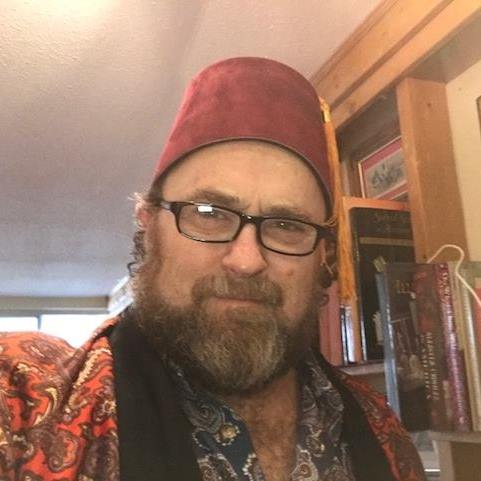
But could there could be an even more occult city in Canada? That led me to meeting with legendary author, cannabis scholar and Soma Institute founder, Vancouver’s own Chris Bennett. He greeted me at the door of his eclectic downtown pad with boundless energy, wearing a red smoker’s jacket and Shriner-like-fez. Examining me for a moment through his dark rimmed glasses, a warm smile emerged from under his distinguished beard before inviting me in. “Come in and make yourself comfortable, man!”, Chris blurted out, as he directed me over to a stoner-friendly couch adjacent to him covered in bright flower-patterned blankets. I felt like I just stepped through a magical wardrobe into entheogenic Narnia.
Chris Bennett
A volcano vaporizer in the corner just finished (eviscerated) an organic nug of lemon-haze into a misty cloud of pure canna-bliss. His walls were covered in electric skateboards, old hookahs, shelves full of rare esoteric books, miniature figurines of Templar Knights, famous occultists, and magic scrying mirrors. There is a great video of our exchange below:
[embedded content]
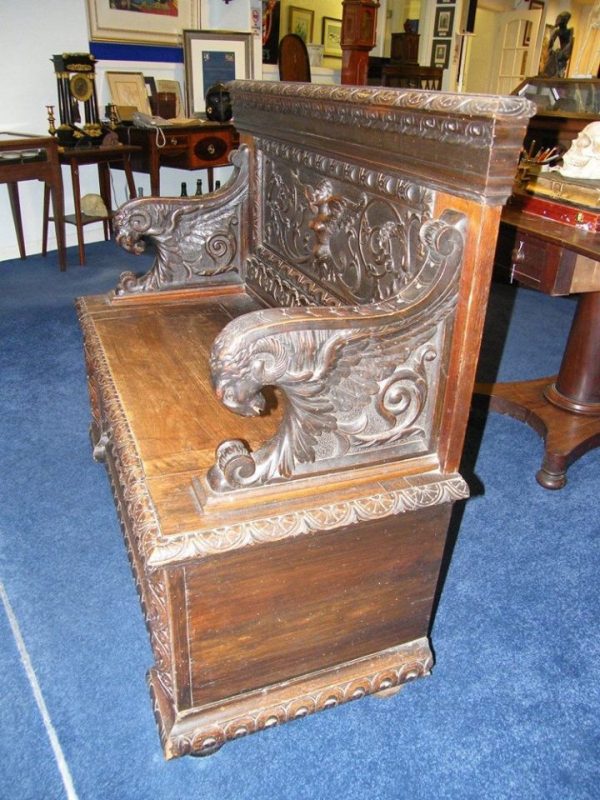
He began to gush over his latest occult artifact, which was an intricately carved late 19thcentury wooden bench in the middle of his living-room, decorated with winged-horned rams, angels and demons; like a fixture inside of an Austin Spare painting. He had just imported it from an antiques dealer in the UK that told him it came from the upstairs of the Golden Dawn’s Osiris lodge, which perhaps was sat on by the likes of Wescott and Mathers themselves.
With an encyclopedic-like-memory he began to rapidly disseminate a detailed account of how cannabis, hashish and nightshade-imbued elixirs were used by the early Rosicrucians, Freemasons, Theosophists and the Royal Society to attain higher states of consciousness.
We also discussed how these substances were used by early spiritualist and sex magick pioneers like Paschal Beverly Randolph. The Romantic period was known for its nightly séances and experimentation with psychoactive substances, alongside phantasmagoria shows that used candle lit lanterns to project spooktacularfigures of skeletons, phantoms and ghosts onto semi-transparent screens in packed musty-theaters. And although spiritism started to spread in Eastern Canada by the 1850s and to the West by the 1870s, Vancouver’s First United Spiritualist Church just celebrated its 100thanniversary – a congregation run by psychic-mediums to this day.
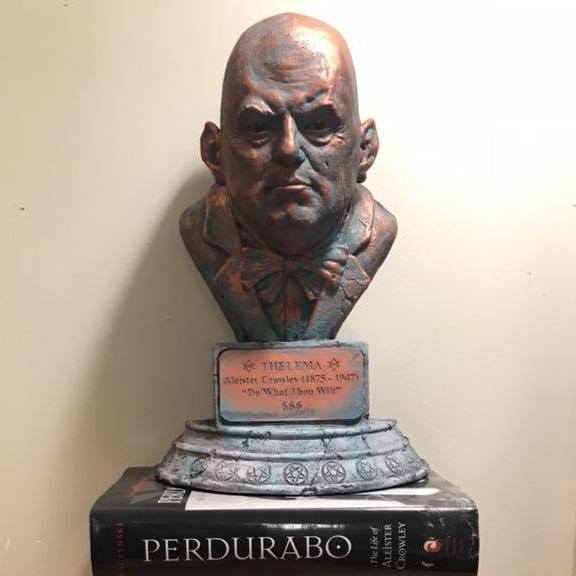
At that point my attention shifted, as perhaps it was the cat clawing at a carpeted pole in the loft above, or the resident parrot screeching from across the room, but I gazed over at an epitaph of Shiva and the Hindu gods nestled up to a portrait-statue of the beast himself, Aleister Crowley. Chris noticed my eyes wandering, and proudly told me, “I sculpted that myself, you know!”
Crowley.
His eyes lit up, as he further exclaimed: “Did you know Crowley visited here? When I was researching my new book Liber 420: Cannabis, Magickal Herbs and the Occult, I learned that one of the individuals assisting Crowley, Charles Stansfeld Jones, also known as Frater Achad, had lived just a few doors down from my child hood home in North Vancouver, and Crowley visited him there. As well there is a claim he was arrested, nude and acting peculiarafter performing a ritual circumnavigating the centre of the city in 1930, probably high on the peyote that Crowley gave to local members of the OTO, which as far as I can tell was right across the street from my Shop the Urban Shaman, which has been there since 2001, at Victory Square.”
According to Chris, Vancouverites were deeply rooted in the occult at the turn of the 20thcentury. Not only was this city home to artist, writer and Theosophist, Emily Carr, but was once visited by the great Helena Petrovna Blavatsky. It’s not hard to imagine how Coastal British Columbia would have captivated the imaginations of the 19thand 20thcenturies most prolific occult minds.
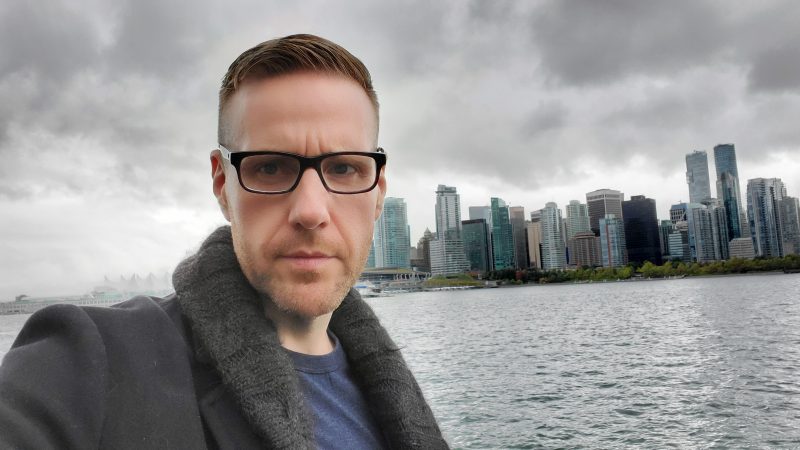
Jonny Enoch
With winter wonderlands like Whistler, Seymour and Cyprus nearby, Vancouver is renown for its supernatural beauty and majestic mountains that are subtly surrounded by the sparkling waters of the Pacific. Arguably, its crown jewel is Stanley Park, which is crawling year ‘round with joggers and cyclists that stop to snap selfies in front of its iconic skyline. This area has a longstanding history involving the First Nations people and British settlers, resulting in an infusion of totemicalart and Indigenous place names for its spellbinding surroundings.
A city recognized for its ostentatiously weird and provocative culture, which can be found at regular demonstrations and exhibits in front of the art gallery. Could this be a result of lingering magical energies left behind from the bizarre public rituals of the past? There are so many taste-tantalizing places to eat and drink at Gas Town, Granville Island and more. But what about occult shops, you might ask? Well, there is Banyan Books in Kitsilano, which has been around since the 1960’s and is like the Costco of metaphysics. And then there is a wide variety of speciality shops catering to cards, crystals and essential oils.
One of my favorite things to do when visiting any large city is rummage through old bookstores in search of occult treasures, and Vancouver is no exception to this with the likes of McLeod’s books. Walking through its dusty glass doors is like having your olfactory nerve surreptitiously made-love to by an orgiastic frenzy of the pleasantly soothing aromas of fermented ink and paper.
Like a scene out of the 1999 movie The Ninth Gatestarring Johnny Depp, manic book collectors of all walks of life scramble to a war-torn-box smothered counter for appraisals of priceless literary works, as an eccentrically brilliant expert with very little patience and a bad hair day tells you what they are worth. It is here that many Theosophical works, rare magical grimoires and manuscripts by Sir Francis Bacon fly off the shelves at top dollar to scholars and private collectors with deep pockets.
As impressive as that all might sound, in my opinion the award for the most charming occult city in Canada goes to Victoria, the capital of British Columbia, which is only 1.5 hours away from Vancouver by ferry. I like to call it ‘little London’ for the British feeling you get here, not only because of its gorgeous Greco-Roman architecture and red double decker buses, but there is a statue of Queen Victoria – who wanted to be faced away from the place, back towards England. There is a video I did about it below::
[embedded content]
Vancouver Island is a rocky landmass surrounded by salt water, which according to local historians, John Adams and Kate Humble – who do an incredible job with the ‘Ghostly Walks’ …(https://discoverthepast.com/ghostly-walks),
…and is a must do if you are visiting – is the reason why it is one of the most haunted places in Canada. That and during the construction of Fort Victoria, many First Nations burial grounds were disturbed by being dug up and built on top of.
Victoria’s Parliament buildings are not only built alongside ley-lines and caked in esoteric symbolism, but their construction was complete in 1897 on top of underground tunnels by their designer, Masonic architect Francis Rattenbury. Not only did he go on to build the Empress hotel in 1908, but was murdered by his wife’s estranged lover in 1935.
In the early 1900’s, Victoria was not only home to a growing spiritualist movement, which we are reminded of when you visit the upstairs floor of the Craigdarroch castle and find an antique Ouija board, but it was also overrun with brothels, opium dens, and gruesome hangings at Bastion square. Buildings have been discovered there with the remains of people ritualistically buried alive into the walls. There is also an unsolved cold case that baffles historians to this day that stems from an 1899 incident where a neatly dissected body was discovered on the Songhee reserve, believed to have been the work of England’s Jack the ripper.
Some researchers claim that Victoria has the second highest population in the world of practicing witches and satanists next to Geneva Switzerland. And while it’s highly likely, given the population’s esoteric proclivities, I haven’t been able to confirm that.
However, there was a popular book that came out in 1980 called Michelle Remembers, written by psychiatrist Lawrence Pazder about Michelle Smith. She eventually became his wife after claiming to have been subjected to ritual abuse by members of high society in many well-known areas of Victoria. One of these places was the Ross bay cemetery in which Mitchell described a mausoleum in which she was allegedly buried alive in and used to evoke a demonic entity. Critics are mixed, as some have dismissed her alarmist claims as fictious, because a hypnotic regression was used to recall these memories at a time when satanic hysteria was popular with television evangelists.
But when you get past Victoria’s macabre past, there is a magical feeling here. I’m reminded of that every time I rent a bike and go for a stroll around beautiful Beacon Hill park and fly kites by the ocean. Or drive up to the Mount Tolmie lookout spot at night to stare at mesmerizing sea of sparkling lights while devouring an after dinner, salted-caramel Empress square from Roger’s chocolates.
This city is not only crawling in amazing little metaphysical bookstores and occult shops, such as the Triple Spiral in Chinatown’s Fan Tan alley – run by my magical friend, Phylis, but also many delightful-old haunts with diabolically-delicious food. When in town, I always visit the Bard and the Banker: an old bank converted to a pub, alleged to be haunted by the ghost of a famous Canadian poet, Robert Service. I like to slouch down into a comfortable leather booth in the back corner for a pint or two and read his poetry out loud and see if I can see a shadowy figure emerge. So, remember, if you are looking for an esoteric adventure, why not consider Vancouver and nearby Victoria for your next haunted holiday.
ABOUT THE AUTHOR:
Jonny Enoch is an esoteric research, writer and lecturer from Vancouver, BC, Canada. If you would like to join one of his tours, visit www.ancientmysterytours.com| Website: www.metaphysicalsource.com| Instagram: @EsotericJonny | Twitter: @ JonnyEnoch | Facebook: Metaphysical Source
(Globe Newswire) Toronto — TerrAscend Corp., a leading North American cannabis operator, has closed the second tranche of private placements or total aggregate proceeds of US$20.5 million.
The closing of the second tranche of the private placements consists of an aggregate of 2,292,434 units of the company at a price of US$1.50 per Unit for aggregate gross proceeds of approximately US$3.4 million for total aggregate proceeds for both closings of approximately US$9.5 million, 100 senior unsecured convertible debentures of the company at a price of US$1,000 per debenture for aggregate gross proceeds of US$100,000 for total aggregate proceeds for both closings of US$10 million and Class A shares of TerrAscend Growth Corp. to a third-party investor for US$1,000,000. The net proceeds from the private placements will be used to qualify for the company’s proposed TSX listing, to fund Maryland dispensary acquisitions, and for working capital and general corporate purposes.
Equity offering
Each unit is comprised of one common share of the company and one-half of one common share purchase warrant. Each warrant will entitle the holder to acquire one common share at a price of US $1.95 per common share for a period of 24 months following the closing of the equity offering.
Debenture offering
Unless earlier repaid or converted, the outstanding principal and accrued and unpaid interest on the debentures will be due and payable 36 months following the closing of the debenture offering. Each Debenture will bear interest at a rate of 9.9 per cent per annum from the date of issuance, calculated and compounded semi-annually, and payable on the maturity date.
Advertisement
Each holder may, at the option of the holder upon signing of the subscription agreement, elect to receive up to 4.95 per cent per annum of such interest payable in cash on a semi-annual basis. Each debenture will be convertible into common shares, at the option of the holder, at any time or times prior to the close of business on the last business day immediately preceding the maturity date, at a conversion price of US $2.01. Holders converting their debentures will receive accrued and unpaid interest for the period from and including the date of the last interest payment date, to and including, the date of conversion.
Reorganization investment
The reorganization investment was completed following the approval by the shareholders of TerrAscend on June 22, 2023 of the reorganization in connection with TerrAscend’s application to list its common shares on the Toronto Stock Exchange. Following completion of the reorganization investment, TerrAscend now holds exchangeable shares of TerrAscend Growth, representing approximately 99.8 per cent of the economic ownership of TerrAscend Growth, on an as-converted basis. Aside from its interest in TerrAscend Growth, TerrAscend owns 95 per cent of Cookies Retail Canada Corp., an entity which owns and operates the Cookies-branded retail store located in Toronto.
The Private Placement constitutes a “related party transaction” within the meaning of multilateral instrument 61–101 Protection of Minority Security Holders in Special Transactions (MI 61–101) because insiders of the company, being Edward J. Schutter, Ziad Ghanem, Keith Stauffer and Jeroen De Beijer, as previously announced participated in the first tranche closing and Jason Wild, participated, directly and indirectly, in the second tranche closing of the equity offering and acquired 800,002 units for aggregate gross proceeds of $1,200,003.
In total, the insiders acquired, in the aggregate, 2,000 debentures and 825,734 units in connection with the private placements for aggregate gross proceeds of $3,238,601 (insider participation). The company has relied on exemptions from the formal valuation and minority shareholder approval requirements of MI 61–101 contained in sections 5.5(a) and 5.7(1)(a) of MI 61–101 in respect of the insider participation as the fair market value (as determined under MI 61-101) of the insider participation in the private placement is below 25 per cent of the company’s market capitalization (as determined in accordance with MI 61-101).
In connection with the terms of the debenture offering and the equity offering, the company has agreed to make certain cash commission payments equal to an average rate of approximately 2 per cent of the gross proceeds received by the company based on the source of funds.
The securities offered pursuant to the private placements have not been and will not be registered under the U.S. Securities Act of 1933, as amended, or under any state securities laws, and may not be offered or sold, directly or indirectly, or delivered within the United States absent registration or an applicable exemption from the registration requirements.
This news release does not constitute an offer to sell or a solicitation to buy such securities, and shall not constitute an offer, solicitation or sale in any state or jurisdiction in which an offer, solicitation or sale would be unlawful. This news release is being issued pursuant to and in accordance with Rule 135c under the Securities Act of 1933.










Recent Comments