The AGLC is reminding the Canadian cannabis industry that cannabis product samples may only be provided by provincially-registered cannabis representatives within retail stores.
The provincial cannabis regulator (Alberta Gaming, Liquor and Cannabis) sent out a memo on October 18 to all cannabis licensees, representatives, and suppliers, reminding them of the province’s rules around cannabis sampling.
While the AGLC allowed cannabis sampling in 2023, cannabis suppliers must be registered with the AGLC as “cannabis representatives,” and samples can only be provided by those representatives directly to retail cannabis store licensees in retail cannabis stores.
These product samples, reminds the AGLC, are for licensee use only and may not be provided directly to a licensee’s staff or the general public.
The memo also notes that “AGLC inspectors attended recent cannabis industry events and observed Cannabis Representatives and Cannabis Suppliers providing cannabis product samples to event attendees.”
Trina Fraser who works with many clients in the cannabis industry as a partner at Brazeau Seller Law in Ottawa, says she has some initial questions about the new guidance provided in the memo.
“The clarification that samples can only be provided within retail cannabis stores (thereby prohibiting the provision of samples at industry events taking place outside of a retail store) is new,” Fraser tells StratCann via email. “That said, it has always been clear that the quantity limit is on a ‘per licensee’ basis (as opposed to a ‘per budtender’ basis), making compliant distribution at events challenging.
“It is interesting, though, that they say samples are ‘for licensee use only and may not be provided to a licensee’s staff’,” she adds. “Most licensees are corporations. How does a corporation “use” cannabis? Who exactly are you providing the sample to, if not to a staff member?”
Randy Rowe, CEO and President of the Grow Up Conference and Expo, which held its two-day industry conference and trade show in Edmonton in September, said he’s surprised by the memo and is prepared to take all steps necessary to ensure his event and its attendees remain compliant.
“I agree that there needs to be strict processes for handing out samples,” says Rowe, who has worked with other provinces to ensure that all his events carefully track any sampling activities that may occur at his trade shows—information he’s happy to provide to regulators as well as brands.
“It’s not affordable for smaller craft growers to compete with larger producers that can go store to store providing samples,” adds Rowe. “Holding events that allow compliant sampling is essential for brands to get their product to as many retail cannabis store licensees as possible. By allowing compliant sampling, brands can hit hundreds of retail stores in one day, saving thousands of dollars.”
Jen Meyers, CEO & Founder of Alberta-based micro processor Zelca Ltd., tells StratCann that she would prefer to see the province find a way to regulate sampling at events because it’s more cost-effective for smaller companies like hers rather than needing to hire a marketing agency to visit hundreds of stores across the province.
“Do you know how hard it is to get to all the stores? It’s very nice to be able to go to an event and talk to 30 retailers in an hour. They can’t just kill that, altogether. How can I, as a small producer, get out to all those stores if I do want to give them samples?”
The AGLC lists more than 700 licensed cannabis retailers in the province.
Kendra Richter, an assistant manager at the Calgary Co-op Cannabis says she’s open to guidance, but is left with more questions than answers with the way the memo is worded.
“I agree that there needs to be strict processes for handing out samples. The surprise here is this feels over and above the initial cannabis sampling policy. It’s interesting that they put this policy in place and let it run for over a year and are now adding to it in this way.”
Two key pieces she’s reaching out to the AGLC to get more clarity on is the requirement that samples be provided to the licensee, rather than a store owner, manager, or buyer, and if the part about samples not going to employees applies to store managers like herself, as well.
“The way this has been presented is as if it’s just making sure we’re aware [of existing policy], but I think more questions need to be asked so we can know what this really means.”
Alberta’s rules for cannabis sampling allow for a maximum size of 3.5 grams of flower or its equivalent in other product types. For products that are not available in that small of SKU size, the smallest available product may be used instead. Records of all samples provided must be retained for six years and are subject to AGLC review upon request. Each product may be sampled no more than twice in a calendar year.
Order Out of Chaos – ‘E Pluribus Unem’- thanks to its being imprinted on the US Dollar bill, is a well known epithet. It is accompanied by a pyramid in whose apex is embedded the all seeing Eye of Horus.
You won’t find a more stark symbol of the ambition of the globalist power complex than this.
But as familiar as it is, it is worth reminding ourselves that this message is so brazenly printed on the bank note of the US currency because that country’s banking empire was designed to lead the take over and domination the world.
With the creation of The Federal Reserve as a public/private banking institution in 1913 came the financial means to fund the US as the new global hegemon, taking over where the British left off.
The Rockefeller family encapsulated US elite ambitions to bring into reality a ‘New World Order’ with US power brokers at the helm. Thus the despotic call for ‘Full Spectrum Dominance’.
Once joined up with the European Rothschild’s, a banking superpower was born that financed both the fascist and the ‘allies’ military industrial project, fully exploiting the power of the ‘divide and conquer’ formula during two world wars and beyond.
The objective was to not only get rich from war but also to crush the life out of the broad swathe of humanity whose instincts were essentially peaceful.
In order to be successful, this process – incorporating as it does general population reduction – needed to instil ‘chaos’ into the very foundation of society at a global level.
The instilling of chaos on a global level is a long term affair. It has to eat its way into the heart of relatively stable national institutions; cultures; established socio economic trading patterns; environmental protection; agriculture; the arts; education and of course standard financial practices.
What I think we can safely say is that this process of totally undermining the stability of planetary existence and the basic equilibrium of human life is only now coming into its full expression.
It needed to absorb every nation state of the Western world, of Eastern Europe and Asia and the great majority of Southern hemisphere land masses and peoples, before having the capacity to fully dictate terms on the global stage.
Such unbridled megalomania was encapsulated in the initiative known as The Project for the New American Century, established as a ‘think tank’ in the mid 1990’s, but actually operating as a global policy maker.
The human and collateral damage done since this time has been massive. However the US has bankrupted itself in the process, both economically and psychically. The bottom has fallen out of the world policeman’s beat – with the baton having been taken up by the shadow government hierarchy which is no longer identified with any particular land mass.
The deep state hierarchy was actually ‘in charge’ all along, but the US was chosen to be the front for its ambitions.
The global lockdowns achieved via mass promotion and indoctrination of the Covid scam are the most stark example of this one world dictatorship manoeuvring itself to exert the latest forms of chaos into every corner of the planet.
Chaos, taking the form of war fermentation, is now manifesting in Ukraine, Israel/Palestine, Jordan, Lebanon, Syria and seeks to draw in Iran, Iraq, Egypt, Saudi Arabia and pretty much the whole of the Middle East.
The devastation takes different forms elsewhere, but is equally harsh. It can, and does, take the form of planned weather destabilisation leading to excess heat and excess precipitation, causing desertification and flooding of both populations centres and prime agricultural land.
Not just this, but the more precise targetted weaponising of weather via HAARP and scalar weapon activation leads to earthquakes, fires and tornadoes reeking their destruction on chosen targets.
Who is not questioning the origins of hurricanes Helene and Milton whose devastation of South and central Florida and into the Carolinas, brought misery and chaos to millions of residents?
Death tolls from such incidents are rising inexorably – and they are not examples of anthropogenic global warming doing its worst, as the super hyped ulterior motive of global warming/climate change is continuously rolled-out to insinuate.
This false flag global warming gaslighting was devised by the same hegemons who devised the world wide ‘order out of chaos’ destabilisation package.
No one should fall for their deeply sinister ambitions to bring humanity to its knees and to exact every last ounce of material and energetic reward in the process.
So here we are today, faced by the further manifestation of chaos at the hands of a small demonic elite whose insentient, compassionless state of being allows them to commit every kind of murderous homicide and genocide with apparent impunity.
We the people have to confront this reality head-on. There is no escaping it. And the first major problem we have is that the majority don’t believe in the existence of insient psychopaths.
They look into their own emotional repertoire and don’t find that particular ailment. So they conclude it can’t be true.
The life haters are, in most peoples eyes, just crazed or sick humans having a murderous spree inadequately dealt with by inept, self satisfied governments.
If it were the case that only a bunch of crazed humans were on the loose, the damage suffered by this planet and its people would be a small fraction of what it is.
No, those in control of the proliferation of chaos are much darker, more cunning and much more single minded. Out of their chaos is supposed to emerge ‘The New World Order’ – ‘Order’ out of chaos.
Have a good look around and you will see that the ‘new order’ is slyly being pushed into place under the protection and distraction of increasingly chaotic surface events – and it’s not even covert any more.
Klaus Schwab and his henchmen at the Wold Economic Forum have already announced the Fourth Industrial Revolution and Green Deal to be part of ‘A Great Reset’.
They are proud to declare that under this new order “You will own nothing and you will be happy”.
Add to this the advent (this September 2024) of ‘The Pact for the Future’ United Nations summit in which all UN signed-up world leaders nodded their approval of a common position in the shared digitalisation, centralisation and exploitation of global power. In Shwarb’s terms, putting into effect ‘you will own nothing we will own everything’.
We are entering a critical point in the inexorable rolling-out of a plan whose blueprint was hatched a good deal earlier than the privatisation of the Federal Reserve. Even before the creation of the Bank of England in 1694; an enterprise established specifically to enable Britain to go to war with France.
It matters not what the origins of this take over are. What matters is that the preliminary manifestation/actualisation of it has arrived and is encircling us even as I write.
What action are we taking? What action are we to take to derail this behemoth?
This is not a story in a book, a podcast, a news headline or a social media alert. It’s none of these. It’s actual – and without realising it the majority are helping to drive the beast on.
By failing to actively involve ourselves in the struggle to confront the agents of chaos and control, we leave the door open for their take-over of our lives. We become causal agents in the deliberately inflicted destitution, the droughts, the floods, the wars, the environmental degradation, the fear – the lack of a resolution.
For many this is an uncomfortable admission to digest. But its indigestibility doesn’t mean it isn’t true.
Coming face to face with intentional chaos demands a heightened level of discernment, including an awareness that intentional disruptions also spawn unintended consequences for their perpetrators. These also become part of the often unseen/unnoticed action/reaction matrix.
In order to wake-up to this fact – using scientific terminology – we have to shift from a linear Newtonian mind set to a state of holistic quantum awareness. Otherwise we cannot understand what it is we are involved with.
Quantum made us realise that we are no longer observers of events – we never were – we are part of them. We cannot now regress back to a state of tunnel vision ignorance.
We can no longer simply wonder what will happen – from a distance. Our ‘onlooker’ misdirected energies are a significant factor in what’s driving the whole tragic drama.
Our involvement is implicit. So we have no option but to renew our efforts to resist, to keep on exposing injustice, lies and deception – while taking actions that lay the foundations for a redeemed, restored and resonating planet.
Unseen by us, and on another plain, such actions provoke a major transformation – a reversal – of the top down control system’s grip on world affairs.
That time line is not yet expressed as a complete metamorphosis, but that is coming. The rate at which it advances depends upon how purposefully we collectively direct our energies to the task at hand.
The more of us who engage in positive, courageous counteractions to the perpetrators of the death wish, the sooner will their ambitions be punctured, deflated and destroyed.
But holding back, hiding from reality and continuing to support the already deeply corrupted socio economic and political status quo, runs directly counter to our redemption. It simply aids the suffocating agenda of our anti-life oppressors.
This is why I stated the unpalatable truth that under these conditions we become causal agents of the process of destruction. Complicit in aiding and abetting the dark agents of a dehumanised world.
Yes, it comes down to something as starkly contrasting as that. We are either working every day for the emancipation of humanity and all living beings, or we are supporting their agonising demise.
Each one of us individually must get to grips with this (inconvenient) truth.
That will draw us closer together. Even if this togetherness is not spacial, but spirit based, it will be enough to shift the entire dark side agenda and get the forces behind the great turning into the driving seat.
So you see, the future is in our hands. Embrace this. Act with sincerity and courage. Raise the level of your mental, spiritual and physical commitment to confront evil at every turn. Because at this time – and at all times – nothing matters more.
Julian Rose is an early pioneer of UK organic farming, a writer, broadcaster and international activist. He is author of the acclaimed title ‘Overcoming the Robotic Mind’. Do visit his website
The recreational cannabis ballot initiative in South Dakota, known as Initiated Measure 29 (IM 29), will not directly lead to the legalization of cannabis sales. For sales to become legal, further action from the state legislature would be required.
IM 29 primarily aims to decriminalize the use, possession and free sharing of up to two ounces of cannabis for individuals 21 years of age and older. Currently, possessing cannabis is considered a misdemeanor that could result in up to a year of jail time. The measure would also decriminalize cannabis edibles and concentrates, which are currently classified as felonies in the state, carrying potential prison sentences of up to five years.
Decisions regarding the establishment of a legal market for cannabis sales would be left to the state legislature during its annual lawmaking session, which runs from January to March.
The cautious approach to legalization is a result of a failed attempt in 2020 to legalize marijuana for both medical and recreational purposes in South Dakota. That effort, which was supported by a majority of voters, was struck down in court for violating the state’s rule for ballot initiatives. As a result, IM 29 focuses on legalizing distribution and possession while leaving the creation of a retail market for future legislative discussion.
A fiscal note prepared by the Legislative Research Council estimates that passing IM 29 could save South Dakota counties about $581,556 annually in costs related to prosecutions and incarcerations for misdemeanor marijuana offenses. However, the note does not address the potential savings from decriminalizing felony possession of concentrated marijuana.
House majority leader, Representative Will Mortenson, stated that he anticipates the legislature will deal with retail cannabis market regulation if IM 29 passes. The foundation has already been established. A law to regulate cannabis sales was passed by the state senate in 2022, but it was not approved by the house. Mortenson also notes that there is resistance to the legalization of cannabis, with certain legislators holding steadfast antilegalization stances.
Recent polling showed that 42% of voters supported IM 29, while 542% opposed it and 7% remained undecided.
Opponents have raised concerns about the increased potency of current cannabis, potential public-health risks and the possibility of higher crime rates in states that have legalized the drug. They contend that the cost of addiction treatment and law enforcement would exceed any tax income from the legal sales.
Supporters of IM 29 counter these arguments, however, pointing out that states with legalized cannabis have already collected billions in taxes. Additionally, they emphasize that IM 29 would still prohibit driving while intoxicated and that legalization would grant legislators the authority to control the potency of cannabis products.
Companies with interests in the marijuana industry, including Innovative Industrial Properties Inc. (NYSE: IIPR), will be watching to see whether the voters of South Dakota finally get a chance to legally access recreational marijuana.
About CNW420
CNW420 spotlights the latest developments in the rapidly evolving cannabis industry through the release of an article each business day at 4:20 p.m. Eastern – a tribute to the time synonymous with cannabis culture. The concise, informative content serves as a gateway for investors interested in the legalized cannabis sector and provides updates on how regulatory developments may impact financial markets. If marijuana and the burgeoning industry surrounding it are on your radar, CNW420 is for you! Check back daily to stay up-to-date on the latest milestones in the fast -changing world of cannabis.
To receive SMS alerts from CNW, text CANNABIS to 888-902-4192 (U.S. Mobile Phones Only)
Please see full terms of use and disclaimers on the CannabisNewsWire website applicable to all content provided by CNW, wherever published or re-published: https://www.CannabisNewsWire.com/Disclaimer
(CNW) Calgary – SNDL Inc. and Nova Cannabis Inc. are pleased to announce the closing of the previously announced plan of arrangement pursuant to which SNDL has acquired all of the issued and outstanding common shares in the capital of Nova not already owned by SNDL, representing approximately 34.8% of the Nova Shares. The Arrangement was approved by at least two-thirds of the holders of Nova Shares and the majority of disinterested Nova Shareholders under Multilateral Instrument 61-101 – Protection of Minority Security Holders in Special Transactions at a special meeting of the Nova Shareholders on October 16, 2024. The Court of King’s Bench of Alberta granted a final order approving the Arrangement on October 17, 2024. All financial information in this press release is reported in Canadian dollars unless otherwise indicated.
Pursuant to the Arrangement, each Nova Shareholder (other than SNDL and its affiliates that hold Nova Shares) will receive $1.75 in cash for each Nova Share , representing a premium of 41.2% to the 20-day volume weighted average trading price of Nova Shares on the Toronto Stock Exchange as of market close on August 12, 2024, the date prior to the announcement of the Arrangement, other than Nova Shareholders that validly elected to receive, in lieu of the Cash Consideration, 0.58 of a common share of SNDL for each Nova Share, subject to proration and a maximum of 50% of the aggregate Consideration being payable in SNDL Shares. Nova Shareholders representing a total of 275,507 Nova Shares elected to receive an aggregate of 159,792 SNDL Shares as Share Consideration. Nova Shareholders representing a total of 21,305,023 Nova Shares elected (or were deemed to have elected) to receive $37,283,790.25 as Cash Consideration.
“The acquisition of Nova’s remaining minority interest represents a significant milestone that will streamline SNDL’s cannabis retail operations and generate material savings by eliminating public company expenses,” said Zachary George, SNDL’s Chief Executive Officer. “With a debt-free and cash-rich balance sheet we are well-positioned to drive the continued expansion of our Canadian cannabis retail platform. We intentionally and successfully structured this transaction to incentivize shareholders to opt for cash, which further underscores our focus on accretive growth, allowing us to efficiently deploy capital without significant share dilution.”
The Nova Shares are expected to be delisted from the TSX and the OTC Markets. Following the delisting of the Nova Shares, Nova intends to submit an application to cease to be a reporting issuer in each applicable jurisdiction of Canada pursuant to applicable securities laws, and, following which, SNDL intends to amalgamate with Nova pursuant to the provisions of the Business Corporations Act (Alberta).
Advertisement
Registered holders of Nova Shares are reminded that they must send their completed and executed letter of transmittal and election form and related share certificates or DRS advices, if any, to the depository for the Arrangement, Odyssey Trust Company, as soon as possible in order to receive the consideration to which they are entitled under the Arrangement.
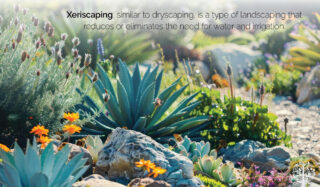
I get it. Like the hair on our heads, we’re all very attached to the grass on our lawns. But – as many of us guys know – sometimes we just have to say goodbye to the hair on our head. And the same is true for the grass on our lawns. While many people are seeding or reseeding their lawns this time of year, we encourage you to consider some alternatives.
The above options are much more pollinator-friendly than standard lawns. In addition to conserving water, they also help save you time and money!
Think about how much time you spend mowing and caring for the lawn, how much money you spend on a lawn mower, hedge trimmers, grass seed, and everything else associated with keeping that large area covered in good-looking green grass.
Yes, the initial setup of a xeriscaped area costs money and takes time. However, once it’s set up, the costs going forward are generally much less—as are the time requirements to maintain it. So, how do you do it?
How NOT to Get Rid of Grass
We never recommend using weed killers to eliminate lawns. These harsh chemicals seep into the soil and enter groundwater, lakes, and streams.
Be careful because some recommended ‘natural’ options, such as using salt and vinegar to remove grass, can also harm other plants, the soil structure, and its microbial life.
We always recommend the regenerative way.
The Regenerative Way: Sheet Mulching
Sheet mulching is the best way to remove grass and build new garden beds. This regenerative technique, also known as sheet composting or lasagna gardening, builds soil, suppresses weeds, and acts as a mulch.
Sheet Mulching with Cardboard and Newspaper
Start by mowing your lawn as low as possible. Leave the clippings in place for added nitrogen!
Cover the area with cardboard or non-glossy sheets of newspaper, wetting each layer as you place them to jumpstart decomposition.
Cover with 12 inches of organic material. For balance, use nitrogen and carbon sources, including manure, coffee grounds, garden clippings, kitchen scraps, autumn leaves, straw, sawdust, and ground bark mulch.
Top with an excellent quality compost for planting and a layer of mulch.
You can plant into the compost immediately or cover it with mulch and let this lasagna decompose over the winter. In the spring, pull back the mulch and plant some native, low-maintenance groundcovers, wildflowers, or grasses.
Goodbye, boring old lawn! Hello, thriving, low-maintenance, and eco-friendly oasis!
A federal court has dismissed efforts made by Alaska Airlines to rescind an order that reinstated an employee who was fired by the American airline over a positive THC test. The employee in question, Gregory Chappell, underwent a random drug test in July 2022. The results showed that the THC metabolite levels were above the minimum threshold. As a result, he was fired from his job as a lead aircraft maintenance technician.
THC is one of the two primary compounds found in cannabis, the other being CBD. Unlike CBD, THC induces a high when consumed.
Chappell maintained that he hadn’t used cannabis, claiming that it was possible he’d unknowingly consumed an edible at a block party he’d attended as the goods hadn’t been labeled. The airline didn’t look into this claim and, instead, relied on its policy on the use of drugs by safety sensitive employees.
The termination was soon challenged by his union, with an arbitration panel reversing the airline’s decision in October 2023. This led the airline to file a suit in federal court to overrule the decision made by the arbitration board. In its lawsuit, Alaska Airlines argued that it was undisputed that the employee failed the cannabis test, noting that the claim made by Chappell that he may have accidentally ingested a cannabis edible at a neighborhood party was a bizarre speculation.
This sentiment wasn’t shared by the federal courts though, with U.S. District Judge John H. Chun rejecting the airline’s challenge. In his ruling, Judge Chun explained that the arbitration board didn’t act ultra vires and ordered that Chappell be rehired.
He also awarded costs and attorneys’ fees for the case to the union and remanded the matter to the board to calculate how they’d awarded benefits and backpay for the period.
Chappell’s attorney, Lee Seham, explained that the case highlighted the current conflict between the federal and state governments over marijuana’s legality. He added that the courts upholding the board’s decision reaffirmed that we were living in a different age where cannabis was everywhere. The attorney made similar statements about cannabis’ changing legal landscape in an opinion editorial published in 2023.
In it, Seham stated that America had reached a point of no return both in terms of economics and culture with regard to marijuana, noting that over 50% of individuals in the country lived in jurisdictions where the recreational use of the drug was legal. He explained that the time had come to stop groundlessly destroying careers based on cannabis tests that said nothing about impairment.
The airline company is yet to comment about this latest federal ruling.
This ruling of the federal court is likely to be welcomed across the marijuana industry, including by established entities like Software Effective Solutions Corp. (d/b/a MedCana) (OTC: SFWJ) that would like to see an environment in which people aren’t in fear of legally using medical or recreational marijuana thinking that they could be fired once they test positive for the substance even if they weren’t impaired at work and only used the products while off-duty.
NOTE TO INVESTORS: The latest news and updates relating to Software Effective Solutions Corp. (d/b/a MedCana) (OTC: SFWJ) are available in the company’s newsroom at https://cnw.fm/SFWJ
About CannabisNewsWire
CannabisNewsWire (“CNW”) is a specialized communications platform with a focus on cannabis news and the cannabis sector. It is one of 70+ brands within the Dynamic Brand Portfolio @ IBN that delivers: (1) access to a vast network of wire solutions via InvestorWire to efficiently and effectively reach a myriad of target markets, demographics and diverse industries; (2) article and editorial syndication to 5,000+ outlets; (3) enhanced press release enhancement to ensure maximum impact; (4) social media distribution via IBN to millions of social media followers; and (5) a full array of tailored corporate communications solutions. With broad reach and a seasoned team of contributing journalists and writers, CNW is uniquely positioned to best serve private and public companies that want to reach a wide audience of investors, influencers, consumers, journalists and the general public. By cutting through the overload of information in today’s market, CNW brings its clients unparalleled recognition and brand awareness. CNW is where breaking news, insightful content and actionable information converge.
To receive SMS alerts from CNW, text CANNABIS to 888-902-4192 (U.S. Mobile Phones Only)
Please see full terms of use and disclaimers on the CannabisNewsWire website applicable to all content provided by CNW, wherever published or re-published: https://www.CannabisNewsWire.com/Disclaimer
Municipalities in the Yukon say there is a need for public consumption spaces in the Territory to provide a legal space for tourists to smoke cannabis when visiting.
Currently, cannabis consumption is only allowed in a private residence in the Yukon, and adjoining property, although the Territory’s regulations do allow for other possibilities for other types of locations in the future.
Despite this ban, in a recent survey, municipalities told the territory about what they say are high rates of cannabis smoking and vaping in outdoor public spaces. The territory sees hundreds of thousands of tourists annually, a significant part of the economy.
This call for public cannabis spaces was just one of many pieces of feedback provided to the Yukon government as part of its recently released five-year review of its cannabis legislation and regulations, as well as the overall impact of federal legalization.
In a new What We Heard report, which helped to inform its Five Year Review report, an array of issues are highlighted from the 307 responses received, as well as engagement with First Nations, municipalities and local advisory councils, RCMP, MADD, and many other organizations and government officials.
Among the feedback and recommendations:
Concern with “normalization” and public consumption, overall health risks, youth use rates, and impaired driving, including consumption while driving.
Concern about illicit online stores and what RCMP say are challenges with enforcement.
Call for more education of the general public about the harms and effects of cannabis.
Better insight is into how the government uses cannabis tax revenues.
Municipalities expressed concern with excess packaging leading to litter.
Retailers want to be able to sell products other than cannabis, like t-shirts, water bottles or snacks, and offer loyalty programs. Some would like to buy cannabis directly from producers.
More clarity around what constitutes a “THC unit” for proper dosing.
Yukon cannabis industry
The five-year review also notes some statistics about the overall result of the industry in the territory in the first five years of legalization.
The legal cannabis market in the most western of the three territories has grown from just over $2 million in 2018/19 to $13 million in 2023/24. More than 80% of Yukoners acquired their cannabis from legal sources within the territory.
Yukon has six cannabis retailers which employ around 40 people. Cannabis distribution is overseen by the Yukon Liquor Corporation (YLC). Wholesale-to-retailer sales went from $3.5 million in 2019-2020 to $9.2 million in 2023-2024.
The territory sold 495,850 units of pre-rolls from 2018-2023 and 448,993 units of dried flower (all SKU sizes). Edibles sold more often than vapes (272,775 vs 136,233).
During the 2023/24 fiscal year, the Yukon Liquor Corporation remitted $369,000 to the Government of Yukon’s general revenues in relation to cannabis. The Yukon government received $952,639 from its share of the federal cannabis excise tax. The report says the Yukon government uses all cannabis-related profits for general government services and programming.
Cannabis laws
There were 73 total violations from cannabis-related charges from 2019-2023, the majority (40) for unauthorized possession/care and control in a vehicle. There was one reported charge for public consumption in this time period.
Public Health
Cannabis-related emergency department visits increased from 40 in 2016 to 104 in 2021 (with a drop in 2020) before declining significantly to 50 in 2023. There were 275 emergency room visits related to cannabis use in the five years before legalization and 471 in the five years after. The paper notes this could be due to an increase in consumption or because people felt more comfortable presenting at an emergency room with a cannabis-related issue after its use became legal.
While the rate of cannabis use among young people remains a concern, the age at which Yukoners say they first tried or started using cannabis has increased with legalization, from 18.9 in 2018 to 20.8 in 2023.
Those who report consuming cannabis actually declined from 2022-2023 for those 16-35 and over 56, while it stayed the same for those 36-55.
If there is any advice I would universally give to every person, regardless of who they are, it is this: walk your own path.
Walk your own damn path.
Don’t walk someone else’s path. Don’t walk the path your parents predestined for you just because you feel emotionally indebted to them. Don’t walk a path that appears to be yours, but is actually society’s fabricated ideal of who you ‘should’ be. Don’t walk a path just because you fell into it and it’s “good enough.” Don’t walk a path that you feel a sense of enslaved duty towards because it’s what you “need to be” doing according to dominant sociocultural standards.
Walk your own path. That means CHOOSING your own path in a very conscious way. This is an act of spiritual self-sovereignty.
Table of contents
What is a Lone Wolf?
A lone wolf is typically defined as a person (or animal) who prefers to spend time alone rather than being in a group. However, within this website, lone wolf refers to a person who has listened to their calling and has left behind their old life, thus rendering them alone or alienated from others. We all possess an inner wolf that thirsts for freedom, truth, and authenticity. If we seek to live a meaningful life, if we want to fulfill our destiny and spiritual purpose, it’s our job to listen to that inner wolf and embrace our sacred wild nature.
Why Most People Are Terrified of Walking Their Own Path
Although choosing your own path may initially sound very empowering, there’s a reason why most people prefer to follow the herd.
First Reason:
Firstly, walking your own path means that you might be REJECTED by others. You might be gossiped about, thought of in disparaging ways (e.g., as a “kook,” “oddball,” “idiot”), and outright alienated or estranged from other people. Sometimes those people who reject you are those closest to you. And what could be more painful than losing a family member, friend, or even partner?
As a species, we’re biologically programmed to seek approval because acceptance equals survival. Inevitably, doing anything that may cause us to be rejected sets off those deep, primal alarm bells and raises the hairs on the back of our necks. I would go so far as saying that walking your own path guarantees that at some point someone will look down on you and say, “what on earth are you doing, you imbecile?”
Second Reason:
The second reason why most people avoid walking their own paths is that it’s a hell of a lotta work. No one is out there giving you a map, a set of rules, or instructions that tell you what to do. YOU have to be responsible for figuring it all out from scratch.
It kind of feels like stumbling through the dark in a room full of sharp objects. You will make mistakes. You will fall flat and land smack bang on your face. You will feel embarrassed, overwhelmed, and a lot of other uncomfortable emotions that come with doing something completely radical.
And on a mental and emotional level, most people see that. Most people understand, on some superficial level, the consequences and therefore prefer the cozy, comfortable, and bland mediocrity of society-prescribed living.
Third Reason:
The third reason why most people avoid walking their own paths is that it’s “too much” RESPONSIBILITY.
When you take your path into your own hands, YOU are responsible. There’s no one to blame, point the finger at, whine about, or feel victimized by. You are the worker, boss, innovator, and creator all-in-one. Instead of someone else holding all the cards, you hold all the cards, and it is ultimately your problem if you wind up feeling shitty with what you do. Most people can’t handle that.
Most people like the comfy confines of their cages because it makes them feel justified about feeling like a “poor little” victim of life. Instead of taking self-responsibility, it’s much easier to dump the burden onto someone else’s shoulders and feel self-righteously empowered through blame.
Fourth Reason:
And last, but not least, the fourth reason why most people avoid walking their own paths is that they don’t know where to start. Some don’t even know that there is another path, to begin with.
We seem to be raised in cultures that tell us that there are a limited number of paths, aka. the paths that are taught by the big money-making University and College industries.
In school, we are conditioned to believe that going to University is the only path towards developing a legitimately “fulfilling” career path … and that getting a properly certified career path somehow equals happiness. Very few of us are even taught about other equally, if not fulfilling paths. Spirituality isn’t even touched on in most cases.
So when we do stumble upon the possibility of taking a new path that goes against the grain, we are not only intimidated but also invalidated by our social conditioning.
Many people believe that the only way to know you’re walking a “proper” or valuable is if you get the approval of social institutions (or shall I say social marketplaces) in the form of degrees and PhDs. The deep distrust we are conditioned to develop in ourselves paralyzes our ability to act. So many of us never make anything of our dreams – they just fester in the back corners of our minds.
13 Weird and Wonderful Benefits of Walking Your Own Path
So far we’ve focused only on the negative side of walking your own path and being a lone wolf. But what about the breathtaking, exciting, blood-tingly-good benefits?
When comparing the negatives and positives side by side, let me tell you, the negatives pale in comparison to what you can expect to experience.
Yes, being different and being a lone wolf walking your own path can be uncomfortable, tiring, confusing, and alienating at times – BUT there are so many rewards to reap from this courageous way of living. Some include:
You’re free to follow your true soul path
You’ll innovate and create to your heart’s utmost desire
You’ll connect with people who truly support and nourish you (your soul group)
You’ll experience tremendous mental, emotional, and spiritual growth
You’ll become the person you are destined to be
You’ll make a real difference in the life of others
You feel more ALIVE
Gratitude, excitement, and joy come more easily
Many unexpected doors open to you
You feel more vibrant and energized
You feel a sense of self-respect for courageously pursuing your life purpose
You get to experience the thrill of exploring unknown territory
You can go to sleep at night feeling happy and content
Does walking your own path always mean that you’ll have to embrace being a lone wolf or social outsider? No, not always. Maybe your life purpose really is entering statistics into a data file in an office. Maybe it’s simply being an acceptable member of society. (If you feel empowered by that or like it’s for a greater purpose, all the more power to you!)
But I would argue that there’s a difference between defensive complacency (e.g., “I don’t know what you’re talking about, but I’m perfectly happy in this path/job, thank you very much”) and real fulfillment.
Spiritual Awakening and Being a Lone Wolf
Spiritually speaking, we’re all required to walk the path of the lone wolf sooner or later. Those who have undergone a spiritual awakening and/or dark night of the soul know this all too well. Quite frankly, it’s impossible to keep conforming to society’s expectations and values after the veil has been pulled from our eyes. The old ways will eventually crumble. Something must give.
So, why is walking the path of the lone wolf an inseparable part of the spiritual awakening journey? The answer is that to begin the spiritual path in the first place we must leave the familiar. We must walk alone. We must go on a voyage into the Great Unknown. (If you’re familiar with mythologist Joseph Campbell’s ‘Hero’s Journey,’ or the Tarot’s Fool card, you’ll understand this.)
But what triggers this initial awakening and desire to go solo?
At a certain point in our lives, we look around at everything and everyone around us and think, “there’s got to be more.” We’re no longer fulfilled. Life feels empty. WE feel empty. This thirst for something deeper and greater than material pursuit is what initiates us onto the path of the lone wolf.
Why is it called “the path of the lone wolf”? The reason why I call it the lone wolf path is that it can initially be a very lonely path. WE must be the ones to reconnect with our inner courage, discernment, and wild internal compass to walk the path well – NO ONE else can do this work for us.
And without embodying the inner strength, resilience, and intelligence represented by the wolf, we can easily fall back into the soulless and oftentimes destructive life lived by the billions of sheep out there.
Download Our FREE Wolf Within eBook!
Learn how to be true to yourself and listen to your calling, we’ve written Wild Wolf Within (a short eBook) to show you exactly how.
How to Embrace Being a Lone Wolf and Walk Your OWN Path
Walking your own path, on some level, always requires a conscious choice in which you say “YES, this feels true to me and what my Soul really craves for.” Even if you accidentally stumble onto that path, walking an authentic path always requires some level of self-awareness.
At some point in your life journey, you’ll need to embrace being a lone wolf. You’ll have to go at it alone. You’ll have to go against the grain, break free from the herd, ask the difficult questions, and face the confronting truths which may alienate you from others.
You’ll need to be discerning, see through the bullshit, shrug off the haters, and keep moving forward, even if you’re tired of fighting.
Being a lone wolf means being a warrior. It means standing up for what you believe in and courageously walking into the wild unknown.
It’s all worth it. I can assure you of that and I can keep asserting it until I turn black and blue – but ultimately you must discover this for yourself. Don’t take anything I say as truth unless you have experienced it directly.
If you’re drawn towards embracing your inner wolf, beginning your spiritual journey, and courageously walking your own path, here are some helpful pointers:
1. Understand and accept that there will be some backlash
Whether from your friends, family members, or society at large, you will inevitably encounter naysayers. At some point, you’ll be met with cynics, killjoys, and sourpusses who seek to bring you down to their level. The reason why they fight against you is that, in their minds, you invalidate their way of existence. By courageously forging your own path you are causing them to reflect on their own lives and decisions. If on some level, they’ve realized that they’ve followed the crowd and made no unique decisions of their own, they’ll feel a sense of resentment which they’ll project onto you.
Although it’s not nice to be on the receiving end of this, understand that the issue lies with them, not you. Everyone walking a path with a heart will experience social unease at some point – you’re certainly not alone in facing this problem. Just keep moving forward and remind yourself that it’s no one’s place to dictate what your life should be like except you.
2. Ask yourself, “What do I truly and deeply want?”
This is not a question you ask just once, this is a question you continuously ask on your path, thousands of times over. Keep bringing back your focus on what you desire on the deepest level – not what others want to project or dump onto you.
What do you feel called to do? What do you wish to accomplish in your life? What wild paths are you afraid to take because they are so alien – but that you feel secretly drawn towards?
Our paths are not static: they’re constantly shifting, evolving, and changing. By repeatedly asking yourself this question, you’ll be able to reinvent yourself over and over again. Instead of getting stuck in an old and stagnant way of living, you will be in tune with your Soul.
Being a lone wolf and walking your own path go hand-in-hand with a sharp mind. How are we to discover what is our “stuff” vs. other’s “stuff” if we can’t be discerning? How can we learn what is true and what is deceptive without the ability to analyze?
Your mind is a tool that needs to be sharpened. Without having a sharp mind, it’s easy to fall into delusion, naivety, and stumble into rabbit holes which lead to great confusion. Without the ability to use critical thought (and balance that with an open heart), you can easily fall prey to emotional and spiritual predators out there.
Your ability to be discerning is your protective sword on your path. I can’t emphasize enough how important it is to be discerning! Don’t let anyone convince you of anything until you have experienced it yourself.
Embracing the path of the wolf and taking responsibility for your life can be lonely. If you are your own worst enemy, your path will be a million times harder. But if you can focus some of that energy on learning to love and accept yourself exactly the way you are (warts and all), your path will be a million times easier.
You are with yourself 24/7 and you’re the only person who has been there by your side through everything … doesn’t it make sense to like who you are? Doesn’t it make sense to enjoy spending time with yourself? In my experience it absolutely does. Practicing self-compassion and learning how to love yourself are two of the most powerful tools and strengths you can possess. Ever.
5. Know yourself
Strive to learn a little bit more about yourself, your strengths, and your weaknesses each and every day. Self-discovery and self-understanding are tremendously important facets of walking your own path. As the wise master, Lao Tzu once wrote, “He who knows others is wise. He who knows himself is enlightened.” Only when you can come to deeply know yourself can you truly embrace who you are and walk your path with confidence.
Walking the path of the lone wolf will inevitably confront you with some scary and intimidating situations. Even just starting the path can be terrifying.
Following your heart and listening to your calling is not as sunshine-and-roses as many people make it out to be. Often it requires tremendous sacrifice and the ability to look fear straight in the face without turning away.
While I am not a perfect example, I have learned as a rule that feeling the fear but acting anyway is a good choice (in most cases). Obviously, if you’re facing a life-threatening situation it would be better to pause and probably run the opposite way.
But if the fear you’re feeling is emotional or psychological be gentle with yourself and keep pushing forward. Hold your goal in mind, reaffirm your worthiness and inner strength, and keep going. Don’t let anything or anyone try to bring you down. And if you do fall down, keep picking yourself up, over and over again. Remember, you can do anything, just do it afraid. Have the courage to be vulnerable.
7. Let your wild nature guide you
You are both human and divine – accept this. Embrace the wild and non-rational part of you that serves as your inner compass. Listen to your gut feelings and let your animal self be filled with passion. You don’t have to be tamed or repressed any longer.
Walking your own path and embracing the lone wolf side of you means that you finally have freedom. You have the freedom to feel the wind in your hair, the sun on your face, and the earth beneath your feet. Your life is your making. Your destiny is in your hands.
Make sure that you get out of your mind and into your body; into your heart, blood, and bones … what are they telling you? Honor the wisdom in your instinctual nature. Honor the wild and raw passion pulsating deep within. Harness this passion and let it guide and motivate you.
There is no point walking a path that you do not feel passionate about. Let the wolf within you howl loudly and freely.Remember that YOU are both the traveler and the path all-in-one. The compass you need for your path is always within. Be careful of looking for it outside of yourself. While others may be able to shine a light on your path, ultimately the greatest guiding light is your own Soul.
About Mateo Sol
Mateo Sol is a prominent psychospiritual teacher whose work has influenced the lives of millions globally. Born into a family with a history of drug addiction, abuse, and mental illness, Mateo Sol was taught about the plight of the human condition from a young age. As a spiritual mentor and soul guide, Sol’s mission is to help others experience freedom, wholeness, and peace in all stages of life. [Read More]
SUPPORT OUR WORK:
We spend hundreds of hours every month writing, editing and managing this website. If you have found any comfort, support or guidance in our work, please consider donating:
Erythroxylum is a genus of plants comprising more than 200 species. Among them, Erythroxylum coca and Erythroxylum novogranatense, are the main commercial sources of cocaine and we commonly refer to them as coca plants. These plants have an enormous socio-economic impact, both to legally compliant industries, such as soft drink manufacturers, and the illicit international drug trafficking market.
This kind of plant has often been at the center of many debates regarding its very strong historical connection to the social fabric of South America. This strong bond supports every attempt to study this plant without prejudice, with the aim of being able to get the best out of this multifaceted plant.
Although technology allows us to chemically synthesize more quickly and efficiently many of the naturally occurring compounds, botanical extraction often remains the only option to obtain certain molecules. This is why we need a deeper and more prejudice-free understanding. The phytochemicals contained in coca plants have a wide range of applications going from nutritional, agricultural, cosmetic and medicinal uses.
History of Coca Plant
The coca plant has played a fundamental role in the history and culture of the indigenous populations of the Andes for millennia. Mainly growing in the tropical and subtropical areas of South America, coca plants have been used and revered by ancient civilizations not only for its stimulating effects, but also for its medicinal properties. Its use changed significantly with the arrival of European colonizers and was further changed when a German chemist extracted the active ingredient from the plant in the 19th century. [1]
The coca plant is among the oldest medicinal plant species in the world, some traces found in South America indicate its use for at least 8000 years. These small shrubs grow in all regions of South America and develop in the mountains, often between 500 and 1500 meters, some even reach 2000 meters above sea level.
The word “coca” derives from the term “kuka”, a name that in the Quechua language means “coca plant”. According to other sources, however, the word derives from an Indian population prior to the Incas, called Aymara. The members of this population were perfectly capable of cultivating and using the plant. In their language, the term coca simply means “plant” or “tree”.
Coca was one of the most powerful and ancient natural stimulants. Already three thousand years BC, the Incas of the Andes chewed the leaves of this plant to accelerate heartbeats and breathing in order to counteract the effects of a life spent in the rarefied high mountain air. The use of this plant has very ancient origins, traces of chewed leaves have been found in some funerary objects found in Huaca Prieta, on the coast of Peru, before 2500 BC, in the skulls of Peruvian tombs, and in the hair of Chilean mummies.
Coca has a very important social, cultural, and even medicinal meaning in traditional South American cultures. By adult men, it was used disproportionately, to better tolerate work activities but also to “facilitate” social ones, strengthening community bonds. This plant was at the center of religious ceremonies such as weddings or funerals, where taking and sharing coca leaves were the core ritualistic activities.
Coca also had metaphysical significance, as it was used as an offering to nature in divinatory practices and as part of rituals that were believed to help maintain balance between the human and natural worlds. In traditional medicine, coca was used as a remedy for many conditions, such as digestive disorders, oral pain, hunger, altitude sickness, and bone and muscle pain, but it also served to alleviate conditions more related to the psyche, such as depression or sexual impotence. [2]
According to legend, this seemingly miraculous plant was a gift from the gods, Manco Capac, the divinity son of the Sun, descended at the dawn of time from the heights of Lake Titicaca, bringing the knowledge of the gods, teaching the arts, and finally giving the coca leaf, a divine plant that satisfies the hungry and give strength to the weak. In fact, coca leaves were widely consumed in all social contexts, and even after death they were used in rituals by placing leaves in the mouth of the deceased, thus ensuring their welcome in the afterlife.
Coca During the Colonial Era
Originally, coca leaves were used by aristocrats as an initiation rite, which was used to be officially accepted by high society and to officially become part of the Inca religion. The leaves were not widespread and also represented the distance between the people and the nobles, who, thanks to the use of this plant, justified their divine descent. At the time of Spanish conquest, however, this plant was already spread equally throughout all South American populations.
The Conquistadors did not appreciate this plant and its use and it was considered of demonic origin, “pagan and sinful” given the effects on the psyche. It was thus banished by the Spanish invaders. This attitude changed suddenly, however, when they noticed that the Indians could no longer carry out the heavy work imposed in the mines if they were prohibited from ingesting coca. They even went as far as distributing coca leaves to workers three or four times a day and giving them breaks to allow them to chew this substance. It was already clear how this plant allowed the Indians to endure exceptional fatigue and carry out heavy work without needing adequate nourishment.
Coca thus became an integral part of the colonial economy, as its use increased productivity in the mines. Subsequently the value of this plant began to extend beyond the Andes. [3]
History of Coca in Europe
Coca began to spread in Europe in the 19th century. In 1859, Paolo Mantegazza, an Italian physiologist, neurologist, and anthropologist who had spent some years in the South American regions, published in “Sulle virtù igieniche e medicinali della coca” his observations relating to the physiological and therapeutic effects of the plant.
Also in 1859, Dr. Schuzer, member of the Austrian expedition “Novara“, brought a batch of coca leaves to Vienna and sent some to Professor Wholer, and it is precisely from those leaves that Wholer’s student, Niemann, first isolated the main alkaloid of the plant: cocaine. Cocaine immediately aroused great interest among the entire European scientific community, which at the time considered it a sort of panacea for numerous disorders such as depression, fatigue, or addiction to other substances, like morphine.
Sigmund Freud was one of the first promoters of the substance, publishing an essay entitled “Uber Coca” in 1884, in which he praised its psychoactive properties. At the same time, coca found use in various commercial products. One of the best-known examples is the 1863 drink “Vin Mariani” , a blend of wine and coca leaves, popular among Europe’s elite and praised for its tonic and stimulating properties. Thus coca and cocaine spread very quickly in Europe, with invigorating drinks and antidepressant drugs.
In America, after the European success of Vin Mariani, entrepreneurs considered it advantageous to invest in the cocaine-based products market. Thus it was that John Pemberton, an American pharmacist, launched Frech Wine Coca, and during prohibitionism the now very famous non- alcoholic drink: Coca-Cola, in 1886, at the time made with small amount of cocaine extracted from coca leaves, enriched with caffeine derived from kola nuts of Cola acuminata, all dissolved in a sweet syrup of sugar. [3]
Coca and Cocaine in the Modern Era
The traditional use of coca leaves by South American populations and the apparently beneficial effects of this plant very quickly aroused the interest of the entire European and non-European scientific community during the 19th and 20th centuries. This interest led in 1860 to the isolation of the main alkaloid of this plant, cocaine, and its derivatives.Consequently, the first anesthetics officially identified by science emerged, marking a significant advancement that contributed to the development of modern surgery.
Despite that, at the beginning of the 20th century, the scientific community began to realize the possible danger that this plant could represent. Its toxicity and potential for addiction have sharply curbed research and development into its beneficial applications. To date, the illegal market and social stigma, together with the lack of awareness of the enormous potential of this plant, have significantly hindered research on coca plants and its components other than cocaine. Nevertheless research on Erythroxylum species have shown that there are many possibilities to develop positive and productive applications for coca. [3]
Coca in Modern Medicine
There are not many studies on the true potential of the coca plant in contemporary medicine. The available literature comes from the reports of traditional medicine and from the very few studies that have managed to overcome the legal constraints and social stigma surrounding this plant. Among the topics that arouse research interest for modern medicine is the value of coca as a stimulant and its effect on physical performance (the use that comes closest to the traditional one). In fact Coca is supposed to increase the availability of glucose in the body, especially during physical activities. This effect is thought to result from coca’s influence on fatty acid metabolism, which can lead to appetite suppression. It is also hypothesized that the use of coca, being a vasoconstrictor, promotes improved blood flow and a reduction in heat loss. While there is no confirmatory research, there are many documented reports supporting cocaine’s impact on sexual performance. [4] Among the beneficial effects of coca plants and their constituents including alkaloids, flavonoids, vitamins and minerals, there are:
Some research indicates that coca may provide adequate tools for treating many mental health conditions. Coca can act as a fast-acting antidepressant due to the effects of its alkaloids on mood receptors. Even with regard to attention deficit hyperactivity disorder, coca could provide benefits similar to those provided by current treatments.
Containing many stimulants from the tropane family, coca and its alkaloids could produce results similar to those obtained with amphetamines and methylphenidate, currently used in the treatment of Attention-Deficit/Hyperactivity Disorder (ADHD). It is also conceivable that coca may provide a valid solution for treating other addictions. [5]
The Scourge of Drug Trafficking
The production, trafficking, and consumption of drugs have reached great proportions throughout the world. In Colombia, the problem has acquired very huge connotations, as this country represents one of the main producers of narcotics, not only in Latin America but throughout the world. Specifically, the Colombian state holds the record in the cultivation and processing of the coca leaf and consequently in the production of cocaine.
The origin of cocaine has very deep roots, since ancient times, the indigenous Colombian populations have cultivated the coca leaf as it has within it a substance considered sacred, to the point of being an object of worship in their culture. In addition to this, it should be added that Colombia has territorial conformities that favor the cultivation and processing of the coca plant, presenting plains, forests, and plateaus located in the most marginal areas of Colombian territory where the vast complexes of coca processing laboratories and coca-growing areas turn out to be more difficult to trace by government agencies. The illegality of the drug industry imprints a peculiar character in that organized crime, violence, and corruption are its natural components.
The drug trade penetrates the structures of civil society and also intervenes politically by trying to take control of part of the national territories, using force through paramilitary groups that destabilize the state and triggering power struggles within the criminal groups themselves for control of those strategic positions capable of guaranteeing maximum profits.
They seek to impose their own laws and values, violating human rights and endangering the permanence and stability of Colombia’s democratic system. To conclude, an analysis of drug trafficking is elaborated in this thesis from a global perspective, outlining what are the main routes of drugs leaving the Colombian state to land in Europe, Africa, and the United States, the main recipients of Colombian drugs.
Finally, we outline what international strategies and projects are aimed at reducing and limiting drug trafficking. These agreements are made by international organizations deeply concerned about the extent and growth of illicit drug production, demand, and trafficking that pose a serious threat to the health and well-being of individuals and have harmful effects on the economic, cultural, and political foundations of society. [5]
References:
[1] Niemann, A. (1860). Über eine neue organische Base in den Cocablättern. Göttingen: Göttinger Dissertationsdrucke.
[2 ] MDPI and ACS Style Restrepo, D.A.; Saenz, E.; Jara-Muñoz, O.A.; Calixto-Botía, I.F.; Rodríguez-Suárez, S.; Zuleta, P.; Chavez, B.G.; Sanchez, J.A.; D’Auria, J.C. Erythroxylum in Focus: An Interdisciplinary Review of an Overlooked Genus. Molecules 2019, 24, 3788
Most people want love. The craving for approval and affection from others is embedded into our DNA. There’s probably nothing else on earth (other than the survival instinct) that is as strong and primal as the longing for love.
We need to belong. We NEED to feel loved. This is all normal. It’s a wonderfully exciting and ecstatic quest that we all walk sooner or later.
But what happens when our search for love becomes tainted with unconscious motives? What happens when our search for love comes from a place of avoidance and fear?
The answer: we suffer. But we don’t just experience garden-variety-type-suffering, we go through cyclical suffering, meaning that we repeat the same toxic patterns over and over again. In other words, when the love we have obtained doesn’t distract us from ourselves enough, we jump ship. We break up. We divorce. We try to find someone new who will fill that hole inside of us. We get bored or scared. We leave. Then the cycle starts again.
Why We Use the Search For Love to Escape Ourselves
One of the simplest reasons why we use the search for love to escape ourselves is simply because that’s how we were programmed as children.
Growing up, we were conditioned to believe that romantic love was the greatest pursuit of life. From the tender age of two or three, we were read fairy tales that depicted princess and princesses falling in love and eventually getting married. How many times do you remember the sentence, “…and they lived happily ever after”? These beliefs surrounding romantic love were deeply ingrained in our fragile young minds. (Hell, I even have drawings from the age of 5 of kings and queens getting married.)
As we grew up, the idea that the search for love is the Purpose of Life was reinforced by Hollywood films, books, magazines, pop songs, and even self-improvement workshops – and every day it continues to be bolstered by social media, Hollywood, and the people around us.
Can you see why so many of us fall into the trap of using love as a form of escapism? We were virtually brainwashed as children to see it as the only path to happiness and fulfilment.
The second reason why we use love as a drug to numb and avoid our pain is that the high of falling in love is incomparable. It is pure ecstasy – and much better + long lasting than the drug variety. Life suddenly feels magical and awe-inspiring again. Anything feels possible. Tidal waves of joy wash over you. You feel warm, tingly, elevated, and drunk all at once. Optimism replaces your negative outlook on life – you feel like a new person!
Falling in love is an amazingly transcendental adventure. It is a great blessing to experience something so pure and sacred. So how can such an experience become corrupted? The answer is that our motivations sully the experience. And remember that we aren’t always conscious of our motivations.
When finding love is used as a way of escaping ourselves, it becomes more like a drug to numb our pain, rather than a spiritual journey. The experience is cheapened as conditions are placed upon the relationship in order for it to work. The dominant unspoken condition is: “You must make me happy and distract me enough from my pain and emptiness in order for this to work.” When this condition isn’t met consistently, the relationship begins to sour, decompose, and break apart.
We humans are quite resourceful when it comes to escaping our inner sorrow, rage, loneliness, and emptiness. Virtually anything – so long as it keeps us distracted – can be used to bypass facing and overcoming this suffering. Popular examples include food, TV, gossip, drama, sex, partying, workaholism, social entanglements, and of course, drugs and alcohol. But perhaps most dazzling of all is the pursuit of love.
What better way to distract yourself and fill the void inside of you than chasing after your soulmate? It is a quest that promises to give you a “happily ever after” (and therefore solve all of your problems) – not to mention it’s so damn exciting and a million times better than a telenovela. Oh, and there’s no stigma attached to using love as your form of escapism, unlike drugs. So you get the social approval as well. How convenient.
10 Signs You’re Using Love to Escape Yourself
I’m a person who values truth. I hope you do too. The thing about truth is that it can hurt badly. So if you have gotten a stinging reaction to this article, please take the time to reflect on what that reaction truly means on a deep level.
Love is a touchy topic, and many people prefer to live in a fantasy land rather than in reality – which I understand. But love doesn’t need to be used as a form of escapism for it to be intoxicating and profoundly life-changing. In fact, if you are genuinely wanting to experience authentic and mature love, I recommend ruminating on the topic of this article. Ask yourself, “Am I using the search for love to escape myself?”
Be proud of yourself for taking this courageous step. Honesty is the best policy when it comes to love (and basically everything in life).
Signs that you’re using the search for love to escape yourself include the following:
You believe that you’re “not complete” without a romantic partner/soulmate/twin flame
You can’t cope with being alone or spending time by yourself
You are a Relationship Hopper: you jump from one relationship to another quickly
Your life centres around the pursuit of finding your One True Love
All of your personal hopes and dreams are wound up in your search for love
On some level, you believe that the Perfect relationship will solve all of your problems
You have had very dramatic and stormy relationships in the past
You feel a looming/subtle sense of anxiety and endangerment in your relationships
You want a deep and soulful relationship, but you always somehow end up with shallow/surface partners
You consider yourself a Romantic or an Idealist (or both)
Why did I choose these signs? If you are using the search for love as an escape you will be driven by romantic idealism and the belief that your One True Love will complete you. This is a fallacy because it makes your self-esteem, self-worth, and happiness dependent on another person, making you feel a sense of constant underlying anxiety and endangerment. A sense of wholeness can and must be found only within yourself, not within another.
Once you do find a partner, you will attract a person who fulfills your unconscious need to escape and numb yourself. But because your relationship is based on this unspoken desire, once it stops fulfilling this function, it quickly begins to disintegrate, leaving you heartbroken. Because you feel empty or alone inside, you can’t stand being by yourself, so you will hop onto another relationship, and another, and another, leaving you exhausted.
Sound like a familiar pattern?
How to Experience Authentic Love – Without the Addiction & Escapism
When your search for love is driven by the unconscious motives of escaping or numbing your inner pain/emptiness, you will always be unhappy. After a while, you might even give up hope of ever having a satisfying relationship. Worst of all, you might become a cynic and declare that romantic love is pointless or not for you.
In order to carefully remove yourself from this sticky web of suffering, you have to, first and foremost, be self-aware. You must clearly and honestly OWN this as your issue that must be worked through. There can be no growth or progression without this first step. A similar rule applies for addicts: in order to heal, you must first get over the denial stage and agree that there is a serious issue.
Love, in a way, can become an addiction. Yes, it is a socially approved addiction, but it is an addiction nonetheless. And we all know what addiction does to your life: it can quickly turn it into a living hell.
If you think you might be struggling with love escapism, here are some steps you can take to experience a deep, authentic, and genuinely magical relationship:
1. Stop chasing love
Understand that chasing love only creates more frustration and hopelessness. Really try to understand this concept and dig your teeth into it. Chasing happiness creates suffering. I wrote more about this topic in this article about surrender.
2. Replace your chasing with a healthier form of escapism
It is very difficult to just stop doing something you’re habitually inclined to do, cold turkey. In order to temporarily prevent yourself from relapsing into old habits, find something else to distract yourself with or pursue. Healthy forms of escapism may include learning a new skill, creating goals, and pursuing new hobbies such art and craft, cooking, reading, blogging, vlogging, dressmaking, tarot, animal rearing, gardening, yoga, tai chi, martial arts, travelling, veganism, horse riding – you name it.
Find something you are interested in or passionate about and channel your energy towards learning about and mastering it. To help you set new habits, I strongly recommend reading The Power of Habit by Charles Duhigg.
3. Creatively explore what you’re trying to avoid
Spend time thinking about what feeling or state of being you’re trying to avoid. Go as deep as you can. For example, you might think you’re trying to avoid boredom, but if you go even deeper, you might find that what you really afraid of is loneliness. Or you might think that you’re afraid of being lonely, but what you’re really afraid of is emptiness and disconnection from your Soul.
Common things people run away from include self-loathing and poor self-esteem, heartbreak, grief, depression, fear, anger, loneliness, and emptiness. Creatively expressing these thoughts and emotions will not only serve as a form of emotional catharsis but also a way to experience more clarity. I recommend learning how to journal and art therapy as a way of diving into your innerscape.
4. Face and embrace your demons
Facing and embracing your demons is what I call Shadow Work – it is about coming in contact with that darker and hidden side of yourself which you would normally prefer to avoid completely. Once you have discovered what your greatest fear is, there are only two paths.
The first path is to willfully avoid facing your fear (and continue suffering). The second path is to courageously face your fear (and eventually experience freedom). Mind you, Shadow Work is not for the faint of heart. You must seriously commit to this work, but it’s OK to take breaks. Sol and I have written numerous articles on Shadow Work which will help you out. Here are some you might like to start with:
5. Let love come to you
Instead of chasing love, let it come to you when the time is right. The Universe can’t be forced or manipulated into giving you what you want. Be humble and let go of the need for control. Your soulmate will come when the time is right, and not a moment sooner. But although you can’t control when your beloved will appear in your life, you can control how receptive and open you will be to such a meeting. I will explore that next …
6. Love and respect yourself
Would you like to meet your soulmate and have a happy and fulfilling relationship? The best way to be open to this experience is by learning how to love and respect yourself. When your love quest is motivated by unconscious fear or self-loathing, your relationship will inevitably be tainted. But when you already feel confident and secure within yourself, then your relationship is more likely to be rich and rewarding.
Why? The answer is that you are not relying on your partner for validation or self-worth: you already possess these qualities. So learn how to be whole and complete by yourself, and your joy will be doubled when you meet your beloved – not out of quiet desperation – but out of the sheer delight of sharing your life with another.
7. Learn to enjoy being alone
Break free from the societal conditioning which makes you believe that your self-worth, fulfilment, and fundamental wholeness is based on whether you’re in a relationship or not. Learn to love being alone. Enjoy your own company.
Explore who you are. Do some soul-searching. You don’t need another person to fulfil you. As a person who has found their soul mate and is in a wonderfully strong relationship, I can tell you that your partner will not fulfil you. Only you can fulfil you. Your Soul is already complete. You just need to break through the obstacles of the ego to realize that.
Romantic partners can be our companions, confidants, best friends, lovers, and so much more, but they do not complete us. Such a mentality only creates profound unhappiness and confusion. If you want to experience the reality that you are already complete yourself, I highly recommend that you seek out a shaman and try plant medicine such as san pedro, psilocybin mushrooms, or ayahuasca. Plant medicine is a doorway into the Divine and a portal into the Soul. (But please ensure that you’re mentally stable before consuming it. Plant medicine is not something to be trifled with!)
To distill the message of this article: become self-aware. Are you using the search for love to escape yourself? If so, I strongly recommend using the advice in this article to liberate yourself. Deep and soulful relationships need a strong foundation, and the only way you can achieve that is by learning to face your fears, enjoy being alone, and love the person you are.
I hope these words have inspired you to look deeper and cut through the invisible bonds of enslavement to the idea that you must find love to be happy. You can most certainly be happy alone. And relationships are a delightful bonus.












 About Mateo Sol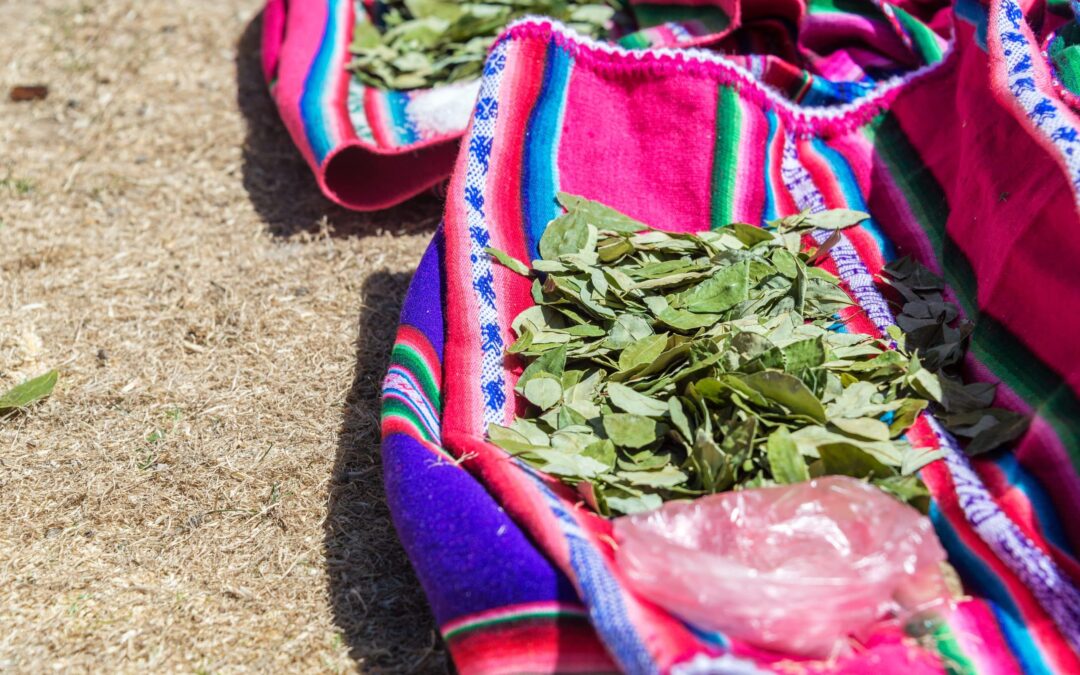

Recent Comments