When Canada opened the legalization floodgates in 2018, a mosaic of regulations was quickly enacted from coast to coast, with rules surrounding everything from cultivation to consumption.
One province in particular, Quebec, stood out as the nation’s most cautious and restrictive framework. This included a legal age of consumption of 21 years, prohibiting cannabis use in most public places, a ban on home cultivation, advertising and packaging rules that exceeded federal requirements, and other regulations.
Despite all of this, Quebec is one of the largest markets for cannabis sales in Canada. As we approach the sixth anniversary of legalization, what does the landscape look like for French Canada moving forward?
Although we have a commercial output for what we do as the cannabis retailer in Quebec, we definitely don’t have any kind of pressure around profitability.
Suzanne Bergeron, President and CEO, SQDC
“Our biggest challenges were the fact that we were so different from the rest of the provinces,” said Suzanne Bergeron, President and CEO of the SQDC. “Now, six years in, I see that more as an opportunity.”
Bergeron explained that Quebec has been able to capture the same market share as the rest of the country, even with their continued restrictions. “We have a cap on our THC, and we don’t have candies and chocolate, but with that being said, we still capture 62 percent of the market.” She added that they have been able to harmonize a commercial strategy with their number one priority, the responsibility toward the health of their consumers.
Stick to your vision
The health and safety approach is one that Quebec has consistently said is its primary mandate, and it’s hard for anyone to argue otherwise. Other provinces have gone through significant changes in licensing, advertising, and government involvement in retail. In contrast, Quebec stayed with its original course of strict government control and a focus on public health as opposed to profit margins. When asked about balancing public consumption and profitability, Bergeron was quick to point out that profitability is something they are not making a priority.
“Although we have a commercial output for what we do as the cannabis retailer in Quebec, we definitely don’t have any kind of pressure around profitability,” she said. Bergeron added that their job is to run the organization efficiently and intelligently, and their profitability is linked to them doing the job right.
“We are transitioning the illicit market to the SQDC and that’s how we get that profitability. Our main and only focus is our mission of [capturing] that market and making sure our consumers are being counselled correctly.”
Information is power
Six years into legalization, Bergeron feels that the SQDC has a significant amount of information on the preferences of their consumers and what criteria may be useful in getting someone to transfer from the unlicensed cannabis market to their retailers. They use this intel to continually adapt to the ongoing expansion of the cannabis industry.
“We’re starting to get a good amount of data on consumer preferences, what they like and dislike, [as well as] what keeps them in the illicit market vs coming into the SQDC,” she said. “Knowing that, we’re able to refine the strategy on how we’re going to adapt our stores so when they come in they feel welcome.”
Regarding the number of retailers the province considers suitable, they just passed the 100 store mark and it sounds like they are coming to the end of their physical expansion. “We’re probably closer to the end of completing our market coverage,” said Bergeron. “We’re still opening a few in the next 18-24 months.”
She added that when they opened the stores at the beginning of legalization, it was a one-size-fits-all model. Since then, the SQDC has decided to customize its product offerings by region to better serve the particular preferences of its customers. This goes for the stores as well.
In more rural areas, Bergeron suggested that perhaps the stores could be smaller but still serve the specific needs of that portion of the population. As for the SQDC’s internet presence, they are taking the same approach to product availability and accessibility. “[Clients] responded very well to our 90-minute delivery offer, so we will continue to see if we can expand that, as it’s in some regions but not all.”
Where will we be in 5 years?
Bergeron reiterated that the SQDC does not have any further plans for expansion after the upcoming retailers are created, so they mainly intend to continue adapting to the needs of their customers for an ongoing better experience.
“I don’t expect us to be much bigger in terms of stores, we’re not going to be a 200 or 300 store organization,” she said. “All we want to continue building is a place where our clients and consumer base can come and purchase their cannabis, or even come and just ask questions. [A place] where they feel welcome and respected.”
“Fear opens the door to the adverse [occult] forces. What you fear is just the thing that is likely to come to you. Fear attracts the object of fear.”
– Sri Aurobindo
There is a lot of fear in the air. Don’t let the fear egregores infect you with lower states of consciousness and feed them. An Egregor is an esoteric concept in Occultism. They are non-physical entities or thought forms that arise from the collective thoughts and emotions of groups of individuals. There is a massive egregore that has been created by masses of people that keeps growing, injecting fear and feeding off them in a vicious feedback loop based on:
Fear of supply chain issues
Fear of WWIII
Fear of escalating war in the Middle East
Fear of whatever might happen at and after the elections
Fear of natural or man-made disasters
Fear of terror attacks
Fear of the power grid failing
Fear of economic collapse
Fear of global extinction events
…or any other fear you may be having about the future.
Feeding the fear of what you “think will happen” only results in more anxiety, paranoia, and doom & gloom as your mind (and occult entities) inject you with all kinds of worries and fear about the future, which you then give more power actually to manifest as a probability.
It also lowers your consciousness and psychic defenses, making you an easier target for the occult matrix forces to take over. You will keep looking for anything to justify your projections, fears, and concerns. Remember, these hidden [non-physical] forces attempt to create their desired reality through you, tagging into your weaknesses and fears and feeding off them.
As Rudolf Steiner said over 100 years ago:
“There are beings in the spiritual realms for whom anxiety and fear emanating from human beings offer welcome food. When humans have no anxiety and fear, then these creatures starve.
If fear and anxiety radiates from people and they break out in panic, then these creatures find welcome nutrition and they become more and more powerful. These beings are hostile towards humanity.
Everything that feeds on negative feelings, on anxiety, fear and superstition, despair or doubt, are in reality hostile forces in supersensible worlds, launching cruel attacks on human beings, while they are being fed.”
– Rudolf Steiner (German): from “Die Erkenntnis der Seele und des Geistes” – Berlin, 1907]
Many in the so-called “truth movement” revel in this paranoid fear frequency and have become food sources and pawns for archonic entities outside their five-sensory awareness.I caution against believing any information about what anyone says will happen, for most of these predictions come from people already stuck in fear-based lower states of consciousness (below 200 based on David Hawkin’s “map of consciousness,” which comprises 85% of humanity.)
Any predictions [positive or negative] from channeled material and “alien/ET” sources also reflect lower states of consciousness, posing as higher ones. They are deceptive on purpose and cannot be taken seriously [I fell for some of them in the past].
No true positive Divine force would make any specific predictions. I have repeatedly heard these doom-and-gloom or savior golden age predictions for the past 25 years (and especially around 2012).I once bought into some of them, getting caught up in future projections based on fear. None of them ever manifested. I
In reality, they did only one thing to me: distract me from my own inner guidance, my bodily intuition, my creativity, and my own emancipation and embodiment process and connection to the Divine, which would enable me to BE the change indeed and hence affect the world positively without getting into survival mode.
I still remember all the predictions from “credible” and popular figureheads in the truth movement only three or four years ago of a total collapse with significant supply chain issues and no access to food, gas, water, and electricity for at least six months. None of that happened, not even for one day.
I’m not implying that “bad things” can’t happen, but they usually never occur as you “think” they are. Our mind can come up with all kinds of “what if” scenarios and projections, but it is caught in linear time and cannot possibly foresee the future in detail with infinite probabilities, let alone map out our own unique soul purpose, karmic trajectories, Divine Grace, the lessons we need to learn, and the talents we are here to develop as embodied individuals during this Time of Transition.
The more you are concerned about possible negative future outcomes, the more you live solely from your head and are disconnected from your body and essence. As a result, you become more detached from the essentialness of the present, from nature and the divine within, and from the internal guidance system that is specific to you—and therefore, the more vulnerable you are to being manipulated via hyperdimensional injections/interferences.
We Don’t See The World As It Is; We See The World As We Are
The more fear we have on the inside, the more our perception of the world becomes fearful and even paranoid, where everything is a trap and psy-op. It is the foundation of the black-pilled truther. It’s important to point out that this fear is often repressed and unconscious.
We focus on what is already within us—what we have repressed, suppressed, or projected from our unconscious shadow.
To the fearful person, this world is a terrifying place, mainly clouded in negativity and apathy.
To the angry person, this world is a chaos of frustration and annoyance.
To the guilty person, it is a world of temptation and sin, which they see everywhere, as we can see in dogmatic fundamentalist Christians.
Nothing External Causes You Stress Or Fear
That’s a big one to comprehend. Stress arises from the buildup of our repressed emotions. This pressure needs an outlet, and external situations activate and trigger what we’ve been suppressing (often for years), both consciously and unconsciously. In other words, it’s not the outside events themselves that cause stress but rather how we react to them.
The rational mind and ego often avoid confronting the true sources of our emotions within and use projection to shift the blame. It’s the essence of Shadow Projection. Phrases like “They made me angry”, “He got me upset”, “It scared me,” or “World events caused my fear, anxiety and stress” are common expressions of this mindset caught in unconscious projections.
In reality, it works the other way around: our suppressed emotions, which are already within us, seek release and use these external triggers as excuses. It is because we are already angry that events or other people “make us” angry. It is because we are already afraid [but have suppressed/repressed the fear] that makes us fear others, the world, the “future,” and so on.
We unconsciously attract and create events based on our suppressed emotions and repressed shadow [not all, for there are forces beyond our control, but many]
This is the psychological, metaphysical truth: What you perceive as the “outer” world (and events) is also within you. Hence, you see many people gravitating to “outrage porn” and fear-based information on social media where they feed the same egregore group/thought-form entity. It’s often a “loosh fest” where they support each other’s shadow projections and repressed emotions as they need “reasons” and “justifications” for their negative inner life.
The mind and intellect are very cunning and deceptive in that regard, looking for any story and event (real or made up) to justify the projections.
Transcending The Matrix Fear Frequency
Overfocusing on prepping, stocking up, and being stuck in pure psychical survival mode will only make it worse, as you give more power to what you are afraid of. Sure, have basic common sense for some basic stuff and preparation. It’s not black and white. It’s always good to have extra resources on hand.
However, many preppers don’t seem to have emotional intelligence or a metaphysical understanding of how the outer world corresponds to their inner world. Lack of psycho-spiritual self-awareness [and inner work] results in mechanical overreaction based on unconscious repressed emotions and lower fear-based nature, suggestions from occult forces, and tagging into collective fear-based egregores due to the porosity of mind.
“Fear is an impurity, one of the greatest impurities, one of those which come most directly from the anti-divine forces which want to destroy the divine action on earth; and the first duty is to eliminate from their consciousness, with all the might, all the sincerity, all the endurance of which they are capable, even the shadow of a fear. To walk on the path, one must be dauntless, and never indulge in that petty, small, feeble, nasty shrinking back upon oneself, which is fear.”
– The Mother
Any fear that you have is rooted in the fear of death, which keeps you from truly living.The matrix entrapment frequency is based on FEAR. It manipulates you unconsciously and keeps you entrapped out of your own “free will.”
The matrix forces want to keep you chained to fear: It disconnects you from your divine power, true Self, essence, creativity, inner guidance, intuition, and freedom. Here are some general tips on how to raise your consciousness and transcend the fear-based mutant matrix
Make peace with death. It keeps you from truly living and thriving.
Engage in psycho-spiritual work and especially shadow work to bring forth your true Self.
Work with prayer and sincere aspiration to the Divine.
Be aware of your nervous system.
Get into your body.
Breathe consciously and take breaks from social media [note to self.]
Align yourself with your higher nature, the eternal part within you. It is your personal guide, teacher, and unique connection to God. This is how you raise your consciousness, and that is how your level of Being living from your Essence has the most positive effect on the world at large.
However, to do that, you must face your fears, shadow, suppressed, repressed, projected, or negative emotions and transmute them. The solution is not a denial, escaping them,or spiritual bypassing, forcing yourself to have positive thoughts, resulting in a fake “New Age” smile with fake positivity.
New York authorities recently published a comprehensive report on the progress of the state’s cannabis legalization law, which was signed by former Governor Andrew Cuomo in 2021. The state’s cannabis management office (OCM) shared the document, outlining the advancements made toward achieving the law’s primary goals.
The outlined advancements include fostering equity and creating opportunities for groups that have been disproportionately impacted by marijuana prohibition, building a strong and thriving industry, and preserving the environment, among others.
Tremaine Wright, head of the state marijuana control board, stated, “This report demonstrates our dedication to transparency and equity. I’m proud of how far we’ve come in the last three years to create a strong foundation for New York’s marijuana industry. Our objective has always been establishing a just and equitable industry that addresses historical wrongs and forges ahead with new prospects.”
According to the report, the state has licensed 200 cannabis retail dispensaries, with more than 1,300 recreational cannabis business licenses issued in total. The report also noted that54.7% of the licenses have gone to applicants from economic and social equity backgrounds. Additionally, most cannabis users are now purchasing from legal sources. According to the report, 67% of consumers who used marijuana in the past year said they bought their products from licensed dispensaries.
Another significant result of the law is the expungement of marijuana-related criminal records. More than 200,000 convictions have already been sealed, while an additional 107,000 are awaiting the same process. Furthermore, the report confirms that no one in the state is currently incarcerated for marijuana-related offenses alone.
In terms of consumer habits, the report noted that as of 2022, 14.9% of New Yorkers 18 years of age and older used marijuana monthly, with 7% reporting daily use. In addition, 52% said they used cannabis for recreational purposes, while 13.5% were medical users. Meanwhile, 34.5% reported using cannabis for both medical and recreational purposes.
The enforcement section of the report emphasizes that enforcing cannabis laws is crucial to maintaining a level playing field for legal operators. The report highlights that enforcement protects the investments of legal entrepreneurs while holding those selling illegal and unsafe products accountable.
The report acknowledges the struggles faced during the market’s initial phase, such as delays in rolling out the market, leadership disputes and issues surrounding the cannabis social-equity fund. It states that there is still much to do, including refining data collection, improving customer service, educating consumers and tackling the illegal marijuana market. Nonetheless, the officials are upbeat about the potential success of the sector.
The progress that is being made in rolling out the adult-use marijuana program in New York State is being watched positively by the entire industry, including entities such as Verano Holdings Corp. (CSE: VRNO) (OTCQX: VRNOF) that would like to see all adults who use marijuana obtaining it from a licensed source.
About CNW420
CNW420 spotlights the latest developments in the rapidly evolving cannabis industry through the release of an article each business day at 4:20 p.m. Eastern – a tribute to the time synonymous with cannabis culture. The concise, informative content serves as a gateway for investors interested in the legalized cannabis sector and provides updates on how regulatory developments may impact financial markets. If marijuana and the burgeoning industry surrounding it are on your radar, CNW420 is for you! Check back daily to stay up-to-date on the latest milestones in the fast -changing world of cannabis.
To receive SMS alerts from CNW, text CANNABIS to 888-902-4192 (U.S. Mobile Phones Only)
Please see full terms of use and disclaimers on the CannabisNewsWire website applicable to all content provided by CNW, wherever published or re-published: https://www.CannabisNewsWire.com/Disclaimer
A scientific review on cancer and cannabis has concluded that various cannabinoids, including cannabidiol (CBD), cannabigerol (CBG) and delta-9 tetrahydrocannabinol (THC), hold promising potential as anticancer agents via different mechanisms.
Already, clinical trials have shown the effectiveness of cannabinoids in health improvement and the regression of tumors in palliative care.
The review was carried out by a team of nine scientists from schools in Turkey, Pakistan, South Korea, Romania, Portugal and Saudi Arabia. The researchers examined studies on the anticancer properties of cannabinoids, which included review articles, research papers and meta-analyzes involving in vivo, clinical and in vitro trials.
Their analysis covered different types of cancer, including glioma, breast cancer, melanoma, lung and leukemia. The researchers also investigated the use of cannabis in palliative care and patients undergoing chemotherapy, discovering that cannabinoids play a huge role in palliative care because it helped regulate pain, nausea and the patients’ appetites.
The review also showed that cannabinoids may work together with chemotherapy, with the study suggesting that the compounds could enhance the treatment’s cytotoxic effects via different mechanisms.
For example, delta-9 THC and CBD demonstrated that they could decrease cell proliferation and cause apoptosis when administered in conjunction with chemotherapeutic agents such as paclitaxel and cisplatin. These cannabinoids could also modulate pathways involved in apoptosis and regulation of cell cycles, which helped increase cancer cell susceptibility to death induced by chemotherapy.
In their report, the researchers highlighted the huge gaps in knowledge regarding marijuana’s mode of action and effects on the microenvironment of tumors, among others. They also acknowledged that hurdles to incorporating marijuana into cancer treatment remained, including determining optimal dosing and regulatory barriers. In addition, the researchers emphasized the need for further randomized trials to validate their findings and noted that by improving the understanding of the mechanisms of cannabinoids and their interactions with cancer cells, they could better harness their therapeutic potential.
Results of the review were published in the “Discover Oncology” journal.
Publication comes just after a special issue focusing on marijuana and cancer was published by the “National Cancer Institute.” The special issue centered on answering questions around the relationship patients had with marijuana, including reasons for use, behavioral patterns linked to the use of marijuana, associated cost and sourcing of the drug.
Earlier in the year, another study on the potential therapeutic value of marijuana compounds determined that some minor cannabinoids may possess anticancer effects on leukemia. These findings were reported in the “BioFactors” journal.
Such studies could provide inspiration for cannabis companies such as Cronos Group Inc. (NASDAQ: CRON) (TSX: CRON) to develop products targeting patients with particular forms of cancer. These treatments could supplement the conventional treatments currently being used to manage various cancers.
About CannabisNewsWire
CannabisNewsWire (“CNW”) is a specialized communications platform with a focus on cannabis news and the cannabis sector. It is one of 60+ brands within the Dynamic Brand Portfolio @ IBN that delivers: (1) access to a vast network of wire solutions via InvestorWire to efficiently and effectively reach a myriad of target markets, demographics and diverse industries; (2) article and editorial syndication to 5,000+ outlets; (3) enhanced press release enhancement to ensure maximum impact; (4) social media distribution via IBN to millions of social media followers; and (5) a full array of tailored corporate communications solutions. With broad reach and a seasoned team of contributing journalists and writers, CNW is uniquely positioned to best serve private and public companies that want to reach a wide audience of investors, influencers, consumers, journalists and the general public. By cutting through the overload of information in today’s market, CNW brings its clients unparalleled recognition and brand awareness. CNW is where breaking news, insightful content and actionable information converge.
To receive SMS alerts from CNW, text CANNABIS to 888-902-4192 (U.S. Mobile Phones Only)
Please see full terms of use and disclaimers on the CannabisNewsWire website applicable to all content provided by CNW, wherever published or re-published: https://www.CannabisNewsWire.com/Disclaimer
VIP Media Group, with support from the Ontario Cannabis Store (OCS), has announced the Cannabis Retailer Summit happening on Tuesday, November 12, 2024, at the Mirage Banquet & Convention Centre in Toronto.
This exclusive event will bring together hundreds of retailers representing over 1,200 Ontario cannabis stores, along with industry leaders and influencers, to explore strategies, share insights, and strengthen the cannabis retail sector during these challenging times.
With the industry facing unprecedented changes, including store closures and disruptions for licensed producers, the Cannabis Retailer Summit will serve as a crucial platform to discuss the future of cannabis retail in Canada. The summit is designed to support retailers by providing the essential tools and strategies needed to navigate the current landscape and thrive in a competitive market.
Tickets for the event are free for store owners, managers, and buyers, making it a must-attend opportunity for retailers looking to gain a competitive edge. However, it’s not just retailers who stand to benefit. This summit also represents a golden opportunity for cannabis brands and licensed producers to showcase their products and services to the most influential decision-makers in the Ontario cannabis industry.
An opportunity brands can’t afford to miss
For brands and licensed producers, the Cannabis Retailer Summit is the ideal platform to connect directly with the leaders shaping the purchasing decisions for hundreds of stores across Ontario. This is an opportunity to build strong relationships and secure visibility for your products at a time when capturing retail attention is critical.
“We support those who support us. Now more than ever, brands need to partner with the retail community and build partnerships to support each other,” said Jazz Samra, Organizer of Cannabis Retailer Summit. “With over 1,200 cannabis stores expected to be represented, the Cannabis Retailer Summit will be the most concentrated gathering of retail decision-makers in Ontario. For brands looking to strengthen their presence in the market, there’s simply no better place to be.”
Event highlights include
Meet the Retailers: Engage with hundreds of store owners, managers, and buyers who directly impact product selection and purchasing decisions.
Brand Showcases: Present your products and services to a curated audience of industry professionals, gaining exposure in a dynamic, interactive setting.
Educational Panels: Learn from leading retailers on the latest trends, marketing and operational strategies to thrive in a challenging retail market.
For more information on sponsorship and partnership opportunities, contact Jazz Samra at 416-455-8686. For tickets and event information, visit elevatecannabisexpo.com.
“It is well enough that people of the nation do not understand our banking and monetary system, for if they did, I believe there would be a revolution before tomorrow morning.”
~ Henry Ford
I am going to break away for just a moment from the murder, slaughter, weather manipulation, famine, floods, poisoning, pharmaceutical and medical killing, fires, chemical explosions, mass surveillance, AI, and genocide, and talk about banks and finance. In particular, I am going to discuss the recent Toronto-Dominion Bank’s (TD Bank) pleading guilty to ‘money’ (fiat currency) laundering for drug cartels. I imagine there will be much sarcasm in this essay, as this theater is meant to prop up the notion that the U.S. banking regulators actually have an interest in policing the criminal banking industry. They do not of course, as they are all criminals themselves. The bottom line here is that one bank was openly caught doing what most banks do every day, so the hypocrisy begins.
As a quick aside, the banking cartels run the world, and are corrupt and criminal to the core. All government is corrupt and evil as well, and these entities, among many others, work together to harm everyone else while they create great wealth and power for themselves. So any notion that this so-called spanking of TD Bank is anything other than fakery and total bullshit, is asinine.
To summarize in a nutshell what has just happened, U.S. banking ‘regulators’ have just fined TD Bank about $3 billion dollars, among other things, and even though this is hyped as the largest ever penalty under the Bank Secrecy Act, it is but a drop in the bucket of collusion, that will just help to sweep under the rug the true crimes of banks and governments. As the ‘regulators’ pretend to be the good guys, they will as the old saying goes, laugh all the way to the bank. Of course, one of this bank’s major clients was none other than Jeffrey Epstein, after he was a known perverted child molester. How many of Epstein’s clients were bankers from across the country and world after all, how many were at TD Bank, and how many march to the tune of the piper due to the fact they put themselves in a position to be blackmailed?
I do have a somewhat expanded knowledge in the area of banking and finance, as I was a registered principal with the SEC, and owned a full service brokerage firm for 31 years. I was in that business when these so-called anti-money laundering ‘laws’ were put in place by the long-planned and premeditated drafting of the Patriot Act, and believe me when I say that they had absolutely nothing to do with actually stopping any money laundering or real crimes, and much to do with monitoring the entire population. I wrote about this after it was implemented, (here, here, and here) and was threatened for doing so, as one of my articles got republished in a Washington D.C. paper, causing a bit of a stir within my parent company.
I will preface the rest of my statements by saying that in my opinion, the activity of laundering money is not a real crime, but a farce, as most every single ‘law’ passed by governments is bogus and controlling. Money laundering only exists because governments regulate every single human activity here, stealing all it has, and laundering money is just a way to get government and the IRS slime off your back. In the case of this criminal bank called TD Bank, the laundering of money pales in comparison to all its other crimes, that are always left untouched by these same so-called ‘regulators.’ If honesty was ever present in the media, many unasked questions would be forthcoming.
TD Bank confessed to laundering money for the drug cartels. But who is the biggest drug dealer in the world, that also controls much if not most of the drug trade? I believe that would be the CIA. That institution has been running drugs for as long as it has existed. It is a part of government, and who will get the $3 billion fine from this bank? Well, the government will, via the Treasury, a couple of its agencies, and the Federal Reserve, will get that money, and that will allow them to buy even more drugs, and then launder the money at a different bank. What a coup!
TD Bank has total assets of $1.420 trillion, a market value of $100 billion, and revenue of over $75 billion, so the’ largest fine’ in banking history is just pennies on the dollar for this bank. This fine is being touted by the ‘regulators’ and the media, as gargantuan, “the largest ever penalty.” It seems that they expect no one in this braindead population to be able to understand the numbers, and they are likely correct in that assumption. Maybe those running TD Bank can just wait for the coming next pandemic, and petition the Treasury to give all that money back, taken out of thin air of course, at the expense of all you loyal citizens. Around and around we go in this circular pit of financial evil.
So far, ………
THIS ARTICLE IS FOR PAID SUBSCRIBERS
SUBSCRIBE TO GARY D. BARNETT ON SUBSTACK TO GET THIS AND OTHER FULL ARTICLES!
Become a paid subscriber to gain full access to all articles, my comment section, and other subscriber only content.
Welcome to the Good Weed Board on StratCann, part seven! It’s been a while. I’ve sampled my fair share of new hyped products in 2024, and only a select few have made the list.
In my last piece, we showcased four offerings from just one producer in a direct delivery takeover featuring Magi Cannabis and Up In Smoke. This time, we have four new entries from three different producers.
Before diving into the ratings, I want to highlight the OG Rating Guide and explain how I decide on a final score for any given product. There are ten categories of metrics. My readers can check out the complete list at the Overgrown Gardens website. The categories are listed in order from the point of purchase until post-consumption.
What is my process? I begin by rating each category on a scale of 1-10. After assigning a grade to each category, I tally the results and provide a final score. The best possible score is 100. To qualify for the Good Weed Board, a product must achieve 80 or above. I’ve graded at least 94 hand-picked samples to date, and only 29 have made the list.
The Part Seven ratings
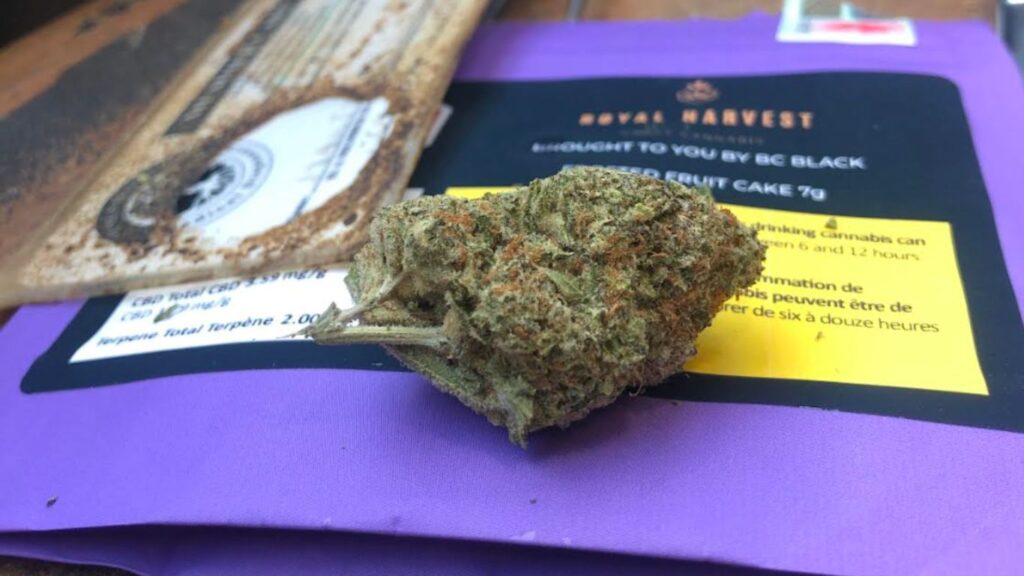
The first entry is Frosted Fruit Cake by Royal Harvest. This 7-gram product was shipped to me from Westbridge, BC. The flower was packaged on November 2, 2023, by Joint Venture Craft Cannabis. I opened the bag on November 18. In fact, I graded the Frosted Fruit Cake prior to the Magi offerings. But because I wrote an exclusive for Part Six, this one was pushed to Part Seven.
A boost pack was included, which is typically a red flag. Furthermore, I did wonder if this batch had been remediated. E-beam or gamma ray, the practice of remediating dried flower can lead to moisture imbalance, causing the bud to break apart in little hard bits instead of being really sticky or fluffy—more on this topic in a future piece.
As advertised on the bag, the lineage is Fruit Pebbles crossed with Wedding Cake. I found the aroma profile to be a gassy lime citrus, with notes of tart apple and lavender. There was a sweet and creamy cake flavour consistent throughout, accompanied by a smooth burn and greasy oil ring. This is definitely a potent one with sedative effects. OG Rating = 82/100.
The second entry for Part Seven is Orange Kush Cake by Joi Botanicals. This is the fourth entry to the Good Weed Board for Joi Botanicals. I purchased the 14-gram bag on April 10 from Dank Cannabis in northwest Calgary. It cost $130, which is expensive to say the least. The size of the bag was perfect for a half-ounce. Always better with more flowers packed together.
The Orange Kush Cake is light green and sticky, with a profile of sweet orange, skunk, and palo santo. This is just a standard kush in my opinion, but tasty and very smooth. OG Rating = 81/100.
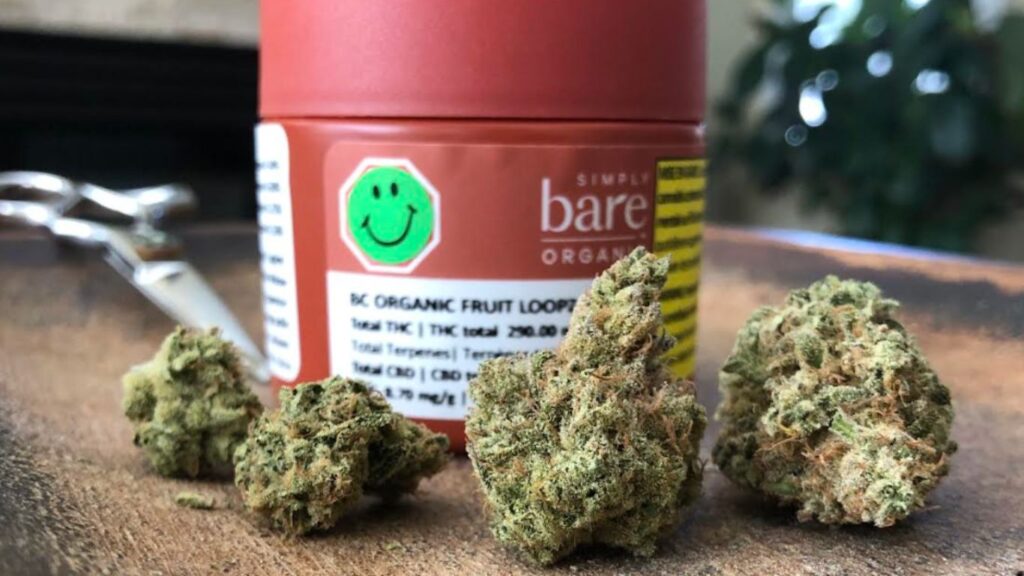
The third entry is Fruit Loopz by Simply Bare Organic. This is also the fourth Simply Bare product to qualify for the Good Weed Board. Their flower is cultivated with that living soil organic goodness. I purchased a 3.5-gram jar on May 26 for $40 from the original Highland Buds in Calgary.
The Fruit Loopz displayed that sticky sun-grown effect and my fingers were caked with resin after rolling the first joint. There was a cheesy, citrus aroma mixed with earthy berries and soap. Chopping the buds revealed that old-school White Widow essence that many cuts come close to but don’t quite achieve.
This type of herb was more common in Western Canada during the mid-2000s but is making a comeback here now in 2024. Everything happens in cycles. The aroma profile is characterized by two general traits: soap and cheese. The soapiness has a sweet, sour, earthy influence, similar to raspberry or grape. While the cheesiness resembles tropical fruits like mango or pineapple.
Each of the four joints I rolled from this eighth burned perfectly. There was a robust grapefruit-like flavour, and to me, a citrusy blend of the soapy berries and tropical fruit cheese. It took me back to a cut I’ve worked with before that we called Cream Cheese. It also reminded me of the Grape Mtn hash rosin by Connoisseur Extracts, which is some of the best from the traditional market. OG Rating = 83/100.
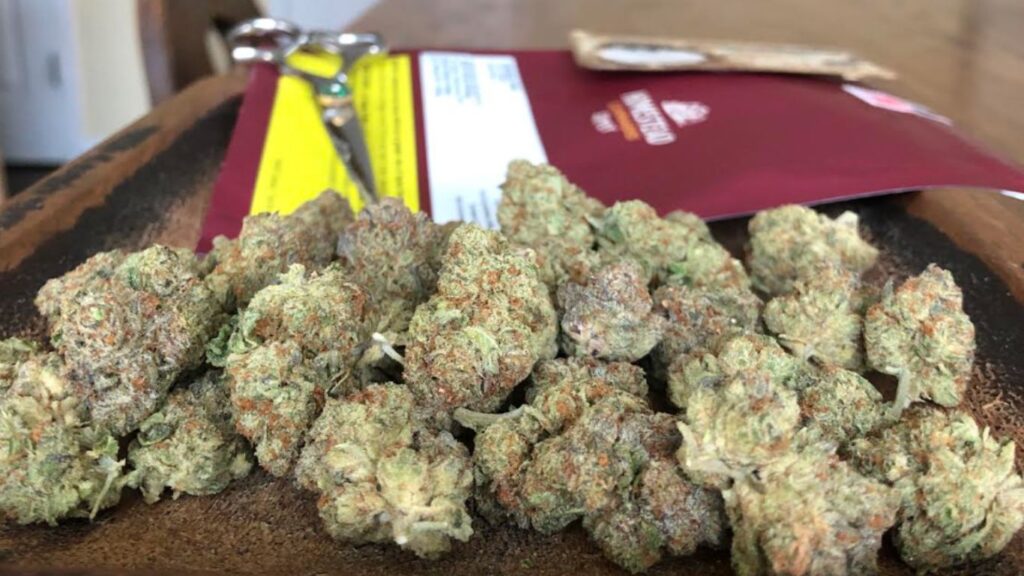
The final entry for Part Seven is Animal Cookies by Homestead Cannabis Supply. Under the Rubicon Organics banner alongside brands like Simply Bare and 1964, the Homestead Bandwagon ounces have been the product line I’ve purchased the most over the last two years in Alberta. Packed on May 4, this was the third bag of Animal Cookies I grabbed in June and July from Dank Cannabis.
The Bandwagon ounces are FVOPA organic certified and grown in living soil, just like the premium flower from Simply Bare. Sometimes these batches have a lower THC percentage, or a few smaller buds in the bag. But the flavour is reliably on point, and the burn supreme.
Animal Cookies is a cross between Girl Scout Cookies and Fire OG. The buds appear light green and frosty, with clusters of red hairs. Just another standard kush in my opinion, but with surprising top notes of nutty coffee, or a sweet but nutty cookie similar to pecan pie.
Skunk and pine were revealed as base notes in the flavour, coupled with a spicy exhale and aftertaste. For me, this can be good smoke anytime of day. OG Rating = 82/100.
That’s all for Part Seven. I’m anticipating my next column will be a Special Edition. Instead of more reviews, we look forward to introducing a new classification tool to the world of cannabis quality grading.
Marty Wig is the cofounder of Overgrown Gardens, and creator of the OG Rating Guide. He has been grading cannabis since 2003.
High Tideopened two new Canna Cabanas in Toronto, bringing the total number of Canna Cabana branded retail cannabis locations to 185 in Canada. There are now 71 stores in the province of Ontario, including eleven in Toronto.
Tilray announced the launch of the new Charlotte’s Web gummies in Canada. They come in a 30-pack bottle with two flavours. Each gummy contains 25mg of CBD, ensuring a consistent and enjoyable experience.
Rubicon Organics Inc. announced the publication of its fourth annual Environmental, Social and Governance Report (“ESG Report”) for the year ended December 31, 2023. The organic cannabis grower says they cut their carbon footprint by 48%, increased landfill waste diversion through recycling, repurposing waste as biofuel and a focus on composting, and reduced voluntary turnover by 14% year-over-year.
BC Cannabis retail association ABLE BC announced they had reached 100 cannabis retail members after holding their first in-person meeting in Vancouver and welcoming new members to their recently formed Cannabis Advisory group.
Canopy Growth Corporation confirmed it has completed Canopy USA’s acquisition of Wana, including Wana Wellness, LLC, The CIMA Group, LLC, and Mountain High Products, LLC. Canopy USA now owns 100% of the outstanding equity interests in Wana.
HYTN Innovations Inc. announced that it received an additional Good Manufacturing Practices (GMP) certification for its Kelowna manufacturing facility. This certification now includes distribution as a licenced activity under HYTN’s Drug Establishment Licence (DEL) issued by Health Canada. HYTN is a pharmaceutical company that specializes in the formulation, manufacturing, marketing, and sale of products containing psychoactive and psychotropic compounds, including cannabis-derived cannabinoids and psilocybe-derived tryptamines.
A post on Psychology Today debunks the “lazy stoner” stereotype.
Cronos Group Inc. says its Spinach brand has risen to the best-selling cannabis brand in the Canadian market in August, according to HiFyre Retail Analytics’ National Retail Dollar Sales by Brand in Canada. HiFyre’s parent organization is Fire & Flower.
The Mohawk Council of Kahnawá:ke has extended the application deadline to the Kahnawá:ke Cannabis Control Board (KCCB) to October 18. Earlier this year, the board announced the enactment of two regulations for the Kahnawá:ke Cannabis Control Law, one concerning alternate board members and one concerning registered suppliers under the Kahnawá:ke regulations.
A Quebec courtgranted an injunction to stop illegal dumping from off-reserve in Kanesatake, a Mohawk settlement on the shore of the Lake of Two Mountains in southwestern Quebec. The claims include names of two cannabis dispensaries that have been built along the filled-in shoreline, High Times Oka and Golden Star Oka. Timelapse on Google Earth shows the development of these sites in the last few years. Google Maps shows at least 13 cannabis stores within a 3 km stretch in the community.
The Kahnawake Peacekeepers are warning parents to be vigilant after minors in the community were caught using Snapchat to buy cannabis products. A 22-year-old man from Kahnawake was arrested last month following the incident.
A Cannabis NB employee will stand trial late next year on allegations she robbed the store where she worked after allegedly stealing thousands of dollars worth of cash and product a month earlier. Ten days are scheduled for the trial, beginning November 17, 2025.
A new study found a “significant correlation” between THC dose and short-term pain relief for lower back pain, suggesting that higher THC doses were associated with greater pain reduction.
A college video project posted on YouTube from 1980 talks with young people of Halifax on perspectives toward cannabis use and legalization in Nova Scotia.
A man found guilty of conspiracy to export several hundred pounds of cannabis from Canada and conspiracy to import cocaine after he was caught up in a 2021 OPP operation called Project Southam has received a nine-year sentence.
A judge gave him sentences of four years and nine years in relation to two charges connected to conspiracy to traffic cocaine and two years less a day for the charges related to exporting cannabis from Canada. The time is to be served concurrently.
A 56-year-old woman who was caught with a quarter of a million euros worth of cannabis (no weight reported) at Dublin Airportfollowing her arrival from Toronto, Canada, on March 27 this year has been jailed for two and a half years. She said she answered a job posting online and was promised $10,000.
Some 48% of employers in the USdon’t test for cannabis in the pre-hire process and many say this is to ensure they meet their acquisition and retention goals. And 44% of organizations that do test for weed report facing challenges recruiting qualified candidates.
The New York Times reports that cannabis and opium poppy production became national security issues in the US after supply chain disruptions that made critical medicines scarce.
Medicinal cannabis doctors in Australia are being investigated by authorities after suicide and hospitalization of patients. The pharmacist who founded a medicinal cannabis company has been banned from supplying cannabis, and two doctors have been suspended after two men with mental health conditions were prescribed medical cannabis by the business. One was hospitalized with psychosis; the other took his own life.
A New York court upheld Cayuga Nation Council’s move to shut down an unlicensed cannabis store against objections from the owner who rejected council authority.
The Maine Office of Cannabis Policy (OCP) issued a health and safety recall for specific pre-ground adult-use cannabis flower, pre-rolls, and blunts due to bacteria and mould concerns.
We are enslaved in a three-dimensional existence, programmed to project reality (illusion) instead of embody universality (being). For the institutionalized mind, this statement evokes conspiracy theory, fantasy, lunacy, volatility and uncertainty. What is present for those of us who cast disdain, judgement and ridicule at diversity is our fear and insecurity. Instead of observing our opportunity to be an expression of our soul, we cling to our delusion within the illusion of “reality.” Our egocentricity imposes our agenda for self-relevance, righteousness and vanity. Fear is a force that influences us all. Yet, it is our choice for consciousness we all trivialize.
Defending the Indefensible
Reality is the most powerful force in society. It is even greater than “God.” The absolute totality of our belief, engagement, investment and interaction certainly proves this bold statement. It supersedes all social nuances, simply because it is human nature to exist within its mainframe; illustrated by our oblivion to the sheer scale of its assimilation, indoctrination and manipulation. When we encounter diverse concepts, ideologies, observations and perceptions that challenge our reality, we fervently defend it with reckless abandon. We are simply too terrified to admit we were deceived, mistaken, naïve and victimized. Our egocentricity enables our enslavement.
The Con of Egocentricity
None of us want to be told what to do. Yet, every day we depend on authoritarian entities and organizations for leadership. It is an enigmatic and oxymoronic paradox to which we all subscribe. In essence, a personal delusion we condition ourselves to emulate as a defense mechanism against ourselves. Our self-centered oblivion enables our susceptibility to our ego, as does our emotional immaturity. We allow our egocentricity to control us with our own arrogance, cognitive dissonance, doubt, fear, insecurity, oblivion and self-righteousness. We are conned by our own egos, simply because we live in the triviality of our vanity.
The Vortex of Reality
Reality is a control matrix, designed and enforced to segregate us from our soul and the universe. Our engagement in its virtual domain establishes our integration into its social operating system. Our dependence upon its artificiality sustains our existential slavery. When we invest ourselves into its matrix, we acquiesce our energy, thus our soul. Reality is a black hole, ever distorting and devouring our life force. It diminishes universality into a lower frequency, energy resonance, provoking negativity via an onslaught of virtual stimulation. We enable our enslavement with our dependence, engagement, oblivion and reactivity.
“We are energetic vortices in the matrix of social reality.”
Within the Lines
We engage in personal and social conformity for ideology, intelligence, security, stability and wealth. Without these standards of existence, the fragility of our artificiality inevitably spirals into chaos, destruction and even death. Though we have a fundamental conception and knowledge of our enslavement, we forfeit our choice to be free. Much like a computer, we are programmed with our every encounter in sociality. The biological virtuality in which we are integrated is not a program, it is a virus, encoding the neural pathways of our mind. We are enslaved into an existentially linear paradigm. Our lives are simply simulations running within its lines.
Empowerment Assured
I have a great deal of compassion for people who are victimized by their conditioned oblivion; proliferated by extreme authoritarianism in social reality. That is until I observe them pulling the wool over their own eyes, in an evasion of their truth, with the brazen arrogance of their egocentricity. For years, I have written articles with the purpose of expressing clarity, distinction, insight and understanding. However, I am aware, empathic and present enough to sense the biased, inhibited and selective comprehension of an indoctrinated populus. In a dynamic as complex, distorted, manipulated and toxic, empowerment is essential.
Universal Origins
The Sun is the center of our galaxy. The solar flare activity we have recently been observing in the temperature shifts of the Earth and the presence of the Aurora Borealis is not “climate change,” at least in the ways it has been scientifically reported. Beyond the intellectual interpretations, hypothesized to impose and project reason onto universal mystery, the truth abides. Our relativity with the universal energetic shift of the new era is empowered by the Sun. Hence, it is the source of our transformational shift into transcendental being. Our soul and the universe are one, synergized in an expression of universality.
Transcendental Shift
We have been in the era of transcendence since the Winter Solstice 2012. It is essential we sever the infinite tethers we enact with our engagement in social reality, to fulfill our universal evolution. We first need to acknowledge the slavery of our soul, enabled by our dependence on and obsession with artificiality. When we are present to our soul, we can observe the cost of feigning our life with egocentricity. In the face of universal opportunity, it is an evasion of our authenticity, integrity and universality. The vital expressions of our evolution are empowering and embodying our transcendental shift.
From Engagement to Empowerment
For the last 12 years, I have practiced daily exercises to be aligned, centered, focused, grounded and related with my soul and the universe. In transforming my behaviors, I experienced an extraordinary, transitional shift. Its progression empowered my transcendence from artificiality. Not with egocentricity, yet with universality. Our universal evolution begins when we withdraw our engagement from social reality and embody the empowerment of our soul. Each of us express a unique, energetic resonance. Our soul sources our transcendence. It shifts us from existence to experience, transforming our artificial engagement into universal empowerment.
If you suffer from chronic pain and think medical cannabis could help, your doctor may not always share the same opinion. A recent survey of individuals living in states with legalized medical cannabis revealed significant differences in opinions between patients and healthcare providers.
According to the survey, which included responses from 1,000 doctors and 1,600 chronic pain patients, 71% of patients felt the federal government should legalize cannabis. However, only 59% of doctors agreed with this view. The survey also showed that 64% of patients believed that medical marijuana should be covered by health insurance, while 51% of doctors supported this idea.
The divide became even more evident when discussing the legalization of recreational cannabis. Fifty-five percent of patients felt it should be legalized across the United States, but only 38% of doctors shared this view. According to Elizabeth Stone, the study’s lead author, patients with chronic pain were generally more in favor of policies that increased access to medicinal marijuana, while healthcare practitioners tended to favor policies that limited its availability.
Currently, the availability of recreational and medical cannabis varies greatly depending on the state. Medical marijuana is legal in 38 states and Washington, DC. Additionally, 23 of these states have legalized the substance for recreational use.
According to Stone, one of the reasons cannabis stands out is the regulatory environment. “Marijuana use for medical or recreational purposes may be lawful, or neither may be permitted at all depending on where you live,” she said.
The survey primarily focused on adults suffering from noncancer chronic pain lasting six months or longer, as well as primary care doctors and specific specialists. Interestingly, most patients who had previously used medical cannabis and potentially experienced relief supported expanded access. On the other hand, doctors who had never recommended cannabis for pain relief were more hesitant to support broader legalization efforts.
Despite differing views, both patients and doctors largely agreed on one thing: 70% of both groups believed that medical schools should educate future physicians about medical cannabis and its potential use in pain management.
“All of this indicates a need for further guidance on the use and effectiveness of marijuana for medical purposes,” Stone stated. Questions about which patients should be recommended medical marijuana and what forms, dosages or methods of use are most appropriate remain topics for future research and policy development.
Pointers to the answers to some of those questions can be gleaned by examining the data that entities such as TerrAscend Corp. (TSX: TSND) (OTCQX: TSNDF) have collected over time regarding the different ways in which medical marijuana users use medicinal cannabis.
About CNW420
CNW420 spotlights the latest developments in the rapidly evolving cannabis industry through the release of an article each business day at 4:20 p.m. Eastern – a tribute to the time synonymous with cannabis culture. The concise, informative content serves as a gateway for investors interested in the legalized cannabis sector and provides updates on how regulatory developments may impact financial markets. If marijuana and the burgeoning industry surrounding it are on your radar, CNW420 is for you! Check back daily to stay up-to-date on the latest milestones in the fast -changing world of cannabis.
To receive SMS alerts from CNW, text CANNABIS to 888-902-4192 (U.S. Mobile Phones Only)
Please see full terms of use and disclaimers on the CannabisNewsWire website applicable to all content provided by CNW, wherever published or re-published: https://www.CannabisNewsWire.com/Disclaimer





















Recent Comments