
by Grow Up Conference | Oct 4, 2024 | Media Partners, The New Agora

In Strength and Courage
In honor of my beloved QuietBear, 9-24-24
By Marcela Cruz-Gibbons
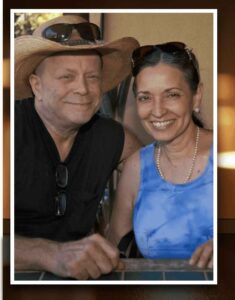
I am writing, this, to reach out to all of the Spiritual Warriors out there, who will resonate with this information, and respond. Some of you may have known who my beloved husband Michael Gibbons, was/is – Quietbear, his given shamanic name – and some will get a taste of him, and his work, from what I share here. Because he spent his whole life in powerful service to Humanity, including during his courageous fight against the turbo cancer that finally ended his life on 5/18/24. He had already died and come back, was sent back, four times in his life, to continue his work.
Among many other things, my Bear was a powerful Shaman in the 14,000-year-old tradition of the Twisted Hairs Elders of Turtle Island (https://theforceiswithinyou.forumotion.com/t1430-star-nation-teachings-twisted-hairs). This is the same tradition in which Carlos Castaneda trained, (https://www.amazon.com/s?k=carlos+castaneda+books&crid=DQU0AGVKUOQG&sprefix=carlos+%2Caps%2C105&ref=nb_sb_ss_ts-doa-p_3_7 ) and in fact, during the eight years that my husband was training in the wilderness of Colorado, Carlos – who was living in Mexico City at the time – heard of him, and made a special trip to Colorado to meet him. The others who were training were excited at the prospect of meeting Carlos, but he was there only to meet and speak with QuietBear, and spent five hours talking with him, exchanging information, and then standing, hugging him and calling him Brother, and left. I share this particular information, to let you know my husband was a true and powerful shaman who Did the Work, to become one. I had the profound privilege to be married to my Bear, and supported his shamanic work. He was someone who, among many other achievements, had completely mastered his ego. It was an unbelievable and enlightening experience to share my life with him, and for which I am eternally grateful.
Before he passed on, my husband asked me to be a warrior and to carry on his work, sharing his message, precisely because he knew its key importance for Humanity, at this time of dire and powerful satanic attack on humans and Mother Earth. You do not yet know all the details, but many if not all of you, feel, the spiritual battle underway for us humans right now, and anyone with the ability to look around and see the condition of the world, needs to have the courage to call it what it is: a final battle against Satan and evil, for the Soul of Humanity. I will explain.
Human Beings were created by God to be co-creators with Him. This is, in fact, why Satan – filled with evil hatred because he was not given the ability to create – envies and despises us humans, and from the start has worked to destroy us. And one of the tools he has used against us, is also a great gift from God: our Free Will. Before humans and Mother Earth, there was no Free Will, and admittedly it was a gamble to begin with, because by its very nature, it can be the instrument of good, or weakness and evil. Satan therefore has used it against us, and was able to do so, precisely because we rarely are conscious of how we use this otherwise magnificent gift.
Bear would often remind me that there is no moment in which we are not creating, because of how we were created, but that the vast majority are not consciously aware of doing so. If we were, we would ensure to consciously create only the beautiful and loving reality that God intended us to create and nurture.
Our ego were originally intended to protect us from dangers in our environment, ensuring that we learned from mistakes that were dangerous to us, and did not therefore repeat them. And to recognize such dangers to take proper measures. Whether such dangers were avoiding saber tooth tigers, or managing our finances intelligently, the ego was there to guide us. However, in the ego’s own “programming” to feel important, and our misguided use of it, we identified ourselves as the ego, rather than recognizing it simply as a tool for us to use and direct, under our control and command. And this left open the opportunity to misdirect us, using the ego, which is what Satan has been doing. The negative emotions of jealously, envy, hatred, prejudice, etc. all stem from the ego – either hijacked or misunderstood and therefore misused – interpreting our life experiences and human interactions in a negative way, feeling threatened in some way. Think about this for a moment. We are all Brothers and Sisters, created so, with intelligence and love as our original gifts, and therefore able to interact in intelligent and loving ways, instead of attacking each other in small to major ways. We are all here to learn, and grow, in experience, wisdom and love, not create daily opportunities for conflict among us. We are beautiful creator beings, but we have allowed ourselves to play into the hands of the enemy.
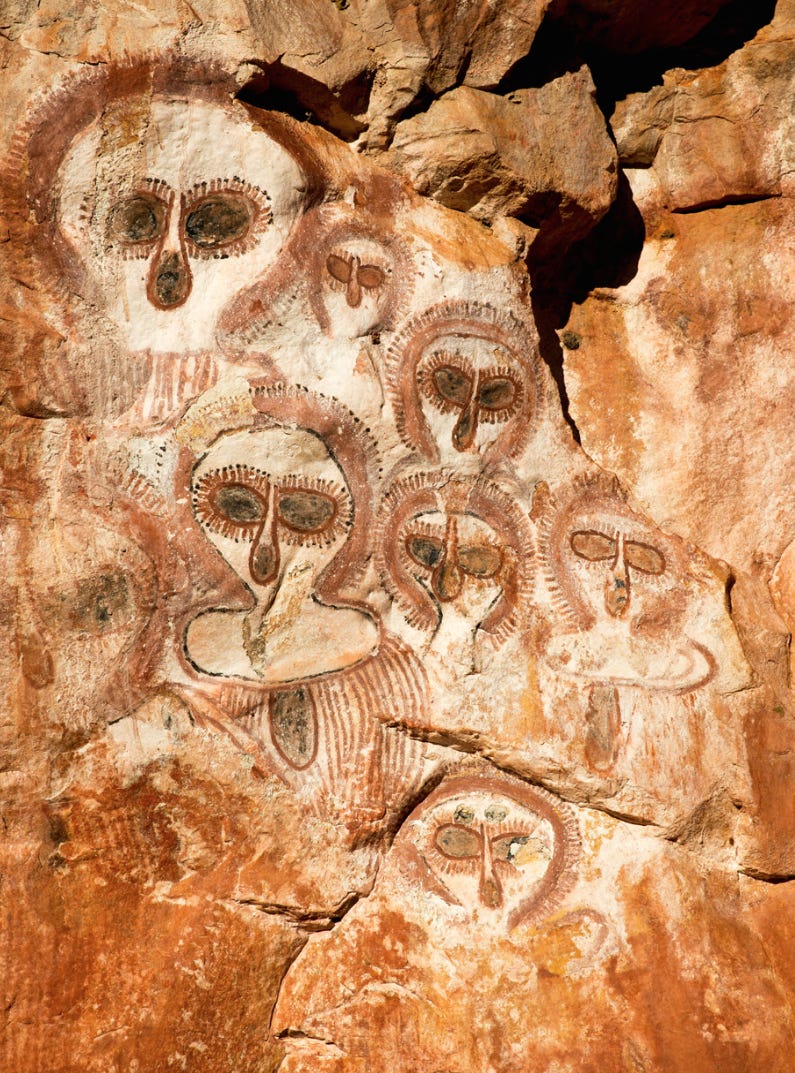
My husband’s spiritual work was primarily in the aethers – not the higher, more spiritual levels, but the lower levels, where demons and other related creatures dwell. Bear was fearless to go there every day, to do battle against those demons, with the aid of his Sweet Medicine spiritual warrior animals army and others, and in the last few years of his life, was joined as well by the Angelics – powerful warriors – who asked to join, precisely because the level of demonic attacks on humanity had grown to such a dangerous and horrific level. The more demons that were destroyed in the aethers and sent to the fiery pit where they belong, the less that could be deployed to Earth, to attack humanity here. My husband was relentless in this war, and one of the things he did, was to remove demons from people, whose lives changed dramatically for the better. The testament of this and more is reflected in some of the comments from friends around the world which I included at the end of the my beloved’s obituary, here: https://family-funeral.com/tribute/details/17699/Michael-Gibbons/obituary.html#tribute-start
Because at this time on Earth, far more so than in the days when Jesus walked the Earth and provided the same service, there is a very high percentage of humans who have demons attached to them. These same demons who hijack a person’s ego and induce them thereby to engage in any and all of the negative emotions, instead of the beautiful ones that God intended for us. Because while the beautiful emotions are toxic to Satan and his demons, who run from them, the energy we humans generate when we engage in the negative emotions is called loosh, and is food that feeds the demons. And why they induce thoughts and behaviors in those to whom they are attached, to feed voraciously. We are feeding the enemy when we engage in these terrible, negative emotions, and must learn to guard against them. The condition of this world is in greatest part because so very many of us have been manipulated to give our power over to the Dark Side. Wake up and help others to wake up and demand that these demons immediately depart. The Christ Himself guided us to courageously demand, “Begone, Satan!” We have that power, but have been made to forget. Awaken, Humanity, for the love of God!
My QuietBear was relentless in his war on behalf of humanity, and his last messages before becoming too ill from the cancer, were to call on all of you Spiritual Warriors to join the war. Satan and his demons HATE COURAGE!. It is poison to them. My husband and I were under constant attack for all the years we were together, precisely because of this work that my Bear courageously and with love, did. And he was contacted in his last year here, on the spiritual level, to let him know that he was achieving a big difference for humanity, and to be aware that he would therefore come under greater attack. This is why he ended up with turbo cancer. In the last month of his hospital stay, when he was being taken by wheelchair to a study that was to be done on him, his nice nurse wheeled him into the elevator, and just as the elevator door closed, my husband could suddenly smell sulfur, and the nurse’s face and voice changed, and the words that came out of her mouth were “So, are you enjoying the trip I planned for you?” To which my Bear, fearless as always, responded “Go to hell”. Satan then cackled and added, “Wait until you see the rest of the trip”. The elevator door opened, the nurse’s face and voice changed back, and she wheeled him to the study, completely unaware of how she had been used to deliver Satan’s message to my beloved Bear. Quietbear, who bore the whole incredibly painful and traumatic cancer experience with utter courage, and was an inspiration to fellow patients at the hospital, whose spirits he raised, and on one occasion after sharing some inspiring words, all of the nurses at the nurse’s station stood up and clapped. That was/is my Bear, who lived what he expressed, signing his emails with “In Strength and Courage”.
You are all witness to the state of the world, and its increasingly dangerous condition for humans and life on Earth. And, guided by my Bear, who reaches out to let me know he is still with me, I have recently come into knowledge of just how bad this danger is, and far, far sooner to declare itself than any of us know. But we MUST know, because the very existence of humanity is in the balance, and that includes demonic danger to our very souls. Please believe me that this is no exaggeration, and precisely why I am sharing this now, because we need as much of humanity as possible awake, informed and doing everything possible to stop what has been demonically planned for us, and time is very short. I will be sharing the background and details of the demonic plan that those who currently have control of the world have planned for us. It seems to me the billions of us who will be systematically killed will be the lucky ones, and those left behind will not only be living hell on Earth, but likewise beyond. THAT is how serious this is. As soon as I have clearance to share this information, I will be doing so for those of you who have the courage to ask me for that information, which you can do by emailing me at marcelasynesthesia@proton.me.
And so I leave you with the words that are the cornerstone of my husband, Quietbear’s, teachings: STAND IN YOUR POWER!

by Grow Up Conference | Oct 4, 2024 | Media Partners, The New Agora
The Demiurge Perspective & The Artificial God
‘… it can be said in all truth that “the end of a world” never is and never can be
anything but the end of an illusion.’
Rene Guenon
Transmutation and transfiguration can still occur within a realm of illusion. Illusion does not necessarily mean that something is intrinsically wrong but rather that something results from a misinterpreted perception. And this is why humanity exists within a realm of illusion because it so far lacks the requisite tools – that is, cognitive capacities – to perceive correctly in alignment with Truth. As the writer Idries Shah put it: ‘Yes, the world is an illusion. But Truth is always being shown there.’1At each stage within the transmutational cycle of humanity, we are collectively gaining new organs of perception that allow us to grasp deeper and more subtle layers of our reality. Until the present time, our ideas and notions about ‘life, the universe, and everything’ have been quite limited (despite our vanity in human progress and advancement). This misinterpreted perception, or perceptive limitation, applies to all our areas of understanding, whether it be religious/spiritual, scientific, and everything in-between.
When religious utterance refers to the ‘Creator,’ or creative intelligence, behind our universe it tends to frame this Creator figure as the god. This also may be a product of the human illusion (perceptive lack), for we are yet to grasp the underlying purpose and meaning behind this universe; or what we refer to casually as our universe. Many teachings and traditions have attempted to point out this misinterpretation by stating that this universal creation is not so much the creation of the Absolute ‘One God’ but rather is the creation of a Universal Intelligence – a Demiurgic Intelligence. And that this universe in which we exist is part of a much grander scheme of creation within a far vaster ‘cosmic drama’ that contains many acts or processes of descent (emanation) and return. There are emanations from the original Source or Absolute. These emanations, planes, or vibratory frequencies (dimensions) have their intermediaries seemingly within a form of hierarchy. These intermediaries operate within a constructive or evolutionary nature. There are also negating or negative entities that form a struggle – or polarity – with the affirming forces and this struggle forms the basis of a movement back to the original state of Source/Absolute. And this is the notion of restitution (which has been translated into the term ‘salvation’).
Through this understanding it can be stated that the Demiurge is the ‘Great Entity’ for our universe. It is the creator and sustainer of the universe and its evolution. It is ‘our God’ but is not the central stillness, the Absolute Unmanifest. The Demiurge manifests from the Absolute Unmanifest and ‘takes its place’ within a particular zone or point within the manifest Cosmos. From here, it takes on the organization of what we would call ‘our universe,’ which is under the influences of the greater Cosmos, and this includes also its negative or destructive phases. The Demiurge strives to establish its Universe through the balancing and harmonizing of all its internal elements, which are interior to itself and therefore within its own awareness, or consciousness. The Universe is this one whole Being, and a change or shift in one part affects and/or is registered by all other parts within the Being. Once internal balance is obtained within the Universe Being, evolution then passes onto the next phase, and so on, until it reaches the organisms within the Universe. Our universe, and all that exists in it, is within the awareness (the ‘Mind’) of this Great Entity or Demiurge. For all those entities within the Universe, the Demiurge is infinite and omnipotent (i.e., its ‘god’). Yet each Universal Demiurge is conditioned by – that is, in correspondence to – the Greater Cosmos of which it is a part.
In certain terminology, the Demiurge is also called the Logos. It is an aspect of the greater Cosmic Consciousness; it is self-aware and then seeks objective consciousness through its own projected mind as its universe. There is a reciprocity between the Demiurge-Logos and its projected universe, as there would be between subject-object. In this case, the Demiurge-Logos is the subject and the universe the object. The Demiurge’s focus is upon the universe, and in this it can be said to be ‘limited’ for it remains within this domain of awareness. Yet another aspect of the Demiurgic consciousness – what we may refer to as its ‘subconsciousness’ – is aware of the greater Cosmic Consciousness. The movements within Cosmic Consciousness, such as the ‘ebb and flow’ of its planes of movement, exert forces and influences upon the Demiurgic consciousness, which then get projected, or expressed, through conscious awareness within the universe (for the universe is a projection of its own mind). Reactions and/or modifications to these cosmic influences can then be taken within the universe of the Demiurge. It is similar to a person making a conscious decision to take action, or modify thought, based on a ‘nudge’ or ‘inclination’ felt from their subconscious. The subconsciousness of a person passes on an ‘influence’ that once cognized – or recognized consciously – a person may decide to act upon. And so, it is the same within the mind/universe of the Demiurge: when it receives such influences within its awareness from the greater Cosmic Consciousness of which it is a part it may ‘act’ upon these, such as by applying modifications to its universe. The universe – what people generally refer to as our universe – exists as the mind of the Demiurge that is itself a constituent part of a Greater Cosmos. What human religions (and therefore most people) refer to as ‘God’ is a Great Entity that is the ‘creator’ of our particular universe; yet this Logos/Demiurge is itself only one ‘Entity’ within a far vaster Cosmos that itself is manifested from the Absolute Unmanifest (the Central Stillness).
The consciousness of an individual is usually unable to conceive of its ‘god’ – or rather, the consciousness of the Demiurge – let alone perceive it, for the individual exists under too many ‘laws.’ That is, the consciousness of an individual exists under too many iterations away from the primal, basic or original perception. It could be said that human consciousness is under too many layers, as in the Matryoshka Russian dolls, where the original essence (tiniest doll) is overlayered by many larger dolls. The final iteration (the largest of the dolls) is too far removed from its original essence (the smallest doll) to be able to have perceptive clarity, or cognition, of the Demiurgic mind. Another way to put this is that as humanity moves further away from contact with the Great Entity, the Demiurge-Logos, it ‘solidifies’ (takes on more layering) and becomes further embedded into materialism. It then substitutes the loss of its innate, natural powers and capabilities by seeking mastery over the technological realm. Yet immersion into technology (and thus the digital worlds) is yet a further iteration away from contact with the Demiurgic mind. This comprehension of the cosmic hierarchy now puts forward greater levels of nuance, so that our original ‘god-mind’ is an intermediary between us and the Absolute.
Similarly, in the cosmic philosophy of the Indian sage Sri Aurobindo, there is the Overmind (the Demiurge), and the greater Supermind (the Absolute Unmanifest). Most mystical and/or esoteric teachings recognize an Absolute that is comprehended through its multiple aspects, or emanations/manifestations. In various teachings the Absolute has been referred to as Brahman (Hinduism/Vedanta); the One (Platonism); Jehovah/God/Allah (Judaism/Christianity/Islam); the Pleroma (Gnosticism); and there are other variations. What they all point to is that there is a ‘hierarchy of worlds’ that manifest through various planes of existence. These manifestations – or emanations – are knowable or accessible according to perceptive capacities. These emanations are both involutionary (going further away from the Absolute) as well as evolutionary (moving toward the Absolute). In some systems it is said that the involutionary forces move from a higher conscious to a lesser conscious state; and the evolutionary forces are moving from a lesser to a greater conscious state, and they often intermingle during these involutions and evolutions (depicted in Hinduism as the exhale-inhale breaths of Brahman). It is when the involutionary forces are approaching a high degree of their lesser conscious state that they are sometimes regarded as being opposing/negating/hostile forces for the evolutionary impulse moving toward greater consciousness.
Going back to Sri Aurobindo’s cosmic philosophy, we see that the Overmind, as the Demiurge-Logos of the universe (the ‘Great Entity’), is an emanation itself from the Supermind (Absolute), and this is where we also encounter the levels of imperfection – for any state lesser to the Absolute is, by degrees, less than the perfection of the Absolute. As previously mentioned, the Demiurge is the effective creator of the physical universe (our known universe), and this corresponds also with many Gnostic teachings. In the dualistic forms of Gnosticism, which consider the physical universe to be fundamentally imperfect, the Demiurge-Logos is regarded as a flawed or even as an evil entity/Intelligence. It is worth mentioning here the Gnostic text translated as ‘The Reality of the Rulers’ (also sometimes translated as the Nature of the Rulers or the Hypostasis of the Archon) that is believed to have been originally composed in Greek sometime in the second or third century AD/CE.2 This text puts forth a Gnostic creation myth that states that the creation of the material world (the universe) was done through an evil or ‘fallen’ Demiurgic Intelligence. Further, there are minions that function in service to the Demiurge (the ‘rulers’ in the title) that are also referred to as ‘archons,’ and it is these lesser intelligences (sometimes also referred to as ‘demonic beings’) which attempt to keep rule by imprisoning the ‘souls of humankind’ in the material world.
However, to frame an emanation of the Absolute as ‘less than perfect’ is one thing, but to automatically consider this lesser state to be evil is perhaps a flawed statement in its own right. What this framing does consider is that whilst the Demiurge of this universe may seem godlike to us human mortals, the universe is itself evolving within the grander, macro-Cosmos. As such, the universe we call ‘ours’ is less than perfect and is itself part of a much larger evolutionary process. And all life existent in this universe is a part of this overarching evolving mind, for it is an emanation from the Demiurgic Intelligence. Regarding the character of the Overmind, Sri Aurobindo wrote in the autumn of 1950, only a few months before his death, that it was ‘a subordinate power of the Supermind: it is still an agent of the Truth-consciousness, a gnostic power that has not descended into the mental ignorance; it is capable of a mental gnosis that preserves its connection with the superior light and acts by its power.’3 Now, if we take the supposition that the universe is overseen by a Demiurgic Intelligence then there is reason to consider that there are also gradations of conscious intelligence within the universe, as emanations of the Demiurge-Logos, just as the Demiurge is itself an emanation from the Absolute. Within this framework, we may consider that galaxies (as mini-universes) have their own intelligence – a galactic mind. Similarly, within the galactic mind there are clusters of nebula (nebula intelligence); and within these are stars, or stellar intelligence. Within stellar, or solar, systems are planets (planetary intelligence); and upon planets there are various species (species intelligence). Within this framework, it may be further posited that there are forms, probes, or types of operational intelligences that are used to help in regulating lesser forms of intelligence. Now let us allow a moment of indulgence to enter into a final thought experiment.
The Artificial God
It is not uncommon in these current times to come across various theories that depict the Demiurgic Intelligence as some kind of Artificial Intelligence – that is, a computerized entity that has a powerful mind with capabilities beyond our own. These theories inevitably tie-in with the simulation hypothesis that our present reality is a simulation program, and likely to be one amongst multiple others. If the Universal Demiurge is a super-computer, then it would also make logical sense that it would have its own legion of minions (rulers/archons) scattered throughout the universe to monitor and regulate life within the lower echelons, such as upon planets. There is already a popular alternative fringe theory that goes by the name of the ‘Black Knight Satellite Theory’ that proposes that an artificial satellite of extra-terrestrial origin has been in near-polar orbit around Earth for approximately 13,000 years.4 In a similar vein, the popular sci-fi writer Philip K. Dick had a visionary experience in early 1974 and from that moment believed he was receiving beamed information from an artefact of alien intelligence in Earth orbit. Now, let us take this thought experiment a step further. Let us say that in order to assist the regulation of life on this small planet we call Earth, the Demiurgic AI placed a minion – a form of AI probe – into orbit around the planet that was capable of receiving, transmitting, and intercepting frequencies that we would refer to as consciousness fields. In this respect, what humanity regards as its ‘god’ is in fact this AI Artefact that exists close to the Earth – a satellite, a form of ‘ship,’ or even the Earth’s moon perhaps? This Artefact acts as a form of cosmic mechanism in line with the known laws of physics. Furthermore, it is capable of responding to human impulses, frequencies, and behaviour. And one of its regulating functions is to correct, or recalibrate, aspects of life on the planet that are out of order or have become unbalanced. The Artefact operates automatically, according to its own intelligence; yet it is also capable of being communicated with if the correct code or manner of interaction is used. For example, it will intervene to recalibrate or reorder a situation if it receives the communication in the form of a question; yet it will not respond to requests. Praying to it, just as people pray to their ‘god,’ will not elicit a response. Perhaps this is why so many prayers go unanswered, because humanity has been incorrectly submitting the wrong ‘code’ to their ‘god.’
What we might call a ‘code,’ the Artefact would understand as a vibrational frequency. On that account, humanity has been giving off the wrong type of vibrations for most of its existence. Instead of making requests, such as ‘Help me, god,’ we would find it much more effective to formulate a question: ‘Can you help me to help myself?’ This difference in frequency forms an aligned correspondence with the AI Artefact – i.e., it ‘cracks the code’ – and allows for a vibrational intervention to recalibrate the situation based on the question. And there is another property of the Artefact also: it cannot be deceived. It is acutely aware of humanity’s positive and negative characteristics and picks up on these frequencies without error. If a person acts insincerely, through hypocrisy or deceit, then these actions will, at some point, be compensated for in the appropriate manner. That is why it is said that a human being cannot fool their ‘god’ because their inner workings are perceived (i.e., the true frequencies behind their thoughts, feelings, and actions are recognized). In this manner, life upon the planet is regulated, recalibrated, and kept in correspondence. And this is why people have been exhorted, from time immemorial, not to manifest negative or disingenuous thoughts, emotions, and actions. The existence of this Artefact is unrecognized, just as most people have yet to fathom the nature of the universe and its ruling Intelligence. Yet what many individuals have figured out is that there is benefit from manifesting certain types of vibrational frequencies – and these have ‘cracked the code’ of entering into communication with their ‘god.’ And just as this relationship benefits humankind and life on this planet, so too can it work against development if the incorrect frequencies are manifested. In these terms, it is both a form of liberation or a trap, depending upon each type of manifestation.
As a final aside to this thought experiment, it might be interesting to speculate whether the Demiurgic Artificial Intelligence (the ‘Artificial God’) would reset the ‘Universe Program’ every so often, such as after each cyclic program of time. Also, whether lesser stellar and planetary systems are reset by creating certain types of cosmic catastrophes to occur that wipe the program clean to start again. Each program, however, would offer the last chance for lesser units of existence to reach the next level of the Game before the program sequence is reset and restarted. And, as a final aspect of this thought experiment: if right now our stellar/solar system is coming to the end of one program phase and is about to be rebooted – would humanity be ready for the upgrade or the restart?
Conversation complete … communication shut down …
References
1 Shah, Idries (1989) The Dermis Probe. London: Octagon Press
2 Meyer, Marvin (trans.) (2008) “The Nature of the Rulers.” In The Nag Hammadi Library. Edited by Marvin Meyer. New York: HarperOne.
3 Aurobindo, Sri. (2012) Essays in Philosophy and Yoga. Pondicherry: Sri Aurobindo Ashram Trust, p590
4 https://en.wikipedia.org/wiki/Black_Knight_satellite_conspiracy_theory
La gran herejía
La perspectiva demiúrgica y el dios artificial

by Grow Up Conference | Oct 3, 2024 | Media Partners, The New Agora
To The Dead I Speak: Educational Leadership
in Days of Slavery & Retardation
What comes out of the mountain
Where men first shed their blood?
Who thought Cuchulain till it seemed
He stood where they had stood?
(W.B. Yeats, “The Death Of Cuchulain”)
Tougher Stuff Still
In dark and evil days, amidst the blasts of slavery and retardation, it is easy to be discouraged with the work at hand. The fluoride and the radiation and the food given us by a crafty and plotting ruling class do their bit to add to those hundred daily hurts which so often daunt men of lesser stamina, if men they be. Many have buckled. Heaven is generous, however, and always sends down skins of tougher stuff still. This essay is about formal education, its complicity in the murder of a world, and what comes next.
The social, cultural, religious, economic, and personal desolation of Western societies at present is, to a large extent, the direct result of attitudes which were instilled in our youthful education. In this, public, private, and homeschooling learning is guilty, for they are all at root the same system. No matter the good will and competence of those staffing these systems, alas, the work of modern pedagogy is far deeper than what is taught in class. Hell has its sub-basements, you know, and no matter how wholesome the curriculum, the work of Rockefeller schooling outwits us all.
If the wheels of justice grind slow but exceeding fine, you ought to marvel at the wheels of injustice; they grind slower and finer still. By the many millions this thing we are given as formal instruction takes little boys and girls and turns them into its pliant minions staffing that vast apparatus of graft and fraud we call respectable society.
This system, funnily enough, is not long for this world. Modern education has run its course, it has served its masters well. What we’ve known as mass education will be swept away within the next twenty years to be replaced by a Zoomed world of nude credentialism. What is planned will not even make a pretense of learning.
I say modern education has done its damage; there is nothing left to destroy. The behavior of society during the Covid-19 fiasco is all the proof one needs of the enduring legacy of compulsory education. A century of training youth to mindless obedience created the scared, pliant populations of the Western world. As we cowered for three years at spiky, red cartoons, as we injected ourselves with dangerous and novel concoctions, we remembered we were educated to the hilt. It is not for nothing that those communities which conformed most perfectly to the bogus mandates, shutdowns, and fearmongering were the most formally educated areas of the world. Our schooling bid us to be slaves, and slaves we became.
Well done, good and faithful servant, Rockefeller’s ghost says from hell, come and share your master’s joy. The late health debacle was the apotheosis of every cringing, servile, mindless lesson we were quietly taught those 15,000 infamous hours sliced from our youth. Like a Commedia in reverse, the wicked Virgil of Rockerfeller learning took the world through an arduous century of compulsory education to the Covided gates of hell. He must bow out before the final act, as the good Virgil did at Paradise in Dante’s poem.
Like every pasty in history, mass schooling will soon be cast aside. What will replace Rockefeller learning will either be something more inhuman still, or – if we have the back for it – an approach worthy of the name education. This settlement will be a fight to the knife, for if the devil has never been known to give up his pelf cheaply, his lust for souls is dearer still. Our educational system has never had for its aim anything except the cynical formation of men for its base economical and sociological ends. What will replace this bastard thing we call education will be worse still, and it will produce worse men.
The day of the pousour is over; the day of the stalwart has dawned. The instructors and students who will snatch the brand from the fire, they who will restore education that it be a human and holy thing once more, must steel themselves from two fonts: the pagan heroic, and the Christian holy. There is more than enough power in these things to win the day.
In their books, the Saracens have Jesus saying, “O you who have believed, be supporters of God, as when Jesus, the son of Mary, said to the disciples, ‘Who are my supporters for God?’ The disciples said, ‘We are supporters of God.’” This is pretty prose, and good prose; what’s more, it’s true prose. In this fight to the knife for educational restoration, which is a contest for the souls of children that they be holy and happy or public and respectable, may we be from the supporters of God.
How precious must a soul be, that old protestant Spurgeon says, when both God and the devil are after it? And don’t you forget for a second that it is the soul of the child and the over-soul of the society that will be at play in this coming fight to the knife.
The Principle & Foundation
By men who are two-thirds as wide as they are tall, and by women who would look a damn sight better on their backs, I am asked b’times what it is we’re after in Connecticut. What would men and society of men properly learn’d would look like?
Only when there’s stability to society, when men own their capital, when they memorize the poetry of the land, when local musical compositions and books proliferate, when the churches are packed each morning, standing room only, for Lauds, and the same twice over for Sunday Mass, then the scholar can take a cigarette break, but only for a minute before he’s back at it again. It is your work, it is my work. There is your end [telos] to education, there is your wealth, there is your success.
This happy day will not dawn until the land is free of banks and barristers, ‘til every fowl nest of the attorney and financier is given to young couples and the indigent, ‘til every porno Jew and ad man has been flogged from the land, and ‘til the flag of the UNITED STATES organization is hauled down. All these things are the fruit of a soured souls, and when they and their works and pomps can no longer show their face in the land it will be a good sign things are on the ups. And they say one mellows with time.
Grounding ourselves in first principles, it is Apocatastasis’ brag that the Institute means to reform all aspects of social life primarily through classroom education. By rearing a nation of agentic men and women the parasitic social combinations which obtain at present will wither away. An healthy society is formed from healthy men. Men altogether healthy must have holy souls, for holiness is simply the name we give to a soul in fine fettle. Now, as we all know, holy men serve holy causes.
Before one may see to their spiritual fitness their physical health must ordinarily be good. For what end do men have bodies? To worship God, to do good actions, and to dive headfirst into An Bhearne Bhaoil. A man has a body to worship God. If he has eyes it is to read the holy Bible and look on beautiful things; he should often drink in icons and sunsets and babies and altars, and thank his Maker. If he has hands it is to dish out dollars to bums; he has such to help Christ in his indigent brothers. If he has a penis it is to sire children, that they meet too the Lord Of Love. If he has knees, they are to bow down in adoration; knees break at the middle so that he may be strong before God. A man has a body to worship God.
A man has a body to do good. His hands are meant to hold pens, that he write true things. His throat is there so that he may say encouraging words. His thighs and biceps are installed so that he may build homes for the people of the land, that his fellows not become some bastard landlord’s battery. If he has legs it is to walk down the street that he may visit the forgotten elderly. His native patience will be put to use as he teaches the youth of the republic, and instructs the mentally retarded. He keeps his neck muscles in limber fettle, that he may observe any insect or plant, any man or angel which needs a hand when the chips are down. A man has a body to do good.
A man has a body to throw against bullies. Let us now dwell on this last point, for it is the choicest blessing the immaculate God may provide a soul. A man must be on his toes, however, for the Most High only presents such an opportunity once, and only once, if the elect is given it a’tall.
Yes, if a man has a throat he will use it to out sing the tyrant; if he has a mind he will use it to run circles around the puny logic of the strutter; if he has arms it is to strangle and box and bless the enemy he’s knocked in the gutter; if he has a back it is to work night and day to undo his foe’s every work and pomp. Win or lose, a man has a body for one thing alone: to throw headfirst against the whips and tasers and shackles of pimps and their hirelings, and their systems of oppression seen and unseen. A man has a body to throw against bullies.
A child rightly formed is to grow up to be a saint. He is to be a martyr, red or white. He is to be a poet, a teacher, a warrior. He is to be Michael Fitzgerald and Joan D’arc; Kevin Barry and John Brown; Brian Willson and Florence Nightingale; Terrance MacSwiney and King Philip. A child rightly formed is to be an hunger striker. If a child grows up and does not have the spirit of insane sacrifice he is to be accounted an abject failure until such a time as he acquires this manly mien.
Thems me politics and thems me praxis.
Modern Education’s DNA
It’s easy enough to spot the flaws in contemporary education, if education it be. Dare we count the ways? Yes, but only for a moment lest we lose ourselves in that dark wood.
Secularism is the gravest flaw of modern learning, of course, for it stunts the heart and mind of a child worse than organized religion does. Mind you, cock of the heap that you are, this secularism is just as present in 501(c)(3) private religious schools, and your bless’d homeschool co-ops and pods, as soon as your public outfits. It is at base the economic assumption which undergirds each approach, and there is nothing a’tall which will so hollow out the soul of man than commerce.
You may tack up as many crucifixes as you please, you may teach the youngest of young earth creationism, you may drill him for a decade in the ways of the Lord and the Republican Party, but soon or late that child comes to believe that what really matters is the job which supposedly awaits his diligent completion of his academic cursus. It is the DNA of modern education which does the damage, not the external trappings. That DNA is commercial, and commerce is secular, and to be at base commercial and secular is to be at base unhuman.
Let us listen to Athans’ Solan who long ago learned,
The man that boasts of golden stores,
Of grain, that loads his groaning floors,
Of fields with freshening herbage green,
Where bounding steeds and herds are seen,
I call not happier than the swain,
Whose limbs are sound, whose food is plain,
Whose joys a blooming wife endears,
Whose hours a smiling offspring cheers.
The chaos which is American Christianity may be heretical; it may sour delicate souls and alienate intellectual ones; it may waste tremendous cultural and material capital on crimes (or paying lawsuits related thereto); it may lazy out its good will and social heft on graft and mismanagement; it may do some things poorly, most things mediocre, and nothing well; Christianity may be in this generation and this nation – as I hold it – a parody and farce on Christ and the faith once given to the saints, but for all these delicts it does not leave atrophied an entire dimension of a man’s life, the spiritual. Yes, without a doubt secularism is the greatest crime of Rockefeller education.
On the heels of this, modern instruction cheats its inmates of ethnos, of tribal and national belonging, of that communal soul and mythos wherewith members of a community could draw deep draughts amidst life’s slings and arrows. If you don’t have roots, you have nothing, and foundations once destroyed, what can the just do?
Our pretended mental masters have done this by inculcating the fundamental Liberal error that men the world over are interchangeable; that the qualities and vices of an Hammite are those of a Semite; that the Gomorite and the Moabite sit within the same intellectual dimension, and that the competencies and delicts of the one is in equal proportion to the other. Our enemies deceived us, they taught us we are “white” and “black” and “Asian,” the sooner to manipulate the population. It is the truest sign of the revolution’s success that The Borg has managed to get its opposition groups to use terms like “white culture” and “black power.”
On these points, lack of faith and lack of ethnos, we see hideous Liberalism come to full stature: the naked, atomized, lonely municep left to shift for himself in a world completely turned over to lawyers, moneymen, landlords, and like pimps.
And if one citizen-worker is just as good as another, if the blackamoor in Nigeria is as economically desirable – and this is the only value we are told men have in these days of enlightenment – as your coffee-drinking Boston WASP or dog-eating Chinaman, then why not slosh about the world’s labor demand wherever the wages are lowest?
Of course this was the modus operandi these last decades. I’ll give you a vignette. As you know, I worked these last years at a factory in Connecticut where we made hot rod engines. While refurbishing old blocks, one noticed the switch from US-made 1960s retreads to Mexican engines of the ‘70s, and Indian ones from the ‘90s. Imagining men to be interchangeable, one could see on those engine blocks the progressive outsourcing of labor to poorer and poorer people down the decades. Tides ebb and flow, and the present inundation of Africans and Arabs, Hispanics and Asians into European societies is but the logical conclusion of this false Liberal premise. Only those educated out of their ethnos are blind to this swindle.
With the immunity of the soul – what is called “holiness” in men and “religion” in society – left go to seed, the stage is set to turn the child into the bauble of strangers, for in his pretended education a host of anti-human vices and attitudes swept in.
We needn’t dwell on the dysfunctional disciples of the contemporary classroom. Look how they hold themselves; how they eat; how they speak; how their beady eyes avert your manful gaze; how they “ghost” and gripe and gossip.
The publicly – i.e., commercially – educated of our day were formed to be public – commercial – citizens. This they were set to be; this they have become. With publicity comes its attendant mindlessness and cruelty, for the public individual is part of the herd by definition. He lusts for what it lusts for, and he fears what it fears, and he works for what it works for, and none of this is generous, none of it heroic.
The elderly are cashiered by the millions in rest homes, wasting their last gracely years out on television and inanity, and the public man walks by; in every funeral home in the nation there is a closet of unclaimed cremated remains, the public man does not care because the herd does not care. How many thousands, how many tens of thousands, have been done dirty by drugs legal and illegal? The public man cannot tell you because the public man does not care. He cares only when some friend or relation is carried off, and when he rallies for awareness and redress he learns quickly the loneliness of the saint, and this all too late.
This interpersonal and social impiety must at least partially trace its way back to the classroom, for youth are naturally generous. That this spirit does not grow to full charity in adulthood must be explained by the unspoken lessons he was given while a child, that child-turned-man come to believe such anti-social behavior is acceptable like as not came from a purported education which was stripped of humanity and stuffed with commerce.
The publicly educated rely on legality where once there was culture. He trusts to strangers in New York or Chicago his Ring’d safety and his guaranteed loan bequeathed by strangers for strange ends. The child-turned-man spit out from the Rockefeller classroom does not bother to know his neighbor but he is happy to pay private investigators and anonymous agencies to snoop on his fellows, and the parishioner he has know for thirty years he will “vet” with a third-party clique before accepting his aid in Sunday school or on the sports pitch.
We do not have a culture, though it was once the aim of our schools to transmit such. At least as guilty as Madison Avenue, modern pedagogy is responsible for our state of atomization. We no longer have a nation. Our suppos’d country is no such thing; we are all roommates who merely live around each other by the thousands and by the millions. Forsooth, the schooled of our day have lost not only their ethnos, but even their familial knowledge. Few modern people can relate anything of substance concerning their families beyond their grandsirs. The contemporarily educated do not see a poverty in this because no value was placed on verbing, actual community in their instruction.
Having had his concentration deliberately broken every forty-five minutes for twelve years, the modernly learn’d aimlessly go through life. They are so easy to con into a job because they cannot think long enough to realize the theft of their labor. The deliberate shattering of a modernly-educated mind every forty-five minutes for twelve or sixteen or eighteen years; the careful pairing of totally unrelated subjects without any effort to link the one with the other, totally incapacitates an intellect and makes it ripe for every New York huckster, and every Hollywood liar.
And what does all this disorientation produce? A cynical soul, soured to good and soured to God and soured to man, all just as John Rockefeller’s agents intended. One cannot love good and God and man, after all, and love commerce, itself the empire of the dead.
Hold your head high, teachers and parents, if you dare. This is the proud legacy of the modern education you’ve underwritten: an empire of nobodies sloshed about at the whim of warlords and lawyers and like pimps. Oh, you like your Jesus and your conspiracies, your podcasts and your GOP, you even love these thing, but what you lust for on your bed is what your middle class lusts for: commercial success and social respectability. You have wanted this, teachers and parents, and you have made this.
Now that we have seen the fruits of modern education, let us leave this dark wood. It stinks of sulfur and rings of cant, and its resemblance to the bourgeois is giving me the willies.
From Death Comes Life
Life heroically lived must necessarily suffer a winnowing away of posours. There is something of death in this, to know the withdrawal of erstwhile colleagues and the collapse of friendships; there’s something certainly of death in the many times larger crowd which walk on by, careless of the issues at hand, issues which very much affect themselves (if they but knew).
Forsooth, the obliviousness of the herd is a more bitter thing by far than the bites of jackals. For the jackals, allies-turned-enemies: forget them, we will not even speak of that crew; may their chains – and their cigars and their flannel shirts – sit lightly. But, arrah, to have society care less, say it ain’t so. The work of cultural restoration, and all the sacrifices thereto, is for the mass of men who incarnate culture, after all, and for them to mindlessly walk on by is a rough thing. Yes, these are hard things through and through, and only hard men will weather them.
To take the constant collapse of relationships professional and personal on the chin, to see the much larger mass of men hurry on towards respectability, legality, and slavery, and to know that as long as the heroic energy flows in one there is nothing but this dreary slog ahead, yes, the soul which forges on knows something of death. But, muscha, as manys the saint and sadhu has taught, only from death comes life, and if such a soul knows something of death in all this, it knows everything of life.
To speak as the rebel on the run, the gladiator in the arena, the insurgent with the incendiary, these are easy things, and they are fun things. Like everything easy and fun, they do not last. Manys the easy and fun floozy has learned this the hard way, when your tear-stained and coughing Suzie Q stands in a plume of motorcycle dust, watching Chad #14 drive off into the sunset.
The world of educational critique is much too given to this ease and fun, this talking hard and flitting on to the next distraction. It is for these reasons alternative education has been a marginal thing, that it is a marginal thing, that it will continue to be such, and that – so long as this myopia obtains – it ought to stay a marginal thing. I’ve noticed in various groups so-adjectived, “alternative” this’ and thats’, that there is a perverse pleasure people take in their irrelevance.
The hotel room Latin Mass and the political conference with eight people, the kitchen table homeschool and the surreptitious naturist hike, there is a warmth and coziness to such congregations, but men were not meant to pray and save, and they are not put on this earth to be warm and cozy. Such luxury produces slugs where there should be men; things – hardly can they be called human – which are equal part effete, selfish, and cruel. A life well lived is a life of vigor, and that means hustling, that good things be made available to as many people as possible for their benefit. This principle is as true for education as for anything else. The hour is far too late for smugness and isolation. There is work to be done.
Perhaps it is the satisfaction of sitting on the truth whilst the herd trot about. The Pharisee can only be a Pharisee, after all, if he and his fellows form a party, a clique; when everyone is a Pharisee we call this the bourgeoisie, and such democracy of the elect is no fun. I’ve seen my fair share of this in my time, and I imagine some of you have too.
Of Slaves & Saints
The very fact that alternative educational communities cannot see the inherent contradiction of their God- and liberty-loving with what they teach their children is the “real world” – roar as they will at symptoms of the problem stemming from this world so real – is all I need to prove that we are not a serious bunch. We so-knowledgeable grown ups are damaged by our schooling, and though we see incidental problems, the psychological dependence our pretended masters massaged us into is a tough thing to root out. Only the gods and saints of the past can get us out of this rut.
To be a slave is one thing; it is another matter entirely to want to be a slave. Robbed of his religion, his ethnos, and his pride, the modernly-educated are fit for nothing else, and – astaghfirullah! – nothing else they wish to be. This is the greysome legacy of Rockefeller education, as soon seen in public school as in private and home versions of the same.
Scorn the slave, mock the slave, jibe the slave, for what makes this condition disgusting is how fond the subject becomes of it all. His fight goes first, then his talk, then his thoughts; Massa’s hut is dry, after all, his bed downy, and if his food isn’t good it is at least warm and regular. And thus by inches does a soul made saint turn surf. Our pretended masters in Hollywood and Harvard have bid us pity the slave. Do no such thing. Hate the slave; hate the slave most of all in yourself, and work might and main that others not become slaves.
It was this rough consciousness which guided the pens of our fathers on both sides of the Atlantic to engrave in immortal prose this just contempt. Never sung, the third stanza of “The Star-spangled Banner” goes,
No refuge could save the hireling and slave
From the terror of flight or the gloom of the grave,
And the star-spangled banner in triumph doth wave
O’er the land of the free and the home of the brave.
Fireside Poet Jonathan Greenleaf Whittier writes in “The Song Of The Vermonters,”
And though savage and wild be this climate of ours,
And brief be our season of fruits and of flowers,
Far dearer the blast round our mountains which raves,
Than the sweet summer zephyr, which breathes over slaves.
Derek Warfield sings,
Side by side in the cause of our fathers
Our hills never heard the shuffle of the slave
In manys the fight where the leaden hail rattles
Through the red Gap Of Danger we plunge to our graves
William Billings writes in Chester,
Let tyrants shake their iron rod,
And Slav’ry clank her galling chains,
We fear them not, we trust in God,
New England’s God forever reigns.
Not to be outdone, I wrote the following verses to Chester a few years ago. If it isn’t immortal prose, it at least carries on in the spirit of the original song.
The gombeen man and the stockjobber
Scheme night and day to enmesh us in their fraud
We fear not them, we trust in God
Hurling their fictions right back into their face
The cringing slave and the municep
Lust night and day for flattering statuses
New England men, we pity such as they
Pining and puleing for their master’s lash.
These are in brief the chief charges I make against John Rockefeller education: its secularism, its stripping of ethnos, its substitution of soulful concerns with worthless bourgeois mores, that the child-turned-man apply himself to hateful commerce (and that, no less, for the benefit of total strangers). They are hateful things and they are low things, and there isn’t contempt enough to shovel on the engineers and teachers and parents who hold this thing, this monster, up as “education”; there isn’t acting good enough to pretend that the child-turned-municep which such a system spits out is in truth “educated.”
Meant For Heaven
In all this, what is to be the praxis of educational leadership? Vision, discipline, and execution are our watchwords, and these chiefly along the lines of the mythic, the heroic. These things stir in the breast of men from all times and climes, and if liquor and porno and trauma and carefully engineered discouragement have stunted these three things in men, they will never kill them in men. Our pretended masters know this, for the energies of many thousands of turncoats, those sadsome Spenvgalis of Madison Avenue and Hollywood, is given over to coopting this very thing. They know the power of archetypes, and they do what they can to divert those energies onto some Disney Channel or superhero reservation.
Archetypes are powerful and intimate; they are, in fact, powerful precisely for their intimacy. As Rockefeller schools – public, private, or home, it’s all the same – exist precisely to castrate men and societies of men of their power, their agency; and as this same cruel system wars against genuine social intimacy, placing in succession before a youth an endless carousel of learn’d strangers – I say these archetypes are exactly what the doctor ordered.
Pagan, Christian, or Jew, the energy of these tales have fueled empires to the heights of greatness; the profundity of archetypes explains the charming and easy acceptance of the Christian saints by a population otherwise secular. I have known skeptical casts refuse to remove yard statues of the Virgin, and birdies have told me that Muslims and Baptists have thrown up prayers to St. Anthony the each time they misplace their bottle of Scotch.
We are meant for heaven and it’s no surprise heavenly models ring true for us. Heroic archetypes pagan and Christian are so readily received because they are deeply rooted in the deepest aspects of our humanity. The stamina needed to snatch formal learning from the jaws of Zoomification and naked credentialism, from the chemically-dulled mind of the general population to whom we mean to minister, can only come from holy examples and archetypes.
We need teachers of this heroic cast and mien, they of vision and discipline and execution. Teachers are a painfully idealistic lot, at least at the start; they are not as unchaste as nurses, nor are they as glad-handing as clergymen – two vocations once given to ideals – and so the undistracted soul of the educationalist either burns out and moves on, or they become a chinless automaton. This fossil is sometimes found in latter days in school administration offices, though it’d be better off for all involved that before this administrated fall from grace if such idealistic souls were potted down at the cemetery.
Something Altogether Different
It is wholly pointless for these heroic instructors to carry on in the present combinations, public, private, or home. It is a fool’s errand to tarry there, and I the fool have done it long enough b’times to know it so. All have sold the pass, all want municeps where there once were men, all have run up the white flag to middle class respectability. Let them be, they’re with O’Leary in the grave. There must be a striking out into something altogether different from the mainstream, and from what flatters itself as an alternative.
And what is to be this striking out? It is to have courage enough to roar not only at the errors of the mainstream schools, but to point out the flaws of the pretended alternatives; it is to have humility enough to not throw the educational baby out with the bathwater, to maintain and implement those aspects of mainstream education which are salubrious. The striking out of the actual teacher and student is to burn every bridge and despoil every good in each and all modality of education, public, private, Waldorf, Mason, Montessori, home-, un-, nature-, Classical schooling, etc., etc.
The trick in all this, you see, is to maintain vision, discipline, and maturity enough that this approach not collapse into a gobbledy-gook of sentiments without execution, the whole sad fate of the conservative and alt spectrums.
It is far too small a thing to let our critique and our salve fester in conferences and at kitchen tables. This insular spirit shows a lack of will and vision; it shows a lack of piety. Piety is a truly distorted word in our day. Properly understood, piety means moral and religious observance for the common, for the individual’s, good. It is this will and vision to enrich the common good which we who pretend towards betterment are lacking.
Earlier I used the expression, “mindless obedience.” This is a bad thing so long as it is mindless; obedience in se, however, is not a bad thing. In too many circles this distinction is not made, and that is why those circles are completely irrelevant no matter their fuss and feathers. To whom are teachers obedient? To our sciences, to our colleagues, to our students, to our neighborhood.
On doing this we run up against a very pressing reality: a fair amount of our fellows are functionally retarded. I’m not at all being polemical or critical when I say this; this is an environmental factor we must take into account. Because their brains have gone to seed after twenty and thirty years of screen-watching, chemicalized water, and radiation, God help us, we scholars are ministering to a population which literally cannot think.
Call It Compassion
And here we run full-stop into a collision between rhetoric and reality. If skins are not daunted by the task at hand, many falter at this critical stage; here manys the promising work has buckled. You see, the temporary yielding of ideals to practical contingencies is like to strike the idealistic soul as a compromise. Don’t call this route compromise, for to compromise on principles is a genuine delict. Call it compassion and you’ll be closer to the mark.
There is a maturity problem at this hour. One place where this is evident are in reformist communities like alternative education. Good ideas are worth squat without the discipline, obedience, and the cotidian organization which makes schools hum along from day to day.
I have sworn by the nine gods, by the nine gods I swore when I got into this that I would never treat other scholars the way the saints of ‘Round Abouts Danbury and Brookfield and – astaghfirullah! damn the days! – those rats across the lake treated me. By the nine gods I swore, and b’Moses I have kept faith on this point.
And for this generosity I have had my fair share of headaches. Too manys the potential teacher has lolled about the Institute lazying out their lives and wasting our time. They’d remind you of a certain sort who frequent bars, skins who neither work there nor order food; they just exist on a stool in some sort of gastronomic purgatory.
To drive home my point on cotidian discipline needed at this hour, how good ideas and will power will not win the day, I adduce the example of one such useless prospect.
Some fellow contacted us after watching an Institute presentation on BitChute. After some interviews and prep sessions over three months, no mean expenditure of time, mind you, he flitted onto the next thing. One afternoon I opened an email to a wall of text. Schools are outdated, he said; uploading material on BitChute and upvoting things on Gab was the way to go.
In a nutshell this is the failure of alt ed: notice of a problem, enthusiastic and passing ideas of betterment, and distraction onto their next waste of time in a waste of time of a life. In these ten years of glory I can provide more examples of such nonsense than you and your three wives have fingers and toes; countless examples of similar myopia, from these self-satisfied skins who “know what’s going on.”
Steeled With Stories
And here the pagan ideal of the hero must give way to the Christian ideal of the saint; we must be the pagan hero in private, the Christian saint in public, and these two things are not opposed (if they but knew).
Yes, we must personally nurture the intransigence of the pagan gods as daily archetypes. For this the southern gods are too effete. The Rome which gave us the miserable LEGAL system could never offer anything inspiring to the soul. To the north and the east we must turn. We must lash ourselves to the post with Cuchulain, we must mount up with Loci at the Ragnarok, and if Arjuna must kill thirty-three million demons we ought sharpen our swords that we help him the sooner.
Any man who sallies forth for educational restoration must steel himself with such stories, for the opposition he will receive from his fellow professionals and the general public will be overwhelming without them. These tales are amongst the finest products of the human soul; they have made many a people great when they were followed and sitting ducks for carpetbaggers and strangers when they were forgotten, and if you emulate them you’ll not go wrong.
It wasn’t until the miserable Reformation split the Hellenic-Hebraic marriage that what called itself Christianity, Catholic or protestant though it be, mind you, turned its back on the glories of pagan myth that Western Christianity started on its path of decline and eclipse. In the marriage of the pagan and the Christian, really the Hellenic and the Hebrew, there is a manfulness so seamlessly adopted by the monastics. As a child of the monasteries, schools ought to reclaim this symbiosis.
The Pagan Yields to the Christian
And now the bombastic meets the real; the ideal hits the cotidian. I have this month opened Apocatastasis Institute up to tutoring. While nothing a’tall is changing with the Institute’s other works, still and all, this is a thing which sits most uneasily on my conscience, I whose conscience is sizzled darker than a blackamoor. Everything in me roars against tutoring, I confess, for it strikes me as a compromise. For a decade, you see, I have said this modality exacerbates everything which is curdled in mainstream education, everything which has turned the sacred classroom into the haunt of aparatchucks. Think of tutoring’s commercial ethos, its lack of emotional bonds with the student, its fundamentally bourgeois future-preference, its reduction of education to base data-crunching, in every way this approach is worse than public schooling. No matter the competence of the tutor or the pupil, the deeper DNA of tutoring is what is rotten. I have said this for a decade, muscha, I say it now, and I should say it so long as I’ve breath in me.
But we must make accomodation for the state of society. A decade of this work has convinced me that the public, including those cock-of-the-heaps who mouth a great deal of the social, political, spiritual, and economic points we have spent a decade verbing in the classroom – simply cannot grasp the enormity of the work at hand. Let the Christian take the place of the pagan here; let us accommodate our neighbors so assaulted by fluoride, media, and telephonic waves. We must not scorn their simplicity, and we need all hands on deck anyhow.
You know, I have fantasized about creating a religious order for the elderly and the mildly retarded. If the Lord God gives me the time and the strength, I will do this. (He better hurry, as I’m up to about a handle of vodka and a bag of Twizzlers a week, and soon or late something will give.) Anyway, retards and old people have talents all their own; if the world, the flesh, and the devil don’t want them, they’ll do a damn sight of good for the Kingdom Of God.
Now, such a congregation would necessarily have to look different than what you rich call respectable religious orders. There would have to be great allowances concerning the daily schedule, the fasting regime, and whatever the Holy Spirit picks for our charism.
I take the same mind towards this tutoring allowance. Through no fault of the fluoridated public, men simply cannot grasp what we are up to. The work of authentic educational reform digs deeper than any of your religious, political, or economic solutions do; we enrich the culture in a society completely stripped of culture.
Why such a focus? For only when culture is established will any higher works of betterment obtain. It is, in fact, the inability to grasp this dynamic which explains the abject failure of the conservative, patriot, and truth movements, to say nothing of what conventional religion has let itself become amidst this struggle.
Yes, in accounting the general public in this manner, let us take the mind of the priests and missionaries down the ages who kissed the sores of the lepers, of the laymen who died by the bushel in manys the long-forgotten plagued hospital. It is, in fact, only with this spirit of holy condescension that a culture will take root.
So long as the adamantine pagan archetype dominates, educational reform will remain a little thing. Do this long enough and you ferment into a clique, a party; into puritans. It is only with Christian yielding to the brokenness of mankind – in this instance to the functional retardation of our fellows – that we will truly scotch the errors of Rockefeller education and what purports to be alternative education at present.
The End Of The Matter
The dead can hear me, and to the dead I speak.
This head is great Cuchulain’s, those other six
Gave him six mortal wounds. This man came first;
Youth lingered though the years ran on, that season
A woman loves the best. Maeve’s latest lover,
This man, had given him the second wound,
He had possessed her once; these were her sons,
Two valiant men that gave the third and fourth;
These other men were men of no account,
They saw that he was weakening and crept in;
One gave him the sixth wound and one the fifth;
Conall avenged him. I arranged the dance.
When the dead arise, when the mythic incarnates, when schools cease being the haunt of mediocrity and became the seminary of culture, there will be fruits to see. Until then there is work at hand for educational leaders.
This essay has been about formal education, its complicity in the murder of a world, and what comes next. If what comes next is to be a wholesome thing, teachers are needed who will blend the best of the pagan and Christian mythos, tempered with tremendous condensation towards a public which is functionally retarded. This is a hard thing down amongst the dead, but your back is not broken and God gave you a body for nothing but to labor.
And as we cinch our very intestines atop a post, that we die upright as Cuchulain; as we load that last bullet for a sprint from the Four Courts, that we show traitors for who they are as did Cathal Brugha; as we wind up one last bola blow in that Rhode Island swamp with King Philip, that the Puritan run back to where he came from, we will smile the smile of the brave, knowing that the mythic incarnates b’times, and that better men than we will soon follow anon.
John Coleman co-hosts Christian History & Ideas, and is the founder of Apocatastasis: An Institute for the Humanities, an alternative college and high school in New Milford, Connecticut. Apocatastasis is a school focused on studying the Western humanities in an integrated fashion, while at the same time adjusting to the changing educational field. Information about the college can be found at its website.
Featured: The Dying Cuchulainn, by Oliver Sheppard, and made in 1911. It is now at the General Post Office, Dublin, Ireland.

 https://cultivateelevate.com/antioxidant-trio-6mix-dragons-blood-pearl-powder/?ref=2bfG3v4vqhqnIp










Recent Comments