In the lead-up to legalization, cannabis policies were the darling of nearly every elected official seeking to attach their names—positive or negative—to the headline-grabbing topic. From federal politicians to provincial and municipal, everyone suddenly had a lot to say about cannabis.
But fast forward some six years later, and most politicians act like they’ve never heard of cannabis or the cannabis industry. It is not much of an issue on the federal stage. BC, New Brunswick, and Saskatchewan (October 19, 21, and 28, respectively) all have provincial elections this fall and cannabis is, essentially, not on the radar.
Outside of the issue of impaired driving apparently being an election touchpoint in Saskatchewan—at least for the Saskatchewan NDP—cannabis hasn’t arisen as an election issue at all.
In New Brunswick, the ruling Progressive Conservative Party of New Brunswick, which initially sought to dismantle the province-run retail system first established by the New Brunswick Liberal Party, has since taken the lead in preserving the existing retail framework, including adding new stores and allowing some private stores. The province also now boasts the most streamlined and affordable cannabis farmgate program in Canada.
The New Brunswick Liberals apparently have not mentioned any provincial cannabis-related issue, and the provincial Progressive Conservatives are not campaigning on the issue either.
In BC, despite an increasingly close election with the Conservative Party of BC surging in the polls in the past few months, neither party is touching the issue at all. Questions StratCann sent to BC’s Conservatives were met with a polite decline to comment.
This shouldn’t be all that surprising. The concept of legalizing weed was a vote-getter back in 2015, as was opposition to it. The legislative lead-up to the historic policy shift in the years, months, and days leading up to October 17, 2018, was ripe for politicians at all levels of government to get some easy publicity for their various bases.
But now that the fun and exciting stuff has been done, most voters—and therefore politicians—have moved on to newer and shinier (or at least more pressing) issues. While the industry might want to blame these politicians for its failures, I would argue this is also a failure of the industry to more effectively interest voters in the issues that are impacting the industry.
In BC, the local industry has numerous complaints regarding various provincial rules. Many small producers are frustrated by the overbuilt cannabis farmgate and direct delivery programs, both of which look great on paper but have had very low buy-in because of high costs and regulatory burdens.
However, the current government, the BC NDP, has little pressure on the issue from their opposition, the BC Conservatives, because the latter know these nuanced issues aren’t going to resonate with voters. In an election that will come down to a few key provincial ridings, the risk of alienating specific voters over something like the high fee charged in the cannabis direct delivery program is a non-starter.
Saskatchewan and New Brunswick are no different. Beyond one Saskatchewan NDP opposition critic calling out the province’s heavy-handed crackdown on cannabis detection in drivers, the issues that might face the industry there—high taxes, market saturation—are not going to be important to the vast majority of voters.
New Brunswick’s elections are focused on issues like immigration, the opioid crisis, and the cost of living, not the limits producers and retailers face with edibles’ THC limits.
In a way, this is a normal evolution of this subject from activism around the general concept of legalization—an issue broad enough to rally people around—to the niche nuances of a boring old agriculture and consumer packaged goods sector. But it’s also an example of an industry that perhaps got used to enjoying all that easy attention from voters and politicians and didn’t have a plan for how to stay a part of the conversation.
As the next federal election approaches, likely sometime next fall, the industry would be wise to find ways to convey these issues to the general voting public that can grab their attention. Because without voters, politicians have little reason to listen either.
How To Store Your Vegetable Harvest For The Cold Months Ahead
You’ve been lovingly tending to your garden for several months, and now it’s time to reap the rewards. Harvest season is the most wonderful time of year for many gardeners. It is essential to know how to store fruits and vegetables to preserve and enjoy them throughout the colder months ahead. Below is a list of common fall crops and the best ways to prepare your root cellar, courtesy ofThe Old Farmer’s Almanac: Vegetable Gardener’s Handbook.
How To Store Corn
There’s nothing sweeter than corn harvested straight from the garden. Unfortunately, this crop doesn’t keep too long. For maximum flavor and nutrition, eat corn within a few days of harvest. If you want to store corn long-term, blanch the cobs, remove the kernels, and freeze. You can also use a pressure canner for preservation. [
How To Store Carrots
Don’t harvest these babies too early! A frost will encourage carrots to produce sugars, resulting in a sweeter taste. You can store fresh carrots by removing all but a ½ inch of the tops. Clean the carrots well and air-dry them before sealing them in a plastic bag in the fridge. Keep carrots longer by storing in tubs of moist sand or dry sawdust in a cool, dry area.
How To Store Beets
Fresh beets will keep well in the fridge for about a week, but they’ll be good longer if you remove the greens and store them separately. To enjoy beets throughout winter, brush the soil from the roots and bury them (not touching) in dry sand, peat moss, or sawdust. Keep the bin in a cool, dry place.
How To Store Brussels Sprouts
Brussels sprouts are another crop that can handle a frost. After it gets cold, remove all the leaves, pull up the stalk, including the roots, and hang it upside down in a cool, dry basement or garage. Without the roots, you can store stalks in a root cellar or basement for about a month. Only wash them immediately before eating. If you’re harvesting Brussels sprouts fresh from the garden, they’ll keep in the fridge for about five days.
How To Store Kale
Kale is one of those magical greens that will grow even in the coldest of temperatures. It won’t stop until it drops to about 20°F (-6.6°C). Harvest continually, but don’t harvest too much at once because this leaf is good in the fridge for only about a week.
How To Store Onions
Storing a bumper harvest of onions is a bright idea if it’s a go-to in your kitchen. Pull the onions from the garden when the tops are brown; cut the roots and trim the tops back to an inch or two. Rest the onions on dry ground for a few days to allow them to cure, and once they’re dry, hang them in a mesh bag or store them in a box in a dry, well-ventilated area. The farmer’s almanac recommends storing onions away from pears or apples because an ethylene gas produced by the fruit will interrupt the onion’s dormancy. Sweet onions don’t keep well.
How To Store Parsnips
Harvest parsnips after a couple of frosts so they turn nice and sweet. Trim their leaves to about two or three inches, and store parsnips at 32°F to 35°F with 95% humidity. You can store parsnips for up to six months if you keep them in damp sand, sawdust, or leaves.
How To Store Potatoes
If you like eating the most delicious potatoes from the garden all winter, you’re lucky because they store very well. Put freshly dug potatoes in a dry, cool place for about two weeks to let the skin cure. After that, brush off the remaining soil and store in a cool (and somewhat humid), dark place. Like onions, don’t keep potatoes near apples!
How To Store Pumpkins
Harvest pumpkins in time to decorate your porch for Halloween, then cure them for a week in a sunny spot that is 80°F to 85°F, with 80-85% humidity. This will toughen the pumpkin’s skin and boost its flavor for cooking. After ten days, you can store the pumpkins in a cool, dry cellar at about 50°F for up to three months.
How To Store Rutabaga
You can enjoy rutabagas in soups and stews or roasted all winter with proper storage techniques. Cut off the foliage and store rutabaga just above the freezing mark in a space with 90-95% humidity. They will keep well for about four months.
How To Store Winter Squash
Harvest winter squash when the skin is tough, and the leaves have turned brown. The Farmer’s Almanac recommends washing in a low-concentration bleach rinse (½ cup bleach to 5 cups water) to remove all bacteria. Air-dry the fruit, then store it in a cool (40°F) dark space with good ventilation. Most varieties will keep the entire winter, except acorn squash, which typically lasts a few weeks.
A recent study involving hundreds of individuals using medical cannabis has shown significant and rapid improvements in overall health during the first three months of use, according to research from the Philadelphia College of Osteopathic Medicine (PCOM). The findings, published in the “Cannabis Research Journal,” followed almost 400 adults in Pennsylvania who were new to medical marijuana treatments.
The participants, who were 46 years of age on average, used medical cannabis to address more than 20 health conditions recognized under Pennsylvania’s qualifying medical cannabis program. The most common conditions treated were severe chronic pain and anxiety disorders.
The research revealed that the respondents experienced health improvements in all aspects of their lives, including reduced pain, increased energy levels and enhanced physical, emotional and social functioning.
Lead researcher Dr. Michelle R. Lent noted that more research needs to be done to determine the long-term effects of medicinal cannabis use on health and everyday functioning. Further, she emphasized that the study — one of the most extensive so far — provides valuable insights into how medical marijuana use affects people’s lives.
“Knowing which patients can benefit most from particular therapies is crucial in this era of personalized medicine,” she added.
The respondents noted significant gains in their emotional well-being and capacity to carry out everyday duties, among other areas, after three months. Positive changes were also observed in social interactions and physical constraints.
These gains, according to the study, constituted what the researchers defined as clinically relevant progress. Notably, social functioning improved by 20%, emotional health improved by 15% and reported pain levels decreased by 20%. Compared to older adults, younger participants showed the greatest improvements in terms of their physical and pain-related outcomes.
Lent noted that deciding whether to include medical cannabis as part of a treatment plan can be difficult for both patients and healthcare providers. However, studies such as this one offer evidence in favor of more widespread access to medical marijuana treatments.
The researchers assessed the participants at intervals of three, six, nine and twelve months. While data beyond the three-month mark have yet to be fully analyzed, future studies aim to explore whether these early improvements are sustained over the longer term.
The majority of participants in the study were white and female, which may offer additional insights into the specific populations benefiting from medical-marijuana treatments.
As more of these studies are conducted, it will become clearer that the various medical marijuana products from entities such as Canopy Growth Corp. (NASDAQ: CGC) (TSX: WEED) possibly make a significant contribution to improving the well-being and health of those who opt for these products in lieu of, or as additions to, their conventional medications.
About CNW420
CNW420 spotlights the latest developments in the rapidly evolving cannabis industry through the release of an article each business day at 4:20 p.m. Eastern – a tribute to the time synonymous with cannabis culture. The concise, informative content serves as a gateway for investors interested in the legalized cannabis sector and provides updates on how regulatory developments may impact financial markets. If marijuana and the burgeoning industry surrounding it are on your radar, CNW420 is for you! Check back daily to stay up-to-date on the latest milestones in the fast -changing world of cannabis.
To receive SMS alerts from CNW, text CANNABIS to 888-902-4192 (U.S. Mobile Phones Only)
Please see full terms of use and disclaimers on the CannabisNewsWire website applicable to all content provided by CNW, wherever published or re-published: https://www.CannabisNewsWire.com/Disclaimer
Ontario Provincial Police (OPP) executed two search warrants at unlicensed cannabis storefronts in Niagara earlier this month.
On Sept. 10, 2024, search warrants were executed at two locations by members from the OPP-led Provincial Joint Forces Cannabis Enforcement Team (PJFCET) and Haldimand/Norfolk OPP Community Street Crime Unit (CSCU), as well uniform and Street Crime members from Niagara Regional Police Service (NRPS).
The OPP’s PJFCET, in partnership with other jurisdictions and agencies began their investigation in August 2024 into the sale of illegal cannabis from two storefronts located in Niagara Falls. These storefronts were not authorized by the Alcohol and Gaming Commission of Ontario (AGCO) to sell cannabis or cannabis products.
Police say they seized More than $250,000 in illegal cannabis and illegal cannabis products, including dried cannabis, hash, edibles, vapes and shatter, $1,637 Canadian currency, along with a digital video recorder (DVR) system, three cell phones, and two tablets
OPP say that the two storefronts will be held under Interim Closure Orders as per provincial cannabis rules. Anyone who wishes to enter these locations, including the owners, wil need to apply to the Superior Court of Justice to get permission under provincial law.. Anyone who enters the buildings without such authorization could face arrest and be charged with breaking and entering.
Lehlohonolo Molefe, age 39 of Toronto, has been charged under the CA and CC for the following six offences:
possess cannabis for the purpose of selling
possession of illicit cannabis
possession of property obtained by crime
possession of a prohibited weapon
fail to comply with release order – two counts
The accused was remanded into custody and is scheduled to appear before the Ontario Court of Justice on Sept. 25, 2024, via video.
Misty-Lyn Drozdowsky, age 60 of Port Colborne, was arrested and charged under the CA and CC for the following three offences:
possess cannabis for the purpose of selling
possession of illicit cannabis
possession of property obtained by crime
The accused was released from custody and is scheduled to appear before the Ontario Court of Justice in St. Catharines on Oct. 21, 2024.
“The Provincial Joint Forces Cannabis Enforcement Team will continue to work collaboratively with our partners to shutdown illegal cannabis storefronts throughout the province,” said OPP Detective Inspector Anne Goodwin, Organized Crime Enforcement Bureau. “Cannabis is a lucrative commodity for criminal networks and our focus is on the disruption and dismantling of these networks who are involved in the illegal cannabis trade.”
Four Canadians were among 11 people caught trying to smuggle cannabis into the UK over the weekend of September 21 and 22.
In recent months, the UK has seen a marked increase in seizures of cannabis from countries like Canada, the US, and Thailand.
More than half of those arrested in 2023 (71) had flown in from US airports, while 24 came from Canada and another 24 from Thailand. Around half of all arrests (184) so far in 2024 related to cannabis that originated in Thailand, while 75 arrests related to cannabis originating from Canada, and 47 to cannabis from the US.
The UK’s National Crime Agency (NCA) reported that eleven people were charged with attempting to smuggle more than 300 kilos of cannabis into the UK via Heathrow and Gatwick airports over the course of those two days. All eleven were people were charged with smuggling class B drugs.
A Class B felony in the UK can receive a sentence of up to five years in prison for possession, an unlimited fine, or both. The maximum penalty for supply and production can be up to 14 years in prison, an unlimited fine, or both.
A 22 year old Canadian woman, Raekelle Powell, a professional volleyball player on a flight from Toronto, was stopped after officers discovered approximately 19 kilos of cannabis in suitcases.
Canadian nationals Christopher Duffell, 44, and Tania Fetherston, 51, who arrived on a flight from Toronto via Copenhagen, were arrested after 30.7 kilograms and 34.7 kilograms of cannabis were found in luggage.
A 29-year-old Canadian national, Malik Barrett, who had also arrived on a flight from Toronto on Sunday, September 22 was arrested after a bag with 20 kilograms of cannabis was seized.
UK authorities say that the increase in these kinds of seizures is fuelled by organized crime gangs “who have access to cannabis grown overseas, in locations where it is legal, who are recruiting couriers to transport it to the UK where it can generate greater profit for them than growing the drugs themselves.”
“The NCA continues to warn people attempting to smuggle huge quantities of cannabis into the country,” says NCA Branch Commander Andy Noyes. “The gangs behind the trafficking of cannabis into the UK do not care that the couriers will likely be arrested and end up in prison – their sole purpose is to make money.”
Seizures of cannabis leaving Canada are not uncommon. Earlier this year, the Canadian Border Services Agency (CBSA) seized 140 pounds of cannabis at the Halifax Stanfield International Airport, destined for the UK. In January, the CBSA intercepted 310 kg of cannabis in a container exported from Canada to the UK at Montréal Marine and Rail Services.
The CBSA reports seizing more than 23,553,038 grams of cannabis products in fiscal year 2023-2024 and 126,210 grams of hash.
Marijuana retailers in the state of New York raked in more than $429 million in revenue between January and August of this year. Just last month, sales made each week exceeded $20 million for the first time ever. New York made marijuana legal in March 31, 2021, following the approval of the Marijuana Regulation and Taxation Act. However, the state’s first sales were recorded in December 2022.
The Office of Cannabis Management’s deputy director of policy, John Kagia, stated that while some momentum had been lost in 2023, the office had known that with enough effort and time, the market would become operational. A measure that was approved in May, which granted law enforcement in New York the authority to close the premises of any individual found selling cannabis without a permit, also came in clutch.
In an August interview, Governor Kathy Hochul revealed that since the crackdown’s launch, nearly 1350 alleged illegal sellers of cannabis had been apprehended. According to the governor, the shutdown of this illicit market has allowed regulated cannabis sales from licensed retailers to increase.
Kagia added that clamping down on unlicensed retailers and increasing permits had also helped improve regulated sales. Park Strategies MD, Joseph Rossi, noted that this is good news for those who were affected by the illicit market.
With about 200 licensed retailers set to launch their businesses by the end of September, finishing the year with more than $1 billion in regulated cannabis sales is possible. While surpassing the billion-dollar threshold would represent a significant increase in regulated cannabis sales, it is still lower than initial sales projections for the state.
Critics and regulators acknowledge that there is more that needs to be done, especially when it comes to the processing of the many pending license applications. Normally, it takes anywhere between six and nine months after obtaining an initial permit for retailers to open their businesses.
Of the total retail permits issued thus far, about 200 are Conditional Adult Use Retail Dispensary permits, which are reserved for parties disproportionately impacted by the war on drugs and nonprofits. Taylor Randi Lee, spokesperson for the Office of Cannabis Management (OCM), revealed recently that an estimated 4,000 permit applications are yet to be processed. Acting OCM executive director Felicia Reid believes the backlog may take until 2025 to be cleared.
Currently, the state has 189 licensed retailers, which is lower than the number of licensed stores in Missouri. The midwestern state, which has one-third of New York’s population, legalized recreational marijuana in 2022.
Marijuana companies, such as Green Thumb Industries Inc. (CSE: GTII) (OTCQX: GTBIF), along with the entire cannabis industry, will be relieved that the New York marijuana industry, which has the potential to be one of the leading regulated markets in the country, is finally finding its footing after a stuttering start.
About CannabisNewsWire
CannabisNewsWire (“CNW”) is a specialized communications platform with a focus on cannabis news and the cannabis sector. It is one of 60+ brands within the Dynamic Brand Portfolio @ IBN that delivers: (1) access to a vast network of wire solutions via InvestorWire to efficiently and effectively reach a myriad of target markets, demographics and diverse industries; (2) article and editorial syndication to 5,000+ outlets; (3) enhanced press release enhancement to ensure maximum impact; (4) social media distribution via IBN to millions of social media followers; and (5) a full array of tailored corporate communications solutions. With broad reach and a seasoned team of contributing journalists and writers, CNW is uniquely positioned to best serve private and public companies that want to reach a wide audience of investors, influencers, consumers, journalists and the general public. By cutting through the overload of information in today’s market, CNW brings its clients unparalleled recognition and brand awareness. CNW is where breaking news, insightful content and actionable information converge.
To receive SMS alerts from CNW, text CANNABIS to 888-902-4192 (U.S. Mobile Phones Only)
Please see full terms of use and disclaimers on the CannabisNewsWire website applicable to all content provided by CNW, wherever published or re-published: https://www.CannabisNewsWire.com/Disclaimer
– Set to Become the Flagship Policy of the British National Health Service
by Julian Rose
I can’t help wondering, is Medically Assisted Death (MAD) a symbol of the state of mind of Great Britain today?
Have the citizens of this storm lashed island finally put their lives completely in the hands of those who devise so called ‘national health policies’ – 100% reliant on the pharmaceutical/vaccine industry to keep people alive?
‘Alive’? Surely not, this is a misnoma. Let us not denigrate life to a description of human beings becoming dumbed down replicas of the walking dead.
Ex Prime Minister and war criminal Tony Blair, has lent his voice to the latest proclamations of the newly elected Starmer government, that a fully IT based healthcare system is the future of the British National Health Service (NHS).
The emphasis is on replacing general practitioners (GP’s) with non human digital health diagnoses and treatments. Just as in the food and farming world, farmers are to be replaced by robots and real food by synthetic laboratory lookalikes, under the mantle of the World Economic Forum’s Green New Deal.
Tony Blair recently got together with Keir Starmer and his medical/health advisory panels to help spread the word that a new emphasis must be placed on legalising medically assisted death in the UK. A highly controversial issue which has been simmering under the surface for some time.
With brain targeted ‘behavioural adjustment’ technologies now being part of the cult’s expanding medical armoury, and mass media’s continuous pushing the story of ‘human vulnerability’ to new diseases – only being preventable by big pharma’s vax programme – doesn’t this add up to the calculated destruction of our human instinct to support our natural health and freedom of choice?
Of course it does.
In a recent opinion poll conducted for the Daily Telegraph 60% of doctors apparently favoured legalising MAD. However, 43% of the pubic thought that doctors were being incentivised to take patients lives. The report, which is reasonably nuanced, can be found here: https://www.telegraph.co.uk/news/2024/08/18/fear-doctors-encourage-assisted-dying-ease-nhs-strain-poll/
A growing percentage in Britain who rely in the NHS to cure every minor aliment that comes their way, are brainwashed into believing that they need to take pharmaceutical drugs as a general prophylactic precaution against any kind of sickness. In other words, believe they should take such toxic medicines when they have absolutely no need for any medicines at all.
Recent reports state that thousands of people regularly line-up outside hospitals to be tested for something that is simply a figment of their imaginations. Some non existent ailment that they have told themselves, or been told, could lead to serious sickness.
What leads human beings to become such unempowered hypochondriacs?
The fact that they live in a permanent state of anxiety, apprehension and fear brought about by believing everything they read in the mainstream press, see on TV and pick-up in uninformed conversations.
There is a cult of death being engendered by those who hold the strings of power. Starmer and Blair, amongst others, are in the employ of this cult.
It is closing in on the NHS, once seen as the flagship health service of the world, to act as a tool for the genocidal interests of population reduction promoted by the New World Order, WEF, WHO and UN etc. Institutions that are puppets to the deep state shadow government’s demonic push to phase out sentient humanity and replace it with 100% controlled brain implanted cyborgs. Bipedal clones of the walking dead.
In Britain are located the headquarters of some of the most cunning and menacing leaders of this global cult. Such as those working from within the seemingly innocuous walls of Chatham House (the Royal Institute of International Affairs); Deep Mind artificial intelligence research laboratory; Common Purpose high level propaganda infiltration outfit, and the Orwellian 77 Brigade, the undercover army spy network.
These organisations – and more like them – have been subduing the British people step by step, rule by rule, act by act, for a very long time; in a carefully planned and sophisticated operation drawing on secret service knowledge, behavioural psychology, colonial exploitation and what I can only call ‘the art of lying.’
It is not surprising that Masonic lodges flourish within the House of Commons; and although I gag at having to say this, high numbers of upper echelon paedophiles, sex traffickers, infant torturers and deeply psychotic control freaks are ‘allowed’ to operate within the shores of the British Isles.
Mingling with the grey mist of sleaze and corruption that hovers over this land, there is also a lingering fascination with class. A form of fantasy which obscures objective and rational thinking.
Around half the population adorate the royal family and are happy to sponsor its make believe Camelot castle existence.
This Royal elite can do no wrong in these peoples’ eyes, in spite of the fact that it moves hand in hand with the protagonists of a totalitarian, fascistic future for mankind.
The same delusional state is on exhibit concerning the mystically elevated power of Eton, Oxford and Cambridge educated individuals. Be they academics, scientists, politicians, bankers, journalists or others.
With just the right pedigree, clothes, voice timbre, bearing and fake ‘caring’ attitude, such individuals have perfected their power to befool their clientele into believing them to be paragons of virtue, if not natural masters of world.
This is where the British score on the map of world hegemony.
Americans design the global dominance ‘tough talk program’ and send in the troops to manage the geopolitical hegemonic agenda. While their ‘special partner’, the British, do the upfront diplomacy and high minded oratory that carries with it a certain fake, BBC-like ‘cachet’. Especially amongst those who are ignorant of the real agenda.
The North Atlantic Treaty Organisation is replete with the strategies of this dangerous duo.
On the home front, top brass royalty, media masters and billionaires exert a powerful psychological hold over lovers of the spectacle of wealth; upholding the empire tradition in costly and colourful displays of white material supremacy.
Could any of these pompous figureheads be ‘evil’? “No! At worst a little foolish and a little thoughtless perhaps.” Unfortunately, the determination of the mass to remain delusional still far exceeds their determination to see the truth.
So Mr Blair, Mr Starmer and their corporate/cabinet henchmen, now step forward with some confidence to announce that all UK citizens will have to carry a digital health passport within the next five years, if they want to have access to NHS treatments.
While the NHS itself is prepared for a full-on digital future, based on the infamous EMF Matrix of global satellite surveillance networks called ‘The Cloud’, so proudly developed by anti-life billionaire Elon Musk.
Mr Blair has stated that he believes the Secretary of State must be joint data controller of this brave new world of soulless algorithmic ‘health care’.
Oh, then I guess he knows that he is already lined-up for occupying that role?
England and the English have many fine qualities which I do not mean to belittle, some of which still manage to break through the stranglehold of top down oppression to which they are so relentlessly subjected.
I remain deeply fond of my home country.
But a prevailing refusal to look reality in the eye by too high a percentage of the population, leaves them highly vulnerable to slavery to the deeply deceptive control system that emanates out from Westminster, Buckingham Palace, the BBC, MI5 and from the invisible ghostly strings that remain firmly attached to the historical delusion of the one time ‘greatness’ of the British empire.
While the process of change is slowly prizing open once fixed attitudes, these old bastions of belief in what it means to be British must fall – or be driven into submission by a rising tide of self respect and self belief amongst lovers of freedom, truth and justice.
The riots that broke-out in August reveal that a deeply held sense of injustice is felt by ordinary people whose basic dignity has been corroded by cowardly political hypocrites having long since abandoned any sincere commitment to care for the welfare of their people.
The National Health Service is now succumbing to the same process of abandonment; to a nihilistic, cold and inhuman artificial intelligence dictatorship. A world in which human love and respect for fellow humans is all but criminalised and consigned to the garbage.
How can one have health without human sympathy being the primary cure-all?
How can a health service retain any validity when it adopts the mass genocidal treatments on display during Covid? It can’t.
The tragedy is that dedicated and caring doctors and nurses are sucked into a system whose in house management is now more concerned with a technocratic cost pruning numbers game than the proper care of individual patients.
It has no doubt been recognised that costs come down when patients are supported to suicide themselves.
On top of their clinical responsibilities, doctors, like farmers, find themselves faced by mountains of obligatory paperwork to comply with before being able to concentrate their minds on those in their charge. The police have to contend with the same problem.
The basic processes of law enforcement, health care and food production are all being placed under the management of one centralised technocratic control system.
Those who should be defending the commitment of skilled health practitioners, are instead passing them on to AI and algorithmic based computer programs, with the excuse that these will be more ‘efficient’, cost saving and effective than caring human hands and warmth.
What a massive deception.
There are those in this country qualified to take leadership roles and set the correct course towards a pragmatic and positive reevaluation of attitudes and values, but they mostly remain in the shadows or are forcibly kept there. Spectators rather than actors.
This must change if the light of day is to penetrate ‘top of the pyramid’ imposed darkness.
Our world is in the grip of a satanic push for the end of humanity. This is no longer deniable.
The future proposed by these deceitful and demonic forces is the Transhuman cyborg and the obliteration of belief in a higher force of creation. I recommend reading my book ‘Overcoming the Robotic Mind’ for the essential antidote to this process.
Every thinking individual must get to grips with this reality and link together in a united resistance to it. There is no other option left for getting out of an otherwise permanently locked and bolted prison cell.
Instead of MAD ‘assisted suicide’ being the chosen escape route from pain and despair – a conscious life affirmative sense of spiritual self belief must rise up to take centre stage – and wipe clean the anti life coven that holds our world in its grip.
For those who still dream on about the British bravura that once ‘conquered the world’, let them show what ‘Great’ Britain is made of today!
What will such dreamers do now to conquer those intent upon signing the death warrant of this ancient, defiant island? This Arthurian kingdom, jutting out into the Atlantic Ocean and stoically braving the gales and storms that lash her rugged shores.
Wake up her old soul – that’s the answer! Let those gales stir your sinews into noble actions – before the chances of doing so are forever lost to an insentient cult of dehumanised parasites.
Julian Rose is an organic farmer, writer, broadcaster and international activist. He is author of four books of which the latest ‘Overcoming the Robotic Mind’ is a clarion call to resist the despotic New World Order takeover of our lives. Do visit his website for further information www.julianrose.info
Overcoming the Robotic Mind – Why Humanity Must Come Through
Main Image Pixabay: https://pixabay.com/users/openclipart-vectors-30363/
Last month, Ohio kicked off its recreational cannabis sales, raising questions about how this would impact Michigan’s already thriving industry, which attracts many Ohio customers. Michigan had become a popular destination for Ohio residents seeking cannabis, with many dispensaries conveniently located near the state border in cities such as Morenci and Monroe.
Ohio’s dispensaries sold close to $55 million worth of product in the first month of the state’s legal cannabis sales, which got underway in August.
Despite this, the Michigan Marijuana Regulatory Agency has released new data indicating that the state’s dispensaries have not suffered. In actuality, sales kept rising: recreational marijuana sales at Michigan dispensaries reached $294 million in August, up 3% from July’s $286 million. Sales increased significantly from $271 million even in August of the previous year, indicating a 9% growth overall.
A closer look at sales figures from regions bordering Ohio shows a similar trend of increased sales. In southwest Michigan, recreational sales reached $86 million in August, up from July’s $82 million. Likewise, the southeast and east regions of Michigan saw sales grow from $121 million to $123 million.
These increases indicate that Ohio’s entry into the recreational market has not slowed down Michigan’s cannabis industry, particularly in border regions.
However, not everyone in Michigan is seeing that same trend. Sean Lyden, CEO of Green Labs Provisions, a dispensary located in Luna Pier, which is six miles from Ohio’s border, reported a 15% drop in sales during August compared to the previous month. Despite this decline, Lyden remains cautiously optimistic, believing that the most significant challenges may have already passed.
One factor that still draws Ohio customers to Michigan is the price difference between the two states. In Ohio, the cost of an ounce of marijuana flower is around $250, while in Michigan, the same amount was priced at around $80 in August.
Michigan’s cannabis market, now almost five years old, has experienced a substantial drop in prices due to increased competition and supply. For the time being, Ohio’s higher prices and limited number of dispensaries may continue to encourage Ohio residents to cross state lines to purchase marijuana in Michigan, where competition is fiercer and prices are lower.
However, Lyden anticipates that as Ohio’s market grows and becomes more competitive, the situation may change. To stay ahead of potential market shifts, he is considering expanding his business with additional dispensaries in Michigan and possibly in Ohio. This expansion could help his company become less dependent on Ohio customers visiting the Luna Pier location.
The growing sales in these two states are helping to strengthen the reach of the industry, and enterprises in other jurisdictions, such as Aurora Cannabis Corp. (NASDAQ: ACB) (TSX: ACB), will be hoping that the momentum keeps building in those new markets.
About CNW420
CNW420 spotlights the latest developments in the rapidly evolving cannabis industry through the release of an article each business day at 4:20 p.m. Eastern – a tribute to the time synonymous with cannabis culture. The concise, informative content serves as a gateway for investors interested in the legalized cannabis sector and provides updates on how regulatory developments may impact financial markets. If marijuana and the burgeoning industry surrounding it are on your radar, CNW420 is for you! Check back daily to stay up-to-date on the latest milestones in the fast -changing world of cannabis.
To receive SMS alerts from CNW, text CANNABIS to 888-902-4192 (U.S. Mobile Phones Only)
Please see full terms of use and disclaimers on the CannabisNewsWire website applicable to all content provided by CNW, wherever published or re-published: https://www.CannabisNewsWire.com/Disclaimer
Whether you are growing cannabis indoors or outdoors, it is essential to observe and monitor your plants for insects, as just like any crop, cannabis has its own enemies. As a grower, you will one day encounter and need to eliminate cannabis pests.
Unfortunately, some of these pests are known to destroy a crop quickly if not found and treated early enough. They are not always easy to spot at first, but over time, you will learn the telltale signs of pests, the damage they create, and how to properly control them.
Natural pest control methods offer a safe and sustainable way to protect your cannabis plants, ensuring the health of your crop and the environment. In this comprehensive guide, Koppert helps growers identify and naturally eliminate cannabis pests, safeguarding your valuable crops.
Quarantine
Quarantine new plants upon arrival.
The first step to a pest-free facility is to quarantine your plants upon arrival. All plants entering a building or grow area should be inspected upon receipt to determine if there are any existing pest problems. After the inspection, the plants should be quarantined for a minimum of two weeks. This space will need to be a separate room from other production areas.
Monitoring
During the quarantine stage and after, monitoring will be a grower’s most valuable tool. Horiver cards and walk-throughs need to be counted and performed on a weekly basis. This is important for a few reasons:
Horiver cards will allow you to observe what is flying around (or in your crop) months to weeks before damage or pest pressure can be seen with the naked eye. These flying insects can include thrips, whiteflies, aphids, and sciarid flies (fungus gnat/shorefly).
You will be able to see pest population trends. These trends will allow you to determine if your pest population is decreasing or increasing over an extended period.
Weekly crop inspections will allow you to determine where hot spots are located and if they are spreading or remaining under control (once biologicals have been applied).
In walk-throughs, you should actively check the soil, stems, and leaves, while performing “leaf flips.” These leaf flips are important, as most pest infestations begin to develop on the undersides of leaves.
Pests and Biological Products
Spider Mites
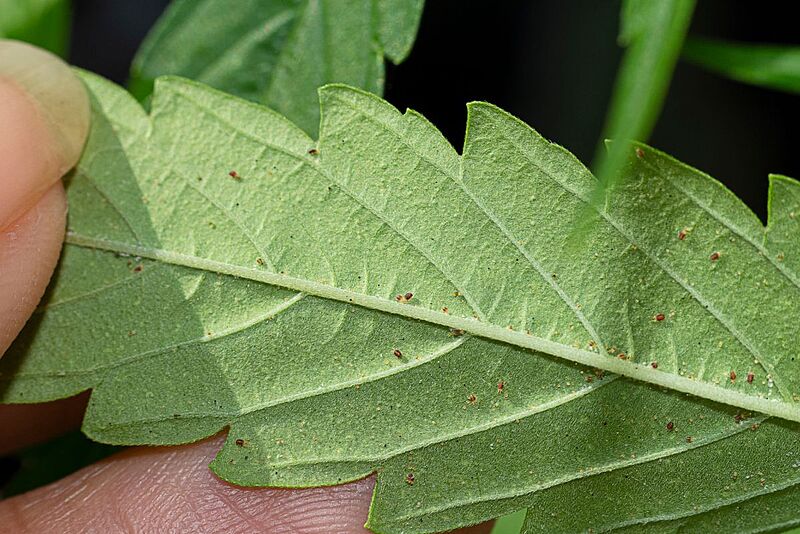
Most mites found in a cannabis crop are the Two Spotted Spider Mites (Tetranychus urticae), though they can be misidentified due to colour variation. This colour variation is primarily caused by the flowering photoperiod that occurs in the flowering stage of the cannabis production cycle.
Two-Spotted Spider Mite
This stage triggers a portion of the population to turn a red/orange/purple colour as they go into diapause (hibernation), where a non-diapaused Two-Spotted Spider Mite can be easily distinguished by having two large dark spots on its back and red eyes.
Spotting spider mites in a cannabis crop at first can be difficult. Infestations usually begin on plants near walls, posts, or doors. Initially, the damage will start as small yellow speckles, rapidly turning into severely damaged leaves with a significant amount of webbing. This can quickly kill a plant due to the lack of photosynthesis.
We use two different predatory mites to control Spider Mites in a cannabis crop. The first is Neoseiulus californicus, which is found under our product name Spical. Spical is best used in the Ulti-Mite sachet form and as a PREVENTATIVE.
The sachets will slowly release these predatory mites in the crop for up to four weeks. They will actively search for spider mites, migrating over plants if they are touching, and also walking along the ground. They will use volatiles emitted by plants damaged by spider mites for cues to find its prey.
Spical for neoseiulus californicusPhytoseiulus persimilis
The second predatory mite we use is Phytoseiulus persimilis. It is found under our product name Spidex. This predatory mite is by far the most important natural enemy of the Two-spotted spider mite (Tetranychus urticae), as it is a specialist predator, only feeding on spider mites, controlling their infestations very quickly. It is best used as a CURATIVE.
Thrips
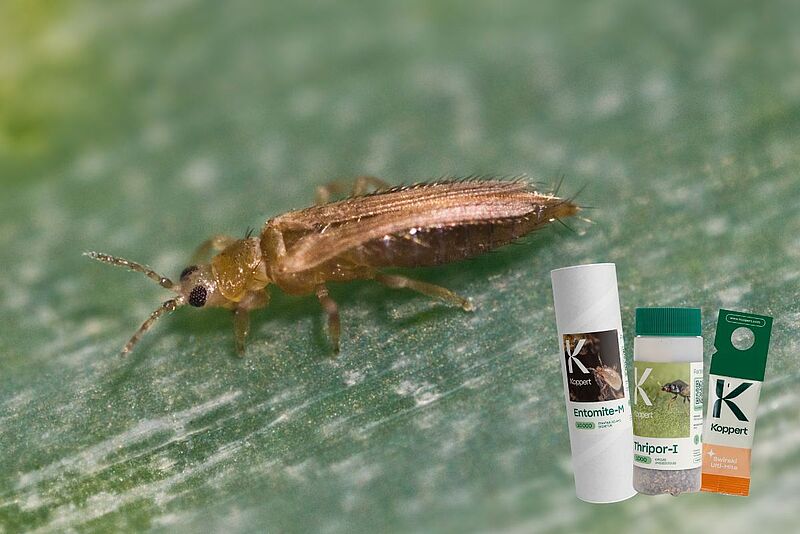
Thrips can first be noticed on Horiver cards, and if actively walking your crop, you will begin to see signs of stippling on the leaf surfaces, silvering on leaves from older feeding damage, and black frass (fecal matter). The most important reason to remove thrips from your grow room is the indirect damage they cause by acting as vectors, transmitting diseases between plants.
Signs of thrips
95% of thrips found in cannabis crops is a common thrips species called the Onion Thrips (Thrips tabaci). These thrips will be yellowish-brown in colour, averaging a length of 0.8-1.2mm long.
To control thrips in cannabis, we use multiple biological controls; this is particularly due to their life cycle. Our Swirski Ulti-Mite product (Amblyseiulus swirskii) is used when growers want to treat PREVENATIVELY or LIGHT CURATIVELY.
Note: Generalist predatory mites will only feed on 1st instar thrips larva and eggs. That is why they are best used in conjunction with other products including, Thripor and Entomite.
Stratiolaelaps scimitus
Thripor is the predatory bug Orius insidious. It is considered a generalist predator with a preference for all active life stages of thrips. It will react to any movement rapidly, piercing the thrips body with its mouthparts, consuming it whole.
The third and final product to use is our Entomite product. It is the soil-dwelling predatory mite Stratiolaelaps scimitus. This predatory mite will feed on the thrips pupae that pupate in the soil. With all three actively working together in a cannabis crop, your thrips pressure will decrease rapidly over a few weeks.
Sciarid Flies (Fungus Gnats)
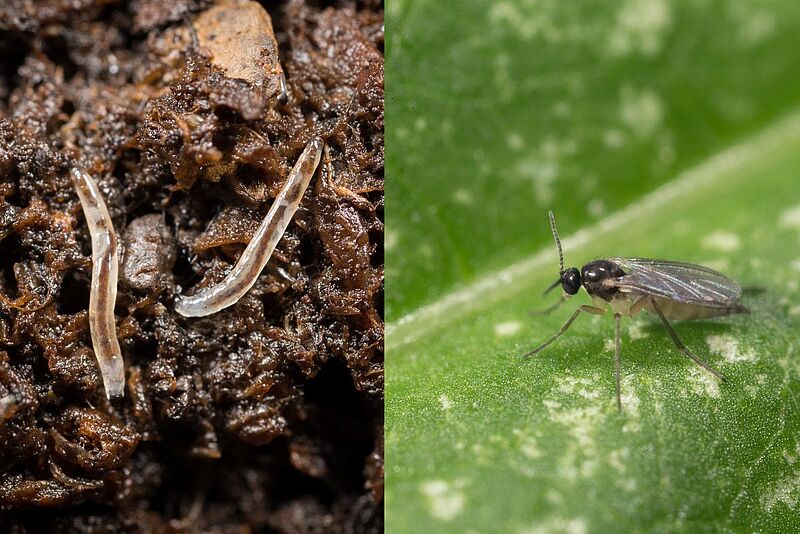
Adult sciarid flies can be a nuisance and are easily spotted in the crop when working in your growing medium. They are 1-5mm long, are greyish-black, and have two long antennae. These flies do not cause plant damage, instead it is the larva feeding on plant roots that causes grief. The larva can be identified in the soil by their brownish-black head capsule. They will also be cylindrical, milky white to opaque, and have 12 body segments.
Sciarid flies
Multiple biological products can be used to treat this pest. Initially, we always suggest placing yellow Horiver cards near the soil line, as these cards will capture mass amounts of sciarid fly adults. Removing adults from your crop will decrease the number of eggs laid, reducing the development of larva. The larva then can be treated with the soil dwelling predatory mite talked about above – Entomite (Stratiolaelaps scimitus).
If you notice a large influx of sciarid fly larva you can also treat with the product Entonem (Steinernema feltiae). Entonem is a nematode that will lay inactive in the soil when applied until a sciarid fly larva wiggles by. It will then attack, ambushing its prey. Entonem is known to work best when applied with Entomite.
Cannabis Aphids
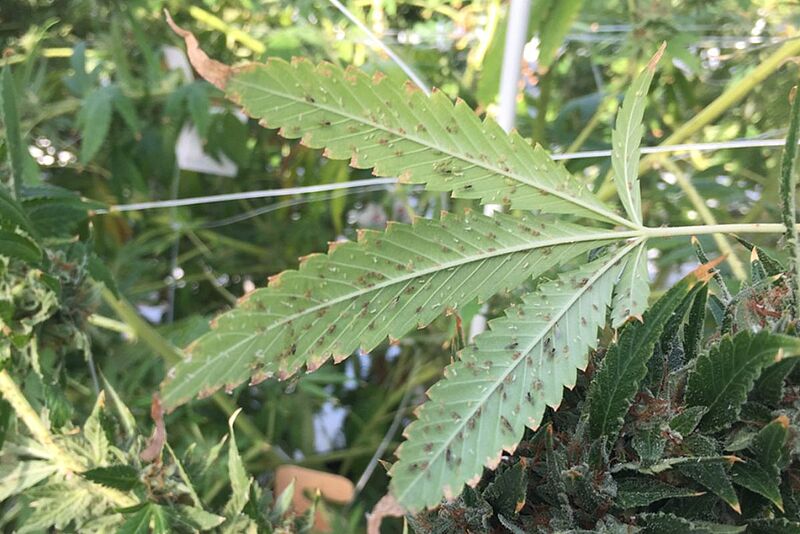
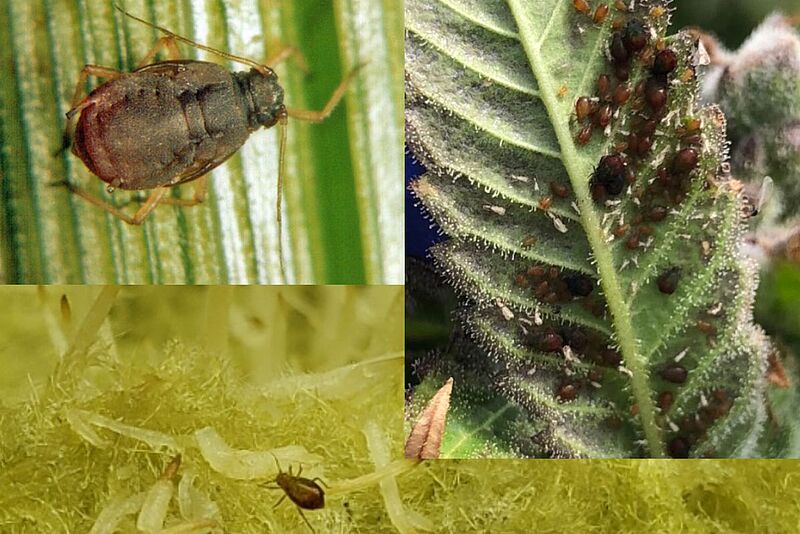
Phorodon cannabis (the Cannabis Aphid) will be one of the most difficult pests a cannabis grower experiences. Due to their short generation time and rapid reproduction rate an aphid population can reach serious levels promptly. Each aphid will begin extracting plant sap, secreting honeydew, and introducing toxic substances as soon as they are born.
Cannabis aphids
Over the last few years, biologicals have been found to work with varying results, so we suggest using methods that help evade this pest from entering your crop. All facilities should be screened to prevent the entrance of aphids and all measures to ensure workers do not bring in or transfer aphids from one room to another must be taken.
If Aphids are found, they will need to be identified to ensure proper corrective action, and then it is best to remove all infested material. To identify the cannabis aphid, read here: Six Ways to Identify the Cannabis Aphid
For Cannabis Aphids we have found that the following products do have some control:
You can use these products both as a PREVENTATIVE or CURATIVE application. All products will need to be applied every seven days until no aphids are found in the crop.
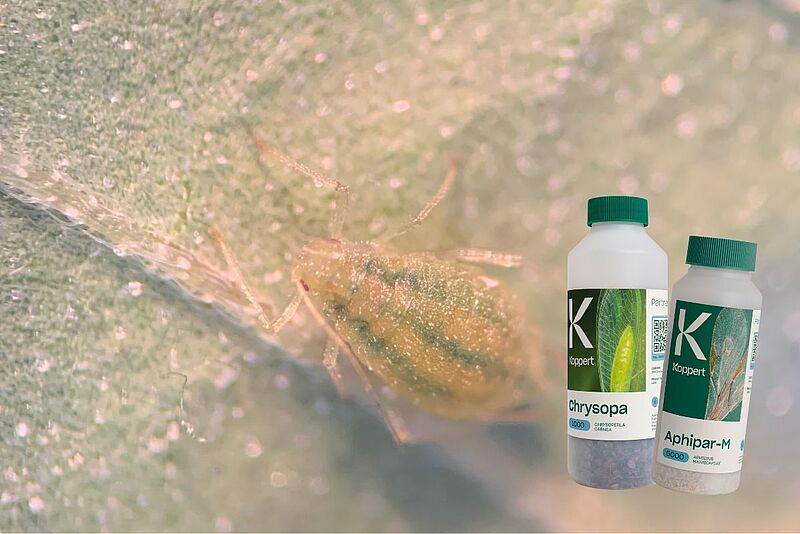
Aphipar-M is the parasitic wasps Aphidius matricariae. It works by parasitizing (laying eggs inside) live aphids. Once the aphids are parasitized, they will slowly die and turn into a greyish-brown, leathery mummy. The parasitic wasp inside the mummy will hatch two-three weeks after it has been parasitized. This cycle routinely occurs, removing aphids from the crop.
Chrysopa (Chrysoperla carnea) works an entirely separate way, known by the nickname “Aphid Lions.” They will search for their prey randomly, consuming their kill by grasping them from below, injecting them with a salivary fluid that digests the pests body content, which is then sucked out by the lion.
Root Aphids
For Root Aphids (Rhopalosiphum rufiabdominale), we have not been able to find a biological control product yet that will adequately dominate a pest population. If you have a root aphid infestation, and do not want it to spread or would like to ensure one does not develop, it is best to preventatively wrap “Reemay” on all plants in all stages of the crop. Then curatively treat drenching Botanigard and spraying insecticidal soap every 4-7 days.
Other Pests
There are a few other pests that are known to appear in Cannabis crops, however they are usually unlikely to cause an issue, especially if you are already treating preventatively for thrips and spider mites. These pests include broad mites, hemp russet mites and whiteflies. Most generalist predatory mites (Swirski – Amblyseiulus swirskii and Thripex – Neoseiulus californicus) will take care of this situation.
Conclusion
A blowout of insects in your cannabis crop can be avoided by following the techniques explained above. Actively quarantining your plants, monitoring your rooms, and treating preventatively with bio-controls is necessary to not be surprised by a major pest infestation.
Microdosing is the practice of consuming low doses of psychedelic substances such as psilocybin mushrooms or LSD. This allows an individual to gain the benefits of the drugs without experiencing any psychoactive effects.
Peggy Van de Plassche, a microdosing expert and author, recently discussed the benefits of microdosing and the stigma surrounding psychedelics on the Future of Work podcast.
Van de Plassche’s personal journey with psychedelics, which started as a quest to improve her mental health, greatly influenced her current path. Her experience with psychedelics caused significant positive changes in her mental well-being, leading her to advocate for psychedelics integration into the healthcare and wellness systems.
According to Van de Plassche, microdosing could help improve depressive and anxiety symptoms as well as build resilience against stress, which positively impacts an individual’s quality of life and overall productivity. Microdosing also calms an individual’s nervous system, alleviating their mental burden and enhancing mood stability and overall mood.
The practice may also improve workplace wellness by improving the connection one has to themselves and others. Improved communication skills and increased empathy may also contribute to better relationships in the workplace and more mindful leadership. In addition to this, microdosing may boost an individual’s performance by increasing creativity, attention and focus. This makes individuals more effective problem-solvers and collaborators.
While evidence has shown that psychedelics may be beneficial in the treatment of various mental-health disorders, there still exists stigma rooted in the misconceptions that came up in the 1970s. At the time, psychedelics were linked to negative stories.
This stigma still rears its head today, even though more individuals are exploring the drugs’ benefits. Education is needed to overcome these outdated stigmas. By encouraging open conversations and sharing credible information, public perception of these drugs can shift and pave the way for the acceptance and use of psychedelics.
With more than 970 million individuals in the world living with a mental disorder, prioritizing the well-being and mental health of employees is equally important.
Companies may benefit from microdosing because their workforces will be better connected, more focused and less stressed. Improved mental health also correlates directly with improved productivity, increased job satisfaction and reduced rates of burnout.
This doesn’t mean that getting microdosing accepted in the workplace will be an easy feat. The fragmented legal landscape in the United States where legislation on psychedelics varies by state, country, city and federal jurisdictions doesn’t help either.
At the moment, however, enterprises focusing on developing psychedelic medicines, such as Mind Medicine Inc. (NASDAQ: MNMD) (NEO: MMED) (DE: MMQ), are looking to the clinical use of these treatments with a prescription from a qualified medical practitioner. Microdosing, which is self-prescribed, is still off the table for these businesses.
About PsychedelicNewsWire
PsychedelicNewsWire (“PNW”) is a specialized communications platform with a focus on all aspects of psychedelics and the latest developments and advances in the psychedelics sector. It is one of 60+ brands within the Dynamic Brand Portfolio @ IBN that delivers: (1) access to a vast network of wire solutions via InvestorWire to efficiently and effectively reach a myriad of target markets, demographics and diverse industries; (2) article and editorial syndication to 5,000+ outlets; (3) enhanced press release enhancement to ensure maximum impact; (4) social media distribution via IBN to millions of social media followers; and (5) a full array of tailored corporate communications solutions. With broad reach and a seasoned team of contributing journalists and writers, PNW is uniquely positioned to best serve private and public companies that want to reach a wide audience of investors, influencers, consumers, journalists and the general public. By cutting through the overload of information in today’s market, PNW brings its clients unparalleled recognition and brand awareness. PNW is where breaking news, insightful content and actionable information converge.
To receive SMS alerts from PsychedelicNewsWire, text “Groovy” to 888-902-4192 (U.S. Mobile Phones Only)
Please see full terms of use and disclaimers on the PsychedelicNewsWire website applicable to all content provided by PNW, wherever published or re-published: https://www.PsychedelicNewsWire.com/Disclaimer
















Recent Comments