“Chaos is God’s body. Order is the Devil’s chains.” ~John Updike
Coyote medicine is about the balance of wisdom and folly. It’s about shaking up entrenched routine. It’s a vehicle for transporting transformation, a vessel for the dissemination of mercurial change.
Coyote laughs out loud at the cosmic joke. He’s a Psychosocial troubleshooter of the highest order. Adept at overcoming the ordinary world to discover the extraordinary, he shakes up the orthodoxy to unleash the unorthodox.
Coyote is a jester that satirizes the seriousness of the Sacred. He is the wise fool, the trickster spirit, the wiggling worm in the apple of the heart of the human condition. He pulls no punches. He howls until both heaven and hell fall into sacred alignment. And He could give two flying blue shits if we like it or not.
As Margaret Atwood said, “The desire to be loved is the last illusion. Give it up and you will be free.” Coyote is free in all the ways culture is not. Foremost, he teaches freedom in the face of fetters.
Coyote refuses to walk on eggshells. Filled with insouciance and aplomb, coyote is hellbent on bending hell into a path toward heaven, and vice versa. Coyote is the king of vice versa. The prince of pain-turned-providence. The lord of laughter in the face of self-righteousness.
As Joseph Campbell said, “All the gods, all the heavens, all the hells are within you.”
In a world filled with thin-skinned status quo junkies, sappy simpletons, snowflakes with hair triggers, and cry-me-a-river Karens drowning in sentimentality and mawkishness, Coyote could give a rat’s ass about being offensive.
Let them all weep. Let them cry out in woe-is-me self-pity. Let them fall all over themselves in a cartoon crisis. Coyote is here to remind us all that life is fundamentally offensive. Life is pain. Life is absurdity multiplied by infinity. Anyone who claims otherwise is selling something.
As Ovid said, “Someday this pain will be useful to you.” The same can be said for absurdity.
Coyote uses pain and absurdity to create purpose and curiosity. Pain catapults him into greatness. Absurdity launches him into higher meaning. Both are whetstones, soul sharpeners, existential boons that blast him past nihilism.
Coyote medicine is the power of self-deprecation. Coyote has the courage to shoot himself in the foot in order to gain better footing. Adaptation, improvisation, and reorientation are paramount. Coyote reminds us to stay sharp. Stay flexible. Stay ahead of the curve.
Shooting himself in the foot, Coyote keeps “leveling-up,” he kicks himself out of his own comfort zone. Again, and again. He gains the heightened awareness that we are God playing peek a boo with itself. We are world weavers and world makers. We are the world at play.
It’s when we stop “playing” that we run into problems. When playfulness becomes seriousness, when spirited thought becomes rigid belief, when open vulnerability becomes closed invulnerability, that’s when we lose sight of the underlying essence.
Because most people are so inured, so conditioned by outdated conditioning, they cannot see their unhealthy condition. They cannot see how their comfort zone has closed in on them. They are crippled by cognitive dissonance, hamstrung by mortal dread, and paralyzed by existential angst.
Coyote explodes the construct. He detonates fixed conditions and rigid states. He alchemizes outdated alchemy. He one-ups one-upmanship. He transcends through sacred tomfoolery and holy monkeyshines.
Coyote energy is as electric as it is eclectic. It lights up the dark with minefields planted in sanctified mind fields. It blots out the blinding light of cultural conditioning by tossing intellectual hand grenades into parochial klieg lights.
The will to humor is the only thing more powerful than the will to power. Coyote realizes this and uses it to get power over power. He uses it to transcend, as a tool for nonattachment. He uses it to catapult himself into the Overview Effect, where he can see the big picture despite all the small picture perspectives mucking it all up.
As Lao Tzu said, “As soon as you have made a thought, laugh at it.”
Coyote uses the power of a good sense of humor to keep ahead of the curve and fall like a thunderbolt.
Behold the lightning! Witness the cunning coyote. The herald of huzza. He comes as a mighty howl from the core of the human condition. He strikes like a cobra, sinking his fangs into the ripened fruit of the primal truth that has for too long been forsaken.
Coyote medicine is thunderous, empowering, cataclysmic. It rocks all boats. It tests all waters. It flips all scripts. It turns all tables. It pushes all envelopes. It thinks outside of all established boxes. It topples all ivory towers. It stares into the void and laughs at man’s ineptitude and then swallows it whole, chewing it into the pulp that ferments magic elixir.
Coyote takes that magic elixir and then seeks the shadow. He allies with the Shadow with pluck and aplomb, with tenacity and candor, with fierceness and grace. They drink to the dregs in trickster delight. Boundaries are transformed into horizons. Worlds end and begin. Culture is reconditioned. Imagination is reimagined. God is reinvented.
The tug-o-war rope between life and death, finitude and infinity, darkness and light, pain and passion, mortality and immortality are held taut between madness and genius. And Coyote holds the rope.
Coyote finds a way to playfully distract our fixed notions and opinions. He makes us curious about the darkness, the unknown, the ineffable. Coyote lights up our curiosity and humility so that curiosity outshines certainty and humility outshines hubris.
Only Coyote can trick us out of delusion. Only Coyote has the power to break the spell of culture, to loosen our grip on clingy one-dimensionality, and to unfix our fixed thinking.
Only Coyote can slip beyond Conviction’s shadow and enter the inner tomb where the hero is pretending to be asleep.
Image source:
Untitled by Ryan Hewett
About the Author:
Gary Z McGee, a former Navy Intelligence Specialist turned philosopher, is the author of Birthday Suit of God and The Looking Glass Man. His works are inspired by the great philosophers of the ages and his wide-awake view of the modern world.
This article (Coyote Medicine) was originally created and published by Self-inflicted Philosophy and is printed here under a Creative Commons license with attribution to Gary Z McGee and self-inflictedphilosophy.com. It may be re-posted freely with proper attribution, author bio, and this statement of copyright.
Annually, I participate in a week-long event. For most, it may be just a week out of the year. For some, preparations for the next year begin when the current one ends. In my experience, one observation I have discovered is how much deprogramming from reality we must fulfill to be present to each other, nature and our prayer. Every day, we expose ourselves to endless social influence, imposition and impact, tethering us to a carnal, hostile and toxic social reality. Most of us adapt to this cooperative violence, patting ourselves on the back as we survive. While some of us distinguish ourselves from this vicious cycle in our quest to thrive.
Decrypting the Script
Whether it is an event, retreat, seminar or vacation, freeing ourselves from the daily routines of social reality empowers us to become present to how much bearing it has on our experience. We may encounter withdrawals from our personal dependencies on alternative, mainstream and social media, our devices, our lifestyles and our habitual and hereditary patterns of behavior. Beyond the comfort, convenience, familiarity and safety of our individual and social artificiality, we can observe, experience and transcend the commonalities of our fear, insecurity and oblivion. Decrypting our conditioning from this paradigm is essential for our transcendence.
Inherent Oblivion
All of us enable, engender and embody our share of oblivion. This is not to declare everyone is “oblivious.” The vital distinction of being is consciousness. Living devoid of awareness is oblivion. This statement is not new age, metaphysics or spirituality. It is an expression and understanding of universality. The accumulation of an unconscious existence, our enslavement in linear time and our personal and social exploitation has engineered humanity into egocentric automatons. When we refuse to acknowledge and accept that we are victims of cognitive fear manipulation, we can never hold ourselves accountable for our voluntary engagement in a cooperative, sociopathic existence.
The TranscenDance
Being present to and experiencing the extraordinary requires us to observe, transform and transcend our institutionalized programming, thus enslaving us into a fixed, perceptual filter of existing as ordinary. There is nothing of value in being human, and everything of essence in human being. Being human is to acquiesce our universality for the egocentricity of artificiality: heredity, ideology, media, politics, religion, science, self-righteousness, vanity and wealth. Human being is our opportunity to shift from egocentricity into universality with charity, community, empowerment, experience, relativity, transformation, transcendence and understanding.
“Our social enslavement is our failure to be an expression of our soul.”
Environmental Empowerment
Once we have withdrawn from the routines of social reality, we begin to become present to the resonance of universality. This transition can be inspiring, intimidating and terrifying. In my recent experience, I observed that being in community, having a focus of intent and performing physical labor shifted me into an essential awareness, balance and relativity to express, embody and resonate with my soul. I also observed this within the community, occurring uniquely with each person. Environmental empowerment collectively evolved as our week together progressed. Each year, we all establish a synchronicity of relativity. That is until our event ends.
Returning to Reality
As there are over seven billion unique truths, there are as many or more exclusive realities. Most misinterpret reality as their truth, yet the two are significantly distinct. Reality is a simulation, based on our personal and social engagement. It is a perceptual defense narrative we invent to endure and survive the chaos, cruelty, inequality, injustice and violence of society. Our truth is the expression of our soul’s resonance. In essence, universality. It manifests as our unique, energetic frequency when we transcend reality. Truth can never be discovered or established in a social paradigm. It thrives in our personal intimacy and relativity with our soul and the universe.
Source of Experience
Existence is our commonality of living in oblivion. It is a vortex that consumes our universality. Experience is our unique expression of being. In social reality, experience exists primarily in a vacuum of artificiality. In other words, it is an enigma many associate with belief, ideology, religion or spirituality. When we are in flow with the resonance of our soul, our perception of and interaction with social reality collapses, simply because our experience transforms our existence. During the week of our annual event, this paradox ceases to exist, as our collective focus and purpose transcends our individual fear and insecurity. Universality sources our experience.
Bittersweet Medicine
The personal reality we invent tethers us to the social reality in which we engage. It is all an illusion. Our relativity with this simulation is our individual delusion. Whenever we happen to transcend this matrix, we eventually return to its enslavement. Our dependency upon its artificiality is beyond addiction. In the vicious cycles of sociality, there is a personal payoff we receive, justifying our obedient and oblivious engagement. We can preoccupy ourselves with the diversions of reality to evade our soul. Yet, when our personal and social “busy-ness” settles, our common truth remains. We are a universal, energetic being. Our soul purpose is to observe, empower, express, relate, transform and transcend.
Transcendental Shift
When we experience transcendence from social reality, we discover and explore the energetic flow of universality. It is our true expression of being. Everything that existed as “real” vanishes within the vortex of the social matrix. When we shift into this experience, we release who we were and become present to who we are. Our vision, energy, heart, intuition and relativity evolve exponentially beyond the boundaries of our creativity, imagination, sensibility and understanding. We are sourced by our soul, empowered by the momentum of universality. This is the energetic flow of our transcendental shift. Once we cross this threshold, there is no return.
From Reality to Universality
Shifting from social reality to universality is the essential progression of the new era. Where we focus our attention (awareness) and engagement (experience) is where our energy flows (expression). Being human is to sacrifice our personal power (empowerment), inverting universality (soul) into density (egocentricity); to impose, influence and impact our environment (artificiality) for authority (supremacy). Our engagement in social reality is our enslavement. Our relativity with our soul is our empowerment. We are now in the era of transcendence. Human being is our opportunity to transform, transcend and shift with the energy of universality.
“Freedom from reality is becoming an expression of universality.”
Efforts to legalize medical cannabis in Nebraska have officially been approved for the November election, despite a lawsuit and a statewide review of the validity of collected signatures.
Bob Evnen, the secretary of state, announced on Sept. 14, 2024, that the group Nebraskans for Medical Marijuana had gathered an estimated 90,000 legitimate signatures. The announcement was made precisely one year from receiving the signature initiative’s third effort in 2023, which coincided with the finalization of the November 5 ballot.
Evnen mentioned that the procedure for gathering signatures had sparked questions, which the office of Attorney General Mike Hilgers was looking into. One person so far who participated in obtaining signatures faces felony charges as part of the investigation.
Crista Eggers, statewide campaign manager for the medical marijuana proposal, thanked Hilgers and municipal leaders for maintaining openness throughout the petition process. She expressed gratitude to officials for resolving any differences and maintaining the credibility of the public initiative process.
One of the measures — the Nebraska Medical Marijuana Regulation Act — aims to legalize the possession, production, distribution and sale of marijuana for medical use. It also proposes creating the Nebraska Medical Marijuana Commission, which would be responsible for regulating cannabis in the state. If the legislation passes, the commission would be required to establish guidelines for approving or rejecting applications from marijuana-related businesses by July next year, with the first licenses being issued by October 2025.
The second measure — the Nebraska Medical Marijuana Patient Protection Act — seeks to authorize patients to possess a maximum of five ounces of medical marijuana. This measure would also exempt caregivers from legal consequences for helping patients use marijuana and require written recommendations from healthcare providers. For minors, this recommendation would also need to come from a parent or legal guardian.
State law mandates that initiative petitions have valid signatures from at least 7% of Nebraska’s 86,500 registered voters, with at least 5% of the voters in 38 of the 93 counties in the state. Nearly 90,000 of the 114,000 signatures that the campaign presented in July were validated, surpassing the 5% level that was necessary in 52 counties.
However, the campaign is currently facing a legal challenge filed by John Kuehn, a rancher and veterinarian from Heartwell, who previously served in the state legislature. Kuehn claims that Evnen’s office has not provided access to the petition pages as requested under a public records law. He is seeking an independent review of those signatures and has asked the Lancaster County District Court to stop the measures from going before voters or stop the state from certifying any resultant polls results.
Kuehn’s lawsuit also argues that the campaign did not gather enough legitimate signatures and that the proposed measures represent an unconstitutional transfer of regulatory power from the Legislature. Furthermore, the lawsuit challenges the initiatives, stating that cannabis’ classification as a schedule 1 substance under federal law prevents the measures from being enacted.
Cannabis enterprises such as Tilray Brands Inc. (NASDAQ: TLRY) (TSX: TLRY) may regard some of the arguments in the lawsuit to be far-fetched, given that several states have legalized medical and even recreational marijuana despite its current federal classification.
About CNW420
CNW420 spotlights the latest developments in the rapidly evolving cannabis industry through the release of an article each business day at 4:20 p.m. Eastern – a tribute to the time synonymous with cannabis culture. The concise, informative content serves as a gateway for investors interested in the legalized cannabis sector and provides updates on how regulatory developments may impact financial markets. If marijuana and the burgeoning industry surrounding it are on your radar, CNW420 is for you! Check back daily to stay up-to-date on the latest milestones in the fast -changing world of cannabis.
To receive SMS alerts from CNW, text CANNABIS to 888-902-4192 (U.S. Mobile Phones Only)
Please see full terms of use and disclaimers on the CannabisNewsWire website applicable to all content provided by CNW, wherever published or re-published: https://www.CannabisNewsWire.com/Disclaimer
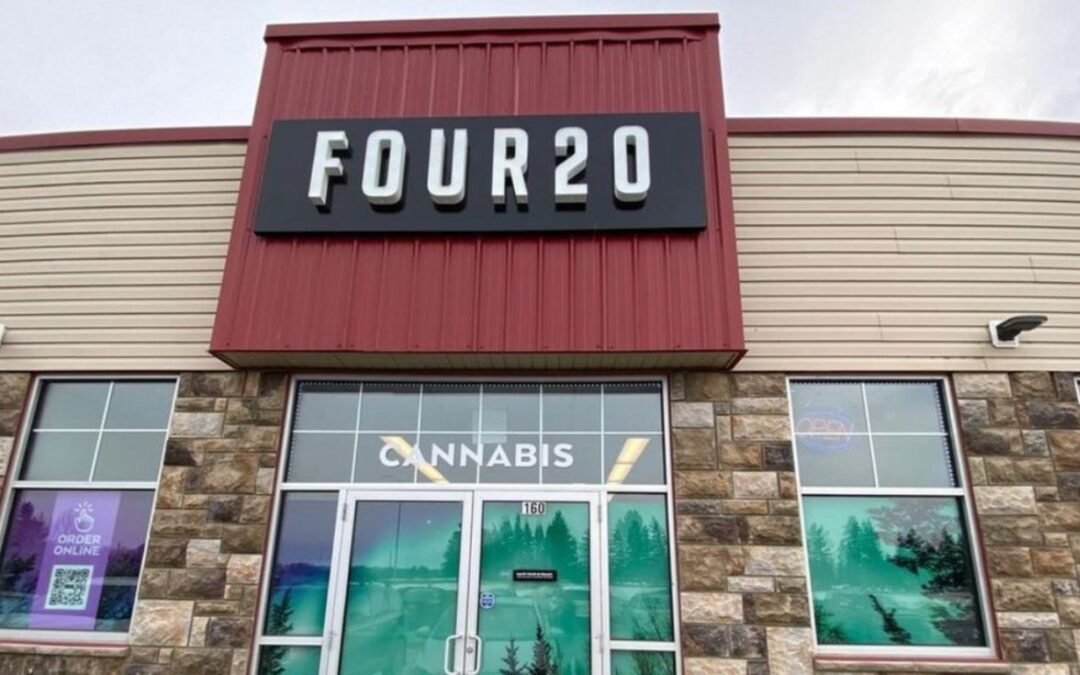
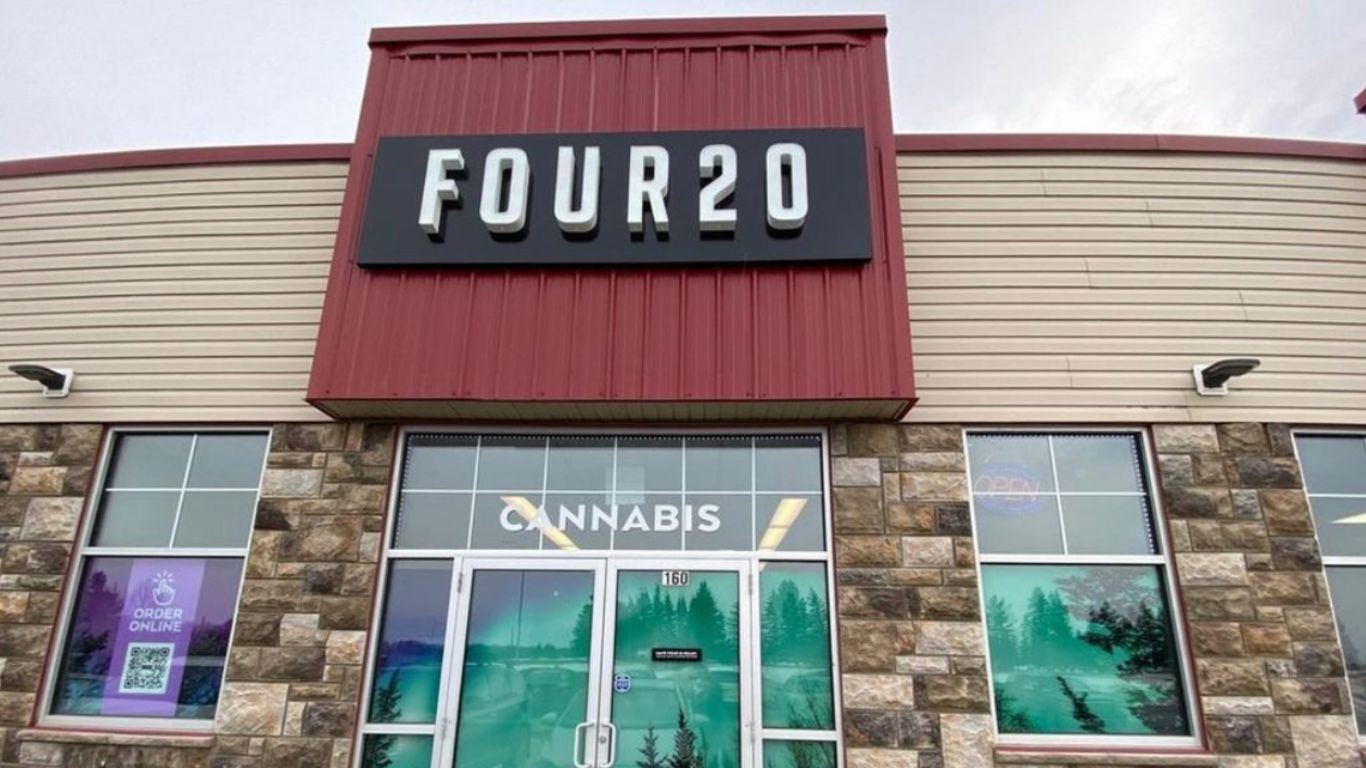
Four20 Premium Markets had its Notice of Intent (NOI) proceedings continued under the CCAA on September 19.
The parent companies of cannabis retail chain Four20 Premium Markets first filed a notice of intent to make a proposal under the Bankruptcy and Insolvency Act on May 29.
The companies 420 Premium Markets Ltd., 420 Investments Ltd., and Green Rock Cannabis Ltd (GRC)., filed the notices of intent following a $9.8 million judgment against 420 for repayment of a bridge loan and related interest and costs to Tilray subsidiary High Park Shops Inc. High Park was created for the purpose of the acquisition of Four20.
Tilray had initiated litigation against 420 after a failed attempt by Tilray to purchase 420 for approximately $110 million in 2019.
At the time, Four20 had six licensed cannabis retail locations and another 16 locations secured in Alberta. The retailer currently lists 35 locations in Alberta and Ontario.
Four20 then filed a statement of claim against Tilray in 2020 in an Alberta court for $110 million plus $20 million in damages after Tilray chose to end its deal to buy the retailer, with Four20 saying the BC-based cannabis producer had not acted in good faith.
In August, the proposal proceedings of 420 Parent, 420 Premium and GRC commenced under Division I of Part III of the Bankruptcy and Insolvency Act and were extended to September 26, 2024.
Like the work we do at StratCann, and want to support independent media?
Last week, Democratic Representative Emily Kinkade and GOP Representative Aaron Kaufer filed a measure that would legalize the use of recreational cannabis by adults in the state of Pennsylvania. The measure, dubbed HB 2500, was cosponsored by 15 additional legislators in the House of Representatives.
The measure also places the state’s agriculture department in charge of the production and sale of medical cannabis and adult-use marijuana. The state legalized medical cannabis in 2016.
If approved, the legislation would permit the regulated sales of recreational cannabis to individuals 21 years of age and older, and adults would be allowed to purchase and possess up to 30 grams of cannabis. While it also permits medical cannabis patients to grow up to five marijuana plants at home, it doesn’t allow home growing of recreational marijuana.
The measure also contains provisions to make participation in the regulated marijuana industry by small businesses a priority. This includes businesses owned by minorities, women and veterans as well as companies in the rural parts of the state. In addition, the bill has made it compulsory for all advertising, labeling and packaging regulations for cannabis products to be followed. This is in an effort to prevent marketing to minors.
The bipartisan duo also included criminal justice reforms in the bill, which includes a policy that would provide relief for cannabis-related convictions. This includes resentencing, commutations and expungements.
A 5% excise tax and an 8% sales tax would also be levied on recreational marijuana sales, with 30% of tax revenue generated being allocated to the Cannabis Regulation Fund. The measure also apportions 10% of tax revenue to drug treatment offered by the Drug and Alcohol programs department, 15% to the Commission on Crime and Delinquency and 30% to the Cannabis Business Establishment Fund. Local governments with marijuana businesses in their jurisdiction would also receive 10% tax revenue, with the remainder being used to support the state’s medical cannabis program.
If the bill is approved, Pennsylvania will become the 25th state to legalize the recreational use of cannabis. An economic analysis conducted by FTI Consulting forecasts that the measure will help create about 30,000 employment opportunities in 12 months. The national consulting company also expects that the measure’s passage will also generate an additional $2.6 billion in GDP for Pennsylvania and more than $4 billion in economic output.
Earlier this year, Pennsylvania governor Josh Shapiro included marijuana legalization in his budget proposal, explaining that cannabis needed to be taxed and regulated responsibly.
Industry actors from within and outside the country, such as Cresco Labs Inc. (CSE: CL) (OTCQX: CRLBF), will be watching to see how this legalization bill progresses in Pennsylvania because it could broaden opportunities for entities interested in expanding their footprint beyond their current areas of operation.
About CannabisNewsWire
CannabisNewsWire (“CNW”) is a specialized communications platform with a focus on cannabis news and the cannabis sector. It is one of 60+ brands within the Dynamic Brand Portfolio @ IBN that delivers: (1) access to a vast network of wire solutions via InvestorWire to efficiently and effectively reach a myriad of target markets, demographics and diverse industries; (2) article and editorial syndication to 5,000+ outlets; (3) enhanced press release enhancement to ensure maximum impact; (4) social media distribution via IBN to millions of social media followers; and (5) a full array of tailored corporate communications solutions. With broad reach and a seasoned team of contributing journalists and writers, CNW is uniquely positioned to best serve private and public companies that want to reach a wide audience of investors, influencers, consumers, journalists and the general public. By cutting through the overload of information in today’s market, CNW brings its clients unparalleled recognition and brand awareness. CNW is where breaking news, insightful content and actionable information converge.
To receive SMS alerts from CNW, text CANNABIS to 888-902-4192 (U.S. Mobile Phones Only)
Please see full terms of use and disclaimers on the CannabisNewsWire website applicable to all content provided by CNW, wherever published or re-published: https://www.CannabisNewsWire.com/Disclaimer
Bioreactors are fundamental in extraction, analytical and production processes in the biotechnology sector. Researchers and industrialists must understand the fundamental principles of bioreactors, their different typologies, the multiple applications in different sectors and the challenges associated with their use to obtain the best operating conditions to optimize the production of the metabolites of interest. However, they have some limitations that must be addressed to optimize their efficiency and performance.
Understanding these different elements is fundamental for optimizing industrial processes, obtaining biomedical and pharmaceutical engineering products, as well as in environmental biotechnologies.
What is a Bioreactor?
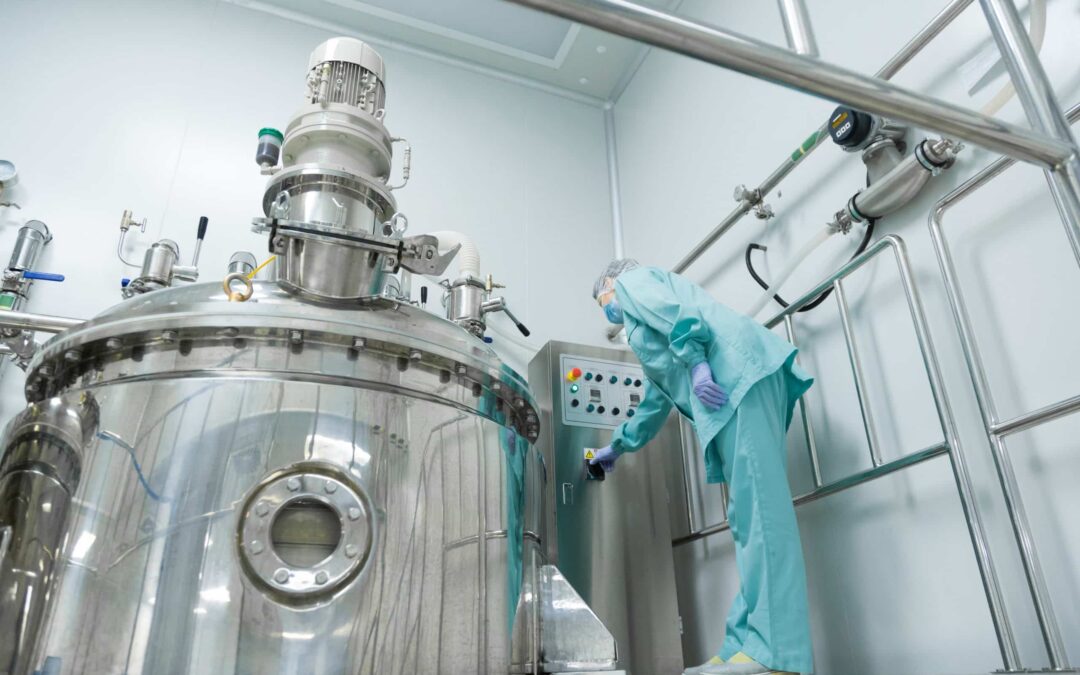
Bioreactors are the main unitary operations of industrial biochemical transformation in which the chosen substrates are biotransformed by the action of living cells (microorganisms) or from their cellular components such as enzymes. They are reservoirs in which cells or cell-free enzymes, or both, transform raw materials into biochemical products and, sometimes, in less unwanted by-products.
Commonly cylindrical and of variable dimensions from one liter to a few cubic meters, they differ depending on operational needs. Microorganisms include bacteria, yeast, fungi, algae, plant or animal cells, including tissue-like matrices. [1]
What are the Principles of a Bioreactor?
The design and all parts of the bioreactors are specially designed to create a vessel within which biological reactions take place in a constantly controlled environment. Kernel sensors allow continuous monitoring of key parameters (pH, dissolved oxygen, temperature, nutrient concentration) necessary for growth and metabolic or enzymatic activities. Sensors and alarms allow the adjustment of parameters in real time and guarantee reproducibility, constant output and high quality of production, in particular pharmaceuticals, biofuels and food additives, reducing contamination to a minimum. [2]
The conditions can vary depending on the needs of the reactions, they may not be constant over time but create ramps or accompany the different reaction phases. Very often the obtained metabolic products are removed from the reaction environment to overcome what could be negative feedback signals that reduce the rate or even realization of reactions.
Mixing mechanisms provide uniform distribution of nutrients while avoiding gradients that would affect system performance. Aeration systems regulate oxygen in aerobic processes, fundamental for the initial reaction and growth phases of microorganisms. [1]
Types of Bioreactors
The applications of bioreactors are very vast as we have anticipated, and the specialization is determined by the conditions applied: cultivation of photosynthetic microorganisms, anaerobic fermentation or intensive production of cells in controlled environments, as well as the production of metabolites of industrial or pharmaceutical interest.
Each of these intended uses will have its specific parameters, they can often be directly provided by the manufacturer, other times they will be implemented within the specific process following research and development of new methods, this is why they are so widespread in use, even for their manageability. [1]
Stirred Tank Reactor (STR)
Stirred tank reactors are widely used: they consist of a cylindrical vessel equipped with a stirrer, often a mechanical shovel, which allows complete and continuous mixing of the nutrients, as well as a transfer of oxygen to the entire culture medium and to the cells that contains. STRs are perfect for aerobic processes where the presence of oxygen is a limiting factor for the reactions.
The design allows an easy transition from the minimum laboratory dimensions to those on an industrial scale, this makes them ideal for the production of compounds of high pharmaceutical interest, enzymes, bioproducts of high economic value (microbial cultures, animal cells and tissue-like matrices, plant cells, etc). [1]
Bubble Column Bioreactor
These reactors consist of a vertical column filled with culture broth, into which air or other gas is injected to create bubbles that will mix the solution without mechanical agitation. The insertion occurs from the bottom and the ascending bubbles mix and supply oxygen making this type of setup suitable for aerobic fermentation processes and wastewater treatment.
Wastewater treatment
In the first phase, suspended solids are removed by sedimentation plus filtration.
The second step sees the biologicaldegradation of organicpollutants, in bioreactors containing microorganisms such as activated sludge or biofilm.
The third step involves further purification through chemical (chlorine disinfection), physical (UV treatment) or biological (membrane filtration) processes.
The fourth step concerns the removed sludge which can be stabilized, dehydrated, disposed of or reused, often in agriculture as fertilizers.
They are particularly advantageous for processes involving shear-sensitive organisms since they generate low shear forces. Their simple design also results in lower capital and operating costs compared to more complex bioreactor systems. [1]
Airlift Bioreactor
Airlift bioreactors utilize air circulation to mix the culture medium gently and efficiently. The design typically includes a central riser and an outer downcomer, creating a loop for natural fluid circulation. This setup reduces mechanical stress on cells, making airlift bioreactors ideal for cultivating shear-sensitive organisms like animal cells and certain types of plant cells.
These bioreactors are commonly used in wastewater treatment and large-scale cell culture processes. Their energy-efficient operation and lower maintenance requirements widen their appeal for industrial applications, where maintaining cell viability and productivity are high priorities. [1]
Fluidized Bed Bioreactor
Fluid bed bioreactors are characterized by their structure: solid particles and fluid are contained inside the tank or column; the cylindrical shape facilitates uniformity of movement. Solid particles can be glass, ceramic or polymer spheres on which microorganisms or enzymes are attached.
The ascending flow (liquid or gas) is introduced from the bottom, the flow speed is adjustable and allows the particles to be kept in a “fluid bed” state.
Ancillary aeration and mixing systems are used to improve oxygen transfer and promote particle-fluid contact. There are also control systems (sensors and alarms) for all the fundamental parameters, and an enriched fluid outlet from which the metabolites of interest will then be separated. This model can operate continuously, offering advantages in scalability and sustained productivity for various industrial applications. [1]
Packed Bed Bioreactor
Packed bed bioreactors contain immobilized cells or enzymes within a packed column, optimizing substrate conversion and product yield. The structure of the equipment is suitable for processes involving a high density of cells and prolonged stability of the enzymes or biocatalysts. Packed bed bioreactors are primarily used in the production of active molecules or biopharmaceuticals, biofuels or high-purity chemicals, where consistent quality and high productivity are essential.
It is precisely the immobility of cells or enzymes that allows continuous operation, efficient use of substrates while containing costs and all this makes the application ideal for the industrial scale. [1]
Photobioreactor
Photobioreactors are equipment designed for the growth of algae or plant tissue-like matrices. In fact, under controlled light conditions it is possible to optimize the photosynthesis process and maximize biomass production. They may have open tank-like structures or closed systems with artificial lighting. The result? Constant production and high efficiency products.
Biopharmaceuticals, biofuels and food supplements are produced with this technology and the sustainability of the system is one of the reasons why it is so widely used. This last characteristic, added to the possibility of precisely controlling the environmental conditions in photobioreactors, makes them an applicable technology for the development of renewable energy and bioproducts. [3]
Membrane Bioreactor
The combination of bioprocessing and filtration with biological membranes is the basis of the membrane bioreactor model, in this way in a single step it is possible to efficiently treat the effluent and then separate the biomass. Also in this case, wastewater treatment is one of the most common applications because they offer superior performance in terms of effluent quality and operational efficiency.
The integrated membranes allow high concentrations of microorganisms responsible for improving the rate of biodegradation, or biological conversion, as well as a reduction in the environmental impact of the entire production system. [3]
Bioreactor Applications: What are Typically Used For?
Now that we know the various types of bioreactors models, we can delve into the many production applications at an industrial and scientific level.
The main drugs produced are antibiotics (from Streptomyces) such as penicillin, or recombinanthumanhormones such as growthhormone or insulin (from bacteria or yeasts). [3]
Biofuels such as bioethanol are produced by fermentation of sugars from corn or sugar cane; Biodiesel is obtained by converting vegetable oils produced by algae. [3]
In the food industry sector, bioreactors are exploited for the production of enzymes used for cheese production processes or additives for bakery dough. They find application in the production of bacterial strains beneficial to human health (such as Lactobacillus and Bifidobacterium) used widely as food supplements, but also in the production of dairy products and yogurt. Let’s not forget bioproducts such as organic lactic and citric acids which are the main antioxidant additives in packaged food.
In scientific research, bioreactors are used to provide researchers with proteins of interest for structural or functional studies (e.g. for new drugs), furthermore genetically modified cells can be cultivated to test new generation gene therapies. [3]
What are the Limitations of Bioreactors?
In addition to the many benefits, there are also application and performance limitations. The initial costs and ongoing operational and maintenance expenses for complex systems is certainly a challenge, implementing automatic mechanisms or management software could be a solution. The transition from the small laboratory scale to the industrial one can bring to problems related to the mass or heat transfer process, causing inconsistency and lower reaction yields.
On an industrial scale the risks of contamination are higher. To overcome this problem companies should implement rigorous sterilization protocols and containment strategies. Even small variations in environmental parameters (pH, temperature or nutrient availability) can lead to suboptimal performance or the inability to adapt these systems to all types of cells or microorganisms, the a priori failure of the system therefore limits its applications.
Regulations and constraints of following Good Manufacturing Practices (GMP) further reduce the possibility of achieving implementation and scalability of biotransformation processes in the biotechnology and pharmaceutical sectors.
Although all these challenges and risks exist, advances in bioreactor design continue to enhance their efficiency and reliability. More sustainable bioproduction processes for companies could lead to greater implementation of biotechnology in scalable and innovative processes in industrial and environmental sectors.
References:
Christy, Y. Basic Biotechnology. Cambridge University Press. 2006. Third Edition.
Jaibiba P., et al. Chapter 10 – Working principle of typical bioreactors. Bioreactors Sustainable Design and Industrial Applications in Mitigation of GHG Emissions. 2020
Spier M.R., et al. Application of Different Types of Bioreactors in Bioprocesses. Bioreactors: Design, Properties and Applications. 2011
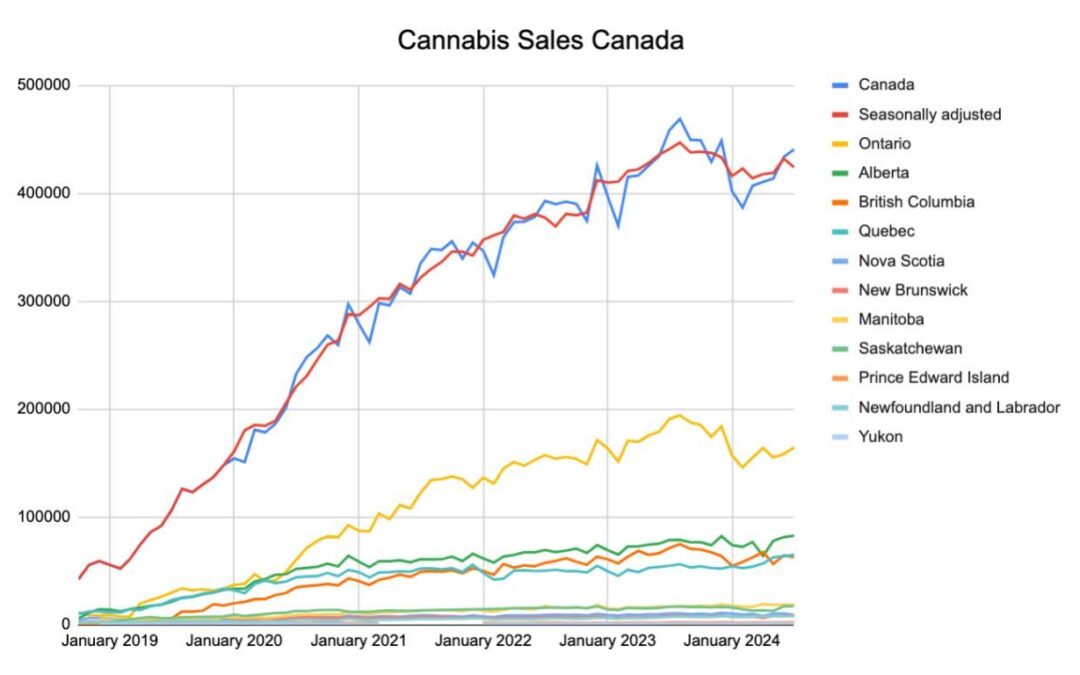
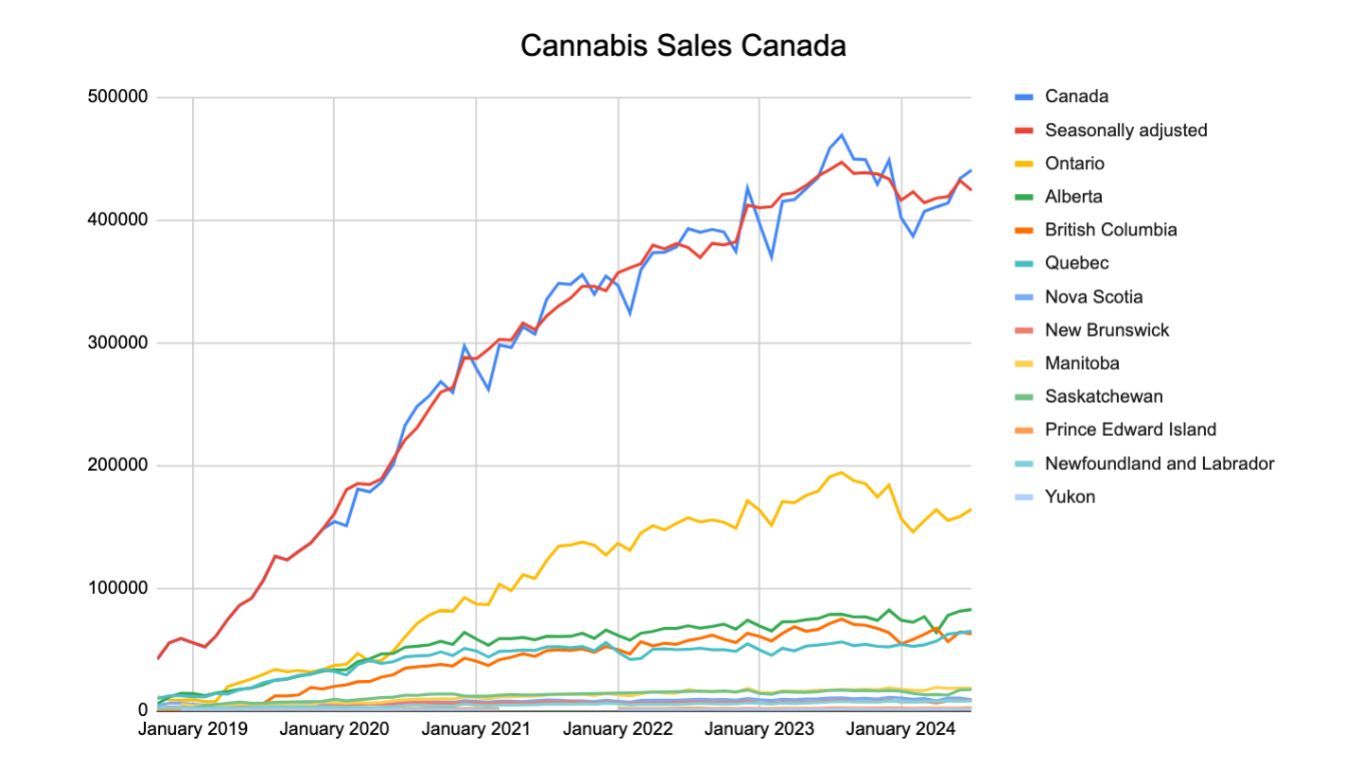
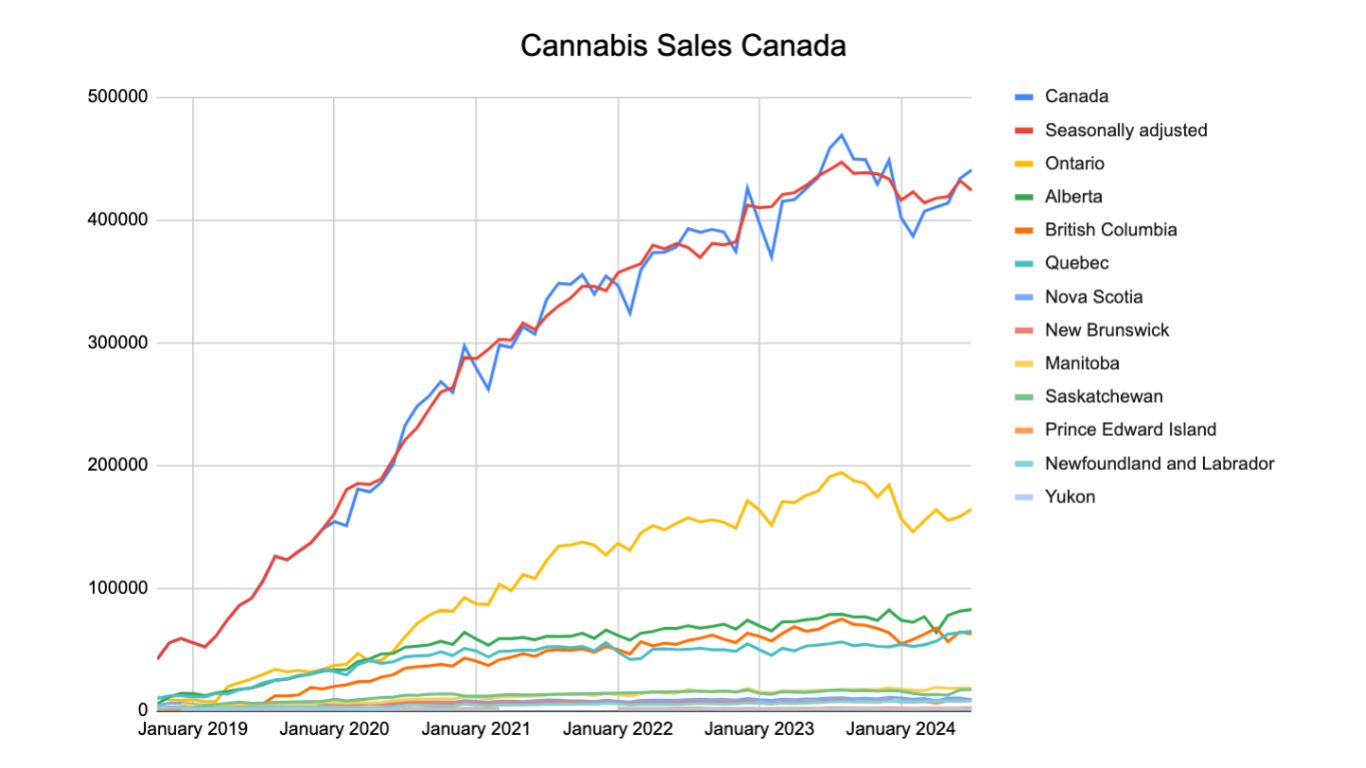
Cannabis sales showed some upward movement in the first half of 2024, but increases did not surpass those previous highs in much of the first half of 2023, as the annual growth of the market appears to be finding a ceiling.
Unadjusted retail cannabis sales in Canada continued to rebound through July from steep seasonal declines in January, but sales were down year-over-year from March through July compared to 2023.
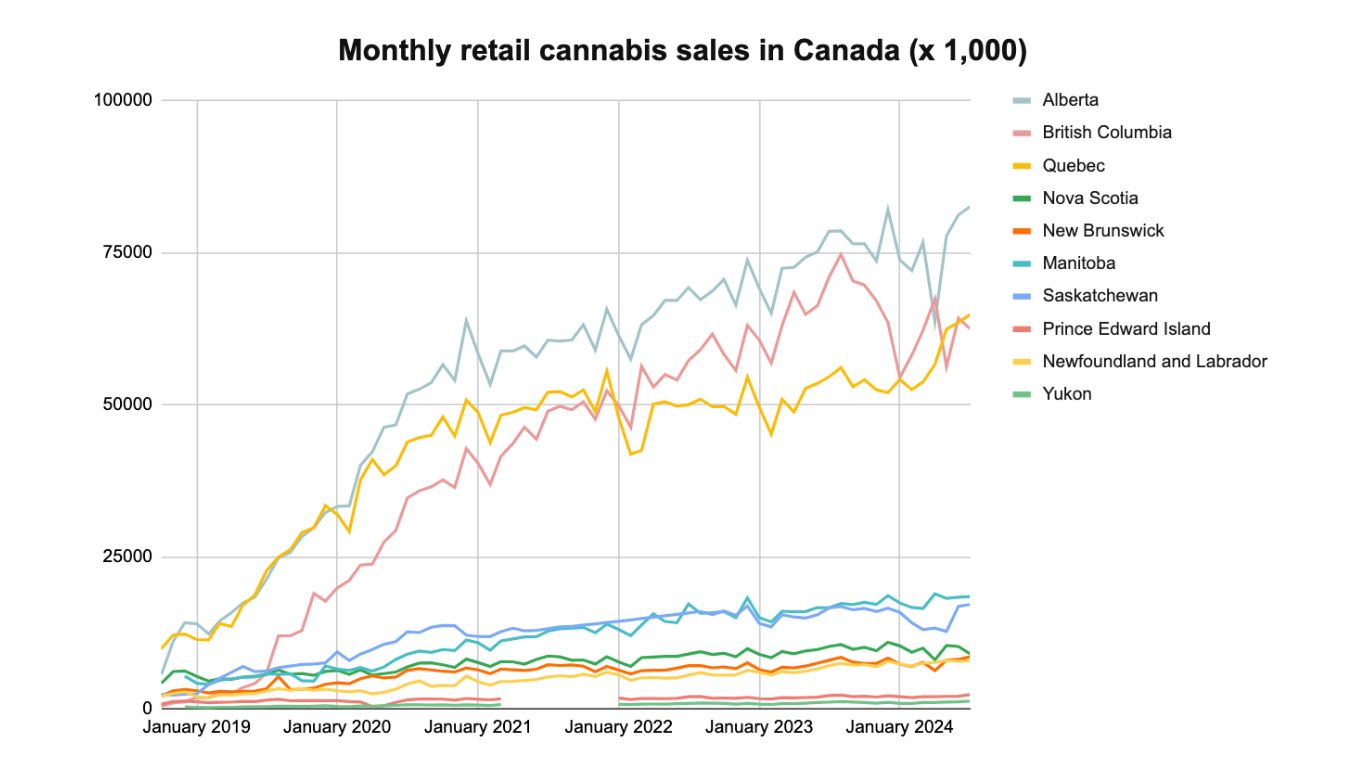
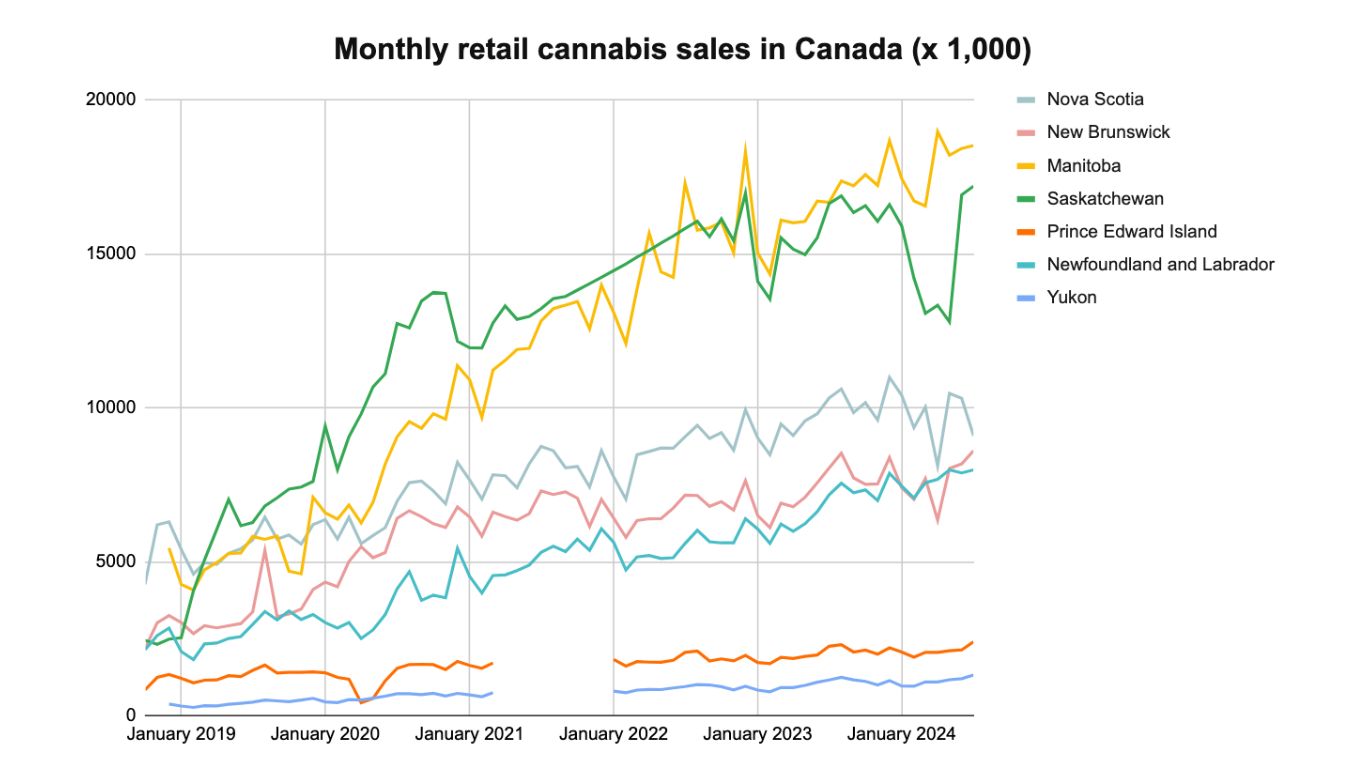
When looking at the same figures adjusted for seasonal changes, July 2024 was down 1.8% from June and 3.8% compared to July 2023. Provincially, those declines appear to have been most pronounced in Ontario, British Columbia, and Saskatchewan.
While price compression is likely a factor in slowing overall sales figures, price compression has been an issue facing the industry for years now, even as overall sales continue to increase.
One change in the market is that the number of new stores has been slowing in the last year, which has correlated with increased sales since legalization began. Another possible factor is the increasing number of options consumers have in the illicit market, both brick-and-mortar and online stores.
Cannabis retail salesin July in terms of dollars were down 1.8% month-over-month, and 3.8% year-over-year (seasonally adjusted), likely reflecting continued price compression as well as a potential leveling-off of the market after 5 years of year-over-year-growth. More on this from StratCann next week.
Origine Nature, a cannabis production company based in Sainte-Agathe-des-Monts, Quebec, was ranked the 22nd best workplace in Canada in the category of manufacturing companies with 50 to 99 employees.
Final Bell Holdings International Ltd. announced that its US subsidiary, Final Bell Holdings, Inc., entered into an agreement to sell all the shares of Final Bell Corp., along with its subsidiary Westside Caregivers Club, LLC to Vassar Wellness Enterprises LLC. The sale marks Final Bell’s exit from its plant-touching manufacturing business segment, comprising operations in Canada and the US.
The Société québécoise du cannabis (SQDC) welcomed two new vice-presidents to its management team. Yves Lokossou is now Vice-President, Information Technology and Cybersecurity, and Jean-François Dulac-Lemelin is now Senior Vice-President, Customer Experience.
Retailer Rocky Mountain Roots in Barrhead, Alberta, was the target of a break-and-enter on Sunday Sept 15. Mike Wilson, co-owner and manager, says he had asked RCMP to increase their presence in the area due to an increase of crime.
A Redditor posted what they said is a email response from Saskatchewan MLA Nathaniel Teed in regard to concerns about the province’s current zero-tolerance approach to THC detection in drivers, regardless of indications of impairment, that has led to an increase in roadside suspensions. The Saskatchewan NDP did not provide a response to several requests for confirmation and comment. Teed is the Saskatchewan NDP’s Official Opposition Critic for Saskatchewan Government Insurance (SGI). The province has an election in October.
A radio station in Dartmouth, Nova Scotia, spoke with Organigram CEO Beena Goldenberg. She says that the top 10 LPs in Canada represent less than 40% of the overall market and says OGI has about a 7.5% market share.
Tilray launched their Redecan brand into the Australian medical cannabis market with two 15-gram dried flower SKUs.
In mid-November, the BC Liquor Distribution Branch (LDB) will update the back-end of its e-commerceShopify platforms. Minimal to no disruption to service is anticipated. More detail on the updates will be provided the week of October 21.
The Agenda’s Steve Paikin spoke with James MacKillop of McMaster University and Ranjeev Dhillon, a partner at McCarthy Tétrault LLP, about the state of the cannabis industry, highlighting some of the same cooling sales figures StratCann has covered in recent months.
UK’s Akanda Corpreceived a license forhemp cultivation in Canada in connection with Akanda’s recently announced agreement with 1107385 B.C. LTD.
Edmonton Grow Up will be from Sunday Sept 29–Wednesday October 1 this year, and StratCann will be there helping to curate topics for the main stage!
A hemp farmer in Maine is offering a u-pick option this fall. Sheepscot Farm sells whole plants for $30 and is growing five cultivars this year.
Thailand has proposed a new bill to regulate its cannabis industry and restrict marijuana uses to primarily health and medical purposes—the latest effort to rein in recreational smoking after several policy U-turns, reports the Bangkok Times.
A former Nebraska senator and past member of the Nebraska Health Board has filed a lawsuit aimed at stopping two state medical marijuana ballot petitions. John Kuehn, a rancher and veterinarian from Heartwell, is challenging the placement of these measures on the Nov. 5 , 2024, ballot.
Kuehn has listed seven key reasons for his challenge, including claims of procedural violations and constitutional issues under federal and state laws. Kuehn’s legal team, led by attorneys Cameron E. Guenzel, Steven E. Guenzel and Andrew La Grone (another former state senator), filed the case in Lancaster County District Court. The lawsuit seeks to prevent Bob Evnen, the secretary of state of Nebraska, from approving the two petitions for the ballot. Further, Kuehn wishes to prevent the state from recognizing the election results even if these measures are approved.
The two measures in question would legalize medical marijuana and outline who would be considered a patient, provider and caregiver. The measures are supported by Nebraskans for Medical Cannabis, with leaders including campaign manager Crista Eggers, State Senator Anna Wishart and former State Senator Adam Morfeld. Kuehn’s lawsuit names these campaign leaders as well as Evnen.
Kuehn claims that there were several issues with the petitions, including delays in accessing the signatures, a lack of valid signatures, duplicate entries and an invalid sponsor statement from Wishart. He also argues that the petitions violate the state’s constitutional single-subject rule, unlawfully delegate power to a proposed Nebraska Medical Marijuana Commission and conflict with federal laws banning cannabis as a Schedule 1 substance. The lawsuit further asserts that most signatures were collected either before the official petition circulation period or after the deadline. Kuehn argues that invalid signatures were unlawfully accepted by the secretary of state’s office. However, the lawsuit doesn’t specify exactly how many signatures may be invalid.
Mike Hilgers, the state’s attorney general, announced a press conference to address alleged falsifications in the petition process, though it is unclear if these remarks relate to the medical marijuana measures.
This is not the first attempt for Nebraska to place medical cannabis on the ballot, as previous efforts in 2020 and 2022 fell short due to similar legal challenges. The current campaign marks the group’s third attempt, and group officials are hopeful that this will be their final push. However, the lawsuit presents significant hurdles that could delay or derail their efforts once again.
The cannabis industry, including established enterprises such as SNDL Inc. (NASDAQ: SNDL), will likely be watching how the legal battle pans out and whether voters will finally cast their ballots on this matter as the year draws to an end.
About CNW420
CNW420 spotlights the latest developments in the rapidly evolving cannabis industry through the release of an article each business day at 4:20 p.m. Eastern – a tribute to the time synonymous with cannabis culture. The concise, informative content serves as a gateway for investors interested in the legalized cannabis sector and provides updates on how regulatory developments may impact financial markets. If marijuana and the burgeoning industry surrounding it are on your radar, CNW420 is for you! Check back daily to stay up-to-date on the latest milestones in the fast -changing world of cannabis.
To receive SMS alerts from CNW, text CANNABIS to 888-902-4192 (U.S. Mobile Phones Only)
Please see full terms of use and disclaimers on the CannabisNewsWire website applicable to all content provided by CNW, wherever published or re-published: https://www.CannabisNewsWire.com/Disclaimer
Pure Elevations, a new business that recently opened its doors, is the first cannabis spa in Denver. It is also the first business where individuals can purchase and consume cannabis in the city. Consumers are allowed to buy cannabis products and use topicals or consume edibles inside the spa. Individuals can also smoke in the store’s consumption lounge.
Owner Rebecca Marroquin revealed that the business would be working together with Mary Jane’s Medicinal. The latter’s infused massage oils will be used in all services the spa offers to customers, from inner-body treatments and massages to nail services. Marroquin added that they had been working on this spa, which was the first-of-its-kind, for three years. She noted that she was grateful to have the platform to introduce cannabis as a wellness tool to others.
She began experimenting with the drug more than a decade ago, after a traumatic accident that saw her break her neck right before her college graduation. Marroquin, who was pregnant at the time of the accident, was on bed rest for months after. The trauma from the accident caused her to miscarry, which led her to depression.
Marroquin began using cannabis to help manage her anxiety and depression, as well as the pain and nausea she felt during that time. She revealed that the drug also helped get her off the pills prescribed by physicians, noting that the drug saved her life. Now, Marroquin is focused on helping others with issues and providing them with an alternative to opioids.
Eric Escudero, spokesperson for the Denver Department of Excise and Licenses, stated that there was no place within city limits where an individual could buy and consume the drug. This is despite the fact that Colorado legalized recreational marijuana in December 2012 following the passage of the Colorado Amendment 64 by voters. The first legal sale of recreational marijuana in Denver occurred on Jan. 1, 2014.
Escudero added that he hoped this move by the city would bring in more creative businesses for individuals seeking places to consume marijuana legally in the state.
Pure Elevations is located on 185 S. Santa Fe Drive. Its mission is to redefine the wellness industry by blending the healing benefits of massage and the transformative power of marijuana with luxury spa services. All were invited to the spa’s welcoming party, which was held this past Saturday and ended at 8 p.m. The store’s grand opening was also held earlier this week. It should be noted that the store’s services are appointment based.
This diversification of the offerings available to marijuana enthusiasts is a welcome development that the entire marijuana industry, including leading companies such as Trulieve Cannabis Corp. (CSE: TRUL) (OTCQX: TCNNF), would wish to see in as many jurisdictions as possible in states where legal marijuana markets have been launched.
About CannabisNewsWire
CannabisNewsWire (“CNW”) is a specialized communications platform with a focus on cannabis news and the cannabis sector. It is one of 60+ brands within the Dynamic Brand Portfolio @ IBN that delivers: (1) access to a vast network of wire solutions via InvestorWire to efficiently and effectively reach a myriad of target markets, demographics and diverse industries; (2) article and editorial syndication to 5,000+ outlets; (3) enhanced press release enhancement to ensure maximum impact; (4) social media distribution via IBN to millions of social media followers; and (5) a full array of tailored corporate communications solutions. With broad reach and a seasoned team of contributing journalists and writers, CNW is uniquely positioned to best serve private and public companies that want to reach a wide audience of investors, influencers, consumers, journalists and the general public. By cutting through the overload of information in today’s market, CNW brings its clients unparalleled recognition and brand awareness. CNW is where breaking news, insightful content and actionable information converge.
To receive SMS alerts from CNW, text CANNABIS to 888-902-4192 (U.S. Mobile Phones Only)
Please see full terms of use and disclaimers on the CannabisNewsWire website applicable to all content provided by CNW, wherever published or re-published: https://www.CannabisNewsWire.com/Disclaimer

















Recent Comments