Interest in psychedelics from the Western world has been growing in the recent years, as more studies uncover the mental-health benefits of psychedelics such as psilocybin, LSD and MDMA. While this field continues to grow, discoveries are also shedding light on the role that these substances played in ancient societies.
Dr.Yuria Celidwen, a senior academic at UC Berkeley, reveals that the term “psychedelic” is modern. For centuries, Indigenous communities referred to these drugs as spirit medicines. Historical documents show the use of these substances for healing was a minor role, with major uses being sacred rituals, palliative care, strengthening connections in communities and exploring consciousness. The substances also facilitated hedonism and creativity.
Records also demonstrate that the ancient Romans and Greeks held periodical rites that involved the use of kykeon, a psychoactive drug.
According to Osiris Sinuhé González Romero, a researcher at the University of Saskatchewan, the Codex Vindobonensis is one of the oldest written documents that describe a ritual involving psychoactive mushrooms. Following the colonization of Mexico by Spain, knowledge of these rituals was spread through a scholar who spent many years documenting and studying the culture, history and beliefs of the Aztecs. In addition, Professor Albert Garcia-Romeu reveals that the scholar Bernardino de Sahagún also narrated Aztec rituals that involved psilocybin mushrooms in the 1500s in a setting that practitioners nowadays may refer to as group therapy.
Celidwen notes that for societies in the west to appreciate why Indigenous peoples have valued these rituals, they need to understand the belief systems for interpreting and interacting with the world around them. She highlights how the use of psychoactive drugs in ancient communities is based on interacting with the spirit and natural worlds, which is different from the use of these substances in the west.
The ancients focused on the collective well-being of one, focused on restoring one’s balance with the spirit world.
The modern world also needs to recognize the sacred value of these drugs. Celidwen and colleagues have noted that if there’s anything to learn from ancient cultures, it is that the actual power of these psychoactive substances lies in their ability to encourage bonds between communities and people. This means that patenting these drugs may not be a good idea in the long-term, because it’s the relationships that bring the healing. There’s also a need to ensure that this burgeoning industry benefits peoples in Indigenous communities, particularly since they may be vulnerable to exploitation.
Psychedelics startups such as Seelos Therapeutics Inc. (NASDAQ: SEEL) have plenty to unpack from the history of the way psychedelics were used, and then they can explore how best practices can be incorporated in the use of these substances in modern times.
About PsychedelicNewsWire
PsychedelicNewsWire (“PNW”) is a specialized communications platform with a focus on all aspects of psychedelics and the latest developments and advances in the psychedelics sector. It is one of 60+ brands within the Dynamic Brand Portfolio @ IBN that delivers: (1) access to a vast network of wire solutions via InvestorWire to efficiently and effectively reach a myriad of target markets, demographics and diverse industries; (2) article and editorial syndication to 5,000+ outlets; (3) enhanced press release enhancement to ensure maximum impact; (4) social media distribution via IBN to millions of social media followers; and (5) a full array of tailored corporate communications solutions. With broad reach and a seasoned team of contributing journalists and writers, PNW is uniquely positioned to best serve private and public companies that want to reach a wide audience of investors, influencers, consumers, journalists and the general public. By cutting through the overload of information in today’s market, PNW brings its clients unparalleled recognition and brand awareness. PNW is where breaking news, insightful content and actionable information converge.
To receive SMS alerts from PsychedelicNewsWire, text “Groovy” to 888-902-4192 (U.S. Mobile Phones Only)
Please see full terms of use and disclaimers on the PsychedelicNewsWire website applicable to all content provided by PNW, wherever published or re-published: https://www.PsychedelicNewsWire.com/Disclaimer
I have fallen in love with groundcovers, not just because of the aesthetic they bring to the landscape. Climbing hydrangea spread out in a frothy white pattern around a favorite tree is whimsical; honeysuckle meandering through a perennial bed instead of respectfully climbing a trellis is just as lovely. But I am mostly enthralled because groundcovers are a little-known pollinator food source.
However, it sounds daunting to plant groundcovers. Which are the best for pollinators? What if the plant takes over the garden (some can be aggressive growers)? Worse, what if I don’t like them after all?
Gary Lewis of Phoenix Perennials in Richmond, BC, is a groundcover expert. His bookThe Complete Book of Groundcoversoffers insight into over 4,000 groundcovers. When I spoke with him earlier this year about groundcovers for the latest edition of Garden Culture magazine, he gave me some great advice. Start slowly, plant a few patches, watch them grow, and then gradually build a garden full of groundcovers.
Perennial Groundcovers for Pollinators
Most groundcovers areperennials and will return faithfully year after year. Start slow and plant these pollinator favorites:
Creeping phlox
This plant grows up to 1 foot and does best in full sun to part shade. It blooms from spring to summer and is available in pink, lavender-blue, violet, and white.
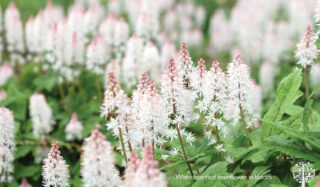
Tiarella cordifolia (foamflower)
Foamflower enjoys partial sun to full shade, with foliage reaching a height of about 10 inches and the flowers 24 inches. The bottlebrush-like flowers bloom in the spring and attract pollinators such as ground bees, wasps and honeybees.
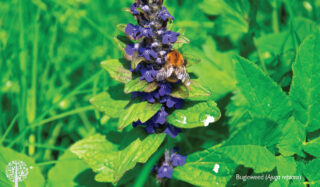
Bugleweed (Ajuga reptans)
This low-growing beauty produces a beautiful, bee-friendly carpet that suppresses most weeds while giving entry space for ground-nesting pollinators. It blooms mid-to-late May and spreads but can be contained by dividing or thinning every year or two.
This is a common groundcover for part-to-deep shade, especially under trees. The native pachysandra, also called Allegheny spurge, is taller, slower-spreading and an interesting alternative that blooms in very early spring when many pollinators have just broken hibernation and need nectar and pollen.
Herbs
Many herbs can also double as flowering groundcovers. Just as they flavor our meals, they offer pollinators something good to eat.
Creeping or red thyme (Thymus praecox ‘Coccineus’)
Creeping thyme is semi-evergreen, and when in bloom, its cloud of reddish lavender flowers gives an effect similar to that of the phloxes from a distance. Thyme is a favorite for moths and butterflies.
Peppermint
Although mints are not as easy to control or contain as other groundcovers, they are a favorite source of nectar and pollen for many bees.
The tiny white spring flowers of cotoneaster feed bees and the resulting red berries are adored by birds through the winter.
Winter-blooming heathers
Winter-blooming heaters are tough and drought-tolerant once established. In milder climates, honeybees gather nectar from the plant, even in the middle of winter.
Creeping evergreens (such as Juniper)
Creeping evergreens provide excellent erosion control on slopes and allow access to underground nesting pollinators. Honeybees will harvest resins to use as caulk and boost their immune systems.
Donald Trump reaffirmed his support for legalizing recreational cannabis in Florida earlier this week. He also expressed his approval for rescheduling marijuana at the federal level and advocated for removing banking restrictions on state-licensed cannabis businesses.
While he hasn’t endorsed ending the federal ban on marijuana, U.S. presidential candidate Donald Trump has made comments that suggest he’s aware of its potential political influence. His remarks came just ahead of his first debate with Vice President Kamala Harris.
Trump’s support for Amendment 3, which he first hinted at in August, could potentially boost the initiative. If passed, the amendment would allow recreational sales and permit adults aged 21 years of age and older to legally possess up to three ounces of cannabis. The amendment requires 60% voter approval to pass. Polls before Trump’s endorsement suggested it wasn’t certain whether the measure would hit this mark. If successful, Florida would become the 25th state to legalize recreational cannabis.
In addition to endorsing the Florida initiative, Trump expressed support for the Biden administration’s proposal to reclassify cannabis from schedule 1 to 3 under the Controlled Substances Act. Trump commented that this change would help advance research into the medical benefits of marijuana.
Reclassifying cannabis would eliminate some hurdles for medical research and provide financial relief to the marijuana industry. Currently, businesses involved in cannabis cannot claim typical business expenses when filing federal taxes because marijuana is classified under schedule 1. However, this reclassification would not make marijuana legal federally nor would it authorize its use as a prescription drug without specific regulatory approval.
While some uncertainty previously existed about how Trump would approach marijuana in a potential second term, he has shown signs of evolving on this issue. During his previous campaign, he stated that states should have the right to legalize marijuana but also criticized the negative impacts of such policies.
Notably, his administration took steps that contradicted his stance, such as rescinding a memo protecting state-licensed cannabis suppliers and proposing to remove a spending rider preventing federal interference with state medical cannabis programs.
Trump also emphasized his desire to collaborate with Congress to create sensible laws, including securing banking options for state-licensed cannabis businesses. Many financial institutions currently avoid dealing with the marijuana industry due to fear of severe legal consequences, which has left marijuana companies heavily reliant on cash and vulnerable to robbery.
Although legislation to protect banks working with marijuana businesses has faced obstacles in Congress, Trump’s support could potentially push it forward if he were elected.
His evolving position on cannabis legalization may appeal to a broad spectrum of voters. Recent polls indicate that 70% of U.S. adults, including majorities across both political parties, believe cannabis should be legalized.
Trump’s evolving stance on cannabis reform, while not as far-reaching as complete federal legalization, may still have significant implications for his political strategy. What the cannabis industry and enterprises such as Green Thumb Industries Inc. (CSE: GTII) (OTCQX: GTBIF) hope for is for tangle reforms to be made at the federal level so that the growth of the industry can face fewer hurdles.
About CNW420
CNW420 spotlights the latest developments in the rapidly evolving cannabis industry through the release of an article each business day at 4:20 p.m. Eastern – a tribute to the time synonymous with cannabis culture. The concise, informative content serves as a gateway for investors interested in the legalized cannabis sector and provides updates on how regulatory developments may impact financial markets. If marijuana and the burgeoning industry surrounding it are on your radar, CNW420 is for you! Check back daily to stay up-to-date on the latest milestones in the fast -changing world of cannabis.
To receive SMS alerts from CNW, text CANNABIS to 888-902-4192 (U.S. Mobile Phones Only)
Please see full terms of use and disclaimers on the CannabisNewsWire website applicable to all content provided by CNW, wherever published or re-published: https://www.CannabisNewsWire.com/Disclaimer
A new study from the US says that the adoption of medical cannabis laws may contribute to decreases in healthcare costs.
A new review published in the Journal Applied Health Economics and Health Policy examines health care costs in US states that adopted medical cannabis laws. The authors say there was a “significant” decrease (3.4%) in the average total premium per employee for single coverage plans per year in those states that allow some form of medical cannabis access.
As awareness of the therapeutic potential of cannabis grows, employers must adapt their benefits to reflect this evolving understanding.
Emily Fisher, CEO & founder of Leafwell
The researchers compare these costs with states without state-legal access to medical cannabis, concluding that if all people in all 50 states had legal access to medical cannabis, employers and employees could collectively save billions on healthcare coverage, potentially reducing healthcare expenditure’s contribution to GDP by 0.65% (based on 2022 figures).
The paper estimates that employers and employees could see combined savings of $14.9 billion a year for single coverage plans if all 50 US states had legal access to medical cannabis.
In 2023, the US had around four million people registered to access cannabis for medical purposes across 38 states. The paper speculates there are likely many more than that who are not captured through registration as not all states require it.
Researchers say the impact of these changes on private health insurance costs can be seen just five years after a state’s medical cannabis laws come into effect. The paper argues that one reason for the savings is that cannabis, which is often not covered by insurance providers, is often used instead of medications like opioids that are covered by those insurance plans.
The paper also cites research showing that those who use cannabis are more likely to exercise, that cannabis users have lower BMI, and that cannabis use can lead to less alcohol use.
This study looked at five different outcomes, the total average premium costs per employee for single, family, and employee-plus-one health insurance plans, and the total average deductible costs for single and family health insurance plans.
In addition to the 3.4% decrease in the average total premium per employee for single coverage plans per year in those states that allow some form of medical cannabis access, researchers noted a 2.5% decrease in the average total premium cost for employee-plus-one coverage plans. Other plans did not show a similar decrease.
The four researchers who compiled the paper are all employees of and hold stock or stock options in a company that connects medical cannabis patients to physicians called Leafwell. No Leafwell data were used as part of their analysis.
“Cannabis has been shown to offer significant relief for various conditions, from chronic pain to mental health issues, and ensuring access through insurance can profoundly impact the well-being and productivity of employees,” said Emily Fisher, CEO & founder of Leafwell, in a company press release. “As awareness of the therapeutic potential of cannabis grows, employers must adapt their benefits to reflect this evolving understanding.”
Recent developments on the political front in the United States are signaling greater acceptance of marijuana in the country. Public approval of the drug has grown considerably, with the medical use of marijuana being legal in 38 states, 4 territories and the District of Columbia.
Recreational marijuana is also legal in 24 states, the District of Columbia and 3 territories. This represents about 53% of the country’s population. These jurisdictions now tax and regulate marijuana sales similar to alcohol. Voters in other parts of the country are also set to vote on the same in the upcoming elections.
However, marijuana is still illegal under federal law due its classification under the Controlled Substances Act. The drug is classified under Schedule 1, which contains drugs with no accepted medical use and high potential for abuse. This makes marijuana possession a federal crime punishable by prison time and fines. The cultivation or sale of marijuana is a more severe crime, punishable by prison sentences of five years to life. The ruling depends on the drug’s quantity.
In May of this year, the U.S. Department of Justice proposed the recategorization of cannabis to Schedule 3. Other drugs under this category include anabolic steroids and ketamine. A hearing as been set for Dec. 2, 2024, by the U.S. Drug Enforcement Administration (DEA), to hear comments on the proposal. This hints at a final decision being made after President Joseph Biden has left office in January.
Democratic presidential nominee, VP Kamala Harris, has stated that it was absurd that cannabis was still classified as a Schedule 1 substance, alongside LSD and heroin. She’s also backed cannabis decriminalization at the federal level.
The GOP nominee for president, former President Donald Trump, has also voiced support for this change in policy. On his social media platform, Trump stated that he would continue to focus on research to unlock the medical uses of cannabis to a Schedule 3 drug. He also revealed that he’d vote yes on a ballot initiative to legalize recreational cannabis in the state of Florida.
If approved by at least 60% of voters, the measure would permit recreational sales for individuals aged 21 years of age and older. The measure will take effect six months following approval, with the legislature also being allowed to license additional retailers.
Many expect the federal reclassification to be approved after a poll conducted by Gallup in 2023 found that roughly 70% of adults in the United States favor the legalization of marijuana. This is significantly higher than the one-third of respondents who expressed support for the drug’s legalization two decades ago.
As the top politicians on Capitol Hill appear to be reaching agreement that cannabis criminalization no longer has a place in modern America, entities such as TerrAscend Corp. (TSX: TSND) (OTCQX: TSNDF) can only wonder whether this convergence of views will ultimately result in major shifts in federal marijuana policy in the foreseeable beyond the ongoing reclassification process.
About CannabisNewsWire
CannabisNewsWire (“CNW”) is a specialized communications platform with a focus on cannabis news and the cannabis sector. It is one of 60+ brands within the Dynamic Brand Portfolio @ IBN that delivers: (1) access to a vast network of wire solutions via InvestorWire to efficiently and effectively reach a myriad of target markets, demographics and diverse industries; (2) article and editorial syndication to 5,000+ outlets; (3) enhanced press release enhancement to ensure maximum impact; (4) social media distribution via IBN to millions of social media followers; and (5) a full array of tailored corporate communications solutions. With broad reach and a seasoned team of contributing journalists and writers, CNW is uniquely positioned to best serve private and public companies that want to reach a wide audience of investors, influencers, consumers, journalists and the general public. By cutting through the overload of information in today’s market, CNW brings its clients unparalleled recognition and brand awareness. CNW is where breaking news, insightful content and actionable information converge.
To receive SMS alerts from CNW, text CANNABIS to 888-902-4192 (U.S. Mobile Phones Only)
Please see full terms of use and disclaimers on the CannabisNewsWire website applicable to all content provided by CNW, wherever published or re-published: https://www.CannabisNewsWire.com/Disclaimer
(Globe Newswire) New York – Tilray Medical, a division of Tilray Brands, Inc. and a global leader in medical cannabis, empowering the therapeutic alliance between patients and healthcare practitioners to make informed individualized health decisions, today announced the launch of Redecan EU-GMP certified medical cannabis products in Australia.
Denise Faltischek, chief strategy officer and head of international, Tilray Brands, said, “The launch of Redecan, a premium cannabis brand, in Australia is another significant milestone for Tilray Medical, as we relentlessly pursue our vision of making high-quality medical cannabis products accessible to patients worldwide. The launch of Redecan further expands our medical cannabis portfolios alongside our current Tilray and Broken Coast offerings, as we continue our mission of empowering patients and healthcare practitioners to find the optimal therapeutic solutions.”
Jonathan Trodden, Director, Tilray Medical Australia, adds: “We are proud to launch Redecan in Australia and further strengthen our ongoing commitment to providing patients with a consistent, accessible supply of premium quality medical cannabis to choose from.”
The following Redecan products are now available for medical cannabis patients in Australia:
Redecan PC THC28 Purple Churro – 15g
Redecan SA THC28 Space Age Cake – 15g
Tilray continues to be one of the leading providers of EU-GMP certified medical cannabis to patients, physicians, pharmacies, hospitals, governments, and researchers across the globe, and today offers a comprehensive portfolio of THC and CBD products in over 20 countries. In furtherance of its mission, Tilray has supported medical trials globally studying the efficacy of medical cannabis as a treatment for indications including fibromyalgia, pediatric epilepsy, refractory pediatric epilepsy, cancer-induced nausea and vomiting, HIV, essential tremor, breast cancer disorders, post-traumatic stress disorder, and alcohol use disorders.
In the cannabis industry, it’s no secret that the black market is still a formidable player. While we wait for regulatory changes to catch up, black market operators aren’t slowing down. In fact, they’re stepping up their game.
But here’s the good news: you don’t have to sit back and watch. With the right digital tools and strategies, you can fight back and win.
At High Flyer Media, we’ve always been passionate about the power of a strong digital presence. We’ve spent years helping cannabis brands build that presence, particularly through SEO. Now, with Breadstack’s Dispensary eCommerce, we’re thrilled to support progressive work on the retail side, ensuring legal retailers have the same digital edge the brands we work with enjoy. The tools are here, and it’s time to use them.
The black market’s playbook: why they’re still winning
Black market operators, whether they’re brick-and-mortar stores or online Mail-Order Marijuana (MOM) shops, are more sophisticated than many give them credit for. These folks have SEO dialled in, which means they’re showing up on Google search results and drawing in customers—both long-time cannabis consumers and the “canna-curious.” This creates confusion for newcomers and shoppers who may not even realize they’re buying from unregulated sources.
That’s why SEO matters. If you’re not showing up where customers are searching, you’re losing business to the black market. It’s as simple as that. But here’s the exciting part: with Breadstack’s tools and expertise, you can beat them at their own game.
Take back the online space with SEO
As digital marketing pros, we know how much SEO can change the game. Breadstack empowers cannabis retailers to optimize their online presence, ensuring your store—not some shady unlicensed operators—shows up first in the search results. It’s about being visible, credible, and, most importantly, trustworthy.
Breadstack helps you create SEO-driven landing pages focused on delivery and products. When someone in your area is searching for “cheap ounces” or “weed deals,” your store will be front and center. That’s how you get in front of customers, and Breadstack helps you do it in a way that’s efficient and effective.
Retail tools built for the cannabis market
Now, let’s talk solutions. Breadstack isn’t just about SEO (though that’s a major part of it). They offer powerful tools that integrate seamlessly with your current setup, helping you serve your customers better and drive more sales.
POS integration: make shopping easy
At High Flyer, we’ve seen how important it is for cannabis retailers to offer a seamless shopping experience. Breadstack’s integration with your POS system makes this happen. Their carousels make your landing pages more dynamic and shoppable, which means more clicks turning into sales. And honestly, that’s what it’s all about—making it easy for customers to buy from you.
INTERAC integration: the secret sauce
Here’s where Breadstack really shines. They’re the only ones offering INTERAC integration, which is a game-changer. Why? Because not everyone wants to, or can, use a credit card to buy cannabis. Whether it’s privacy concerns or simply not having a card, many customers prefer INTERAC. And Breadstack delivers it.
By offering INTERAC as a payment method, you’re not only giving customers what they want, but you’re also saving yourself money. Fewer credit card transactions mean lower fees and less fraud risk. For every order processed through INTERAC, you’re saving/making an extra 2.9%. Plus, over 20% of all in-house delivery orders are paid for by INTERAC. When you consider that sales have gone up 22% since Breadstack launched, it’s clear this is a tool you can’t afford to ignore.
Win over legacy shoppers
Legacy shoppers are your bread and butter. These folks were in the cannabis game long before legalization, and they have certain expectations when it comes to buying. If you’re forcing them to use a credit card they don’t want to, you’re losing out. Breadstack’s INTERAC integration caters directly to their needs, ensuring they get the experience they want with the payment methods they trust.
Reduce fraud, lower fees, keep more of what you earn
Credit card fraud is a headache no retailer wants to deal with. And those processing fees? They add up fast. Breadstack’s INTERAC integration helps solve both problems. With fewer credit card transactions, you cut down on fraud risk, and you pay fewer fees. More money stays in your pocket—and who doesn’t want that?
Don’t wait for regulators—take action now
Waiting for regulations to level the playing field? That could be a long wait. The black market certainly isn’t waiting, and neither should you. With Breadstack’s powerful SEO tools, POS integration, and INTERAC payments, you’ve got everything you need to fight back and win. The tools are here. The time to act is now.
At High Flyer Media, we’ve always been big on giving cannabis brands the digital edge they need to succeed. Partnering with Breadstack just makes sense. Together, we’re helping retailers take control of their online presence, serve their customers better, and beat the black market at its own game.
Want to know more? Let’s talk. We’re here to help you grow your business and make the most of the tools Breadstack has to offer. You’ve got this.
Following years of research, Aurora Cannabis received a patent that allows the company to better identify and select for autoflowering traits in cannabis plants.
The patent, filed in April 2022, was awarded in June 2024 for US Patent 12,002,546, “Methods of Determining Sensitivity to Photoperiod in Cannabis”. The work provides an opportunity to support future breeding strategies and can be leveraged to “revolutionize” outdoor cannabis cultivation in high-latitude regions, such as Canada, the company says.
Our recent work on autoflowering will be a gamechanger for cannabis and hemp production. This research speaks to our expertise and investment in science that will move this industry forward.
Jose Caledon, PhD, Director, Breeding and Genetics at Aurora
“As a company backed by science, we have long invested in research both independently and with leading academic institutions, and have achieved significant learning from our work,” says Jose Celedon, PhD, Director, Breeding and Genetics at Aurora, who is named on the patent. “Our recent work on autoflowering will be a gamechanger for cannabis and hemp production. This research speaks to our expertise and investment in science that will move this industry forward.”
So-called “autoflower” cannabis plants reach maturity and enter into the flowering phase not on the changing amount of daylight, but based on the plant’s age. Autoflowers are generally created by cross-breeding more traditional commercial high THC cultivars with Cannabis ruderalis, a subspecies of Cannabis native to Central and Eastern Europe and Russia that does not rely on a changing photoperiod for flower production.
Autoflowers are especially useful in outdoor settings in northern climates like Canada, with shorter growing seasons.
Aurora has significantly invested in cannabis breeding since 2018, especially through its breeding facility in Vancouver Island’s Comox Valley. A recent investor report from Aurora says that since June 2019, the company has delivered 19 new proprietary cultivars from its research programs. In November 2021, Aurora also launched its new genetics licensing business unit, Occo, as part of its Comox facility.
Aurora’s research has launched new cultivars like Chemango Kush, Pink Diesel ’71, Cosmic Cream, Moon Berry, Critical Diesel, Ginger Breath CKS, and Black Jelly into the European and Australian markets. Aurora also hopes to generate income through the licensing of these cultivars to other licensed producers and has in the past said they would aggressively target any companies using their genetics without their permission.
In 2023, Aurora announced they were teaming up with a UBC researcher to create cannabis more adapted for outdoor production in Canada. The team was said to be working on developing more suitable commercial cultivars for use in outdoor settings by cross-breeding so-called autoflower characteristics into “elite” cannabis genetics.
Dr. Caledon, the director of breeding and genetics at Aurora Cannabis, is part of that program.
“As a global cannabis company enabled by science, we are proud to invest in the continued advancement of cannabis cultivation that will positively impact the longevity of the industry in Canada,” Caledon said in 2023. “Our long-standing relationship with UBC has allowed for valuable, collaborative work in genomics. Our shared findings from the GIRAFF project will be applied to Aurora’s leading growing practices today and in the future, supporting a more sustainable industry.”
This is not the first cannabis breeding program involving UBC and Aurora, which operates its Coast cannabis breeding facility on Vancouver Island, which hosts the Occo research centre. In 2020, more than $4.2 million in federal, provincial, and industry funding was announced to aid with UBC research into enhanced cannabis cultivars, focusing on disease resistance.
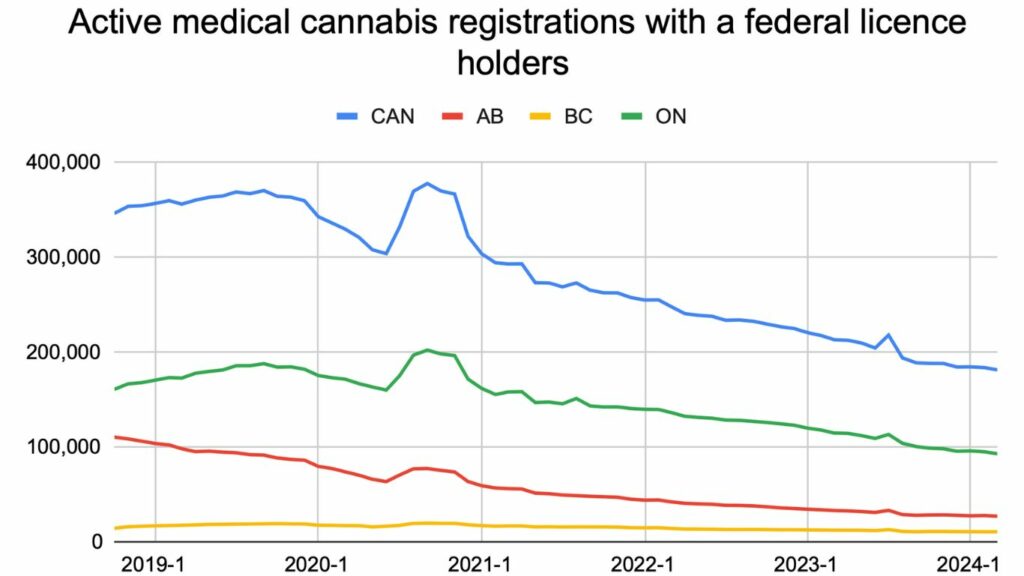
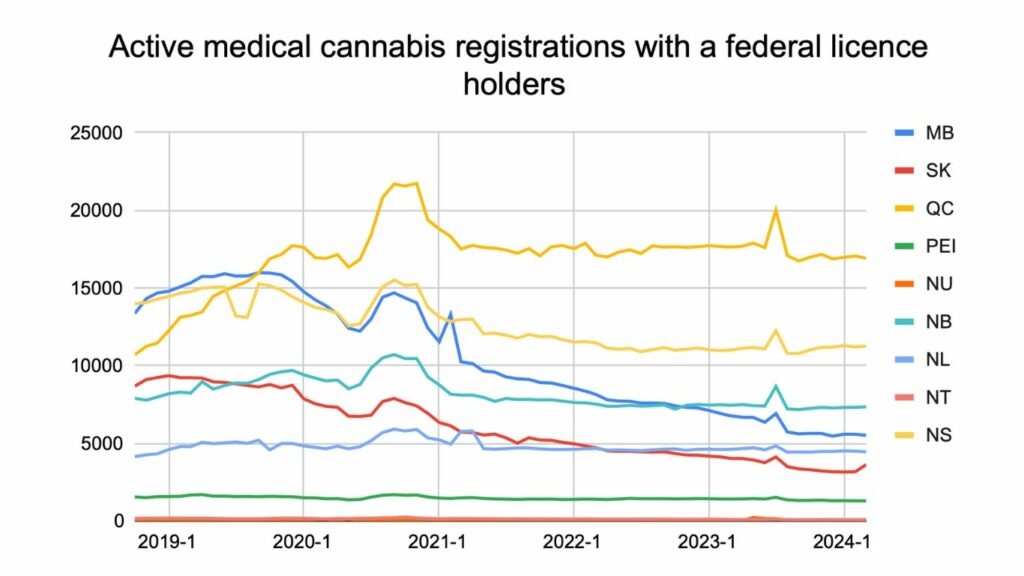
The number of people registering to access medical cannabis in Canada continues to decline, according to Health Canada’s most recent quarterly report. In contrast, those registering for personal and designated cultivation of cannabis for their own medical purposes showed a reverse of this trend.
Medical client registrations with federally licensed sellers fell 2% from 183,909 in December 2023 to 180,878 in March 2024. Such registrations have been on a downward trend since late 2019, followed by a brief spike in 2020 related to the COVID-19 pandemic and brief restrictions on accessing brick-and-mortar stores.
Those declines have been most pronounced in Ontario, Manitoba, Saskatchewan, and Alberta. Other provinces have shown a relative levelling off for the past two years following the brief spike in new registrations in 2020.
Personal and designated production licences
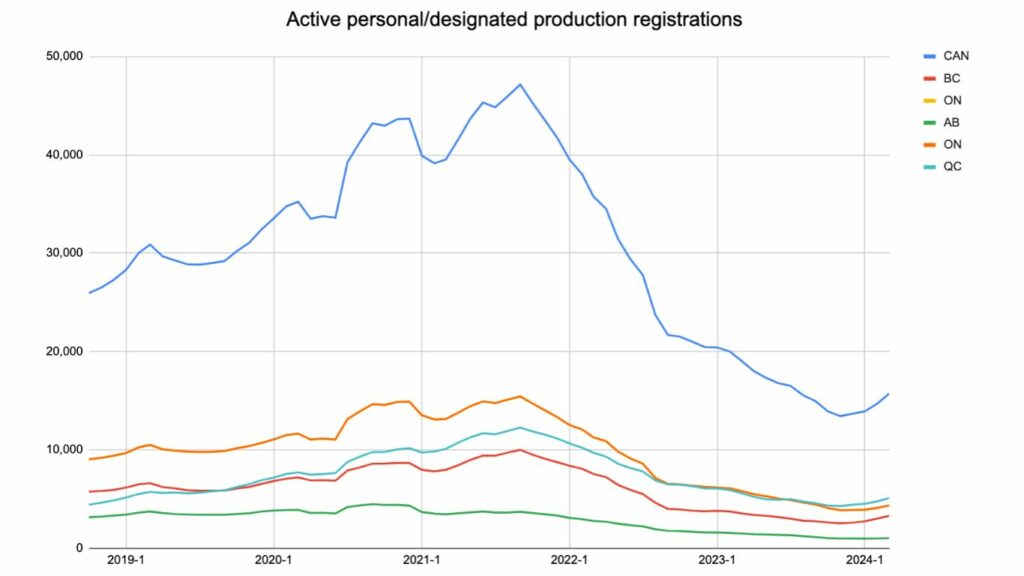
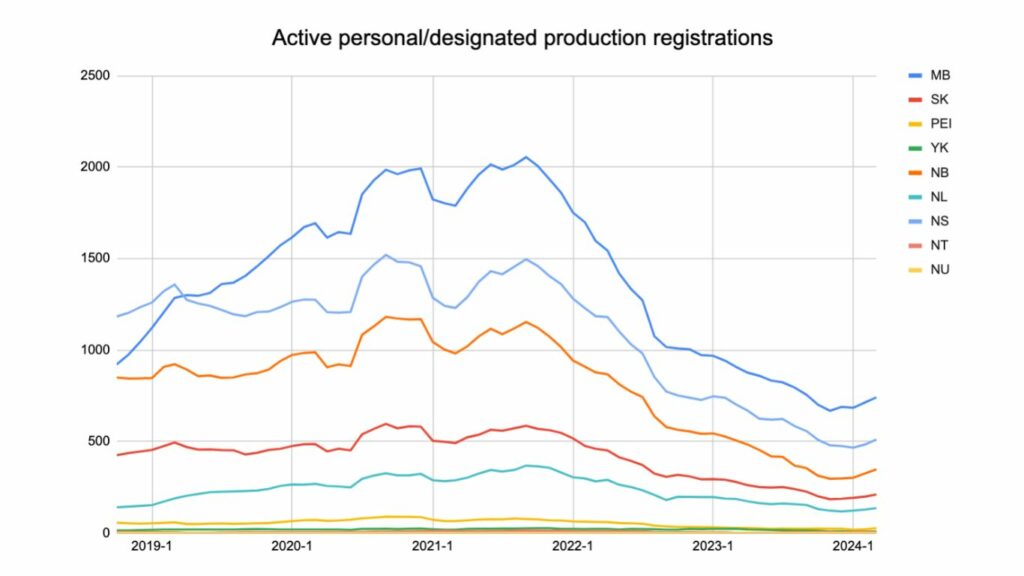
Similarly, active personal/designated production registrations have declined since a peak in September 2021. That trend began to reverse in November 2023 and increased month-over-month through March 2024. The number of individuals registered with Health Canada for personal and designated cultivation of cannabis for their own medical purposes increased 15% from 13,672 in December 2023 to 15,726 in March 2024.
Interestingly, this trend is seen in each province and territory as well, although increases were most pronounced in BC (696), Quebec (671), and Ontario (470).
Health Canada also continues to note that the number of grams per day associated with these personal and designated production licences continues to trend much higher than the average gram per day associated with those registered to access cannabis for medical purposes from a licensed producer.
The average daily amount authorized by healthcare practitioners for those accessing medical cannabis from an LP has been between 2.0 and 2.4 grams per day since legalization began in October 2018.
Participants in the designated or personal production program have an average daily authorized amount of 34.4 grams, about 15 times higher than the average daily amount authorized by healthcare practitioners.
Authorized amounts by healthcare practitioners
While there were 4,728 healthcare practitioners associated with registrations made in the previous twelve months with federally licensed sellers, there were 1,015 healthcare practitioners associated with active personal/designated production registrations.
Of those 1,015, there were 233 healthcare practitioners associated with authorizing amounts equal to or above 25 grams per day, and just ten authorized amounts equal to or above 100 grams per day.
Most (78%) healthcare practitioners who authorized more than 25 grams a day were in BC or Ontario. All who authorized more than 100 grams a day were in BC and Ontario. An authorization of 100 grams a day would equate to a limit of 487 plants at any given time. Such licences can also be combined to up to four per location, meaning a designated grower with several authorizations could be growing hundreds or even thousands of cannabis plants with the potential to produce in the hundreds of kilograms of cannabis a year.
Health Canada inspections ramped up
There have long been concerns from different levels of government over the potential for misuse and diversion of cannabis from these types of licences associated with high gram totals.
Health Canada has ramped up inspections of such licences, more than 300 in the last two years. The most recent annual report also included 20 compliance and enforcement activities (other than inspection) for registered personal and designated production of cannabis for medical purposes, such as conducting seizures and destructions.
Of the 160 inspections of registered personal and designated production of cannabis for medical purposes locations in 2023-2024, 74 were in British Columbia, 63 in Ontario, 18 in Quebec, and five in New Brunswick. In the previous year, the majority of such inspections (115 out of 170) were in Ontario. In the previous year, the majority of such inspections were conducted in Ontario.
The federal agency also sends notices to provincial colleges of physicians informing them of those health care practitioners connected to numerous high gram-a-day authorizations. In 2020, the Saskatchewan College of Physicians and Surgeons levied a $15,000 disciplinary action against a Saskatchewan doctor found to be profiting from issuing medical cannabis licences in 2018.
In 2021, a medical cannabis patient who had been authorized 100 grams a day had a court reject an allowance for the patient to possess up to 1000 grams in public at a time.
Canadian cannabis imports and exports
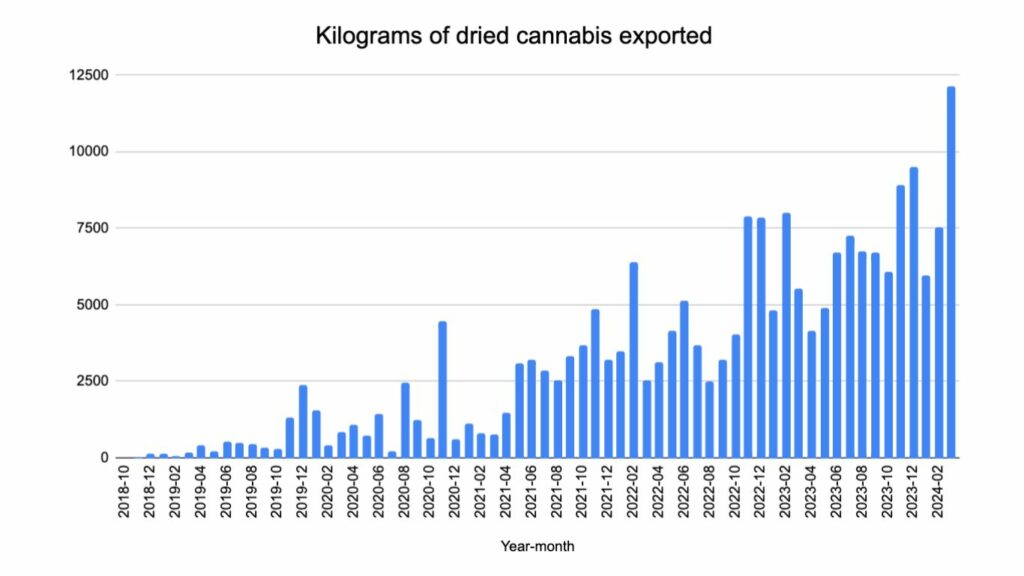
Exports of cannabis products from Canada continue to increase, with the last month in the most recent quarter, March 2024, showing a record amount of dried cannabis flower exported, more than 12,000 kilograms.
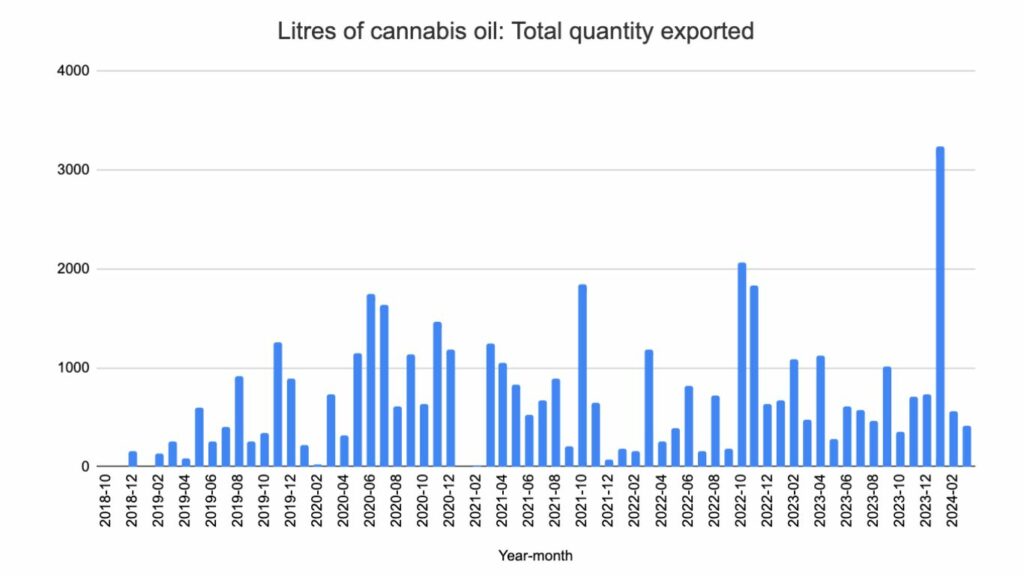
Monthly exports of cannabis oil have also shown annual increases, although not as pronounced as for dried flower. January 2024 showed a record number of litres exported, several times higher than the average at more than 3200 litres.
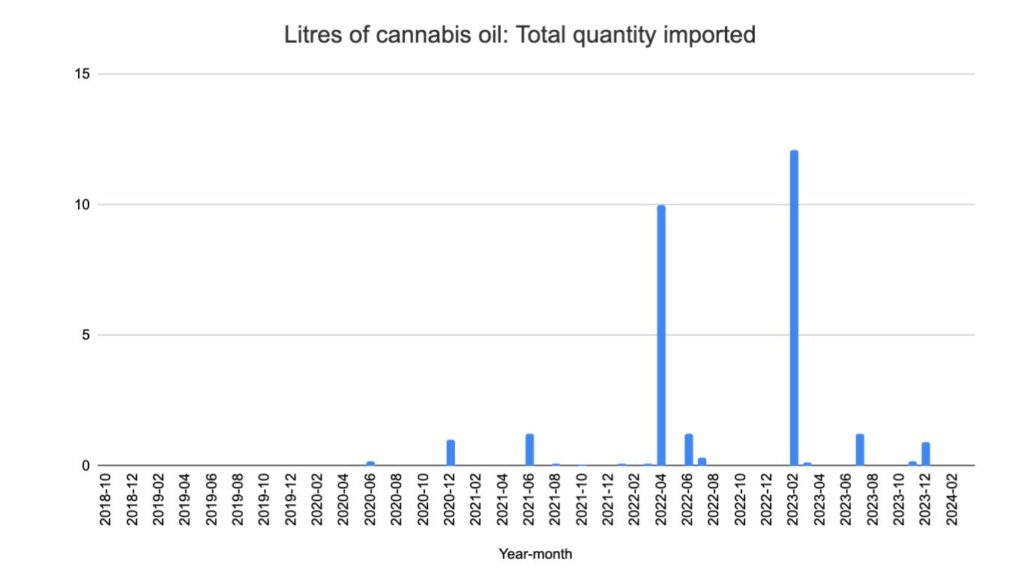
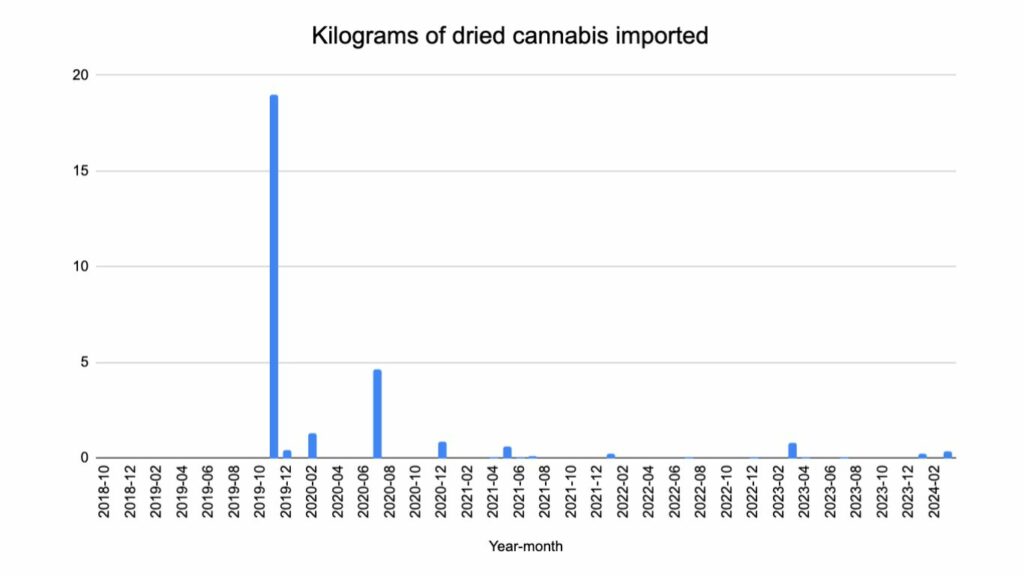
Imports and exports of cannabis to and from Canada are only allowed for medical or scientific purposes. Imports are very restricted, with only a small amount of dried flower and cannabis oil ever making its way into Canada from abroad. Only 28.84 litres of cannabis oil and 28.76 kilograms of dried cannabis have been imported into Canada since October 2018.
This compares to 45,286.94 litres of cannabis oil exported and 21,2534.42 kilograms of dried flower exported.
This means a slight increase in how much the average cannabis grower will get for their cannabis on the B2B market. At the same time, price compression at the retail level continues to increase, with consumers paying less and less for the average gram of cannabis at the retail level.
Back in 2018 when Congress passed the current farm bill that legalized hemp, Congress seemed to have been under the belief that hemp was for making rope rather than intoxicating products. However, the current debate around hemp is almost solely rotating around intoxicants.
It has become abundantly clear that the law passed in 2018, in a way, spawned the current proliferation of derivatives, including THC products. There is a heated debate, with people on either side making arguments in support of their positions. For example, the hemp industry wants the current law to remain as it is, leaving makers of hemp-derived THC intoxicants to operate in the current legal gray area. They claim that the phrasing “all derivatives” opened the gate to THC products from hemp and the status quo should remain.
Opponents argue that THC products from hemp aren’t under the purview of any regulatory framework and that is untenable, since any product intended for the market should be regulated in one way or the other.
One factor has become clear as efforts are made to close the so-called “hemp loophole”: the congressional committees that are responsible for formulating hemp policy aren’t the right entities to make laws giving the U.S. Food and Drug Administration (FDA) power over any product. The committees simply oversee agriculture. This explains why, up until now, no regulations have been passed guiding the FDA on how CBD should make its way onto the market or into different consumable products.
Even if the upcoming farm bill was used to provide guidance on THC derived from hemp, it creates more challenges than it solves. For example, would states that have permitted hemp intoxicants renew their laws at least once every five years? Secondly, the Drug Enforcement Administration specifically categorizes synthetic THC as a schedule 1 substance, and not even the reclassification of marijuana would change this classification.
It is becoming increasingly clear that whether THC is derived from marijuana or hemp, it needs to be regulated by a single legal regime. This could mean that manufacturers of hemp-sourced THC products have to adhere to new or existing laws on product testing, advertising, marketing and more. Insisting that the product continue to exist within a “loophole” is counterproductive for the industry in more ways than one. For example, institutional investors are likely to be unwilling to fund such ventures since the segment is open to all manner of legal challenge.
Now may be the time to establish the right regulatory framework for hemp, so that the growth of the industry isn’t left to chance because this risks not only public health but also the very economic interests of those currently engaged in hemp derivative manufacturing.
Regulatory clarity on all forms of THC would help the hemp and cannabis industry, including companies such as Cresco Labs Inc. (CSE: CL) (OTCQX: CRLBF), to be more certain about the conditions under which they should expect to operate and make their future plans.
About CNW420
CNW420 spotlights the latest developments in the rapidly evolving cannabis industry through the release of an article each business day at 4:20 p.m. Eastern – a tribute to the time synonymous with cannabis culture. The concise, informative content serves as a gateway for investors interested in the legalized cannabis sector and provides updates on how regulatory developments may impact financial markets. If marijuana and the burgeoning industry surrounding it are on your radar, CNW420 is for you! Check back daily to stay up-to-date on the latest milestones in the fast -changing world of cannabis.
To receive SMS alerts from CNW, text CANNABIS to 888-902-4192 (U.S. Mobile Phones Only)
Please see full terms of use and disclaimers on the CannabisNewsWire website applicable to all content provided by CNW, wherever published or re-published: https://www.CannabisNewsWire.com/Disclaimer













Recent Comments