by Grow Up Conference | Sep 17, 2024 | Garden Culture Magazine, Media Partners
Going to the garden center and buying a new plant is an exciting day for the home gardener, and there are many deals this time of year! Usually, a tag detailing care instructions and, most importantly, a number denoting the plant’s hardiness or climate zone designation is attached to perennials, shrubs, or trees. This label is the key to its longevity and survival.
What Are Hardiness Zones?
Hardiness zones stretch back to the 1960s when Henry Skinner of the United States National Arboretum first developed a working map of plants and their sensitivity to cold.
The US Department of Agriculture (USDA) refined the original vision. Other countries worldwide followed suit, including Canada, Australia, and Britain, which have all created models indicating how well plants withstand the cold winter temperatures within the geographical regions of their countries.
The maps and corresponding charts are color-coded and divided into numbered categories or zones based on the average lowest winter temperatures a plant can survive. The latest US designations were published in 2023 and examined temperature averages from 1991 to 2020.
In Britain, the Royal Horticultural Society’s (RHS) ratings are very specific to a plant’s ability to withstand changeable periods of freezing and relatively mild weather. Its charts show how some plants may tolerate a light frost for a couple of hours and others extended cold.
What are Climate Zones?
While cold is one factor that impacts a plant’s health, it isn’t the only one. Heat, rainfall and humidity also influence survival. Climate zones include all these factors.
The maps and charts are color-coded and divided into numbered zones or regions. The US Sunset Magazine has developed a climate zone map considering all these factors.
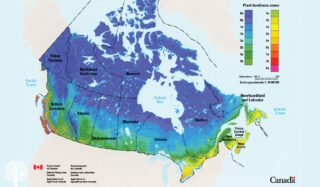
In Canada, Natural Resources Canada refined the original USDA map. The most recent publication is based on climate data from 1981-2010, taking in a wide range of variables, including winter temperatures, summer heat, rainfall, snow cover, wind, and elevation.

Why Knowing Your Climate and Hardiness Zone Matters
Climate and hardiness zones significantly impact what I plant and how I prepare my selection for winter weather.
Do I cover the roots with mulch? Or is it better to shelter the plant inside? If it’s particularly hardy, it may handle the harsh outdoor elements just fine.
Knowing my climate zone designation makes a difference in discerning these things. Plants above the hardiness barriers of my Zone 7 region are considered tender perennials. They will not survive winter or the heavy rainfall the south coast of British Columbia is infamous for.
Of course, for every rule, there’s an exception!
Changing Zones
As climate change accelerates, warmer temperatures are creeping northward at about 20km per decade, changing these once-pre-determined zones.
Knowing your region’s current climate and hardiness zone is the best way to make the right choices for your garden as the planet warms and the seasons extend. This ensures that the plants that take root today will be the garden stars of seasons to come.

by Grow Up Conference | Sep 17, 2024 | Media Partners, Psychedelic News Wire
Last week, representatives of various federal agencies met to discuss new treatments for post-traumatic stress disorder (PTSD), including psychedelics. Speakers at the event included representatives from the Veterans Affairs department, Substance Abuse and Mental Health Services Administration, the U.S. Food and Drug Administration (FDA), the U.S. Department of Health and Human Services and the U.S. Department of Defense.
The event was hosted by the Reagan-Udall Foundation for the FDA. While it didn’t center on psychedelic-assisted treatments only, many exchanged views on the topic.
During the discussion, those attending acknowledged the potential of psychedelics in treating post-traumatic stress disorder and highlighted the need for further studies to ensure patient safety and drug effectiveness.
For example, Betty Aldworth, MAPS director of communications and post-prohibition strategy, stated that the meeting demonstrated the increasing public interest in psychedelic-assisted treatments. In a statement after the event, Aldworth revealed that the U.S. Veterans Affairs Administration, some members of Congress, patient advocates, trauma experts and some stakeholders all gave testimonies agreeing that the evidence base for psychedelic-assisted treatments warranted even more support.
She added that the time had come to close the gap on new pharmacotherapies for treating post-traumatic stress disorder by bringing psychedelic-assisted treatments into the healthcare system.
Aldworth’s statement comes only weeks after the FDA rejected an application that would have approved the use of MDMA in treating post-traumatic stress disorder. In its decision, the FDA directed that another phase 3 trial be conducted to investigate the effectiveness of MDMA in treating the disorder.
A separate study, whose findings were reported in the “Journal of Psychedelic Studies,” determined that despite encouraging results from clinical trials, more research was needed before MDMA-assisted therapy was adopted as a treatment.
Meanwhile, the VA recently started accepting requests for funding to conduct research on psilocybin and MDMA-assisted treatments for a range of mental-health conditions. The acting director of the Clinical Science, Research and Development Service, Miriam J. Smyth, revealed that opportunities for veterans to volunteer would be announced once the studies began.
In other news, bipartisan legislators held an event at the U.S. Capitol asking that the FDA approve the use of MDMA. The legislators also launched an art installation that memorialized military veterans who have died by suicide.
Meanwhile, amendments to a spending legislation that would permit doctors under Veterans Affairs to issue medical cannabis recommendations to military veterans were recently approved by the U.S. House of Representatives. The amendments also encouraged the department to support research into psychedelic benefits in the treatment of medical conditions that affected military veterans.
As more federal agencies recognize the therapeutic potential of psychedelics in treating a variety of health conditions, more attention is likely to be paid to the work that various entities, such as Compass Pathways PLC (NASDAQ: CMPS), are doing to advance the field of psychedelic medicine.
About PsychedelicNewsWire
PsychedelicNewsWire (“PNW”) is a specialized communications platform with a focus on all aspects of psychedelics and the latest developments and advances in the psychedelics sector. It is one of 60+ brands within the Dynamic Brand Portfolio @ IBN that delivers: (1) access to a vast network of wire solutions via InvestorWire to efficiently and effectively reach a myriad of target markets, demographics and diverse industries; (2) article and editorial syndication to 5,000+ outlets; (3) enhanced press release enhancement to ensure maximum impact; (4) social media distribution via IBN to millions of social media followers; and (5) a full array of tailored corporate communications solutions. With broad reach and a seasoned team of contributing journalists and writers, PNW is uniquely positioned to best serve private and public companies that want to reach a wide audience of investors, influencers, consumers, journalists and the general public. By cutting through the overload of information in today’s market, PNW brings its clients unparalleled recognition and brand awareness. PNW is where breaking news, insightful content and actionable information converge.
To receive SMS alerts from PsychedelicNewsWire, text “Groovy” to 888-902-4192 (U.S. Mobile Phones Only)
For more information, please visit https://www.PsychedelicNewsWire.com
Please see full terms of use and disclaimers on the PsychedelicNewsWire website applicable to all content provided by PNW, wherever published or re-published: https://www.PsychedelicNewsWire.com/Disclaimer
PsychedelicNewsWire
San Francisco, CA
www.PsychedelicNewsWire.com
415.949.5050 Office
Editor@PsychedelicNewsWire.com
PsychedelicNewsWire is powered by IBN

by Grow Up Conference | Sep 17, 2024 | Cannabis News Wire, Media Partners
- Lexaria, a global innovator in drug delivery platforms, is reporting on its eight-week body weight results from its WEIGHT-A24-1 ongoing animal study
- The study was made up of three main groups of formulations: DehydraTECH-processed CBD; semaglutide (including “Rybelsus(R)”) and liraglutide
- The DehydraTECH-CBD and DehydraTECH-liraglutide both outperformed Rybelsus(R), which was a surprise outcome. DehydraTECH-liraglutide posted a weight reduction of 4.74%, the most significant in the study
- For Lexaria, this continued outperformance of DehydraTECH-liraglutide is of particular interest, particularly since many third-party studies have shown semaglutide to be more than twice as effective as liraglutide in promoting weight loss
- As the study progresses, Lexaria’s management is optimistic that it will realize positive and ground-breaking results that will demonstrate the superiority and potential of its technology
Lexaria (NASDAQ: LEXX), a global innovator in drug delivery platforms, is reporting on its eight-week body weight results from its WEIGHT-A24-1 ongoing animal study. This study explores Lexaria’s patented technology, DehydraTECH(TM), and its potential in addressing diabetes and weight loss. More importantly, it looks to establish whether DehdyraTECH processing results in higher brain absorption than non-DehydraTECH arms, with a focus on glucagon-like peptide 1 (“GLP-1”) drugs, liraglutide and semaglutide (https://cnw.fm/iAhxm).
This part of the study was comprised of eight different formulation arms. Arms A through D used different DehydraTECH-CBD compositions, with arms E and F using DehydratTECH-processed Rybelsus, and arms G and H using pure GLP-1 drugs (semaglutide and liraglutide, respectively) processed with DehydraTECH. At the eight-week mark, the liraglutide arm H posted a weight reduction of 4.74%, the most significant weight reduction from the entire study. Equally interesting, two of the DehydraTECH-CBD compositions also led to weight reductions and also outperformed both Rybelsus(R) and pure semaglutide (https://cnw.fm/iAhxm).
For Lexaria, this continued outperformance of DehydraTECH-liraglutide and DehydraTECH-CBD is of particular interest. Lexaria fully owns DehydraTECH-CBD, while liraglutide has become available in generic version. This presents a massive opportunity for Lexaria and its goal of offering a potential treatment option for diabetes and weight loss.
The global diabetes drugs market in 2023 was valued at $79.925 billion. By 2032, it is projected to hit $153.98 billion in value, representing a CAGR of 7% over the forecast period (2024-2032) (https://cnw.fm/fo3Ut). Lexaria looks to carve out a decent market share from this growth with its DehydraTECH technology, primarily by offering a viable oral treatment alternative to what is currently in the market. Its DehydraTECH technology has proven itself many times to improve drug delivery, and it has also done so in its ongoing studies. The company looks to build on this, ultimately offering an oral alternative to diabetes treatment.
As the study progresses, Lexaria’s management is optimistic that it will realize positive and ground-breaking results that will demonstrate the superiority and potential of its technology. They are also confident that results from the study will inch the company closer to carving out a market share in the diabetes and obesity treatment market, even as it continues to create value for its shareholders.
For company information, visit the company’s website at www.LexariaBioscience.com.
NOTE TO INVESTORS: The latest news and updates relating to LEXX are available in the company’s newsroom at https://cnw.fm/LEXX
About CannabisNewsWire
CannabisNewsWire (“CNW”) is a specialized communications platform with a focus on cannabis news and the cannabis sector. It is one of 60+ brands within the Dynamic Brand Portfolio @ IBN that delivers: (1) access to a vast network of wire solutions via InvestorWire to efficiently and effectively reach a myriad of target markets, demographics and diverse industries; (2) article and editorial syndication to 5,000+ outlets; (3) enhanced press release enhancement to ensure maximum impact; (4) social media distribution via IBN to millions of social media followers; and (5) a full array of tailored corporate communications solutions. With broad reach and a seasoned team of contributing journalists and writers, CNW is uniquely positioned to best serve private and public companies that want to reach a wide audience of investors, influencers, consumers, journalists and the general public. By cutting through the overload of information in today’s market, CNW brings its clients unparalleled recognition and brand awareness. CNW is where breaking news, insightful content and actionable information converge.
To receive SMS alerts from CNW, text CANNABIS to 888-902-4192 (U.S. Mobile Phones Only)
For more information, please visit https://www.CannabisNewsWire.com
Please see full terms of use and disclaimers on the CannabisNewsWire website applicable to all content provided by CNW, wherever published or re-published: https://www.CannabisNewsWire.com/Disclaimer
CannabisNewsWire
Denver, CO
www.CannabisNewsWire.com
303.498.7722 Office
Editor@CannabisNewsWire.com
CannabisNewsWire is powered by IBN
by Grow Up Conference | Sep 17, 2024 | Grow Opportunity, Media Partners
“As a company backed by science, we have long invested in research both independently and with leading academic institutions, and have achieved significant learning from our work,” says Jose Celedon, PhD, director, breeding and Ggnetics at Aurora. “Our recent work on auto-flowering will be a gamechanger for cannabis and hemp production. This research speaks to our expertise and investment in science that will move this industry forward.”
Most of the commercially grown cannabis is photoperiod sensitive, meaning that plants require shifts in day length to trigger flowering. While this can be controlled readily in indoor production, it is a limitation for outdoor cultivation, especially in high-latitude regions. Aurora has received a US Patent 12,002,546, “Methods of Determining Sensitivity to Photoperiod in Cannabis”, which enables Aurora’s breeding program to identify and select for the auto flowering trait. This latest research solidifies Aurora’s position as an innovative industry leader, poised to shape the future of cannabis agriculture.
Aurora’s commitment to research and innovation has generated tangible results for the company, significantly improving potency and yield, thereby driving down cost per gram and increasing overall efficiency. Aurora has significantly invested in cannabis breeding since 2018, and the novel cultivars identified from this world class breeding program consistently yield 40-100% more flower than legacy varieties.
The company’s focus on unravelling the molecular mechanisms controlling flowering and maturity time in cannabis holds promise for enhancing crop yield and adaptability. By exploiting the natural variation in the circadian rhythm of cannabis, Aurora aims to elevate the economic value of both medical and recreational cannabis. Through leveraging genetic research and development, the company aims to overcome traditional limitations, paving the way for improved cultivation techniques and market opportunities.
by Grow Up Conference | Sep 17, 2024 | Grow Opportunity, Media Partners
(CNW) Toronto – MediPharm Labs Corp., a specialized, research-driven pharmaceutical company focused on cannabis-based health products, is pleased to announce that it has paid off the entire remaining convertible debt amount of $2.1 million, leaving the company materially debt-free.
With this debt repayment, MediPharm now enjoys a robust financial position with more than $13 million in cash and full ownership of three facilities. This achievement reflects the company’s prudent financial management and commitment to maintaining a strong balance sheet.
MediPharm reported an adjusted EBITDA loss of $0.1M in Q2 2024 (for the three months ending June 30, 2024), demonstrating near breakeven performance. The company’s financial performance combined with the recent debt repayment, gives management high confidence in the company’s ability to invest in its operations and continue to drive long term growth.
“Becoming materially debt-free is a significant milestone for MediPharm Labs,” said David Pidduck, CEO of MediPharm Labs. “Our strong cash position and near breakeven adjusted EBITDA reflect our disciplined approach to financial management. We are well-positioned to focus on the future and leverage our resources to pursue strategic growth initiatives.”
MediPharm Labs remains committed to its mission of providing high-quality, cannabis-based health and pharmaceutical products and delivering value to its shareholders.

by Grow Up Conference | Sep 16, 2024 | Media Partners, Stratcann
High Tide reported $825,000 in net income from $35.5 million in gross profit and $131.7 million in revenue in the three months ended July 31, 2024.
The company behind retail cannabis chain Canna Cabana says its 6% year-over-year growth in revenue was driven by an increase in the number of stores, from 154 the same quarter last year to 180 as of the current quarter (Q3 2024), as well as increases in same-store sales.
Net income was up from a $3.6 million loss in Q3 2023. This is High Tide’s second consecutive quarter of positive net income.
The Aberta-base company reported $115.7 million in revenue from cannabis and CBD products and another $7 million in consumption accessories. High Tide also brought in just over $9 million in revenue from its data analytics program (Cabanalytics Business Data and Insights Platform), as well as advertising and other revenue.
High Tide’s brick and mortar retail stores brought in 94% of revenue from sales.
While the majority of High Tide’s sales are in the Canadian market, it also operates its e-commerce platforms in the US such as Smoke Cartel, Grasscity, Daily High Club, DankStop, NuLeaf Naturals and FABCBD, as well as USA sales on its international e-commerce platforms. In addition, High Tide operates a warehouse which primarily services its e-commerce operations.
Some 94% of High Tide’s revenue came from the Canadian market, while about 6% came from these US holdings. The company continues to see a decrease in revenue from USA and international operations, down 33% in the most recent quarter. High Tide blames this on the weakening CBD sector on the international market and a decrease in consumer spending on accessories “due to economic pressures.”
“Over the last year, the High Tide team has presented investors with compelling proof points as to how we’re different than other retailers, and our third quarter results offer even further evidence of this,” said Raj Grover, Founder and Chief Executive Officer of High Tide.
“Our numbers continue to drive home the fact that we are a well-managed, innovative company that has grown responsibly while continuing to build value for shareholders. Numbers don’t lie and this quarter’s record revenue, positive net income and free cash flow, for the fifth consecutive quarter, sit in stark contrast to some of our big-name competitors recently filing for bankruptcy protection or shutting down completely. Unlike these competitors, we are generating strong free cash flow from our operations, which has been powering our organic growth trajectory in recent months. This has allowed us to grow our cash on hand balance to $35.3 million, the highest ever.”
Featured image via Google Maps
Related Articles
by Grow Up Conference | Sep 16, 2024 | Cannabis News Wire, Media Partners
A recent study revealed that marijuana use has been on the rise in the United States, though surprisingly not among young teens. The study, which analyzed the cannabis consumption habits of more than 500,000 people between 2013 and 2022, was published in the latest edition of Drug and Alcohol Dependence Reports. It highlighted that marijuana use saw significant growth among individuals living in households with an annual income exceeding $75,000 and those holding college degrees.
Along with examining usage patterns over the previous 30 days, the study also looked at trends related to household income, age, gender, race, ethnicity and educational background. One unexpected outcome of the research was that cannabis use among teenagers did not increase.
The study grouped all teens aged 12 to 17 years of age together, which may have contributed to the stable numbers. The authors noted that some differences might exist if data on younger and older teens were examined separately. Notably, recent statistics from the Centers for Disease Control and Prevention (CDC) showed a decrease in marijuana use among high school students, dropping from 23% in 2013 to 17% last year.
State-level cannabis legalization could likely be a factor in reducing teen marijuana use. Dispensaries are strictly prohibited from selling to individuals under the age of 21 and typically require ID scanning to verify age, which may reduce illegal purchases compared to liquor stores. Other factors could also be influencing teen behavior, such as the pandemic. According to the authors, there was a notable decline in cannabis use during the pandemic, possibly due to less peer interaction and more parental supervision.
Although marijuana use among teens has stayed steady or declined, the research showed a marked increase in usage among people at higher socioeconomic levels. Cannabis consumption increased by more than threefold among individuals with college degrees and those from higher-income households.
In 2013, only 4% of college-educated people reported using cannabis, but that number grew to nearly 13% by 2022. Similarly, among households earning more than $75,000 annually, marijuana use rose from 6% in 2013 to 13% in 2022.
This shift may be related to changing attitudes toward marijuana due to legalization. Cannabis has become more normalized, especially with endorsements from public figures, including celebrities and athletes. The increasing number of dispensaries in affluent neighborhoods and near universities may also be contributing to this trend.
The authors also suggested that improved access to medical marijuana could explain part of the rise in use among wealthier individuals.
Another notable finding from the study was that marijuana use was most prevalent among non-Hispanic multiracial individuals compared to other racial and ethnic groups, with more than 25% of this group reporting marijuana use in 2022.
This recorded drop in the number of teens using marijuana provides credence to what proponents of legalization indicated that creating a regulated market in which entities such as Canopy Growth Corp. (NASDAQ: CGC) (TSX: WEED) are allowed to operate would curb the use of this substance by underaged individuals.
About CNW420
CNW420 spotlights the latest developments in the rapidly evolving cannabis industry through the release of an article each business day at 4:20 p.m. Eastern – a tribute to the time synonymous with cannabis culture. The concise, informative content serves as a gateway for investors interested in the legalized cannabis sector and provides updates on how regulatory developments may impact financial markets. If marijuana and the burgeoning industry surrounding it are on your radar, CNW420 is for you! Check back daily to stay up-to-date on the latest milestones in the fast -changing world of cannabis.
To receive SMS alerts from CNW, text CANNABIS to 888-902-4192 (U.S. Mobile Phones Only)
For more information, please visit https://www.CannabisNewsWire.com
Please see full terms of use and disclaimers on the CannabisNewsWire website applicable to all content provided by CNW, wherever published or re-published: https://www.CannabisNewsWire.com/Disclaimer
CannabisNewsWire
Denver, CO
www.CannabisNewsWire.com
303.498.7722 Office
Editor@CannabisNewsWire.com
CannabisNewsWire is powered by IBN
by Grow Up Conference | Sep 16, 2024 | Cannabis News Wire, Media Partners
Recently released data shows that recreational cannabis sales in the state of Ohio have exceeded $50 million since sales were launched in August. This comes after voters in the state passed Issue 2, a ballot initiative that legalized the recreational use of marijuana in November 2023. According to the initiative, licensed sales were to begin on Aug. 6, 2024.
Individuals aged 21 years of age and older can possess 15 grams of edibles or extracts and no more than 2.5 ounces of marijuana.
The Division of Cannabis Control revealed that dispensaries had sold almost $54.6 million in recreational marijuana products since they were allowed to sell products to individuals aged 21 and above. Currently, there are 123 licensed dispensaries in the state that can sell both medical and recreational marijuana.
Ohio legalized the medical use of marijuana in 2016 through the senate. Licensed sales of the same started on Jan. 16, 2019.
The adult-use sales covered more than 840,000 units of manufactured products such as beverages, vapes and edibles as well as more than 6,100 pounds of plant material. While regulators don’t track purchases made by buyers from other states, the data shows that Cincinnati is a top stop for consumers in Indiana and Kentucky.
While this boom in sales is significant progress for the state, the cost of products continues to affect medical cannabis patients, who have raised concerns about prices. As of last week, the average price of manufactured products stood at $30.51 while one ounce of flower was going for $253.20. Operators expect that prices will decrease as supply increases and more dispensaries are opened. The state is already planning to issue additional licenses.
Brian Wingfield, Ohio Cannabis Company owner, revealed that the experience thus far had been positive with the transition from serving just medical patients to serving recreational consumers being smooth. He attributes the smooth transition to the patience of the company’s long-time medical customers as well as great staff, who had helped the business adapt to new demand, he explained.
It should be noted that there are limits on how much an individual can purchase in a single transaction. As per the Division of Cannabis Control, individuals can only purchase an ounce of flower and 10 packages of edibles, which collectively add up to 1,100 milligrams of THC.
In addition, a 10% excise tax is imposed on all recreational cannabis products, with the proceeds being allocated to a substance use fund, municipalities with dispensaries, the social equity and jobs program, and administrative costs. It is important to note that medical patients don’t have to pay the tax.
The seamless way in which recreational sales are being rolled out in Ohio may have had established industry actors such as Cronos Group Inc. (NASDAQ: CRON) (TSX: CRON) celebrating this latest market to open to residents who would wish to use recreational marijuana.
About CannabisNewsWire
CannabisNewsWire (“CNW”) is a specialized communications platform with a focus on cannabis news and the cannabis sector. It is one of 60+ brands within the Dynamic Brand Portfolio @ IBN that delivers: (1) access to a vast network of wire solutions via InvestorWire to efficiently and effectively reach a myriad of target markets, demographics and diverse industries; (2) article and editorial syndication to 5,000+ outlets; (3) enhanced press release enhancement to ensure maximum impact; (4) social media distribution via IBN to millions of social media followers; and (5) a full array of tailored corporate communications solutions. With broad reach and a seasoned team of contributing journalists and writers, CNW is uniquely positioned to best serve private and public companies that want to reach a wide audience of investors, influencers, consumers, journalists and the general public. By cutting through the overload of information in today’s market, CNW brings its clients unparalleled recognition and brand awareness. CNW is where breaking news, insightful content and actionable information converge.
To receive SMS alerts from CNW, text CANNABIS to 888-902-4192 (U.S. Mobile Phones Only)
For more information, please visit https://www.CannabisNewsWire.com
Please see full terms of use and disclaimers on the CannabisNewsWire website applicable to all content provided by CNW, wherever published or re-published: https://www.CannabisNewsWire.com/Disclaimer
CannabisNewsWire
Denver, CO
www.CannabisNewsWire.com
303.498.7722 Office
Editor@CannabisNewsWire.com
CannabisNewsWire is powered by IBN

by Grow Up Conference | Sep 16, 2024 | Extraction Magazine, Media Partners
In recent years, the cannabis industry in South America has shown tremendous potential to become the fastest-growing CBD market behind the EU and North America. According to statistics, the cannabis market in Latin America is expected to grow exponentially by 2025, with the market projected to reach $44.8 billion. [1]
Countries like Uruguay, Columbia, Brazil, Argentina, Peru, Chile, and Ecuador have taken steps toward legalizing cannabis both medicinally and recreationally, which is why the market in South America is seeing such growth. With these countries leading the cannabis market from strength to strength, it has made the cannabis business more appealing, with several cannabis-related ventures coming to fruition over the last decade.
Cannabis businesses in South America now include everything from processing, cultivation, and distribution to retail, research, and pharmaceuticals. As more countries begin to hop on the lucrative cannabis business bandwagon and international investments in the cannabis sector in South America increase, it’s an excellent idea to know the business and market trends.
That’s why this blog dives into the cannabis business and markets in South America. After reading what’s discussed, you should better understand how this region’s cannabis industry is growing and why it’s significant.
Cannabis Business Market Trends On A Global Scale
Before taking a more in-depth look into cannabis business trends and market statistics in South American countries, it’s important to understand the cannabis business market globally.
Based on recent statistics, the global cannabis market was valued at approximately $33.84 billion in 2024 and is estimated to grow at a compound annual growth rate (CAGR) of 15.4%, reaching around $69.25 billion by 2029. [2]
Evidently, globally, the cannabis industry is experiencing rapid growth, which is being driven by the increasing legalization and decriminalization of recreational and medicinal cannabis across countries, including Canada and many found in South America.
Some nations like Mexico and Germany are moving toward similar reforms, and even the United States is seeing more legalization across states. In particular, states like California and Colorado are seeing key market activity, with these states significantly contributing to the country’s cannabis market growth.
It’s important to note that although recreational legalization is occurring, more nations are legalizing the cannabis business for medicinal purposes, with Australia, Germany, and several Latin American nations adopting medical cannabis programs.
However, the demand for cannabis products is ever-growing. Globally, more people are seeking products like beverages, edibles, and topicals that contain CBD. This has led to several major cannabis producers developing differentiated products that help them gain a competitive edge in the market. =
There are even several major companies in South America that are focusing on producing cannabis products to benefit business growth and remain competitive within the global space. Since this is the case, unsurprisingly, there has been massive investment in the cannabis industry globally. In 2023 and 2024 alone, there were hundreds of acquisitions and mergers with large businesses, heavenly investing in cannabis startups and established companies. [3]
Cannabis Business Trends In South America: By Country
In South America, cannabis businesses specialize in producing medicinal or recreational (or both) cannabis products and services depending on country regulations and legislation. To better understand the current cannabis business trends and market findings in South America, we’ve looked into trends and market insights in six South American countries that are flourishing in the cannabis industry.
Brazil
In Latin America, Brazil is easily one of the biggest cannabis markets, with its growth and success primarily driven by the country’s medical cannabis sector. Brazil’s medical cannabis market is currently valued at over $100 million, and even more growth is expected in the coming years.
Based on data findings, the country is experiencing these profits because it has experienced significant developments with its medical cannabis extracts, oils, and pharmaceutical products.
However, there is an ongoing debate in the country surrounding the decriminalization of the recreational use of cannabis, which has led to legal uncertainties, particularly surrounding cannabis possession. At the time of writing, it’s still illegal in Brazil to use cannabis recreationally.
Columbia
2023 statistics revealed that Columbia’s cannabis exports market reached an incredible $5 million this year. It is believed that the market could grow to reach $50 million annually by 2025. This is unsurprising, considering Columbia has emerged as a major player in the global cannabis industry in the last decade. Like Brazil, Columbia’s market growth is driven by its medicinal cannabis sector.
Currently, the country has over 1,200 licensed cultivators, and its favorable climate allows it to enjoy multiple harvests annually, which is not the case in other parts of the world. In fact, Columbia’s climate is one of the main reasons international investors have heavily invested in the country’s cannabis business of late.
Unfortunately, capitalization of the recreational cannabis market remains out of reach for businesses in Columbia producing cannabis, with the recent bill to legalize recreational cannabis archived. However, new investments and exports remain steady, so it’s only a matter of time before the country reaches its full potential in the cannabis sector.
Chile
Many find it surprising that Chile has become a key player on the board when it comes to the cannabis industry, especially considering its more favorable outlook on recreational cannabis legalization. According to statistics, the country focuses on medicinal cannabis, with its medical cannabis market estimated to be worth $10 million annually. This is significant, considering the country only legalized medicinal cannabis in 2015.
Since its legalization, the country has approved the cannabis-based drug Sativex for production. At present, recreational cannabis remains out of reach, but the country is actively working on developing a comprehensive regulatory framework for all cannabis uses. So, in the near future, businesses could get the green light to begin developing recreational cannabis products.
Uruguay
The South American country Uruguay might now be famous for its beef, beaches, and soccer, but it is making waves in the cannabis industry and quickly becoming a thought leader in the space. Few people realize that Uruguay was the first country in the world to wholly legalize adult-use cannabis back in 2013.
In Uruguay, businesses can sell cannabis recreationally and medicinally. In addition, the citizens of Uruguay are permitted to purchase cannabis from pharmacies, join cannabis clubs, or grow their own cannabis at home. However, this doesn’t mean that no regulation exists. The country’s government regulates the cannabis market through the esteemed Institute of Regulation and Control of Cannabis (IRCCA). This institute oversees the country’s production, distribution, and pricing. [4]
With the country’s stance on cannabis far more liberal than the rest of the world and South America, it should come as no shock to know Uruguay’s cannabis market is valued at about $50 million annually currently. It might also be of interest to note that Uruguay is working toward regulatory changes that make it easier for tourists to buy cannabis as a measure to combat the black market. With these upcoming regulatory changes, it’s predicted that the country’s cannabis market will continue to grow and thrive, and so will the country’s cannabis business.
Argentina
Argentina might not wholly allow recreational use of cannabis, but it does have medical cannabis programs that allow patients to cultivate cannabis for personal use. The country’s primary focus is on developing its medical cannabis market, and it’s done well, with current projections estimating Argentina’s medical cannabis market will grow to $50 million by 2025.
Businesses in the medical cannabis sector in Argentina are growing from strength to strength, especially those involved in the caregiving sector. There are even governmental initiatives to improve medical cannabis access, which is helping businesses and patients.
Not to mention, the country is experiencing increased public support toward wholly decriminalizing cannabis recreationally, further than the decriminalization of small amounts of cannabis possession that occurred in 2009. [5]
Ecuador
Ecuador is a South American country that is still in the early stages of developing its cannabis market, considering the country only legalized medical cannabis in 2019. Unsurprisingly, with its slow start in the cannabis sector, its market is currently nascent, but there is expected growth with the country’s regulations soon to solidify.
According to sources, the country is expected to quickly gain traction with its cannabis businesses, which are poised and ready to begin contributing to market growth. Once the green light is given to implement the country’s regulatory framework surrounding the cultivation, production, and distribution of medicinal cannabis, the market will benefit as more companies enter the Ecuadorian cannabis market.
The Biggest Cannabis Companies In South America
There are quite a few impressive cannabis companies in South America that are growing year over year. [6]
Recreational and medical cannabis companies like PharmaCielo, Flora Growth, Silverpeak, and Zebra Brands are leading the charge in South America’s steadily growing cannabis industry because of the region’s positively evolving legal and regulatory frameworks and favorable climate.
Many expert opinions state that these two factors are primarily causing the South American cannabis market to gain significantly on the EU and North American markets and fall just behind them.
The Wrap-Up On Cannabis Business In South America
South America’s cannabis business markets and trends paint a vivid picture. The region is ready to become a major player and contend with industry giants in the EU and North America. Many businesses in South America are capitalizing on the country’s natural and legal favorable conditions to position themselves as leaders in the space.
As the countries within South America continue to refine and legalize cannabis for different uses, the entire region’s market is expected to grow exponentially in the coming year, which will spur international investment and entrepreneurship within country borders.
As trends and markets change, we will continue to keep you informed about the latest happenings in the cannabis business in South America.
References:
1. https://www.statista.com/statistics/1015644/latin-america-cannabis-market-value/
2.https://www.mordorintelligence.com/industry-reports/cannabis-market
3.https://www.cannabisbusinesstimes.com/tag/mergers-acquisitions/
4.https://www.google.com/url?q=https://ircca.gub.uy/&sa=D&source=docs&ust=1722644567376873&usg=AOvVaw2_xgCgj28-LJBL-N_ayIMK
5.https://www.reuters.com/article/world/argentina-decriminalizes-small-scale-marijuana-use-idUSTRE57O62M/
6.https://www.google.com/url?q=https://www.benzinga.com/money/best-latin-american-cannabis-companies&sa=D&source=docs&ust=1722644611536842&usg=AOvVaw3xvNbxQf_wm1NF3IhcQd9r

by Grow Up Conference | Sep 16, 2024 | Grow Opportunity, Media Partners
For some time the outlook for Canada’s cannabis sector has been gloomy. Following the crest in company values post-legalization came a crash from which the cannabis equity market hasn’t yet recovered. Meanwhile, domestic demand for cannabis seems to have flattened and shows few signs of new growth.
While overall revenue is projected to reach US$5.63 billion this year, recreational sales have leveled off. With over 3,700 authorized retail stores across the country, and just under a store per 100,000 population the recreational market appears to be saturated.
Looking at low-THC consumer products in the U.S. in my previous article, I was struck by the segment’s triple-digit growth and by its movement into multiple sales channels. While consumer data is still catching up with this new market it seems that low-THC adult-use products are reaching new customers who are loath to visit dispensaries. In contrast to the U.S., recreational cannabis offerings here reveal the continuing dominance of high-THC products.
Could Canadian and U.S. consumers be so different, I wondered?
I’m betting they are not. Sure, American low-potency markets have taken advantage of the loophole created by the 2018 Farm Bill’s hemp definition. Aside from conversion cannabinoids, natural hemp adult-use products below the 0.3% THC threshold are profitably marketed across the U.S. Could similar products be sold here?
Canada’s Industrial Hemp Regulations suggest it might be a difficult path. Only classified hemp cultivars may be used, although there’s a long list. It’s difficult to say if these have attractive terpene profiles for recreational use. THC levels are typically quite low. The government can be petitioned to add varieties, but that’s another process to engage.
A simpler option would be to use regular cannabis, which low-potency beverages, edibles and other products could be derived from. Products would need to be adopted by provincial distributors, but the OCS has a small low-potency category, and Alberta has cut out the middleman to allow for direct distribution. Advertising and promotion rules are another obstacle.
Cannabis retail here would also need to make some changes. A typical retail store is oriented, through its branding, sales culture and limited floor space to selling high potency. In the U.S., beverages are the key category for lower THC products where they’re sold by supermarkets, liquor outlets and delivery services, depending on state legislation. Beverages require more floor and shelf space than one generally finds in dispensaries. As the ‘Dad Grass’ brand I featured exemplifies, the stateside pitch is to regular folks – the same people who drink lite beer while tending the barbecue.
I can think of two business models that may be useful ways to reach a similar clientele here.
The first I’m borrowing from Alberta-based SNDL, a firm that’s been on a tear recently, buying up chains and using the retail brands they represent to target specific customers. For example, the Value Buds and Firesale brands appeal to bargain hunters, Spiritleaf offers a “premium guest experience,” while Superette is designed to reach shoppers who just want to have fun.
Significantly, SNDL has evolved from its core cultivation business, so it’s well situated to customize new products to supply its stores. By rationalizing staffing and internal systems, the firm seems intent on reducing its cost structure to live with the price compression that’s helping to drive some of its competitors out of business. The company is also a major liquor retailer, with transferable expertise for merchandising cannabis beverages. It could feasibly establish a low-THC brand and store network to target the same segment flocking to these products in select U.S. states.
I previously hinted at a second model in my piece about Ontario’s changing retail markets. Supermarkets are a popular sales channel in states that permit hemp-based THC drinks. By incorporating separate but complementary cannabis outlets beside their stores, grocery chains could also sell low-THC products to their customers. Major grocery players would bring their advantages of deep pockets plus significant business, marketing and logistics capability to evolve the model.
A variation on these approaches is to feature both low-THC recreational and Cannabis Health Products in proximate outlets. The federal government’s slow uptake of its 2022 Scientific Advisory Committee report is blocking this strategy, for now. However, Health Canada says it will clear a regulatory path for Cannabis Health and Wellness products not needing practitioner supervision. With its stake in and plans for expanding their pharmacy business, Big Grocery is well-positioned to take advantage. Food shoppers could wheel their carts to the pharmacy for CHPs, then drop into the low-potency cannabis outlet beside the store entrance.
Some work is required to research, test and implement viable channels for newly branded low-THC products here. But judging from results south of the border, such efforts may well be worth it.



Recent Comments