
by Grow Up Conference | Sep 6, 2024 | Cannabis News Wire, Media Partners
One of the largest employers in the United States, Home Depot, is rewriting its rules regarding employee drug testing. A recent document states that the corporation is discontinuing pre-employment substance testing for the majority of its personnel and will no longer include marijuana in its substance-screening panels.
The revised policies will go into effect on Sept. 1, 2024, as stated in a message from human resources distributed this week. According to the memo, cannabis will no longer be tested on drug panels in the U.S., which includes tests carried out following workplace mishaps or in circumstances where there is a plausible suspicion of impairment.
The memo also clarifies that only external candidates with conditional offers for positions such as corporate security and asset protection will be subject to pre-employment substance testing. The changes, however, have no bearing on federal Department of Transportation employees, who are still subject to the current testing procedures.
News of the policy shift first surfaced on Reddit in the r/HomeDepot forum. A user posted that they had been informed of the new protocol during a morning meeting. The user mentioned that as of Sept. 1, 2024, cannabis would no longer be included in drug tests, even in cases of reasonable suspicion. Additionally, the user noted that drug testing for lift equipment operators would also be discontinued.
The Reddit post quickly garnered attention, with several other users claiming to work at Home Depot confirming that they had heard similar updates at their workplaces.
If the changes are implemented, Home Depot will be among the largest private corporations to do away with cannabis testing for staff members. The corporation has more than 400,000 employees spread across some 2,000 outlets in the United States.
The move by Home Depot is not entirely unprecedented. Amazon, another corporate giant, announced in 2021 that it would no longer test a large number of its workers for cannabis use. Additionally, several states have also enacted laws that restrict or prohibit employee substance testing for cannabis. For instance, new employee protections were implemented in Washington State and California this year.
Employers in California are no longer permitted to inquire about a candidate’s prior cannabis use and cannot penalize employees for lawful use of cannabis outside of work. Meanwhile, Washington State’s law protects employees against discrimination for using legal cannabis before being hired, but it does not shield current employees from facing disciplinary action or termination due to their usage of the drug.
Major cannabis companies such as Cresco Labs Inc. (CSE: CL) (OTCQX: CRLBF) are probably happy that the vestiges of prohibition in the form of pre-employment drug tests are being peeled away by one company after another. With time, the substance could eventually gain the same status as other substances, such as alcohol.
About CNW420
CNW420 spotlights the latest developments in the rapidly evolving cannabis industry through the release of an article each business day at 4:20 p.m. Eastern – a tribute to the time synonymous with cannabis culture. The concise, informative content serves as a gateway for investors interested in the legalized cannabis sector and provides updates on how regulatory developments may impact financial markets. If marijuana and the burgeoning industry surrounding it are on your radar, CNW420 is for you! Check back daily to stay up-to-date on the latest milestones in the fast -changing world of cannabis.
To receive SMS alerts from CNW, text CANNABIS to 888-902-4192 (U.S. Mobile Phones Only)
For more information, please visit https://www.CannabisNewsWire.com
Please see full terms of use and disclaimers on the CannabisNewsWire website applicable to all content provided by CNW, wherever published or re-published: https://www.CannabisNewsWire.com/Disclaimer
CannabisNewsWire
Denver, CO
www.CannabisNewsWire.com
303.498.7722 Office
Editor@CannabisNewsWire.com
CannabisNewsWire is powered by IBN

by Grow Up Conference | Sep 6, 2024 | Media Partners, Stratcann
BC Cannabis retailers Seed & Stone and Songhees Cannabis are providing the cannabis space at Victoria’s Rifflandia this year, at the Matullia Lands in Rock Bay from September 13-15, 2024.
The retailer will provide a space for attendees of legal age to order cannabis to be delivered on-site, as well as a dedicated consumption area.
This is the second year the multi-stage outdoor music festival in downtown Victoria has allowed such a space. In 2023, the festival organizers worked with Vernon-based Blended Buds to offer a similar space dubbed Splifflandia.
Morgan Sutherland, Head of Partnerships at Rifflandia Entertainment Co. says that building on last year’s inaugural cannabis area, this year’s Splifflandia will also include a dedicated consumption lounge in partnership with cannabis producers.
“Splifflandia at Rifflandia Festival is presented by Seed & Stone and Songhees Cannabis,” explains Sutherland. “Together, they bring a streamlined cannabis delivery system to the festival by using their online order platform and delivery service. In addition to our Splifflandia delivery point, the festival will this year feature a 19+ consumption lounge with activations from licensed producers.”
“Rifflandia is proud to be partnering with Seed & Stone and Songhees Cannabis as part of our commitment to supporting local, Indigenous-owned businesses,” she adds. “Not only does providing these services on-site create a more fulsome experience for festival attendees, but by making safe, regulated products available to folks, we are able to address concerns about safer supply and harm reduction at our event.”
Rifflandia’s location this year is on traditional lands belonging to the Songhees and Esquimalt First Nations. The Songhees First Nation represents the Songhees or Lekwungen people, located around Victoria, British Columbia. The Nation operates Songhees Cannabis in Victoria in partnership with Seed & Stone and a second Victoria location under the Seed & Stone banner.
Vikram Sachdeva, founder and CEO of Seed & Stone, says he and his team are excited to have a chance to provide such a space for festival-goers, along with their longtime partners at the Songhees Nation.
“Our partnership with Songhees Nation holds deep significance for us at Seed & Stone,” says Sachdeva. “This collaboration allows us to honour and showcase Songhees culture and heritage at Rifflandia, bringing a unique and powerful aspect to the festival. It’s not just about the music and the products—it’s about celebrating community, heritage, and the journey of cannabis from stigma to acceptance.”
Rifflandia Festival is one of Vancouver Island’s oldest music festivals. The Matullia Lands overlook Rock Bay and upper Victoria Harbour.
“We are proud to host Rifflandia on the traditional lands of the Lekwungen peoples, including the Songhees and Esquimalt Nations, at Matullia in Rock Bay,” said Songhees Chief Ron Sam in a comment provided to StratCann through Seed & Stone. “This year marks a historic moment with the first-ever cannabis consumption lounge, in partnership with our long-time partners, Seed & Stone, celebrating our culture and the progressive acceptance of cannabis at this event.”
Featured image provided by Rifflandia, taken Laura Harvey.
Related Articles
by Grow Up Conference | Sep 6, 2024 | Cannabis News Wire, Media Partners
Brightfield Group, a marijuana data company based in Chicago, has determined that demand for sustainable cannabis products is increasing. The company observed a rise in ecofriendly shopping preferences among consumers of cannabis, with more than 57% of respondents favoring these products last year. This is in comparison to the 55.9% recorded in 2022.
The study determined that the consumers were attracted to all ecofriendly packaging options, including biodegradable materials, plant-based materials, compostable choices and plastic-free initiatives. In addition, 49% of the consumers preferred recyclable packaging while 46% were more partial to reusable packaging. Another 32% favored plastic-free packaging.
Brightfield’s findings were based on surveys carried out in 2023 that involved both marijuana consumers and census-balanced consumers in America.
The company also found that 23% of marijuana consumers frequently bought products with sustainable packaging while 69% of them often purchased these products. The company’s VP of product, Jennifer Kregor, stated that marijuana consumers resonated with sustainable practices and packaging more broadly.
The study found that while marijuana consumers were environmentally conscious when it came to their purchases, price was still the primary influence on their purchase decisions, with desired effects coming in second. Data from Brightfield also shows that more than 65% of marijuana consumers felt sustainable options were very expensive.
Kregor noted that cost-consciousness had caused gaps in the adoption of sustainable packaging, adding that finding ways to overcome concerns regarding pricing would help with this.
Tilray Brands Inc. (NASDAQ: TLRY) (TSX: TLRY), a marijuana producer based in Canada, also determined that consumers were 50% more likely to buy a cannabis product with sustainable packaging. Wana Brands CEO Joe Hodas noted that despite this, these sentiments were dismissed at checkout if the ecofriendly products were pricier. Wana Brands primarily sells gummies, packaging its products using biodegradable and recyclable product packaging.
Research has also found that despite them preferring sustainable products, consumers are driving the demand for vapes, which usually end up in landfills. PAX Labs is working to change this, by developing vape devices and related accessories which can be used by consumers repeatedly.
The company’s spokesperson, Laura Fogelman, revealed that the company was focused on meeting their customers where they were. She added that it had become clear to them that consumers favored all-in-one devices.
AE Global’s managing partner, Mike Forenza, also discussed how cost constraints on materials and packaging limited the ability of operators to initiate sustainability practices. Forenza noted that more brands would do so if it was commercially or economically viable.
About CannabisNewsWire
CannabisNewsWire (“CNW”) is a specialized communications platform with a focus on cannabis news and the cannabis sector. It is one of 60+ brands within the Dynamic Brand Portfolio @ IBN that delivers: (1) access to a vast network of wire solutions via InvestorWire to efficiently and effectively reach a myriad of target markets, demographics and diverse industries; (2) article and editorial syndication to 5,000+ outlets; (3) enhanced press release enhancement to ensure maximum impact; (4) social media distribution via IBN to millions of social media followers; and (5) a full array of tailored corporate communications solutions. With broad reach and a seasoned team of contributing journalists and writers, CNW is uniquely positioned to best serve private and public companies that want to reach a wide audience of investors, influencers, consumers, journalists and the general public. By cutting through the overload of information in today’s market, CNW brings its clients unparalleled recognition and brand awareness. CNW is where breaking news, insightful content and actionable information converge.
To receive SMS alerts from CNW, text CANNABIS to 888-902-4192 (U.S. Mobile Phones Only)
For more information, please visit https://www.CannabisNewsWire.com
Please see full terms of use and disclaimers on the CannabisNewsWire website applicable to all content provided by CNW, wherever published or re-published: https://www.CannabisNewsWire.com/Disclaimer
CannabisNewsWire
Denver, CO
www.CannabisNewsWire.com
303.498.7722 Office
Editor@CannabisNewsWire.com
CannabisNewsWire is powered by IBN

by Grow Up Conference | Sep 6, 2024 | Media Partners, Stratcann
Although entering into creditor protection can sometimes mean the end of the road for a business, one cannabis company used the process to successfully restructure and grow their business.
Ontario’s Safari Flower Co. entered into CCAA protection on January 12 of this year, saying at the time that the company intended to use the restructuring process to effect a reverse vesting orders (RVO) transaction with one of its secured lenders that can be used as a way to inject cash into a company.
Then, on August 26, Safari successfully exited from creditor protection. The company’s CEO says Safari is now well positioned to continue to cultivate cannabis as GACP accredited, process cannabis flower under EU-GMP law, and export finished medical products directly to emerging markets abroad like Germany. Safari has already exported nearly one metric ton of cannabis.
“We have worked very hard to accelerate our positive earnings strategy post-CCAA and created value for our stakeholders by targeted product manufacturing for the German medical market and by focusing volume on very few customers whose core business and growth trajectory are synergistic to Safari’s,” says CEO Dr. Brigitte Simons in a company press release.
“This mindset has enabled us to use working capital carefully for the step-wise scale and velocity of high quality cannabis product entrants sold under successful brand partnerships, such as Enua Pharma GmbH. Safari Flower Co. also provides services to other Canadian cannabis producers who wish to sell their products to international distribution partners. The company has successfully exported approximately 940 kg of cannabis flower to Europe and Australia since January 2024.”
David Hyde with Hyde Advisory, assisted Safari Flower Co. through the restructuring process, says he and his team are “pleased to have played a part in the renewal of Safari Flower, having now emerged from CCAA with fresh funding and a clear path to business success. This is a far cry from where the business was only a year earlier.”
“Not all CCAA processes are the same, as we’ve learned from managing a number of them in the cannabis sector,” he adds. “If the underlying business is strong, a well-run Sale and Investment Solicitation (“SISP”) process can lead to the discovery of a buyer committed to leading the company out of CCAA and to new levels of success.”
The cannabis industry in Canada has experienced significant financial challenges. At least 72 cannabis companies filed for some form of creditor protection in 2023 according to listings by Insolvency Insider Canada, which focuses on the Canadian insolvency market. Several more have since filed for CCAA in 2024.
One of the most common filings is for the Companies’ Creditors Arrangement Act (CCAA), which allows insolvent companies to restructure their businesses and finances.
With proper planning, a company can take this step to avoid declaring bankruptcy, Dina Kovacevic, Editor at Insolvency Insider, told StratCannn earlier this year.
Typically, she explained, if a cannabis company is in trouble, it can either file for CCAA protection or a notice of intent to make a proposal, an “NOI” under the Banking and Insolvency Act. This is, ideally, a step taken to avoid being put into bankruptcy or receivership by a creditor or a company declaring bankruptcy themselves.
One of the most significant points Kovacevic highlighted was that distressed companies should ensure they take steps in advance if they see themselves running into long-term financial issues.
“If a company is facing financial issues and it wants to restructure, it doesn’t just want to go out of business, and perhaps it fears that its secured lender is going to put it into receivership. I’d say that it has several options. The first option is to try to work with its creditors and suppliers on an out-of-court restructuring plan. The second would be to file for CCAA protection and even in that type of situation, I would say that the company should be getting key creditors on board before the filing. You don’t want to surprise people.”
by Grow Up Conference | Sep 5, 2024 | Cannabis News Wire, Media Partners
Brazil’s most populated state, Sao Paulo, home to more than 44 million residents, made history by being the first to pass legislation granting free access to CBD. The legislative victory was largely driven by Brazilian mothers who spent a decade campaigning tirelessly to access CBD for their ill children.
Combining CBD with other medications has shown promise for lowering seizures in individuals with severe epilepsy.
One of the mothers who led the campaign was Maria Aparecida Carvalho. At the age of 10, her daughter, Clárian, was diagnosed with severe epilepsy, which can lead to life-threatening complications, including the sudden cessation of lung and heart function.
The medications prescribed to Clárian had significant side effects, even requiring near-dialysis treatment due to poisoning. Clárian’s prolonged seizures caused immense fear and sleepless nights for her parents, who took turns watching over her.
The story of Charlotte Figi, a U.S. youngster who suffered from the same illness and went on to become a global representative of the advantages of CBD therapy, motivated Carvalho to seek CBD as an alternative. She told her husband right away, suggesting they look into getting it, even from unofficial sources if needed.
However, a few months later, the neurologist treating Clárian succeeded in smuggling some CBD into the nation by bringing it back from overseas. Eventually, with legal assistance, Carvalho obtained a court permit to cultivate cannabis in her compound, allowing her to produce CBD for her daughter and other patients.
Brazil’s current laws permit marijuana use and its extracts for medical and scientific purposes. However, cultivating it remains illegal, forcing the sector to rely on imported marijuana oil and other raw materials, which significantly drives up costs.
San Paulo state legislator Caio França, a center-leftist, drafted a measure in 2019 that would have allowed families to obtain CBD via the country’s public health system. He lobbied his largely conservative colleagues for three years, gradually winning them over with testimonies from families whose children required CBD for treatment.
The measure passed in 2022 with almost two-thirds approval from the state legislature, and Governor Tarcísio de Freitas, a former member of far-right former President Jair Bolsonaro’s Cabinet, signed it into law in January 2023. Due to his conservative background, de Freitas limited the law’s scope to patients with three rare conditions, including Lennox-Gastaut and Dravet syndromes, based on research showing that CBD was effective for these specific ailments.
For companies that have for long manufactured medical marijuana products, such as Canopy Growth Corp. (NASDAQ: CGC) (TSX: WEED), the stories coming out of Brazil about the ways in which cannabis products are helping mothers to manage the conditions of their ill kids serve as case studies of how cannabinoids can manage symptoms that conventional treatments have been ineffective in combating.
About CNW420
CNW420 spotlights the latest developments in the rapidly evolving cannabis industry through the release of an article each business day at 4:20 p.m. Eastern – a tribute to the time synonymous with cannabis culture. The concise, informative content serves as a gateway for investors interested in the legalized cannabis sector and provides updates on how regulatory developments may impact financial markets. If marijuana and the burgeoning industry surrounding it are on your radar, CNW420 is for you! Check back daily to stay up-to-date on the latest milestones in the fast -changing world of cannabis.
To receive SMS alerts from CNW, text CANNABIS to 888-902-4192 (U.S. Mobile Phones Only)
For more information, please visit https://www.CannabisNewsWire.com
Please see full terms of use and disclaimers on the CannabisNewsWire website applicable to all content provided by CNW, wherever published or re-published: https://www.CannabisNewsWire.com/Disclaimer
CannabisNewsWire
Denver, CO
www.CannabisNewsWire.com
303.498.7722 Office
Editor@CannabisNewsWire.com
CannabisNewsWire is powered by IBN

by Grow Up Conference | Sep 5, 2024 | Media Partners, Stratcann
In the first quarter of its 2024-2025 reporting period, the Société québécoise du cannabis (SQDC) brought in $23.9 million in net sales from $162.9 million in sales.
Net sales were up for the three months ending June 22 compared to $20.6 million for the same reporting period in the previous fiscal year, but down from $25.6 in the last quarter (Q4 2024) to $33 million in Q3 2024.
In addition, Quebec brought in another $43 million in its share of federal excise tax, with $17 million going to the federal government for a total of $60 million in excise tax on cannabis sales in the province. This brings the total the SQDC generated for Quebec in the three months ending June 22 to $66.9 million.
The SQDC sold 32,098 kg of cannabis in the most recent quarter (Q1 2025) up from 25,675 kg for the same period in 2024 from 4.1 million transactions. SQDC says these increases are due to a settled labour dispute which limited the operation of 24 of its retail locations and the growth in demand for cannabis concentrates.
Most sales were through SQDC’s brick-and-mortar locations ($155 million), up from $133.5 million in Q1 2024, while online sales were $7.9 million for the current quarter, down from $9.1 million in the Q1 2024.
The average sale price for cannabis in Quebec in this reporting period was $5.84. The average price per gram in the previous fiscal year was $6.22 per gram.
The SQDC recently opened their 100th retail store.
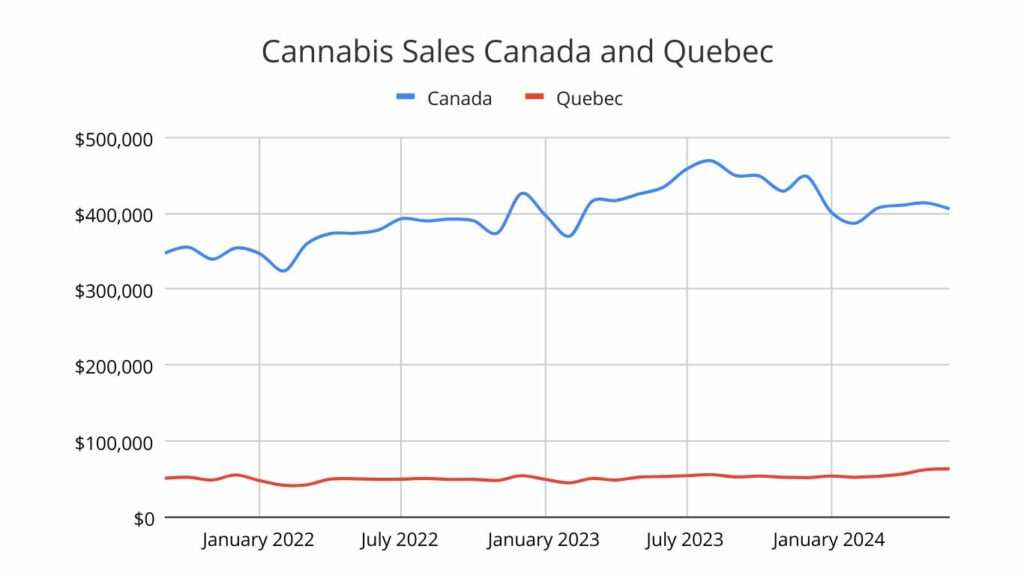
Recent figures from Statistics Canada show retail sales in dollars declining in Canada in 2024, correlating with continued retail price compression and a slowing down of new cannabis stores being opened compared to the first few years of legalization. However, Quebec’s sales were an outlier, showing sales in dollars remaining relatively steadily, with a slight increase in recent months.
Related Articles

by Grow Up Conference | Sep 5, 2024 | Grow Opportunity, Media Partners
(CNW) Calgary – High Tide Inc., the high-impact, retail-forward enterprise built to deliver real-world value across every component of cannabis, announced that its Canna Cabana retail cannabis store located at 389 Main Street, Lucan, Ontario will begin selling recreational cannabis products and consumption accessories for adult use tomorrow, September 6. This opening will mark High Tide’s 183rd Canna Cabana branded retail cannabis location in Canada, the 69th in the province of Ontario, and will be the first licensed retail cannabis store to open in Lucan.
The store, roughly halfway between the major university and college hub of London, Ontario and the popular beach town of Grand Bend, is in Lucan, Ontario and nestled amongst the scenic farmlands of Southwestern Ontario. This organic Canna Cabana location will open in a brand-new and rapidly growing retail plaza, with anchor tenants that include a major provincial grocery chain, a Canadian discount retailer, and several quick-service restaurants.
“I am thrilled to announce the opening of our new Cabana in Lucan, Ontario. Expansion into Ontario’s cottage country and other underserved areas has been a large focus for High Tide this year, as we have seen demand increase for our Cabana Club. While some of our competitors file for bankruptcy protection, our team has been charting a thoughtful path towards 300 Canna Cabana locations across Canada,” said Raj Grover, founder and CEO of High Tide.
“September is already off to a great start, with the successful launch of Canna Cabana’s next-gen website and our upcoming third fiscal quarter filing. I am enthusiastic about the remainder of 2024 as we put the finishing touches on new organic store openings and other exciting projects in our pipeline, about which I hope to share more details soon,” added Mr. Grover.
Employee stock options grant
In addition, High Tide announces the grant of 60,000 incentive stock options and 50,000 in cancellations to various employees, consultants and management of the company. Each Option is exercisable at the closing price of the Company’s common shares listed on the TSX Venture Exchange based on the last trading day immediately prior to this press release, which expires three years from the date of grant, and vests over a two-year period. Each Option is exercisable to purchase one common share of the company and are being issued pursuant to the terms of the company’s Omnibus Plan, which became effective on June 2, 2022.
by Grow Up Conference | Sep 5, 2024 | Extraction Magazine, Media Partners
When it comes to smoking devices, the method of smoke filtration can play a crucial role in the overall experience and perceived smoothness of each hit. Among the various smoking tools available, bongs stand out for their unique filtration capabilities. Unlike traditional pipes or other devices, bongs are designed with water chambers that may effectively filter and cool the smoke before inhalation.
This filtration process begins as smoke passes through the water, which acts as a natural filter, trapping heavier particles and water-soluble molecules. As a result, the smoke that reaches the user is often cooler and smoother compared to direct inhalation from a pipe. This cooling effect can reduce the harshness of the smoke, making it more enjoyable for users.
Compared to other smoking devices like joints or blunts, bongs can provide a cleaner and potentially harm mitigated smoking/vaping experience by filtering out some of the harmful substances present in smoke. This aspect makes them a preferred choice for many smokers who prioritize smoother hits and reduced irritation to the throat and lungs.
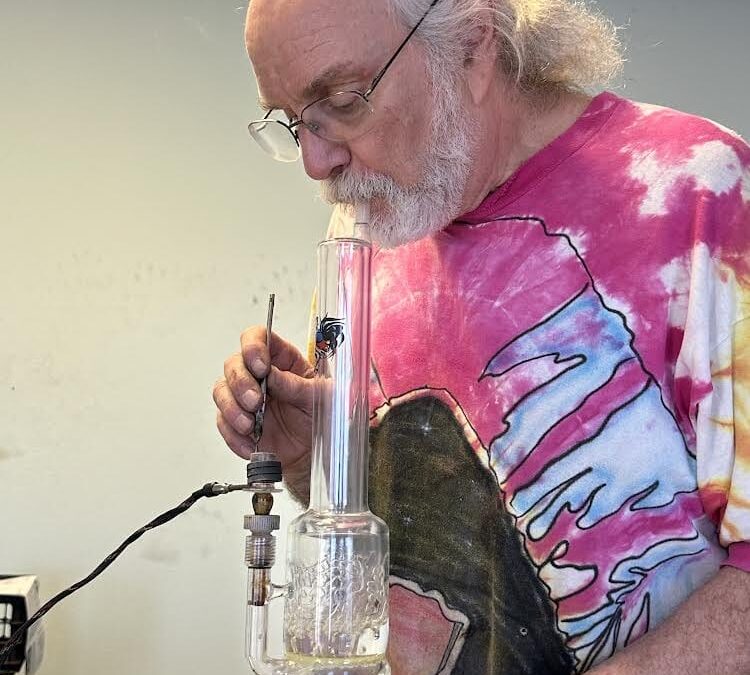
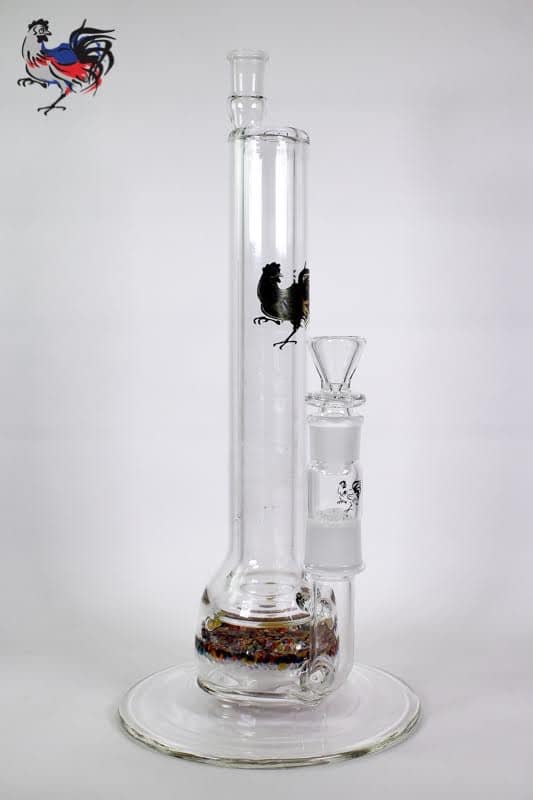
We will discuss this topic with Mr. David Goldstein, one of the most prolific designers in the history of glass smoking accessories, inventor of the Rooster apparatus and founder of the Precision Glassware inc. Dave gained extensive experience with laboratory glassware during his tenure at the University of Maryland’s technical glass shop in 1980.
He understood that for chemists aiming to cleanse gases with liquids, the preferred apparatus was a gas washing bottle equipped with a fritted disc. Mr. Goldstein embarked on a mission to develop a coarse fritted disc capable of functioning at lung pressure, a type not commercially available. In his experimentation, he found that adapting laboratory equipment to function as a water pipe yielded better results than trying to make a water pipe resemble laboratory apparatus.
1. Is smoking cannabis through a bong considered one of the safest methods of consumption?
We can’t make any claims regarding the safety of cannabis consumption. We may surmise that inhaling the gaseous effluent from smoking or vaporizing cannabis will always be more stressful to the body than edibles, though achieving optimal dosage with edibles presents its own set of considerable challenges. In 1963, Surgeon General Luther Terry suggested that water filtration might help mitigate noxious compounds in tobacco smoke. The National Institutes of Health (NIH) never followed up with any in depth research on the topic, but the testing done in support of our patent rather strongly suggests that this is the case, at least for our products.
2. Can you please explain how “Henry’s law” ensures that the cannabis smoke will be “cleaner”?
There is a set of equations known as “Henry’s law”, describing the transfer of soluble materials in a gas to a liquid as a function of the pressure against the bubble at its’ point of formation. The smaller the bubble, the greater force exerted against the liquid, and that “partial pressure” interface is where chemical transfer takes place, if the bubble is small enough so the pressure is high enough.
3. You came out with an inimitable fritted disc in your bongs. How can this water-pipe component ameliorate the quality of the smoke reaching the lungs?
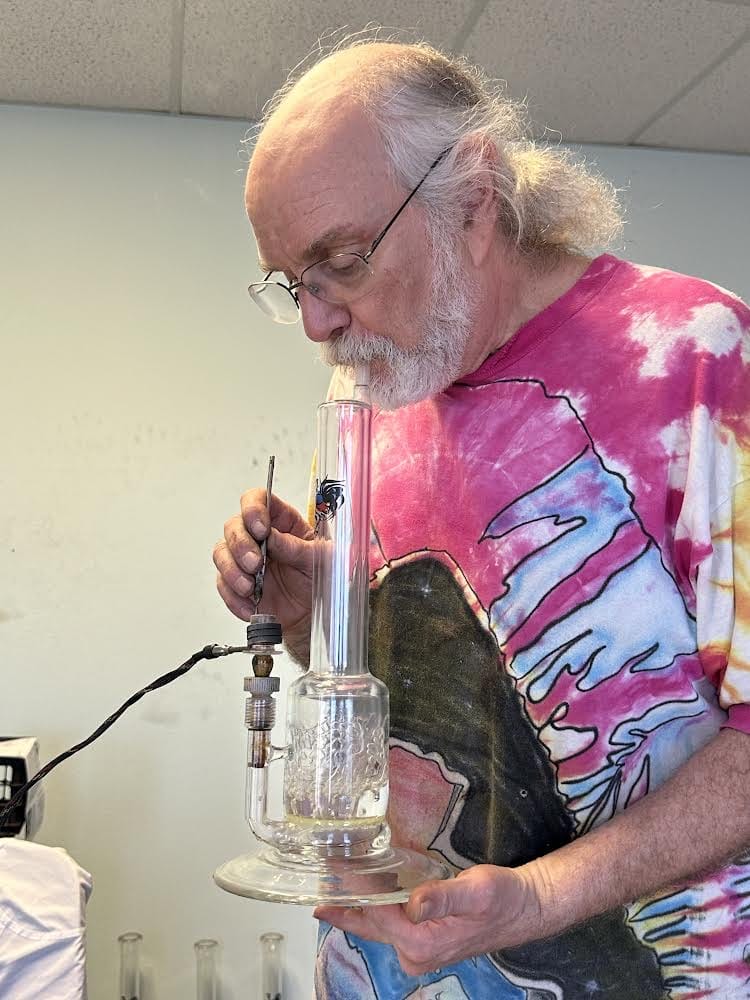
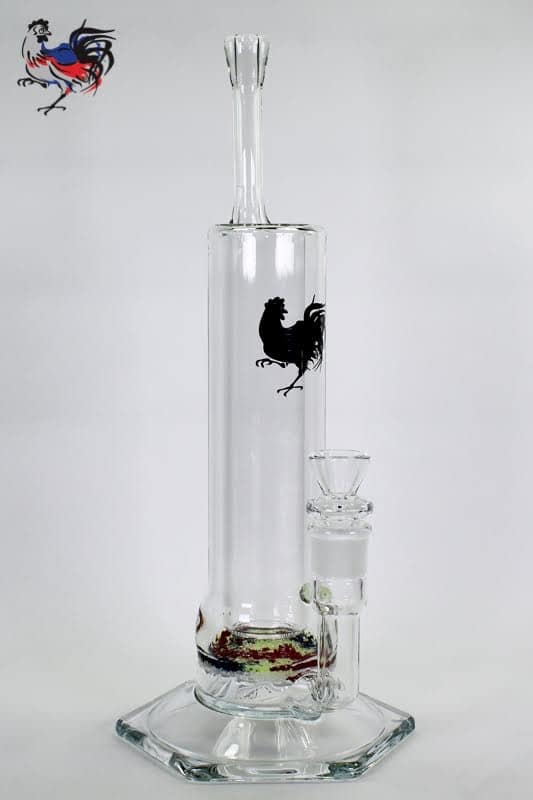
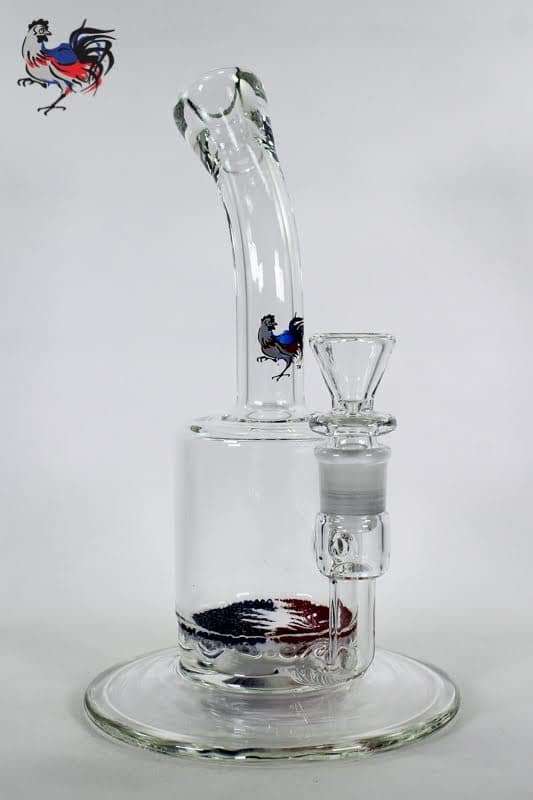
The novelty of Rooster’s fritted disc is that it was developed to work at a lower pressure differential than fritted discs used in laboratories. In laboratory settings, fritted discs are connected to vacuum pumps, which are stronger than our lungs and can generate enough pressure differential/suction to generate the really tiny bubbles that are desirable for laboratory practice. The pores in a rooster disc are much bigger than laboratory-use discs, but they are still apparently small enough to provide some measurable removal of unwanted substances.
Increasing the pore size and area for easy draught for average lungs also makes the disc easily cleaned. Some people cannot grasp that Rooster bubbles start out so small that cold water will condense payload and taste, and clog the disc with it. When cold water is coupled with poor portion control, I am usually blamed for the dabber’s bad technique.
People who make dabs are the perfect influencers to inform people, with authority, that filtration is preferable to condensation, and that single serving dabs, with warm water are virtuous, especially at lower dab temperatures. Head shops don’t spread the truth about this (or Roosters). I appreciate every educated person inclined to speak the truth about this because there is so much dogma to dispel.
4. Do water pipes reduce the cannabinoid content in the smoke that reaches the lungs?
We did our testing with tobacco, so can’t answer that to the letter, but I think we can infer some probabilities common to burning cellulose in both cases.
Tetrahydrocannabinol (THC) is not water soluble, so it’s not going to show up in bong water unless it is condensed out by contact with cold water or cold glass. We did remove some polycyclic aromatic hydrocarbons (PAHs) from the tobacco smoke. It’s possible these originated from burning cellulose and similar results could be expected with cannabis.
5. You conducted experiments comparing three different smoking devices based on their performance, safety, and filtering properties. We found the analysis of the smoke bubbled through water particularly interesting, especially regarding the presence of carcinogenic compounds known to be present in tobacco smoke. Could you please elaborate on this analysis?
Well, again, I am constrained that I cannot make any health claims, but this is a good place to point out that the cited prior art, typical of what’s found in contemporary head shops, showed almost no harm mitigation through water filtration, The significant reductions of particulates and PAH is unique to Roosters.
The Patent & Trademark office asked me to prove that my design had some novelty over prior art.
In this case, much to my delight, they asked me to show how the Rooster was an improvement over the Odyssey Glass Toker 2, which was patented by my old boss/mentor/friend, Roger Graham.
The Toker 2 was an excellent choice for prior art, as the 20 square millimeter opening defined by its 5mm inside diameter stem is so equivalent to the diffusive openings found in most head shop bongs.
One aspect of the testing that seems to indicate greatly superior efficacy of the fritted disc is the turbidity result. After 3 g of tobacco burned, the roosters had about 10x the particulate absorption of the Toker 2. Eventually, particulate absorption dropped off, indicating saturation of the water, and necessity of regular water changes to keep the apparatus at top performance. The Roosters collected the same or more particulate from 2 grams of tobacco than the Toker 2 did from 10 grams.
UV analysis was performed to measure suspension of PAHs in the used water, and revealed that the roosters removed 145-190% more PAHs from 10 grams of tobacco smoke than the Toker 2. This translated to the standard mesh rooster removing 6% of the PAHs from the smoke effluent, while the larger surface area/ finer mesh disc removed 10%.
Additionally, the results of the filter paper analysis showed that the used rooster water had a higher concentration of particulates in the water than the air, which was not the case with the Toker 2, and strong evidence that the Roosters were suspending particulates in the water.
These testing results were recognized by the Patent and Trademark office as a “novel and unexpected result,” which I’m told is their highest compliment.

6. Do you recommend smoking anymore? Have vaporizers evolved to deliver desired dosage and taste without ?
That’s a heavy question! I think everybody, as an individual, has to answer that question for themselves. My personal habit, old geezer that I am, is to take a lot of small dabs with an electric nail set at 610 °F. When on the road, I have a Puffco “Proxy” rig, also used at 610°F. My friends all like the Proxy rig better than my plug-in rig because It doesn’t have a junkie vibe. The vaporizer works on a 45 second timer, encouraging users to inhale for either 22 or 15 seconds, encouraging the user to make efficient use of lung capacity. This vaporizer, in my opinion, works better than any terp slurper.
Recent technology for vaping plants is comparably good to recent technology for vaping concentrates. I’ve been using a 14mm cartridge system for vaping plant, a Finnish gizmo called Tiny Mite. It works quite well. Not burning the cellulose in plant achieves the same practical end as eliminating it by extraction. I made a prototype fritted disc accessory for it that works really well, and looks pretty cool. I can see that coming out in the not too distant future.
I don’t think people need to smoke anymore, but many will for a long time, and given them harm associated with that practice, Roosters merit their consideration.
7. Some people consider dabbing the way to get the maximum out from cannabis and extraction derivatives, while avoiding combustion-byproducts from flaming cellulose. What do you think about this?
The popular practice of slapping a carb cap on an oversized dab and taking a bunch of increasingly played out hits is poor technique. Sadly, an entire industry of dysfunctional glass/quartz ware has grown up around it. I suspect that the unnaturally high dosage of terpenes and thiols in the first pull off a half-gram dab will eventually cause the sort of damage techs doing extractions wear solvent respirators to avoid. I think this will become evident in 30 years. In the meantime, I recommend 20-30 dabs/gram. That’s been my dosage regimen since 2012 and I can still ride my bike and hit the gym as a senior citizen.
The best practice for dabbing from laboratory perspective, is to size your dab appropriately to your lung capacity, so that you inhale the lion’s share of a dab in one inspiration. This leaves only a tiny amount of reclaim, which the most conscientious dabbers will remove with a cotton swab. The particulate residue left over from evaporated dabs is a taste killer. Swift removal is a good practice.
Once the dab is vaporized, and starts its route to lungs and brain, the best practice is to filter it with a fritted disc and warm water, which will discourage condensation of flavor and payload while removing particulates and PAHs. Inhaling the dab to the full extent of one’s lung capacity also gives the payload time and lung exposure to migrate from the lungs to the brain.
I have watched innumerable videos of influencers using “terp slurps” with a variety of spinning toys and caps. Invariably, they load grossly oversized dabs , and blow the green hit out after about 4 seconds because they’ve used up all their lung capacity spinning toys around. They then proceed to take 3-4 hits of reclaim, after blowing out about ten hits of terpenes and thiols out after the first few seconds.
Taking oversized dabs causes fractional distillation. This results in unnatural concentration of temps and thiols in the first hit, and complete deficit in subsequent hits. Taking oversized dabs and immediately blowing out the best part is kind of an insult to the oil, which is best appreciated a single serving.

8. The market for cannabis concentrates, including those used for dabbing, has expanded with advancements in extraction technologies and consumer demand for more potent products. What are the risks associated with this?
Cannabis has proven itself remarkably non-toxic over thousands of years of cultivation and use. There’s some statistical suggestion that daily cannabis use is now eclipsing daily alcohol use. I think that as intoxicant market share is taken from alcohol and tobacco, the overall social result is positive. I think that edibles are probably the most potentially problematic segment of the cannabis extract industry. I probably don’t know a single stoner who hasn’t passed out on a brownie once, myself included. That is potentially a problem both with driving and parenting.
I think that consumer demand for more exotic cannabis extracts is going to come at the expense of demand for high end liquor, and will ultimately result in minor, but widespread harm reduction.
With regards to dabbing specifically, I think there are a couple cautionary notes. I’ve read that it’s become common practice in extraction labs now to wear solvent respirators around evaporating terpenes. When dabbers with bad technique throw a half a gram or more into whatever quartz they use, they’re doing a fractional distillation, and that first hit has an order of magnitude more terps and thiols than the second hit that follows a few seconds later. I am personally a little suspicious that such practice might be too much of a good thing, and perhaps being harmful in the long term, while effective (though inefficient) in the short term.
9. With the increasing popularity of cannabis concentrates, how do you see the evolution of dabbing devices like slurpers and quartz bangers impacting the market for traditional bongs?
I think that the whole culture of heady glass had its’ swan song with quarantine, and has been in contraction since we reopened. I don’t think it has anything to do with changing product lines in head shops. I think the whole culture of head shops and heady glass isn’t translating to a culture of young stoners who are buying cannabis from the dispensary instead of the plug. Dispensaries commonly offer some Chinese accessories, bongs, pipes, vaporizers that offer pretty good value. Going to the head shop is less fun than going to the dispensary, and patronizing head shops isn’t a high priority for younger stoners. Pardon the pun.
10. When considering recommendations for future generations regarding cannabis consumption, what would you suggest?
Wow, that is a really great question, thank you for asking!
- First of all “Emancipate yourself from mental slavery.”
Get educated! Learn basic math, science, and critical thinking. Recognize that corporatization of cannabis came along with legalization, and that corporatization isn’t always a good thing. Cannabis is good for thinking outside the box, which is where you see the big picture. Retire the stereotype of the dumb stoner.
- Vape
- Grow your own plants, if your state allows it.
- Grow outdoors if possible.
- Learn how to roll a joint. Smoke one occasionally.
- Learn and honor the history and culture of cannabis. A lot of people made some pretty big sacrifices to get us where we are. We stand on their shoulders and owe them their place in history.
by Grow Up Conference | Sep 5, 2024 | Cannabis News Wire, Media Partners
- Lexaria, a global innovator in drug delivery platforms, has just announced its 4-week and 8-week blood glucose results from its WEIGHT-A24-1 animal study
- Two formulations from the study posted outstanding performance, with each utilizing the company’s patented DehydraTECH(TM) technology
- DehydraTECH-liraglutide (Group H) and two DehydraTECH-CBD formulations (Groups A & B) posted blood sugar level reductions of 2.50%, 1.90%, and 1.53%, respectively
- These results build on the positive results from Lexaria’s 2023 DIAB-A22-1 animal study, which showed a 16.7% blood sugar concentration increase relative to baseline by day 56 for the obese control group that got no treatment
Lexaria Bioscience (NASDAQ: LEXX), a global innovator in drug delivery platforms, just announced its 4-week and 8-week blood glucose results from its WEIGHT-A24-1 animal study (the “study”). This study will examine diabetes and weight loss effects of DehydraTECH-processed GLP-1 drugs and DehydraTECH-processed cannabidiol, alone and in combination . The ongoing study uses diabetic, pre-conditioned Zucker rats, falling in one of three study arms, with dosing lasting 12 weeks (https://cnw.fm/1u3Rj).
Two formulations posted outstanding performance from the study as of day 56 – DehydraTECH-liraglutide (Group H) and two DehydraTECH-CBD formulations (Groups A & B). Most notably, they each posted blood sugar level reductions of 2.50%, 1.90%, and 1.53% respectively. DehydraTECH-liraglutide specifically saw a -2.08% change as of day 28 and a -2.50% change as of day 56 in what Lexaria’s management described as “extremely interesting.”
For Lexaria, these results build on the positive results from its 2023 DIAB-A22-1 animal study, which showed a 16.7% blood sugar concentration increase relative to baseline by day 56 for the obese control group that received no treatment. For the current study, each of the eight active groups of animals either experienced a smaller increase or an actual decrease in blood sugar level relative to baseline compared to the obese control group in the previous study.
The ongoing study featured eight groups. Groups A through D were administered with different DehydraTECH-CBD compositions. Groups E and F utilized reformulated Rybelsus DehydraTECH compositions, whereas groups G and G used pure glucagon-like peptide-1 (“GLP-1”) drugs semaglutide and liraglutide respectively in DehydraTECH compositions. Additional results from this study are expected soon. However, Lexaria’s management remains optimistic that it will replicate both the interim and previous results, ultimately demonstrating the superiority of its DehydraTECH technology.
The global diabetes treatment market was valued at $79.25 billion in 2023. It is projected that by 2032, it will have surpassed $153 billion in valuation, mainly influenced by the growing prevalence of the condition and the increasing demand for effective drug therapies (https://cnw.fm/WhvWz). For the longest time, treatment options have involved painful injections, which, to many, have been a source of discomfort and, to some, an outright deterrent. Lexaria looks to carve out a piece of the diabetes treatment market share by offering an oral alternative and is banking on its DehydraTECH technology to achieve that. Its previous and ongoing studies are a testament to its commitment to this goal and its pledge to creating shareholder value.
For more information, visit the company’s website at www.LexariaBioscience.com.
NOTE TO INVESTORS: The latest news and updates relating to LEXX are available in the company’s newsroom at https://cnw.fm/LEXX
About CannabisNewsWire
CannabisNewsWire (“CNW”) is a specialized communications platform with a focus on cannabis news and the cannabis sector. It is one of 60+ brands within the Dynamic Brand Portfolio @ IBN that delivers: (1) access to a vast network of wire solutions via InvestorWire to efficiently and effectively reach a myriad of target markets, demographics and diverse industries; (2) article and editorial syndication to 5,000+ outlets; (3) enhanced press release enhancement to ensure maximum impact; (4) social media distribution via IBN to millions of social media followers; and (5) a full array of tailored corporate communications solutions. With broad reach and a seasoned team of contributing journalists and writers, CNW is uniquely positioned to best serve private and public companies that want to reach a wide audience of investors, influencers, consumers, journalists and the general public. By cutting through the overload of information in today’s market, CNW brings its clients unparalleled recognition and brand awareness. CNW is where breaking news, insightful content and actionable information converge.
To receive SMS alerts from CNW, text CANNABIS to 888-902-4192 (U.S. Mobile Phones Only)
For more information, please visit https://www.CannabisNewsWire.com
Please see full terms of use and disclaimers on the CannabisNewsWire website applicable to all content provided by CNW, wherever published or re-published: https://www.CannabisNewsWire.com/Disclaimer
CannabisNewsWire
Denver, CO
www.CannabisNewsWire.com
303.498.7722 Office
Editor@CannabisNewsWire.com
CannabisNewsWire is powered by IBN

by Grow Up Conference | Sep 5, 2024 | Media Partners, Psychedelic News Wire
Recently conducted research may have found new approaches to treat alcohol-use disorder. One study determined that administering psilocybin is both effective and safe in decreasing the consumption of alcohol in patients with alcohol-use disorder. This study examined 10 adults with severe alcohol use disorder during the 12-week research period.
For their open-label study, investigators at the University of Copenhagen administered one 25mg psilocybin dose to each participant. They observed that the consumption of alcohol by participants reduced significantly, with most of them consuming fewer drinks and craving alcohol less following the treatment.
In their report, the researchers explained that the participants also reported that their confidence in their ability to avoid alcohol had increased.
Individual analyzes show that at week four, nine of the participants considerably decreased drinks consumed daily, with seven of the participants still reporting considerable reductions in drinks consumed daily at the 12-week mark.
In addition, the investigators observed no consequential changes in measures of trait mindfulness, psychological flexibility, or depressive symptoms. They then noted that their findings aligned with existing data, reinforcing the potential benefits of this therapeutic approach.
The study had some limitations, however, including the lack of blinding or a control group, as well as a small sample. The investigators argued that this prevented any causal conclusions on effectiveness to be made.
Furthermore, selection bias due to high expectations from positive media coverage and self-referral may have partly influenced the observed effects. The investigators noted that this highlighted the need for larger, placebo-controlled, single-dose trials to establish firm conclusions.
The research, coauthored by NIDA director, Nora Volkow was reported online at Research Square.
A separate study concluded that classic psychedelics such as LSD and psilocybin had shown potential in treating drug addiction, particularly alcohol-use disorder. For their study, researchers at the University of Southern Sata Catarina conducted an analysis of prior studies into classic psychedelics, concluding that the drugs had shown potential in the treatment of drug addiction.
In their report, the scientists stated that the substances worked mainly be modulating neuroplasticity in the brain, noting that serotonergic psychedelics needed to be considered as treatment options to manage drug-use disorders because they didn’t produce withdrawal symptoms or physical dependence with repeated use.
The researchers did caution that psychedelic-assisted therapies weren’t effective for all patients. They also highlighted the need for further research using experimental protocols and different doses to be carried out to add to evidence on psychedelic drugs.
The researchers published their findings in the “Progress in Neuro-Psychopharmacology and Biological Psychiatry” journal.
Other companies, such as Seelos Therapeutics Inc. (NASDAQ: SEEL), are also conducting their own psychedelic drug development programs with a focus on psilocybin and other hallucinogenic compounds. In time, some of these drug candidates could hit the shelves after going through the regulatory approval process.
About PsychedelicNewsWire
PsychedelicNewsWire (“PNW”) is a specialized communications platform with a focus on all aspects of psychedelics and the latest developments and advances in the psychedelics sector. It is one of 60+ brands within the Dynamic Brand Portfolio @ IBN that delivers: (1) access to a vast network of wire solutions via InvestorWire to efficiently and effectively reach a myriad of target markets, demographics and diverse industries; (2) article and editorial syndication to 5,000+ outlets; (3) enhanced press release enhancement to ensure maximum impact; (4) social media distribution via IBN to millions of social media followers; and (5) a full array of tailored corporate communications solutions. With broad reach and a seasoned team of contributing journalists and writers, PNW is uniquely positioned to best serve private and public companies that want to reach a wide audience of investors, influencers, consumers, journalists and the general public. By cutting through the overload of information in today’s market, PNW brings its clients unparalleled recognition and brand awareness. PNW is where breaking news, insightful content and actionable information converge.
To receive SMS alerts from PsychedelicNewsWire, text “Groovy” to 888-902-4192 (U.S. Mobile Phones Only)
For more information, please visit https://www.PsychedelicNewsWire.com
Please see full terms of use and disclaimers on the PsychedelicNewsWire website applicable to all content provided by PNW, wherever published or re-published: https://www.PsychedelicNewsWire.com/Disclaimer
PsychedelicNewsWire
San Francisco, CA
www.PsychedelicNewsWire.com
415.949.5050 Office
Editor@PsychedelicNewsWire.com
PsychedelicNewsWire is powered by IBN






Recent Comments