(CNW) Pickering, Ont. – MTL Cannabis Corp. is pleased to report it has filed the financial statements as at and for the three-month period ending June 30, 2024, and 2023.
First Quarter 2025 Consolidated Financial Highlights for MTL:
Income Statement:
Revenue of $25,842,264, an improvement of $8,978,969, or 53%, compared to $16,863,295 in the same quarter of last year.
Net Revenue of $20,721,232, an improvement of $7,957,445, compared to $12,763,787 in the same quarter of last year.
Gross margin before fair value adjustments of 54%, an increase of 16%, compared to 38% in the same quarter of last year.
Operating Income of $4,963,969, an improvement of $4,364,370, compared to $599,599 in the same quarter of last year.
Net Income and Comprehensive Income of $2,206,313, an improvement of $2,393,161, compared to a loss of ($186,848) in the same quarter of last year.
Statement of Cash Flows:
Net cash inflows from operating activities of $5,602,954, compared to $2,140,029 in the same period of last year.
Net cash used in investing activities of ($1,924,128), compared to ($318,847) in the same period of last year.
Net cash used in financing activities of ($2,774,581), compared to ($1,291,189) in the same period of last year.
Overall net cash increased to $2,256,380, an improvement of $904,245, from $1,352,135 at the beginning of the period.
Additionally, the company was able to demonstrate retained earnings of $1,545,148, compared to an accumulated deficit of ($614,165) in the same period of last year.
Management Commentary:
“We are incredibly proud of our team and the progress we have made as a company,” said Michael Perron, CEO of MTL. “We look forward to continuing to deliver best in class products and services to our incredible customers and patients.”
Cannabis retailer Tokyo Smoke says it will be shuttering 29 of its stores as it seeks creditor protection.
The closures are part of a restructuring the brand is carrying out under the Companies’ Creditors Arrangement Act.
Tokyo Smoke says the moves are meant to better align its operations with the current cannabis market and regulatory conditions, which the company says have changed “significantly.”
Some 167 locations across Ontario, Manitoba, Saskatchewan and Newfoundland and Labrador will remain open amid the restructuring.
OEG Retail Cannabis, a company run by the owner of the Edmonton Oilers hockey team, bought the Tokyo Smoke brand from pot giant Canopy Growth Corp. in September 2022.
Since that deal was signed, the cannabis market has struggled as the number of retailers has soared and the price of pot has dropped.
This report by The Canadian Press was first published Aug. 28, 2024.
The U.S. Department of Agriculture is in charge of certifying products as organic. This certification, created more than two decades ago, is what allows businesses to use the word “organic” on their products. The certification of marijuana products as organic is currently up for debate. Some stakeholders agree that the U.S. Department of Agriculture can’t certify any product that is illegal under federal law.
Despite the fact that 38 states have legalized the medical use of marijuana while 24 have legalized the drug’s recreational use, the drug is still classified under schedule I of the Controlled Substances Act. Drugs under this classification are illegal, said to have a high potential for abuse and no accepted medical use. Other drugs under this category include LSD, MDMA, heroin, peyote and ecstasy.
Clean Green Certified director, Chris Van Hook, argues that because of this, the agriculture department won’t have anything to do with marijuana. Clean Green Certified is accredited by the department to develop a program to help products as well as farms acquire a sustainable certification based on global and national organic, sustainable and regenerative programs.
Growers have tried to circumvent this issue with certification in different ways, with states such as Vermont, Maine, Colorado and California rolling out organic cannabis-certification programs that allow businesses to award their stamps to cannabis businesses.
Well-known private certifiers of organic marijuana include Clean Green, Dragonfly Earth Medicine Pure, and Sun and Earth. The issue, however, is that not many consumers know what being certified by these companies means because organic isn’t on the label.
Ben Gelt, the Cannabis Certification Council’s board chair, says that the department doesn’t directly certify products as organic. Instead, he notes, this is done by third-party organic certifiers accredited by the department of agriculture. He explains that this certification by the Department of Agriculture allows products such as baby food to be sold at higher prices, because it adds to the value of a product. This, he argues, hasn’t been observed in companies that bear marijuana certifications to replace organic.
Not all agree with Gelt, however. Van Hook asserts that his and other organic certifications do bring value to marijuana products, revealing that in 2023, Clean Green certified more than 400,000 pounds of marijuana flower and trim. He refers to this as growth, adding that he remains focused on helping members sell their products at good prices.
This, Van Hook explained, could be done by growers posting the logo on their marketing materials and products more frequently. In addition to making these certification logos more recognizable by consumers, who will then associate the products with organic, it’s good advertising.
Many more innovative solutions are likely to be brought to market targeting major cannabis companies such as Trulieve Cannabis Corp. (CSE: TRUL) (OTCQX: TCNNF) that are seeking new ways to continue thriving despite the stifling regulatory environment at the federal level.
About CannabisNewsWire
CannabisNewsWire (“CNW”) is a specialized communications platform with a focus on cannabis news and the cannabis sector. It is one of 60+ brands within the Dynamic Brand Portfolio @ IBN that delivers: (1) access to a vast network of wire solutions via InvestorWire to efficiently and effectively reach a myriad of target markets, demographics and diverse industries; (2) article and editorial syndication to 5,000+ outlets; (3) enhanced press release enhancement to ensure maximum impact; (4) social media distribution via IBN to millions of social media followers; and (5) a full array of tailored corporate communications solutions. With broad reach and a seasoned team of contributing journalists and writers, CNW is uniquely positioned to best serve private and public companies that want to reach a wide audience of investors, influencers, consumers, journalists and the general public. By cutting through the overload of information in today’s market, CNW brings its clients unparalleled recognition and brand awareness. CNW is where breaking news, insightful content and actionable information converge.
To receive SMS alerts from CNW, text CANNABIS to 888-902-4192 (U.S. Mobile Phones Only)
Please see full terms of use and disclaimers on the CannabisNewsWire website applicable to all content provided by CNW, wherever published or re-published: https://www.CannabisNewsWire.com/Disclaimer
Started as a passion project between friends after post-secondary, Vancouver’s Cannabis Training Canada Inc. (CTC) has grown over the last several years into one of the premier e-learning providers in the Canadian cannabis space.
The company was first launched in 2016 with a goal of providing training tailored for the soon-to-be legal retail sector. It has evolved into relationships with provincial governments, private retailers, and producers to curate tailor-made training programs developed in-house by the CTC team.
“Our team consists of industry experts and adult learning specialists who understand the nuances of Canadian cannabis, its trends, and the regulations specific to each province.”
Their most recent announcement was their entrance into the Ontario market when CTC received approval from the Alcohol and Gaming Commission of Ontario (AGCO) for the CTC 1: Retail Certification Program in August 2024. And prior, the company has a proven track record working with the BCLDB, the Government of Nunavut, and the NSLC, as well as training thousands of staff for private retailers, as well as producers and brands in all major markets in Canada.
While there are other companies offering training options, the CTC sets itself apart with a grassroots approach to the industry.
“What sets us apart from many competitors is the hands-on experience of our team members,” says Zane Yassein, co-founder and director of business development. “They have worked with various licensed producers, accessory companies, and other cannabis-related businesses, giving us a unique and practical perspective on the industry.
“Our team consists of industry experts and adult learning specialists who understand the nuances of Canadian cannabis, its trends, and the regulations specific to each province. We understand how to take this information and present it in a way that’s engaging and digestible.”
Another way that CTC sets itself apart from other businesses offering training options is its understanding of the nuances of the Canadian market and how to deliver a quality training program.
While cannabis-focused companies might understand the industry, Yassein explains, they often lack the technical support or the robust framework of traditional learning management systems (LMS). On the other hand, companies with experience delivering educational tools might use outdated platforms for the cannabis industry or not understand the unique needs of different provincial markets and regulations.
“Cannabis education in Canada is quite fragmented, with a mix of different companies trying to deliver in the space. You usually find cannabis companies attempting to provide education or education companies trying to deliver cannabis content,” says Yassein. “This often means one aspect of the training falls short.
“CTC aims to bridge this gap by combining the comprehensive capabilities of a full-service LMS with the firsthand experience of cannabis industry veterans.”
In addition to training for retailers, CTC also provides training for cannabis producers and brand houses who need to bring staff up to speed on not only several layers of rules and regulations but also an up-to-date understanding of the market itself.
“We address these challenges by offering brands and LPs the ability to create tailored training programs for their products. These programs are then automatically delivered to retail staff across Canada.”
CTC can then leverage their extensive experience working with different retailers to offer unique insight into how cannabis brands can engage with those same retailers.
“We have access to retail employees at some of the largest retailers in Canada, and our user base grows daily. This active and expanding user base allows for immediate access to brand education and provides an easy way to track who has completed the training.
“On the education front specifically, establishing a nationwide standard for training is the best way to ensure effective and responsible cannabis retail sales. We’re also gearing up to promote our brand-specific training programs to both LPs and our existing user base. We provide access to thousands of retail staff across Canada, including all 500+ employees at BCLDB BCCS stores, Ontario retail staff, and other markets we operate in.
“Our aim is to offer brands and LPs a low-cost solution to create and deliver training to their staff.”
That decision at the time was largely informed by Heritage’s senior secured lender, BJK Holdings Ltd., demanding payment in full of $8.4 million owed by the Heritage group.
In April, the court also approved a stalking horse subscription agreement among Heritage and Heritage West, as vendors, BJK, and HAB Cann Holdings Ltd. as purchaser.
The President of Hab Cann is listed as one David Thiessen. A person by the same name is listed as working at BJK in a press release in 2021.
The common shares of Heritage were delisted from the Canadian Securities Exchange at the close of business on August 26, 2024, and from the OTC Pink at the close of business on August 28, 2024.
The purchased entities are Heritage Cannabis Holdings Corp., Heritage Cannabis West Corporation, Heritage Cannabis East Corporation, and Purefarma Solutions Inc.
The Heritage Group lists some $25.3 million in secured and unsecured debt to more than 200 creditors, including $6.8 million owed to BJK Holdings, and nearly $13.4 million to the Canada Revenue Agency for excise and sales tax.
The principal terms of the stalking horse agreement says the purchaser, Hab Cann, will “determine which employees it will assume and employ prior to Closing. In the event that no conditional offer of employment is made to an employee or an employee who receives an offer of employment rejects such offer, such employee shall be deemed to be a “Terminated Employee”.”
The purchase price include a call for a release of “all amounts outstanding and obligations payable by the applicants under the Senior Loan Agreement and all related loan and security documents, which amount as of June 14, 2024 was $6,837,059.71 (excluding legal fees and expenses).”
Nextleaf Solutions brought in over $4 million in revenue in their most recent quarterly report for the three months ending June 30, 2024, with $884,344 in gross profit but a $317,264 loss.
Total revenue increased significantly from the same period last year when the company brought in about $2.7 million in revenue. Still, losses were up considerably compared to the $419,875 in profit the company reported in Q3 2023.
Nextleaf says the increase in losses was primarily due to “significant share-based payment expenses” totalling approximately $914,000, and “the overall economic environment” as market conditions softened, consumer spending slowed, and operating costs increased. Revenue growth is attributed to expanded product reach and an increase in distribution channels.
The company reported incurring $961,484 in excise duties from their $4 million in sales.
“We’re entering a new phase of our long-term growth strategy,” says Emma Andrews, Interim Nextleaf CEO. “We are committed to building a sustainable legacy and this involves expanding our marketing tactics, investing deeper into inventory, innovation, and product development to remain competitive. Staying true to our DNA we are uncompromising on quality.”
“Building equity through consumer brands takes time. I’ve led teams through a 10x scale-up before and understand the patience, resilience, ingenuity, and stamina required to make it happen. Our Q3 results show the incremental progress made in a few short months, and the exponential potential ahead of us as we continue to scale.”
Nextleaf introduced five new products in the most recent quarter, including Glacial Gold CBN:CBD 10:10 Softgels 10-pack, Atmosphere Twisted Citrus All-in-One 2g Vape, Pure Distillate Banger All-in-One 1g Vape, alongside Crafty Cuts dried craft flower and Crafty Cuts Sampler Prerolls under the brand Miracle Valley.
For the nine months ending June 30, 2024, the company brought in $12.8 million in revenue from wholesale sales. Over half of this ($7.4 million) was sold in BC, while another $5.3 million was sold into the rest of Canada.
The company plans to release a comprehensive update within the next 30 days relating to market and consumer insights, additional product launches expected in 2024, and SKU performance metrics in various regions.
Cannabis retailers and producers are gearing up for the highly anticipated Summer Sesh industry networking conference in Richmond, BC, from September 12-14.
The packed three-day event features presentations, panel discussions, and a B2B Networking party on Thursday evening. There will be a consumption-friendly Direct Delivery Speed Networking session for producers and retailers, and an exclusive “block party” featuring over 30 brands, indoor vape consumption, movie theater, art market and food trucks on Friday evening. Topics will cover a variety of current issues facing the BC and national market, including financial issues, direct delivery, farmgate, sampling, Indigenous business, and more.
The Lipont Building is located just below the Aberdeen Skytrain Station, a short ride from locations across the Lower Mainland, including Vancouver International Airport.
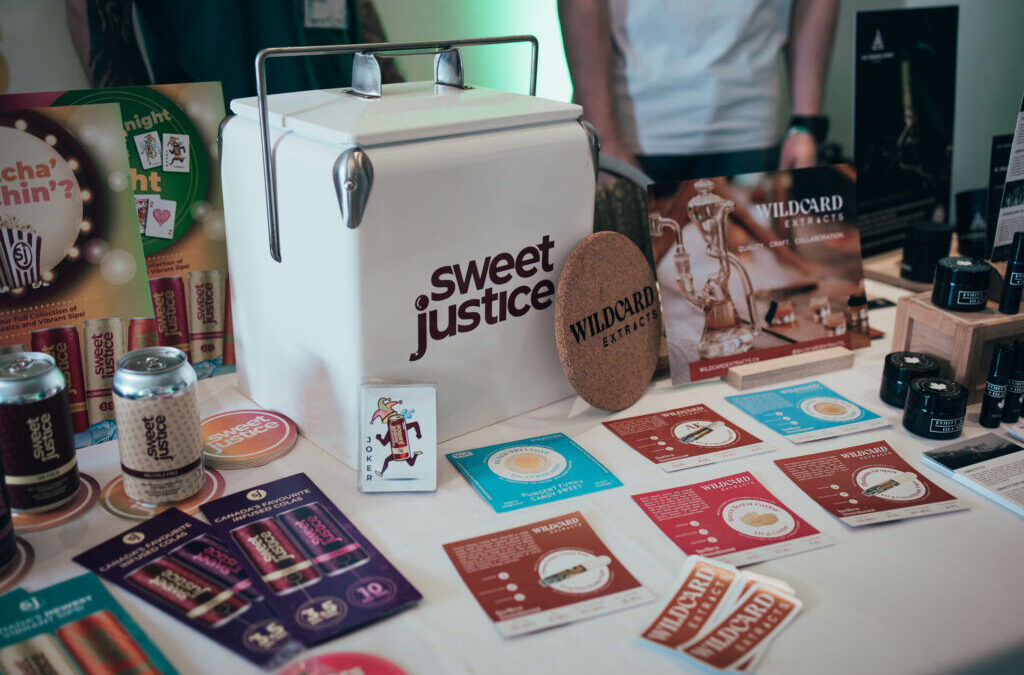
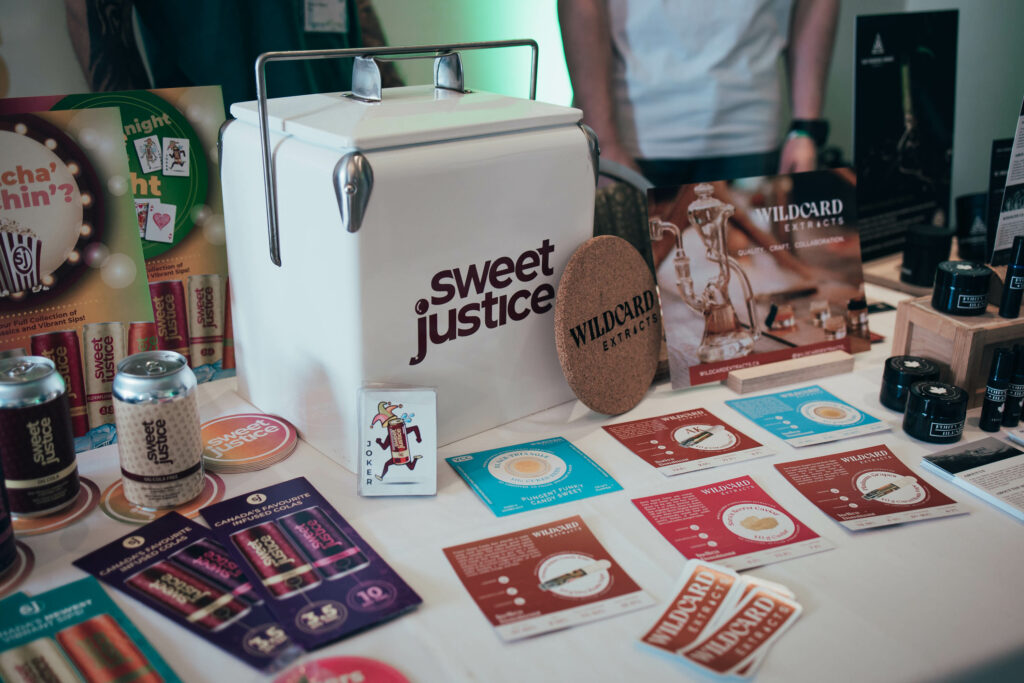
Attendees can dive into the Sweet Justice Bevvy Bar and the HOWBOUTTHIS Dab Bars, sampling and consumption, food trucks, and more.
The LRCCBC also notes that the BC government’s Liquor and Cannabis Regulation Branch (LCRB) will be present, just in time for the upcoming BC election.
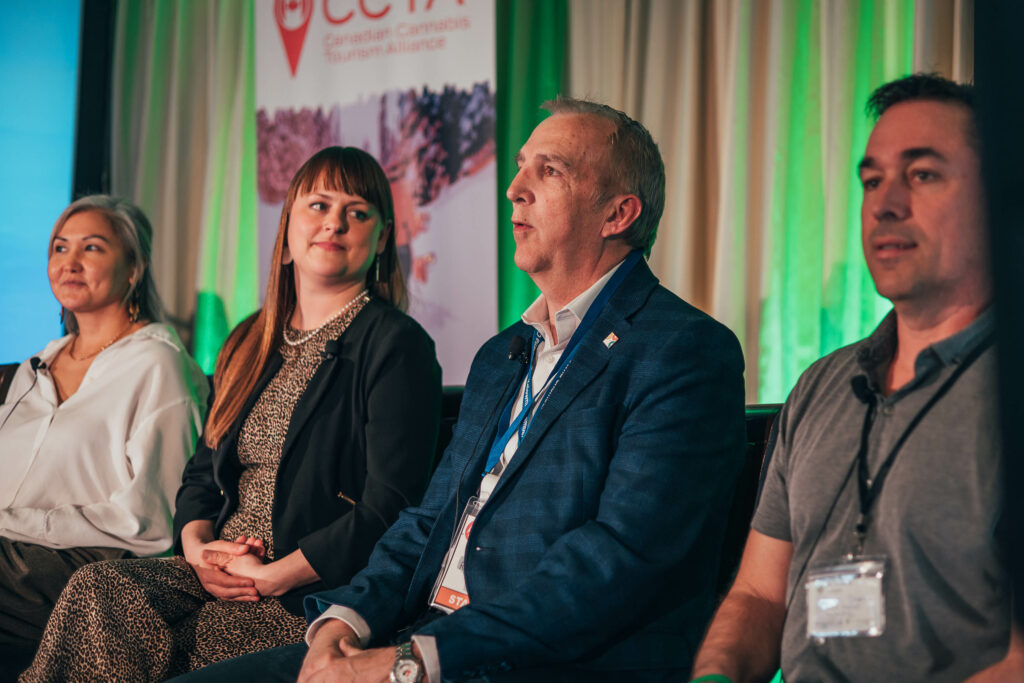
“The Directors at Licensed Retail Cannabis Council of BC are thrilled to co-host our upcoming cannabis industry conference, Summer Sesh,” says Jaclynn Pehota, executive director for the LRCCBC.
“It’s a fantastic group of brands and individuals supporting this initiative and indoor vapor brings consumption and tourism discussions to the forefront.” says Brittney Guthrie, Founder of HOWBOUTTHIS Events.
“Additionally, we are pleased to facilitate a regulatory conversation from the team at LCRB during the event. Summer Sesh represents a significant opportunity for our association to foster collaboration, share insights, and drive meaningful dialogue with government regulators. We are excited to bring together industry leaders and policymakers to shape the future of cannabis and continue advancing our sector with innovation.”
Sarah Campbell, Director of the Craft Cannabis Association of BC, says the event is a chance for the industry to let their hair down following a very challenging few years.
“It has been a difficult couple of years,” says Campbell. “CCABC is excited to bring stakeholders together from all corners of the industry for networking, support, learning and fun. There is a little something for everyone at the Summer Sesh.”
“It’s a fantastic group of brands and individuals supporting this initiative and indoor vapor brings consumption and tourism discussions to the forefront.” says Brittney Guthrie, Founder of HOWBOUTTHIS Events.
Dallas voters will have the opportunity to decide in November whether or not the city should decriminalize cannabis. The city’s council decided on Aug. 14, 2024, to add the Dallas Freedom Act to the ballot for the upcoming Nov. 5 election. Local proponents of cannabis reform are leading this effort to loosen the rules governing adult possession of marijuana.
The push for reform is led by Ground Game Texas, a nonprofit organization focused on social justice. The group gathered nearly 50,000 signatures from residents, far exceeding the 20,000-signature threshold needed to get the measure on the ballot.
The measure would forbid police from arresting or ticketing people for having less than four ounces of cannabis in their possession. Possession of two to four ounces of cannabis is currently regarded as a class A misdemeanor in Texas, which carries a maximum one-year jail sentence. Possession of less than two ounces results in a class B misdemeanor, and the punishment is up to 180 days in jail.
Other key provisions within the proposal include:
Except for felony investigations, Dallas police would no longer be permitted to use the scent of hemp or cannabis as justification for searching or seizing property.
Except for the restricted circumstances outlined by the proposal, police would not issue a citation for class A or B misdemeanor possession of cannabis or arrest unless instructed otherwise by an orderly ruling from a federal or state court.
Except in cases where testing is required for public safety (such as toxicology tests) or is a component of a violent crime investigation, no cannabis product would be subjected to THC-level testing to assess if it complies with the legal definition of marijuana using city resources or people.
The city council approved the proposal for the November ballot by a vote of 11–4. Supporters of the measure, including Council Members Omar Narvaez, Adam Bazaldua, Zarin Gracey and Chad West, have voiced their backing for decriminalization. West, who first proposed the initiative in June, argued that it is a needed reform for Dallas.
On the other hand, Eddie Garcia, the chief of police in Dallas, expressed concerns, stating that the proposed changes wouldn’t benefit the community. He argued that four ounces is more than a small amount for individual use. Garcia noted that his narcotics unit found that an average illicit purchase for individual use in the city consists of two or three dime bags, which is far less than four ounces.
If Dallas voters decide to decriminalize cannabis possession, other cities may also take the same approach, which could trigger a statewide movement that eventually sees adult-use marijuana legalized. When that happens, plenty of business opportunities could be created, including for companies seeking to offer services that are similar to what companies such as Innovative Industrial Properties Inc. (NYSE: IIPR) are currently offering in other jurisdictions.
About CNW420
CNW420 spotlights the latest developments in the rapidly evolving cannabis industry through the release of an article each business day at 4:20 p.m. Eastern – a tribute to the time synonymous with cannabis culture. The concise, informative content serves as a gateway for investors interested in the legalized cannabis sector and provides updates on how regulatory developments may impact financial markets. If marijuana and the burgeoning industry surrounding it are on your radar, CNW420 is for you! Check back daily to stay up-to-date on the latest milestones in the fast -changing world of cannabis.
To receive SMS alerts from CNW, text CANNABIS to 888-902-4192 (U.S. Mobile Phones Only)
Please see full terms of use and disclaimers on the CannabisNewsWire website applicable to all content provided by CNW, wherever published or re-published: https://www.CannabisNewsWire.com/Disclaimer
Law enforcement in Nova Scotia say they have arrested three New Brunswick men after receiving several complaints regarding the sale of cannabis from a parked utility trailer in Amherst, Nova Scotia.
The Cumberland Integrated Street Crime Enforcement Unit (CISCEU) executed a search warrant at the trailer and arrested three men on August 27. Amherst is located only about ten minutes from the border with New Brunswick.
During the search, officers say they seized illegal cannabis and cannabis edibles, a quantity of psilocybin (magic mushrooms), along with a quantity of cash.
Two of the men, a 32-year-old and a 29-year-old, both of Fredericton, will face charges under the Cannabis Act related to possession of cannabis for the purpose of distributing and selling.
They were released to appear in Amherst Provincial Court at a later date. The third man was released and is not expected to face charges.
The Cumberland Street Crime Enforcement Unit includes members of the Cumberland County District RCMP and the Amherst Police Department.
Meanwhile, on August 26, Kings District RCMP executed new search warrants at two illegal cannabis storefronts, one on Hwy. 12 in Welton Landing and one on Commercial St. in New Minas. Both locations were the subjects of previous warrants executed in July 2024.
Several staff members were arrested, and officers executed search warrants, leading to seizures of illicit cannabis, tobacco, and psilocybin. Officers also seized a trailer and pickup truck.
RCMP first executed search warrants on July 31, attending three locations and seizing hundreds of small quantity packages of illegal cannabis, tobacco, and vape products, as well as a quantity of psilocybin (magic mushrooms). A 33-year-old Kentville man was arrested in relation to two of these locations at the time. He is facing charges under the Cannabis Act, the Controlled Drugs and Substances Act, and the Tobacco Act and was released on conditions pending future court appearances.
Despite the earlier arrests and charges, investigators say they learned that these two retail locations on Hwy. 12 in Welton Landing and Commercial St. in New Minas resumed operations shortly after the man was released.
The staff members arrested on August 26 were released pending future court appearances on conditions intended to prevent continuing involvement in illegal cannabis and tobacco sales. The investigation continues, and more arrests are anticipated.
On July 31 and August 26, police say they were required to use a rented cube van to transport the items seized to secure evidence storage. The warrant executions were conducted by Kings District general duty officers and officers from the General Investigative Section, Street Crime Enforcement Unit, and Kentville Police Services.
SNDL Inc. has announced that its stalking horse bid has been chosen as the successful bid to acquire Indiva’s business and assets.
Ontario-based cannabis edibles producer Indiva Limited announced on June 13 that it had been granted an order from the Ontario Superior Court of Justice under the Companies Creditors Arrangement Act (CCAA) in order to restructure its business and financial affairs.
SNDL’s acquisition includes Indiva’s facility in London, Ontario and a portfolio of owned and licensed brands like Pearls by Grön, No Future gummies and vapes, Bhang chocolate, Indiva Blips tablets, Indiva Doppio sandwich cookies, and Indiva 1432 chocolate. Indiva boasts a portfolio of seven brands and 53 listed SKUs, all manufactured in the company’s 40,000-square-foot production facility.
“We are thrilled by the opportunity to partner with our colleagues at Indiva to deliver high quality products and brands to consumers,” said Zach George, SNDL’s Chief Executive Officer. “This transaction will materially improve our market share in the edibles category and is expected to unlock value through improved capacity utilization, a reduction in aggregate corporate expenses, and the potential sale of redundant real estate holdings.”
Indiva still needs approval for the transaction from the court on or about September 19, 2024, which is subject to the court granting an approval and vesting order and the transaction receiving the approval of other regulatory authorities.
In May, SNDL alleged that Mantioba-based Delta9 Cannabis was in default of its financing agreement with SNDL and demanded immediate payment of a $10 million convertible debenture financing. Delta 9 CEO John Arbuthnot denied the claim.















Recent Comments