Adding sound and mapping the sounds of nature in the garden offers a new perspective to the garden experience.
Sound in the garden is often overlooked. The colorful flowers, the smell of the roses, and the touch of a hosta leaf covered with morning dew are the sensory stars of the garden, not the buzz of a bee as it sucks nectar. And yet, sound can be one of the most beneficial experiences of a garden. A 2021 study, “A synthesis of health benefits of natural sounds and their distribution in natural parks,” examined the health benefits of natural sounds (wind, water, birds, etc.). Researchers discovered that listening to nature’s quiet and subtle sounds improved overall health, decreased stress, improved mood, and enhanced cognitive performance.
Soundscaping and sound mapping the garden can be a lot of fun! You’ll get a brand-new garden perspective, and the whole family can participate!
Sound Map Considerations
Plants
We typically select garden plants for their visual appeal rather than how they contribute to the sound of the space. And yet, they can be very loud. Poppies, cosmos, foxglove, and echinacea form seed heads, reverberating a rattling sound across the landscape. Ornamental grasses swish in the breeze. Bamboo makes a harmonic whistling sound. As rain falls on a hosta leaf, there is a soft crackle and swoosh.
Birds
Our fine feathered friends make a cacophony of sounds. The chickadees call out to each other, the woodpecker taps away, the warble and swallow sing, and the hummingbird’s wings click as it darts from plant to plant for a sweet treat. On hot days, a birdbath that provides water will attract the sound makers. Nesting boxes or birdhouses entice them to move in and stay.
Water
Water is one of the most soothing sounds. A waterfall or fountain creates a burbling sound. And it doesn’t have to be very big. A small tabletop water feature that runs on AA batteries and is placed on the patio can add the right ambiance.
Crunch
Adding a walkway of stone mulch or gravel creates a crunch as you walk. Even the shifting sound of dried grass crumpling under your weight creates sound. One of my favorite garden sounds is the noise fallen leaves make as you walk through them in the fall.
Music
Adding wind chimes throughout the garden creates a musical undertone. Even a cheap spinner makes a musical sound in the wind.
How To Make A Sound Map
Anyone, even the kids, can make a map of all the sounds in the garden. Grab a piece of cardboard big enough to write on, a pen, and mark yourself with a dot in the center of the sheet.
Find a spot in the garden and stand or sit quietly for about five minutes listening. Close your eyes to focus on what you hear instead of what you are seeing. Mark on the card the direction you think the sound is coming from and what it is. It might be leaves blowing in the wind, a bird, or the wind chimes. You’ll be amazed at all the sounds you hear that you might miss while working in the garden.
One of my favorite things to do on a summer afternoon is to sit quietly in the garden and listen! Sometimes, adding a voice to what we see makes it even more real. Adding sound to the garden makes it all that more beautiful and proves it is a living, breathing organism, a diverse ecosystem to be cherished.
INM-901 oral formulation shows encouraging results in preclinical studies
High bioavailability of INM-901 oral formulation was shown to provide similar drug concentration levels in the brain as intraperitoneal injection
Oral delivery method offers advantages such as lower treatment costs, in comparison with intravenous delivery of large molecule antibody therapies
The company is conducting further research including drug metabolism studies, dose ranging studies and pharmacokinetic studies
InMed Pharmaceuticals (NASDAQ: INM), a clinical stage pharmaceutical company focused on developing a pipeline of proprietary small molecule drug candidates targeting the CB1/CB2 receptors, announced that its drug candidate INM-901 as an oral formulation will be used in its development programs for Alzheimer’s disease following encouraging results obtained in preclinical trials (https://cnw.fm/zslQY).
INM-901 is a small molecule drug candidate that demonstrated multiple pharmacological effects in preclinical studies including neuroprotective effects, extending the length of neurites which is important for brain cell-to-cell communication, as well as reducing neuroinflammation. These preclinical studies were conducted in well-characterized study models of Alzheimer’s disease.
Recent preclinical studies further showed that INM-901 can be administered orally, with the same therapeutic effects in the brain as intraperitoneal injections. INM-901 oral formulation was shown to maintain similar drug exposure levels as intraperitoneal injections over a 24-hour period. Oral delivery offers multiple advantages, including an overall reduction in treatment delivery costs compared to intravenous delivery of large molecule antibody therapies currently administered in such cases.
Large molecule antibody therapies are difficult to formulate orally and also present significant challenges to gastrointestinal tract absorption and further blood stream delivery, which is why IV or subcutaneous delivery methods need to be used instead. Additionally, large molecule therapies come with significant side effects, such as brain inflammation and bleeding, which requires constant monitoring and regular brain scans.
InMed Pharmaceuticals is confident INM-901 oral formulation can address these issues by achieving better absorption in the GI tract and in the blood stream, effectively penetrating the blood-brain barrier, in addition to ease of administration and higher accessibility to patients.
“We are excited by the recent data confirming that INM-901 can be delivered across the blood brain barrier to the brain tissue as an oral formulation which provides significant advantages for further development of this compound in the treatment of Alzheimer’s,” said Michael Woudenberg, InMed’s Chief Operating Officer and SVP of Chemistry, Manufacturing and Controls. “Similar drug levels in the target tissue are not usually seen between oral versus IP delivery. The supporting data generated by the oral formulation provides an attractive therapeutic approach given the many challenges associated with delivery of drug(s) to the brain.”
The company is already conducting further research for the drug candidate substance and the product formulation, including dose ranging, drug metabolism and pharmacokinetic studies in view of submitting INM-901 for investigational new drug status with the Food and Drug Administration.
The Alzheimer’s therapeutics market is projected to grow significantly in the coming years, driven by an aging global population and increasing prevalence of the disease. In 2022, the market was valued at $4.05 billion, and is expected to grow at a compound annual growth rate of 19.99% from 2023 to 2030, with a growing demand for effective therapies that can halt or slow the progression of the disease (https://cnw.fm/N4NkQ).
Given the current landscape, the positive preclinical results of INM-901 position InMed Pharmaceuticals as a potential leader in the development of promising, innovative treatments for Alzheimer’s. The formulation’s success could mark a significant advancement in Alzheimer’s care, offering hope to millions of patients worldwide.
NOTE TO INVESTORS: The latest news and updates relating to INM are available in the company’s newsroom at https://cnw.fm/INM
About CannabisNewsWire
CannabisNewsWire (“CNW”) is a specialized communications platform with a focus on cannabis news and the cannabis sector. It is one of 60+ brands within the Dynamic Brand Portfolio @ IBN that delivers: (1) access to a vast network of wire solutions via InvestorWire to efficiently and effectively reach a myriad of target markets, demographics and diverse industries; (2) article and editorial syndication to 5,000+ outlets; (3) enhanced press release enhancement to ensure maximum impact; (4) social media distribution via IBN to millions of social media followers; and (5) a full array of tailored corporate communications solutions. With broad reach and a seasoned team of contributing journalists and writers, CNW is uniquely positioned to best serve private and public companies that want to reach a wide audience of investors, influencers, consumers, journalists and the general public. By cutting through the overload of information in today’s market, CNW brings its clients unparalleled recognition and brand awareness. CNW is where breaking news, insightful content and actionable information converge.
To receive SMS alerts from CNW, text CANNABIS to 888-902-4192 (U.S. Mobile Phones Only)
Please see full terms of use and disclaimers on the CannabisNewsWire website applicable to all content provided by CNW, wherever published or re-published: https://www.CannabisNewsWire.com/Disclaimer
In the last couple of years, we have seen interest in psychedelic treatments increase significantly as more studies unearth the benefit of the substances, particularly for mental-health conditions. Randomized controlled trials have found that psychedelics such as LSD, psilocybin, and ayahuasca may offer considerable relief from symptoms of depression.
While trials have proven the drugs’ effectiveness in treating mental-health conditions, the mechanisms by which these substances work as well as their actual effectiveness remains unknown.
This is a significant concern in this field, especially since conducting successful blind clinical trials is rather difficult. Blinding is necessary in trials because it ensures that neither the researchers nor participants know who is receiving the placebo or active drug. The distinctive and potent effects of psychedelics make it easy for participants in trials to guess if they’re part of the control group or in the treatment group.
A recently conducted analysis has determined that the effectiveness of psychedelics may have been overestimated. The systematic review and meta-analysis were carried out by investigators in Taiwan, whose objective was to evaluate the acceptability and true comparative effectiveness of psychedelics in comparison to conventional antidepressants. For their analysis, the investigators centered on the effectiveness of psilocybin, MDMA and LSD as compared to escitalopram, a commonly prescribed antidepressant.
The researchers sifted through various databases, including the Cochrane Central Register of Controlled Trials and Medline, to find relevant studies. Included in the analysis were studies that had randomized controlled trials with patients with depressive symptoms related to life-threatening conditions or clinically diagnosed depression. The studies also had to compare oral monotherapy treatments.
Once this was done, the researchers separated responses from antidepressant trials from those in placebo trials to offer an accurate estimate of the true effectiveness of these drugs.
They determined that only psilocybin administered in high doses demonstrated greater effectiveness in comparison to the placebo. This suggests that while psychedelics do hold promise, their effectiveness in comparison with standard antidepressants may have been overestimated in prior trials because of things such as unsuccessful blinding in trials.
The study had some limitations, including the focus on short-term effects of psychedelics. The analysis didn’t evaluate the long-term efficacy of psychedelics as compared to antidepressants. Understanding how these therapies work over the long-term is important because depression is a chronic illness.
Another limitation was the small number of studies included in the analysis. Future studies should center on bigger, longer-term studies that include strict blinding techniques to ensure that the true efficacy of psychedelics can be evaluated accurately.
The analysis’ findings were reported in the “BMJ.”
For companies that have multiple psychedelic drug-development programs underway, such as atai Life Sciences N.V. (NASDAQ: ATAI), it is increasingly crucial that accurate data on the efficacy of their formulations is collected so that regulators rely on that data to make decisions about different drug applications.
About PsychedelicNewsWire
PsychedelicNewsWire (“PNW”) is a specialized communications platform with a focus on all aspects of psychedelics and the latest developments and advances in the psychedelics sector. It is one of 60+ brands within the Dynamic Brand Portfolio @ IBN that delivers: (1) access to a vast network of wire solutions via InvestorWire to efficiently and effectively reach a myriad of target markets, demographics and diverse industries; (2) article and editorial syndication to 5,000+ outlets; (3) enhanced press release enhancement to ensure maximum impact; (4) social media distribution via IBN to millions of social media followers; and (5) a full array of tailored corporate communications solutions. With broad reach and a seasoned team of contributing journalists and writers, PNW is uniquely positioned to best serve private and public companies that want to reach a wide audience of investors, influencers, consumers, journalists and the general public. By cutting through the overload of information in today’s market, PNW brings its clients unparalleled recognition and brand awareness. PNW is where breaking news, insightful content and actionable information converge.
To receive SMS alerts from PsychedelicNewsWire, text “Groovy” to 888-902-4192 (U.S. Mobile Phones Only)
Please see full terms of use and disclaimers on the PsychedelicNewsWire website applicable to all content provided by PNW, wherever published or re-published: https://www.PsychedelicNewsWire.com/Disclaimer
A cannabis producer behind one of a handful of farmgate stores in New Brunswick is closing its doors as it looks to reset its cannabis business from the ground up.
Crystal Cure Inc., a micro cannabis producer in Shediac Cape, New Brunswick, says it will cease its cannabis operations at the end of September, primarily due to delays in securing the financing needed for its planned expansion.
The company’s CEO, Jonathan Wilson, says this is likely not the end of the road for the company but a chance for them to reset their business, building out a new facility that better matches their needs and the realities of market demands.
“Eventually we knew that we were going to have to make a decision,” Wilson tells StratCann.
“We made this decision now before it gets to a point where we can’t meet commitments as we’ve seen happen to others. We are optimistic that this is not goodbye to the legal cannabis industry, but hopefully more of a see-you-soon.”
The company has been operating for several years inside a much larger facility that has remained underutilized. In late 2023, Crystal Cure made the decision to downgrade their licence from a standard to a micro, reflecting that it was already operating with a very small footprint.
The building the company has been operating is 63,000 sq. ft., built at a time when the company was looking at bold early market projections. However, due to this and problems with how the facility was constructed, Crystal Cure wasn’t able to fully utilize the space. Since 2019, the company has also been involved in legal proceedings concerning the construction of its original facility.
“We are still operating out of a tiny, temporary space that was only supposed to be in place for a year,” notes Wilson in a company press release. “However, the construction of our original facility was halted prematurely when the structure was rendered unusable, which now has to be dealt with in a court of law. This has added a lot of costs to a small operation, and also takes away our focus, time, and energy from what matters.”
Wilson adds, “When you combine the added pressure with the current financial ecosystem of the legal cannabis industry, it doesn’t give us enough to be able to survive, let alone generate enough profit from our operations to expand to meet demand. This is one example of the impacts of the short-sighted decisions made by policymakers across the country, impacts that they’ve flat out ignored at both the federal and provincial levels.”
Although the owners had hoped to maintain their current licence while they bring in new investors to build out a new purpose-built facility, Wilson says they had to finally make the tough decision to revoke their licence and shut down operations while they work towards that ultimate goal.
“We love the legal cannabis industry and we believe we will play a part in its future here in Canada,” he explains in a company press release. “However, as ironic as it is, we have to take a step back from it and focus elsewhere in order for us to survive long enough to secure the funding for our expansion. We have found a potential partner that believes in us and understands our vision. We will do whatever is necessary to hang on, even if it means ceasing our current operation and starting again. We are in this for the long-term.”
One thing that had kept the company going over the past year, giving them hope they could hold off this new decision to shut down entirely, was the success of their cannabis farmgate store, Le Backdoor, one of just six in New Brunswick and only a few more in all of Canada.
That’s the part I’m the saddest about,” Wilson tells StratCan. “The supporters of farmgate are the ones who have given us an extra couple of months. This summer has been incredible with new customers and tourists, and the feedback we get has helped let us know we are doing something right. It helped us go a little longer.”
“The part I’m going to miss the most is seeing customers every day.”
In the meantime, Crystal Cure will continue to have a foothold in the cannabis industry through its sister company, Gourmet Chef Packers, which sells living soil, worm castings and other agricultural inputs under the brand Adonis Growing Solutions. Clients include several other licensed cannabis producers.
“We have been working behind the scenes on a project across the parking lot, so to speak, focused on regenerative agriculture and many of the things we hold near and dear.” Wilson adds. “This will allow us to still stay connected to the industry we are so passionate about, while at the same time, being able to work in an exciting environment without the exorbitant excise taxes, fees, and over-regulation that have plagued producers from day one.”
“We managed to survive an additional year longer than we thought, but unfortunately it wasn’t long enough. We made this decision now before it gets to a point where we can’t meet commitments as we’ve seen happen to others. We are optimistic that this is not goodbye to the legal cannabis industry, but hopefully more of a see-you-soon.”
According to Wilson, consumers of Crystal Cures products will have a few more weeks of availability before their limited releases are no longer available.
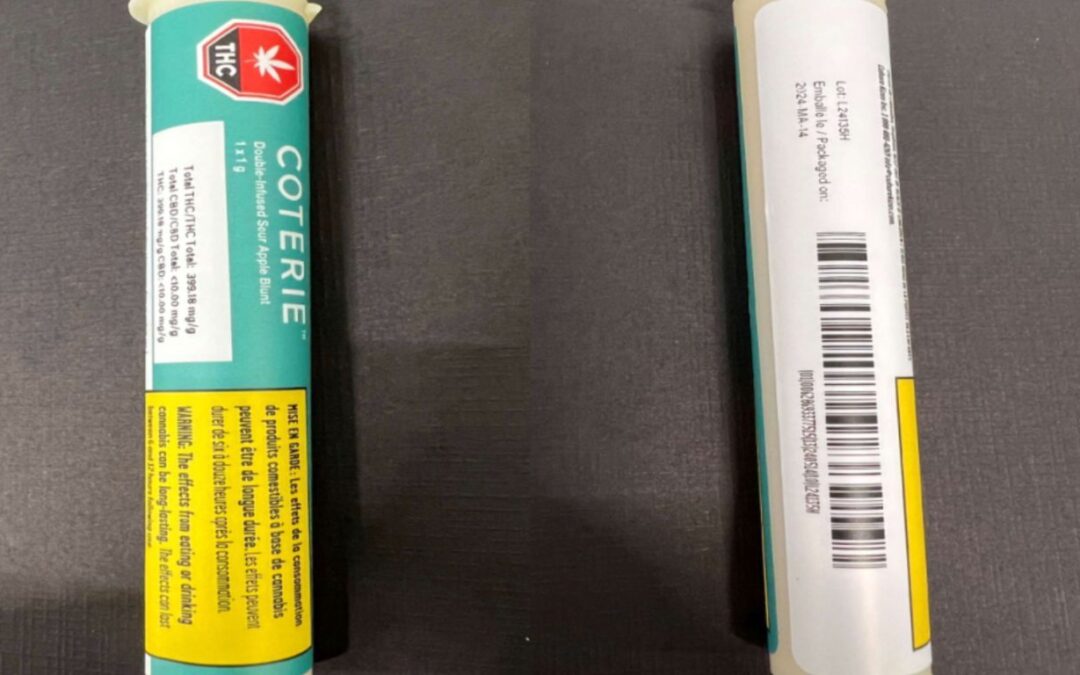
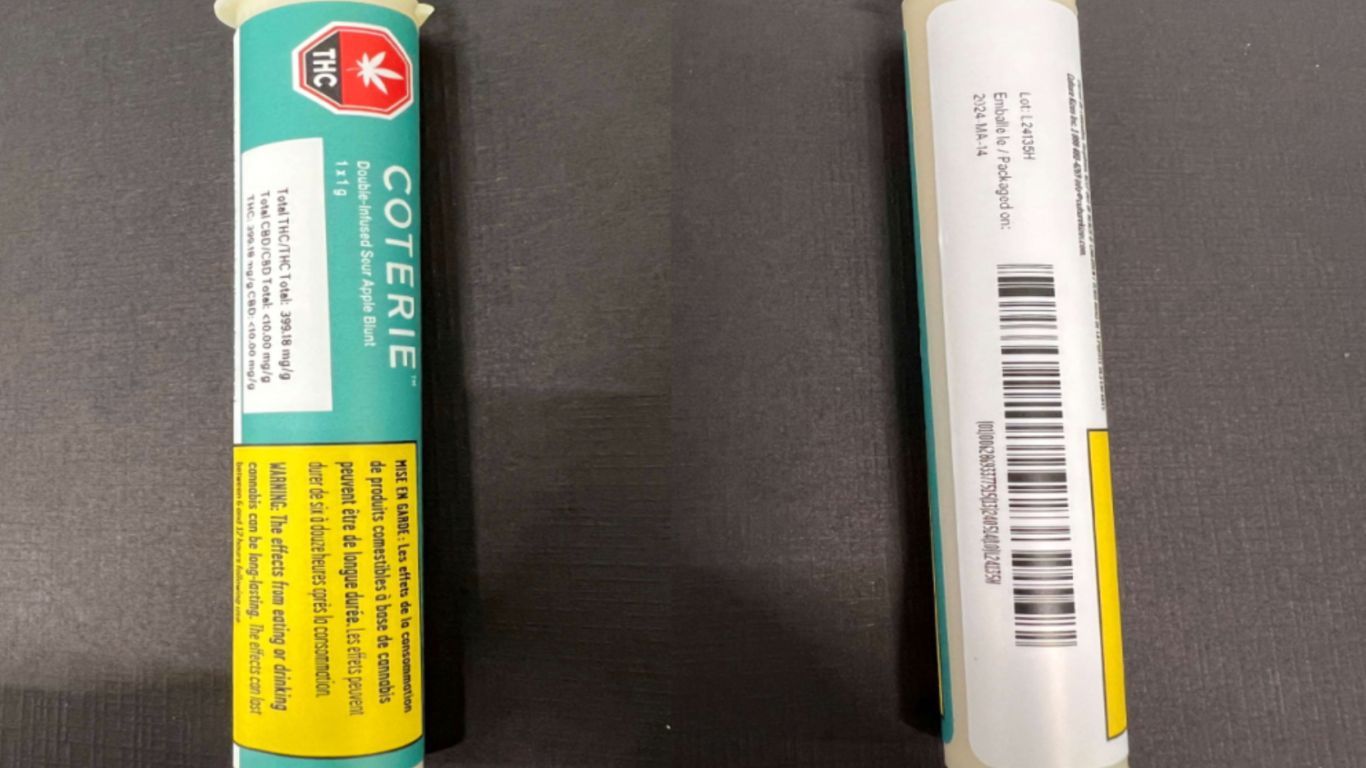
Quebec-based cannabis producer Culture Kizos Inc./Kizos Culture Inc. recalled one lot of its Coterie Double Infused Sour Apple Blunt Pre-rolls cannabis extract earlier this month.
On August 19, Health Canada listed a voluntary product recall for the one-gram pre-rolls due to microbial contamination for Lot L24135H packaged on May 14, 2025. This product was sold through authorized retailers in Alberta.
Health Canada says the affected product does not meet certain microbial contaminant limits for bacteria as specified by the Good Production Practices requirements of the Cannabis Regulations. However, the probability of serious adverse health consequences is remote, adds the recall notice.
As of August 19, Culture Kizos Inc./Kizos Culture Inc. and Health Canada say they have not received any complaints related to the recalled lot. Neither Culture Kizos Inc./Kizos Culture Inc. nor Health Canada have received any adverse reaction reports for the recalled cannabis product lot.
There were 1,281 units of recalled product sold from June 9 to August 12, 2024.
Tokyo Smoke says it will be closing 29 of its stores as it seeks creditor protection.
The cannabis retailer says the closures are part of a restructuring process the brand is seeking out under the Companies’ Creditors Arrangement Act (CCAA) from the Ontario Superior Court of Justice.
The company says other locations across Ontario, Manitoba, Saskatchewan, and Newfoundland and Labrador will remain in operation, at least for the time being.
The company says it has secured financing to continue operating while it restructures its business.
In a press release, Tokyo Smoke says that, following a thorough review of all available options and alternatives, the company has now begun this restructuring to better align its operations with current market and regulatory conditions, which it says have significantly changed since the retail chain launched.
Reconstruct LLP is acting as legal advisor to Tokyo Smoke, and Alvarez & Marsal Canada Inc. is acting as the CCAA Monitor.
Tokyo Smoke’s restructuring plan focusses on closing “underperforming locations”, while also beginning discussions with landlords to obtain consensual lease amendments for its remaining store locations. The company lists 61 corporate stores, 29 franchise stores, and 11 vacant stores for a total of 101 in the monitor report, as well as 474 employees. Five of its corporate stores, comprising 37 employees, are unionized.
Tokyo Smoke says the “significant overhead costs” required to manage its approximately 100 retail locations have resulted in material and recurring losses. For the 12-month period ended June 30, 2024, the retail chain generated revenue of approximately $93.5 million and EBITDA of negative $10.5 million.
The book value of Tokyo Smoke’s liabilities exceeds the book value of its assets by approximately $89.1 million. As at June 30, 2024, the company held assets with a book value of approximately $148.2 million and had liabilities with a book value of approximately $237.4 million. Tokyo Smoke had a net loss of $29.3 million for the fiscal year that ended June 30, 2024.
The motion for ther initial order was approved on August 27. The comeback hearing will be held on Friday, September 6, 2024 8:30 a.m. by Zoom.
Americans’ perceptions of cannabis’ effects have become less optimistic over the last two years; a slight majority now worry that most users (51%) and society as a whole are harmed by it. This is a significant change from 2022, when opinions were more evenly divided and more people (53%) thought marijuana had a good impact on users, while only 45% thought it had a negative one.
These new insights are based on a Gallup Consumption Habits survey conducted from July 1 to July 21, 2024, which shows that a sizable portion of different demographics still have favorable opinions of marijuana. This group comprises those who have personally experimented with marijuana, Democrats, young people aged 18 to 34 years of age, and those who seldom or never attend religious events.
Those who have never tried cannabis, Republicans, those who attend religious services regularly, and those who are 55 years of age or older, on the other hand, have different opinions and generally believe that most cannabis users have been negatively impacted. Notably, opinions are more divided among independents and people aged between 35 and 54 years old.
A pattern that is evident in all of these groups is a decline in the perception of cannabis’ beneficial effects as compared to prior years. Furthermore, fewer than one-half of respondents in each of these categories now believe that cannabis has a beneficial impact on society.
In a different section of the poll, Gallup asked respondents to rank the level of danger associated with chewing tobacco, cigarettes, e-cigarettes, pipes, cigars, nicotine patches, cannabis and alcohol.
While all eight narcotics are viewed as “somewhat” or “very” hazardous by most Americans, marijuana is the least of the lot. The majority of respondents — roughly two-thirds — believe that marijuana is either extremely (26%) or moderately (40%) dangerous. This pales in comparison to the broad consensus that products such as e-cigarettes, cigarettes and chewing tobacco are harmful; more than 90% of American people consider these to be dangerous, with the majority believing they are extremely problematic.
Public sentiment on the dangers of cannabis has shifted slightly since 2023, with the percentage of those who see it as very harmful rising from 23% to 26%, and those considering it somewhat harmful shifting from 35% to 40%.
In addition, 13% of American adults today report smoking cannabis, a small decrease from the 17% noted in 2023, whereas 12% of individuals use edibles. In addition, 7% of American adults prefer e-cigarettes or vaping, and 58% of individuals say they drink alcohol, making it the most commonly taken drug.
CNW420 spotlights the latest developments in the rapidly evolving cannabis industry through the release of an article each business day at 4:20 p.m. Eastern – a tribute to the time synonymous with cannabis culture. The concise, informative content serves as a gateway for investors interested in the legalized cannabis sector and provides updates on how regulatory developments may impact financial markets. If marijuana and the burgeoning industry surrounding it are on your radar, CNW420 is for you! Check back daily to stay up-to-date on the latest milestones in the fast -changing world of cannabis.
To receive SMS alerts from CNW, text CANNABIS to 888-902-4192 (U.S. Mobile Phones Only)
Please see full terms of use and disclaimers on the CannabisNewsWire website applicable to all content provided by CNW, wherever published or re-published: https://www.CannabisNewsWire.com/Disclaimer
Greenway Greenhouse Cannabis Corporation reported net revenue of nearly $2.4 million in the first quarter of 2025 ended June 30, 2024, and a $541,478 loss after operating expenses.
The Ontario cannabis producer, which sells under its EPIC Cannabis Co. and MillRite, as well as the B2B wholesale market, saw a 104% increase in net revenue compared to the same period in 2023, along with a 94% increase in grams or grams equivalent sold compared to Q2 2023. This is the second reporting period Greenway has included sales of its branded products.
Greenway’s losses were also down significantly from the same period in the previous year and the previous quarter.
“We are thrilled to announce a record-breaking quarter, achieving a record net revenue, EBITDA, and achiev[ing] a positive net cash flow provided by operating activities,” said Jamie D’Alimonte, CEO of Greenway.
“This performance reflects our focus and commitment to producing quality cannabis, and finding the best partners and pathways to bring it to consumers. We achieved this while still keeping our cost of production low, and our yields high. This combination is what we believe separates us from other public cannabis companies in Canada.”
The company also recently received CUMS-GAP and GACP certifications for the purpose of international sales. Subsequently, Greenway says it has now harvested its first crop, intended for export.
Greenways expected an average yield per plant of 125 grams in 2024, down from 170 grams in 2023, with the estimated selling price of dried flower staying level at $1.10 per gram. The post-harvest cost to complete and sell that gram of cannabis increased from $0.45 in 2023 to $0.45 in 2024.
Greenway’s EPIC Berry Sunset products became available for purchase in Ontario in this most recent quarter. Greenway operates a cannabis nursery facility in Kingsville, Ontario, and a flowering and processing facility in Leamington, Ontario. It is a majority-owned subsidiary of Sunrite Greenhouses Ltd.
As of June 30, 2024, Greenway reports a working capital deficiency of $940,130 and an accumulated deficit of $18,294,141. The company says it has insufficient cash to pay creditors for its current working capital obligations and operations for the next twelve months. Its ability to continue as a going concern depends on its ability to get sufficient additional funding and generate enough revenues and positive cash flows from its operating activities to meet its obligations and fund its planned investments and operations.
Officials in New Brunswick have confirmed they once again seized products from an unlicensed store selling unregulated cannabis, vapes, tobacco, and psilocybin products.
On August 15, peace officers from New Brunswick’s Department of Justice and Public Safety, with assistance from RCMP, again executed a search warrant at the L’Nuk Trading Post at 575 Main St., Moncton and at 767 Coverdale Rd., Riverview.
The Riverview store was raided on August 2, arresting two and seizing products. The store later posted on social media that enforcement officers had executed a raid on the Moncton location on August 15. This new report confirms those subsequent raids.
Both stores have since reopened. The Moncton store also faced enforcement action in August 2023, when officers seized 7,719.5 grams of dried cannabis, 690.4 grams of hashish, 171.3 grams of psilocybin (magic mushrooms), 246 grams of cannabis shatter, an undisclosed quantity of assorted cannabis products, edibles, contraband cigarettes, and $10,432 in cash.
The store quickly reopened following that raid. The social media accounts describe the business as Indigenous-owned and indicate they “don’t sell products, we share our tradition.”
In the most recent raids on August 15, a 49-year-old male and a 23-year-old female employee were arrested and released on an undertaking. They face charges under the Cannabis Control Act, the Tobacco Tax Act, and the Controlled Drugs and Substances Act. The investigation is ongoing.
Items seized include:
$45,878 in cash
5.5 kilograms of cannabis bud
1.5 kilograms of hashish
1,811 cannabis joints
470 packs of live resin and shatter
1,368 edible cannabis products
436 THC vape products
150 THC oil products
87 THC products
seven psilocybin products (mushrooms)
36,020 contraband cigarettes
101 flavoured cigars
122 flavoured vape products
31 flavoured nicotine pouches
At the Riverview location, two employees were arrested: a 21-year-old woman and a 31-year-old woman. Both were released on an undertaking and are scheduled to appear in court on November 4. They face charges under the Cannabis Act and the Tobacco Tax Act.
Seized items include:
23.3 kilograms of dry cannabis
3,397 cannabis joints
73,400 unstamped cigarettes
$5,111.60 in cash
99 cannabis vapes
176 cannabis edibles
375 cannabis byproducts
15 flavoured nicotine pouches
155 flavoured cigars
187.6 grams of hashish
New rules in New Brunswick, passed earlier this year, now mean that landlords can face fines of up to $5,000 a day for failing to prohibit the sale of illegal cannabis using their property.
(Globe Newswire) Toronto – Cronos Group Inc. is expanding its portfolio for its Lord Jones® brand with new innovations to bolster its lineup of premium cannabis products in the Canadian market. The additions include new cultivars for the Lord Jones® Ice Water Hash Fusions Pre-Rolls and Live Resin Vapes, which are now available across Canada.
Since the brand’s launch in Canada in November 2023, Ice Water Hash Fusions Pre-Rolls have become the best-selling hash-infused pre-rolls in the country1. Curated with flower and terpene-rich ice water hash and fitted with a branded ceramic tip designed to cool the smoke, these 1g pre-rolls provide an elevated experience. The brand’s live resin vapes are designed to deliver a premium and highly potent vape experience at 70%+ THC in each all-in-one device and 510-cartridge. As of July 2024, the Lord Jones® brand has become the third best-selling live resin vape brand in Canada1.
The Lord Jones® Ice Water Hash Fusions Pre-Rolls and Live Resin Vapes are now available in the following new flavors and sizes:
Lord Jones® Ice Water Hash Fusions Pre-Rolls:
Sour Blueberry x Sour Blueberry
1g ice water hash flower pre-roll with blueberry and gas flavor notes.
Indica | THC: 35-41% | 1x1g
Snow Lotus x Animal Mints
1g ice water hash flower pre-roll with sweet, minty, and spicy flavor notes.
Hybrid | THC: 35-41% | 1x1g
Lord Jones® Live Resin Vapes (All-in-One and 510-Cartridge):
Gorilla Z Live Resin Vape
A flavor-forward vape designed to boast an elevated berry, cherry, and grape flavor experience.
Hybrid | 70+% THC
Available in two hardware options that are optimized for live resin usage:
A sleek 0.5g all-in-one device
A high-quality 1g 510-thread cartridge
“These new additions to our growing portfolio of Lord Jones®innovations demonstrate our commitment to delivering exceptional and truly differentiated products to the Canadian market,” said Mike Gorenstein, Chairman, President and CEO, Cronos. “We are thrilled by the enthusiastic response to the Lord Jones® brand after nearly one year in Canada, and we’re excited to launch future innovations that will introduce adult consumers to new and unique ways to experience and enjoy cannabis.”















Recent Comments