The Société québécoise du cannabis (SQDC) opened its 100th cannabis store this week, located in a suburb just outside Montreal.
The newest store is in Richelieu, the first cannabis store in the small city of about 5-6,000 people.
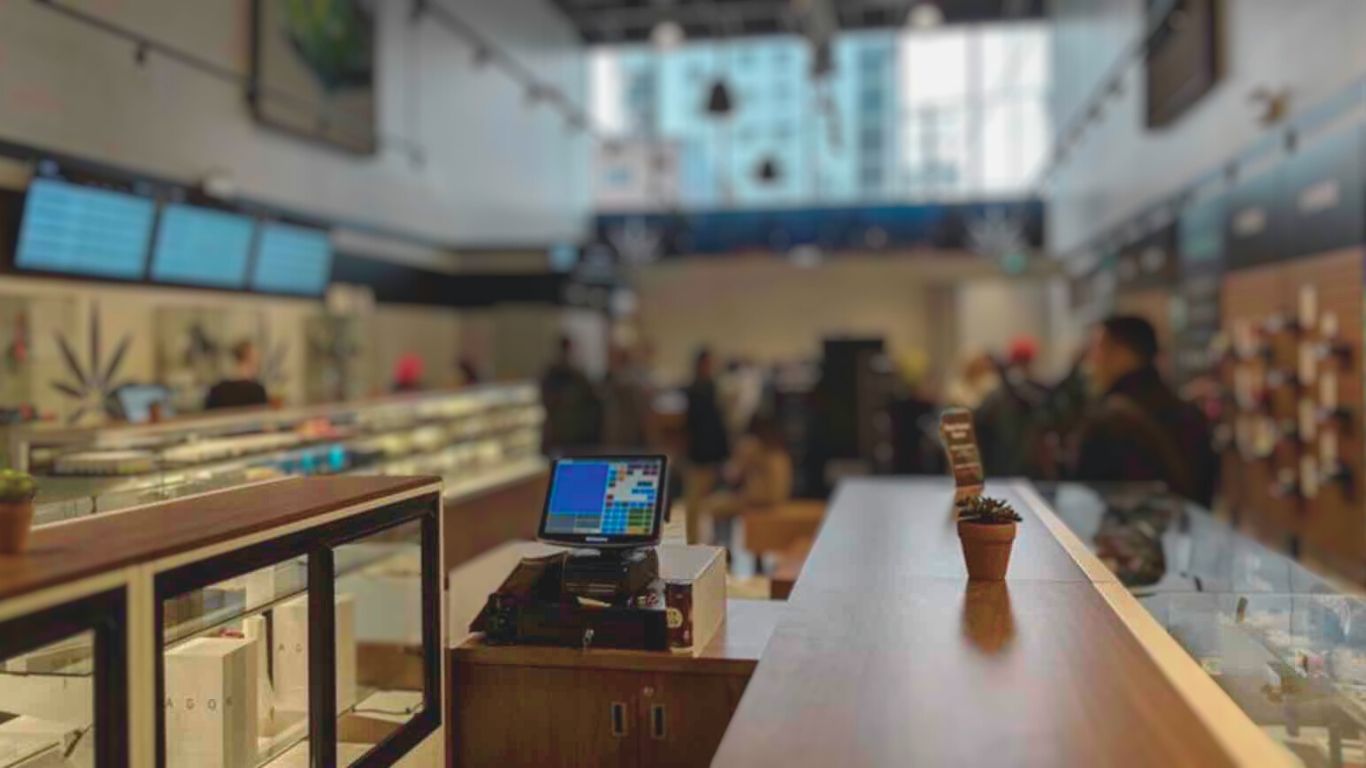
“The Richelieu branch is part of our new desire to improve the customer experience,” says Alexander Bove, Director of Real Estate at the SQDC. “With a surface area of 2,600 square feet, the store has adopted a display by product category, the design promotes user-friendliness and several display islands have been added to the sales area to highlight the product offering. We have 100 reasons to be proud and thank you 100 times to our teams who are fully dedicated to developing the SQDC,”
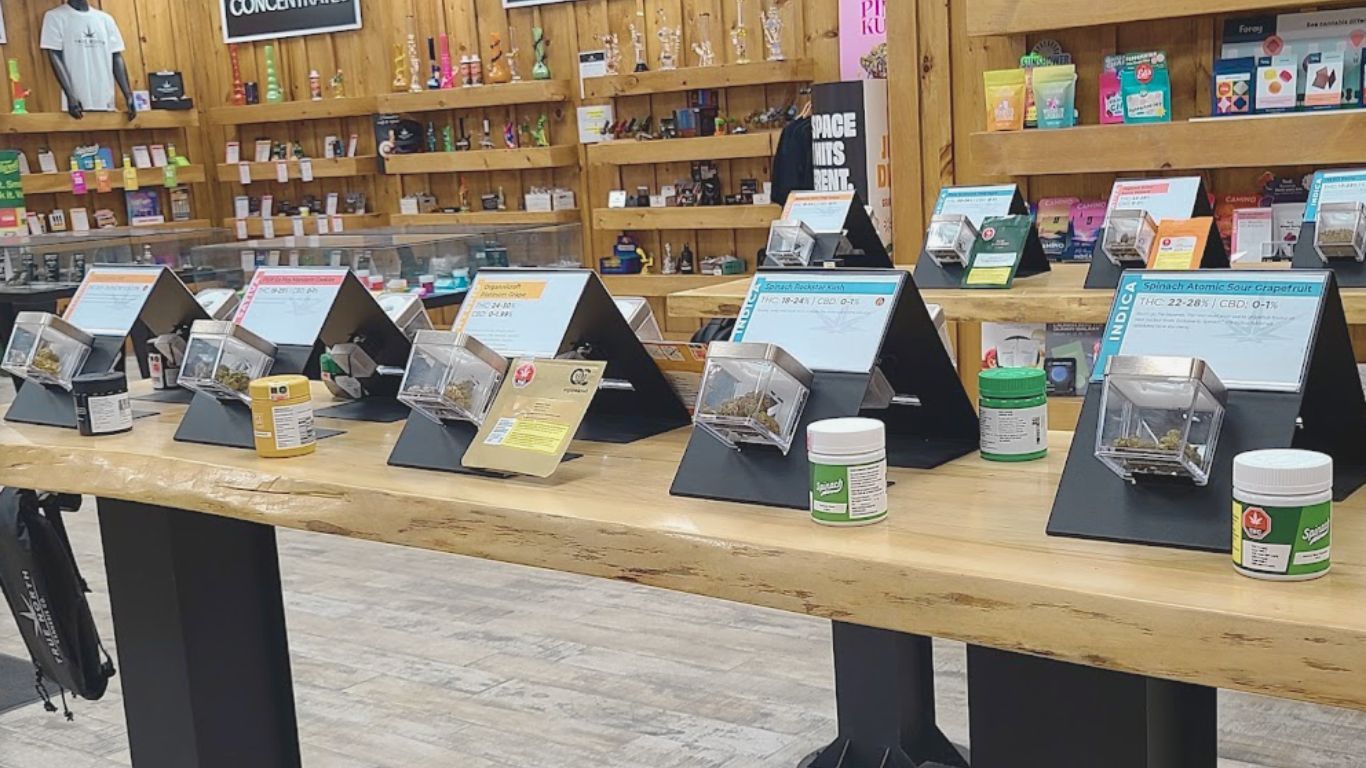
“Displaying by product category is a new way to present cannabis products to our customers, including pre-rolls, oils, edibles and large formats and differs from displaying by species, such as sativa, indica and hybrid.”
The SQDC says it plans to open about twenty branches over the next two years, including nine in total during the current fiscal year. The new Richelieu is the third store of those nine that the SDQC has opened so far this year.
The new store will also take a new approach to displaying products.
“Displaying by product category is a new way to present cannabis products to our customers, including pre-rolls, oils, edibles and large formats and differs from displaying by species, such as sativa, indica and hybrid. In the sales area, certain categories such as concentrates and accessories are found in separate displays,” says SQDC Director of Operations Alban Troja.
The SQDC has stores in all regions of Quebec and says that more than 60% of cannabis purchases in the province come from their stores.
The SQDC contributed $258.8 million to Quebec in 2023. This is an increase from $232.7 in total revenue for Quebec in 2022-2023 from $94.9 million in net income, $77.8 million in the province’s share of excise taxes, and $50 million in QST.
The province says revenue from sales and tax are entirely paid to the Ministry of Finance of Quebec, and intended in particular for prevention and research in cannabis and the fight against misdeeds linked to the use of psychoactive substances. This claim, however, has recently come under scrutiny.
For the fiscal year ending March 30, 2024, the SQDC reports selling 122,478 kg of cannabis, an increase of 15% compared to the previous year (106,626 kg in 2022-2023). The majority of these were dried flower (97,918 kg), while 24,560 kg were for other cannabis products.
(CNW) Toronto – Nova Net Lease REIT, a real estate investment trust with investments in cannabis-related properties in the U.S., today announced its financial results for the three months ended June 30, 2024. The REITs financial results are available on SEDAR. Results are presented in U.S. dollars.
Mounties say that officers investigating a break and enter in Prince George, B.C., stumbled on what turned out to be the biggest haul of illicit drugs in the city’s history.
RCMP say the officers were responding to the break-and-enter report on Wednesday when they noticed a large number of counterfeit cigarettes on the premises.
They say a search warrant was obtained, and investigators seized nearly 40 kilograms of illicit drugs, including suspected fentanyl, cocaine and methamphetamine, as well as about 120,000 counterfeit cigarettes and more than $500,000 in cash.
Officers also seized more than 11 kilograms of cannabis and 11 kilograms of what was thought to be a cutting agent.
Inspector Darin Rappel, the interim detachment commander for the Prince George RCMP, says in a statement the scale of the seizure is “a clear indication” that the city is being used as a base of operations by more than local drug traffickers.
He says police will be increasing enforcement efforts in the area as a result of the seizure.
“It is obvious we can no longer ignore the effects of the B.C. gang conflict in Prince George,” he said.
This report by The Canadian Press was first published Aug. 23, 2024.
A long-term preclinical study of Alzheimer’s Disease (“AD”) drug candidate INM-901 included four groups: untreated disease-free, INM-901-treated disease-free, placebo-treated Alzheimer’s Disease, and INM-901-treated Alzheimer’s Disease at two dosing levels
The results showed that INM-901-treated AD groups displayed behavior trends similar to the untreated disease-free group, with a clear dose response observed in most assessments
The drug has also shown a reduction in neuroinflammation and enhancement of neuronal function, with molecular data supporting behavioral study observations
InMed Pharmaceuticals (NASDAQ: INM), a biopharmaceutical company focused on developing proprietary small molecule drug candidates for diseases with high unmet needs, has announced promising outcomes from a long-term preclinical study of its Alzheimer’s Disease (“AD”) drug candidate, INM-901. These new findings confirm and expand upon results from a previous short-term pilot study (https://cnw.fm/KCFDW).
The long-term study, conducted over seven months, utilized the 5xFAD amyloidosis model, extending the dosing duration and increasing the sample size compared to the earlier three-month study. The study included four groups: untreated disease-free, INM-901-treated disease-free, placebo-treated Alzheimer’s Disease, and INM-901-treated Alzheimer’s Disease at two dosing levels. Given the progressive nature of the disease in this model, the groups in the long-term study exhibited more advanced AD than those in the short-term pilot.
The study assessed several behavioral criteria across the four groups. Cognitive function and memory were evaluated using the Novel Object Recognition Test, while general locomotor activity was measured through the Open Field Test. Anxiety-related behavior was gauged using the Elevated and Zero Maze Tests, spatial learning and memory were assessed with the Barnes Maze Test, and sound awareness was tested with the Acoustic Startle Test.
The results showed that INM-901-treated AD groups displayed behavior trends similar to the untreated disease-free group, with a clear dose response observed in most assessments. Significant improvements in specific behavioral criteria were noted compared to the placebo-treated AD groups, reinforcing and in some cases exceeding the outcomes of the short-term study.
Dr. Eric Hsu, Senior Vice President of Preclinical Research and Development at InMed, expressed optimism about the findings. “We are highly encouraged by the initial data from this long-term study, which supports the improvements in behavioral outcomes observed in our initial short-term preclinical Alzheimer’s proof-of-concept study. INM-901 continues to show potential by targeting multiple biological pathways associated with Alzheimer’s Disease, addressing the critical need for effective treatments,” Dr. Hsu added.
To better understand the mechanisms of action and the potential role of INM-901 in AD treatment, InMed is conducting further molecular analyses. These analyses will focus on receptor engagement (CB1/CB2 and PPAR), neuroinflammation (levels of various cytokines and inflammatory marker proteins), neurogenesis (markers for neuronal differentiation and function), and neuroprotection (evaluating stress responses and cellular growth/survival).
In addition to these analyses, the development of the chemistry, manufacturing, and controls (“CMC”) for both the drug substance and product formulation is ongoing. GLP studies are in the planning stages to support an IND submission.
Research and development activities to date have demonstrated that INM-901 targets several biological pathways associated with AD, exhibiting positive pharmacological characteristics. These include preferential signaling agonism for CB1/CB2 and impacts on PPAR signaling pathways, blood/brain barrier penetration with potential for oral administration, neuroprotective effects against amyloid-beta-induced cytotoxicity, and promotion of neurite outgrowth, indicating potential improvement in neuronal function.
The drug has also shown a reduction in neuroinflammation and enhancement of neuronal function, with molecular data supporting behavioral study observations. InMed Pharmaceuticals continues to advance its research on INM-901, aiming to address the urgent need for effective Alzheimer’s treatments.
NOTE TO INVESTORS: The latest news and updates relating to INM are available in the company’s newsroom at https://cnw.fm/INM
About CannabisNewsWire
CannabisNewsWire (“CNW”) is a specialized communications platform with a focus on cannabis news and the cannabis sector. It is one of 60+ brands within the Dynamic Brand Portfolio @ IBN that delivers: (1) access to a vast network of wire solutions via InvestorWire to efficiently and effectively reach a myriad of target markets, demographics and diverse industries; (2) article and editorial syndication to 5,000+ outlets; (3) enhanced press release enhancement to ensure maximum impact; (4) social media distribution via IBN to millions of social media followers; and (5) a full array of tailored corporate communications solutions. With broad reach and a seasoned team of contributing journalists and writers, CNW is uniquely positioned to best serve private and public companies that want to reach a wide audience of investors, influencers, consumers, journalists and the general public. By cutting through the overload of information in today’s market, CNW brings its clients unparalleled recognition and brand awareness. CNW is where breaking news, insightful content and actionable information converge.
To receive SMS alerts from CNW, text CANNABIS to 888-902-4192 (U.S. Mobile Phones Only)
Please see full terms of use and disclaimers on the CannabisNewsWire website applicable to all content provided by CNW, wherever published or re-published: https://www.CannabisNewsWire.com/Disclaimer
Cannabis store the Friendly Stranger Cannabis in Ontario was broken into overnight on Tuesday, August 13, with thieves taking around $2,300 worth of products. Five Points Cannabis in Calgary was also broken into this past week.
A Canadian woman who smuggled 17 kg of cannabis into Bermuda will be sentenced next month. Mara Faiazza, 24, brought the drugs into the island on a flight from Toronto on May 19.
A 21-year-old woman from Calgary has appeared in court after being charged with attempting to import 36 kg of cannabis into Belfast, according to police. She was questioned after being transferred off a flight from Calgary in London and charged with importing controlled drugs and supplying controlled drugs.
Australian cannabis producer Cannim wants to process cannabis at a Lasalle Line greenhouse in Ontario. The company already has a license to grow at the former site of Tilray’sHigh Park Farms, but the city has a bylaw that prohibits cannabis processing.
And finally, California cannabis producer Glass House Farmsplans to appeal a recent recall of a SKU of pre-rolls for the presence of Aspergillus flavus.
Cannabis social clubs and coffee shops are establishments that sell cannabis products. Although the two titles may sometimes be used interchangeably, they are different, particularly in terms of how they operate and where they are located.
Alongside increased medical and recreational legalization in the US, an increasing number of countries are legalizing cannabis. In 2022, Asia entered the scene, withThailand becoming the first Asian nation on the continent to legalize cannabis. In 2024, following Malta and Luxembourg, Germany became the third European Union country to legalize cannabis for personal use.
Having said that, each nation and various jurisdictions within some countries have established their own rules surrounding the acquisition and use of cannabis. They’re also setting specific rules about the amount of cannabis that can be bought and consumed, who can purchase it, and how it is specifically defined. In this blog, we’ve detailed how this can be undertaken by discussing cannabis social clubs in Spain and coffee shops in the Netherlands, where cannabis use is legalized and regulated.
Cannabis Social Clubs in Spain
In Spain, establishments that offer cannabis products are known as cannabis social clubs and are locally referred to as ‘asociaciones cannabicos‘. These places are non-profit organizations that only club members can access. As such, the public cannot gain access to these social clubs.
To become a member of these establishments, you must either request an invitation by contacting a specific club or be invited by a current member.
Further, cannabis social clubs in Spain are regulated by local government authorities. In fact, the rules can be somewhat stringent and even dictate the type of verbiage that can and cannot be used when referencing cannabis.
For example, financial terms like “get” or “pick up” may be used, but others that explicitly describe the purchase of cannabis may not be. This is because such vocabulary could be associated with drug trafficking in Spain, which is an offense.
This means that the only place that people in Spain arelegally permitted to purchase cannabis is at a social club that they are members of. Selling it outside of such establishments is considered a crime.
In terms of cannabis use, personal consumption in Spain is permitted as long as it is done on private property. It is against the law to use or even possess cannabis in public, and consumers may face fines if caught.
Coffee Shops in the Netherlands
Coffee shops are stores in the Netherlands where cannabis is sold to the public. However, cannabis is only sold in small amounts for personal use, and larger quantities for commercial use are not permitted.
Coffee shops in the Netherlands must follow certain rules, and owners who do not comply with these regulations could face legal consequences. This is why authorities may visit coffee shops regularly to ensure compliance.
No more than 5 g of cannabis is permitted per person per day
No more than 500 g of cannabis may be kept in the coffee shop at once
No alcohol, cigarettes, or hard drugs are permitted on the premises
No advertising for drugs and coffee shops is allowed
Information about cannabis products must be provided to customers as required
The municipality of Amsterdam has permitted the opening of a limited number of coffee shops to minimize unauthorized street sales and separate ‘soft drugs’ (including cannabis) from the hard drugs market. At the same time, the local government seeks to maintain a manageable and streamlined cannabis sector, so the municipality chooses to allow only a smaller number of such coffee shops.
Are Cannabis Social Clubs and Coffee Shops Culturally Significant?
Both cannabis social clubs in Spain and coffee shops in the Netherlands hold immense cultural significance and value to communities in favor of legalizing cannabis consumption. However, significant cultural differences influence how these establishments are presented and accepted, influencing their cultural importance.
In Spain, cannabis social clubs are community-focused spaces that are seen as exclusive. These clubs are notoriously difficult to get into, but for those who manage to become members, it is a space to share a collective appreciation of cannabis.
According to members,Spain’s social clubs are hubs for social interaction and safe spaces to buy cannabis. Everything from their design and rules to unique offerings is meant to foster a sense of belonging among members. Spain’s social clubs are also known to emphasize community solidarity and personal privacy while promoting regulation and responsible cannabis consumption, which is another reason why would-be members seek them out.
In contrast, in the Netherlands, coffee shops – the equivalent of social clubs – are iconic symbols of Dutch progressive drug policies and tolerance toward cannabis consumption. Coffeeshops are places to buy cannabis and enjoy a relaxed atmosphere while imbibing. These establishments – which, funnily enough, don’t sell coffee – attract tourists and locals who want a regulated and safe environment to enjoy cannabis, similar to Spain’s social clubs.
In the Netherlands, most people who use cannabis celebrate their contribution toward separating the hard drug market from the soft drug market. With coffee shops readily available, it reduces street crime and helps individuals turn toward cannabis, which is a soft drug, rather than harder drugs like heroin, cocaine, and LSD. Some go so far as to believe that the Netherlands’ coffee shops represent the Dutch values of pragmatism and freedom.
Both types of establishments have deeply influenced local and international perceptions of cannabis, embedding themselves into the social fabric of their communities. They have become essential elements of cannabis culture, showcasing how regulated, socially accepted venues can function within broader societal norms.
Do Cannabis Social Clubs and Coffee Shops Benefit Their Respective Economies?
It seems that cannabis social clubs in Spain and coffee shops in the Netherlands are not going anywhere anytime soon. These establishments have ingrained themselves into their respective regions’ cultural scenes and have surprisingly become key contributors to their respective economies.
According to recent statistics, cannabis social clubs and coffee shops significantly contribute to economic growth. For example, in Spain, cannabis social clubs create employment in several roles, including cultivation, security, and administration. In addition, these clubs stimulate local economies by sourcing services and products from local businesses.
To further cement their significance to the Spanish economy, it should be noted that a 2020 study revealed that the cannabis industry in Spain could generatea whopping 3 billion euros if it becomes fully regulated and more social clubs and cannabis-related services, establishments, and products are permitted and legalized in the country. However, despite their success, there have been moves toward trying to shut down cannabis social clubs, with several government officialscalling for their eradication.
Likewise, in the Netherlands, cannabis coffee shops are considered economic drivers, especially in cities like Holland and Amsterdam, where tourists are eager to explore this drug recreationally in a safe environment where the products being sold can be trusted. In fact, a 2019report indicated that 57% of tourists visit a coffee shop during their stay in Amsterdam, which boosts not only the cannabis sector’s earnings but also the hospitality, food, and beverage industries, which collectively contribute to the Netherlands economy.
In addition, as is the case with Spain, coffee shops in the Netherlands create numerous jobs, and those employed contribute significantly to tax revenues in the Netherlands, which are high compared to other countries. According to data released by the Dutch government,about 400 million euros is collected annually in taxes from the cannabis industry. So, it’s safe to assume that both the social clubs in Spain and the coffee shops in the Netherlands are driving forces behind economic growth.
What’s Better Price Wise? Coffeeshops in the Netherlands Or Social Clubs in Spain
Economically and culturally, coffee shops in the Netherlands and social clubs in Spain are on equal footing. However, from a price standpoint, many find cannabis social clubs to be better than coffee shops. On average, Spain’s social clubs charge between 7 euros and 25 euros per gram. In contrast, coffee shops in places like Amsterdam and Holland can charge as much as 5 euros to 45 euros per gram, which isn’t very affordable for the general public.
The plus side of Dutch coffee shops is that you don’t need to be a member, but in Spain, being a member of a social club gives you access to these lower prices. It’s also worth noting that cannabis edibles are priced similarly at coffee shops and social clubs but that many coffee shops in the Netherlands don’t stock them.
Regarding hashish, Spain’s social clubs are the clear winner price-wise. This is because Spain is located near Morocco, the world’s largest producer of hashish. Additionally, with its close proximity, it shouldn’t come as a surprise that Spain is the world’s largest consumer of this cannabis product and that many of the social clubs sell hashish for significantly more affordable prices than the Netherlands’ coffee shops. On average, hashish costs 7 euros, while in Holland, it is 12 euros, and in Amsterdam, 17 euros.
Cannabis Social Clubs Vs Coffee Shops: Amenities and Comfort
Primarily, social clubs in Spain are believed to be more comfortable and well-ventilated than coffee shops in the Netherlands. This is likely due to the expenses coffee shops endure with the country’s high taxes on the cannabis industry.
Spain’s social clubs don’t have this problem because they are classified as non-profit organizations, so they don’t need to pay taxes. This leaves social clubs with more funding to spend on making the establishment comfortable for its members. In addition, cannabis clubs are believed to be far more entertaining than coffee clubs in the Netherlands.
If you are a member, you can access various amenities, including video game rooms, pool tables, and other adult toys and facilities, depending on the club. It is also not uncommon for cannabis social clubs in Spain to organize routine movie nights, DJ evenings, and live music to create spaces for like-minded individuals to socialize. Unfortunately, most coffee shops in the Netherlands don’t organize these types of events unless it is a special occasion.
The Wrap-Up On Cannabis Social Clubs In Spain Vs Coffee Shops In The Netherlands
Both social clubs in Spain and coffee shops in the Netherlands are worth exploring for those who have an interest in cannabis and want to dabble in the drug medicinally or recreationally. Most will find it easier to visit coffee shops than social clubs, considering memberships are often required with the latter. In addition, it’s important to note that outside of these premises, laws and regulations are surrounding its use, so it’s important to abide by them when visiting either country.
Federal authorities are adopting a new strategy to assess recent marijuana use by revising protocols for analyzing THC breath samples. The initiative is part of continuing efforts to improve the accuracy and reliability of cannabis impairment field testing, particularly in drivers.
Researchers from the University of Colorado and the National Institute of Standards and Technology (NIST) propose that using two breath tests within an hour could be more effective than relying on a single test. They aim to determine if this method could be developed into a practical field test.
One of the biggest obstacles to marijuana legislation has been figuring out whether recent cannabis usage would have impaired someone, especially a driver. The tests available now can identify THC use days or even weeks after intake, but they are not very accurate at measuring recent use that might suggest impairment.
According to NIST, roadside sobriety tests, such as heel-to-toe walking or phrase repetition, are typically employed by law enforcement officials in case they suspect a driver of being under the influence of cannabis. However, a recent study found that these tests can result in false positives because they were not intended to identify cannabis impairment.
The new pilot study, funded through a $1.5 million agreement between the National Institute of Justice (NIJ) and NIST will recruit around 45 participants aged 25 to 50 from the Boulder and Denver areas of Colorado. Participants will be divided into two groups: one using THC-dominant marijuana flower and the other using THC concentrates. Participants will buy and consume the goods themselves at home because federal regulations prohibit researchers from obtaining cannabis from shops.
Participants will go to a nearby mobile pharmacology lab after cannabis consumption. They will have 10 breath tests during a two-hour period, at predetermined intervals. The gathered breath samples, blood tests and questionnaires about their cannabis use will all be examined for THC and other cannabinoids.
In addition to this study, NIST has been actively engaged in investigations to improve the precision of cannabinoid testing in hemp and marijuana. In 2020, the organization introduced the Cannabis Laboratory Quality Assurance Program (CannaQAP). It followed up on earlier results about moisture content, the presence of heavy metals and toxins, and the THC content in plant materials with the issuance of a paper earlier this year.
However, some experts, including a researcher from the U.S. Department of Justice (DOJ), have voiced concerns over the existing method of cannabis impairment testing. The researcher proposed that measuring a person’s systemic THC content might not be the most accurate method of assessing impairment for driving. Cannabis impairment may necessitate a whole new approach, in contrast to alcohol, where blood alcohol content is a reliable signal.
If this new way of testing for marijuana impairment proves to be a reliable method, the entire cannabis industry, including entities such as Trulieve Cannabis Corp. (CSE: TRUL) (OTCQX: TCNNF), is likely to welcome that development because it would address one of the longstanding sources of misplaced complaints about marijuana legalization by prohibitionists who claim that road crashes will increase even if no substantive evidence suggests this is the case.
About CNW420
CNW420 spotlights the latest developments in the rapidly evolving cannabis industry through the release of an article each business day at 4:20 p.m. Eastern – a tribute to the time synonymous with cannabis culture. The concise, informative content serves as a gateway for investors interested in the legalized cannabis sector and provides updates on how regulatory developments may impact financial markets. If marijuana and the burgeoning industry surrounding it are on your radar, CNW420 is for you! Check back daily to stay up-to-date on the latest milestones in the fast -changing world of cannabis.
To receive SMS alerts from CNW, text CANNABIS to 888-902-4192 (U.S. Mobile Phones Only)
Please see full terms of use and disclaimers on the CannabisNewsWire website applicable to all content provided by CNW, wherever published or re-published: https://www.CannabisNewsWire.com/Disclaimer
Following an announcement in June, the OCS now confirms that, starting August 23, it will begin providing more detailed wholesale metrics to cannabis producers.
The Ontario Cannabis Store says the more granular data is intended to assist suppliers’ sales and operations planning, and lead to improved inventory availability, fulfilment and delivery service levels for cannabis stores in the province. The changes will be integrated into the OCS’ existing Supplier Data Program.
In an announcement posted on the OCS’ B2B platform on June 25, the Crown corporation said it would be offering its cannabis producer-partners “greater visibility into the specific authorized stores that are purchasing their products through the OCS,” which includes the types of products each of these stores order from OCS each day at the SKU-level and the number of units ordered from OCS by each retailer, by SKU, each day.
These are changes many Canadian cannabis producers have been asking provincial cannabis agencies, like the OCS, to provide for some time. Such figures will allow producers to better understand what products are selling better in what parts of the province, providing an opportunity for more targeted sales measures. Alberta and BC have provided similar data programs for producers/suppliers.
The OCS offers two levels to its supplier data program. Level one allows OCS suppliers to access insight into their products’ sales performance across the province. A level two data subscription also provides access to more broad sales figures about other producer/supplier sales. Data for a product portfolio will be available for both Level 1 and 2 subscribers at no additional charge.
Suppliers will only receive detailed and specific SKU and store-level wholesale sales data for their own products, not competitors. This information will only come from the OCS, not from any retailer point-of-sale metrics or retailer inventory data. Suppliers also cannot provide the store-level wholesale sales information from OCS with anyone outside of their organization.
Providing suppliers with this sales data will also build upon the OCS’ Flow Through distribution channel, ensuring suppliers can better forecast sales demands. Flow Through allows retailers to order products the OCS does not typically carry in the world’s largest cannabis distribution warehouse.
Retail cannabis sales continue to cool off in Canada | StratCann
Thanks to our sponsors for supporting StratCann’s work!
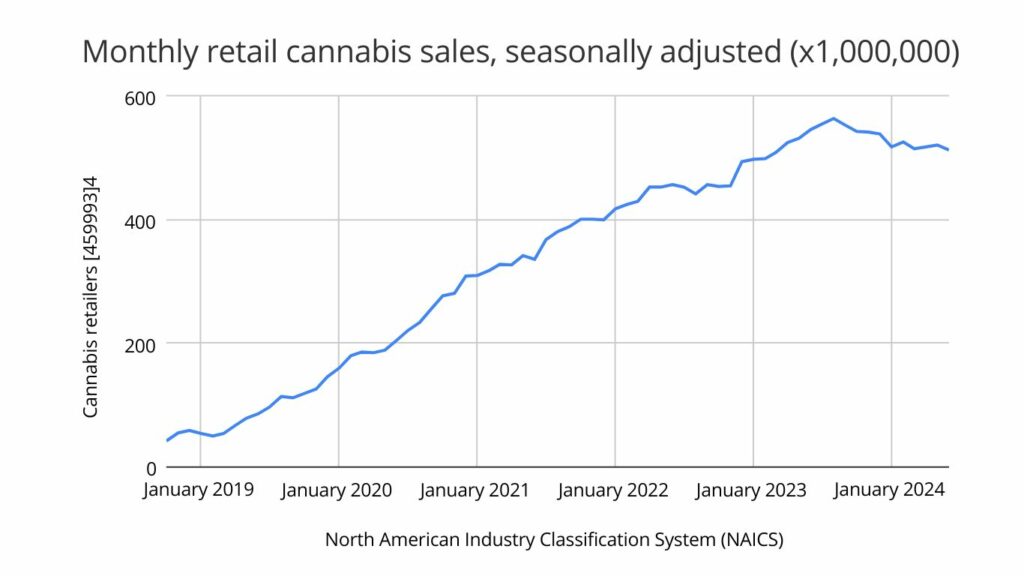
Retail cannabis sales continued to cool off in Canada after nearly five years of growth, with sales in April hitting a year-over-year low, with $518 million in sales compared to $525 million in sales in April 2023.
The newest figures from Statistics Canada show seven of the past ten months with month-over-month declines from a peak of $564 million in August 2023. While sales surge significantly in the first several years of legalization, in the past year.
Statistics Canada does periodically update their previous monthly figures as new data comes in. While the data quality for most months is considered of excellent quality, the most recent four months are considered very good or good.
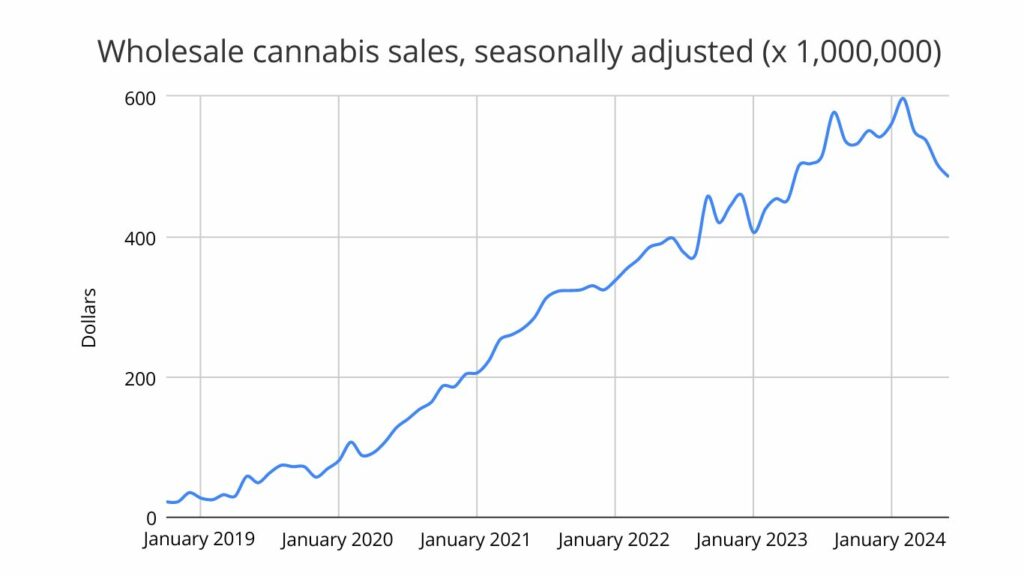
The newest wholesale cannabis sales figures from Stats Canada show a similar trend, with wholesale sales dropping off from a peak of $597 million in February 2024, followed by now four months of declines.
As of August 13 there were 3,722 licensed cannabis retail stores in Canada.
British Columbia: 523 public and private stores listed as “active”
Thanks to our sponsors supporting StratCann’s work!
Recent Articles
Are you of legal age in your jurisdiction? By clicking “Enter” you are verifying you are of legal age to view the content of this website, or click “Exit” to leave.
Set Sail on an Unforgettable Evening! Kick off your Grow Up Alberta experience in style aboard the Edmonton Queen for our exclusive Riverboat Kick-off Party. Join us for an evening of networking, entertainment, and stunning views of Edmonton’s River Valley as we celebrate the start of an incredible weekend.
What to Expect:
Exclusive Access: Be one of the select 200 guests to enjoy an intimate evening on the beautifully renovated Edmonton Queen.
Meet & Greet: A special opportunity to meet cannabis icon Tommy Chong.
Gourmet Food: Indulge in a delicious selection of food, all included with your ticket.
Live DJ: Dance the night away to the beats of a live DJ, set against the backdrop of Edmonton’s skyline.
Cash Bar: Sip on your favorite drinks, available for purchase at the cash bar.
Ticket Pricing:
Early Bird Special: $145 for the first 100 tickets
Regular Rate: $175
Transportation:
Shuttle Service: Complimentary shuttle buses will be available from our host hotels, Courtyard Marriott and Chateau LaCombe. Shuttles will run from 7:30 PM to 8:30 PM for arrival and 10:30 PM to 12:00 AM for departure.
Limited Availability—Book Your Spot Today!
Don’t miss out on this unique opportunity to kick off Grow Up Alberta in a spectacular setting. Secure your Riverboat Kick-off Party tickets now—early bird pricing is available for the first 100 guests, so act fast!





















Recent Comments