Canada is catching strays in a fight between the Florida governor and a Florida-based cannabis company.
Florida Governor and failed US Presidential candidate Ron DeSantis recently lashed out at US cannabis MSO TruLieve, calling them a “Canadian company.”
The governor is pushing back against a proposed amendment in Florida, Amendment 3, that, if passed, would allow the possession of up to 3 ounces of cannabis for non-medical purposes, with no more than 5 grams in concentrated form, for those who are 21 years old and up.
“How ridiculous is this, that we would let our Constitution basically be rent-seeking for some Canadian marijuana company?” DeSantis said during a speech at the Republican National Convention in July. “I mean, give me a break.”
He said legalizing cannabis would “mess up the state,” damaging quality of life, claiming Colorado’s efforts have failed and complaining that Denver smells of marijuana.
“That’s just the reality,” claimed the governor, who may or may not have been wearing lifts in his boots at the time. “We’ve seen it in practice in a lot of these places, it hasn’t delivered what they said it was going to deliver.”
DeSantis and other Republicans have been attacking the amendment on various grounds for weeks. The newest attack is odd because while TruLieve is connected to Canada through a reverse takeover that allowed them to be listed on the Canadian stock exchange, the company is and always has been well-known for being based in Florida.
The connection to Canada is one several American cannabis companies have taken to be publicly listed since federal prohibition in the US would prevent it from being listed on that country’s stock exchanges.
According to the Tallahassee Democrat, Trulieve spokesperson Steve Vancore said in an email: “The only connection to Canada is a holding company that was formed so that stocks can be publicly traded. Trulieve Cannabis Corp is NOT the licensee nor has it, the holding company, made a single donation to the Smart & Safe Florida campaign.”
Smart & Safe Florida is an organization backing the proposed amendment.
The majority of funds that have gone to Smart & Safe Florida, the newspaper reports, come from Florida’s Trulieve Inc., which is around $60 million (US).
“The fact of the matter is that Trulieve is Florida-born, our products are Florida-grown and we are headquartered in Florida with most of our nearly 4,000 employees living here as well,” said CEO Kim Rivers in a statement.
Cannabis, vapes seized from Fredericton store | StratCann
Thanks to our sponsors for supporting StratCann’s work!
Several different cannabis products were seized from an unlicensed cannabis store in Fredericton, New Brunswick, on July 23 during a joint operation involving Justice and Public Safety peace officers and Fredericton Police.
The products were seized from the York County Vape & Smoke Shop at 1168 Smythe St. A 46-year-old man was arrested and charged under the Cannabis Act. His first court appearance is scheduled for Oct. 4.
Officers seized:
1.6 kilograms of cannabis bud
27.5 grams of hashish
$3,239 in cash
30 packs of cannabis shatter
68 THC vapes
74 joints
58 THC edibles
52 flavoured vape cartridges
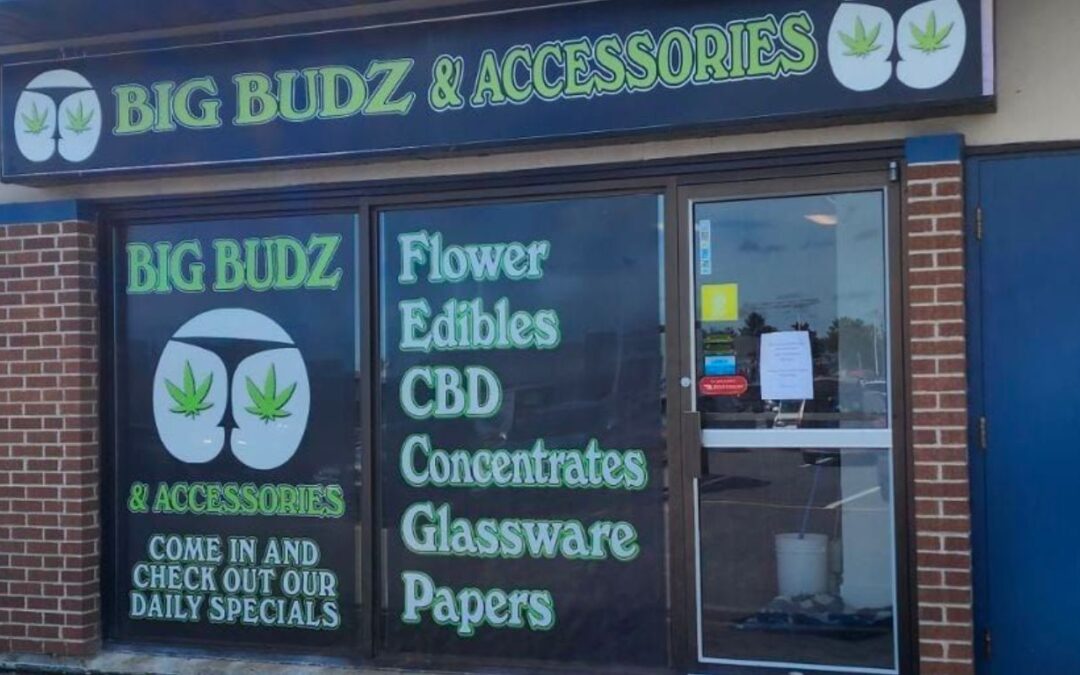
A business Facebook page with the same name and address says the store is “Full Status First Nation Owned and Operated” and a post from last September shows the store branded as Big Budz and Accessories (featured image).
In June and July, inspectors seized cannabis products from unlicensed stores in Moncton. No one was arrested at the time, but authorities say the investigation is ongoing.
New Brunswick recently passed a law giving inspectors more ability to seize such products. Authorities first applied these new laws in a seizure on July 24 in Saint John.
Insight & News
Browse Categories
Thanks to our sponsors supporting StratCann’s work!
Recent Articles
Are you of legal age in your jurisdiction? By clicking “Enter” you are verifying you are of legal age to view the content of this website, or click “Exit” to leave.
A Canadian industrial hemp plant breeding company with an emphasis on minor cannabinoids has received more than half a million dollars in funding from the AgriScience Program by the Minister of Agriculture and Agri-Food and the National Research Council of Canada Industrial Research Assistance Program (NRC IRAP).
Cannabis Orchards Inc., located in Kemptville, Ontario, recently announced two awards that it says will support its research into the genetic improvement of industrial hemp and the advancement of minor cannabinoid research.
The first grant, for $404,305 from the AgriScience Program, supports Orchards’ project that aims to develop seedless triploid hemp lines for the production of cannabidiol (CBD) and minor cannabinoids such as cannabigerol (CBG) and cannabichromene (CBC).
By developing novel triploid hemp lines, Cannabis Orchards hopes to open new markets and maximize yields and profits for hemp farmers by providing them with hemp varieties capable of delivering minor cannabinoid profiles.
Dr. Jamie Ghossein, CEO of Cannabis Orchards, commented in a company press release, “The potential of minor cannabinoids in therapeutic applications is vast, yet they remain underutilized due to their scarcity. Our research and development efforts are dedicated to unlocking this potential, ultimately providing more effective treatment options for a variety of conditions and opening new commercialization opportunities for farmers and the Canadian cannabinoid industry.”
The second grant is for $196,000 from NRC IRAP, which supports a project focused on developing triploid hemp varieties through polyploidization that will increase biomass yield and cannabinoid content, while reducing the risk of unwanted cross-pollination by rendering plants infertile.
Dr. Ghossein added, “This grant from NRC IRAP is a significant endorsement of our cutting-edge research in polyploidy and hemp trait development. Our project will enable the development of seedless triploid hemp varieties, ensuring higher yields and more consistent quality for farmers and cannabinoid processors. By preventing unwanted pollination and enhancing desirable traits, we are paving the way for the next generation of industrial hemp genetics by maximizing yields for farmers and providing high-quality cannabinoid inputs to processors.”
Both projects began in early 2024 and are expected to conclude by 2026.
The company also recently announced that its hemp cultivar Vendetta has been officially added to the Health Canada List of Approved Cultivars (LOAC) as of August 12, 2024. Orchards says the cultivar is the first hemp variety with a near 1:1 ratio of CBD to CBDV (cannabidivarin), a minor cannabinoid.
The company says Vendetta will be available to licensed hemp growers in Canada as feminized seed starting in Spring 2025, and biomass will be made available to commercial processors in Fall 2025 exclusively through Cannabis Orchards. Cannabis Orchards holds a Good agricultural and collecting practice certification for biomass cultivation.
The company offers an array of hemp biomass on its website, including high CBD, high CBG, high CBDV, and feminized hemp seed.
Last week, the U.S. Food and Drug Administration (FDA) made the decision not to approve MDMA-assisted therapy for post-traumatic stress disorder. This decision comes just months after advisors to the agency voted against evidence supporting MDMA therapy. The agency’s decision was based mainly on concerns about issues with clinical research.
The advisors’ decision to not approve the treatment put the agency in a bind, given that historically, it sides with this committee.
The recent news was a huge blow to Lykos Therapeutics and the broader movement focused on bringing psychedelics into mainstream mental-health care. Instead, the FDA directed that the company carry out further research on the effectiveness and safety of this treatment.
On its end, Lykos revealed that it was planning to request a meeting with the agency to reconsider its decision. Amy Emerson, CEO of Lykos, stated that the agency’s request for another phase 3 trial was disappointing. She added that carrying out the study would take a couple of years, noting that most of the FDA’s requests could be addressed with post-approval requirements, existing data or via reference to scientific literature.
The treatment had gained significant support from patients, leaders in the field of psychedelics and mental health, and politicians from both the GOP and Democratic parties.
In the last couple of weeks, advocates also organized a major campaign to apply additional pressure, calling attention to the urgent need for effective and new treatments for the millions affected by post-traumatic stress disorder, including veterans.
Research scientists at well-renowned academic centers and even the Veterans Affairs department had expressed their enthusiasm around the therapeutic potential of MDMA. This explains why so many supporters were upset by the FDA’s decision.
In its statement, the Heroic Hearts Project called the agency’s decision disgraceful, adding that this was the epitome of bureaucratic red tape and would result in even more individuals dying. This veterans’ organization had campaigned for the agency’s approval and even cited data on the many veterans who died by suicide because of PTSD.
Dr. Boris Heifets of the Heifets Lab at Stanford University noted that while the trials may have had some issues, the FDA could have dealt with these issues by approving the therapy with strict restrictions on how it’d be administered and directing that a post-market study be conducted. He also voiced his concerns that this decision by the agency would stifle innovation and reduce funding for other new treatments.
Heifets added that the agency had in the past gone against recommendations given by the committee and given the go-ahead for drugs with abuse potential.
This decision by the FDA is likely to cause other drug developers in the psychedelics space, such as atai Life Sciences N.V. (NASDAQ: ATAI), to re-examine their own programs and see how this decision could potentially impact their chances of success.
About PsychedelicNewsWire
PsychedelicNewsWire (“PNW”) is a specialized communications platform with a focus on all aspects of psychedelics and the latest developments and advances in the psychedelics sector. It is one of 60+ brands within the Dynamic Brand Portfolio @ IBN that delivers: (1) access to a vast network of wire solutions via InvestorWire to efficiently and effectively reach a myriad of target markets, demographics and diverse industries; (2) article and editorial syndication to 5,000+ outlets; (3) enhanced press release enhancement to ensure maximum impact; (4) social media distribution via IBN to millions of social media followers; and (5) a full array of tailored corporate communications solutions. With broad reach and a seasoned team of contributing journalists and writers, PNW is uniquely positioned to best serve private and public companies that want to reach a wide audience of investors, influencers, consumers, journalists and the general public. By cutting through the overload of information in today’s market, PNW brings its clients unparalleled recognition and brand awareness. PNW is where breaking news, insightful content and actionable information converge.
To receive SMS alerts from PsychedelicNewsWire, text “Groovy” to 888-902-4192 (U.S. Mobile Phones Only)
Please see full terms of use and disclaimers on the PsychedelicNewsWire website applicable to all content provided by PNW, wherever published or re-published: https://www.PsychedelicNewsWire.com/Disclaimer
In the three months ended June 30, 2024, Decibel Cannabis reported $22.1 million in net revenue and $122,000 in net income.
While net revenue was relatively flat compared to the previous quarter, net revenue was up significantly from a loss of $3.5 million in Q1 2024. On a year-over-year basis, Decibel net sales were down compared to the same quarter in 2023, but the $122,000 in net income was up from a $423,000 loss in Q2 2023.
Of the $33.7 million in gross revenue in Q2 2024, Decibel reported incurring $11.5 million in excise tax (34.2%) and a $12.9 million cost of goods sold. The bulk of the company’s sales were in the Canadian non-medical market, while international sales were just $37,000 in Q2 2024, down from $1.1 million in Q2 2023.
Medipharm attributes this decline to the halt of exports to Israel as the company transitioned to a new partner. This was partially offset by Decibel’s first export to Australia.
The company has now received regulatory approval to export flower and vape products to the UK, with the first shipment expected in Q3 2024.
“Decibel has shown good discipline reducing our current liabilities by ~5mm this quarter,” writes Benjamin Sze, Decibel’s Chief Executive Officer, in a press release. Market share has been challenged, but early indications from Qwest relaunch suggest we will regain market share in flower. A continued focus on execution and capital efficiency will serve as the platform for future growth.”
The Company’s Q2 2024 gross profit was up significantly from the $855,000 reported in the same quarter in 2023, while net loss was down from $2.9 million, which the company attributes to product mix, production efficiencies, cost reductions, and an increase in international sales.
Net revenue was up 8% year-over-year, which MediPharm attributes to increased sales of dronabinol, international sales of oil in Germany, and international sales of vapes in Australia.
MediPharm has sold into ten international markets and conducts business in Australia, Germany, and Brazil. The company is partnered with STADA Arzneimittel AG, Europe’s fourth-largest generic drug company, which supports its business segment in Germany. MediPharm’s Beacon Medical Brand also helps to strengthen its presence in the Australian market. It also recently launched Canadian-produced GMP Beacon Medical Brand cannabis oil and inhalation cartridges in the Australian medical market through Beacon Medical Australia.
MediPharm reports an increase in the expected average fair value of cannabis flower at $1.80 per gram and $0.07 for trim, compared to $1.48 per gram for flower products and $0.07 for trim as of June 30, 2023.
MediPharm Labs operates out of two manufacturing facilities in Ontario, the Barrie Facility and the Napanee Facility. It has recently begun shutting down operations at its Canna Farms facility in BC.
David Pidduck, CEO of MediPharm Labs, commented, “We are very pleased with our Q2 results, showcasing substantial improvements in both revenue and profitability. The strategic initiatives implemented, including cost reductions and operational efficiencies, are yielding positive results. We are particularly encouraged by the continued growth in our international sales and the progress in innovation of non-combustible cannabis formats.”
Greg Hunter, CFO of MediPharm Labs, added that “Q2 2024 was a major step in the right direction towards profitability and becoming cash flow positive. Our revenue and Adjusted EBITDA were both the highest in over three years and Q2 put MediPharm on the verge of profitability. Revenue was $10.3M or 8% higher than prior year and Adjusted EBITDA(1) loss was $0.1M which is $3.1M better than prior year and $0.8M better than Q1 2024. Our cash burn was approximately $1M resulting in a cash balance of $16M with less than $3M of debt at the end of Q2 2024. MediPharm is in a strong financial position to capitalize on our strong suite of licences, global customer contracts and assets as we strive for profitability in the back half of 2024.”
The company behind a recent recall of cannabis oils due to the “presumed presence” of what Health Canada considers a cannabinoid called HHC says they had no knowledge about or intention of the ingredient being included in their products.
In addition, the owners of Emprise Canada in Alberta say Health Canada has provided them with little information about how they discovered the “semi-synthetic” cannabinoid derived from CBD called hexahydrocannabinol (HHC).
Anil Jain and Mukhdeep Mangat, the founders of Emprise, which offers an array of cannabis oils and capsules, spoke with StratCann this week to clarify some questions cannabis consumers may have about HHC, the recent product recall, and their plans for future products.
Hexahydrocannabinol (HHC) is a natural derivative of THC and can also be produced synthetically from CDB. It has become somewhat popular in the US market in the last few years, drawing concern from some regulators there, in Canada and elsewhere. In 2023, Health Canada even released a guidance document for the industry on what they considered intoxicating cannabinoids, which includes HHC along with delta-8-THC and delta-10-THC.
The two Emprise founders tell StratCann that the recall was based on a handful of reports Health Canada received earlier this year, in which consumers said the low THC products were more intoxicating than they expected. This appears to have led Health Canada to conduct its own testing of the product, in which they say they found evidence of the “presumed presence” of HHC.
Emprise maintains that its own testing, from two independent labs, did not detect any HHC. They have asked Health Canada for more information about how the product was detected, which they say the federal regulator was not able to provide.
They don’t deny the presence of HHC, though. Instead, based on their own internal investigation, they say they believe it was present in a CBN-rich distillate they purchased as an ingredient in some of their products. Since the recall was based partly on a labelling and packaging issue, they say they are planning to soon re-issue the same products with HHC on the label.
Below is our conversation with Emprise:
You mentioned that you believe the HHC is present in the CBN distillate you purchased from a third party. Was Emprise aware of this when you sourced the product originally?
“Emprise had no knowledge that the CBN distillate contained or may contain HHC. Third-party lab analysis provided by the supplier had no indication of HHC, and was compliant with regulations in all other aspects.
“The same applies to final product testing. Prior to products being released for sale, all products were tested by a third party lab. There was no indication of the presence of HHC.”
When did Health Canada inform you they had detected HHC in these products?
“In early June, Health Canada advised us that their Cannabis Lab had detected the presence of HHC. Health Canada had taken samples of only three products. Other products in the recall were included because they also used the same or similar lot of CBN distillate.”
Can you provide a comment on your thoughts about why you think Health Canada would have even been looking for HHC?
“Our understanding is that Health Canada received couple of complaints of adverse health effects (one complaint in about 100,000 doses used). People experienced more significant “high” than they were expecting and had upset stomach and/or nausea. This led Health Canada to investigate the products in question.”
How much has this recall cost Emprise so far?
“The financial impact of the recall is significant. However, we are a strong company with positive cash flow. We are continuing to invest in growing our business, particularly in the area of minor cannabinoids, where we are leading the industry. From many positive calls we have received from retailers and cannabis consumers, our view of the value of minor cannabinoids is reinforced.
“Recently we quadrupled our production space and expanded the portfolio of 70+ innovative manufactured products.”
Some consumers have speculated in comments online, such as Reddit, that HHC was added to the products to get around the 10mg limit. Can you speak to this concern?
“CBN+CBD softgels products are low or no THC products. The maximum THC limit comment does not even apply.”
Given your perspective that this recall was not warranted, does Emprise plan to push back?
“Our perspective, which we have shared with Health Canada, is that currently there are no regulations on unintentional HHC in a cannabis product, or inclusion of the amount of HHC on the label. Furthermore, Health Canada approved labs don’t even have methods for detecting and quantifying HHC. We have encouraged Health Canada to clarify and recommend new regulations for the benefit of cannabis users and other LPs.”
The Nebraska Judiciary Committee recently reviewed two proposals aimed at legalizing cannabis for adults aged 21 and older. Senator Justin Wayne introduced LB52, which outlines a regulatory structure for the marijuana industry, including a 25% sales and excise tax on marijuana products. The tax revenue would be allocated to the Education Future Fund.
Additionally, LB52 proposes the creation of the Nebraska Marijuana Enforcement Commission to supervise the sector, administer licenses and impose sanctions for infractions.
Another proposal, LB71, was put forward by Senator Terrell McKinney. This bill also seeks to legalize recreational marijuana but suggests a 16% sales and excise tax on marijuana products. Under LB71, 50% of sales tax revenue would go toward funding the Property Tax Credit Cash Fund and 40% would go toward funding the Education Future Fund. Remaining funds would be allocated to grants for youth outreach, education, prisoner reintegration programs and economic development.
Both proposals aim to remove marijuana from the state’s Controlled Substances Act (CSA). LB52 includes a provision that, starting January 2025, marijuana-related offenses would automatically qualify for clean slate relief, allowing for the removal of certain convictions from criminal records.
McKinney noted that legalizing recreational cannabis could provide significant tax revenue to support property tax reduction and education. He also highlighted the potential to lower the number of inmates in the state, which would lower operating expenses.
Jason Witmer, speaking on behalf of the Nebraska ACLU, backed both proposals, noting that criminalizing marijuana is a waste of tax dollars, negatively affects Black Nebraskans disproportionately, and has no positive effect on public safety. Legalizing cannabis for recreational use, according to Witmer, might result in tax breaks without burdening hardworking Nebraskans more.
Jennifer Henning, mother of a seven-year-old child with severe disabilities, also testified in support of the measures. She clarified that by offering an alternative to pharmaceutical medications such as methadone and ketamine, legalizing marijuana could enhance her son’s quality of life.
On the other hand, Colonel John Buldoc, Nebraska State Patrol superintendent, voiced concerns about the proposals, citing potential risks to public safety. “Based on my extensive experience, cannabis unquestionably impairs one’s ability to drive safely. It is the most prevalent illegal substance detected in the bloodstreams of drivers engaged in collisions,” Buldoc said.
Douglas County sheriff Aaron Hanson also opposed the proposals, stating that neighboring states with legalized adult-use cannabis, such as Missouri and Colorado, have seen increases in traffic fatalities, violent crimes and homicides.
Deputy Solicitor General Zachary Viglianco from the Nebraska Attorney General’s Office shared concerns about health risks associated with cannabis use, including higher chances of cancer, mental health issues and heart attacks.
The committee has yet to take any action on either LB71 or LB52 following the testimonies. The entire cannabis industry, including entities such as Aurora Cannabis Inc. (NASDAQ: ACB) (TSX: ACB), will likely observe how the proposals are considered to glean whether prohibition could soon end in this state as well.
About CNW420
CNW420 spotlights the latest developments in the rapidly evolving cannabis industry through the release of an article each business day at 4:20 p.m. Eastern – a tribute to the time synonymous with cannabis culture. The concise, informative content serves as a gateway for investors interested in the legalized cannabis sector and provides updates on how regulatory developments may impact financial markets. If marijuana and the burgeoning industry surrounding it are on your radar, CNW420 is for you! Check back daily to stay up-to-date on the latest milestones in the fast -changing world of cannabis.
To receive SMS alerts from CNW, text CANNABIS to 888-902-4192 (U.S. Mobile Phones Only)
Please see full terms of use and disclaimers on the CannabisNewsWire website applicable to all content provided by CNW, wherever published or re-published: https://www.CannabisNewsWire.com/Disclaimer
An eccentric expression and glimpse into the animating spirit that feeds the cannabis community, the 7th annual Unicorn Music Festival hosted by Che LeBlanc, returned to his Rosebud Cannabis Farm on beautiful, cell reception-less Rosebud Lake, 25 minutes from Salmo, British Columbia in the Central Kootenays. There, a stunning and sincere atmosphere welcomed festival goers, helping quench the need for experiential cannabis events in the heart of southern B.C.
Rosebud Farms is a different type of company, “we’re not trying to compete with the big guys,” says LeBlanc, “we’re really about using earth-ethics and sustainable techniques to create low-energy, high-yield, premium craft-market products.”
From the article “Beyond Organic Cannabis,” LeBlanc writes about his intention to transcend carbon neutral on his off-grid farm. He says: “We worked with an energy consultant who identified options for the future; a combination of solar panels and a biomass unit to meet the location’s energy requirements.”
LeBlanc captures biomass and converts it into electricity for heating and power generation during the winter months. The CO2 and hot water byproducts are also captured by the unit and pumped back into the greenhouse and nursery, promoting heat and plant growth.
While a session about regenerative agriculture would have been hosted, regrettably fire evacuations in neighbouring regions kept the facilitators from attending. However, the regenerative spirit was present all weekend as guests sought opportunities for replenishment. One such example was the workshop “Ground in Your Wholeness” with somatic relational therapist Amber Wolf Moon.
Wolf Moon’s expertise deals with “how we relate with one another, whilst noticing what’s happening in our nervous system and body. And how our relationships connect to our traumas and how that plays out in our main relationships,” she said, reflecting on her session while sitting at the tea garden picnic table.
Electric Butterfly stage
Putting a name to a near ineffable concept that we each deal with consciously or not every moment of every day, Wolf Moon sees this effective, up and coming therapy as a way to remember these principles – “with some guidance and tools” – in order to make the transition from our minds to our body.
“Our body and our emotions have vital information that need tending to; that need relating to. We learn to relate to all the different parts and expressions of who we are without resisting, without distracting and without pushing away,” she explained.
Wolf Moon practices her therapeutic modalities in Nelson and is currently preparing for the upcoming Wild Woman Embodiment Retreat, Aug, 23-25 at Mount Brennan Eastern Sun Temple outside of Kaslo.
The evolution of genetics
The following day, Dustan McLean drew growers and advocates to the Electric Butterfly stage for a conversation surrounding the progress and the future of cannabis breeding and genetics, followed by a seed swap.
McLean commends the Canadian industry for its progress to date, finding it “interesting to talk to other breeders; work with other breeders, and see what everyone’s doing,” he said.
“But we’re all still chasing that unicorn.”
As a cannabis breeder of 20 years and a grower for 30, McLean knows the pursuit of commercial genetics inside out and backwards. And now as we in Canada find ourselves in an era of resource restrictions and unstable weather patterns, he has created, for example, a cultivar that pulls 30 per cent less water.
Breeding for specific expressions such as heat and drought tolerance, as well as for helping with the opioid crisis, are essential facets of his work. McLean now breeds for terpene profiles associated with loosening the grip of opioid addiction, such as for compounds myrcene and beta-caryophyllene – a conversation that was had with the late Frenchy Cannoli five years ago after McLean’s daughter tragically died of an overdose.
Currently growing for Big League Genetics, McLean sells mainly to Germany and Australia where they’re after the experience – the terpene content – more than the high THC valuation. He’s also working on a new project on Galiano Island called West Coast Weedery that is expected to be operating within the next six months, compounding organic growing with experiential educational and farmgate opportunities.
“Sometimes it takes years to work on projects, to get stuff shuffled around, and then there’s times where you find amazing dance partners that are coming from stable parents,” said McLean. Cherry Pie is one of them, out of California.
McLean has found success in securing the old standard genetics and bringing them back to market mixed with some new school stuff, he said. He also breeds for fast flowering plants for colder climates like Alberta that finish in September or early October.
McLean also spoke of the challenges associated with and the critical need to preserve diverse genetics, especially older landrace and heritage strains.
From friends who’ve traveled overseas, he is now in possession of genetics from Pakistan that yield stocky plants, or “chunky monkeys.” McLean focuses on collaborating with breeders around the globe in this effort to preserve cannabis, such as the Fruity Pebbles strain he stewarded from 2006 to 2021, and the Texada Timewarp cuts that have been passed down and maintained with growers on Galiano Island for years through vegetative propagation.
John Conroy & Rob Laurie, Changes in cannabis law session
Changes in cannabis law
Next John Conroy traced the lineage of cannabis law from its criminalization in 1923 to the regulatory evolution of present day, while Rob Laurie spoke of law in 2024 and beyond and the strength associated with constructive engagement with different groups such as potential partnerships with Indigenous players while accommodating traditions around plant-based medicines and substances.
In order to balance personal and medical freedoms with public safety, “future cannabis laws should protect the constitutional rights of medical patients while establishing court rulings ensuring patients’ rights are not infringed upon,” said Conroy.
Collaboration between government, industry, medical experts and advocates is another clear route to balanced policies that uphold individual rights while mitigating the risks. For instance, Laurie sees the provincial government as a main culprit in the suffering of this industry.
“I mean think about it,” he said, “what other industry do you have the government who’s also the regulator, the tax collector, and then directly competes with the businesses that they’re licensing and regulating. Does anyone else see something wrong with that dynamic?”
So what does the future look like? Laurie also spoke on another panel about the indigenous developments that weekend, and “while the Indigenous may not be a traditional ally that the cannabis industry has been looking to,” he said, “I highly suggest that they are allies that y’all should be running toward.”
Laurie continued, citing the combination of the expertise and the know-how and the best practices and qualitative and quantitative analytics and specifications. “In many ways, you are two sides of the same coin, vis a vis both the provincial and the federal government.”
“If we fail to come together – that is Indigenous, non-Indigenous, medical and non-medical, and retail – if we are unable to come together, the government will just continue to section and divide the interests, I don’t think we’re going to be as far ahead as we all hope and think at the end of the day.”
The Entourage Effect: Beyond CBD and THC
The entourage effect
Dan Nguyen, southern Alberta territory sales manager for Cannara Biotech spoke about building the entourage effect in marketable products through terpene and cannabinoid profiles, along with in our daily lives.
Relishing an invigorated pinene shower in the morning using a terpene spray, paired shortly after with cannabis and coffee is one such example. However the entourage effect is also how we each individually and as a community stacked our experiences for the weekend.
Listening to the whispers of the festival, the dance partners in the flesh and in the entourage effect, the “spread loves” and the calculations of “drug math,” while floating out on the lake, in the sun or in the rain.
Music. Nature. Community. Three words define the Unicorn Music Festival, where artists Stickybuds, FATHERFUNK and many more took the stage at the electric off grid carnival. Bicycles with fringe flying in the wind, taking off into the joy of being alive.
I got back on the road a day early, missing the Rosebud Bowl Sunday afternoon, though Dustan told me “Woody Nelson and Valhalla really cleaned up, and our friends at RMC took second in preroll.”
During a recent press conference, former President Donald Trump agreed that individuals should not be criminalized over cannabis, seeing as it was being legalized in different parts of the country. He added that he would soon reveal his position on the marijuana legalization bill on the November ballot in Florida, where he is a resident.
A reporter had asked Trump about the current administration’s push to reschedule marijuana as well as statements made by Vice President Kamala Harris on how individuals need not be incarcerated over simple marijuana offenses. Trump responded, noting that it was hard to have individuals in jail for something that was now legal.
The statement, while not explicitly endorsing major cannabis reform, represents an example of Trump moving away from the harsh words he has been using to campaign against drugs. At the moment, it is unclear if he will choose to support the resolution to legalize marijuana in Florida which he will have the chance to vote on.
Trump also talked about individuals he had issued presidential pardons for, including Alice Johnson, who received a life-in-prison sentence with no possibility of parole after being convicted for being part of a cocaine trafficking ring in the ‘90s. He stated that Johnson was a fantastic woman who had served 24 years in prison for being on a call that involved drugs. The former president added that she was great and that her incarceration was largely about cannabis, which was in most cases, legalized at the state level.
In addition, he took a jab at Harris over her prosecutorial record on cannabis, claiming that she had put thousands of Black people in jail for marijuana offenses.
His approach, while deceptive, was noteworthy in the way that the Republican presidential nominee hinted that he disagreed with the criminalization of individuals over cannabis and used the fact that Harris played a role in the racially disproportionate mass incarceration as leverage.
Meanwhile, Harris chose the governor of Minnesota, Tim Waltz, as her running mate. Waltz has supported various marijuana reform measures in Congress and even called for prohibition to end when he was campaigning to be governor. In addition, he signed a comprehensive legalization measure into law last year.
While president, Trump stood his ground on cannabis laws needing to be handled at the state level. No major crackdowns on marijuana programs were conducted as some had feared, even when then Attorney General Jeff Sessions revoked the federal enforcement guidance enacted in the Obama era.
As the presidential candidates of the major parties seem to agree that cannabis criminalization is wrong, industry actors such as Cronos Group Inc. (NASDAQ: CRON) (TSX: CRON) can only hope that this rhetoric turns into concrete policy changes aimed at ending the prohibition of marijuana at the federal level.
About CannabisNewsWire
CannabisNewsWire (“CNW”) is a specialized communications platform with a focus on cannabis news and the cannabis sector. It is one of 60+ brands within the Dynamic Brand Portfolio @ IBN that delivers: (1) access to a vast network of wire solutions via InvestorWire to efficiently and effectively reach a myriad of target markets, demographics and diverse industries; (2) article and editorial syndication to 5,000+ outlets; (3) enhanced press release enhancement to ensure maximum impact; (4) social media distribution via IBN to millions of social media followers; and (5) a full array of tailored corporate communications solutions. With broad reach and a seasoned team of contributing journalists and writers, CNW is uniquely positioned to best serve private and public companies that want to reach a wide audience of investors, influencers, consumers, journalists and the general public. By cutting through the overload of information in today’s market, CNW brings its clients unparalleled recognition and brand awareness. CNW is where breaking news, insightful content and actionable information converge.
To receive SMS alerts from CNW, text CANNABIS to 888-902-4192 (U.S. Mobile Phones Only)
Please see full terms of use and disclaimers on the CannabisNewsWire website applicable to all content provided by CNW, wherever published or re-published: https://www.CannabisNewsWire.com/Disclaimer

















Recent Comments