While quantifying the exact amount of waste produced by the regulated cannabis sector is challenging, it’s evident that the waste generated is substantial. According to the National Cannabis Industry Association, cannabis byproducts in landfills contribute to an increase in carbon emissions of about 27,876 metric tons annually.
Additionally, a 2020 study indicated that the U.S. marijuana industry produced approximately 1,754 tons of fresh and 520 tons of dry-weight trash that year. This figure does not even include packaging waste, which could potentially surpass the estimated biomass waste.
Disposable vaporizers have become increasingly popular in the last few years due to their affordability, portability, ease of use and attraction to cannabis tourists. They accounted for 15% of all vape pen purchases in Canada and 29% in the United States in the first three months of 2024, according to Headset, a Seattle-based marijuana analytics company. Despite their convenience, these products contribute significantly to landfill waste due to their flammable batteries and nonbiodegradable plastics.
In response to the waste problem, some marijuana companies are exploring more sustainable solutions. In April, PAX Labs, based in San Francisco, introduced the PAX Trip, the company’s first product created from recycled and repurposed ocean plastic. Initially launched in Massachusetts and California, the PAX Trip is expected to expand to New York and Colorado. The company collaborated with rePurpose Global to certify all of its products as plastic negative. For every unit of plastic used, PAX funds the removal of twice that amount of plastic from the environment.
Other major players in the industry are also adopting sustainable packaging practices. In October, Canadian marijuana company Tilray Brands announced it had begun converting some of its product components and packaging to hemp to reduce single-use plastics. Tilray has diverted almost 131,000 kg of plastic garbage since the program’s inception, and its Good Supply brand has stopped nearly 925,000 kg of plastic from ending up in landfills.
In 2021, Oregon-based Wyld, a competitor of Wana Brands for the top market share in gummies, unveiled a compostable bag to conform to Canadian market laws. Wyld has extended its ecofriendly packaging to several of its CBD and marijuana-infused products in the American market. Additionally, in 2022, the company released the Good Tide brand, which employs entirely compostable and recyclable paper tubes, some of which have a compostable lining to retain freshness.
Startups such as Ecoshell, previously known as Spark Sourcing, are also developing innovative solutions to reduce carbon emissions and plastic use. The company is currently evaluating unique packaging designs from three different cannabis companies. Ecoshell, a Canadian company based in New Brunswick that caters to the North American sector, debuted a patented substance mainly composed of eggshells in October. This substance can replace up to half of the plastic component in various items after going through a seven-step process to turn it into pellets.
Coast Cannabis Co., an edibles manufacturer located in Massachusetts, teamed up with AE Global to produce environmentally friendly packaging made from recycled ocean plastic. Coast also introduced a marijuana-infused chocolate bar packaged with recycled ocean plastic in June. AE Global focuses on reducing plastic waste by making investments in international waste-management infrastructure. The company provides the cannabis market with specialized supply, labeling and packaging options.
With leading cannabis companies such as Trulieve Cannabis Corp. (CSE: TRUL) (OTCQX: TCNNF) crunching the numbers and seeing options that minimize waste can also be cost effective, the reputation of the industry as one that generates significant waste could change.
About CNW420
CNW420 spotlights the latest developments in the rapidly evolving cannabis industry through the release of an article each business day at 4:20 p.m. Eastern – a tribute to the time synonymous with cannabis culture. The concise, informative content serves as a gateway for investors interested in the legalized cannabis sector and provides updates on how regulatory developments may impact financial markets. If marijuana and the burgeoning industry surrounding it are on your radar, CNW420 is for you! Check back daily to stay up-to-date on the latest milestones in the fast -changing world of cannabis.
To receive SMS alerts from CNW, text CANNABIS to 888-902-4192 (U.S. Mobile Phones Only)
Please see full terms of use and disclaimers on the CannabisNewsWire website applicable to all content provided by CNW, wherever published or re-published: https://www.CannabisNewsWire.com/Disclaimer
New Brunswick’s Organigram Holdings Inc. reported net revenue of $41.1 million for the third quarter of 2024 and net income of $2.8 million, compared to a loss of $213.5 million in the same reporting period in 2023.
Organigram’s net income increased from the previous quarter in 2024, up from a $27.1 million loss in Q2 2024. This is only the second quarter of net income the company has reported in the last eight quarters.
The majority of the company’s net revenue for the three months ended June 30, 2024, came from sales in Canada’s non-medical “Adult use” market ($36.5 million or 89%), while just 6% of sales ( $8.3 million) were to the international markets and 1% of sales ($325,000) were into Canada’s medical cannabis market.
Sale of cannabis flower was 58% of Organigram’s business in Q3 2024, at an average cost of $1.50 per gram, down from $1.67 per gram in the same quarter in 2023 and $1.51 from Q2 2024.
In May 2024, Organigram announced a three-year supply agreement with Avida Medical in the UK, with the potential to supply 1,700 kilograms of indoor-grown dried cannabis flower to Avida. In June, it announced a plan to acquire a minority stake in Berlin-based cannabis company Sanity Group, expanding Organigram’s footprint in Europe.
Organigram reports having harvested 21,420 kg of dried flower during Q3 2024, up from 18,604 kg of dried flower in Q3 2023. The company says it expects Canada-wide legal sales to total $6 billion in calendar 2028.
“We are pleased to report a strong third quarter, highlighted by a 25% year-over-year increase in net revenue, and a significant improvement in adjusted EBITDA”, said Beena Goldenberg, Chief Executive Officer. “Our strategic investments and partnerships, both domestically and internationally, have positioned us for growth and diversification, particularly in the European market with our investment in Sanity Group. Furthermore, the preliminary results from our landmark PK study on our latest patent pending nanoemulsion technology demonstrate our ongoing commitment to innovation and expanding our product offerings. I continue to be very proud of our dedicated team for their hard work and contributions to these achievements.”
Freedom Cannabis Inc. announced on August 13, 2024, that it and its subsidiaries sought and received an order for creditor protection from the Alberta Superior Court of Justice pursuant to the Companies’ Creditors Arrangement Act (CCAA).
In an email announcement, the Alberta-based cannabis producer says the “difficult but necessary decision to commence CCAA proceedings was made after careful consideration of the Company’s financial position while evaluating all available alternatives and engaging in significant consultation with legal and financial advisors.”
Freedom reports that it needs CCAA protection due to its default under certain material operating agreements and the possibility that the Canada Revenue Agency will not renew its cannabis excise licence. The company says it is insolvent on its cash flow and balance sheets.
Freedom had initially sought, and the court established an initial stay of proceedings to August 8, 2024, providing Freedom Cannabis time to restructure its business, engage with key creditors and stakeholders, identify and assess potential restructuring options and review other strategic alternatives to maximize the value of the company for their stakeholders. That process has now been extended to August 18, 2024, and Freedom seeks to extend it again until August 28.
Freedom is a privately owned company that has been operating in the Canadian cannabis industry since 2017. Its head office is located in Acheson, Alberta, where it employs around 100 people.
Freedom lists more than $17 million owed to a secured creditor and indebtedness of more than $9 million to three other parties. As of July 2024, it also owes $10,000 to the CRA for outstanding GST payments and $9.5 million in excise duty liabilities. The company’s total arrears owing to Health Canada are approximately $265,000.
An increasing number of cannabis companies in Canada have been seeking CCAA protection as the industry experiences significant price compression, high excise taxes, and increased competition. Such protection can provide an opportunity for companies to restructure their finances to address creditor concerns.
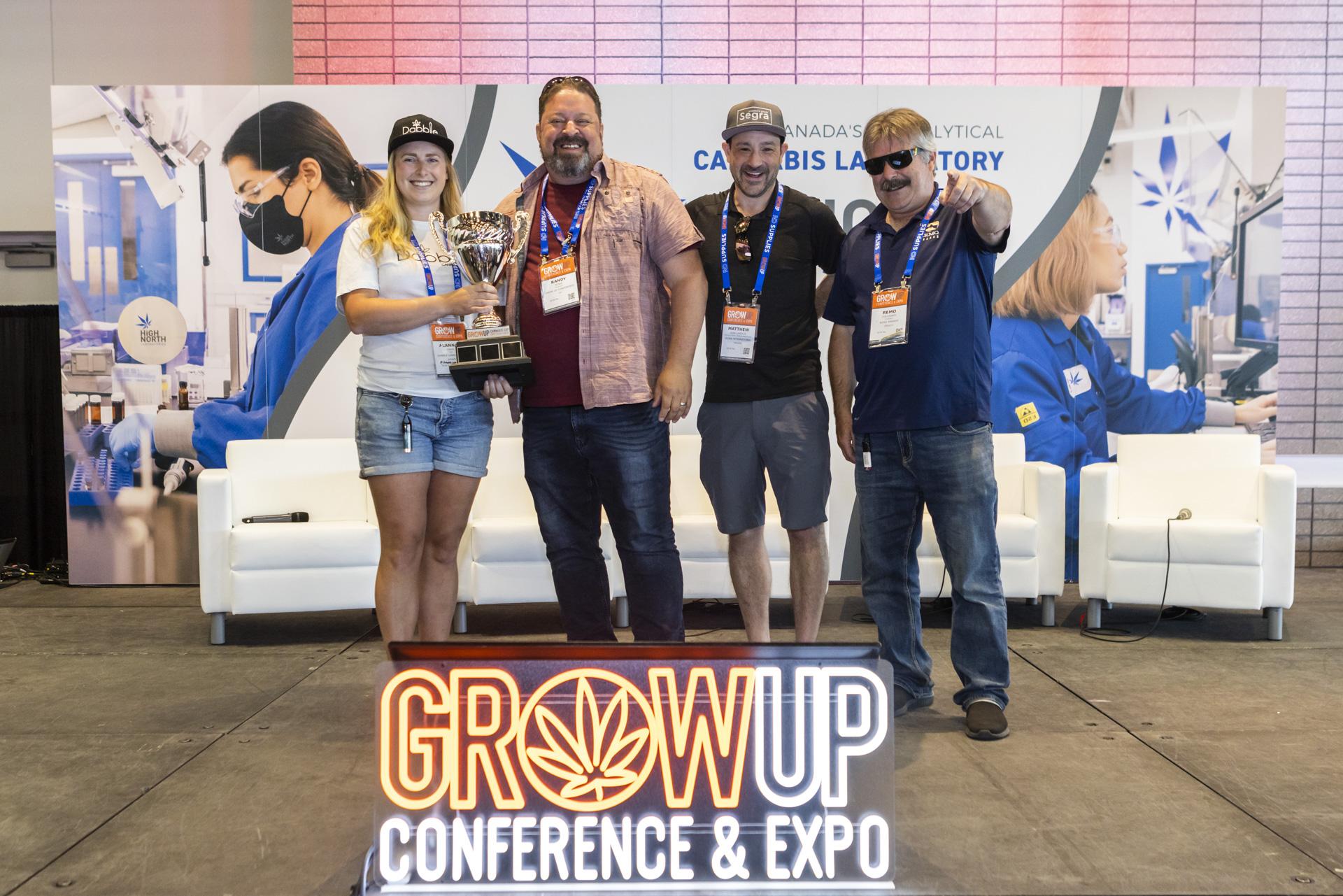
Welcome to “Behind the Label,” where we tell the stories of Canada’s most innovative craft cannabis producers. Today, we feature Dabble Cannabis Co., a standout in the craft cannabis market known for its exceptional extracts. Located in the Cowichan Valley, a unique Mediterranean climatic zone, Dabble grows the sun-grown cannabis used in its single-source products. Their fruity signature strain, Strawberry Jam, won Grow Up’s 2023 Canadian Cannabis Championship in the concentrates category. Plus, CEO Alannah Davis leads Hi Point Guest Ranch, offering cannabis-friendly accommodations, tours, and educational events around their private lake. Join us as we explore the products and practices that make Dabble Cannabis Co. an award-winning craft cannabis company.
Growing Together: Dedication to Education The Dabble team is driven by their passion for family, cannabis, and a strong commitment to education. The Davis family works closely together to produce their award-winning cannabis into concentrates and operate Hi Point as a cannabis tourism destination. And Alannah’s goal is to continuously educate herself about cannabis and concentrates and share that knowledge with retailers and consumers. This dedication is evident in the events she organizes at Hi Point to support and educate the community. This summer, she and her sister, Chelsea Strang, “The Holistic Cannabis Nurse,” an LPN and accredited holistic cannabis practitioner, hosted a cannabis education retreat.
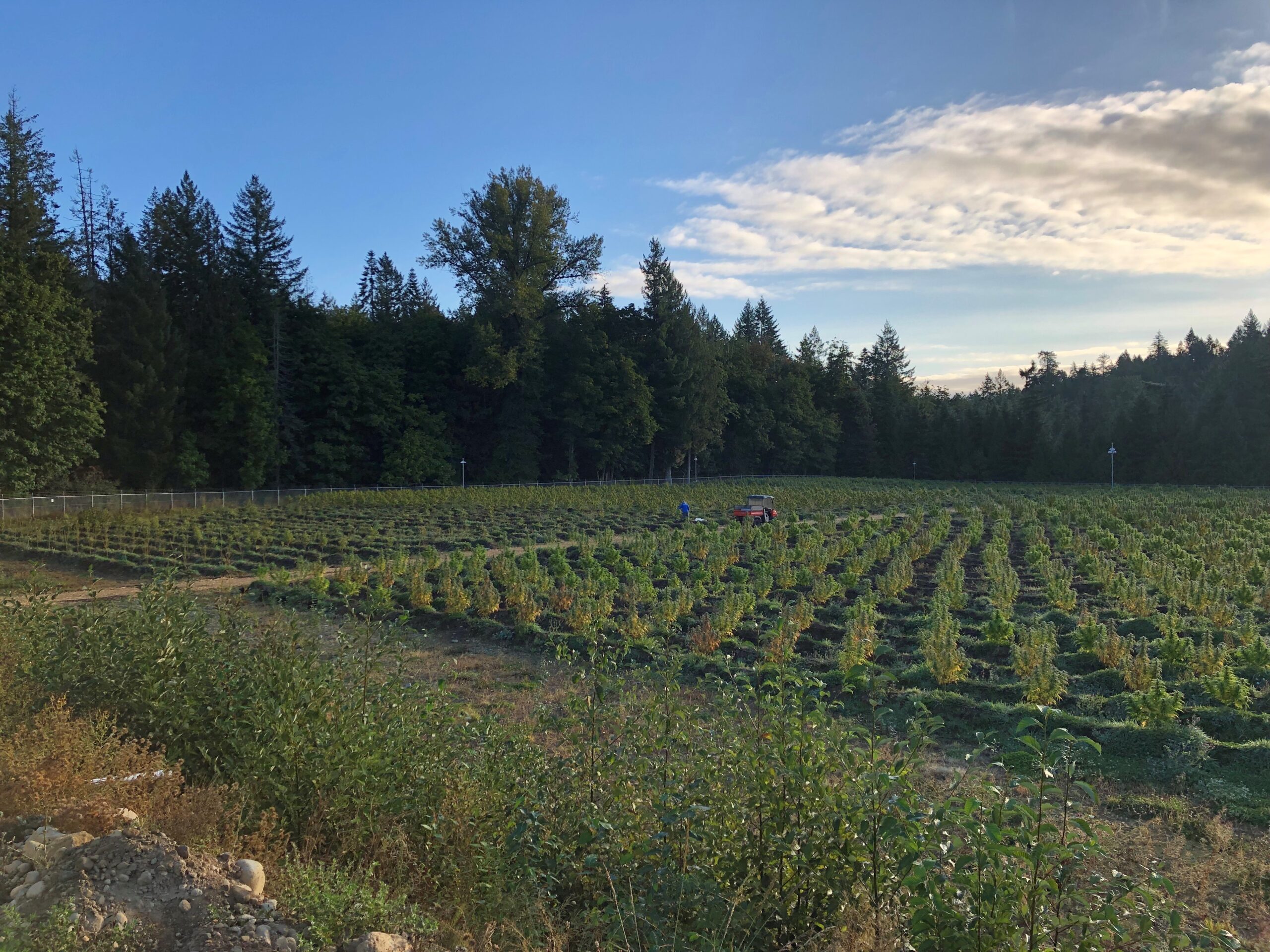
Uniquely Dabble: Cultivation and Innovation Dabble stands out in the industry by producing its sun-grown, single-source cannabis, owning the entire supply chain from cultivation to extraction. Their tight focus on producing terpene-rich solventless live rosin also sets them apart. And Hi Point Guest Ranch is growing into a busy cannabis-friendly destination with a lovely bed and breakfast, private lake access, lakeside camping, and event spaces for cannabis-focused gatherings.
Signature Strains: From Strawberry Jam to New Releases Dabble’s signature strain, Strawberry Jam, is a testament to the meticulous work of their master grower, Ross Butcher, who has spent years hunting for the finest cultivars. This strain is known for its unique fruity aroma, reminiscent of overripe strawberries and Nana’s homemade jam. Alongside Strawberry Jam, Dabble offers live rosins of Hashplant and Dabbleberry (Blueberry Cream). With 12 new strains in the fields, get set to receive small batch releases throughout this year.
Growing Techniques: Quality and Sustainability Dabble’s cultivation practices are distinctive in that they approach each plant in the field like an indoor plant, ensuring that each one is cared for and pruned removing unnecessary plant material to boost growth. They also employ pesticide-free growing methods, using beneficial and predator insects and companion plants like marigolds and catnip for preventative pest control. They are continuously improving their process to produce their hash, using solventless ice-water extraction to produce live rosin and ensure the highest quality of their product before allowing it out of the facility to market.
Challenges and Successes: Overcoming Obstacles in the Market Despite the challenges of high administrative burdens and initial difficulty breaking into the BCLDB, Dabble has taken fire. Once it entered the BC market, it doubled the category sales in the province. Alannah advocates for cannabis to be considered an agricultural crop so that cannabis farms can access insurance and tax exemptions available to other farms. She would also like to see the industry come together to work towards a common goal, like reducing onerous red tape and the punishing excise tax structure.
Commitment to Quality, Family, and Innovation With a foundation rooted in family values, a passion for cannabis, and an unwavering commitment to education, Dabble Cannabis Co. has firmly established itself as a leader in the craft cannabis industry. Their dedication to producing sun-grown, single-source cannabis and solventless concentrates has earned them accolades and a loyal following.
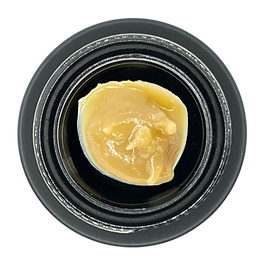
Dabbleberry Live Rosin
Hashplant Live Rosin
Strawberry Jam Live Rosin
Q. How do you engage with your local community and support local initiatives? A. We leverage community events as our primary means to connect with our community of consumers and retailers. Each month, we host an event called 420 Church alongside another local farm welcoming enthusiasts and newbies alike to enjoy cannabis, community, food and prizes and to give back to different charitable organizations. We are also often hosting dab-bars at events and attending events to meet others or having events at the farm!
Q. What trends do you see in the craft cannabis market, and how do you plan to adapt? A. In other more established markets like California, Colorado and BC’s own legacy market – solventless products for inputs for infused products like gummies, vapes, drinks, prerolls etc. I definitely see that as an evolution from distillate inputs that have barely begun to reach the market in Canada, so I see a big opportunity there. We are well positioned to adapt to this, with ample ‘food-grade’ supply of rosin that is produced when we make our premium jar grade. We have already sold some rosin to beverages for another brand and hope to see our own products in market one day.
Q. How do you see the future of the craft cannabis industry evolving in Canada? A. I see the future of the craft cannabis industry evolving similarly to small wineries and craft breweries. BC is already well positioned to capitalize on this, and once the government releases their tight grip on regulations and taxes and fees, we will be able to afford things like developing a farm store and tasting room, allowing cannabis to participate in agri-tourism, contributing to our local economies. What needs to happen first however, is for all of the different associations and groups must release their egos and work together to provide priorities to the provincial government.
(CNW) Calgary – SNDL Inc and Nova Cannabis Inc. are pleased to announce that they have entered into an arrangement agreement pursuant to which SNDL will acquire all of the issued and outstanding common shares in the capital of Nova not already owned by SNDL, representing approximately 34.8% of Nova Shares, by way of a statutory plan of arrangement for aggregate consideration of approximately $40 million. All financial information in this press release is reported in Canadian dollars unless otherwise indicated.
“Today’s announcement by our Alberta-based corporations underscores our commitment to sustainable performance in Canadian cannabis,” said Zach George, SNDL’s CEO. “We are committed to building a consumer-centric model at scale, supported by SNDL’s robust shared service model, access to capital, and a well-developed cannabis retail pipeline. These factors are integral to the achievement of sustained profitable growth.”
Transaction Benefits
Retail Expertise: Nova’s retail expertise will support SNDL’s entire cannabis retail portfolio to enhance programming, expand data programs, advance staff training initiatives, and optimize inventory management.
Synergies and Cost Rationalization: The Transaction is anticipated to generate savings through the streamlining of public company expenses and the optimization of general and administrative costs.
Access to Capital: SNDL’s robust balance sheet will ensure that Nova’s retail platform continues to be supported in a competitive and challenging environment.
“The proposed transaction offers liquidity and certainty to minority shareholders, while creating a lasting retail legacy in a nascent industry,” said Ron Hozjan, one of Nova’s independent directors and chair of the special committee of Nova. “I commend the Nova team and board of directors for their dedication and leadership.”
Under the terms of the Agreement, Nova’s shareholders will receive $1.75 in cash for each Nova Share, representing a premium of 41.2% to the 20-day VWAP of Nova Shares on the Toronto Stock Exchange as of market close on August 12, 2024.
Nova shareholders also have the ability to elect to receive, in lieu of the Cash Consideration, 0.58 of a common share of SNDL for each Nova Share, subject to proration and a maximum of 50% of the aggregate consideration being payable in SNDL Shares.
The transaction has been approved by the boards of directors of both SNDL and Nova and is expected to close on or before October 18, 2024. Following the closing of the transaction, the Nova Shares are expected to be delisted from the TSX and Nova will apply to cease to be a reporting issuer in all provinces and territories of Canada.
Shareholder approval
The Transaction will be carried out by way of a court-approved plan of arrangement under the Business Corporations Act (Alberta), pursuant to which SNDL will acquire all of the issued and outstanding Nova Shares not already owned by SNDL. The implementation of the Transaction will be subject to (among other things) the approval of at least two thirds of the Nova Shares voted by Nova shareholders, as well as the requisite approval of the majority of disinterested Nova shareholders under Multilateral Instrument 61-101 – Protection of Minority Security Holders in Special Transactions, at a special meeting of Nova shareholders expected to be held by Nova in October, 2024. The transaction is also subject to the receipt of court approval from the Court of King’s Bench of Alberta and other customary closing conditions.
(Globe Newswire) Delta, B.C. – Pure Sunfarms Corp., a wholly owned subsidiary of Village Farms International, Inc. (Nasdaq: VFF), is pleased to announce it has completed the first phase of its wildlife enhancement project through the Beneficial Management Practices program.
The initiative will transform 1.5 acres of Pure Sunfarms’ Delta property to create a natural habitat supporting native bird and aquatic species. The 2023/24 year marks the first year the B.C. Ministry of Agriculture and Food allowed cannabis producers to participate without ‘Farm Class’ land and make use of the cost-sharing incentive program for environmental restoration work.
“At Pure Sunfarms, we care deeply for the land on which we operate, and we want to minimize our impact so future generations can enjoy it as well. This focus on sustainability drives every part of our cultivation business,” said Orville Bovenschen, president of Pure Sunfarms. “I want to thank the B.C. Ministry of Agriculture for including cannabis producers in their initiatives. It marks a huge step forward in recognizing our business as an important contributor to agriculture in British Columbia.”
As part of the enhancement project, Pure Sunfarms has introduced over 800 plants, trees and shrubs across its property including the Red Alder, indigenous to British Columbia, as well as classic coastal species like the Douglas Fir and Black Hawthorn. Plants and native shrubs feature the Pacific Willow and the Nootka Rose plant from Vancouver Island. The environmental enhancement project will provide an important habitat for local wildlife, including the population of Delta’s designated Important Bird Area, which include resident and migratory birds such as waterfowls, raptors, cranes and other wading birds.
Funding for this project has been provided by the Governments of Canada and British Columbia through the Sustainable Canadian Agricultural Partnership, a federal-provincial-territorial initiative, under the Beneficial Management Practices Program. The program is delivered by the Investment Agriculture Foundation of BC.
Even if your garden is small, the amount of physical work it can take, especially in the spring or at harvest, can be astounding. Bending, lifting, lifting and twisting, bending, lifting and twisting are all complex activities for the body that often don’t go down well after a long week at a desk. Or perhaps you are more like me, a landscaper or working on a farm, finishing plantings under the threat of weather, always moving, overworking, and pushing to finish during a short season. Ah, we can overwork! After a long day in the garden, my sister calls it “gettin’ a hurt on”.
So why don’t we naturally stretch and relax our bodies regularly as other animals do? If you are working with your body or just living in one, it makes sense to understand how it works.
It turns out that muscles are only designed to contract. Stretching is optional. Muscles are striated by fascia fibers that hold the body’s shape. If you liken muscle tissue to rubber, then fascia would be more like plastic. The way you hold your hips, shoulders, and head, day in and day out, will be held firmly in place by the body’s fascia system. The facia also shortens and dries out as the muscles contract through use and dehydration. Over time, this is called old age.
Yoga For Gardening
Yoga postures are a simple way to systematize stretching and relaxation to help the body recover from all sorts of things, especially gettin’ a hurt on in the garden. It was developed by ancient humans, long before mechanization and spandex, because they needed to use their bodies to do everything. Developments in yoga postures since its emergence from ancient India have brought us restorative yoga. This practice describes long-held, fully supported yoga postures that help the body open, release, rest, and relax. It is at the top of the list of things to look into during gardening season.
Work Habits That Transfer Directly From Yoga Practice
Improved mindfulness, taking time to position your body, using legs to lift, etc.
Moving with the breath, lifting during exhalation
Training parts of the body to work independently as well as in unison
Better balance and extension
Improved endurance
Awareness of when you are tired and valuation of resting
The body retains the yoga practice over time. It remembers how to stretch, lift, and pace. Practicing conscious movements protect the body from accidents. Slowing down to take a breath before lifting increases strength.
It is helpful to think about the activities you will be doing in a work period and try to match your stretching to them. I can’t teach you yoga in 850 words, but you can complete the following moves in about 15 minutes, keeping you happier in the garden for longer. And hey, isn’t that what it’s all about?
Gardening Warm-Up
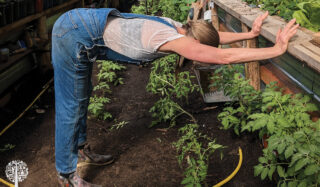
Half-standing forward bend
Begin by identifying something stable in your work zone about hip height. Place your hands there, shoulder width apart, then step your feet back, placing them hip distance apart. Your legs and torso should make a right angle, if possible. If you are using a wall, you can press your hands flat to stretch the wrists and fingers. Then, outer rotate the arms so the shoulders open around the neck. Your head stays at arm height. Use the thigh bones to draw the pelvis away from the shoulders. Breathe and relax where you can, keeping your legs and arms activated.
Leg stretches
Leg stretches are done from the same place as the previous posture. Take one leg forward and the other back. The feet should be on the ground, hips squaring. The torso can be up with the chest lifted or lowered like in the previous posture. Hug the thigh bones toward each other. Repeat on the other side.
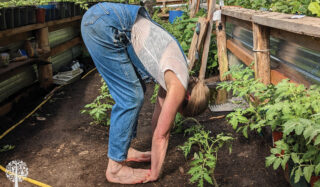
Forward bend with hands under feet
This pose is quite therapeutic for overworked hands. You want to step the big toes up toward the wrists. Keep the knees bent as much as needed.
Squatting
Squatting strengthens the knees and opens the hips. Find something to hold onto to anchor you. Bend your knees and lower your hips. If your heels don’t reach the ground easily, adjust your distance from the anchor so they can. Bring your torso between your legs and relax your head toward the ground.
Tree pose
Tree pose for balance can be practiced by putting your foot on the inside of your ankle, calf, or upper inner thigh. Press the foot into the leg and the leg back into the foot. Ground the lower body as you lift and extend the arms overhead. Soften the eyes and focus on something.
Gardening Cool-Down
Child pose
Take your knees wide apart and your big toes together, laying your torso forward between bent knees and taking the head to the floor.
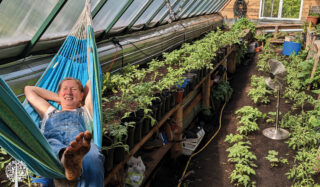
Rest
Rest with your legs on a chair (or hammock).
During all postures, breathe slowly through the nose. All postures can be held for 5-10 breaths. If you want to get more serious about yoga, find a small, quiet class and bring a mat. In the meantime, keep stretching, breathing, and gardening!
Interest in the effectiveness of psychedelic drugs as treatments for disorders such as substance use disorder, PTSD and depression has grown in the last few years. Thus far, different studies have determined that psychedelic compounds, such as psilocybin, DMT and LSD, promote the strengthening and growth of neurons and their connections in the prefrontal cortex. This region in the brain plays a role in executive function, including reasoning and decision making.
Now, scientists at UC Davis have invented a tool that can track how psychedelic substances activate biomolecules and neurons in the brain. The rapid noninvasive tool, dubbed Ca2+-activated Split-TurboID (CaST), was tested in mice models.
This study affords scientists a new method that can be used to track molecular signaling processes, which induce these neuroplastic effects, albeit gradually. According to the scientists, the protein-based tool achieves this cellular tagging task quickly, taking between 10 and 30 minutes. This is significantly faster than other tagging techniques, which take a couple of hours to produce results.
For their study, the researchers administered psilocybin to mice models then used biotin in conjunction with CaST to pick out neurons in the prefrontal cortex that had high levels of calcium. CaST focuses on changes in concentrations of intracellular calcium to track activity in the neurons. When the neurons are highly active, they have high levels of calcium. The tool uses this signal to mark the cell with biotin.
Christina Kim, an assistant professor of neurology at the institution’s Center for Neuroscience and School of Medicine, explained that the use of biotin as a tagging substrate was good. This, she added, was because different commercial tools could be used to determine whether biotin was absent or not by a simple imaging and staining technique.
The scientists are now focused on developing techniques that will allow for brain-wide cellular labeling using the CaST tool. Additionally, they are looking for new ways to enhance the individual protein signatures produced by neurons and affected by psychedelics.
The study’s findings were published in “Nature Methods.”
Other authors of the study include lead authors Maribel Anguiano and Run Zhang, along with Sruti S. Vadde, Joshua Chandra, Sophia Lin and Isak K. Aarrestad.
The study was supported by grants from the Boone Family Foundation, NSF, NIH, the Arnold and Mabel Beckman Foundation, Kinship Foundation, and the Brain and Behavior Research Foundation.
Innovations such as this noninvasive tool to see how neurons are affected by psychedelics could possibly one day find its way into the different activities that companies such as Mind Medicine Inc. (NASDAQ: MNMD) (NEO: MMED) (DE: MMQ) are engaged in with the aim of commercializing new treatments derived from psychedelic compounds.
About PsychedelicNewsWire
PsychedelicNewsWire (“PNW”) is a specialized communications platform with a focus on all aspects of psychedelics and the latest developments and advances in the psychedelics sector. It is one of 60+ brands within the Dynamic Brand Portfolio @ IBN that delivers: (1) access to a vast network of wire solutions via InvestorWire to efficiently and effectively reach a myriad of target markets, demographics and diverse industries; (2) article and editorial syndication to 5,000+ outlets; (3) enhanced press release enhancement to ensure maximum impact; (4) social media distribution via IBN to millions of social media followers; and (5) a full array of tailored corporate communications solutions. With broad reach and a seasoned team of contributing journalists and writers, PNW is uniquely positioned to best serve private and public companies that want to reach a wide audience of investors, influencers, consumers, journalists and the general public. By cutting through the overload of information in today’s market, PNW brings its clients unparalleled recognition and brand awareness. PNW is where breaking news, insightful content and actionable information converge.
To receive SMS alerts from PsychedelicNewsWire, text “Groovy” to 888-902-4192 (U.S. Mobile Phones Only)
Please see full terms of use and disclaimers on the PsychedelicNewsWire website applicable to all content provided by PNW, wherever published or re-published: https://www.PsychedelicNewsWire.com/Disclaimer
The parent company of cannabis packager Galaxie Brands was issued an order pursuant to the Companies’ Creditors Arrangement Act(CCAA) on August 6, on application by The Vancor Group Inc.
The Vancor Group is the largest creditor of Equipment Co., Galaxie Brands’ parent company, which owns the equipment Galaxie uses to conduct business. Galaxie Brands is a licensed producer of cannabis under the Cannabis Act and operates as a producer and co-packer of cannabis and cannabis products.
Galaxie Brands processes cannabis into various products for sale to its customers and provides packaging services at its facility in Puslinch, Ontario. However, neither Galaxie nor Equipment Co. cultivates, manufactures or grows cannabis flower.
Galaxie’s primary customers include other cannabis producers and provincial partners across Canada, including those in Ontario, British Columbia, Nova Scotia, Yukon, and New Brunswick.
Vancor has invested over $2.7 million in Equipment Co and Galaxie Brands on an unsecured basis. That debt has now matured as of May 31, 2024, and more than $2.1 million in outstanding debt is owed to Vancor. KPMG Inc. has been appointed as monitor of the CCAA process for Vancor.
While Galaxie’s production licence is not set to expire until February 2028, the company’s excise licence, set to expire on October 16, 2024, must be submitted by September 16, 2024.
Beginning around September 2023, Galaxie Brands also entered into a payment plan with Health Canada to pay licensing fee arrears.
The plan considers a monthly payment of approximately $15,000 to Health Canada for these arrears. As of August 2024, Galaxie owes about $30,481.05 to Health Canada on account of annual licensing fees for 2023.
As of August 2024, Galaxie is also said to have owed the Canada Revenue Agency (CRA) around $4.1 million in unremitted excise tax. In May, the CRA requested that Galaxie prove it has enough money to continue operating and work on a payment plan.
KPMG, the Proposed Monitor, reports that the CRA is the beneficiary of a $535,000 surety bond issued by Trisura Guarantee Insurance Company as security for Galaxie Brands’ excise tax obligations.
Galaxie Brands also has around $569,000 in arrears related to Harmonized Sales Tax (HST) remittances to the CRA.
Equipment Co and Galaxie also owe some $2 million in accounts payable, primarily to suppliers, shipping and logistics services companies, and other cannabis licensed producers.
The main goal of the CCAA Proceedings is to stabilize Equipment Co and Galaxie’s businesses and to allow them to be sold to address these debts through a court-ordered process.
Galaxie’s sales for the period of August 3 to November 1, 2024, are just over $4 million, with a closing cash balance of -$1.4 million.
In 2023, BZAM completed its disposal of Galaxie Brands Corporation via a share purchase agreement, which it had acquired when it took over the Green Organic Dutchman who had taken over Galaxie Brands in 2021.
Galaxie’s brands include WAGNERS, Highland, ZIP, Stunnerz, Glob Headz, Lite Label, Munchie Box, and Cannabis Cartel.
Cannabis retailers in Ontario want to know what the city is going to do about a growing number of unlicensed cannabis stores.
An estimate earlier this year from Toronto said that more than 50 unlicensed cannabis stores were operating in Toronto alone, and some retailers say they believe the number now is even higher.
Cannabis store owner Paul McGovern, a former police officer with Toronto Police Services who stepped down in 2018 to open Vertie Cannabis, says he understands that enforcement priorities are complicated. With a limited budget and many competing issues, targeting unlicensed cannabis stores is likely not seen as important as going after car thieves or fentanyl dealers.
He argues that another issue that impedes enforcement in Toronto is that it is the only city in Ontario that doesn’t treat this like a law enforcement issue, instead handing it over to bylaw officers who otherwise inspect bars and restaurants.
McGovern also argues that public awareness is an issue. While store owners might be following this closely, the general public, municipal and provincial lawmakers, and the legal system in general might not. While some in the justice system might still think the landscape is similar to the wave of stores opening in the years before legalization, he says the arguments that might have held up in court then will not now.
“I get the impression that maybe not everybody in the justice system is aware of what’s going on. We’re hyper focused on this in our industry but I don’t think the same is true for the general public or for police agencies. So part of the challenge is helping them understand how different things are today than in, say, 2016.”
“The very fabric of legalization is brought into question because of these stores and their proliferation. It’s a big deal on a lot of levels. I hope Canada can find a way to get it right. I don’t think we can look the other way anymore. This is too big and too meaningful.”
Paul McGovern, Vertie Cannabis
While he thinks there is a lack of funding to address the issue, McGovern says he’d also like to see a more coordinated province-wide approach similar to what British Columbia and, more recently, New Brunswick have done by giving inspectors broader law enforcement powers so they can work hand-in-hand with police to move unlicensed stores towards compliance and seize products.
“So far it’s been a very sort of ad hoc response in Ontario. Every police agency and jurisdiction is responsible for enforcing the law within their borders, and seemingly everybody is doing it a little bit differently.”
But the lack of coordinated enforcement means that retailers like himself are likely losing sales, and local communities and provinces are missing out on tax revenue. Not to mention what he says are likely connections to organized crime behind many of these stores.
“What’s all this costing? In terms of lost sales and the risks this creates for legal businesses, what’s the cost of lost excise, lost sales tax, lost jobs, all of those things? It’s really remarkable when you think about it. How much are taxpayers in Ontario missing out on?
“We really hope something different can happen sooner than later, because how can anyone compete with no tax. With those kinds of margins?”
Ontario recently announced it is planning to add $31 million to its budget to address illegal cannabis stores and websites operating in the province. As part of Ontario’s Budget 2024, it says it plans to provide the funds over three years to the Provincial Joint Forces Cannabis Enforcement Team (PJFCET).
The head of Toronto’s licensing and standards department says the city needs more money to enforce the law against a growing number of illegal cannabis stores operating there.
“We are a legally operating business here and our sales are down 25% because of places like this,” Van Iersel told Cambridge Today. “How can we compete when their products are stronger and cheaper than ours?”
Highlighting another layer of complexity in enforcement is that one of Van Iersel’s two locations is near a store that argues it operates outside of provincial and federal cannabis regulations. While some police agencies in Ontario have targeted such businesses, seizing products and/or making arrests, other jurisdictions take a more cautious approach.
New Brunswick, for example, has said they cannot enforce their own cannabis regulations against stores operating on First Nations’ reserve lands, while officials in British Columbia have said they can but still often do not.
However, these types of stores are not the bulk of the more than 60 operating in Toronto, McGovern points out, nor are they the kind of “activist crusaders” that helped lead the charge prior to legalization. Instead he argues these are businesses just looking to make an easy buck by taking advantage of low enforcement priorities.
“We’ll never achieve the goals of the Cannabis Act unless there is some meaningful enforcement,” he tells StratCann. “I don’t think anyone expects it to go away with just enforcement, but with that said, if we don’t have some enforcement of the rules, why bother having the rules to begin with?
“The very fabric of legalization is brought into question because of these stores and their proliferation. It’s a big deal on a lot of levels. I hope Canada can find a way to get it right. I don’t think we can look the other way anymore. This is too big and too meaningful.”
Featured image from Google Street View of an unlicensed store in Kingston, Ontario that was raided by OPP earlier this year.







 Welcome to “Behind the Label,” where we tell the stories of Canada’s most innovative craft cannabis producers. Today, we feature











Recent Comments