
by Grow Up Conference | Aug 8, 2024 | Grow Opportunity, Media Partners
(CNW) Toronto – Two separate incidents at Toronto Pearson International Airport last week have led to the seizure of 32 kilograms of cannabis. Both incidents involved individuals attempting to export cannabis outside of Canada.
On July 25, 2024, CBSA stopped Kery Maddison, a Canadian citizen, after she was found with approximately 23.25 kgs of cannabis concealed inside her luggage. On July 28, 2024, CBSA stopped Stanford Wint, a Canadian permanent resident, after 8.8 kgs of cannabis was found concealed inside his luggage.
CBSA seized the cannabis and RCMP Federal Policing Central Region arrested and charged the two individuals:
- Kery Maddison, 36, Possession for the Purpose of Export contrary to section 11(2) of the Cannabis Act
- Stanford Wint, 53, Possession for the Purpose of Export contrary to section 11(2) of the Cannabis Act
Both Maddison and Wint are scheduled to appear in court on September 5, 2024.
“The RCMP Border Integrity Program is committed to preventing and disrupting cross-border criminal activity. These seizures highlight the great work and collaboration between RCMP and CBSA officers to intercept shipments of cannabis and other illegal substances at Canada’s busiest airport.” Insp. John McMath, OIC Toronto Airport Detachment Border Integrity

by Grow Up Conference | Aug 8, 2024 | Media Partners, Stratcann
Cronos brought in its highest quarterly net revenue yet at $27.8 million in the second quarter of 2024 but still reported a net loss of $8.8 million (reported in US dollars).
Cronos Group Inc. saw a 46% ($8.7 million) year-over-year increase in net revenue, which the company attributes to increased domestic and international sales.
The company’s gross profits also increased, up $3.2 million in the three months ending June 30, 2024, from the same reporting period in 2023.
Cronos’ net loss of $8.8 million is up from a $2.4 million loss in the previous quarter, and up from a $5.7 million net loss in Q2 2023.
Net revenue for the three months ended June 30, 2024, was $38.7 million, with $10.9 million in excise taxes. Cost of sales was another $21 million, while sales at marketing were $4.3 million out of $21.9 million in total operating expenses.
Net revenue from cannabis flower sales was $20.7 million in Q2 2024, while net revenue from cannabis extracts was $7 million, a 47% and 43% year-over-year increase, respectively. The majority of these sales were in Canada ($19.8 million), while $6.9 million were to Israel and $1 million to Germany and the United Kingdom (up 46%, 27%, and no material change compared to the same quarter in 2023, respectively.
Israel is in the process of considering adding levies to cannabis imported from Canada. Cronos also operates Cronos Israel, which has a nursery, cultivation, and distribution licenses. It is in the process of constructing a custom-built greenhouse and manufacturing facility for cannabis.
“Cronos achieved its highest quarterly net revenue on record in Q2 2024 at $27.8 million, up 46% year-over-year,” said Mike Gorenstein, Chairman, President and CEO of Cronos. “The top line was propelled by 46% growth year-over-year in Canada, 27% growth year-over-year in Israel, growth in Germany and the initiation of sales in the United Kingdom. These results reflect the hard work and dedication of our entire team, reinforcing our confidence in sustained growth and success,”
Cronos also recently announced a $51 million (CAD$70 million) expansion of Cronos Growing Company Inc. (Cronos GrowCo) to address increased international demand for its cannabis. Cronos GrowCo reported preliminary unaudited net revenue to third parties, excluding sales to the Company, of approximately $2.7 million in the second quarter of 2024.
In 2023, Cronos purchased approximately $21 million of biomass from GrowCo, and GrowCo sold approximately $20 million to third parties.
Cronos sells its cannabis under the brands Spinach, Lord Jones, and Peace Naturals.

by Grow Up Conference | Aug 8, 2024 | Media Partners, Stratcann
On July 15, 2024, Delta 9 Bio-Tech Inc. (“Bio-Tech”) and four related entities were granted an initial order by the Court of King’s Bench of Alberta (the “Court”) under the Companies’ Creditors Arrangement Act (Canada) (the “CCAA”). Alvarez & Marsal Canada Inc. was appointed pursuant to the CCAA as monitor (the “Monitor”).
On July 24, 2024, the Court approved a sales and investment solicitation process (the “SISP”) to solicit interest in, and opportunities for, a sale of, or investment in, all or part of Bio-Tech’s assets and business operations (the “Opportunity“). The Opportunity may include one or more of a restructuring, recapitalization or other form or reorganization of the business and affairs of Bio-Tech as a going concern, or a sale of all, substantially all, or one or more components of Bio-Tech’s assets (the “Property“) and business operations (the “Business“) as a going concern or otherwise.
The Property includes a 95,000 sq ft. Health Canada approved cannabis production facility located at 760 Pandora Avenue East, Winnipeg, MB. The Business has been able to cultivate premium quality cannabis at a cash cost of $0.60 to $0.70/gram with an industry-competitive cost structure (favourable labour, land-leasing, and power cost). Further, an opportunity exists for modest capital investment to expand production and further reduce costs.
Interested parties wishing to pursue the Opportunity are to submit a formal binding offer to the Monitor in accordance with the SISP, by the following deadline:
- Bid Deadline: 5:00 p.m. Mountain Time on October 28, 2024
Copies of the SISP Procedure Document and other Court filed materials are available at: https://www.alvarezandmarsal.com/delta9. Interested parties who wish to obtain additional information and participate in the SISP may contact the Monitor at: [email protected].
Sponsored content by: Alvarez and Marsal

by Grow Up Conference | Aug 8, 2024 | Cannabis News Wire, Media Partners
Cannabis growers, traders, license holders, physicians, patients, regulatory authorities, capital investors, professionals, and enthusiasts are invited to attend the CannaCon Cleveland Conference at the Huntington Convention Center, Cleveland, on October 3-4, 2024. The venue of the event, the Huntington Convention Center is situated in the heart of downtown Cleveland, near the legendary Rock & Roll Hall of Fame and the International Women’s Air & Space Museum, among others.
The CannaCon event offers a robust platform for the local cannabis community, with two full days of innovation, learning, networking, and collaboration. Exhibitors from around the world will be pitching their latest products and services to a crowd of established investors and business experts in the cannabis industry. Newbies and startups gain important visibility by showcasing their unique products and services for the right target audience.
Local businesses will be there to connect with cannabis leaders and investors. Attendees will witness an impressive lineup of industry leaders presiding as guest speakers. They will share invaluable insights about current industry trends and discuss the critical issues of current cannabis trade.
These leaders will cover a number of engaging topics, offering the best path forward to the cannabis community. From harvest quality to understanding the best practices to comply with rules and regulations, attendees can get answers to their queries regarding cannabis cultivation and trade in Cleveland.
Several plush accommodations are available near the Huntington Convention Center for the attendees. CannaCon serves as a business as well as an educational experience. Attendees will discover a wealth of information, products, and valuable connections, from cultivation supplies, cannabis innovations, discoveries in genetics, and a wide range of vendor retail displays, to important scientific, legal, financial, and marketing ideas. Don’t miss out on this rich event.
To learn more, please visit https://cnw.fm/YoTB3
About CannabisNewsWire
CannabisNewsWire (“CNW”) is a specialized communications platform with a focus on cannabis news and the cannabis sector. It is one of 60+ brands within the Dynamic Brand Portfolio @ IBN that delivers: (1) access to a vast network of wire solutions via InvestorWire to efficiently and effectively reach a myriad of target markets, demographics and diverse industries; (2) article and editorial syndication to 5,000+ outlets; (3) enhanced press release enhancement to ensure maximum impact; (4) social media distribution via IBN to millions of social media followers; and (5) a full array of tailored corporate communications solutions. With broad reach and a seasoned team of contributing journalists and writers, CNW is uniquely positioned to best serve private and public companies that want to reach a wide audience of investors, influencers, consumers, journalists and the general public. By cutting through the overload of information in today’s market, CNW brings its clients unparalleled recognition and brand awareness. CNW is where breaking news, insightful content and actionable information converge.
To receive SMS alerts from CNW, text CANNABIS to 888-902-4192 (U.S. Mobile Phones Only)
For more information, please visit https://www.CannabisNewsWire.com
Please see full terms of use and disclaimers on the CannabisNewsWire website applicable to all content provided by CNW, wherever published or re-published: https://www.CannabisNewsWire.com/Disclaimer
CannabisNewsWire
Denver, CO
www.CannabisNewsWire.com
303.498.7722 Office
Editor@CannabisNewsWire.com
CannabisNewsWire is powered by IBN
by Grow Up Conference | Aug 8, 2024 | Garden Culture Magazine, Media Partners
“Darts Hill Garden Park is a paradise for nature lovers.”
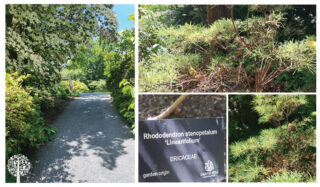
Francisca Darts and her garden have been legendary among Metro Vancouver gardeners for decades. But when I visited the garden myself, I fully appreciated what the fuss was all about. Darts Hill Garden Park is the culmination of the hard work and vision of the late Edwin and Francisca Darts. In 1994, they donated their 7.5-acre garden to the City of Surrey, which now operates the property alongside the Darts Hill Garden Conservation Society.
What Grows In Darts Hill Garden Park?
When the Darts purchased the South Surrey property in 1943, they intended to grow fruit trees. The garden grew as they took courses, read books, joined clubs, and learned more about horticulture. Eventually, Darts Hill Garden Park became a plantsman garden of over 4,500 different plant species that is now open for the public to appreciate.
What To Expect At Darts Hill Garden Park
Against this backdrop, I came on a hot and sunny day to learn more about the history and the garden’s rich biodiversity. Leaving the sunbaked parking lot, I walked into the refreshing coolness of a woodland path. I’d come prepared with a map from the garden’s website and sheets of one of six recommended self-guided walks visitors can take through the garden. Of course, I chose the walk that focused on biodiversity in the garden.
Darts Hill Garden Park: A Personal Expression
Unlike a botanical garden, a plantsman garden reflects the personal taste and expertise of an individual or a group of garden enthusiasts. It showcases the gardener’s personal choices and collections of specialty flora and fauna, often closely planted in clusters to mimic nature. Signs throughout Darts Hill have QR codes that, once scanned, reveal short vignettes of Mrs. Darts explaining why she chose specific plants.
For example, she chose the different varieties of rhododendrons in the garden because she liked their leaves. Does this sound familiar? It sure did to my gardening heart and the best gardening advice I’d ever received: choose what makes you happy.
Biodiversity at Darts Hill Garden Park

Staying on the woodland trails, I appreciated the shade of the nine different species of pine trees towering overhead on a hot day. The pinecones are a food source for squirrels and bluejays. There are over 70 different varieties of magnolias in the garden. When blooming, the nectar-rich flowers are a magnet for beetles and flies.
Notable sightings along my walk included the giant rhubarb (Gunnera manicata). A non-native species, the cyanobacteria living in the plant’s leaf cells synthesize nitrogen, which helps it grow in poor swampy soils and gives it an ecological advantage over native flora growing in the same habitat. Transitioning out of the woodland, a vast lawn sprawled before me. Interspersed with perennial beds designed and planted by Mrs. Darts, June favorites such as peonies, oriental red poppies, white iris, and lupins were providing lunch for the dozens of bees and hummingbirds gathered around them.
Interconnections And Takeaways
Back under the shade of trees, the fallen logs and woody debris in the native plant garden offer homes for newts, salamanders, wasps, frogs, and even garter snakes. Coyotes hunt for mice and voles in the garden, and beetles, millipedes, and centipedes break down dead plants and transform them into fertile soil.
I was so impressed by the burgeoning Garry Oak ecosystem and the insects, birds, mammals, mosses, and fungi it supports. Once common throughout southern BC, development, agriculture, and encroachment of non-native invasive species have endangered Garry Oak ecosystems.
Only as my visit ended did Darts Hill’s magic reveal itself. Each section of the garden interconnects with another seamlessly. One plant’s services, such as food for pollinators, benefit another to create the whole. That didn’t just happen; it took vision, time, and thoughtful consideration from a gardener who understood that one plant does not help a garden grow. Instead, thousands work together to create true magic.

by Grow Up Conference | Aug 8, 2024 | Cannabis News Wire, Media Partners
Businesses, entrepreneurs, investors, educators, patients, advocates, and consumers are invited to attend the NECANN Michigan Cannabis Convention on September 20-21, 2024, in Grand Rapids. NECANN events are organized to meet the needs and provide collaborative opportunities for the local cannabis community. One of the biggest cannabis conventions in the country, NECANN events witness some of the most eminent dignitaries of the cannabis spectrum gracing the event floor.
Instead of hosting generic cannabis conventions, NECANN took a customized approach. As every region has its challenges, NECANN understands the specific requirements relevant to the area. They collaborate with local traders, growers, investors, sponsors, and industries, so that the regional cannabis community benefits as a whole and enjoys a higher ROI. Operational since 2014, the NECANN team ensures all industry leaders and companies attend the event, expanding business opportunities for local cannabis traders.
Investors can discover fresh and innovative talent at the event. Budding companies can showcase their products and services at the exhibition booths. Investors and cannabis traders can have one-on-one conversations and develop business ties. Attendees can gain insights into the latest trends, and get know-how on the latest industry products and services at the NECANN event.
Top industry leaders conduct speaker sessions where they will share their invaluable expertise. Attendees can gain immense knowledge about current cannabis markets, and can learn about the tips, resources, and tools required to design winning marketing strategies in a competitive cannabis landscape. Experts presiding over the discussion panels will discuss new trends and techniques for the cannabis market to help businesses drive higher ROI.
To know more, please visit https://cnw.fm/b1Vp1
About CannabisNewsWire
CannabisNewsWire (“CNW”) is a specialized communications platform with a focus on cannabis news and the cannabis sector. It is one of 60+ brands within the Dynamic Brand Portfolio @ IBN that delivers: (1) access to a vast network of wire solutions via InvestorWire to efficiently and effectively reach a myriad of target markets, demographics and diverse industries; (2) article and editorial syndication to 5,000+ outlets; (3) enhanced press release enhancement to ensure maximum impact; (4) social media distribution via IBN to millions of social media followers; and (5) a full array of tailored corporate communications solutions. With broad reach and a seasoned team of contributing journalists and writers, CNW is uniquely positioned to best serve private and public companies that want to reach a wide audience of investors, influencers, consumers, journalists and the general public. By cutting through the overload of information in today’s market, CNW brings its clients unparalleled recognition and brand awareness. CNW is where breaking news, insightful content and actionable information converge.
To receive SMS alerts from CNW, text CANNABIS to 888-902-4192 (U.S. Mobile Phones Only)
For more information, please visit https://www.CannabisNewsWire.com
Please see full terms of use and disclaimers on the CannabisNewsWire website applicable to all content provided by CNW, wherever published or re-published: https://www.CannabisNewsWire.com/Disclaimer
CannabisNewsWire
Denver, CO
www.CannabisNewsWire.com
303.498.7722 Office
Editor@CannabisNewsWire.com
CannabisNewsWire is powered by IBN
by Grow Up Conference | Aug 8, 2024 | Cannabis News Wire, Media Partners
- Lexaria, a global innovator in drug delivery platforms, is exploring alternatives to traditional diabetes and obesity management through its patented DehydraTECH(TM) technology to potentially enhance oral ingestion vs. injection treatment of GLP-1 drugs
- The company has made significant strides pairing their bioavailability enhancing DehydraTECH with glucagon-like peptide-1 (“GLP-1”) drugs used for treatment of diabetes and obesity
- Projections are that by 2030 over 54.9 of Americans could have diabetes, and that by 2045 one in eight adults globally will be living with the condition
According to the International Diabetes Federation Diabetes Atlas of 2021, 10.5% of adults aged between 20 and 79 globally have diabetes. In addition, almost half of them are unaware that they are living with the condition. The Federation further projects that by 2045, one in eight adults in the world will be living with diabetes. This will represent approximately 783 million people, an increase of 46% from the current numbers (https://cnw.fm/QsqcW).
The figures in the United States are just as startling, with 38.4 million people of all ages, or 11.6% of the country’s population having diabetes, according to the Centers for Disease Control (“CDC”) (https://cnw.fm/dHQHL). Also, a Population Health Management report shows estimates that, by 2030, over 54.9 million Americans will have diabetes, representing a 54% increase between 2015 and 2030 (https://cnw.fm/2oSYS). These statistics have prompted organizations and societies to initiate and sustain conversations around diabetes and its management.
They have also pushed organizations to explore ways to manage the condition better, and one that has stood out is Lexaria Bioscience (NASDAQ: LEXX), a global innovator in drug delivery platforms. Lexaria looks to offer a better alternative to diabetes management and treatment through its patented DehydraTECH(TM) technology. Testing conducted since 2016, has demonstrated the technology’s ability to increase bio-absorption. It has even evidenced an ability to deliver some drugs more effectively across the blood-brain barrier, with its range of applications scaling across bioactive molecules, oral cannabinoids, and other active pharmaceutical ingredients (“APIs”).
Lexaria has recently made strides with glucagon-like peptide-1 (“GLP-1”) studies. It has reported positive interim results from an animal study on diabetes. This milestone best showcases the potential of its patented technology in not only addressing diabetes and obesity. In the last month, the company announced the dosing completion of its human pilot study #2, GLP-1-H24-2, which sought to explore effective oral delivery of GLP-1 drugs. Some evaluated aspects included side effects, blood levels of semaglutide, the GLP-1 drug used in the study, and tolerability. The study also measured blood glucose and insulin levels, ultimately serving as an indicator in the potential treatment of diabetes and weight loss (https://cnw.fm/U3UGj).
GLP-1 drugs have been lauded for their potential to treat diabetes. However, when consumed orally, the stomach’s acidic environment seriously degrades its bioavailability, resulting in meager blood absorption rates of less than 1%, which is far from ideal. This has restricted their administration to painful injections, which can be a deterrent to some people.
“Most GLP-1 drugs sold today are administered by painful and expensive injection devices. More effective and tolerable oral delivery of GLP-1 drugs could be extremely valuable to patients and to industry,” noted Chris Bunka, Lexaria’s CEO (https://cnw.fm/C1osG).
With Lexaria’s DehydraTECH technology, increased bioavailability has been evidenced, bringing the company closer to offering a viable alternative to injectable delivery of GLP-1 drugs. In addition, the studies conducted so far have shown better tolerability of the GLP-1 drugs used, mainly Rybelsus(R), further pointing to the technology’s superiority and highlighting its potential in treating weight loss and diabetes.
Lexaria recognizes a market opportunity with its technology. It also recognizes a growing problem that needs to be addressed sooner rather than later. For a market valued at $79.3 billion in 2023, the company looks to create significant additional value for its shareholders (https://cnw.fm/WWCjR). As it continues with its GLP-1 studies, its management is optimistic about their outcome.
For more information, visit the company’s website at www.LexariaBioscience.com.
NOTE TO INVESTORS: The latest news and updates relating to LEXX are available in the company’s newsroom at https://cnw.fm/LEXX
About CannabisNewsWire
CannabisNewsWire (“CNW”) is a specialized communications platform with a focus on cannabis news and the cannabis sector. It is one of 60+ brands within the Dynamic Brand Portfolio @ IBN that delivers: (1) access to a vast network of wire solutions via InvestorWire to efficiently and effectively reach a myriad of target markets, demographics and diverse industries; (2) article and editorial syndication to 5,000+ outlets; (3) enhanced press release enhancement to ensure maximum impact; (4) social media distribution via IBN to millions of social media followers; and (5) a full array of tailored corporate communications solutions. With broad reach and a seasoned team of contributing journalists and writers, CNW is uniquely positioned to best serve private and public companies that want to reach a wide audience of investors, influencers, consumers, journalists and the general public. By cutting through the overload of information in today’s market, CNW brings its clients unparalleled recognition and brand awareness. CNW is where breaking news, insightful content and actionable information converge.
To receive SMS alerts from CNW, text CANNABIS to 888-902-4192 (U.S. Mobile Phones Only)
For more information, please visit https://www.CannabisNewsWire.com
Please see full terms of use and disclaimers on the CannabisNewsWire website applicable to all content provided by CNW, wherever published or re-published: https://www.CannabisNewsWire.com/Disclaimer
CannabisNewsWire
Denver, CO
www.CannabisNewsWire.com
303.498.7722 Office
Editor@CannabisNewsWire.com
CannabisNewsWire is powered by IBN

by Grow Up Conference | Aug 8, 2024 | Media Partners, Stratcann
This is a fun and fast-paced experience! We strongly encourage you to practice and perfect your B2B elevator pitch before you arrive: craft a concise 1-minute introduction to introduce your business, your brand and your current products.
► The elevator pitch applies to Producers and Services primarily, as you will be presenting your business.
► Retailers: we recommend you bring business cards to share with those you make connections with!
We’ll guide you through this fast-paced activity with the goal of making impactful connections that can be further developed as we move into lunch and beyond.
by Grow Up Conference | Aug 7, 2024 | Media Partners, Stratcann
Organigram announced the preliminary results of a new clinical study on nanoemulsion technology this week in collaboration with its partner, British American Tobacco (BAT).
The clinical pharmacokinetic study looks at the effectiveness of Organigram’s new nanoemulsion technology in providing a more rapid onset for ingestible cannabis products by improving the bioavailability of various cannabinoids.
The full results of the study, concluded this past January, will be published in October 2024. According to the New Brunswick cannabis producer, the preliminary results show faster onset compared to traditional ingestible products, up to double the cannabinoid delivery at peak compared to the control group, and early indicators of a more predictable duration of the effects of cannabis.
The Product Development Collaboration (PDC) is a joint collaboration between BAT and Organigram and was established to focus on developing next-generation cannabis products.
Since 2021, BAT, the British multinational that manufactures and sells cigarettes, tobacco, and other nicotine products, has made several minority investments in the cannabis space, including its 19.9% equity in Organigram in their “Beyond Nicotine” campaign.
In 2023, BAT announced plans to invest another nearly $125 million into Organigram, more than doubling its equity position in the cannabis company from about 20% to 45%.
The PDC was created as part of BAT’s first round of investment with Organigram. The goal is to create a Center of Excellence at Organigram’s Moncton campus, focussed on developing the next generation of cannabis products, IP, and technologies.
The PDC is also in late-stage development of an array of emulsions, novel vapour formulations, flavour innovations, and packaging solutions that will be applied across some products in Organigram’s portfolio in calendar year 2024, according to the cannabis producer’s most recent investor presentation.
“We are thrilled with the study findings,” said Borna Zlamalik, SVP of Innovation and R&D, in a press release. “The patent-pending nanoemulsion technology, FAST™, promises to unlock the power of the ingested cannabinoids and allow consumers to navigate and control their dosage experience more accurately – a key consumer pain point in the ingestible product space. These technological advances underscore Organigram’s commitment to consumers and to developing science-driven innovations.”
“As a responsible licensed producer, our aim is to thoroughly educate consumers about the effects of this technology, empowering them to enjoy a controlled and predictable ingestible experience,” added Mr. Zlamalik.
Such research can also allow a federally licensed cannabis producer like Organigram to better market its products while ensuring any product claims adhere to Health Canada regulations.
Organigram and BAT say they believe the 19-day in-clinic, eight-arm study is one of the largest pharmacokinetic studies targeted at adult-use recreational cannabis products.
The research was undertaken by a third-party clinical research organization that evaluated cannabinoid absorption across three product formats to determine the effectiveness of the innovative delivery system.
Organigram hopes to commercialize FAST™ in the fall of 2024, starting with cannabis gummies. According to their most recent investor presentation, manufacturing scale-up trials for these gummies are reportedly already underway at Organigram’s 51,000 sq. ft. edibles facility in Winnipeg.
“Organigram has always been focused on consumer-centric innovation as one of its core differentiators and our commitment to the development of advanced technologies underscores this commitment,” said Beena Goldenberg, CEO of Organigram. “We are confident that our investment in this technology will pave the way for our continued success in the edibles space both here and in the future abroad.”
Related Articles
by Grow Up Conference | Aug 7, 2024 | Cannabis News Wire, Media Partners
For the third year in a row, the senate of North Carolina approved the Compassionate Care Act. The measure aims to allow the sale of marijuana and marijuana-infused products to patients who qualify under a set of strict conditions, utilizing a regulated medical marijuana system. Despite this progress, the legislation is presently stuck in the house.
Adding to the complexity, a recent decision by the Supreme Court has influenced the discussion around reclassifying marijuana as a Schedule 3 drug. Changing its classification from Schedule 1 to Schedule 3 would formally recognize its medical use, representing a small yet significant step toward legalization in North Carolina.
Earlier this year, the Eastern Band of Cherokee Indians launched the state’s first dispensary for medical cannabis, sparking renewed hope among Charlotte’s hemp entrepreneurs for the broader acceptance of medical cannabis. However, the dispensary operates outside of state law because of the tribe’s sovereign status.
According to Natacha Andrews, National Association of Black Cannabis Lawyers CEO, a majority of North Carolinians support the legalization of medical cannabis, despite a “stigma wall” that some legislators and residents still hide behind. Andrews pointed out that more than 80% of respondents in polls have expressed support for medical cannabis. However, some individuals self-exclude from the conversation due to long-standing beliefs instilled by their upbringing, religious teachings or societal norms that associate cannabis with negative connotations.
The proposed legislation is designed to aid individuals dealing with severe medical conditions such as PTSD, cancer and epilepsy. It has garnered bipartisan backing in the state legislature, including support from Republican Senator Bill Rabon, who has openly credited cannabis with aiding his recovery from colon cancer.
Conversely, Senator Jim Burgin, another Republican, argued that cannabis is not a recognized medicine, pointing out its lack of FDA approval and its current status as a controlled substance. Even if marijuana were to receive federal approval, Burgin stated that he would advocate for restricted forms of administration, such as suppositories, drops or nebulizers, as alternatives to smoking.
Financial projections suggest that legalizing medical marijuana in North Carolina could generate more than $15 million in the first year through application fees and a 10% tax on gross sales. However, Burgin contended that financial gain should not be the driving force behind legalization, especially if the primary goal is to address health issues and support those suffering from conditions such as PTSD.
Andrews believes that the question isn’t if marijuana will become legal in North Carolina, but when. She urges residents and businesses to prepare for the inevitable legalization as societal perceptions and global attitudes toward cannabis continue to shift.
Currently, the bill remains stuck in the house, with Speaker Tim Moore stating that they need 37 Republican votes to bring the bill to the floor. They have yet to secure the necessary support. Marijuana industry players, including major enterprises such as Curaleaf Holdings Inc. (CSE: CURA) (OTCQX: CURLF), will be hoping that the legislators in the state soon find a way to give patients an option of trying medical marijuana as an alternative or complement to the conventional medications they take to combat the diseases afflicting them.
About CNW420
CNW420 spotlights the latest developments in the rapidly evolving cannabis industry through the release of an article each business day at 4:20 p.m. Eastern – a tribute to the time synonymous with cannabis culture. The concise, informative content serves as a gateway for investors interested in the legalized cannabis sector and provides updates on how regulatory developments may impact financial markets. If marijuana and the burgeoning industry surrounding it are on your radar, CNW420 is for you! Check back daily to stay up-to-date on the latest milestones in the fast -changing world of cannabis.
To receive SMS alerts from CNW, text CANNABIS to 888-902-4192 (U.S. Mobile Phones Only)
For more information, please visit https://www.CannabisNewsWire.com
Please see full terms of use and disclaimers on the CannabisNewsWire website applicable to all content provided by CNW, wherever published or re-published: https://www.CannabisNewsWire.com/Disclaimer
CannabisNewsWire
Denver, CO
www.CannabisNewsWire.com
303.498.7722 Office
Editor@CannabisNewsWire.com
CannabisNewsWire is powered by IBN







Recent Comments