An “odour app” chronicles behavioural responses to smells in the Metro Vancouver region. The City of Vancouver reports a disproportionately large number of reports with the suspected cause of animal processing (95%), while suburbs like Delta report disproportionately more on garbage and compost (58%), cannabis (73%), and farming (60%) causes.
An Ottawa man was found not guilty of smuggling almost $1 million of cannabis into Bermuda in 2023. Ngongo-Eric Sampassa, 32, successfully argued he didn’t know there was cannabis in his baggage. Local media reports that he is the spouse of a Canadian diplomat. Last week, another man from Ontario pleaded guilty to importing cannabis into Bermuda and was sentenced to 8.5 years.
Those creditor claims are now held off until September 15, giving Delta 9 and FIKA several more weeks to address them.
On July 15, Delta 9 also announced that it had entered into a binding term sheet for the FIKA Company to act as a plan sponsor to its CCAA proceedings. Through this process, FIKA would acquire Delta 9’s retail cannabis and distribution business while also assisting with a sale and investment solicitation process for the assets of the licensed cannabis production business. In exchange, Delta 9 would receive equity in FIKA.
FIKA will participate in and fund the costs of Delta 9’s CCAA proceedings through interim financing and present one or more plans of compromise or arrangements to Delta 9’s creditors. Under the agreement, FIKA will provide up to $3 million to fund the costs of the CCAA proceedings and up to $13 million to repay the secured obligations owing to SNDL Inc.
The newest extension, granted after a court hearing on July 24, Delta 9 and its subsidiaries—Delta 9 Logistics Inc., Delta 9 Bio-Tech Inc, Delta 9 Lifestyle Cannabis Clinic Inc., and Delta 9 Cannabis Store Inc.—includes the approval of the $16 million FIKA has offered in interim financing, as well as a key employee retention plan in the amount of $650,00.
In an affidavit posted on July 22, Delta 9 CEO John Arbuthnot says Delta 9’s current excise tax arrears are approximately $7,800,000. The affidavit continues that in November 2023, the company applied to the Canada Revenue Agency (CRA) for relief of interest and penalties “due to financial hardship.” Arbuthnot believes there is a chance to reduce that amount by approximately $2 million.
Because of Delta 9’s tax arrears, the CRA moved to only renew the company’s excise licence on a 30-day basis, beginning in December 2023. Delta 9 Bio-Tech was also required to enter into a payment plan to address its owed excise tax in monthly payments of $50,000.
To keep the licence renewed, the company must make not only the $50,000 payment but also the go-forward monthly excise tax amount, which Arbuthnot says is a significant financial strain on the company.
The Toronto Stock Exchange (TSX) has scheduled the delisting of Delta 9’s common shares on the TSX for August 22, 2024, for failure to meet the TSX’s continued listing requirements. Trading in the Common Shares is currently halted on the TSX.
Cannara Biotech Inc. announced its fiscal third quarter 2024 financial and operating results for the three and nine-month periods ended May 31, 2024, with $19.5 million in revenue and just over $2 million in net income.
Just under $1 million of the company’s net revenue in Q3 2024 came from its two Quebec cannabis operations, with the rest from its real estate operation.
Cannara owns and operates two Quebec‐based cultivation facilities. The first, in Farnham, is 635,000 sq ft, of which 170,000 sq ft is licensed for cultivation and 414,000 sq ft of leased warehouse space.
The second, a greenhouse facility in Valleyfield, is home to 600,000 sq ft of growing space and a 200,000 sq ft rooftop greenhouse.
Cannara sells products under the brands Tribal, Nugz, and Orchid CBD, under which they sell an array of dried flower, vapes, concentrates, pre-rolls, and accessories. The company reports a 9.7% market share in Quebec, 2.9% in Ontario, 3.13% in Alberta, 0.82% in BC and 0.40% in Saskatchewan in the most recent quarter.
Out of the $26 million in revenue from cannabis sales in Q3 2024, the company owed just over $8 million in excise tax. Although revenue after tax was still $18.3 million, operations costs and expenses pared this down to $992,177 in net income.
This was a decrease from the same quarter in 2023, which saw $20 million in revenue from sales of goods from its cannabis operations but just under $4.2 million in net income from cannabis operations. This was due to much higher segment operating income and lower losses from changes in fair value of inventory sold.
“The cannabis industry is navigating a highly competitive landscape with significant price compression due to challenging conditions,” stated Nicholas Sosiak, Chief Financial Officer of Cannara.
“Despite these pressures, Cannara’s resilience is evident in our increased net revenues of $19.5 million versus this time last year and our thirteenth consecutive quarter of positive Adjusted EBITDA, totalling $2.8 million this quarter. We also achieved an operating income of $3.6 million and generated $1.2 million in free cash flow this quarter. While price compression has impacted our growth quarter over quarter, we believe current industry conditions are unsustainable for many of our competitors with less scale and higher costs.
“We fully expect a return to stronger pricing and demand as those who cannot compete cease to operate. Cannara’s ability to generate positive cash flows in this environment helps us navigate these dynamic market conditions and is a testament to our strength to succeed. We are investing in sales and marketing to expand our distribution and capture more market share from competitors, setting the stage for future success as market conditions improve. Our focus remains committed to profitable growth and steady cash flow, delivering high-quality, innovative products to Canadians through our leading brands.”
A recent study highlights that more than 20% of patients visiting orthopedic surgeons for chronic musculoskeletal (MSK) pain have turned to marijuana for relief. Among these individuals, nearly two-thirds found marijuana to be somewhat effective, and more than 90% reported at least slight effectiveness.
The study indicates that 57% of patients considered cannabis more effective than other pain medications, with 40% reducing their use of other analgesics since starting cannabis. However, only 26% had cannabis recommended by a physician for their MSK pain.
The most frequently used cannabinoid among the patients was CBD, with 39% favoring it. Another 20% preferred a mix of various cannabinoids, while 23% were unsure about the composition of their marijuana. Interestingly, among nonusers, about 65% expressed interest in trying cannabis for pain management but faced obstacles such as lack of access, knowledge and evidence.
The study, featured in the “Cannabis Research Journal,” did not aim to definitively prove the effectiveness of cannabis in managing MSK pain. Instead, it focused on usage patterns, self-reported effectiveness and barriers to use among nonusers. The cohort consisted of 629 adult patients (18 years of age and older) with chronic MSK pain who visited Toronto Western Hospital for the first time to see an orthopedic surgeon.
According to the report, 72% of those who had previously used marijuana as a pain reliever still did so as part of their treatment plan. The preferred methods of consumption were oils (57%), smoking (36%) and vaporizing (32%). Common side effects reported were dry mouth (43%), lack of motivation (15%) and fatigue (23%), while 39% experienced no side effects. Additionally, many users found cannabis effective for other symptoms, such as headaches (18%), sleep disturbances (44%) and anxiety (26%), although 43% reported no relief for these symptoms.
Patients obtained the products from various sources, including compassion clubs or dispensaries (43%), licensed providers (34%), and relatives and friends (33%). Despite the relief reported, the study found that users often experienced more pain and a broader range of other health issues. However, the researchers did not attribute these conditions to marijuana use, suggesting that those with more severe conditions might seek marijuana as an alternative or additional relief.
In comparison to nonusers, the study found that marijuana users frequently had more comorbid conditions, such as greater rates of depression, more painful body parts and more frequent trips to pain specialists. This implies that the use of cannabis may be a reaction to more intense pain and discontentment with conventional therapies. Additionally, those who used cannabis also frequently took a broader variety of drugs, including opioids, muscle relaxants and antidepressants. This could mean that people looked to cannabis as a backup therapy when other therapies weren’t working.
Chronic pain syndrome was found to be one of the most reliable indicators of cannabis usage, suggesting that individuals with chronic MSK pain frequently feel unsatisfied with traditional therapies and turn to alternative pain-management techniques. But the largest predictor, which more than tenfold increased the risk of utilizing cannabis for pain management, was prior recreational marijuana use.
The authors called for more double-blind, placebo-controlled trials to better understand the effectiveness of cannabis for pain management, acknowledging the potential for a placebo effect.
These views expressed by marijuana users could give medical cannabis companies such as Cronos Group Inc. (NASDAQ: CRON) (TSX: CRON) some additional pointers on how to better position their products to serve the needs of these categories of patients.
About CNW420
CNW420 spotlights the latest developments in the rapidly evolving cannabis industry through the release of an article each business day at 4:20 p.m. Eastern – a tribute to the time synonymous with cannabis culture. The concise, informative content serves as a gateway for investors interested in the legalized cannabis sector and provides updates on how regulatory developments may impact financial markets. If marijuana and the burgeoning industry surrounding it are on your radar, CNW420 is for you! Check back daily to stay up-to-date on the latest milestones in the fast -changing world of cannabis.
To receive SMS alerts from CNW, text CANNABIS to 888-902-4192 (U.S. Mobile Phones Only)
Please see full terms of use and disclaimers on the CannabisNewsWire website applicable to all content provided by CNW, wherever published or re-published: https://www.CannabisNewsWire.com/Disclaimer
The Ontario Cannabis Store is planning to begin reducing the number of products it carries in its warehouse by several thousand in the coming year and a half as it moves to create a more efficient supply chain amid a glut of product.
The move, which will begin this September, comes as several other provincial distributors have made similar moves to handle a growing number of products, limited storage space at central distribution warehouses, and slowing market growth as demand seems to be reaching a saturation point.
While growth in the Canadian cannabis industry was exponential following legalization in late 2018, that growth has slowed considerably in recent years, matched by a slowing or even contraction in the retail and production space.
To address this, provincial distributors like the OCS, LDB, AGLC, and the MBLL, have been paring down their offerings and shortening the time they give products to grab consumer interest.
One way Ontario has been seeking to address the large array of products (currently 5,000 SKUs) and limited warehouse space is through its flow-through program, which creates an on-demand list of products that can be ordered through the OCS without being permanently stored in its distribution centre.
Introduced in 2021, the flow-through program has continued to expand and evolve over time. The newest announcement will introduce changes like a multi-tier delivery platform that will try to reduce the program’s end-to-end lead times, a common complaint from producers and retailers, as well as additional tools.
In addition to these changes, the OCS is also increasing from four product calls a year to five while reducing the time needed to launch a product into the market and creating a single, harmonized submission process.
In late August, the OCS will also introduce more detailed wholesale metrics through its Supplier Data Program, ideally giving producers a chance to improve product availability. The provincial agency will provide more information to the industry on these proposed changes in the coming weeks and months.
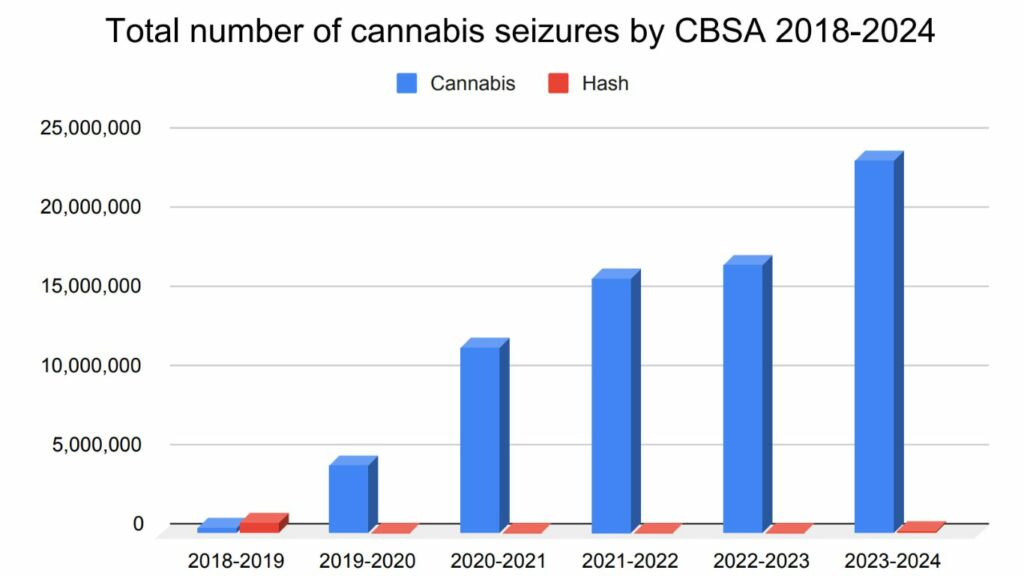
An investigation targeting the Canadian border town of Cornwall resulted in the seizure of over 200 kilograms and three arrests in early July.
The initiative, led by the Canadian Border Services Agency (CBSA) and members of the Ontario Provincial Police (OPP), RCMP, and the Ontario Ministry of Finance, targets the Cornwall area to locate smugglers.
After a brief investigation, law enforcement pulled two different vehicles over, which were then searched by police under the authority of the Excise Act 2001 and the Cannabis Act.
On July 8, 2024, An Sen Lin, Wenrui Lin, and Jason Anderson were arrested and charged with a variety of contraventions of those Acts. They have been charged with Possession of Property obtained by Crime, Possession of unstamped cannabis, Conspiracy to Sell, and Possession of Cannabis for the purpose of selling and exporting.
All three are scheduled to appear in court on August 13th, 2024 at the Ontario Court of Justice in Cornwall, Ontario.
Cornwall is located just minutes from the US border, north of the Akwesasne reserve in New York State, across the St Lawrence River.
RCMP estimates the value of the cannabis was approximately $897,000. They also seized several cell phones and US cash.
“Canada Border Services Agency (CBSA) officers are committed to disrupting organized crime. We will continue working with our law enforcement partners on both sides of the border to keep our communities safe,” said Jag Johnston, Regional Director General, Northern Ontario Region, CBSA, in a press release.
When cultivating cannabis, it’s important to remember that the flowers we seek to smoke or extract from are female. Sinsemilla (seedless) varieties have been selectively bred for decades to produce the modern forms of medical cannabis, which are high in tetrahydrocannabinol (THC).
This high THC content is due to the lack of pollination and absence of male plants. The process of budding and the resulting high THC levels are influenced by hormonal balances within the plant. This intricate hormonal interplay is a notable characteristic of female cannabis plants.
The cannabis genus has two main types of photoperiod responses. The first includes the well-known cultivars, Indica and Sativa, which are photoperiodic and respond to changes in light cycles, a phenomenon known as photoperiodism. These plants can be manipulated with light spectrums to control their growth and flowering phases.
The second type includes non-photoperiodic varieties, known as ‘auto-flowering’ or Ruderalis. These plants flower based on age rather than light cycles. Both types are governed by different hormonal regulations.
In light-responsive plants, such as Sativa or Indica, there are several main hormones that regulate every aspect of the plant’s life-cycle from embryo to necrotic death. Unlike animals, which have specific glands for hormone production, plants secrete hormones from all their cells, with certain cellular structures having higher concentrations.
Cannabis plants transport and distribute these hormones through their vascular system using both the xylem and phloem (which facilitate upward and downward flow, respectively). This activity constantly balances and advances the plant toward maturity.
The Most Predominant Hormones in Cannabis
Auxins
Derived from the Greek word “auxien” meaning “to grow”, auxins are the growth regulators found in all plants. They are primarily responsible for cellular elongation and apical dominance, promoting the growth of top cola buds while limiting food distribution to lateral and lower branches. [1] Auxins are most concentrated in regions of new growth, such as young leaves.
Synthetic auxins, developed commercially from the amino acid L-tryptophan, serve various agricultural purposes, including as herbicides in forms such as benzoic acids and quinoline carboxylic acids. However, their use as growth regulators also extends to propagation tools, though overuse can lead to environmental impacts.
Cytokinins
Cytokinins are hormones that stimulate cytokinesis (cell division), which is most prevalent in growth tissues such as roots, seeds and buds. hey work in conjunction with auxins to regulate growth during the plant’s fruiting cycles. While auxins inhibit lateral growth, cytokinins promote cell division, resulting in the dense growth necessary for developing large top buds causing the “bushiness”.
Gibberellic Acid (GA)
Growth hormones play a crucial role in the development of all major plant parts, including seeds, stems, and fruits. They are responsible for synthesizing root and shoot elongation, promoting seed germination, and maturing buds. These hormones are most abundant in the top cola flowers, newly sprouted leaves, and seed stocks. Additionally, they are mass-produced by humans for use in manipulating various agricultural crops.
Ethylene
Ethylene, known as the mortality or senescence hormone, regulates the aging processes in plants and is present in nearly all tissues of auto-flowering species, which inhibits their ability to reproduce asexually via cloning. In phototropic light-sensitive plants, ethylene is most concentrated in the oldest parts of the plant, particularly in aging leaves and stem nodes.
Ethylene controls bud maturity, fruit ripening, and plant senescence, contributing to the natural wilting process. It is notable for its nature as a volatile gas (C2H4) found in nature. In large-scale agriculture, ethylene is often utilized in the form of liquid petroleum or gas (LP) to manipulate fruit ripening. Gas applications are used to induce flowering, while fans are employed to reduce its concentration.
The abundance of ethylene in a plant can be observed as the stem transitions from herbaceous (flexible) to woody and rigid. This transition strengthens the plant’s structure, enabling it to support the weight of dense bud flowers during growth.
Jasmonate
Jasmonate plays a significant role in plants by facilitating the production of phytochemicals that repel herbivores, including in the biosynthesis of . This hormone is also present in hot peppers, where it increases the Scoville units by enhancing the production of capsaicin, the compound responsible for their spiciness.
Oligosaccharins
Oligosaccharins function as part of the immune system in plants, aiding in the development of defenses against bacterial and fungal infections. This enhances cannabis’ potential as a medicinal astringent and topical aid, as well as strengthening the plant’s ability to protect itself against fungal diseases like botrytis.
Wrap Up on Hormones in Cannabis Cultivation
External factors such as aerial gases, climate, temperature, sugar content (Brix), and cultivation practices all contribute to the balance and concentration of hormones within a plant. When faced with drought or malnutrition, stress can lead to hormonal imbalances. These hormones can be manipulated for various purposes, including propagation and breeding programs.
Natural plant hormones differ significantly from synthetic hormones manufactured by humans. The use of synthetic growth regulators can disrupt natural cycles and have adverse effects on surrounding environments. Therefore, caution should be exercised when considering the use of synthetic growth regulators.
References:
[1] Lee ZH, Hirakawa T, Yamaguchi N, Ito T. The Roles of Plant Hormones and Their Interactions with Regulatory Genes in Determining Meristem Activity. Int J Mol Sci. 2019 Aug 20;20(16):4065. doi: 10.3390/ijms20164065. PMID: 31434317; PMCID: PMC6720427.
The state of Ohio legalized the medical use of cannabis in 2016, making it the 25th state in the country to do so. As of March 2024, the state had registered 167,153 patients who were legally allowed to use medical cannabis.
Ohio’s medical cannabis program covers 26 eligible conditions, including post-traumatic stress disorder (“PTSD”) and chronic and intractable or severe pain, among others. The program permits cannabis to be sold as edibles, tinctures, oils, plant material and patches in 124 dispensaries across Ohio.
Now, a recently conducted survey has discovered that the majority of medical marijuana patients have observed a reduction in their use of prescription painkillers. Almost 3,500 people took part in the survey, with some being recruited through a newsletter distributed to patients and caregivers at Ohio Medical Marijuana Control program and others though Ohio State University’s Drug Enforcement and Policy Center network.
The survey focused on two issues: whether participants had reduced their use of other illicit substances after using cannabis and whether cannabis had decreased the need for prescription drugs.
The survey directed that all respondents record the extent to which they agreed with two statements reflecting those issues, with 77.5% agreeing that using cannabis had decreased their need for prescription medications. Another 26.7% agreed that cannabis use had decreased their need to use other illicit substances. The survey’s findings are consistent with those of other studies.
In their report, the researchers stated that their study had some limitations. Despite this, they still hold the opinion that cannabis-related research may become easier to carry out if cannabis is rescheduled as has been recommended by the U.S. Justice Department.
The researchers also recognized that the use of cannabis could have negative impacts on an individual’s health, noting that more studies were required to determine the drug’s safety and effectiveness compared to other therapies. This, they argued, could be moved along with marijuana’s rescheduling to Schedule 3 from 1 of the Controlled Substances Act, as recommended by the U.S. Health and Human Services department (HHS).
In its letter to the U.S. Drug Enforcement Administration (DEA), the Health and Human Services department states that cannabis has an accepted medical use in treatment in the United States and low potential for abuse as compared to other drugs under Schedule 1 or 2.
Interested individuals can access a preprint of the study report here. It should be noted that at the time of publishing, the study hadn’t been peer reviewed.
It is also worth noting that Ohio recently legalized adult-use marijuana via a ballot initiative, voter approved in 2023. As the market takes off, it could create opportunities for local companies offering services similar to those that enterprises such as Innovative Industrial Properties Inc. (NYSE: IIPR) offer in the markets in which they operate.
About CannabisNewsWire
CannabisNewsWire (“CNW”) is a specialized communications platform with a focus on cannabis news and the cannabis sector. It is one of 60+ brands within the Dynamic Brand Portfolio @ IBN that delivers: (1) access to a vast network of wire solutions via InvestorWire to efficiently and effectively reach a myriad of target markets, demographics and diverse industries; (2) article and editorial syndication to 5,000+ outlets; (3) enhanced press release enhancement to ensure maximum impact; (4) social media distribution via IBN to millions of social media followers; and (5) a full array of tailored corporate communications solutions. With broad reach and a seasoned team of contributing journalists and writers, CNW is uniquely positioned to best serve private and public companies that want to reach a wide audience of investors, influencers, consumers, journalists and the general public. By cutting through the overload of information in today’s market, CNW brings its clients unparalleled recognition and brand awareness. CNW is where breaking news, insightful content and actionable information converge.
To receive SMS alerts from CNW, text CANNABIS to 888-902-4192 (U.S. Mobile Phones Only)
Please see full terms of use and disclaimers on the CannabisNewsWire website applicable to all content provided by CNW, wherever published or re-published: https://www.CannabisNewsWire.com/Disclaimer
Police in London, Ontario, seized a large amount of cannabis and cannabis products, along with other drugs, in a recent raid in a residential neighbourhood to the north of the small city.
On July 16, members of the London Police Service Guns and Gangs Section executed search warrants on a residence and two vehicles, arresting two.
They seized several hundred kilograms of dried cannabis flower, as well as a large amount of shatter, vape pens, edibles, and re-rolls. They also seized large quantities of MDMA, cocaine, Oxycodone, psilocybin, cash, and jewellery.
Police say the following items were seized, totalling more than $1.3 million in value:
632.3 pounds of cannabis bud, value $948,450
3413 grams of cannabis shatter, value $170,650
1,470 cannabis resin vape pens and refills, value $73,500
1,026 grams of MDMA, value $51,300
300 grams of cocaine, value $30,000
628 Oxycodone 80 mg tablets, value $25,120
306 assorted psilocybin edibles, value $15,300
7.174 lbs of hashish, value $14,348
710 assorted cannabis edibles, value $7,100
125 cannabis resin packages, value $5,000
397 grams of psilocybin, value $3,970
179 pre-rolled cannabis joints, value $1,790
Approximately $8,000 in cash
15 Rolex watches
Assorted jewellery
The value of the seized drugs is estimated at $1,346,528.
The two arrested men, Bay Van Duong, 45, and Huong Thi Le, 41, both of London, were given charges relating to possession, tracking, and sale. Both are expected to appear in London court on August 16, 2024.
Police note that the investigation was made possible by a grant from the Ministry of the Solicitor General.
A second cannabis company with operations in Canada announced this week that it is expanding its footprint in the emerging German cannabis market.
Aurora Cannabis announced on July 25 that the Alberta-based producer has been granted two licences by Germany’s Federal Institute for Drugs and Medical Devices (BfArM) under the country’s new Medical Cannabis Act (MedCanG).
The announcement follows one made earlier this week by the American cannabis company Tilray, which has several operations in Canada.
On April 1, 2024, cannabis was reclassified in Germany as a non-narcotic, allowing adults to possess small amounts in the process of moving towards a regulated commercial supply chain. The country recently began allowing participation in cannabis production clubs.
Aurora and Tilray (through their subsidiary Aphria) are two of the three existing domestic medical cannabis producers in Germany, along with Germany-based Demecan. The latter announced on July 25 that it was now the first German company to receive a cultivation permit for medical cannabis under MedCanG. The licence allows for the cultivation of up to seven different cultivars.
Aurora’s new licences add to the company’s ongoing cannabis production in Germany, which the company says has been underway for two years. Under the new licence, Aurora is also allowed to cultivate an approved “additional product,” with the company saying it has plans to expand its offerings in the German market.
Aurora also expects to be issued a cannabis R&D licence in Germany, which would allow the trial of up to seven additional novel cultivars at the company’s local EU GMP facility in Leuna, Germany.
“We thank the German government for its continued investment in the growth of medical cannabis, made possible by decriminalization, which will improve access to medical cannabis for patients all across Germany,” says Michael Simon, President of Aurora Europe. “Being one of the few companies to receive (an) enhanced licence is a testament to Aurora’s established leadership in the region and unparalleled commitment to making available the highest quality cannabis. We now have the framework to extend our portfolio, invest in domestic research and leverage Aurora’s global cultivation expertise locally.”
Aurora’s medical cannabis production facility in Leuna, Saxony-Anhalt, in eastern Germany, has been in operation since 2021. The facility cultivates approximately 1,000 kg of cannabis flower annually for the medical supply chain. In addition to Canada and Germany, Aurora operates in the UK, Poland, and Australia.
Germany is being eyed by large cannabis companies like Aurora and Tilray as it’s seen as a gateway into the expanding European market and is considered the largest medical cannabis market in Europe, with a population of 83 million, more than double that of Canada.
In February, Germany passed the German Medical Cannabis Act, expanding the country’s medical cannabis laws. Tilray’s Aphria RX has been present in the medical cannabis space in Germany since March 2019, when the company was awarded a licence for the cultivation of medical cannabis in Germany from the German Federal Institute for Drugs and Medical Devices (the “BfArM”).
Other European countries, including Switzerland, Spain, France, the Czech Republic, Malta, the Netherlands, and Ukraine, are also considering or in the process of implementing various cannabis markets being eyed by companies like these.
Germany legalized cannabis this past March, with the law coming into effect in stages. On April 1, personal possession and cultivation became legal. On July 1, the country began allowing cannabis growing clubs. However, the country does not allow the sale of cannabis, except for medical purposes. That bill also made amendments to the country’s medical cannabis laws (MedCanG), paving the way for Tilray’s most recent announcement.
Germany first legalized cannabis flowers for medical purposes in 2017. Although annual domestic production was capped at 10,400 kg, since that time, the amount of cannabis prescribed under the program has steadily increased, fed by imports from countries like Canada. In the first three quarters of 2017, there were just 530 kg of cannabis imported into Germany. By the completion of the first three quarters of 2023, that increased to 14,315 kg.














Recent Comments