The town of Aurora, Ontario, is frustrated by a cannabis facility that continues to operate against municipal bylaws. The article says the business is i420.club, or the Toronto Cannabis Delivery Club, with more than 20 locations across the GTA. Since the dispute is a bylaw issue, York Regional Police are not involved, according to York Regional Police Const. James Dickson.
Highlighting this ongoing issue in Ontario with unlicensed cannabis stores, one company shared a press release about a new delivery service for an unlicensed cannabis store in Kensington Market.
Council in Esterhazy, SK, denied a second cannabis store, citing concerns that its main street could be lined with cannabis stores. The town of about 2,300 residents currently has one cannabis store.
The Wheatland County Municipal Planning Commission refused a development permit for a cannabis store within the Hamlet of Gleichen, Alberta. The town is home to one cannabis store, the Gleichen Cannabis Store.
The OPP charged three people after executing two search warrants in Dunnville and Cayuga, seizing around $200,000 in cannabis, cannabis products, and currency on July 17.
Canada Border Services reported 32 kg of cannabis seized at Halifax International Airport in a video shared on social media.
International cannabis news
A man from Ontario pleaded guilty to importing cannabis into Bermuda this past week. He was sentenced to 8.5 years for the 19.5 kilograms of cannabis found hidden in the lining of his baggage. Last week, a Canadian woman admitted in the Supreme Court that she smuggled a similar quantity into the island.
A New York court has thrown out a suit filed by investors in Canopy Growth Corp, arguing they failed to show that the cannabis producer’s executives had the necessary level of intent for securities fraud when they allegedly misrepresented the success of sports drink subsidiary BioSteel.
California has recalled several vape pens in recent weeks, including two this past week, for the presence of the pesticide chlorfenapyr.
A US federal judge refused to halt New York City’s crackdown on unlicensed sellers of cannabis, citing public safety concerns. New York City has closed 640 unlicensed smoke shops since early May, using enforcement powers under a new state law known as the Smokeout Act.
RCMP in Newfoundland and Labrador say they have arrested a 63-year-old man following the execution of a residential search warrant on July 15, 2024 in which they seized tobacco, “suspected hashish” and nearly $17,000 in Canadian currency.
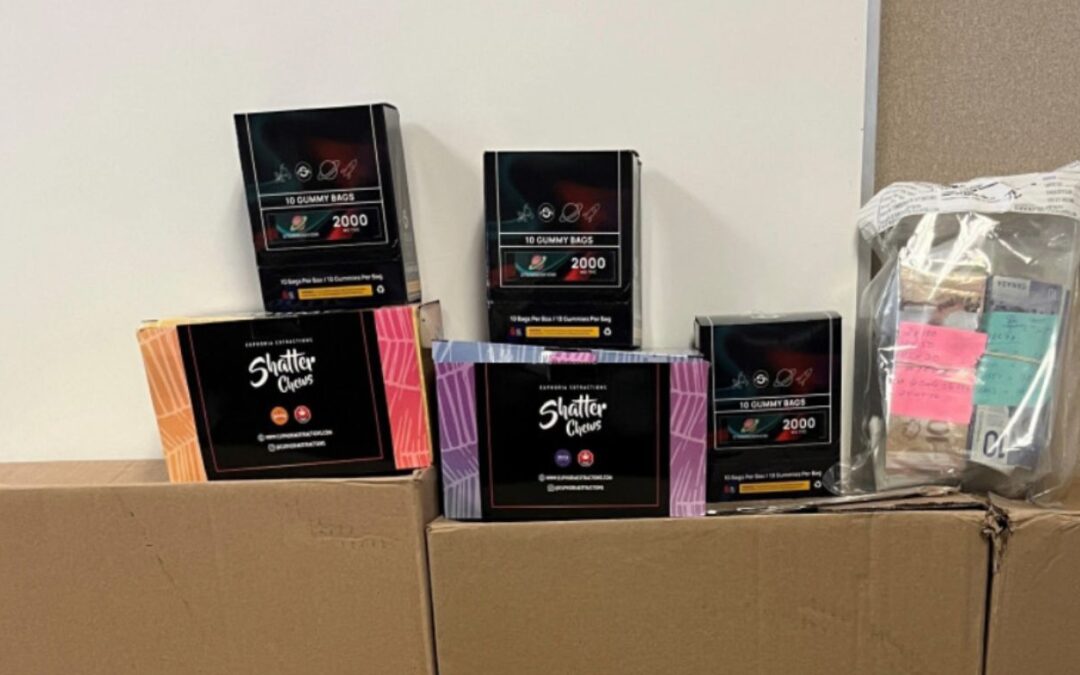
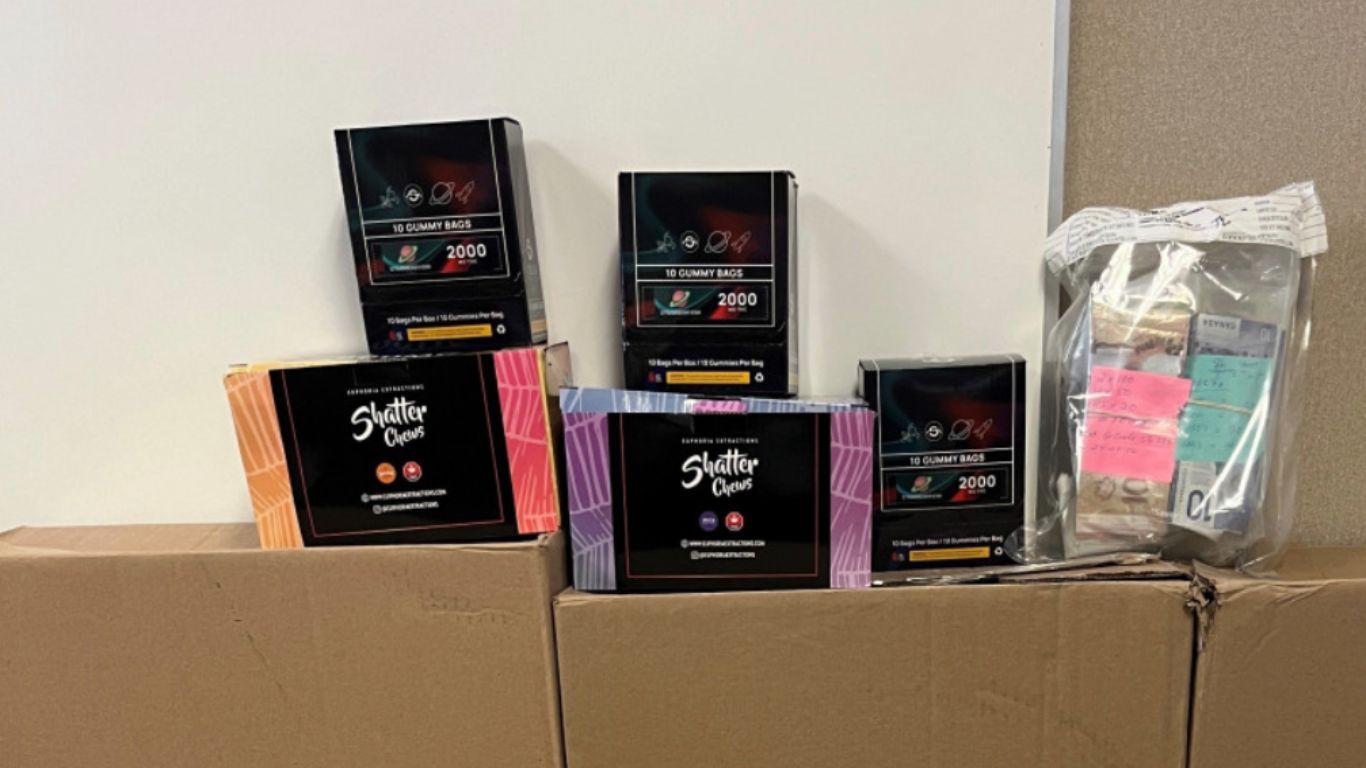
While the police report refers to 2.25 pounds of “suspected hashish”, an image shared by RCMP NL shows boxes labelled as containing cannabis gummies and “shatter chews”.
A website advertising the shatter chews, Euphoria Extractions, shows dozens of locations where the unlicensed products can be purchased. None of the listed locations are in Newfoundland and Labrador.
The search warrant was executed at a residence on Seventeenth Avenue in Grand Falls-Windsor. The 63-year-old is Andrew Noseworthy of Grand Falls-Windsor, was arrested on the property and was charged with possession of contraband Cannabis, possession of unstamped tobacco, and possession of contraband tobacco.
He is scheduled to appear in court on September 4, 2024. The investigation is continuing.
A recent scientific assessment of scholarly studies on human sexuality and cannabis has found that there is a complex link between sex and cannabis use. However, the general consensus is that cannabis tends to increase the frequency, enjoyment and desire for sex.
The review, published in the “Psychopharmacology Journal,” suggests that higher amounts of cannabis may impair performance and desire, while smaller doses may be more favorable to sexual fulfillment. The effects also appear to vary based on gender.
The study’s authors noted that marijuana can improve intimacy with partners, reduce shame and anxiety, lessen inhibitions and increase sexual pleasure. The authors also observed enhanced sensory sensations during sex and greater enjoyment during masturbation, suggesting that cannabis has a major effect on sex experiences.
The review emphasizes that sex is influenced by a variety of emotional and physical factors, and cannabis affects people in a holistic way that can influence both the emotional and physical aspects of sexual experiences.
Though there is limited study on women’s experiences, women appear to gain more from cannabis use in terms of its sexual effects than men do. The authors noted that low dosages of hypnotic cannabinoids and sedatives, such as THCV and THC, may lessen sexual activity anxiety, which may increase arousal and desire for sexual activity, particularly in women.
For men, findings are mixed, with some studies indicating that marijuana use can lead to premature and delayed ejaculation as well as erectile dysfunction, while others suggest the opposite.
Dosage and frequency of marijuana use are key factors, although more research is needed. Higher sexual function seems to be associated, at least generally, with regular cannabis use. A survey cited in the review found that women who used cannabis more frequently performed better than those who did so infrequently on tests of female sexual function.
Increased cannabis use frequency correlated with better overall FSFI scores and improvements in orgasm, desire, satisfaction domains, arousal and orgasm. Higher frequency categories also saw a decline in reports of sexual dysfunction. According to one study, women who used cannabis regularly were twice as likely as infrequent users to report having satisfying orgasms.
Men who regularly use cannabis have been linked to orgasm-related issues, such as early or delayed ejaculation. However, another study found no link between the frequency of cannabis usage and problems maintaining an erection.
Given the varied and occasionally contradictory results, the researchers have advocated for additional studies to account for other variables. The authors noted that cannabis has a varied impact on human sexuality, including both negative and positive. They emphasized the need for additional study to understand how marijuana affects sexuality, as doing so may lessen harm and even enhance human experiences.
With the insights so far gleaned, consumers can be assured that moderately using various marijuana products from the hundreds of licensed companies such as Green Thumb Industries Inc. (CSE: GTII) (OTCQX: GTBIF) could be beneficial to their well-being without triggering notable adverse events.
About CNW420
CNW420 spotlights the latest developments in the rapidly evolving cannabis industry through the release of an article each business day at 4:20 p.m. Eastern – a tribute to the time synonymous with cannabis culture. The concise, informative content serves as a gateway for investors interested in the legalized cannabis sector and provides updates on how regulatory developments may impact financial markets. If marijuana and the burgeoning industry surrounding it are on your radar, CNW420 is for you! Check back daily to stay up-to-date on the latest milestones in the fast -changing world of cannabis.
To receive SMS alerts from CNW, text CANNABIS to 888-902-4192 (U.S. Mobile Phones Only)
Please see full terms of use and disclaimers on the CannabisNewsWire website applicable to all content provided by CNW, wherever published or re-published: https://www.CannabisNewsWire.com/Disclaimer
A cannabis farmgate store in Victoria has moved one step closer to becoming a reality.
Victoria City Council has voted to support the application from the Victoria Cannabis Company (VCC) cannabis farmgate store at 340 Mary Street, in Victoria West.
In a 7-1 decision, council voted to direct staff to advise the BC Liquor and Cannabis Regulation Branch (LCRB) of their decision to issue the producer store retail licence (farmgate) the VCC.
The approval will still be subject to the company’s compliance with the city’s bylaws and permits. The city is requiring the VCC to build a sidewalk adjacent to the facility, which is located on the Galloping Goose Trail, a multi use trail on a former rail line through the city.
The Victoria Cannabis Company first filed their application for a farmgate store licence in early 2023. The company’s application passed third reading shortly by September 2023, with council sending it back to city staff to address concerns with the location.
BC’s retail cannabis regulations require an approval from local council before considering approval of the application.
In the most recent staff report approved by Council, it was noted that there were not any significant concerns about community impact of storefront cannabis retail at the application’s location, that the location would have minimal community impact, and that there were no concerns from police. The report did not have ongoing concerns with odour associated with the store’s adjacent cannabis facilities.
The possible future cannabis farmgate store is located at the site of VCC’s production facility that is currently home to a nursery, two micro cultivation sites, and a standard processing site.
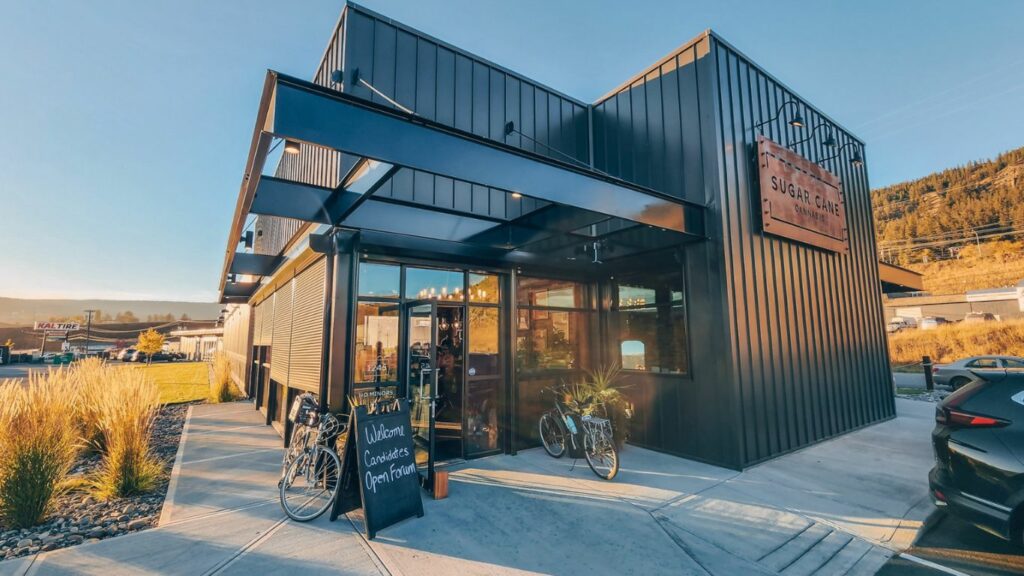
Sugar Cane Cannabis’s farmgate store in Williams Lake, BC, which includes an in-store window into their grow room. Image via William’s Lake First Nation.
The province began accepting applications for producer retail stores (PRS) in November 2022. The program allows micro cultivators, standard cultivators, and nurseries to sell their own products in a retail cannabis store at their own production facilities or sites, as well as an array of products from other producers.
There are more than 100 licensed cannabis facilities that could in theory be eligible to apply for such a farmgate licence. Some BC cannabis growers say the low number of applicants indicates a policy failure, citing concerns with the nearly $10,000 in licensing and application fees, as well as additional costs associated with BC’s retail cannabis regulations.
Kyp Rowe, VP of brand development at VCC, who spoke with StratCann at an earlier date about the application, says their goal is to create a dynamic storefront that can show off not only their own unique cannabis products from cannabis grown on-site, but also other small craft producers in BC. VCC’s location is near the E&N Rail Trail, a popular bike path.
“We are very excited at the opportunity to be among the first potential Production Retail Store locations in British Columbia,” says Rowe. “What sets us apart from other locations is the amount of frontage traffic we have in Vic West. We are not located in an industrial park on the outskirts of town. Our store is just minutes from the sea wall in Lime Bay and has the potential to become a tourist destination.
“Our goal will be to focus on British Columbia producers as well as featuring our own flower grown and packaged on-site. Now, more than ever, small provincial craft producers need an opportunity at the retail level to showcase their products. With all of the pay-to-play for shelf space and the discount retail chains, more and more small producers are getting edged out by large corporations. We want to be able to tell BC’s rich craft cannabis story, and we feel this new farmgate store will give us this opportunity.”
Rowe tells StratCann he and the team at VCC are excited to move forward with the project, estimating they expect their sidewalk to be completed in the coming weeks.
Ontario Provincial Police say they have charged three people after executing two search warrants in Dunnville and Cayuga, seizing around $200,000 in cannabis, cannabis products, and currency on July 17.
Haldimand OPP and the Norfolk Community Street Crime Unit, with assistance from the Provincial Joint Forces Cannabis Act Enforcement Team worked together on the execution of the search warrants.
One location was on Main St in Dunnville and the other on Cayuga St in Cayuga.
A 55-year-old from Hamilton was been charged with obtaining or offering to obtain cannabis by any method or process, possessing cannabis for the purpose of selling, and possession of proceeds of property obtained by crime over $5,000.
A 32-year-old and a 33-year-old, both from Dunnville, were charged with possessing cannabis for the purpose of selling and possession of proceeds of property obtained by crime under $5,000.
There are two licensed cannabis stores listed in Dunnville and one in Cayuga.
Last month, legislators in Delaware approved a measure that would allow medical cannabis licensees in the state to apply for conversion licenses to cultivate and sell recreational marijuana. Governor John Carney is expected to sign the measure in the coming weeks.
The recently approved measure was sponsored by Representative Ed Osienski, who revealed that cultivation was the most difficult pathway to use to enter the marijuana industry. This, Osienski explained, was because of the larger investments needed to cover the needed infrastructure, such as ventilation and lighting as well as the need for more time for cultivation.
This was why the state had decided to go down the path that would fill the current gap, as it was less demanding. Legislators had decided that this would be done by allowing those who already had facilities and licenses to be able to cultivate marijuana and manufacture products like gummies.
Issuance of these conversion licenses is set to begin in November, with Rob Coupe noting that if the measure hadn’t been approved, retail sales would’ve had to launch in late 2026. It had been expected that applicants who obtain the new growing licenses would take about 12 months longer to launch their operations, and also to cultivate crops for retail sale.
The new course taken by the state establishes faster pathways though, allowing the adult-use market to become operational faster and making cannabis legally available to the general public. The state expects that conversion licenses will generate a little more than $4 million in application fees, which shall be directed to a fund for social-equity applicants. These applicants are set to be awarded 47 of the conversion licenses, which total 125.
Currently, growing licenses go for $200,000 apiece. Parties that want to obtain a license to manufacture, test or retail cannabis have to part with an additional $100,000.
Legislators also allocated another $2 million into this fund, which is to be awarded to aspiring social-equity marijuana entrepreneurs. For these entrepreneurs to be eligible, they are required to own no less than 51% of the business and meet one of the following criteria:
has/had a spouse, parent, child, dependent or legal guardian who was convicted of a cannabis crime.
been convicted of a cannabis-related offense. This excludes those who sold the drug to a minor or sold more than 11 pounds of marijuana.
lived for no less than five of the last ten years in an area that was disproportionately affected by the war on drugs.
Basically, these are targeted areas that have seen high numbers of arrests related to cannabis in the last decade. Applicants can cross check to see if their addresses are in these targeted areas on the state’s website. The state’s social-equity program is focused on creating opportunities for individuals and/or communities that were oppressed by marijuana prohibition.
The entire cannabis industry, including brands such as Tilray Brands Inc. (NASDAQ: TLRY) (TSX: TLRY), will be hoping that the adult-use market in Delaware gets off to a good start and avoids the hiccups that have plagued some markets, including New York state.
About CannabisNewsWire
CannabisNewsWire (“CNW”) is a specialized communications platform with a focus on cannabis news and the cannabis sector. It is one of 60+ brands within the Dynamic Brand Portfolio @ IBN that delivers: (1) access to a vast network of wire solutions via InvestorWire to efficiently and effectively reach a myriad of target markets, demographics and diverse industries; (2) article and editorial syndication to 5,000+ outlets; (3) enhanced press release enhancement to ensure maximum impact; (4) social media distribution via IBN to millions of social media followers; and (5) a full array of tailored corporate communications solutions. With broad reach and a seasoned team of contributing journalists and writers, CNW is uniquely positioned to best serve private and public companies that want to reach a wide audience of investors, influencers, consumers, journalists and the general public. By cutting through the overload of information in today’s market, CNW brings its clients unparalleled recognition and brand awareness. CNW is where breaking news, insightful content and actionable information converge.
To receive SMS alerts from CNW, text CANNABIS to 888-902-4192 (U.S. Mobile Phones Only)
Please see full terms of use and disclaimers on the CannabisNewsWire website applicable to all content provided by CNW, wherever published or re-published: https://www.CannabisNewsWire.com/Disclaimer
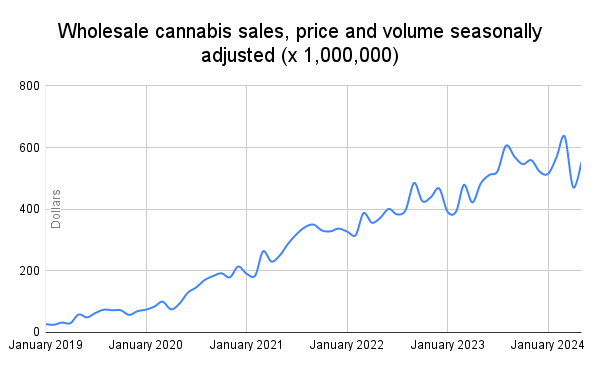
Wholesale cannabis sales increased to $553 million in May after a steep decline in April, following record-high rates in March 2024.
Cannabis continues to outperform much of the Canadian economy, with sales declining in five of seven sectors. Excluding petroleum products and other hydrocarbons, as well as oilseed and grain, wholesale sales fell 0.8% in May across Canada.
Wholesale cannabis trade and inventories also saw an increase in May, rising to $294,102 from $289,764 in April. The previous high point was $301,077 in November 2022.
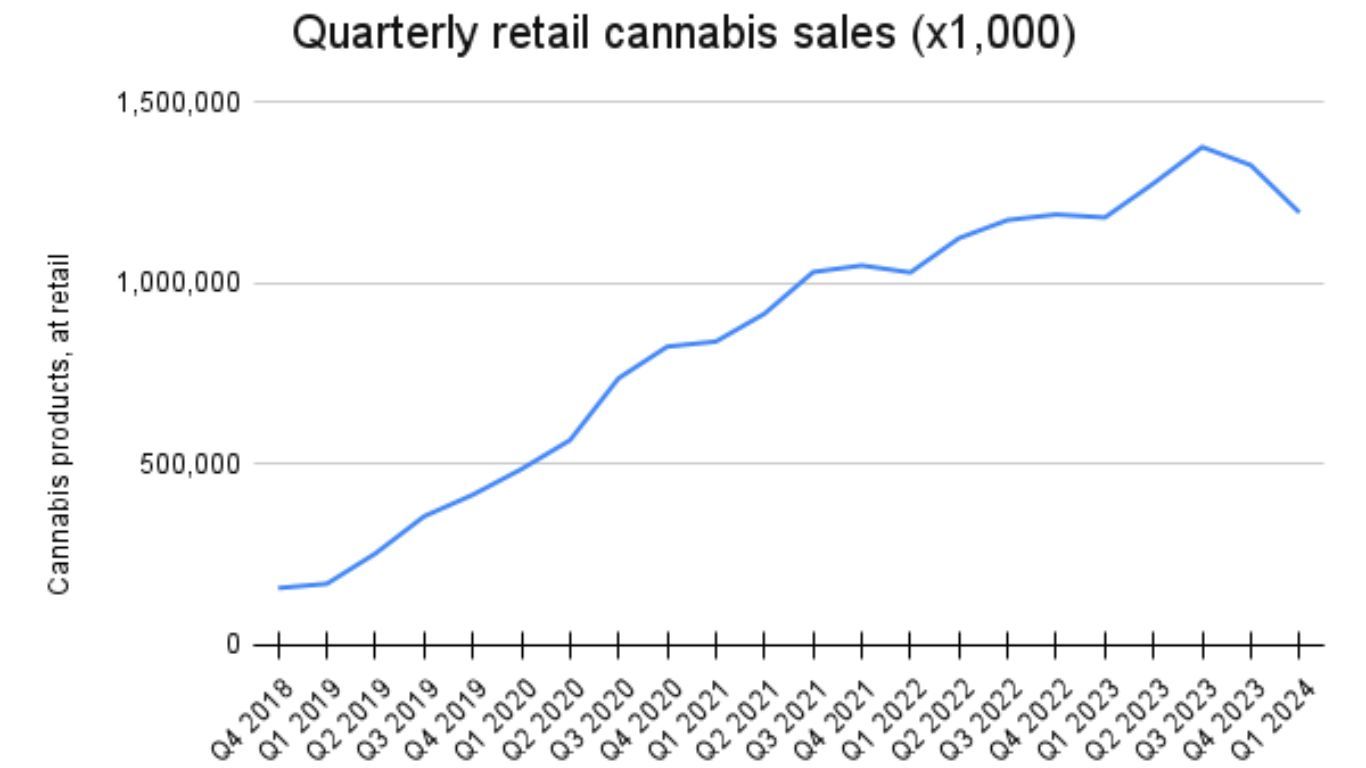
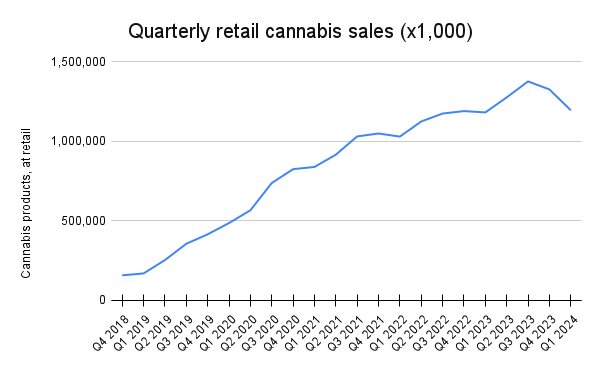
The most recent monthly retail cannabis sales figures show sales rebounded in February and April after dropping to their lowest in nearly a year in January 2024.
While wholesale cannabis sales in May were around $553 million, this was more than double what cigarette and tobacco product merchant wholesalers brought in, at about $228 million.
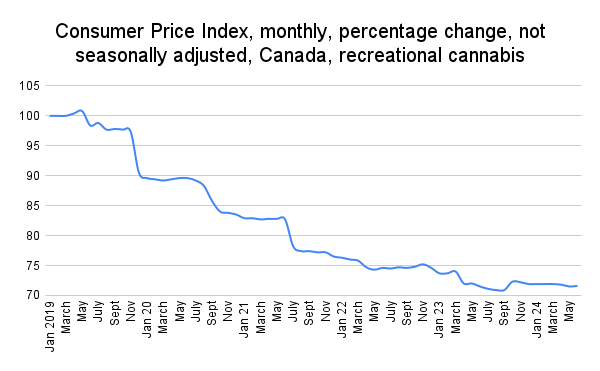
Meanwhile, Statistics Canada’s consumer price index shows that the price of cannabis increased by one tenth of a point from May to June and from June 2023-June 2024 (71.6).
This small increase was after a seven month decline, which itself was preceded by a brief spike in prices in October 2023. The CPI baseline was set at 100 in December 2018, following legalization.
Acclimating Cannabis genetics can be a tricky yet necessary thing for keeping up with the onslaught of hybridized cultivars in commerce. Choosing a genetic variety that is correct for your elements is essential for success, especially when cultivating for flowers and extractions. Many elements are attributed to discovering the cultivar that is perfect for your specific microclimate needs. Amongst them, factors such as heat highs, chilling hours, gas exchange rates, nutrient bases, soil bases, oxygen, UV exposure and elevation all play into determining the success of the transplant.
Landrace is a term that defines a botanical entity adapted to its environment. When a plant is from its place of origin it is at its strongest genetic form. When we acclimate a plant, it is in an attempt to allow the plant to reach its peak form of performance, with its highest potentials for cannabinoid and quality weight production. When focusing on the topic of elevation and air pressure, we focus on the adaptation of atmospheric gas exchange as the main contributor.
Within a plant there is a network of tubes, like veins of a human that are pressurized to mobilize the vascular system of the plant. One main faction of cannabis farming is the ability to create cultivars that exhibit strong terpenes as well as trichomes. These trichomes are produced by resin glands in the epidermal layer of the flowering plant parts which are subject to factors such as air pressure exerted upon the surface of the leaf structure.
Cannabis Sativa is a landrace to more equatorial zones which have higher air density as well as higher air pressure. Cannabis Indica is home in higher elevation therefore able to adapt quicker to the thinner air and colder regions of Northern Hemisphere cultivation sites. Hybrids can display adaptation to either region depending on acclimating practices and genetic makeup.
How Atmosphere Affect Production of Trichomes
Knowledge of air pressure and its impact on a plant’s processes and growth is essential for understanding responses to altitude and for understanding aerial gases. There is a certain point worldwide where most plants cannot proliferate due to Atmospheric Pressure. This is known to be the “Treeline” and exists at 12,000-foot elevation. [5]
Atmospheric Pressure is the force exerted on surfaces by the air as gravity pulls it towards the planet. Also called Barometric pressure and is expressed using the acronym ATM (Standard Air Pressure)- Sea Level=1 ATM. At points of higher ATM, the air pressure decreases due to having less atmospheric weight upon it. [1] Lower air pressure contains less carbon dioxide and has been studied to increase respiratory actions, though a plant may be smaller or shorter it has proven to increase sturdiness and strength.
A secondary action of the effects is described as Atmospheric Vapor Pressure (VPD), which is a measurement that explains the amount of vapor or water molecules and the difference between the saturated vapor pressure and actual vapor pressure (weight of water molecules in atmosphere added to air pressure). [3] Plants have shown that when VPD is higher, photosynthesis is reduced as well as carbon uptake. These factors affect plants’ modality in photosynthesis or cellular production.
Trichomes can be visually seen atop resin glands under microscopes and have the shape of an upraised mushroom body on a “stalk”. These crystalline to amber colored elements are 1/10 mm or 100 micrometers in length and are oil soluble. As the resin glands excrete the in a way that can be said to be “sweating”, the definitive air pressure and vapor pressure plays a role in its ability to extrude these shapes if not appropriately placed cultivar. These delicate crystals can be harmed with water, VPD and agitation of wind that lower your rates of extraction.
Internal vapor pressure of the plant’s vascular system is determined by cellular wall strength as well as health and available nutrients in the molecular building blocks process. This is affected by the heat, air pressure, sunlight that is consumed by the chloroplast cells and distributed as atomic agitation. Sugars within species are stored in several different cellular bodies and contribute to the strength, viscosity, and structure of the trichome produced by Cannabis flowers. As the cultivar is properly adapted to its climate the cellular forms mutate to best deal with the pressures applied to it. This may take two or more generations in the same location for this adaptation to occur.
As the elevation increases botanicals interact with the climate and atmosphere in different ways- at times relying more on root structure uptake while at other times relying more on osmosis absorption through leaves. [2] Secondary factors such as temperatures play roles on the chemical balance and density in the air and soil therefore leading to the need to acclimate your cultivar through a minimum of one season or cycle.
High surface pressure on leaves requires more sugar and proteomes within the plant to be able to force the sap to the surface of flower cells and outward. Strength in the cellular structure ensures capturing more potent cannabinoids and profiles to be used in extractions. Lower surface pressure of both air and vapor allow the plant to fluidly divide resources within it to excrete more resin glands.
This partnered with lower temperatures captures long winded terpenes for rosin products due to potassium captures during chilling hours. In contrast equatorial regions with higher ATM and VPD as well as high winds and no chilling hours, create trichomes with less dense cellular walls therefore not able to capture terpene essences as easily.
Brix ( measure of the dissolved solids in a liquid, Bx) is commonly referring to the dissolved sugar content of an aqueous solution and raising its rates can assist with trichome production at any elevation or microclimate. [4]
Research has been captured on the effects of elevation and air pressure on several botanical fields including outer space where plants were grown in zero air pressure, zero gravity situations and high elevation arboriculture worldwide.
References:
[1]Daunicht HJ, Brinkjans HJ. Plant responses to reduced air pressure: advanced techniques and results. Adv Space Res. 1996;18(4-5):273-81. doi: 10.1016/0273-1177(95)00889-m. PMID: 11538810.
[2] Impacts of elevated temperature and air pressure: Kali B. Middleby, Alexander W. Cheesman, Lucas A. Cernusak First published: 17 May 2024 https://doi.org/10.1111/nph.19822
[3] Wenping Yuan et al. ,Increased atmospheric vapor pressure deficit reduces global vegetation growth.Sci. Adv.5,eaax1396(2019).DOI:10.1126/sciadv.aax1396
[4] Conneely LJ, Mauleon R, Mieog J, Barkla BJ, Kretzschmar T. Characterization of the Cannabis sativa glandular trichome proteome. PLoS One. 2021 Apr 1;16(4):e0242633. doi: 10.1371/journal.pone.0242633. PMID: 33793557; PMCID: PMC8016307.https://www.ncbi.nlm.nih.gov/pmc/articles/PMC8016307/
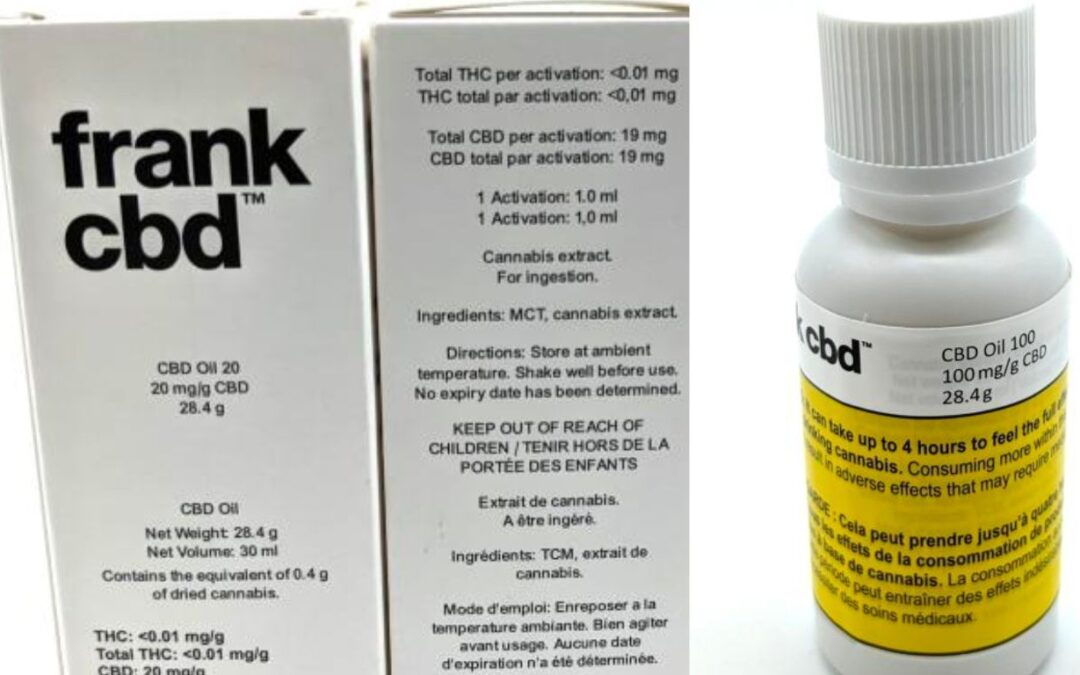
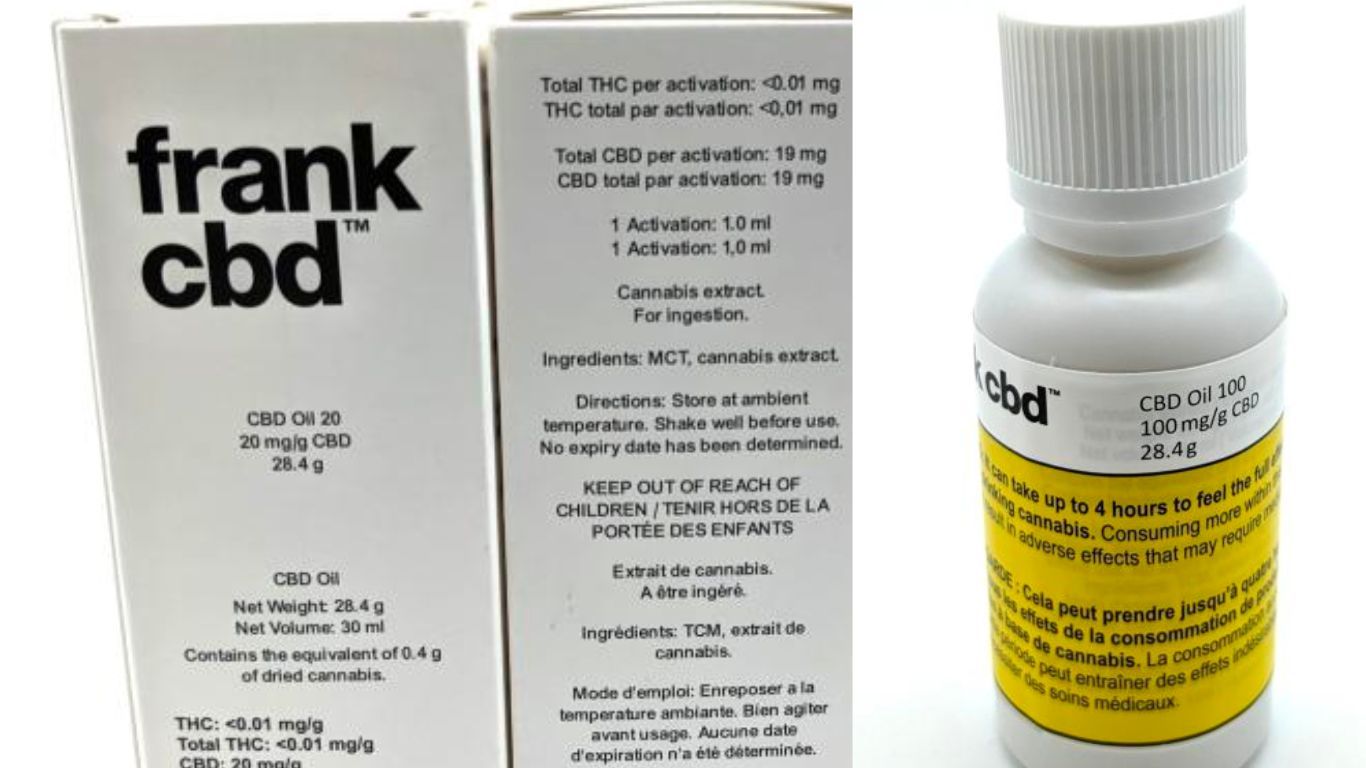
Health Canada says the labelled CBD, total CBD, and total CBD per activation values are lower than the actual CBD, total CBD, and total CBD per activation values, but the primary label on the bottle is correct.
The printed name on the label is Frank CBD – CBD Oil 20, while it should have been Frank CBD – CBD Oil 100.
The printed amount of CBD on the label is 20 mg/g and total CBD as 20 mg/g while the actual name and value should have been labelled as CBD: 100 mg/g and Total CBD: 100 mg/g.
This product was sold through the Ontario Cannabis Store and authorized retailers in Ontario.
To date, neither Purileaf Brands Corporation or Health Canada have received any complaints or adverse reaction reports related to the recalled lot.
There were 108 units of recalled product sold from June 24 to July 12, 2024. Consumers can return the recalled products to the store where they purchased them from.







Recent Comments