
by Grow Up Conference | Jul 19, 2024 | Garden Culture Magazine, Media Partners
Every gardener encounters at least some problems each season. Sometimes, weather conditions contribute to pests afflicting our plants. Other contributing factors include plant stress, soil conditions, management practices, species variety, and location. Problems may only be minor or for a short time and may not cause enough damage to warrant attention. However, if the pest numbers increase sufficiently to damage the functioning of a plant or your potential harvest, then the issue demands prompt action!
I play a daily ‘detective’ role, looking for ‘clues’ to identify potential problems before they get out of hand. It’s much easier to minimize damage from a few insect visitors than when numbers are in plague proportions. I examine the signs to accurately determine the cause before applying any remedy.
Why Are Insect Pests Bad For Your Garden?
An imbalance of pest insects can cause significant plant damage. A wide range of indicators flag specific insects as the perpetrators. Careful observation reveals that each ‘culprit’ usually leaves telltale ‘evidence’ at the ‘scene of the crime’ that helps identify their presence. Recognizing these calling cards takes time and practice, but it’s a skill worth learning. Let’s look at the symptoms or clues they leave and some chemical-free control strategies.
Plant Damage Signs and Solutions to Get Rid of Pests
Caterpillars
Chew holes in stems, leaves, flowers, buds, and fruit. Newly hatched caterpillars with small, hungry mouths leave tiny pin holes. They usually hide under the leaves before moving topside. As they grow, the damage increases. Holes are often round. Sometimes, a plant will be attacked by multiple caterpillars at once, with increasing destruction as they grow.
These are some of the effective control strategies for pests I use:
- Hand-pick caterpillars or squash eggs on the underside of leaves.
- Encourage insect-eating bird species as pest controllers. Add a bird bath and habitat.
- Use molasses spray over the leaves.
- Sprinkle diatomaceous earth directly onto cluster caterpillars. I avoid spreading it around to minimize collateral damage to beneficial insects like bees.
- Plant vulnerable crops like the Brassica (cabbage) family in season to reduce potential plant stress and scent cues for butterflies.
- Cover garden beds or individual plants with netting. Use cloches, crop covers, or bags to prevent butterflies and moths from laying eggs.
- Interplant with various strongly scented herbs and species with differently shaped leaves to disguise host plants.
- Grow flowers as a nectar source to attract predatory insects like hoverflies and wasps that parasitize caterpillars. A chemical-free garden will entice other hungry predators like lacewings, dragonflies, and assassin bugs.
MOLASSES SPRAY
Mix 10ml of sulfur-free or blackstrap molasses into 500ml of warm water. Add 1 tsp of eco-friendly pure liquid soap or detergent to help the mixture stick to the leaves. Spray affected plants on both sides of the leaf and center on a non-rainy day when it’s cool. Molasses is a simple sugar high in nutrients and increases the sugar content on the leaf surface. This makes it undigestible to grasshoppers and caterpillars. Soap is a desiccant and can help break down the insect’s exoskeleton or the waxy coating so it dries out. Use the mixture within a day or two because it will start to ferment in your spray bottle, especially in warm weather. You don’t want an explosion!
Grasshoppers
Like caterpillars, these herbivores munch on leaves, but the uneven damage is on the edges and tips. Grasshoppers sit on the leaf even when young, so they’re easy to spot. As they grow, they can devour large sections of a leaf.
Remedies include:
- Hand-pick early in the morning when they are more docile and easy to squish.
- Leave spider webs in the garden. These insects are incredible predators and spin webs close to food sources. A web is often my first indicator of a pest insect problem.
- Use molasses spray over the leaves.
- Cover with exclusion netting, cloches for seedlings, and crop bags.

Snails and Slugs
Watch for irregular holes in all plant parts and slimy silvery trails. Seedlings may disappear overnight. These pests often hide in cool, dark, moist spots or under mulch, feed at night, and become active after rain.
Strategies to try:
- Encourage lizards and birds by providing habitat.
- Remove timber, weeds, dense growth, or piles of pots that offer daytime hiding places and breeding areas.
- Set a trap, such as a damp hessian sack, a small piece of plastic, or wet cardboard. Traps like these attract slugs and snails to shelter beneath them. Lay them down in the early evening and check in the morning.
- Avoid fertilizing plants with too much nitrogen; that makes them sappy and more attractive.
- Try drip irrigation rather than sprinklers to reduce humidity and moist surfaces. This makes the habitat less favorable to snails and slugs.
- Water early in the morning to allow maximum time for the plant foliage, soil, and mulch to dry out. Watering later in the day causes these surfaces to remain moist overnight.
- Non-toxic copper tape is a barrier that repels these pests with an ‘electric’ shock-type reaction. It works wet or dry.
- Protect vulnerable seedlings with cloches.
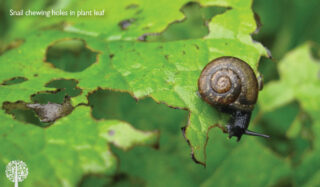
Aphids
These sap-sucking pests can become a massive problem in just a few days due to their ability to reproduce quickly. These pests need immediate attention.
Effective strategies include:
- Hand squashing or hosing off with a sharp water spray for several consecutive days when numbers are small.
- Use an organic horticultural oil or soap-based spray to suffocate them.
- Apply food-grade diatomaceous earth directly to the affected leaves or plant parts. This fine powder, made of silica, desiccates aphid exoskeletons.
- Use a portable hand vacuum to suck up the insects en masse.
- Brush or shake aphids off the plant into a container of soapy water to drown.
- Remove ants that may be present. They defend aphids against predatory insects and farm the honeydew produced as a thank-you gift in return for their protective services.

Scale
These sap-sucking pest insects stick to stems and plants, gradually reducing their vigor. Look for white, brown, or black bumps with a hard, soft, or waxy shell. Like aphids, they release honeydew that can cause black sooty mold to grow. This prevents photosynthesis, weakening plants and reducing growth.
Suggested strategies include:
- Check plants regularly and remove individual scale insects when numbers are small. I slide my fingernails up the stem, and they easily pop off. An old toothbrush is also quite effective.
- Give them a sharp spray with water for several days to remove them. Organic horticultural oil will remove any remaining scale.
- Encourage natural enemies like spiders, ladybirds, lacewings and parasitic wasps to your garden.
Preventing Pest Problems
Pest insects like these can also be attracted to weak, nutrient-deficient plants lacking water or heat-stressed. These factors can be prevented by applying a few strategies.
- Healthy soil. A balanced soil pH with good structure and texture will hold moisture and minerals. Adding organic matter like compost, minerals, and mulch helps add worms and microorganisms and gives plants the nutrients needed for strong growth and resilience against pest attacks.
- Careful plant selection and location. Grow plants suited to your climate in the appropriate season. Cool-season vegetables often become heat-stressed in warmer months and become easy targets for pests. Choose a suitable location – sun or shade – that meets the needs of each plant.
- Practice crop rotation for annuals. Avoid repeated plantings from the same plant family in the same garden bed. Related plants within some plant families, like Brassicaceae (cabbage family), are often susceptible to the same pests. Follow instead with plants from different plant families, e.g. Solanaceae or Apiaceae, as this helps break the life cycle of pest insects.
- A biodiverse ecosystem. You can balance pests and prey by encouraging natural predators into your garden. I’ve found that planting various flowering species and providing water and diverse habitats attracts pest insect controllers like ladybirds, beetles, and dragonflies. A few messy spots with fallen leaves, rocks or pebbles, tree stumps, or bird nesting sites help attract an incredible species biodiversity.
- Regular observation. Daily monitoring helps catch possible problems early.
- Time planting to avoid pests. Understand pest life cycles and when they are most active. Sow plants during the most favorable season to minimize the potential attack.

By learning to identify common pest insects and applying some of these suggested strategies, you can reduce plant damage and enjoy a decent harvest.

by Grow Up Conference | Jul 18, 2024 | Media Partners, Stratcann
The federal government has provided a response to a petition tabled earlier this year calling on an increase of the THC limit for edibles from 10mg to 100mg.
The petition was launched in November 2023 and sponsored by Liberal MP for West Vancouver—Sunshine Coast—Sea to Sky Country, Patrick Weiler.
The Minister of Mental Health and Addictions and Associate Minister of Health, Ya’ara Saks, posted a response to the petition on July 17, noting that the 10 mg THC limit was established to protect public health and safety and was supported by the recent Expert Panel report on the Cannabis Act.
“The limit draws heavily on lessons learned from, and the limits established by U.S. states that have legalized cannabis,” says the response, in part.
“Health Canada is currently carefully reviewing and analyzing the report and its recommendations,” it continues. “The Panel’s findings will help inform Health Canada’s ongoing efforts to improve the operation and administration of Canada’s cannabis control framework.
Health Canada recently proposed many changes for federal cannabis regulations, which did include a proposal to remove the cumulative 10 mg THC limit for an outermost container of edible cannabis product to allow greater flexibility in packing multiple immediate containers, as long as the immediate containers do not have more than 10 mg of THC each.
Many in the industry, though, have noted that unless there is an allowance for less onerous immediate packaging on those edibles, the change likely won’t result in any cost savings for producers or consumers.
The original petition noted that both the Canada Competition Bureau and the Ontario Cannabis Store have called upon Health Canada to increase THC limits. Industry has argued for years now that the 10mg THC limit on edibles hamstrings its ability to directly compete with the illicit market, with consumers being enticed by higher THC products at a much lower cost.
While other categories of cannabis products like dried flower, concentrates, and vapes have become increasingly competitive with the illicit market in terms of price, edibles remain one of the biggest advantages available to the illicit market.
In an interview with StratCann in 2022, Christina Clarke, the CEO of the Songhees Development Corporation, which operates a provincially-licensed cannabis retail store on Vancouver Island, said she knows that edibles remain one of the main drivers of demand in the illicit market.
Although legal products in nearly every other cannabis product category are competitive with the illicit market in terms of price, quality, and variety, edibles lag behind.
“If people are going to go to the black market because the product they want is not in the regular market, then if it’s a product that’s safe we should be able to sell that in the legal market and not leave it as a product (only in) the black market.”
“The reality is, anybody who’s an edibles user knows, those doses are really quite low for somebody, especially if you’re a regular user of edibles. Your tolerance is such that some of these (edibles) barely do anything. I’m waiting for the market to catch up with what the customer wants.”
Jennawae McLean, the co-owner of Calyx + Trichomes Cannabis and the Executive Director of Norml Canada, says she agrees with the idea of opening up the limit to at least allow producers to sell more than 10mg per package, even if the potency on individual servings stays the same.
“(Ten)mg is fine for a suggested serving, but edibles should not be 10mg per pack,” McLean tells StratCann.
“In other regulated markets, the limit per package is not as restrictive as it is in Canada. A couple of weeks ago I was in Las Vegas and was able to get edibles that had many 10mg portions per bar or box.
“Customers mostly get confused about the price per mg (which seems expensive) and the quantity limit,” continues McLean. “Unregulated edibles seem half the price for 10x the potency.”
Canada’s 10mg potency limit was in part informed by feedback from states like Colorado and Washington that legalized cannabis for non-medical purposes several years prior to Canada. When these states initially legalized they had very few restrictions on edibles potencies and saw a lot of problems with people consuming too much, increasing emergency room visits and other health and safety concerns.
These states have since imposed more strict standards, with some only allowing 10mg or even 5mg of THC per serving, but still allowing much more THC to be in a package. Colorado, for example, has had a 10mg per serving limit in place now for several years but allows up to 100mg per package.
“Now is the time to review this area,” adds Beena Goldenberg, CEO of Organigram. “Maybe it was fine at first, the idea of starting slow, but we can now see that after three years, we are unintentionally keeping the illicit market active in this area because we are not providing equivalent legal options to consumers.
“If you could do a 100mg package and you could have ten 10mg pieces in it, isn’t that better?”
Related Articles
.

by Grow Up Conference | Jul 18, 2024 | Cannabis News Wire, Media Partners
A recent study found that the legalization of recreational cannabis significantly reduces intimate partner violence (IPV). The research highlights that legal recreational marijuana affects the link between heavy alcohol consumption and IPV, likely because people are choosing cannabis over alcohol.
The study was written by Georgetown University master student Samantha Gene Baldwin, who described the findings as surprising.
“Given that cannabis use is an established IPV-risk factor, and that legalization typically leads to increased usage, one might expect RML to elevate IPV rates,” Baldwin explained. “RML may lessen its negative effects on IPV, though, if marijuana takes the place of alcohol, which is more likely to cause IPV.”
Baldwin’s research used data from the FBI’s National Incident-Based Reporting System (NIBRS) spanning from 2013 to 2019, excluding the COVID-19 pandemic period. The analysis revealed that the legalization of adult-use cannabis led to 56.6 fewer reported IPV incidents per 100,000 individuals.
Despite previous studies linking cannabis and substance use with higher IPV rates, Baldwin pointed out that the replacement of alcohol with marijuana, which is less strongly associated with IPV, resulted in an overall reduction in violence.
Historical cannabis prohibition may also have influenced trends. Baldwin suggested that when marijuana was illegal, its users might have been more prone to impulsive and risky behaviors. This context provides a different perspective on the implications of legalization.
Interestingly, the study found that in states without legal marijuana, IPV rates decreased as the number of heavy drinkers increased. Baldwin stated that lower rates of IPV are correlated with higher rates of excessive drinking in states where marijuana use is not permitted for recreational purposes. In particular, there were 5.6 fewer IPV instances for every percentage point increase in heavy drinkers.
On the other hand, eight additional IPV instances occurred for every percentage point rise in heavy drinkers in states with RML.
Baldwin’s thesis emphasizes the need for further research on state-specific trends and the impact of retail marijuana accessibility on violence. “Future studies should examine how different cannabis policies, ranging from full illegality to decriminalization, medical cannabis legalization and RML, affect IPV,” Baldwin noted.
Previous research has also suggested a decline in domestic violence with cannabis legalization. For instance, a 2019 study found that states reducing penalties for simple marijuana possession saw a marked drop in domestic violence incidents resulting in serious injuries. Moreover, another study in 2021 concluded that the reduction in overall crime following cannabis legalization was significantly underestimated due to inconsistencies in FBI data and voluntary participation by local agencies.
These studies suggest that there are more benefits to cannabis legalization and allowing licensed companies such as Curaleaf Holdings Inc. (CSE: CURA) (OTCQX: CURLF) to operate. As more research is done, those less-than-obvious benefits could increasingly come to light.
About CNW420
CNW420 spotlights the latest developments in the rapidly evolving cannabis industry through the release of an article each business day at 4:20 p.m. Eastern – a tribute to the time synonymous with cannabis culture. The concise, informative content serves as a gateway for investors interested in the legalized cannabis sector and provides updates on how regulatory developments may impact financial markets. If marijuana and the burgeoning industry surrounding it are on your radar, CNW420 is for you! Check back daily to stay up-to-date on the latest milestones in the fast -changing world of cannabis.
To receive SMS alerts from CNW, text CANNABIS to 888-902-4192 (U.S. Mobile Phones Only)
For more information, please visit https://www.CannabisNewsWire.com
Please see full terms of use and disclaimers on the CannabisNewsWire website applicable to all content provided by CNW, wherever published or re-published: https://www.CannabisNewsWire.com/Disclaimer
CannabisNewsWire
Denver, CO
www.CannabisNewsWire.com
303.498.7722 Office
Editor@CannabisNewsWire.com
CannabisNewsWire is powered by IBN

by Grow Up Conference | Jul 18, 2024 | Grow Opportunity, Media Partners
by Grow Up Conference | Jul 18, 2024 | Grow Opportunity, Media Partners
by Grow Up Conference | Jul 18, 2024 | Grow Opportunity, Media Partners
by Grow Up Conference | Jul 18, 2024 | Media Partners, Stratcann
British Columbia and Alberta recently signed an agreement allowing B.C. wineries to ship their products directly to Alberta consumers.
The move came after Alberta’s liquor wholesaler told BC winemakers in January that it would stop selling their products in retail stores. This followed concerns that these BC businesses were shipping directly to Albertans, bypassing the Alberta Gaming, Liquor, and Cannabis Commission.
While the move is good for BC winemakers who are struggling following catastrophic crop damage earlier this year, it also highlights a disconnect between how provinces treat alcohol and cannabis.
Not only do BC and Alberta not allow out-of-province producers to sell to consumers, but they don’t even allow in-province producers to do so. While this is within their power, most provinces across Canada still tightly control cannabis distribution and sales, requiring products to go through a provincially-run warehouse before being shipped to retailers and sold ultimately to consumers.
Provinces can, however, allow for much more nuance in managing these issues, going as far as allowing producers to sell directly to retailers. This was even a recommendation by the federal government’s expert panel review of the Cannabis Act, which argued that provincial and territorial governments “should consider permitting direct-to-consumer sales from smaller cultivators and processors in a way that allows smaller players to generate and keep more revenue than they would by selling cannabis through distributors.”
When implemented, the federal cannabis act even included an allowance for producers to ship directly to consumers in any province that didn’t establish a retail framework. However, this was never utilized because every province and territory did create such frameworks.
To their credit, BC began allowing “direct delivery” sales between some BC producers and retailers, bypassing their central distribution warehouse. However, this is only open to small-scale BC growers and doesn’t go as far as allowing sales directly to retailers.
Taking this a step further and allowing producers to ship directly to retailers and in cross-province sales would only increase the viability of cannabis growers, who face many of the same struggles BC’s (and Canada’s) wine sector is facing.
Federal and provincial governments seem to have no problem going to bat for Canada’s beer and wine industries. Earlier this year, the federal government announced plans to provide thousands of dollars in alcohol excise duty relief to Canadian businesses, particularly local craft breweries.
In a press release at the time, with comments from Deputy Prime Minister and Minister of Finance Chrystia Freeland and Minister of Small Business Rechie Valdez, the government acknowledged the number of jobs created by the brewing industry in Canada and the contribution this makes to the broader economy.
“This announcement is great news for breweries, distilleries, and wineries from all across Canada who contribute so much to our national economy,” said Valdez. “Not only are they producing incredible products, they are also small businesses who are creating jobs and opportunities in their local communities. Today’s relief on alcohol excise taxes will allow craft breweries to spend less on duties, and more on what matters most: growing and innovating their small businesses.”
These are examples of smart, proactive policies by the federal and provincial governments to protect these small businesses. However, there is a significant disconnect between the logic applied to protecting businesses operating in the beer, wine, and spirits sectors and these same governments’ unwillingness to take steps to do the same for small cannabis businesses.
On one hand, the cannabis industry needs to take some blame here. The alcohol sector’s lobbying efforts are well-funded and coordinated and result from years of effort. The cannabis industry’s representation is less established and sophisticated and has tended to focus on a handful of high-level issues like federal excise or edible limits rather than on tweaking provincial regulations.
And various governments’ hesitations to provide incentives to the cannabis industry are somewhat well-founded. The industry abounds with businesses struggling under the weight of their own poor planning as much as they are struggling under the weight of federal and provincial regulations. Governments don’t want to hand out money to a business that won’t be around next year.
Ultimately, the government at all levels needs to be willing to see the potential of the cannabis industry and put their money where their mouths are when it comes to rhetoric about supporting small businesses. If they can do it for beer and wine, they can do it for cannabis.

by Grow Up Conference | Jul 18, 2024 | Media Partners, Psychedelic News Wire
Psychedelics such as DMT, LSD and psilocybin have demonstrated promise in the treatment of affective symptoms of a range of disorders. These drugs work by inducing an altered state of consciousness, which includes intensified perceptions and emotions, which have been associated with therapeutic outcomes. However, older individuals haven’t been included in most psychedelic studies, which leaves the effectiveness and safety of these therapies for this age group in limbo.
Now, new research has offered new insights into the impact that psychedelics administered during retreats have on older adults. The research demonstrated that older adults recorded improvements in well-being after attending psychedelic retreats, similar to younger participants.
The study’s coauthors included an assistant professor of neurology, Lorenzo Pasquini, and Hannes Kettner, a PhD candidate at the Center for Psychedelic Research, Imperial College London.
For their research, the investigators used a technique that targeted people who planned to attend guided psychedelic sessions or psychedelic retreats. The participants were recruited via newsletters, social media, retreat facilitators and forums. Participants were required to be 18 years of age older, understand English and be planning to attend a psychedelic retreat that involved the use of substances such as ayahuasca, LSD, psilocybin or mescaline.
The investigators required all participants to complete a number of surveys on four separate occasions, including before and immediately after the session. They then evaluated baseline predictors such as gender, age, previous psychedelic use, psychiatric history and education. They also measured acute effects of psychedelics using scales such as the Communitas Scale, the Mystical Experience Questionnaire and the Ego-Dissolution Inventory, among others.
The investigators discovered that older individuals saw considerable improvements in their mental well-being after taking part in psychedelic sessions that administered substances such as LSD, psilocybin, mescaline and ayahuasca. They also observed that older individuals presented with less intense severe psychedelic effects.
In addition, the investigators observed that shared joy and a sense of togetherness during group activities was a huge predictor of improvements in the well-being of older individuals.
In their report, the researchers noted that they also observed that these improvements in participants’ well-being was even more pronounced in individuals with a history of psychiatric diagnoses.
The research had some limitations, including the fact that the sample used didn’t represent the total population. It also lacked control groups, with the researchers noting that future research needed to focus on exploring psychedelics’ impact with more diverse population and controlled environments.
Other researchers involved in the study included Adam Gazzaley, Leor Roseman and Robin L. Carhart-Harris. The researchers reported their findings in the “American Journal of Geriatric Psychiatry.”
More work is being done by numerous entities such as atai Life Sciences N.V. (NASDAQ: ATAI) to understand and leverage psychedelics for therapeutic and wellness purposes. These studies will shed more light on how different groups of people, including seniors, can best benefit from these substances.
About PsychedelicNewsWire
PsychedelicNewsWire (“PNW”) is a specialized communications platform with a focus on all aspects of psychedelics and the latest developments and advances in the psychedelics sector. It is one of 60+ brands within the Dynamic Brand Portfolio @ IBN that delivers: (1) access to a vast network of wire solutions via InvestorWire to efficiently and effectively reach a myriad of target markets, demographics and diverse industries; (2) article and editorial syndication to 5,000+ outlets; (3) enhanced press release enhancement to ensure maximum impact; (4) social media distribution via IBN to millions of social media followers; and (5) a full array of tailored corporate communications solutions. With broad reach and a seasoned team of contributing journalists and writers, PNW is uniquely positioned to best serve private and public companies that want to reach a wide audience of investors, influencers, consumers, journalists and the general public. By cutting through the overload of information in today’s market, PNW brings its clients unparalleled recognition and brand awareness. PNW is where breaking news, insightful content and actionable information converge.
To receive SMS alerts from PsychedelicNewsWire, text “Groovy” to 888-902-4192 (U.S. Mobile Phones Only)
For more information, please visit https://www.PsychedelicNewsWire.com
Please see full terms of use and disclaimers on the PsychedelicNewsWire website applicable to all content provided by PNW, wherever published or re-published: https://www.PsychedelicNewsWire.com/Disclaimer
PsychedelicNewsWire
San Francisco, CA
www.PsychedelicNewsWire.com
415.949.5050 Office
Editor@PsychedelicNewsWire.com
PsychedelicNewsWire is powered by IBN
by Grow Up Conference | Jul 17, 2024 | Cannabis News Wire, Media Partners
The organizers of a new ballot initiative in North Dakota to legalize recreational cannabis submitted their petition signatures on July 5, 2024. This step sets the stage for another potential statewide vote on a matter that voters and state lawmakers have previously turned down.
Steve Bakken, chair of the sponsoring committee for the New Economic Frontier measure, announced that the group had submitted more than 22,000 signatures. For the initiative to make it onto the November ballot, 15,582 of those signatures need to be valid. The Secretary of State’s office, led by Michael Howe, has until Aug. 12, 2024, to verify the signatures.
The move, according to Bakken, a former mayor of Bismarck and commissioner for Burleigh County, is intended to avert possible mismanagement by outside interests.
The proposed 20-page measure would allow adults aged 21 years of age and older to use recreational cannabis in their homes or on private property. It includes detailed regulations on processing and production, prohibited uses (such as in public vehicles or spaces), and permits for home cultivation.
The measure sets limits on the amount of cannabis that can be purchased and possessed: up to an ounce of flowers or dried leaves, 4 grams of concentrated cannabis oil, 1,500 mg of THC overall in items made from cannabis, and 300mg of edibles. It also allows for various cannabis products, including capsules, solutions, transdermal patches, topicals and concentrates.
In North Dakota, using marijuana under the age of 21 is a minor misdemeanor. While recreational use by adults isn’t a crime, possession is, with penalties ranging from infractions to misdemeanors based on the amount. Delivering cannabis is a felony, with increased penalties for factors such as proximity to schools.
Last year, according to data from the state’s courts, 4,451 people were charged with marijuana use or possession across the state.
Voters in the state rejected similar legalization measures in 2018 and 2022. In 2021, the state’s GOP-led House passed measures to legalize recreational cannabis, but these measures were defeated in the Republican-majority Senate. Opponents cited concerns over the negative societal and physiological effects of cannabis.
Voters did approve medical cannabis in 2016, and the state’s program now has nearly 10,000 active patients. A new procedure to facilitate pardons for minor marijuana offenses was adopted in 2019, with Governor Doug Burgum granting 100 pardons since then.
Currently, 24 states have legalized recreational cannabis, with Ohio being the most recent, having done so by initiative in last November. In addition legalization initiatives will be on the ballot in South Dakota and Florida this November. Additionally, in May, the federal government began steps to reclassify cannabis as a less harmful substance.
If North Dakotans finally pass this measure, market opportunities could open up for various companies such a Cronos Group Inc. (NASDAQ: CRON) (TSX: CRON) that may be looking to expand their footprint around the country.
About CNW420
CNW420 spotlights the latest developments in the rapidly evolving cannabis industry through the release of an article each business day at 4:20 p.m. Eastern – a tribute to the time synonymous with cannabis culture. The concise, informative content serves as a gateway for investors interested in the legalized cannabis sector and provides updates on how regulatory developments may impact financial markets. If marijuana and the burgeoning industry surrounding it are on your radar, CNW420 is for you! Check back daily to stay up-to-date on the latest milestones in the fast -changing world of cannabis.
To receive SMS alerts from CNW, text CANNABIS to 888-902-4192 (U.S. Mobile Phones Only)
For more information, please visit https://www.CannabisNewsWire.com
Please see full terms of use and disclaimers on the CannabisNewsWire website applicable to all content provided by CNW, wherever published or re-published: https://www.CannabisNewsWire.com/Disclaimer
CannabisNewsWire
Denver, CO
www.CannabisNewsWire.com
303.498.7722 Office
Editor@CannabisNewsWire.com
CannabisNewsWire is powered by IBN

by Grow Up Conference | Jul 17, 2024 | Media Partners, Stratcann
The number of reports received by Health Canada of adverse reactions associated with cannabis has declined for the third year in a row.
The majority of those reports are associated with legal cannabis products, which also declined in the past year after an increase in 2021.
Of the 159 reports received in 2022, 92 were unique cases associated with legal cannabis products. In 2021, there were 260 reports, 174 of which were associated with legal cannabis products. In 2020, there were 287 reports, 159 of which were associated with legal cannabis products.
In 2019 (October 17, 2018-December 31, 2019), there were 219 adverse reaction reports to Health Canada’s Canada Vigilance Database, with 151 associated with legal cannabis products from the medical and non-medical supply chains.
The majority of reports in 2022 come from the cannabis licence holder.
Of the adverse report cases related to cannabis in 2022, 40% involved males and 28% involved females, 51% involved cannabis used for medical purposes (self-reported). As in previous years, the majority of cases (53%) involved ingestible cannabis liquid extracts (that is, ingestible cannabis oils and softgels.
However, when looking at only reports associated with legal products, 47% were associated with inhalation, while 46% were associated with oral consumption.
Three-quarters of these reports were considered serious. According to Health Canada, a “serious adverse reaction” is an adverse reaction that requires inpatient hospitalization or prolongation of existing hospitalization, causes congenital malformation, results in persistent or significant disability or incapacity, is life-threatening or results in death.
The most commonly reported symptoms were headache, seizure, hallucination, trouble breathing, and drug effectiveness.
There was also one suspected case of vaping-associated lung injury (VALI) that was reported as involving a legal cannabis product in 2022.
There were two cases in 2022 associated with legal cannabis products that resulted in fatal outcomes, although one of these was connected to a case in 2021.
That case from 2021, also reported as part of 2022’s results, involved two cannabis vaping products “with other concomitant medications in a patient with complex medical history and several risk factors who experienced seizures which led to hospital admission then death.”
Health Canada notes that while the use of the cannabis vape may have caused an initial seizure in the patient, it was less likely to be the cause of death, which was most likely due to a staphylococcal infection, of which the source was the temporary hemodialysis line placed in the patient to address deteriorating kidney function.
The second fatal case report received in 2022 was connected to a single ingestible cannabis oil product used for medical purposes, with an authorization, to treat symptoms related to arthralgia (joint stiffness). Health Canada notes that the individual had a complex medical history and was using multiple concomitant health medications, in addition to the cannabis product, and assessed the event of seizure as “possibly related to the cannabis product while the outcome of death was assessed as unlikely.”
Related Articles





Recent Comments