Would you be able to survive in Space without a space suit?
What if we were losing Earth’s protection from Space as its magnetosphere weakens?
How would you construct a suit of armor to shield you?
If you haven’t been living under an asteroid, you may have noticed that humanity has been under a tremendous assault – physically, mentally, and spiritually.
Our bodies are continuously battling against metals being sprayed on us and injected into us.
We find ourselves in a no-mans-land between the trench of control, and the trench of an unknown future.
Humanity has been laid bare on the High priests’ technocratic butcher block.
Since we’ve been dressed down, we might as well expose our true selves to our Higher Power.
The Sun silently beckons us to bring to light our harms, lest we may be healed.
Some of our ancestors had very little clothing, while some donned hats. Indigenous people didn’t wear sunscreen, and they didn’t have sunglasses to “protect” them from nature. They were nature.
How did we survive and reproduce all this time without spraying ourselves down with sun screening chemicals?
If levels of vitamin D are chronically low, why do so many suffer from skin cancer?
How to Fight Skin Cancer with UV Light
Read full story
Why are skin cancers more prevalent in higher latitudes in places like Sweden, where UV is lower?
In this article, I’ll discuss how skin is our ultimate SPF, as it not only protects us, but absorbs UV into energy we use as our protector against darker forces.
We’re all astronauts now.
For thousands of years, we lived within Earth’s protective veil and electrical envelope. Earth’s envelope kept our brains beating to a steady rhythmic frequency of 8-30 hz (cycles per second).
Today we don’t need to win a Space Race, our racing thoughts can’t keep up anymore with life on Earth. Wi-Fi synchronizes us to an alien clock, as its frequencies bombard our minds at 2.5 billion cycles per second.
Space is notoriously high in non-native electromagnetic field (nnEMF) radiation- similar to those we have here on Earth from Wi-Fi and 5G.
How can we make our own spacesuit in order to live on Earth?
Melanin is the shield and solar panel of our skin. Melanin transforms 99.9 % of absorbed sunlight into heat, and this greatly reduces the skin cancer risk.1 It also enhances the amount of infrared we can receive from the Sun. Infrared light is present in 40% of the solar spectrum all year, and drives the engine of our metabolism.2
Melanin is so efficient in absorbing radiation that samples are headed to the International Space Station to test their shielding ability, to determine whether it’s more effective than lead at protecting satellites and electronics.3
cross section of our skin – epidermis: our outermost layer The mainstream believes melanin’s true purpose is to protect us from damaging UV (ultraviolet) rays. They’ll tell you it’s a pigment that gives our eyes and skin their color.
Those are only half-truths, which fail to explain melanin’s ultimate superpower.
UV light builds the battery of our body. Each morning our skin and eyes are designed to harvest this light so that our electrons can be used by enzymes such as NAD+ to combat free radicals.
UV allows us to create and absorb certain amino acids such as tyrosine, which ultimately get converted to crucial hormones such as dopamine and melanin.
“For this mechanism to tune properly, you first need AM balanced light in the visible spectrum that has no UV light present.” (aka get out for the Sunrise!)
Melanin is on average about 800nm thick – close to the size of bacteria, or a circuit on a computer chip. Our melanin uses the light around us to not only give us a gorgeous tan, but also works as a power surge protector and battery bank.
EMFs harm us by disrupting the way our bodies use calcium. Heart attacks have been more common since the advent of wireless technology such as radio4, as our hearts have some of the largest stores of calcium.
Melanin is an ion exchanger, as well as an intracellular buffering system for calcium. Basically melanin helps us use calcium more efficiently.
Our battery bank:
Melanin lends out electrons to places that need them
Oxidative stress occurs when we don’t have enough electrons to donate to free radicals. Melanin is our electron bank and donor. As our bodies encounter a “power surge” from metals around us in the atmosphere, along with highly reactive metals that are created from EMFs, melanin is able to then bind itself to these metals, making them less harmful.
In this high frequency world of EMFs and toxic soup of nanoparticles, melanin is our protection.
Melanin is our skin’s computer chip and electrical semiconductor:
EMFs from devices and Wi-Fi impair the way we live and breathe by disrupting how our cells use oxygen.
Iron (Fe) is what makes our blood red, and is found in hemoglobin, the protein in our red blood cells that carries oxygen to our body’s organs and tissues.
EMFs have been shown to affect the way we store and use iron in our body.5
Cells that have a high level of free iron are more vulnerable to EMF. Cancer cells and cells undergoing abnormal proliferation (multiplication) have higher concentrations of free iron because they uptake more iron, as a result storing iron less efficiently. Melanin acts as a “heavy metal sink” , or reservoir, that is able to efficiently store metals such as iron.
Magnetic fields will also create what’s called a “Fenton reaction” whereupon EMFs act on iron and create stress on our cells in the form of free radicals.
Many of us know that our T cells help us fight disease. But most don’t know that these types of white blood cells are inherently magnetic because of the amount of ferritin (iron) they contain.
T cells can become “magnetically frozen” to pathogenic free radicals and oxidized iron from the EMF signals to which they react. This action magnetically locks them onto their target, and results in the T cell killing of the invader pathogen.6
But what if we have too much iron in our blood from ferritin nanoparticles that are used in vaccines?7 Could these T cells become chronically frozen and rendered ineffective?
Good news: UV solar exposure unlocks the T cells’ magnetic grip and allows the cells to limit the cytotoxic damage to our organs.8
EMFs keep our immune system chronically “locked”. Thanks to Jack Kruse for helping me think about EMFs in this way.
FDA confirms Graphene Oxide is in the mRNA COVID-19 Vaccines after being forced to publish Confidential Pfizer Documents by order of the US Federal Court
Is it any wonder why the Pentagon and DoD were running this slow kill bioweapon program along with the CIA, WHO, Gates, et al.? We also now know that graphene oxide is a cytotoxic carcinogen, which amplifies turbo cancers when factoring p53 protein suppression by the cytotoxic spike protein as well as the highly carcinogenic…
is one of many independent journalists who has documented how the National Institutes of Health (NIH) sponsored bioweapons research of vaccine nanotechnology:
A 2017 patent filed by MIT, Harvard, and The Children’s Medical Center of Boston. credit: Karen Kingston’s Substack
The lipid nanoparticle (LNPs) above is able to access our cells and harm us since it is a positively-charged ion, otherwise known as a cation. Cations will migrate to cells that have a negative charge, robbing them of other free electrons. An excess in this positive charge can lead to free radicals and inflammation.
Remember the example of how melanin serves as a battery bank? This happens as melanin can donate electrons to cations. Heavy metal cations, such as copper, lead, lanthanum, iron, and even uranium bind to melanin. 13
Melanin is able to accumulate these metal cations and then, under certain conditions, release them.
“Melanin enables, storage, release and exchange – and the ability of melanin to strongly bind and sequester reactive metals thereby mitigates their possible role in inducing oxidative stress.” (Hong, L. 2007)
A note on zeta potential and charge
These LNPs can also become highly negatively charged, increasing what is called zeta potential. When this zeta potential (or difference in charge) is higher, this can cause LNPs to travel and wreak havoc on different organs, and negatively affect our blood, potentially leading to clots.
For more information on LNPs, head on over to this article by biotech process manager
.
I also cover how we can help to normalize the zeta potential in our blood through grounding here: How Grounding Heals EMF Damage.
Melanin’s Heat: Destroyer and Life-Giver
Much of the research into nanotechnology has been purported to be for our benefit. Big Medicine claims they are trying to find a way to kill cancer cells using the heat that is generated from EMFs that target injected nanoparticles.
For instance, when an EMF is directed toward a gold nanoparticle in a cencer cell, it destroys it. However EMFs also destroy normal cells that contain these nanoparticles.
We don’t need this “cure.”
God and Mother Nature already gave our bodies this technology.
Melanin not only absorbs UV radiation, it transforms this energy into heat our bodies can use.
Melanin is able to transform 99.9 percent of absorbed sunlight into heat, and this greatly reduces the skin cancer risk.
– Stephanie Seneff, Ph.D.
Skin cancer cells actually produce a lot of melanin as part of the immune response. This makes sense, as cancer cells make excess iron, and melanin is able to absorb and distribute iron so it does not accumulate and poison surrounding cells.
Remember: melanin comes from tyrosine, and tyrosine is absorbed when we get out into UV light. Look up the UV index in your area (locator), and when it hits an index reading of 1, get outside.
You can preferably already be outside, as the blue light and infrared rays prime our skin for the more intense UV. However UV is still relatively gentle in the AM. For example, I try to get out at least 30 minutes (bare minimum) between the hours of 9-11am. The UV light for melanin production is in the environment this time.
Melanin absorbs best from 220-300nm (nanometers)
Another reason to eat pasta (like I need another one)
Melanin is found everywhere in our environment. Mushrooms, black sesame seeds, and many other dark foods contain this miracle molecule. Black rabbit hair is also found to contain a lot of melanin. However
The ink from the cuttlefish (actually a type of octopus) is one of the richest sources. This ink is abundant in the “feel-good” hormone dopamine as well, which is a precursor to melanin.
Squid-ink pasta anyone?
How could anything that cute be bad for you?
What confirms melanin’s incredible implications for me is the fact that it is currently being heavily researched by the military, space agencies, and the tech sector.14
Here are some fields where melanin’s use is being investigated:
Bio electronics, protonic devices, edible devices (what?) and transient electronics.
We can guess how technocrats will use melanin: to further an agenda of control.
Isn’t it time we learn how to use this ancestral technology, so that we can further our own plans for global Freedom?
In times when our bodies are under assault, we need more spiritual nutrition to stay human.
We write about how to use all the free tools we’ve taken for granted:
Light
Time
Breath
Sleep
Our most potent internal medicine: the relationship we have with ourselves.
Michael Howe, North Dakota’s secretary of state, recently gave the green light for the circulation of a petition aiming to legalize marijuana. If approved, the measure would allow adults aged 21 and older to grow, process, use and sell cannabis. Additionally, it would establish a regulatory body to oversee marijuana-related entities within the state.
The proposal also includes specific regulations concerning processing and production, as well as restrictions on usage, such as in vehicles and public spaces, and provisions for home cultivation.
To qualify for inclusion on the ballot, supporters of the petition must gather a minimum of 15,582 signatures by April 25 next year. Should they meet this deadline by July 8 this year, the legislation will be put to a vote in November’s general election. However, if the required signatures are collected after this date but before next year’s deadline, the legislation will be deferred to the next statewide election, anticipated to occur in 2026.
An advertisement posted on Indeed reveals that advocates of the proposal are seeking North Dakotans to assist in petition circulation across various cities, including Dickinson, Bismarck, Devils Lake, Grand Forks, Fargo, Jamestown, Williston and Minot.
Spearheading the initiative is Steve Bakken, a former mayor of Bismarck and current Burleigh County commissioner. Bakken underlined the need for more efficient use of resources, particularly in the fight against illegal drugs and substances such as fentanyl. He also emphasized the group’s goal of averting the possible adoption of a badly written initiative.
In previous years, voters in the state have rejected similar measures to legalize cannabis, with 55% opposing the proposal in 2022 and an even larger margin against it in 2018. Despite these setbacks, in 2021, the state’s House passed legislation aimed at legalizing and taxing recreational cannabis. However, these efforts were thwarted by the GOP-led senate.
Voters approved medical cannabis in 2016, leading to the establishment of a state-run program that currently serves about 10,000 patients. Additionally, the state’s Pardon Advisory Board introduced a new procedure to streamline pardons for minor cannabis offenses in 2019, resulting in 100 pardons by Governor Doug Burgum.
Currently, 24 states have legalized recreational cannabis, with Ohio being the most recent to do so through a ballot initiative last year. Additionally, similar initiatives are being carried out in other states. Florida is scheduled to vote on a ballot measure in November, and there are active signature-collection campaigns in states including South Dakota, Nebraska and Arkansas.
The opportunity for voters in North Dakota to end marijuana prohibition will likely be watched by industry companies such as Canopy Growth Corp. (NASDAQ: CGC) (TSX: WEED) because the enactment of a law creating a marijuana market would give residents the choice to consume marijuana for recreational purposes much like it is happening in other states around the country.
About CNW420
CNW420 spotlights the latest developments in the rapidly evolving cannabis industry through the release of an article each business day at 4:20 p.m. Eastern – a tribute to the time synonymous with cannabis culture. The concise, informative content serves as a gateway for investors interested in the legalized cannabis sector and provides updates on how regulatory developments may impact financial markets. If marijuana and the burgeoning industry surrounding it are on your radar, CNW420 is for you! Check back daily to stay up-to-date on the latest milestones in the fast -changing world of cannabis.
To receive SMS alerts from CNW, text CANNABIS to 888-902-4192 (U.S. Mobile Phones Only)
Please see full terms of use and disclaimers on the CannabisNewsWire website applicable to all content provided by CNW, wherever published or re-published: https://www.CannabisNewsWire.com/Disclaimer
Officers seize cannabis, arrest one in New Brunswick | StratCann
Thanks to our sponsors for supporting StratCann’s work!
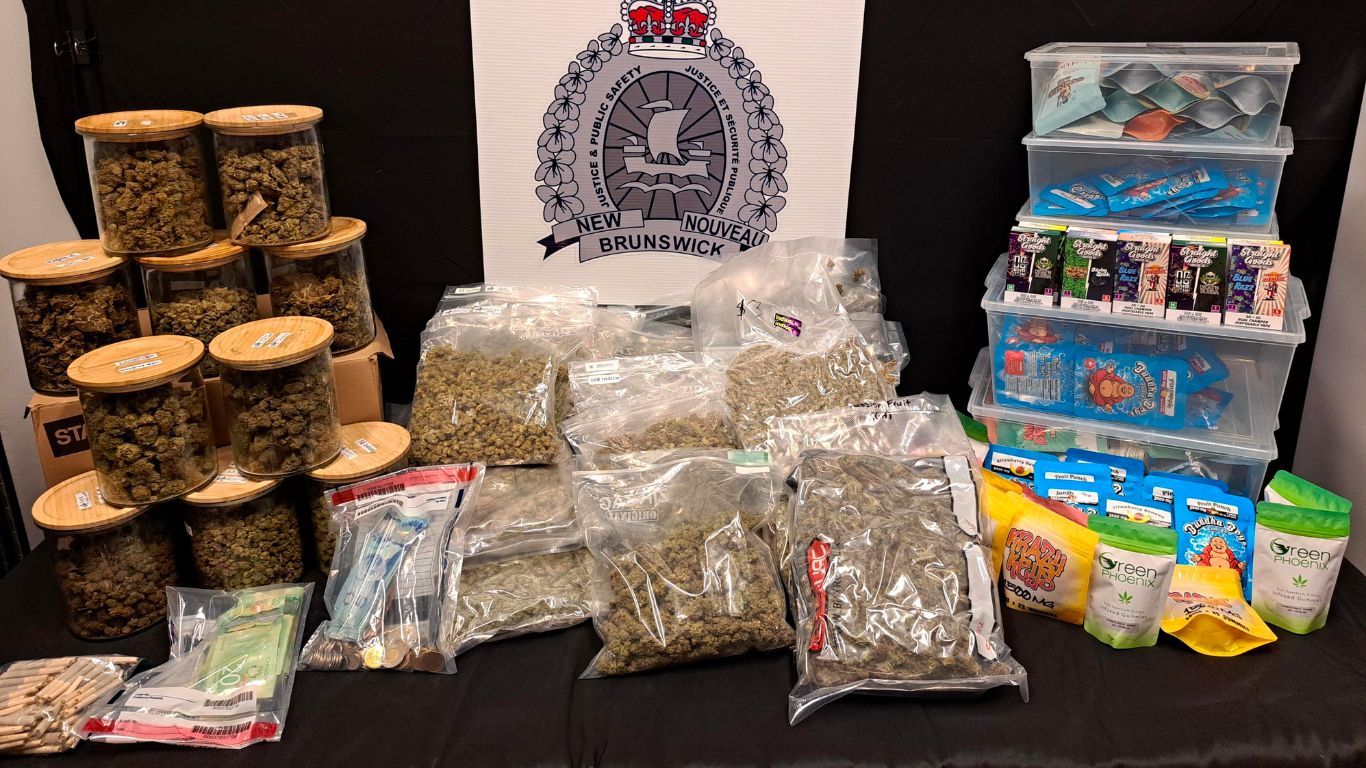
Peace officers with the New Brunswick Department of Justice and Public Safety conducted another raid of a store selling unlicensed cannabis products, this time in Bathurst.
The search warrant was executed on April 26 at the Gitpu Trading Post, 91 Russell St. in Saint John. A 39-year-old Saint John man was arrested, and a large quantity of cannabis products were seized, including:
eight kilograms of dried cannabis
one kilogram of hashish
319 cannabis distillate cartridges
368 packages of cannabis gummies
77 jars and 323 packs of cannabis shatter
57 cannabis food products (chocolate bars, etc.)
44 cannabis personal care products (bath bombs, body creams, etc.)
506 pre-rolled cannabis joints
98 vape pens containing THC
33 flavoured nicotine vape pens
16 psilocybin (magic mushrooms) food products
electronics – two Apple iPads, three cellphones and four digital scales
$4,759.15 in cash
The arrested man was later released and will appear in court to face charges under the federal Cannabis Act at a later date.
Officials in New Brunswick also announced a recent raid on April 5, 2024.
Insight & News
Browse Categories
Thanks to our sponsors supporting StratCann’s work!
Recent Articles
Are you of legal age in your jurisdiction? By clicking “Enter” you are verifying you are of legal age to view the content of this website, or click “Exit” to leave.
More than half of Americans have attended a music festival, indicating lucrative potential for music and art destinations
GTVH recently closed on the acquisition of ABI Create, a premier event-management and production company
With the invaluable resources ABI Create brings to the table, the future of Destino Ranch looks more promising than ever
With Coachella still fresh in music lovers’ memories, it’s only natural to look at what other amazing music festivals might be looming in the future. Destino Ranch comes to mind. A new project focused on becoming an international destination where nature and technology combine to create unforgettable experiences such as outstanding music festivals, Destino Ranch is being developed by Golden Triangle Ventures (OTC: GTVH) and its entertainment division, Lavish Entertainment.
Officially called the Coachella Valley Music and Arts Festival, Coachella is held over two weekends at the Empire Polo Club in Indio, California, in the Coachella Valley in the Colorado Desert. The event traditionally features an array of musical artists from different music genres, including rock, pop, indie, hip hop and more; the festival also includes art installations and sculptures.
This year, Coachella saw record attendance, with organizers reporting an estimated 300,000 people flocking to Indio (https://cnw.fm/kBJIS). In addition, Coachella’s revenue is impressive, bringing in $115 million collectively from ticket, food and beverage sales and generating around $700 million for the local economy in Indio and surrounding cities each year (https://cnw.fm/t2t9R).
There’s definitely an eager audience for events such as music and art festivals. In fact, a Marketing Chart study reported that “overall, roughly one-third (34%) of American adults surveyed report having been to more than one music festival, while an additional fifth (20%) say they’ve been once. As such, some 54% of U.S. adults have been to at least one music festival” (https://cnw.fm/gphBd).
Clearly, Golden Triangle Ventures and Lavish Entertainment are on to something. Most recently the company took a significant step forward in the development of Destino Ranch with the acquisition of ABI Create, a premier event-management and production company (https://cnw.fm/QmBvF). Founded by Marco Antonio Moreno, who was recently named president and COO of Lavish Entertainment, ABI Create has delivered high-quality productions for a range of large-scale installations at major music festivals, sporting events and conventions across the United States, including the NFL Super Bowl, San Diego and New York Comic Con events, EDC and Camp EDC, Bonnaroo Music Festival, the Waste Management Phoenix Open, Arnold Palmer Invitational, Burning Man and more.
The completed acquisition will transition ABI Create into a wholly owned subsidiary of Lavish Entertainment, strengthening Lavish’s position in the entertainment industry through ABI’s well-known reputation and proven track record of executing high-level projects. Headquartered in Las Vegas, ABI’s comprehensive suite of services includes event organization, management, production, logistics, site planning, permitting, construction, contracting, custom design and fabrication.
With the invaluable resources ABI Create brings to the table, the future of Destino Ranch looks more promising than ever. With access to nearly 22,000 visitors traveling through the area every day, the ranch could quickly become a modern art and music festival mecca. In fact, current plans call for the destination location to include an immersive, world-class art installation gallery with rotating exhibits as well as a large-scale music venue with state-of-the-art staging and production, all carefully designed to complement the beautiful natural attributes of the surrounding Mojave Desert.
“This acquisition of ABI Create sets the stage for us to begin showcasing all other synergistic divisions within Lavish that will support all resources, relationships and partnerships within the ABI portfolio of offerings,” said Steffan Dalsgaard, CEO of Golden Triangle Ventures. “Our goal is to develop ABI into a one-stop-shop, event-management business within Lavish that will hold a complete suite of event management and development services. This aims to complement all internal projects and productions and will potentially support outside business opportunities that can provide fundamental synergies to our ultimate plan of building a complete entertainment enterprise.”
Golden Triangle Ventures is a multifaceted consulting company that operates as a parent business pursuing ventures in the health, entertainment and technology sectors, as represented by the three-point golden triangle, along with other sectors that provide synergistic value to these three core divisions. The company aims to purchase, acquire and/or joint venture with established entities within these areas of business. The goods and services represented are driven by innovators who have passion and commitment in these marketplaces. The company plans to utilize relationships and create a platform for new and existing businesses to strengthen their products and/or services.
NOTE TO INVESTORS: The latest news and updates relating to GTVH are available in the company’s newsroom at https://cnw.fm/GTVH
About CannabisNewsWire
CannabisNewsWire (“CNW”) is a specialized communications platform with a focus on cannabis news and the cannabis sector. It is one of 60+ brands within the Dynamic Brand Portfolio @ IBN that delivers: (1) access to a vast network of wire solutions via InvestorWire to efficiently and effectively reach a myriad of target markets, demographics and diverse industries; (2) article and editorial syndication to 5,000+ outlets; (3) enhanced press release enhancement to ensure maximum impact; (4) social media distribution via IBN to millions of social media followers; and (5) a full array of tailored corporate communications solutions. With broad reach and a seasoned team of contributing journalists and writers, CNW is uniquely positioned to best serve private and public companies that want to reach a wide audience of investors, influencers, consumers, journalists and the general public. By cutting through the overload of information in today’s market, CNW brings its clients unparalleled recognition and brand awareness. CNW is where breaking news, insightful content and actionable information converge.
To receive SMS alerts from CNW, text CANNABIS to 888-902-4192 (U.S. Mobile Phones Only)
Please see full terms of use and disclaimers on the CannabisNewsWire website applicable to all content provided by CNW, wherever published or re-published: https://www.CannabisNewsWire.com/Disclaimer
When the Federal, provincial, and territorial governments discussed the federal excise tax rate in the lead-up to legalization in 2017, provinces successfully lobbied to receive 75% of the excise tax collected by the federal government.
The argument made by provinces was that the supposed cost of legalization would be borne by themselves (including the territories) and municipalities. This cost was not only related to the implementation and management of their own licensing and regulations but also the added cost to law enforcement and impacts on public health and public health resources.
Provinces, and to a degree municipalities, said legalizing would mean greater expenses and, therefore, the bulk of the excise tax collected by the federal government should go back to them.
Carole James, then BC’s Finance Minister, upon the signing of the agreement in 2017, said:
“We negotiated an agreement for BC that means the majority of cannabis revenue will flow to the provinces so we can invest in programs to keep people safe and remove the criminal element from cannabis.”
But where those dollars have gone isn’t always very clear. While some provinces like Ontario, Quebec, and, to a degree, Alberta have been open about how that money has been spent or allocated, other provinces and territories appear less open.
Of course, how much has legalization actually cost municipalities and provinces? While there were concerns of increased policing costs or additional public health and safety concerns, more than five years in now, we see these concerns were largely unfounded.
Increased policing is highly questionable since there are fewer illegal/unlicensed stores now than before legalization, with many voluntarily closing rather than facing enforcement action. So, there is less of a need for police to deal with possession or consumption. There have been increased incidents of police detecting cannabis when testing drivers. However, it’s difficult to say if this is due to an increase in use or simply because it’s now easier for law enforcement to detect use.
Increased costs to municipalities are difficult, as well. Most cities have spent at least some time and effort developing new bylaws for cannabis stores, and some have taken extra time vetting any potential applicants, all of which add to their costs. However, these cities also generally charge hefty application fees that cover at least a portion of these costs.
In terms of costs for the provinces, public health and safety issues were seen as one of the significant added costs of legalization. However, it’s difficult to say there have been many, if any, real safety concerns for the public with legalization. Public health concerns in relation to long-term impacts of cannabis use, or more acute issues like emergency room visits, are a legitimate and difficult-to-quantify cost. Canada has seen an increase in people, especially young people, requiring medical assistance due to cannabis use, a cost that impacts provinces and the federal government’s healthcare spending. Although it can be difficult to determine if these costs are due to use from the legal or illegal markets, they do reflect real impacts on spending.
Despite being a relatively low fee, this alone amounted to millions of dollars the government had collected or expected to collect from the program. Although the provincial government had argued that legalization would cost the government money, they admitted that these fears were unfounded and that, in fact, they had been using these funds for entirely different purposes.
How many other provinces are doing the same? How much of the federal tax revenue that is making its way to the provinces is just being used to fill government coffers, especially as we enter a period of increased government spending and a challenging overall economic environment?
More importantly, how can the industry better take into account where these dollars are going in their efforts to address the issue of over-taxation? While lobbying Ottawa has its place, changing how much of that revenue is coming in will force Ottawa to first get all the provinces to agree or risk alienating them by cutting them out of tens or even hundreds of millions in annual revenue.
American researchers will be able to study various psychedelics and their effects on the human body much more effectively if hallucinogens are finally deregulated after decades of state and federal prohibition. Similar to how cannabis research opened up after dozens of states legalized either recreational or medical cannabis, policymakers hold the key to more comprehensive psychedelic clinical studies.
Researchers typically have a significantly hard time accessing and researching controlled substances such as psychedelics, which makes them less inclined to research hallucinogenic drugs. However, with psychedelic use increasing across the country as more people turn to hallucinogens to alleviate their mental problems, it is imperative that lawmakers deregulate psychedelics and allow scientists to study the substances more effectively.
A measure introduced by two lawmakers with opposing views may hold the key to deregulating psychedelics and facilitating more in-depth studies of the now-trending drugs. The Breakthrough Therapies Act was introduced by Democratic Senator Cory Booker and Republican Senator Rand Paul, giving it a decent chance of advancing past lawmakers who aren’t as receptive to any form of drug reform.
If the measure is signed into law, it could pave the way for the deregulation of products that have been designated as breakthrough therapies. Breakthrough therapies typically refer to controlled substances that have exhibited some medical efficacy but haven’t been endorsed by the U.S. Food and Drug Administration (FDA) as approved drugs.
As psychedelics such as psilocybin (magic mushrooms) and MDMA (ecstasy) have already been deemed breakthrough therapies, the Breakthrough Therapies Act would reclassify the two drugs to Schedule II of the Controlled Substances Act, which doesn’t have as many medical use-related restrictions as Schedule I. Furthermore, the measure also contains provisions that would eliminate some of the federal regulations that have hindered psychedelic drug research and development in recent years.
Several psychedelics have exhibited efficacy against hard-to-treat mental disorders such as post-traumatic stress disorder (PTSD) and depression in only a few doses and with limited negative side effects. Although most of these findings were from initial limited studies, they are so encouraging that lawmakers in countries such as Canada and Australia have already deregulated psychedelics to facilitate more comprehensive psychedelic research.
Lawmakers and regulatory bodies in other nations are also considering the potential impact of legalizing psychedelics to help mitigate mental disorders that typically don’t respond to traditional therapies. Much of this research has shown that psychedelics can be safe and effective alternatives to antianxiety and antidepressant medications.
Many companies such as atai Life Sciences N.V. (NASDAQ: ATAI) hope that policymakers can make the needed regulatory changes sooner rather than later so that the entities can face fewer hurdles in their bid to study hallucinogens and bring novel treatments onto the market.
About PsychedelicNewsWire
PsychedelicNewsWire (“PNW”) is a specialized communications platform with a focus on all aspects of psychedelics and the latest developments and advances in the psychedelics sector. It is one of 60+ brands within the Dynamic Brand Portfolio @ IBN that delivers: (1) access to a vast network of wire solutions via InvestorWire to efficiently and effectively reach a myriad of target markets, demographics and diverse industries; (2) article and editorial syndication to 5,000+ outlets; (3) enhanced press release enhancement to ensure maximum impact; (4) social media distribution via IBN to millions of social media followers; and (5) a full array of tailored corporate communications solutions. With broad reach and a seasoned team of contributing journalists and writers, PNW is uniquely positioned to best serve private and public companies that want to reach a wide audience of investors, influencers, consumers, journalists and the general public. By cutting through the overload of information in today’s market, PNW brings its clients unparalleled recognition and brand awareness. PNW is where breaking news, insightful content and actionable information converge.
To receive SMS alerts from PsychedelicNewsWire, text “Groovy” to 888-902-4192 (U.S. Mobile Phones Only)
Please see full terms of use and disclaimers on the PsychedelicNewsWire website applicable to all content provided by PNW, wherever published or re-published: https://www.PsychedelicNewsWire.com/Disclaimer
Lexaria, a global innovator in drug delivery platforms, through its patented DehydraTECH(TM) technology, looks to address the growing type 2 diabetes and obesity problem
Given the success of previous studies, the company is looking to double down on glucagon-like peptide 1 (“GLP-1”) studies for 2024
GLP-1 treatments are a major player in managing weight and addressing diabetes, and Lexaria’s DehydraTECH(TM) drug delivery platform has the potential of replacing painful and expensive GLP-1 injections with an effective oral delivery path
The company has already received independent ethics review board approval for its GLP-1 human pilot study #2, a milestone that brings it closer to offering a tolerable oral delivery option for diabetes treatment
Lexaria Bioscience (NASDAQ: LEXX), a global innovator in drug delivery platforms, recognizes the tremendous potential in the treatment of type 2 diabetes and obesity, and looks to address it through its patented DehydraTECH(TM) drug delivery technology that offers improved delivery of bioactive compounds. The confidence in its technology, as evidenced by the success of previous clinical studies, has allowed it to double down on glucagon-like peptide 1 (“GLP-1”) studies for the 2024 calendar year. The company is optimistic that the studies will yield positive results, not just in the potential treatment of diabetes but also in weight management, which has been directly linked to diabetes.
According to the Centers for Disease Control and Prevention (“CDC”), more than one in three Americans today are at increased risk for type 2 diabetes. This represents about 98 million Americans, with 81% not knowing they are at such a risk (https://cnw.fm/5ROKd). Studies showed a massive spike in overall incidences of type 2 diabetes between 2002 and 2018, with one of the main cited risk factors being obesity. The CDC noted that of those diagnosed with the condition, 89.8% of them were overweight or obese, as defined by a body mass index (“BMI”) of 25 kg/m2 or higher. This was further compounded by physical inactivity, with 31.9% of those diagnosed reporting getting less than 10 minutes a week of moderate or vigorous activity (https://cnw.fm/onJuB).
In March, Lexaria announced details of its upcoming 12-week animal study WEIGHT-A24-1 that will examine diabetes and weight loss effects of DehydraTECH-processed GLP-1 drugs and DehydraTECH-processed cannabidiol, alone and in combination (https://cnw.fm/9yxZw). Results will guide additional human investigations.
The company recently received independent third-party ethics review board approval for its GLP-1 human pilot study #2, seeking to explore the oral delivery of GLP-1 drugs. For Lexaria, this marks a significant milestone that brings it closer to offering a more effective and tolerable oral delivery option for diabetes treatment and weight loss management (https://cnw.fm/oDqd6).
“Most GLP-1 drugs sold today are administered by painful and expensive injection devices. More effective and tolerable oral delivery of GLP-1 drugs could be extremely valuable to patients and to industry,” noted Chris Bunka, Lexaria’s CEO.
“I am excited about this study; the Lexaria scientific team believes that a dissolvable oral tablet that delivers an effective fraction of semaglutide along with reduced side effects could potentially offer valuable benefits to the pharmaceutical industry that might lead to a higher likelihood of favorable strategic partnering with leading industry players in GLP-1,” he added.
Previous Lexaria studies have demonstrated that DehydraTECH processing results in higher brain absorption than non-DehydraTECH arms. Already, GLP-1R agonists have been shown to penetrate the brain and activate a subset of GLP-1R-expressing neurons in the arcuate nucleus to produce weight loss. With the upcoming studies, Lexaria looks to evidence that DehydraTECH processing of GLP-1 drugs can enable even faster penetration into brain tissue, ultimately improving overall efficiency in weight loss and blood sugar control. Its management is optimistic that it will replicate the success of previous studies and looks forward to kickstarting the undertaking.
NOTE TO INVESTORS: The latest news and updates relating to LEXX are available in the company’s newsroom at https://cnw.fm/LEXX
About CannabisNewsWire
CannabisNewsWire (“CNW”) is a specialized communications platform with a focus on cannabis news and the cannabis sector. It is one of 60+ brands within the Dynamic Brand Portfolio @ IBN that delivers: (1) access to a vast network of wire solutions via InvestorWire to efficiently and effectively reach a myriad of target markets, demographics and diverse industries; (2) article and editorial syndication to 5,000+ outlets; (3) enhanced press release enhancement to ensure maximum impact; (4) social media distribution via IBN to millions of social media followers; and (5) a full array of tailored corporate communications solutions. With broad reach and a seasoned team of contributing journalists and writers, CNW is uniquely positioned to best serve private and public companies that want to reach a wide audience of investors, influencers, consumers, journalists and the general public. By cutting through the overload of information in today’s market, CNW brings its clients unparalleled recognition and brand awareness. CNW is where breaking news, insightful content and actionable information converge.
To receive SMS alerts from CNW, text CANNABIS to 888-902-4192 (U.S. Mobile Phones Only)
Please see full terms of use and disclaimers on the CannabisNewsWire website applicable to all content provided by CNW, wherever published or re-published: https://www.CannabisNewsWire.com/Disclaimer


















Recent Comments