Canopy Growth Corp. reported a net loss of $216.8 million in its latest quarter compared with a loss of $264.4 million a year earlier.
The cannabis company says the loss amounted to $2.62 per diluted share for the quarter ended Dec. 31 compared with a loss of $5.34 per diluted share a year earlier when it had fewer shares outstanding.
Net revenue for what was the company’s third quarter totalled $78.5 million, down from $84.9 million in the same quarter a year earlier.
Excluding the impact of the sale of its Canada national retail business, the company says consolidated net revenue grew by six per cent year-over-year.
Advertisement
Canada adult-use cannabis business-to-business net revenue rose nine per cent year-over-year, while Canadian medical cannabis net revenue climbed 11 per cent compared with a year earlier.
On an adjusted basis, Canopy says its earnings before interest, taxes, depreciation and amortization came to a loss of $9.0 million compared with a loss of $49.7 million a year earlier.
This report by The Canadian Press was first published Feb. 9, 2024.
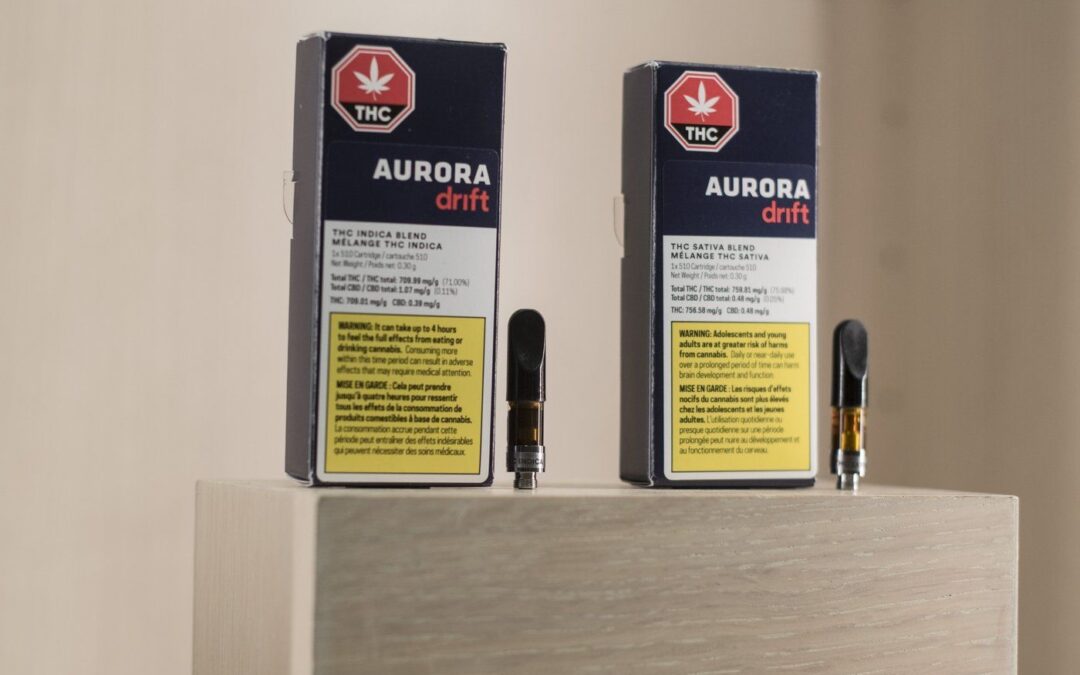
Aurora Cannabis Inc. bolstered its international presence Thursday with a deal to buy the 90 per cent of Australian medical cannabis company MedReleaf Australia it didn’t already own.
The deal valued the Australian medical cannabis distribution company, formally known as Indica Industries Pty Ltd., at $50 million (Australian) or about $44 million in Canadian dollars.
Aurora, an Edmonton-based cannabis company, paid $9.45 million (Australian) in cash with the balance in common shares issued.
Advertisement
“(MedReleaf Australia) has done just a superb job building this business and we collectively thought this was the right time to take the next step,” Aurora chief executive Miguel Martin said on a Thursday call with analysts.
The deal, which came the same day as Aurora reported a third-quarter net loss of $25.5 million (Canadian), builds on a relationship Aurora has had with MedReleaf Australia since 2017.
The Australian medical cannabis market is clinician-led and uses a traditional pharma-like product distribution model, Aurora said.
Australia’s medical cannabis industry has experienced significant growth since 2016 and is now an estimated $400-million market, added Tamy Chen of BMO Capital Markets.
“We believe Aurora shareholders may question the decision to fund most of this (deal) with shares when the company has $200 million cash on hand and a narrowing cash burn,” she wrote in a note to investors Thursday evening.
“But management highlighted the importance of having some liquidity buffer to navigate the volatile cannabis industry.”
The company has applied learnings from its Canadian business to guide how it operates in Australia and elsewhere.
“Having excellence in Canada, which is such a critical federal legal medical cannabis market, allows you to learn and become adept at navigating other federally legal cannabis markets,” Martin said.
“Our leadership that we have in Germany and Poland in other of these key markets comes directly from what we’ve learned in Canada and we are able to leverage similar products and similar executions because of the world class production in Canada.”
Expansion into international markets has been well worth Aurora’s time, he added.
“Usually, the top five companies will account for two thirds or three quarters of the overall business in these European markets, whereas in Canada, it might take you 20 or 30 companies,” he said.
“So the benefits are there.”
Chen agreed international markets are a key growth driver for the company.
“We would have thought that some of these markets would have seen a proliferation of companies by now, similar to Canada (recreatonal markets), but Aurora’s stable results and strong margins suggest otherwise,” she said.
The deal was announced just as Aurora reported a third-quarter net loss of $25.5 million compared with a net loss of $67.1 million a year earlier.
Those results amounted to a basic loss per share of five cents compared with a loss per share of 20 cents in the same quarter a year ago.
Analysts had expected the company to post a basic loss per share of one cent, according to financial markets data firm Refinitiv.
Aurora said its lower net loss stemmed from a $32.7 million increase in gross profit and a $10.4 million decrease in operating expenses.
Its net loss from continuing operations of $25.2 million compared with a net loss of $62.4 million a year earlier.
Its total net revenue for the period ended Dec. 31 hit $64.4 million compared with $61.1 million a year prior.
“If there’s one takeaway for our investors, it would be that strategically and financially we were in the best shape ever,” Martin said.
Aurora’s medical cannabis net revenue was $45.1 million compared with $38.9 million in the same quarter the year before, while its consumer cannabis net revenue was $11.6 million compared with $14.6 million a year earlier.
The results pushed Aurora’s share price up almost four per cent or by two cents to 54 cents in afternoon trading.
This report by The Canadian Press was first published Feb. 8, 2024.
Marijuana officials in the state of Minnesota are urging lawmakers to consider amendments to licensing processes to help meet its retail cannabis sales goals. Charlene Briner, the interim director of the Office of Cannabis Management, stated in a recent webinar that the agency was focused on hiring staff and building infrastructure needed to oversee the legal marijuana marketplace.
Regulators plan to test how efficient an online license application system designed for businesses works in the spring. Briner also revealed that she was hopeful that when legislators resumed their legislative session, they would amend the law to allow for a successful launch of the state’s market while also aiding in effective regulation as time went by.
The recommendations given include permitting temporary business licenses, particularly for social-equity applicants. This, officials believe, will ensure that Minnesota remains on schedule for its market launch set for 2025’s first quarter. Briner also believes that legislators should eliminate barriers that will prevent parties from obtaining licenses.
These barriers include a provision that interested parties will need to secure buildings for their operations before acquiring they are able to acquire a license. Briner further explained that securing a property and spending a significant amount of money on a facility without any assurance that one would receive a license presented a huge risk for potential businesses.
Vicente LLP attorney Jason Tarasek applauded the recommendations made by the Office of Cannabis Management, particularly the office’s call to have provisional licenses introduced. Vicente LLP specializes in marijuana. Tarasek noted that time was needed to get products on shelves, which could take months. In an interview with WCCO, he explained that while some businesses would prefer selling the marijuana flower in whole, some would rather process the plant into other products, which took more time.
Tarasek also advised any party that hoped to venture into the marijuana market to begin laying the groundwork for business now. This, he stated, was because the process of launching a business in this field was costly and a lot was needed to allow operations to commence.
Under the new law, even counties and cities can apply to operate and own retail cannabis dispensaries. The city of Osseo recently formed a work group to draft a plan on this, which will allow for easier maneuvering once Minnesota allows parties to apply for licenses.
The proactive approach that the regulators in Minnesota are taking with regards to facilitating a smooth launch of recreational sales is likely to attract plaudits from not just the marijuana industry in the state but also allied companies such as Innovative Industrial Properties Inc. (NYSE: IIPR) since a seamless launch would open opportunities for actors in several business verticals.
About CannabisNewsWire
CannabisNewsWire (“CNW”) is a specialized communications platform with a focus on cannabis news and the cannabis sector. It is one of 60+ brands within the Dynamic Brand Portfolio @ IBN that delivers: (1) access to a vast network of wire solutions via InvestorWire to efficiently and effectively reach a myriad of target markets, demographics and diverse industries; (2) article and editorial syndication to 5,000+ outlets; (3) enhanced press release enhancement to ensure maximum impact; (4) social media distribution via IBN to millions of social media followers; and (5) a full array of tailored corporate communications solutions. With broad reach and a seasoned team of contributing journalists and writers, CNW is uniquely positioned to best serve private and public companies that want to reach a wide audience of investors, influencers, consumers, journalists and the general public. By cutting through the overload of information in today’s market, CNW brings its clients unparalleled recognition and brand awareness. CNW is where breaking news, insightful content and actionable information converge.
To receive SMS alerts from CNW, text CANNABIS to 888-902-4192 (U.S. Mobile Phones Only)
Please see full terms of use and disclaimers on the CannabisNewsWire website applicable to all content provided by CNW, wherever published or re-published: https://www.CannabisNewsWire.com/Disclaimer
We are ignorant creatures, utterly lost in the darkness—so ignorant that we often don’t even know that we don’t know. Take my first foray into indoor gardening, for example. I clubbed with two hapless high school friends to ‘invest’ over $350 in a 400-watt HPS lighting system (complete with a buzzing magnetic ballast, elliptical streetlamp, and comically oversized parabolic reflector). This was back in the age before hydro stores; one of the few solutions available to any budding indoor horticulturist at the time was to send a check to a PO Box advertised in the back of ‘Viz Comic’ and hope for the best.
A few weeks later, the promised lighting system arrived—although we were not sufficiently illuminated to have figured out that we also needed ventilation equipment. As such, we were genuinely surprised when my friend’s wardrobe—the designated space for our communal slice of horticultural heaven—quickly heated up to 100°F. Perhaps mercifully, our “extreme weather project” was abruptly terminated when my friend’s “don’t worry, they’re totally cool” parents first witnessed an otherworldly orange glow emanating from his bedroom door frame and quickly called time on our futile endeavors.
Suffice it to say, we learn by failing—or, theoretically, at least, the offer of a lesson is there. In the years since, I have made so many indoor gardening mistakes that I considered asking Garden Culture if they would commission a series. Alas, all you’ll get here is the briefest summary of my botanical blunders, mishaps, oversights, and brain farts.
Failing to research new growing systems properly has caused me plenty of embarrassment over the years. Once, I comically over-planted two Nutriculture GT-901 NFT systems with a hundred rooted cuttings (fifty in each—and, in case you don’t know, these otherwise super-productive hobby hydroponics systems barely cover a 6’ x 3’4” area (1.8 x 1.0m) each)! Flipping my plants immediately into a 12/12 photoperiod, I thought I was a trendsetter, a maverick, a genius even. I envisaged an ocean of green floricultural paradise emerging over the coming weeks. Instead, the constant irrigation and crowded plant spacing caused extreme stem elongation. It’s one of the few crops that was so appallingly bad that I actually cut it down.
Lesson Learned: Read the manual. Less is more.
Another time, I borrowed a true aeroponics system from a very generous local manufacturer, complete with a powerful air compressor. I think the general idea was for me to grow some photogenic beasts to show off what their incredible growing system could do. The cuttings died in the first few hours. I gave him the system back with no photos.
Lesson Learned: Promise carefully and take time to establish your plants before hitting them with full-intensity light.
But my problems were just beginning. My grow tents suffered from high daytime temperatures in a south-facing room with large windows. Who knew? By this time, I was working with a hydroponics equipment wholesaler, and the boss foolishly agreed that I could help myself to an extraction fan from their warehouse. Naturally, I chose the biggest one I could find. At 12” in diameter, I thought my heat issues were over. Not only did it sound like I was powering up a MiG-29 twin-engine fighter jet in my top-floor apartment, but the only extract port available was in the roof at just 4” in diameter! “No problem,” I thought, “that’s what reducers are for.” So I went from 12 to 10, 10 to 8, 8 to 6, and finally from 6 to 4. What could go wrong?
Lesson Learned: I should have paid more attention in physics class. The increased air velocity, reduced airflow, and massively increased static pressure all conspired to render my new ventilation system very loud and utterly useless.
Moving from soil-based potting mixes to coco coir, I didn’t realize I could get away with smaller pots with a soilless medium. Consequently, I spent way more on growing media than I needed to. Even when I was finally convinced to reduce my pot size, I still didn’t understand the importance of measuring the conductivity of the run-off feed solution. Switching to a 70/30 coco/perlite mix was great for the aeration of my roots, but it increased wet/dry cycles and further exacerbated my rootzone salt build-up issues.
Lesson Learned: When growing in soilless potting mixes, never let your pots dry out, make sure you achieve 30% run-off with each irrigation, and don’t let your plants sit in that run-off!
I recently embarked on an ill-judged side-lighting experiment with light-loving, diecious plants. I bastardized a twin-bar 660W LED commercial top light and fixed it strategically on the walls adjacent to my 4’ x 4’ grow tray. (With sufficient air gaps behind, don’t worry.) However, I failed to account for the dramatic increase in water uptake driven by the additional photons. As a result, my plants quickly became draught-stressed and turned hermaphroditic! Oh, Lord.
But wait, there’s more. Like the time I started growing hot peppers indoors in the spring, and then the summer arrived. Even with air conditioning, I couldn’t lower nighttime temperatures sufficiently to properly induce flowering. I ended up with some very tall pepper plants and a handful of very expensive peppers.
Lesson Learned: Timing (and temperature) is everything to peppers (and maybe grow them outdoors in the summer, huh?)
In conclusion, the more you learn, the more you realize you don’t know. Wherever you’re at (or think you’re at) on your growing journey, modesty should be your stoical travel companion. Always carefully observe and note as much data as possible, including nutrient strength, formulation daytime and nighttime temperatures, relative humidity, number of days in vegetative growth, pot volume, and irrigation cycles.
Now repeat after me: Next crop, I’m gonna crush it!
So many problems, so many solutions! In our Common Problems & Remedies edition, our expert growers have been sharing tales of garden downfalls and tips to help get you back on top of your growing game. We’re letting the good times roll with our 5 Cool Ways to Identify, Prevent, and Solve Problems in Your Garden. The best part? Many of these suggestions are easy to implement, no matter your level of growing experience.
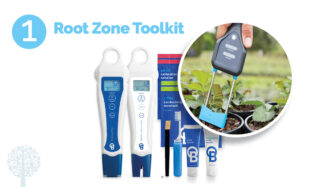
Root Zone Toolkit
Growing a garden is about more than just planting a seed and offering it water and sunlight. Every serious grower needs to measure the pH levels in their growing medium to ensure plants can access the nutrients they need to grow. The Bluelab Soil pH Pen can help determine if your medium is too alkaline or acidic. It’s versatile and works in soil, coco coir, potting mixes, and solutions. The pen also takes your growing media’s temperature so plants can grow and develop correctly. The Bluelab Pulse Meter is also recommended to check that you aren’t over- or under-feeding your plants. Measure the EC or PPM to see if the garden is getting enough. This gadget will lead to healthier plants and less waste of expensive nutrient solutions; it also measures moisture levels and the temperature of the root zone. If nothing else, we recommend purchasing a moisture meter. Overwatering is a common gardening mistake that leads to diseases and crop loss, and even on the hottest days, your plants may not be as thirsty as you think. Arm yourself with a few gadgets to help your growing ventures along!
Disease Identification Tools
It’s not always easy to identify what’s hurting your plants with the naked eye. In The Vegetable Garden Problem Solver Handbook, author Susan Mulvihill recommends investing in a few handy tools to help you diagnose various garden issues. A magnifying glass or something as simple as a cell phone camera can help you investigate a potential problem and examine plant tissue that doesn’t look right. For example, zooming in on mold spores or spots will help narrow down what you’re dealing with. Mulvihill also suggests a microscope for getting up close and personal with the pests or diseases plaguing your garden. Various apps help identify plant diseases; some are free, others aren’t. Finally, gardening books (like Mulvihill’s fantastic read) and websites (like GCMag.co!) will help you understand what’s attacking your plants and how to deal with the issue for good.
Know Your Soil
Do you know what kind of dirt you have? Every garden’s unique soil texture is determined by a balance of the three main mineral components – sand, clay, and silt. Together, these affect how the soil absorbs water, nutrients, and air. If the balance isn’t right, your plants won’t thrive as well as they should. Take a sample of the garden soil and send it to a lab to be tested, or perform an easy DIY test at home. Fill a mason jar with two cups of earth and fill the rest with water. Shake well and let it settle for a day. Sand will fall to the bottom, silt forms the middle layer, and clay settles on the top. Organic matter floats on the water’s surface. A fertile soil is relatively balanced (i.e., 30% sand, 40% silt, 30% clay) and is called a loam soil. If your soil needs improvement, you can immediately fix it by adding compost to boost drainage capabilities, water retention, and soil fertility.
Beneficial Bugs
Sometimes, we get so caught up in controlling pest problems that we forget to encourage beneficial bugs to take refuge in our gardens. Gardening organically and intercropping with a wide range of native plants will encourage pollinators to pop by for a snack. Offer a clean water source and shelter (like an insect hotel) so that beyond bees and butterflies, predators and parasitizers are attracted to your gardening space as well. These include ladybugs, praying mantids, green lacewing larvae, parasitic wasps, robber flies, hoverflies, soldier beetles, spiders, and more. These garden allies will protect plants from various pest problems, such as aphids, caterpillars, thrips, and beetles. Attracting beneficial insects to the outdoor garden is easy enough, but indoors, you’ll need to pay special attention to what you need to help you with your problem. Kits containing predator bugs can be purchased online, ready for you to release into the grow room for fast-acting and organic pest control.
Dear Diary
A garden journal is one of the most understated ways to help you keep track of your successes and failures. Any notebook (digital or paper) will do, but we love The Garden Journal, an heirloom-quality record keeper compiled by garden personality and QVC host Linda Vater. Keep track of daily occurrences in the garden throughout all seasons and note any issues, such as pest problems or diseases. Jot down what you noticed, how you solved it, and what you can do differently in the future. For example, after discovering a cabbage worm infestation on your kale, you might want to write a note as a reminder to cover future Brassica family crops with transparent cloth when planting to protect them from egg-laying white butterflies. Problem solved! Even though you don’t think you’ll forget, by the time the next growing season rolls around, you probably will. This journal covers five years of gardening so you can refer back and learn from your mistakes or build on your triumphs. Go you!
Located in Toronto, PPB Analytical is an accredited analytical testing lab focusing on cannabis, environmental, and microbiology testing services.
Delivering testing services since 2014, PPB Analytical began offering services for the cannabis industry in 2022, servicing clients with potency testing, terpene profiling, pesticide testing, residual solvents, mycotoxins, microbial scans, pathogens and viroids, sex/gender testing, and heavy metal testing.
Chris Sun, VP of operations at PPB, says the decision to move into the cannabis sector developed from a strong desire to contribute to the integrity of the newly regulated market.
“We believe in the natural healthcare benefits of cannabis, and that everyone consuming a cannabis product should be able to do so safely,” says Sun.
“As consumers, we rely on all levels of a supply chain to deliver safe-to-consume products. From manufacturers abiding by good manufacturing practices to regulatory bodies that set guidelines defining what a safe-to-consume product can contain, to analytical service providers that verify products meet those safety guidelines. Consumers like us expect everyone involved in the supply chain to act with integrity.”
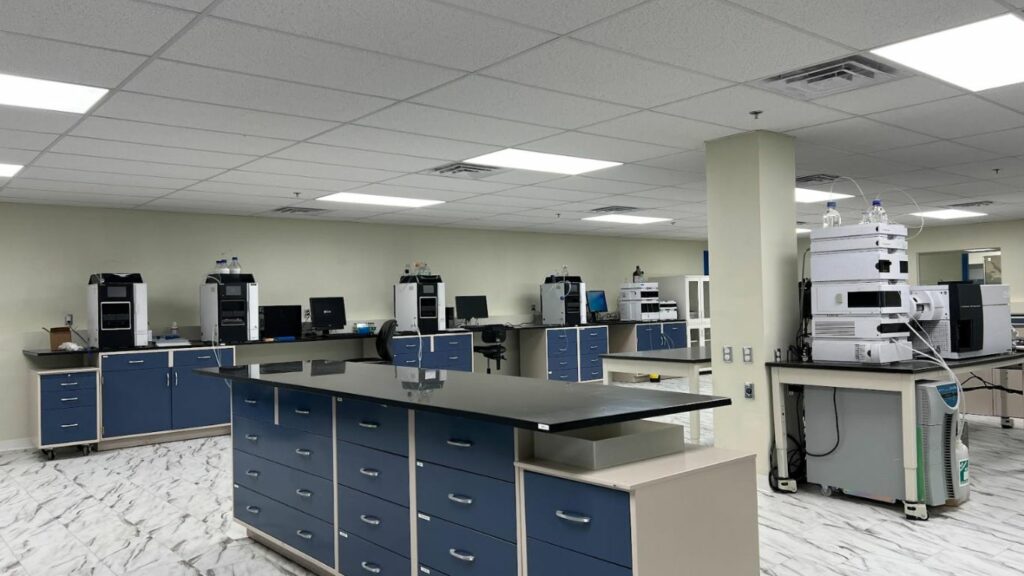
PPB Analytical’s contribution to the cannabis industry draws from the technical expertise and scientific know-how of its parent company, Spectralab Scientific. Using highly sophisticated scientific equipment and experienced technicians who are experts at installing, refurbishing, repairing, maintaining equipment, and training people to use that equipment, PPB has leveraged these skills to become a testing service provider for cannabis producers, ensuring products can be tested rigorously, accurately, and with integrity.
“We provide incomparable skill and expertise in analytical chemistry, focused on the aspects of scientific rigour and specialized services for the cannabis industry.”
Chris Sun, PPB Analytical
Sun explains that Spectralab Scientific had initially provided cannabis companies with their expertise in securing and installing analytical equipment, as well as providing training in using the equipment and developing testing methods to help producers get their internal labs up and running efficiently.
After helping numerous labs get established in Canada, the USA, and overseas, PPB Analytical was launched as an independent subsidiary to address the need to provide analytical testing services for highly sensitive, scientifically accurate, and reproducibly reliable results.
In 2022, they received their Health Canada analytical testing licence and have been testing plants, flower, oils, concentrates, beverages, and edibles for an ever-growing number of customers.
“We provide incomparable skill and expertise in analytical chemistry, focused on the aspects of scientific rigour and specialized services for the cannabis industry,” explains Sun. “The synergy of talent from PPB Analytical’s staff scientists, Spectralab Scientific’s prowess in analytical instrument caretaking, and PPB Analytical’s cannabis specialist (a former QAP at a licensed producer in BC) means our customers receive customer-centric service and reliable results. PPB Analytical employs staff that have walked in our customers’ shoes, so we understand what matters and deliver what is needed.”
As the industry begins to (slowly) move away from an obsession with THC, Julian Lebrun, Cannabis Specialist at PPB and former QAP, says accurate terpene analysis is becoming even more important, especially for craft growers looking to develop unique cultivars.
“Terpenes have an immensely profound effect on the cannabis experience, and that same level of appreciation for terpenes is missing when compared to the heavy emphasis on total THC and CBD analysis. Consumers are always on the lookout for new and fresh strains, and for new and fresh experiences. From a chemical perspective, new strains will have unique terpene and cannabinoid profiles.”
Sun adds: “We have the sophisticated instrumentation and sensitive detection limits needed to profile the terpenes and cannabinoids in uniquely new strains. For Craft producers, the customer’s desire aligns perfectly with the grower’s passion, and we at PPB Analytical are perfectly poised to support new breakthroughs.”
PPB Analytical operates a 25,000-square-foot modern laboratory facility that houses a full range of analytical instrumentation. It is conveniently located in Toronto, Ontario, a major shipping hub allowing reliable delivery of urgent or rush service samples. Its experts include a team of analytical chemists and microbiologists holding advanced degrees (Masters and Doctorates) in their respective fields, as well as an experienced grower and former QAP.
“We prioritize client satisfaction every step of the way. At PPB Analytical, You are more than our customer; we are part of your team.”











Recent Comments